Inside a century-old building overlooking the streets of south Mumbai, a quiet effort is underway to save rare Persian and Urdu translations of Indian scriptures, the last surviving records of the country’s multi-cultural past.
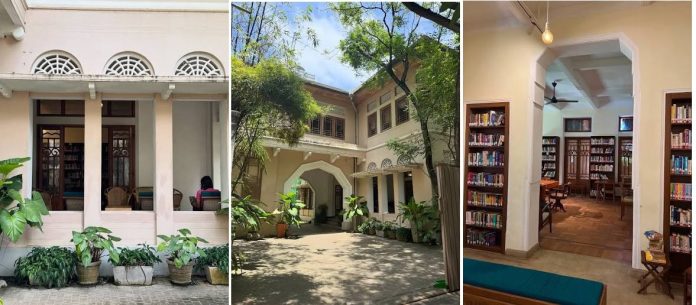
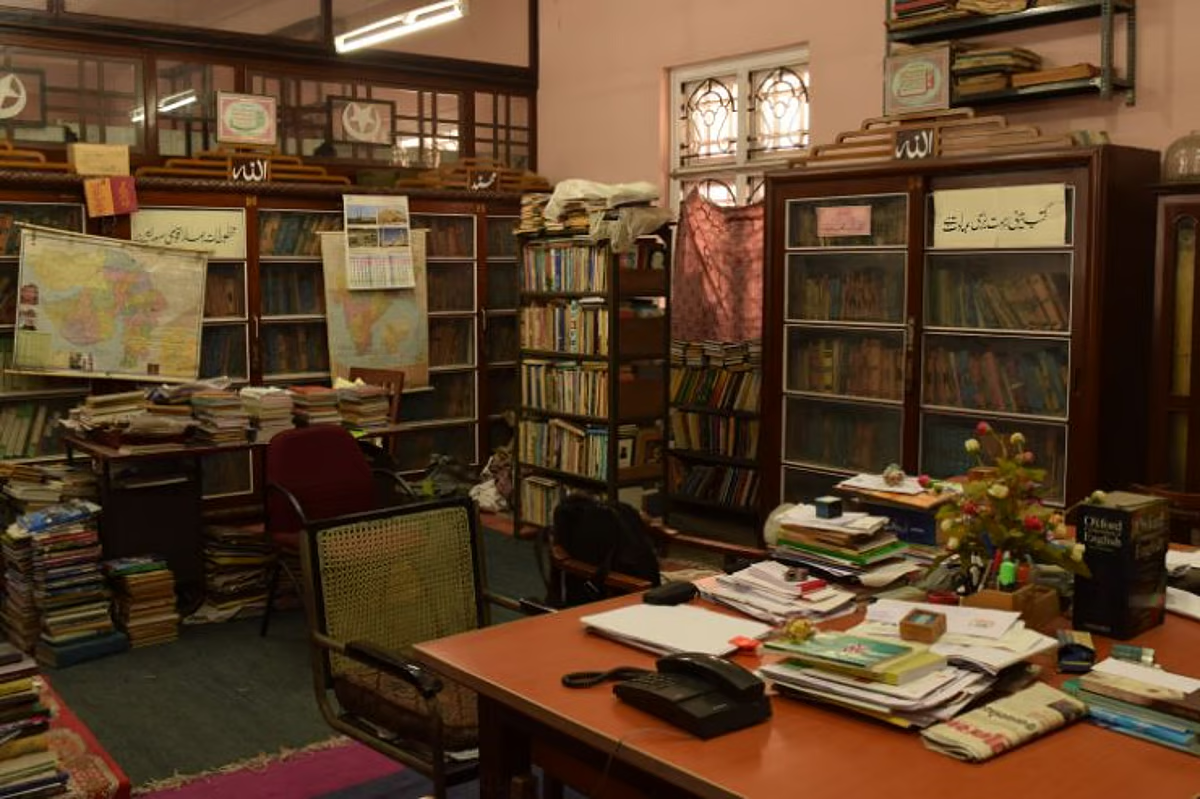
The Karimi Library, housed within the 152-year-old Anjuman-I-Islam institute near the iconic Chhatrapati Shivaji Maharaj Terminus, has launched a restoration drive to rescue more than 32 sacred Hindu texts. These include the Mahabharat, Ramayan, Bhagavad Gita, and Shiv Puran, all printed between 1867 and 1896.
The library was established in 1898 after merchant Kazi Abdul Karimi Porbandari donated 4,500 valuable texts, and it was named after him. Padma Shri Dr Zahir Kazi, president of Anjuman-I-Islam, founded by Badruddin Tyabji in 1874, shared this history while speaking about the ongoing project.
The archive holds books, manuscripts, and newspapers in Sanskrit, English, Urdu, Persian, Marathi, Pashto, and Arabic, covering history, philosophy, theology, literature, and geography. It also features rare newspapers dating back to 1875, including the Jaipur Gazette, Ambala Gazette, and Cairo’s Al Kaira, alongside royal decrees from Mughal Emperor Aurangzeb.
“The books have become old and pages brittle. They need to be treated with special chemicals to weed out fungus and pests. Books that are not in good shape are pasted with special paper for preservation,” Kazi said.
A team of experts is handling the digitisation process, with pages being uploaded to Anjuman-I-Islam’s cloud account.
“These books reflect so much of tolerance. It is an eye-opener for Indians that the country’s heritage is very much there in this library,” Kazi said.
Library in-charge Mohammad Ghalib Mulla confirmed that more than 100,000 book pages and 70,000 pages from newspapers and periodicals have been digitised, leaving only 2,250 pages to complete the archiving project.
“The newspapers give details about the initial days of the freedom struggle, the social and political situation of those times, how journalism was, pro and anti-British,” Mulla said.
Several freedom fighters were part of Anjuman-I-Islam’s management, and the library witnessed many of their meetings, according to Kazi.
The library building is also undergoing renovation, with efforts to retain its original look and feel. “We intend to reopen the restored library by October 2, subject to completion of work. We also plan to host many national and international events in this library,” Kazi said.
source: http://www.radiancenews.com / Radiance News / Home> Uncategorized / by Radiance News Bureau / August 31st, 2026
The marble throne of Bahadur Shah Zafar, the last Mughal emperor, symbolizes a collapsed dynasty, now housed in a museum near Humayun’s Tomb in Delhi.
Delhiwale: The ultimate Mughal souvenir
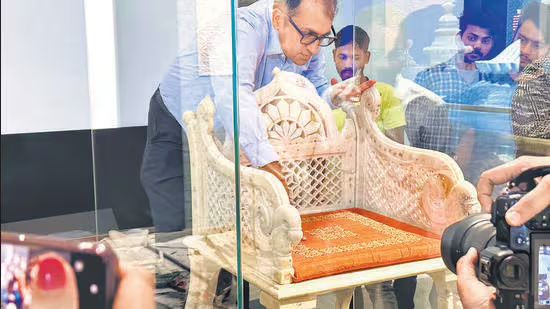
Behold this marble throne. Preserved inside a glass case at the Humayun World Heritage Site Museum in Delhi, it was once the stately seat of Bahadur Shah Zafar. As the last Mughal sovereign, the poet-king is likely to have sat on this throne while reflecting on the dissolution of his 300-year-old dynasty. The throne is, in fact, less ostentatious than the throne-like sofas found in the drawing rooms of Delhi’s wealthy today. Yet it is far more elegant. The armrests are supported on latticework, and faint flecks of colour cling to the marble like the last glimmers of extinguished stars. The fragile-seeming relic assumes truly epic proportions as the viewer connects it to the legend of a collapsed empire whose layered legacy continues to resonate in our republic (vividly chronicled in this newspaper yesterday).
The Mughals spanned over 18 rulers. Their kissa-kahani began 500 years ago in 1526, when Babur defeated Delhi Sultan Ibrahim Lodi in a field 80 kilometres from Delhi. Soon after, Babur entered the city and visited the shrine of the mystic Hazrat Nizamuddin Auliya. At that time, nobody would have guessed that this pilgrimage would recur across generations of Mughals, binding them to the city’s sacred, grave-dotted topography.
Truth be told, Delhi surpasses the dynasty’s other great centres, Agra and Lahore. Shahjahan may have built the immortal Taj in Agra, but his creation of Old Delhi throbs more with real life. For Delhi’s pre-eminence in Mughal India, we must first credit Babur’s son, Humayun, who established his capital, Dinpanah—today’s Purana Qila—near the shrine of Hazrat Nizamuddin. His son Akbar later built Humayun’s mausoleum close to the same shrine.
Over time, Humayun’s Tomb came to be known as the “dormitory of the Mughals.” This 16th-century complex contains 160 graves of kings, princes, and princesses, representing a broad cross-section of the dynasty. Seven Mughal emperors are buried here: Humayun, Azam Shah, Jahandar Shah, Farrukhsiyar, Rafi ud-Darajat, Rafi ud-Daulah, and Alamgir II. It was here, at Humayun’s Tomb, that Bahadur Shah Zafar took refuge after the collapse of the 1857 uprising against the British. He was captured at this very site, marking the end of the Mughal Empire.
The aforementioned museum, which houses Zafar’s throne, is across the road from Humayun’s Tomb. In the lead-up to its inauguration two years ago, a significant moment was the installation of the throne, personally overseen by museum curator Ratish Nanda—see photo. A conservation architect, Nanda had earlier helped restore the garden around the first Mughal emperor’s tomb in Kabul.
As for the last Mughal, the unfortunate Zafar had intended to be buried in Delhi, but the British exiled him to Rangoon, where he was finally laid to rest. As a consolation, his ill-fated throne may be seen as a symbolic substitute for his Delhi tomb. Indeed, as the tomb of his dynasty itself.
source: http://www.hindustantimes.com / Hindustan Times / Home / by HT Correspondent / May 04th, 2026
Dr Zareena Parveen, director, State Archives, and coordinator of the Cluster Centre, GBM, explained that the survey has identified 1,95,935 manuscripts, including those of the Telangana Archives, and a total of 29,871 images of 130 manuscripts had been uploaded till May 2.
“The handmade paper used for the farman is a rare example showcasing the royal practices of the time,” M.A. Raqeeb, assistant director, Telangana Archives, told Deccan Chronicle. (Image: X)
Hyderabad:
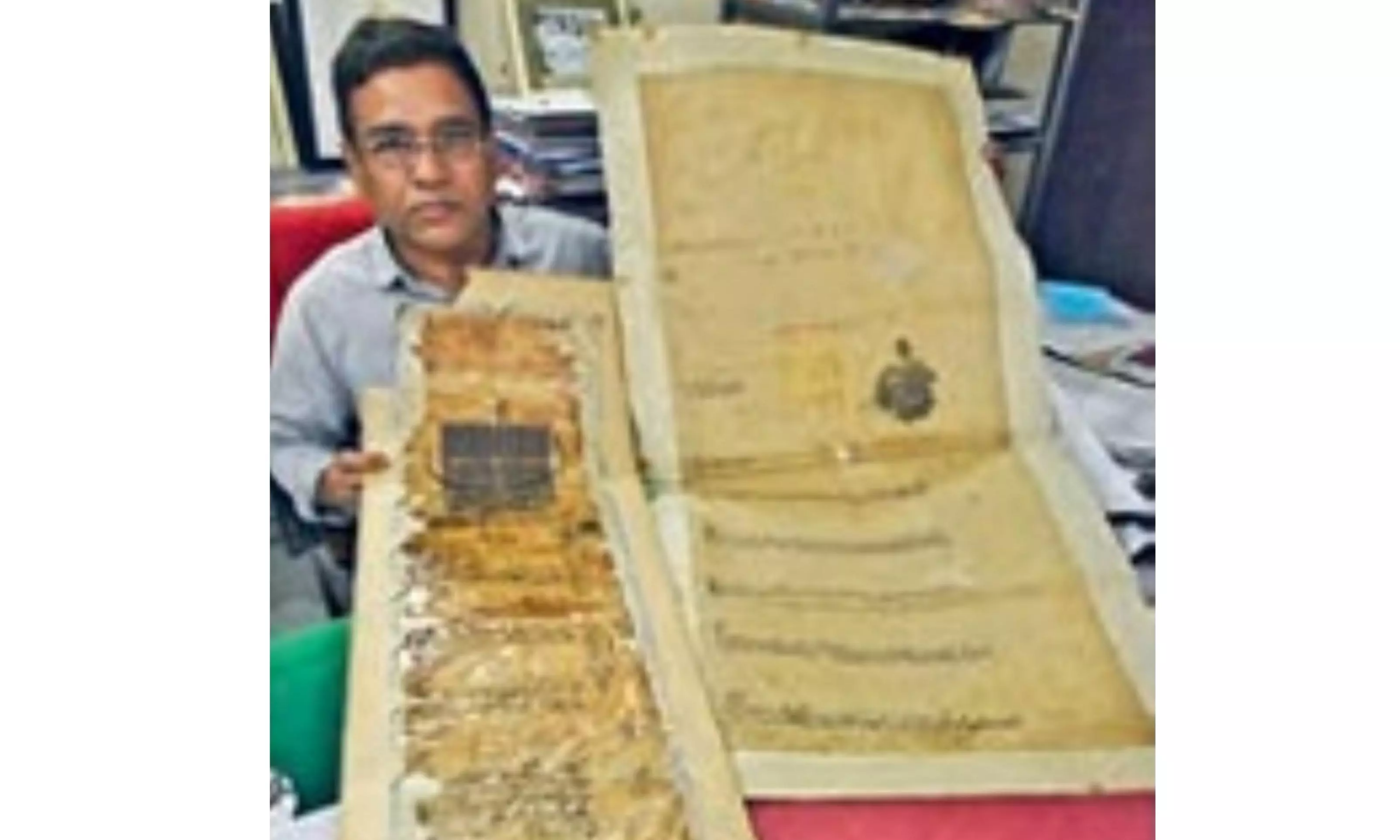
A royal farman, said to be the second oldest in India — issued by Sultan Feroz Shah Bahmani (1397–1422) in 1406 — will be among close to two lakh manuscripts identified as part of the survey by the Gyan Bharatam Mission (GBM) in Telangana. The GBM is a national initiative by the Union culture ministry to unearth, preserve and digitise India’s massive manuscript heritage.
This decree on Persian‑style handmade paper is 33 x 10 inches in size, with ink and royal‑seal authentication. The document was issued from Gulbarga, which was the seat of power for the Bahmanis before it was shifted to Bidar. The decree grants land as inam to Muhammed Ahmed, Qazi of Kalyani, and bears the distinctive tughra (monogram) and the Bahmani royal seal.
“The handmade paper used for the farman is a rare example showcasing the royal practices of the time,” M.A. Raqeeb, assistant director, Telangana Archives, told Deccan Chronicle.
Another well‑preserved royal farman is of Emperor Shah Alam II, issued in 1773 AD, appointing Maharaja Narayan Rao Bahadur as official caretaker of the riverbank near Allahabad. Believed to be part of preparations for the Kumbh Mela, the emperor issued clear instructions to officials not to levy fees.
“All expenses for maintaining the site and facilitating the pilgrims’ rituals are to be borne entirely by the Mughal government,” the decree says.
According to the decree, Hindu pilgrims (yatris) arriving from across the subcontinent — especially from Gujarat and Maharashtra — must be allowed to take the sacred bath and holy dip for spiritual purification without any fee or levy. The directive is to be strictly implemented and communicated to the commissioner of police and all present and future officers for perpetual observance.
“This farman illustrates the Later Mughal policy of imperial patronage toward diverse religious practices and underscores the state’s responsibility for safeguarding pilgrimage routes and sacred bathing ghats,” Raqeeb explained.
The cluster centre at the State Archives has identified and completed surveys of 17 institutions and individuals, while surveys for another 42 are underway. It has so far scanned 57,842 documents and exported 29,871 images.
Dr Zareena Parveen, director, State Archives, and coordinator of the Cluster Centre, GBM, explained that the survey has identified 1,95,935 manuscripts, including those of the Telangana Archives, and a total of 29,871 images of 130 manuscripts had been uploaded till May 2.
“At the State Archives alone we have over 1.8 lakh manuscripts, including 668 in book form, 155,000 paper items and 25,000 private collections (paper). Most of these are in Old Persian (Shikista) and cover varied subjects, including graphic pictures of Mansabdari, revenue and military systems of the Mughals in the Deccan region (South India),” Dr Parveen director explained.
source: http://www.deccanchronicle.com / Deccan Chronicle / Home> Southern States> Telangana / by Md Nizamuddin / May 03rd, 2026
The family of Ali Khan Mahmudabad, the Ashoka University professor whose social media post on Operation Sindoor set off a storm, footprint on Indian history stretches back to the medieval period.
Prof Ali Khan Mahmudabad, his father Raja Mohd Amir Mohd Khan (centre) and brother Rajkumar Amir Hasan Khan. Image courtesy: Mahmudabad Estate
The Supreme Court on March 16 closed the case against Prof Ali Khan Mahmudabad, the Ashoka University historian and columnist, after the Haryana government declined to grant sanction for his prosecution for his social media post on Operation Sindoor, a decision the court had itself nudged the state towards in an earlier order.
A Division Bench comprising Chief Justice of India (CJI) Suryakant and Justice Joymalya Bagchi had, in its order of January 6, asked the Haryana government to consider refusing sanction as a “one-time magnanimity.” The state obliged, bringing to an end a case that had drawn global attention to questions of free speech and academic freedom in India.
The matter had originated in a social media post made by Prof Mahmudabad in connection with Operation Sindoor of 2025. It snowballed rapidly after he received summons from the Haryana State Women’s Commission on May 12, 2025. The Supreme Court had granted him interim bail on May 21.
The man behind the case
Prof Mahmudabad holds a doctorate and a master’s degree from the University of Cambridge and teaches history and political science at Ashoka University. Also known by his courtesy title “Raja of Mahmudabad,” he is the latest in a long and storied line – a family whose footprint on Indian history stretches back to the medieval period.
During the Nawabi rule in Awadh and later under the British, the Rajas of Mahmudabad were among the largest Taluqdars, or feudal landholders, of the region, controlling over 400 villages and extensive urban properties across Lucknow, Sitapur, Lakhimpur Kheri and Nainital.
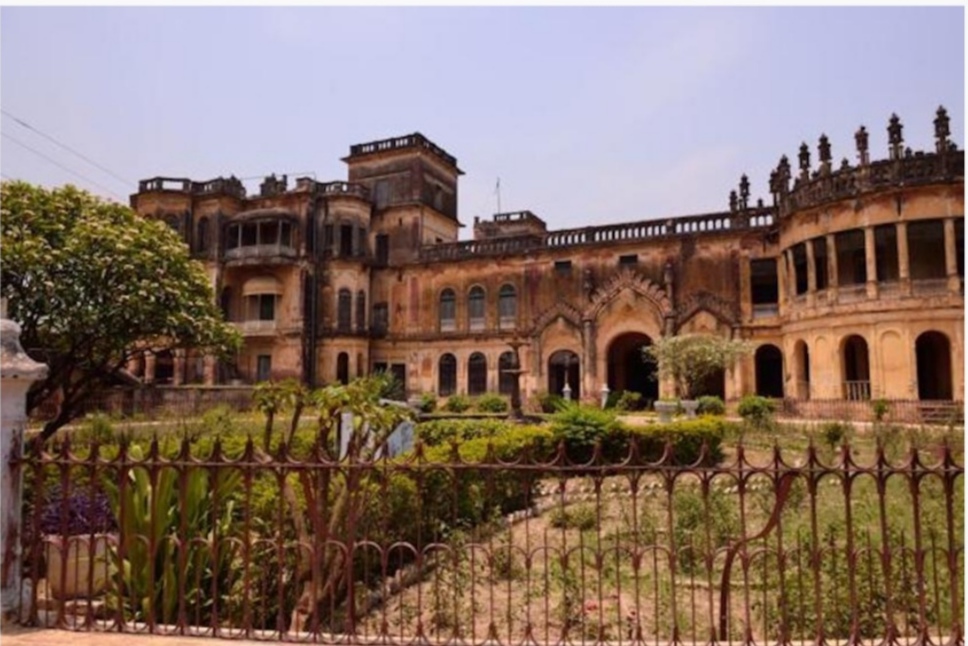
The family’s most visible legacy is the Mahmudabad Fort in Sitapur, a 19th century structure built in the Indo-Saracenic style that counts among the largest private residences in the world. It has hosted royalty, diplomats, political leaders and intellectuals from across the globe. Its library holds thousands of rare books and manuscripts in English, Hindi, Urdu, Sanskrit, Persian and Arabic – including handwritten copies of the Quran, the Bhagavad Gita and the Mahabharata, some dating to the 16th century.
The fort’s kitchens, too, have kept alive culinary traditions that have largely disappeared elsewhere. The original mud fort on the site was set ablaze by the British during the Revolt of 1857 and later rebuilt.
The family’s syncretic character runs deep. Its charitable endowments include temples, one gifted to the Udasin Sect founded by Sri Chand, son of Guru Nanak, replicas of the Muslim shrines of Najaf and Karbala in Iraq and a caravanserai built to shelter travellers.
Revolt of 1857 and after
The family’s political legacy is equally significant. During the Revolt of 1857, Muqim-ud-Daula Raja Nawab Ali Khan commanded several thousand rebel troops before being killed by British forces – the same forces that burned down his 16th century fort. His role has been documented in historical accounts of the period and in the Urdu novel “Aghaz-e-Sahar” by Khan Mahbub Tarzi, translated into English by Prof Mahmudabad himself under the title “The Break of Dawn.”
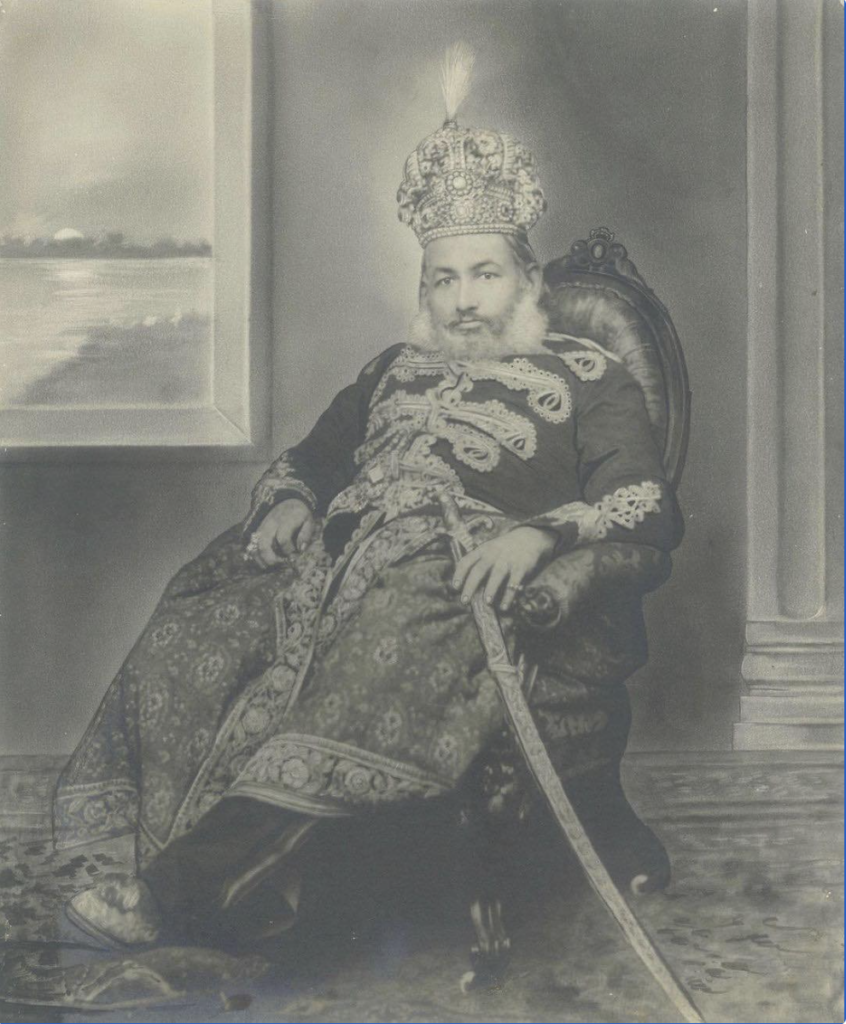
His son, Amir-ud-Daula Raja Sir Mohammad Amir Hasan Khan, served on the Legislative Council of the Lieutenant Governor of the North Western Provinces. Lucknow’s Amir-ud-Daula Public Library and Amir-ud-Daula Islamia Degree College are named after him.
Amir-ud-Daula Raja Sir Mohd Amir Hasan Khan. Image courtesy: Mahmudabad Estate
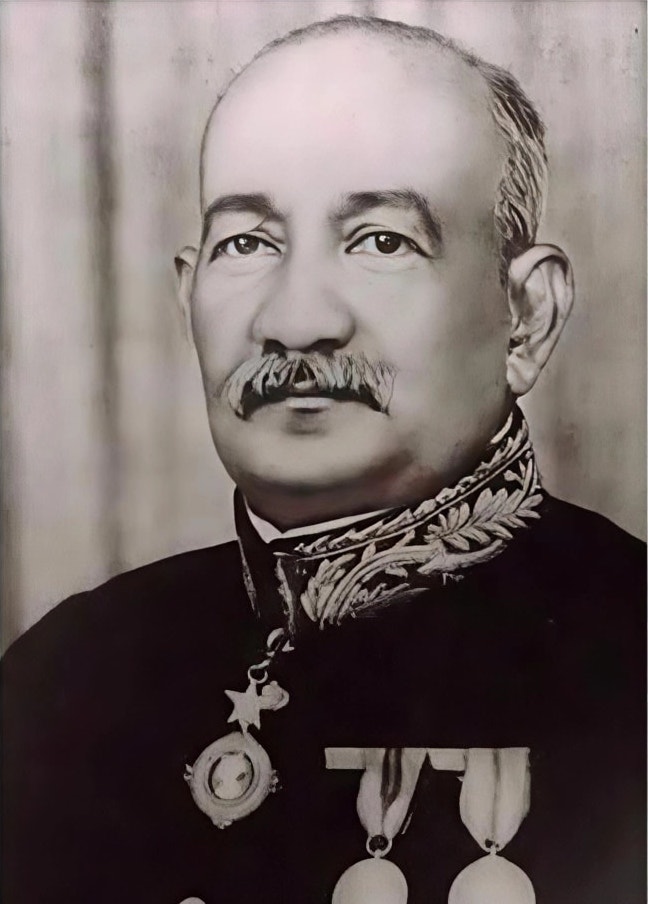
His son, Prof Mahmudabad’s great-grandfather Maharaja Sir Mohammad Ali Mohammad Khan was a pioneer of education who played a central role in establishing both Lucknow University and the Aligarh Muslim University, serving as the latter’s first Vice-Chancellor from 1920 to 1923. A residential hostel, Mahmudabad House, in Aligarh Muslim University’s Sir Shah Sulaiman Hall is named after him. He also served as the Home Member of the Governor of UP’s Executive Council.
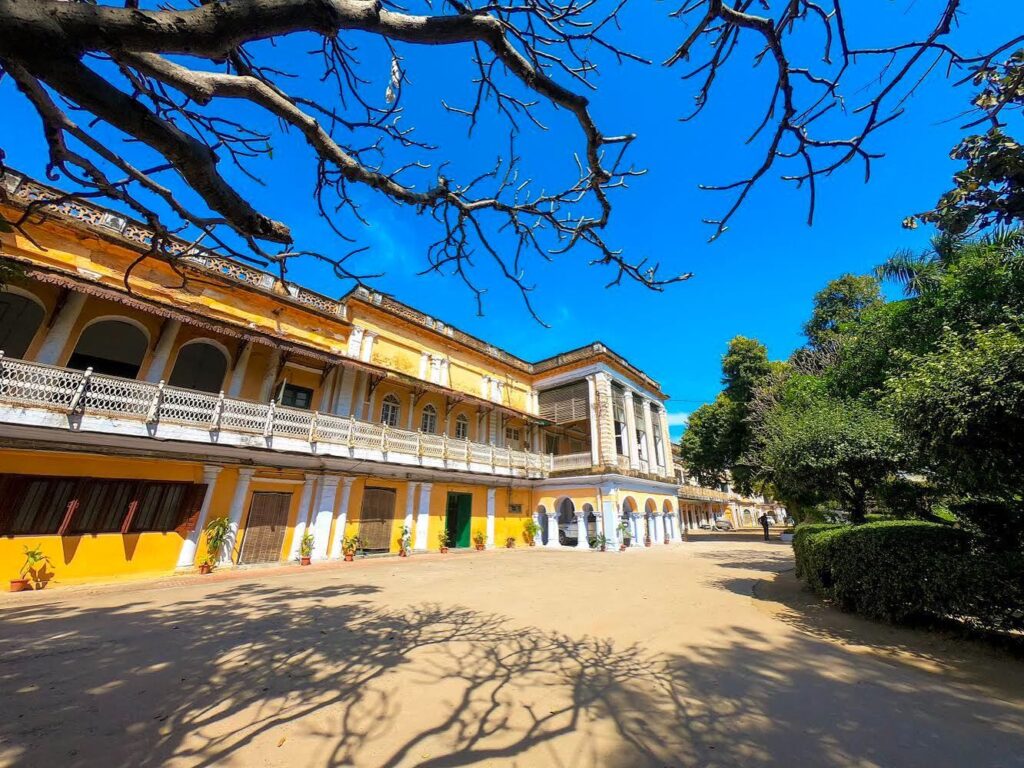
Mahmudabad House in Lucknow. Image courtesy: Mahmudabad Estate
A close friend of Motilal Nehru, he was instrumental in the signing of the Lucknow Pact of 1916 and served on the Imperial Legislative Council, the Council of State and the United Provinces Legislative Council. Lucknow’s Butler Palace, named after former UP Governor Sir Spencer Harcourt Butler, was built by him.
Maharaja Sir Mohammad Ali Mohammad Khan
Prof Mahmudabad’s father, Raja Mohammad Amir Mohammad Khan, was also a Cambridge graduate and an occasional professor of astrophysics at Imperial College London and the Institute of Astronomy at Cambridge. He was elected twice to the UP Legislative Assembly on a Congress ticket, in 1985 and 1989.
When he passed away in October 2023, thousands joined his funeral procession across religious lines, and schools, markets and commercial establishments across the area shut down in mourning.
A vindication, and a reminder
Prof Mahmudabad’s Lucknow home, Mahmudabad House – part of the historic Qaiserbagh Palace complex – continues to serve as a gathering place for intellectual and cultural exchange, much as the family’s spaces have for centuries.
The closure of his case, then, is more than a personal reprieve. Coming at a time of heightened scrutiny over free expression in India, it is being seen as a reaffirmation, however fragile, of the right to speak, question and dissent.
(Aman Alam is a student Barrister at the University of London and an Advocate in the Supreme Court. He has been a former Law Clerk-cum-Research Associate to a Supreme Court judge. He is also a Fellow of the Royal Asiatic Society of Great Britain and Ireland)
source: http://www.siasat.com / The Siasat Daily / Home> Featured News / by Aman Alam, Guest Contributor March 27th, 2026
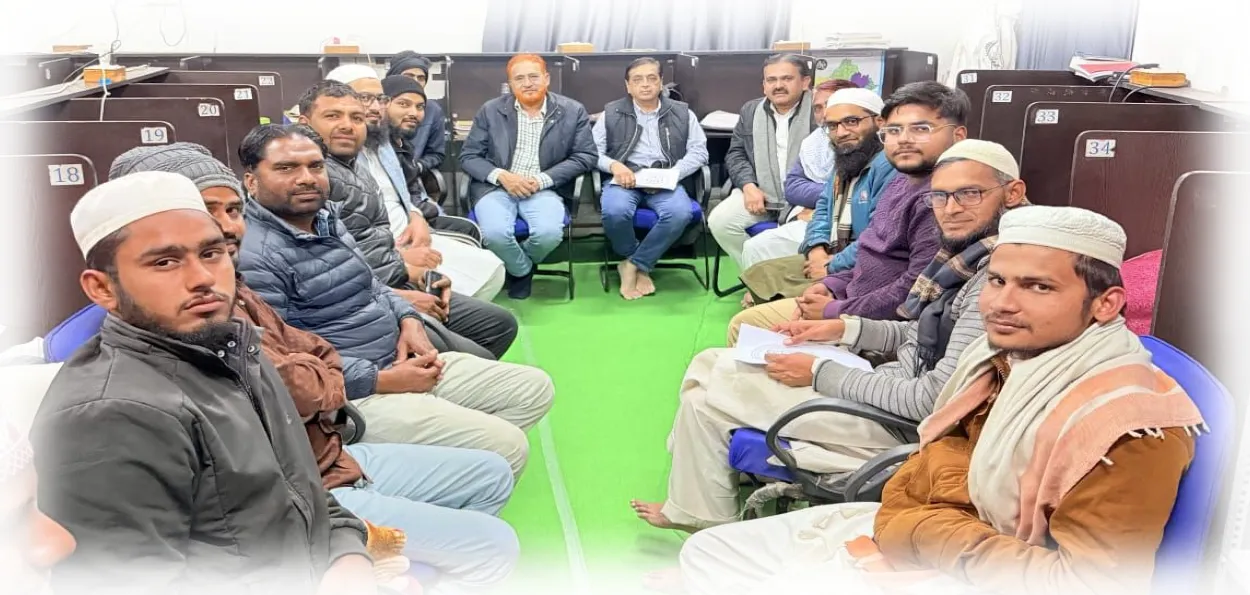
In Untada, a small village between Ajmer Sharif and Kishangarh in Rajasthan, a modest community initiative is quietly transforming the educational landscape. A library inside the village’s Jama Masjid, set up with public donations, has become a hub of learning for children and ignites aspirations in the youth
Named the Limra Education Muhim Library, the facility was launched in September 2023.
What began as a small effort has gradually evolved into a shared study space where students prepare for their academic and career goals, often studying late into the night. Residents have a plan to institutionalise the initiative by registering Limra Education Muhim Welfare and Charitable Trust, Untada.
Students in the Library
Despite limited resources, teachers, doctors and socially conscious residents of the village have come together to build and sustain the library. Their efforts have created an environment to inculcate discipline among students. Many of them today aspire to pursue higher education and competitive careers.
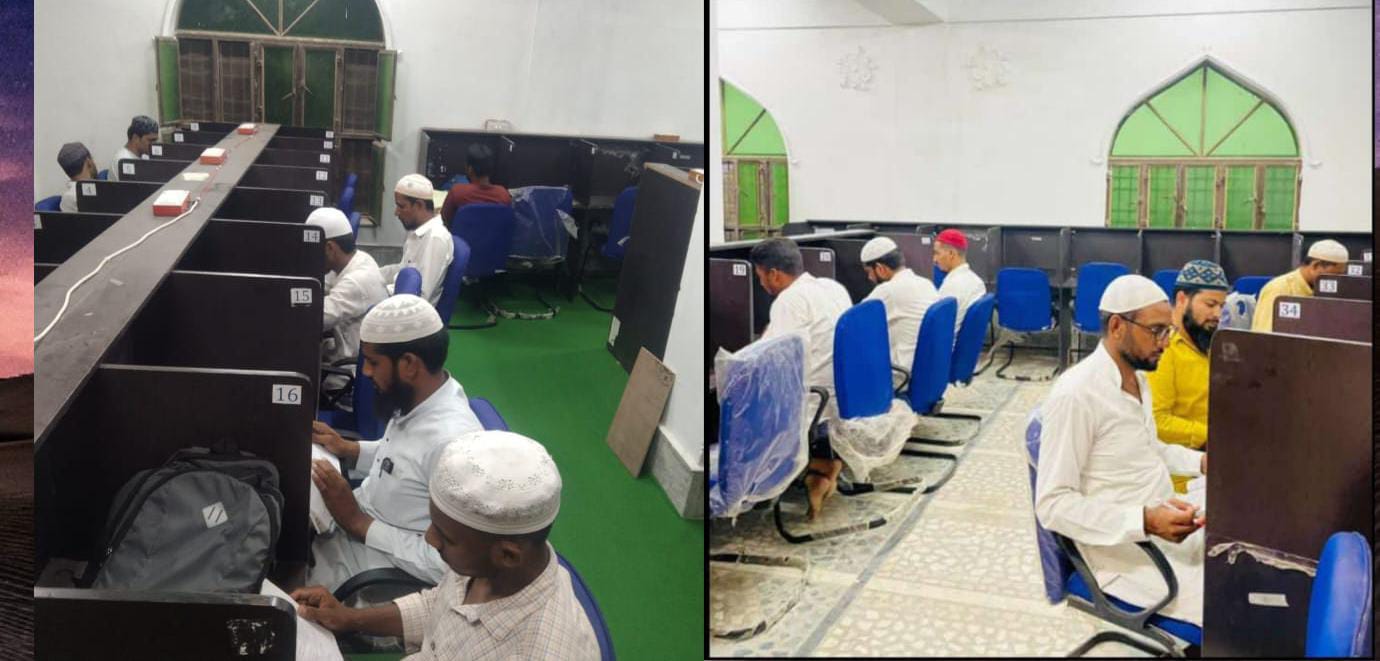
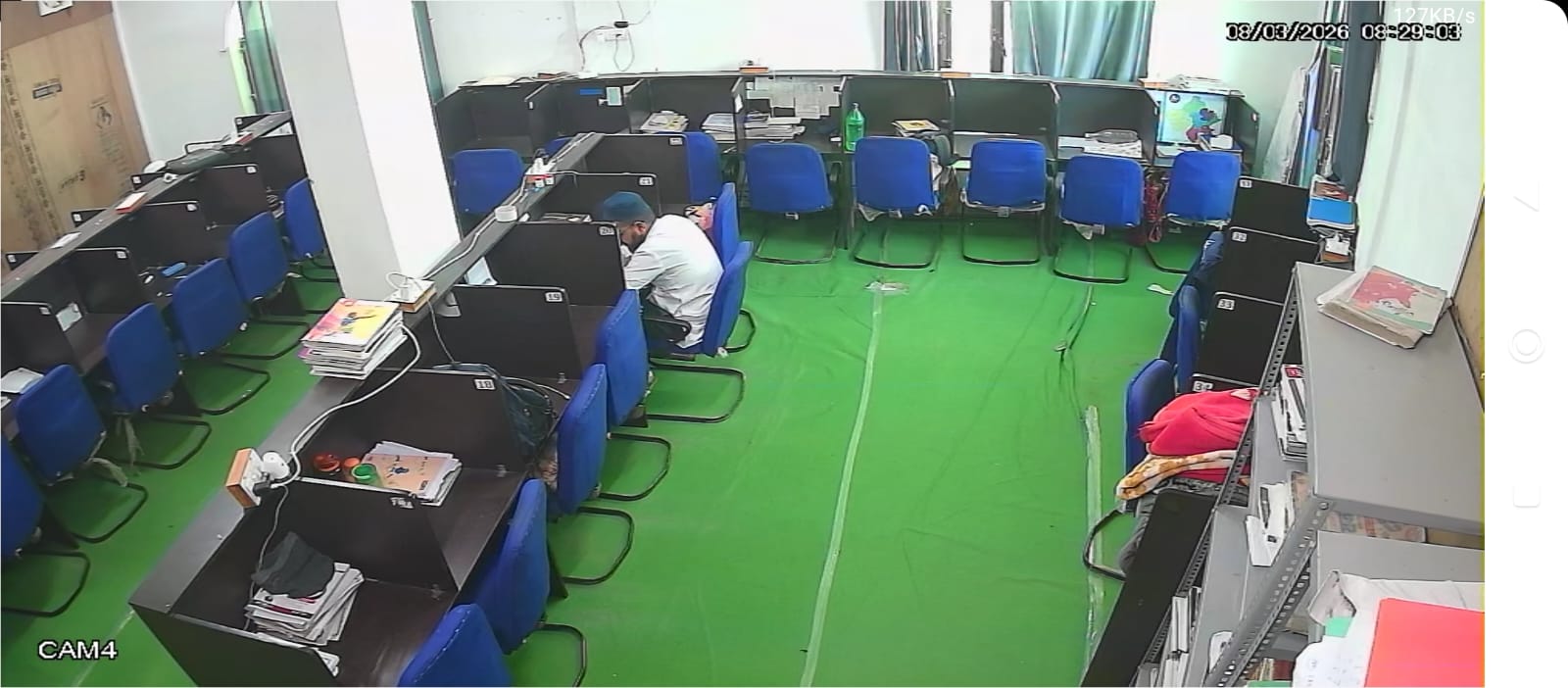
The library operates out of a 30×30-foot hall of the mosque on the first floor. Wooden and plywood partitions have been installed to create quiet corners for studying. The facility can accommodate around 34 students, with nearly 18 using it regularly. The library is open around the clock, allowing students to study at any time.
Designed primarily for students preparing for competitive examinations, the library houses books on general knowledge about Rajasthan and India, competitive exam material and cognitive development resources. Free Wi-Fi access enables students to attend online lectures and access digital study material. Many also bring their own books, turning the space into a community study hub.
According to committee member and teacher Mohammad Iqbal, the idea emerged during a meeting of the villagers, where some people felt the need to create a supportive educational environment for children. Iqbal then began mobilising community support, discussing the initiative at mosques, village gatherings and tea stalls to highlight the importance of education.
Villagers contributed voluntary amounts ranging from ₹500 to ₹5,000. Through these small contributions, about ₹2.5 lakh was raised to set up the facility.
The funds were used to convert the hall into a functional study space with tables, chairs, carpets, fans and electrical fittings. Power sockets were installed near each desk, while an inverter, computers, a television and CCTV cameras were also arranged. Internet connectivity was provided through Wi-Fi. The mosque committee supported the initiative by allowing the space to be used free of rent.
To cover operational costs, the library charges a nominal monthly fee—₹100 for board exam students and ₹200 for those preparing for competitive examinations. Students from economically weaker families are allowed to use the facility free of charge.
Although the initiative is relatively new, early signs of success have begun to appear. One student recently secured a Class-IV government job, which the committee views as an encouraging start.
The project is also set to expand. Resident and madrasa teacher Gul Mohammad has donated around 200 square yards of land for a dedicated library building. Once the trust registration is completed, the committee plans to construct a larger facility on the site.
A 12-member committee manages the library’s operations. Master Shafi Mohammed serves as president, Dr Wazir Mohammed as secretary and Dr Abdul Qadir as treasurer. Several teachers, doctors and social workers are also involved in running the initiative.
Students in the Library
The committee now plans to convert the facility into a digital library, providing students with online learning resources and e-learning facilities. There are also proposals to start offline coaching classes for competitive examinations.
Untada, with around 1,200 households, is a Muslim-majority village. Yet this locally driven educational initiative is increasingly being seen as an inspiring model for surrounding areas. For many students who travelled to nearby towns for space to study, the library provided a quiet and accessible place.
What started in a small hall of a village mosque is gradually evolving into a beacon of hope—demonstrating how community participation and a shared commitment to education can open new opportunities for rural youth.
source: http://www.awazthevoice.in / Awaz, The Voice / Home> Stories / by Farhan Israeli, Ajmer / March 14th, 2026
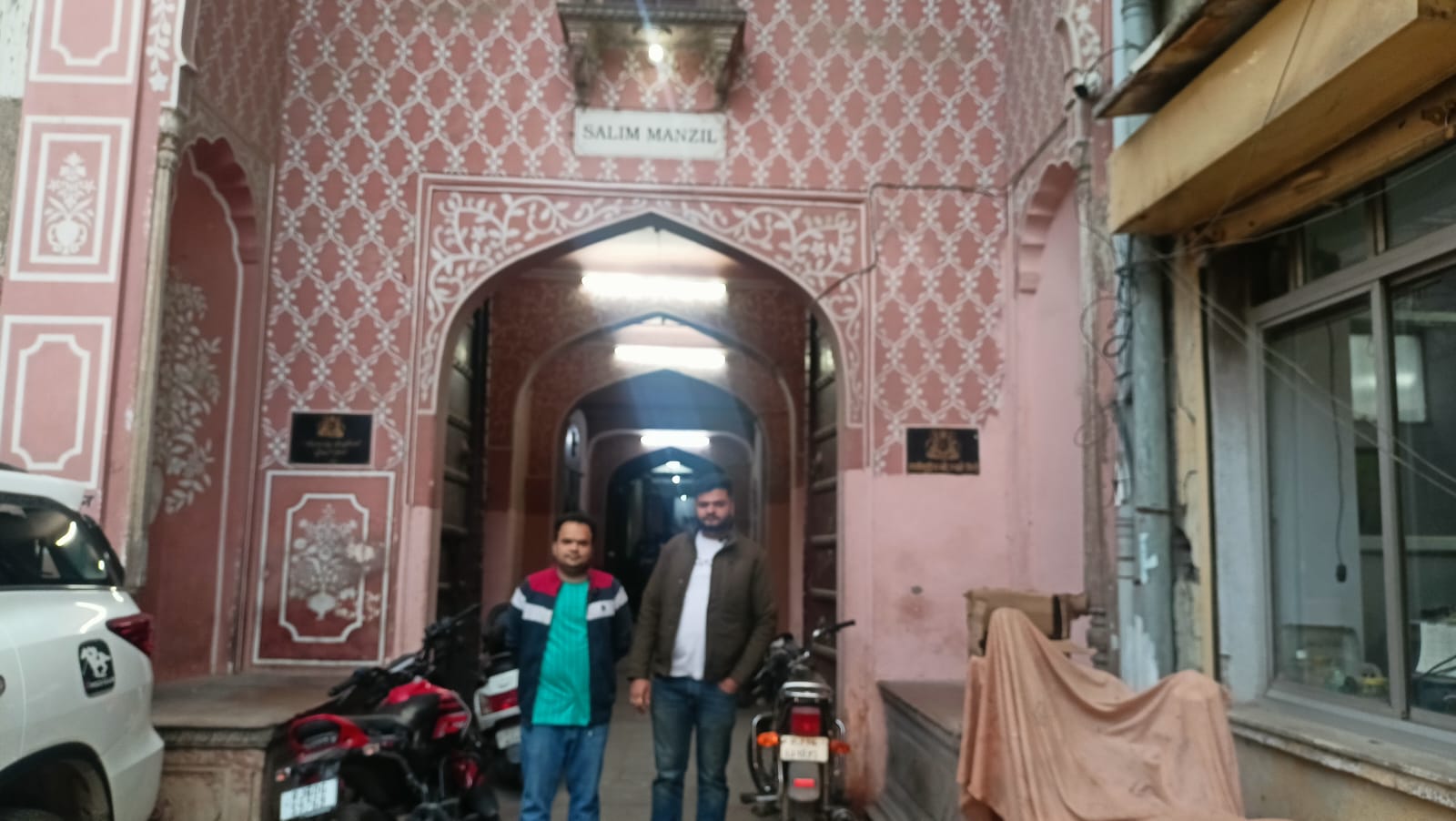
In the bustling streets of Jaipur at Haldio Ka Rasta, Johari Bazar, time suddenly seems to stand still. Amidst ancient stone walls, arched doorways and the stillness of history, stands the Salim Manzil, a majestic building which is a living legacy of more than two centuries.
The mansion houses a relic – a cap of Imam Hussain, the grandson and son-in-law of the Prophet Muhammad; it adds to its importance.
The story behind the ‘blessed cap’ reaching the haveli is interesting and part of its rich history.
The entrance to Salim Manzil
In the early 17th century, an ancestor of today’s inmates of Salim Manzil treated an Iranian king. The King wanted to reward him with gold, silver and valuable gifts, but he declined the offer and instead requested the cap of Hazrat Imam Hussain.
The King presented the relic and a certificate with the royal seal to him as a reward.
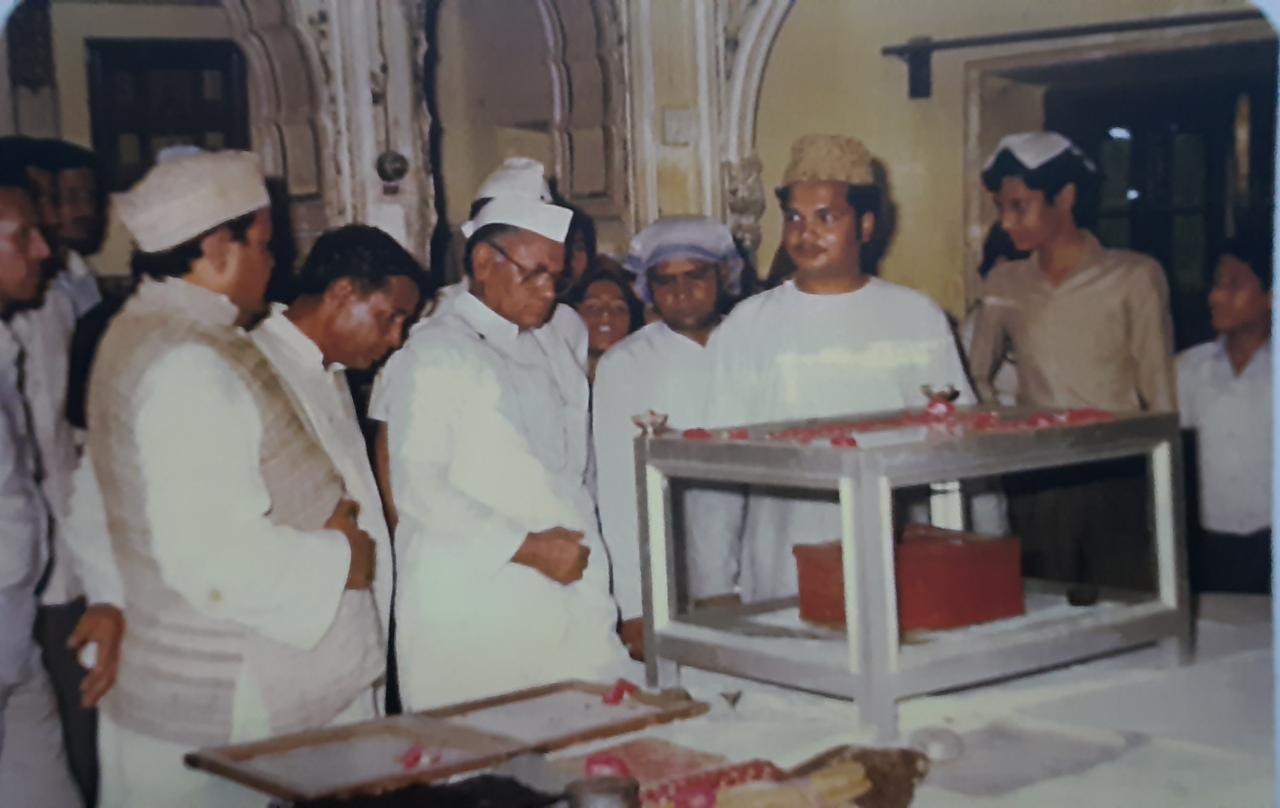
Since 1876, this blessed hat has been preserved in Saleem Manzil in a special glass-framed box kept in a hall called “Kala-e-Mubaraq”.
Every year on the 9th and 10th of Muharram, it is opened to the public. In those days, Salim Manzil is turned into a pilgrimage centre, and its air filled with spirituality.
People viewing the Blessed Cap of Hazrat Imam Ali
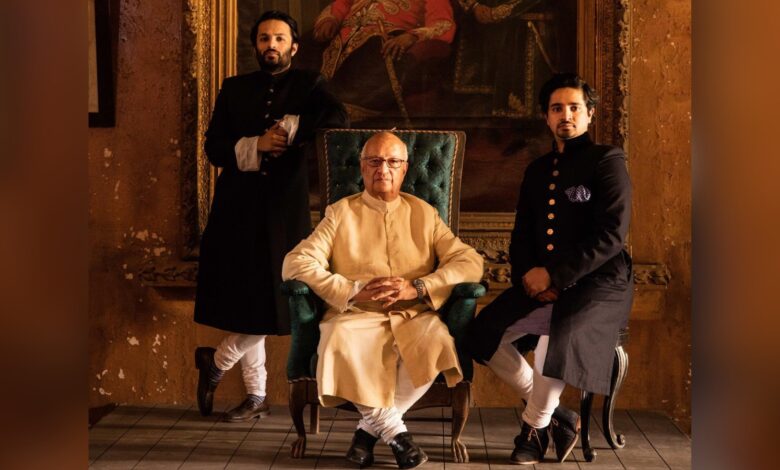
Today, Moinuddin Khan, 33 and his younger brother, Hussamuddin Khan, 27, are living in the mansion. The two brothers are not only maintaining this legacy, but also modernising its upkeep and display of artefacts.
Moinuddin Khan says that his ancestors came to Jaipur from Delhi around 1812 AD. At that time, Maharaja Jagat Singh of Jaipur State granted them a fiefdom and honour to his elder brother, Hakim Wasil Ali Khan.
This honour was for Wasil Ali Khan’s academic and medical expertise, and he was admitted to the Royal Court. One of the ancestors was the head of the intelligence department of Jaipur State, a sensitive position. He was responsible for the State’s security, political activities and gathering information needed for administration.
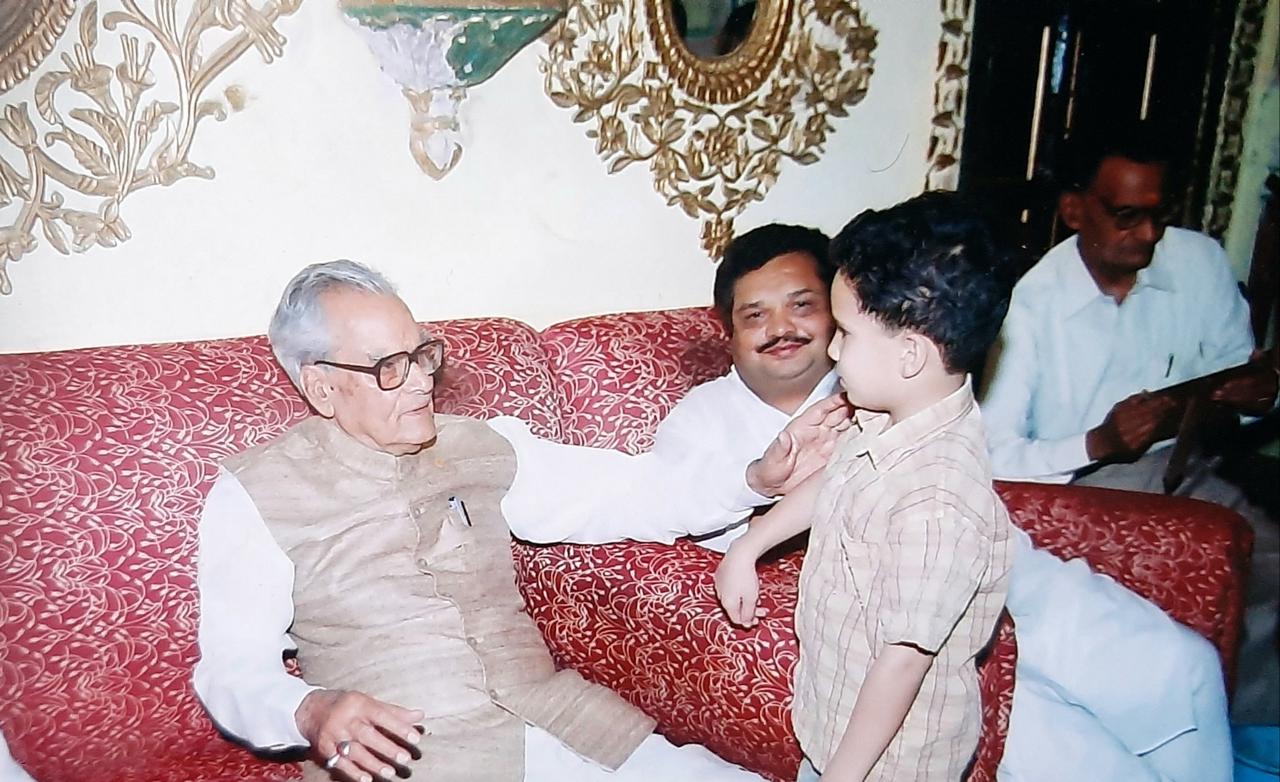
Bharion Singh Shekhawat with the inmates of Salim Manzil
Later, his son, Salim Ali Khan, worked in the same position.
The construction of Saleem Manzil began in 1867, and it was completed within three years. Spread over an area of about a bigha, the building was gifted by the Maharaja of Jaipur. Even today, the haveli’s traditional Rajasthani carvings, arches, high ceilings and lattice windows are a testimony to the architectural craftsmanship of that era.
Over time, many havelis were converted into commercial hotels, but Saleem Manzil retained its original identity. The family also received offers to convert it into a hotel, but they preferred to preserve the spirit of the heritage rather than market it.
Visitors inside the Salim Manzil
The mansion has been used as a set by many filmmakers for movies and web series. Moinuddin says he acted for the role of Sri Krishna in one of the web series. “We have a strong foundation in religion, but we also remain connected with art and dialogue.”
A large hall is decorated, the rooms are filled with the fragrance of perfume and roses, and the pilgrimage begins with Milad Sharif.
Devotees from Gujarat, Maharashtra and other parts of the country also arrive here. In those days, Shia Muslims read prayers and distribute Tabarak.
Moinuddin says that we consider it more of a trust than an inheritance. It is both an honour and a responsibility for us.
Many important persons have visited Salim Manzil. They include President Giani Zail Singh, Chief Ministers Haridev Joshi and Shiv Charan Mathur, Bhairav Singh Shekhawat (Vice President), Natwar Singh (Minister), Najma Haibabullah (Rajya Sabha Chairperson), and Supreme Court Justice Gyan Sudha Mishra.
Head of the family, late Naseemuddin Khan, popularly known as Pyare Mian, founded the All-India Hakeem Ajmal Khan Memorial Society to perpetuate his family’s legacy of Unani medicine and social service.
Today, Moinuddin and Husamuddin Khan are trying to connect this heritage with modern dialogue. They are planning to build a new hall for better management of the pilgrimage during Muharram.
They are sharing information about this heritage with the world through social media and digital means for transparency.
Amid myriad historic monuments of Jaipur, Salim Manzil is unique since it not only preserves the relics of history but is also a pilgrimage centre.
source: http://www.awazthevoice.in / Awaz, The Voice / Home> Stories / by Farhan Israeli, Jaipur / February 21st, 2026
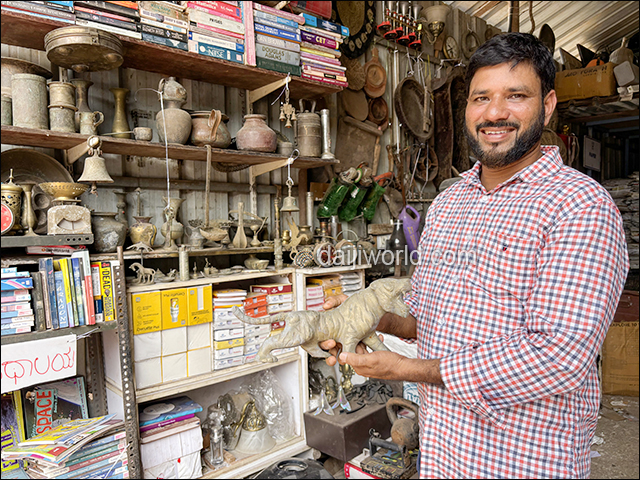
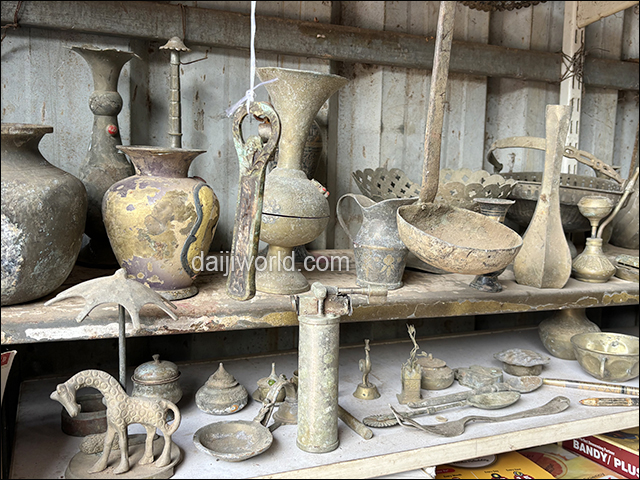
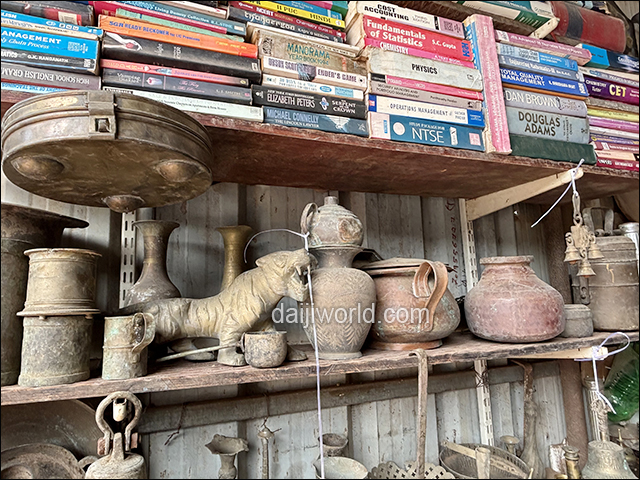
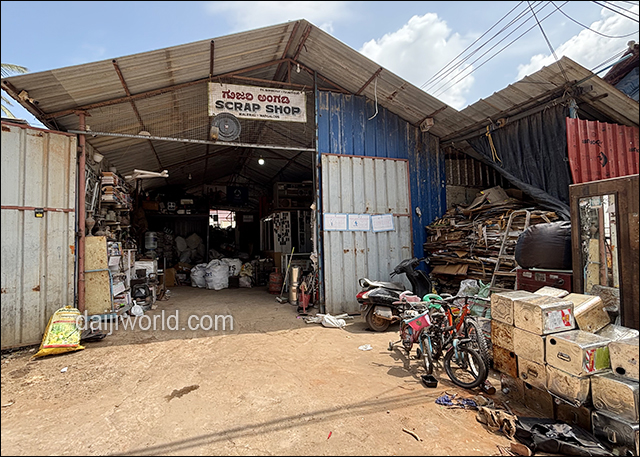
In the heart of Malemar stands a unique museum that has become a treasure trove of memories for the community. What began as a small scrap business two decades ago, and later transformed into a distinctive museum eight years ago, is today capturing the attention of visitors with its fascinating collection of vintage artefacts — all thanks to the dedication of Ibrahim Khaleel.
Originally hailing from Kulur, Khaleel developed the idea of converting his scrap shop into a museum when he noticed antique and traditional pieces entering scrap shops.
Determined to preserve them for future generations, he began collecting items not only from his own shop but also from households and other scrap dealers. Over the years, his efforts have turned discarded objects into priceless memorabilia — truly creating ‘wealth out of waste’.
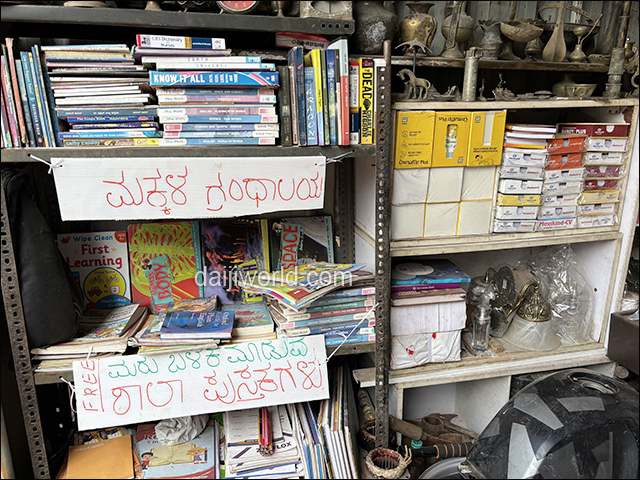
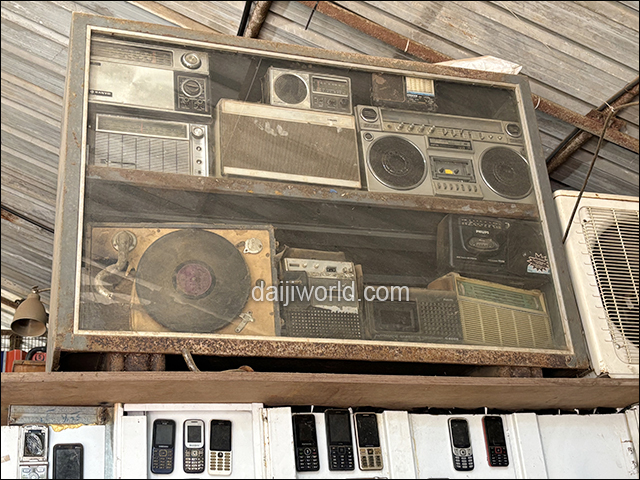
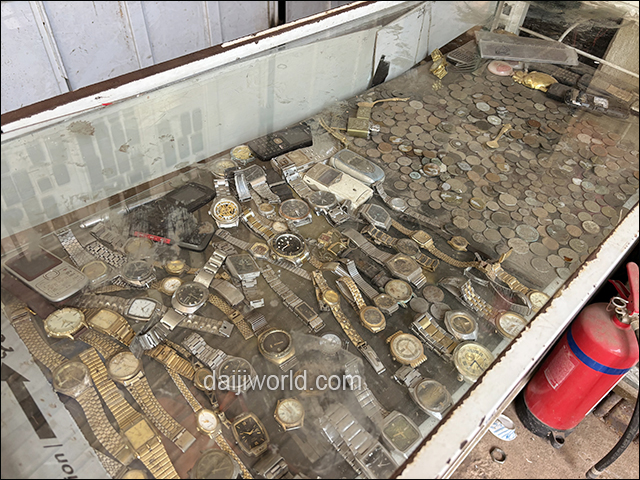
Khaleel’s museum now showcases a wide array of antiques, including coins, watches, tape recorders, gramophones, vintage telephones, lanterns, and traditional household items. He has also created a small library within the museum, where children and students can access books free of cost, making his initiative both nostalgic and educational.
His work has received valuable support from organisations such as Plastic for Change, which helped him organise the scrap shop into different sections. Khaleel has also invested in machines to shred waste paper, ensuring sensitive documents are not misused, and to separate cable wires from copper for effective recycling.
Looking ahead, Khaleel hopes to create a separate, larger space for his museum so that more people can visit, relive memories, and appreciate the craftsmanship and design of a bygone era.
Khaleel’s scrap museum is not just a collection of old objects; it is a space where history lives on, nostalgia is rekindled, and generosity flourishes. For anyone visiting Malemar, it is undoubtedly a must-see destination.
Scrap Shop Turns Museum in Mangalore | Creativity of Ibrahim Khaleel / source: youtube.com
source: http://www.daijiworld.com / Daijiworld / Home> Top Stories / by Daijiworld Media Network – Mangaluru / pics: Dayanand Kukkaje / September 11th, 2025
The evocative recapitulation of eminent personalities provides a quick, candid, exquisite and scrupulous portrayal of those who retain their abiding presence without being physically present in the world.
The unprecedented acceptance of monolingualism has put a big question mark on the existence of numerous languages through which people stitch up a warm social rapport and seek to fulfill their cultural aspirations. India, an awe-inspiring repository of innumerable dialects, languages and different linguistic traditions, finds it nerve-racking to carry through the challenges thrown open by the technology-savvy language-English. The domination of English has taken a heavy toll on regional languages, and Urdu, once considered a significant link language, is no exception. Though Urdu is widely used as a spoken language, and its sensitively rendered poetry gets across the country, its script has been fading away with bewildering speed.
It aches much to realize that the popularity draws its sustenance from its oral rendering, and familiarity with its distinct script has been melting away steadily. Barring some notable exceptions, only faculty members and research scholars associated with various departments of Urdu of the universities and colleges use Urdu as the medium of trifling academic discourse. At a time when Urdu faces the threat of obsolescence, the gleam of hope emerges from the citadel of learning, Aligarh, where academicians not belonging to humanities draw on Urdu to initiate a perceptive discourse on a plethora of issues without bringing rhetorical flourish into play.
Professor Saeeduz Zafar Chagatai (Physics), Professor Faseeh Ahmad Siddiqui (Chemistry), Professor Athar Siddiqui (Zoology), Professor Shaan Mohammad (Political Science), Professor Iftikhar Alam Khan (Museology), Professor Zilur Rehman (Unani Medicine), Professor Mohammad Sajjad( History ), Professor Zafar Mahfooz Nomani (Law) Dr Asad Faisal Farooqui (Mass Communication) and the like seek to strengthen non-fiction prose in Urdu.
Autobiography, memories, diary, letters, sketches and anecdotal scrolls are much-adored genres of non-fiction prose, but in Urdu, they usually betray a strong sense of gushiness and sickening self-adulation. The preponderating narrative of reminisces does not go well with the celebrated author, Professor Athar Siddiqui, whose evocative recapitulation of eminent personalities appeared.
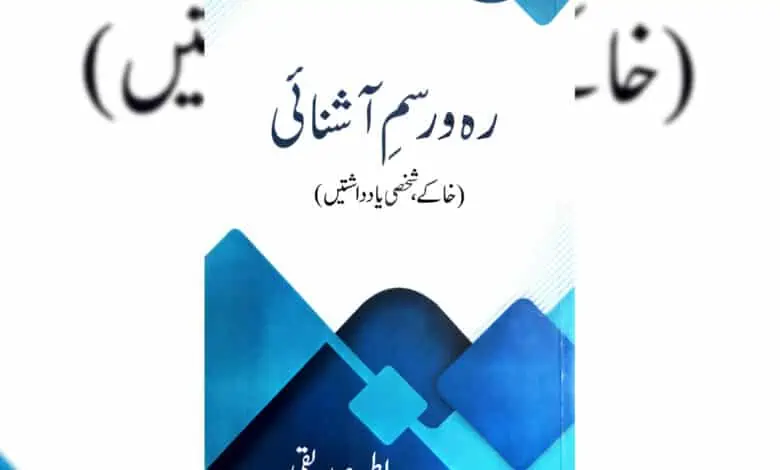
The book Rahe wa Rasm-e-Aashnai (sketches and personal memoirs) provides a quick, candid, exquisite and scrupulous portrayal of those who retain their abiding presence without being physically present in the world.
Professor Athar Siddiqui, a widely recognized scientist, has produced a captivating narrative of his eventful life, Main Keya Meri Hayat kaya, with disarming humility and jotted down travelogues vividly calling attention to down reaching human experiences that frequent foreign travels produce. Interactive media frequently carry intriguing stories featuring commonplace occurrences. The stories with a strong sense of moral tutoring dished out by the digital world need to be shared with non technology conversant Urdu knowing people.
He left Professor Athar Siddiqui to supplement what had been missing and started translating these pulsating stories into Urdu. It was left to Professor Athar Siddiqui to supplement what had been missing, and he translated these pulsating stories into Urdu.
Tahzibul Aklaqh, a prestigious periodical launched by Sir Syed in 1870, started serializing it with a suggestive title Hairat Sarai Ki Kahaniyan (The stories of wonderland), and two volumes of these laconic and absorbing stories have appeared so far.
He meticulously edited two autobiographies of two illustrious alums of Aligarh Muslim University–Dr. Sheikh Mohammad Abdullah (founder of women’s college, AMU) and Nawab Ahmad Saeed Khan Chattari ( former Governor of Uttar Pradesh). He had astutely done over translating books on Shaheryar and Musa Raza.
Athar Siddiqui’s recently published book, Rah-o-Rasam-e – Aashnai,” creatively maps out the accessible and unchartered terrains of thirty-five personalities in candour-driven idiom, and he hardly holds with the popular notion that put a lock on showing the slightest discourtesy to the deceased. The author asserts, “It is widely mentioned that the sketch writer must not use any indecent or improper word for those resting in the peace. If this sort of exhortation is adhered to, then the sketch, personal article and memories will be read as appreciation and admiration-filled text. If history writing sticks to this principle, then the authentic history of any period could not be produced. I do not buy this argument.”
The subtle wised-up mélange focuses on nine creative writers such as Shahryar, Iqbal Matin, Sajida Zaidi, Qazi Abdus Sattar, Professor Mukhtar Uddin Arzoo, Syed Hamid, Lateefuz Zaman and a couple of close relatives, teachers, friends and former vice-chancellors.
Iqbal Matin, whose awe-inspiring artistic sensibility could not get him the recognition across the country he fully deserved, has come in for a refined exploration. Athar Siddiqui’s reminiscence is peppered with unusual but fascinating details about the author. The author living in Aligarh tried desperately to contact Iqbal Matin (Hyderabad) when the letter was the preferred communication medium. He realized that his letters were not delivered to the addressee, who was prone to change houses. Iqbal changed thirty-five houses and bore testimony to his nomadic lifestyle.
Much has been written on Jnanpith awardee and prominent poet Shahryar but a comprehensive and insightful article highlighting his distinctive personal traits and oeuvre is still looked-for. The piece titled “Shahryar as a man and poet” fills the bill with remarkable ease. Athar saheb cites many instances to prove Shahryar’s unflinching loyalty to his friends but never spitting upon the rivals. The voice of modernism with strong traces of neoclassicism, Shahryar never nurtured animosity and did whatever he could for those who looked up to him in their hours of peril. People, even authors and pushover critics tend to read creative texts in the backdrop of personal details; hence when Shahryar suffering from a terminal illness- cancer–composed a couplet; Aasman ab kuch nahi tere karney ke liye/Ham ne sab taiyaariyan karli hain marne ke liye (O sky, now you have nothing to do/I have completed all the preparations for dying) it was considered as the affirmation of impending death. Employing critical acuity, Athar saheb mentioned that the couplet has nothing to do with a nagging sense of personal extinction; the poet laments how we perfected the art of self-destruction reflected in the depletion of Ozone layer manufacturing of weapons of mass destruction.
Athar Siddiqui wrote an immensely readable sketch of Qazi Abdus Sattar, a much overrated and pretentious writer who always took pride in using ornate and florid language in his fiction. His novel Tamam Sultan has been described as magnum opus, but it is hardly more than an oft-repeated titillating story of unrequited love. Athar Saheb and Qazi have had close ties for over fifty years, but Qazi was so intemperate that he pulled ties into pieces as Athar could not attend his facilitation function. It was an act of civility to describe this narcissism as uniqueness of personality.
Prof Zilur Rehman, a widely- respected academician of Unani medicine, is a well-known scholar of Urdu, Persian and Arabic and has more than fifty books to his credit. His books, especially on Ibne Sina, Hakim Ajmal Khan, Sir Ross Masood, Hakim Ehshanullah Khan, and Hakim Abdul Moid, got widespread admiration. In addition to discussing his well-documented and invigorating writings, Athar Siddiqui effortlessly unravels his amenable nature and inimitable passion for books and artefacts. He has a collection of over 70,000 and set up a museum and library, Ibne Sina Academy, which has its website.
Seldom does one attempt to spell out what essentially embodies his wife, going beyond the adulation and berating with a sense of objectivity. This nagging edginess seems to have no bearing on Athar saheb, who painted a stirring wordy portrayal of his wife Zakia Siddiqui, a renowned academician and former principal of Women’s College, Aligarh Muslim University.
One tends to agree with the author when he asserts that during the first ten years wife is treated as the beloved; with the birth of children, she takes over the role of the mother. If harmonious marital life continues, she becomes an inseparable friend who hardly gets perturbed, no matter how annoying one becomes. It is all momentary, and the bond of affinity never weakens.
Athar saheb also evocatively narrated his mother’s life story, and he recollects his memories and anecdotes to document her extraordinary considerate nature. Suhail (son) and Taab (daughter) get pat on the head by the caring and unerring father for their abiding sympathy for others.
The book turns attention to a dozen vice-chancellors and pro-vice-chancellors of AMU, such as Dr Zakir Hussain, Bashir Hussain Zaidi, Badruddin Tyabji, Abdul Aleem, Ali Mohammad Khusro, Syed Hamid, Syed Hashim Ali, Wasiur Rehman, Naseem Farooqui, Mahmoodur Rehman, Hamid Ansari and Abul Hasan Siddiqui.
The author’s appraisal of them looks convincing, but occasionally subjectivity surfaces. The assortment of sketches offers a discerning peep into the life of all who impressed the author. The nuanced and readable prose is used impeccably, and Athar Siddiqui deserves accolades for producing such picturesque vignettes.
Shafey Kidwai is an Indian academic, communication scientist, translator, columnist, and author. He is the chairman of the Department of Mass Communications at Aligarh Muslim University.
source: http://www.siasat.com / The Siasat Daily / Home> Featured News / by Shafey Kidwai / September 26th, 2025
Ohida Khandekar’s Dream Your Museum, an installation and film about her uncle’s collection won the V&A’s Jameel Prize for contemporary art and design inspired by Islamic traditions.
Selim Khandakar with his grand-niece and the trunks housing his collection. | Photo Credit: Anand Kumar Ekboty
Selim Khandakar, 71, has always dreamt of making a museum in his village for the 12,000-plus objects he has collected over 50 years. A small portion of that collection has now reached one of the best museums in the world — the Victoria & Albert Museum (V&A) in London — thanks to his artist niece, Ohida Khandakar.
Ohida, 31, has turned her uncle’s lifelong obsession into an installation and film — Dream Your Museum — which won the V&A’s prestigious Jameel Prize for contemporary art and design inspired by Islamic traditions. The work is not just a tribute to what seems to be her uncle’s calling; it also challenges colonial museum structures and asks whether ordinary, personal objects deserve a place in museums. Can museums be flexible and inclusive spaces, showcasing the narratives of minority communities and customs? Are private collections the exclusive privilege of the rich?
The installation and film, ‘Dream Your Museum’, at the Victoria & Albert Museum (V&A) in London.
Selim worked as a doctor’s compounder in Kolkata and started collecting random objects from the year 1970. A stamp exhibition piqued his interest first, prompting him to start collecting them. He also came across an exhibition of vintage objects from Mallik Bari, one of Kolkata’s heritage homes. “It was a record of what objects were used in the ancient times and how lives were led,” Selim tells me over a Zoom call from his home in Kelepara, a village near Hooghly, West Bengal. “It inspired me to start collecting whatever felt like a record of the common person’s life and times. From bus tickets to stamps to refills of pens, I wouldn’t throw anything away.”
An assortment of rare and mundane items makes up Selim’s collection. Old clocks, inscribed ceramics, vintage records and music players, letters dating back to Partition, perfume bottles, crystal rocks, hand fans, stamps, handbills, ink pots, cameras, train tickets, receipts, even matriculation answer sheets from the 70s!
Selim Khandakar surrounded by the objects he has collected over the years. | Photo Credit: Anand Kumar Ekboty
Gramophones to baby clothes
Much of Selim’s collection is housed in tin trunks and scattered across his home in Kelepara. It sometimes becomes a ‘travelling museum’ for people in the village to explore and interact with the objects as Selim takes them around. There is curiosity, awe, some ridicule, some laughter, and from those who understand history and record keeping, even encouragement.
Ohida’s film captures Selim walking through village fields with his trunk, stopping by the river to rinse some crystal stones, and holding them up to the sun. “Where did you find these, nanu?” asks Maria, his grand-niece, who appears in the film. “In the graveyard,” Selim replies.
Selim Khandakar walking through village fields with his trunk. | Photo Credit: Anand Kumar Ekboty
Ohida, who studied art at the Government College of Art & Craft, Kolkata, and Jamia Millia Islamia, New Delhi, says it is sometimes hard to understand what keeps her uncle going. Is it hoarding, as his exasperated family has often believed? She and Selim don’t think so. Instead, he thinks his collection, much like Dream Your Museum, is about storytelling. “Collecting is my way of showing people from my village a glimpse of things from around the world,” Selim notes. “Like rare coins dating back to the Mughal period or vintage perfume bottles from around the world. Often people here do not get a chance to go to cities to see such things. That’s what has always kept me going.”
Selim Khandakar’s house that was destroyed after a cyclone.. | Photo Credit: Anand Kumar Ekboty
Once displayed in his modest mud house, now destroyed after a cyclone, Selim’s possessions came close to being discarded by his family until Ohida decided to document it digitally. She reacquainted herself with both her uncle and his collection when stuck at home during the pandemic. To her artist’s eye, it is a compelling one, given its range — from gramophones to baby clothes from the 80s. “It even has a bunch of fingernails [Selim’s own] in a box. It reminds me of Marcel Duchamp’s Dadaist Fountain exhibit [1917], where he displayed an upside-down urinal. Such objects challenge conventional notions of what belongs in a museum. These items, including a broken plate passed down through generations, show the power of storytelling through objects.”
Selim laughs when asked about the fingernails. “I had once visited an exhibition where I saw art made with fingernails and thought I would do the same with mine. It made me curious, so I kept them.”
What makes a museum?
Curiosity has been the driving force behind Selim’s obsession and this is what Ohida celebrates in her work. Maria accompanies Selim throughout the film, asking him curious questions about the objects in his collection, an attempt to peek into his mind. Ohida started filming Dream Your Museum as an entry for the 2022 Berlin Biennale, where it was received well, eventually landing her the V&A award.
Filmmaker Ohida Khandakar
Growing up in Kelepara, Ohida hadn’t stepped inside a museum until she came to study art in Kolkata. “I had achieved my dream of studying art and moving beyond a village where many women still had no voice and were married off early. It made me wonder — was there a limit to our dreams? Was there a limit to the dreams of my uncle, a rural, aged Muslim man?”
With the funds from the award, Ohida is now hoping to create a museum for her uncle’s collection and a cultural space in the village. “We need accessible museums that work as alternative spaces for the narratives of rural minority communities; as safe spaces for women without opportunities; to engage those who might not typically visit traditional museums due to a lack of knowledge, distance or financial constraints.”
In Dream Your Museum, her camera gently films Selim among his collections in his crumbling ancestral home. He expresses frustration at having no permanent place even after 50 years to showcase his prized collection. “I’ll now make a museum on the moon,” he declares.
The writer is a freelance journalist and the co-author of ‘Rethink Ageing’ (2022).
source: http://www.thehindu.com / The Hindu / Home> Entertainment> Art / by Reshmi Chakraborty / April 20th, 2025
With over 4,000 manuscripts and 25,000 books, Hazrat Pir Mohammad Shah Library is a sanctuary of knowledge and wisdom.
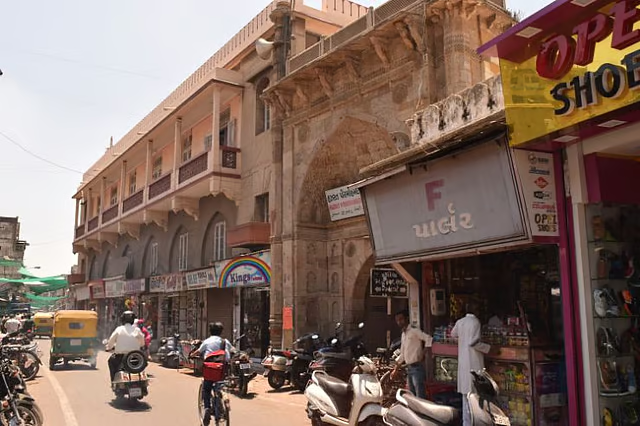
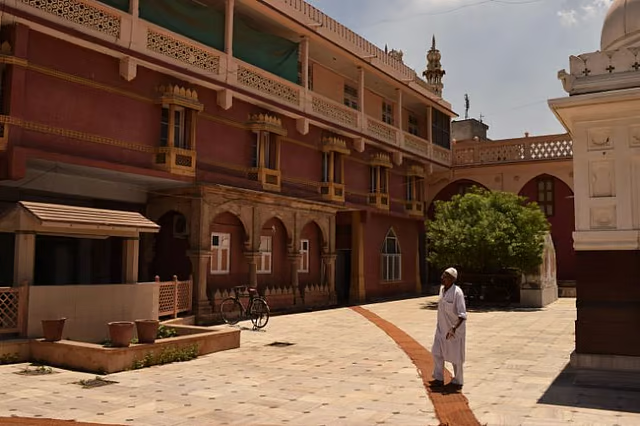
Stepping into the Hazrat Pir Mohammad Shah Library, the oldest library of the city, feels like entering a secret realm concealed within the narrow lanes of Pankora Naka, Ahmedabad. This hidden sanctuary of wisdom resides within the majestic tomb-shrine complex dedicated to the esteemed Pir Muhammad Shah.
The library’s journey commenced over 250 years ago when Pir Mohammad Shah and his devoted disciples gathered a humble collection of 300 manuscripts. Now, this literary haven proudly safeguards an expansive repertoire of over 4,000 manuscripts, establishing its position as such largest collection in Western India. Moreover, it boasts an impressive assortment of over 25,000 books.
About Mohammad Shah
Let us delve deeper into the enigmatic figure of Mohammad Shah, the driving force behind the library. Born in Bijapur in 1688 AD, he embarked on a transformative journey to Mecca, where he immersed himself in the teachings of practical Sufism.
Eventually, he settled in Ahmedabad in 1711, where he would offer his daily prayers in the Jama Masjid and rest in the humble hut of a benevolent elderly woman. It is in this very location that the awe-inspiring mausoleum-mosque-library complex now stands.
A treasure trove of manuscripts and books
During his lifetime, Pir Muhammad Shah, along with his devoted disciples, amassed a treasure trove of manuscripts and books, encompassing a wealth of academic and spiritual wisdom. This invaluable collection finds its residence in the esteemed “kutubkhana”. The Pir himself was a gifted bilingual poet, penning abundant verses in Persian and Dakhani.
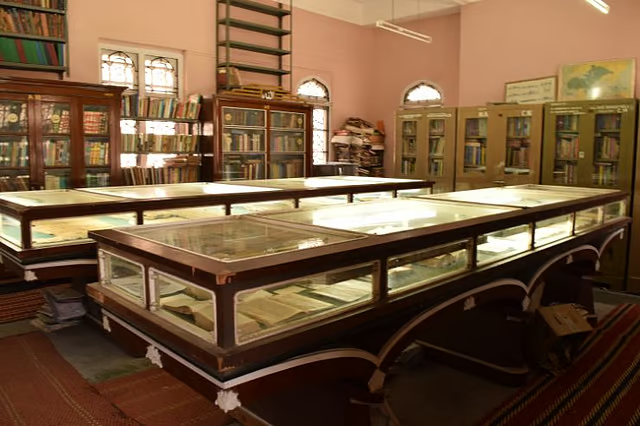
Today, the library stands as a testament to its illustrious past, harboring more than 4,000 manuscripts—the largest collection in Western India, alongside a rich trove of over 25,000 books. Its extensive catalog covers diverse subjects such as spirituality, Quran Knowledge, music, literature, history, geography, language, astronomy, astrology, agriculture, and more.
Within its hallowed halls, one can explore literature in Urdu, Gujarati, Arabi, Parsi, Hindi, and English. The library features a special chamber dedicated to ancient manuscripts, some dating back 800 years, as well as a display of Hazrat Pir Mohammad Shah’s personal belongings, carefully encased in glass to ensure their preservation.
Translations of sacred texts and unique manuscripts
The library’s treasures extend beyond its own collection, offering translations of sacred texts such as the Bible, Rigveda, and Geeta. Visitors are also privileged to behold unique manuscripts, including a handwritten Quran by the illustrious Mughal Emperor Aurangzeb.
This historic repository not only embodies a wealth of knowledge, wisdom, and heritage but also exudes an aura of serenity and tranquility. Explore the mosque, wander through the tranquil courtyard, lose yourself in the pages of ancient tomes, marvel at rare manuscripts, and surrender to the enchantment of bygone era. A captivating journey back in time awaits within these hallowed walls.
source: http://www.knocksense.com / Knock Sense / Home> Ahmedabad / by Zeal Jani / June 27th, 2023