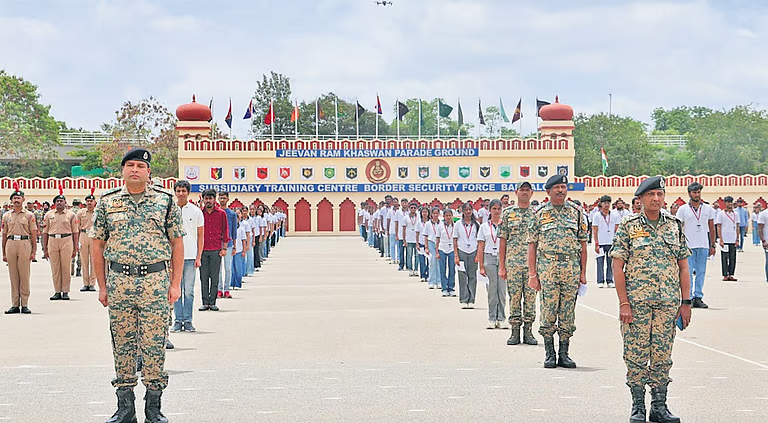
A mass singing of Vande Mataram was organised on Friday at the Subsidiary Training Centre (STC) at Border Security Force (BSF) Bengaluru as part of the nationwide commemoration of 150 years of the national song. The programme was organised under the directions of the union Ministry of Home Affairs and the BSF headquarters Photo | Express
Bengaluru :
The list includes 18 police personnel: one selected for the President’s Medal for Distinguished Service and 17 for Meritorious Service.
The government will honour 22 personnel from Karnataka Police, Fire and Emergency Services and Home Guards and Civil Defence departments with service medals on the occasion of the 80th Independence Day.
The list includes 18 police personnel, of whom one has been selected for the President’s Medal for Distinguished Service (PSM) and 17 for the Medal for Meritorious Service (MMS).
Assistant Commissioner of Police (Central Crime Branch) HN Dharmendra has been selected for the President’s Medal for Distinguished Service. Two personnel from the Fire and Emergency Services – Regional Fire Officer Shivakumar Swamy H M and Assistant Fire Station Officer Basavaraju M – have been selected for the MSM.
Similarly, two Home Guards and Civil Defence personnel – Senior Platoon Commander Meerasab Maboob Sabmulla and Platoon Commander Raghavendram – have been selected for the MMS.
17 cops to get MMS
Sara Fathima, SP, Railways, Bengaluru
Thomas Mathew PM, Commandant, 9th Battalion, KSRP, Bengaluru,
T Mahadev, ACP, Southeast Traffic Sub-Division, Bengaluru City.
Pramanand P Ghodke, DySP , Raichur District
K Shanmuga Varma, Inspector, Police Training School, Mysuru
Bavuddin Rukmuddin Gaddekhar, Inspector, Malmaruti PS, Belagavi City
Guruprasad Gopal Nayak, Inspector, CID, Bengaluru
Nayeem M, Reserve Police Inspector, Lok Bhavan, Bengaluru
Srinivasa M, SI, KP Agrahara Police Station,
Mahadevaswamy, Head Constable, Vidhana Soudha Security
Mariya Joseph Dinesh Kumar, Head Constable, KSRP
Jnanadev Naval Tarase, Special ARSI, 3rd Battalion, KSRP, Bengaluru
Chandrashekar G Chikkanavar, SRHC, 4th Battalion, B’luru
Abdul Kamal Abdul Hameed,Head Constable, Tarikere Sub-Division, C’magaluru
Nagesh Manchayya, APC, CID, Bengaluru
SA Manohar, Police Constable, Hunsur Town Police Station, Mysuru District
Abdul Rabbani, Armed Police Constable, Chikkamagaluru
source: http://www.newindianexpress.com / The New Indian Express / Home> Karnataka / by Express News Service / August 15th, 2026
The Telangana government has announced Fire Services Pathakams for 20 personnel of the Telangana Disaster Response and Fire Services Department in recognition of distinguished, outstanding and meritorious service, they will be conferred on the award winners at the Telangana Formation Day programme on June 2.
The awards are being conferred on police, vigilance and enforcement, anti-corruption bureau, special protection force and fire services personnel for their contributions in their respective fields.
Two personnel have been selected for the Telangana Fire Services Shourya Pathakam — Fire Fighter at Mancherial Fire Station P. Rajender and Leading Fire Fighter at Chandrayangutta Fire Station Nisar Ahmed Khan. The Telangana Fire Services Mahonnatha Pathakam has been awarded to District Fire Officer of Warangal A. Yagnanarayana.
Three personnel have been selected for the Telangana Fire Services Uttama Seva Pathakam — Vikarabad District Fire Officer T. Purna Chandar, Nagarkurnool District Fire Officer P. Giridhar Reddy and Leading Fire Fighter at Cantonment Fire Station K. Balaiah.
The Telangana Fire Services Seva Pathakam has been awarded to 14 personnel. The recipients are J. Govardhan Reddy, Madhapur Fire Station; A. Shravan, Shadnagar Fire Station; G. Venkateshwar, Malkajgiri Fire Station-I; G. Srinivasa Reddy, Gajwel Fire Station; B. Bhimaiah, Kagaznagar Fire Station; P. Rami Reddy, Hayathnagar Fire Station; Mohd. Gulam Yezdani, Adilabad Fire Station; B. Sampath, Chennur Fire Station; E. Ravi Prakash, Alampur Fire Station; Qadeer Ahmed Khan, Khanpur Fire Station; Ch. Jitender Kumar, Miryalguda Fire Station; V. Rambabu, Khammam Fire Station; P. Bhaskar Rao, Khammam Fire Station; and P. Sreenivasu, Yadagirigutta Fire Station.
Recipients of the Telangana Fire Services Shourya Pathakam are entitled to a recurring monthly grant of ₹500 and a one-time grant of ₹10,000. Recipients of the Mahonnatha Pathakam will receive a one-time grant of ₹40,000, while those awarded the Uttama Seva Pathakam and Seva Pathakam will receive ₹30,000 and ₹20,000 respectively.
source: http://www.thehindu.com / The Hindu / Home> News> India> Telangana / by The Hindu Bureau / June 01st, 2026
Maj Gen SM Hasnain’s contributions to the Indian Army, including his leadership of the 4 Garhwal Rifles, were remembered with reverence.
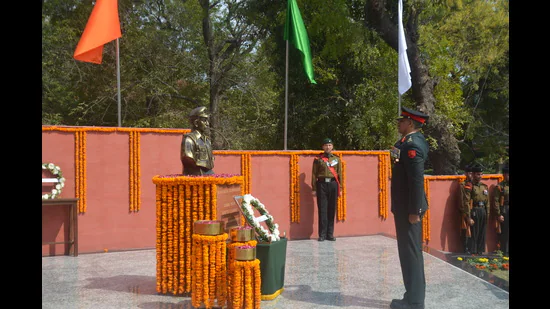
Tributes being paid to Maj Gen Syed Mahdi Hasnain on Sunday. (HT)
A solemn remembrance and memorial service was conducted at Prayagraj Military station to honour the legacy of Maj Gen Syed Mahdi Hasnain here on Sunday. The service paid tribute to his distinguished military career and unwavering commitment to duty.
Maj Gen SM Hasnain’s contributions to the Indian Army, including his leadership of the 4 Garhwal Rifles, were remembered with reverence, said Group Captain Samir Gangakhedkar, public relations officer (defence), Prayagraj region.
The speakers reflected on his valour during WW-II and his role in safeguarding refugees during the Partition. In his sterling military career Maj Gen SM Hasnain commanded a Mountain and an Infantry Brigade, an illustrations Mountain Division and was the first Inspector of Infantry at Army Headquarters. The service served as a reminder of Maj Gen SM Hasnain’s enduring impact on the nation, the Indian Army and Prayagraj town where he lived his post service life, he added.
Lt Gen NS Raja Subramani presided over the function as the Colonel of the Regiment of the Garhwal Rifles and Garhwal Scouts and paid his tributes to the legend.
Lt Gen (Retd) Syed Ata Hasnain, son of Maj Gen SM Hasnain, also served the Indian Army in his father’s regiment and went on to command the prestigious 15 Corps. Presently, he continues his service to the nation as member of the National Disaster Management Authority.
source: http://www.hindustantimes.com / Hindustan Times / Home / by HT Correspondent, Prayagraj / February 26th, 2024
Lt. General (retired) Syed Ata Hasnain has been appointed to one of the country’s key constitutional positions, bringing with him decades of military leadership and public service.
Lieutenant General (retired) Syed Ata Hasnain in Srinagar. File | Photo Credit: Nissar Ahmad
Lt. General (retired) Syed Ata Hasnain has been named the Governor of Bihar on Thursday (May 5, 2026) as part of major gubernatorial appointments effected by President Droupadi Murmu.
Mr. Hasnain succeeds Arif Mohammed Khan, who took oath as Bihar Governor on January 2, 2025.
A decorated former officer of the Indian Army, he has been appointed to one of the country’s key constitutional positions, bringing with him decades of military leadership and public service.
Early life
Born into a military family, Mr. Hasnain did his schooling at Sherwood College in Nainital and later attended St Stephen’s College, Delhi. King’s College, University of London. He also studied in the Royal College of Defence Studies, King’s College London, and the Asia Pacific Centre for Security Studies, Hawaii.
Hasnain’s military career
Mr. Hasnain was commissioned into the 4th Battalion of the Garhwal Rifles in 1974 after graduating from the Indian Military Academy. Over nearly four decades of service, he went on to hold several key command and staff appointments, many of them in Jammu and Kashmir.
He served in a range of critical assignments from Sri Lanka to Siachen Glacier, from the North East to Jammu & Kashmir (J&K), and in U.N. operations from Mozambique to Rwanda.
Gen. Hasnain commanded the Srinagar-based 15 Corps, one of the Army’s most critical formations responsible for operations in the Kashmir Valley. He also led the 21 Corps, a major strike formation of the Indian Army.
His final posting before retirement was as Military Secretary of the Indian Army, a crucial position responsible for overseeing senior officer appointments and administrative functions within the force.
Hasnain’s role after retirement
After retiring from the Indian Army in July 2013 following 40 years of active service, Mr. Hasnain continued to contribute to public life through academic and institutional roles.
He writes on Jammu and Kashmir, Pakistan, the West Asia, and transnational extremist violence and speaks on national security at various military, civil services and corporate institutions.
In 2015, he was nominated as a Member of the Executive Council of the Prime Minister’s Library and Museum, one of the country’s key institutions preserving modern Indian history.
On July 13, 2018, the President of India appointed him Chancellor of the Central University of Kashmir.
He has been awarded six decorations by the President of India and two by the Army chief.
He currently serves a member of National Disaster Management Authority (NDMA).
source: http://www.thehindu.com / The Hindu / Home> News> India / by The Hindu Bureau / March 06th, 2026
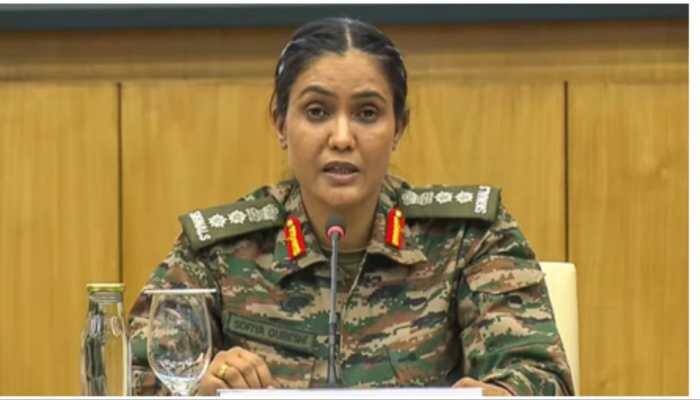
Colonel Sofiya played a key role in press briefing during Operation Sindoor in 2025.
Image Credit: IANS
Colonel Sofiya Qureshi, who emerged as a prominent representative of India on the global stage during Operation Sindoor in 2025 against Pakistan-based terrorists, has been selected for the Vishisht Seva Medal in the 2026 Republic Day honours.
The award, given for “distinguished service of a high order”, which adds one more milestone for her.
On the eve of the 77th Republic Day, President Droupadi Murmu sanctioned gallantry awards for 70 personnel of the armed forces, including six honours awarded posthumously. In addition, she approved the conferment of 301 military decorations on members of the armed forces and other personnel.
These decorations comprise 30 Param Vishisht Seva Medals, four Uttam Yudh Seva Medals, 56 Ati Vishisht Seva Medals, nine Yudh Seva Medals, two Bars to Sena Medals (Distinguished), 43 Sena Medals (Distinguished), eight Nao Sena Medals (Distinguished), 14 Vayu Sena Medals (Distinguished), and 135 Vishisht Seva Medals.
Colonel Sofiya is recognised for her calm, composed demeanour and clear, measured communication, especially during press briefings where she served alongside Wing Commander Vyomika Singh of the Indian Air Force.
After Operation Sindoor, and following the initial statement by Foreign Secretary Vikram Misri, Colonel Qureshi and Wing Commander Vyomika Singh briefed the media on the manner in which the strikes were conducted.
Colonel Sophia Qureshi was the first woman officer to lead an Army training contingent in a multinational military exercise. She commanded a 40-member Indian Army contingent at ‘Exercise Force 18’.
source: http://www.zeenews.india.com / Z News / Home> India / by Zee Media Bureau / January 25th, 2026
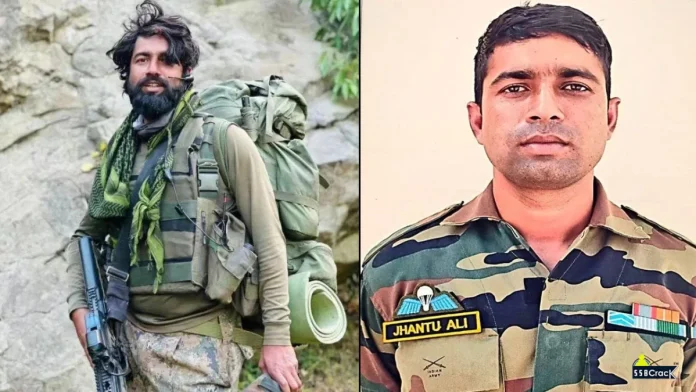
The Indian Army has posthumously awarded the Sena Medal to Havaldar Jhantu Ali Shaikh of the elite 6 Para Special Forces, recognising his exceptional courage and sacrifice during a counter terrorism operation in Jammu and Kashmir. The gallantry award was announced on the occasion of Republic Day 2026.
Havaldar Shaikh, a resident of West Bengal, laid down his life during a fierce encounter with terrorists in the Udhampur district on April 24, 2025. He served with the 6 Para Special Forces, one of the Army’s most demanding combat units. During the operation, he faced heavy fire and suffered grave injuries. He continued the mission despite his condition and ensured pressure on the terrorists until his final moments.
Army officials said his conduct reflected discipline, courage, and devotion to duty. His actions helped protect fellow soldiers and upheld the operational objective. The Sena Medal recognises acts of bravery and exceptional service. His name features among 70 gallantry award recipients announced this year, highlighting the continued sacrifices of armed forces personnel.
The White Knight Corps paid tribute to Havaldar Shaikh and acknowledged his role in counter insurgency efforts in the region. Fellow soldiers described him as committed and fearless, with a strong sense of responsibility toward his unit and the nation.
Havaldar Jhantu Ali Shaikh’s sacrifice holds deep meaning for the country. His story reflects service guided by faith, duty, and courage. His legacy stands as a reminder of the price paid by soldiers who protect national security and civilian lives, even at the cost of their own.
source: http://www.radiancenews.com / Radiance News / Home> Latest News> Report / by Radiance News Bureau / January 27th, 2026
Manjit Thakur, Director of the Kayamkhani Bravehearts
New Delhi :
“There is no Kayamkhani who has been hit with bullets in his back,” says a veteran of the Indian Army, who like many others of his community have dedicated his life to uniform, discipline, and service to the nation.
This documentary, Kayamkhani Bravehearts is the saga of the Kayamkhani, a Muslim community from Rajasthan, whose first preference for a career is military or Police and who consider service to the nation as a matter of pride and responsibility. For them, patriotism is not just a slogan, but a tradition passed down through generations. The documentary is documentation of the story of these valiant sons of the soil who defended the country at the border, faced enemy bullets head-on, and who consider martyrdom an honour.
The first glimpse of the documentary, a 33-second teaser, is enough to send shivers down the spines of viewers. The teaser suggests that this film will not merely be a presentation of facts but an experience steeped in emotion, sacrifice, and patriotism. Watching it, viewers will not only be filled with pride but will also be compelled to understand that in defending the nation, only duty matters, not religion.
The history of the Kayamkhani Muslim community of Rajasthan is replete with valour, discipline, and service to the nation. Almost every family in this community has been connected to the armed forces in some way. The dream of the youth here is not to become a big businessman or an officer in a high-ranking government position, but to serve their motherland by joining the Indian Army, paramilitary forces, or the police.
Watch the teaser here:
Manjit Thakur, director and screenwriter of the documentary, states that soldiers from the Kayamkhani community have so far earned four Shaurya Chakras, 18 Sena Medals, and five Vishisht Seva Medals.These figures would be a source of pride for any community, but for the Kayamkhanis, they represent not just honour, but a symbol of responsibility.When it comes to sacrifice, this community has not lagged.
In Danduri village, which is now known as the “village of soldiers,” 18 Kayamkhani Muslims were martyred for the country. Similarly, 10 martyrs each from Jhajhot and Nua villages also laid down their lives for their motherland. These figures are not just numbers, but represent the tears of those mothers, the pride of those families, and the essence of the soil that gave birth to such brave sons.
The documentary presents the stories of these martyrs in a deeply sensitive and impactful manner. The camerawork, editing, and graphics are of a high standard, emotionally connecting the viewers to the narrative. Research, hard work, and authenticity are evident in every frame.
Before making this documentary, the Awaz-The Voice team conducted comprehensive research. Under the leadership of Editor-in-Chief Atir Khan, the team spent a long time researching, delving into history, and understanding the ground realities. The documentary was shot over several days in different villages of Rajasthan. The filming continued late into the night to present the true lifestyle, struggles, and pride of this community to the world.
The documentary also reveals several surprising facts. For example, Kayamkhani Muslims consider cows their most valuable asset and cannot even imagine harming them. This fact shatters the stereotypes that are often formed in society without proper understanding.
Manjit Thakur recounts that when the team arrived in the Kaimkhani villages, they were welcomed with a sense of pride and warmth. The villagers not only welcomed them wholeheartedly but also openly shared their stories, pain, and pride. This trust became the soul of the documentary.
Speaking about the documentary’s objective, Atir Khan sais that in today’s world, negativity has become the unique selling proposition of news. In this environment, Awaz-The Voice is the sole platform which brings forth positive stories of cooperation, and peaceful coexistence from India and around the world.
Awaz team with locals in a Rajasthan Village
He believes that beyond the walls of faith, caste, region, and language, Indians have many shared concerns, challenges, and dreams for the future that have the potential to bring people and communities together. Awaz-The Voice’s content promotes progressive, positive, and nation-building ideas not only in India but also among Muslim communities abroad.
This documentary is an extension of that very idea—an attempt to amplify the voice of true patriotism, a voice often drowned out by the noise of hatred. This film reminds us that the uniform has no religion, and every drop of blood shed for the country is purely Indian.
On release, this documentary will undoubtedly not only move viewers but also make them think, feel proud and energise them to serve the nation. This is not just the story of the Kayamkhani community, but the story of an India where the country comes first.
source: http://www.awazthevoice.in / Awaz, The Voice / Home> Stories / by Manjit Thakur / posted by Aasha Khosa, ATV / January 17th, 2026
Muslim Mirror’s 100 Most Influential Muslims of 2025
New Delhi:
Muslim Mirror has released its much-anticipated annual list of the “100 Most Influential Indian Muslims of 2025,” spotlighting individuals who have made significant contributions to India’s public life across a wide spectrum of fields including politics, culture, education, business, media, religion, sports, and social service. Now in its second edition, the list aims to document influence not merely as power or popularity, but as sustained impact, leadership, and the ability to shape public discourse.
A defining feature of the 2025 edition is the growing prominence of younger achievers, signalling a visible generational shift within Indian Muslim leadership. Alongside established national figures, the list includes emerging voices who have built influence through grassroots activism, professional excellence, digital platforms, legal advocacy, education, and community engagement. Editors associated with the project said this was a deliberate attempt to recognise new centres of influence beyond traditional hierarchies.
The list reflects the diversity and plural character of Indian Muslim society, cutting across geography, ideology, profession, and language. From seasoned politicians and religious scholars to artists, entrepreneurs, academics, and social reformers, the compilation offers a broad snapshot of leadership trends at a time when issues of representation, constitutional values, and social justice remain central to national debate.
Representation Across Sectors
The 2025 list features several eminent academicians and intellectuals who have shaped higher education, policy discourse, and social research. Among them are Abul Qasim Nomani, Ameerullah Khan, Furqan Qamar, Shahid Jamil, and Ubaid-ur-Rahman, recognised for their contributions to education, public policy, and academic leadership.
In the business and entrepreneurship category, the list includes influential names such as Azad Moopan, Azim Hashim Premji, Farah Malik, Irfan Razack, M. P. Ahammed, Mecca Rafiq Ahmed, Meraj Manal, Syed Mohamed Beary, P. Mohammed Ali, Shahnaz Hussain, Tausif Ahmad Mirza, Yusuff Ali, and Ziaullah Sharif. Their inclusion underlines the growing economic footprint of Indian Muslim entrepreneurs, both domestically and globally, spanning sectors from retail and healthcare to infrastructure and consumer goods.
Community leadership remains a strong pillar of the list, with figures such as Arshad Madani, Mahmood Madani, Malik Motasim Khan, Mehmood Pracha, Syedna Mufaddal Saifuddin, Navaid Hamid, Pirzada Md Abbas Siddiqui, Qasim Rasool Ilyas, Sadatullah Husaini, Umer Ahmed Ilyasi, and Yusuf Mohamed Abrahani recognised for their roles in religious guidance, legal advocacy, social mobilisation, and institutional leadership.
Culture, Media, and Public Discourse
In arts and entertainment, globally recognised names such as A. R. Rahman, Aamir Khan, Mammootty, Munawar Faruqui, and Shah Rukh Khan continue to command immense cultural influence, shaping narratives that extend well beyond cinema and music into social consciousness.
The list also acknowledges the growing importance of media and journalism in shaping opinion and challenging dominant narratives. Journalists and commentators such as Arfa Khanam, Irfan Meraj, and Seema Mustafa are recognised for their consistent engagement with issues of democracy, minority rights, and constitutional values.
Religious and Intellectual Scholarship
A significant section of the list is devoted to Islamic scholars and religious thinkers, reflecting their continued influence on moral leadership and intellectual discourse. Names such as A. P. Aboobacker Musliyar, Qasim Nomani, Prof. Akhtarul Wase, Asghar Ali Imam Mahdi Salafi, Asjad Raza Khan, Ibraheem Khaleel Al-Bukhari, Javed Jamil, Khalid Saifullah Rahmani, Khaleelur Rahman Sajjad Nomani, Qamaruzzaman Azmi, Rashid Shaz, Shakir Ali Noori, Shamail Nadvi, and Yasoob Abbas find place for their scholarly work, writings, and public engagement.
Politics and Governance
The political category features leaders cutting across party lines and regions, including Asaduddin Owaisi, Ghulam Nabi Azad, Hamid Ansari, Mehbooba Mufti, Omar Abdullah, Salman Khurshid, Najeeb Jung, Syed Naseer Hussain, Engineer Rashid, Akhtarul Iman, Iqra Hasan, Zameer Ahmed Khan, Rakibul Hasan, K. Rahman Khan, Kadir Mohideen, Mohibullah Nadvi, Md Shafi, Agha Mahadi, Asim Waqar, and Sadiq Ali Shihab Thangal. Their inclusion reflects influence exercised through electoral politics, governance, diplomacy, and legislative advocacy.
Changemakers and Social Reformers
One of the most dynamic sections of the 2025 list is that of changemakers and social reformers, featuring individuals such as Safeena Husain, Shahabuddin Yaqoob Quraishi, Syeda Hameed, Zameer Uddin Shah, Mahbubul Hoque, Sabahat S. Azim, Mehmood Pracha, Faiz Syed, and Zahir Ishaq Kazi, among others. Many of these figures have earned recognition through long-term grassroots work rather than formal authority.
International Booker Prize 2025 winner Banu Mushtaq for Heart Lamp, along with renowned poet Wasim Barelvi, has been placed in the category of Literary Figures.
In sports, iconic names Sania Mirza and Irfan Pathan continue to inspire younger generations through excellence and public engagement beyond the playing field.
Beyond Rankings
The editors emphasised that the list does not claim to be exhaustive, nor does it measure influence solely through fame, wealth, or official position. Instead, it seeks to capture real-world impact, moral authority, intellectual contribution, and the ability to shape conversations within and outside the community.
The annual list has increasingly become a reference point for understanding evolving leadership patterns among Indian Muslims. By foregrounding both established figures and rising talents, the 2025 edition reflects continuity as well as change, underscoring how Indian Muslims continue to contribute meaningfully to India’s democratic, cultural, and social field.
source: http://www.muslimmirror.com / Muslim Mirror / Home> Indian Muslim / by Muslim Mirror / January 15th, 2026
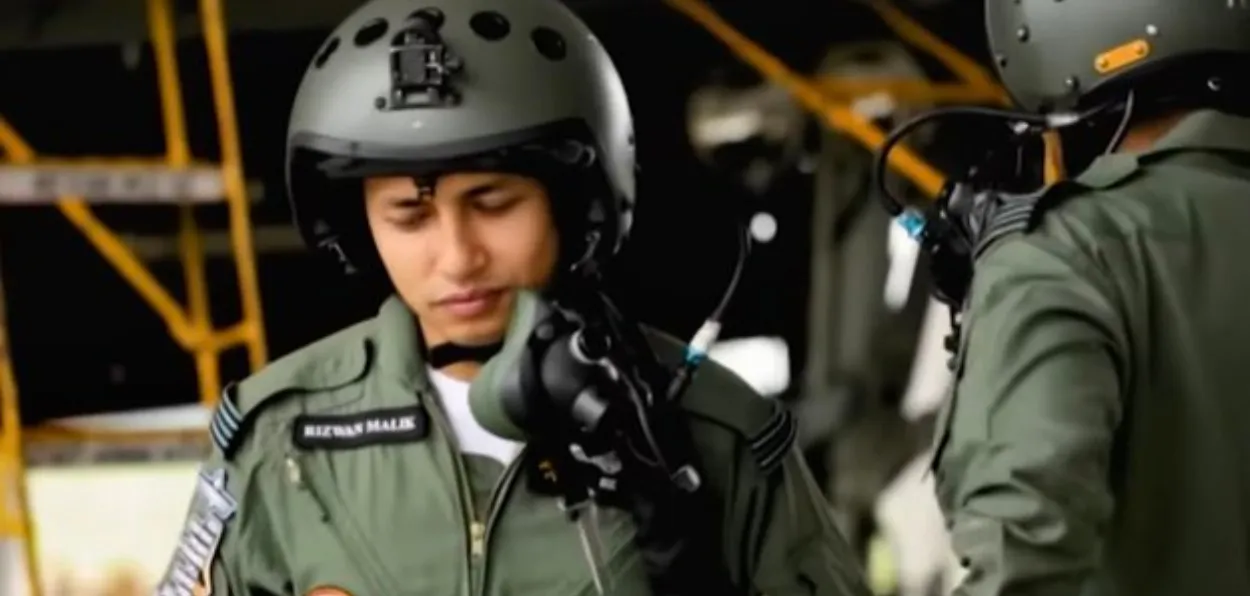
Manipuri people are gloating over Sqn Ldr. Rizwan Malik, son of the soil, being awarded Vir Chakra for his role in accurately striking targets inside Pakistan in Operation Sindoor.
Rizwan Malik is from No.102 Sqn of the Indian Air Force. According to Chief Minister N Biren Singh he is son of Alhaj Hafizuddin and Alhajan Waheeda Rehman of village Kheikhu.
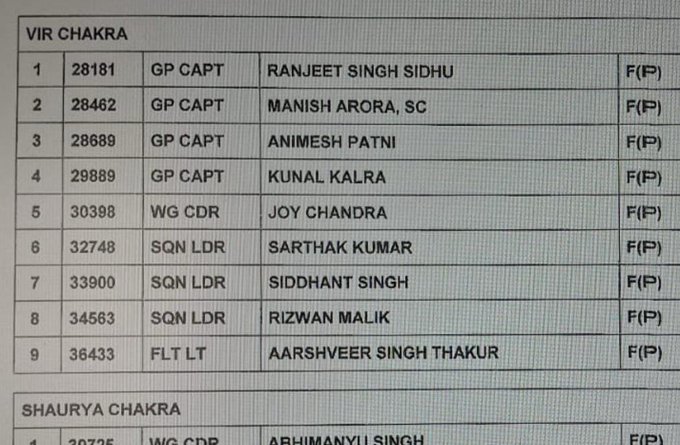
On the eve of Independence Day the government announced Vir Chakra for nine Indian Air Force brave hearts who struck military assets and terrorist hubs inside Pakistan during the Operation.
It’s for the first time in the Military history of India that Indian Air Force gets so many VCs for a single operation. It’s the third highest honour for war-time bravery and courage given to soldiers.
He flew Su-30Mki to hit Pakistani assets.
List of Vir Chakra awardees
Social media is full of praises for Rizwan Malik being conferred with VC along with eight other IAF pilot on the Republic Day.
A spree of congratulatory messages posted on social media started from Chief Minister N. Biren Singh:
Heartiest congratulations to Squadron Leader Rizwan Malik, son of Alhaj Hafizuddin and Alhajan Waheeda Rehman of Kheikhu, Manipur, on being awarded with the prestigious Vir Chakra for his heroic role in Operation Sindoor.
A former Maharaj of a Principality in Manipur also congratulated the son of the soil
A Big Congratulation 👏 🎉
Feel proud to have a son of soil like Squadron Leader Rizwan Malik of Keikhu, Manipur on being awarded with the prestigious Veer Chakra for his heroic role in OPERATION SINDOOR. pic.twitter.com/0fDxkIrfVn
— Maharaja Sanajaoba Leishemba. (@MaharajaManipur) August 14, 2025
A Rajasthan based defence analyst claimed Rizwan Malik had hit the Jaish-e-Muhammad headquarters in Bhawalpur, Punjab where an estimated 100 terrorists and their families died.
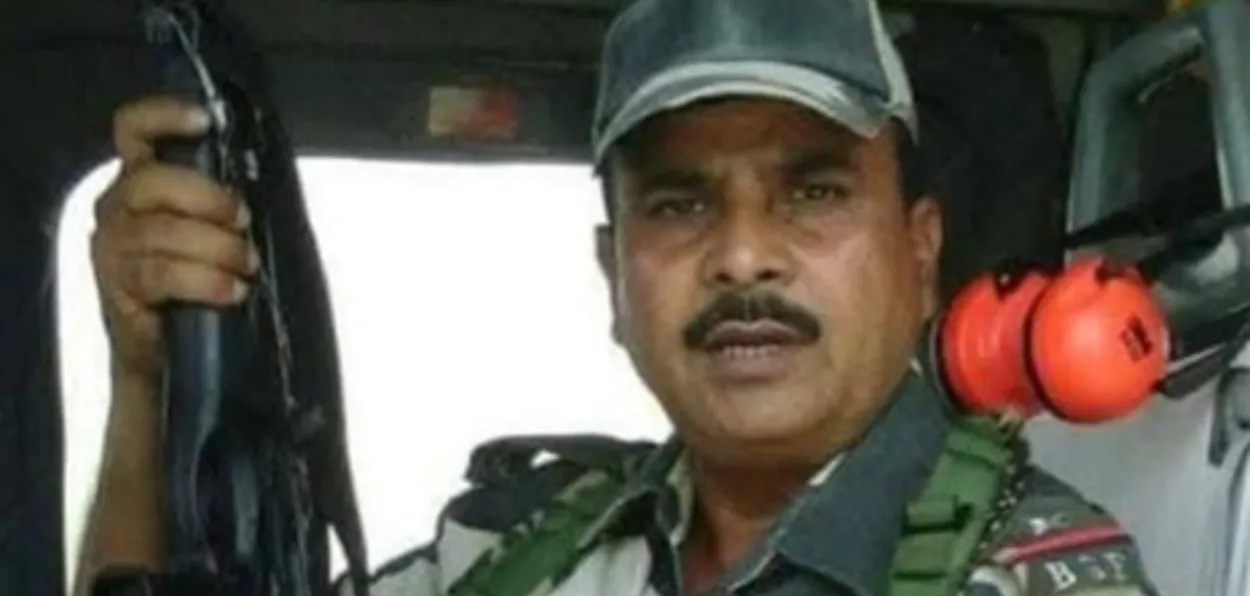
Border Security Force’s Sub-Inspector Mohd Imteyaj and Constable Deepak Chingakham were posthumously awarded Vir Chakra, the third highest war-time gallantry award – in recognition of their exceptional courage and self-less leadership in the face of adverse situation
Sub Inspector Mohammad Imteyaj was martyred on May 10, during cross-border firing along the International Border in RS Pura sector, Jammu and Kashmir.
Constable Deepak Chingakham hailed from Manipur. He sustained grave injuries during the exchange of fire with Pakistanis on the international border in RS Pura and laid down his life for the nation,
Imteyaj hailed from Narayanpur in Garkha, in Saran district of Bihar.
He was posted on the international border in Ranbirsinh Pura sector in Jammu. According to a Border Security Force (BSF) official, Sub-Inspector Mohammad Imtiyaz led the front bravely and made the supreme sacrifice.
He was buried with military honours in the cemetery located in Narayanpur village of Gadkha block of Saran district amid chanting of “Bharat Mata ki Jai” (Hail, mother India!). People showered their floral tributes on Imtiyaz’s body.
Mohammad Imtiyaz is survived by his wife, two sons, and two daughters. BSF said Mohammad Imtiyaz led from the front.
As soon as the news of Mohammad Imtiyaz’s martyrdom reached his home, initially his village and later the entire district went into mourning. A large crowd gathered outside his house; people were trying to show their sympathy to the family and gratitude to the brave son of the soil.
source: http://www.awazthevoice.in / Awaz, The Voice / Home> Stories / by Aasha Khosa, ATV / August 16th, 2025