Category Archives: Bharat Ratna, Padma Vibhushan, Padma Bhushan, Padma Shri Award (since January 01st, 2024)

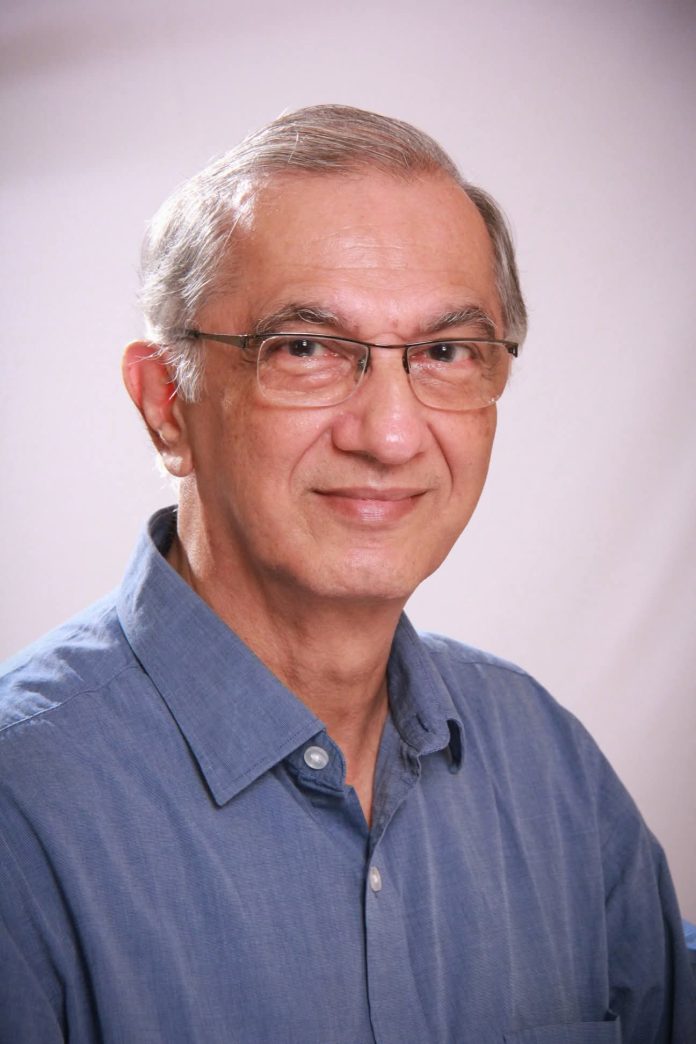
‘Na Jane Kis Gali Mein Zindagi ki Shaam Ho Jaaye..’: Renowned Urdu Poet Dr Bashir Badr Passes Away

Bhopal, MADHYA PRADESH :
Bhopal :

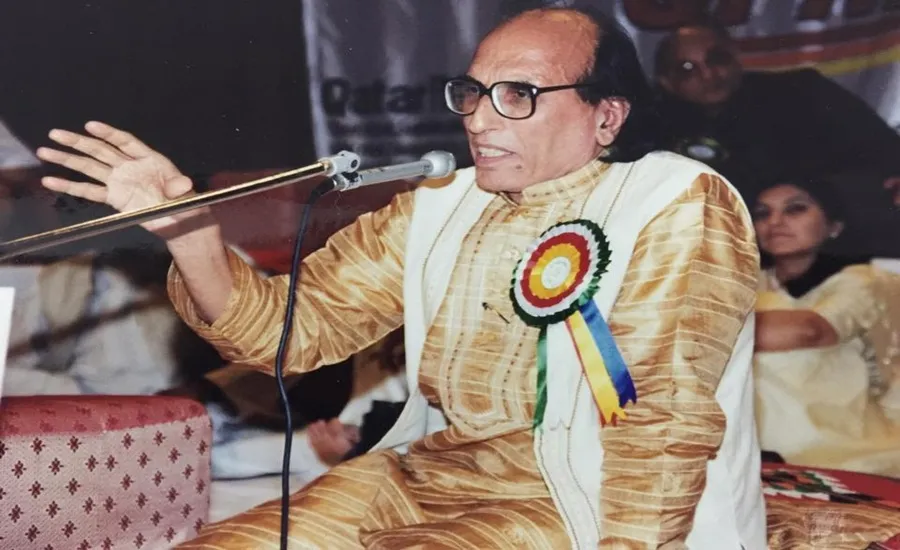
Legendary Urdu poet. a Padma Shri awardee, Dr Bashir Badr, known for his expressive and evocative ‘shayri’ passed away in Bhopal on Thursday afternoon, leaving behind a rich literary legacy that spanned decades. He was 91.

He breathed his last at around 12 noon at the age of 91.

According to family members, Badr had been suffering from dementia for a long time, a condition that gradually eroded his memory and left him unable to recognise even close acquaintances. His health had been deteriorating steadily in recent months, and despite medical care, his condition worsened until his demise.

His mortal remains were laid to rest at the Bada Bagh Cemetery in Bhopal in the evening on Thursday.

His passing marks the end of an era in Urdu poetry, as Badr was celebrated for his evocative verses, like “”Ujale apni yaadon ke hamare saath rahne do/Na jaane kis gali mein zindagi ki shaam ho jaaye“, or “Kai sitaron ko main jaanta hoon bachapan se/Kahin bhi jaaun mere saath saath chalte hai”, or “Sar jhukaoge to patthar devtaa ho jaayega/Itna mat chaaho use wo bewafa ho jaayegaa“, “Khuda ham ko aisi khudaai na de/Ki apne siva kuch dikhai na de”, Kuch to majbooriyan rahi hongi/Yun koi bewafa nahi hota”, and many more, that captured the complexities of love, longing, and human emotion with unmatched simplicity and depth.

His literary journey was not only prolific but also profoundly inspiring, influencing generations of readers and writers alike. A familiar figure in ‘mushairas’ across India, he was much admired for the art with which he not only recited his sparkling couplets, but frequently elaborated on their creation and his inspiration.

Born in 1935, Bashir Badr rose to prominence in the post-Independence period, becoming one of the most widely read and quoted poets in contemporary Urdu literature. His ghazals, often laced with poignant reflections on life and relationships, earned him admiration across India and beyond. He was known for bridging the gap between classical traditions and modern sensibilities, making Urdu poetry accessible to a broader audience.

His couplets, frequently shared in everyday conversations and on social platforms, remain etched in public memory. Despite his illness in later years, Badr’s contributions continued to resonate, reminding admirers of the enduring power of words. He once wrote: “Ham bhi darya hain hamen apna hunar maaluum hai/Jis taraf bhi chal padenge raasta ho jaayega”.

His decline due to dementia was a painful chapter, as the poet who once illuminated minds with his verses gradually lost his own connection to memory and recognition. Yet, his work stands as a testament to resilience and creativity, ensuring that his voice will echo long after his departure.

As the literary community mourns his loss, tributes are pouring in from writers, scholars, and admirers who regard him as a towering figure in Urdu poetry. Dr Bashir Badr’s death leaves a void that cannot be filled, but his words will continue to inspire and console countless hearts.

As he wrote: “Musafir hai ham bhi musafir ho tum bhi/Kisi mod pe phir mulaqaat hogi“. — IANS

source: http://www.clarionindia.net / Clarion India / Home> Editor’s Pick>India> Indian Muslims / by Clarion India / May 29th, 2026
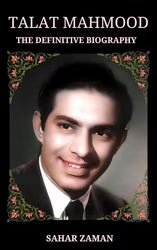
‘Talat Mahmood: The Definitive Biography’ is a befitting introduction to a singing genius

Lucknow, UTTAR PRADESH / Mumbai, MAHARASHTRA :

The book reads more like a collection of anecdotes

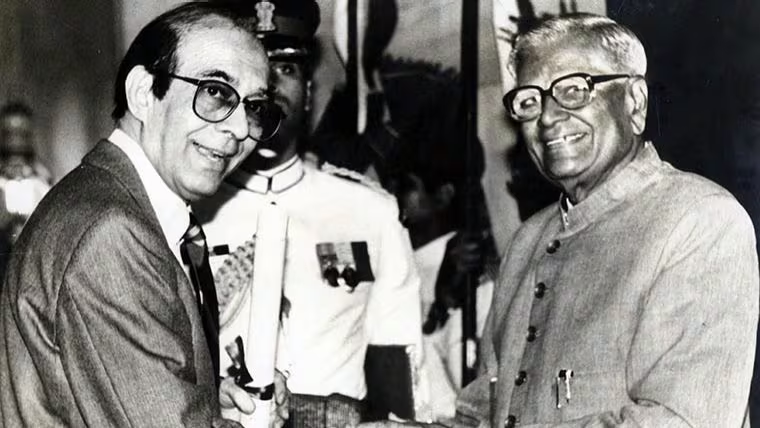
Nation’s pride: Talat Mahmood receiving Padma Bhushan from president R. Venkataraman in 1992 | P. Musthafa

To encapsulate the life of a man often described the ‘King of Ghazals’, though he was much more than that, is no easy task. Just for attempting that, Sahar Zaman deserves applause.

” Mahmood’s musical life was a rich amalgamation of traditions and languages “

Talat Mahmood, born in Lucknow and trained at what was then the Marris College of Music (now Bhatkhande Sanskriti Vishwavidyalaya) was a singer unlike any other. His natural velvet voice bore a slight quiver. It is a quiver which singers take years to cultivate. Musically termed vibrato, this quick and subtle change of voice between notes which are pitched very closely conveys emotions more powerfully than lyrics. When used without dedicated cultivation, a vibrato sounds contrived and the unevenness of breath can be made out by the trained ear; but when it comes naturally, it is as smooth as the wax and wane of emotion. Yet, in his early years in Mumbai, Mahmood strove to hide this unique quality, attempting often to sing in the nasal tones of his idol K.L. Saigal. This would not last long as Anil Biswas, a composer he had worked with for long, angrily walked out of a recording studio asking Mahmood to return only when the real Talat was found.

Ghazals came first to Mahmood because of his affinity with Urdu, and also because of the cultural bearings at home. His father, Manzoor Mahmood, who was a member of the Indian Medical Mission to Ottoman, would often sing to pep up his fellow travellers, while his sisters were flawless renderers of the nath (songs in praise of the Prophet), and his elder brother, Kamal, too, had a rich singing voice. While everyone in the family had strong voices with good throws, Mahmood’s was tuned differently. It was far gentler, almost like a dewdrop caressing a rosebud. It was the kind of voice that could dull the impact of the unkindest of blows. In the 2022 release Gangubai Kathiawadi, for instance, when the lead character learns of being sold to a brothel by her boyfriend, there is a snippet of a song that plays in the background. Mahmood’s voice is like a gentle nuzzle that softens the harsh truth.

Pathos was the most marked emotion of Mahmood’s voice. It was the embodiment of a disembodied, deep sadness. No wonder then that ‘Tragedy King’Dilip Kumar spoke of him as the ‘true musical speaker of my soul’.

Mahmood’s musical life was a rich amalgamation of traditions and languages. Under the name Tapan Kumar, he was a leading voice of the modern Bengal Music movement in which lyrics became as important as the music. He sang in 16 languages including Malayalam, Tamil and Kannada. And while you can close your eyes and imagine him most readily as a dejected Dilip Kumar pictured behind gauzy, fluttering curtains singing ‘Shaam-e-Gham ki qasam’ (On the promise of this sadness soaked evening), close them for some more time and you will just as easily picture him as a boyish Raj Kapoor singing ‘Main dil hun ek armaan bhara’ (I am a heart full of desires), a song that lends itself most readily to the waltz.

As a singer he had many firsts to his name, including being the pioneer of world tours. His pleasant face (which incidentally is also the meaning of Talat) made him a singing-actor and he also dabbled in composition. To audiences in the USA, he was introduced as the Frank Sinatra of India. He became a recognised voice, courtesy All India Radio, at just the age of 16. The book records a delightful incident in which the young Mahmood was accosted by a group of girls in Lucknow to sing as he cycled his way to his music college. Among that gaggle of fans was Qurratulain Hyder, who would go on to become a famed Urdu writer.

He was also a man deeply devoted to the larger cause of his art. He raised his voice for the payment of royalties to singers and also became a part of programmes to raise funds for senior, out-of-work artists. He joyfully gave away songs to Mukesh when he was going through a rough patch. His delight in singing for troops and in encouraging new talent all made him a perfect gentleman, a word often used in the book to describe him.

Biographies can never be divorced from the times that their subjects lived in. Thus, we read in bits about the decline of the film industry in Kolkata after the partition of Bengal, the government’s press for the Bhoodan movement, for which Mahmood sang; the start of recordings in sound-proof rooms; the introduction of multi-instrument orchestra for playback singing; and the rise of version songs. We also read of how the Partition tore apart Mahmood’s family. In a particularly poignant recollection, his father asked his elder son who would water the plants in the courtyard if he left for Pakistan (he did anyway).

The book at places digresses from a linear telling of Mahmood’s story and moves to talking about other stars of the time. This could appear jarring to some, but it is perhaps inevitable given that Mahmood’s journey was intertwined with those of others. One example being that of the actor Shyam, whose death resulting from an accident on a film set is talked about in some detail, to later merge it with the fact that his last three songs, sung by Mahmood, became ‘locked’in his voice.

If you are looking for a book which offers an undeviating narrative of Mahmood’s life, this perhaps is not it. This book reads more like a collection of anecdotes―some known, some not so well known. His gentleness is a quality emphasised throughout the book. He earned it perhaps from spending his formative years with his paternal aunt Mahlaqa Begum. We also come to know that he was a keeper of his words―both to friends and the girlfriend he left in Kolkata.

To those who have known the music of Mahmood, this book is a ready reckoner of his songs and will send you to listen to those you have loved and search for those you have forgotten. To those who do not know the music of Mahmood, take this as a befitting introduction to a singing genius. To do both in under 500 pages, in easy language, peppered with countless photos of the handsome Mahmood, is Zaman’s biggest achievement.

TALAT MAHMOOD: THE DEFINITIVE BIOGRAPHY / Author: Sahar Zaman / Pages: 480

source: http://www.theweek.in / The Week / Home> TheWeek / by Puja Awasthi / February 11th, 2024

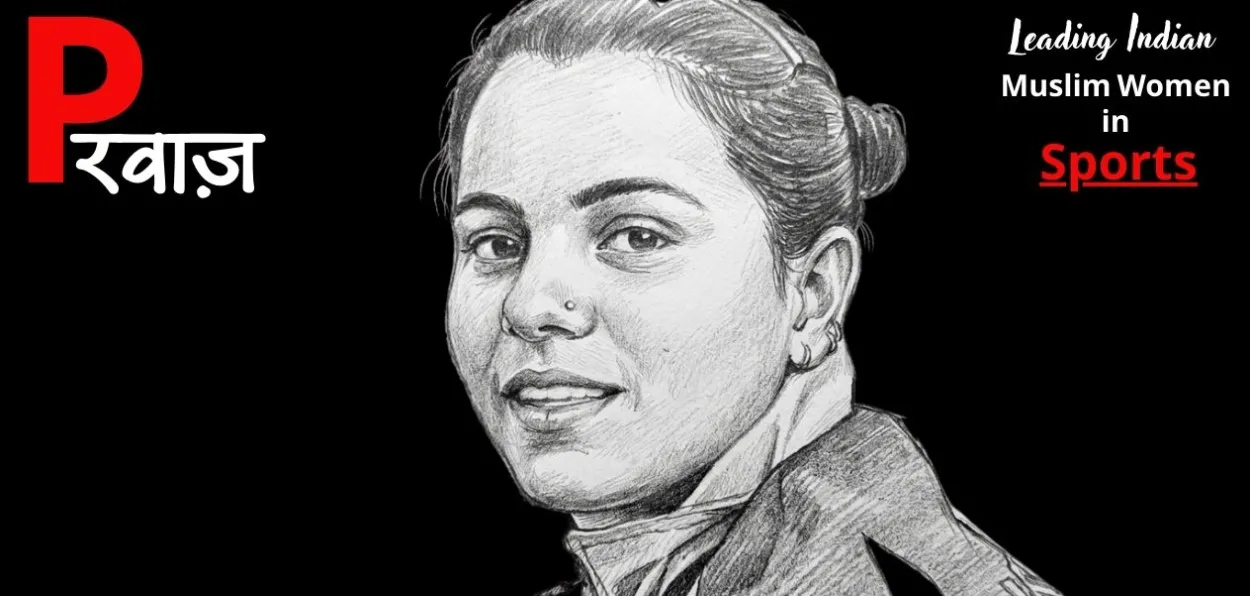
Against odds, Saba Anjum becomes India’s speedy forward

Kelabadi (Durg), CHHATTISGARH :

Saba Anjum

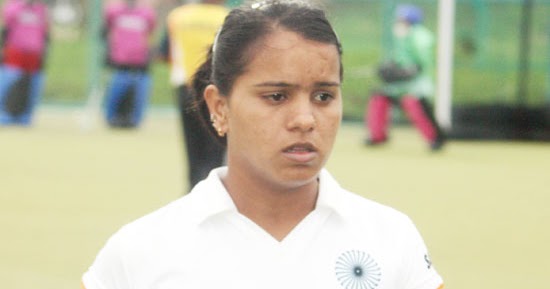
In the narrow lanes of ‘Kelabadi’ locality in Durg, a 9-year-old girl could be seen playing hockey with boys. She had neither expensive shoes nor her own hockey stick. She used her elder brother’s old, broken stick, wrapped with tape, to step onto the field. Her father worked as a muezzin in a local mosque.

The family’s income was so low that sometimes it was difficult to light the stove even for one meal a day. When she decided to pursue hockey as her passion, society mocked her, “A girl will play wearing shorts?” But her father was determined that his daughter would write her own destiny. This is the story of Saba Anjum Karim, the girl who rose from the dusty lanes of Chhattisgarh to wave the tricolor on global sports fields.

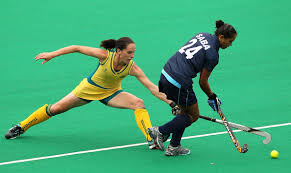
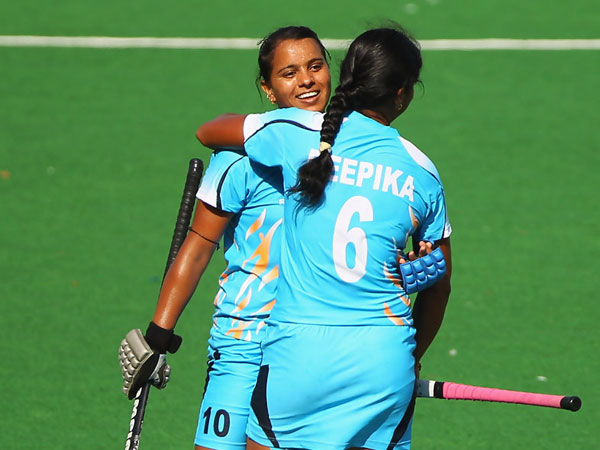
Saba Anjum playing hockey

Former Indian women’s hockey forward Saba Anjum says that when she started playing, her family’s financial condition was not good. Her father worked as a muezzin in the mosque, while her mother worked to support household expenses. Once, during a summer camp at the playground, children were given jaggery and chickpeas after playing. She started playing thinking she would get jaggery and chickpeas. With this thought, she began her sports journey. Later, a running competition was organized where she participated and secured first place. As a prize, she received a hockey stick. That moment became her inspiration to continue playing hockey.

Her school later participated in the Nehru Hockey Tournament, after which she was selected for the Indian national team. She never looked back after that. She played the Nehru Hockey Cup in 1999. From 2002 to 2012, she was a member of the Indian national hockey team and represented the country in many competitions. During this period, she also captained the Indian team. Her elder brother was also a national-level hockey player.

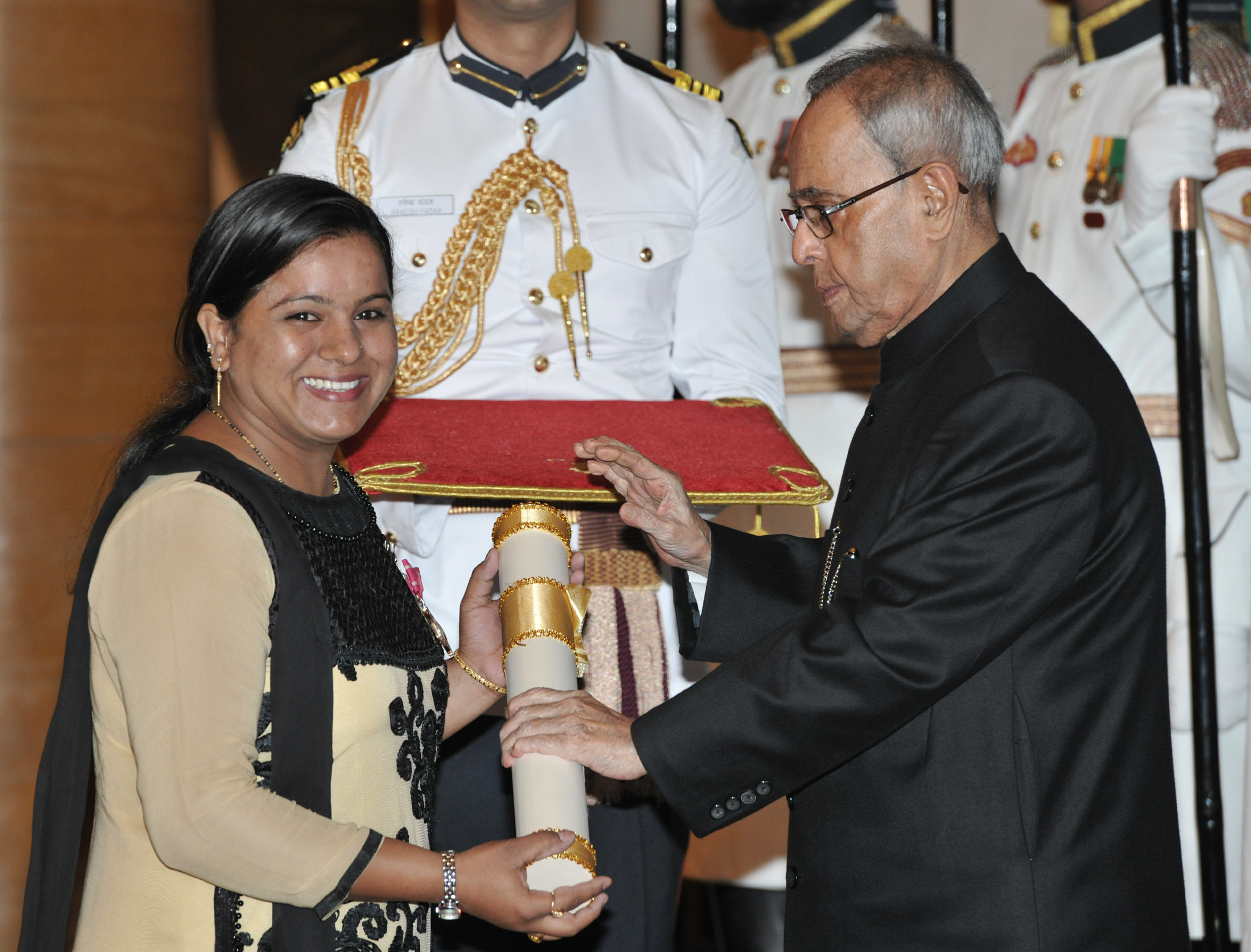
The President, Shri Pranab Mukherjee presenting the Padma Shri Award to Smt. Saba Anjum, at a Civil Investiture Ceremony, at Rashtrapati Bhavan, in New Delhi on April 08, 2015.

Saba Anjum receiving an award from former President Pranab Mukherjee

Born on 12 June 1985, Saba Anjum shared that in 1997, during a match, her coach dropped her from playing and did not give her another chance in the team. She was only 11 years old then. Her father went to the coach and requested him to give his daughter another opportunity to play. That moment remains very special in her memory. Her father was pleading with the coach to allow her to play. This incident motivated her to continue playing and improve. That day became a turning point in her life.

Padma Shri awardee Saba Anjum says that during her childhood, when she returned home after playing, her father worked at the mosque. She would wait outside the mosque for him to come out and buy her cashews, raisins, or some food items. She often sat outside the mosque waiting for him. That memory remains very close to her heart.

Saba Anjum on the hockey ground

According to the Arjuna Award-winning player, there were some social barriers because she came from a Muslim family. But her father and mother always supported her. They encouraged her to play at all times. When she was selected for the Indian team, she faced difficulties in making her passport because of financial problems. At that time, her mother even sold household utensils to arrange money for her passport. Her parents made countless sacrifices for her future.

Serving as an Additional Superintendent of Police (ASP), Saba Anjum said that when she joined the Indian team, she was inspired by senior players. She was motivated to perform better and one day become the captain of the Indian hockey team. Hockey gave her a lot in life. She received the Arjuna Award and the Padma Shri award. She was also appointed as a DSP in the Chhattisgarh Police.

Saba Anjum playing hockey

She gave a clear message to the youth — whether they are athletes or students, they should recognize their potential and work continuously to improve it. Success comes only through hard work. Hard work gives you a unique identity. There is no shortcut to success; only dedication leads to progress.

Educated in Raipur, Sab a Anjum was a regular member of the Indian women’s hockey team. Her ability to run fast on the wings and carry the ball toward the goalpost gave her a unique identity. In 2002, the world was watching the Manchester Commonwealth Games. Seventeen-year-old Sab a was the youngest player in the Indian team. When India won the gold medal in the finals, she became an overnight star.

Saba Anjum on the hockey ground

She not only scored goals but also pierced through the opponent’s defence with her speed. Success continued after that. Whether it was the 2004 Asia Cup gold or captaining the Indian team in 2011, she proved herself at every stage. Scoring 92 goals in 200 international matches showed her skill and talent.

After shining on the hockey field, the Government of India honored her with the Arjuna Award (2013) and Padma Shri (2015). The Chhattisgarh government also recognized her achievements and appointed her in the police department. Today, when Sab a wears her police uniform, she is not just an officer but a beacon of hope for thousands of girls living in hardship.

People who once mocked her near the same playground in Durg now salute her with pride.

source: http://www.awazthevoice.in / Awaz,The Voice / Home> Stories / by Mandakini Mishra, Raipur / April 06th, 2026

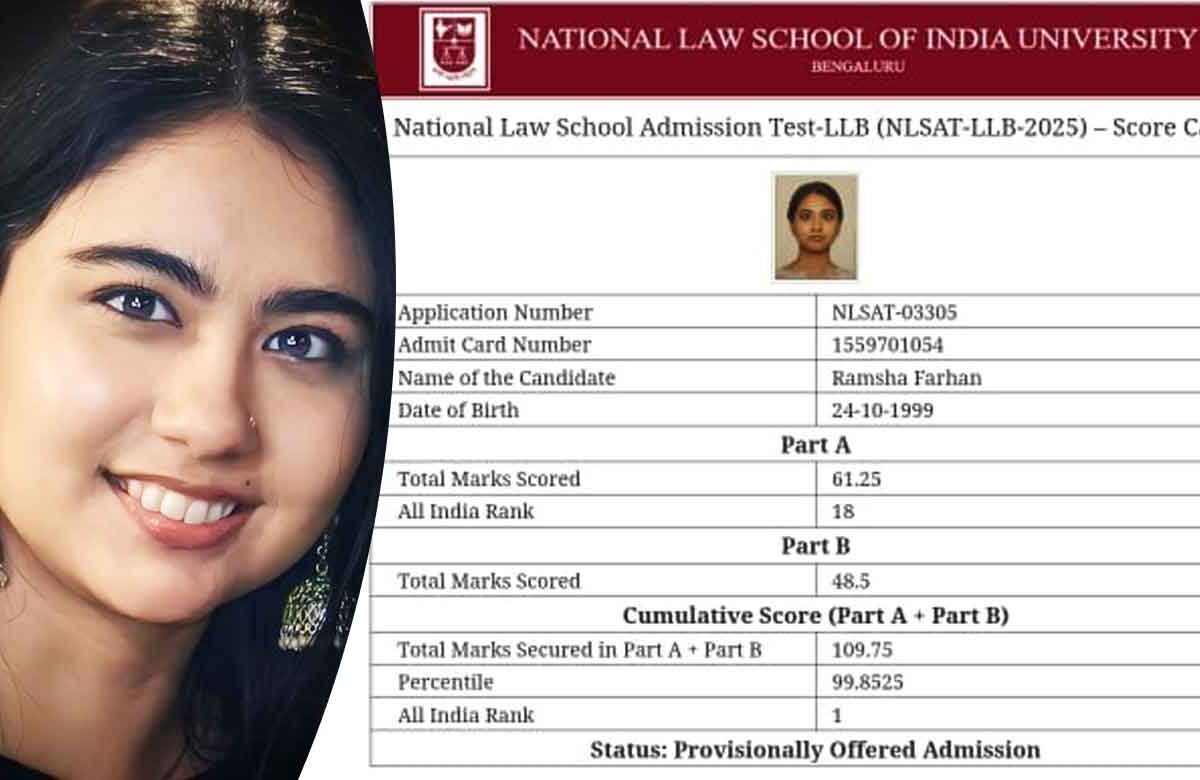
Hyderabad’s Ramsha Farhan Tops NLSAT-LLB 2025, Bringing Pride to the City

Hyderabad, TELANGANA :

Ramsha is an alumna of Azim Premji University, Bangalore, where she pursued her undergraduate degree in Liberal Arts. She later went on to complete a Master’s in History and Persian from the School of Oriental and African Studies (SOAS), University of London.

Hyderabad: 

In a moment of immense pride for Hyderabad, Ramsha Farhan has secured the 1st Rank in NLSAT-LLB 2025, the national-level entrance examination for admission to the prestigious National Law School of India University (NLSIU), Bangalore — widely regarded as the top law school in the country.

Ramsha is an alumna of Azim Premji University, Bangalore, where she pursued her undergraduate degree in Liberal Arts. She later went on to complete a Master’s in History and Persian from the School of Oriental and African Studies (SOAS), University of London.

She hails from a family with a strong legacy of intellectual and cultural contributions. Ramsha is the daughter of Ashhar Farhan and Humera Ahmed, co-founders of Lamakaan, Hyderabad’s iconic open cultural space. She is also the granddaughter of the celebrated writer and Padma Shri awardee Jeelani Bano.

Known for her academic excellence and deep social commitment, Ramsha Farhan’s achievement is not just personal but a proud milestone for her city and community. Her success is a testament to the values of education, culture, and progressive thought that her family has championed for decades.

We extend our heartfelt congratulations to Ramsha and wish her continued success as she embarks on her legal journey at NLSIU.

source: http://www.munsifdaily.com / Munsif News 24 x 7/ Home> Hyderabad / by Syed Mubashir / June 03rd, 2025

Muslims who dominated headlines in 2021

INDIA :

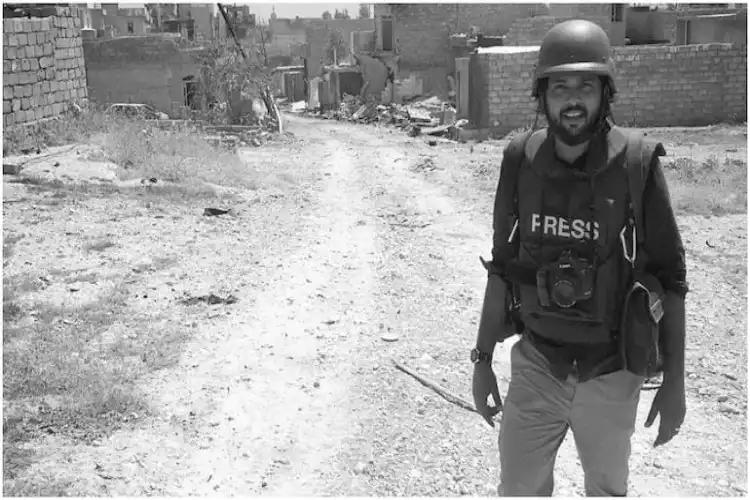
Danish Siddiqui in Afghanistan

As the year draws to an end, we have compiled a brief list of the Indian Muslims who have been in news during 2021.

Danish Siddiqui :

Danish Siddiqui was a Pulitzer Award winning photojournalist from New Delhi, who was killed by Taliban while covering the war in Afghanistan. An alumnus of Jamia Millia Islamia, Siddiqui was one of the country’s most well known photographers who documented the Rohingya refugee crisis, Covid deaths and the Delhi riots to win several awards. In July 2021, Reuters assigned him documentation of the Afghanistan War as an embedded journalist with Afghan Special Forces. On July 16, Siddiqui was killed in action. Governments of India, USA, Afghanistan and United Nations expressed grief and shock on his death and thousands joined his funeral procession in DelhI.

Dr Shahid Jameel :

Dr. Shahid Jameel is a world renowned virologist and is one of the leaders of India’s fight against Covid-19. The Covid-19 outbreak has thrown new challenges to the scientific community. When the Government of India set up an Indian Sars-Cov-2 Genomics Sequencing Consortium (INSACOG), which consists of 38 laboratories to monitor the genomic variations in the SARS-CoV-2, Jameel was appointed as the head of its scientific advisory group. He served the INSACOG in this position till May, 2021 and still advises different government and non-government bodies in strategising the war against Covid-19. 

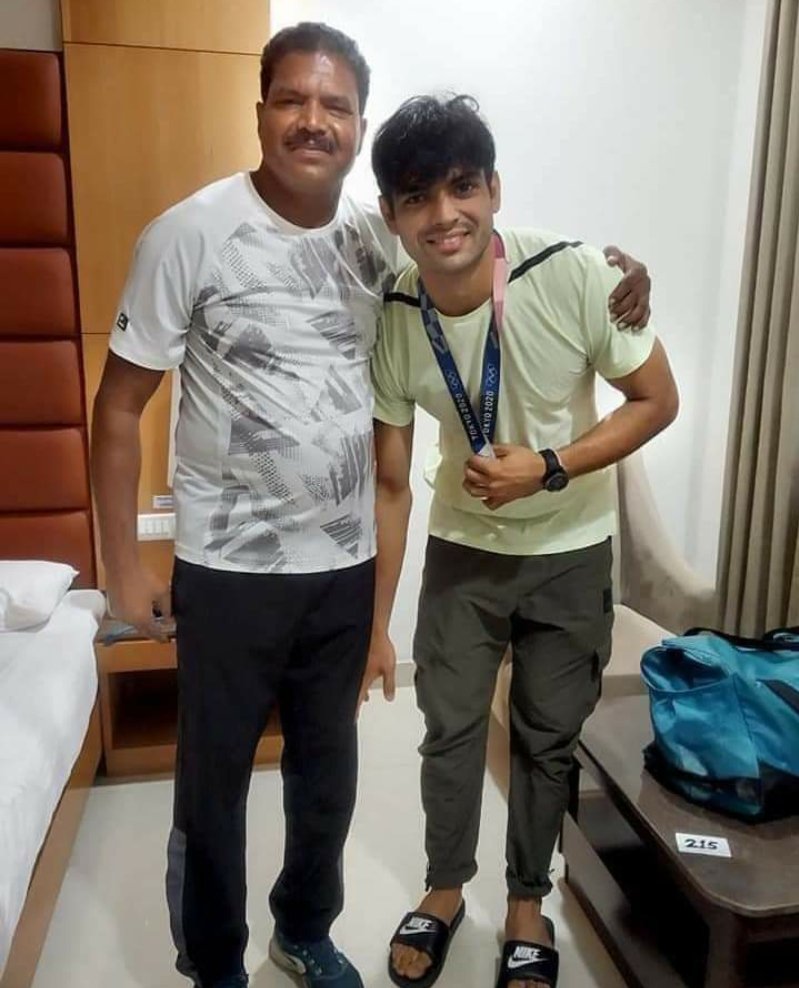
Coach Naseem Ahmed with Olympian Neeraj Chopra

Naseem Ahmed :

Naseem Ahmed: On 7 August, 2021, Neeraj Chopra threw Javelin for 87.58 mts. and became the first Indian to win an Olympic Gold in track and field events. With this success, Naseem Ahmed of Panchkula also hit the headlines. Ahmed was his first coach, who coached Chopra for almost six years at Tau Devi Lal Sports Complex in Panchkula. It was under his guidance that Chopra turned into an athlete from a chubby child. After returning to India, Chopra went to meet and receive blessings from his coach.

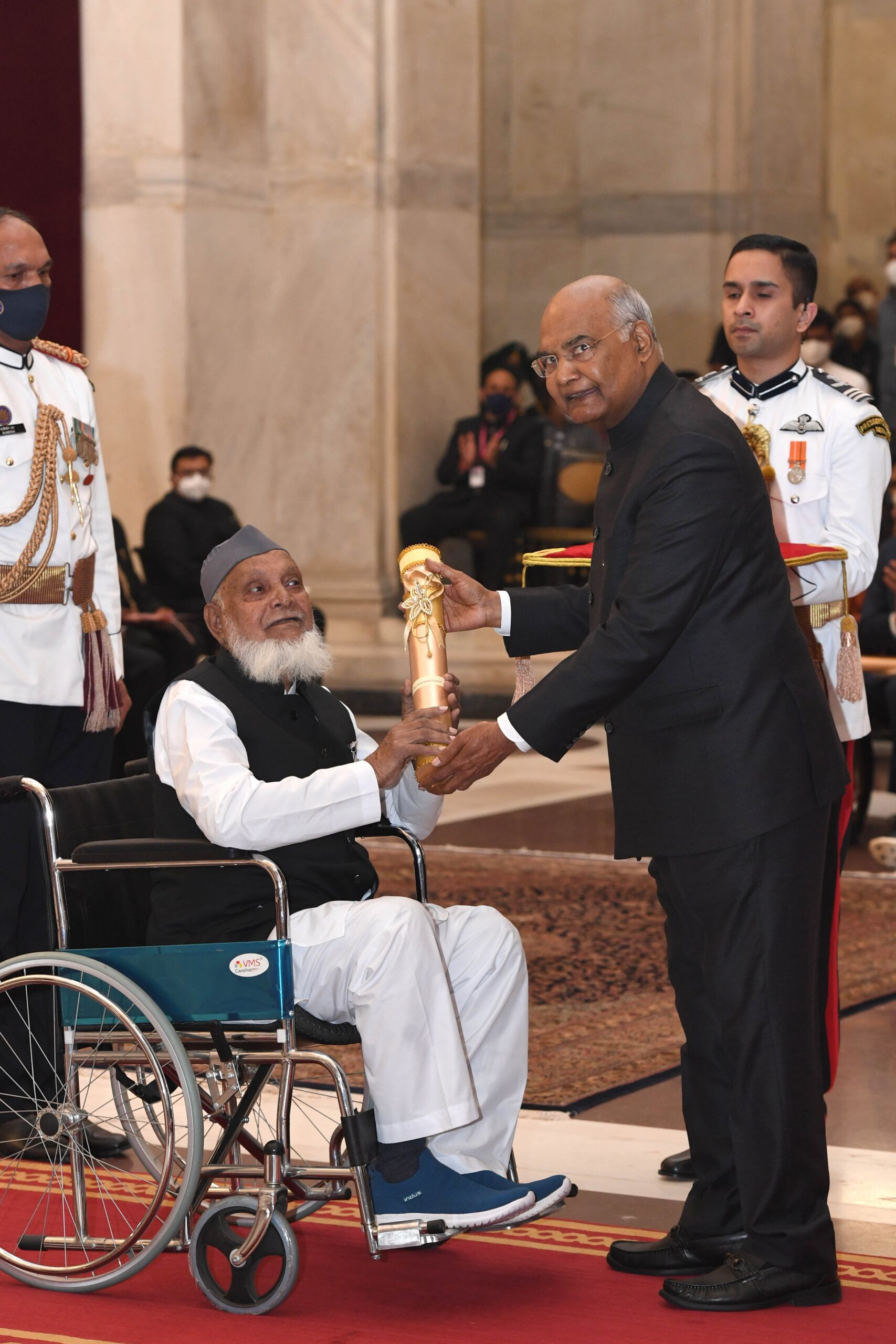
Mohammad Shareef alias Shareef Chacha receiving Padma Shri from President Ran Nath Kovind

Mohammad Shareef :

Mohammad Shareef is a bicycle mechanic from Faizabad, Ayodhya and hit the news headlines this year for receiving Padma Shri, the fourth highest civilian award in India, from the President Ram Nath Kovind. In 1992, his son was murdered and was eaten by animals as nobody claimed it. This incident moved him so much that he took it upon himself to perform the last rights of unclaimed dead bodies. In the last 28 years, he has performed the last rights of more than 25,000 unclaimed dead bodies according to their religions.

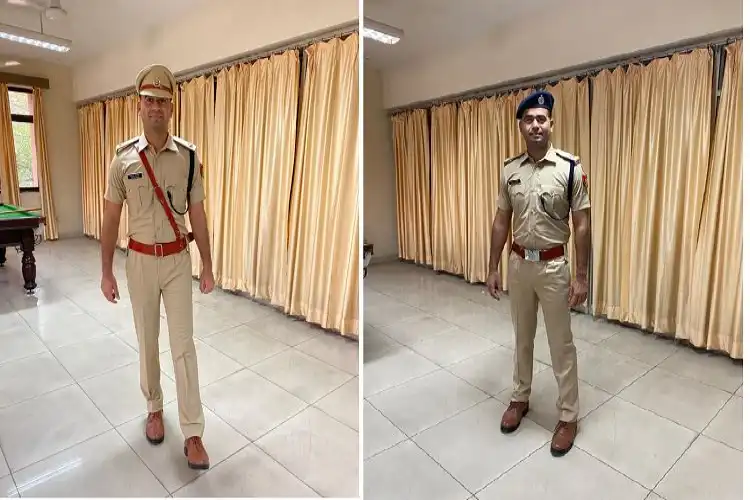
Firoz Alam as an IPS officer (Left) and as a Constable of the Delhi Police (Right)

Firoz Alam :

Firoz Alam’s story is straight out of a fiction, where his character bears resemblance to those played on screen by several film stars. Alam, a resident of Hapur in U.P, was a constable with Delhi Police since 2010. In 2014, he started preparing for UPSC CSE. The work pressure and family responsibilities did not allow him to devote full time to the studies, like many availing coachings could do. After five unsuccessful attempts, in his sixth attempt he qualified UPSC CSE and joined as an IPS officer. His inspiring journey from a constable to IPS had taken the nation by a storm when he joined the training after leaving the job as constable.

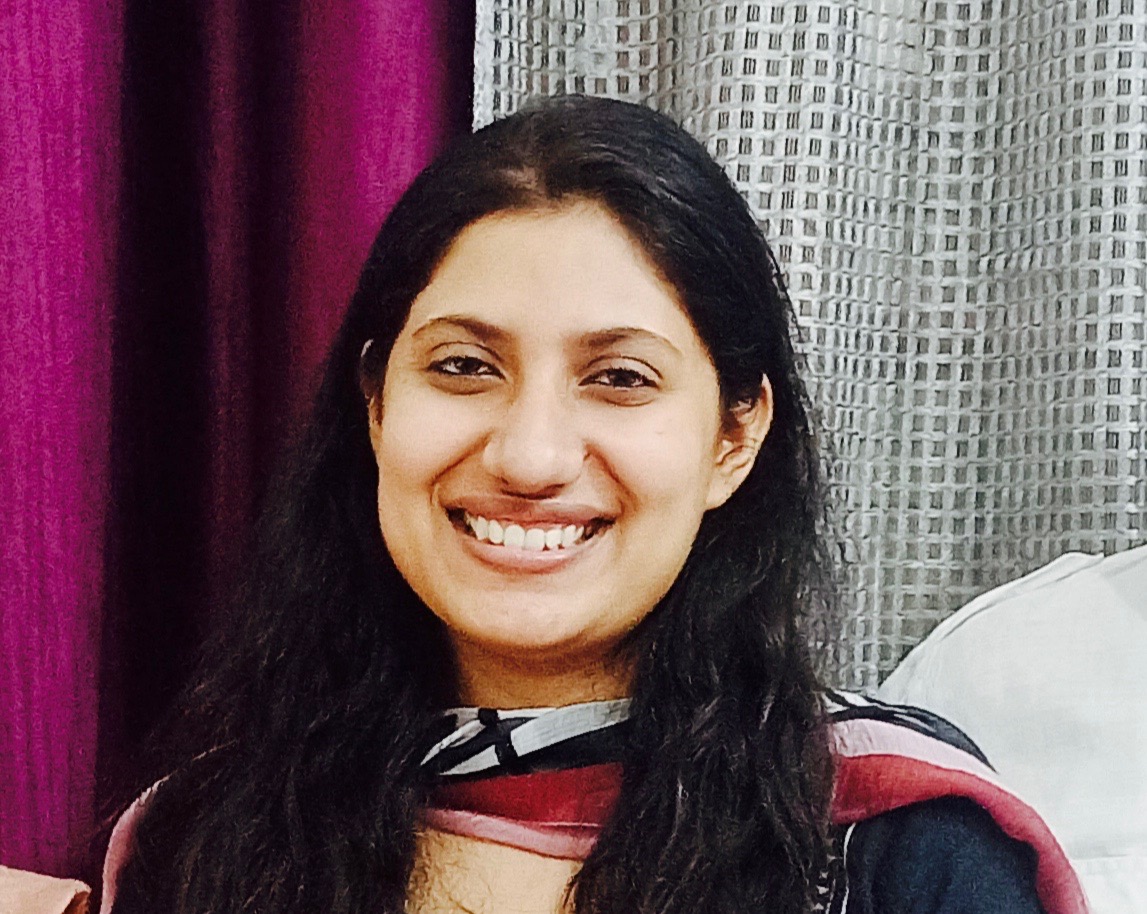
Sadaf Choudhary 

Sadaf Choudhary :

Sadaf Choudhary came into limelight when the UPSC CSE results were declared in September and she secured 23rd rank. She was the highest rank holder among Muslims this year and will become an IAS officer. It must be kept in mind that since independence only 179 Muslims have secured ranks to get IAS allotted to them.

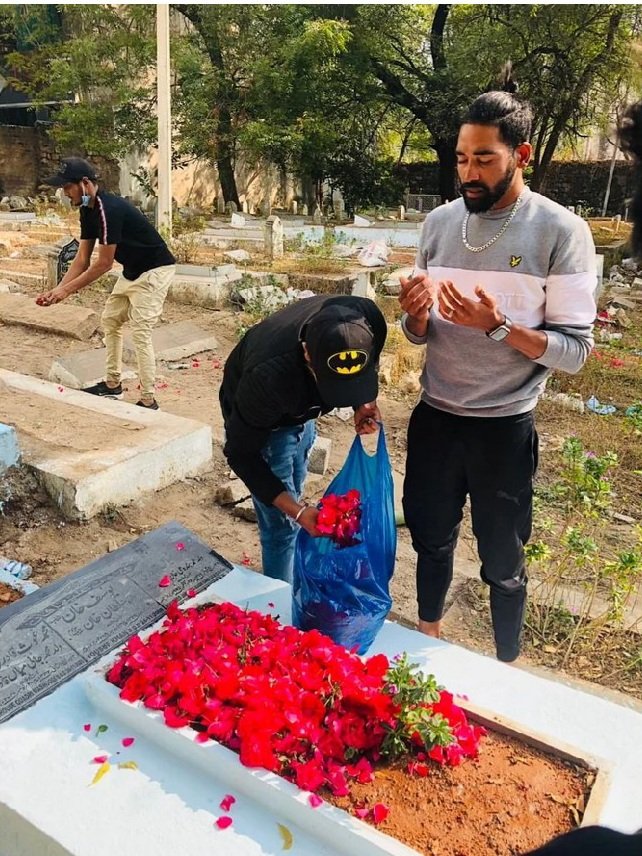
Mohammed Siraj praying at the gave of his father

Mohammed Siraj :

Mohammed Siraj is an Indian cricketer from Hyderabad who made it to the headlines in January by becoming the highest wicket taker from India during the India – Australia Test Match Series in Australia. To claim his 13 scalps, he played only three of the four tests in the series. The fact that his father had died just before the series and he was given an option to return to the country, which he declined citing his commitment to the nation made it even more special.

In the last test match at Brisbane, he bagged five Australian wickets to script a historic win and became a national hero. The headlines of the sports column were filled with his heroics, commitment and ability. Since then he has been a regular feature of the Indian Cricket team as a pacer. 

source: http://www.awazthevoice.in / Awaz, The Voice / Home> Stories / by Saquib Salim / December 30th, 2021

IIT Bombay’s Prof Juzer Vasi Receives Padma Shri for Lifetime Work in Engineering

Mumbai, MAHARASHTRA :

Mumbai:

IIT Bombay has marked a proud moment with the conferment of the Padma Shri on Prof Juzer M. Vasi, former Deputy Director and senior academic of the institute. The national honour recognises his lifelong contribution to science and engineering, with a strong focus on semiconductors, microelectronics, and solar energy research.

Prof Vasi has served Indian academia for over four decades. He remains associated with IIT Bombay as Professor Emeritus in the Department of Electrical Engineering. His work spans nanoelectronics, solar photovoltaic deployment in India, global solar PV systems, nanocrystal-based solar cells, and the reliability of solar modules. These areas hold strong relevance for sustainable development and energy access.

An alumnus of IIT Bombay, Prof Vasi completed his B.Tech in 1969. He earned his Ph.D. in Electrical Engineering from The Johns Hopkins University in 1973. His academic journey reflects deep commitment to knowledge and public service, values strongly rooted in the Islamic tradition of ilm and community benefit.

Prof Vasi joined IIT Bombay as an Assistant Professor in 1981. He rose through the ranks to serve as Professor, Head of the Electrical Engineering Department, and later as Deputy Director from 2006 to 2009. He also taught at IIT Delhi and served as Visiting Assistant Professor at Johns Hopkins University.

Students and colleagues regard him as a dedicated teacher and institution builder. His leadership strengthened academic standards and research culture at IIT Bombay.

The Padma Shri recognises sustained excellence and service to the nation. For the Muslim community, Prof Vasi’s achievement stands as a reminder of the impact of scholarship, discipline, and ethical pursuit of knowledge in public life.

source: http://www.radiancenews.com / Radiance News / Home> Latest News > Report / by Radiance News Bureau / January 27th, 2026

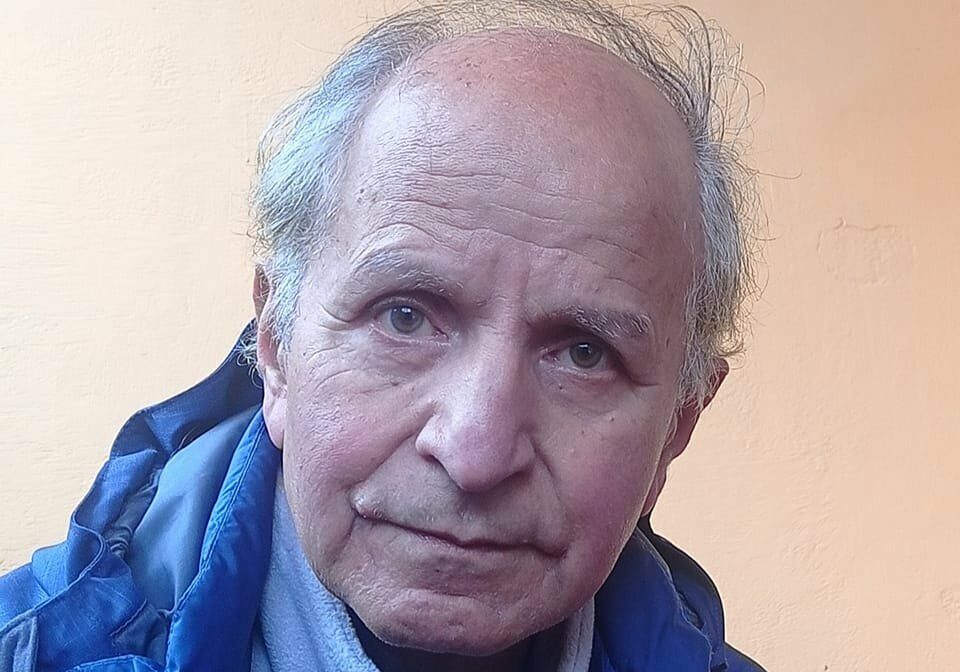
Padma Shri for Shafi Shauq: National Honour for a Lifetime Devoted to Kashmiri Literature

Kaprin Village (Shopian District), JAMMU & KASHMIR :

Shafi Shauq (Kashmiri poet and academic)

Srinagar :

Eminent Kashmiri scholar, poet, linguist and translator Prof Shafi Shauq has been named among the recipients of the Padma Shri Award 2026, India’s fourth-highest civilian honour, in recognition of his outstanding contribution to education and literature. The award places Shauq at the forefront of this year’s honourees from Jammu and Kashmir and Ladakh, marking a major national acknowledgement of his lifelong work in preserving and enriching the Kashmiri language and its literary heritage.

Born in 1950 in Kaprin village of Shopian district, Shafi Shauq is widely regarded as one of the most authoritative voices in Kashmiri studies. Over a distinguished academic career spanning more than three decades at the University of Kashmir, he authored, edited and translated over 100 books across Kashmiri, Urdu, Hindi and English. His seminal works—including Keeshur Lugaat (Kashmiri Dictionary), Keeshryuk Grammar, and Kaeshir Zaban ti Adibuk Tawaariekh (History of the Kashmiri Language and Literature), are considered foundational texts and remain indispensable to scholars, students and researchers.

The Padma Shri citation recognises not only Shauq’s scholarly output but also his role as a cultural custodian who ensured that Kashmir’s rich Sufi, poetic and intellectual traditions reached both national and international audiences. His celebrated series The Best of Kashmiri Literature, featuring iconic mystic-poets such as Lal Ded and Nund Reshi, played a crucial role in preserving and popularising Kashmir’s spiritual and literary canon beyond linguistic boundaries.

Alongside Prof Shafi Shauq, the Government of India has also announced Brij Lal Bhat (Social Work, Jammu and Kashmir) and Dr Padma Gurmeet (Medicine, Ladakh) as Padma Shri awardees for 2026, recognising exemplary service in their respective fields. However, Shauq’s inclusion has drawn particular attention in literary and academic circles, being seen as a long-overdue national honour for a scholar who devoted his life to safeguarding the linguistic soul of Kashmir.

Social worker Brij Lal Bhat has been conferred the Padma Shri 2026 for his sustained and wide-ranging contributions to social service. Known for his grassroots engagement, Bhat has worked extensively to strengthen spiritual and community institutions through yoga shiksha shivirs, spiritual retreats and Bhandara Seva. He has actively promoted social cohesion and communal harmony by organising inclusive festivals and community programmes, while also contributing to rural development by reclaiming barren land for apple and walnut orchards. His work is widely recognised for combining social service with spiritual outreach and environmental stewardship.

In addition to Shauq and Bhat, Dr Padma Gurmeet of Ladakh has been named a Padma Shri awardee in the field of medicine, underscoring the diverse range of contributions from the region honoured in 2026.

source: http://www.kashmirlife.net / Kashmir Life / Home> Kashmir Latest News / by KL News Network / January 25th, 2026

Assam’s Nuruddin Ahmed Honored with Padma Shri for Artistic Excellence

ASSAM :

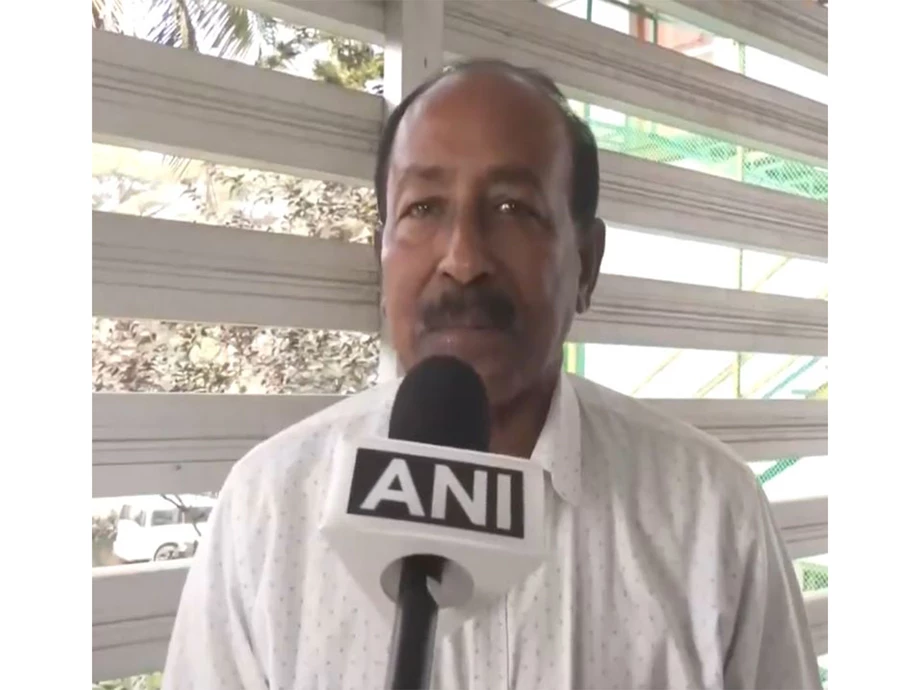
Nuruddin Ahmed, Assam’s sculptor and art director (Photo/ANI). Image Credit: ANI

Assamese sculptor Nuruddin Ahmed has been awarded the Padma Shri 2026, recognizing his outstanding contributions to art. Expressing gratitude towards the people of Assam, Ahmed hails the award as a life-changing moment. The Padma awards honor distinguished service in various fields, with 131 recipients, including posthumous recognitions, announced this year.

In a remarkable acknowledgment of his artistic contributions, Assamese sculptor and art director, Nuruddin Ahmed, has been awarded the prestigious Padma Shri for the year 2026 in the field of art. On receiving the honor, Ahmed expressed heartfelt gratitude to the people of Assam, considering the award a defining moment in his career.

Speaking with ANI, Ahmed extended his thanks, attributing his success to the unwavering support from Assam’s residents. ‘This recognition serves as a milestone, propelling me towards greater aspirations in life,’ he remarked.

The esteemed Padma Awards, announced annually on Republic Day, highlight exemplary service in diverse domains. This year, the President of India approved 131 honors, spanning categories like art, public affairs, medicine, and more. The revered Padma Vibhushan, Padma Bhushan, and Padma Shri awards were conferred on both national and posthumous figures, recognizing their invaluable contributions.

(With inputs from agencies.)

source: http://www.devidiscourse.com / Devi Discourse / Home> News> Law & Governance / by Devi Discourse News Network / January 27th, 2026

BJP Leader Objects To Padma Shri Awardee’s Name In Voter List, Then Clarifies. Padma Shri to Dholak Player Mir Hajibhai Kasambhai (aka) ‘Haji Ramakdu’

GUJARAT :

In a move that has sparked widespread outrage across Gujarat, a local BJP corporator has filed an objection to the voter registration of legendary folk artist and Padma Shri awardee, Mir Hajibhai Kasambhai, popularly known as “Haji Ramkadu.”

The controversy erupted just 48 hours after the Central Government announced the prestigious Padma Shri for the artist’s lifelong contribution to the arts. During the ongoing Voter Revision Program (SIR), BJP Corporator Sanjay Jamnadas Manvar submitted a Form 7 application, seeking the removal of the name “Hajibhai Rathod” from the electoral roll in Ward No. 8.

A Question of Identity or “Incorrect Motives”?

The artist, who has played dholak in over 3,000 charity programs for cattle welfare and 1,000 stage shows, expressed deep hurt over the move.

“They tried to remove my name from voter list, I have received award. I am very upset with this. I have lived in Ward No. 8 for over 60 years. Both the State and Central governments have honoured my work. What is lacking in my identity that an objection has been raised against my name?” Haji Ramkadu asked, calling for the government to ensure such incidents do not recur.

Defending his actions, Corporator Sanjay Manvar clarified that his objection was not a personal attack on the legend. “Hajibhai is the pride of the nation. My objection was regarding the surname ‘Rathod’ listed in the rolls, whereas his official name is Mir Hajibhai Kasambhai. To avoid confusion and potential misuse of dual identity cards, I requested a correction,” Manvar stated, adding that the artist is “like family.”

Political Firestorm

The opposition has been quick to seize the moment. A Congress spokesperson slammed the BJP-led administration and the Election Commission, labelling the incident “the height of malpractice.”

“On one hand, the government honours a man with the Padma Shri, and on the other, their own corporator tries to strike his name from the voter list,” the spokesperson said. “If a national icon like Haji Ramkadu is being played with, what must be the plight of the common citizen?”

The Legacy of Haji Ramkadu

Mir Hajibhai Kasambhai is a household name in the world of Bhajan, Santvani, Ghazal, and Qawwali. Known for his unique style of playing the Dholak, he has dedicated his life to spiritual and social causes. The announcement of his Padma Shri on the eve of Republic Day was celebrated as a victory for traditional Gujarati folk art-a celebration now clouded by this local electoral dispute.

As the Election Commission reviews the application, the citizens of Junagadh wait to see if this “clerical correction” will be settled amicably or continue to fuel political tensions.

source: http://www.ndtv.com / NDTV / Home> News> India News / by Saurabh Vaktania (headline edited) / January 28th, 2025

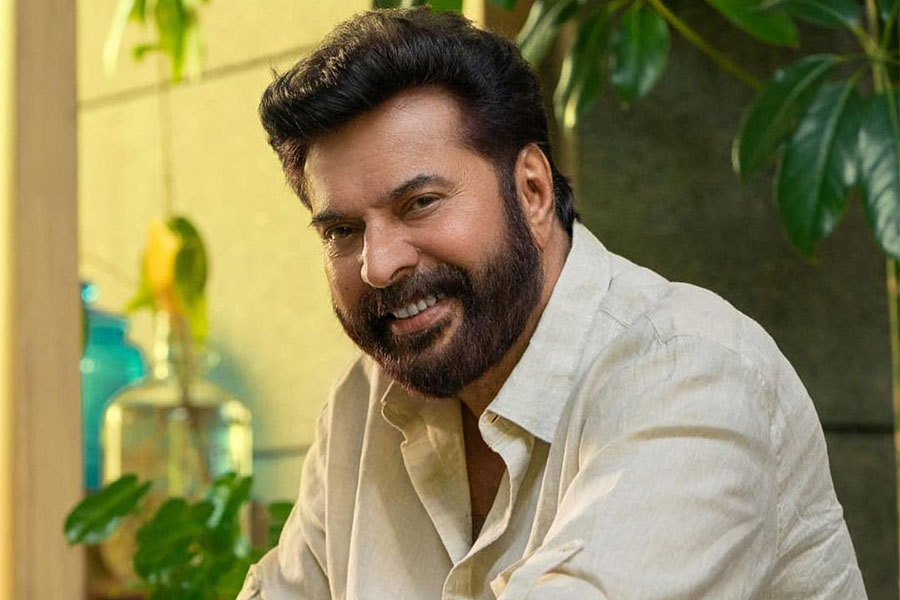
‘Nothing greater than the country honouring one’: Mammootty on being conferred Padma Bhushan

KERALA :

Fondly called ‘Mammukka’ by his fans and those close to him, the 74-year-old actor described the award as ‘unexpected’.

Malayalam superstar Mammootty, who was conferred the Padma Bhushan on Sunday, said he was “very happy” and that there was “nothing greater than the country honouring one”.

Fondly called ‘Mammukka’ by his fans and those close to him, the 74-year-old actor described the award as “unexpected” while speaking to a TV channel.

Wishes poured in on social media as news spread about the honour, which was conferred on Mammootty for his contributions to the field of art. “My friend Mammootty has now become Padma Bhushan Mammootty. Congratulations to my friend,” actor-politician Kamal Haasan wrote on X.

“Congratulations, Mammukka! And thank you for showing us how boundaries are broken, and challenges are taken up with a smile! You’re our pride and one of a kind,” actress Manju Warrier wrote in a Facebook post.

Later, at the Kerala State Film Awards ceremony, Mammootty was congratulated by Chief Minister Pinarayi Vijayan and Culture Minister Saji Cherian. In his address at the event, Vijayan said Mammootty had been honoured by the country with the Padma Bhushan.

“The Kerala cabinet is happy it could take part in this joyous development, as we have been recommending him for the award for the past several years. Everything has its time. Heartfelt congratulations to him. No one in the history of Indian cinema has performed such diverse characters as he has,” the Chief Minister said.

Mammootty has acted in over 400 films across languages including Malayalam, Tamil, Telugu, Kannada, Hindi and English, in a career spanning more than five decades.

He is a recipient of three National Awards, several state awards, and two honorary doctorates, apart from Padma Shri.

Mammootty made his film debut in 1971 with Anubhavangal Paalichakal. His most recent big-screen outing was Kalamkaval.

source: http://www.telegraphindia.com / The Telegraph Online / Home / by The Telegraph, Entertainment Web Desk / January 26th, 2026