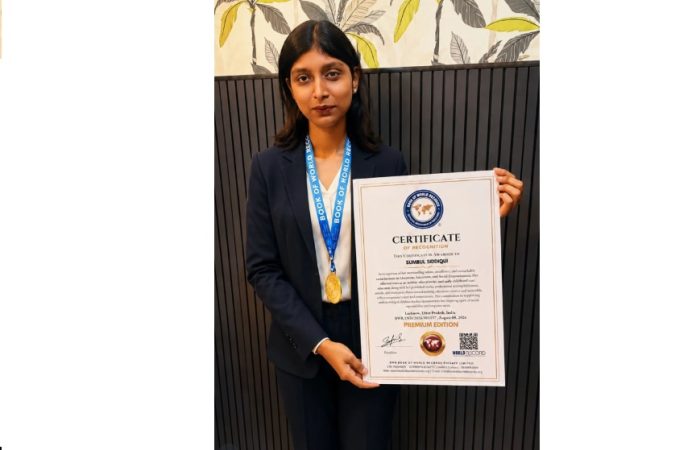
A 28-year-old Muslim author from Lucknow has earned a place in the Book of World Records for her book advocating equal rights for adopted children. Sumbul Siddiqui received her official certificate on August 8 for her book “Echoes of Resilience,” a work she began writing nearly a decade ago.
The book carries a clear social message: when a family adopts a child, that child deserves the same love, care, and equal rights as a biological child. Sumbul draws on her own life to make this case. At the age of 23, she discovered that she was herself an adopted child. By that time, both her parents had already passed away.
She says the love and belonging her parents gave her throughout her life became the foundation of her writing. She wanted to put that experience into words and share it with the world. Her parents never treated her differently, and she believes every adopted child deserves the same treatment.
Sumbul has authored two books so far. “Echoes of Resilience” took her roughly ten years to complete. She works independently in Lucknow and received her entire education in the city. Despite facing considerable personal challenges over the years, she did not step back from her goals.
She grew up with a childhood dream of becoming a Chartered Accountant. Alongside that, she always had a deep interest in reading and writing. That passion eventually led her to write her first book, though she never anticipated the recognition it would bring her.
Through her achievement, Sumbul wants to send a clear message to society. She urges families who adopt children to treat them without any discrimination and to give them the same rights and affection they give their biological children. For her, adoption is not simply about giving a child a home. It is about giving that child a complete sense of belonging.
At 28, Sumbul’s recognition in the Book of World Records marks a milestone she takes pride in, one that validates ten years of dedicated work and personal courage.
source: http://www.radiancenews.com / Radiance News / Home> Latest News> Pride of the Nation> Markers of Excellence> Report / by Radiance News Bureau / August 29th, 2026
Students of Sanskaar International School have, in all, secured three positions at the State-level debate and public speaking competition.
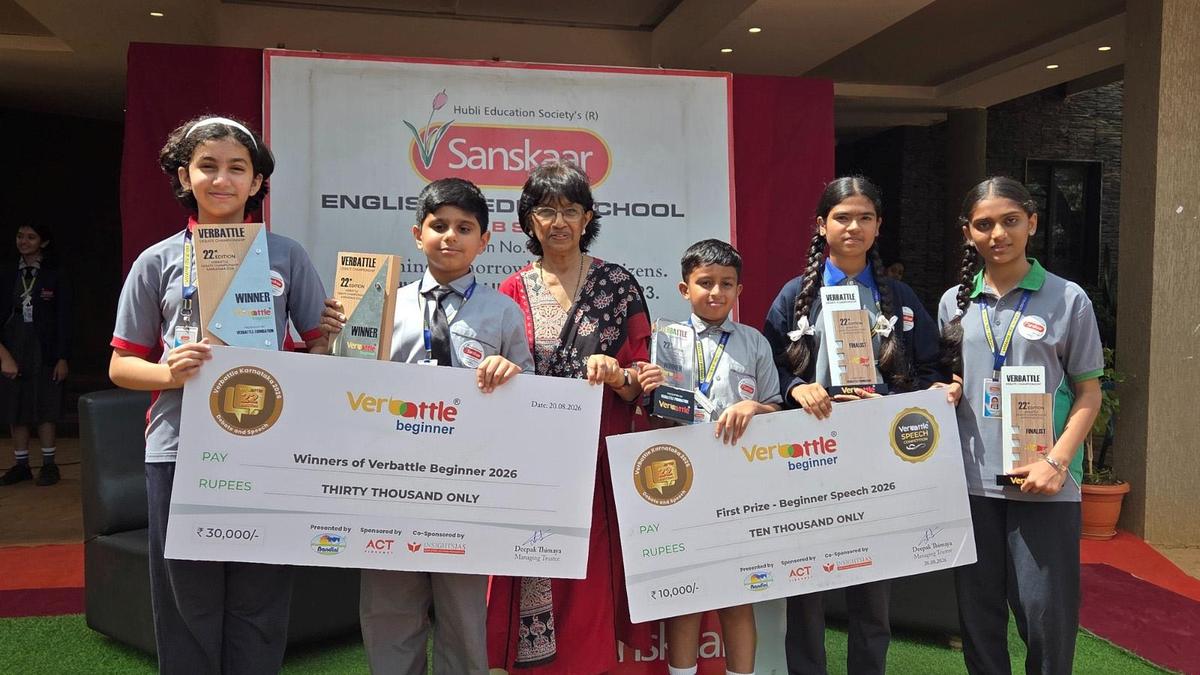
Students of Sanskaar International School, Hubballi, who have secured three titles at Verbattle Karnataka 2026, a State-level debate and public speaking competition for school students. | Photo Credit: SPECIAL ARRANGEMENT
Students of Sanskaar International School, Hubballi, have secured three titles at Verbattle Karnataka 2026, a State-level debate and public speaking competition for school students.
In an event which saw participation from across Karnataka, including Bengaluru, Mysuru, Mangaluru, two teams from Sanskaar secured the first position, while another team finished as second runner-up, a release from the school said.
The winners received trophies and cash prizes.
In the Beginner Debate category for Classes 3 to 6, Class 6 students Anay Abhijit Joshi and Rukhaiya Khuram Khatib won the first position.
In the Beginner Speech category, Class 4 student Nivaan Nagaraj Naik secured the first position and in the Kannada Junior Debate category for Classes 7 to 10, Class 9 students Sakshi Shashikant Grampurohit and Vinuta Vijanagouda Patil secured the second runner-up position.
In all, 33 students from Sanskaar were selected at the preliminary rounds in Hubballi and those who qualified progressed to the State-level competition in Bengaluru where they competed with students from across the State.
The winning students were welcomed by the school band and felicitated by founder-chairman of the school Mahendra Singhi and faculty members.
All the students who participated in the competition and those who advanced to the Bengaluru rounds were honoured.
“These achievements demonstrate the confidence of our students to express their ideas, defend their views with reason and, equally importantly, respect a different point of view. We are proud that our students have represented Hubballi and North Karnataka on such a competitive State-level platform,” Mr. Singhi said.
source: http://www.thehindu.com / The Hindu / Home> News> India> Karnataka / by The Hindu Bureau / August 25th, 2026
A survey covering more than 30 colleges across seven districts linked with Chhatrapati Shahu Ji Maharaj University shows a significant rise in female Muslim students
New Delhi :
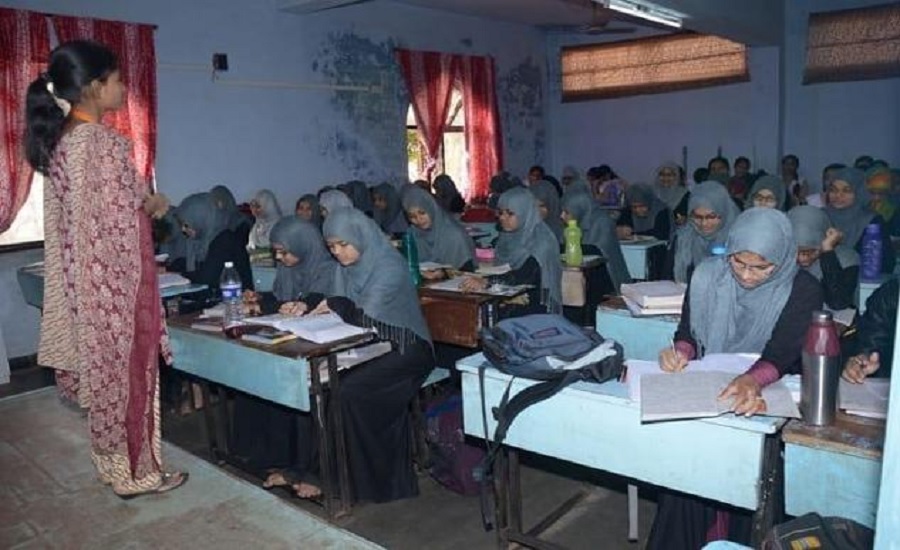
The number of Muslim girls pursuing higher education in Kanpur and nearby districts in Uttar Pradesh has increased significantly over the past five years, according to a survey conducted by a senior academic. The study shows that the share of Muslim female students in colleges has risen from around five per cent in 2021 to more than 21 per cent during the current admission process.
The survey was prepared by Prof B D Pandey, a senior teacher at PPN College and president of the Kanpur University Teachers’ Association (KUTA). The study was based on admission data collected from more than 30 colleges spread across seven districts of Uttar Pradesh.
The colleges included in the survey are located in Kanpur Nagar, Kanpur Dehat, Unnao, Kannauj, Farrukhabad, Etawah and Auraiya. All these colleges are affiliated with Chhatrapati Shahu Ji Maharaj University (CSJMU), Kanpur.
Prof Pandey said the data was collected from admission coordinators appointed in different colleges during the ongoing admission process. The survey looked at students enrolling in undergraduate courses such as Bachelor of Arts (BA), Bachelor of Science (BSc), Bachelor of Commerce (BCom) and other professional programmes.
According to the findings, Muslim girls accounted for around five per cent of female students enrolled in colleges in 2021. This figure increased to nearly 12 per cent in 2023 and has now crossed 21 per cent during the latest admission cycle.
The rise indicates a growing interest among Muslim families in sending their daughters for higher education. The survey also highlights that many of these students come from economically weaker sections of society.
Prof Pandey said one of the notable findings was that a large number of Muslim girls entering higher education belong to families with limited financial resources. In many such families, sons are also present, but instead of continuing studies after school, they often move towards employment or skill-based work.
“Many Muslim girls who are entering graduation and postgraduate courses belong to families where their brothers have studied only up to high school or intermediate level and then started working according to their skills,” Prof Pandey said.
The data suggests a changing attitude among some Muslim families towards women’s education. While economic challenges continue to remain a concern, more families are now supporting their daughters’ efforts to continue their studies beyond school.
The increase has been visible across different courses, including traditional degree programmes and professional courses. Teachers associated with these colleges believe that awareness about education, career opportunities and financial independence may be among the reasons behind the rise.
The trend also reflects a wider change in the participation of women from minority communities in higher education. More young women are seeking college education to improve their career opportunities and become financially independent.
Prof Pandey said the increase in Muslim girls’ admissions is a positive development and shows that educational aspirations among families are changing.
The survey, however, does not represent all colleges across Uttar Pradesh or the entire Muslim community. It is based only on admission figures from selected colleges affiliated with CSJMU.
Education experts say that continued support through scholarships, better awareness programmes and improved access to colleges will be important to maintain this growth.
The increasing presence of Muslim girls in colleges in the Kanpur region shows a gradual shift in educational choices, with more young women from the community moving towards higher education despite economic and social challenges.
source: http://www.clarionindia.net / Clarion India / Home> Big Story> India>Indian Muslims / by Mohammad Alamullah / August 04th, 2026
Sarah Sham, a fourth-generation Muslim entrepreneur from Mumbai and co-founder of Dubai-based luxury interior design firm Jea, has sparked widespread praise after sharing how she enforces strict work-life boundaries at her company, even at the cost of losing clients.
Sham, whose family business Essajees traces its roots back 130 years to her great-grandfather Abdul Kadir Essajee Sham, a trader of fine Iranian art tapestries, took to LinkedIn to outline the firm rules she applies across her design operations spanning 18 cities.
“We start at nine and close by six, five days a week. No weekend calls. No Sunday deadlines,” she wrote. “When a project runs behind, I hire another designer instead of asking my team to give up their weekend.”
Sham, a graduate of Art History from Duke and Oxford universities, admitted she once believed that good design required working through the night. Over time, she changed her approach after noticing that the best creative output came from well-rested designers, not exhausted ones.
“I started comparing creativity to a well instead of a tap,” she wrote. “Push too hard without rest, and it runs dry, no matter how skilled the person is.”
She acknowledged that the policy carried a real financial cost. Several clients left her firm in favour of teams willing to answer calls on weekends or work late nights. Sham chose to let them go rather than compromise her team’s working conditions.
“A tired designer does not run out of ideas all at once. The work slowly gets less interesting, and nobody notices until a client points it out,” she added.
Sham comes from a storied Muslim business family. Her ancestor Abdul Kadir Essajee Sham opened his Mumbai store in 1890, building a clientele that included Maharajas and royal families from India, Qatar, the UAE, Oman, Kuwait and Saudi Arabia. Today, Essajees serves a new generation of buyers including venture capitalists, consultants and young couples.
Her LinkedIn post drew strong responses from professionals across industries. Many praised her for holding firm on boundaries when revenue was on the line, calling her approach a model for sustainable creative work.
Sham co-founded Jea after serving as principal designer at Essajees Atelier for 12 years, carrying forward a family legacy built on craftsmanship, honesty and respect for the people behind the work.
source: http://www.radiancenews.com / Radiance News / Home> Features / by Radiance News Bureau / August 11th, 2026
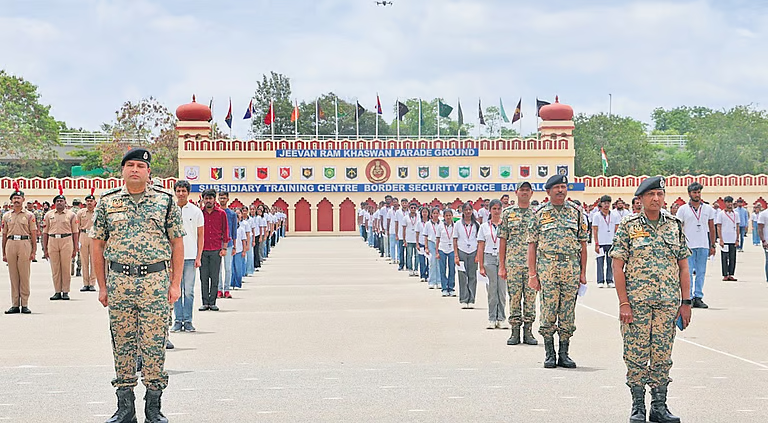
A mass singing of Vande Mataram was organised on Friday at the Subsidiary Training Centre (STC) at Border Security Force (BSF) Bengaluru as part of the nationwide commemoration of 150 years of the national song. The programme was organised under the directions of the union Ministry of Home Affairs and the BSF headquarters Photo | Express
Bengaluru :
The list includes 18 police personnel: one selected for the President’s Medal for Distinguished Service and 17 for Meritorious Service.
The government will honour 22 personnel from Karnataka Police, Fire and Emergency Services and Home Guards and Civil Defence departments with service medals on the occasion of the 80th Independence Day.
The list includes 18 police personnel, of whom one has been selected for the President’s Medal for Distinguished Service (PSM) and 17 for the Medal for Meritorious Service (MMS).
Assistant Commissioner of Police (Central Crime Branch) HN Dharmendra has been selected for the President’s Medal for Distinguished Service. Two personnel from the Fire and Emergency Services – Regional Fire Officer Shivakumar Swamy H M and Assistant Fire Station Officer Basavaraju M – have been selected for the MSM.
Similarly, two Home Guards and Civil Defence personnel – Senior Platoon Commander Meerasab Maboob Sabmulla and Platoon Commander Raghavendram – have been selected for the MMS.
17 cops to get MMS
Sara Fathima, SP, Railways, Bengaluru
Thomas Mathew PM, Commandant, 9th Battalion, KSRP, Bengaluru,
T Mahadev, ACP, Southeast Traffic Sub-Division, Bengaluru City.
Pramanand P Ghodke, DySP , Raichur District
K Shanmuga Varma, Inspector, Police Training School, Mysuru
Bavuddin Rukmuddin Gaddekhar, Inspector, Malmaruti PS, Belagavi City
Guruprasad Gopal Nayak, Inspector, CID, Bengaluru
Nayeem M, Reserve Police Inspector, Lok Bhavan, Bengaluru
Srinivasa M, SI, KP Agrahara Police Station,
Mahadevaswamy, Head Constable, Vidhana Soudha Security
Mariya Joseph Dinesh Kumar, Head Constable, KSRP
Jnanadev Naval Tarase, Special ARSI, 3rd Battalion, KSRP, Bengaluru
Chandrashekar G Chikkanavar, SRHC, 4th Battalion, B’luru
Abdul Kamal Abdul Hameed,Head Constable, Tarikere Sub-Division, C’magaluru
Nagesh Manchayya, APC, CID, Bengaluru
SA Manohar, Police Constable, Hunsur Town Police Station, Mysuru District
Abdul Rabbani, Armed Police Constable, Chikkamagaluru
source: http://www.newindianexpress.com / The New Indian Express / Home> Karnataka / by Express News Service / August 15th, 2026
Baare duniyā meñ raho ġham-zada yā shaad raho aisā kuchh kar ke chalo yaañ ki bahut yaad raho (It does not matter whether you are happy or sad, but do something so that you are remembered for long)
— Mir Taqi Mir
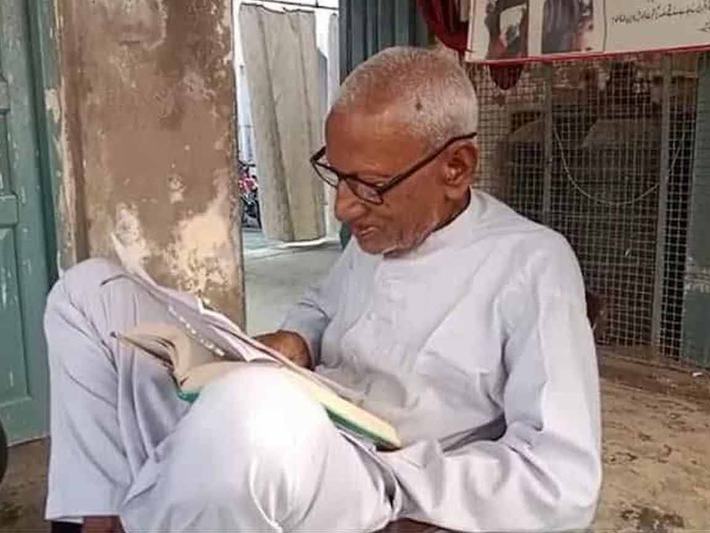
This isn’t an obituary. Nor an elegy. For how do you write an obituary for someone so grand in stature and yet so humble in living, that it defies the usual human qualities. These are just pourings of the heart — from a niece to her ‘bade abba’ (uncle) who ever lovingly called her beti (daughter).
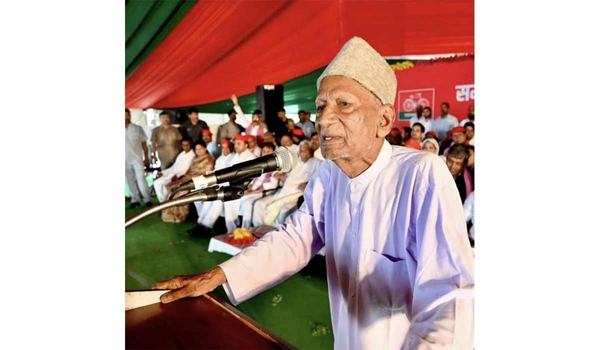
Alam Badi Azmi, the oldest serving member of the Uttar Pradesh Legislative Assembly and a five-time Samajwadi Party (SP) MLA from the Nizamabad constituency in Azamgarh district, died on July 22, 2026, at the age of 90. He was one of the longest-serving legislators from the region.
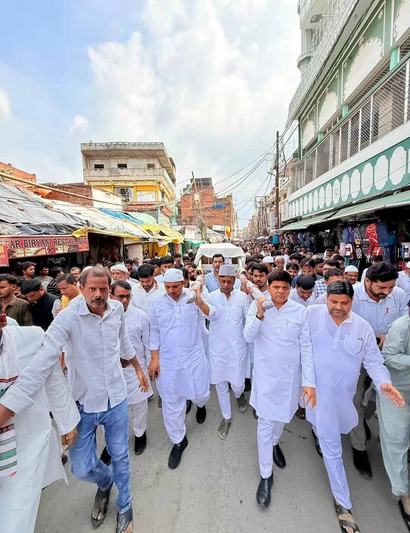
The ‘people’s leader’ breathed his last at his residence, bringing to an end a political career remembered as much for his simplicity as for his honesty and service to the people. Leaders from across parties, even the chief minister of the state, expressed profound grief over his death. Thousands of young and old supporters bid him farewell with tearful eyes, knowing well that a leader like him was a rarity.
Born on 16 March 1936, much before India’s independence, Alam Badi Azmi lived through every phase of the country’s political journey. He was a trained mechanical engineer and briefly worked in his profession before dedicating himself to public life.
He was fondly called ‘Chacha’ (uncle) by all. People across parties described him as a soft-spoken, compassionate, and honest leader whose values and personal integrity earned him widespread respect. He led a humble life, choosing modesty over political spectacle.
Stories abound of his high moral principles and values. He declined a ministerial position, when SP formed government in UP in 2012, saying he preferred to remain among his people and continue serving them directly. He never believed in political showmanship. During elections, he would refuse to put up posters or banners or indulge in spending money on publicity. He believed people would vote if one worked genuinely and hoenstly. His politics was never that of power and rhetoric, it was only about social service.
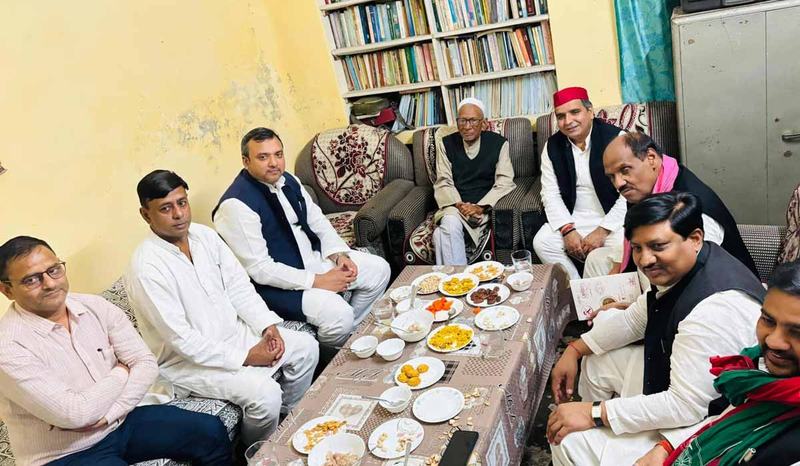
He was known for personally inspecting development work in his constituency, ensuring that public money was spent fairly. On his death, a leading national daily reported, “Unlike many public representatives, he lived without security or luxury. Visitors to his home were served black tea in small cups, while his son and grandson personally attended to guests as there were no domestic staff. He met visitors under a tin-shed outside his modest house and was known to travel on foot to interact with people. His clothes were simple – made from fabric costing Rs 30 a metre. He worked for social welfare, founded the Qaumi Ekta Manch in Azamgarh and authored a book focusing on communal harmony and national integration.
On the personal front, he was a committed family man. A loving and doting father to all, including his younger siblings. My memories of childhood and our much awaited summer vacations are majorly about how ‘Bade papa’ made our stay fun-filled ensuring we were served with the tastiest food and our favourite desserts every day.
Those were the times when vacations and outings were not about foreign trips and visits to exotic tourist locales. Vacations, for our generation, was the time to be spent at grandparents’ house, for which we waited year-long, bursting with excitement as the time drew near. Those stays were not just holidays. They were workshops of humanness, giving lessons along a spectrum of emotional vulnerabilities – to learn to live with extended families, cherish bonds, co-exist through highs and lows, lend helping hands, share experiences, and most importantly remain rooted to one’s traditions.
We lost our grandparents early, so the void was filled by bade abba, whose presence as the eldest in the family was that of a permanent guardian angel. When he came back home after his day-long work, he would never withdraw to his room to rest. Instead, he would spend his time talking and eating with all. Being the youngest in our family, I had the unique privilege of getting the best treats from bade abba, who would often silently hand over a candy or cookie pack exclusively meant for me. I distinctly remember the flavour of a peanut mix, which he often got for me, humorously called by him as ‘lighting of the tongue’ because of its very spicy taste.
Sleeping on roof-top with the family through summer nights, waking up unwillingly as the Sun shone on our faces and waiting to eat the most savoury of parathas which our badi ammi (his wife) made, are memories we can never forget. Bade abba’s earnings were meagre but his heart was one of gold. Lingering around him most of the time as his favourite child, I discreetly listened to many of his conversations with badi ammi about how personal finances were to be managed with a houseful of relatives. He never made anyone realise even if it was sometimes difficult catering to everyone. Our plates were always full, our hearts always brimming with joy. Bade abba knew his art. He knew how to keep things rolling and badi ammi supported him through her immaculate household management. He was the pillar which kept the family together – uncles, aunts, cousins everyone.
A noble soul who stood with the common people in their joys and sorrows, he remained steadfast in his values and continued serving people with unflinching dedication. His humility, kindness, and commitment to public concerns earned him respect throughout the region.
He remained an active worker till his last days. Truth and simplicity were the hallmark of his personality. His grassroot politics and connect with the local public made him an extremely popular leader.
With his passing, India has lost a sincere and hardworking people’s leader, the like of whom are so rate these days. He leaves behind a legacy of selfless public service. His life and ideals will continue to inspire generations. The fact that thousands of people of all communities gathered to pay their last respects on his death, speaks volumes about his character. His admirers believe the void left by him can never be filled. His death marks the end of an era.
For me, bade abba will always remain an example of warmth and love. I can still feel his hand on my head – his unique way of blessing his children.
Hazāroñ saal nargis apnī be-nūrī pe rotī hai Badī mushkil se hotā hai chaman meñ dīda-var paidā For thousands of years, the narcissus weeps over its lack of insight, it is with great difficulty that a true visionary is born
— The author is Professor at Faculty of Management Studies & Research, Aligarh Muslim University, Aligarh. She is author of “Strategic Human Resource Management,” published by Cambridge University Press, UK.
source: http://www.milligazette.com / The Milli Gazette / Home> News> Community News / by The Milli Gazette Online / by Feza Tabassum Azmi / August 08th, 2026
Prof Hani, who has taught economics at the college since 2000, plans technology-focused courses, ethical finance and new facilities for female students, alongside measures for their health and safety.
Mumbai :
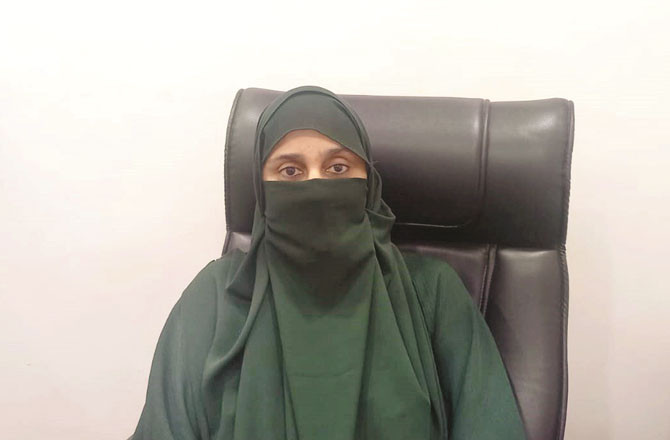
Professor Dr Rakhshanda Hani has become the first woman to be appointed in-charge principal of Maharashtra College of Arts, Science and Commerce in Mumbai. She took charge on August 1.
Hani, who heads the college’s Department of Economics, has been associated with the institution since 2000, when she joined as an assistant professor. She has remained with the economics department throughout her teaching career and was appointed its head in 2015.
Located on Jehangir Boman Behram Marg near Mumbai Central, Maharashtra College is affiliated with the University of Mumbai and managed by the Khairul Islam Higher Education Society. The college’s 2025-26 prospectus lists Hani as head of the Department of Economics.
Speaking about her priorities as in-charge principal, Hani said she would focus on helping students make better use of technology and introducing courses that could support their future careers.
“The present age is the age of technology. Every student has a smartphone, and through its positive use, students can improve their educational abilities. Therefore, we have to explain to them how such devices should be used properly,” she said.
“Along with this, students also need to be introduced to AI and other modern courses that are useful for career-building so that they can move forward with the times,” she added.
Hani began her teaching career at Maharashtra College in 2000, when Professor Ishaq Hawaldar was the principal. According to Hani, Hawaldar interviewed her for the post.
With encouragement and support from her family, she continued her higher studies while working at the college. She also appeared for several competitive examinations and eventually completed a PhD in economics.
Her academic experience and qualifications led to her appointment as head of the economics department in 2015. Over the years, she has also held several other positions at the college.
Focus on Female Students
After taking charge, Hani said she had decided to expand facilities for female students, including making the college gymkhana accessible to them. The facility had previously been used by boys.
“First of all, I decided that facilities should be provided in the college gymkhana for girls as well as boys so that they too can benefit from them,” she said.
She added that measures were also being taken with the health, safety and other needs of female students in mind.
The college prospectus states that the institution places particular emphasis on facilities for female students and aims to create opportunities for higher education, especially for girls from the Muslim community. Its facilities include a college gymkhana, scholarships, a students’ aid fund and campus interviews.
New Courses Planned
Hani said the college was also planning to introduce several new courses, including one in ethical finance. She said the college had entered into an agreement with a British educational institution for the course.
Established in 1968, Maharashtra College offers undergraduate programmes in arts, science and commerce. Hani’s appointment marks a new chapter in the institution’s history, making her its first woman in-charge principal.
source: http://www.clarionindia.net / Clarion India / Home> Editor’s Pick> India> Indian Muslims / by Team Clarion / August 22nd, 2026
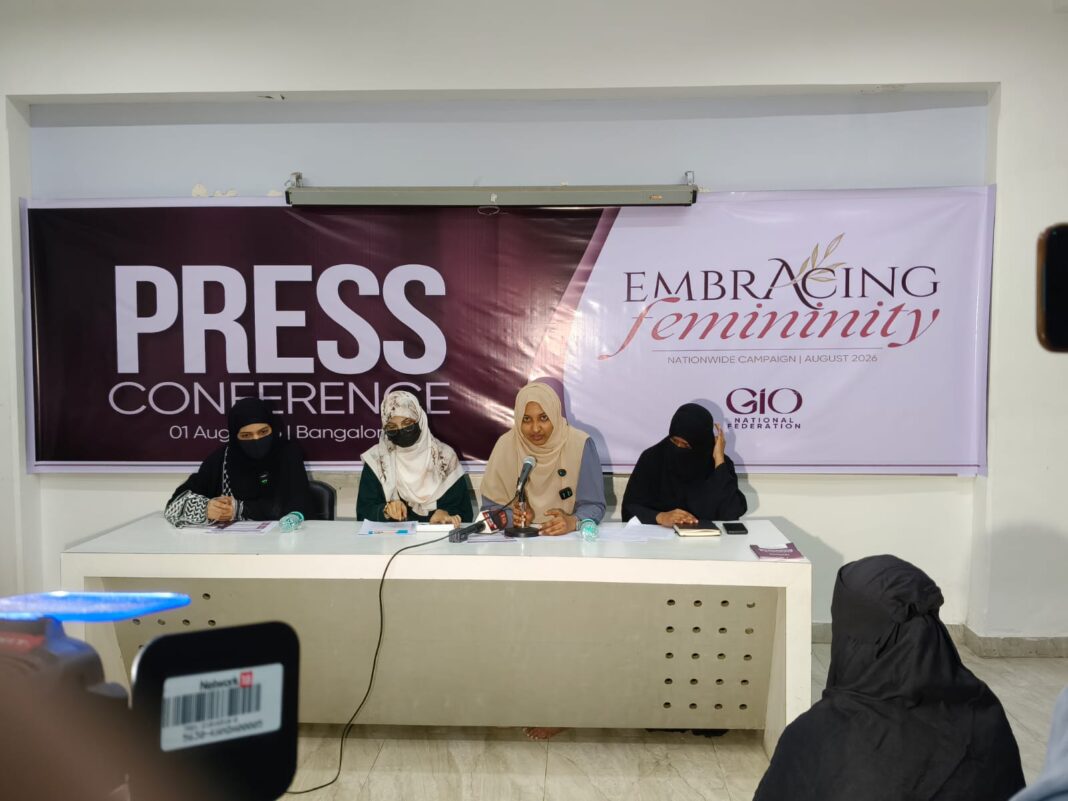
The National Federation of Girls Islamic Organisation (NFGIO) on Friday(July 31) announced the launch of its nationwide “Embracing Femininity” campaign, a month-long initiative aimed at encouraging young women to embrace their innate nature while fostering dignity, balance and holistic well-being.
The announcement was made at a press conference held at the Bangalore Islamic Foundation Trust (BIFT) Auditorium on Queens Road. The campaign will be observed throughout August across GIO units, educational institutions and campuses nationwide.
Introducing the campaign, Sameen Momin, National Campaign Convener, said a wide range of activities, including seminars, workshops, campus interactions, online sessions and public awareness programmes, have been planned to engage young women in discussions on identity, empowerment and well-being.
Speaking on the campaign theme, Afeefa Tahniyath, Vice President of NFGIO, said contemporary society often places women between two opposing pressures—restrictive social attitudes on one side and the expectation to reject femininity in the name of empowerment on the other. She said the campaign presents an alternative approach rooted in Islamic values, recognising femininity as a source of confidence, resilience and inner balance rather than a limitation.
Delivering the Kannada address, Basira Banu, Zonal Advisory Council member of GIO Karnataka, urged students and young women to actively participate in the campaign and benefit from its programmes.
In her presidential address, Adv. Sumaiya Roshan, President of NFGIO, said the initiative seeks to reaffirm women’s dignity, rights and meaningful participation in every sphere of society. She observed that a culture which evaluates women primarily through productivity and performance often overlooks their emotional and psychological well-being. The campaign, she said, advocates a balanced path that values women’s strengths without expecting them to compromise their femininity. She also stressed that families, educational institutions, workplaces and society at large share the responsibility of creating an environment where women can thrive with dignity and authenticity.
Replying to a question during the interaction, Adv. Roshan said the campaign would be conducted in 18 states where GIO has an organisational presence. She added that the initiative seeks to educate girls about femininity as an integral part of their ‘fitrah’—the innate nature with which every human being is created.
The press conference concluded with an interactive question-and-answer session. The campaign will be formally inaugurated on Sunday, August 2, at the Agricultural Institute Auditorium, Bengaluru, marking the beginning of a nationwide series of programmes throughout the month.
source: http://www.indiatomorrow.net / India Tomorrow / Home> News> Society / by Mohammed Talha Siddi Bapa /August 01st, 2026
At a Jamia seminar on freedom, responsibility and shared nationhood, the National Commission for Minorities vice-chairperson stressed education, skills, women’s advancement and linguistic unity
New Delhi :
National Commission for Minorities Vice-Chairperson S Munawari Begum called on students at Jamia Millia Islamia to focus on education, skills, women’s advancement and social unity, while sharing her own experience of growing up with Urdu and Hindi.
She was speaking as the chief guest at a one-day seminar titled “Freedom, Responsibility & Shared Nationhood”, organised by the Department of Sociology at Jamia Millia Islamia on August 18.
The seminar brought together students, teachers and members of the academic community to discuss freedom, civic responsibility and the idea of a shared nationhood. According to the department’s programme information, the event was intended to provide a forum for discussion on these issues.
Begum, who took charge as vice-chairperson of the National Commission for Minorities last month, was joined at the event by Jamia Registrar Prof Mehtab Alam Rizvi and other faculty members and guests.
Padma Shri Prof Akhtarul Wasey was the main speaker, while the programme was chaired by Prof Zubair Minai, Dean of the Faculty of Social Sciences. Prof Azra Abidi, head of the Department of Sociology, coordinated the seminar.
Language and communication were among the main themes of Begum’s address.
“I am a daughter of Urdu; Hindi raised me,” she said, while speaking about her experience with different Indian languages.
She also spoke about learning languages including Tamil, Malayalam, Kannada and Telugu. According to Begum, learning another language is not limited to acquiring linguistic knowledge but can help people communicate and build connections with one another.
She also spoke about her experience as an interpreter during Prime Minister Narendra Modi’s visits to Tamil Nadu and said she had helped facilitate communication when leaders from northern India visited the state.
Her remarks came at a time when language has remained a subject of public and political debate in India, but her message to students focused on communication and learning rather than linguistic divisions.
Education and Skills
Begum placed particular emphasis on education, telling students that young people have an important role in shaping the country’s future.
She said education and practical skills could help young people improve their own prospects while contributing to their families, communities and the country.
She also spoke about the need for students to acquire skills linked to employment alongside religious or traditional education.
Referring to the financial difficulties faced by students preparing for competitive examinations such as the Union Public Service Commission (UPSC) examinations, she spoke about her efforts to help students who cannot afford such preparation.
She also stressed the need to encourage women and girls to pursue education and opportunities, saying women should move forward alongside men and take part in the country’s development.
Urdu and Computer Training
Begum also recalled her earlier work providing Urdu education alongside computer training.
She said centres had been run to teach Urdu and computers to young people between the ages of 15 and 35. Referring to an initiative in Puducherry, she said a Hindu youth’s NGO had also been associated with one such centre.
The example, as presented in her address, reflected her view that education and skills should not be restricted by religious identity.
The broader theme of the Jamia seminar was the relationship between freedom and responsibility. The discussions focused on the idea that rights also carry responsibilities towards society.
Begum urged young people to maintain a positive outlook and contribute to the country’s progress. She said that progress at the national level would also benefit families, villages and communities.
The August 18 seminar brought academic discussion on freedom, civic responsibility and shared nationhood together with Begum’s focus on education, language, women’s advancement and the role of young people in society.
source: http://www.clarionindia.net / Clarion India / Home> Culture> Editor’s Pick> India / by Clarion India / August 21st, 2026
The Class 10 student from St Joseph English High School wins silver in Kyorugi and bronze in Poomsae at the event
Mumbai :
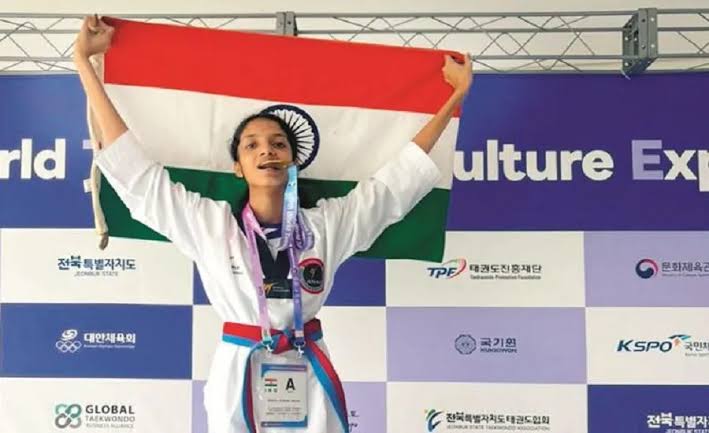
Rania Rizwan Ansari, a young taekwondo player from Agripada in Mumbai, has won two medals at the 19th World Taekwondo Culture Expo held in South Korea.
Representing the Jalna Wala Sports Training and Research Centre, Mumbai, Rania put in a strong performance at the international event held at Taekwondowon in Muju County, South Korea.
The young athlete won a silver medal in Kyorugi and a bronze medal in Poomsae, bringing home two medals from two different competitions.
Rania is a Class 10 student at St Joseph English High School on Moreland Road. She has been practising taekwondo since Class 1 and has continued with the sport for several years alongside her studies.
Rania won a silver medal in Kyorugi, the combat form of taekwondo in which competitors face each other under competition rules.
She also won bronze in Poomsae, which involves performing a set sequence of taekwondo movements with attention to technique, control and accuracy.
Winning medals in both disciplines at an international event marks an important achievement for the Mumbai schoolgirl.
Her performance has also brought recognition to the sports training centre under whose guidance she prepared for the competition.
Rania’s development as a taekwondo player has been supported by coach Rohidas Shirke, an experienced coach associated with the academy.
Her training and preparation under Shirke have helped her compete at different levels and take part in major events.
Following her success in South Korea, the management and teachers of St Joseph High School congratulated Rania and her coach.
The school authorities also wished both of them success in their future sporting and professional pursuits.
Rania’s connection with taekwondo began when she was in Class 1.
She has continued training throughout her school years and has gradually moved from taking part in competitions to winning medals at major events.
Her latest performance in South Korea follows an earlier success in India.
In 2023, Rania won a gold medal at the District Sports Office (DSO) competition held in Goa after putting in a strong performance.
The gold medal in Goa gave her further experience in competitive taekwondo and added to her record before her appearance at the international event in South Korea.
Rania’s achievement is also a source of pride for her school and the local sporting community in Agripada.
Competing outside India requires athletes to adjust to a different setting, a higher level of competition and the demands of an international event.
For a Class 10 student who began learning the sport in primary school, winning two medals in South Korea is a significant step in her sporting career.
Her success also highlights the role of regular training and coaching in helping young athletes develop their skills.
With the support of her family, school and coach, Rania is now looking ahead to further competitions and hopes to continue her progress in taekwondo.
The two medals — silver in Kyorugi and bronze in Poomsae — have given the young player from Agripada an international achievement to add to her growing sporting record.
source: http://www.clarionindia.net / Clarion India / Home> Editor’s Pick> India> Indian Muslims / by Team Clarion / August 14th, 2026