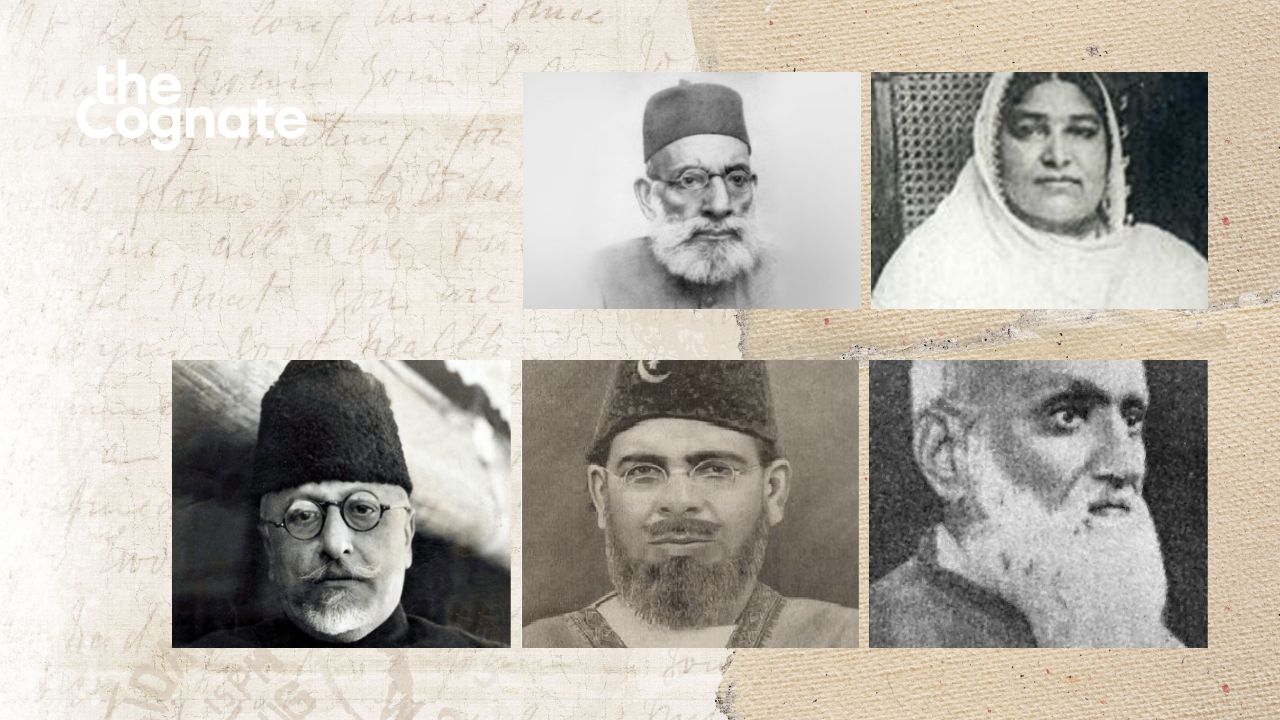
Category Archives: Indian Muslims in World War I and II (wef. July 09th, 2022)

Why We Need a Book About Muslims Who Fought for India’s Freedom

Mumbai, INDIA :

Can a stable and just democracy flourish on foundations of wilful amnesia and erasure?
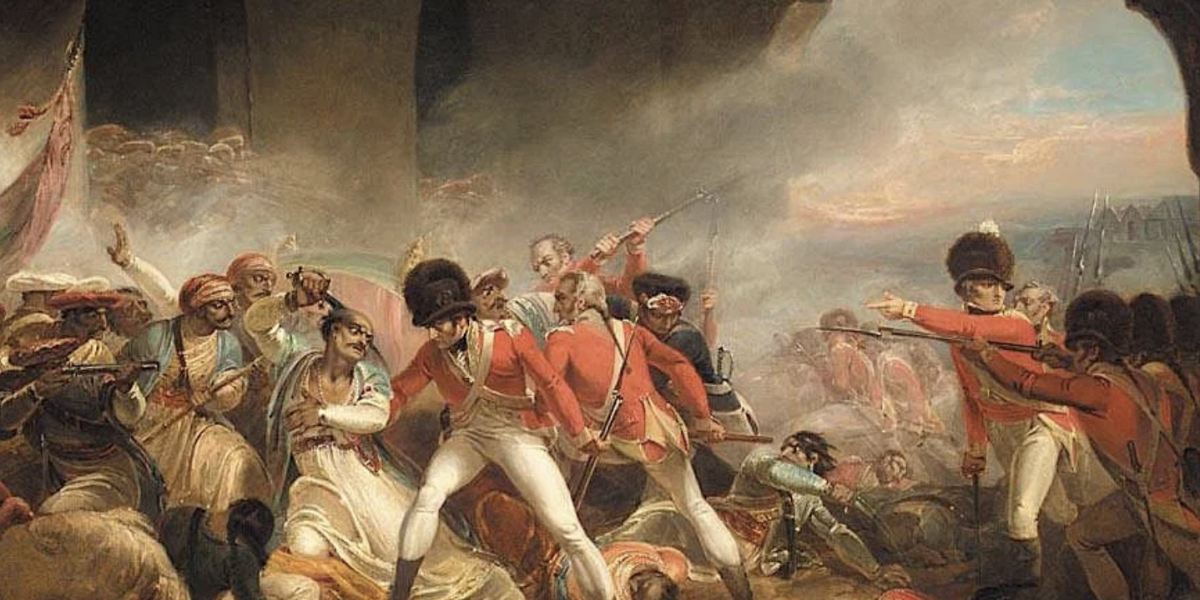
A c. 1800 painting showing the last stand of Tipu Sultan, ruler of Mysore in 1799 at the end of the Anglo-Mysore Wars with the East India Company. Photo: Henry Singleton/Public domain.

Many will ask why a book about Muslims who fought for India’s freedom? There’s no answer to such questions except another question. Had we been better memory keepers as a nation, could we have avoided the peak disinformation and stupidity which normalises reviling ordinary Muslims as outsiders, infiltrator and insurgents? 

Muslim Freedom Fighters of India is a two-volume biographical compilation by Salim Khan on less-known, mostly forgotten and hardly known Muslim figures. The books aim to clear the fog around Muslim freedom fighters whose names are heard of without them being extensively known and this requires us to understand why this fog exists. Written in an extremely readable and accessible format, these biographical accounts embed the historical figures in the context of their times, responding to unprecedented events with foresight, clarity and conviction that sealed their fate and shaped and the nation’s destiny.

 Whether we are reading about Generals of 1857 – Bakht Khan and Khan Bahadur Khan – or the Cambridge-educated Rampur scion Mohammad Ali Juahar of Khilafat moment and his fiery mother Bi Amma, the larger questions seething beneath the stories keep rising to surface. Who does a society and nation choose to remember and celebrate? Whose memories are deemed worthy of preserving? History is always shaped by those who control archives, narratives and memorialisation and hence memory. 

Reading about Tipu’s dazzling reign through the three Anglo Mysore wars where he proved superior to British forces, I was reminded of the controversy sparked by the late Girish Karnad’s suggestion of naming the Bengaluru airport after Tipu Sultan. Karnad had said, “It is true that Tipu Sultan was not born in Bengaluru, but he was a son of this soil and a freedom fighter. Had Tipu been a Hindu, he would have achieved the status of Shivaji, and the airport would have been named after him.” I recalled Karnad because his play Dreams of Tipu Sultan echoes the same theme that this two-volume tribute to erased, obscured and deliberately unremembered historical figures echoes: that when politics lays down who should be forgotten, remembering the erased becomes a duty, an affirmation and a political act. 

It is important to clarify that this is not a compilation of eulogies but well-researched fact based account of people who had the uncommon clarity to resist colonial domination even before the nationalistic narratives took shape. That they happened to be Muslims is important today because of the distortions that have obscured and erased them. But back then when they fought and resisted, they were simply rallying for the cause of their soil and their watan. From the earliest times they understood that freedom from foreign domination required Hindus and Muslims to put up a united front as in the war of 1857, the Khilafat movement, and the period between 1919 and 1924. Back then too, traitors cut across religious lines – Jagat Seth, Mir Jafar, and Ilahi Baksh.
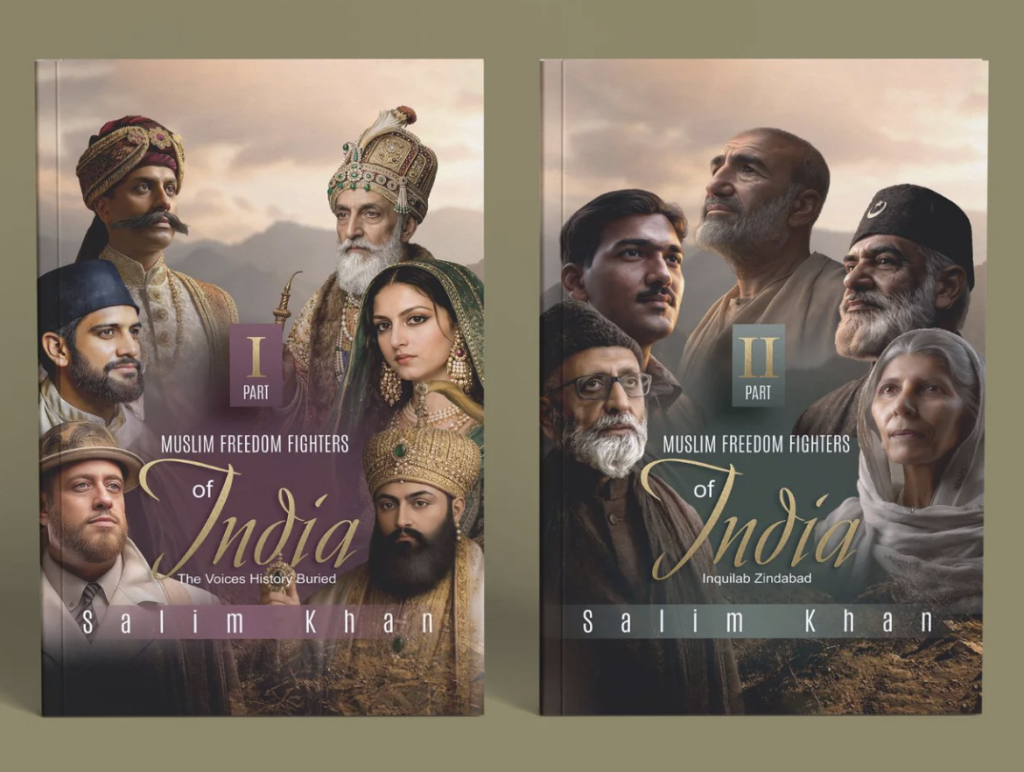
Muslim Freedom Fighters of India: Part 1 and Part 2’, Salim Khan, Qalam Aur Kaagaz Books.

From Siraj ud Daulah to Tipu to Shahzada Firoz Shah, the book shows how the fog around these personalities is not accidental but meticulously designed – initially by the colonial mind, then picked up by early nationalists and woven into simplistic narratives. The macabre dance of history further stifled Muslim voices. Cataclysmic events like the ‘end’ of the Mughal Dynasty in 1857 and the Partition in 1947 sundered clans, erased family histories, legacies crumbled with no one is around to defend and uphold them. Today, even people who don’t know history have heard of Lakshmi Bai, but many who read history may not have heard about Shahzada Firoz Shah, the Mughal Emperor’s grandson who in August 1857, led a band of armed soldiers to rally the rebels in Rohilkhand and Malwa and who fought alongside Tatia Tope and called for a united Hindu-Muslim front against the Company. 

The British understood the dangerous potential of popular memory and subverted any potential for memorialisation of hugely influential figures. No one knows if Shahzada Firoz died in battle or escaped to West Asia. The Maulavi Ahmadulla of Faizabad whose authority and fearlessness scared the British so much that they kept a reward on his head, was likewise interred in an unmarked grave. Knowing that even his memory could become a node to unite the rebels, the British saw to it that no commemoration was permitted or possible. Zafar, the last Mughal was exiled to Rangoon for the same reasons.

In her book, India, 5,000 years of history on the subcontinent, Audrey Truschke, elucidates how Muslim rulers like Nawab Siraj ud Daulah and Tipu Sultan to Zafar felt a responsibility for their subjects no matter what their religion. For example, Siraj ud Daulah actively intervened in times of famines and drought in Bengal. But after the British took over they did nothing to alleviate human suffering, so that 20% of Bengal’s population died in the famine of 1768 and the small-pox epidemic of 1769-70 following it. This had never happened during earlier episodes of failed harvests. Truschke says, British historians initiated the custom of categorising Indian rulers as tyrannical, effete and incompetent, reducing them to their religion and writing in terms of Hindu rulers and Muslim rulers. The British needed to demonise Muslim rulers who were their immediate predecessors in subcontinent so that they might look good by comparison, Truschke notes. It was a part of the colonial propaganda.

Another pattern Salim Khan’s compilation brings out is that from mid-18th century onwards, the first responders and the most committed crusaders resisting colonial domination – the kings, queens, princes, preachers, noblemen – were Muslims. Not only because the British had wrested from them the power they had wielded for centuries (howsoever fragmented or diluted it may have become); but also, because they were looked upon as leaders. In Awadh, for example, the Shia elite took it as their moral-ethical duty (see Chapter 7, volume I: Shia Ullema and Noblemen of Awadh

Even in the 20th century, Muslim freedom fighters like Hasrat Mohani of the Inquilaab Zindabad fame and Asfaqullah Khan of the Kakori conspiracy who was an icon for Bhagat Singh, remain in the shadows, seen only in a hazy half-light. Were their contributions any less or only less remembered? One of the most important projects post-Independence should have been to restore memory and affirmation to those whom the British put on the wrong side of history, no matter what their religion or caste. But we know this is not what happened.

Since the arrival of the political controversy over Tipu Sultan, we have entered in an era of deliberate distortion of history. The larger question that these accounts refrain from asking but that jumps to any thinking person’s mind is this: can a stable and just democracy flourish on foundations of wilful amnesia and erasure? Should the memory of Muslim freedom fighters be kept only by the Muslims? The heritage and memory of Indian Muslims needs to be reclaimed by them. But equally, these volumes are required reading for the casually miseducated, hopelessly disinformed or simply ignorant Hindus who have been stupefied into denying and distorting their composite history.

Varsha Tiwary is a Delhi-based writer and translator. She has recently published 1990, Aramganj a translation of the best-selling Hindi novel Rambhakt Rangbaz.
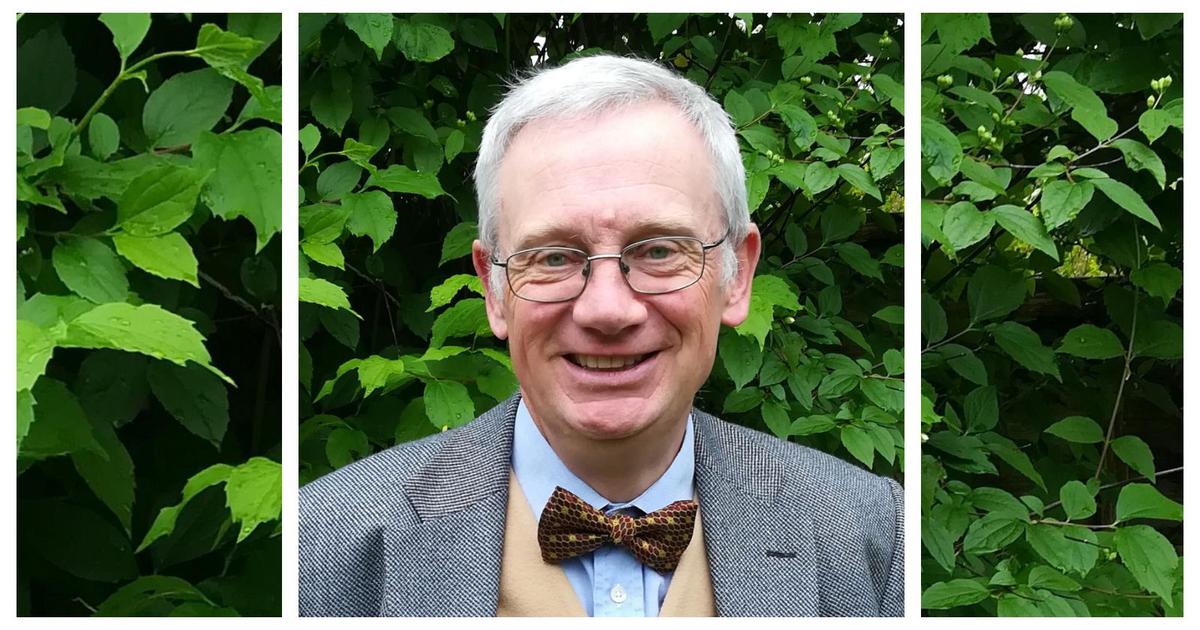
Ghee Bowman (1961-2025): A British historian who unearthed the stories of Indian soldiers at Dunkirk

BRITISH INDIA :

He shone the spotlight on the often-ignored role of the 2.5 million members of the British Indian Army who had served during the Second World War.

Historian Ghee Bowman. | https://www.forcek6.org.uk/about

One day in 2013, when Ghee Bowman was working on a project on the city of Exeter’s multicultural history, he found a book featuring three photographs of Indian soldiers in the English county of Devon during the Second World War.

It piqued his curiosity.

“I thought I knew about the Second World War, but I’d never imagined that there were Indian soldiers with turbans and mules in Devon,” he wrote.

Though he had a BA in drama, Bowman decided to start an MA in history – and went on to write a PhD dissertation on the 4,227 men of Force K6 contingent who spent most of the war in England.

Through their stories, he shone the spotlight on the often-ignored contribution of the 2.5 million men and women of the British Indian Army who had served during the Second World War.

When Bowman started digging, he found that the British Army arrayed against Nazi Germany in Europe early in the war needed mules to transport artillery and supplies. The men of Force K6 and their mules were shipped in from India, more than 11,000 km away.

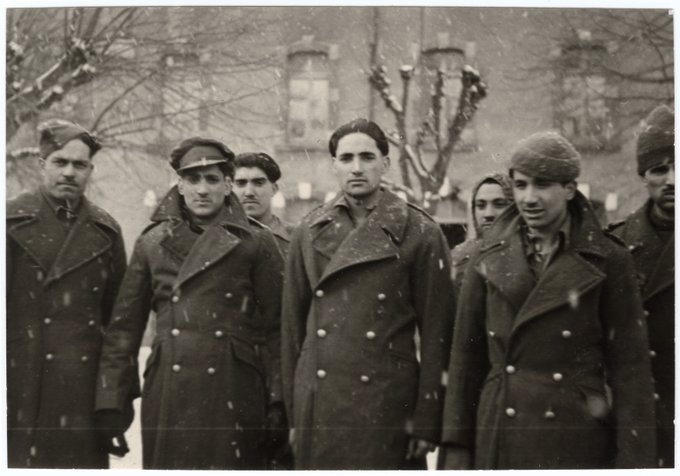
Several had been evacuated from Dunkirk in France in 1940 when the Allied defense collapsed and spent years in England.

source: youtube.com

Before Bowman died on May 10, he had spent the previous 12 years researching the Indian Army in Europe during the Second World War. His two books on the subjects are superbly researched and cracking reads.

pix: google.co.in/books

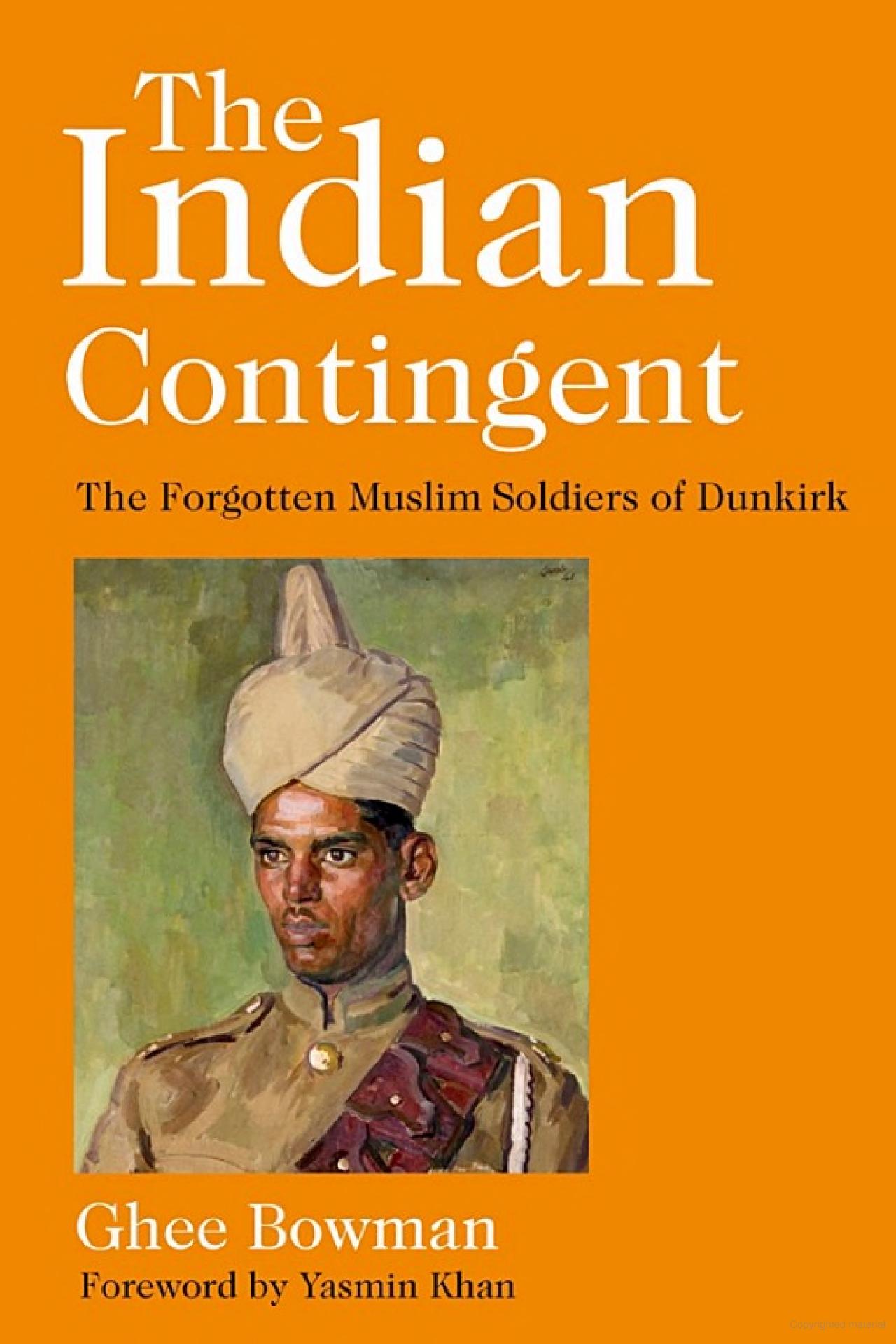
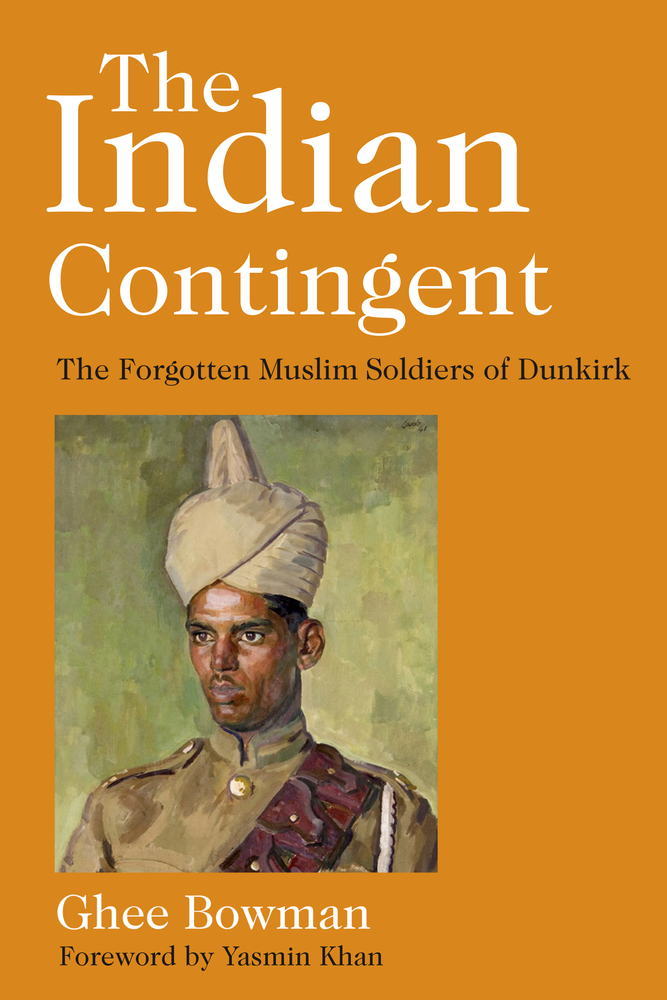
Bowman’s first book was The Indian Contingent – The Forgotten Muslim Soldiers of the Battle of Dunkirk, published in 2020. It is the story of the 299 men of the 25th Animal Transport Company of the Royal Indian Army Service Corps.

Because the British used to group men of the same religion and creed together, these men were mainly Muslim. The role of Indian soldiers fighting in North Africa and Italy during the war had been documented. But little was known about the men who were in France.

The Great Epinal Escape – Indian Prisoners of War in German Hands was published in late 2024. Bowman had been toying with the title The Greatest Escape, a reference to the popular movie about the war, The Great Escape. It was about the escape of 500 Indian prisoners of war from a camp at Epinal in France in 1944.

On May 11, 1944, American planes bombed a camp at Epinal in France housing 3,000 Indian prisoners, breaking some walls. Several hundred escaped, of whom 500 reached Switzerland. It was the largest PoW escape during the Second World War.

Though the Indians were conspicuous in the middle of France, they managed to make their way across the border through their grit and the bravery of civilians who helped them along the way.

______________________________

Ghee Bowman / @GheeBowman

#OTD 11th May 1944; a sunny day in Épinal, a small town on the river Moselle, close to the Vosges mountains and Germany. The scene is set: nobody knows that this quiet French place, untouched by war since 1940, will become the site of the largest POW escape of #WW2

1:21 PM . May 12, 2024· / 18.7K View

________________________

Very little has been written about the experience of individual Indian soldiers in the Second World War. With his micro-histories, Bowman took a step towards filling this gap – and pointed the way for other researchers to do so too. Besides, in a time of rising xenophobia in the UK, Bowman’s work serves as a reminder of the long presence of South Asians – and Muslims – in the country and their contributions to keeping it secure at one of its most vulnerable moments vulnerable moments .

After submitting the manuscript for his second book, Bowman wondered how he could do more to tell the story of Indian soldiers during the Second World War. About six months ago, he decided that he had he hit upon the best and most gratifying way of doing this – not by writing more books or articles and making podcasts but by helping families get to know more about a grandfather or uncle who had fought in the conflict.

This would not result in thousands of social media posts and perhaps only one family would get to know about the work. But to Bowman, helping even one person trace their family history was priceless.

“I’m very happy to share what I already know with families and the wider Indian public,” he wrote. “I’ve got letters, photos, recommendations for medals that I’ve found in archives and newspapers. I would love to be able to restore these to the descendants of these brave men.”

He decided to co-opt the willing and reached out to researchers across the world. He created a page on his website listing useful resources. I was proud to be his man in India and Southeast Asia.

____________________

Ghee Bowman / @GheeBowman

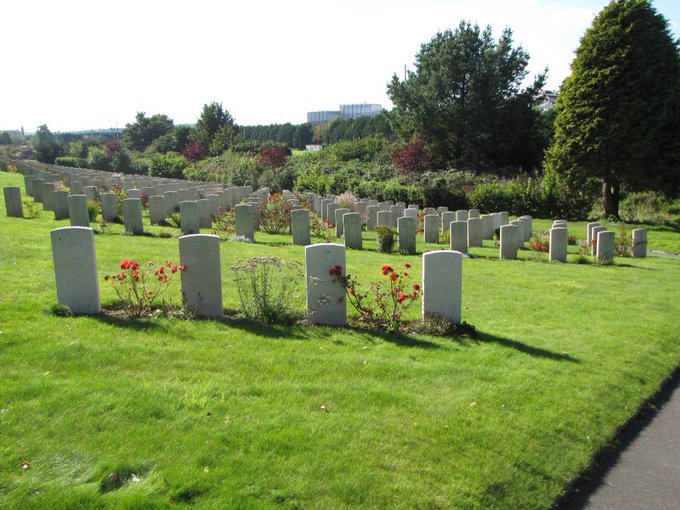
To the good people of #Plymouth. As you think about Muslims in the city this morning, you might like to know about the 4 Muslim graves at Weston Mill Cemetery, 3 miles from where the #plymouthriots happened last night.

@BBCSpotlight / @Plymouth_Live / @SAHM_UK

5:30 PM . Aug 06, 2024 / 3,216 Views

_____________________________________________________________

____________________________________________________________

Ghee Bowman / @GheeBowman

These four men were soldiers of the Indian Army, part of #ForceK6 – Muslim Punjabis sent 7000 miles to help the British in its hour of need. Here are some of their officers inspecting coastal defences in November 1941.

5:30 PM . Aug 06, 2024 / 264 Views

_______________________________________________________

I had the privilege of getting to know Bowman in June 2023, when I reached out to him as I had just begun researching the Indian Army in World War II Singapore. He helped me find sources, to write a book proposal and introduced me to his publishers and others who turned out to be crucial for my own book.

Even as he was trying to help family members trace their relatives, Bowman had been going through a grave personal health crisis. In his regular newsletter in May 2024, he mentioned that he had a fall. His last newsletter was on February 1. He said he had been diagnosed with a brain tumour, was undergoing radiation and chemotherapy and doing well.

He died three months later. Bowman once described himself as “a historian, teacher and story teller…a Quaker and a lifelong learner”. He was all that and much more – he helped others without any gain for himself.

Gautam Hazarika is a Singapore-based author whose book The Forgotten Indian Prisoners of World War II is being published by Penguin India and Pen & Sword UK later this year. He can be contacted at  ghazarika70@yahoo.com.sg

source: http://www.scroll.in / Scroll.in / Home> Tribute / by Gautam Hazarika / May 27th, 2025

Bihar Collective to Release Booklet “Remembering Muslim Makers of Modern Bihar” in Patna on Feb 23

Patna, BIHAR :

Patna :

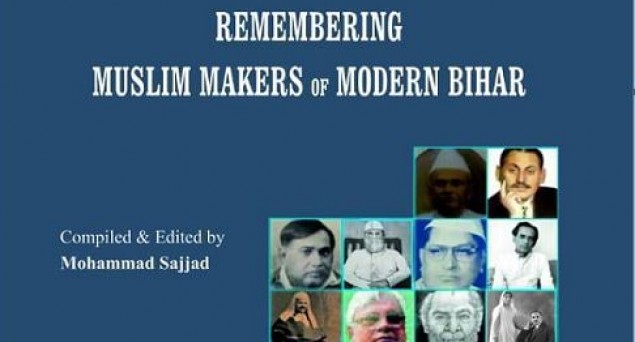
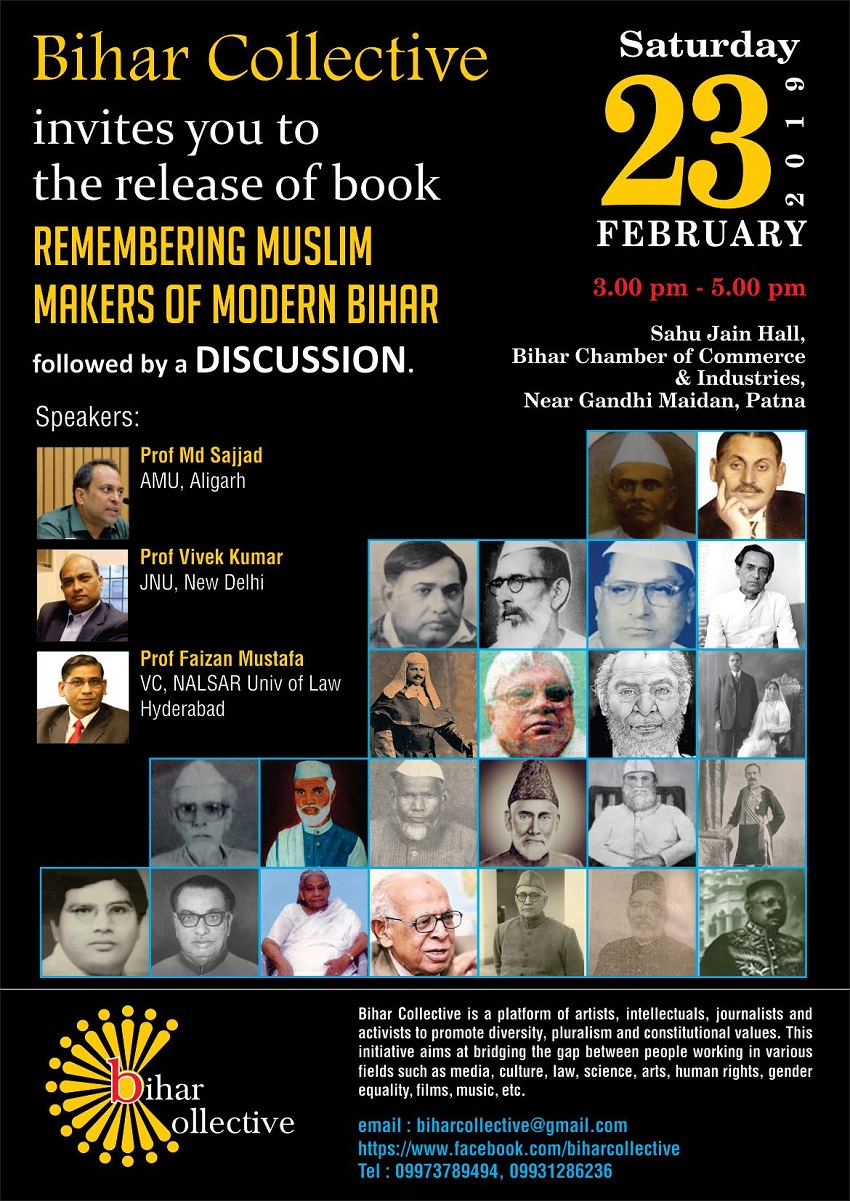
In an era of unprecedented majoritarian ascendance and anti-Muslim hatred, Bihar Collective, a platform of intellectuals and activists, has brought out a booklet highlighting the contribution of eminent Muslims in making the modern Bihar in the last 200 years.

The booklet titled Remembering Muslim Makers of Modern Bihar has been compiled and edited by renowned academician and writer Prof. Mohammad Sajjad on the initiative of Bihar Collective.

The booklet will be released at an event in Patna on Saturday (February 23).

On the occasion, a discussion will also be held with Prof Faizan Mustafa, Vice Chancellor, NALSAR University of Law, Hyderabad; Prof Vivek Kumar, JNU, New Delhi; and Prof Mohammad Sajjad, AMU, Aligarh as panelists.

A Brief about Booklet:


Pre-empting a reasonable question about the title of the booklet, Prof Sajjad, who has compiled and edited it, writes in its preface: “A simple and obvious question that may readily arise is: why only Muslim makers of modern Bihar? Why not others too? This is indeed a valid and pertinent question.”

Responding to the question, he further says: “Candidly put, this is because of an unprecedentedly menacing rise of majoritarianism, bigotry, and anti-Muslim hatred, with open support of the state.

The Muslim identities are ominously threatened. There are also unabated attempts to dilute (or even take away) whatever little accomplishments have been made by the forces of social justice and secularism.

Only the Muslim segment however is threatened by the jingoist, exclusionary, violent nationalists, to be thrown out to another country. As if the other country is a dustbin, owned by these bigots, into which they can throw away everything they dislike! As if only the religious majority constitutes the nation! Notably, these jingoists had aligned with the British and had stayed away from the national movement.”

“Muslim contributions in the nation-making (and in the freedom movement) remain under-acknowledged, forgotten or even omitted. Erasure of their histories and memories seem to have become even more pronounced and vociferous, now, than ever before…The Bihar Collective therefore decided to compile a short profile of these inspiring role models, history-makers…This is small and humble step towards retrieving and restoring the nationalist provincial pantheons bearing Muslim identities,” says Prof Sajjad.

He, however, admits that the list of Muslim heroes of Bihar given in the booklet is not exhaustive as “…many have been left out essentially because of lack of documentations and researches. Not many have left their own accounts/memoirs; the available memoirs/accounts have not written much about all the personalities. In many cases, even otherwise “resourceful” descendants and/or associates of the history-makers have not been able to provide us with adequate (and credible/verifiable) details.”

Prof Sajjad hopes this small exercise may lead to some big academic work on these history-makers. “In short, this kind of venture may be said to be an ongoing exercise. This effort may hope to open up (and obtain) more details about such history-makers and would also get to know about many more of such peoples and processes, we failed to include here in this hastily prepared tiny volume, amidst constraints of resources and time.”

Names of Muslim Makers of Modern Bihar Mentioned in Booklet:
1. Syed Imdad Ali (d.1886]
2. Khuda Bakhsh (1842-1908)
3. Syed Amir Husain (1843-1910)
4. Imdad Imam Asar (1849-1934)
5. Shah Badruddin(1852-??)
6. Syed Ali Bilgrami (1853-1911)
7. Rasheed-un-Nesa (1855-1926)
8. Syed Noorul Huda (1855-1939)
9. Justice Syed Sharfuddin (1856-1921)
10. Shaikh Gulab (1857-1920)
11. Sarfaraz Husain Khan (1860-1931)
12. Maulana Mazharul Haque (1866-1930)
13. Batakh Miyan Ansari (1867-1957)
14. Sir Fakhruddin (1868-1933)
15. Syed Ali Imam (1869-1932)
16. Syed Hasan Imam (1871-1933)
17. Salahuddin Khuda Bakhsh (1875-1931)
18. Shafi Daudi(1875-1949)
19. Khwaja Md. Noor(1875-??)
20. Abdul Wadood (d.1955)
21. Syed Abul Hasan (1878-1960)
22. Sir Sultan Ahmad (1880-1963)
23. Maulana Sajjad (1880-1940)
24. Pir Mohammad Munis (1882-1949)
25. Abdul Bari (1882-1947)
26. Syed Sulaiman Nadvi (1884-1953)
27. Mohammad Yunus (1884-1952)
28. Shah Md. Zubair (1884-1930)
29. Syed Abdul Aziz (1885-1948)
30. Zubaida Begum Daudi (1886-1972)
31. Syed Tafazzul Karim (1886-1964)
32. Mr. Mohammad Shafi (1888-1955)
33. Qazi Ahmad Husain (1889-1961)
34. Dr. Syed Mahmud (1889-1971)
35. Ali Husain Aasim Bihari (1890-1953)
36. Shah Mohammad Umair (1894-1978)
37. Abdul Ahad Mohammad Noor (1894-1975)
38. Hakeem Md. Kabiruddin (1894-1976)
39. Maulana Usman Ghani (1896-1977)
40. Manzoor Ahsan Aijazi (1897-1969)
41. Shah Md Ozair Muni’mi (1899-1961)
42. Maghfur Aijazi (1900-1966)
43. Syed Jafar Imam (1900-1965)
44. Syed Badruddin Ahmad (1901-1983)
45. Mohammad Tahir (1903-???)
46. Syed Jafar Imam (1903-1979)
47. Syed Fida Husain (1904-80)
48. Abdul Qaiyum Ansari (1905-1974)
49. Wajihuddin Minhaji (1907-1984)
50. Syed Md. Aiyub (1910-1964)
51. Abdul Sami Nadvi (1913-????)
52. Abul Hayat Chand (1914-1958)
53. Ahad Fatmi(1915-1980)
54. Zawwar Husain (1916-80)
55. Shafiqullah Ansari (1917-1980)
56. Shah Mushtaq Ahmad (1917-2002)
57. Abdul Ghafoor (1918-2004)
58. Col. Mahboob Ahmad (1920-1992)
59. Taqi Raheem (1920-1999)
60. Zahra Daudi(1923-2003)
61. Shakoor Ahmad (1924-1981)
62. Syed Hasan (1924-2016)
63. Yunus Lohia (1925-2019)
64. Ghulam Sarwar (1926-2004)
65. Syed Shahabuddin (1935-2017)

A Brief about Author:


Prof Mohammad Sajjad teaches late-colonial and post-independent Indian history at the Centre for Advanced Study in History, Aligarh Muslim University. He has written several books including Muslim Politics in Bihar: Changing Contours; and Contesting Colonialism and Separatism: Muslims of Muzaffarpur since 1857.

His articles are published in reputed academic journals from Routledge, Sage, EPW etc. and also in anthologies from the Oxford University Press and Cambridge University Press.

Bihar Collective:
It is a platform of artists, intellectuals, journalists and activists to promote diversity, pluralism and constitutional values. It aims at bridging the gap between people working in various fields such as media, culture, law, science, arts, human rights, gender equality, films, music, etc.
Email: biharcollective@gmail.com
Facebook: https://www.facebook.com/biharcollective

source: http://www.indiatomorrow.net / India Tomorrow / Home> Society / by India Tomorrow / February 21st, 2019

The Indian Contingent: The Forgotten Muslim Soldiers of Dunkirk

INDIA :

May 28, 1940: Major Akbar Khan of the Royal Indian Army Service Corps marches at the head of 299 soldiers along the beach at Dunkirk—the only Indians in the BEF in France and the only ones at Dunkirk.

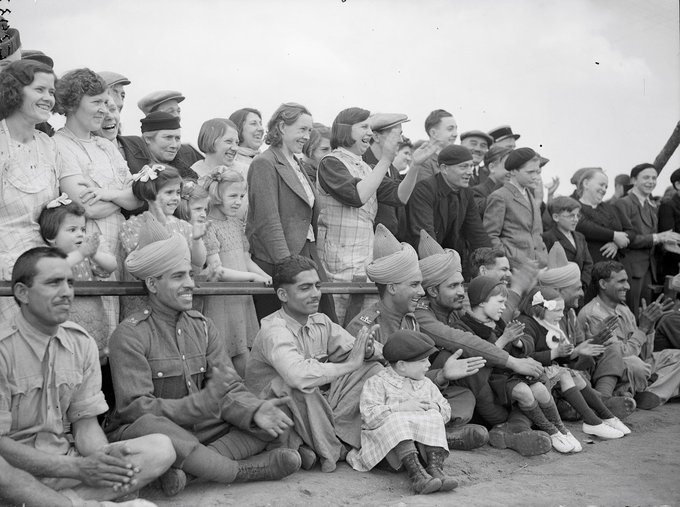
These men of the Indian Army, carrying their disabled imam, find their way to the East Mole and embark for England in the dead of night. On reaching Dover, they borrowed brass trays and started playing Punjabi folk music, upon which even “many British spectators joined in the dance.”

Where had they come from and why were they in France?

And what happened to them after that?

Ghee Bowman reveals in full, for the first time, the story of these soldiers, from their arrival in France on December 26, 1939 to their return at war’s end to an India on the verge of partition.

It is one of the war’s hidden stories that casts fresh light on Britain and its empire.

source: http;//www.goodreads.com / GoodReads / by Ghee Bowman / 1st published May 21st, 2020

Men of the Horse

Mysuru (Mysore), KARNATAKA :

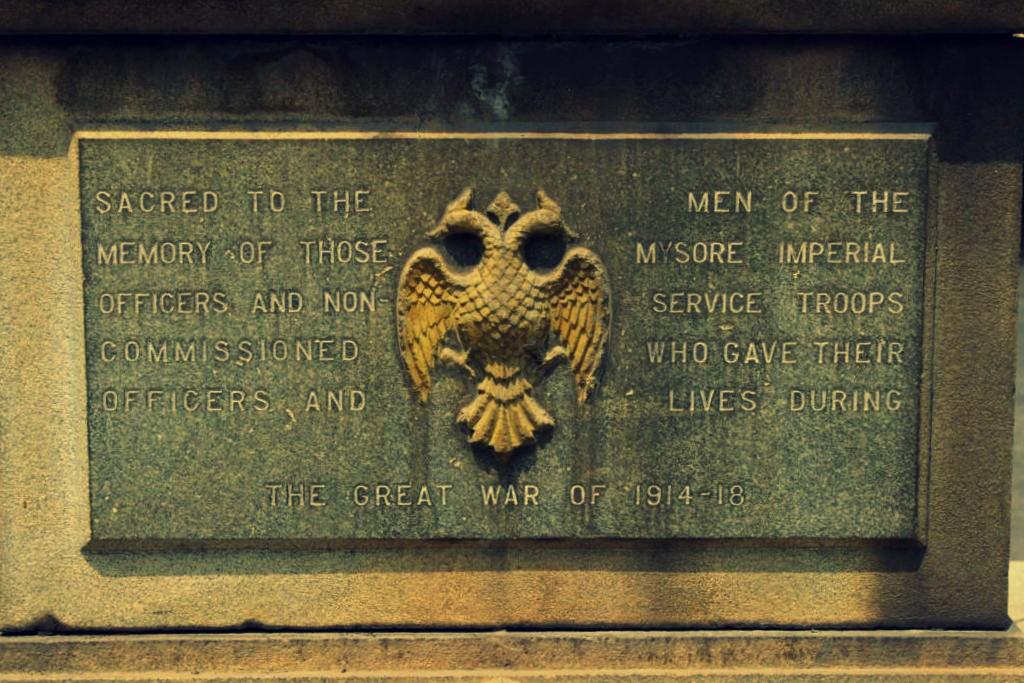
There are many miles that separate Bengaluru from Haifa. But our city’s connection to this distant Mediterranean port town goes beyond geography to that of the spirit. It is where Mysorean cavalrymen earned honours and distinguished themselves during World War I. The town also became a final resting place for many who never returned home.

These men on horseback were the inheritors of an older legacy.  Both Hyder Ali and his son Tipu Sultan, the 18th century rulers of Mysore, were known for their famous cavalry, the `Savar’ that had fought on home territory in the Anglo-Mysore Wars almost 150 years ago.

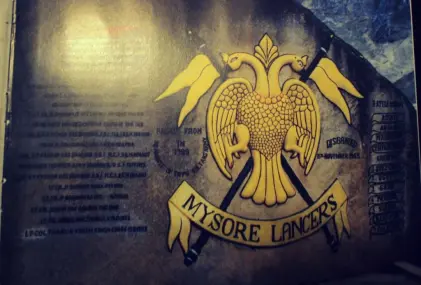
The Mysore Lancers (says a commemorative souvenir) were raised from what remained of this cavalry following the 4th Anglo-Mysore War in 1799.

The regimental insignia and Mysore’s royal emblem, the two headed Ganda Berunda eagle

Bengaluru’s equestrian legacies also extended beyond the military; the Bangalore Turf Club is a heritage institution and the Race Course that was initially located near Domlur was as old as the Cantonment, Horse riding in Cubbon Park was `de rigeur‘ till the early 1900’s, many large houses had private stables and British Commissioner Sir Mark Cubbon even built a new home beyond Cubbon Park  to accommodate his beloved horses!

Military forces in India’s princely states were maintained purely as a formality for a very long time following 1857.

But Viceroy Lord Dufferin’s landmark speech in Patalia (1888) signalled a change.

The Mysore (Mysuru) Maharaja Chamarajendra Wodeyar X was one of the first to raise a military force (including an Infantry and Transport Corps) capable of fighting alongside Imperial troops anywhere in the world. Major Mellis arrived here in 1890 to rearrange the two existing Silledar regiments into the Mysore Horse based in Mysore, and the Bangalore based Mysore Imperial Service Lancers (Mysore Lancers).

The Investiture Ceremony: “On the arrival of the Viceroy at the Imperial Service Lines, he was received by Dewan Krishna Murthi and conducted to a position near the saluting flag. After the horses of the entire regiment had lain down on the word of command so as to form covers for their riders in action, the regiment formed mass and the men dismounted and left their horses entirely alone with the rein passed through the girths. Rockets, carbine discharges and other noises were then made to test the training of the horses and except one or two horses which broke away, the remainder kept perfectly steady and unconcerned. After galloping past and advancing in review order, the Lancers cheered His Excellency. The Viceroy remarked that the display he had seen proved the excellence of the training of the horses and the special attention paid to the matter by Colonel Desaraj Urs… The manoeuvres subsequent to special show in connection with the horses reflected great credit, said His Excellency, on the regiment.” –M Shama Rao, Modern Mysore

The Mysorean, with his “superior physique” was also “specially noted for his endurance and hard work in distant countries and under the most trying conditions of climate and fatigue.”* And so, as part of the 15th Imperial Service Cavalry Brigade (this included the Patiala, Jodhpur and Hyderabad Horse) the men left Bangalore on 13th October, 1914 under the field command of Lt.Col. Chamaraj Urs Bahadur.

They were accompanied by Special Officers Major MH Henderson and Lt. K Evans-Gordon and Colonel J. Desraj Urs (Commander-in Chief of the Mysore State Forces and brother-in-law to Maharaja Sir Nalwadi Krishnaraja Wodeyar IV).

The men in the distinctive black head collar rope, black and white lance pennant, crossed lance badges on the chain mail epaulettes and the royal Ganda Bherunda insignia of Mysore disembarked to defend the Sweet Water Canal and undertake reconnaissance duties to the east of the Suez Canal. 

Many of us in the city can proudly trace family who in 1914, were a part of the largest volunteer army in the world!

Fans of a sun tanned Peter O’ Toole in the film `Lawrence of Arabia’ will know that our Mysorean men and the legendary TE Lawrence were both part of a WWI force commanded by Field Marshall Sir Edmund Allenby. But off screen conditions were very tough. Water sources were scarce. Thousands of cavalry horses and Transport Corps animals perished at various stages-en route, during combat and post-war.The emaciated and weak were left by the road to be picked up and (hopefully) rehabilitated by the Remount and Veterinary Corps.Most were not so lucky.

Much has been written about the Battle of Haifa where Mysorean cavalrymen braved German and Austrian guns as they charged alongside the Jodhpur Lancers to route an artillery battery located on a hill above the town.

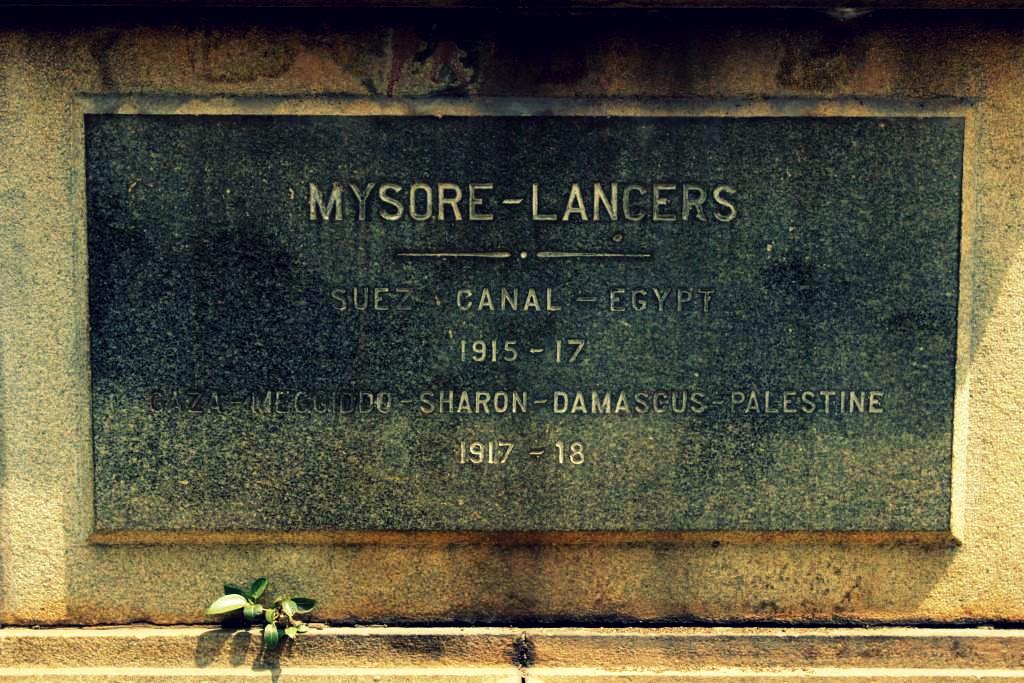
Mysore’s two headed eagle also altered history at Gaza, Jordan Valley, Sharon, Megiddo, Damascus and Palestine. Their roles in these decisive battles saw the officers, including Captain B. P. Krishne Urs, 29 year old Mir Turab Ali and Risaldar Subbaraja Urs, and their loyal horses receive a hero’s welcome in 1920.

Sirdar Bahadur Lt.Col. Chamaraj Urs succeeded the distinguished Col.J Desraj Urs to the post of Commandant-in-Chief in 1919.

The horsemen were then reconstituted into the New Horsed Cavalry Regiment, raised in Jaipur on January 1st, 1953 under the special dispensation of Prime Minister Jawaharlal Nehru.It was named the 61st Cavalry a year later. It is the only horse cavalry regiment in the world and is equally well-known for its indomitable equestrian sportsmen.

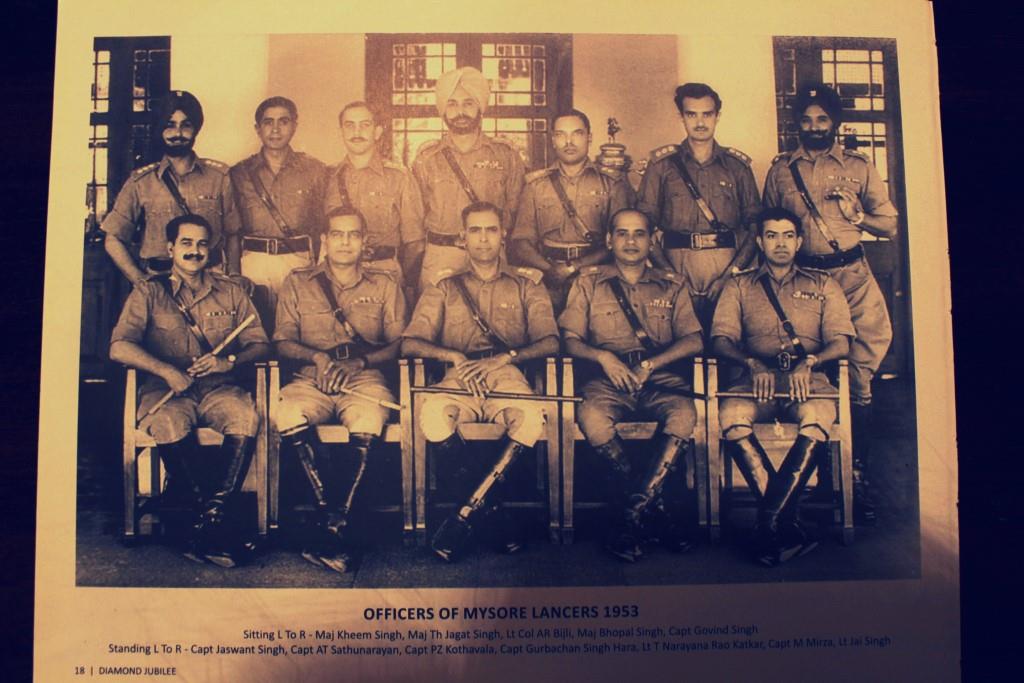
My grand aunt, Mrs. Syeda Mirza tells me that her husband, my grand uncle the late Major Mohammad Mirza, a Bengalurean 61st cavalryman, dashing polo player and nephew of Sir Mirza Ismail, Diwan of Mysore (1926-1941) commanded the elite President’s Bodyguard for Dr.Rajendra Prasad and Dr. S Radhakrishnan in the 1960’s. He was also in the Ganganagar Sector with the 61st Cavalry during the 1971 War.

Standing second from right: Major Mohammad Mirza. Photo Source: Sixty First Cavalry Diamond Jubilee Souvenir, courtesy: Mrs. Syeda Mirza

I was returning to Jaipur with the children after visiting my parents in Hyderabad” she says “and hired a porter to help with the luggage. He deposited me near the army vehicle that had come to receive us, and refused to take any payment. He said he could not take money from someone whose husband was fighting for the country.” She adds, “those were very tough times for wives and families.With no mobile phones or connectivity like it is today, we had no way to stay in regular touch with our loved ones.We just had to manage as best as we could on our own.

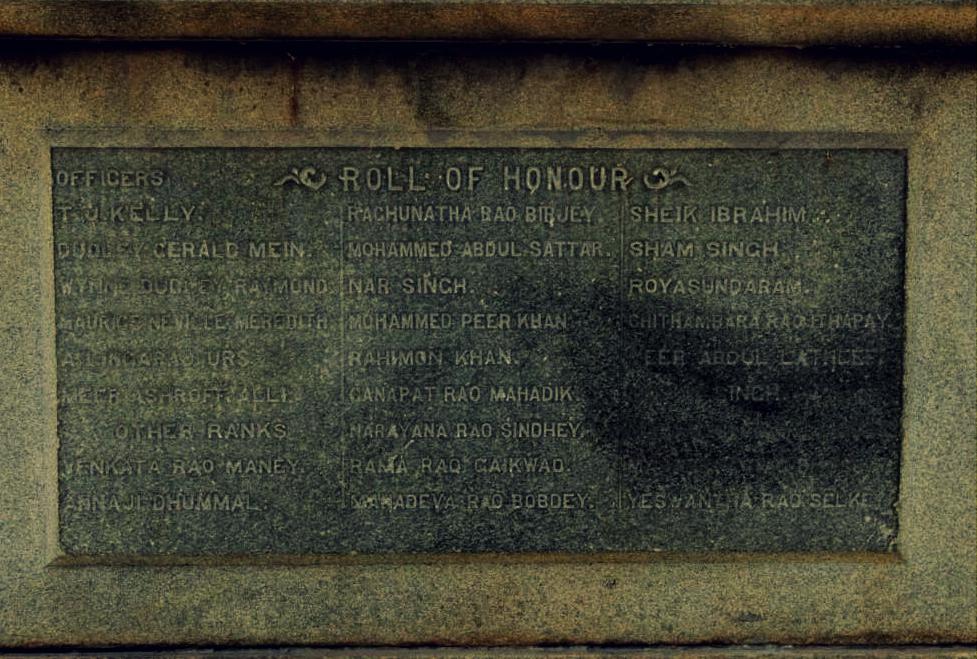
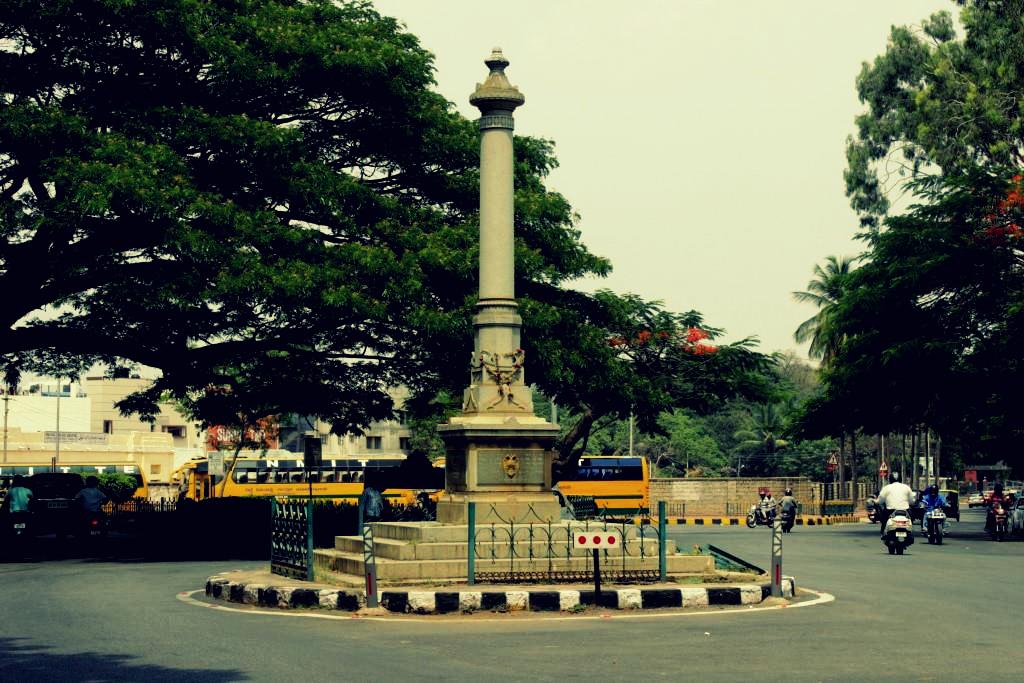
While a tribute to Indian cavalrymen is visibly embedded at Teen Murti Circle, New Delhi, a smaller Memorial Column on Col. Desraj Urs Road in Bengaluru’s Munireddy Palya stands overshadowed by the massive TV Tower nearby. The long forgotten structure lists all the brave men including officers Captain A.Lingaraj Urs (son-in-law to the Field Commander) and a Meer Ashroff Ali who lost their lives upholding the honour of Mysore state. Most city folks ride by without a second glance these days.

……………………………………………………………………………………………

On the Roll of Honour:

A Lingaraj Urs and Meer Ashroff Alli, Venkata Rao Maney, Annaji Dhummal, Rachunatha Rao Birjey, Mohammed Abdul Sattar, Nar Singh, Mohammed Peer Khan, Rahimon Khan, Ganapaty Rao Sindhey, Rama Rao Gaikwad, Manadeva Rao Bobdey, Sheik Ibrahim, Sham Singh, Roya Sundaram, Chithambara Rao Ithapay and Meer Abdul Latheef.

……………………………………………………………………………………………

This story was originally published in the Bangalore Mirror on April 11th 2016.Read it here.

* M Shama Rao, Modern Mysore, Page 104-106

source: http://www.aturquoisecloud.wordpress.com / A Turquoise Cloud / by Aliyeh Rizvi

Muslims: The first architects of India

INDIA:

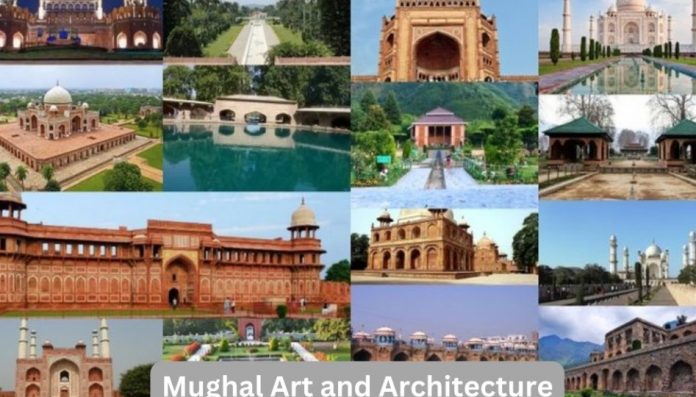
Mughal Art and Architecture

We, The Indian Muslims are proud to be citizens of this great country. We have been an architect of this land all through centuries since the days of dynastic rule. Whether it was construction of world class network of transport facilities like Grand Trunk Road linking major cities, founding new cities of highest standards for that age, huge monumental structures to attract the world, development of living standards and maintain cordial relationships between groups belonging to various religions, languages, castes and cultures, we pioneered justice and maintained the system.

With the passage of years, decades and turn of events, the foreign forces got attracted to it and slowly took over the rein of rule.

We were first to challenge and fight for country’s independence valiantly. Even our clergymen took to streets and fought, thousands laid down their lives. Colonel Balwan Singh Nagial, a third-generation Indian Army officer who retired in 2019 wrote in Times of India (April 23, 2022), thus: “Muslim leadership contributed enormously to divergent phases of the  Indian struggle for independence. They (Muslims) played a larger-than-life role and made significant sacrifices in this struggle for independence.

From the last Mughal ruler Bahadur Shah Zafar to nawabs, princes, landlords of all sizes, clergy, ulema and the ordinary people, they all stood for the cause and took on enormous challenges and made supreme sacrifices.

When the INC was formed in 1885, the Muslims responded enthusiastically and supported all its efforts throughout the freedom struggle until India became free. The most enthusiastic support for the INC was from the Muslims of the conservative Ulama of Deoband. Earlier, the Ulama had participated in the 1857 uprising with heart and soul.

They made great sacrifices, and hundreds of them were sent to Andaman-Nicobar and many to Malta, an island to the south of Italy.

Muslim leaders who contributed to India’s struggle for independence were:

Khan Abdul Ghaffar Khan, Maulana Abul Kalam Azad, Maulana Muhammad Ali, Maulana Shaukat Ali, Allama Iqbal, Muhammad Barkathulla, Bi Amma (mother of Ali brothers), Badarudeen Tyabji, Hakim Ajmal Khan, Mohammad Ali Jinnah, Dr M.A. Ansari, Dr Siafudeen Kichlu, Dr Basheer Ahmad, Syed Ameer Ali, Dr Syed Muhammad, Hasrat Mohani, Nawab Abdul Latheef, Altaf Hussain Hali, Syed Ahmad Sirhindi, Syed Ahmad Bareilly, Maulana Shibli Numani, Munshi Karamat Ali, Munshi Zakaullah.

Hindus and Muslims together fought the foreign forces shoulder to shoulder. A report by the ‘Milli Chronicle’ says that names of 95,300 freedom fighters are etched on the India Gate in Delhi, and remarkably, 61,945 of these names belong to Muslims, signifying that 65% of these brave individuals were Muslims. The significance of this statistic is eloquently captured by the renowned writer Mr. Kushwant Singh, who boldly declared that the story of Indian freedom is etched in the blood of Muslims, emphasizing their large contribution to the freedom struggle, considering their dis-proportionately smaller population percentage.

The annals of history are adorned with the stories of Muslim freedom fighters who put their lives on the line to liberate India from the shackles of British oppression. These individuals, driven by an unwavering determination to secure their homeland’s independence, demonstrated exceptional courage and resilience.

All through ages we find tall personalities like Sultan Haidar Ali, father of Tipu Sultan, (he pioneered the fight against British colonial forces); Tipu Sultan, son of Haider Ali; (he pioneered the use of iron-cased rockets); Ashfaqullah Khan,(noted for his daring attacks on British government trains); Maulana Abdul Kalam Azad, the youngest President of the Indian National Congress,(who rallied Hindus and Muslims alike against British oppression); Maulana Hasrat Mohani, Khan Abdul Ghaffar Khan, (a pivotal figure in the Khilafat movement); was jailed for 13 years by the British),  Sirajud Daula, (the last Nawab of Bengal), Badruddin Tyabji (of Indian National Congress); his wife, Suraiya Tayabji, who designed the present Indian flag., Zain-ul-Abideen, an officer of the Indian National Army (INA), coined the iconic patriotic slogan “Jai Hind.”

While recounting the names of every Muslim freedom fighter may be an impossible feat, their contributions and sacrifices in the fight against British colonialism are immeasurable and undeniable. The fact that many chose to remain in India underscores their deep-rooted connection to the land. Despite attempts to distort history, India will forever be the cherished home of its Muslim citizens. We gave the independent India Maulana Abul Kalam Azad, the first Education Minister, Dr. Rafi Ahmed Qidwai, Dr.Zakir Hussain (an Educationist and Vice President), and numerous figures as servants to the country in the form of politicians, officers, industrialists, entrepreneurs, researchers, technocrats etc. in every field.

Our very recent contribution to the nation’s public service has been the world famous Scientist/Technocrat and President Dr.A.P.J. Kalam. He set the highest, un-believable standard of honesty, transparency and clean image in public life. A glimpse into the life he spent in the Rashtrapati Bhavan as President gives a shocking information. The same is as under: Mr. P M Nair, (retired IAS officer, then Secretary to Dr. Abdul Kalam, the President writes in his book “Kalam Effect” that Dr. Kalam used to receive costly gifts whenever he went abroad (as it is part of custom & protocol) used to ask the gifts to be photographed and then catalogued and handed over to the archives. Afterwards, he never even looked at them. He did not take even a pencil from the gifts received when he left Rashtrapathi Bhavan. It was a regular practice for every President to host an Iftar party, a routine. Upon being reminded about it Dr. Kalam asked Mr. Nair why he should host a party to people who are already well fed. Instead he estimated and donated Rs.22 lac being the cost to a few selected orphanages in the form of food, dresses and blankets besides a cheque for Rs.1.lakh from his personal funds. Though himself a devout Muslim, he never organized Iftar parties in President’s house at Public expense. Once Dr. Kalam invited 50 of his relatives to come to Delhi and they all stayed in Rashtrapathi Bhavan. He organized a bus for them to go around the city which was paid for by him.

No official car was used. Their lodging and food bill which came to Rs.2 laks was paid by him as per his instructions. Dr. Kalam’s elder brother stayed with him in his room for the entire one week as Dr Kalam wanted his brother to stay with him. When they left, Dr. Kalam wanted to pay rent for that room also. Imagine the President of a country paying rent for the room in which he is staying. This was any way not agreed to by the staff who thought the honesty was getting too much to handle. When he was to leave Rashtrapathi Bhavan at the end of his tenure, every staff member went and met him and paid their respects. Mr. Nair went to him alone as his wife couldn’t as she was confined to bed due to fracture. Upon noticing her absence and knowing the reason Dr. Kalam visited his house and chatted with her for some time. The following property was left behind by Dr.A.P.J.Abdul Kalam: 16 doctorates, 1 website, 1 twitter account, 1 email id, 2500 books, 1 Padmashri, 1 Padmabhushan, 1 Bharat Ratna, 1 flat (which he has donated), 6 pants & 4 shirts (DRDO uniforms), 3 suits (1 western, 2 Indian). He didn’t have any Car, jewelry, stocks, TV, AC, land or any bank balance. He had even donated the last 8 years’ pension towards the development of his village. He was a real patriot and true Indian Muslim. We are proud of him.

Our character building efforts continued even through the present 21st century in the country with unique results as records vouch. For example, the city of KAYALAPATTANAM (in Tamil Nadu) with 100% Muslim population goes. There is no Police Station, no cinema and no crime in the city because there had been no crime there for decades.

The present day situation in the country may appear to be disheartening and disappointing for some. The irresponsible attitude towards Muslims by some extremist groups in the country belonging to a certain ideology should be viewed as a momentary period. Their efforts to demoralize, degrade, deny civil rights are synonymous with their declared intentions. A great majority of country-men still believe and practice true Hinduism as had been for centuries in the past. True Hindus do not endorse hatred, support arson and distrust.

A long history of peaceful co-existence of Muslims and Hindus for centuries with mutual respect, rejoicing specially the occasion of festivals and long socio-economic ties in every nook and corner of the country is its evidence.

Our country has been an example of ‘Unity in diversity’ for the world for a long time. Nobody from either community can imagine a survival without another. The bond has been and will surely be strong as Steel. The ever increasing social evils like Corruption, nepotism, frauds, woman-bashing and vandalism like termites in the country have made the life of common man miserable.

Decline in the values like increased greediness, and wide spread of dishonesty, revenge, vindictiveness, and non-adherence to law need to be challenged and controlled. The ‘PLEDGE’ we used to read in our text books once in first page is long missing both from the book and in practice.

We the Indian Muslims, whether a common man, clergy, intellectual, and technocrat, worker or even those with any political group should realize that notwithstanding the company or area, we have a responsibility towards the country and duty-bound to work for our own community. We need to understand todays challenging scenario and strengthen its unity. We are the inheritors of a great legacy, and not followers of the ilk of this day. We Muslims should remember that we are ordained by the Almighty Allah to be united, behold his Commands; make efforts to spread virtuous deed and work eradicate evils. The entire country is looking forward for the honest.

As the phrase rightly goes, ‘Service to humanity is service to God’. Our population in the country according to 2011 census stands at about 200 million which constitutes 15%. We need to contain our extravagant life-style especially in matters of functions and festivals.

We should stop depending on politicians, their promises and focus on a self, collective effort. We need to move forward together in the fields of education, employment opportunities generating plans through mutual cooperation. For this purpose and as in the days of our Prophet, we should make our area Masjid a center for gathering, deliberation, planning, guidance and service as per law.Experts and experienced in relevant fields can be roped in for the purpose and the available resources can be put to work.

سبق پڑھ پھر صداقت کا، شجاعت کا، عدالت کا۔۔
لیا جائیگا تجھ سے کام، دنیا کی امامت کا۔۔

source: http://www.muslimmirror.com / Muslim Mirror / Home> Indian Muslim / by Syed Ilyas Basha / October 03rd, 2023

Contribution Of Muslims To India’s Freedom Struggle

INDIA:

The famous writer Kushwant Singh, once wrote: “Indian Freedom is written in Muslim blood, since their participation in the freedom struggle was much more, in proportion to their small percentage of the population.”

The story and history of India’s independence are written with the blood of Muslims. According to historical references, 65% of those who stood, fought and sacrificed against the British for India’s independence were Muslim freedom fighters, the hams live reported.

A large number of people from all religions and castes took part in the freedom struggle, undoubtedly. However, the struggles of many Muslim prominent personalities who also contributed to India’s freedom and even sacrificed everything including their lives are little known. Muslims have been at the forefront to oppose the British and stood shoulder to shoulder with people from other communities while fighting against them. Getting freedom was not easy, our ancestors had to go face a lot of struggles and difficulties to get us the freedom that we are enjoying now.

The First Call To Oppose British

In the 1750s, Nawab Siraj-ud-Daulah was the first awakened Indian ruler, who stood his ground against the British. He lost the Battle of Plassey in 1757 due to the betrayal of Mir Jafar (Commander of Nawab’s army). With this, Siraj-ud-Daulah’s reign marks the end of the last independent rule in India and the beginning of the East India company’s rule that was unabated for the next two hundred years.

First Freedom Struggle By Muslim Rulers

The first freedom struggle against the British was started by the rulers of Mysore Hyder Ali and his son, Tipu Sultan, during the 1780s and 90s. Both used the first iron-cased rockets and cannons effectively against the British invaders.

Tipu Sultan is considered to be one of India’s first freedom fighters for his fierce fight and brave against the East India Company. He resisted the conquest of the British in southern India and was reluctant to welcome them on his soil. He was the only Indian ruler who understood the dangers that the British posed to India, and fought four wars to oust them from the country.

The Unsung Heroines Of India’s Freedom Struggle

Begum Hazrat Mahal, the unsung heroin, played a very important role in India’s war of Independence. Being a woman, she led a rebellion against the British East India Company in 1857. She shot the British ruler, Sir Henry Lawrence and defeated the British army in a conclusive Battle at Chinhat in 1857.

In the great revolt of 1857, as many as 225 Muslim women sacrificed their lives in the uprising. These unsung Muslim women freedom fighters who have sloganeered, shed blood and given their lives for the country’s independence have now been forgotten to due biases.

A majority of freedom fighters did a nameless service to the nation and one such lesser-known name was Abadi Bano Begum (Bi Amma). Bi Amma was the first woman to address a political rally wearing an abaya. She took part in National freedom struggles, Khilafat Movement and propagated Hindu-Muslim unity. Following Mahatma Gandhi’s advice, Bi Amma played an. An important role in encouraging women to take part in the freedom movement. Further, she played a pivotal role in the Swadeshi movements.

In the book, Gandhi and the Ali Brothers: Biography of a Friendship by Rakhahari Chatterji, Maulana Mohammad Jouhar says, “Suffice it to say that, although she was practically illiterate, I have, in all experience, of men of all sorts of types, come across none that I could call wiser and certainly that was more truly godly and spiritual than our mother.”

Bi Amma was also the mother of Muhammad Ali Jauhar and Shaukat Ali popularly known as the Ali Brothers whom she raised on her own after her husband died when she was young.

Amjadi Begum, the wife of Muhammad Ali Jauhar and daughter-in-law of Bi Amma, is yet another Muslim women freedom fighter. Mahatma Gandhi also dedicated an article on her titled ‘A Brave Woman‘ where he admired her as a courageous wife of a courageous man. 

At the age of 45, Asghari Begum, another forgotten Muslim woman, has also taken part in the 1857 revolt and challenged British rule in the present-day Uttar Pradesh. However, she was captured by the British in 1858 and burnt alive.

Habiba, a Muslim woman’s fought many battles against the British in Muzaffarnagar in 1857. However, she was captured and hanged along with 11 other female warriors at the age of 25.

The Great Revolt of 1857

During the Great Revolt of 1857, Hindus and Muslims under the leadership of the last Mughal emperor Bahadur Shah Zafar tried to oust the British from India. A majority of Hindu sepoys requested Zafar to lead them in the war of Independence. Although the Revolt failed due of several reasons, Muslims have always stood on the front line to oppose the British.

Former Prime Minister of India, Rajiv Gandhi during his visit to Bahadur Shah’s grave, wrote in the visitor’s book: “Although you (Bahadur Shah) do not have land in India, you have it here; your name is alive… I pay homage to the memory of the symbol and rallying point of India’s First War of Independence….”

Muslims came to India and ruled here for over 800 years but they did not steal anything from here as the British, the Dutch and the French did. By bringing plenty of knowledge in literature, architecture, judiciary, political structure, government body and management structure, which is still used in Indian management strategy, they helped India to progress into a unified and civilized nation.

Lighthouse of Rebellion

How many of us know that the organizer and leader of “First Indian freedom struggle” in 1857 was Moulavi Ahamadullah Shah. Known as the ‘Lighthouse of Rebellion’ in Awadh, he Faizabad free from British rule for almost one year, until his death at the hands of British agents on June 5, 1858.

“With being a practicing Muslim, he was also the epitome of religious unity and Ganga-Jamuna culture of Faizabad. In the revolt of 1857, royalties like Nana Sahib of Kanpur, Kunwar Singh of Arrah fought alongside Maulavi Ahmadullah Shah. Maulavi’s 22nd Infantry Regiment was commanded by Subedar Ghamandi Singh and Subedar Umrao Singh in the famous Battle of Chinhat,” according to researcher and historian Ram Shankar Tripathi.

The important role of Muslims in the uprising is the reason that the British government singled out the community for the worst revenge. From the Nawab, the King of Mysore, the last Mughal King, Princes, the landlords, the Ulemas, intellectuals, Urdu journalists, including common people, all members of the Muslim community have made great sacrifices for the freedom of India.

In the uprising of the 1857 revolt, thousands of ulema were slaughtered and the whole of Delhi was emptied of Muslims, according to excerpts from Syed Ubaidur Rahman’s book Biographical Encyclopedia of Indian Muslim Freedom Fighters. They were not even allowed to return to their homes and reclaim their properties.

First Journalist To Sacrifice His Life During The Great Revolt

Moulvi Muhammad Baqir, a scholar and activist of Indian independence activist was the first journalist to be executed following the rebellion in 1857. The editor of Urdu newspapers, Delhi Urdu Akhbar, was washed dead on 16th September 1857 for writing Nationalist articles, without even a trial.

Although India got independence on 15 August 1947, the foundation of the freedom struggle was laid before 1857. Since the time of the Revolt of 1857, which is considered to be the beginning of India’s freedom struggle, Muslim leadership has spearheaded the cause.

First Muslim To Be Hanged For Conspiring Against East India Company

At the age of 27 years, Shaheed Ashfaqulla Khan was the first Muslim to be hanged for conspiring against the British Raj. Khan was hanged to death on December 19, 1927. With this, he became a martyr and a legend among the people because of his love for the country and his unshakeable spirit.

Reshmi Rumal Tehreek (The Silk Movement)

Muslims not only took the lead in the uprising, but also stood in the front line in all other efforts to topple the British colonial regime in India.

After the revolt of 1857, the Muslim leaders changed their strategy of resistance by setting up educational institutions across the country. Reshmi Rumal Tehreek or The Silk Letter Movement (1913-1920) was an initiative by Deobandi Leaders Maulana Mahmud Hasan and Maulana Ubaidullah Sindhi to topple the British Empire.

However, when British intelligence learned about it, hundreds of sympathizers of the initiative were arrested and put in prison for years without any trial. The top leaders including Maulana Mahmud Hasan and half a dozen of his followers were banished to Malta after a faux trial where they faced the worst hardship.

Role of Muslims in Congress’ anti-colonial struggle

Justice Abbas Tyabji, an Indian freedom fighter from Gujarat and associate of Mahatma Gandhi, was the first Muslim president of the Indian National Congress party. Justice Tyabji is also known for leading Salt Satyagraha following Gandhi’s arrest in 1930.

Another Congress president during the colonialism was Maulana Abul Kalam Azad, who is one of the chief Muslim leaders of the anti-colonial nationalist movement. He became the youngest President of the Indian National Congress in 1923 at the age of 35. He faced multiple imprisonments by the colonial state.

From Justice Tayabji to Maulana Abul Kalam Azad, there have been eight Muslim leaders who were in the Indian National Congress’s freedom movement. The other prominent Muslim leaders include, Muhammad Ali Jauhar, Shaukat Ali, Maulana Azad, Dr Mukhtar Ansari, Hakim Ajmal Khan, Maulana Mahmud Hasan and many others. They made every possible sacrifice for the cause of the end the colonial rule.

Frontier Gandhi

Khan Abdul Ghaffar Khan was a Pashtun independence activist who campaigned to end the rule of the British Raj in India. He founded the Khudai Khidmatgar resistance movement against British colonial rule in India. He was also known as Frontier Gandhi for his principles of non-violence and friendship with Gandhi. Khan worked towards the formation of a united, independent, secular India. 

Muslim Man Coins “Jai Hind”

The patriotic slogan “Jai Hind” was initially coined by Zain-ul Abideen Hasan, but it was adopted by Netaji Subhash Chandra Bose. It is now used as a way of salutation throughout India. It means “Victory to India” in English.

The Creation Of the National Flag

For a majority of us, the current national flag was designed by Pingali Venkayya. However, it was a Muslim Lady Surayya Tyabji, who created the flag’s final look today.

Although we have recounted several names of the Muslims who have contributed to India’s freedom struggle, there are several thousands of them who fought on the streets against the British Raj.

source: http://www.thecongnate.com / The Cognate / Home> History / by Rabia Shireen / August 15th, 2022

India celebrates Independence Day: Here’s a list of important Muslim freedom fighters

INDIA:

In the freedom struggle, Muslim freedom fighters played a predominant role.

In the Indian freedom struggle, though, Muslim freedom fighters played a predominant role, right-wing organisations are trying to erase their history. In view of it, it is essential to know the important Muslim freedom fighters who fought for Indian Independence.

 Indian freedom fighter and former aide of Subhash Chandra Bose Abid Hasan Safrani. (Photo: Siasat)

Abid Hasan Safrani

Abid Hasan Safrani, an Indian National Army (INA) soldier from Hyderabad is one of the unsung heroes of Hyderabad. He not only played role in India’s independence but also coined the slogan ‘Jai Hind’ which was later declared the salutation of the Indian Army and government employees.

Safrani was constantly with the INA fighting from Burma to Imphal in India.

After India attained freedom, then Prime Minister Pandit Jawahar Lal Nehru inducted him into the Indian Foreign Service (IFS). He was posted to several countries including Egypt, China, Switzerland, Iraq, Syria, Senegal and Denmark.

After retirement, Safrani settled at a farm in Shaikpet, Tolichowki. He passed away in 1984.

Maulana Abul Kalam Azad

Maulana Azad, a distinguished Islamic scholar, author, academician and a prominent freedom fighter, was elected as the youngest President of Indian National Congress aged 35, and later led the historic Khilafat Movement.

After Independence, Maulana Azad served as India’s first Education Minister for over 10 years, during which he laid the foundations for the country’s massive academic network. Acknowledging his contributions, his birthday – November 11 – is celebrated as National Education Day.

Siraj-Siraj-ud-Doulah

Siraj-Siraj-ud-Doulah, the Nawab of Bengal was the first Indian king to foresee the threat posed to the future of the country by the English East India Company which entered India in the name of trade but transgressed its limits. He took bold initiatives to thwart the company’s evil designs.

Mir Khasim Ali Khan

Mir Khasim Ali Khan was a warrior Nawab who fought against the East India Company till his end with the conviction that he could ensure safety for his kingdom and liberty and prosperity for his people only by driving the British out of India.

Hyder Ali

Hyder Ali, who is famously known as ‘the Napoleon of South India’ for his relentless fighting against the conspiracies of the East India Company and its henchmen and for checkmating the British ambitions of expansion in South India

Tipu Sultan

Tipu Sultan, the ‘Tiger of Mysore’, was a great visionary who exposed the expansionist designs of the British imperial forces and gave a clarion call to his fellow countrymen and native rulers to unite and fight against the East India Company.

Syed Mir Nisar Ali

The Wahabi movement enjoyed a special status in the history of revolt against British rule in India, and Titu Mir, whose real name was Syed Mir Nisar Ali, added militancy to it. It became the source of inspiration for several movements in the Struggle for Independence of India.

Haji Shariatullah

Haji Shariatullah, who militantly led the Farazi Movement that stood as a source of inspiration for several revolutionaries in the Indian Freedom Struggle

Ghulam Rasool Khan

Ghulam Rasool Khan, the Nawab of Kurnool in Andhra Pradesh, created terror among the officials of the East India Company.

Moulana Peer Ali Khan

Moulana Peer Ali Khan fought against the British military force declaring that sacrificing oneself in the cause of liberation of one’s motherland is a proof of one’s love for his country.

Moulvi Ahmadullah Shah Fyzabadi

Moulvi Ahmadullah Shah Fyzabadi created panic among the British camps. In the First War of Indian Independence of 1857, he fought against the forces of East India Company and registered several victories over them.

Sheikh Bikhari Saheb

Sheikh Bikhari Saheb raged against General Dalhousee’s ‘Doctrine of Lapse’ whose sole objective was to expand the British empire. He stood in support of the freedom loving native rulers and fought against the foreign rulers.

Azimullah Khan

Azimullah Khan was renowned as a strategist in the First War of Independence, 1857.

He retreated to the forests of Nepal along with Nana Saheb, Hazarat Mahal and others, when the First War of Independence had faced the situation of near defeat. Azimullah Khan passed away in October 1859, while making efforts to secure financial and military support to fight back against the British.

Mohammad Bakht Khan

Mohammad Bakht Khan provided leadership to the heroes and heroines of The First War of Independence of India of 1857 against the forces of the East India Company, by taking up the responsibility of Commander-in-Chief.

He streamlined the troops after his appointment as the Commander-in-Chief by the Mughal Emperor, Bahadur Shah Zafar.

Khan Bahadur Khan

Khan Bahadur Khan, the ruler of Rohilkhand, fought against the British to liberate the motherland.

Declining a very high official post offered by the East India Company, Khan Bahadur Khan revolted against the British at the age of 70. He declared Independence at Bareilly, the capital of Rohilkhand on 31 May, 1857.

Bahadur Shah Zafar

Bahadur Shah Zafar, the last Moghul Emperor, led the First War of Independence, which was recognized in history as the symbol of anger among the people of India against the British.

He breathed his last in jail on 7 November 1862.

Mohammad Sher Ali

Mohammad Sher Ali, an embodiment of anti-British spirit , was born in 1842 at Peshawar, presently in Pakistan. He was inspired by the Wahabi movement that arose against the British in his younger age. His family migrated to Ambala from Peshawar in 1863. He was sentenced to death on 2 April, 1868.

Begum Hazrat Mahal

Begum Hazrat Mahal was a prominent woman of the 1857 rebellion. There was a fierce battle between the Company troops and the Begum troops. When defeat became inevitable, Begum Hazrat Mahal retreated to the Nepal forests along with the co-revolutionary leaders like Nana Sahib Peshwa and others.

Begum Hazarath Mahal struggled for the independence of her state till her last breath. She passed away at Kathmandu of Nepal on 7 April 1879.

Moulvi Syed Allavuddin

Moulvi Syed Allavuddin was a spiritual leader. He used to exhort people of Nizam State, one of the strongest princely states of South India, to rebel against the British hegemony. He stood in the forefront of the direct fight against the British Government.

He was a native of Hyderabad, the capital of erstwhile Nizam princely state. Allavuddin intensified his rebellious activities soon after the First war of Independence of India was started in 1857.

British forces arrested and sent Moulvi Allavuddin to the cellular jail in Andaman on 28 June 1859. After leading a miserable life of 25 years as a prisoner, Moulvi Syed Allavuddin passed away in 1884.

On the occasion of Independence Day, all Indians need to pay tribute to all the freedom fighters who took part in the Indian freedom struggle.

source: http://www.siasat.com / The Siasat Daily / Home> News> India / by Sameer Khan / August 15th, 2023

The Indian revolutionaries on foreign lands

INDIA:

Indian revolutionaries in Kabul where they announced a government in exile

On 24 April 1918, Ram Chandra was shot dead by Ram Singh in a courtroom in San Francisco, USA. A few moments later, a policeman shot Ram Singh. Who were these Indians? Ram Chandra and Ram Singh were the leaders of a revolutionary Ghadar Party in the USA. They were planning to wage a war against the British Empire with the help of the German government. Ram Singh suspected Chandra of being a traitor and thus he killed him on the last day of the trial.

Though Muslims and Sikhs were also accused of being part of the conspiracy, for some reason the case was famously called the Hindu German Conspiracy case. The German High Commissioner had allegedly provided the revolutionaries with money and arms.

Rabindranath Tagore was also featured in the charge sheet. It was accused that he took money from the revolutionaries in the USA and handed it over to the Japanese government to arrange for arms. It was the costliest court case ever argued in the USA till that time.

Indian revolutionaries had always used foreign territories to wage war against the British Empire. In 1845, Haji Imdadullah Muhajir Makki of Saharanpur went on the Haj with a plan to stay there. He wanted to teach at Makkah. Another Indian and his senior Maulana Ishaq met him in Makkah and asked him to return to India and wage a war against the English East India Company rule. Ishaq was one of the many Indian ulemas, who lived in Makkah and Medina to preach anti-colonialism among the pilgrims.

Imdadullah returned to India, planned a revolt in coordination with several leaders, and joined the War of Independence in 1857. He liberated Shamli for a few weeks before the English recaptured it. Thousands of his followers were killed in the battle and he moved to Makkah.

Imdadullah lived for 30 more years and used Makkah as a base to preach nationalism among Haj pilgrims from India and create links among different colonized nationalities.

Shyamji Krishna Varma, an Arya Samaj leader, established India House in London to train educated revolutionaries for the freedom struggle. V.D. Savarkar, Virendranath Chattopadhyay, Haider Raza, Ali Khan, Bipin Chandra Pal, and Acharya were a few prominent Indian revolutionaries trained at this hostel. They were given fellowships to study in England. Asaf Ali, who later argued the case of Bhagat Singh in court, was also associated with the India House. Savarkar’s book describing events of 1857 S inspired a generation of revolutionaries.

Madan Lal Dhingra was one of the most prominent revolutionaries from this house. He assassinated an English official after which the house had to be closed down. Savarkar was arrested and sent to Andamans. After that, these revolutionaries shifted bases to Berlin, Paris, etc.

Indians, especially Punjabis, living in the USA formed the Ghadar Party in 1913. Ghadar is a term used for the War of Independence of 1857. The party aimed to re-enact the scenario by making the Indian sepoys of the English army rebel.

The revolutionaries contacted Germany and Turkey for money and arms. A date doe revolt was fixed in India for the revolt. Hundreds of the revolutionaries came back to India in 1915, Rash Behari Bose, Jatin Bagha, and M N Roy were also working for the success of the plan. A traitor told the British about the plan. Hundreds of revolutionaries were caught and hanged in what came to be known as First Lahore Conspiracy. Kartar Singh Sarabha was one of the more famous among those hanged. Jatin Bagha was killed. Ras Behari Bose and M N Roy had to leave the country.

The Ghadar Party succeeded in causing a mutiny in Singapore. In February 1915, Indian soldiers killed English officers and captured the island country. It took two days and the help of the Russian and Japanese armies to recapture Singapore from the British. More than four dozen Indians were killed by a firing squad in a public execution. At least 40 of the killed soldiers were Muslims from Haryana.

Raja Mahendra Pratap was an Arya Samaj activist from Hathras. As the war started he travelled to Turkey and Germany where the Sultan and Kaiser respectively gave him letters of authority to form a provisional government of India at Kabul. He reached Afghanistan with a Ghadarite, Barkatullah, where Maulana Ubaidullah Sindhi, a Deobandi scholar, was waiting for them. A provisional government with Pratap as the President, Barkatullah as the PM, and Ubaidullah as the Home Minister was formed in Kabul.

A plan to raise an army was also chalked out. Maulana Mahmood Hasan, a Deobandi scholar, and Maulana Husain Ahmad Madani were coordinating the efforts from Makkah. Letters written on silk cloth were used to communicate which were uncovered by British intelligence. Maulana Mahmood and Madani were arrested from Makkah and sent to Malta as prisoners of war. Hundreds of others were also arrested in what came to be known as the Silk Letter Conspiracy.

The war had ended. M. N Roy, Andul Rab, and MPT Acharya established a military school in Tashkent in the USSR. It trained mostly Muslims who migrated to Afghanistan after a fatwa asked them to in 1915. The people trained here took part in major revolutionary activities in India later on. Mian Akbar Shah is well known for his role in the famous escape of Netaji Subhas Chandra Bose from Kolkata (Calcutta) to Peshawar. He is supposed to be the most important person to have planned and executed the escape in 1941.

Ubaidullah went to the USSR and traveled to several countries before settling at Makkah in the 1930s. He used it as a ground to preach like Maulana Ishaq and Imdadullah before him. In 1938 he returned to India and met Netaji Subhas Chandra Bose. He planned future armed action with Netaji and gave him several contacts with Japan and Germany. Japan already had his old comrades in Raja Mahendra Pratap and Rash Behari Bose.

Around the same time Sardar Ajit Singh, an uncle of Bhagat Singh, and Iqbal Shaidai organized an army in Italy. They had been active in foreign lands since the last World War.

The story of Netaji forming an army in Germany and later leading Azad Hind Fauj formed by Ras Behari Bose in Japan is well-known and needs no retelling.

source: http://www.awazthevoice.in / Awaz, The Voice / Home> Stories / by Saquib Salim / August 11th, 2023

Haryana boys led first mutiny of World War I

HARYANA:

Chandigarh :

The first mutiny of World War I was led mostly by young men from villages of Hisar, Rohtak, Meham and Gurgaon districts of Haryana. The Singapore Mutiny, which is known as the first mutiny of WW-I and left an indelible  mark on India’s freedom struggle, started on February 15, 1915. It was led by Muslim soldiers who belonged to British army’s 5th Light Infantry Brigade.

Even as the world observes the centenary of the Great War, the sacrifice of these soldiers has been all but forgotten as most of the soldiers and their descendants migrated to Pakistan after Partition.

The brigade mainly comprised Rajput Muslims and Pathans and had been sent from Madras to replace the Yorkshire Light Infantry in Singapore. They reached there in October 1914 and were to leave for Hong Kong in February. On the day of embarkment, a rumour spread that they were actually being sent to Turkey and would have to fight Muslims there.

Singapore Mutiny shook the foundation of British rule in Asia

A rumoured triggered the Singapore revolt. The sepoys killed British officers and seized ammunition. The mutiny went on for 5 days. Eight hundred Indian sepoys of the British army killed 47 British nationals; 200 sepoys faced court martial;  73 were given a range of punishments.

As many as 41 sepoys were shot by a firing squad in front of 15,000 spectators at Outram Prison in Singapore.

In his book “The Mutiny in Singapore”, author Sho Kuwajima has argued that the mutiny not only caught the British off-guard but also shook the foundation of British rule in Singapore and forced the British to reconsider their strategy in Asia.

“The mutiny had a great impact on India’s freedom struggle. Freedom fighters, including Ghadarites were vindicated when finally in 1946, the British decided to leave following the naval revolt of February 19, 1946 when they felt that their protective shield, the armed forces, had itself turned against them,” said historian Malwinder Jit Singh Waraich, who has penned a number of books on the freedom struggle.

Four of those executed in public were from Jamalpur (Hisar), three from Jatusana (Gurgaon) and two from Balyali (Hisar).  According to Phul Chand Jain’s Swatantarta Sainik Granth Mala, most of these people belonged to Jamalpur, Paten, Balyali, Kirawad and Balliya Ali in Hisar; Jatusana, Karmpur and Kheri Nangal in Gurgaon; Garhi, Kani and Kahnaur in Rohtak. One sepoy each was from Muzaffarnagar in Uttar Pradesh, Karnal and Nabha in Punjab.

“These villages were gripped by violence of Partition, so, there is not much trace of their memories now,” says documentary filmmaker Daljit Ami, who is making a film on the Singapore Mutiny and has visited these villages a number of times. In the course of his research, he came across just one man who had heard about these heroes and their Haryana connection.

According to historians, the Singapore Mutiny was followed by the Russian soldiers’ mutiny in 1917 and a series of mutinies in the French armies.

source: http://www.timesofindia.indiatimes.com / The Times of India / Home> News> India News / by Sarika Sharma / TNN / July 05th, 2014