Category Archives: First War of Independence 1857 / Naval Mutiny 1946 / Others PreIndependece (wef. July 27th, 2022)

Why We Need a Book About Muslims Who Fought for India’s Freedom

Mumbai, INDIA :

Can a stable and just democracy flourish on foundations of wilful amnesia and erasure?

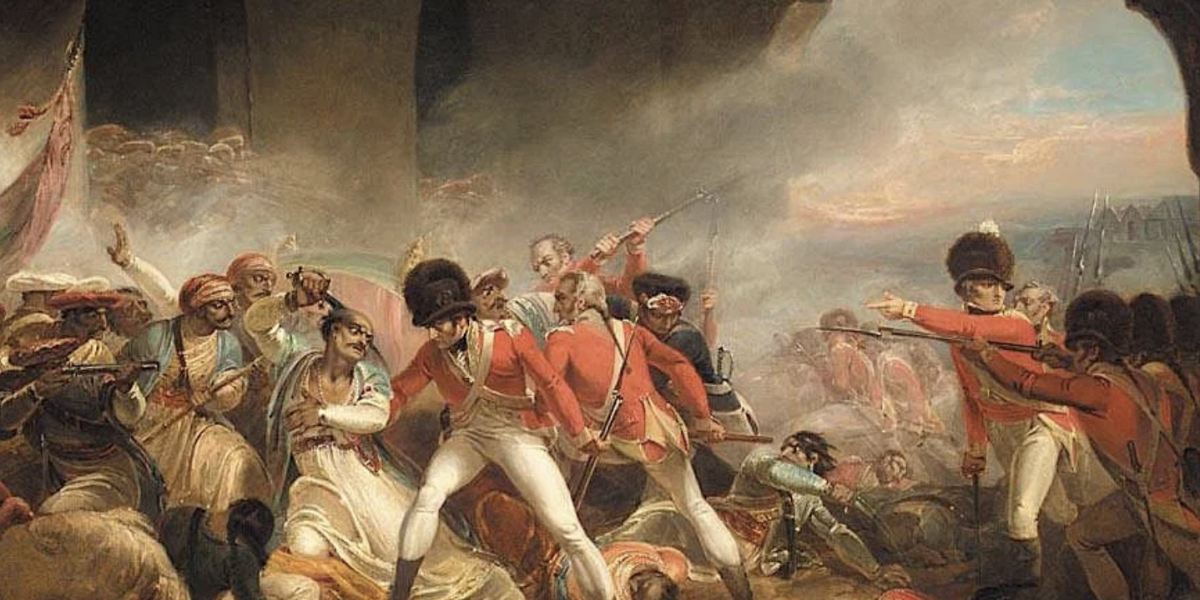
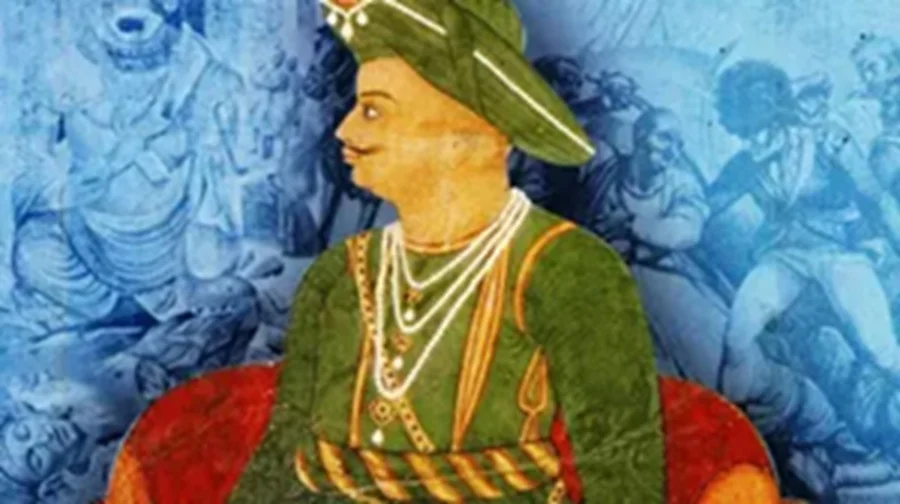
A c. 1800 painting showing the last stand of Tipu Sultan, ruler of Mysore in 1799 at the end of the Anglo-Mysore Wars with the East India Company. Photo: Henry Singleton/Public domain.

Many will ask why a book about Muslims who fought for India’s freedom? There’s no answer to such questions except another question. Had we been better memory keepers as a nation, could we have avoided the peak disinformation and stupidity which normalises reviling ordinary Muslims as outsiders, infiltrator and insurgents? 

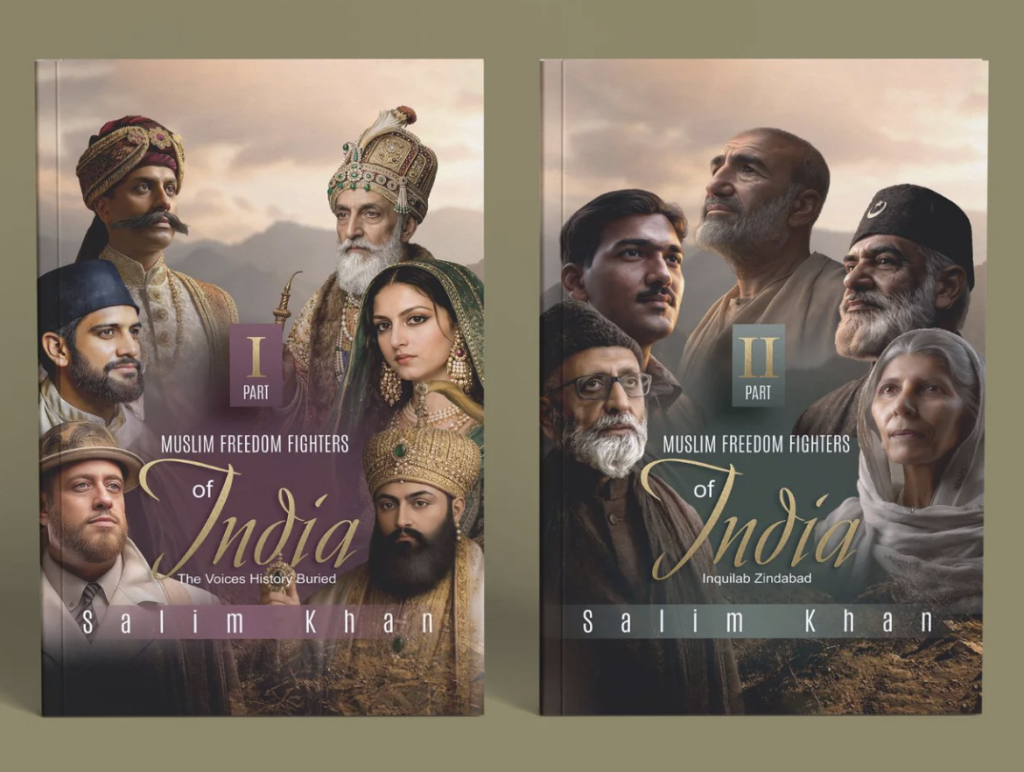
Muslim Freedom Fighters of India is a two-volume biographical compilation by Salim Khan on less-known, mostly forgotten and hardly known Muslim figures. The books aim to clear the fog around Muslim freedom fighters whose names are heard of without them being extensively known and this requires us to understand why this fog exists. Written in an extremely readable and accessible format, these biographical accounts embed the historical figures in the context of their times, responding to unprecedented events with foresight, clarity and conviction that sealed their fate and shaped and the nation’s destiny.

 Whether we are reading about Generals of 1857 – Bakht Khan and Khan Bahadur Khan – or the Cambridge-educated Rampur scion Mohammad Ali Juahar of Khilafat moment and his fiery mother Bi Amma, the larger questions seething beneath the stories keep rising to surface. Who does a society and nation choose to remember and celebrate? Whose memories are deemed worthy of preserving? History is always shaped by those who control archives, narratives and memorialisation and hence memory. 

Reading about Tipu’s dazzling reign through the three Anglo Mysore wars where he proved superior to British forces, I was reminded of the controversy sparked by the late Girish Karnad’s suggestion of naming the Bengaluru airport after Tipu Sultan. Karnad had said, “It is true that Tipu Sultan was not born in Bengaluru, but he was a son of this soil and a freedom fighter. Had Tipu been a Hindu, he would have achieved the status of Shivaji, and the airport would have been named after him.” I recalled Karnad because his play Dreams of Tipu Sultan echoes the same theme that this two-volume tribute to erased, obscured and deliberately unremembered historical figures echoes: that when politics lays down who should be forgotten, remembering the erased becomes a duty, an affirmation and a political act. 

It is important to clarify that this is not a compilation of eulogies but well-researched fact based account of people who had the uncommon clarity to resist colonial domination even before the nationalistic narratives took shape. That they happened to be Muslims is important today because of the distortions that have obscured and erased them. But back then when they fought and resisted, they were simply rallying for the cause of their soil and their watan. From the earliest times they understood that freedom from foreign domination required Hindus and Muslims to put up a united front as in the war of 1857, the Khilafat movement, and the period between 1919 and 1924. Back then too, traitors cut across religious lines – Jagat Seth, Mir Jafar, and Ilahi Baksh.

Muslim Freedom Fighters of India: Part 1 and Part 2’, Salim Khan, Qalam Aur Kaagaz Books.

From Siraj ud Daulah to Tipu to Shahzada Firoz Shah, the book shows how the fog around these personalities is not accidental but meticulously designed – initially by the colonial mind, then picked up by early nationalists and woven into simplistic narratives. The macabre dance of history further stifled Muslim voices. Cataclysmic events like the ‘end’ of the Mughal Dynasty in 1857 and the Partition in 1947 sundered clans, erased family histories, legacies crumbled with no one is around to defend and uphold them. Today, even people who don’t know history have heard of Lakshmi Bai, but many who read history may not have heard about Shahzada Firoz Shah, the Mughal Emperor’s grandson who in August 1857, led a band of armed soldiers to rally the rebels in Rohilkhand and Malwa and who fought alongside Tatia Tope and called for a united Hindu-Muslim front against the Company. 

The British understood the dangerous potential of popular memory and subverted any potential for memorialisation of hugely influential figures. No one knows if Shahzada Firoz died in battle or escaped to West Asia. The Maulavi Ahmadulla of Faizabad whose authority and fearlessness scared the British so much that they kept a reward on his head, was likewise interred in an unmarked grave. Knowing that even his memory could become a node to unite the rebels, the British saw to it that no commemoration was permitted or possible. Zafar, the last Mughal was exiled to Rangoon for the same reasons.

In her book, India, 5,000 years of history on the subcontinent, Audrey Truschke, elucidates how Muslim rulers like Nawab Siraj ud Daulah and Tipu Sultan to Zafar felt a responsibility for their subjects no matter what their religion. For example, Siraj ud Daulah actively intervened in times of famines and drought in Bengal. But after the British took over they did nothing to alleviate human suffering, so that 20% of Bengal’s population died in the famine of 1768 and the small-pox epidemic of 1769-70 following it. This had never happened during earlier episodes of failed harvests. Truschke says, British historians initiated the custom of categorising Indian rulers as tyrannical, effete and incompetent, reducing them to their religion and writing in terms of Hindu rulers and Muslim rulers. The British needed to demonise Muslim rulers who were their immediate predecessors in subcontinent so that they might look good by comparison, Truschke notes. It was a part of the colonial propaganda.

Another pattern Salim Khan’s compilation brings out is that from mid-18th century onwards, the first responders and the most committed crusaders resisting colonial domination – the kings, queens, princes, preachers, noblemen – were Muslims. Not only because the British had wrested from them the power they had wielded for centuries (howsoever fragmented or diluted it may have become); but also, because they were looked upon as leaders. In Awadh, for example, the Shia elite took it as their moral-ethical duty (see Chapter 7, volume I: Shia Ullema and Noblemen of Awadh

Even in the 20th century, Muslim freedom fighters like Hasrat Mohani of the Inquilaab Zindabad fame and Asfaqullah Khan of the Kakori conspiracy who was an icon for Bhagat Singh, remain in the shadows, seen only in a hazy half-light. Were their contributions any less or only less remembered? One of the most important projects post-Independence should have been to restore memory and affirmation to those whom the British put on the wrong side of history, no matter what their religion or caste. But we know this is not what happened.

Since the arrival of the political controversy over Tipu Sultan, we have entered in an era of deliberate distortion of history. The larger question that these accounts refrain from asking but that jumps to any thinking person’s mind is this: can a stable and just democracy flourish on foundations of wilful amnesia and erasure? Should the memory of Muslim freedom fighters be kept only by the Muslims? The heritage and memory of Indian Muslims needs to be reclaimed by them. But equally, these volumes are required reading for the casually miseducated, hopelessly disinformed or simply ignorant Hindus who have been stupefied into denying and distorting their composite history.

Varsha Tiwary is a Delhi-based writer and translator. She has recently published 1990, Aramganj a translation of the best-selling Hindi novel Rambhakt Rangbaz.

Tipu Sultan Martyr’s Day observed

Srirangapatna (Mysuru District), KARNATAKA :

MLA pays homage at Tipu Tomb, releases Urus Shariff invitation

Mysore/Mysuru:

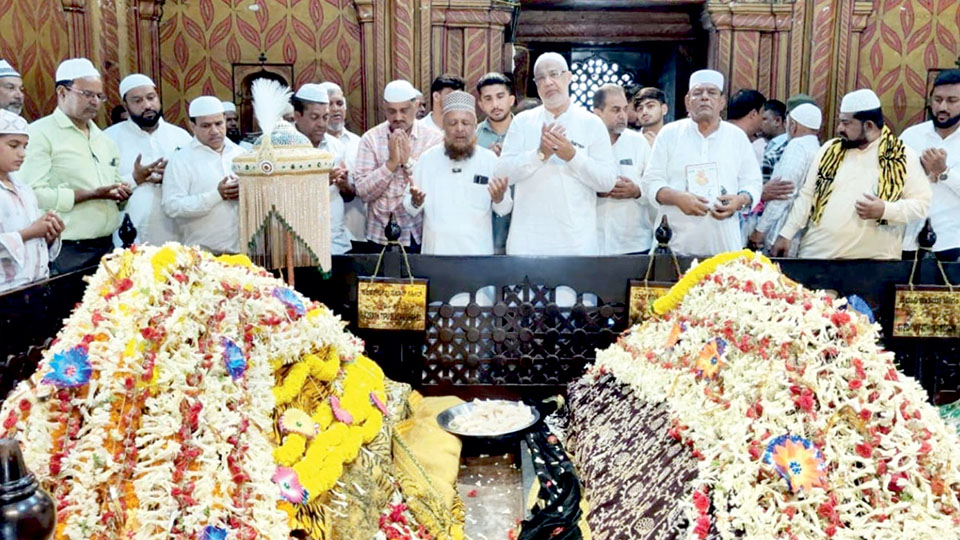
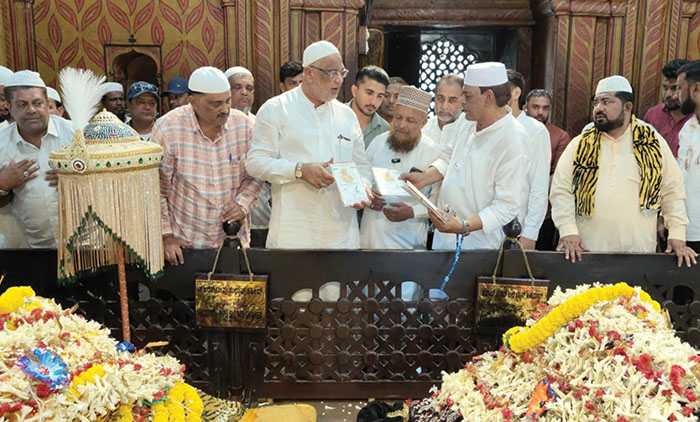
MLA Tanveer Sait, along with several others observed Tipu Sultan Martyr’s Day at a Fatha Khawni programme organised by Hazarath Tipu Sultan Shaheed Welfare and Urus Committee Secretary Afroz Pasha at Tipu Tomb (Gumbaz), Ganjam in Srirangapatna recently.

Hazarath Moulana Syed Inayathur Rehaman Razvi Saheb, Khateeb-o-Imam of Masjid Aqsa, Tipu Tomb, performed Fatha Khawni while Afroz Pasha and MLA Tanveer Sait spread the Flower Mat (Chadar) on the tombs of Tipu Sultan Shrine and his parents. Moulana Mohd. Inayath Ur Rehaman Razvi read Duwa supplications for the welfare of all.

Afroz Pasha distributed sweets (Tabruk) and felicitated the MLA by offering shawls.

Invitation, posters released

On the occasion, MLA Sait released the invitation and publicity posters of the 234th Annual Sandal Urus Shariff of Hazarath Tipu Sultan Shaheed.

The annual Sandal Urus Shariff will be celebrated on May 16 in city during which a public meeting will be held and a procession will be taken out. 

Industrialist M.F. Jamsheed, Senior Congress leader Syed Iqbal, Waseem, Radiulla Khan, Member of the College Development Council of    Government Girls’ Pre-University College Khwaja Mohammed Musheer Chishti, Syed Younus, Majeed Ahmed, Afroz  Khan and a host of devotees were present.

source: http://www.starofmysore.com / Star of Mysore / Home>News / May 08th, 2026

The Rajas who shaped Indian history: The legacy of Prof Mahmudabad’s family

UTTAR PRADESH :

The family of Ali Khan Mahmudabad, the Ashoka University professor whose social media post on Operation Sindoor set off a storm, footprint on Indian history stretches back to the medieval period.

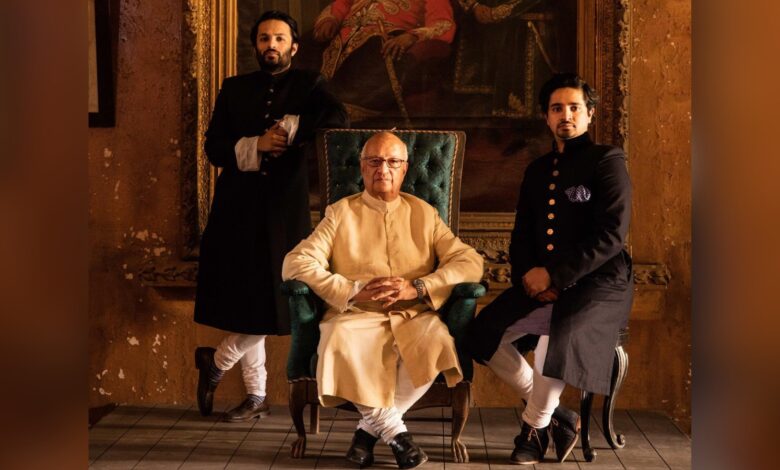
 Prof Ali Khan Mahmudabad, his father Raja Mohd Amir Mohd Khan (centre) and brother Rajkumar Amir Hasan Khan. Image courtesy: Mahmudabad Estate

The Supreme Court on March 16 closed the case against Prof Ali Khan Mahmudabad, the Ashoka University historian and columnist, after the Haryana government declined to grant sanction for his prosecution for his social media post on Operation Sindoor, a decision the court had itself nudged the state towards in an earlier order. 

A Division Bench comprising Chief Justice of India (CJI) Suryakant and Justice Joymalya Bagchi had, in its order of January 6, asked the Haryana government to consider refusing sanction as a “one-time magnanimity.” The state obliged, bringing to an end a case that had drawn global attention to questions of free speech and academic freedom in India. 

The matter had originated in a social media post made by Prof Mahmudabad in connection with Operation Sindoor of 2025. It snowballed rapidly after he received summons from the Haryana State Women’s Commission on May 12, 2025. The Supreme Court had granted him interim bail on May 21. 

The man behind the case

Prof Mahmudabad holds a doctorate and a master’s degree from the University of Cambridge and teaches history and political science at Ashoka University. Also known by his courtesy title “Raja of Mahmudabad,” he is the latest in a long and storied line – a family whose footprint on Indian history stretches back to the medieval period. 

During the Nawabi rule in Awadh and later under the British, the Rajas of Mahmudabad were among the largest Taluqdars, or feudal landholders, of the region, controlling over 400 villages and extensive urban properties across Lucknow, Sitapur, Lakhimpur Kheri and Nainital. 

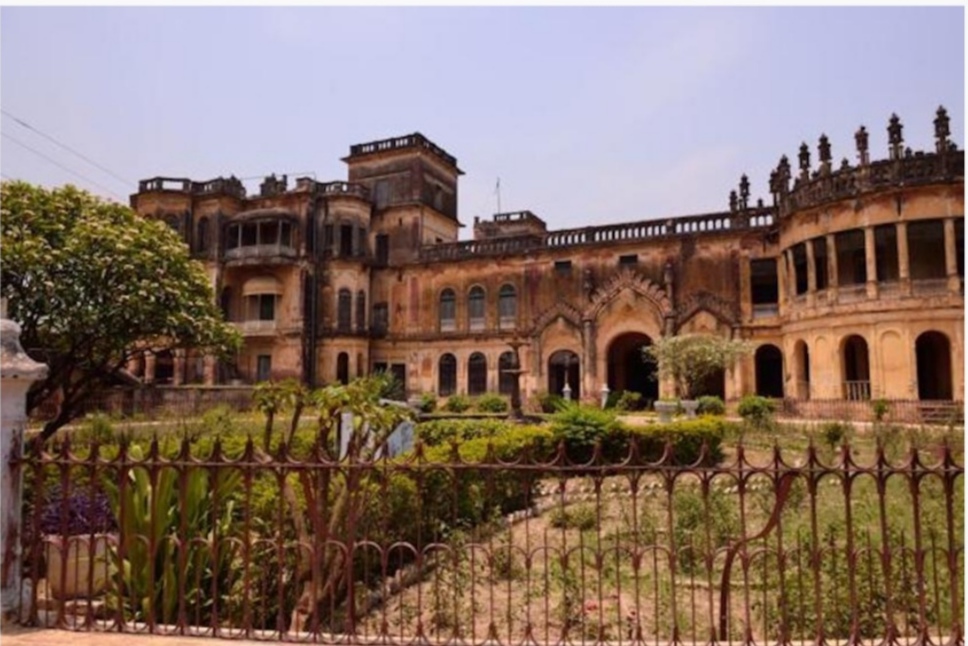
The family’s most visible legacy is the Mahmudabad Fort in Sitapur, a 19th century structure built in the Indo-Saracenic style that counts among the largest private residences in the world. It has hosted royalty, diplomats, political leaders and intellectuals from across the globe. Its library holds thousands of rare books and manuscripts in English, Hindi, Urdu, Sanskrit, Persian and Arabic – including handwritten copies of the Quran, the Bhagavad Gita and the Mahabharata, some dating to the 16th century. 

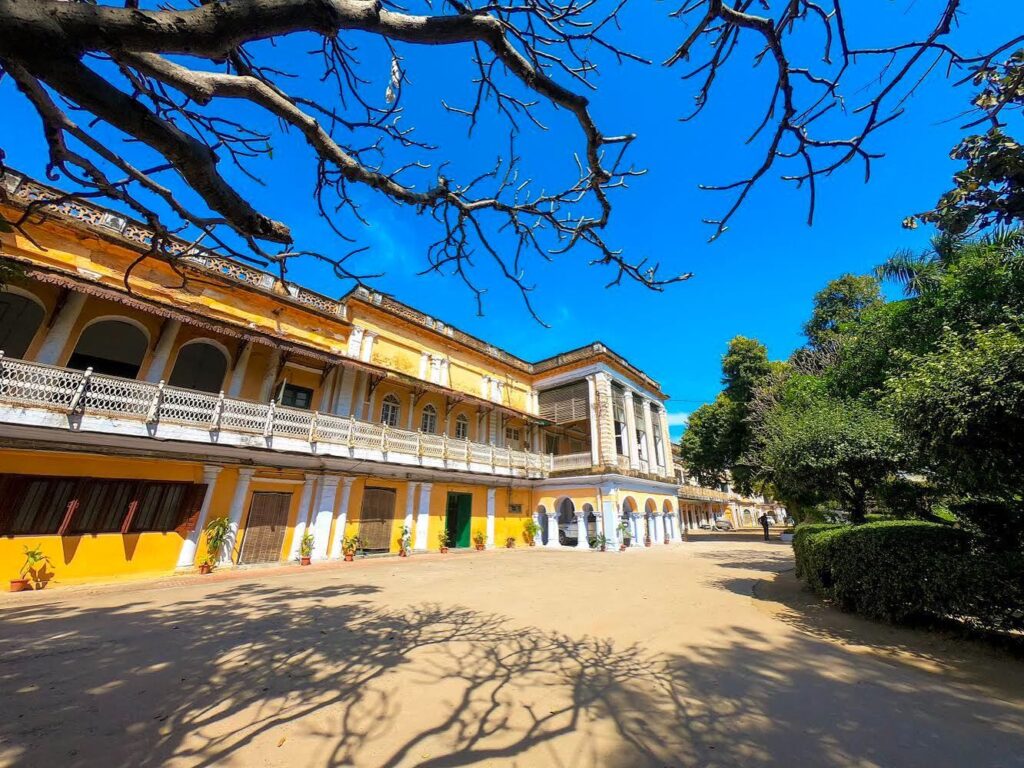
Mahmudabad Fort. Image courtesy: Mahmudabad Estate

The fort’s kitchens, too, have kept alive culinary traditions that have largely disappeared elsewhere. The original mud fort on the site was set ablaze by the British during the Revolt of 1857 and later rebuilt. 

The family’s syncretic character runs deep. Its charitable endowments include temples, one gifted to the Udasin Sect founded by Sri Chand, son of Guru Nanak, replicas of the Muslim shrines of Najaf and Karbala in Iraq and a caravanserai built to shelter travellers. 

Revolt of 1857 and after

The family’s political legacy is equally significant. During the Revolt of 1857, Muqim-ud-Daula Raja Nawab Ali Khan commanded several thousand rebel troops before being killed by British forces – the same forces that burned down his 16th century fort. His role has been documented in historical accounts of the period and in the Urdu novel “Aghaz-e-Sahar” by Khan Mahbub Tarzi, translated into English by Prof Mahmudabad himself under the title “The Break of Dawn.” 

His son, Amir-ud-Daula Raja Sir Mohammad Amir Hasan Khan, served on the Legislative Council of the Lieutenant Governor of the North Western Provinces. Lucknow’s Amir-ud-Daula Public Library and Amir-ud-Daula Islamia Degree College are named after him. 

Amir-ud-Daula Raja Sir Mohd Amir Hasan Khan. Image courtesy: Mahmudabad Estate

His son, Prof Mahmudabad’s great-grandfather Maharaja Sir Mohammad Ali Mohammad Khan was a pioneer of education who played a central role in establishing both Lucknow University and the Aligarh Muslim University, serving as the latter’s first Vice-Chancellor from 1920 to 1923. A residential hostel, Mahmudabad House, in Aligarh Muslim University’s Sir Shah Sulaiman Hall is named after him. He also served as the Home Member of the Governor of UP’s Executive Council.

Mahmudabad House in Lucknow. Image courtesy: Mahmudabad Estate

A close friend of Motilal Nehru, he was instrumental in the signing of the Lucknow Pact of 1916 and served on the Imperial Legislative Council, the Council of State and the United Provinces Legislative Council. Lucknow’s Butler Palace, named after former UP Governor Sir Spencer Harcourt Butler, was built by him. 

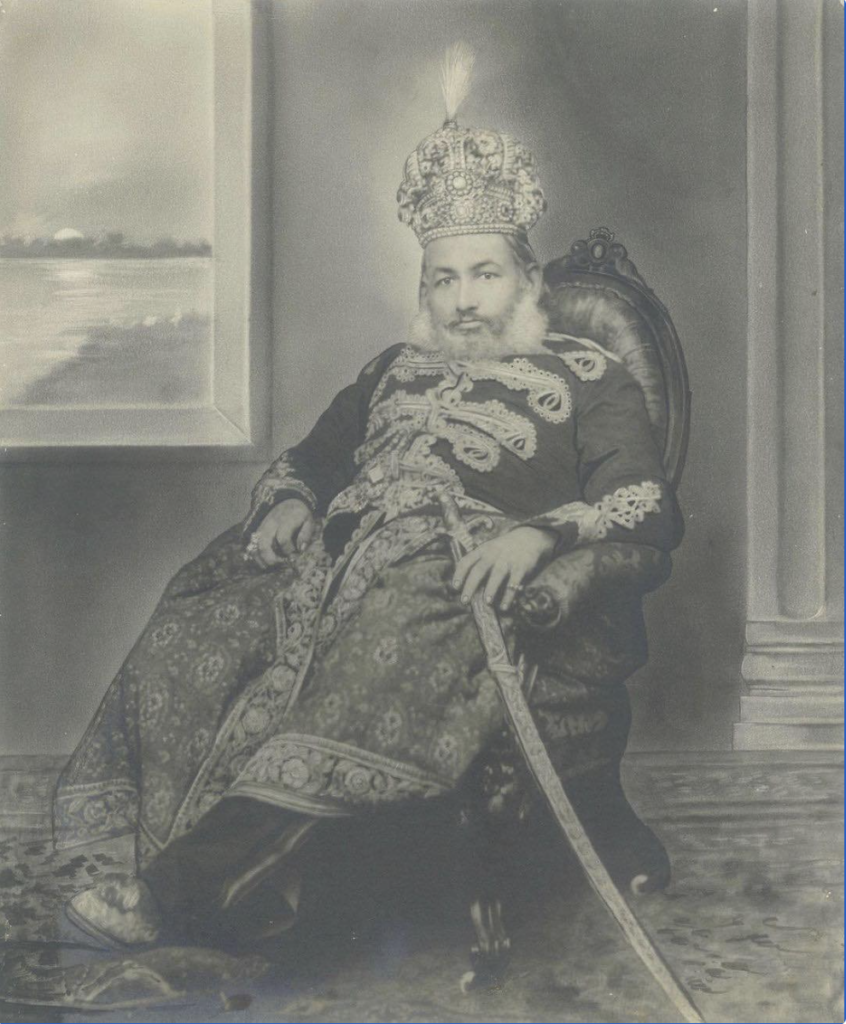
Maharaja Sir Mohammad Ali Mohammad Khan

Prof Mahmudabad’s father, Raja Mohammad Amir Mohammad Khan, was also a Cambridge graduate and an occasional professor of astrophysics at Imperial College London and the Institute of Astronomy at Cambridge. He was elected twice to the UP Legislative Assembly on a Congress ticket, in 1985 and 1989. 

When he passed away in October 2023, thousands joined his funeral procession across religious lines, and schools, markets and commercial establishments across the area shut down in mourning. 

A vindication, and a reminder

Prof Mahmudabad’s Lucknow home, Mahmudabad House – part of the historic Qaiserbagh Palace complex – continues to serve as a gathering place for intellectual and cultural exchange, much as the family’s spaces have for centuries. 

The closure of his case, then, is more than a personal reprieve. Coming at a time of heightened scrutiny over free expression in India, it is being seen as a reaffirmation, however fragile, of the right to speak, question and dissent. 

(Aman Alam is a student Barrister at the University of London and an Advocate in the
Supreme Court. He has been a former Law Clerk-cum-Research Associate to a Supreme Court judge. He is also a Fellow of the Royal Asiatic Society of Great Britain and Ireland)

source: http://www.siasat.com / The Siasat Daily / Home> Featured News / by Aman Alam, Guest Contributor March 27th, 2026

From Bulandshahr To Privy Council: A Woman’s Legal Battle In 19th Century British India

INDIA :

As the world celebrated International Women’s Day on 8th March, it would be relevant to mention Khanzadi Begum’s case, a property rights dispute in 19thcentury British India, which originated from District Bulandshahr, and culminated before the Privy Council in England. The dispute pertained to the colonial Government’s attempt to revoke a sanction that had previously been granted, raising questions about the limits of executive discretion. During the Revolt of 1857, a large section of nobility and landed gentry, i.e., Taluqdars and Zamindars in the Bengal Presidency (which included North-Western Provinces, the earlier name of United Provinces or U.P.) and the Princely State of Oudh (Awadh) took up arms against the East India Company. When the British regained control in 1858, a severe crackdown followed against the rebels, wherein persons convicted of ‘mutiny’ were executed, and their lands were confiscated en masse under the Forfeiture Act, 1857[1]. This retributive and deterrent exercise of forfeiture gave birth to innumerable claims arising out of the seized lands. By way of Act IX of 1859, Courts of Special Commission were set up in the Lower and North-Western Provinces of the Bengal Presidency for adjudication of these claims.

Khanzadi Begum was born in District Bulandshahr to Sheikh Muhammad Abdullah Khan, landed proprietor of “Khanpur Estate” which sprawled Bulandshahr, Meerut, Budaun and Moradabad districts. He died in 1852, leaving behind a son named Abdul Latif Khan and two daughters Bibi Mariam and Khanzadi Begum. Abdul Latif Khan allotted five villages (out of his father’s estate) to his sister Bibi Mariam for her maintenance, but couldn’t make such an allotment for Khanzadi Begum. Meanwhile, in the aftermath of the Revolt of 1857, Abdul Latif Khan was convicted of ‘mutiny’, which led to confiscation of his properties in 1860 under the 1857 Act. In 1860, Khanzadi Begum petitioned the Court of Special Commission against the Government, claiming her inherited share in her deceased father’s estate. The Court rejected her claim to the full share, but passed a decree assigning five villages in District Bulandshahr for her maintenance, which were to be equal in area, Government (revenue) assessment and income of her Bibi Mariam’s villages, along with awarding mesne profits. The Government authorities allowed her to choose five villages. Accordingly, in August, 1860, consequent to the sanction obtained from the Sadar Board of Revenue, the Collector handed over to her the possession of these villages, her name was entered in Government records and she was paid mesne profits. A few months later, in October, the Sadar Board wrote to the Government, expressing a doubt about the Court of Special Commission’s decree. Pursuant to this, the Lieutenant-Governor Sir George Frederick Edmonstone, KCB, ordered that the Court of Special Commission was not empowered to pass the decree for maintenance (a cause which was not sued) when it had rejected Khanzadi Begum’s claim for her full share in the property. The Lieutenant-Governor was also of the view that the villages allotted to her were more than the value of Bibi Mariam’s villages. Consequently, Khanzadi Begum was ousted in January, 1862.

Being aggrieved by her unlawful dispossession at the hands of the Government, Khanzadi Begum initiated execution proceedings before the Court of Special Commission, which came to be dismissed, and the dismissal was affirmed in appeal on the ground that the decree was not properly carried out. She then filed a fresh suit before the District Judge, seeking declaration and possession of the property along with mesne profits. The said suit was, however, also dismissed. The court, accepting the Provincial Government’s contentions, took a view that the Court of Special Commission only declared that Khanzadi Begum (i.e., the Plaintiff) should receive a suitable maintenance from her ancestral property, and it neither conferred any specific proprietary right nor could she acquire any such right unless the Government had sanctioned a particular property, which was never done.

In 1866, Khanzadi Begum challenged the District Judge’s decision before the newly formed High Court for North Western Provinces, which had recently replaced the Sadar Diwani Adalat and now sat in its place in Agra, before being shifted to Allahabad in 1875. A Bench comprising Chief Justice Sir Walter Morgan and Justice Sir F. B. Pearson allowed the appeal[2] and the District Judge’s verdict was overturned. While examining in detail the facts of Khanzadi Begum’s case, the High Court pointed out that the Court of Special Commission had granted her a right to maintenance in her ancestral property only after her claim for inheritance of her share in the ancestral property was dismissed in view of her family’s custom of male primogeniture, and such a declaration was, in the High Court’s view, conferred a substantial right to maintenance and was not a mere recommendation. As for the Government’s objection that the Court of Special Commission exceeded its jurisdiction under Act IX of 1859 by adjudicating upon a fresh cause of action (of maintenance), the High Court was of the view that the Court of Special Commission followed its summary procedure under Act IX of 1859 and even if it had proceeded irregularly, the decree could not be said to be a nullity, more so when its validity was never challenged, and it was long after the decree had been satisfied, that the Government made any objection to it. As per the High Court’s interpretation, in order to comply with the decree, the Government ought to have itself selected the villages to be granted to Khanzadi Begum, or should have sanctioned the selection made by her. The Government’s primary justification for dispossessing Khanzadi Begum was that the grant of five villages made to her by the Sadar Board of Revenue in compliance of the Court of Special Commission’s decree, was done without obtaining proper sanction from the Government. In simple words, the Government’s stance tried to distinguish itself from the Sadar Board of Revenue, even though it was very much an arm of the Government. As a matter of fact, the Government’s real intention behind dispossessing Khanzadi Begum was the apprehension that the villages allotted to her actually yielded much more profits than the amount specified by the Court of Special Commission. The High Court completely rejected both these contentions. Firstly, it was observed that the correspondence between local revenue officers and the Sadar Board revealed that the villages were to be selected on the basis of fixed annual revenue demand of the government (called “Jama”) and not as per the actual profits. Secondly, it was held that the Government’s sanction had already been expressed through the Sadar Board of Revenue on 20th July 1860 when it assigned the lands to Khanzadi Begum in satisfaction of the Court of Special Commission’s decree, and contention regarding refusal of sanction was disproved by official correspondence. The sanction was acted upon and Khanzadi Begum obtained possession of the five villages and held them until her dispossession in January, 1862. The High Court then pointed out that the sanction was not questioned until a year after it was granted in 1860, and held that now the Government could not interfere in any manner, once it had granted a ‘full and intelligent sanction’ (through the Sadar Board) and the same had been acted upon. The High Court referred to Privy Council’s 1861 judgment in The Collector of Masulipatam v. Cavaly Vencata Narrainapah[3] which was a case arising from the Sadar Diwani Adalat at Madras, wherein it was held “…the acts of a Government officer bind the Government only when he is acting in the discharge of a certain duty within the limits of his authority, or, if he exceed that authority, when the Government in fact, or in law, directly, or by implication, ratified the excess”. It was, however, held that in the present case the Sadar Board and the Revenue Authorities had not exceeded their authority, and thus, the Government was bound by their acts. The appeal was decreed with costs. Khanzadi Begum was represented in the High Court by Maulvi Fariduddin Ali, Maulvi Samiullah Khan and Shah Asad Ali, while the Government was represented by Lala Man Rai.

As the Government was unsatisfied with the High Court’s judgment, the matter reached the Privy Council as the Secretary of State for India filed an appeal on the Government’s behalf. The judgment was delivered on 1st March 1870[4], a 4-judge Bench comprising Sir James Colville, Sir R. Phillimore, Lord Justice Giffard and Sir Lawrence Peel rejected the Government’s appeal. The Privy Council was of the opinion that there was “no ground whatever for this appeal”, as the Government had not stated in its pleadings (or otherwise) that the decree of the Court of Special Commission was improper or non-binding. It was noted that on the date of the decree, the Government was in possession and the Collector was empowered to carry out the decree and handover possession (to Khanzadi Begum). Moreover, the Government did not raise any objection whatsoever in the Civil Court against Khanzadi Begum’s claim ‘except as to a certain particular portion of the land’, and, consequently, ‘her title was confirmed by the decree of a competent Court’. Resultantly, the Privy Council, while dismissing the appeal with costs, made strong observations against the Government that it ‘was much in the wrong in taking possession as they did, and that this appeal never ought to have been brought’. The Government was represented in the Privy Council by Mr. Forsyth QC and Mr. Merivale QC, while Khanzadi Begum was represented by Sir Roundell Palmer QC and Mr. Leith.

Khanzadi Begum’s case arose during a period when statutory protections were still evolving under the colonial rule. The High Court for North Western Provinces, after holding the Government liable, awarded exemplary costs of around Rs. 3,645[5], much higher than given standards of the day. Later, while putting a quietus to the issue, the Privy Council also came down heavily upon the Government. Although, not explicitly articulated in these terms, the reasoning given by the courts indicates the doctrine of estoppel, as the Government was not allowed to arbitrarily revoke its sanction.

This decision is an early instance of application of rule of law in reviewing executive action.

  1. Act XXV of 1857 ↑
  2. Mussumat Khanzadee vs The Collector of Bolundshahur, Case No. 33/1866, 2nd July 1866 ↑
  3. (1859-61) 8 Moo I.A. 529 @ 554 ↑
  4. The Secretary of State for India in Council v. Mussamat Khanzadi, (1811-72) 4 IR 306 ↑
  5. Report of the Legal Remembrancers, North-Western Provinces, for 1866-67. Government Press, Allahabad, 1867 ↑

Author Aman Alam is an Advocate At Supreme Court of India & student Barrister at University of London, U.K and Musa Munir Khan is an Advocate practising at High Court of Delhi. Views are personal.

source: http://www.livelaw.in / LiveLaw.in / Home> Articles / by Aman Alam & Musa Munir / March 16th, 2026


    Evaluating Indian Kings: Tipu Sultan Stood Against the British with Valour and Courage

    Mysuru, KARNATAKA :

    The half-baked propaganda of communal forces against the Tiger of Mysore is trying to divide communities

    THE Tiger of Mysore (Sher-e-Mysore) Tipu Sultan often finds space in sections of the media, especially in Karnataka. There have been occasions of State-sponsored celebrations of his birth anniversary and the Bharatiya Janata Party (BJP) regularly creates obstacles to these celebrations, resulting in unnecessary ruckus. This time around, Tipu Sultan is in the news from Malegaon in Maharashtra.

    The newly elected deputy mayor of Malegaon Shan-e-Hind Nihal Ahmad, put up the portrait of Tipu Sultan in her office, upsetting the Shinde group’s Shiv Sainiks and the BJP. These forces got the portrait removed with the intervention of the authorities. Some protests were also held.

    Maharashtra Pradesh Congress Committee President Harshvardhan Sapkal got incensed and defended Tipu Sultan, claiming that the contribution of Tipu Sultan to Mysore is equivalent to that of Chhatrapati Shivaji Maharaj in Maharashtra.

    But, Chief Minister Devendra Fadnavis did not like the idea of comparing Tipu Sultan and Shivaji Maharaj, as it was an insult to the latter. Following this absurd comment, the Congress office was pelted with stones by BJP workers and nearly seven people were injured in the ensuing mayhem.

    The objection of the BJP to the statement from the Congress leader is that Tipu was a “mass murderer of Hindus” and he tried to convert Hindus to Islam. There are many other charges put against Tipu by Hindutva elements. Most of these try to project Tipu as anti-Hindu and a cruel king. This is far from the truth.

    Lots of these myths are part of the communal narrative, accentuated by the British narratives, which are harsher against Tipu in particular. This is because he was one of the few rulers who fought against the British. Tipu had asked Nizam and the Peshwas to oppose the armies of the East India Company. He foresaw the dangers of British power entrenching in India.

    Tipu’s administration was a mixed one, with many top officers being Hindus. Purnaiah served him as the Mir Miran (head of a department) and was crucial to his administration. Krishna Rao was his treasurer. Shamaiya Iyengar held a high-ranking ministerial position and Narsimha Iyengar held a position in the postal department. Tipu Sultan reportedly provided grants to the Sringeri Shankaracharya, including for the rebuilding of the temple and the installation of the Hindu goddess Sharada. He granted land and endowments to various temples throughout his kingdom. During his reign, the 10-day Dussehra celebrations were an integral part of the social life of Mysore.

    In 1791, Maratha forces led by Raghunath Rao Patwardhan attacked and plundered the historic Sringeri Sharada Peetham, causing the Shankaracharya to flee. Upon learning of this, Tipu Sultan expressed deep anger, stating that those who committed such acts would face consequences, and promptly sent funds, gifts, and letters to restore the temple and reconsecrate the idol. The raid was part of the Third Anglo-Mysore War, during which Maratha forces caused significant destruction to the temple complex, including killing or wounding people and looting property.

    Tipu Sultan, who frequently interacted with the Sringeri Jagadguru and addressed him with high respect, immediately ordered the Mysore administration to assist in the restoration, demonstrating his patronage of certain Hindu institutions. Evidence of this restoration is found in several letters in Kannada, preserved in the Sringeri monastery records, where Tipu requested the Jagadguru to pray for the prosperity of his kingdom.

    Tipu Sultan was a staunch opponent of the British. There is an accusation against him that he persecuted some Hindu and Christian communities. The reason for this persecution, however, was purely political, not religious. About these persecutions, historian Kate Brittlebank says that “This was not a religious policy but one of chastisement”. The communities targeted by him were seen as disloyal to the State.

    The communities Tipu targeted did not belong only to the Hindu stream. He also acted against some Muslim communities, like the Mahdavis. The reason was that these communities were supporting the British and were employed as horsemen in the East India Company’s armies. Another historian, Susan Bayly, says that Tipu Sultan’s attack on Hindus and Christians outside his state is to be seen on political grounds, as at the same time he had developed close relations with these communities within Mysore.

    Sarfaraz Shaikh, in his book Sultan-E-Khudad has reproduced the ‘Manifesto of Tipu Sultan’ in which he declares that he would not discriminate on religious grounds and would protect his empire until his last breath. He had a great interest in rocket technology. This finds appreciative mention in Dr APJ Abdul Kalam’s book, Wings of Fire.

    It is interesting to note that in the Rashtriya Swayamsevak Sangh’s series for children on Indian history, they had published a book on Tipu in the 1970s. BJP’s Yeddyurappa had adorned Tipu’s headgear to solicit votes in the 2010 elections in Karnataka. Then President, Ramnath Kovind, sent a eulogising message on the occasion of Tipu Jayanti (2017). He has an RSS background. He praised Tipu by saying that “Tipu Sultan died a heroic death fighting the British. He was also a pioneer in the development and use of Mysore rockets in warfare.”  Tipu – along with Rani Laxmi Bai – are also depicted as freedom fighters through drawings in Part XVI (page 144) of the original, hand-written and illustrated copy of the Indian Constitution.

    Due to his policies, Tipu was popular among the people of Mysore. There are many folk songs, sung in villages, praising him. It is for this reason that one of our greatest playwrights, Girish Karnad, said that had Tipu been a Hindu, he would have the same status that Shivaji Maharaj has in Maharashtra. This is very close to what Sapkal stated, nothing extra.

    This whole incident of opposing the portrait of Tipu in the Deputy Mayors’ office is one more instance of communal forces latching on to divisive politics. Kings should not be seen just by their religion; their policies towards people of different religions and people’s welfare should be the major criterion for evaluating them. Tipu stands very tall in this scale of religious tolerance. The half-baked propaganda of the communal forces is trying to divide communities.

    A major tribute to Tipu was paid by Subhash Chandra Bose. He adopted Tipu’s ‘springing tiger’ as the insignia of Azad Hind Fauj, which fought against the British. The major contribution of Tipu was to forewarn the Indian rulers about the advancing threat of the East India Company, the British. It was for this that he bravely fought against the British and laid down his life in the fourth Anglo-Mysore War. The communal forces who are out to demonise Tipu belong to the ideology that did not even lift a little finger against the British rule.

    source: http://www.clarionindia.net / Clarion India / Home> Opinion / by Prof Ram Punyani / February 18th, 2026

    Remembered in files, erased in life: Jharkhand’s forgotten martyrs of 1857

    JHARKHAND :

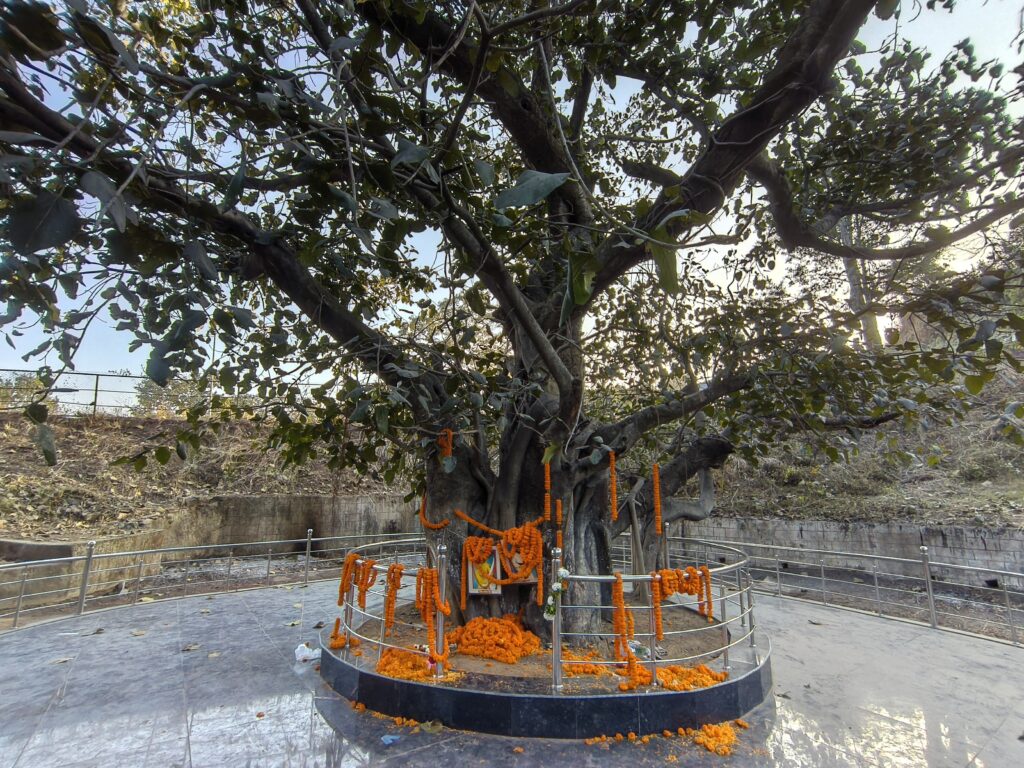
    The Banyan tree on which the execution took place. Photo: Ghulam Ahmad Raza

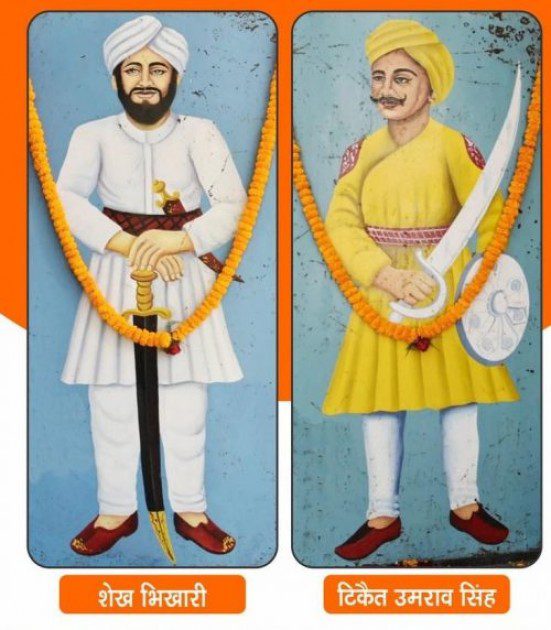
    During the 1857 revolt against British rule, Jharkhand too witnessed armed resistance. The rebellion had spread across regions including Ranchi, Hazaribagh, Ramgarh, Palamu and Singhbhum. In the dense forested border areas of Ranchi and Hazaribagh, the rebel forces were led by Shaheed Sheikh Bhikhari Ansari and Tikait Umrao Singh. From the dense jungles of the Chuttu Palu valley, their army fought British troops and prevented Ranchi from falling under colonial control. Both leaders were captured by the British forces on January 6, 1858 and were publicly executed by hanging on January 8, 1858, in the same Chuttu Palu valley.

    The banyan tree on which they were hanged still stands today. The Jharkhand government has developed the surrounding area as a martyr memorial with the stated aim of preserving history and keeping alive the legacy of the region’s sites of resistance. Yet even today, many residents of the Chuttu Palu village where the memorial stands remain unaware of who these martyrs were.

    Fifty-eight-year-old Nirmal Kumar, who works as a stone breaker near the memorial, often rests inside the premises during breaks. He says he has been coming here since childhood. Despite this, he is unaware of the historical significance of the site and does not recognise the names of Sheikh Bhikhari Ansari or Tikait Umrao Singh.

    “I only know that blankets are distributed here every year on January 8,” he said. On the martyrdom anniversary, social workers and officials visit the site to pay tribute and distribute essentials among the poor.

    Sanjay Munda, a resident of Chuttu Palu village, said that even today, most villagers do not know about the martyrs or the memorial’s history. “Members of the surrounding Scheduled Tribe (ST)  and Scheduled Caste (SC) communities refer to the site in the local language as Fasiyahi Bar (tree where the hanging took place). Most people do not know about the 1857 revolt or the sacrifice of Sheikh Bhikhari and Tikait Umrao Singh,” he told Maktoob.

    Despite the lack of awareness, locals often bow their heads in respect when passing the site.

    The memory of these two revolutionaries who laid down their lives fighting British rule is slowly fading. Their history has largely been reduced to government files and digital web pages. On martyrdom days, ministers, officials and locals pay tributes, but beyond symbolic gestures, little is done. While the Jharkhand government has taken some steps to acknowledge them, no substantial initiative has been taken by the central government to formally recognise or honour their contributions.

    Dr Muzaffar Hussain, researcher and author of Jharkhand ki Muslim Vibhutiyaan, says Muslim, SC and Adivasi martyrs have not received the recognition they deserve. “Jharkhand has produced many revolutionaries who sacrificed their lives for India’s freedom, but recognition has been limited largely to Birsa Munda only,” he said.

    He points out that the 1857 revolt took place nearly 40 years before Birsa Munda’s Ulgulan (revolt). “Names like Nadir Ali, Imam Ali, Jatra Tana Bhagat, Sidhu–Kanhu, Phulo–Jhano, Nilambar–Pitambar, Sohbat Miyan, Chandan Miyan, Jaggu Miyan and Najahat Hussain are a part of Jharkhand’s resistance history during the 1857 revolt, yet they remain largely forgotten.”

    Hussain argues that the Jharkhand government must project its revolutionaries on a larger scale for the central government to take meaningful steps. “Even platforms like Google and Wikipedia carry very limited information about them,” he said.

    He suggests state-funded research, naming welfare schemes and government buildings after revolutionaries and honouring their descendants are ways to restore their place in public memory.

    Ruchi Kujur, an activist working on SC and ST rights and a member of the Jharkhand State Commission for Protection of Child Rights, said every state has its own history, and Jharkhand is rich with stories of courage and resistance. “The list of Adivasi and SC heroes is long,” she said.

    “People need to be made aware of their ancestors’ sacrifices. When these revolutionaries are honoured, it inspires the younger generation to work for society and the nation.”

    Situated amid a valley rich in natural beauty, the martyr memorial complex (Shaheed Sthal) has been developed with basic amenities. Yet, several factors discourage people from visiting the site, further deepening the lack of public awareness about the martyrs. Surrounded by dense forests and hills, the memorial lies in an isolated location, with no human habitation within a radius of nearly five kilometres. This isolation is a major reason why people hesitate to visit the site, either alone or with their families.

    The premise includes resting sheds, benches and toilet facilities. However, due to poor maintenance, thick shrubs have grown across the complex. Lights installed in the area and doors of the toilets have reportedly been stolen. Although the police conduct patrols from time to time, the absence of adequate security continues to deter visitors.

    Ghulam Ahmad Raza is a Jharkhand-based freelance journalist with over four years of experienceHe has worked as a City Reporter with Pratah Awaz and as a Sub Editor with Prabhat MantraHis reporting focuses on marginalised communities, forgotten histories and grassroots political narratives.

    source: http://www.maktoobmedia.com / Maktoob Media / Home> East India / by Ghulam Ahmad Raza / January 29th, 2026

    In the run-up to Independence, a little-known resistance in the Malabar region

    KERALA :

    A new book sheds light on the ‘Malabar Revolt’ in a region which had a history of Muslims and Hindus collaboratively persevering in their resistance against colonial forces. Other books explore its links to the Khilafat movement and why it is more than a peasant uprising.

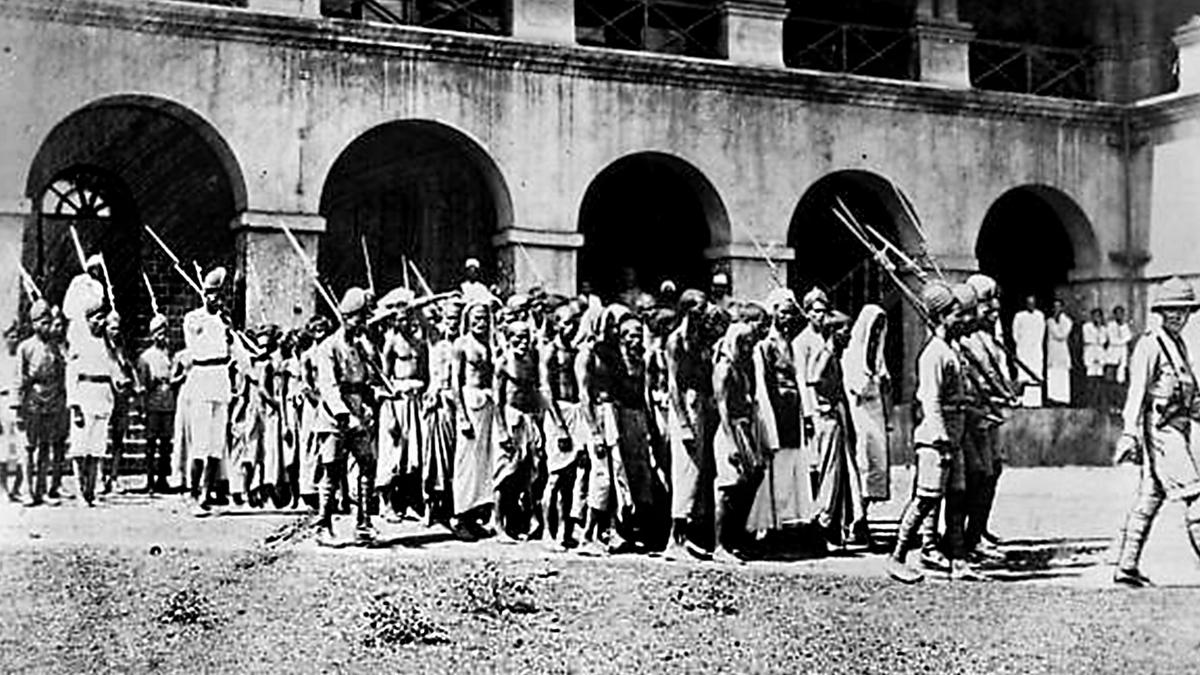
    Moplah prisoners go on trial in Calicut | Photo Credit: Getty Images

    Growing up in Delhi, one had only a limited idea about the resistance movement in the Malabar region. The popular history books tended to treat it at best as a little outpost of the freedom movement. Noted historian Bipan Chandra in India’s Struggle for Independence (Penguin) dubbed it as a peasant movement.

    “In August 1921, peasant discontent erupted in the Malabar district of Kerala. Here, Mappila tenants rebelled. Their grievances related to lack of any security of tenure, renewal fees, high rents…the impetus for resistance had first come from the Malabar District Congress Conference at Manjeri in April 1920,” Chandra writes. Sumit Sarkar too, confined himself to calling it an “anti-landlord revolt” in his book, Modern India (1885-1947), published by Pearson. There have been noises about the association with the Khilafat movement in academic circles, though. Just as there are historians who see it merely from a communal prism. A holistic picture had failed to emerge.

    Enlightening exploration

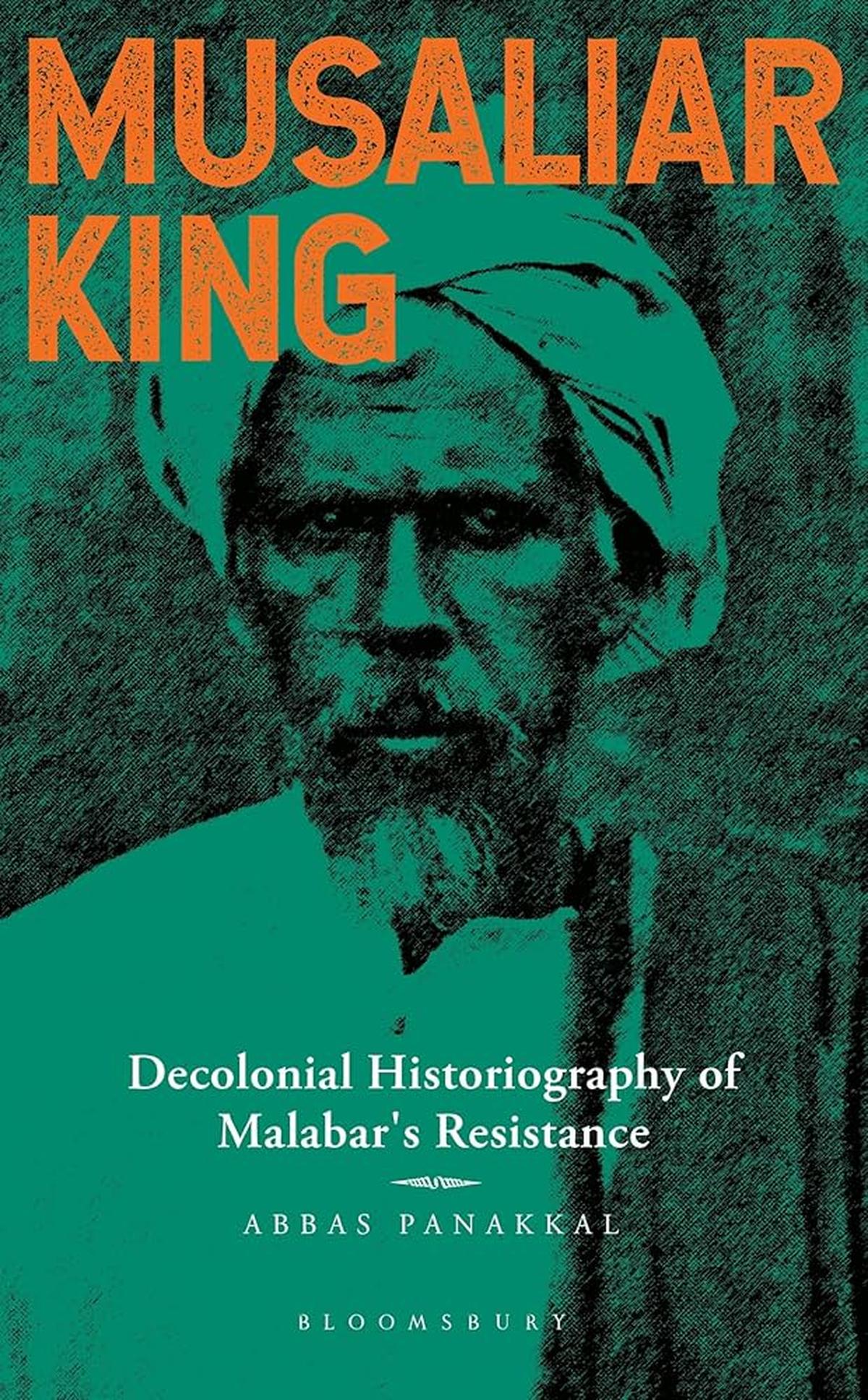
    Some belated but well-deserved attention on the resistance movement has come courtesy Abbas Panakkal’s Musaliar King: Decolonial Historiography of Malabar’s Resistance (Bloomsbury). Starting off as an exploratory exercise on the 75th anniversary of the movement, Panakkal’s venture transforms into an enlightening journey.

    Early in the book, the author writes, “The socio-geographical landscape of our community underwent profound transformations in the wake of the cataclysmic events of 1921-22. This epoch witnessed a staggering loss of lives, the forced displacement of families… The old mosque of Tirurangadi emerged as a veritable repository of memories and narratives, a historical bastion of ideological resistance against the British colonial apparatus.” Fittingly, it was on the commemoration of the 75th anniversary of the 1921 resistance that Panakkal started his exploration, speaking to the family members of those directly involved.

    Among them was Muhammed Ali Musaliar, grandson of Ali Musaliar, a luminary of the 1921 struggle. The British referred to Ali Musaliar as a king; the locals regarded him as a community and spiritual leader, calling him Musaliar Uppapa. Indeed, if Musaliar was a ‘king’, Malabar was his ‘kingdom’.

    Incidentally, the term Malabar is derived from the vernacular Mala, signifying hill, and the affix originating from the Arabic word barr, which means the source of all goodness. The region had a long tradition of anti-colonial resistance dating back to the 16th century. “Muslims and Hindus collaboratively persevered in their resistance against colonial forces,” writes Panakkal.

    This strong anti-colonial stance had unforeseen consequences. The British, with not a little help from some Indian officials, sought to undermine the movement. Among them was C. Gopalan Nair, Malabar district deputy collector, who “unabashedly deployed his literary prowess in favour of the British cause”. Observes Panakkal: “The usage of terms such as Malabar Revolt and Moplah Rebellion to delineate these struggles is emblematic of this issue. Revolt itself is a term crafted by colonial administration, characterising violent actions against a recognised government or ruler.”

    ‘Peaceful coexistence’

    There were others, though, whose hearts beat for the locals, luminaries who either linked the resistance to the Khilafat movement or, in isolation, read it as an agrarian struggle. Among them were Saumyendranath Tagore, who regarded it as “an organic and spontaneous ‘uprising’ of the Malabar peasantry against British imperial rule” and E.M.S. Namboodiripad, who too “didn’t discount the role played by agrarian discontent”. There was a common thread: the oppression and exploitation meted out by colonial officials and landlords was no less severe upon the Hindu peasants as they were on their Muslim counterparts. Writes Panakkal, “The Malabar narrative heralded a rare phenomenon: the harmonious convergence of Hindus and Muslims. This coalition was underpinned by a shared objective — to oust the oppressor — and a collective aspiration for a peaceful coexistence in the region.”

    It is something with which even R.N. Hitchcock, police superintendent of Malabar, agreed. As written by N.P. Chekkutty in Mappila and Comrades: A Century of Communist-Muslim Relations (Other Books). “Hitchcock also reveals that Hindus were involved in the rebellion, at least in some parts of the affected areas. ‘The Hindus took an active part only in the extreme south-eastern area of the Valluvanad taluk and in small numbers for a concise time. They were then responsible for much property damage’.” In his persuasively argued book, with much of the focus on the post-resistance time in the late 1930s and 40s, Chekkutty also talks of the rebels not harming any substantial section of the local population before going on to document the failure of the Congress to retain local Muslim support after the resistance movement. It was a vacuum which both the Communist Party of India and the All India Muslim League attempted to fill.

    The Khilafat angle

    Interestingly, against this background of common cause transcending the confines of faith came the pan-Islamist Khilafat movement. Things became even more ironic as Malabar’s historical tapestry of anti-colonial resistance “had been woven with threads of unity binding Muslims and non-Muslims in a shared ‘jihad’ to safeguard the throne of the Hindu king, the Zamorin of Calicut,” as analysed by Panakkal. Khilafat, Non-Cooperation, Mappila, with seemingly disparate social elements, all fused to bring about a strong anti-colonial movement.

    Indeed, here both the communities enjoyed a rare camaraderie, and there was a happy collective involvement even in religiously significant events like the nercha and utsavam. During the latter, Muslim families returned with bags full of jaggery candies, much like Ali Musaliar used to do for Amina, his daughter. Sums up Panakkal: “The experience of Muslims and Islam in South India is different from the experience in North India, and this is not trivial.”

    source: http://www.thehindu.com / The Hindu / Home> Books> Bibliography / by Ziya Us Salam / September 18th, 2025

    Silk Letter Movement: Name of all 59 charged by the British for waging war against the Crown

    INDIA :

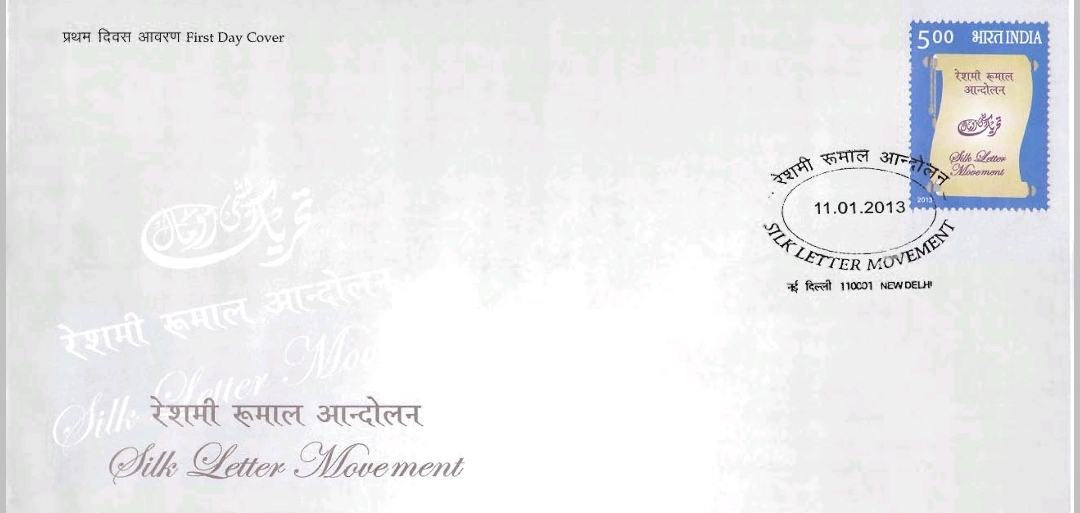
    During the First World War, Maulana Mahmood Hasan, and other Islamic scholars planned an armed attack on British India from the Afghanistan frontier. The ambitious plan did not succeed because of the changed geo-political scenario (defeat of Turkey and Germany) and the British getting hold of three silk letters, which gave away the whole planning. After this, 59 people were charged for waging the war against the crown. I am sharing the names of these 59 forgotten heroes of the Indian freedom struggle.

    During the First World War, Maulana Mahmood Hasan, and other Islamic scholars planned an armed attack on British India from the Afghanistan frontier.  The ambitious plan did not succeed because of the changed geo-political scenario (defeat of Turkey and Germany) and the British getting hold of three silk letters, which gave away the whole planning.

    After this, 59 people were charged for waging the war against the crown. I am sharing the names of these 59 forgotten heroes of the Indian freedom struggle.

    Silk Letter Movement : A freedom struggle woven in silk

    1. Abdul Aziz Molvi, son of Haya Gul from Itman Zai, Peshawar
    2.  Abdul Bari B.A., son of Ghulam Jilani from Lyallpur
    3. Abdul Hai Khwaja, son of Khwaja Abdur Rahman from Gurdaspur 
    4. Abdul Haq Shaikh alias Jeewan Das from Shahpur district. He was an official witness.
    5. Abdul Haq Molvi from Rifah-e-Aam Press Lahore. 
    6. Abdul Majeed Khan, son of a Risaldar Manager from the 15th Cavalry Battalion of the army.
    7.  Abdullah Molvi, son of Nihal Khan from Sukkur district. He was an official witness.
    8. Abdul Qadir B.A., son of Ahmad Deen from Lyallpur. 
    9. Abdur Rahim Sindhi Shaikh, son of Lala Bhagwan Das from Hyderabad, Sindh
    10. Abdur Rahim Molvi, son of Rahim Bakhsh, Masjid Cheenian Wali, Lahore.
    11. Abdur Rashid, a migrant student of Mardan and Lahore.
    12. Abdur Razzaq Ansari Hakim, son of Abdur Rahman of Delhi.
    13. Abdul Waahid, son of Siddiq Ahmad from Tanda, United Provinces.
    14. Abul Kalam Azad Molvi, nickname Mohiuddin, son of Maulana Khairuddin from Calcutta
    15. Abu Muhammad Ahmad Molvi alias Molvi Ahmad, son of Ghulam Hussain from Lahore and Chakwal
    16. Ahmad Ali Molvi, son of Habibullah, from Gujranwala district. He was an official witness.
    17. Ahmad Miyan Molvi, son of Abdullah Ansari from Ambetha, district Saharanpur (United Provinces). He was an official witness.
    18. Allah Nawaz Khan, son of Khan Bahadur Rab Nawaz Khan honorary magistrate of Multan, Punjab
    19. Anees Ahmad, B.A. Molvi, son of Idrees Ahmad, assistant secretary at Anglo-Oriental College Aligarh , United Provinces.
    20. Ozair Gul Molvi, son of Shaheed Gul of Durgayee, Northwest Frontier. 
    21. Barkatullah Molvi Muhammad of Bhopal and Japan
    22. Fatah Muhammad Sindhi from Rok, Sindh
    23. Fazlul Hasan Molvi alias Hasrat Mohani from Aligarh .
    24. Fazl Elahi Molvi, son of Meeran Bakhsh from Haripur, thana Wazirabad, district Gujranwala, Punjab.
    25. Fazl Mahmood Molvi, son of Molvi Noor Muhammad from Charsadda, Northwest Frontier.
    26. Fazl Rabbi Molvi from Peshawar.
    27. Fazl Wahid Molvi, son of Faiz Ahmad, alias Haji Turangzai, from Northwest Frontier.
    28. Habibullah Ghazi, the son of Ruhullah from Kakori, district Lucknow, United Province.
    29. Hadi Hasan Syed, from Khan Jahanpur, district Muzaffar Nagar, United Province.
    30. Hamdullah Molvi, son of Haji Sirajuddin from Panipat. 
    31. Hussain Ahmad Madani Molvi, son of Molvi Habibullah from Faizabad and Medina .
    32. Ibrahim Sindhi, M.A. Shaikh, son of Abdullah from Karachi.
    33. Kala Singh, a migrant from Ludhiana (Punjab) 
    34. Khan Muhammad Khan Haji from Peshawar. (died)
    35. Khushi Muhammad, son of Jan Muhammad from Talauli, district Jalandhar, Punjab.
    36. Mahendra Pratap Kunwar, son of late Raja Ghanshiam Singh from Mursan, United Province.
    37. Mahmood Hasan Maulana, former head-teacher at Deoband Madrasa, United Province.
    38. Matloobur Rahman Molvi of Deoband, an employee of the Agricultural Department, UP Govt.
    39. Mohiuddin alias Barkat Ali Molvi from Kasur. 
    40. Mohiuddin Khan Molvi from Moradabad. (Qazi of Bhopal)
    41. Muhammad Abdullah B.A., son of Shaikh Abdul Qadir, Secretary Mianwali District Board.
    42. Muhammad Ali B.A. son of Abdul Qadir from Kasur.
    43. Muhammad Ali Sindhi, the son of Habibullah from Gujranwala.
    44. Muhammad Aslam Attar from Peshawar.
    45. Muhammad Hasan B.A. from Lahore whose father was an employee in the Paisa newspaper.
    46. Muhammad Hashim Molvi Syed from Kora, Jahanabad, Fatahpur. 
    47. Muhammad Masood Molvi, son of Mazhar Hussain from Deoband, United Province. (Official witness)
    48. Muhammad Miyan Molvi, son of Molvi Abdullah Ansari from Ambetha, district Saharanpur, United Province.
    49. Muhammad Mubeen Molvi, son of Muhammad Momin from Deoband. (Official witness)
    50. Muhammad Murtuza Molvi Syed, son of Bunyad Ali from Bijnor, United Province. (Official witness)
    51. Noorul Hasan Syed from Ratheri, district Muzaffar Nagar U.P.
    52. Obaidullah Molvi alias Buta Singh from Sialkot, Punjab.
    53. Sadruddin alias Dr. Abdul Karim Barlasi, son of Amir Ali of Banaras. 
    54. Saifur Rahman Molvi, son of Ghulam Khan from Peshawar district, Northwest Frontier.
    55. Shah Bakhsh Haji, son of Imam Bakhsh Ansari from Hyderabad, Sindh. 
    56. Shah Nawaz Khan, son of Khan Bahadur Rab Nawaz Khan, honorary magistrate, Multan, Punjab.
    57. Shujaullah, son of Habibullah from Lahore.
    58. Wali Muhammad Molvi from Futuheewala, district Lahore.
    59. Zahoor Muhammad Molvi from Roorkee, son of Inayatullah of Saharanpur.

    source: http://www.heritagetimes.in / Heritage Times / Home / by Mahino Fatima / August 04th, 2024

    Maulvi Liaquat Ali Qadri (1817–1892): A Stalwart of India’s Freedom Struggle

    Mehndauri Village (Chail Pargana, Allahabad District), UTTAR PRADESH :

    Maulvi Liaquat Ali Qadri, a religious scholar, led the 1857 Allahabad rebellion, uniting communities against British oppression. Declaring jihad, he fought for India’s freedom, faced exile, and died in Kala Pani in 1892, leaving a lasting legacy.

    Main Points:

    1.    Maulvi Liaquat Ali Qadri (1817–1892), born in Allahabad, was a revered religious scholar and freedom fighter.

    2.    He led the 1857 rebellion in Allahabad, uniting Hindus and Muslims against British rule.

    3.    Declared jihad, organized public gatherings, and hoisted Bahadur Shah Zafar’s flag.

    4.    Fought British oppression, faced exile, and continued guerrilla warfare.

    5.    Sentenced to life in Kala Pani; died in 1892.

    ———-

    Maulvi Liaquat Ali Qadri was born on October 15, 1817, in the village of Mehndauri, Chail Pargana, Allahabad district, to Syed Meer Ali and Aamna Bibi. He was a revered religious figure of his time, embodying the spirit of both spiritual and national liberation. During that era, Islamic scholars viewed the country’s independence and religious freedom as inseparable causes. This conviction led a significant number of religious scholars to participate in the Indian Rebellion of 1857, many of whom attained martyrdom in their fight for freedom.

    Maulvi Liaquat Ali was a simple man deeply connected to the struggles of the common people in his region. He was acutely aware of the hardships faced by the masses under British colonial rule. Alongside his profound religious knowledge, he harbored an intense passion for liberating his country from the shackles of foreign oppression. Leading a life of piety and integrity, he consistently advised others to uphold honesty, empathy, and mutual support in times of distress. He considered it the duty of every Indian to strive for the nation’s independence.

    The Rebellion in Allahabad

    Following widespread looting and arson, Allahabad fell under the control of the rebel Indian forces. Maulvi Liaquat Ali, accompanied by a large number of his followers, threw himself into the struggle against British rule. Seizing the opportunity, he declared jihad against the British, galvanizing thousands to join the fight. Under his leadership, the people of Allahabad (now Prayagraj) united to drive the British out of the city. Maulvi Liaquat Ali delivered a powerful message of unity to both Hindus and Muslims from a public platform in Allahabad. In his sermon, he emphasized, “We are all one. Together, we must confront the foreigners.” With this spirit of unity, he proclaimed the establishment of an independent government in the region and hoisted the flag of Bahadur Shah Zafar, the last Mughal emperor.

    The British were not only plundering India’s wealth but also subjecting its people to relentless oppression. Beyond economic exploitation, Christian missionaries, backed by colonial authorities, were attacking India’s religious traditions and sacred texts. They propagated Christianity while attempting to demean Hindu and Muslim scriptures.

    Unable to tolerate these affronts, Maulvi Liaquat Ali organized a massive public gathering on June 7, 1857, at Khusro Bagh in Allahabad. The event drew a large number of patriotic Hindus and Muslims. In a fiery speech, he condemned the British for their atrocities, including looting, arson, and desecration of holy texts. Declaring that such oppressors could not be tolerated, he called for jihad against the “sinners.” His impassioned address stirred the hearts of the audience, who were already exasperated by the British’s sacrilegious actions.

    Under his leadership, a week-long uprising against the British began on June 9, 1857. Rebels set fire to British bungalows, inflicted casualties, and damaged government property. The widespread unrest created panic among the colonial authorities. However, the British retaliated with heavy shelling and arson, driven by a desire for vengeance. Entire settlements were razed, forcing residents to flee their homes. Maulvi Liaquat Ali, too, was compelled to leave Allahabad and sought refuge in Kanpur.

    A Champion of Communal Harmony

    Maulvi Liaquat Ali was a firm advocate of Hindu-Muslim unity and cooperation, despite his opposition to Christian missionaries, whose actions, fuelled by colonial arrogance, insulted Indian religions and scriptures. He was among the few leaders who demonstrated through their revolutionary actions that they were fully aware of the socio-political realities of their time. The British, he believed, were not only exploiting India’s resources but also undermining its social fabric. He tirelessly worked to counter their divisive tactics, raising his voice for the dignity of women, religious communities, and the upper classes, earning widespread admiration for his efforts.

    Despite his religious persona, Maulvi Liaquat Ali was always ready to take risks for the sake of his country and faith. He never feared for his life or shied away from potential losses. His revolutionary activities were driven by a singular goal: to free India from British rule and rid the sacred land of their oppressive presence. When a Muslim shrine, Bakhtiar Bakhtiyar, and the Telegraph Band were seized by the British, Muslim youths fought to protect them, resulting in losses on both sides. Clashes between Indian rebels and British forces continued across various regions, making it increasingly difficult for the British to maintain their grip on India.

    A Lifelong Struggle for Freedom

    Maulvi Liaquat Ali swore to dedicate his life to the cause of India’s independence. After leaving Allahabad, he moved to Muzaffarnagar, a stronghold of the freedom struggle, where he joined other revolutionaries. His authority was such that no orders were issued without his approval. Whenever British forces attempted to suppress the rebellion, Maulvi Liaquat Ali, alongside another freedom fighter, Azimullah, embarked on a perilous journey on foot toward Gujarat. Despite facing numerous hardships along the way, they reached their destination and launched guerrilla warfare against the British. For years, their tactics kept the colonial administration on edge.

    According to Rakesh Verma, technical assistant at the Regional Archives, “Administrative records written in Urdu titled Naksha Bagiyan Kotwali Allahabad, listing police constables who forcibly took their salaries for May and June 1857 and participated in the revolt, including Hanuman Prasad, Imdad Ali, Ashraf Ali, etc. were hung by Major Henry Court on July 14, 1857,” (From the HT)

    The British resorted to various conspiracies to capture him, but Maulvi Liaquat Ali’s stature among freedom fighters only grew. He continued to plan large- and small-scale operations against the British, opening new fronts in the fight for independence.

    Imprisonment and Legacy

    Ultimately, the Allahabad court sentenced Maulvi Liaquat Ali to life imprisonment in the Andaman Islands, infamously known as “Kala Pani.” Enduring the harsh conditions of imprisonment, this brave son of India passed away on May 17, 1892, bidding farewell to his beloved homeland and the world.

    Maulvi Liaquat Ali Qadri’s sacrifices for India’s freedom struggle remain an enduring legacy. His contributions must be remembered and celebrated as an inspiration for future generations, reflecting the indomitable spirit of a man who fought tirelessly for his country’s liberation.

    References:

    https://www.hindustantimes.com/cities/others/maulvi-liaquat-ali-to-mass-killings-hanging-of-cops-1857-revolt-in-allahabad-101749063190844.html

    Bhatnagar, A. P. (2009). Maulvi Liaqat Ali: Icon of 1857 uprising at Allahabad. Shubhi Publications.

    https://timesofindia.indiatimes.com/india/unsung-heroes-of-the-freedom-struggle-maulvi-liaqat-ali/articleshow/93492245.cms

    Khan, K. M. (2019). Jang-e Azadi aur Musalman. Pharos Media.

    https://www.qaumiawaz.com/social/maulvi-liaquat-ali-the-pioneer-of-the-war-of-independence-special-offer-on-the-occasion-of-the-anniversary-shahid-siddiqui-ali

    source: http://www.newageislam.com / New Age Islam / Home> Islamic Personalities / by Sahil Rizvi / August 05th, 2025

    Press Club of India remembers Maulvi Mohammed Baqar, the doyen of India’s investigative journalism

    DELHI :

    Press Club of India remembers Maulvi Mohammed Baqar on his 167th birthday on September 15, 2024.

    New Delhi :

    The Press Club of India (PCI) that has remained the last bastion to hold the flag of media’s independence high in the country, organised a programme on Sunday to remember the contributions of Maulvi Mohammed Baqar who used the power of his pen to challenge the Britishers who had brought a law to gag the press in India in the middle of 18th century.

    Organized on the 167th martyrdom anniversary of Maulvi Baqar, the programme was attended by a host of writers, journalists, historians, academicians and intellectuals.

    Shedding light on the contributions of Maulvi Baqar considered to be the founder of “spot” and investigative journalism in India, noted historian Dr. Swapna Liddle, author of The Broken Script, recalled Maulvi Baqar’s bold reporting of the events in Delhi’s 1857 revolt popularly known as India’s First War of Independence. It was when the press did not have facilities as available today, but Maulvi Baqar used to collect news stories from the field and print them in his newspaper published in the Urdu language.

    The Britishers felt disturbed by the investigative reporting of Maulvi Baqar that became the reason for his martyrdom. British Army tied Maulvi Baqar to the mouth of a large gun and blew him into pieces.

    Liddle emphasized how Moulvi Baqar became the voice of resistance against British rule, making him a significant figure in both the 1857Revolt and in the annals of Indian journalism.

    According to Dr. Liddle, Moulvi Baqar’s work offers invaluable lessons for journalists today. His views on British governance, racial discrimination, job inequalities, and the exploitation of India’s wealth laid a foundation that remains relevant. Baqar’s sharp critique of British policies, combined with his unwavering call for unity among the people of Delhi, positioned him as a crucial figure in the anti-colonial struggle.

    Presiding over the event, Gautam Lahiri, PCI President, hailed Moulvi Baqar as a pioneer of Indian journalism. Lahiri reflected on the state of modern journalism, pointing out that Baqar’s dedication and principles serve as a stark contrast to the current state of media, as reflected in India’s declining position on the World Media Freedom Index.

    “It’s unfortunate that instead of rising to the level of journalism Baqar practiced, we seem to have regressed,” Lahiri noted, calling for introspection within the media industry.

    Lahiri also stressed the importance of protecting institutions like the PCI, which he described as a cornerstone of Indian politics and modern history. “This land was given to us by our first prime minister, and it even served as the residence of former Prime Minister Indira Gandhi for a time. We must protect both the building and the institution, while upholding the constitutional values that it stands for.”

    Senior journalist AU Asif, former member of PCI management committee, praised Baqar for his trailblazing work in investigative and field reporting. He underscored how Baqar’s journalistic integrity set a lasting example for future generations.

    A panel discussion followed, focusing on Baqar’s legacy and the challenges faced by Urdu journalism today. Panelists included independent multimedia journalist Suhail Akhter, News18 Urdu anchor and author Munazah Shah, and Tasleem Raja, reporter for Siyasi Taqdeer and Qauwmi Aawaz. They discussed how Baqir’s newspaper, Delhi Urdu Akhbar, became a vital voice despite having a modest circulation of just 80 copies. The panel emphasized that the publication’s influence stemmed from its powerful content, which resonated with readers during a time of great political upheaval.

    The discussion also touched on the difficulties Urdu journalism faces today, including issues of subscription, funding, and content creation. The panel drew parallels between the courage Moulvi Baqar exhibited in standing up to the British and the challenges modern journalists face in dissenting against the ruling establishment. The event was moderated by Mahtab Alam, journalist and PCI Joint Secretary.

    source: http://www.indiatomorrow.net / India Tomorrow / Home> News / by Mohammed Naushad Khan / September 16th, 2024