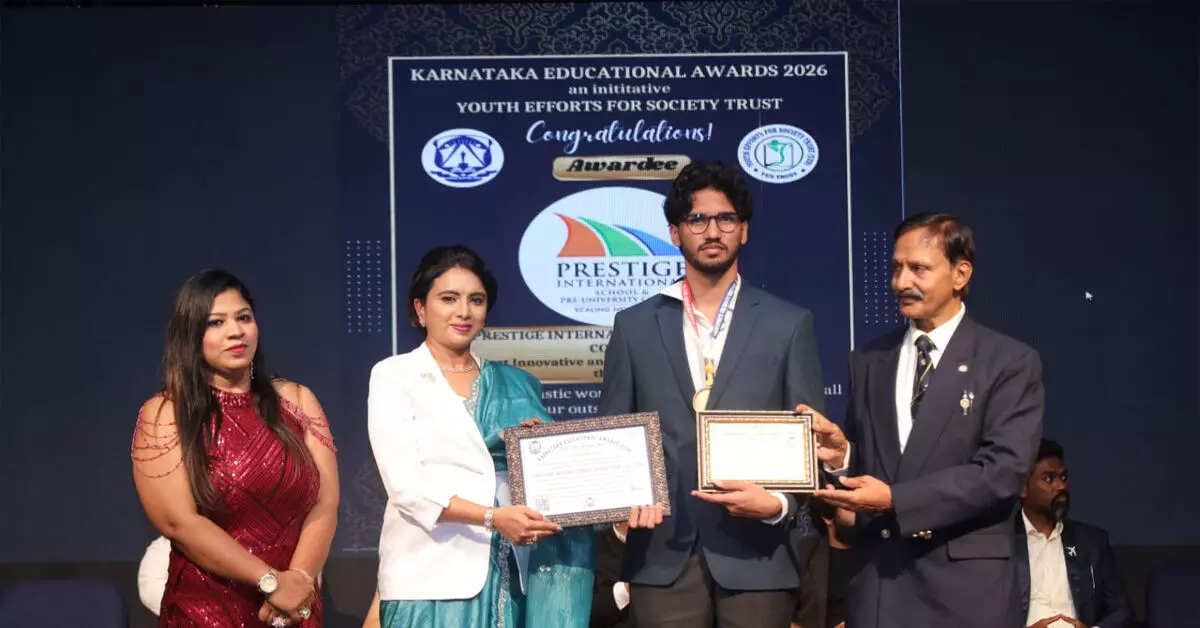
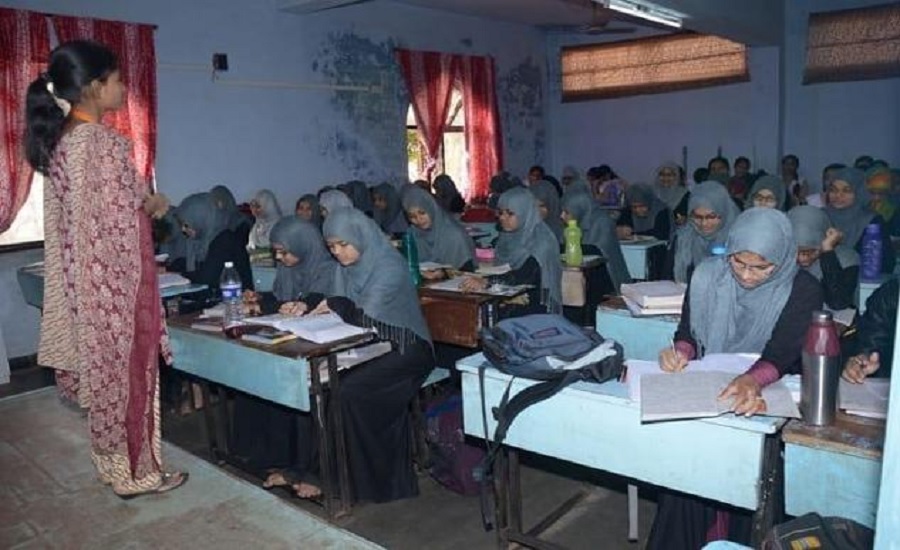
Prestige International School & Pre-University College, Mangaluru, has been honoured with the Best Innovative and Creative Institution of the Year award at the Karnataka Educational Awards 2026.
The award recognises the institution’s efforts in promoting innovation, creativity and excellence in education.
The institution described the recognition as a proud milestone in its journey of providing quality education and shaping the future of students.
source: http://www.english.varthabharati.in / Vartha Bharati / Home> Karavali / by Vartha Bharati / August 25th, 2026
Students of Sanskaar International School have, in all, secured three positions at the State-level debate and public speaking competition.
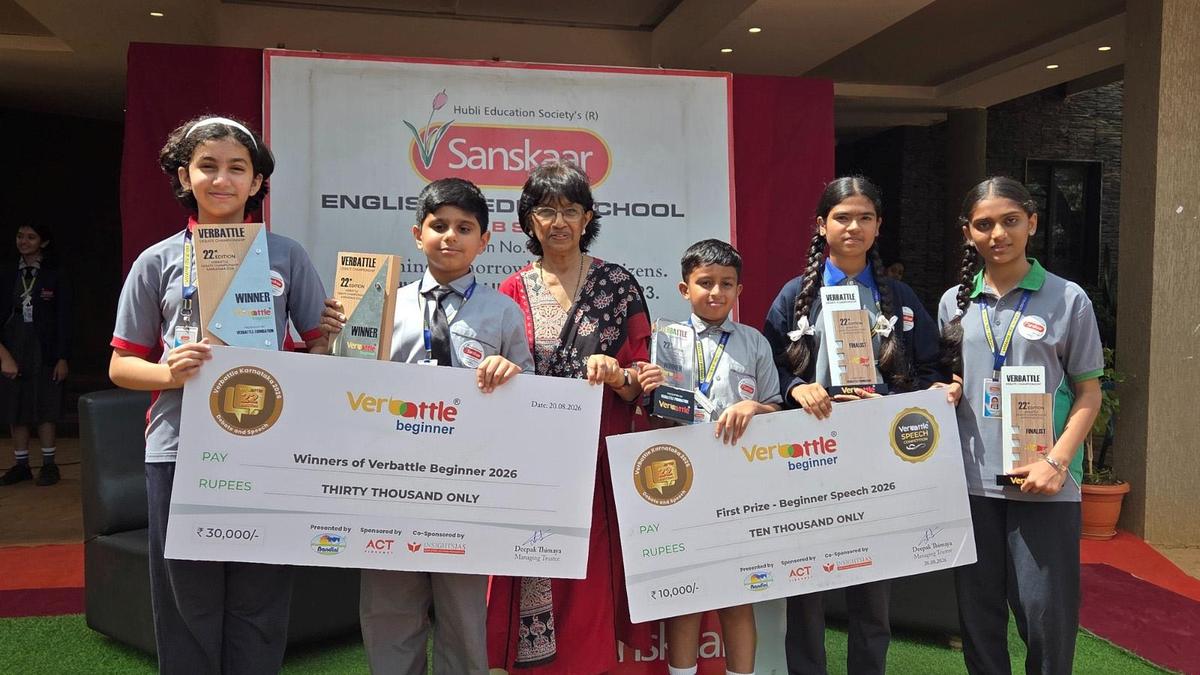
Students of Sanskaar International School, Hubballi, who have secured three titles at Verbattle Karnataka 2026, a State-level debate and public speaking competition for school students. | Photo Credit: SPECIAL ARRANGEMENT
Students of Sanskaar International School, Hubballi, have secured three titles at Verbattle Karnataka 2026, a State-level debate and public speaking competition for school students.
In an event which saw participation from across Karnataka, including Bengaluru, Mysuru, Mangaluru, two teams from Sanskaar secured the first position, while another team finished as second runner-up, a release from the school said.
The winners received trophies and cash prizes.
In the Beginner Debate category for Classes 3 to 6, Class 6 students Anay Abhijit Joshi and Rukhaiya Khuram Khatib won the first position.
In the Beginner Speech category, Class 4 student Nivaan Nagaraj Naik secured the first position and in the Kannada Junior Debate category for Classes 7 to 10, Class 9 students Sakshi Shashikant Grampurohit and Vinuta Vijanagouda Patil secured the second runner-up position.
In all, 33 students from Sanskaar were selected at the preliminary rounds in Hubballi and those who qualified progressed to the State-level competition in Bengaluru where they competed with students from across the State.
The winning students were welcomed by the school band and felicitated by founder-chairman of the school Mahendra Singhi and faculty members.
All the students who participated in the competition and those who advanced to the Bengaluru rounds were honoured.
“These achievements demonstrate the confidence of our students to express their ideas, defend their views with reason and, equally importantly, respect a different point of view. We are proud that our students have represented Hubballi and North Karnataka on such a competitive State-level platform,” Mr. Singhi said.
source: http://www.thehindu.com / The Hindu / Home> News> India> Karnataka / by The Hindu Bureau / August 25th, 2026
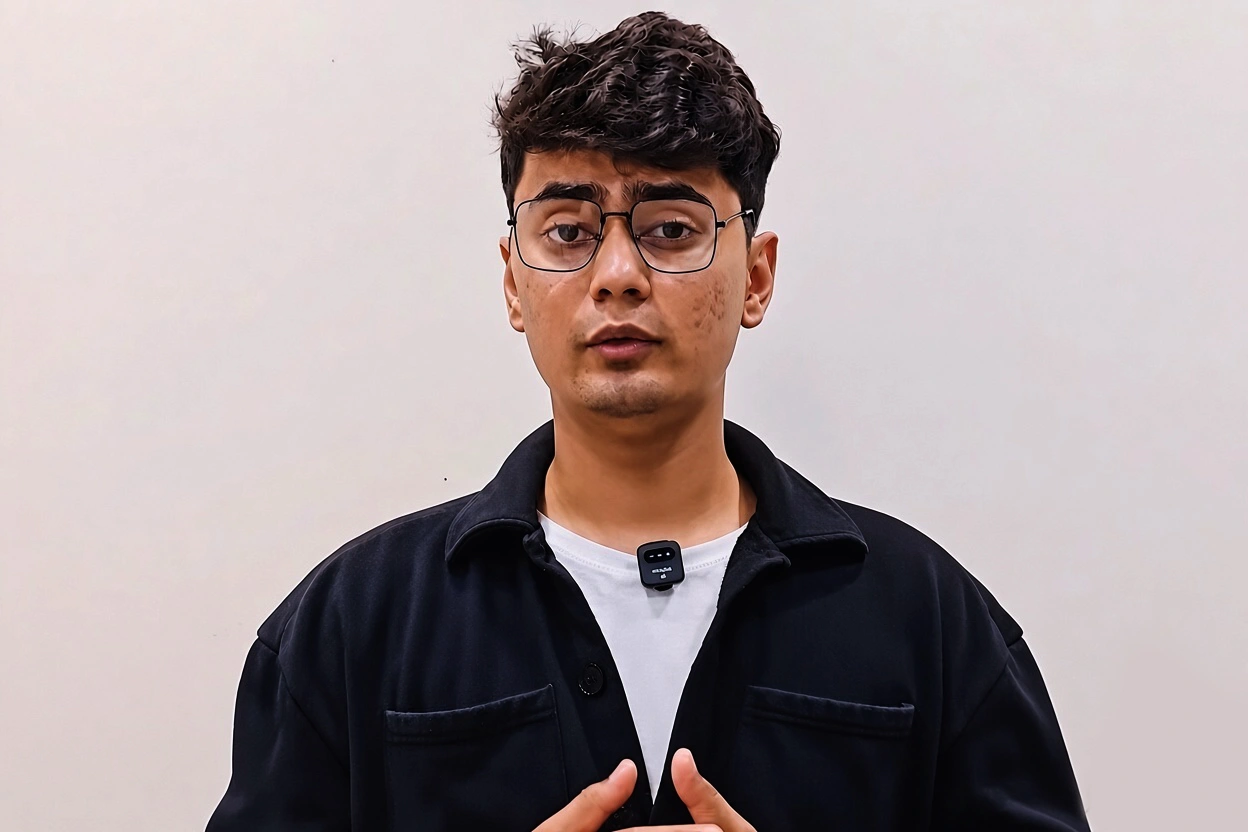
In an exclusive interview, Political Science and International Relations Graduate Affan Ansari discusses his journey from studying Science in India to pursuing Higher Education in Turkey and Europe, the realities of studying abroad, scholarships and financial planning, community engagement, and his ambition to build a career in peacebuilding, conflict resolution and international security.
Q.1. Affan, please introduce yourself. Tell us about your educational background and your journey so far.
Affan Ansari: My name is Affan Ansari. I come from a middle-class family in Mumbai and living my dream to study abroad. I am a graduate in Political Science & International Relations from Turkey, and Research fellow at the Social Sciences Lab MENA, which is situated in Estonia, Europe (SSL-MENA).
I completed my schooling at Anza High School, Byculla and then my Junior College education at Maharashtra College of Arts, Science and Commerce.
After Junior College, I took a different path. I moved to Turkey and completed my Bachelor’s degree in Political Science and International Relations from Istanbul Sabahattin Zaim University. During my undergraduate studies, I also got the opportunity to spend a semester at the University of Wrocław in Poland through the Erasmus exchange programme.
My journey was not simply about obtaining a foreign degree. For me, it was about stepping outside my city and comfort zone, meeting people from different cultures and understanding the world more closely.
Today, I have received Master’s offers from two highly ranked universities in the UK, a leading university in Poland, public universities in Germany, as well as two universities in Turkey.
Q.2. Students who take Science in India generally move towards Engineering or Medicine. Why did you choose Political Science and International Relations?
Affan: The irony is that I studied Science, but it was a virus that made me realise my real interest was in the world beyond Science.
For me, the journey from Science to Social Science was a struggle between social expectations and my own interests and ambitions. In India, when a student performs well in Science, there is naturally a push towards Engineering or Medicine. I too chose Science largely because of family and social expectations.
But the two years of the COVID lockdown became a turning point. I began to understand what globalisation really meant. A virus that emerged in China could affect almost every country in the world. I became fascinated by the role of the WHO, how different governments responded to the crisis, and how decisions taken in one part of the world could have consequences far beyond its borders. It changed the way I looked at the world, from a local perspective to a global one.
That was when I realised that my real interests lay in Political Science, International Relations, geopolitics, and understanding different societies and political systems around the world. So, moving from Science to Social Science was not really a change of direction. It was a realisation of the direction I actually wanted to take.
Q.3. Students generally target the USA, UK, Canada or Australia. Why did you choose Turkey?
Affan: Turkey was primarily a combination of affordability and opportunity for me.
My parents had wanted me to study in Turkey after Class 9 because of the scholarship opportunities available there. At that time, I was not ready to move abroad, so I completed my Junior College education in India.
Later, we came to know about the Turkish Government’s Türkiye Scholarships programme. I applied, but because of the intense competition, I was not selected for the government scholarship.
However, I did not give up. I independently applied to Turkish universities and received a 50 per cent scholarship from Istanbul Sabahattin Zaim University. For my family, this made the cost of my education financially manageable.
The university’s Erasmus students exchange and scholarship programme was another important factor. Through Erasmus, I got the opportunity to spend a semester in Europe and study in Poland.
My message to students is simple: do not choose a country simply because it is popular. Look at the university, tuition fees, living costs, scholarships, visa rules, course quality, post-study opportunities and, most importantly, your own career goals and family budget.
Q.4. Many parents believe that studying abroad is very expensive and only highly intelligent or wealthy students can afford it. What would you say?
Affan: Studying abroad is not only for the rich or exceptionally brilliant; with the right information, early planning and the right choice of country and university, it can be achievable for many students.
I think one of the biggest barriers is not always money, but a lack of information. Many families assume that studying abroad means going to the UK, USA, Canada or Australia, where costs can be very high. But there are also comparatively affordable options across Europe, including public universities in Germany and opportunities in countries such as Italy, France, Poland and Czech Republic.
Of course, costs, admission rules and scholarships vary by university and programme, so students should always verify information through official sources.
My most important advice is: do not wait until Class 11 or 12 to start thinking about studying abroad. Planning can begin much earlier, even at school level. If a student starts planning three or four years in advance, there is enough time to prepare for language requirements, entrance tests, scholarships and finances.
Q.5. If a middle-class family wants to send its child abroad, how should it plan?
Affan: If you want to study abroad tomorrow, start building your profile today, because your CV begins in school, not after graduation.
I look at it in three stages.
First, school: Build strong English skills and, if possible, learn a foreign language. Participate in Olympiads, sports, cultural activities and competitions, and keep a record of your achievements and certificates.
Second, Junior College: Maintain a strong academic record and start understanding requirements such as IELTS, TOEFL, SAT or programme-specific entrance tests. Also get involved in volunteering and community work. Universities look beyond marks.
Third, graduation: If you are planning a Master’s abroad, identify your target programmes early and prepare for requirements such as IELTS, TOEFL, GRE, GMAT or other relevant assessments. If Germany is your target, check the exact requirements of each programme, including whether an additional assessment is required.
Most importantly, do not think of your profile as marks alone. Internships, volunteering, research, competitions, leadership and meaningful extracurricular activities can all make a difference.
So my advice is simple: start early, explore your interests and build a profile that tells universities who you are, not just what your marks are.
Q.6. Are very high marks necessary for studying abroad?
Affan: Your marks may decide which doors open first, but they do not decide how far you can go.
High marks certainly provide an advantage, especially for competitive scholarships, but marks are not everything. Every university has a different admission system. Some focus heavily on academic grades, while others also consider entrance tests, motivation letters, work experience, extracurricular activities and the overall profile of the student.
So, if a student has average marks, they should not assume that studying abroad is out of reach.
Average marks do not mean average ambition.
The key is to understand your strengths, research universities carefully and apply to programmes where your overall profile gives you a realistic chance of admission.
Q.7. Which fields currently offer better scholarship and career opportunities abroad?
Affan: Don’t choose a career because the world says it has jobs; choose where your interest, ability and future opportunity meet.
The fields offering scholarships and career opportunities change with countries and economies, so I would not advise students to blindly follow one particular trend.
Technology-related fields such as AI, cybersecurity, data science and software, along with engineering and renewable energy, continue to offer opportunities. Healthcare is another major sector, not only for doctors but also for nurses, physiotherapists, laboratory professionals and other specialists.
However, students also need to consider licensing, qualification recognition and language requirements in their chosen country.
So instead of asking only, “Which field has the most jobs?”, students should ask three questions: What am I interested in? What am I good at? And what opportunities will this field offer in the future?
When interest, ability and opportunity come together, you are much more likely to build a career that lasts.
Q.8. What would you say about scholarships and education loans?
Affan: The biggest scholarship advantage is not just good marks, it is starting early and knowing where to look.
There are merit-based, need-based and government-funded scholarships. Some of the most generous opportunities I know include TürkiyeBurslari Scholarships, DAAD in Germany and Erasmus Mundus in Europe, along with Eiffel Scholarships in France, Stipendium Hungaricum in Hungary and Swedish Institute scholarships.
In Telangana, the Chief Minister’s Overseas Scholarship Scheme for Minorities also provides substantial financial assistance to eligible students.
My advice is to start researching scholarships early and look beyond marks. Academic performance, extracurricular activities, volunteering, leadership and your overall profile can all matter.
A full scholarship is ideal, but even a partial scholarship can make a big difference. In my case, a 50% university scholarship helped make my education in Turkey financially possible.
And if you consider an education loan, calculate the total cost and repayment burden carefully. Studying abroad should not put a family under unsustainable financial pressure.
Q.9. Can students work part-time abroad and manage their expenses?
Affan: Yes, you can work part-time abroad, but you should never go abroad depending on a part-time job to fund your education.
Many countries allow international students to work part-time, but the rules vary by country, visa and programme and can change over time. So students should always check the official rules applicable to their visa.
From my own experience, I would strongly recommend having a realistic financial plan for tuition and initial living expenses before going abroad. Part-time work should be additional support, not the primary source of funding.
At the same time, working part-time can provide financial independence, discipline and valuable international work experience.
So, work part-time to support your education, not to make your education possible.
Q.10. What has been the biggest challenge for you as a student abroad?
Affan: The hardest part of studying abroad was not being away from home, it was learning how to stand on my own when home was thousands of kilometres away.
Living abroad meant managing academics, finances, a new culture and everyday decisions on my own. There were moments of loneliness and stress, but the most difficult moment was the earthquake in Istanbul. I was afraid, I felt very alone, and suddenly lectures and exams moved online. Everything felt completely upside down.
But that experience also changed me. I gathered the courage to step outside myself and started volunteering with NGOs. It taught me that when life becomes difficult, you can either withdraw or find a way to contribute.
Later, studying in Turkey and spending a semester in Poland exposed me to students from different countries and completely different perspectives. I travelled across 10 EU countries, met young people from many cultures and learned to navigate the world independently.
Looking back, the biggest lesson was that studying abroad did not just educate me academically. It taught me how to be independent, resilient and comfortable even when I was far away from home.
Q.11. Affan, what is your dream? What do you want to do in the future?
Affan: I don’t just want a job at the United Nations. I want to be part of the global conversations that can prevent wars and build peace.
My dream is to become an International Civil Servant, specialising in Peacebuilding, Conflict Resolution and International Security, and eventually work with the United Nations.
We live in a world of wars, geopolitical tensions and changing alliances. At the same time, the Global South is demanding a stronger voice in global decision-making. As an Indian, I want to be part of that change.
There is a saying in politics and diplomacy: “If you are not at the table, you are on the menu.” I want to be at the table.
I want to use my education and career not simply for a prestigious position, but to contribute to peace, diplomacy and solutions for people affected by conflict and instability.
For me, an international career is not about having a title. It is about having a voice where decisions that shape our world are made.
Q.12. What is your final message to middle-class students and parents in Mumbai and India?
Affan: Foreign education does not begin at the airport. It begins with a dream, a plan and a decision your family can afford.
To parents, I would say: don’t push your children into a field simply because society considers it successful. Look at their ability, interests and future opportunities together.
And to students: don’t choose foreign education because of the glamorous life you see on Instagram. Going abroad is not a holiday. It is a responsibility.
If you genuinely want to study abroad, start early. Explore scholarships and affordable universities, prepare for language and entrance requirements, understand visa rules and, most importantly, make sure the decision is financially sustainable for your family.
An ordinary student from a middle-class family in Mumbai or anywhere in India can begin an extraordinary journey.
Dream big, but calculate carefully. Plan early, verify everything and never let your financial circumstances stop you from exploring your possibilities.
Because the first step towards foreign education is not the airport. It is planning.
Q.13. You are studying abroad yourself. What are you doing for your community in Mumbai?
Affan: For me, education is meaningful only when you can use what you learn to make someone else’s journey easier.
Since 2021, I have been associated with Kawish’s Community Education & Student Mentorship Programme and Madni High School. Whenever I return to Mumbai, I spend time mentoring students, helping them with English and academics, and guiding those who aspire to study abroad.
After completing my graduation, I also spent time in Mumbai working with my father and uncle during the Special Intensive Revision (SIR) of electoral rolls, helping with voter mapping and assisting people with their SIR forms. That experience gave me a very different kind of understanding of how democracy works at the grassroots level.
I have also volunteered with the IHH Humanitarian Foundation, including relief work following the 2023 earthquake in Turkey, and was involved in COVID-19 and leprosy relief activities in 2020.
I know how difficult it can be to find the right information and guidance. If I have gained knowledge through my own journey, I believe I have a responsibility to share it.
These experiences have taught me one simple lesson:
Education should not only change your own life. It should give you the ability and responsibility to contribute to your community and society.
[Falak Ather Faizee is an Intern at ummid.com.]
source: http://www.ummid.com / Ummid.com / Home> Education & Career / by Falak Ather Faizee / August 22nd, 2026
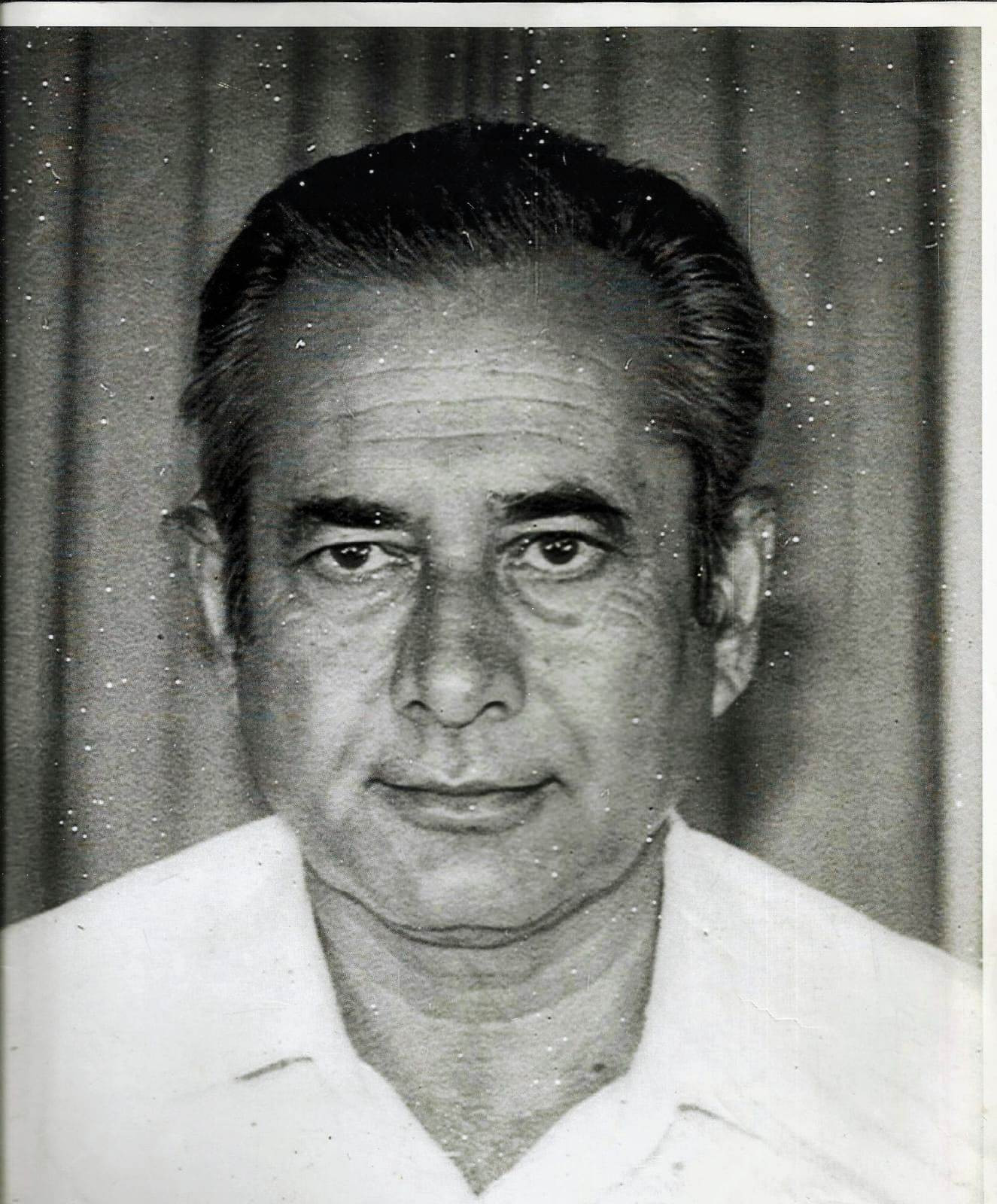
The Faculty of Medicine, Aligarh Muslim University (AMU), condoled the demise of Dr. Syed Wajid Ali Naqvi, former faculty member of the Department of Biochemistry, Jawaharlal Nehru Medical College (JNMC), who passed away Sunday last.
Expressing a deep sense of grief at a condolence meeting of the staff and students of the Faculty of Medicine, the Dean, Prof. Mohammad Khalid conveyed heartfelt sympathies to the bereaved family. Faculty members and students also prayed for eternal peace for the departed soul and strength and patience to the bereaved family to bear the irreparable loss.
A proud Aligarian, Dr. Naqvi had a close association with AMU spanning several decades. He joined the University as an undergraduate student in 1954 and obtained his B.Sc. in Biochemistry and Ph.D. in Biochemistry from AMU. He joined JNMC as a faculty member in 1965 and served until his retirement in 1996.
During his long association with the University, Dr. Naqvi held several academic and administrative responsibilities, including membership of the Academic Council, and served as Warden of Sir Syed Hall and Habib Hall, Acting Provost, Member of the Sports Council and President of the Gymnasium Club.
After his retirement from JNMC, he continued his academic association with medical education, serving on the faculty of ERA’s Lucknow Medical College & Hospital and Al Fateh Medical University, Tripoli, Libya.
The faculty members recalled Dr. Naqvi as a link between generations of Aligarians, having himself been an Aligarian and later becoming the father of four Aligarians. His long association with the University, both as a student and teacher, and his contributions to academic and residential life will be remembered with respect and affection.
source: http://www.amu.ac.in / Aligarh Muslim University / Home / by Public Relations Office / August 11th, 2026
A survey covering more than 30 colleges across seven districts linked with Chhatrapati Shahu Ji Maharaj University shows a significant rise in female Muslim students
New Delhi :
The number of Muslim girls pursuing higher education in Kanpur and nearby districts in Uttar Pradesh has increased significantly over the past five years, according to a survey conducted by a senior academic. The study shows that the share of Muslim female students in colleges has risen from around five per cent in 2021 to more than 21 per cent during the current admission process.
The survey was prepared by Prof B D Pandey, a senior teacher at PPN College and president of the Kanpur University Teachers’ Association (KUTA). The study was based on admission data collected from more than 30 colleges spread across seven districts of Uttar Pradesh.
The colleges included in the survey are located in Kanpur Nagar, Kanpur Dehat, Unnao, Kannauj, Farrukhabad, Etawah and Auraiya. All these colleges are affiliated with Chhatrapati Shahu Ji Maharaj University (CSJMU), Kanpur.
Prof Pandey said the data was collected from admission coordinators appointed in different colleges during the ongoing admission process. The survey looked at students enrolling in undergraduate courses such as Bachelor of Arts (BA), Bachelor of Science (BSc), Bachelor of Commerce (BCom) and other professional programmes.
According to the findings, Muslim girls accounted for around five per cent of female students enrolled in colleges in 2021. This figure increased to nearly 12 per cent in 2023 and has now crossed 21 per cent during the latest admission cycle.
The rise indicates a growing interest among Muslim families in sending their daughters for higher education. The survey also highlights that many of these students come from economically weaker sections of society.
Prof Pandey said one of the notable findings was that a large number of Muslim girls entering higher education belong to families with limited financial resources. In many such families, sons are also present, but instead of continuing studies after school, they often move towards employment or skill-based work.
“Many Muslim girls who are entering graduation and postgraduate courses belong to families where their brothers have studied only up to high school or intermediate level and then started working according to their skills,” Prof Pandey said.
The data suggests a changing attitude among some Muslim families towards women’s education. While economic challenges continue to remain a concern, more families are now supporting their daughters’ efforts to continue their studies beyond school.
The increase has been visible across different courses, including traditional degree programmes and professional courses. Teachers associated with these colleges believe that awareness about education, career opportunities and financial independence may be among the reasons behind the rise.
The trend also reflects a wider change in the participation of women from minority communities in higher education. More young women are seeking college education to improve their career opportunities and become financially independent.
Prof Pandey said the increase in Muslim girls’ admissions is a positive development and shows that educational aspirations among families are changing.
The survey, however, does not represent all colleges across Uttar Pradesh or the entire Muslim community. It is based only on admission figures from selected colleges affiliated with CSJMU.
Education experts say that continued support through scholarships, better awareness programmes and improved access to colleges will be important to maintain this growth.
The increasing presence of Muslim girls in colleges in the Kanpur region shows a gradual shift in educational choices, with more young women from the community moving towards higher education despite economic and social challenges.
source: http://www.clarionindia.net / Clarion India / Home> Big Story> India>Indian Muslims / by Mohammad Alamullah / August 04th, 2026
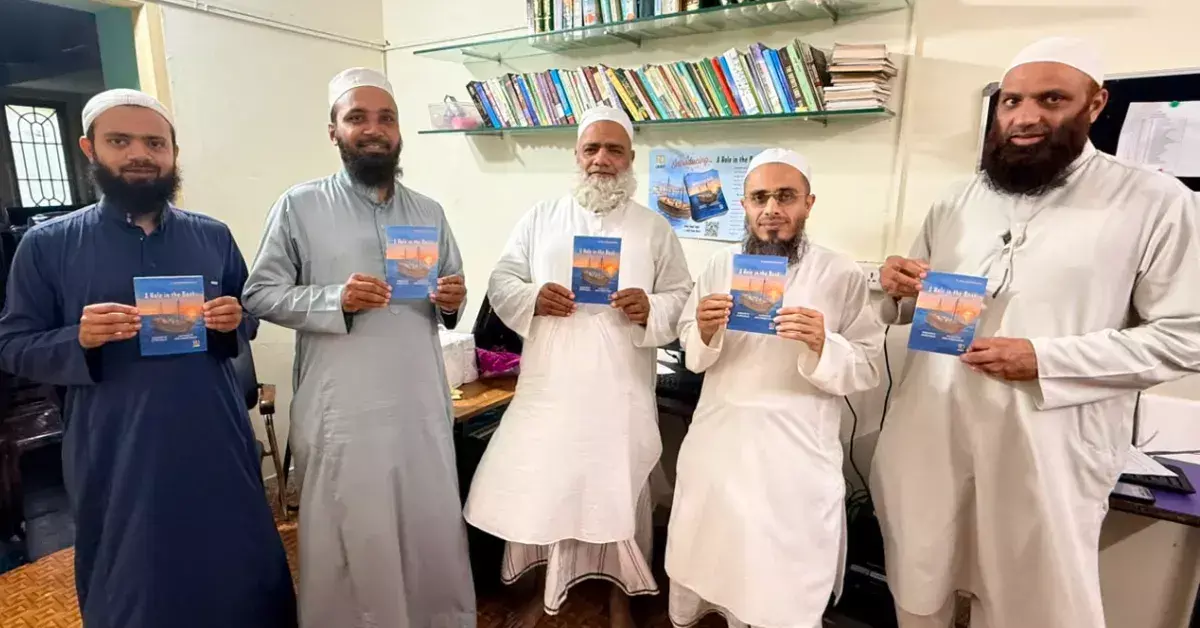
A book release programme was held at Iqra Arabic School for Girls, Melinamogeru, Mangaluru, on Saturday, August 8, marking the release of A Hole in the Boat, authored by Dr. Abdul Hameed Athar Nadwi and published by Iqra Academy of Research & Publication (IARP).
The programme was attended by Ulama, teachers, parents, students and well-wishers.
Addressing the gathering, the keynote speaker highlighted the importance of books in shaping individuals and society, observing that “a book is not only paper, not only ink, not only colour or design; it nourishes the soul.” The speaker emphasized that beneficial books play a vital role in nurturing minds, strengthening character and leaving a lasting impact on readers.
Speaking on the occasion, translator Zainab reflected on her fourteen-year educational journey at Iqra Arabic School, describing it as a period of learning, character formation and spiritual growth. She expressed gratitude to Allah and acknowledged the significant role of her parents and teachers in cultivating her interest in reading and pursuit of knowledge.
Recalling her early years, Zainab said that her father encouraged her to develop the habit of reading and introduced her to literature on Islamic morals, history, Seerah and character building. She emphasized that knowledge becomes truly beneficial when acquired under the guidance of righteous teachers and Ulama.
She also highlighted the importance of translating authentic Islamic literature into languages including English, Kannada, Malayalam, Tamil and Hindi. She noted that language barriers often prevent readers from accessing valuable works and described translation as a means of carrying beneficial knowledge from one heart to another.
Encouraging the students, Zainab urged them to aspire to become translators, authors, researchers, publishers and ambassadors of Islamic knowledge. She also called upon young people to reduce unnecessary use of mobile phones and social media and to devote at least twenty minutes each day to beneficial reading.
The programme concluded with prayers for the success of A Hole in the Boat and for Iqra Academy of Research & Publication and Iqra Arabic School to continue their efforts towards promoting beneficial knowledge, strong character and Islamic values.
Iqra Principal Maulana Salim Nadwi, Vice Principal Maulana Dawood Nadwi, Head of the Arabic Department Maulana Abdur Rafi Nadwi, Mohammed Farhan Nadwi, and Abdul Hameed Khalifa were present.
source: http://www.english.varthabharati.in / Vartha Bharati / Home> Karavali / by Vartha Bharti / August 10th, 2026
Prof Hani, who has taught economics at the college since 2000, plans technology-focused courses, ethical finance and new facilities for female students, alongside measures for their health and safety.
Mumbai :
Professor Dr Rakhshanda Hani has become the first woman to be appointed in-charge principal of Maharashtra College of Arts, Science and Commerce in Mumbai. She took charge on August 1.
Hani, who heads the college’s Department of Economics, has been associated with the institution since 2000, when she joined as an assistant professor. She has remained with the economics department throughout her teaching career and was appointed its head in 2015.
Located on Jehangir Boman Behram Marg near Mumbai Central, Maharashtra College is affiliated with the University of Mumbai and managed by the Khairul Islam Higher Education Society. The college’s 2025-26 prospectus lists Hani as head of the Department of Economics.
Speaking about her priorities as in-charge principal, Hani said she would focus on helping students make better use of technology and introducing courses that could support their future careers.
“The present age is the age of technology. Every student has a smartphone, and through its positive use, students can improve their educational abilities. Therefore, we have to explain to them how such devices should be used properly,” she said.
“Along with this, students also need to be introduced to AI and other modern courses that are useful for career-building so that they can move forward with the times,” she added.
Hani began her teaching career at Maharashtra College in 2000, when Professor Ishaq Hawaldar was the principal. According to Hani, Hawaldar interviewed her for the post.
With encouragement and support from her family, she continued her higher studies while working at the college. She also appeared for several competitive examinations and eventually completed a PhD in economics.
Her academic experience and qualifications led to her appointment as head of the economics department in 2015. Over the years, she has also held several other positions at the college.
Focus on Female Students
After taking charge, Hani said she had decided to expand facilities for female students, including making the college gymkhana accessible to them. The facility had previously been used by boys.
“First of all, I decided that facilities should be provided in the college gymkhana for girls as well as boys so that they too can benefit from them,” she said.
She added that measures were also being taken with the health, safety and other needs of female students in mind.
The college prospectus states that the institution places particular emphasis on facilities for female students and aims to create opportunities for higher education, especially for girls from the Muslim community. Its facilities include a college gymkhana, scholarships, a students’ aid fund and campus interviews.
New Courses Planned
Hani said the college was also planning to introduce several new courses, including one in ethical finance. She said the college had entered into an agreement with a British educational institution for the course.
Established in 1968, Maharashtra College offers undergraduate programmes in arts, science and commerce. Hani’s appointment marks a new chapter in the institution’s history, making her its first woman in-charge principal.
source: http://www.clarionindia.net / Clarion India / Home> Editor’s Pick> India> Indian Muslims / by Team Clarion / August 22nd, 2026
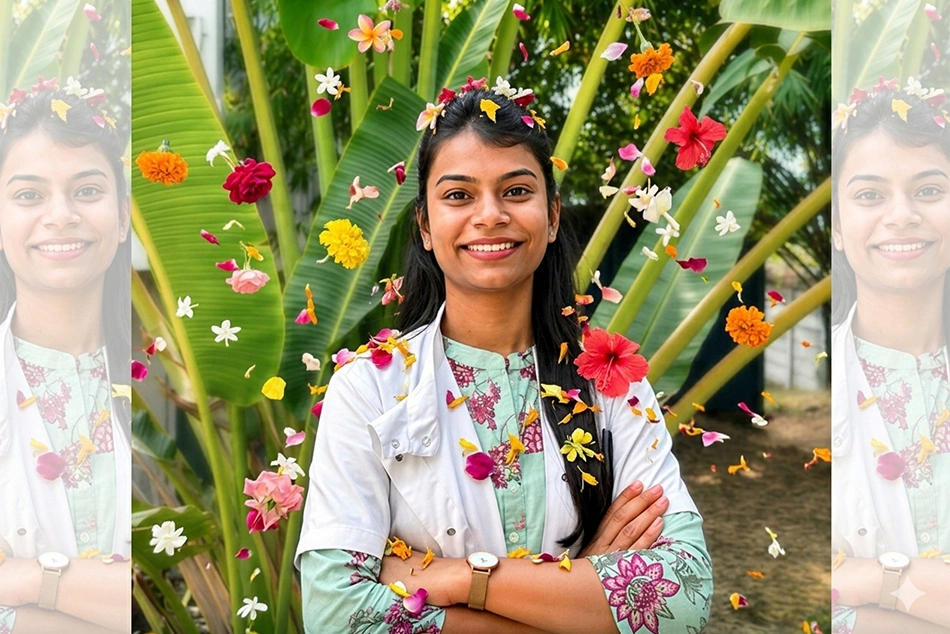
Dr Namira Mohammad Ghalib Siddiqui, a Muslim Dentist, has secured the All India Rank 1 (AIR 1) in NEET MDS 2026 exam the result of which was announced on Wednesday June 03, 2026
NEET MDS 2026 Result:
Dr Namira Mohammad Ghalib Siddiqui, a Muslim Dentist, has secured the All India Rank 1 (AIR 1) in NEET MDS 2026 exam the result of which was announced on Wednesday June 03, 2026.
Dr Namira (Roll No. 2655116267) scored a total of 802/960 marks to grab the first rank at the national level in the NEET MDS entrance exam.
National Eligibility Cum Entrance Test for Masters of Dental Surgery (NEET MDS) is held annually and is the mandatory entrance test for admission in post-graduation level MDS course.
This year NEET MDS was held on May 02, 2026. The result along with the merit list and details of toppers and their All India Rank was announced today.
“A Disciplined Student”
Dr Namira comes from a middle class family of Bhandara district and is a student of Swargiya Dadasaheb Kalmegh Smruti Dental College & Hospital, Nagpur in the Vidarbha region of Maharashtra.
Dr. Namira had completed her graduation in BDS from Swargiya Dadasaheb Kalmegh Smruti Dental College and Hospital, Wanadongri, Nagpur, and later appeared in the NEET MDS 2026 which is the eligibility enrtrance test for admission in the PG Course in Dental Surgery.
Dr Namira, a disciplined and hard-working student, outperformed more than 30,000 students from all across India to bag the first position.
Dr Namira’s father Mohammad Ghalib Siddiqui is a businessman while her mother is housewife. Her younger brother also aspires to become a doctor and is currently preparing for the NEET UG exam.
Namira, who dreams of becoming a successful dental surgeon, credited consistency, exam-oriented preparation for her success and her parents and teachers.
“I received tremendous support from my college, and my parents have always stood by me and supported me in everything”, she said.
NEET MDS 2026: Key Highlights
A total of 30,389 candidates had appeared in the NEET MDS 2026 exam. Of them 18,244 have qualified.
The second rank holder AIR 2 having the roll number 2655130330 has bagged 785 marks whereas AIR 3 is grabbed by the student whose roll number is 2655108843 and score is 778.
Only 23 candidates across India managed to score 750 or higher.
The entrance test was conducted by the National Board of Examinations in Medical Sciences (NBEMS). The board released the list of NEET MDS 2026 Top 10 publishing their roll numbers and not the name.
NEET MDS 2026 cut-off marks for General/EWS is 308, for General PwBD 289 marks, and for SC/ST/OBC and others 271 marks.
The scorecard of the students will be made available on June 10, 2026 via the official website “natboard.edu.in”.
“A moment of immense pride for Maharashtra”
Congratulating Dr Namira for her success, Maharashtra Chief Minister Devendra Fadnavis, who also hails from Nagpur, said she has made the state proud.
“A moment of immense pride for Maharashtra… Heartiest congratulations to Namira Siddiqui, a student of Swargiya Dadasaheb Kalmegh Smruti Dental College and Hospital, Nagpur, for securing AIR-1 in the NEET MDS 2026 examination, a truly exceptional achievement that has brought great honour to the state.
“Hailing from Bhandara district, she has made Maharashtra proud and inspired countless young aspirants. Her achievement reflects determination, discipline and excellence. Best wishes to Namira for her future endevours”, Fadnavis wrote on social media platform X.
source: http://www.ummid.com / Ummid.com / Home> Education & Career / by ummid.com news network / June 03rd, 2026
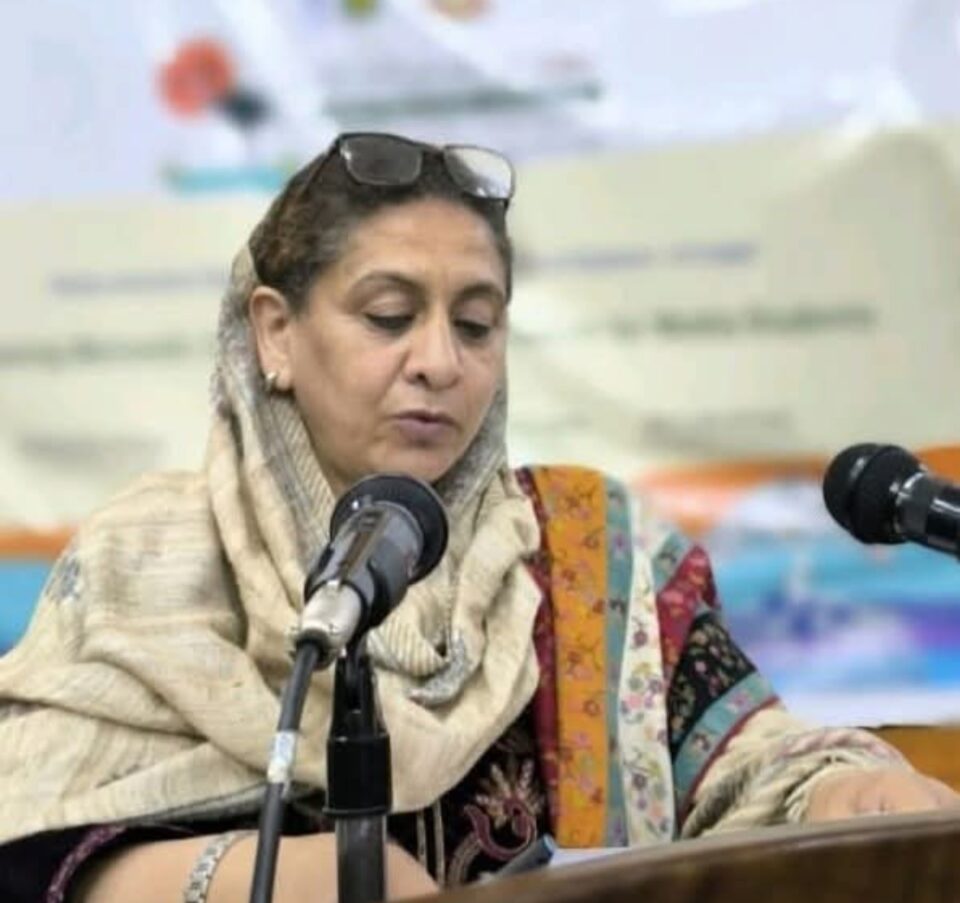
Prof. Sabeha Mufti assumes charge as the Dean, Faculty of Social Sciences, University of Kashmir. Currently serving as the Head of the Media Education Research Centre (MERC), Prof. Mufti brings with her rich academic experience, distinguished scholarship, and an extensive contribution to media studies and social science research.
Prof. Mufti holds a Ph.D. in Mass Communication & Journalism from the AJK Mass Communication Research Centre, Jamia Millia Islamia, and an M.Phil from University of Kashmir. Her academic work has largely focused on media research and media sociology, with significant contributions in areas such as media and representation of women, media and development in society, media audiences, and contemporary communication studies.
A distinguished scholar and academic, Prof. Mufti has published several research papers in reputed journals and has actively participated in numerous national and international conferences and seminars. Over the years, she has also guided and supervised a good number of M.Phil and Ph.D scholars, contributing immensely to research and academic mentorship in the field of media and social sciences.
The University fraternity extends heartfelt congratulations to Prof. Sabeha Mufti on assuming this important academic responsibility and wishes her continued success in strengthening teaching, research, and academic excellence in the Faculty of Social Sciences.
source: http://www.kashmirindepth.in / KINS Communication / Home> Breaking News> Kashmir / by Zainab Hamdani / May 23rd, 2026
Farukh Ilahi Sayyad completed his engineering course in 2017. It took a Bombay High Court order in 2025 for the University of Mumbai to hand him his degree, trapped as he was between a lapsed Muslim quota, a change in government and a caste validity certificate no one would issue.
Farukh Ilahi Sayyad
For nine years, Farukh Ilahi Sayyad carried the qualifications of an engineer without the degree certificate to prove it.
A beneficiary and later a casualty of Maharashtra’s brief and controversial 5 per cent Muslim reservation policy, the 33-year-old from Beed spent nearly a decade caught between changing governments, a lapsed ordinance and bureaucratic deadlock before the Bombay High Court finally directed the University of Mumbai to release his engineering degree earlier this month.
Sayyad’s ordeal traces back to 2014, when the then Congress-NCP government announced 16 per cent reservation for Marathas and 5 per cent reservation for Muslims in government jobs and educational institutions ahead of the Assembly elections. To navigate constitutional restrictions against religion-based reservation, the quota was structured under a Special Backward Category-A (SBC-A), covering around 50 socially and educationally backward Muslim communities.
It was under this category that Sayyad, then 21 years old and a resident of Jawalben village in Beed district, secured admission to Finolex Academy of Management and Technology in Ratnagiri for a degree course in electrical engineering.
The youngest son of a daily wage worker in a family with little formal education, Sayyad completed Diploma in Electrical Engineering with 72.71 per cent marks, making him eligible for direct second-year admission to an engineering course.
“With the reservations announced, I was initially allotted a Pune-based college based on the marks. However, I opted out as the fees of Rs 1.13 lakh was too high. In the second round of selection, I was allotted a seat in the Finolex Academy of Management and Technology in Ratnagiri under the SBCA category and I accepted as the fee was Rs 63,000 per year and affordable,” Farukh Ilahi Sayyad told The Indian Express from Dubai.
In July 2014, he obtained a caste certificate confirming his SBC-A status. But when he applied for a caste validity certificate in February 2015, the political and legal landscape had changed.
The BJP-led government had come to power in Maharashtra in October 2014, and the reservation policy was challenged before the Bombay High Court. In November that year, the High Court struck down Maratha reservation but permitted 5 per cent reservation for Muslims in educational institutions, observing that denying such reservation would impede efforts to bring Muslim youth into the mainstream of secular education.
However, the ordinance was never converted into a permanent law and lapsed in December 2014 after the new government chose not to preserve the Muslim quota framework.
Soon after, Sayyad said the state scrutiny committee informed him that it could not issue a caste validity certificate because the reservation itself was no longer in force.
“I made various representations to authorities but to no avail. I was told that I would be able to continue my studies if I paid the fees that was being charged for open category students. I agreed, hoping that the issue would get resolved,” he said.
Although he completed the course in 2017, the college and the University of Mumbai withheld his final-year marksheet and engineering degree because he had not submitted the caste validity certificate.
Unable to resolve the issue, Sayyad moved to Kuwait in 2018 on the basis of his diploma qualification before finding work in Dubai. He returned briefly during the Covid pandemic.
“What pinched me is that in spite of being an engineer, I could not call myself one or get the desired jobs because I did not hold a physical copy of my degree,” Sayyad said. “With companies tightening norms on whom they hired for engineering jobs, I felt it was time that I took from the state what was rightfully mine.”
Earlier this year, during a visit to India, Sayyad approached advocates Amol Ghuge and Gaurav Ugale and moved the Bombay High Court seeking release of his degree and results.
“Our contention before the court was that repeal of a law does not automatically extinguish rights, liabilities or proceedings that arose under it. We argued that withholding our client’s degree was preventing him from practising his profession and infringing upon his right to livelihood. We also submitted that the petitioner could not be penalised for a subsequent shift in the government’s legal position and that education already imparted ought to be protected,” advocate said.
The state argued that since the 2014 ordinance had lapsed without becoming law, all related government resolutions and circulars automatically stood cancelled.
Earlier this year, the Maharashtra government formally scrapped a decade-old resolution linked to the Congress-NCP government’s 2014 Muslim reservation policy in education, triggering a political sparring match between the ruling BJP and the Opposition. While Opposition parties termed the move anti-minority, the BJP dismissed the quota as an unimplemented “appeasement” measure announced ahead of elections.
In its May 6 verdict, the Bombay High Court directed the University of Mumbai to release Sayyad’s eighth semester results along with his original degree, passing and leaving certificates after recording his statement that he was not seeking the benefit of the 5 per cent reservation under the February 17, 2026 Government Resolution, and had already paid fees applicable to the open category. Sayyad also undertook to pay any additional fees, if required. Accepting the statement, the bench of Justices Advait M Sethna and R I Chagla disposed of the petition.
“It is a huge relief,” Sayyad said. “It has been a harrowing nine years trying to get hold of my degree. I do not know how many other Muslim students got admission during this four-month window and are facing similar problems. I feel strange fighting for a right that was granted by the state. In spite of not doing anything illegal, I had to suffer for nine years.”
source: http://www.indianexpress.com / The Indian Express / Home> News> Cities> Mumbai / by Zeeshan Shaikh / May 19th, 2026