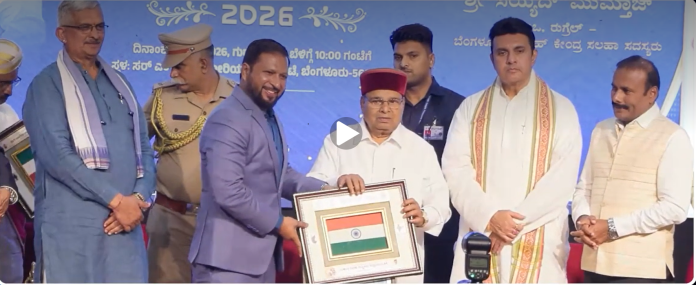
Business leader and social activist Syed Mumtaz was awarded the prestigious Mahatma Gandhi National Sadbhavana Award in recognition of his contributions to social service, community development, and entrepreneurial empowerment.
The award, instituted by the Sanatan Foundation, honours individuals and organisations that have made significant contributions toward peace, social harmony, public service, and national unity in the spirit of Mahatma Gandhi’s ideals.
The award was presented during a special programme titled “Gandhi Smriti: Our Steps towards Gandhian Principles” held at Sir M. Visvesvaraya Auditorium in Bengaluru. Thawar Chand Gehlot, Governor of Karnataka, attended the event as the chief guest and presented the honour to Syed Mumtaz.
Syed Mumtaz is the Chief Executive Officer of Rug-Rail Components and Systems Private Limited and currently serves as the President of the Karnataka chapter of the RIFA Chamber of Commerce and Industries. He is also a member of the organisation’s Central Advisory Committee.
According to the organisers, Mumtaz was chosen for the award in recognition of his sustained efforts toward the betterment of society and his initiatives aimed at empowering youth and entrepreneurs. Through his leadership roles, he has been actively involved in mentoring startups, conducting business workshops, and creating networking and mentorship platforms for aspiring entrepreneurs.
Over the years, Mumtaz has emerged as a prominent voice in promoting inclusive business growth and community-oriented development. His initiatives through RIFA Chamber of Commerce and Industries have focused on encouraging ethical entrepreneurship, supporting small businesses, and creating opportunities for young professionals.
Speaking on the occasion, Mumtaz said that success should always contribute toward larger social goals. He noted that he plans to launch more people-centric projects in collaboration with RIFA in the coming months to strengthen community empowerment initiatives.
The organisers stated that the award ceremony aimed to inspire citizens to uphold Gandhian values such as harmony, service, compassion, and national integration. Several social activists, business leaders, community representatives, and dignitaries attended the event.
The Mahatma Gandhi National Sadbhavana Award is regarded as a notable recognition for individuals who work beyond their professional domains to contribute meaningfully to society. This year’s ceremony highlighted the growing role of entrepreneurs and community leaders in addressing social challenges and promoting collective progress.
Syed Mumtaz is an engineering graduate and a distinguished student of Islamia Arabic College, Mansoora in Karnataka. He discharged the duties as unit president of Jamaat-e-Islami Hind, BTM Layout in Bangalore for one term earlier.
source: http://www.radiancenews.com / Radiance News / Home> Pride of the Nation>Awards / by Radiance News Bureau / May 15th, 2026
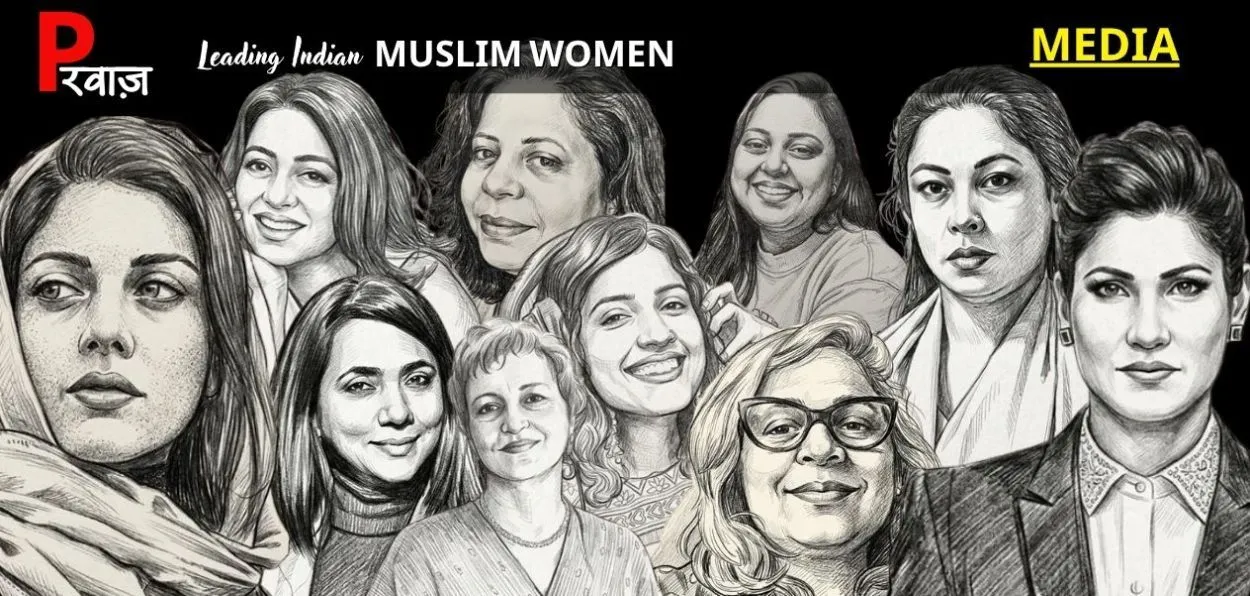
The media is considered a tough profession, and naturally, till few decades ago, very few women were part of it. However, the pioneers, especially among Muslims, whose journeys span television studios, radio booths, conflict zones, and digital platforms, helped turn the narrative on national and local issues. With a growing presence of Muslim women in newsrooms, on TV screens conducting prime-time news debates, as Radio Jockeys, and covering conflicts on the ground, they have empowered the community and made media space more inclusive.
Under its series Parvaz, Awaz-the Voice brings you the stories of ten women from the Indian media who have left a mark in the field. They represent a generation of women who refused to remain confined by convention and instead built identities rooted in excellence and purpose. Here are the top Muslim women media persons:
Yana Mir
Yana Mir has emerged as one of the strongest voices from Kashmir, challenging Pakistan-backed propaganda through journalism, entrepreneurship and advocacy. Educated in Mumbai and rooted in Kashmir, she returned to the Valley in 2020 to report stories often ignored, including the families of policemen killed by terrorists and the silence created by fear.
As CEO of the Real Kashmir Group, she has continued to document change despite threats and pressure.
Her speech at the UK Parliament in 2024 brought international attention when she spoke of feeling free and safe in India. Through her enterprise NourZuw, she also supports Kashmiri artisans and promotes economic self-reliance.
Seema Mustafa
Seema Mustafa stands among India’s most fearless journalists, with a career spanning nearly five decades. Beginning at The Pioneer at just nineteen, she went on to work with leading publications such as The Indian Express, The Telegraph and The Asian Age.
She reported from war zones, including Beirut and Kargil, earning the Prem Bhatia Award. Founder of the digital platform The Citizen, she remains a powerful advocate for independent journalism and women’s voices. As the first elected President of the Editors Guild of India, she reinforced the principle that journalism must question power, not flatter it.
Saima Rahman
Saima Rahman, fondly known as RJ Saima, is one of India’s most loved radio voices.
Raised in Delhi after being born in Nigeria, she developed a passion for language, music and public speaking early in life. Her journey began with All India Radio’s Yuv Vani and blossomed through the iconic show Purani Jeans, where songs, poetry and nostalgia created an emotional bond with listeners.
Through Urdu Ki Paathshala, she has also brought audiences closer to the beauty of the Urdu language and literature. Her voice continues to blend memory, music and social awareness.
Rubika Liyaquat
Rubika Liyaquat has built a strong identity in Indian television journalism through discipline, sharp reporting and composed primetime anchoring. Beginning with field reporting, she worked with networks such as Live India, News24, Zee News and ABP News, steadily rising to national prominence.
Beyond the newsroom, she is recognised for affirming India’s plural social fabric through messages of mutual respect and Hindu-Muslim harmony. Her journey highlights resilience, merit and the importance of coexistence in a polarised age.
Rana Siddiqui Zaman
Rana Siddiqui Zaman broke barriers to become a respected voice in journalism, particularly in cinema, culture and the performing arts. Educated at Aligarh Muslim University, she chose journalism when it was still considered unconventional for women.
Her defining years at The Hindu earned her acclaim for insightful columns and interviews with major artists. After professional setbacks and economic challenges, she reinvented herself and now works with the Children’s Book Trust. Her story is one of courage, reinvention and quiet determination.
Nagma Sahar
Nagma Sahar is widely regarded as one of the most balanced and socially committed voices in television journalism. Born in Patna and educated in Delhi, including studies at JNU, she brought academic depth to her reporting. At NDTV India, she covered major events from the tsunami in Tamil Nadu to elections in Kashmir.
Her show Salaam Zindagi brought issues such as addiction, discrimination and transgender rights into mainstream conversation with empathy and dignity. Her career reflects integrity and meaningful journalism.
Heena Kausar Khan
Heena Kausar Khan has become an important journalistic and literary voice by bringing the inner realities of the Muslim community into mainstream Marathi discourse. Raised in Pune, she started her career with Lokmat before turning to feature writing.
Through platforms like Sadhana Weekly and Loksatta, she explored identity, reform and changing social consciousness. Her books, including Itranama and Ijtihad, have earned acclaim and honours. She continues to advocate humanity, coexistence and nuanced understanding.
Atika Farooqui
Atika Farooqui has enjoyed a distinguished media career spanning more than two decades. Known as a thoughtful host and interviewer, she built her reputation through consistency rather than instant fame.
Working across news and entertainment, she became known for warm, intelligent conversations that focused on creativity and personal journeys rather than sensationalism. A poet and writer fluent in multiple languages, she remains relevant by adapting gracefully from television to the digital era.
Dr. Firdous Khan
Dr Firdous Khan, celebrated as “The Princess of the Isle of Words,” is a scholar, poet, journalist and translator whose work bridges spirituality, literature and media. Associated with the Sufi tradition, she has authored books such as Fahm al-Qur’an and Pioneers of Ganga–Jamuni Culture.
Her career spans Doordarshan, All India Radio and numerous print platforms. Writing in Urdu, Hindi, Punjabi and English, she has earned honours for journalism and literature while promoting harmony, service and the enduring power of words.
Shah Taj Khan
Shah Taj Khan, professionally known as Sheh Taz Begum Khan, is a distinguished Urdu author, journalist, and educator whose career spans more than twenty-five years across print media, broadcasting, literature, and academia.
Based in Pune, she has earned respect in Urdu journalism through roles as reporter, editor, producer, and creative director with organisations such as ETV News, where she helped shape the special bulletin Khas Baat, as well as publications like Nai Duniya Urdu Weekly and Media Star News Feature Agency
She has also made a notable contribution to children’s literature through science-based Urdu books such as Seen se Science and Picnic, praised for making scientific ideas engaging for young readers and supported by the National Council for Promotion of Urdu Language.
source: http://www.awazthevoice.in / Awaz, The Voice / Home> Stories / by Aasha Khosa / April 26th, 2026
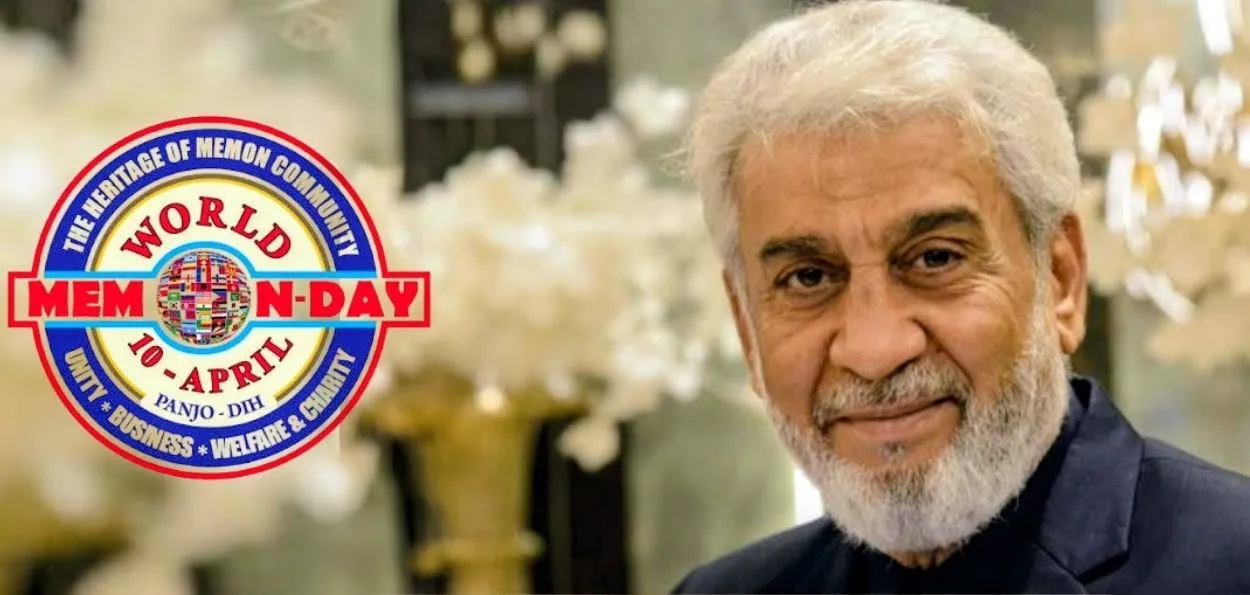
The Memon community—numbering around four million globally—is widely regarded as a globalised group known for its business acumen, prosperity, patriotism, and pro-development outlook.
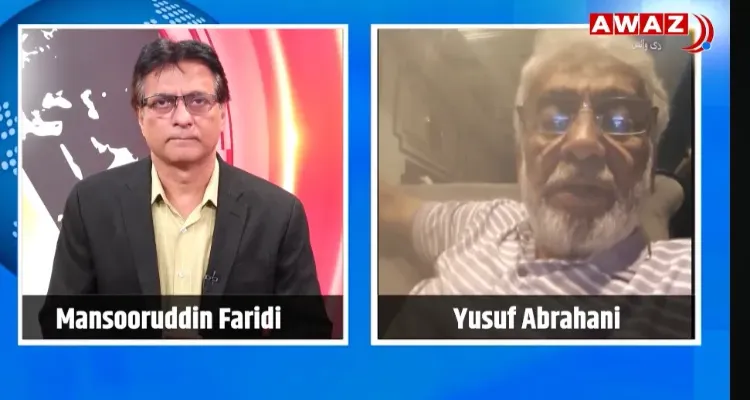
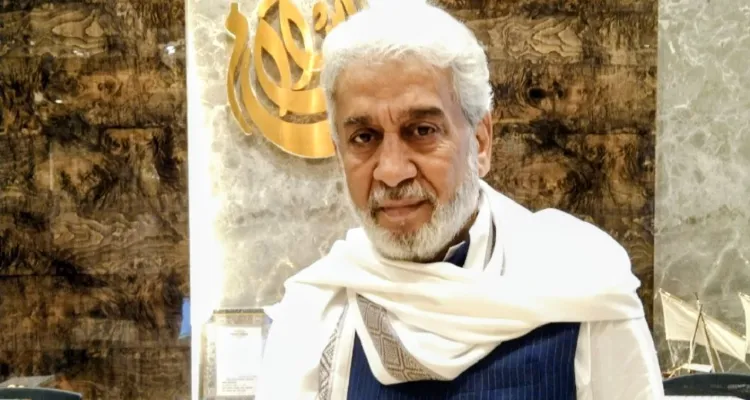
These observations were shared by prominent Memon leader Yusuf Abrahani on the occasion of World Memon Day.
The Memons are a close-knit, predominantly Sunni Muslim business community. They trace their origins to Gujarat in India and Sindh in Pakistan. Historically known as maritime traders, they are largely concentrated in Mumbai and Karachi, where they have flourished as entrepreneurs in sectors such as import-export, shipping, and textiles.
The community’s roots go back to the 15th century, when members of the Lohana community in Sindh embraced Islam under the guidance of Syed Yusufuddin Gilani.
Known for their peaceful temperament and adaptability, Memons have built a reputation not only for prosperity but also for their strong commitment to social service.
Yusuf Abrahani, a former Member of the Legislative Assembly and president of the Islam Gymkhana, remains actively engaged in Mumbai’s political, business, and social spheres.
In a special interview with Mansooruddin Faridi, Editor of Awaz-the Voice Urdu, Abrahani noted that the Memon community is spread across the world, with members having migrated from Gujarat to various countries.
Describing the community’s ethos, he said, “Allah has blessed Memons immensely—with wealth, a generous spirit, and grace. Wherever a Memon settles, the first priority is to establish a madrasa, mosque, community hall, and medical dispensary. This tradition continues even today.”
Drawing from his six decades of experience, he added that Memons have established numerous institutions in Mumbai, including hospitals, mosques, madrasas, and charitable facilities.
World Memon Day is observed on April 10, and is marked by extensive charitable activities. Community members visit hospitals, organise welfare programmes for the poor and marginalised—including widows, the visually and physically challenged—and distribute essential supplies.
Abrahani noted that this culture of service has gained further momentum under the leadership of Iqbal Memon. Similar programmes are also organised in countries such as the United Kingdom, the United States, Australia, Canada, and New Zealand.
Despite their relatively small population, Memons have achieved notable success in education and economic development. Alongside India, significant Memon populations reside in countries like Canada, the United Kingdom, the United States, and Sri Lanka.
Honesty and integrity remain the hallmarks of the community, with a strong emphasis on imparting religious and ethical values to younger generations.
source: http://www.awazthevoice.in / Awaz, The Voice / Home> Stories / posted by Aasha Khosa / April 10th, 2026
In an era where corporate success is often measured solely in balance sheets, Hamid Ahmed stands out as a rare blend of business acumen and social commitment—quietly carrying forward the towering legacy of his grandfather, Hakim Abdul Hameed, a visionary who believed that enterprise must serve society.
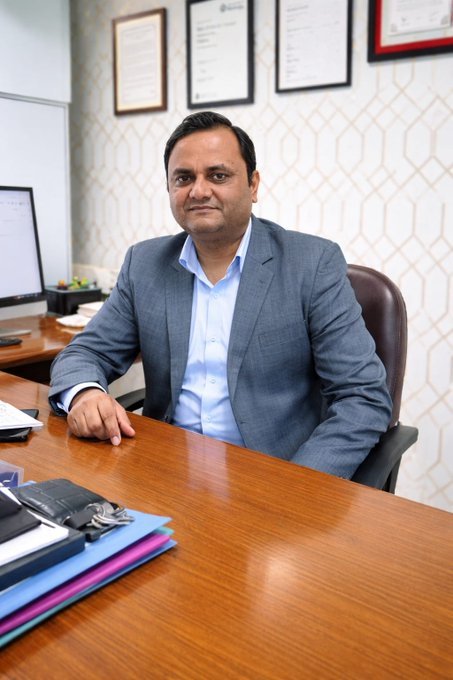
A young, suave, and dynamic Indian business leader, Ahmed today occupies multiple roles with ease and purpose. As the Chief Executive Officer and Trustee of Hamdard Foods India, and former Chancellor of Jamia Hamdard, he represents a new generation of leadership rooted in legacy but driven by innovation.Owing to his leadership acumen and expanding contributions to the service of humanity, he has been featured among the 100 Most Influential Muslims of India in the 2025 list compiled by the Muslim Mirror. The list also features distinguished personalities such as former Vice President of India Mohammad Hamid Ansari, noted industrialist Azim Premji, and politician-barrister Asaduddin Owaisi, among several other eminent names.
Born in 1977 in New Delhi, Ahmed’s early education at St. Columba’s School laid the foundation for a disciplined and forward-looking career. He went on to pursue a Bachelor’s degree in Economics from the University of Delhi, graduating in 1998, before earning an MBA from London in 2000—equipping himself with a global outlook at a young age.
His association with the Hamdard legacy began early. In 1995, he was appointed as a Trustee of Hamdard Laboratories India by his grandfather. By 2000, he had formally joined the organization, embarking on a professional journey that would span over two decades. When he assumed the role of CEO in 2016, Ahmed brought with him not just experience, but a renewed vision—one that sought to modernize while preserving the ethos of Unani medicine and ethical enterprise.
Under his leadership, Hamdard Foods India has expanded its footprint across both domestic and international markets, strengthening its position in the food and Unani healthcare sectors. His approach combines strategic expansion with a nuanced understanding of regional consumer behavior, reflecting years of hands-on experience across diverse markets.
Yet, Ahmed’s influence extends well beyond boardrooms. His commitment to education is deeply intertwined with the legacy of Jamia Hamdard, an institution founded on the principles of accessible and value-based learning. As Chancellor, he played a key role in reinforcing its academic and institutional growth, ensuring that the university continues to serve as a hub of excellence for students from all backgrounds. Today, Jamia Hamdard has secured a top-tier position among a plethora of private universities, distinguished for its academic excellence, research output, and commitment to holistic education.
He is also the Founder and President of the Unani Drug Manufacturers Association (UDMA), where he has worked to strengthen the traditional medicine sector and advocate for its modernization and global relevance.
Philanthropy remains central to his work. Through the Hamdard National Foundation India and the Hamdard Learning and Welfare Society, Ahmed has championed initiatives focused on education, skill development, employment generation, and the upliftment of economically weaker sections. These efforts echo his grandfather’s philosophy—that business must ultimately serve humanity.
His contributions gained particular prominence during the COVID-19 pandemic, when he led large-scale vaccination drives, organized holistic healthcare camps, and initiated environmental campaigns such as tree plantation drives—demonstrating a hands-on approach to crisis response and community care.
In recognition of his service, he was conferred the Paul Harris Fellow award by the Rotary Club of Delhi South in 2022—an honor reserved for individuals who make significant contributions to society.
Beyond his executive and philanthropic roles, Ahmed has also brought his expertise to the corporate governance space. He has served as a Non-Executive Independent Director on the boards of several prominent companies, including Religare Enterprises Limited, Religare Finvest Limited, Religare Housing Development Finance Corporation Limited, Care Health Insurance Limited, and Religare Broking Limited.
At a time when legacy institutions often struggle to remain relevant, Hamid Ahmed’s journey offers a compelling narrative—of continuity without stagnation, of growth anchored in values, and of a leadership style that sees business not merely as a vehicle for profit, but as a force for social transformation.
On his inclusion in the 100 Most Influential Muslims-2025 list, senior journalist Abdul Bari Masoud engaged Hamid Ahmed in an in-depth conversation for Muslim Mirror, exploring a wide spectrum of issues—from his leadership at Hamdard and vision for the Unani sector to his commitment to education, philanthropy, and inclusive nation-building.
Excerpts from the Interview
Q:To what extent were you inspired by your grandfather, Hakim Abdul Hameed Sahib?
A : Hakim Abdul Hameed Sahib was not only the founder of Hamdard but also a visionary who believed in combining traditional health system with modern scientific approaches. His life’s work was deeply rooted in service to humanity, education, and healthcare. His philanthropic initiatives, like establishing Jamia Hamdard University and other institutions, shows how he linked business success with social responsibility. His vision continues to inspire Hamdard’s focus on blending tradition with innovation. His humility and dedication to public welfare set a self reliant leadership and business model that balances growth with ethical responsibility.
Q:Which aspects of his life and philosophy had the greatest influence on you?
A: His decision to dedicate Hamdard as a charitable institution inspires my own sense of responsibility towards society. His passion for education, his humility and ethics, simplicity and global vision not only motivates me but drives me to spend my energies in the research, innovation and making Hamdard’s every effort relevant to the human beings in everyday life. For me, his life is a compass that shapes my journey into the future.
Q:What made Hamdard diversify into the food sector? And what was the thinking behind this transition?
A: Having Rooh Afza- a beverage stalwart already a household name, diversification into the food sector was a natural extension of consumer trust in Hamdard’s quality and purity. Naturally consumers expected that Hamdard could reach out for their food’s need requirements in the categories of core food and functional foods. This way Hamdard could see the light of faster growth and avenues for ensuring sustainable revenue growth, which helps out our charitable mission requirements. To meet India’s growing demand and global needs of quality foods, we introduced several products in a short span of time like, Milkshakes, Lassi, Juices, Squashes, Coconut Water, Honey, Saffron, Soya Nuggets, Vermicelli, Mustard Oil, Olive Oil and range of Spices.
Q:How do you assess the position of Hamdard Foods India within the current Indian food industry?
A: At Hamdard Foods, we have always believed in blending tradition with innovation. Consumer preferences in India are evolving rapidly, with a growing emphasis on quality foods and convenience. Our iconic brands like Rooh Afza continue to resonate deeply, but we are also expanding into new product categories that meet modern lifestyles — from ready-to-drink formats to sugar-free variants. Sustainability and quality remain at the heart of our mission, and we are committed to ensuring that every product we deliver carries forward our legacy of trust while embracing the future of the food business.
Q:What are your future plans and long-term ambitions for Hamdard Foods and the broader Hamdard legacy?
A: Hamdard Foods has always stood for trust, tradition, and purity. As we look ahead, our future plans are centered on three pillars: innovation, expansion, and sustainability. We are committed to introducing new product formats that cater to evolving consumer lifestyles, while ensuring that our heritage brands like Rooh Afza continue to remain relevant across generations.
On the global front, we aim to strengthen our presence in international markets, taking the Hamdard legacy of quality to new geographies. At the same time, we are investing in sustainable practices — from responsible sourcing to eco-friendly packaging — so that our growth is aligned with the well-being of both people and the planet.
Our long-term ambition is to ensure that Hamdard remains not just a household name in India, but a global symbol of nutritious food producer imbibing traditions along with innovations. We want the Hamdard legacy to inspire future generations by showing that a company rooted in heritage can thrive in modern times while staying true to its values.
Q:Is there any particular experience or anecdote that significantly shaped your outlook or altered the course of your thinking?
A: One experience that profoundly shaped my outlook was witnessing how Rooh Afza continued to unite generations within families. I recall visiting a household where grandparents, parents, and children all had their own stories tied to the drink — from Ramadan evenings decades ago to modern-day summer gatherings. That moment reminded me that Hamdard is not just about products, but about memories, traditions, and emotional connections.
It strengthens my thinking by reinforcing the idea that our responsibility goes beyond business growth. We are custodians of a legacy that touches lives deeply in personal ways. This realization drives me to ensure that every decision we make — whether it’s innovation, expansion, or sustainability — honors that heritage while preparing the brand for the future. It’s a constant reminder that Hamdard’s strength lies in being timeless yet adaptable.
source: http://www.muslimmirror.com / Muslim Mirror / Home> Interviews> Positive Story / by Abdul Bari Masoud / April 02nd, 2026
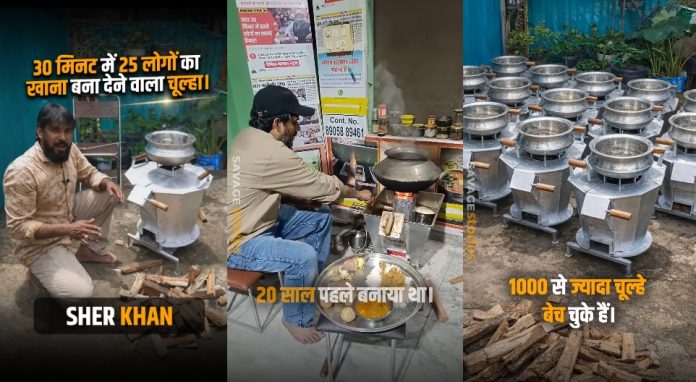
Mohammad Sher Khan, a Muslim iron craftsman from Udaipur, Rajasthan, has drawn attention for his innovative Vishwaguru Chulha, a stove designed to cook meals for 25 people within 30 minutes while reducing fuel use and smoke.
Khan, a class 8 dropout, spent 27 years refining the design after observing women spending long hours cooking multiple dishes using large amounts of firewood. His aim was to reduce cooking time and ease the burden on households. He patented the stove in 2017 after testing it in homes and dhabas. More than 10,000 units have been sold.
The stove features a three layer system. The top section bakes items like rotis and bread. The middle section handles frying. The bottom section boils dal and other dishes. This design allows users to prepare multiple items at the same time.
Khan states that the chulha uses around 2 kilograms of firewood compared to nearly 10 kilograms in traditional methods. The design also reduces smoke, improving working conditions in kitchens.
Demand has increased due to disruptions in LPG supply linked to global tensions affecting key shipping routes. Many households and small eateries face rising costs and supply delays. The Vishwaguru Chulha offers an alternative priced at around Rs 10,000.
The innovation highlights how local solutions address everyday challenges. Khan plans to expand reach across homes, eateries, and small businesses, offering a practical option for efficient cooking.
source: http://www.radiancenews.com / Radiance News / Home> Latest News> Markers of Excellence> Personality> Report / by Radiance News Bureau / March 30th, 2026
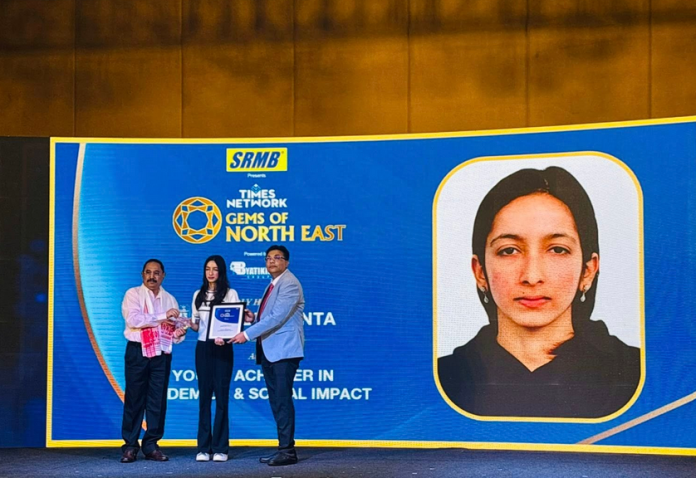
A 16 year old Muslim student from Assam has gained international attention after presenting her research at a global conference on artificial intelligence and machine learning.
Huma Abia Kanta, a Grade XII student at Royal Global School, Guwahati, presented her paper at the Advancement and Innovation International Scientific Practical Conference held in Azerbaijan. The event brought together academic institutions from multiple countries and focused on emerging developments in AI and machine learning.
Her research, titled ML Based Prediction of Phycocyanin Purity, examined how machine learning models predict pigment purity levels used in sustainable bio resource industries. She compared six regression models and achieved a mean absolute error of 0.058, improving on the standard laboratory deviation of 0.31. The paper will be published in international journals indexed in Scopus.
Huma has also authored another paper on natural language processing, accepted for presentation at RegICON 2025. She has co authored three additional research papers, which are under review.
Beyond research, she leads an educational startup named desicodes. The initiative works on an Assamese Python transpiler to promote coding in regional languages and improve access to computer science education in the Northeast.
She has also contributed to environmental work by supporting the Hargila Army initiative, helping digitise traditional motifs linked to the endangered Greater Adjutant Stork for handloom use.
Huma credited her mentors for their guidance, highlighting the role of academic support in her journey.
source: http://www.radiancenews.com / Radiance News / Home> Features / by Radiance News Bureau / March 20th, 2026
Prof Md Imtaiyaz Hassan of Jamia Millia Islamia has received a research grant of Rs 8.05 crore from the Department of Biotechnology for a major study on cancer cachexia among Indian patients. Prof Md Imtaiyaz Hassan will lead the project focusing on head and neck cancer, where the condition affects a large share of patients.
Cancer cachexia causes severe weight loss, muscle wasting, and fatigue. It affects nearly 70 percent of patients with head and neck cancer and reduces quality of life. Prof Md Imtaiyaz Hassan and his team aim to examine the causes of this condition and improve methods for early detection and management.
The study will use advanced scientific methods such as transcriptomics, metabolomics, microbiome analysis, DNA repair studies, and neurobehavioural assessment. These approaches will help identify biological markers and support the development of targeted treatments.
Prof Md Imtaiyaz Hassan said the project addresses a major gap in understanding cancer related complications in India. He stated that the research will focus on improving patient outcomes through precise medical approaches.
The team will validate findings through laboratory studies involving cell lines, animal models, and patient derived samples. This step aims to ensure practical use of results in clinical settings.
The project includes collaboration with leading institutions such as the Indian Institute of Science Bangalore, Dr B Borooah Cancer Institute, University of Mysore, HCG Cancer Hospital, and the Institute of Bioinformatics and Applied Biotechnology.
The university said the grant strengthens its position in biomedical research. The work led by Prof Md Imtaiyaz Hassan is expected to contribute to better understanding and treatment of cancer related weight loss in India.
source: http://www.radiancenews.com / Radiance News / Home> Latest News> Pride of the Nation> Markers of Excellence> Report / by Radiance News Bureau / March 23rd, 2026
Nishat & Misba turn Panache into one of Mysuru’s most loved fashion exhibitions…
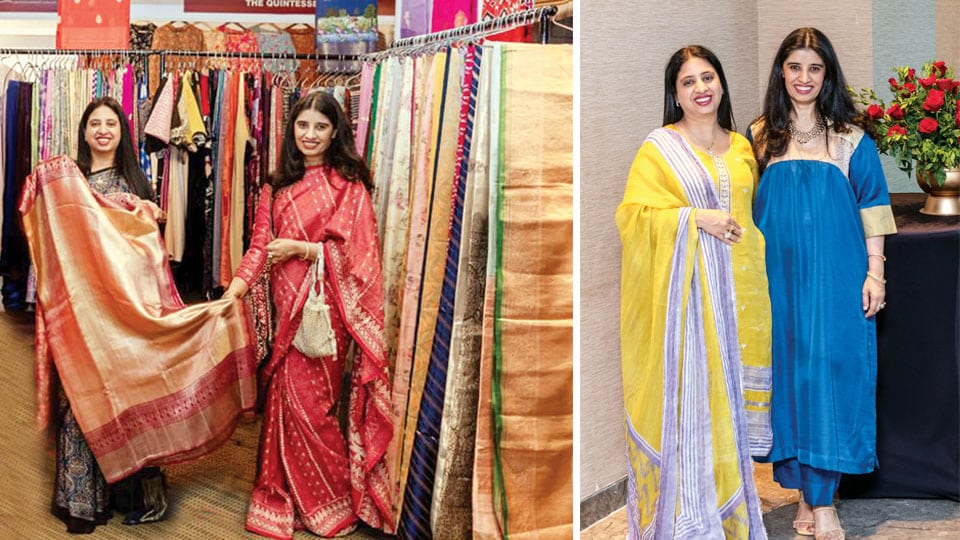
Nishat Mohsin and Misba Umrean, Co-founders of the fashion exhibition platform ‘Panache’, have been curating memorable fashion experiences in Mysuru for several years.
What began as a modest initiative has grown into one of the city’s most-loved fashion exhibitions, offering a thoughtfully curated experience while bringing designers and fashion enthusiasts under one roof.
Alongside its successful editions in Mysuru, ‘Panache’ has also travelled to Bengaluru and Coorg in collaboration with several high-end brands.
While successfully steering ‘Panache’, the duo also balances their entrepreneurial journey with family life and personal passions.
Nishat, born in Bengaluru & raised in Mysuru, is married to a businessman and is a mother of two who enjoys designing spaces and nurturing plants.
Misba, born in Mysuru and now based in Bengaluru, is a B.Com graduate, married to a Bengaluru-based professional and a mother of three who enjoys travel, adventure sports and cooking.
Speaking to Star of Mysore, the sisters open up about their journey, inspiration and vision behind ‘Panache’: “Fashion is not just about clothing, it’s about creativity, craftsmanship and giving designers a platform to shine.” —Ed
Star of Mysore (SOM): How did the fashion extravaganza Panache begin? And what inspired you both to venture into fashion exhibition curation?
Nishat Mohsin and Misba Umrean: ‘Panache’ was envisioned by Nishat in 2008 as an intimate platform connecting designers with fashion enthusiasts. When Misba joined in 2009, the exhibition gained new momentum and gradually evolved into a celebrated fashion destination.
Coming from business-oriented families, we always aspired to create something of our own. Our journey into exhibition curation is driven by a deep appreciation for fashion not just as clothing, but for the creativity and craftsmanship behind it. Through ‘Panache’, we’ve had the joy of bringing ideas to life while giving designers a platform to shine.
OM: Mysuru is known for its legacy of royalty and rich cultural identity. Do you think Mysureans have a unique fashion sense? And when it comes to style, what defines them more, silk sarees or contemporary fashion trends?
Nishat and Misba: Absolutely. Mysureans have a refined and graceful sense of style. Silk sarees hold a special place; they’re timeless, elegant and deeply rooted in tradition. At the same time, they embrace contemporary styles and modern silhouettes with equal grace. What makes their style truly distinctive is this seamless blend of heritage and modernity, marked by elegance and understated sophistication.
SOM: In your opinion, how has the representation of women in fashion events evolved over the years?
Nishat and Misba: The evolution has been remarkable. While women were once seen mainly as participants or models, today they lead as designers, entrepreneurs and key decision-makers, shaping the industry.
Fashion platforms have become powerful spaces for women to express their creativity and vision through their brands, and it’s inspiring to witness and contribute to this evolution.
SOM: How has the role of social media and digital platforms changed how fashion exhibitions are promoted and experienced?
Nishat and Misba: Social media have introduced a new dimension to fashion exhibitions. Promotions that once relied on word of mouth now reach audiences instantly. Digital platforms create anticipation even before the event begins, allowing us to connect with our audience early and extend the energy of the exhibition beyond its closing day.
SOM: What has been your most memorable exhibition moment? Have you encountered a last-minute crisis? How do you navigate them?
Nishat and Misba: Some of the most memorable moments are often the simplest. Watching a designer sell out, or a visitor finding exactly what they were looking for, is priceless.
Naturally, live events come with their share of challenges, from logistical hurdles to unexpected technical setbacks. Over the years, there have been many last-minute surprises and we address them with composure, teamwork & mutual trust.
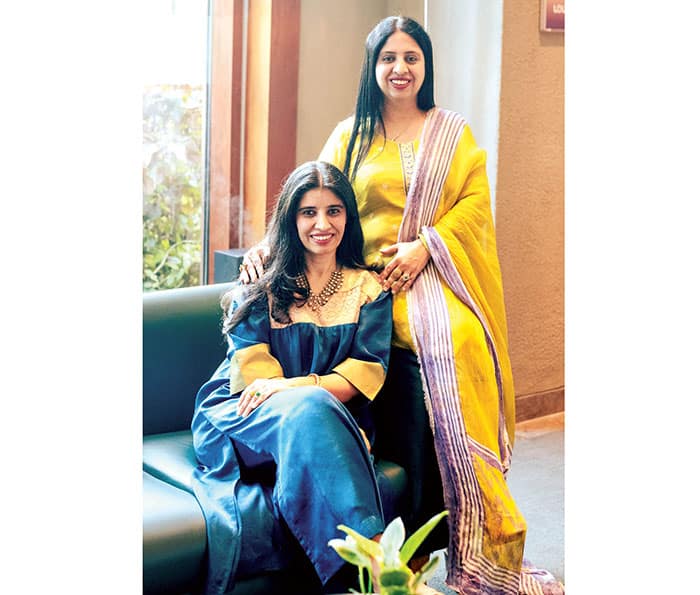
Nishat Mohsin (sitting) with her younger sister Misba Umrean
SOM: How do you ensure smooth collaboration among teams and what defines the success of an exhibition for you?
Nishat and Misba: Effective collaboration begins with clear communication and mutual respect. We involve designers, production, and marketing teams from the very beginning. So, everyone feels aligned and valued.
For us, the success of an exhibition goes beyond numbers. It lies in the connections created when designers feel supported, visitors leave inspired and the continued trust people place in ‘Panache’ year after year.
SOM: How do you stay calm and manage stress when the event date is approaching?
Nishat and Misba: As the event date approaches, there is always a certain rush, but over the years with ‘Panache’, we have learnt that staying calm is a conscious choice. Careful planning helps minimise last-minute stress. A quiet prayer, deep breaths and trusting our team help us stay grounded and we believe that positive energy always reflects in the event.
SOM: What advice would you give someone who wants to break into fashion or event management?
Nishat and Misba: Fashion and event management may appear glamorous, but they require discipline, patience and emotional intelligence. Start small, build genuine relationships and stay consistent, as reputation is paramount. Above all, understand people, fashion is not just about clothing, but about emotions and confidence.
SOM: What message would you like to share with women this Women’s Day?
Nishat and Misba: To every woman, we would say that strength is not defined by others; it lies in your ambition and compassion. Celebrate your achievements without guilt, dream beyond your fears and never diminish yourself to make others comfortable. Your journey simply needs to be your own.
source: http://www.starofmysore.com / Star of Mysore / Home> Feature Articles> Top Stories / by Shadan Muneer / March 16th, 2026
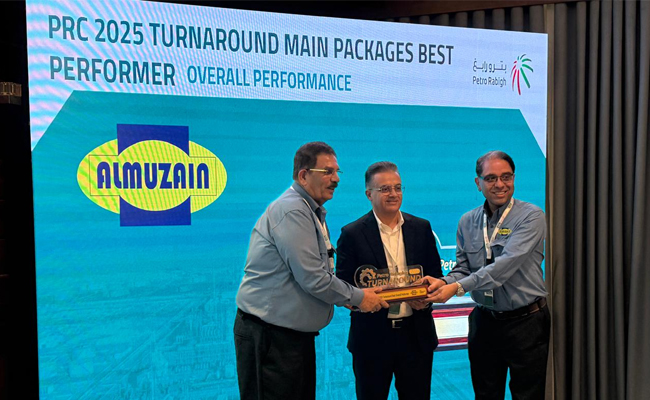
Almuzain Company was awarded the Best Performer for the Main Packages of the 2025 Mega Turnaround at Petro Rabigh, which is ranked as the largest turnaround executed based on its scope and complexity.
The prestigious award was presented by Othaman AlGhamdi, President and CEO of Petro Rabigh. Almuzain management representatives Bajpe Zakaria and T.V. Deepak accepted the award on behalf of the entire Almuzain team who contributed to this achievement.
The overall performance award covers safety, quality and on-time completion, contributing to the success of the project.
The company secured the Best Performer Overall Turnaround First Prize.
source: http://www.english.varthabharati.in / Vartha Bharati / Home> Gulf / by Vartha Bharati / February 10th, 2026
In an era where escalating medical explosive costs are making healthcare inaccessible to millions, Khan Sir has given India a reason to take pride. Patna is set to experience a significant enhancement in healthcare access with the launch of the hospital for those who can’t afford the highend treatments and diagnosis of the diseases.
The hospital, established by Faizal Khan—founder of the world’s largest and most affordable online education platform—known as Khan Sir, provides low-cost diagnostic and treatment services for the poor. Khan Sir’s initiative is inspired by his mother’s vision of making healthcare affordable and removing financial barriers to medical care.
Speaking to the media, Khan Sir said. “I have started this initiative for the ease of the residents of my nation. It was my mother’s dream to build a hospital that gives affordable medical treatments to everyone. Building upon that, I am trying to create a situation where women of my country, whom I consider family, don’t have to mortgage their jewellery for any medical treatment. My further motive is not to earn out of this initiative; I would rather curb the brokerage that is involved in the medical facilities of Bharat.”
The hospital is located on Ashok Rajpath in Patna, Bihar, and has been designed to serve low income families, daily wage earners, senior citizens, and economically underprivileged patients who struggle with high healthcare costs. Khan Sir has stated on multiple occasions that the facility’s mission is to provide quality care at costs much lower than even government hospitals.
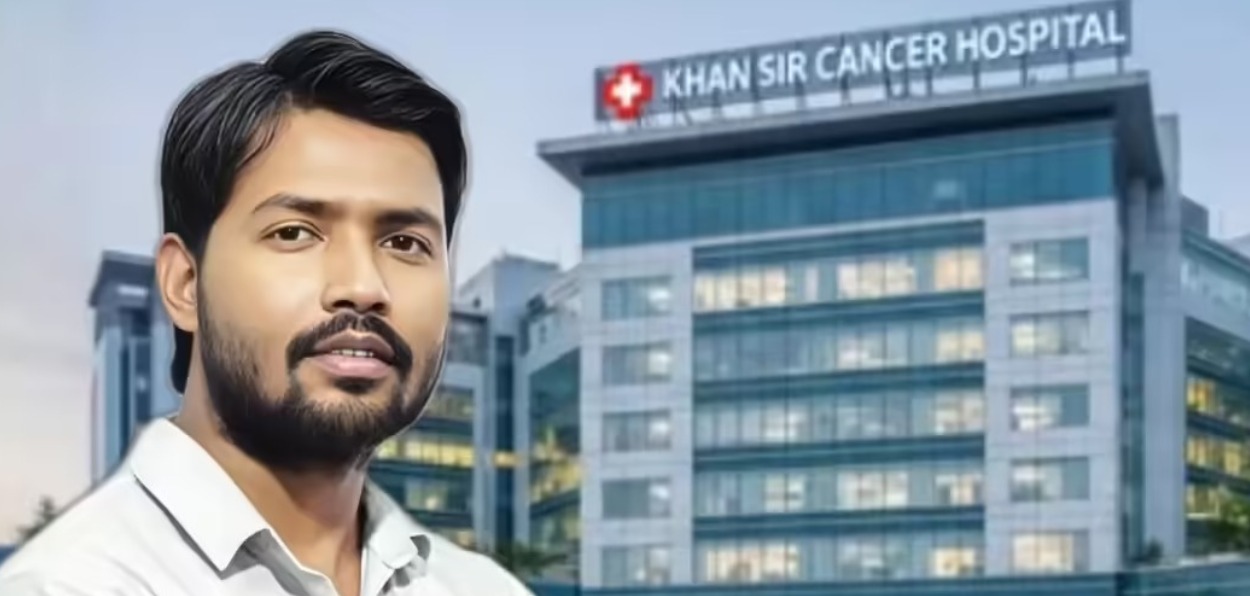
Khan Sir Hospital, Patna (Bihar)
From the start, the hospital has focused on keeping diagnostic and treatment costs extremely affordable. For example, a blood test is charged at only Rs 7, while an ECG (electrocardiogram) costs Rs 25 figures that have caught public attention for being significantly lower than typical lab charges. Initial pricing also includes minimal fees for X rays and kidney tests designed to ensure that essential diagnostics are accessible to all.
According to the hospital’s official information, even more services are priced affordably: Digital X rays at Rs 30, CT scans from Rs 150, ultrasound for Rs 100, blood tests around Rs 50, and consultations at just Rs 20. These rates make basic medical care much less burdensome for patients who previously had to choose between health and household expenses.
खान सर का हॉस्पिटल इस दिन से होगा चालू, 35 रु में X-Ray से लेकर काफी सस्ता ईलाज! पटना में कुल 5 बड़े Ai जेनरेटेड हॉस्पिटल खोलेंगे! Khan Sir Hospital Patna pic.twitter.com/TTxoq3Jy7R
— छपरा जिला 🇮🇳 (@ChapraZila) January 4, 2026
Beyond basic diagnostics, Khan Sir Hospital offers a 24/7 blood bank and dialysis centre, with trained nephrology teams and modern equipment. A dedicated emergency department and general OPD services ensure continuous care for various health needs. The hospital also runs community health programmes and patient education initiatives to encourage preventive care.
In line with his charitable mission, Khan Sir plans to expand services across Bihar by establishing dialysis centres and blood banks in other districts with advanced machines imported from Germany and Japan aiming to provide affordable care where it is most critical.
The hospital’s community outreach has included blood donation drives, where more than 150 units were collected, helping save lives in emergencies. Such efforts demonstrate the institution’s commitment to community health, not just commerce.
The initiative has inspired strong emotional support from followers. In one notable example, a young fan from Uttar Pradesh drew attention by creating and gifting paintings made with her own blood to Khan Sir in Patna, a symbolic tribute to his work in healthcare and education.
With this combination of ultra-low fees, modern treatment facilities, community outreach programmes, and a mission rooted in service, Khan Sir Hospital is positioning itself as a lifeline for affordable healthcare in Bihar. It represents a growing model of healthcare that prioritises accessibility and compassion at its core.
source: http://www.awazthevoice.in / Awaz, The Voice / Home> Stories / by Asshhar Alam / February 09th, 2026