Category Archives: Royal Families, PreIndependence -Descendants (wef. Jan 02nd,2022)

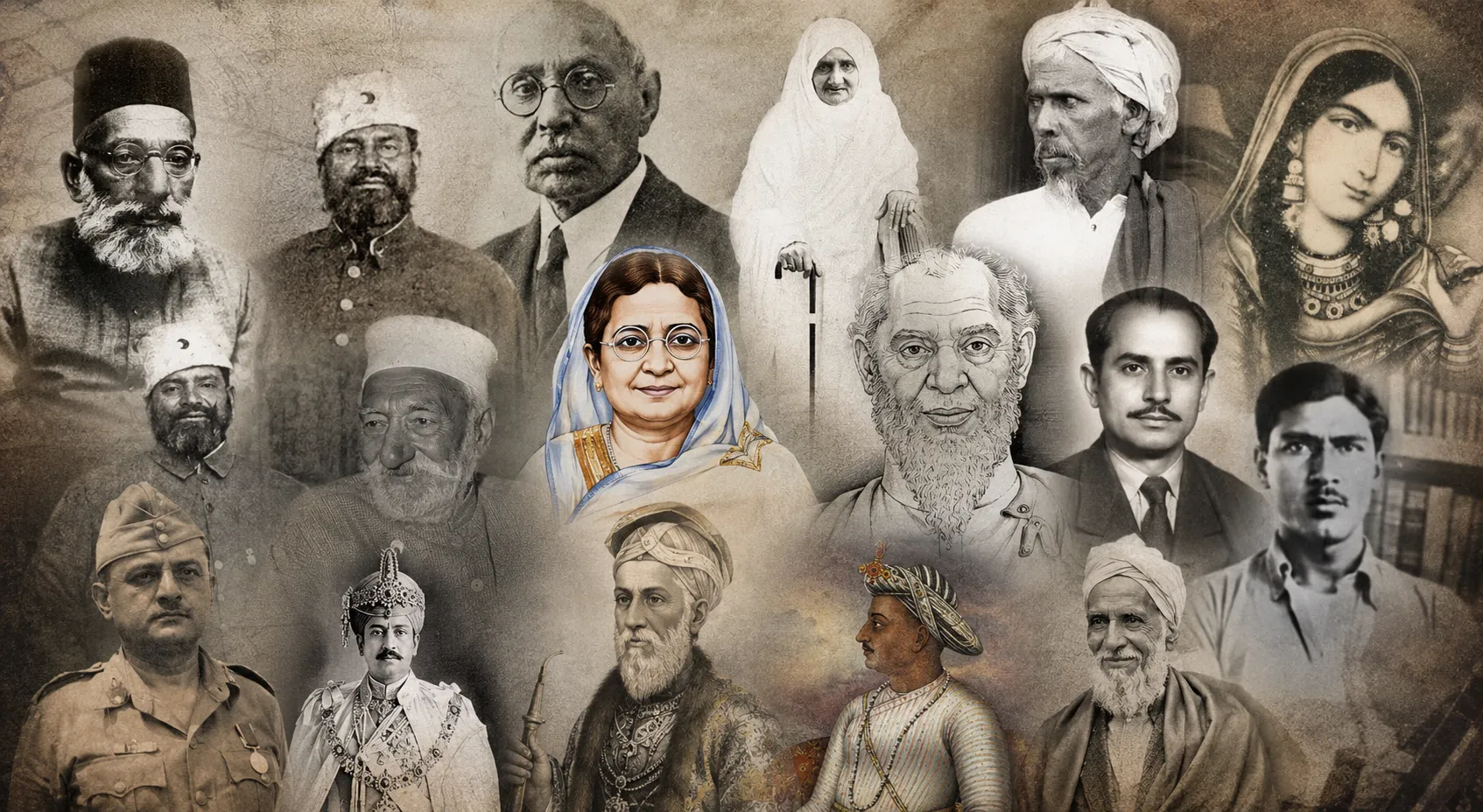
There is no history of India’s freedom without its Muslims

INDIA :

At 80, revisiting the Muslim lives, movements and sacrifices that shaped India’s struggle for freedom, and the politics of forgetting them.

Stroll through the pages of India’s history, because academia has failed to acknowledge some names and contributions in the Indian freedom struggle. From the Taj Mahal, Red Fort, Qutub Minar, Humayun’s Tomb, Gol Gumbaz, Charminar, to Fatehpur Sikri and the bustling lanes of Chandni Chowk, they all speak volumes louder. But the cultural pattern of ‘selectively remembering’ and ‘selectively forgetting’ has downplayed nation’s history into one-dimensional narratives , while external sources of learning like cinemas, textbooks, public places re-branding, etc,  are getting colored with contemporary political dynamics, to legitimize their plans and policies. 

To fathom India’s past sincerely, we must be willing not only to learn but also to unlearn. Learning involves discovering forgotten contributions, while unlearning requires shedding inherited biases, political narratives, and simplified versions of history. Because, as eminent historians have speculated, the past is constantly reinterpreted in the light of new evidence and new questions. Consequently, the framing of our past will affect the present, which will further be read as a past in the future, thus entrusting us with sheer responsibility of weaving a lineage of conscience, not insidious storytelling.

The lost dots of the Indian freedom movements

Revisit in Indian history afresh because erasure never happens all at once, it happens slowly and systematically.

Independence Movements did not count from the very battles fought, but from the conditions laid down before and after to formulate and fixate Indian society and culture altogether. Resistance to the economization, politicisation, and, ultimately, colonization by the Britishers was confronted by the collective plurality which our country possessed with pride. Testifying that resistance was not always born on the battlefield, often it began with communities refusing to harbor animosity for one another. 

Hindu sanyasis and Muslim fakirs whom the British Company wanted to fragmentalise, chose each other instead. Naga ascetics of the Dashnami order like Pandit Bhabani Charan Pathak stood beside Muslim fakirs of the Madari and Burhana sects, Majnu Shah Fakir, Chirag Ali, Musa Shah, and together resisted the oppressive taxation and economic exploitation the Company had imposed. It was one of the earliest organized rebellions against British rule in India, and yet how many of us have even heard these names?
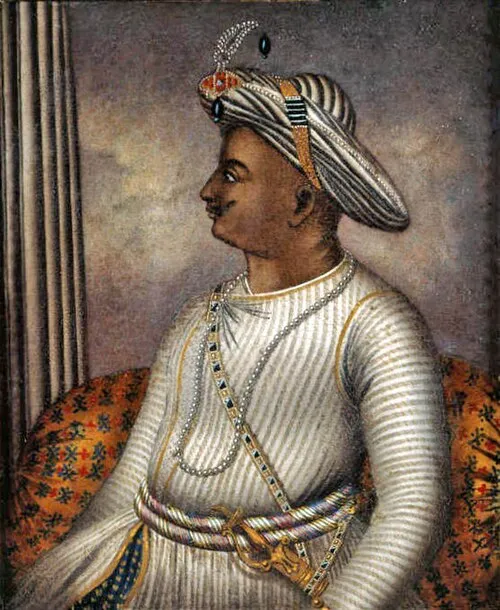
Tipu Sultan

That same defiance carried into Mysore, Tipu Sultan, a name antagonized in recent years that people even slipped away from the fact that he is the man who invented Missiles in India, a ruler who terrified the British. He built iron-cased rockets before most of the world imagined such a weapon, and fought the British across four wars, refusing again and again to let his kingdom bow. And what do we do with that legacy today? 

Islamic gallantry didn’t halt there. Moulvi Ahmadullah Shah, one of the key leaders of the First War of Indian Independence in 1857 was called the lighthouse of rebellion in Awadh, an epitome of the Ganga-Jamuna culture of Faizabad. The rebel army of Awadh was led by Barkat Ahmad and Maulvi Ahmadullah Shah, with Barkat Ahmad declared Chief Army Officer of the rebels after the Battle of Chinhat. ​​​​​​
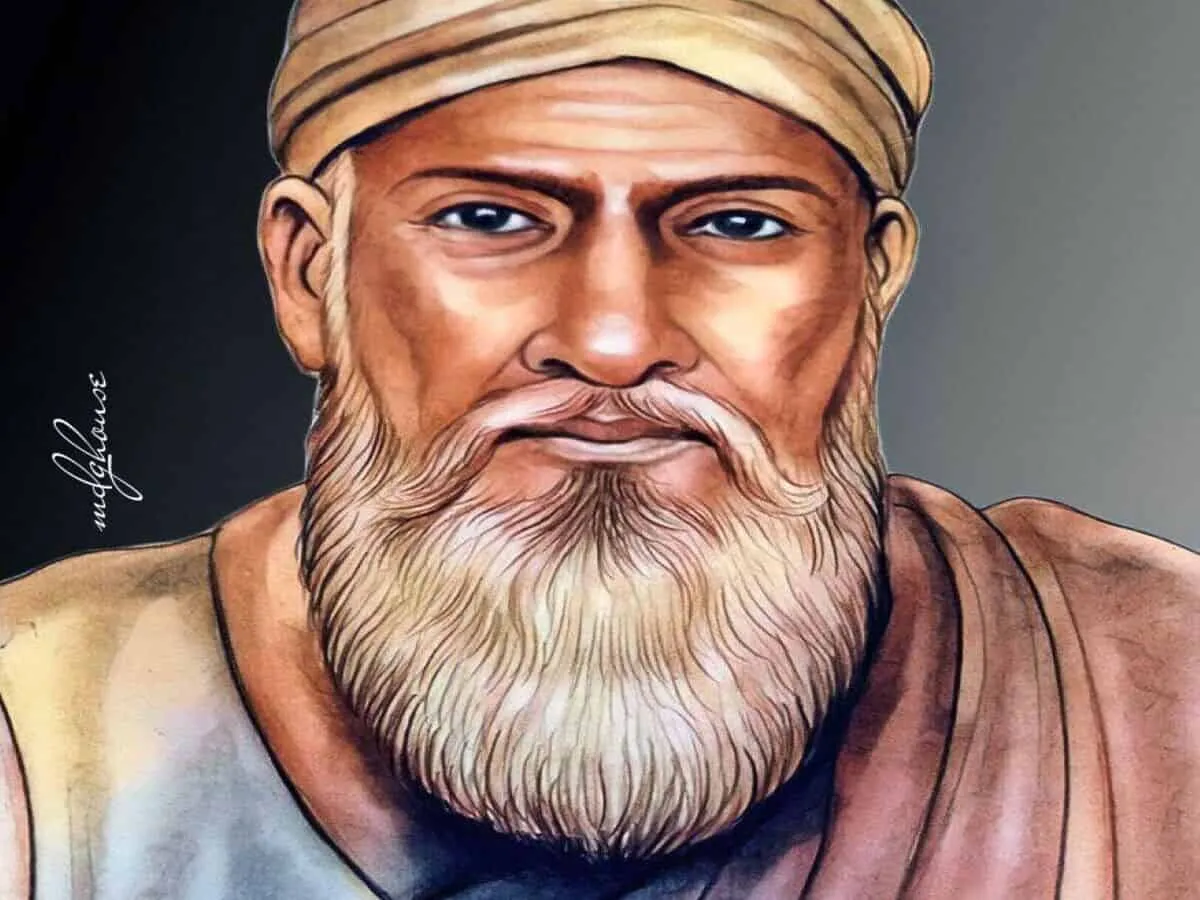
Moulvi Ahmadullah Shah

At the head of that same uprising stood Bahadur Shah Zafar, lending his name and his throne to the rebellion we call the Sepoy Mutiny. He gave everything a king could give, and the British broke him in the cruelest way. After his surrender, his sons Mirza Mughal and Mirza Khizr Sultan, and his grandson Mirza Abu Bakr, were stripped and shot in cold blood by Major William Hodson at what is now called Khooni Darwaza, and their severed heads were brought before their own father as a trophy. So many lives were lost in that struggle, so many families broken, and it is widely said that nearly 5 lakh Muslims were martyred, close to 50,000 of them ullema who chose the battlefield over silence. After rotating around 79 years of India’s independence, we are still cynical over the contributions carved by Indian Muslims.
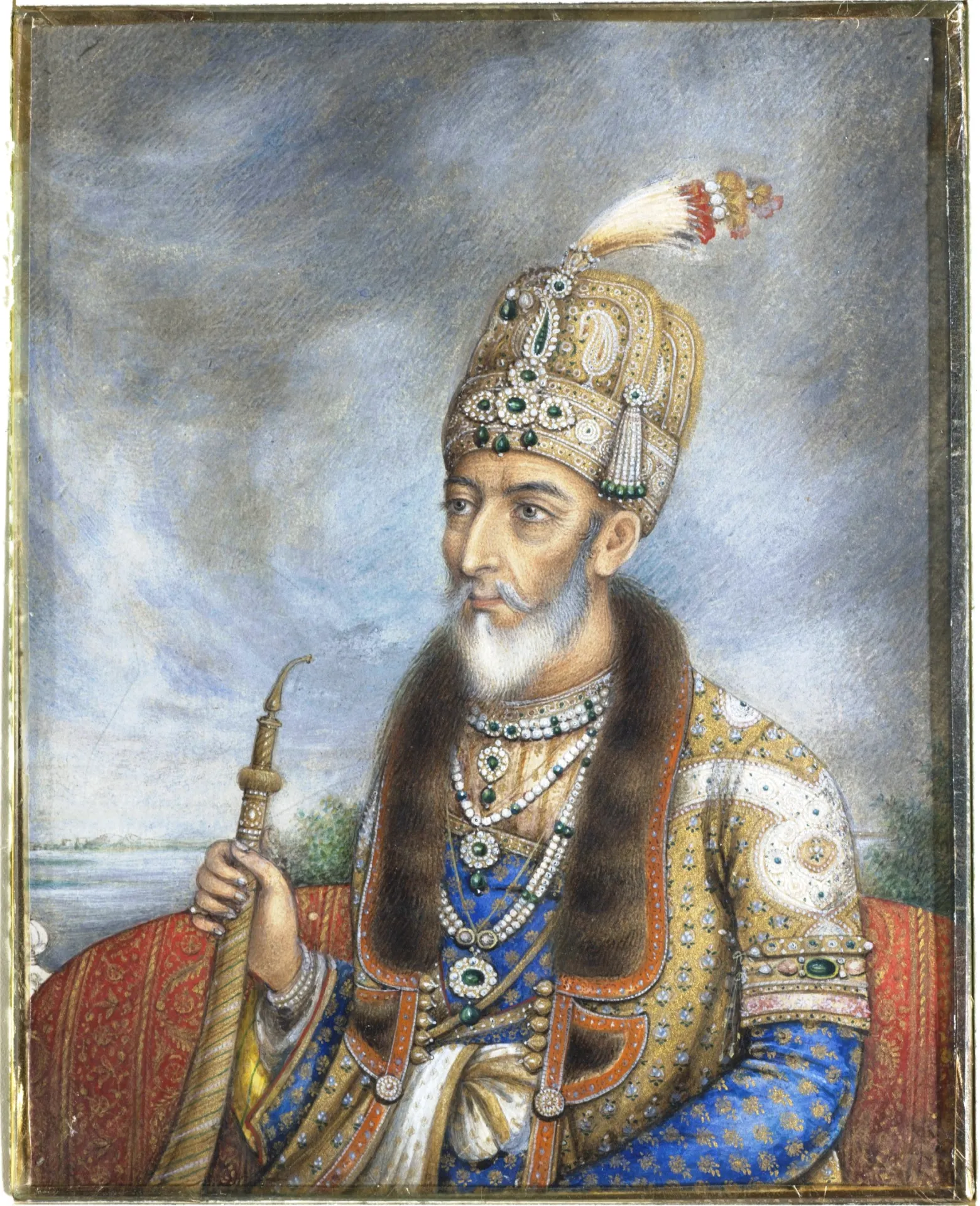
Bahadur Shah Zafar

Another buried name is of, Ashfaquallah Khan, was hanged on 19th December 1927, at just 27 years old, along with other Kakori comrades who were sent to the gallows. This Kakori robbery was to pull back the wealth of Indian soil to channelize it for the national struggle. Khan revolutionized nationalist movement with his participation in Hindustan Republican Association (HRA), founded by Ram Prasad Bismil along with two others. Like Kakori robbery, many other raids were rolled out to confront with required force rather than abstracting the notion of peace towards the gruesome tortures.   Have we ever lent an ear to these lines of Khan’s  ‘Hasrat’ poem- “Kuch aarzoo naheen hai, hai aarzoo to yeh hai, Rakh de koi zara si Khaak-e-watan kafan men” who as his last whim, recited this poem soaked in patriotism. Are we made to remember these lines by a Muslim freedom fighter when we are reminded about the terrified misapplication of the divine slogan “Allah-u-Akbar” to polarize the Islam?
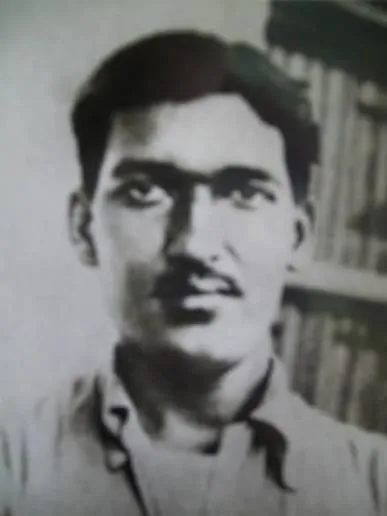
Ashfaqullah Khan

Walking further, Abdul Habeeb Yusuf Marfani, gave away his entire estate for a freedom he’d never see honoured. His courage was never separate from the cause, it was central to it, and it’s long overdue we remember it that way.
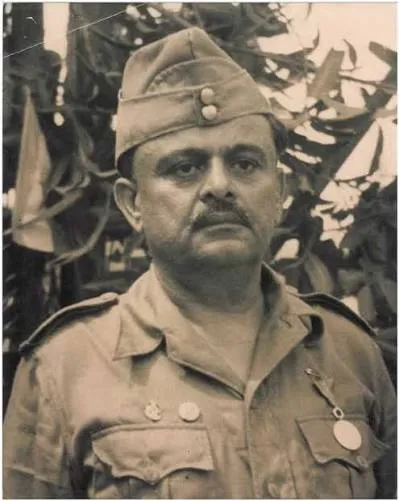
Abdul Habeeb Yusuf Marfani

Muslim participation in India’s freedom struggle was not boxed in a specific time or way, it encompassed armed resistance, societal reforms, mass mobilization, revolutionary events, and non-violent protests. The hurls on the invasions done by Muslims are widely made, but onlookers of the contributions by very same people, are tactfully airbrushed.

Sacrifices for the Indian motherland were proven on silent or loud battlefields,  not by the mere recital of ‘Patriotic Songs’ such as Vande Mataram as a contemporary reference. That is turned down by Indian Muslims lyrically, not soulfully, because of the religiosity which the Indian Constitution guarantees them. When did the recital of patriotic songs begin to outweigh the very acts of sacrifice they were meant to spring up?

Freedom fighters such as Maulvi Ahmadullah Shah, Begum Hazrat Mahal, Fazl-e-Haq Khairabadi (clarified the Jihad term through his war against the British), and Azimullah Khan were also important in the 1857 uprising. Barely, we learn or are made to learn about them? While vilifying other names of this very same community. 
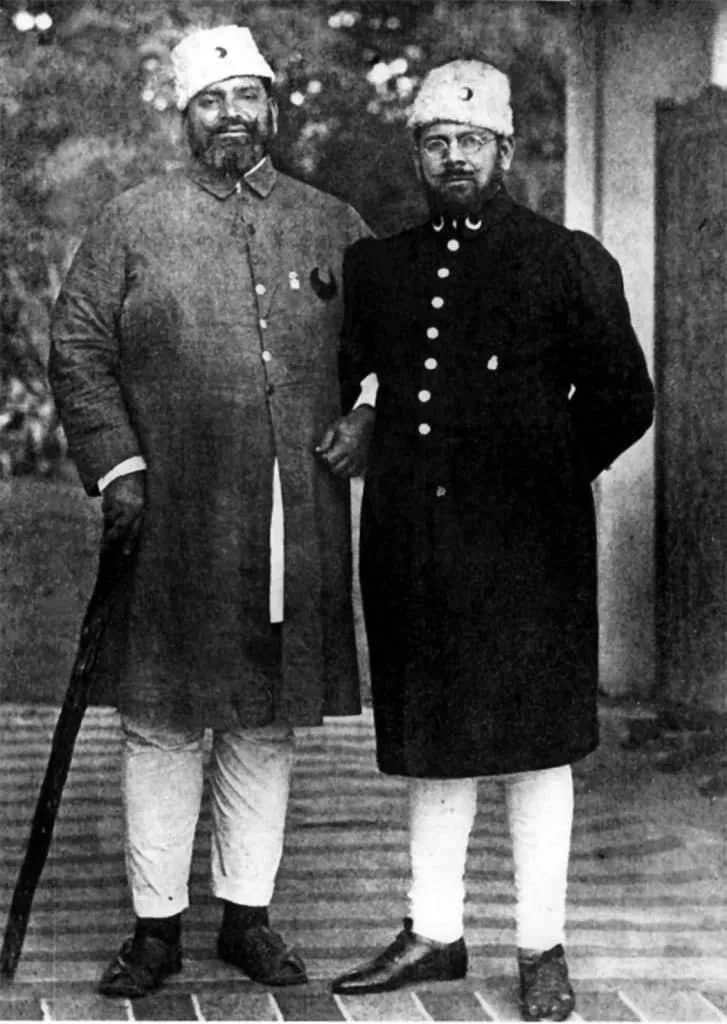
The Ali brothers, Shaukat Ali (1873-1938) and Mohamed Ali Jauhar (1878-1931)

Even the popular moments like the non-cooperation movement and the Khilafat Movement were helmed by some unheeded names: Mohammad Ali Jauhar and Shaukat Ali. Erected on the former’s name, there stands a university in Rampur, U.P. which recently has fallen prey to the communal politics, staking Indian youth’s future at darker stage, thus disregarding the blood of these freedom fighters.
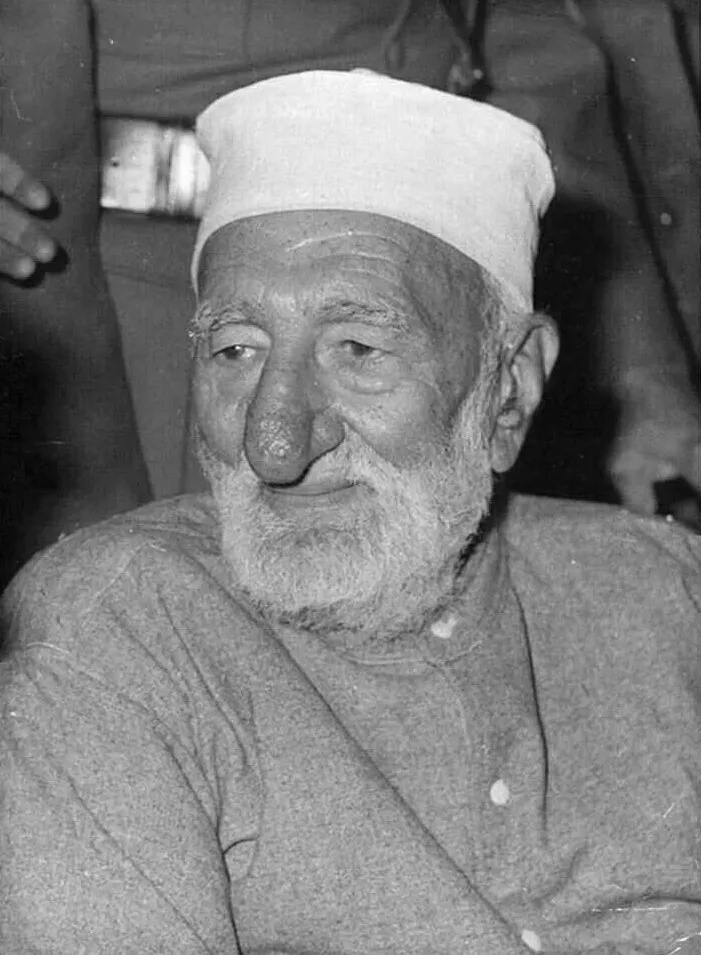
Khan Abdul Ghaffar Khan

Khan Abdul Ghaffar Khan who spent three decades in prison and headed the non-violent Khudai Khidmatgar Movement among Pashtuns against British rule, wherein he combined social reform, service, and discipline. His demise took place during his house arrest in Peshawar. 
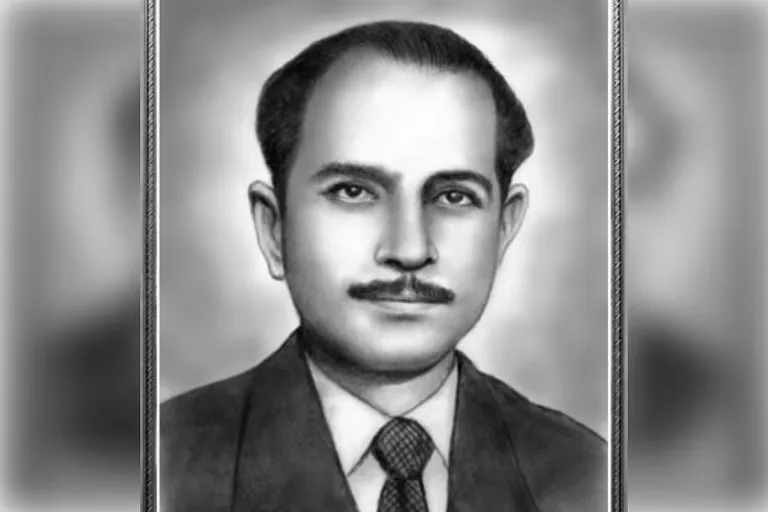
Abid Hasan Safrani

Without a single community-led leader, ideologies often find a loose hand to wrestle for their individual existence rather than collective results. Abid Hasan Safrani,  prominent INA member, mobilized the Muslim youth and committed to Subhas Chandra Bose’s movement (Azad Hind Fauj), which underpinned armed resistance in the Indian Freedom Struggle rather than non-violent means, brewing the unity for winning back the motherland.

Having said that, the famous Ghadar Party, founded in 1913, was pioneered by one more buried name- Maulana Barkatullah Bhopali. He was the first Prime Minister of the Provisional Government of India (Government-in-Exile), which was established in Kabul in 1915. He traversed across Europe, Asia, and North America to usher in the momentum for the Indian freedom struggle. His death took place in the US, leaving him deprived of bidding adieu to his motherland one last time.
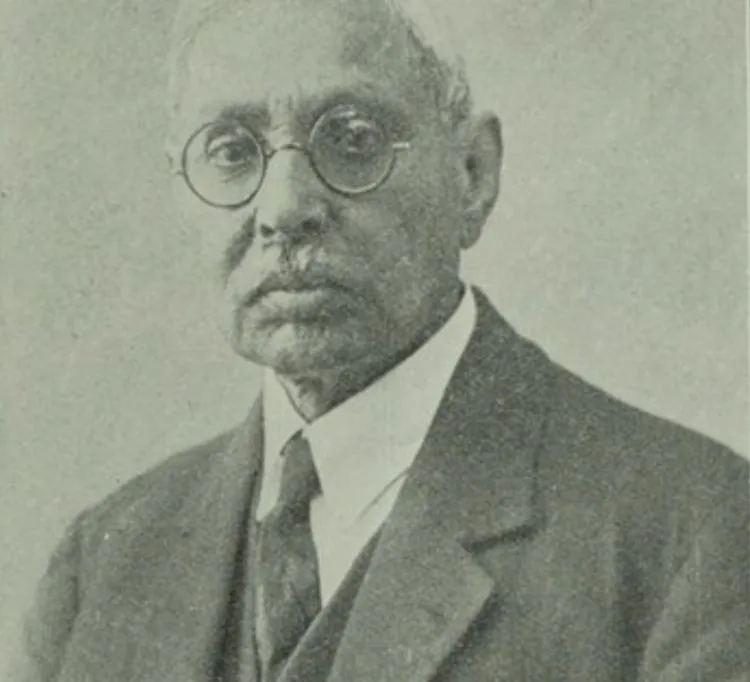
Maulana Barkatullah Bhopali

Then, “Inquilab Zindabad”, the popular hymn echoed at Jantar Mantar very recently, was originally coined by Urdu poet-politician Hasrat Mohani at the Congress’ Ahmedabad session, while Bhagat Singh solely made it popularized. Mohani had been a soulful Krishna Bhakt, leaving him writing eulogies for ‘Hazrat Krishna’ (Hazrat is not a religious tag; it is an honorary title).  He, being the co-prisoner of Gandhi ji, presented him with the USSR idea of federalism for empowering the localized and regional pockets of the agglomerate India. His courage and values proved his patriotism in the debates of the Constituent Assembly and confrontations with the Britishers. 
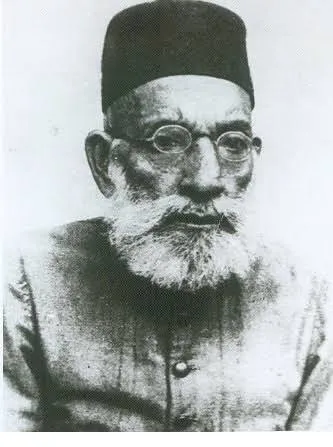
Hasrat Mohani

We remember Mahatma Gandhi more than any other freedom fighter, but are we mindful of the fact that the man who saved him was Batak Mian Ansari during the Champaran Satyagraha in 1917? He was the cook deployed by the Britishers, who then ordered Batak Mian Ansari to serve venomous milk to Gandhi ji. His integrity made him stake his life to save Gandhi ji. He sneakily warned Gandhi ji, and, as anticipated, he was kicked out of his job by the Britishers, further leaving him battered by the villagers and ousting him and his family from his residence. To date, his family couldn’t receive what was promised for his courage by India’s first president, Rajendra Prasad. Questioning how much we have honoured the honorable personalities on the ground?
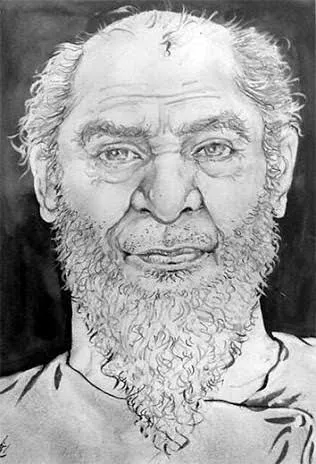
Batak Mian Ansari

The last Nizam of Hyderabad, Mir Osman Ali Khan, is also in this queue of the buried names. Independence movement is not merely the swing between direct confrontation with colonial regime, it too laps over the pre and post period that either nudged the movements or repaired the damages caused to India. He has reportedly granted mammoth donations across educational and religious institutions. From BHU, AMU, IISc, publication of critical editions of Mahabharata, Golden Temple, Amritsar and many more places . We rewind through cruel rulers who demolished Indian structures, to attack their community and make them accountable in the present, but are we awakened with these submerged realities as well? One-sided history or evolving history, rationality comes with the choices citizens make to discern their roots.
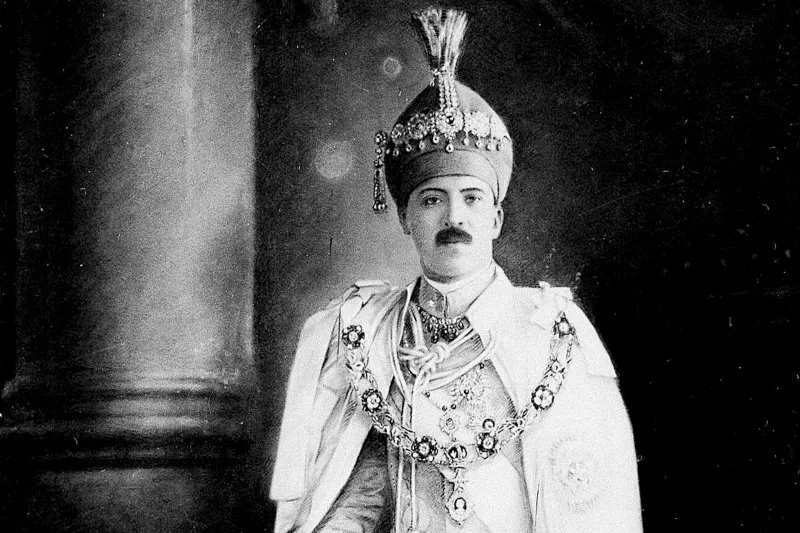
Mir Osman Ali Khan

The history of Muslim resistance to British colonial rule also travelled deep into Malabar in Kerala, where Variyankunnath Kunjahammad Haji, Ali Musliyar , and Sayyid Fazal Pookoya Thangal emerged as formidable names in a long tradition of anti-colonial mobilisation. Fazal Pookoya Thangal, the 19th-century Mappila spiritual leader of Malabar, became an influential voice against British authority and the oppressive agrarian order sustained under colonial rule, eventually being forced into exile in 1852. Decades later, that inheritance of resistance found powerful expression in the 1921 Malabar uprising, with Ali Musliyar, a religious scholar and Khilafat leader, and Variyankunnath Kunjahammad Haji becoming among its most prominent leaders. Haji challenged British authority in parts of Malabar and established a parallel administration in areas under rebel control, while Ali Musliyar mobilised people against colonial rule before being captured and executed by the British. Haji, too, was eventually captured and executed by firing squad in January 1922.
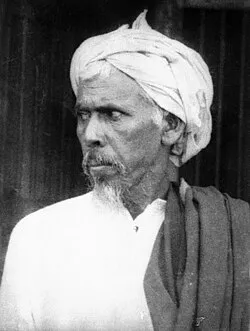
Ali Musliyar

Culture can marginalise women, but religion pours courage 

“Khoob Ladi Mardani thi, Wo Jhansi Wali Rani thi”, Whenever we speak of women who took up arms for this land, Rani Lakshmibai of Jhansi is the name that comes to every tongue, and she deserves every bit of that memory. But here’s what gnaws: she was not alone. There were other women just as fearless, standing in the same fire, and history simply didn’t bother to write their names down. 
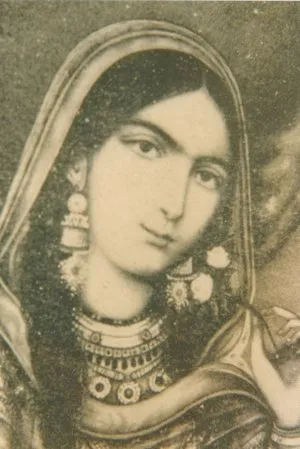
Begum Hazrat Mahal

Begum Hazrat Mahal was one of them, and she wasn’t a side character, she was one of the rebellion’s most formidable forces. Even William Howard Russell, a British correspondent writing for his own side, couldn’t deny her fire. In his My Indian Mutiny Dairy, describing her as a woman of remarkable energy who had stirred all of Oudh into rising for her son’s cause and had herself declared undying war against the British. At Musa Bagh in Lucknow, she didn’t issue orders from a distance, she personally fought alongside and rallied nearly 9,000 rebel soldiers, moving from camp to camp, lifting morale with speeches that set entire camps on fire.
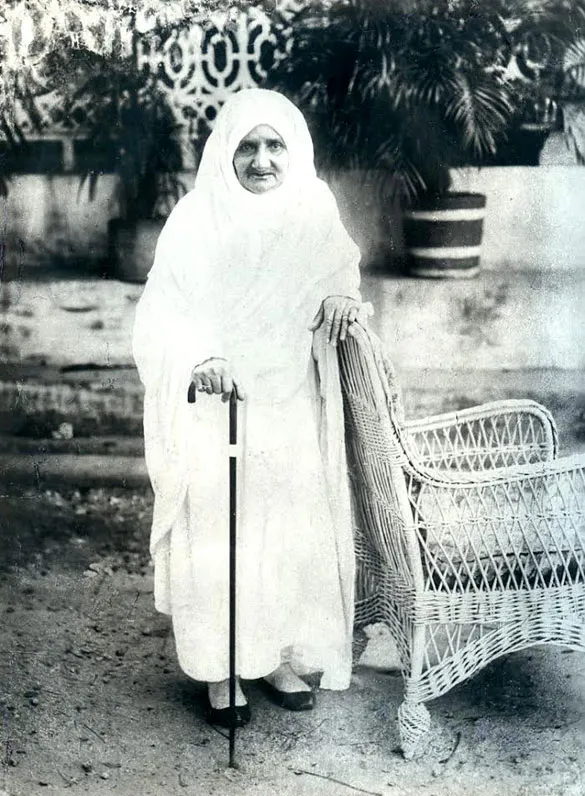
Abadi Bano Begum

And then there’s Abadi Bano Begum- the woman history remembers, if at all, only as “Bi Amma.” A widow with six children, one of the sons Maulana Shaukat Ali, and the other Mohammad Ali Jauhar, above-mentioned together known as the Ali Brothers. She could have used every excuse the world hands a woman to stay silent. widowhood, motherhood, the weight of raising children alone. She used none of them. When the country needed people brave enough to stand up to the British, she stood up too. She became the first woman to address a political rally while wearing a burqa and let that sink in for a moment. She didn’t have to remove a part of her identity to be taken seriously in public life; she broke the idea that a veiled woman couldn’t also be a fighter, a leader, or a voice loud enough to move a crowd. She urged women to stop hiding at home and join the struggle, organizing funds and meetings where they were addressed as political beings for the first time, and taught why boycotting foreign goods mattered. She convinced them to donate to the Tilak Swaraj Fund, set up by Bal Gangadhar Tilak to finance India’s freedom struggle.
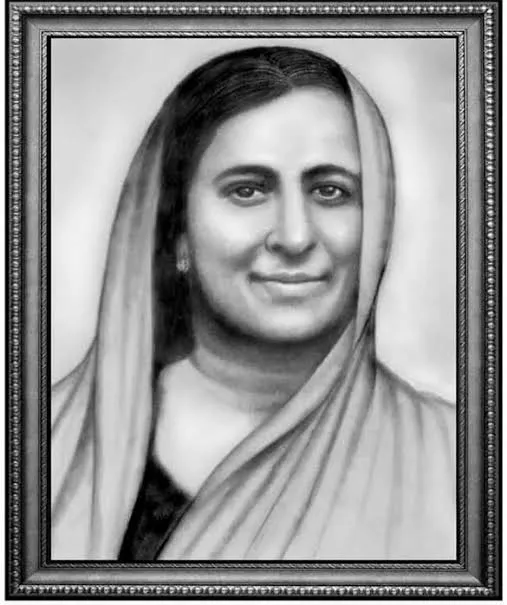
Kulsum Sayani

Not every battle was fought with a sword, some were fought with pen and paper. Kulsum Sayani, awarded the Padma Shri in 1960, waged her own war against illiteracy through the Jan Jagran movement, teaching under “each one, teach one” and leading centres for Muslim women that grew from 50 to 600 by sheer will. Begum Rokeya, a fiercely prolific feminist writer at a time when a woman dreaming was seen as rebellion, imagined a world turned upside down in Sultana’s Dream, then built that vision into reality, founding a girls’ school in 1909 and the Muslim Women’s Association in 1916, giving women space to learn and speak.
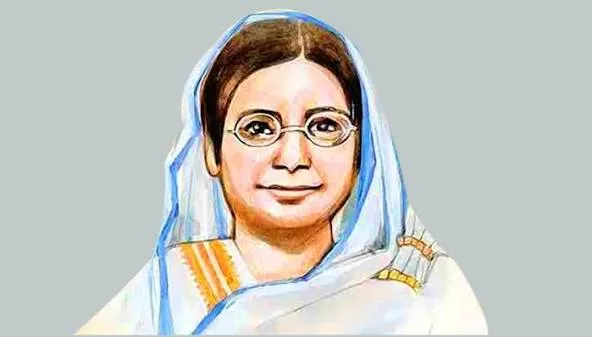
Begum Rokeya

80th Indian Independence Day’s call to unwind the narratives 

As the author of ‘Sare Jahan Sai Achcha, Hindustan Humara’– Allama Iqbal penned- “The freedom lovers of the nation stepped forward with such dignity that even those long imprisoned by deprivation watched in admiration.” It has been shouldered on the present generations to soak in the evolving history to sanitize the present from groans of hatred, rotting the Indian society. 

These lost chapters from Indian history wouldn’t have been possible to muster without the effulgent works of Salim Khan, Romila Thapar, Ramachandra Guha, S. Irfan Habib, Mushirul Hasan, A. G. Noorani, Rana Safvi, etc. Grinning us with the fact that the pluralistic framework of India is not only designed by the constituent makers, but it is also originally earned by all the freedom fighters, from pre- to post-independence.

Adeena Navaid is a law student and writer covering legal, social, and feminist issues, with work published in Maktoob, Bar & Bench, The Quint, Siasat, SheThePeople, and other platforms. Aiman Tabassum is a final-year LL.B. student at the University of Mumbai who writes on constitutional law, legal history, and socio-political issues, with work published in Bar & Bench.

source: http://www.maktoobmedia.com / Maktoob Media / Home> Opinion / by Adeena Navaid & Aiman Tabassum / August 14th, 2026
679th Foundation Day of Bahmani Empire observed in Kalaburagi

Kalaburagi (Gulbarga), KARNATAKA :

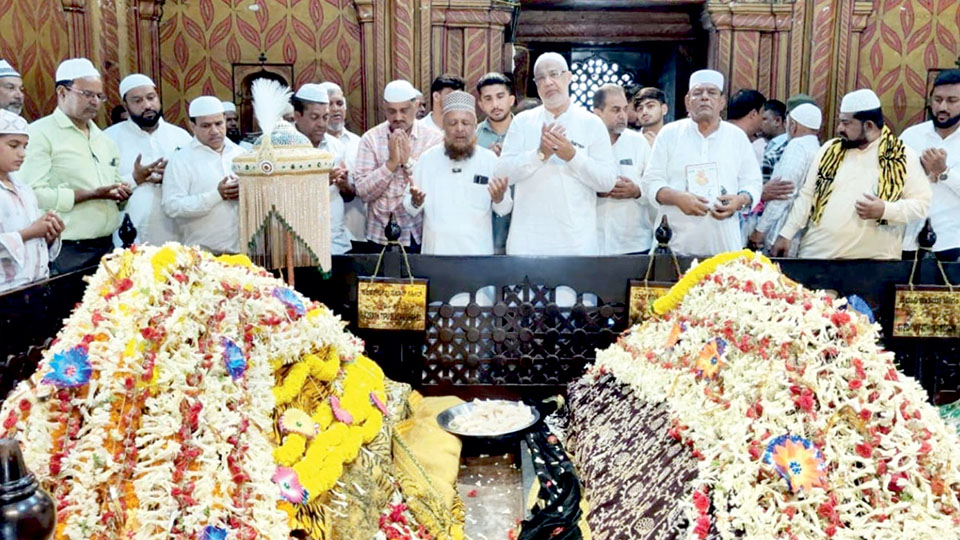
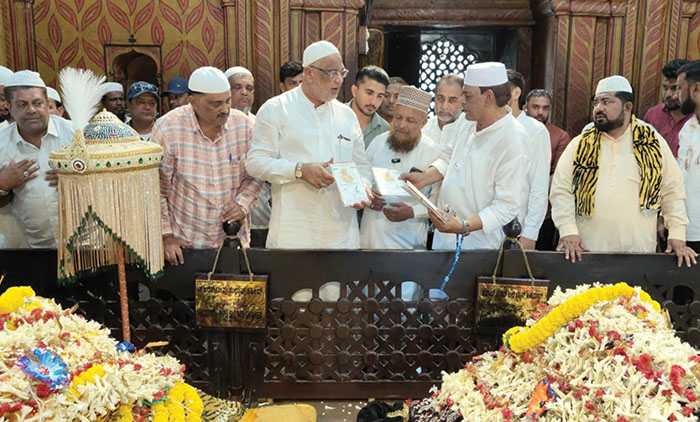
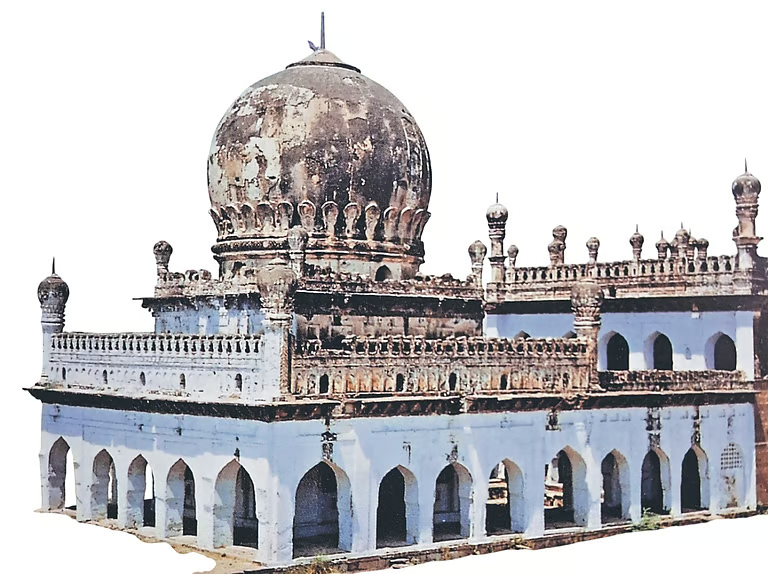
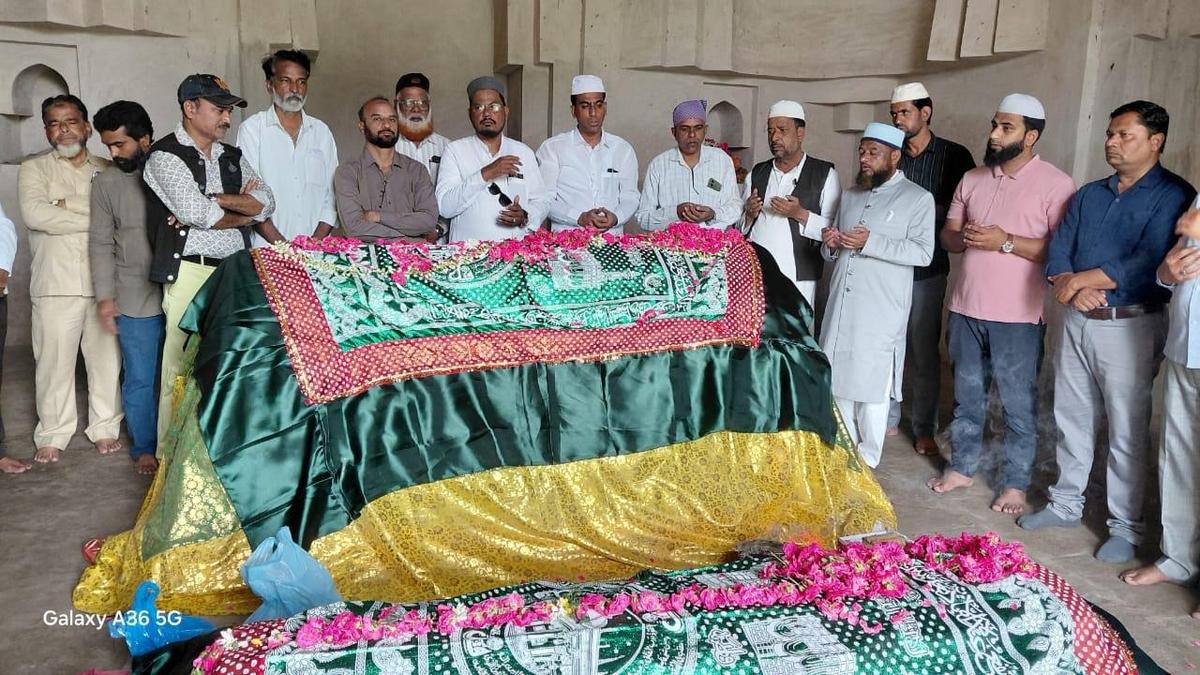
The 679th Foundation Day of the Bahmani Empire was observed at the tomb of Alauddin Hasan Bahman Shah, the founder and first ruler of the Sultanate, in Kalaburagi city on Monday.

The event, organised by the Bahmani Foundation, brought together historians, artists, intellectuals and social activists, who recalled the contributions of the Bahmani Sultanate to the cultural and architectural heritage of the region during its nearly two-century rule from 1347 to 1527 AD.

Speaking on the occasion, advocate Jabbar Gola said the Bahmani rulers played an important role in promoting art, culture and architecture, leaving behind a rich legacy reflected in the monuments and traditions of the region.

Bahmani Foundation president Qazi Rizwan-Ur-Rahman Siddique said the organisation has been commemorating the Foundation Day for several years through seminars, cultural programmes and competitions aimed at creating awareness among students about the history and heritage of the Bahmani period.

Artists Mohammed Ayazuddin Patel and Rehaman Patel, Numismatist Mohammad Ismail and others were present.

source: http://www.thehindu.com / The Hindu / Home> News> India> Karnataka / by The Hindu Bureau / August 18th, 2026

Why We Need a Book About Muslims Who Fought for India’s Freedom

Mumbai, INDIA :

Can a stable and just democracy flourish on foundations of wilful amnesia and erasure?

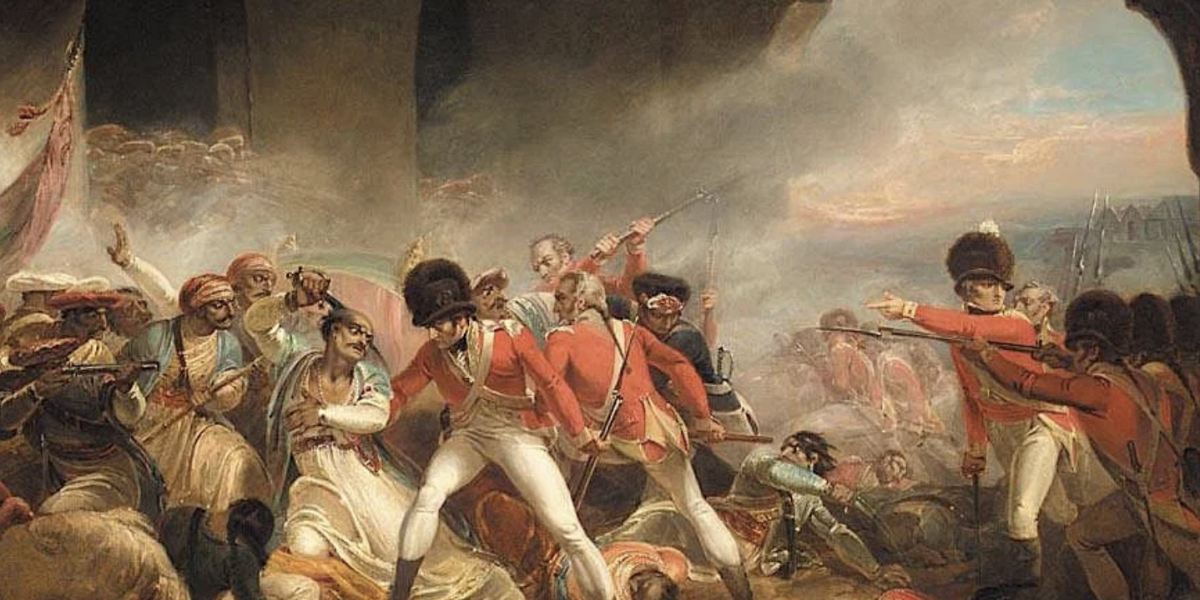
A c. 1800 painting showing the last stand of Tipu Sultan, ruler of Mysore in 1799 at the end of the Anglo-Mysore Wars with the East India Company. Photo: Henry Singleton/Public domain.

Many will ask why a book about Muslims who fought for India’s freedom? There’s no answer to such questions except another question. Had we been better memory keepers as a nation, could we have avoided the peak disinformation and stupidity which normalises reviling ordinary Muslims as outsiders, infiltrator and insurgents? 

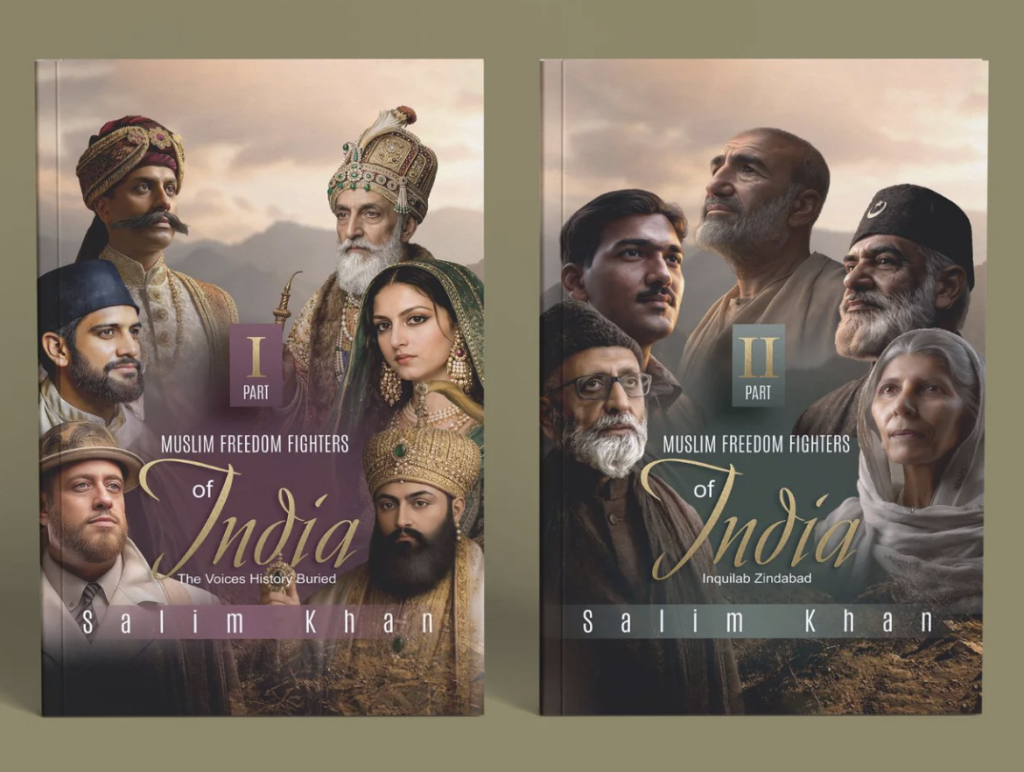
Muslim Freedom Fighters of India is a two-volume biographical compilation by Salim Khan on less-known, mostly forgotten and hardly known Muslim figures. The books aim to clear the fog around Muslim freedom fighters whose names are heard of without them being extensively known and this requires us to understand why this fog exists. Written in an extremely readable and accessible format, these biographical accounts embed the historical figures in the context of their times, responding to unprecedented events with foresight, clarity and conviction that sealed their fate and shaped and the nation’s destiny.

 Whether we are reading about Generals of 1857 – Bakht Khan and Khan Bahadur Khan – or the Cambridge-educated Rampur scion Mohammad Ali Juahar of Khilafat moment and his fiery mother Bi Amma, the larger questions seething beneath the stories keep rising to surface. Who does a society and nation choose to remember and celebrate? Whose memories are deemed worthy of preserving? History is always shaped by those who control archives, narratives and memorialisation and hence memory. 

Reading about Tipu’s dazzling reign through the three Anglo Mysore wars where he proved superior to British forces, I was reminded of the controversy sparked by the late Girish Karnad’s suggestion of naming the Bengaluru airport after Tipu Sultan. Karnad had said, “It is true that Tipu Sultan was not born in Bengaluru, but he was a son of this soil and a freedom fighter. Had Tipu been a Hindu, he would have achieved the status of Shivaji, and the airport would have been named after him.” I recalled Karnad because his play Dreams of Tipu Sultan echoes the same theme that this two-volume tribute to erased, obscured and deliberately unremembered historical figures echoes: that when politics lays down who should be forgotten, remembering the erased becomes a duty, an affirmation and a political act. 

It is important to clarify that this is not a compilation of eulogies but well-researched fact based account of people who had the uncommon clarity to resist colonial domination even before the nationalistic narratives took shape. That they happened to be Muslims is important today because of the distortions that have obscured and erased them. But back then when they fought and resisted, they were simply rallying for the cause of their soil and their watan. From the earliest times they understood that freedom from foreign domination required Hindus and Muslims to put up a united front as in the war of 1857, the Khilafat movement, and the period between 1919 and 1924. Back then too, traitors cut across religious lines – Jagat Seth, Mir Jafar, and Ilahi Baksh.

Muslim Freedom Fighters of India: Part 1 and Part 2’, Salim Khan, Qalam Aur Kaagaz Books.

From Siraj ud Daulah to Tipu to Shahzada Firoz Shah, the book shows how the fog around these personalities is not accidental but meticulously designed – initially by the colonial mind, then picked up by early nationalists and woven into simplistic narratives. The macabre dance of history further stifled Muslim voices. Cataclysmic events like the ‘end’ of the Mughal Dynasty in 1857 and the Partition in 1947 sundered clans, erased family histories, legacies crumbled with no one is around to defend and uphold them. Today, even people who don’t know history have heard of Lakshmi Bai, but many who read history may not have heard about Shahzada Firoz Shah, the Mughal Emperor’s grandson who in August 1857, led a band of armed soldiers to rally the rebels in Rohilkhand and Malwa and who fought alongside Tatia Tope and called for a united Hindu-Muslim front against the Company. 

The British understood the dangerous potential of popular memory and subverted any potential for memorialisation of hugely influential figures. No one knows if Shahzada Firoz died in battle or escaped to West Asia. The Maulavi Ahmadulla of Faizabad whose authority and fearlessness scared the British so much that they kept a reward on his head, was likewise interred in an unmarked grave. Knowing that even his memory could become a node to unite the rebels, the British saw to it that no commemoration was permitted or possible. Zafar, the last Mughal was exiled to Rangoon for the same reasons.

In her book, India, 5,000 years of history on the subcontinent, Audrey Truschke, elucidates how Muslim rulers like Nawab Siraj ud Daulah and Tipu Sultan to Zafar felt a responsibility for their subjects no matter what their religion. For example, Siraj ud Daulah actively intervened in times of famines and drought in Bengal. But after the British took over they did nothing to alleviate human suffering, so that 20% of Bengal’s population died in the famine of 1768 and the small-pox epidemic of 1769-70 following it. This had never happened during earlier episodes of failed harvests. Truschke says, British historians initiated the custom of categorising Indian rulers as tyrannical, effete and incompetent, reducing them to their religion and writing in terms of Hindu rulers and Muslim rulers. The British needed to demonise Muslim rulers who were their immediate predecessors in subcontinent so that they might look good by comparison, Truschke notes. It was a part of the colonial propaganda.

Another pattern Salim Khan’s compilation brings out is that from mid-18th century onwards, the first responders and the most committed crusaders resisting colonial domination – the kings, queens, princes, preachers, noblemen – were Muslims. Not only because the British had wrested from them the power they had wielded for centuries (howsoever fragmented or diluted it may have become); but also, because they were looked upon as leaders. In Awadh, for example, the Shia elite took it as their moral-ethical duty (see Chapter 7, volume I: Shia Ullema and Noblemen of Awadh

Even in the 20th century, Muslim freedom fighters like Hasrat Mohani of the Inquilaab Zindabad fame and Asfaqullah Khan of the Kakori conspiracy who was an icon for Bhagat Singh, remain in the shadows, seen only in a hazy half-light. Were their contributions any less or only less remembered? One of the most important projects post-Independence should have been to restore memory and affirmation to those whom the British put on the wrong side of history, no matter what their religion or caste. But we know this is not what happened.

Since the arrival of the political controversy over Tipu Sultan, we have entered in an era of deliberate distortion of history. The larger question that these accounts refrain from asking but that jumps to any thinking person’s mind is this: can a stable and just democracy flourish on foundations of wilful amnesia and erasure? Should the memory of Muslim freedom fighters be kept only by the Muslims? The heritage and memory of Indian Muslims needs to be reclaimed by them. But equally, these volumes are required reading for the casually miseducated, hopelessly disinformed or simply ignorant Hindus who have been stupefied into denying and distorting their composite history.

Varsha Tiwary is a Delhi-based writer and translator. She has recently published 1990, Aramganj a translation of the best-selling Hindi novel Rambhakt Rangbaz.

Tipu Sultan Martyr’s Day observed

Srirangapatna (Mysuru District), KARNATAKA :

MLA pays homage at Tipu Tomb, releases Urus Shariff invitation

Mysore/Mysuru:

MLA Tanveer Sait, along with several others observed Tipu Sultan Martyr’s Day at a Fatha Khawni programme organised by Hazarath Tipu Sultan Shaheed Welfare and Urus Committee Secretary Afroz Pasha at Tipu Tomb (Gumbaz), Ganjam in Srirangapatna recently.

Hazarath Moulana Syed Inayathur Rehaman Razvi Saheb, Khateeb-o-Imam of Masjid Aqsa, Tipu Tomb, performed Fatha Khawni while Afroz Pasha and MLA Tanveer Sait spread the Flower Mat (Chadar) on the tombs of Tipu Sultan Shrine and his parents. Moulana Mohd. Inayath Ur Rehaman Razvi read Duwa supplications for the welfare of all.

Afroz Pasha distributed sweets (Tabruk) and felicitated the MLA by offering shawls.

Invitation, posters released

On the occasion, MLA Sait released the invitation and publicity posters of the 234th Annual Sandal Urus Shariff of Hazarath Tipu Sultan Shaheed.

The annual Sandal Urus Shariff will be celebrated on May 16 in city during which a public meeting will be held and a procession will be taken out. 

Industrialist M.F. Jamsheed, Senior Congress leader Syed Iqbal, Waseem, Radiulla Khan, Member of the College Development Council of    Government Girls’ Pre-University College Khwaja Mohammed Musheer Chishti, Syed Younus, Majeed Ahmed, Afroz  Khan and a host of devotees were present.

source: http://www.starofmysore.com / Star of Mysore / Home>News / May 08th, 2026

Urs-e-Sharieff of Hazarath Tipu Sultan Shaheed on May 16, 17

Srirangapatna, KARNATAKA :

The 234th Urs-e-Sharieff of Hazarath Tipu Sultan Shaheed, organised by Hazrath Tipu Sultan Shaheed Wakf Estate, Ganjam in Srirangapatna, will be held on May 16 and 17 at Gumbad-e-Shahi at Ganjam in Srirangapatna.

The Sandal procession will commence from Masjid-e-Ala in Srirangapatna at 3 pm on May 16 and will reach Gumbad-e-Shahi at 5 pm.

Special programmes will be held from 7 pm at Gumbad and will continue the whole night till next morning.

For details, contact Hazarath Tipu Sultan Shaheed Wakf Estate on Ph: 08236-252786 or Mob: 97390-58786, according to a press release.

source: http://www.starofmysore.com / Star of Mysore / Home>In Briefs / May 05th, 2026

Delhiwale: The ultimate Mughal souvenir

DELHI :

The marble throne of Bahadur Shah Zafar, the last Mughal emperor, symbolizes a collapsed dynasty, now housed in a museum near Humayun’s Tomb in Delhi.

Delhiwale: The ultimate Mughal souvenir

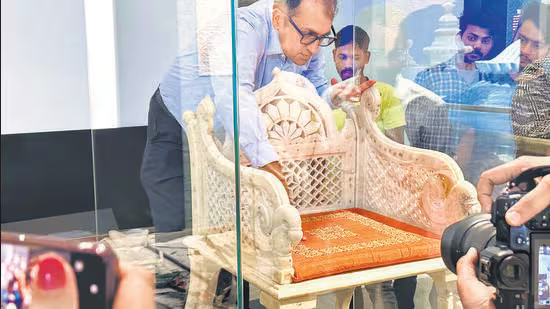
Behold this marble throne. Preserved inside a glass case at the Humayun World Heritage Site Museum in Delhi, it was once the stately seat of Bahadur Shah Zafar. As the last Mughal sovereign, the poet-king is likely to have sat on this throne while reflecting on the dissolution of his 300-year-old dynasty. The throne is, in fact, less ostentatious than the throne-like sofas found in the drawing rooms of Delhi’s wealthy today. Yet it is far more elegant. The armrests are supported on latticework, and faint flecks of colour cling to the marble like the last glimmers of extinguished stars. The fragile-seeming relic assumes truly epic proportions as the viewer connects it to the legend of a collapsed empire whose layered legacy continues to resonate in our republic (vividly chronicled in this newspaper yesterday).

The Mughals spanned over 18 rulers. Their kissa-kahani began 500 years ago in 1526, when Babur defeated Delhi Sultan Ibrahim Lodi in a field 80 kilometres from Delhi. Soon after, Babur entered the city and visited the shrine of the mystic Hazrat Nizamuddin Auliya. At that time, nobody would have guessed that this pilgrimage would recur across generations of Mughals, binding them to the city’s sacred, grave-dotted topography.

Truth be told, Delhi surpasses the dynasty’s other great centres, Agra and Lahore. Shahjahan may have built the immortal Taj in Agra, but his creation of Old Delhi throbs more with real life. For Delhi’s pre-eminence in Mughal India, we must first credit Babur’s son, Humayun, who established his capital, Dinpanah—today’s Purana Qila—near the shrine of Hazrat Nizamuddin. His son Akbar later built Humayun’s mausoleum close to the same shrine.

Over time, Humayun’s Tomb came to be known as the “dormitory of the Mughals.” This 16th-century complex contains 160 graves of kings, princes, and princesses, representing a broad cross-section of the dynasty. Seven Mughal emperors are buried here: Humayun, Azam Shah, Jahandar Shah, Farrukhsiyar, Rafi ud-Darajat, Rafi ud-Daulah, and Alamgir II. It was here, at Humayun’s Tomb, that Bahadur Shah Zafar took refuge after the collapse of the 1857 uprising against the British. He was captured at this very site, marking the end of the Mughal Empire.

The aforementioned museum, which houses Zafar’s throne, is across the road from Humayun’s Tomb. In the lead-up to its inauguration two years ago, a significant moment was the installation of the throne, personally overseen by museum curator Ratish Nanda—see photo. A conservation architect, Nanda had earlier helped restore the garden around the first Mughal emperor’s tomb in Kabul.

As for the last Mughal, the unfortunate Zafar had intended to be buried in Delhi, but the British exiled him to Rangoon, where he was finally laid to rest. As a consolation, his ill-fated throne may be seen as a symbolic substitute for his Delhi tomb. Indeed, as the tomb of his dynasty itself.

source: http://www.hindustantimes.com / Hindustan Times / Home / by HT Correspondent / May 04th, 2026

India’s Second Oldest Farman to Get Digitised as Part of GBM

TELANGANA :

Dr Zareena Parveen, director, State Archives, and coordinator of the Cluster Centre, GBM, explained that the survey has identified 1,95,935 manuscripts, including those of the Telangana Archives, and a total of 29,871 images of 130 manuscripts had been uploaded till May 2.

“The handmade paper used for the farman is a rare example showcasing the royal practices of the time,” M.A. Raqeeb, assistant director, Telangana Archives, told Deccan Chronicle. (Image: X)

Hyderabad:

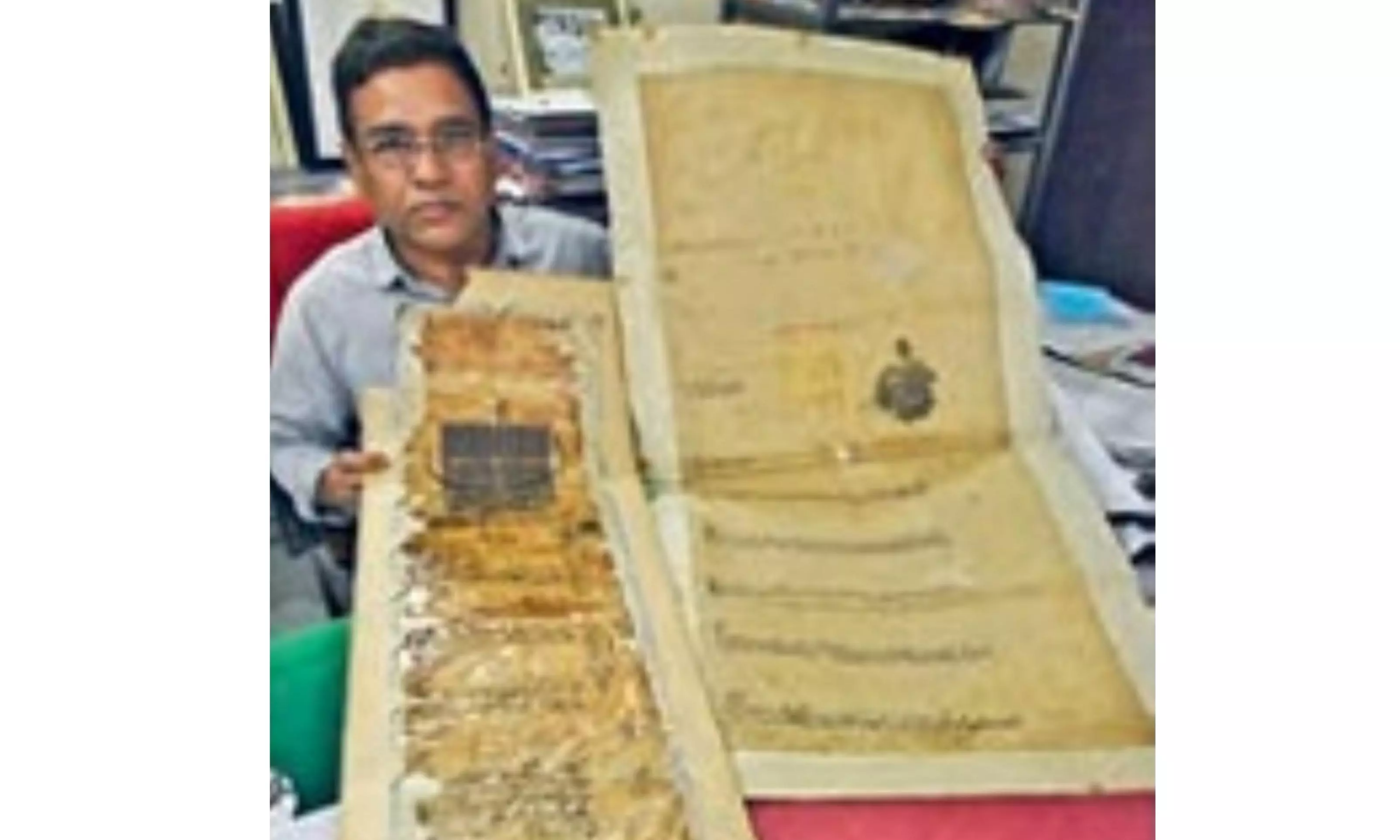
A royal farman, said to be the second oldest in India — issued by Sultan Feroz Shah Bahmani (1397–1422) in 1406 — will be among close to two lakh manuscripts identified as part of the survey by the Gyan Bharatam Mission (GBM) in Telangana. The GBM is a national initiative by the Union culture ministry to unearth, preserve and digitise India’s massive manuscript heritage.

This decree on Persian‑style handmade paper is 33 x 10 inches in size, with ink and royal‑seal authentication. The document was issued from Gulbarga, which was the seat of power for the Bahmanis before it was shifted to Bidar. The decree grants land as inam to Muhammed Ahmed, Qazi of Kalyani, and bears the distinctive tughra (monogram) and the Bahmani royal seal.

“The handmade paper used for the farman is a rare example showcasing the royal practices of the time,” M.A. Raqeeb, assistant director, Telangana Archives, told Deccan Chronicle.

Another well‑preserved royal farman is of Emperor Shah Alam II, issued in 1773 AD, appointing Maharaja Narayan Rao Bahadur as official caretaker of the riverbank near Allahabad. Believed to be part of preparations for the Kumbh Mela, the emperor issued clear instructions to officials not to levy fees.

“All expenses for maintaining the site and facilitating the pilgrims’ rituals are to be borne entirely by the Mughal government,” the decree says.

According to the decree, Hindu pilgrims (yatris) arriving from across the subcontinent — especially from Gujarat and Maharashtra — must be allowed to take the sacred bath and holy dip for spiritual purification without any fee or levy. The directive is to be strictly implemented and communicated to the commissioner of police and all present and future officers for perpetual observance.

“This farman illustrates the Later Mughal policy of imperial patronage toward diverse religious practices and underscores the state’s responsibility for safeguarding pilgrimage routes and sacred bathing ghats,” Raqeeb explained.

The cluster centre at the State Archives has identified and completed surveys of 17 institutions and individuals, while surveys for another 42 are underway. It has so far scanned 57,842 documents and exported 29,871 images.

Dr Zareena Parveen, director, State Archives, and coordinator of the Cluster Centre, GBM, explained that the survey has identified 1,95,935 manuscripts, including those of the Telangana Archives, and a total of 29,871 images of 130 manuscripts had been uploaded till May 2.

“At the State Archives alone we have over 1.8 lakh manuscripts, including 668 in book form, 155,000 paper items and 25,000 private collections (paper). Most of these are in Old Persian (Shikista) and cover varied subjects, including graphic pictures of Mansabdari, revenue and military systems of the Mughals in the Deccan region (South India),” Dr Parveen director explained.

source: http://www.deccanchronicle.com / Deccan Chronicle / Home> Southern States> Telangana / by Md Nizamuddin / May 03rd, 2026

The Rajas who shaped Indian history: The legacy of Prof Mahmudabad’s family

UTTAR PRADESH :

The family of Ali Khan Mahmudabad, the Ashoka University professor whose social media post on Operation Sindoor set off a storm, footprint on Indian history stretches back to the medieval period.

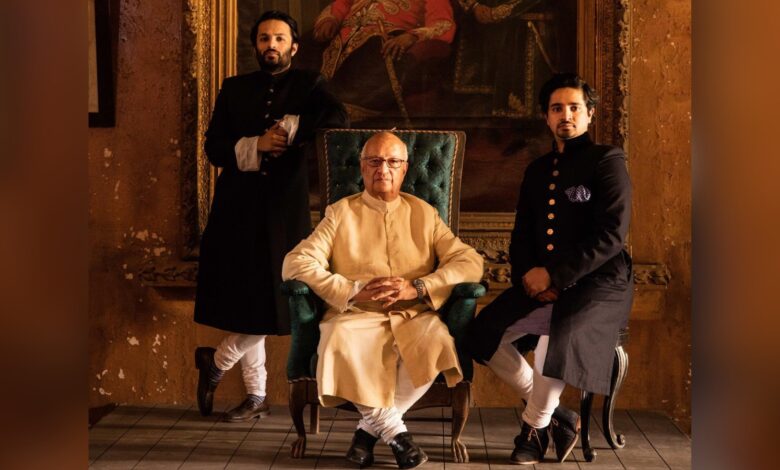
 Prof Ali Khan Mahmudabad, his father Raja Mohd Amir Mohd Khan (centre) and brother Rajkumar Amir Hasan Khan. Image courtesy: Mahmudabad Estate

The Supreme Court on March 16 closed the case against Prof Ali Khan Mahmudabad, the Ashoka University historian and columnist, after the Haryana government declined to grant sanction for his prosecution for his social media post on Operation Sindoor, a decision the court had itself nudged the state towards in an earlier order. 

A Division Bench comprising Chief Justice of India (CJI) Suryakant and Justice Joymalya Bagchi had, in its order of January 6, asked the Haryana government to consider refusing sanction as a “one-time magnanimity.” The state obliged, bringing to an end a case that had drawn global attention to questions of free speech and academic freedom in India. 

The matter had originated in a social media post made by Prof Mahmudabad in connection with Operation Sindoor of 2025. It snowballed rapidly after he received summons from the Haryana State Women’s Commission on May 12, 2025. The Supreme Court had granted him interim bail on May 21. 

The man behind the case

Prof Mahmudabad holds a doctorate and a master’s degree from the University of Cambridge and teaches history and political science at Ashoka University. Also known by his courtesy title “Raja of Mahmudabad,” he is the latest in a long and storied line – a family whose footprint on Indian history stretches back to the medieval period. 

During the Nawabi rule in Awadh and later under the British, the Rajas of Mahmudabad were among the largest Taluqdars, or feudal landholders, of the region, controlling over 400 villages and extensive urban properties across Lucknow, Sitapur, Lakhimpur Kheri and Nainital. 

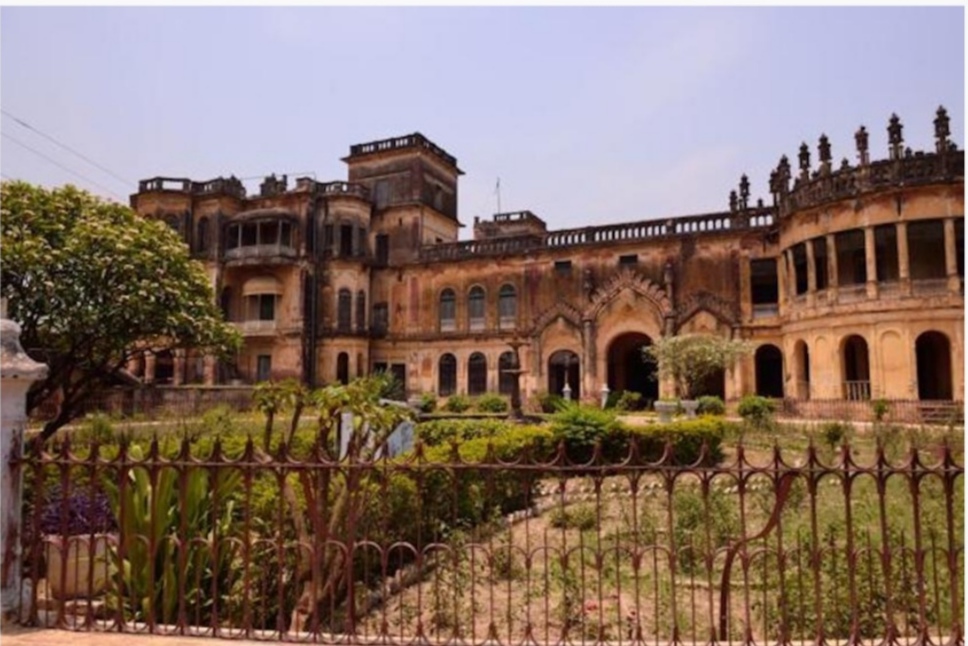
The family’s most visible legacy is the Mahmudabad Fort in Sitapur, a 19th century structure built in the Indo-Saracenic style that counts among the largest private residences in the world. It has hosted royalty, diplomats, political leaders and intellectuals from across the globe. Its library holds thousands of rare books and manuscripts in English, Hindi, Urdu, Sanskrit, Persian and Arabic – including handwritten copies of the Quran, the Bhagavad Gita and the Mahabharata, some dating to the 16th century. 

Mahmudabad Fort. Image courtesy: Mahmudabad Estate

The fort’s kitchens, too, have kept alive culinary traditions that have largely disappeared elsewhere. The original mud fort on the site was set ablaze by the British during the Revolt of 1857 and later rebuilt. 

The family’s syncretic character runs deep. Its charitable endowments include temples, one gifted to the Udasin Sect founded by Sri Chand, son of Guru Nanak, replicas of the Muslim shrines of Najaf and Karbala in Iraq and a caravanserai built to shelter travellers. 

Revolt of 1857 and after

The family’s political legacy is equally significant. During the Revolt of 1857, Muqim-ud-Daula Raja Nawab Ali Khan commanded several thousand rebel troops before being killed by British forces – the same forces that burned down his 16th century fort. His role has been documented in historical accounts of the period and in the Urdu novel “Aghaz-e-Sahar” by Khan Mahbub Tarzi, translated into English by Prof Mahmudabad himself under the title “The Break of Dawn.” 

His son, Amir-ud-Daula Raja Sir Mohammad Amir Hasan Khan, served on the Legislative Council of the Lieutenant Governor of the North Western Provinces. Lucknow’s Amir-ud-Daula Public Library and Amir-ud-Daula Islamia Degree College are named after him. 

Amir-ud-Daula Raja Sir Mohd Amir Hasan Khan. Image courtesy: Mahmudabad Estate

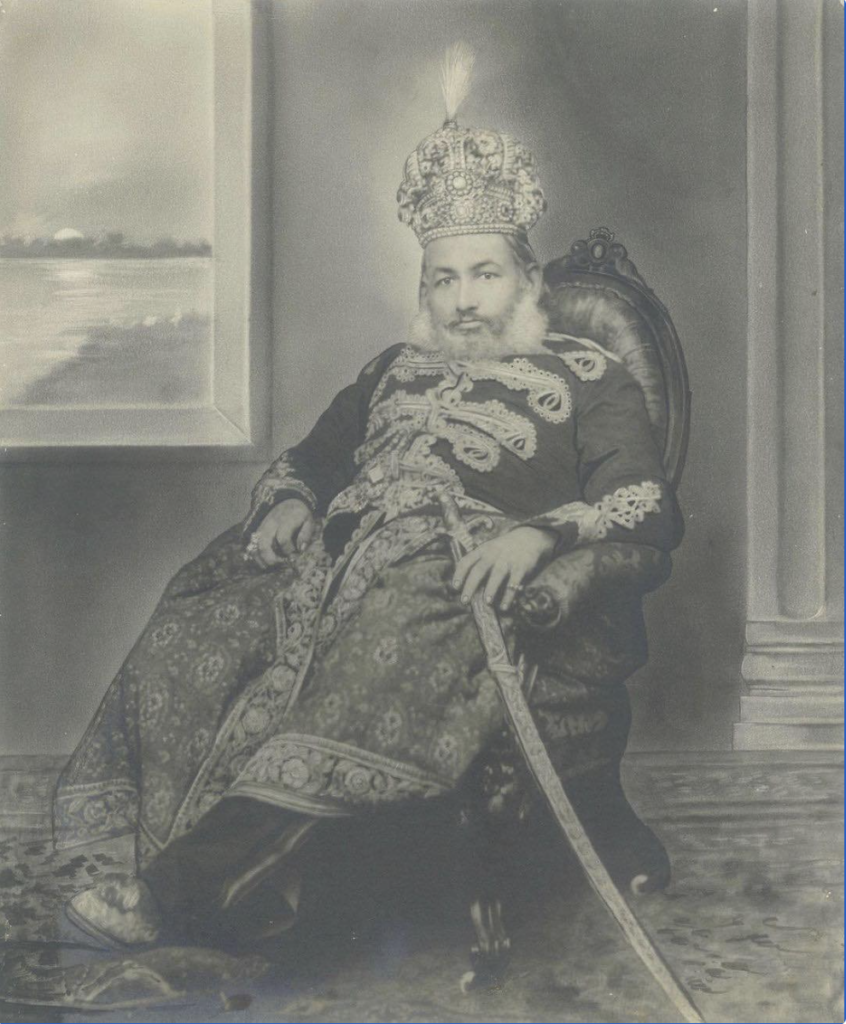
His son, Prof Mahmudabad’s great-grandfather Maharaja Sir Mohammad Ali Mohammad Khan was a pioneer of education who played a central role in establishing both Lucknow University and the Aligarh Muslim University, serving as the latter’s first Vice-Chancellor from 1920 to 1923. A residential hostel, Mahmudabad House, in Aligarh Muslim University’s Sir Shah Sulaiman Hall is named after him. He also served as the Home Member of the Governor of UP’s Executive Council.

Mahmudabad House in Lucknow. Image courtesy: Mahmudabad Estate

A close friend of Motilal Nehru, he was instrumental in the signing of the Lucknow Pact of 1916 and served on the Imperial Legislative Council, the Council of State and the United Provinces Legislative Council. Lucknow’s Butler Palace, named after former UP Governor Sir Spencer Harcourt Butler, was built by him. 

Maharaja Sir Mohammad Ali Mohammad Khan

Prof Mahmudabad’s father, Raja Mohammad Amir Mohammad Khan, was also a Cambridge graduate and an occasional professor of astrophysics at Imperial College London and the Institute of Astronomy at Cambridge. He was elected twice to the UP Legislative Assembly on a Congress ticket, in 1985 and 1989. 

When he passed away in October 2023, thousands joined his funeral procession across religious lines, and schools, markets and commercial establishments across the area shut down in mourning. 

A vindication, and a reminder

Prof Mahmudabad’s Lucknow home, Mahmudabad House – part of the historic Qaiserbagh Palace complex – continues to serve as a gathering place for intellectual and cultural exchange, much as the family’s spaces have for centuries. 

The closure of his case, then, is more than a personal reprieve. Coming at a time of heightened scrutiny over free expression in India, it is being seen as a reaffirmation, however fragile, of the right to speak, question and dissent. 

(Aman Alam is a student Barrister at the University of London and an Advocate in the
Supreme Court. He has been a former Law Clerk-cum-Research Associate to a Supreme Court judge. He is also a Fellow of the Royal Asiatic Society of Great Britain and Ireland)

source: http://www.siasat.com / The Siasat Daily / Home> Featured News / by Aman Alam, Guest Contributor March 27th, 2026

Bahmani Kings Wanted the Welfare of All: Muhammad Naseemuddin Faris

Bidar, KARNATAKA :

Bidar:

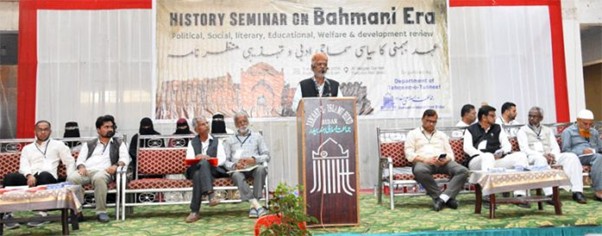
Scholars at a historical symposium in Bidar highlighted the inclusive governance, educational focus, and cultural contributions of the Bahmani kings. The event examined political, social, literary, educational, and developmental aspects of the Bahmani era.

Speaking at the symposium, Muhammad Naseemuddin Faris, retired dean of Maulana Azad Urdu University, Hyderabad, said the Bahmani rulers worked for the welfare of all sections of society. He said the kings governed by building trust across religions and social groups. He added that they maintained cordial relations with neighbouring states and ensured peace and stability.

Faris said the Bahmani rulers established several educational institutions and promoted learning. He noted their encouragement of the Urdu language and literature. He also said the rulers supported spiritual growth by inviting Islamic scholars from Iran, Iraq, and Syria. He highlighted the implementation of the Kharej system, which helped strengthen water conservation practices.

Jamaat e Islami Hind State Secretary Labid Shafi said knowledge of history remained essential for shaping society. He said certain communal groups were misusing history to spread hatred and distort facts. He described the symposium as an important step toward informed understanding of the Bahmani legacy.

Several scholars delivered thematic lectures. Muhammad Fahimuddin spoke on religion and Sufism. Dr Rais Fatima discussed economic prosperity. Dr Manzoor Ahmed traced the development of Urdu literature. Dr Abdul Majeed addressed architecture. Dr Muhammad Samiuddin focused on education. Dr Maimuna Begum examined coinage. Dr Muhammad Majeed spoke on the decline of the kingdom. Dr Ismail Khan discussed Mahmud Gavan. Dr Mushtaq Ahmed analysed political conditions.

Shamshuddin delivered the introductory address. Muhammad Mauazzam presided over the inaugural session. Hafiz Syed Atiqullah recited the Quran. Muhammad Arifuddin proposed the vote of thanks.

source: http://www.radiancenews.com / Radiance News / Home> Latest News> Report / by Radiance News Bureau / February 07th, 2026

Mystery still shrouds ‘Saath Kabra’

Vijayapura, KARNATAKA :

This haunting historical site in Vijayapura deserves better conservation efforts from Archaeological Survey of India as well as deeper research from historians to understand the legends swirling around the monument.

Saath Kabra, the cluster of 63 tombs, in Vijayapura (Photo | Express)

Vijayapura :

Far from being just another tourist destination, ‘Saath Kabra’ in Vijayapura stands out as one of the most haunting historical sites in the region. Often described as a silent witness to a tragic past, ‘Saath Kabra’ is a cluster of 63 tombs arranged on a raised black stone platform, that has generated legends, scholarly debate and enduring curiosity.

The most widespread legend surrounding ‘Saath Kabra’ is linked to the period of Ali Adil Shah II of the Bijapur Sultanate, who is also credited with commissioning the unfinished ‘Bara Kaman’ monument. During his reign, the Bijapur Empire faced a serious challenge from the Maratha leader Chhatrapati Shivaji. To counter this threat, Ali Adil Shah appointed his powerful general Afzal Khan to confront Shivaji.

Afzal Khan, originally from Afghanistan, was known as a formidable warrior. Historical narratives also describe him as deeply superstitious, placing great faith in astrology and spiritual predictions. In 1659, before leaving to face Shivaji, Afzal Khan is believed to have consulted a Sufi Pir, who foretold that he would not return from the campaign. According to local legend, this prophecy deeply disturbed him.

Folklore claims that Afzal Khan, fearing defeat and dishonour, killed more than 60 of his wives by pushing them into a well and later constructed tombs at the site. The alleged motive was to prevent them from remarrying or falling into the hands of enemies and facing humiliation or violence in the event of his death. This story has long been used to explain the existence of the mass graves at ‘Saath Kabra.’

The cenotaph of Afzal Khan

Afzal Khan later travelled to Pratapgarh in the present-day Maharashtra to confront Shivaji. Instead of a direct battlefield encounter, negotiations were arranged. Historical records state that Afzal Khan planned to assassinate Shivaji during a peace meeting. Shivaji, aware of the plot, took defensive measures by wearing armour and concealing iron tiger claws on his fingers. During a traditional embrace, Afzal Khan attempted to overpower Shivaji, but failed. Shivaji retaliated and killed Afzal Khan. Afzal Khan’s body was subsequently buried at the foothills of Pratapgarh Fort.

There is no evidence to support the claim that Afzal Khan murdered his wives or that ‘Saath Kabra’ is their burial site. Vijayapura-based historians Abdul Gani Imaratwale and Krishna Kolhara Kulkarni dismissed the popular narrative as baseless, stating that no credible historical text mentions such an act by Afzal Khan. They emphasised that, in the absence of documentary evidence, the story must be treated as legend rather than history, and that research is required to determine the true origins of the graves.

Dr Imaratwale likes to call the 60 women as ‘half-wives’ as though they were not legally wedded wives, however they enjoyed almost the same privileges that of wives. He said that Khan had four legally wedded wives.

Dr Imaratwale says that such women were accorded considerable respect and were not buried in public graveyards. Separate land was often chosen for their burial, which could explain the clustered graves at ‘Saath Kabra.’

Dr Imaratwale says that it is not credible that a general, who commanded an army of around 40,000 soldiers, would be so fearful of his enemy that he would drown his women one by one in an open well.

Dr Imaratwale suggests alternative possibilities. He said the deaths could have occurred due to mass poisoning or as a result of an accident, such as the collapse of a large structure where the women may have been residing. However, he acknowledged that no information is available to establish the exact cause.

The historians say there is no clear record to confirm whether the women died while Afzal Khan was in Bijapur or during his military campaign. They believe it is more likely that their deaths occurred when Afzal Khan was fighting in Maharashtra. Afzal Khan himself died there, and his body was never brought back to Bijapur. As a result, his cenotaph exists in Vijayapura, built in accordance with his wish to be buried there, a wish that ultimately remained unfulfilled.

Tourists largely confine their visits to prominent landmarks such as the Gol Gumbaz, Bara Kaman and Ibrahim Roza while dozens of other monuments remain overlooked. Located in Navarasapur on the outskirts of the city, ‘Saath Kabra’ is difficult to access. The site includes 63 black stone tombs, an ancient well now filled with silt. Many tombstones are broken or missing, and the entire complex is in a dilapidated state. Poor road connectivity, lack of signboards and absence of maintenance have further contributed to its neglect, with little effort made by the tourism department or the Archaeological Survey of India to promote or preserve the site.

Owing to its eerie atmosphere and disturbing legends, local residents often avoid the monument. Whether it represents a misunderstood burial site, a tragic episode lost to time, or folklore layered over fragments of history, ‘Saath Kabra’remains one of Vijayapura’s most enigmatic monuments, underscoring the urgent need for serious research, preservation and historical clarity.

source: http://www.newindianexpress.com / The New Indian Express / Home> Bengaluru / by Firoz Rozindar / February 08th, 2026