Category Archives: World Opinion

Meet Tahsin, Nishan, Indian origin footballers, to play in 2026 FIFA World Cup

Kannur, KERALA / Doha, QATAR :

India has not qualified for the 2026 FIFA World Cup but two footballers – Tahsin and Nishan, are making the country proud as the countdown for the football mega event begins

Tahsin Mohammed Jamshid (L) and Nishan Velupillay

2026 FIFA World Cup: 

India has not qualified for the 2026 FIFA World Cup but two footballers – Tahsin and Nishan, are making the country proud as the countdown for the football mega event begins.

The 2026 FIFA World Cup is set for a grand inauguration on June 11, 2026. Weeks before the inauguration of the football world cup, two footballers – Tahsin Mohammed Jamshid and Nishan Velupillay are adding to the football fever in India.

And the reason is their country of origin.

Tahsin Mohammed Jamshid and Nishan Velupillay both have their roots in India, and they will be playing the 2026 Football World Cup, though not for India but for the countries they are currently residing in.

Tahsin Mohammed Jamshid

19-year-old Tahsin Mohammed Jamshid is the first footballer of Indian-origin selected in Qatar’s squad for the 2026 FIFA World Cup.

Tahsin’s parents, Jamshid and Shaima, migrated from Kannur, Kerala in 1996 and settled in Doha, Qatar where Tahsin was born on June 16, 2006.

The winger, who is described as quick, direct, and impactful on the wings, came through Qatar’s Aspire Academy and plays for Al Duhail Sports Club.

Tahsin, who earlier represented Qatar at senior, U23, U20, and lower youth levels and is regarded as one of the country’s promising young talents, made his senior debut for Qatar in the World Cup qualifier against Afghanistan.

Tashin’s father Jamshid currently working as Accountant, is also a footballer and had played for University of Calicut, Kerala.

Nishan Velupillay

Nishan Velupillay (25) has been confirmed in the 26-member Australian squad for the 2026 football world cup.

The Melbourne Victory winger was born on May 7, 2001 in Melbourne, Australia. His father, Sasinath Velupillay, is Malaysian with Sri Lankan Tamil roots, and his mother, Gillian, is Anglo-Indian.

Nishan made his debut for Australia in 2024 and scored on his first appearance in the World Cup qualifier against China. Since then, he has become a regular part of the Australian national football team.

With his selection for the World Cup, Velupillay is set to become the first footballer of Tamil heritage to play at the football world cup.

“A Historic Moment”

Congress leader and MP Shashi Tharoor who posted the brief profile of the two footballers said their inclusion in the Qatar and Australian national teams are proud moment for India too.

“A historic moment for Indian football fans! As the 2026 FIFA World Cup approaches, we will have two players of Indian heritage gracing the global stage”, Tharoor wrote on social media platform X.

“They follow in the footsteps of Vikash Dhorasoo, the elegant and creative midfielder whose forefathers hailed from Vizianagaram, Andhra Pradesh (migrating to Mauritius and later to France), who played for the French National Team in the 2006 FIFA World Cup in Germany, winning a runners-up medal”, Tharoor further wrote.

The 2026 edition of the World Cup will be the first to feature 48 teams and three host countries. The United States will have 11 of the 16 hosts cities at the 2026 FIFA World Cup, which will also feature matches in Mexico and Canada.

The 2026 FIFA World Cup will be inaugurated on June 11, 2026 whereas the 2026 Football World Cup Final will be played on July 19, 2026.

source: http://www.ummid.com / Ummid.com / Home> 2026 FIFA World Cup / by ummid.com news network / June 03rd, 2026

Why We Need a Book About Muslims Who Fought for India’s Freedom

Mumbai, INDIA :

Can a stable and just democracy flourish on foundations of wilful amnesia and erasure?

A c. 1800 painting showing the last stand of Tipu Sultan, ruler of Mysore in 1799 at the end of the Anglo-Mysore Wars with the East India Company. Photo: Henry Singleton/Public domain.

Many will ask why a book about Muslims who fought for India’s freedom? There’s no answer to such questions except another question. Had we been better memory keepers as a nation, could we have avoided the peak disinformation and stupidity which normalises reviling ordinary Muslims as outsiders, infiltrator and insurgents? 

Muslim Freedom Fighters of India is a two-volume biographical compilation by Salim Khan on less-known, mostly forgotten and hardly known Muslim figures. The books aim to clear the fog around Muslim freedom fighters whose names are heard of without them being extensively known and this requires us to understand why this fog exists. Written in an extremely readable and accessible format, these biographical accounts embed the historical figures in the context of their times, responding to unprecedented events with foresight, clarity and conviction that sealed their fate and shaped and the nation’s destiny.

 Whether we are reading about Generals of 1857 – Bakht Khan and Khan Bahadur Khan – or the Cambridge-educated Rampur scion Mohammad Ali Juahar of Khilafat moment and his fiery mother Bi Amma, the larger questions seething beneath the stories keep rising to surface. Who does a society and nation choose to remember and celebrate? Whose memories are deemed worthy of preserving? History is always shaped by those who control archives, narratives and memorialisation and hence memory. 

Reading about Tipu’s dazzling reign through the three Anglo Mysore wars where he proved superior to British forces, I was reminded of the controversy sparked by the late Girish Karnad’s suggestion of naming the Bengaluru airport after Tipu Sultan. Karnad had said, “It is true that Tipu Sultan was not born in Bengaluru, but he was a son of this soil and a freedom fighter. Had Tipu been a Hindu, he would have achieved the status of Shivaji, and the airport would have been named after him.” I recalled Karnad because his play Dreams of Tipu Sultan echoes the same theme that this two-volume tribute to erased, obscured and deliberately unremembered historical figures echoes: that when politics lays down who should be forgotten, remembering the erased becomes a duty, an affirmation and a political act. 

It is important to clarify that this is not a compilation of eulogies but well-researched fact based account of people who had the uncommon clarity to resist colonial domination even before the nationalistic narratives took shape. That they happened to be Muslims is important today because of the distortions that have obscured and erased them. But back then when they fought and resisted, they were simply rallying for the cause of their soil and their watan. From the earliest times they understood that freedom from foreign domination required Hindus and Muslims to put up a united front as in the war of 1857, the Khilafat movement, and the period between 1919 and 1924. Back then too, traitors cut across religious lines – Jagat Seth, Mir Jafar, and Ilahi Baksh.

Muslim Freedom Fighters of India: Part 1 and Part 2’, Salim Khan, Qalam Aur Kaagaz Books.

From Siraj ud Daulah to Tipu to Shahzada Firoz Shah, the book shows how the fog around these personalities is not accidental but meticulously designed – initially by the colonial mind, then picked up by early nationalists and woven into simplistic narratives. The macabre dance of history further stifled Muslim voices. Cataclysmic events like the ‘end’ of the Mughal Dynasty in 1857 and the Partition in 1947 sundered clans, erased family histories, legacies crumbled with no one is around to defend and uphold them. Today, even people who don’t know history have heard of Lakshmi Bai, but many who read history may not have heard about Shahzada Firoz Shah, the Mughal Emperor’s grandson who in August 1857, led a band of armed soldiers to rally the rebels in Rohilkhand and Malwa and who fought alongside Tatia Tope and called for a united Hindu-Muslim front against the Company. 

The British understood the dangerous potential of popular memory and subverted any potential for memorialisation of hugely influential figures. No one knows if Shahzada Firoz died in battle or escaped to West Asia. The Maulavi Ahmadulla of Faizabad whose authority and fearlessness scared the British so much that they kept a reward on his head, was likewise interred in an unmarked grave. Knowing that even his memory could become a node to unite the rebels, the British saw to it that no commemoration was permitted or possible. Zafar, the last Mughal was exiled to Rangoon for the same reasons.

In her book, India, 5,000 years of history on the subcontinent, Audrey Truschke, elucidates how Muslim rulers like Nawab Siraj ud Daulah and Tipu Sultan to Zafar felt a responsibility for their subjects no matter what their religion. For example, Siraj ud Daulah actively intervened in times of famines and drought in Bengal. But after the British took over they did nothing to alleviate human suffering, so that 20% of Bengal’s population died in the famine of 1768 and the small-pox epidemic of 1769-70 following it. This had never happened during earlier episodes of failed harvests. Truschke says, British historians initiated the custom of categorising Indian rulers as tyrannical, effete and incompetent, reducing them to their religion and writing in terms of Hindu rulers and Muslim rulers. The British needed to demonise Muslim rulers who were their immediate predecessors in subcontinent so that they might look good by comparison, Truschke notes. It was a part of the colonial propaganda.

Another pattern Salim Khan’s compilation brings out is that from mid-18th century onwards, the first responders and the most committed crusaders resisting colonial domination – the kings, queens, princes, preachers, noblemen – were Muslims. Not only because the British had wrested from them the power they had wielded for centuries (howsoever fragmented or diluted it may have become); but also, because they were looked upon as leaders. In Awadh, for example, the Shia elite took it as their moral-ethical duty (see Chapter 7, volume I: Shia Ullema and Noblemen of Awadh

Even in the 20th century, Muslim freedom fighters like Hasrat Mohani of the Inquilaab Zindabad fame and Asfaqullah Khan of the Kakori conspiracy who was an icon for Bhagat Singh, remain in the shadows, seen only in a hazy half-light. Were their contributions any less or only less remembered? One of the most important projects post-Independence should have been to restore memory and affirmation to those whom the British put on the wrong side of history, no matter what their religion or caste. But we know this is not what happened.

Since the arrival of the political controversy over Tipu Sultan, we have entered in an era of deliberate distortion of history. The larger question that these accounts refrain from asking but that jumps to any thinking person’s mind is this: can a stable and just democracy flourish on foundations of wilful amnesia and erasure? Should the memory of Muslim freedom fighters be kept only by the Muslims? The heritage and memory of Indian Muslims needs to be reclaimed by them. But equally, these volumes are required reading for the casually miseducated, hopelessly disinformed or simply ignorant Hindus who have been stupefied into denying and distorting their composite history.

Varsha Tiwary is a Delhi-based writer and translator. She has recently published 1990, Aramganj a translation of the best-selling Hindi novel Rambhakt Rangbaz.

Two Indian-origin scientists receive South Africa’s highest civilian honour

Pretoria, SOUTH AFRICA :

Two of South Africa’s internationally recognised, Indian-origin scientists were among the 38 people awarded the country’s highest civilian awards in recognition of their outstanding contributions toward public health.

Professor Salim Abdool Karim and Professor Keertan Dheda, were formally awarded the prestigious Order of Mapungubwe by President Cyril Ramaphosa at Pretoria.

This specific order recognises South African citizens who have achieved excellence and exceptional accomplishment to the direct benefit of South Africa and the global community.

The citation for Karim, who was awarded the Order of Mapungubwe in Gold, honours his monumental contributions to medical science and public health, particularly his groundbreaking research into HIV/Aids and tuberculosis (TB) epidemiology, and his exceptional leadership in national health policy development.

source: http://www.dailypioneer.com / The Pioneer / Home / by Fakir Hussain / May 21st, 2026

How a 90-year-old North Texas doctor built a lifeline for thousands in need

INDIA / Texas, U.S.A :

Decades ago, Dr. Basheer Ahmed received a phone call from the local Catholic Charities.

https://www.nbcdfw.com/video/news/local/how-a-90-year-old-doctor-built-a-lifeline-for-uninsured-patients/4024921

A North Texas psychiatrist says one phone call during the Bosnian refugee crisis led him to create the Muslim Community Center for Human Services. The nonprofit now provides medical, dental and mental health services to thousands of patients each year, regardless of faith or ability to pay. The organization relies on donated time, equipment and funding as Dr. Basheer Ahmed continues serving patients at age 90. NBC 5’s Tahera Rahman has more.

When Catholic Charities called Dr. Basheer Ahmed in the early 1990s, asking for help relocating Muslim Bosnian refugees, he quickly realized something larger was missing across Texas.

“There was no Muslim social service organization or charitable organization helping people,” Ahmed said.

That phone call led Ahmed, now 90 years old, to found the Muslim Community Center for Human Services , a North Texas nonprofit that has since grown into a network of free and low-cost medical, dental and social service programs serving thousands each year.

“Being a psychiatrist, I had been doing some consultation work for Catholic Charities,” Ahmed recalled.

The organization was helping relocate Muslim Bosnian refugees to North Texas and needed guidance on cultural and religious needs, including mosques and halal food.

Ahmed, a Muslim immigrant from India, said the request stayed with him.

“They said, ‘Dr. Ahmed, what should we do?’” he said. “And I became very concerned that in the entire Texas, in fact, there was no Muslim social service organization or charitable organization helping people.”

In 1995, Ahmed gathered a group of supporters and founded the Muslim Community Center for Human Services, known as MCC.

The organization, based in Richland Hills, began modestly.

“So, I acted as a receptionist also initially,” Ahmed said. “We didn’t have money.”

Ahmed soon realized many patients also struggled to access medical care because of language barriers, cultural differences and long wait times.

“They had to wait a long time. There were language barriers, cultural barriers,” he said.

What started as culturally sensitive social services expanded into medical care, mental health support, domestic violence assistance and dental services.

Ahmed said community support helped the organization grow. One example that stands out to him involved retiring dentist Sam Roach, who donated equipment to MCC’s dental clinic before volunteering there himself.

“[A] Christian donating office to a Muslim organization shows how humanity works,” Ahmed said.

A Life Shaped by Service

Ahmed has held many leadership roles throughout his life, including serving as president of the Islamic Association of North America in 1979.

“In 1979, when there was Iranian hostages, he called us,” Ahmed said of former President Jimmy Carter. Ahmed said Carter sought input from Muslim leaders during the hostage crisis.

Still, Ahmed said service remains the role that matters most to him.

“I always feel that every human being should think about why God created you, what purpose you are serving,” he said. “I realized that serving humanity is my purpose of life.”

Adeela Malik, MCC’s director of clinical services, said the organization continues adapting to financial challenges while trying to meet growing demand.

“This was operating right until COVID,” Malik said of the dental clinic. “When COVID hit, we had to shut it down because of a lack of funds.”

Malik said MCC now connects patients with partner dentists who provide care for free or at reduced cost through their own practices.

“That’s one of our goals, to collect enough funds and reopen it,” Malik said. “Because I’m telling you, there is a lot of demand. People are willing to travel two hours for their dental.”

Care for Everyone, Regardless of Background

MCC services are free, though patients may be charged a $25 administrative fee if they can afford it.

One patient, who asked not to be identified, said he discovered MCC after searching online while struggling with serious health issues and no insurance.

“When you lose 70 pounds in three months, we thought like something serious was going on,” he said.

The patient said he initially believed the clinic only treated Muslim patients.

“To be honest, first I thought they’re only treating like Muslim community, but I was very wrong,” he said.

Doctors diagnosed him with untreated diabetes, and he said ongoing visits have helped him manage the condition.

“I’m glad I found them because… I will say, saved my life,” he said.

The patient also shared a message for Ahmed.

“I wanna say thank you from the bottom of my heart for having such a kind heart,” he said.

Ahmed said the organization’s mission remains rooted in expanding care to anyone in need.

“This is the best medical service in the world we provide here in America,” Ahmed said. “I can tell you that. But unfortunately, the sad part is it’s not for everybody. And my desire is that I wish we can do this to every person. We can.”

That’s why, even after a lifetime’s work, the 90-year-old continues to fill needs where he finds them.

“I feel at least a peace in mind that I am doing that for satisfying my own faith and my purpose for living in this world,” he said.

The Muslim Community Center for Human Services operates through donated time and funding.

source: http://www.nbcdfw.com / 5NBCDFW / Home> Health / by Tahera Rahman / May 13th, 2026

India’s Second Oldest Farman to Get Digitised as Part of GBM

TELANGANA :

Dr Zareena Parveen, director, State Archives, and coordinator of the Cluster Centre, GBM, explained that the survey has identified 1,95,935 manuscripts, including those of the Telangana Archives, and a total of 29,871 images of 130 manuscripts had been uploaded till May 2.

“The handmade paper used for the farman is a rare example showcasing the royal practices of the time,” M.A. Raqeeb, assistant director, Telangana Archives, told Deccan Chronicle. (Image: X)

Hyderabad:

A royal farman, said to be the second oldest in India — issued by Sultan Feroz Shah Bahmani (1397–1422) in 1406 — will be among close to two lakh manuscripts identified as part of the survey by the Gyan Bharatam Mission (GBM) in Telangana. The GBM is a national initiative by the Union culture ministry to unearth, preserve and digitise India’s massive manuscript heritage.

This decree on Persian‑style handmade paper is 33 x 10 inches in size, with ink and royal‑seal authentication. The document was issued from Gulbarga, which was the seat of power for the Bahmanis before it was shifted to Bidar. The decree grants land as inam to Muhammed Ahmed, Qazi of Kalyani, and bears the distinctive tughra (monogram) and the Bahmani royal seal.

“The handmade paper used for the farman is a rare example showcasing the royal practices of the time,” M.A. Raqeeb, assistant director, Telangana Archives, told Deccan Chronicle.

Another well‑preserved royal farman is of Emperor Shah Alam II, issued in 1773 AD, appointing Maharaja Narayan Rao Bahadur as official caretaker of the riverbank near Allahabad. Believed to be part of preparations for the Kumbh Mela, the emperor issued clear instructions to officials not to levy fees.

“All expenses for maintaining the site and facilitating the pilgrims’ rituals are to be borne entirely by the Mughal government,” the decree says.

According to the decree, Hindu pilgrims (yatris) arriving from across the subcontinent — especially from Gujarat and Maharashtra — must be allowed to take the sacred bath and holy dip for spiritual purification without any fee or levy. The directive is to be strictly implemented and communicated to the commissioner of police and all present and future officers for perpetual observance.

“This farman illustrates the Later Mughal policy of imperial patronage toward diverse religious practices and underscores the state’s responsibility for safeguarding pilgrimage routes and sacred bathing ghats,” Raqeeb explained.

The cluster centre at the State Archives has identified and completed surveys of 17 institutions and individuals, while surveys for another 42 are underway. It has so far scanned 57,842 documents and exported 29,871 images.

Dr Zareena Parveen, director, State Archives, and coordinator of the Cluster Centre, GBM, explained that the survey has identified 1,95,935 manuscripts, including those of the Telangana Archives, and a total of 29,871 images of 130 manuscripts had been uploaded till May 2.

“At the State Archives alone we have over 1.8 lakh manuscripts, including 668 in book form, 155,000 paper items and 25,000 private collections (paper). Most of these are in Old Persian (Shikista) and cover varied subjects, including graphic pictures of Mansabdari, revenue and military systems of the Mughals in the Deccan region (South India),” Dr Parveen director explained.

source: http://www.deccanchronicle.com / Deccan Chronicle / Home> Southern States> Telangana / by Md Nizamuddin / May 03rd, 2026

Mangaluru woman among four Indian expats to win Abu Dhabi’s Big Ticket weekly draw

KERALA / U.A.E :

Abu Dhabi :

In a streak of luck for Indian expatriates in the Middle East, four individuals have bagged Dh 25,000 each in the first weekly e-draw of Abu Dhabi’s Big Ticket for the month of April. Among the winners is a Mangaluru native who turned her birthday into a life-changing celebration.

Double celebration for Mangalurean winner

Veera Lobo, a 50-year-old Dubai resident originally from Mangaluru, received the best birthday gift she could have imagined. Lobo decided to purchase her ticket on Easter Sunday, which coincided with her 50th birthday.

Participating as part of a group of four, Lobo expressed her shock and joy upon hearing the news. “I was overwhelmed with happiness and excitement. I never expected it at all,” she said. The group plans to split the prize money, and Lobo has pledged to donate a portion of her share to charity.

Other winners from the region

The weekly draw saw three other Indian expats, including residents from Kerala and Kuwait, securing the Dh 25,000 prize:

  • Anzil Nazar: A 33-year-old aircraft technician with Air Arabia originally from Kerala, Nazar has lived in the UAE since 2022. Unlike his usual practice of pooling money with friends, he tried his luck independently this time with a random ticket selection. Initially mistaking the winning notification for a promotional call, Nazar said he plans to continue participating in the future.
  • Amritha Babu: A 30-year-old teaching assistant at a GEMS school in Sharjah, Amritha’s win came on only her fourth ticket purchase. A resident of the UAE for eight years, she chose her ticket based on her lucky number, ‘8’. She recognised the voice of Big Ticket host Richard over the phone before the news even sank in.
  • Fathima Afeedha: Another native of Kerala, Fathima’s winning ticket was purchased by her husband, a supervisor based in Kuwait for the last 15 years. Her husband, who has been buying tickets for five years, expressed his delight and stated he would continue to try his luck in the upcoming draws.

Grand prize awaits

The weekly e-draws are part of the lead-up to the grand live draw on May 3, which features a massive Dh 25 million jackpot. In addition to the top prize, five other participants will walk away with Dh 1 million each. Three more weekly draws remain for the month of April, with four winners guaranteed to win Dh 25,000 every week.

source: http://www.daijiworld.com / DaijiWorld.com / Home> Top Stories / by Daijiworld Media Network – Abu Dhabi / April 15th, 2026

Against odds, Saba Anjum becomes India’s speedy forward

Kelabadi (Durg), CHHATTISGARH :

Saba Anjum

In the narrow lanes of ‘Kelabadi’ locality in Durg, a 9-year-old girl could be seen playing hockey with boys. She had neither expensive shoes nor her own hockey stick. She used her elder brother’s old, broken stick, wrapped with tape, to step onto the field. Her father worked as a muezzin in a local mosque.

The family’s income was so low that sometimes it was difficult to light the stove even for one meal a day. When she decided to pursue hockey as her passion, society mocked her, “A girl will play wearing shorts?” But her father was determined that his daughter would write her own destiny. This is the story of Saba Anjum Karim, the girl who rose from the dusty lanes of Chhattisgarh to wave the tricolor on global sports fields.

Saba Anjum playing hockey

Former Indian women’s hockey forward Saba Anjum says that when she started playing, her family’s financial condition was not good. Her father worked as a muezzin in the mosque, while her mother worked to support household expenses. Once, during a summer camp at the playground, children were given jaggery and chickpeas after playing. She started playing thinking she would get jaggery and chickpeas. With this thought, she began her sports journey. Later, a running competition was organized where she participated and secured first place. As a prize, she received a hockey stick. That moment became her inspiration to continue playing hockey.

Her school later participated in the Nehru Hockey Tournament, after which she was selected for the Indian national team. She never looked back after that. She played the Nehru Hockey Cup in 1999. From 2002 to 2012, she was a member of the Indian national hockey team and represented the country in many competitions. During this period, she also captained the Indian team. Her elder brother was also a national-level hockey player.

The President, Shri Pranab Mukherjee presenting the Padma Shri Award to Smt. Saba Anjum, at a Civil Investiture Ceremony, at Rashtrapati Bhavan, in New Delhi on April 08, 2015.

Saba Anjum receiving an award from former President Pranab Mukherjee

Born on 12 June 1985, Saba Anjum shared that in 1997, during a match, her coach dropped her from playing and did not give her another chance in the team. She was only 11 years old then. Her father went to the coach and requested him to give his daughter another opportunity to play. That moment remains very special in her memory. Her father was pleading with the coach to allow her to play. This incident motivated her to continue playing and improve. That day became a turning point in her life.

Padma Shri awardee Saba Anjum says that during her childhood, when she returned home after playing, her father worked at the mosque. She would wait outside the mosque for him to come out and buy her cashews, raisins, or some food items. She often sat outside the mosque waiting for him. That memory remains very close to her heart.

Saba Anjum on the hockey ground

According to the Arjuna Award-winning player, there were some social barriers because she came from a Muslim family. But her father and mother always supported her. They encouraged her to play at all times. When she was selected for the Indian team, she faced difficulties in making her passport because of financial problems. At that time, her mother even sold household utensils to arrange money for her passport. Her parents made countless sacrifices for her future.

Serving as an Additional Superintendent of Police (ASP), Saba Anjum said that when she joined the Indian team, she was inspired by senior players. She was motivated to perform better and one day become the captain of the Indian hockey team. Hockey gave her a lot in life. She received the Arjuna Award and the Padma Shri award. She was also appointed as a DSP in the Chhattisgarh Police.

Saba Anjum playing hockey

She gave a clear message to the youth — whether they are athletes or students, they should recognize their potential and work continuously to improve it. Success comes only through hard work. Hard work gives you a unique identity. There is no shortcut to success; only dedication leads to progress.

Educated in Raipur, Sab a Anjum was a regular member of the Indian women’s hockey team. Her ability to run fast on the wings and carry the ball toward the goalpost gave her a unique identity. In 2002, the world was watching the Manchester Commonwealth Games. Seventeen-year-old Sab a was the youngest player in the Indian team. When India won the gold medal in the finals, she became an overnight star.

Saba Anjum on the hockey ground

She not only scored goals but also pierced through the opponent’s defence with her speed. Success continued after that. Whether it was the 2004 Asia Cup gold or captaining the Indian team in 2011, she proved herself at every stage. Scoring 92 goals in 200 international matches showed her skill and talent.

After shining on the hockey field, the Government of India honored her with the Arjuna Award (2013) and Padma Shri (2015). The Chhattisgarh government also recognized her achievements and appointed her in the police department. Today, when Sab a wears her police uniform, she is not just an officer but a beacon of hope for thousands of girls living in hardship.

People who once mocked her near the same playground in Durg now salute her with pride.

source: http://www.awazthevoice.in / Awaz,The Voice / Home> Stories / by Mandakini Mishra, Raipur / April 06th, 2026

Ten Muslim women who defied norms to become sports champions

INDIA :

Muslim women in sports

New Delhi :

In its series Parwaz featuring extraordinary Muslim women of India, Awaz-the Voice brings you the stories of ten Muslim sportswomen, each one a name to reckon with in her field. Their achievements and acts of bringing glory to the nation have often come after they dared to defy social norms and relentless pursuit of their dreams. Their achievements have also resulted in a change in the attitude of society towards Muslim women:

Here are their brief stories:

Alfiya Pathan

Alfiya Pathan

From the narrow lanes of Nagpur, Alfiya Pathan has risen to become a world champion. Her journey was marked by persistence and quiet defiance of societal norms. Inspired by her brother and the film Mary Kom, she trained rigorously despite resistance, eventually clinching gold at the AIBA Youth World Boxing Championship in Kalisz with a dominant performance.

Known for her sharp technique in the ring and simplicity off it, Alfiya’s rise reflects the making of a formidable athlete who continues to chase Olympic dreams while inspiring young girls to step beyond conventional boundaries.

Alima Rahman

Alima Rahman

In Kolkata, Alima Rahman—popularly known as the ‘Hijabi Biker’—has carved a unique identity by confidently riding through the city streets while staying rooted in her faith. Encouraged by her father despite societal resistance, she overcame ridicule and harassment to assert that women are equally capable in all fields.

Today, she stands not just as a biker but as a symbol of empowerment, promoting road safety and redefining the balance between tradition and modern aspirations.

Aneesa Sayyad

Aneesa Sayyad

At a time when Indian shooting celebrates stars like Manu Bhaker and Abhinav Bindra, the story of Aneesa Sayyad remains a powerful yet understated chapter. Rising from modest beginnings in Maharashtra, she built her own practice setup at home before achieving glory at the 2010 Commonwealth Games with double gold in the 25-metre pistol event.

Despite her achievements, she faced institutional neglect and personal challenges, and now lives a quieter life in Faridabad, her journey serving as a poignant reminder of both excellence and the struggles faced by many athletes beyond their peak.

Fariha Zaman

Fariha Zaman

Hailing from Guwahati, Fariha Zaman overcame administrative hurdles and personal adversity to become the ‘Backstroke Queen of India’. A prodigy who began swimming as a toddler, she went on to set national records and win multiple international medals. Forced to leave Assam due to systemic issues, she later returned with a vision to nurture future talent as part of the Sports Authority of Assam, determined to ensure that upcoming swimmers do not face the challenges she once endured.

Nazreen Ahmed

Nazreen Ahmed

Breaking barriers in an era when women’s cricket had little recognition, Nazreen Ahmed from Guwahati emerged as a pioneer of the sport. Training under Lala Amarnath, she led Assam to its first major victory in women’s cricket in 1981, showcasing resilience despite minimal facilities and societal constraints. Later, balancing a distinguished administrative career, she continues to advocate for the growth of women’s cricket, her journey forming the foundation for today’s stars like Smriti Mandhana and Harmanpreet Kaur.

Nikhat Zareen

Nikhat Zareen

From Nizamabad, Nikhat Zareen has emerged as one of India’s most celebrated boxing champions, transforming early struggles and societal resistance into global success. Training at the Sports Authority of India, she rose through the ranks to win back-to-back gold medals at the IBA Women’s World Boxing Championships in 2022 and 2023, along with a Commonwealth Games gold. Her journey reflects not only sporting excellence but also the growing empowerment of women through sport.

Umaira

Umaira

In Kannur, powerlifter Umaira has redefined age and gender norms by beginning her sporting journey at 39 and rising to national prominence. Competing in the Masters category, she has secured multiple medals with an impressive combined lift of around 350 kg, all while balancing family responsibilities and her role as a trainer. Despite injuries and financial constraints, her journey reflects determination and the growing acceptance of women in strength sports.

Shahnaz Parveen

Shahnaz Parveen

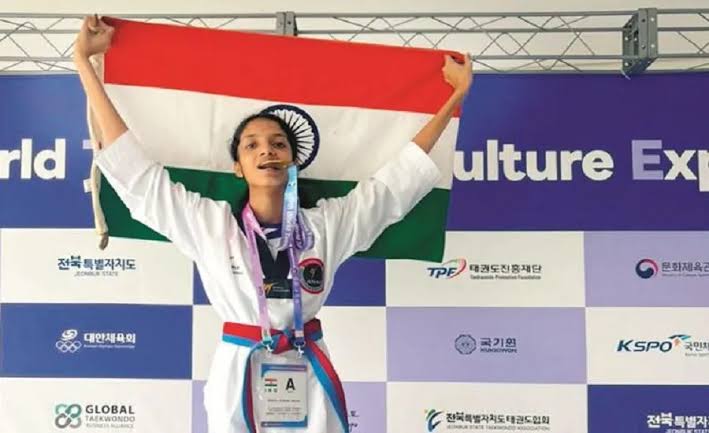
Shahnaz Parveen’s story goes far beyond a simple victory; it is an inspiring journey of struggle, determination, and the realisation of dreams. Recently, she showcased exceptional talent and mental strength by winning the gold medal at the All India Inter-University Taekwondo Championship held in Balasore. Amid tough competition, she overcame every opponent with discipline, strategy, and confidence, emerging as an outstanding athlete.

Today, Shahnaz stands as an inspiration for countless young girls who are forced to suppress their dreams due to social barriers. Her journey proves that with strong willpower and relentless effort, no obstacle is insurmountable.

Saba Anjum Karim

Saba Anjum Karim

From the modest lanes of Durg in Chhattisgarh, Saba Anjum Karim rose to become one of India’s finest hockey forwards.Beginning with a broken stick and humble incentives, she overcame financial hardship and social barriers to play a crucial role in India’s gold medal win at the 2002 Commonwealth Games.

With over 90 international goals and prestigious honours like the Arjuna Award and Padma Shri, she continues to inspire as a police officer and role model for young athletes.

Tajamul Islam

Tajamul Islam

From Bandipora, Kashmir, Tajamul Islam rose to become a world champion in kickboxing. She not only comes from the periphery of India but also from a region that lacked amenities and the culture of women’s sports. She trained relentlessly and achieved international fame by winning gold at the World Kickboxing Championship 2016 at the age of eight.

Beyond her achievements, she has sparked a quiet social transformation, inspiring young girls to challenge stereotypes and pursue their ambitions with confidence.

source: http://www.awazthevoice.in / Awaz, The Voice / Home> Stories / posted by Aasha Khosa / ATV / March 28th, 2026

Six Year Old Amayra Khan Shines in Global Chess Rankings

Sagar, MADHYA PRADESH :

Sagar:

Six year old Amayra Khan from Madhya Pradesh has achieved international recognition in chess after a strong performance at the Grand Master Open Chess Championship held in Tamil Nadu. She defeated a FIDE rated player from Goa and secured an international rating of 1450, marking a rare achievement at such a young age.

Amayra also secured the 13th position in the global girls category, placing her among top young players worldwide. Her journey in chess began early. She started playing at the age of three after receiving a chessboard as a birthday gift from her grandfather. Regular games with him helped build her interest and understanding of the game.

Recognising her potential, her family enrolled her in a chess academy where she received structured training. At the age of four, she won her first competitive match. Since then, she has taken part in more than 50 national and international tournaments, showing consistent growth.

Her mother said that Amayra developed strong focus and strategy through regular practice. Each tournament helped improve her skills. Her steady performance has brought recognition to her hometown Sagar.

Her achievement highlights the role of early training and family support in shaping young talent. At an age when many children engage in basic activities, Amayra has built a record in a complex intellectual sport.

Her family plans to continue supporting her participation in national and international competitions. They aim to see her represent India at higher levels in the future.

Local residents have expressed pride in her success. Her progress has inspired many children to take interest in chess and other learning activities.

Amayra’s journey shows that disciplined effort and early guidance lead to strong outcomes even at a young age.

source: http://www.radiancenews.com / Radiance News / Home> Latest News / by Radiance News Bureau / March 23rd, 2026

Hyderabad-born Prof. Mumtaz Ali wins Malaysia’s National Book Award for third time

Hyderabad, TELANGANA / Kaula Lumpur, MALAYSIA :

Kuala Lumpur/New Delhi: 

In a significant achievement, Professor (Dr.) Muhammad Mumtaz Ali, hailing from Hyderabad, India, has been honored with Malaysia’s National Book Award for the third time. Currently teaching at the International Islamic University Malaysia (IIUM) in Kuala Lumpur, Prof. Ali was recognized for his outstanding contribution through his latest work, “Islamic Research: Theory, Methodology, and Thesis Writing,” published in 2022.

pix: amazon.in

The prestigious National Book Award 2023 and Certificate for the year 2023 were presented to Prof. Ali in a grand ceremony held on December 22, 2023. The certificate carries the signatures of Prime Minister Dato Seri Anwar Ibrahim and Minister Dato Seri Zambry Abdul Qadir.

Born in Hyderabad in 1955, Prof. Ali holds a doctorate in philosophy in Islamic studies from Aligarh Muslim University. He began his academic journey by completing his master’s degree in Islamic studies at Aligarh Muslim University and a bachelor’s degree in modern western political thought from Osmania University.

Joining IIUM in 1987 as an assistant professor, Prof. Ali has been a dedicated member of the university ever since. Currently, he leads the Abdulhamid Abusulayman Kulliyyah of Islamic Revealed Knowledge and Human Sciences in the Department of Usul al-Din and Comparative Religion.

His award-winning book, “Islamic Research: Theory, Methodology, and Thesis Writing,” advocates for the transcendence of Islamic research beyond religious topics, emphasizing its relevance to all aspects of life and society. The book distinguishes Islamic research from conventional methods, emphasizing the need for a comprehensive theory and methodology.

Prof. Ali’s contributions extend to various branches of Islamic theology, including developmental studies, modernization, epistemological and methodological studies, critical thinking, philosophy of science, and modernity. His books, especially those on the Islamization of Knowledge, are widely regarded as bestsellers on campus.

In 2014, Prof. Ali received the National Book Award for his book, ‘Issues in Islamization of Human Knowledge: Civilization Building Discourse of Contemporary Muslim Thinkers.’ His consistent recognition reflects his commitment to advancing Islamic research and knowledge.

source: http://www.islamicvoice.com / Islamic Voice / Home> National News and Affairs / pix of book added – amazon.in / by Islamic Voice / February 24th, 2024.