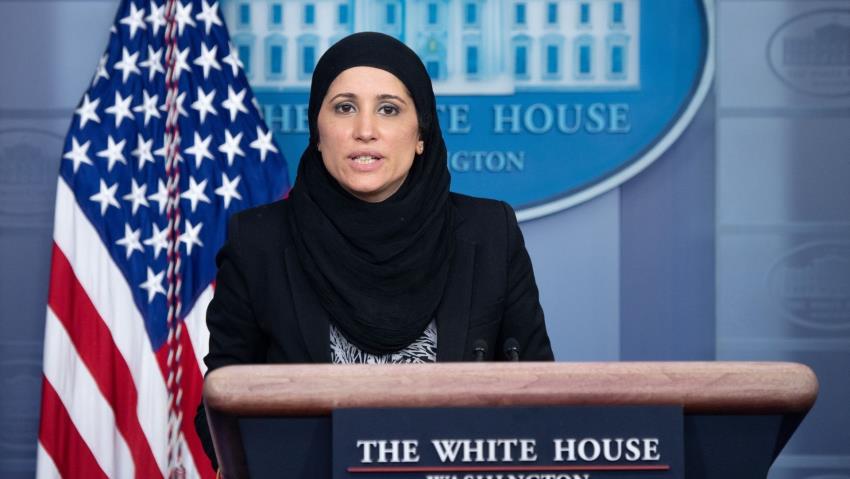
Sameera Fazili is the daughter of Kashmiri immigrants [AFP] / pix: english.alaraby.co.uk
A hijab-wearing US official spoke at a White House press briefing on Wednesday, prompting social media users to hail the moment as symbolic, after year of Islamophobia normalised by the previous adminstration.
Sameera Fazili, Deputy Director of the National Economic Council, addressed reporters on President Joe Biden’s executive order to address electronic chip shortages and other critical supply chain issues.
Fazili, a graduate of Harvard University and Yale Law School, was appointed to the key position in the new administration last month. The National Economic Council deals with the economic policymaking process and provides policy advice to the president.
Social media users welcomed Fazili’s first appearance as an official in the Biden administration, with some interpreting the image of the hijab-wearing Muslim official as symbolising a shift away from Donald Trump’s legacy of bigotry towards Muslims.
“A month after Trump is gone and we have a sister in hijab giving the press briefing at the White House”, wrote Imraan Siddiqi, executive director of the Washington chapter of the Muslim Council of American Islamic Relations (CAIR). “The Islamaphobes are weeping,” he added.
Shahed Amanullah, a Muslim tech entrepreneur who served as a senior advisor to the US State Department between 2011 and 2014, expressed similar sentiments.
He described the appearance of Fazili, the daughter of Kashmiri immigrants, as showing “how far we have come in just a month – from incompetence and exclusion to intelligence and inclusion.”
Aymaan Ismail, a US Muslim journalist focusing on identity and religion, compared Fazili’s appearance to anti-Islam activist Brigette Gabriel , who was invited to the White House by Trump:
“Trump invited Islamophobes like Brigette Gabrial into the WH. Today, sister @sameerafazili delivered a press briefing. My how quickly things have changed”
Shortly after taking office in 2017 Trump instituted a “Muslim travel ban”, which Biden reversed in a flurry of executive orders last month. The ban was one of several xenophobic campaign promises made by Trump, which included the creation of a Muslim registry and the surveillance of mosques.
He commented on alleged ‘threat’ posed by Muslims living in the West throughout his presidency, fuelling rage among white supremacists and the far-right.
source: http://www.english.alaraby.co.uk / The New Arab / by The New Arab Staff / Homepage> News / February 25th, 2021
Social activist Rehana Adeeb, who is fighting for the rights of women in areas such as Muzaffarnagar, Shamli, Baghpat and Saharanpur in western Uttar Pradesh, is a symbol of courage. On the occasion of International Women’s Day, TwoCircles.net tells her story.
Saharanpur:
“I will not be able to live keeping my mouth shut, just tell everyone.” In the area dominated by Khap panchayats, a dozen women sing this folk song. The resonating voice reverberates in the area. Even the noise of the hookah is not able to suppress it.
The creator of this voice Rehana Adeeb is a name for female upliftment. Men of the area call her a ‘rebel woman’, but for her daughters, she is a messiah.
Social activist Rehana Adeeb, who is fighting for the rights of women in areas such as Muzaffarnagar, Shamli, Baghpat and Saharanpur in western Uttar Pradesh, is a symbol of courage.
When 52-year-old Rehana of Chilkana of Saharanpur was two years old, her mother left the world. And when she turned 14, her feet were shackled by marriage.
In a family of five siblings, Rihanna blew up the bugle against the male-dominated society. She started going from village to village to awaken the women. She began to talk about women’s rights and raised her voice against the prevalent silence.
Gradually, Rihanna’s bold voice and her work became the talk of the town and she became sore in the eyes of the male-dominated society. “But I was not afraid, I persevered,” she said.
In a conversation with TwoCircles.net, Rihanna tells the story of her struggle. She says that when she lost her mother at the age of 2, her father re-married. “The new mother could never replace the old mother. I was then married at the age of 14. My husband Mukhtar Ahmed used to work in a factory. I was the only educated one in my in-laws’ house. The confrontation increased there. I could not understand them. They could not understand me. As a result, we split up. My husband came to Chilkana with me,” she says.
This period of life had left a deep impact on Rihanna’s mind and she says she would experience frequent anger. “I used to feel bad about why I was married so early in life. It would not have happened if my mother was alive,” she says.
Rihanna says that she was sent to her in-laws directly from the school. “It was too much. Such excesses were happening against most of the girls. I cannot stitch my mouth. The flame inside me started to blaze and I went door-to-door to motivate women to raise their voice against the atrocities happening with them,” she says.
The effect of her activism started showing. The women in her started becoming aware of their rights and they expressed opposition to their daughter’s early marriage. “They started demanding to send their daughters to school. Things changed. The women refused to keep their tongues tied,” she says.
Rihanna started her activism in the villages of Sandholi block in her town Chilkana, which were backward.
“Opposition to my work also became strong. Men banned me from coming to my own house and their women were banned from talking to me. I was abused,” she says.
At this point, Rihanna says that she felt people had bad feelings towards her and she felt the need for support. “For this, I met the officers and expressed the intention to spread awareness about the rights of women. They understood my feelings and made me a partner in a government scheme, Mahila Samakhya, in which I had to do the same work in ten villages. Now that this work was official, the male society could not stop me from meeting women. I advised women to get organized and gathered them and started meeting. Now a group of men started raising questions about my character. Hearing this gossip about me, my brother would ask me to leave this work,” she said.
Rihanna says that a turning point in her life was her joining a social organization called Disha. “I got a big platform by joining this organization internationally. I was called to Beijing to discuss women’s rights. Gradually, our work started spreading. Now some men came in support of me,” she says.
“2005 was an important year of my life. During this time, I established my social organization ‘Astitva’ and the first battle was fought for Imrana. The Imrana scandal was discussed widely. Her father-in-law misbehaved with her, whereas a fatwa was issued against Imrana. But later Imrana’s father-in-law was sentenced to 10 years for his crime. In the Muzaffarnagar riots in 2013, we kept fighting in favour of women and till now we are fighting,” she says.
Rihanna expresses disappointment when a section of society calls them rebels. “This is a much bigger problem, especially among Muslims. Take the history of Islam and see that this religion has given women the most entitlements and rights. But it is not known who gives ‘fatwas’ against women, but would not issue ‘fatwa’ against the evildoings of men like betting, gambling and other evils,” she says.
Rihanna has four daughters and all have completed B.Ed. “I want my daughters to inspire women to break the silence,” she says.
Thirty-five-year-old Aamna, a resident of Budha Khera village, has only praise for Rihanna.
“Rihanna Baji has opened many avenues here. Even if she has become a sore in the eyes of some people, she has our respect. Recently, her ‘Yuvati Mela’ got a lot of praise. During this mela, the girls unite and do awareness-based programs,” she says.
Rihanna is today known by her nickname ‘Netani’ in Chilkana. “Rihanna Ji has brought a great change in our life. Now there is no such girl here who is not going to school,” Sabia, a 16-year-old girl from the area says.
source: http://www.twocirlces.net / TwoCirlcles.net / Home> India News> India Politics> Indian Muslim> Lead Story> Women / by Aas Mohammad Kaif, TwoCircles.net / March 08th, 2021
Ex-Army personnel Sheikh Abdul Kareem drives autorickshaw in Hyderabad. (Photo: Screengrab from youtube video)
Hyderabad:
An ex-serviceman, who was a star medal awardee during the India-China war, now drives an autorickshaw in Hyderabad for a living and has appealed to the state government for help.
Sheikh Abdul Kareem, an ex-Army personnel is a Star Medal recipient, a special award for his contribution to the India-China war.
Speaking to ANI, Kareem said, “I was recruited into the Indian army after the death of my father who worked for the British Army and then for the Indian army. In 1964, I entered the Indian army.”
“I participated in the India-China war and was posted in Lahaul area. I was awarded Star Medal and was the special award recipient in 1971,” he said.
Kareem said, “During the reign of Indira Gandhi, as there were surplus army personnel, many of them were removed from the postings and I was one of them. While in the army, I applied for government land and was given five acres of land in Gollapalli village in what is now Telangana.”
He said, “After nearly 20 years, the five acres land that was given to me has been distributed among seven village persons and after complaining about the same, I was offered another five acres under the same survey number but was denied the original land. Now it has been nearly about one year and till now the document of the land details are not ready.”
He said that after being removed from the army, he faced a lot of problems. He said that he does not even own a home and currently, at the age of 71, is driving auto-rickshaws to feed his family.
“I offered my services to this nation as an army personnel for nine years but was removed and am now driving an auto-rickshaw at the age of 71. It has been difficult to feed my family. I do not even have my own house so that I can look after my family,” he said.
He also urged the government to provide ex-servicemen who are homeless with the double bedroom flats that are given to the poor.
“Despite winning a good service medal, I have not even received any sort of pension or any financial support from the government. I also request the central government to financially support ex-servicemen who are in need of help,” he said.
source: http://www.siasat.com / The Siasat Daily / Home> News> Hyderabad News / by Sakina Fatima / March 03rd, 2021
Meet this She Cab driver, who’s posted at the airport and ferries female passengers to their destinations be it rain or late evening.
Umtul Hamida
Hyderabad :
At 34, Umtul Hamida is energetic enough to drive through the roads of Hyderabad from 10 am till midnight.
Meet this She Cab driver, who’s posted at the airport and ferries female passengers to their destinations be it rain or late evening. Her face is framed in a white lace scarf and matches with the pink kurta that she teams up with embroidered shalwar as she drives and speaks with us.
She’s been driving the cab for the past six years. Says this mother of a nine-year-old girl, “I was selected among the 50 women by RTA for this job. I feel quite proud that I have been doing this for years.”
On being asked if she’s been treated differently because she’s the only woman driver of She Cabs from the minority community she replies, “No. It’s not happened. All the lady passengers have been really kind to me.” But what about the male taxi drivers at the airport? She smiles and shares, “They were a bit hesitant initially but took their own time to accept me.”
She learnt driving at her father’s house. Says this resident of Hyderguda, “My father owned an Esteem and I learnt driving from the chauffeur. After I got married, this skill helped me sail through financial difficulties.” Back then she used to take her infant child along with her rides. However, she’s not willing to let her daughter choose this profession.
“I am not sure if she’ll get similar support when she has her own family. Her first passenger was a journalist who interviewed Umtul for an audio-visual media platform. On average, she gets seven to eight passengers on a daily basis. The bookings are done at the pre-paid taxi booth at the RGIA premises. All seems well with her but she says that the government needs to do more for she can drivers.
“They have been supportive but we need more backing in terms of finance, policies etc. It will be great if we are appointed for government transport as the same will offer us assurance of our careers,” says she adding that the lockdown had affected their work severely given airports were closed and all the flights were on hold.
source: http://www.newindianexpress.com / The New Indian Express / Home> Good News / by Saima Afreen, Express News Service / March 06th, 2021
Naureen Hassan, Indian-origin veteran of the financial services industry. (Photo | Twitter/@NewYorkFed)
As the first vice president, Hassan will be the New York Fed’s second ranking officer as well as an alternate voting member of the Federal Open Market Committee.
New York :
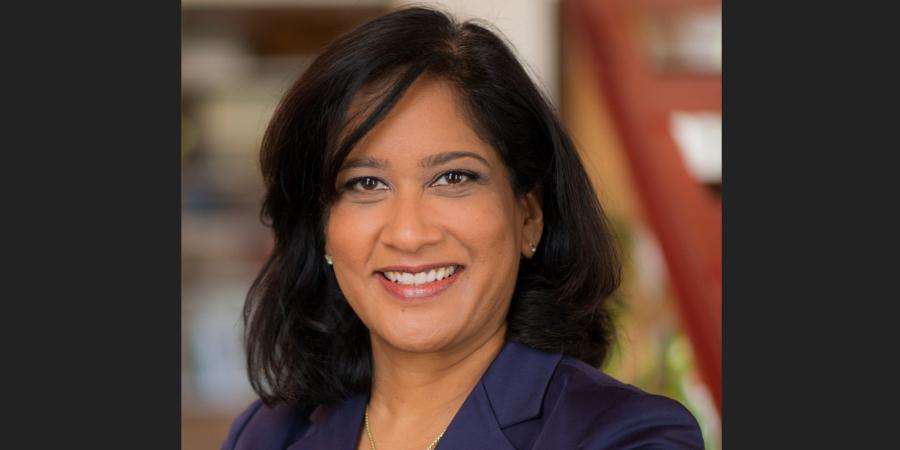
An Indian-origin veteran of the financial services industry has been appointed as the first vice president and chief operating officer of the Federal Reserve Bank of New York.
Naureen Hassan has been appointed by the board of directors of the Federal Reserve Bank of New York as the first vice president and chief operating officer, effective from March 15.
The appointment was approved by the Board of Governors of the Federal Reserve System, the Federal Reserve Bank of New York said in a statement.
As the first vice president, Hassan will be the New York Fed’s second ranking officer as well as an alternate voting member of the Federal Open Market Committee.
Hassan, whose parents had immigrated from India, is a 25-year veteran of the financial services industry with expertise in strategy, digital transformation, cybersecurity and regulatory/risk management.
She was, most recently, the Chief Digital Officer for Morgan Stanley Wealth Management (MSWM).
President and Chief Executive Officer of the New York Fed John Williams said Hassan’s leadership background, deep commitment to fostering diverse teams, and extensive technology and financial experience will be critical to her role as a Bank leader.
Denise Scott, executive vice president of the Local Initiatives Support Corporation (LISC) and chair of the New York Fed’s board of directors, said Hassan’s leadership experience and operational expertise are “fully aligned” with what the search committee and he envisioned for this role.
Scott said Hassan will be taking on the role that is critical to advancing the Bank’s mission and strategic priorities.
The statement added that Hassan has served in various capacities in the financial services industry, focusing primarily on digital and business process transformation.
Prior to working at Morgan Stanley, she was at Charles Schwab Corporation beginning as a vice president of corporate strategy and ending her tenure as executive vice president of investor services, segments and platforms.
According to her profile provided by the Bank, Hassan was formerly a member of the Board of Directors at OneSpan, a USD 250MM revenue public security software and hardware firm, and Ascensus, the largest independent record keeping services provider, third-party administrator, and government savings facilitator in the United States.
Hassan also serves on the board of the California Academy of Sciences and the Cathedral School for Boys in San Francisco.
She was previously on the board of the Charles Schwab Bank and the Women’s Initiative for Self-Employment.
She holds a BA from Princeton University and a Masters of Business Administration from the Stanford University Graduate School of Business.
source: http://www.newindianexpress.com / The New Indian Express / Home> World / by PTI / March 06th, 2021
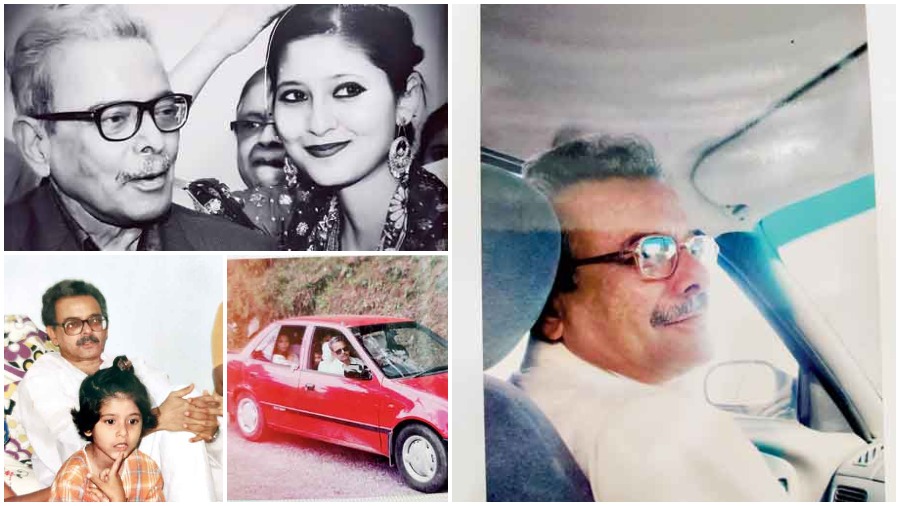
Granddaughter of India’s greatest Urdu poet pens a poignant tribute to her late grandfather
“And He was transfigured before them; and His face shone like the sun, and His garments became as white as light.”— Matthews 17:2-9
My family keeps trying to talk me into mourning the loss of my grandfather, who I lovingly call ‘Bhai’, as did everybody else who knew him. I can’t exactly put this into words and I can’t make people understand that mourning his death is an insult to the madness, the magic, the man, the movement, the miracle, the marvel, the Master. Why don’t you understand that this loss isn’t the kind for me to cry about? This is the kind of loss for me to die about.
When I was a kid, I used to love watching The Lion King. I like to believe that literature and media that you absorb during childhood, shapes your personality as an adult. I always made sure I skipped the scene of Mufasa’s death, with a bewildered and heart-broken Simba trying to wake his father up. It was because I always feared that this day would come, and I would see myself trying to awaken Bhai from eternal, unending sleep. And it did, it happened. And now I am here, and he is there — out there, up there. He is missing from me.
Are they still memories if they’re engraved in my heart, etched on my mind and tattooed on my skin? I like to believe they’re a part of me, my body, an extension to my entity, and as long as I shall live so shall they. So many people argue that he wasn’t my father. They’re right. Because to me, he is God. He is the giver, the provider, creator, the all-encompassing, the all-knowing, the omnipresent.
Provider, because he gave me everything I have and survive on, from my passion and love for animals to my affinity towards literature, music, art. We would stand inside his aviary, enough to accommodate two human beings, where he kept his birds. He would clean and wash their water bowls with his beautiful, wrinkly, holy hands and then he would pick up a bird in the palm of his hands — sometimes a cockatiel, sometimes a budgie, sometimes a quail — and show me, directing my gaze with his finger, the feather patterns, and beak shapes, explaining how a certain type of bird crushes the seed with which exact part of its beak. All-knowing, because he knew everything, quite literally. Anything and everything.
Driving home from a homeopathic clinic, we would have long conversations about The Battle of Karbala, and pretty much every historic event that ever occurred on the face of this planet. We talked about the possibilities of the existence of mermaids — how perhaps, in the course of evolution, a third of the primate population went towards the water and even into it, and developed webbed limbs and tails. We talked about the Fer-De-Lance, we sat and browsed through pictures of wildlife. We discussed dog breeds and how they evolved. He always told me (before the world went ‘vocal for local’) that nothing can beat the hounds of India — the Rajapalayam, The Chippiparai, The Rampur, and the Mudhol. He always had an eye out for the Saluki (a superior type of sighthound that originated in the Fertile Crescent), and would say to me, “Abey Saluki hai kya kahin pe? Saluki mile kahin toh batana, hum le lenge.”
On his birthday in 2019, I had gifted him a deep grey, white-speckled Cockatiel who he named Sooty. He stayed in Bhai’s room, and the two whistled to each other all day. Bhai would talk to him lovingly, and Sooty would chirp back in adoration. When Bhai got sick, Sooty mysteriously died. I had begun to believe that like Bhai’s previous dogs and other pets, Sooty too had died of loyalty in an attempt to take the impending death upon himself. Bhai always believed that wafadaar jaanwar aane wali museebat ko apne sar le lete hain. While it is unlike me — and everyone else in my family — to respond to the death of an animal, that too a beloved pet, with gladness and optimism, Sooty’s sudden passing had given us some hope. We were counting on life to make Bhai get better and to help us get through this untimely qayamat.
Grandfather — this word always gave me the same serotonin release you get from a warm blanket, a cup of hot chocolate, biting through the layers of a Ferrero Rocher, the morning of the day of Id, seeing my birthday cake for the first time.
And now it’s all gone, all taken away away from me. It is so ironic and at the same time baffling how our worst fears manifest right before our eyes. I didn’t allow myself to watch enough of The Lion King growing up because I was afraid if I looked at it then it would somehow happen. And now I see how everything unfolded just like it did in the movie. Covid attacked us like Uncle Scar. And while all of us got Covid, he somehow took it upon himself and while we lived, he left.
My animals in Delhi found me, picked me up, and saved my life, just like Timon and Pumba did with orphaned Simba in The Lion King. I think I have managed to figure out where this affinity comes from and why it has always been this way — the need to be around animals in order to survive. It was just another gift, another tool, another strength my Grandfather was equipping me with and conditioning me for, so that I may be able to carry on someday in his absence, and so that I have a purpose, a reason to live till the time he and I can finally reunite.
Only mourning him isn’t enough, isn’t fair, isn’t needed. His existence was a celebration of life, a creation of art, and his death was transfiguration. He didn’t just lay there still. He sublimated, became one with what he loved most, nature. He united with a power that was of the same immense magnitude that only he alone in this world was made of. If one should live, one should live like this. Not in the lap of luxury but in the embrace of nature. Not in bursts of passion, but in the steadiness of an unwavering purpose. Not for moments of moping, but for the unfazed ambition of the human spirit.
Lead my longing heart
To the high ground, to the clear view
And in awe I’ll be there
Beholding You…
source: http://www.telegraphindia.com / The Telegraph Online / Home> Culture / by Tazmeen Amna Siddiqui / March 04th, 2021
Drabgam Village (Pulwama District), JAMMU & KASHMIR :
IANS
Srinagar :
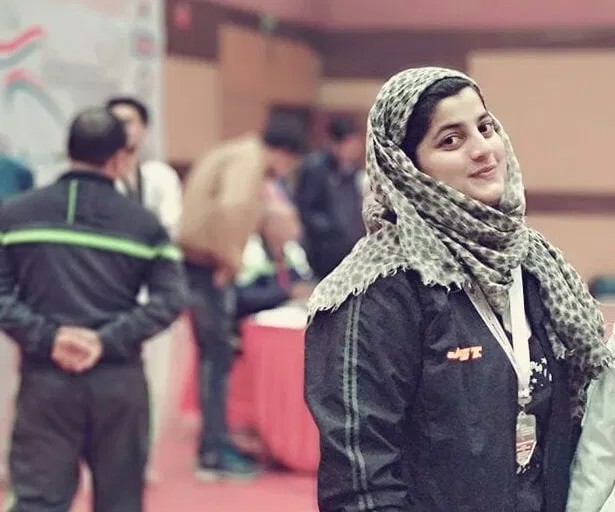
The achievements of Syed Rashida Simnani in the field of wrestling without any basic coaching and infrastructure prove the maxim, where there is a will, there is a way.
Rashida belongs to Drabgam village in Rajpora area of South Kashmir’s Pulwama district.
She said she was interested in wrestling right from childhood and after winning a few competitions at the school level got enough encouragement to keep her passion alive.
Rashida Simnani’s career
She did an eight-week certificate course in health and fitness from the National Sports Authority of India (NSAI) Patiala.
She was appointed on a contractual basis as a fitness coach at Government women’s degree college in Srinagar where she pursued her graduation degree.
She became part of national team in 2017. She told reporters she has represented J&K at the national level in baseball and wrestling where she won a bronze medal in the wrestling competition.
After her training at Patiala, she was selected to represent India at international stage in Taekwondo where she won a silver medal.
Self-defence must: Rashida Simnani
Simnani is presently working with the J&K sports council. She told reporters that as crimes against women are increasing in the society there is an urgent need for the government to start self-defence and awareness courses for women.
“I strongly believe that girls should have a free choice to choose their vocation for which they have passion.
“Once you select a profession for which you have passion, you will naturally excel in that field”, Simnani said.
She also said that the Sports Authority of India and the local sports council must reach out, especially to rural areas to ensure that the budding talent of young boys and girls does not go waste because of lack of infrastructure and training.
source: http://www.siasat.com / The Siasat Daily / Home> News> Sports / by IANS / posted by Sameer / March 04th, 2021
A Keralite racquet stringer’s dexterity and craftsmanship will be in high demand at the Dubai Open which will feature top tennis stars like Roger Federer and Serena Williams.
Jasif Mustafa, the lone Malayali in the team of official racquet stringers for the championship, which kickstarts on Sunday at the Dubai Tennis Stadium, is an expert racquet mechanic.
A native of Perumpilavu in Thrissur district, Jasif is the head of the racquet stringing section of Adler Sports, one of Dubai’s top sporting goods and equipment dealers.
Professional players would restring their racquets occasionally as the strings tend to lose their tension after several games. Jasif’s job is ensuring the precise degree of tension requested by each player.
The professional stringers of Adler Sports, headed by Jasif, got the offer to be a part of the Dubai Open after they did a commendable job at the Abu Dhabi WTA Women’s Tennis Open which was held earlier this year. During the course of the 10-day event, they repaired as many as 513 racquets and their work was widely appreciated.
Jasif has vast experience under his belt as a string mechanic. He had worked at a racquet repair shop in his home town for six years before he landed in Dubai four years ago. After joining Adler Sports, he has repaired over 20,000 tennis and badminton racquets that include the ones used by ace Indian shuttlers like Kidambi Srikanth and P V Sindhu.
“Jasif has a knack of executing the right tweaks. He can assess the quality of the strings just by slapping it on his palm. It is something he has picked up over the course of time,” says Pramod, a native of Guruvayoor and a coordinator at Adler Sports.
Stringing a racquet can take up to twenty minutes for a skilled stringer. Jasif’s strength lies in his speed and accuracy. Recently, he strung a racquet in 12.33 seconds and shared the video on social media which attracted great attention from people and the media particularly in the Gulf.
The 28-year-old is a certified stringer of Yonex, a global leader in sports equipment manufacturing. He has had the opportunity to train under Yonex stringing team head Tim Willey and Europe Racket Stringers Association chief Mark Maslowski. Jasif is also grateful to Adler Sports owner Abdul Salam for all his support.
Challenging job
Stringing racquets is a challenging job. A stringer has to ensure that racquets are strung at the right tension based on the style of each player. Racquet tension can vary from anywhere from 30-70 lbs. Professional players tend to opt for the upper limit of the racquet tension range which offers more control, while lower tensions provide more power. Tennis strings are usually made up of polyester, synthetic gut or a hybrid of the two and the price ranges between Rs 300 and Rs 8,000.
www.onmanorama.com / OnManorama / Home> Sport / by Raju Mathew / March 04th, 2021
Missing engineer Subhan Ali. | Photo Credit: Special Arrangement
Subhan Ali’s vehicle fell off the road and plunged into the Drass river that flows into Pakistan last June, but the process of matching his DNA with those of his parents is far from over.
The wait for the family of Subhan Ali, a 27-year-old civil engineer posted with the Border Roads Organisation (BRO) who went missing after an accident on the Zozila-Kargil-Leh road last June, just got longer.
Son of a tailor from Balrampur in Uttar Pradesh, the Indian Engineering Service (IES) officer had been posted in Ladakh as part of the General Reserve Engineering Force (GREF) of the BRO when his vehicle fell off the road and plunged into the Drass river that flows into Pakistan.
Though the Pakistani side had recovered an unidentified body on Shingo river close to the Line of Control (LoC) on 27 June, the process of matching the DNA with Mr. Ali’s parents is far from over.
Lok Sabha member and Bahujan Samaj Party (BSP) leader Kunwar Danish Ali had taken up the case with Defence Minister Rajnath Singh in July last year.
Now, eight months later, Mr. Singh informed his Lok Sabha colleague that the DNA matching process would need more time as “the sample is in a queue”.
“It is learnt that DNA matching analysis at FSL [Forensic Science Laboratory], Chandigarh, is in queue and it may take 3-6 months before the report is received. Further action will be taken on receipt of report from FSL, Chandigarh,” Mr. Singh said in his letter dated February 11.
On June 22 last year, Mr. Ali, along with his driver, Palwinder Singh, went missing after their vehicle fell into the Drass and got swept away by the fast flowing river.
While the Gypsy and the driver’s body were recovered from the river, the engineer’s body remained untraceable.
Five days later, Pakistani authorities reported the finding of an unidentified body from Shingo river close to the LoC on 27 June. Following up the lead, the Army Headquarters coordinated with Pakistani authorities to collect the DNA samples of the unidentified body.
The DNA samples of the unidentified body were received by Kargil police at Tangdhar on August 22, 2020. Two months later, the DNA samples of his parents were also collected on October 28, 2020 and was forwarded to the FSL, Chandigarh.
“But since then, it has been a long wait for the family. They have been waiting for a sense of closure to this tragic chapter. Even now, they may have to wait for another six months. I would request the government to speed up the process of DNA sample matching and provide them some relief,” the BSP MP told The Hindu on Sunday.
source: http://www.thehindu.com / The Hindu / Home> News> National /by Sandeep Phukan / New Delhi – February 28th, 2021
The man in the Indian Air Force uniform is Air Commodore Hilal Ahmad Rather with India’s Ambassador to France Jawed Ashraf, an Chairman of Dassault Aviation, Eric Trappier
Hilal was commissioned in Indian Air Force as a fighter pilot on December 17, 1988
Air Commodore Hilal Ahmad Rather is presently India’s Air Attaché to France
________________
The first batch of the much-awaited five Rafale fighter jets that took off from France on July 27 will reach India today around 2 PM. In the moment of euphoria over the arrival of one of world’s best fighter jets, Indian social media users were quick to point out the important role played by Hilal Ahmad Rather in the quick delivery of Rafale.
Air Commodore Hilal Ahmad Rather is presently India’s Air Attaché to France. Hilal hails from South Kashmir’s Anantnag district. He became India’s first pilot to see off the batch of Rafale jets from France to India on July 27. Reports suggest that he played a crucial part in early delivery of the Rafales, and was previously associated with the weaponisation of the Rafale jets according to the Indian requirements.
Hilal was commissioned in Indian Air Force as a fighter pilot on December 17, 1988. He became flight lieutenant in 1993, wing commander in 2004, group captain in 2016 and air commodore in 2019.
Recipient of Vayu Sena Medal and Vishisht Seva medal, Hilal has a record of 3,000 accident-free flying hours on different aircraft.
An October 2019 video was also shared widely where he was preparing for Shashtra Puja along with Group Captain Anand, in presence of Defence Minister Rajnath Singh.
India had signed a deal worth over ₹60,000 crore with France in September 2016 for 36 Rafales to meet the emergency requirements of the IAF.
source: http://www.livemint.com / Mint / Home> News> India / by Staff Reporter / July 29th, 2020