Tag Archives: Ahmed Ali

10 Muslim changemakers from the North-East

NORTH EAST , ASSAM :
Guwahati :

The Muslims of North eastern India are a spirited community and are contrinuting immensely to the nation building.

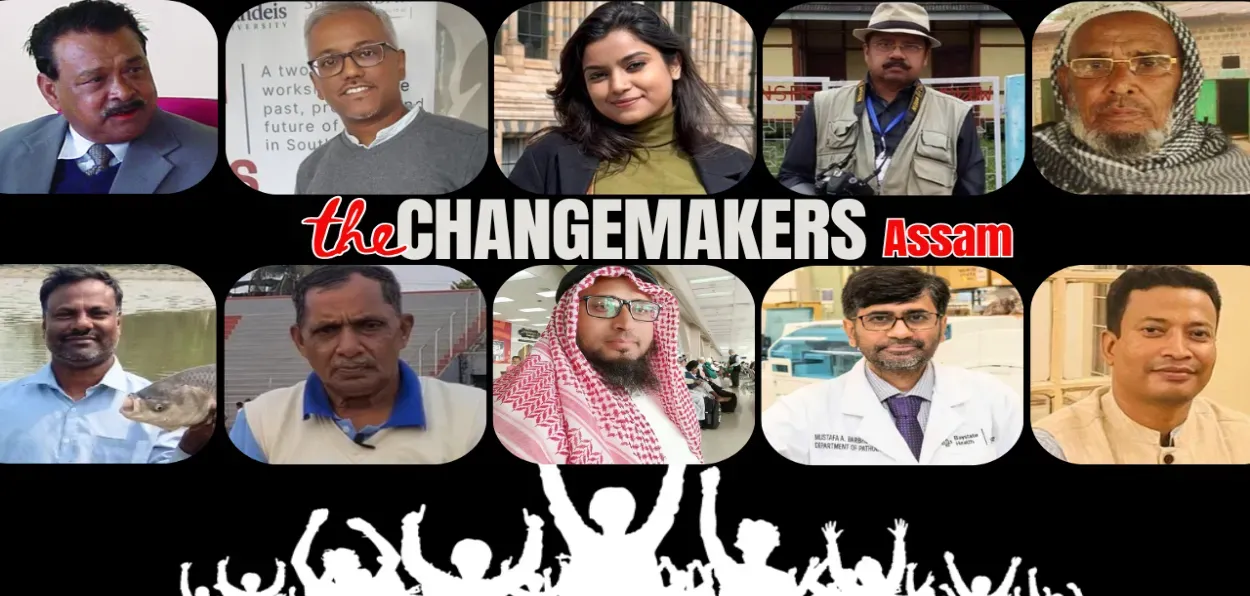
Here are ten Muslims whose stories inspire others and make us look at human spirit differently.
Abid Azad

After his work in the bank, this young professional roams around various places in Assam to feed the hungry. Since the days of COVID-19 and the consequent lockdown, Azad has been providing food to those on the streets, hospitals, and others in need.  He distributed meal packets to patients and their attendants at the Gauhati Medical College and Hospital (GMCH) for Iftar, and also delicious foods for Hindus and people from other faiths.
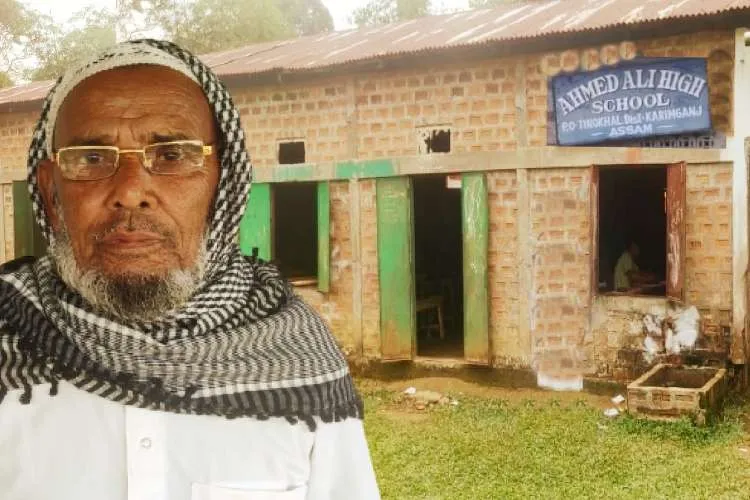
Ahmed Ali

The presence of Ahmed Ali, an unlettered rickshaw puller from Assam who has built a chain of schools in and around his native village, at the Republic Day celebrations in New Delhi on January 26 this year caught the attention of everyone. The Government of India had invited him as a special guest for his extraordinary services to society. He has built a chain of educational institutions from his earnings to encourage children to go to school.

Prime Minister Narendra Modi mentioned Ahmed Ali, a resident of a rural village in the Sribhumi district of southern Assam, in his monthly radio program ‘Mann Ki Baat’. Ahmed Ali used his earnings from pulling the rickshaws to support his family and established nine schools in southern Assam. Due to poverty, Ahmed Ali remained unschooled, but he wanted to ensure nobody in his society had to remain illiterate.
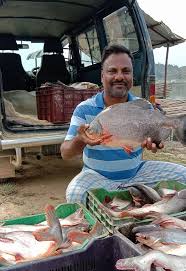
Nazrul Haque

He has been recently honored with the prestigious Assam Gaurav Award by the State Government for his outstanding achievements in fish farming and employment generation. Haque, who began his entrepreneurial journey with just Rs 10,000, has successfully overcome numerous challenges and now owns multiple fisheries. His dedication to aquaculture has not only contributed to the fishery sector’s growth in Assam but also provided job opportunities to hundreds of unemployed youths.
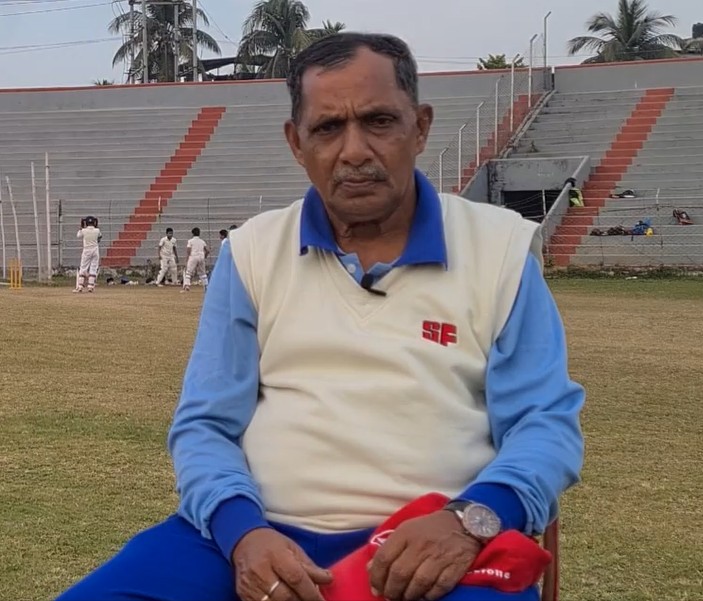
Nabab Ali

If Dronacharya awardee the late Ramakant Achrekar, the celebrated coach of legendary cricketer Sachin Tendulkar, had the privilege of nurturing the cricket legend’s son Arjun too, so did Assam’s very own Achrekar, Nabab Ali, who has not only molded former Assam Ranji captain Parag Das but also his son Riyan Parag to be the first ever cricketer from Assam to be in Team India. Fondly called Nababda (Brother Nabab) by one and all in the cricket circles, Nabab Ali may not have hit too many centuries and half centuries during his brief cricketing career, but he has cracked more than a ton as far as the number of quality cricketers he has produced for Assam as well as India.
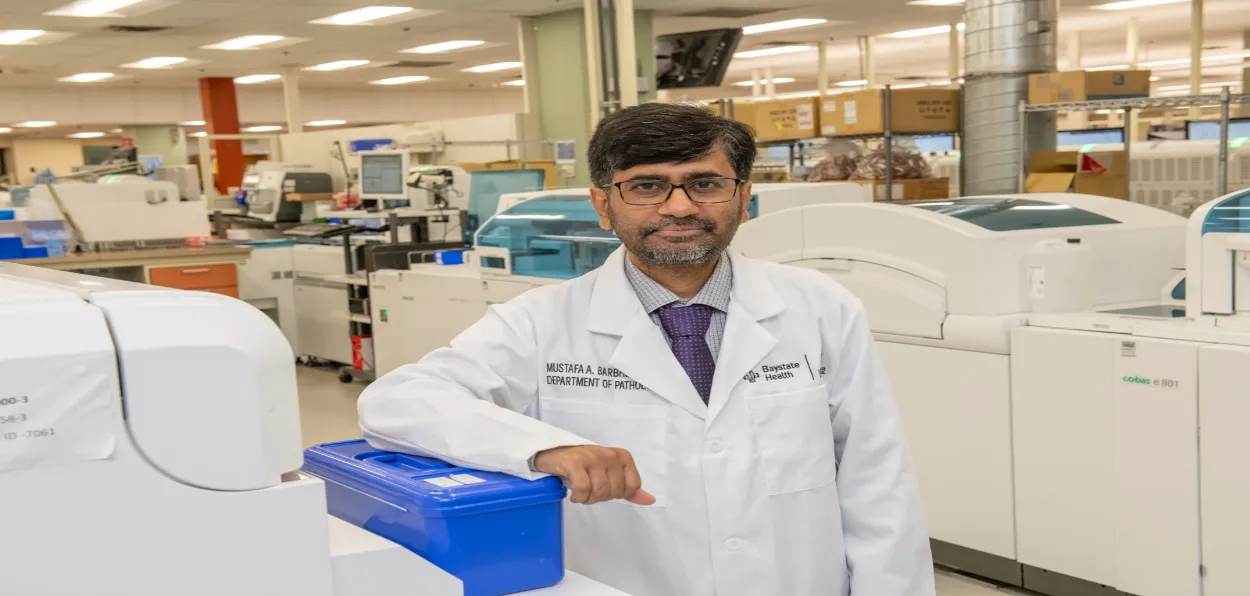
Dr. Mustafa A Barbhuyan

Hailing from a remote village in southern Assam’s Hailakandi district, Dr. Mustafa A. Barbhuiya has been selected among the top 100 most influential people in Pathology, specifically, as one of the Top 20 Heroes of Pathology in the US for this year.
Syedullah Nongrum

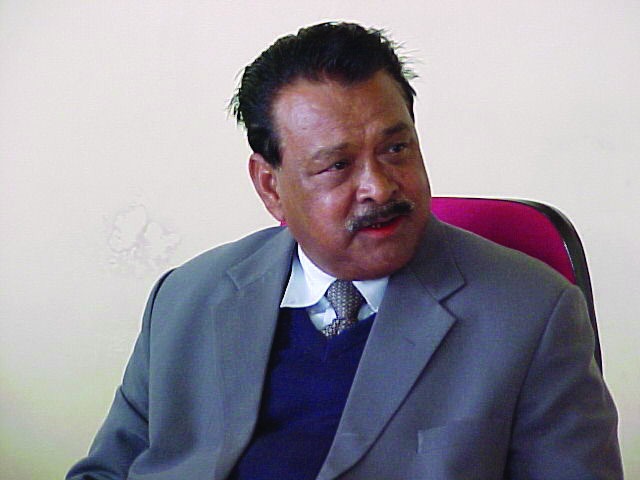
He is the voice of Khasi Muslims and a bridge between communities in Meghalaya. Nongrum spearheaded the construction of Madina Masjid, the only glass mosque in India. This magnificent structure situated in Shillong, not only serves as a place of worship but also houses an Islamic learning center, a school for underprivileged children, and a higher education college with modern facilities in science, arts, and technology.

The mosque is the only glass mosque in India, and reportedly the first glass mosque in Asia, making India the third country to have a mosque built of glass
Arshel Akhtar

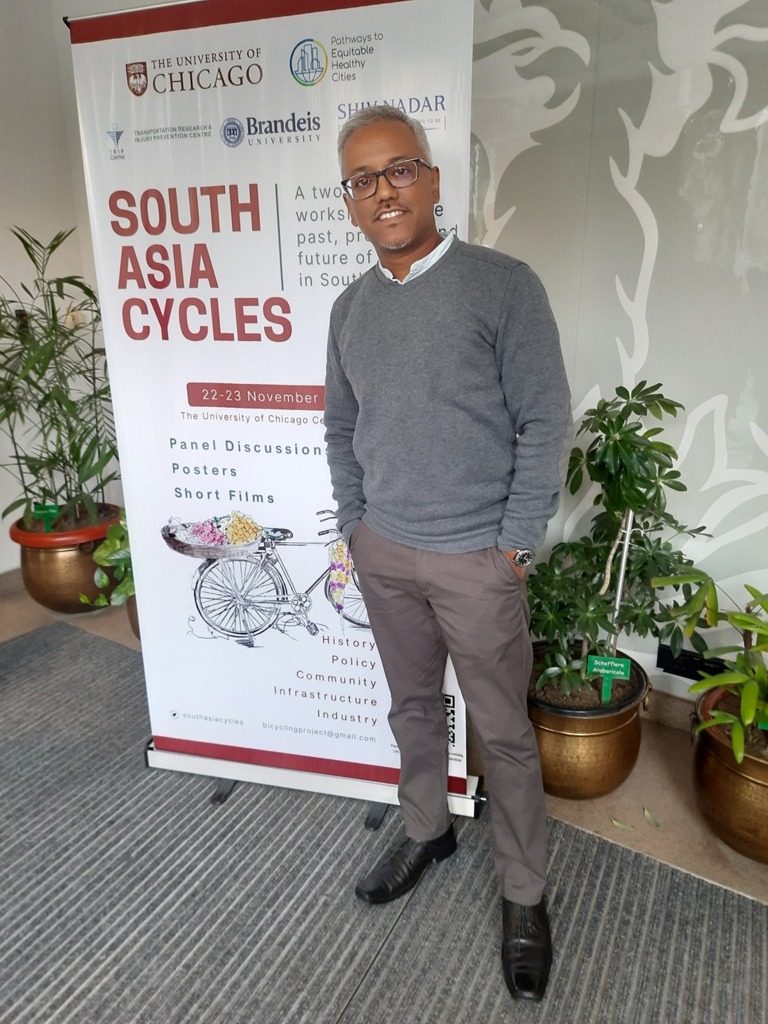
Arshel Akhtar wants to make cycling a priority for Guwahati residents and is working on creating a narrative on it. From working across diverse areas like Information and Technology, software development, banking, and share investing, Arshel was appointed as the first ‘Bicycle Mayor’ of Guwahati in 2018. He continues to find solutions to urban mobility issues through his non-profit organizations, Pedal for a Change and The Green Lane Foundation. Akhtar has formed an active citizens group called the Bicycle Councillors of Guwahati, which will work together to make cycling a safe, accessible, and aspirational mode of transport among all sections of society.

Nahid Afrin

She first shot to fame when she became the second runner-up in the 2015 edition of Indian Idol Junior. In 2016, she made her debut as a playback singer in Bollywood with the film Akira starring Sonakshi Sinha in the lead role. In 2024, Nahid Afrin was appointed as UNICEF India’s Youth Advocate, marking a significant milestone in her career. Nahid, along with three other Youth Advocates, will work with Bollywood’s star actor Kareena Kapoor-Khan, who is named as the National Ambassador by UNICEF.

Maulana Nurulamn Qasimi:

At a time when there are many misconceptions about Islam in society, Maulana has tried to dispel those by clearly explaining the principles and ideals of Islam. Maulana Nurul Amin Qasimi is a cleric who preaches Islam in the right form with exceptional thoughts.

Dr. Anwaruddin Choudhry

Dr. Anwaruddin Choudhury, who retired as the Commissioner and Secretary to the Government of Assam, has acquired the nickname of “The Birdman of Assam.” He is the first in Assam to write books on the birds of North Eastern States. His studies have contributed to the conservation and awareness of various bird species. He has authored 28 books, 50 technical reports, and more than 900 articles and scientific papers.

Choudhury, 63, had played a pivotal role in protecting habitats and declaring the white-winged wood duck as the State bird in Assam in 2003.

source: http://www.awazthevoice.in / Awaz, The Voice / Home> Stories> The Changemakers / posted by Vidushi Gaur / June 08th, 2025
Assam’s Ahmed Ali, Who Opened 9 Schools, Nominated for News18 Rising India Real Heroes of 2023

Khilorband (Patharkandi Village, Karimganj District), ASSAM:

By establishing nine schools with the money collected from driving an autorickshaw, Ali has helped bridge the gap between education and poverty in his community.

Ali started the first school in 1978 in his village Madhurband. (Photo: News18)

Ahmed Ali, from Assam’s Karimganj district, is a true inspiration for many, especially those who are determined to make a positive difference in their communities. Despite facing financial challenges, the 87-year-old decided to take matters into his own hands and established schools in his village to provide education to underprivileged children.

By establishing nine schools with the money collected from driving an autorickshaw, Ali has helped bridge the gap between education and poverty in his community. He understands that education is the key to unlocking opportunities and breaking the cycle of poverty. His schools offer affordable education to students who would otherwise not have access to it.

He is a resident of Khilorband, a marginal village of Patharkandi in the Indian state of Assam, bordering Bangladesh. Ali started the first school in 1978 in his village Madhurband. He sold some of his land and donated a part of the land to the school, on which it was built. Out of his 36 bigha land, he donated 32 bigha land for the construction of the school. Funding of the school is also done from its deposits, daily earnings and donations.

His high School was set up in 1990. In addition to it, he also established three lower secondary schools, five secondary schools and one higher secondary school. He hopes to establish a college in the future.

Besides donating his own land for the schools’ construction, Ali also works hard to keep them running. He drives a rickshaw during the day to earn a living, and at night, he cuts wood to help maintain the school’s finances. His dedication and hard work have made a significant impact on the education of many children in his community.

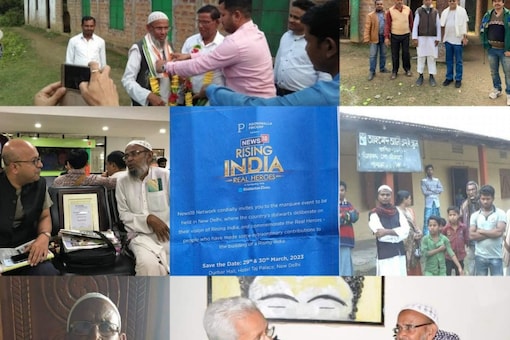
Ahmed Ali’s work has not gone unnoticed. He was nominated for the News18 Rising India Real Heroes Award in the education category, and he will be conferred with the award at the News18 Rising India Summit at the Taj Palace Hotel in New Delhi on March 30.

His story has been shared by Prime Minister Narendra Modi on his radio programme ‘Mann Ki Baat,’ inspiring many others to take action in their own communities. Narendra Modi said, “I have come to know that a rickshaw puller named Ahmed Ali of Assam’s Karimganj district has opened nine schools for the education of poor children. It is a beautiful manifestation of the will of the people of our country.” Ali was also invited to Delhi as a speaker by an NGO Jookto.

source: http://www.news18.com / News 18 / Home> India / by Akhi Das, edited by Jessica Nani / March 29th, 2023

This Rickshaw Puller From Assam Has Built 9 Schools In His Single Effort

Madhurband Village (Karimganj District) , ASSAM :

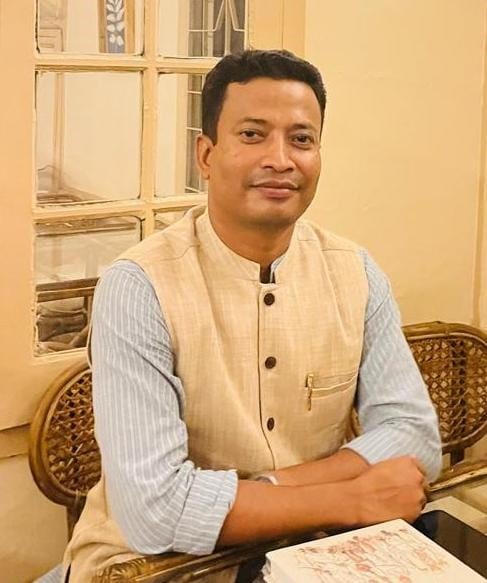
The school was even more important for girls as “boys get a chance to go out and get an education, but girls do not”, he said.

This Rickshaw Puller From Assam Has Built 9 Schools In His Single Effort

He has opened three lower primary schools, five middle schools, one high school.

New Delhi : 

After realizing that proper education is a distant dream for his soon-to-be born child, Ahmed Ali decided not to let the coming generation suffer in privation and penury.

This rickshaw-puller from Karimganj district Assam has built nine schools, ever since he envisioned the need for education, and says “I feel it was Allah’s wish and blessings from locals that I could achieve whatever I wanted.” “I could not attend school due to poverty. People of my village were poor and it pained me to see the children there were not able to attend schools due to the same reason. I don’t want to see dropouts from poor families any more,” he told IANS during a function in Delhi where he was invited as a guest.

Hailing from a village 300 kms away from Guwahati, he often ferried children to and from their schools for his livelihood.

He has even found a mention in Prime Minister Narendra Modi’s “Mann ki baat” programme.

Ahmed Ali established his first school in his village, Madhurband, in 1978. For establishing the first school, he sold a portion of his land and donated another portion on which the building now stands. The funds for the schools were also arranged by him from his savings, daily earnings and some from charity. To ensure fund flow, he used to pull his rickshaw in the morning and cut wood at night.

In all, he has opened three lower primary schools, five middle schools and one high school in Madhurband and nearby villages.

The school, he added, was even more important for girls as “boys get a chance to go out and get an education, but girls do not”.

The high school he had started in 1990 has 228 students today. “I could only manage to make arrangements for students till Class X. They don’t have a place to study Class XI and XII. I need both the government’s approval and funds for setting up the higher-secondary school,” he said. While hundreds of students take the class 10 exam every year, they don’t have the scope for higher education. “There is no nearby college. The nearest college is also 15 km away. I also want to build a college for students, but that will come at a later stage. First we need a junior college (for students passing Class X),” he added.

When IANS asked what he will tell Modi, he said he wanted all that the schools should be government-recognised so that funds were never an issue. “I will also ask him for a junior college and a college, if possible.”

source: http://www.ndtv.com / NDTV / Home> Education / by Maitree Baral (with input from IANS) / February 24th, 2019

Rifa-e-aam Club – History Shrouded in Negligence

UTTAR PRADESH :

HIGHLIGHTS

Rifa-e-aam was where literary events were held to provide Rifa (happiness) to people

During struggle for independence, this club became the centre of anti-British activity

Rifa-e-Aam, Lucknow
Rifa-e-Aam, Lucknow

Lucknow:

The city of adab (etiquette) and tehzeeb (manners) was also an indispensable part of India’s freedom struggle. The Nawabs of Awadh or the rulers who governed the state of Awadh  during 18th and 19th centuries conspicuously nurtured syncretism, which became an integral  part of the culture in the Ganga-Jamuna belt.

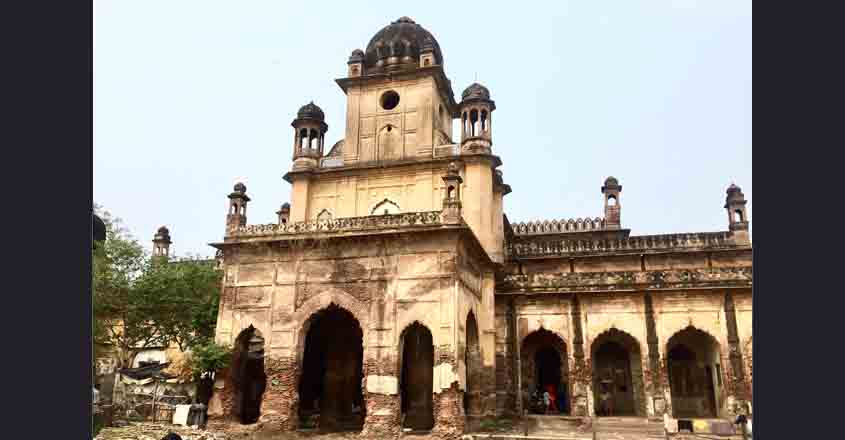
Nawabs were the great connoisseurs of art, music, and architecture. Numerous monuments were built  during their time. One among those was Rifa-e-Aam, where literary events were held to provide  Rifa (happiness) to people. When the signboards outside several clubs and gymkhanas signalled ‘dogs and Indians’ to stay out, Rifa-e-Aam welcomed dissenting voices, credit for which  goes to the liberal Raja of Mahmudabad. The historic Lucknow Pact of 1916, between the Congress and Muslim League was signed here.

RifaeAaam02MPOs19jul2018

During India’s struggle for independence, this club became the centre of anti-British intellectual  activity.  In 1936, Anjuman Tarraqi Pasand Mussanafin-e-Hind or Progressive Writers’ Movement was born in this building, under the leadership of Syed Sajjad Zahir and Ahmed Ali. Soon a number of  eminent progressive litterateurs like Saadat Hasan Manto, Ismat Chughtai, Faiz Ahmad Faiz, Mulk Raj Anand, to name a few, joined the movement. To cap it, presidential address was delivered by Munshi Premchand.

During my recent visit to Lucknow, I asked the person who ferried me around the city, to take me to this forgotten monument, tucked away in the crowded lanes of Qaiserbagh. When Google map  ditched us due to poor network and left us amidst the labyrinth of congested by lanes, the human version of Google maps – paanwala (tobacco seller) helped us locate it. There stood the dilapidated structure which once upon a time heard the speeches of Mahatma Gandhi, Pandit Nehru, and many other visionaries.

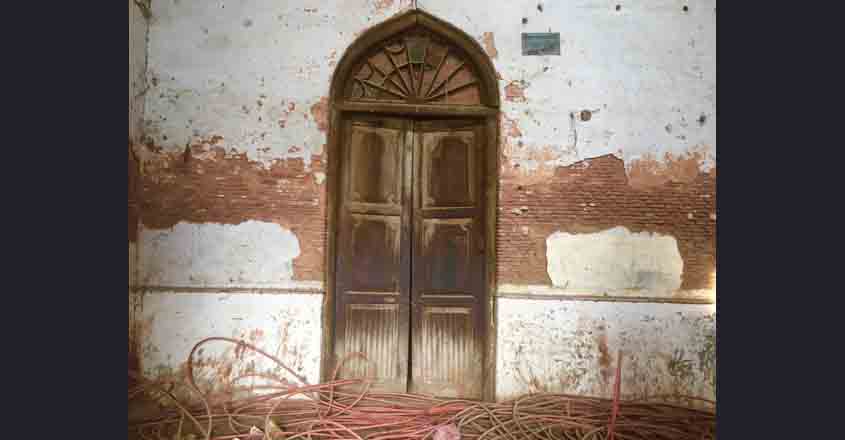
The ground in the front of the monument is now a bus station. Lakshmi Narayan parked the car and since it had rained that morning, he asked me to get off from the other side to avoid a stagnated pool of water and filth. At present, one part of the decrepit structure is inhabited by a family of nonagenarian – C P Pandey, who was appointed as the caretaker of the club. The other portion is managed by the association and the only thing common between them is the illegal construction and encroachment, around which stands the cracking monument of Rifa, donning a lugubrious look.

I spent some time envisioning the past associated with it and wondering who is responsible for such sorry state of affairs today. Is it the people, ignorant of the past or the authority which has turned a blind eye to misdemeanour? Perhaps lack of pride in our glorious heritage.

I finally left with a heavy heart remembering Faiz and hoping one day Rifa would be restored.

source: http://www.travel.manoramaonline.com / OnManorama / Home> Travel> Reader’s Discovery / by Pragya Srivastava / July 17th, 2018