Tag Archives: Asrar Ul Haq Majaz (aka) Majaz Lakhnavi

Safia Akhtar: An Underrated Genius And Connoisseur Of Urdu Literature #IndianWomenInHistory

Rudali / Lucknow, UTTAR PRADESH :

Safia Akhtar was a brilliant writer, poet, author, teacher, critic, and connoisseur of Urdu literature, who remains underrated.
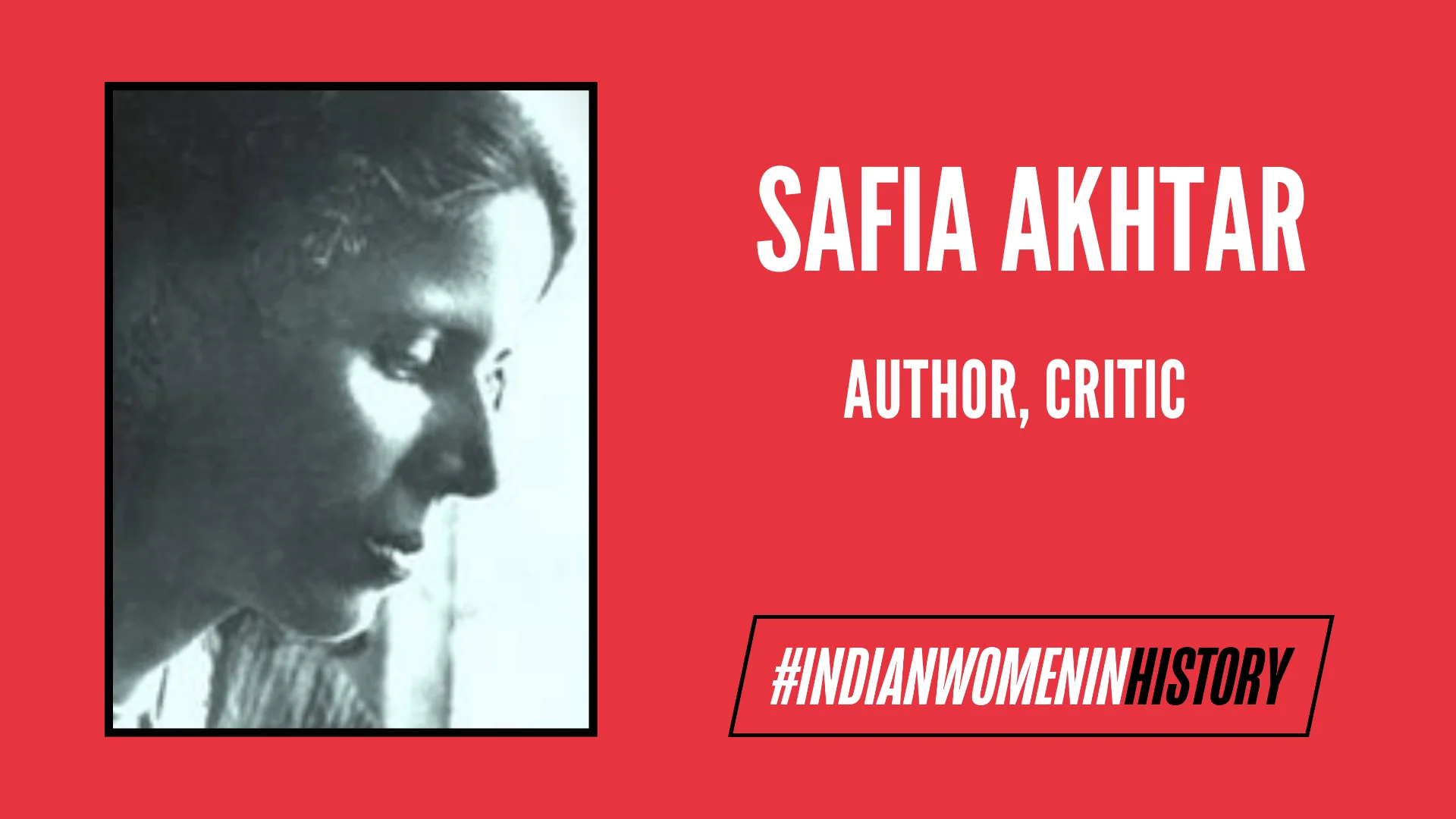
If you know who Safia Akhtar is you would probably know her as Javed and Salman Akhtar’s mother, Jan Nisar Akhtar’s wife, or Asrar-ul-Haq, better known as Majaz Lakhnawi’s sister but Safia was quite the personality herself. She was a brilliant writer, poet, author, teacher, critic, and connoisseur of Urdu literature.

The best of Safia Akhtar’s work includes the letters that she wrote to her husband while they were apart. Her letters which were written over a period of nine years were published after her death by her husband as “Hurf-e-Ashna” and “Zer-e-lab” translating to “familiar words” and “below the lips” respectively. Safia Akhtar also wrote, “Andaz-e-Nazar” (The way to look at it) which is a collection of short essays.

Safia’s sister Hamida Salim was also a talented writer having authored many books like “Hum Saath the”(We were together) which gives an account of the lives of the siblings. Javed Akhtar, her son who lost Safia only when he was eight years old calls his mother a “nayaab aurat” during her time.

She set foot into education and pursued it at a time when women were rarely given the choice or opportunity to do so. Safia Akhtar chose her life partner, she worked and financially supported her family as well as her husband who was in another state, looking for work. To top it all off, she also took care of her two sons.
Safia Akhtar Image: Rekhta

Childhood, education, and early life

Safia Siraj-ul-Haq was born in Rudauli, Uttar Pradesh. Safia was an educated Muslim woman, one of the first of her time, in the 1940s. As Javed Akhtar recalls, his Nana (maternal grandfather) mentioned to him that someone once visiting couldn’t locate their house and asked for directions to the house of the girl who graduated and was easily guided to Safia Akhtar’s place.

Safia’s primary education took place at home where her father, Chowdhary Seraj-ul-Haq, taught her English, Urdu, and Farsi. Her brother, Majaz, assisted her with mathematics and she was tutored in the Quran by a female teacher. Owing to her father’s transfer, who was a law graduate, a door opened for Safia Akhtar and her siblings for further education. She was admitted to Karamat Hussain Muslim Girls college in the fourth grade. However, soon after, her father was transferred again from Agra, where Safia was studying living at a hostel, to Aligarh.

Safia Akhtar then started studying at Abdullah College and excelled in her academics. After completing high school, she had to wait a year for the B.A. classes to start in the girls’ college. Safia stayed in a hostel during her B.A. and after completing it, worked as a supervisor of a training program with her teachers as they were amazed by Safia’s caliber. After completing her undergraduate course, she studied further and got a Master’s degree in education from Aligarh Muslim University.

Safia grew up imbibing a progressive ideology. She set foot into education and pursued it at a time when women were rarely given the choice or opportunity to do so. Safia Akhtar chose her life partner, she worked and financially supported her family as well as her husband who was in another state, looking for work. To top it all off, she also took care of her two sons. Safia’s brother and husband were also part of the progressive writers’ movement at the time.
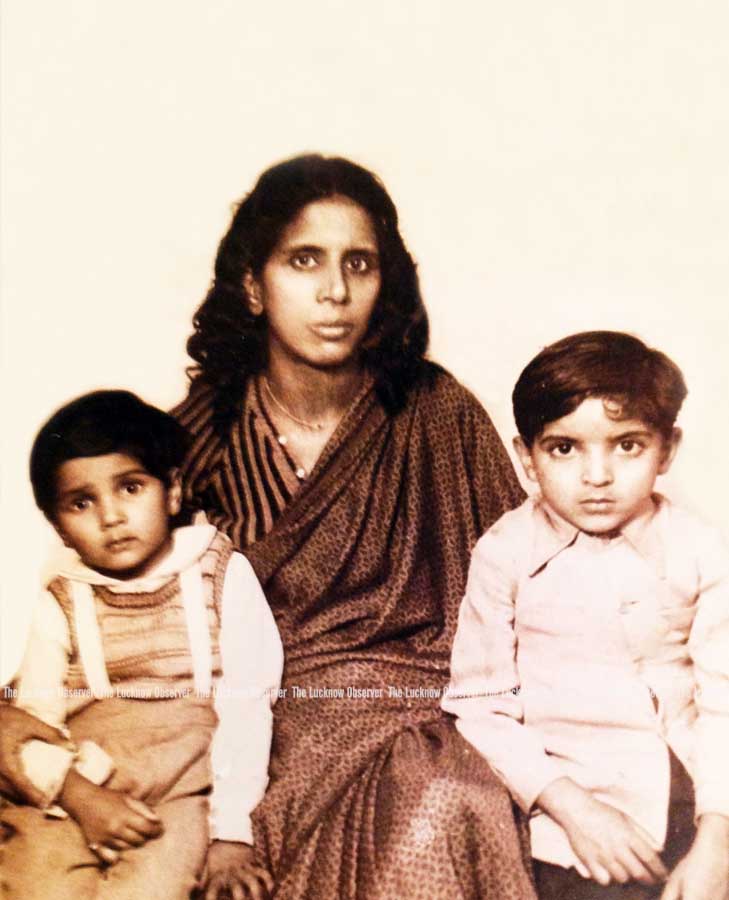
pix: lucknowobserver.com

Safia and Jan Nisar Akhtar

Jan Nisar Akhtar, the famous poet and Bollywood lyricist was a friend of Safia Akhtar’s brother Majaz and also the cousin of Salma, her roommate while she was staying in the hostel in Aligarh. Salma recounts Jan Nisar coming to the girls’ college randomly to meet Safia and introducing himself as a friend of her brother’s. Safia fell in love at first sight. However, the love seemed to be one-sided as Jan Nisar did not get in touch with her for quite a while and this disheartened Safia.

After some time passed, Jan Nisar wrote to Safia about his work, interests and disinterests, and himself. Soon after, Safia’s family received a marriage proposal from Jan Nisar’s side. As the culture still prevails, the girl’s family did a background check on Jan Nisar and his family. Salma, his cousin, testified for Jan Nisar’s family (even though she wasn’t too well informed about them) that they had a legacy of poets; his father Muztar Khairabadi was a well-known shayar of the time.

The letters give a glimpse of Safia’s immense love and optimism toward Jan Nisar. They also give an insight into episodes of her life events including her job, their two children Javed and Salman, her life at home, and towards the end, her suffering. These letters stand proof of what a literary genius Safia Akhtar was

Jan Nisar himself was well accomplished and was an Urdu literature lecturer in Gwalior. With no time wasted, Safia Akhtar’s parents sent their acceptance as they did not find any flaws as such in Jan Nisar. But to their disappointment, the Akhtars did not respond for a considerable amount of time.

This silence motivated Safia to take a rather valiant step. She poured her heart out to Jan Nisar in a letter and also enquired about the holdback from their side. Jan Nisar reverted with a confession about his feeling for another woman, his older, widowed relative who helped him during a rough patch after his first relationship came to an end. Safia appreciated Jan Nisar’s honesty. The proposal was re-established and the nikkah followed soon after, although there were some odd happenings during the time.

source: youtube.com / Letters Of Love & Loss | Jaan Nisar Akhtar Aur Safia Ke Khat | Rekhta Studio

In 1949, Jan Nisar switched cities from Bhopal to Bombay in the pursuit of becoming a lyricist in Bollywood. Safia Akhtar chose to stay back and continue with her teaching post at Hamidiya College, thus, supporting her husband money-wise and also rearing their two children. The distance between the two encouraged Safia to write letters to him.

She wrote to him consistently, multiple times a week in some instances. The letters give a glimpse of Safia’s immense love and optimism toward Jan Nisar. They also give an insight into episodes of her life events including her job, their two children Javed and Salman, her life at home, and towards the end, her suffering. These letters stand proof of what a literary genius Safia Akhtar was. Safiya suffered from an unconfirmed terminal illness (it was either blood cancer or skin cancer, not conclusive). Unfortunately, fate had other plans and Safia passed away prematurely in 1953 when she just was in her late 30s.

Without a doubt, Safia’s letters were and to this day are, a gem in Urdu literature. She expresses her feelings so very aesthetically and makes the most mundane of her daily tasks seem something literary and intriguing. About her letters being published, there seems to be a difference of opinion.

On one hand, there is the stance that the letters were something intimate, personal, and not meant to be out for the public. Salma, her roommate, calls it a “Dastan-e-Gham”, the saga of sorrows that she shared with her husband and would not want to be disclosed. While others appreciate the sheer brilliance of her words and feel lucky to have access to them. 

source: http://www.feminisminindia.com / Feminism In India (FII) / Home> Culture> Books / by Tuba Chauhan / August 04th, 2022
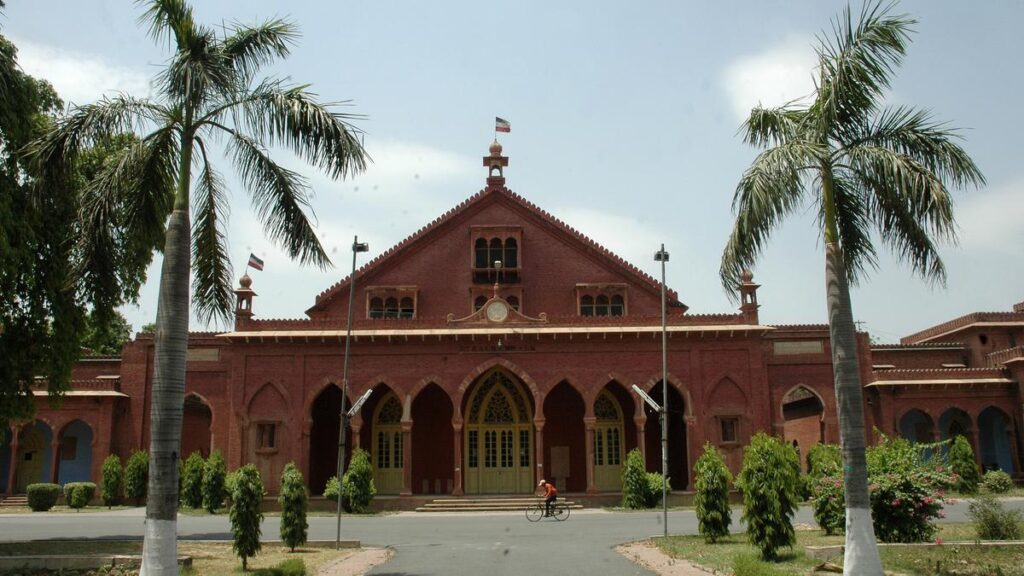
Tracing the roots of Aligarh and its famous university, often hailed as a mini-India

Aligarh, UTTAR PRADESH:

Aligarh Muslim University has given the town itself a facelift. Many luminaries have graced the halls of AMU, and it remains an oasis of learning amid uncertainties and controversies that surround the old town

A view of the Aligarh Muslim University Campus | Photo Credit: Sandeep Saxena

There is something about Aligarh that tells us that the past never dies. It merely reinvents itself to suit contemporary demands. Back in 1937, Mohammed Ali Jinnah, soon to transform into Quaid-e-Azam, took the route with a rare flourish. Recalling the Muslim League session in Lucknow in 1937, author-journalist Mohammed Wajihuddin writes in his persuasively argued, lucidly expressed book, Aligarh Muslim University, “The October 1937 Lucknow session was so important to Jinnah that he discarded his well-cut suits and donned flowing trousers and a long coat. From Mr. Jinnah, he transformed into Janab Jinnah and Quaid-e-Azam. While he had kept himself aloof from ordinary Muslims, now he began mingling with them….He travelled extensively, and Aligarh became a regular place to visit during these travels.” Around the same time, he raised the rhetorical slogan of ‘Islam in danger’ too.

Passing storm(s)

The following year when Jinnah visited AMU, which had begun as the Mohammedan Anglo-Oriental College in 1875, he was given a rousing welcome. The students’ union made him an honorary life member. “It was a tradition the union had followed since 1920, when Mahatma Gandhi was given this membership. In those days they would also put up a portrait of the guests they honoured on the Union Club’s wall. It was such a portrait of Jinnah’s at the AMU Students’ Union Club that created a storm on the campus on May 2, 2018,” writes Wajihuddin.

The storm, essentially a passing one, was caused by local MP Satish Gautam writing to the Vice Chancellor Tariq Mansoor demanding the removal of Jinnah’s portrait from the campus. The demand was not conceded but it made sure the university was in the spotlight, and as a consequence, Aligarh remained in the headlines for days on end. Like it did when the anti-Citizenship (Amendment) Act protests hit the campus in December 2019. Controversies and Aligarh seem to go together. Yet, AMU, despite frequent protests, occasional violence and various stirs, seems to be an island by itself wherein students seek knowledge, chart out great careers and soak in its culture just as the university’s founder Sir Syed Ahmed Khan, would have advised them. As academic-literary critic Shafey Kidwai, author of Sir Syed Ahmad Khan: Reason, Religion and Nation, said, “The question of his (Jinnah’s) glorification does not arise, but the university’s job is to protect the truth of history. His photo was there as the hall carried the names and photographs of all who visited it. The list incudes Mahatma Gandhi, Dr. B.R. Ambedkar, Maulana Azad and Sarojini Naidu.” Unsurprisingly, Prime Minister Narendra Modi called it ‘mini-India’ in an online address.

The story of a name

AMU has the unique distinction of taking along with it the name of the township where it is based, and giving the town itself a facelift. Otherwise, known for its brassware and lock industries, Aligarh has a chequered past, one that has seen many a nawab, maharaja or local leader make an attempt to leave an indelible impression on the town; the most recent one being an attempt by zila panchayat members to rename the place Harigarh. Vijay Singh, zila panchayat chairman, stated, “It was a long-pending demand to rename Aligarh as Harigarh.” He was probably referring to a similar call given in the late 1970s by members of the Jan Sangh, the precursor of the Bharatiya Janata Party (BJP). At that time, a new temple was also called Harigarh Mandir. Nevertheless, the demand to rename the place died down soon enough.

There is an interesting tale behind the name of Aligarh. It was initially called Kol or Koil. Though obscurity surrounds the origin of Kol, according to Edwin Atkinson, who compiled the first gazetteer of the district, the name Kol was given by Balram who slew the great Asura called Kol over here. Noted medieval India historian, Syed Ali Nadeem Rezavi, explained the genealogy of the place, at the height of the Harigarh controversy, stating, “Sometime before the Muslim invasion, Kol is said to have been held by the Dor Rajputs. Sultanate period sources, both Persian and non-Persian, mention Kol as a centre for the production of distilled wine. The sources of the period of Alauddin Khalji mention this town as Iqta Kol; Iqta was an administrative unit.” It continued to be called Kol during the Mughal age too with Emperor Jahangir calling it Kol in his memoirs.

However, things changed in the 18th century. The Jats captured the fort briefly and called it Ramgarh, quite removed from the earlier nomenclature of Sabitgarh and Muhammadgarh. Then came the Marathas who dubbed the fort as Aligarh after their governor Najaf Ali Khan. By the 19th century, the town itself came to be called Aligarh. Some locals dispute this fact-based assertion, claiming Aligarh is named after Hazrat Ali, the last caliph and son-in-law of Prophet Muhammad.

City of joy

In reality, Aligarh, not Kolkata, was the original City of Joy; it was only in 1985 that Dominique Lapierre called Kolkata the City of Joy. Some 50 years before that, popular Urdu poet Asrar-ul-Haq Majaz had called Aligarh as ‘Shahr-e-Tarab’ or the City of Joy! Moreover, Aligarh, and AMU, whose tarana (anthem) was penned by Majaz, transmits joy.

Here studied Begum Para, the heroine of the first talkie Alam Ara. In her painstakingly researched and elegantly produced book, The Allure of Aligarh, Huma Khalil writes, “The musical leanings of Padma Bhushan winner Talat Mahmood…can be traced back to when he used to sing the works of Ghalib and Mir, at the age of 16 in the school functions of Minto Circle. Award-winning film and theatre actor Naseeruddin Shah is still remembered as the finest badminton player of the university.” Not to forget Anubhav Sinha, Surekha Sikri and Zarina Hashmi. Incidentally, Hashmi brought Aligarh to her canvas. A mathematics graduate from AMU, Hashmi had seen villages burning around Aligarh in 1947 and could never forget her home and relatives who were dispersed in the violence.

If violence was here, could prayers have been far behind? Not quite. Hence, besides its historic mosque where countless students stand in neat rows for prayers, Aligarh has the age-old Khereshwar temple which, Khalil tells us, “is the oldest Shiva temple”. Tansen’s guru, Swami Haridas, lived here and Mughal emperors are said to have come down to the temple “to witness the magic of raga Malhaar”.

The persistence of knowledge

Of course, Aligarh has been a happy host to the annual numaish (exhibition) and for years its students frequented Tasveer Mahal, one of a dozen cinema halls in the city. Tasveer Mahal was more than a cinema. It was like a gateway to the University, a rendezvous point for students in the evening. It’s all gone now. What remains untouched is the determination of the students to learn. As Khalil recounts in her book, “Ilm (knowledge) is the second most used word in the Quran after Allah; Aligarh’s motto captures this ethos, ‘(Allah) taught man what he knew not’.” As youngsters seek to know more and more, Aligarh is like the body and AMU its soul.

source: http://www.thehindu.com / The Hindu / Home> Books / by Zia Us Salam / February 09th, 2023

Remembering Majaz Lakhnavi, the Keats of Urdu poetry

Rudauli (British India / Lucknow, UTTAR PRADESH :

Majaz, uncle of lyricist Javed Akhtar, was one of those rare gems whose poetry reflected two most important aspects: romance and revolution.

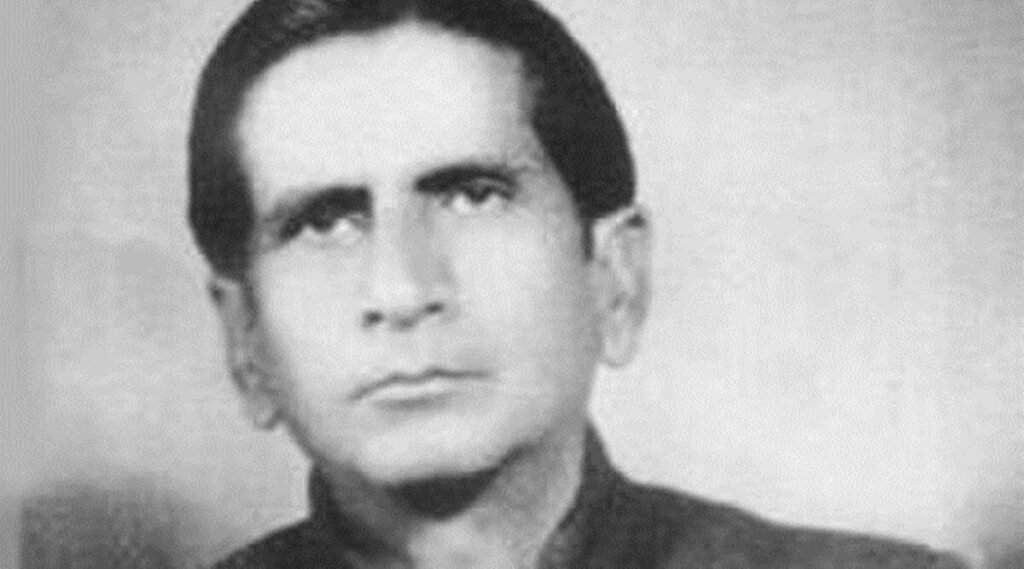
Born in Rudauli (then in Barabanki, UP) during Diwali celebrations, he was named Asrarul Haque and later took up the name ‘Majaz Lakhnavi’. (Photo: Wikimedia Commons)

Two days ago, a nazm reverberated across Aligarh Muslim University as the institution celebrated its founder’s day on October 17. Alumni across the globe, who proudly address themselves as ‘Alig’, sang: Ye Mera Chaman, Ye Mera Chaman.

The author of this famous nazm, Asrarul Haque, popularly known as ‘Majaz Lakhnavi’, whose poetry still rules the heart of millions, was born on October 19, 1911.

Regarded as the Keats of Urdu poetry, Majaz was one of those rare gems whose poetry reflected two most important aspects: romance and revolution. In an era when legendary Urdu poets as Faiz, Jazbi, Sardar Jafri, Sahir Ludhiyanvi were in their prime, Majaz rose to fame and carved a niche for himself.

Born in Rudauli (then in Barabanki, UP) during Diwali celebrations, he was named Asrarul Haque and later took up the name ‘Majaz Lakhnavi’. He belonged to a zamindar family. At a young age, Majaz had an inclination towards Urdu poetry. His fame came when he reached AMU as a student where he got the company of literary legends as Ali Sardar Jafri, Ismat Chugtai, and others. During one of the mushairas, Majaz, dressed in sherwani, delivered his famous poem:

Khoob Pehchan lo Asrar Hoon Main,
Jinse-Ulfat ka talabghar hoon, Main,
Ishq hi Ishq hai Duniya Meri,
Fitna-e-Aql se Bezar hoon Main,
Ek Lapakta ho Shola ho, Ek Chalti Hui Talwar Hoon Main.

The audience was mesmerised; the silence established that Majaz had arrived on the scene. There was no looking back. Majaz gave his alma mater a famous nazm, which is now the university tarana (anthem).

Majaz’s popularity rose by leaps and bounds and there were more females than males among his admirers. At AMU, girls used to keep his book ‘Aahang’ beneath their pillows. They would commit to keeping ‘Majaz’ as the name of their children.

Himanshu Bajpai, Daastango, who has rendered several daastans on Majaz, recalls one incident: “Once, Ismat Chugtai told Majaz that girls love him and Majaz quickly replied, ‘And they marry a rich person’.”

Truly, Majaz had a failed love life, and the dejection got him admitted to a mental asylum at Ranchi. His addiction to liquor took its toll. Chugtai asked him, “Liquor or wine, who destroyed your life, Majaz?” Witty and humorous as always, he replied, “I have given this right to both of them.”

His poem Awara was also an instant hit.

Shahar ki raat aur main naashaad o nakara phirun
Jagmagati jagti sadko pe awara phirun
Ghair ki basti hai kab tak dar-badar maara phurin
Ai Gham-e-Dil kya karun, Ai Vahshat-e-Dil kya karun.

Majaz had recited this nazm on the request of people at White Baradari in Lucknow, which eventually turned out to be his last public gathering before his demise.

His poetry, as said earlier, had both romance and revolution. Some of his lines for women empowerment are still relevant.

Tere Mathe pe ye anchal bahut hi khub hai lekin,
Tu is aanchal se ek parcham bana leti toh achcha tha.

Bajpai narrates an incident: “Once, famous film actress Nargis came to meet Majaz. She requested for his autograph and Majaz obliged by writing the above lines on her white dupatta. He identified himself with every deprived person — perhaps this brought him closer to the progressive movement.” In his poetry, Majaz had raised the issues of women liberation and feminism, which are still discussed today.

Majaz’s revolutionary couplets, too, ruled the masses. While other poets raised the pitch in their revolutionary couplets, Majaz rendered his lines that could be sung with revolution. ‘Bol, Ari O Dharti Bol, Raj Sinhasan Daanwa Dol‘ is one such poem. It is simply unbelievable to see anyone write on the worldly intricacies so beautifully — ‘Bahut Mushkil hai Duniya ka Sanwarna, Teri Zulfo ka Pencho Kham nahi Hai‘.

Alas, Majaz remained a loner. Josh Malihabadi even advised him to keep a ghadi (watch) with him while drinking, but Majaz laughed it off, saying, “You drink keeping a ghadi, I drink keeping a ghada (pitcher).”

In December 1955, his end came abruptly, after he collapsed in Lucknow, and passed away before reaching Balrampur Hospital. The present generation may recall him as the uncle of Bollywood lyricist Javed Akhtar.

The poet, whose kingdom was in the hearts of millions, is buried in a six-feet grave at Nishatganj graveyard with his own lines from a nazm on the epitaph.

Ab iske baad subah hai aur subah-e-Nau Majaz
Ham par hai khatm Sham-e-Gareebaan-e-Lucknow

source: http://www.indianexpress.com / The Indian Express / Home> Books & Literature / by Faisal Fareed, New Delhi / October 19th, 2021