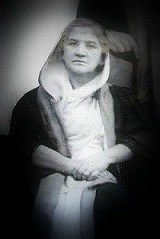
JAMMU & KASHMIR :
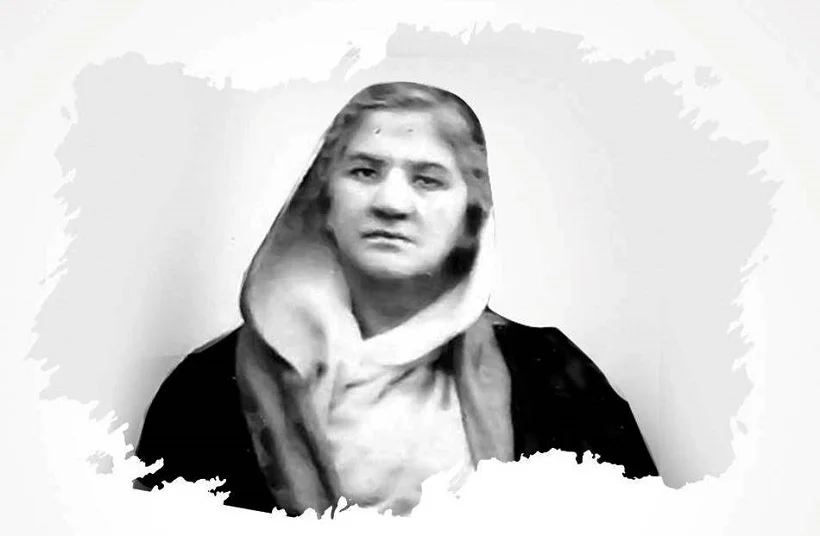
Begum Zaffar Ali
The legendary educationist of Kashmir whose door-to-door campaigning inspired generations of Kashmiri girls resurfaced in their recent academic feat.
IN his celebrated anthology, The Veiled Suite: The Collected Poem, Agha Shahid Ali details his grandmother’s “bleeding heart”—which ensured the educational empowerment of the masses in the valley.
Shahid’s poem, Prayer Rug in her memory, became a token introduction of “the lady with a lamp” — Begum Zaffar Ali.
this year my grandmother
also a pilgrim
in Mecca she weeps
as the stone is unveiled
she weeps holding on
to the pillars
Beyond the poem, however, there’s a staggering profile of the grand old lady of Kashmir—whose educational service made her legend.
“Firmly determined, my mother-in-law, Begum Zaffar Ali, was a self-made lady, who spent her life relentlessly advocating for women education and empowerment in the valley,” recalls Dr. Shaheena Agha, at her Rajbagh residence.
In the sweeping accolades being showered on the lockdown-hit girls whose recent grades once again made them the shining stars of Kashmir’s dented academia, Begum Zaffar Ali found a glorious mention for inspiring generations of girls in the valley.
“My mother-in-law was one of the first Kashmiri girls whose grit made her a beacon of educational excellence,” Shaheena continues.
“An untiring activist, Begum Zaffar helped Kashmiri women in one way or another. I take inspiration from her.”
In her 60s, Shaheena first met Begum Zaffar as a 26-year-old woman, when she married the celebrated educationist’s eldest son, Agha Nasir Ali, in 1986.
“It was an evening of mutual admiration and love,” she talks about the first interaction with her mother-in-law. “By then, she had already retired, but I was instantly moved by her illustrious persona.”
Begum Zaffar can be easily identified as one of the most influential and meticulous women of her times. Her life, Shaheena says, was that of extraordinary persistence and intellect which brought girl education to the forefront and dispelled illiteracy and ignorance.
“As a champion of women rights, her tireless and unwavering contribution to social changes and reforms pertaining to girl education in the valley and upliftment came at a time when society was predominantly patriarchal and orthodox in its outlook and question of women liberation and education were still widely restricted,” Shaheena says.
Begum Zaffar Ali was born in 1900 in the distinguished Agha family of Srinagar with her maiden name, Syyeda Fatima Hussain. She was the eldest daughter of Khan Bahadur Aga Syed Hussain, the first matriculate of Kashmir.
Along with her siblings, she was homeschooled by a European Home Governess. While pursuing her education, she was married to her cousin, Agha Zafar Ali Qazalbaash, a scion of Afghan family. She continued her education after marriage.
While being a mother to three, she went ahead taking revolutionary strides and efforts which would go on to change the face of women’s emancipation and education in the valley and inspire thousands of young girls for years to come.
“She brought an era of renaissance and regeneration in the lives of the Kashmiri women,” says Nusrat Mehmood, a senior college lecturer who calls Begum her inspiration. “Her passionate, non-conforming and unorthodox life will continue to rekindle the spirit of excellence in people like me.”
In 1925, Begum Zaffar was invited to teach in a Girls Missionary High School run by Miss Mallinson and Miss Bose in old Srinagar’s Fateh Kadal area.
“During those times, being a teachress was seen as a stigma but nevertheless she joined the school to serve the cause of education,” lecturer Mehmood continues.
“Her door-to-door campaigning for education in an era of subjugation and poverty makes Begum one of the most unsung educationists of the world. Her academic pursuits and ambitions to bring social changes heralded a new hope.”
Such was the zeal and determination of Begum Zaffar that she simultaneously started philanthropy work towards the poor girl of the school and looked after their hygiene and overall development.
“She even encouraged both young and elderly women to seek education and personally volunteered to teach them,” says Mubashir Hussain, a social activist from Srinagar.
“Through the good offices of her father who was then Home and Judicial Minister in Maharaja’s regime, grants were sanctioned for the schools. Begum managed to get an extra sum of Rs 10 sanctioned for the maintenance of girls every month besides meals.”
Impressed by her progress in studies, her children’s home tutor encouraged her to sit for the matriculation examination as she, by then, had been teaching girl students of tenth standard for five years.
Begum Zaffar was reluctant initially as no woman from the valley till then had passed the matric exam. She finally broke the jinx by becoming the first matriculate woman of Kashmir in 1930 and went on to complete her graduation in Domestic Science and Liberal Arts from Lady Mclegon College, Lahore in 1938.
“Back then, parents were still debating whether to give only religious teachings to their girl child or give them modern education,” says Rameez Kashani, a history lecturer.
“To uplift Kashmiri women and free them from their ignorance and religious and social conservatism, Begum Zaffar led the movement of women emancipation in the valley where she could encourage girls to come forward and educate themselves.”
Later she was appointed as the Inspector of Schools in Kashmir and was the first Muslim in her administrative capacity, who went on delivering lectures in colleges and social gatherings.
As a great orator and popular figure, Begum Zaffar was a key member behind the foundation of Teachers Club and Ladies Club, whose members included Tara Devi, queen of Kashmir’s last monarch, Hari Singh.
“The club was central to bringing reform changes and participation in the lives of the Kashmiri women,” Kashani says.
Before the bloodcurdling fall of 1947, Begum Zaffar had served as the secretary of the All India Women’s Association but later resigned due to her displeasure with the association’s nationalist fervour.
Back in 1944, she had famously hosted Mohammad Ali Jinnah and his sister, Fatimah Jinnah at Srinagar. She had organised a meeting of Kashmiri women with the stalwart’s shadow sibling at present day Lawns of Secretariat.
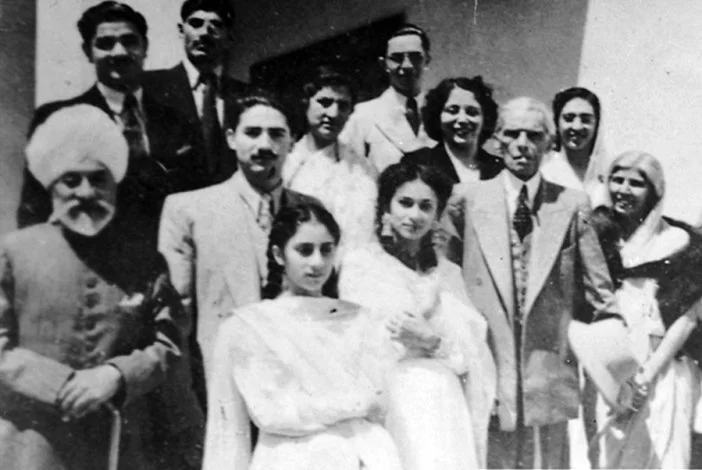
Begum Zaffar Ali with Mohammad Ali Jinnah in this pre-47 pic.
In her lifetime, Begum Zaffar held various offices and with her intellectual ability and leadership, she was the first Muslim in Kashmir to become a director in the Department of Education.
In her later days, she was also member of the Social Welfare Advisory Board, Jammu and Kashmir, and even became a legislator.
At personal level, Begum’s three sons went on to have distinguished public profiles. Her two sons, Agha Nasir Ali and Agha Shaukat Ali were civil bureaucrats.
While Agha Nasir retired as Labour Secretary of India in 1977, Agha Shaukat Ali, moved to Pakistan and joined Civil Services. Her youngest son Agha Ashraf Ali followed her footsteps and went on to become a top academician and educationist of the valley.
“It was Begum Zaffar Ali whom Sheikh Abdullah approached to convince her son, Agha Shaukat Ali to come back from Pakistan and join his cabinet,” Shaheena says. “During her lifetime, she longed to meet the same son when he moved to Pakistan. But New Delhi never granted a visa to her for meeting her son in the neighbouring country.”
When the same government awarded Padma Shri to her in recognition of her outstanding contribution to the field of social welfare in 1987, Begum famously declined the award in a televised Doordarshan interview.
“The Indian state excesses and gross human rights violations in Kashmir was the reason behind the non-acceptance,” historian Kashani says.
In her later years, the top educationist had been shuttling between Srinagar and Washington, to be with her exiled son.
In 1999, when she was staying with Agha Shaukat in the United States, the whole family, including her great grandchildren, had planned to celebrate her birthday as she was turning 100 year old.
“But sadly,” Shaheena says, “she passed away a month short of her illustrious century!”
source: http://www.kashmirobserver.net / Kashmir Observer / Home> In Depth> Special Report / by Rakshanda Afrin / March 11th, 2021