KARNATAKA :
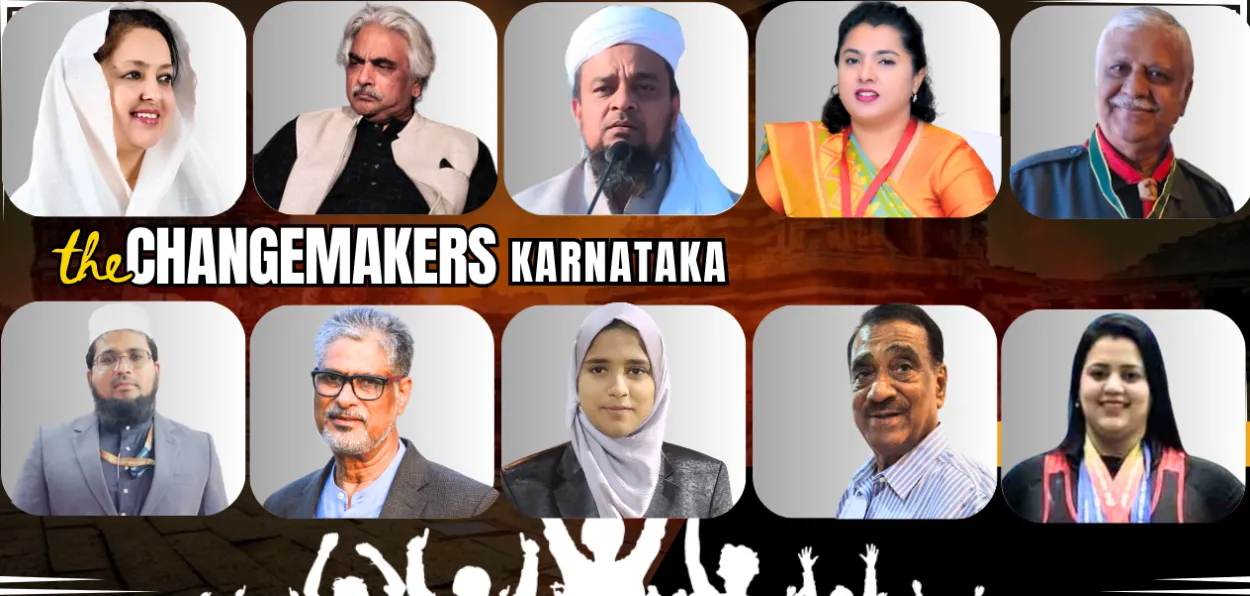
Karnataka Changemakers
New Delhi :
From the tech labs of Bengaluru to the coffee plantations of Coorg, from the ancient ruins of Hampi to the bustling streets of Mysore, Karnataka exudes energy. This is where India’s IT revolution was born, where classical arts thrive alongside cutting-edge innovations, and where every district tells a story of transformation.
Many Kannadigas have built empires and earned acclaim—but some went further. They didn’t just succeed; they became the Changemakers—individuals who shattered barriers, rewrote destinies, and ignited revolutions that ripple far beyond their own lives. Here are ten personalities of Karnataka whose courage and vision are reshaping the future:
Rifah Taskeen
A 15-year-old firecracker from Mysore started racing at age three in a custom car built by her ex-racer father, Tajuddin. By five, she was driving Mysore to Bengaluru; by seven, she was drifting in school shows and stealing Republic Day parades.
Fighting red tape and disbelief, she stormed past every “too young” barrier to claim seven world records (Golden, Elite, High Range, India, Asia, Worldwide & Wonder Books), mastering bikes, JCBs, cranes, buses, tippers, road rollers, and even flying a plane at eight.
Mysore’s cleanliness ambassador for five years and tuberculosis state warrior for four, she’s also a state-level boxing medalist and karate fighter. She’s drifted for Rahul Gandhi, flown with Sonia Gandhi’s blessings, and left global crowds speechless.
Self-funded, unstoppable, and dreaming of IAS wings after SSLC, Rifah doesn’t just break records; she rewrites what “impossible” means. Age is just a number.
Mushtaq Ahmed
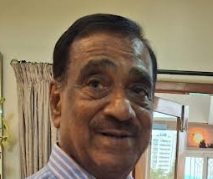
A Bengaluru-born visionary landed in Dubai when it was still sand dunes and a dream. For 41 years as head of Dubai Police photography (until 2018), the retired 1st Warrant Officer framed an entire nation’s rise—capturing the Burj Khalifa’s skeleton, the Kaaba from a crane, Sheikh Mohammed’s 1979 wedding, and sacred Medina in rare reverence.
From helicopter shots above a bridgeless Dubai to standing beside Sheikh Zayed and global icons like Lata Mangeshkar and Mohammed Rafi, the 79-year-old chronicler turned fleeting moments into eternity. Honoured, hugged, and kissed on the forehead by Dubai Police upon retirement, Mushtaq’s lens didn’t just document history—it built it. His quiet mantra: “The best shot is yet to come.”
Tazaiyun Oomer
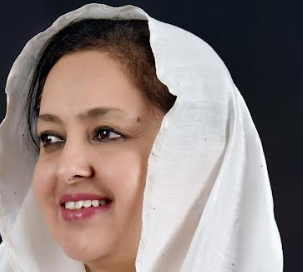
Tazaiyun Oomer was 13 when she fought through a crowd in Parliament House and got Indira Gandhi’s autograph, an electric moment that taught her leadership has no gender.
From a Kutchi Memon girl helping in her father’s textile shop, she grew into Bengaluru’s quiet revolution. In 1999, she founded Humane Touch Trust: 100+ corrective surgeries for disabled children, Al-Azhar School, 1,750 dignified mass weddings, 2,000+ Muslim women turned entrepreneurs, and yearly scholarships lifting nearly 300 girls into tech careers.
Recipient of the Sulthan Nari Shakti and Karnataka’s Rising Beyond the Ceiling awards, she proved compassion can shatter centuries-old barriers. Where tradition once whispered “a woman’s place,” Tazaiyun built schools, businesses, and futures. Her mantra: “Change begins the moment you decide to act.”
Mohammed Ali Khalid
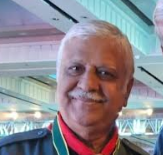
Mohammed Ali Khalid, India’s Bronze Wolf Award recipient —the highest global honour in Scouting—has lived the Scout promise for over four decades with breathtaking sacrifice and impact.
Mohammed Ali Khalid stands as one of India’s most influential Scout leaders, a visionary whose four decades of service have shaped millions of young lives. From volunteering at the 1980s National Jamboree to becoming Additional Chief National Commissioner of Bharat Scouts and Guides, he has built global partnerships, led landmark events like the 2017 National Jamboree and the 2022 International Cultural Jamboree, and strengthened Scouting across the Asia-Pacific Region. A strategic thinker behind Vision 2013 and a respected global diplomat, Khalid’s selfless leadership, mentorship, and bridge-building continue to inspire generations—earning him the Bronze Wolf and global admiration.
Architect of Vision 2013 for Asia-Pacific, broker of WOSM’s global fee consensus, founder of SAANSO, and mentor to countless young leaders, Khalid turned India into Scouting’s most connected powerhouse. At 70, he still pushes for 20% membership growth and 50% youth representation worldwide.
Rahmath Tarikere
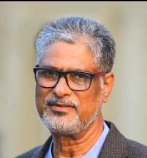
Rahmath Tarikere, born in 1959 in Tarikere’s syncretic lanes, grew up where Hindus and Muslims shared the same street and stories. The 1992 Babri demolition jolted him into action: he left pure literary criticism to unearth Karnataka’s living pluralistic traditions—Sufi saints, Nathpanthis, Shakta poets, and folk Moharram rituals that united communities for centuries.
Author of 30 books—including four Karnataka Sahitya Academy winners and the 2010 Kendra Sahitya Akademi winner Kattiyanchina Daari—he returned the national award in 2015 protesting intolerance and the murder of M.M. Kalburgi. A humble professor who insists “I am not a changemaker,” Tarikere quietly weaves pluralism into Karnataka’s soul, proving unity is not uniformity but a vibrant mosaic of differences.
Khudsiya Nazeer
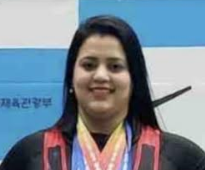
Khudsiya Nazeer, the “Iron Lady of India,” was born 1987 in Bangarpet and lost her wrestler father at two. Raised in a conservative Muslim family amid depression and mockery, she turned pain into power.
Post-Caesarean, she deadlifted 300 kg to set a world record (2022), then stormed the global stage: three golds at Asia Pacific Masters 2023 (South Korea), silver in Athens, golds in Commonwealth (Australia) and Germany. The first Indian Muslim woman to win international weightlifting medals, she lifts drug-free while working full-time at KSRTC.
From burqa-clad walks guarded by police to Harvard’s stage, Khudsiya proves motherhood multiplies strength. Her mantra: educate, play sport, write your own destiny. This Iron Lady doesn’t just break records; she shatters every ceiling for women.
Fouzia Tarannum
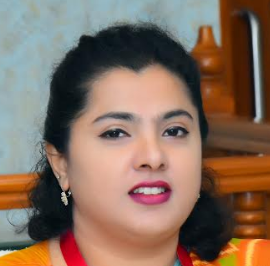
Fouzia Tarannum, 2015-batch IAS (AIR 31), cracked UPSC on her first attempt from Bengaluru’s public libraries—no coaching, pure grit. From IRS gold-medallist to Karnataka cadre, she turned arid Kalaburagi into a national millet powerhouse with “Kalaburagi Rotti,” empowered thousands of SHG women, lifted districts to top SSLC ranks, revived gram panchayat libraries, and delivered India’s cleanest electoral rolls—earning the President’s Best Electoral Practices Award in 2025.
At 36, this quiet DC faced Islamophobic slurs yet answered only with work. Unfazed, empathetic, and fiercely people-centric, Fouzia proves bureaucracy can have a heart and a steel spine. She doesn’t shout change—she builds it, one roti, one vote, one woman at a time.
Zafer Mohiuddin

pix09
Zafer Mohiuddin, Raichur’s radio-struck boy who once ghostwrote love letters in school, turned a bus-ride compliment from R. Nagesh into a lifetime on stage. He quit UPSC and Air Force postings to found Kathputaliyaan Theatre Group (1988), wielding puppets and plays as weapons against taboo.
From translating Girish Karnad’s Tipu Sultan ke Khwaab (Theatre Olympics 2018) to shattering Urdu myths with Zaban Mili Hai Magar, his raw, Amitabh-like voice has roared in ten languages, narrated Swaraj Namah, and defended Urdu’s secular soul alongside Karnad.
In November 2025, Karnataka crowned him with the Rajyotsava Award—its highest honour—for four decades pulling society’s strings toward truth and harmony. The puppet master still refuses to cut his own.
Moulana Dr. Mohamed Maqsood Imran Rashadi
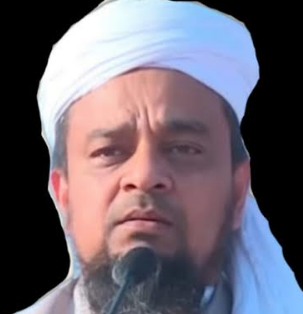
Moulana Dr. Mohamed Maqsood Imran Rashadi, Principal and Chief Imam of Bengaluru’s iconic Jamia Masjid, memorised the Quran in 18 months, earned a PhD in Urdu literature, and turned a struggling madrasa into a 100%-pass powerhouse for 400 underprivileged students.
From quietly removing provocative meat thrown to spark riots to defusing the 2025 “I Love Mohammed” banner crisis with one calm sermon, he prevents violence before it begins. He negotiates fair loudspeaker rules across faiths, hosts Hindu swamis for iftar, and, after the Pahalgam terror attack, thundered “Terror has no religion—we love Hindustan.”
A scholar who preaches in Tehran, meets Saudi royals, and still walks the KR Market uniting traders, Moulana Maqsood proves that unity is built by deeds, not banners. Bengaluru’s heartbeat of harmony beats in his voice.
Syed Nawaz Miftahi
Syed Nawaz Miftahi, fully sighted yet forever changed by the tear-filled Quranic recitations of blind children in Mumbai in 2011, vowed to become their light.
He mastered Braille, invented the “broken-rice touch” technique to awaken ageing fingers, and turned Sultan Shah Markaz, Madrasa-e-Noor (70 students), and daily phone classes into sanctuaries where the visually impaired recite flawless tajweed and complete multiple khatms every Ramazan.
From Hyderabad to Kashmir, his model now trains teachers who were once his students. In November 2025, he launched Umang Foundations—a residential beacon run by seven blind trustees and one fearless young sighted woman—where every visually impaired soul, of any faith, learns Quran, computers, and independence.
Nawaz doesn’t give sight; he proves the heart’s vision is brighter.
source: http://www.awazthevoice.in / Awaz, The Voice / Home> The Changemakers of Karnataka / by ATV / posted by Aasha Khosa / November 22nd, 2025