DELHI :
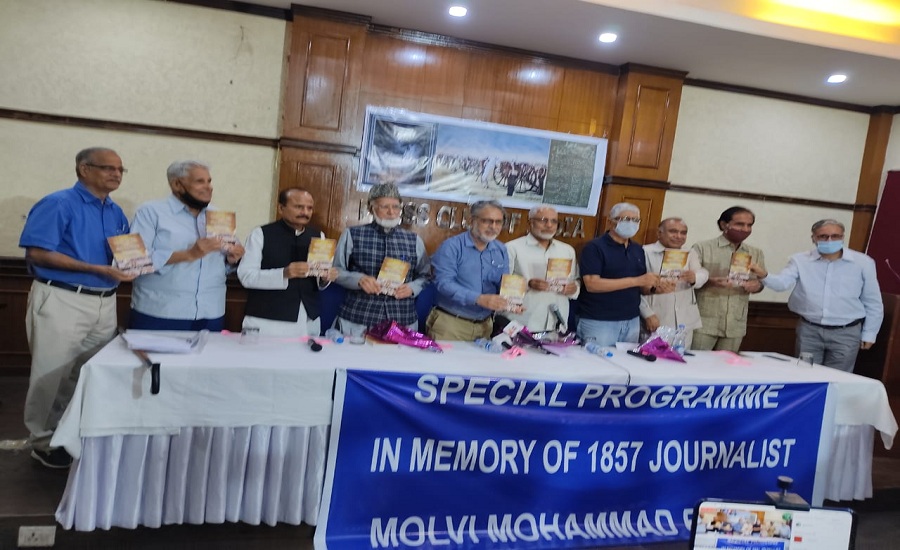
Press Club of India remembers Maulvi Mohammed Baqar on his 167th birthday on September 15, 2024.
New Delhi :
The Press Club of India (PCI) that has remained the last bastion to hold the flag of media’s independence high in the country, organised a programme on Sunday to remember the contributions of Maulvi Mohammed Baqar who used the power of his pen to challenge the Britishers who had brought a law to gag the press in India in the middle of 18th century.
Organized on the 167th martyrdom anniversary of Maulvi Baqar, the programme was attended by a host of writers, journalists, historians, academicians and intellectuals.
Shedding light on the contributions of Maulvi Baqar considered to be the founder of “spot” and investigative journalism in India, noted historian Dr. Swapna Liddle, author of The Broken Script, recalled Maulvi Baqar’s bold reporting of the events in Delhi’s 1857 revolt popularly known as India’s First War of Independence. It was when the press did not have facilities as available today, but Maulvi Baqar used to collect news stories from the field and print them in his newspaper published in the Urdu language.
The Britishers felt disturbed by the investigative reporting of Maulvi Baqar that became the reason for his martyrdom. British Army tied Maulvi Baqar to the mouth of a large gun and blew him into pieces.
Liddle emphasized how Moulvi Baqar became the voice of resistance against British rule, making him a significant figure in both the 1857Revolt and in the annals of Indian journalism.
According to Dr. Liddle, Moulvi Baqar’s work offers invaluable lessons for journalists today. His views on British governance, racial discrimination, job inequalities, and the exploitation of India’s wealth laid a foundation that remains relevant. Baqar’s sharp critique of British policies, combined with his unwavering call for unity among the people of Delhi, positioned him as a crucial figure in the anti-colonial struggle.
Presiding over the event, Gautam Lahiri, PCI President, hailed Moulvi Baqar as a pioneer of Indian journalism. Lahiri reflected on the state of modern journalism, pointing out that Baqar’s dedication and principles serve as a stark contrast to the current state of media, as reflected in India’s declining position on the World Media Freedom Index.
“It’s unfortunate that instead of rising to the level of journalism Baqar practiced, we seem to have regressed,” Lahiri noted, calling for introspection within the media industry.
Lahiri also stressed the importance of protecting institutions like the PCI, which he described as a cornerstone of Indian politics and modern history. “This land was given to us by our first prime minister, and it even served as the residence of former Prime Minister Indira Gandhi for a time. We must protect both the building and the institution, while upholding the constitutional values that it stands for.”
Senior journalist AU Asif, former member of PCI management committee, praised Baqar for his trailblazing work in investigative and field reporting. He underscored how Baqar’s journalistic integrity set a lasting example for future generations.
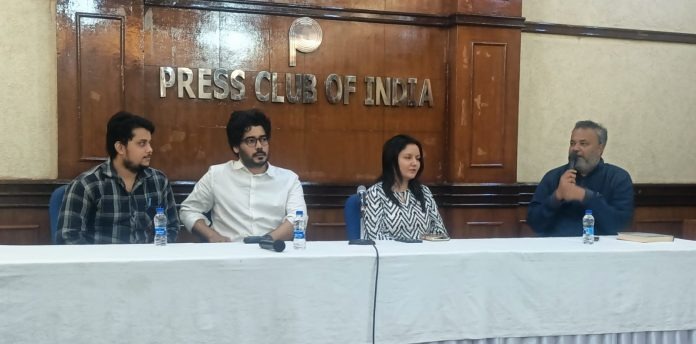
A panel discussion followed, focusing on Baqar’s legacy and the challenges faced by Urdu journalism today. Panelists included independent multimedia journalist Suhail Akhter, News18 Urdu anchor and author Munazah Shah, and Tasleem Raja, reporter for Siyasi Taqdeer and Qauwmi Aawaz. They discussed how Baqir’s newspaper, Delhi Urdu Akhbar, became a vital voice despite having a modest circulation of just 80 copies. The panel emphasized that the publication’s influence stemmed from its powerful content, which resonated with readers during a time of great political upheaval.
The discussion also touched on the difficulties Urdu journalism faces today, including issues of subscription, funding, and content creation. The panel drew parallels between the courage Moulvi Baqar exhibited in standing up to the British and the challenges modern journalists face in dissenting against the ruling establishment. The event was moderated by Mahtab Alam, journalist and PCI Joint Secretary.
source: http://www.indiatomorrow.net / India Tomorrow / Home> News / by Mohammed Naushad Khan / September 16th, 2024