Tag Archives: Sajida Begum

How one act of defiance in Mughal India cemented Sikh-Muslim ties in Punjab’s Malerkotla

Malerkotla, PUNJAB :

Muslim-majority Malerkotla has been declared as the 23rd district of the state, with the Punjab government fulfilling a decade-long demand of its residents.
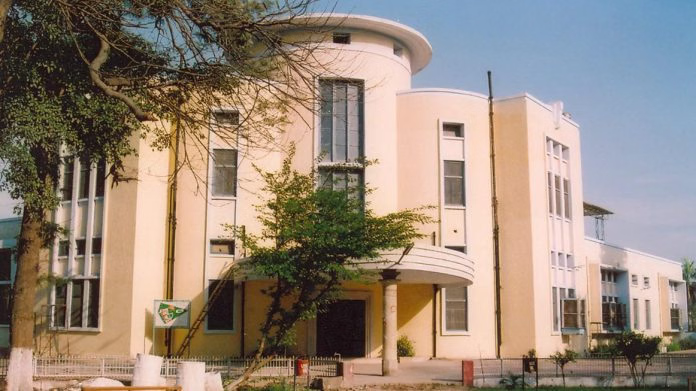
The government college in Malerkotla | Wikimedia commons

Chandigarh: 

On the occasion of Eid-ul-Fitr Friday, Punjab Chief Minister Captain Amarinder Singh declared the Muslim-majority Malerkotla as the 23rd district of the state, while announcing a slew of projects for the development of the historic city.

The move fulfils an at least decade-old demand in Malerkotla and a promise that the ruling Congress had made in its manifesto ahead of the 2017 assembly elections.

Punjab’s decision, however, hasn’t gone down well with the BJP, particularly Uttar Pradesh Chief Minister Yogi Adityanath.

Adityanath tweeted Saturday that the move was “proof of the Congress’ divisive politics”.

“Any distinction on the basis of religion is contrary to the basic spirit of the Constitution of India,” the Uttar Pradesh CM said. “Presently, the formation of Malerkotla (Punjab) is a reflection of the divisive policy of the Congress.”

Tarun Chugh, the BJP’s national secretary from Punjab, weighed in, saying the decision was clearly “communal” and that it was for the first time in the history of Punjab that an administrative decision was taken to further communal interests.

None of these charges, however, will find any resonance in Punjab, where Sikhs and Malerkotla’s Muslims share historically harmonious ties. So entrenched is this solidarity, that the Muslim-majority region saw no violence even as the rest of Punjab went up in flames during Partition in 1947.

The Punjab chief minister even alluded to this while responding to his UP counterpart.

“What does he (Yogi Adityanath) know of Punjab’s ethos or the history of Malerkotla, whose relationship with Sikhism and its Gurus is known to every Punjabi? And what does he understand of the Indian Constitution, which is being brazenly trampled every day by his own government in UP?” Amarinder asked in a statement issued Saturday evening.

A 300-year-old legacy

Punjab Sikhs’ reverence for the Muslims of Malerkotla dates back chiefly to one singular event in history.

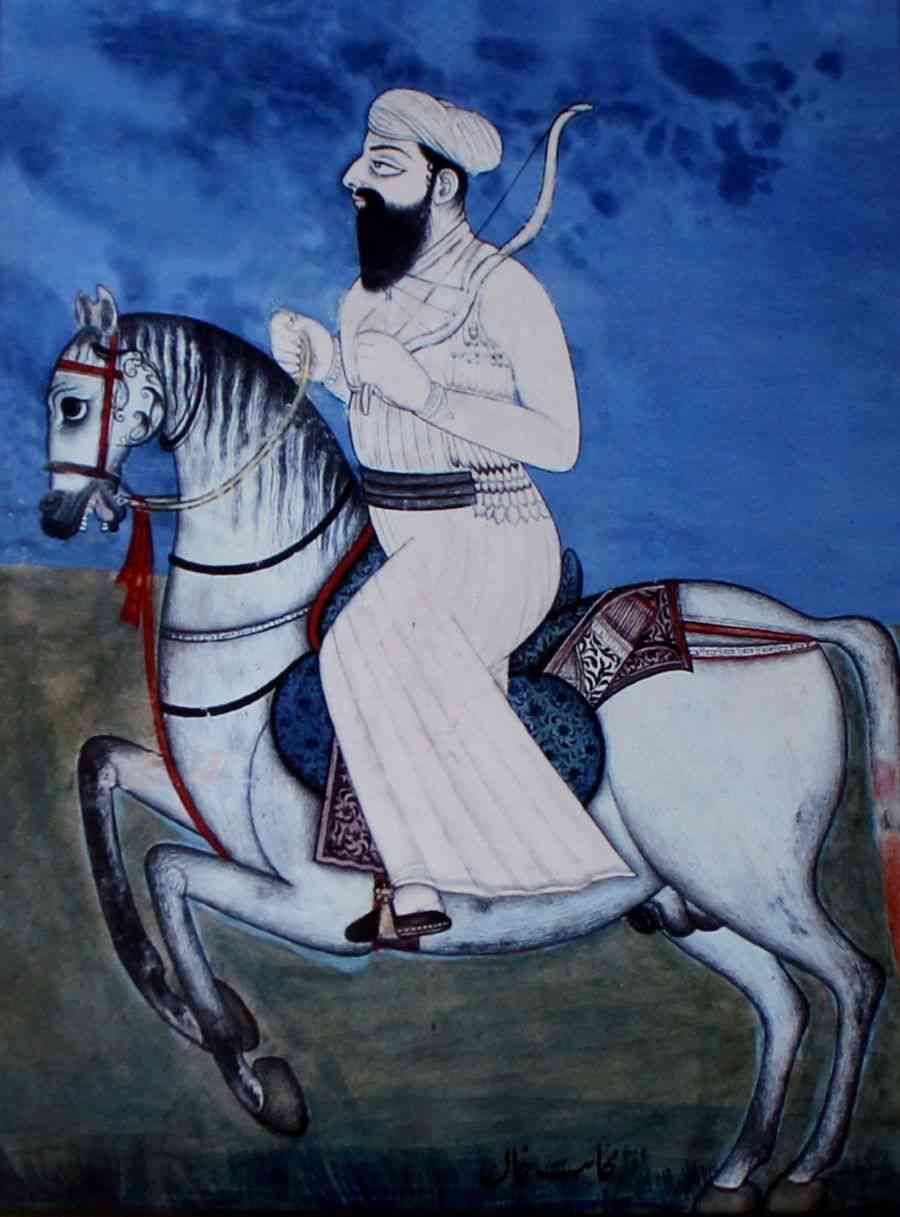
According to Anna Bigelow, associate professor of Islamic Studies in the Department of Religious Studies at Stanford University, the Nawab of Malerkotla, Sher Muhammad Khan, had in 1705 opposed the death penalty handed out to nine-year-old Baba Zorawar Singh and seven-year-old Baba Fateh Singh — the sons of Guru Gobind Singh, the 10th Sikh Guru.

Bigelow, who has researched Malerkotla’s history, writes that despite Khan’s protests, the then Mughal governor of Sirhind, Wazir Khan, bricked alive the two children.

The Malerkotla nawab’s defiance, referred to as “ha da naara (cry for justice), however, earned him the respect and adoration of Sikhs.

“Guru Gobind Singhji blessed Sher Muhammad Khan and ever since Malerkotla has become an icon of Sikh-Muslim brotherhood,” said the Shiromani Akali Dal (SAD) general secretary Dr Daljeet Singh Cheema. “Even during Partition, this town remained completely peaceful.”

The new district will also have a government medical college in the name of Nawab Sher Muhammad Khan.

The Opposition SAD has backed Chief Minister Amarinder, with Cheema issuing a statement  that Adityanath’s tweet was in bad taste and symbolic of his complete lack of historical knowledge about Malerkotla town and its significance for Sikhs.

“Malerkotla town is a unique example of Sikh-Muslim communal harmony that has lasted for over 300 years,” Cheema said.

A Muslim-majority region

Malerkotla was part of a jagir of several villages that the then Delhi Sultan Behlol Lodhi granted as dowry to the Afghani Sufi Saint Sheikh Sadruddin-i-Jahan (also called Haider Sheikh) in 1454.

According to Bigelow, the original settlement was called “Maler” and it remains the name of the neighbourhood surrounding the Sheikh’s tomb.

Following the advent of Mughal rule in India, the descendants of the Sheikh became the nawabs of Malerkotla.

Bigelow writes that Kotla came to be in 1657 when Mughal emperor Aurangzeb granted permission to Bayazid Khan, the first ruler of Malerkotla, to build a fortified city.

Bigelow also states that during British rule, Malerkotla was as turbulent as the other smaller principalities of the time, marked by infighting and ever-changing loyalties. The last ruler of Malerkotla was Nawab Iftikhar Ali Khan.

During Partition in 1947, Malerkotla remained absolutely peaceful and when the princely state merged with India, Iftikhar Ali Khan was its first chief minister.

Malerkotla was later merged with other princely states of the region to form the Patiala and East Punjab States Union (PEPSU). During the reorganisation of states in 1956, Malerkotla became a part of Punjab.

Modern-day Malerkotla

With almost 70 per cent of its population comprising Muslims, the Malerkotla assembly constituency has always been represented by a Muslim.

Nawab Iftikhar Ali Khan served as MLA twice while his second wife Begum Yusuf Zamani and fourth wife Begum Sajida were legislators as well. All of them were part of the Congress party.

The Malerkotla seat has, in the last few decades, been alternating between the Congress and the Akali Dal.

Razia Sultana, the current Congress MLA from Malerkotla, is representing the constituency for the third time (2002, 2007 and 2017). She is the wife of former Punjab DGP Mohammad Mustafa. In 2012, however, Farsana Alam, the wife of another IPS officer, Izhar Alam, was elected as the Akali MLA from here.

The constituency’s politics has not been without its intrigue. In 1981, the last nawab divorced Sajida Begum. She then went on to marry Anwar Ahmed Khan of the Shiromani Akali Dal, against whom she had fought multiple elections.

The nawab died in 1982 and Sajida Begum in 2006. The legacy of the last nawab continues as an ugly family litigation for property and palaces.

On Friday, Chief Minister Amarinder Singh, himself the scion of the Patiala royal family, recalled his ties to the last nawab of Malerkotla, whom he fondly called Chachaji (Uncle) and who he said lovingly addressed him Bhateej (nephew).

Amarinder also said he had written to the Aga Khan Foundation to undertake conservation and restoration of Mubarak Manzil Palace, occupied by Begum Sahiba Munawwar ul-Nisa, the wife of the last nawab.

The Punjab government, the chief minister said, has acquired the Mubarak Manzil Palace, adding that “its restoration and upkeep would be a fitting tribute to the nawabs of Malerkotla”.

A decade-long demand

The demand for district-hood is not new.

Malerkotla falls on the Ludhiana-Sangrur road and is part of Sangrur district. It’s almost equidistant from the district headquarters of Ludhiana and Sangrur and for every administrative work residents had to go to Sangrur, which is over 40 km away.

The town is full of small steel units and is specially known for manufacturing badges and uniforms.

The Congress’ manifesto had also promised district status for Malerkotla.

According to the government’s order Friday, the subdivisions of Malerkotla and Ahmedgarh, as well as the sub-tehsil of Amargarh, would be included in the newly-created district. The process of bringing villages under the jurisdiction of Malerkotla district would begin later, after the conclusion of the census operations, the order said.

The chief minister has also directed the Sangrur deputy commissioner to find a suitable building to immediately start the functioning of the district administration office. The deputy commissioner for the newly-carved district would be appointed soon.

(Edited by Arun Prashanth)

source: http://www.theprint.in / The Print / Home> India / by Chitleen K Sethi / May 16th, 2021
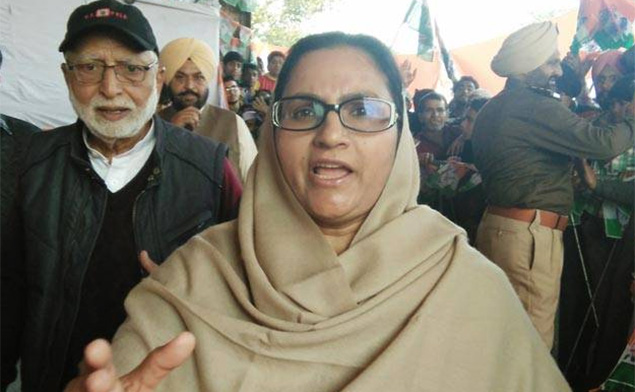
Third time MLA Raziya Sultana is only Muslim legislator in 117-member Punjab Assembly

PUNJAB :

Raziya Sultana, wife of a top cop and third time MLA, is the only Muslim legislator in the 117-member Punjab Assembly]

Malerkotla (Punjab): 

Raziya Sultana, wife of a top cop and third time MLA, is the only Muslim legislator in the 117-member Punjab Assembly. Congress is set to form its government in the state, and Raziya Sultana as one of the seniormost members in the party, eyes for a key post in the government.

Raziya Sultana, who contested the 2017 Punjab Assembly elections as Congress candidate, defeated her nearest rival Mohammad Owais of Akali Dal by over 12,000 votes. Raziya Sultana is wife of Mohammad Mustafa DGP Punjab who was bestowed with with five gallantry medals.

According to the final result of Punjab Assembly elections declared by the State Election Commission, Raziya Sultana polled a total of 58.982 votes whereas Mohammad Owais could bag just 46,280 votes.

Mohammad Arshad contesting from Malerkotla was the only Muslim candidate of the Aam Aadmi Party (AAP). Mohammad Arshad came a distant third bagging 17,635 votes.

Raziya Sultana was defeated by F. Nesara Khatoon (Farzana Alam) of Akali Dal in the 2012 elections in Malerkotla – the seat she won in 2002 and 2007.

Malerkotla has been represented by Muslims most of the time since 1957. Yusuf Zaman Begum was the first Muslim to win from Malerkotla in 1962. She was followed by H. H. N. I. A. Khan in 1967, Nawab Iftikhar Ali Khan in 1969, Sajida Begum in 1972 and 1980, Anwar Ahmad Khan in 1977, Nusrat Ali Khan in 1985 and 1997 and Abdul Ghaffar in 1992 state elections.

The Punjab Assembly had 02 Muslim MLAs in 2012. Besides, F. Nesara Khatoon (Farzana Alam) of Akali Dal who won from Malerkotla in 2012, Mohammad Sadique of the Congress won from Bhadaur Assembly seat in 2012.

Congress MLA Mohammad Sadique contested the 2017 elections from Jaito Assembly seat. But, he lost the elections to Baldev Singh of the Aam Aadmi Party (AAP) by some 10,000 votes. Baldev Singh polled 45,344 votes and Mohammad Sadique bagged 35,351 votes.

In Qadia, hub of Ahmadiyas, Fatehjang Singh Bajwa of Aam Aadmi Party (AAP) won the elections. No muslim candidate was in fray in this constituency.

Congress has fielded 02 Muslim candidates in 2017 Punjab Assembly elections, Aam Aadmi Party (AAP) and Akali Dali has given party ticket to 01 Muslim each. The BJP has not fielded any Muslim in the 2017 state elections

Overall, the Congress has won 77 of the total 117 seats of the Punjab Assembly. AAP is a distant second with 20 seats.

Akali Dal and BJP, ruling the state since last ten years, ended with 15 and 03 seats respectively. Lok Insaaf Party won 02 seats.

source: http://www.ummid.com / Ummid.com / Home> Politics / by ummid.com & Agencies / March 13th, 2017

The remarkable Begums who defied patriarchal norms to rule Bhopal for more than a century

Bhopal, MADHYA PRADESH :

These women embodied feminism long before it became a part of the zeitgeist.

ShahJahanBegumOrigMPOs06jun2019

The heiress apparent to the throne of Bhopal, Abida Sultan, wore her hair short, played the saxophone, had her own band, sped around in a Daimler, and when her husband announced that he’ll assume custody of their son, threatened to kill him with the pistol she kept in her pocket. All the while, she remained pious and committed to Islam.

Abida Sultan’s autobiography, Memoirs of a Rebel Princess, was unabashed and far from removed from the stereotypical picture of an oppressed Muslim woman. In the book, she wrote frankly about her conjugal life and her inability to be the good, dutiful wife. But could one expect any less from the child of a feminist royal lineage?

This matrilineal reign, which began in 1819, lasted more than a hundred years, with the lone interruption in 1926, when Sultan Jahan Begum abdicated in favour of Nawab Hamidullah Khan. Hamidullah Khan’s daughter Abida Sultan was to succeed to the throne, but when she chose to leave for Pakistan after the Partition of India, her younger sister Sajida became the Begum of Bhopal.

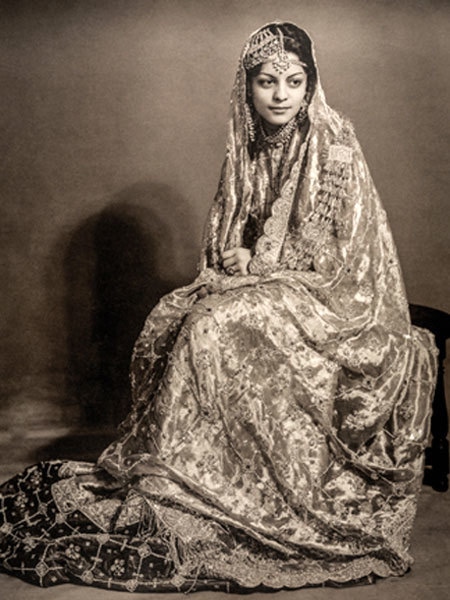
Sajida Sultan. — Unknown/Wikimedia Commons

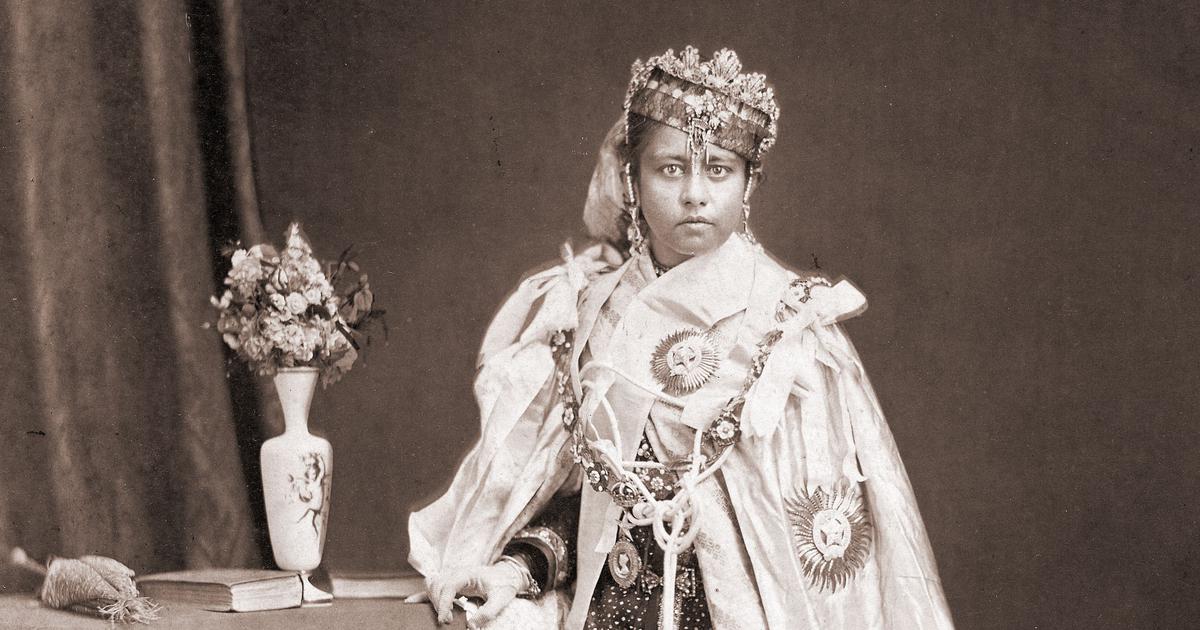
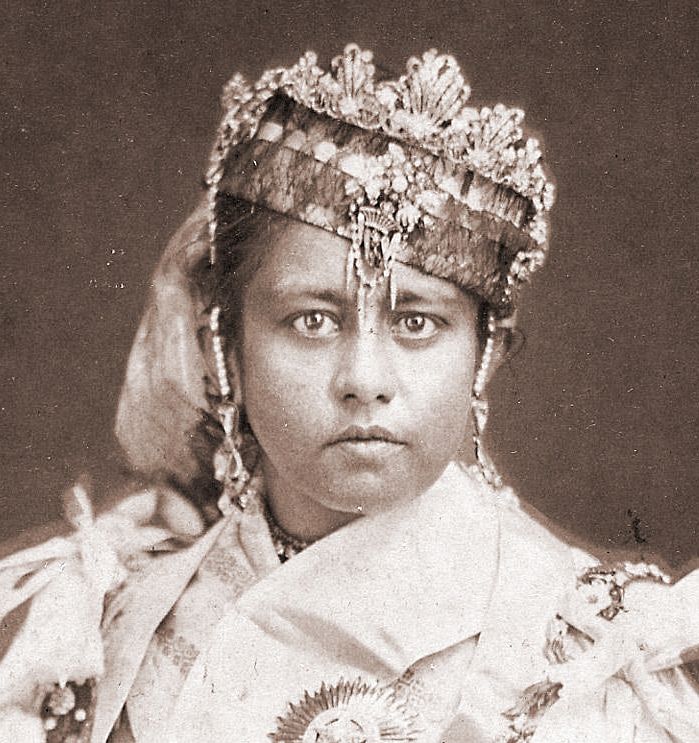
Unlike the Queen-Regent of Travancore, whose brief radical rule ran only till her son came of age, these women ruled for unexpectedly long periods, facilitated by the absence or death of male contenders to the throne, and through sheer grit. A photograph taken in 1872 of Nawab Shah Jahan Begum, Abida Begum’s great-grandmother, shows a booted woman staring straight at the camera, much in the manner of a Vogue cover shoot. The Begums of Bhopal practised feminism much before it gained prominence. They were interesting, headstrong and opinionated, but their wars weren’t fought on the battlefield.

Archival records are filled with the Begums exhibiting their commitment to Islam: donating money to build a mosque in Basra, Iraq, funding the Muslim University at Aligarh, and opening a school for girls in Delhi in the early 1920s. At the time, it was unusual to have a ruler devote time and money to women’s education — even a progressive thinker like Syed Ahmad Khan was focused on Muslim men getting Western education — but to do so outside their state was truly remarkable. So much so that when Lord Edwin Montagu, the British Secretary of State for India, met Begum Sultan Jahan in 1917, he noted in his diary that she was “frightfully keen on education, and jabbered about nothing else”.

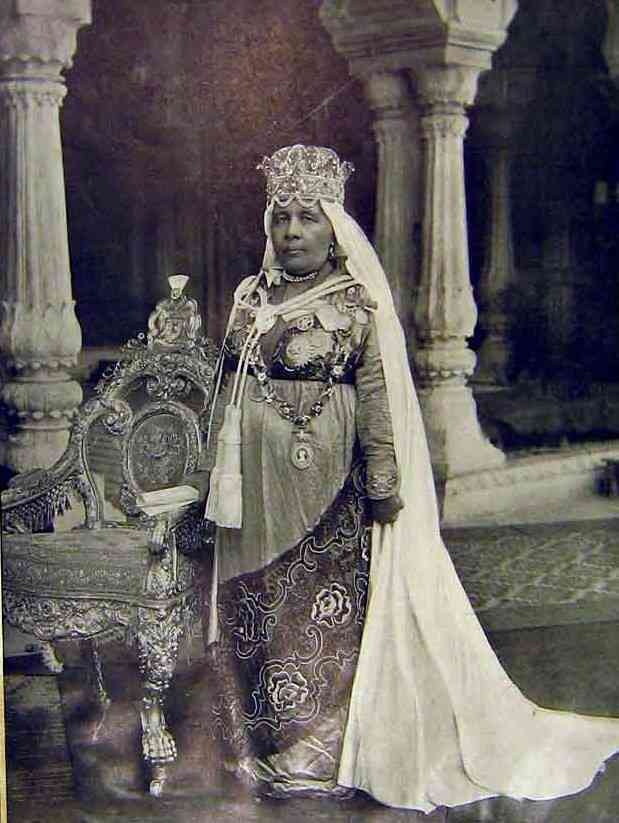
Sultan Jahan Begum. — Wikimedia Commons

Fringes of history

Women and their assumption of political power have always been sidelined in Islamic history, though there is reason to believe that Aisha, the Prophet’s wife, had a role to play in the establishment of the first Islamic state. Razia Sultana’s brief reign as the Sultanah of Delhi in the 1200s and her killing demonstrated the near impossibility and legitimacy of a Muslim women ruler.

Nothing changed over the centuries. Though it was a young woman, Queen Victoria, who reigned over the hundreds of Indian monarchs at the start of the Paramountcy, assuring them gently of their territorial sovereignty, this mattered little in India. Indian monarchies have been patrilineal and patriarchal, guarding the male and natural right to ascend the throne.

Against this background, to have four Muslim women successively rule a state is unprecedented in world history. But what makes it all the more remarkable is that these women administered a state dominated by feudal warlords accustomed to male privilege over the throne.

The modern city of Bhopal was founded in the early 18th century by Dost Mohammad Khan, an Orakzai Pathan from Afghanistan, and it soon became the second-most important Muslim princely state after Hyderabad. Its geographical location — in Central India — was vital for the suppression of the 1858 War of Independence.

Dost Mohammad Khan. — Wikimedia Commons

In North India, there were several Muslim princely states — such as Bahawalpur, Mahmudabad, Tonk, Pataudi and Rampur — which were supported by the British under the Paramountcy. Under this policy, while nearly 500 princely states were autonomous and maintained internal sovereignty, their foreign policy and right to wage wars was controlled by the British.

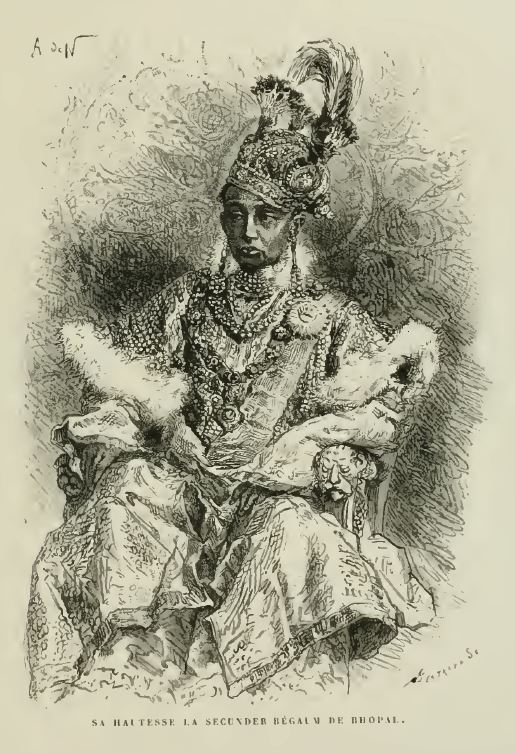
The reign of the Begums began in Bhopal in 1819, when the ruling Nawab, Mohammad Khan, died without an heir and the British decided to crown his young wife Qudsia till her daughter Sikandar came of age. Sikandar Begum’s husband too died in 1844, and she proved to be a competent ruler and a worthy ally to the British, playing a vital role in the First War of Independence in 1857-1858. This compelled the British to make a provision that the Begum was a sovereign in her own right. Three years later, in 1861, she was invested with the Exalted Order of the Star of India, making her, at the time, the only female knight in the British Empire besides Queen Victoria. She was succeeded by her daughter Shah Jahan Begum and then by Sultan Jahan Begum.

Sultan Jahan Begum went on to have a 25-year-long reign, marked by a commitment to progress, education and women’s health reforms. She was the last Begum of Bhopal as the heiress apparent, Abida Sultan, abdicated the throne in 1948.

Sikandar Begum. — Louis Rousselet/Wikimedia Commons

‘Magical island’

The first and foremost among them, Qudsia Begum, set the template of the ideal ruler. Spartan, and shunning jewellery, she refused to take loans and made sure that any money spent would be solely for education and philanthropy. As the British agent Lancelot Wilkinson in Bhopal noted: “She rides and walks about in public, and betrays her determination to maintain herself in power by learning the use of the spear and other manly accomplishments. At times she became quite frantic; and as one of the soldiers observed, more terrible to approach than a tigress.”

This “magical island”, as at least one commentator called it, was as rare as it was difficult to create. Like all figures of power, the Begums too attracted people who wanted to manipulate them — and in their case, this meant both the British and the ruling clan.

Qudsia Begum and her daughter, early inheritors of an uneasy throne, responded to the tugs and pulls by quickly learning traditional masculine skills like fencing and hunting. Shah Jahan Begum embraced the Purdah, asserting notions of orthodox Islamic femininity. She withdrew from public life into strict seclusion and refused to meet the British Viceroy in 1875. Her daughter would later recount in her autobiography that “even as a young girl, she preferred to meet with other girls of her age to discuss ‘a thousand little points of household duties and of domestic management than to perform outdoor activities’.” None of this though got in the way of being a good ruler, and she proved that a veiled woman could rule as competently as anybody else.

Shah Jahan Begum. — Louis Rousselet/Wikimedia Commons

Balance of power

The Begums carefully navigated the multiple demands of power by ingeniously playing around with tradition and modernity. They would sometimes opt to let go of the burkha and at times wear it to demonstrate a different modernity. In their writings, the Begums constantly acknowledged their mothers and grandmothers, paying obeisance to the strong women who shaped their lives and characters.

Their commitment to austerity and Islam set them apart from the wasted royal lives that were given to overindulgence and dissipation. They constantly drew upon the Quran and respected Islamic scholars, reinforcing the idea that Islam speaks of equity between the sexes. Their spartan lives struck Mahatma Gandhi too, when he visited the state in the late 1920s, on invitation. He was suspicious that the Begum’s cotton clothes and thin mattress had been “put on as a show”, till his travelling companion Sarojini Naidu assured him otherwise.

The Begums of Bhopal, who styled themselves as “Nawab Begums”, were radical and unconventional (the term ‘Nawab Begum’ itself was ingenious as there is no word for queen in the Islamic political imagination). Nonetheless, with consummate ease and success, they proved they were no less. Keeping in line with the Islamic tradition of maintaining a diary, like the founder of their state used to, the Begums invested much energy in maintaining records — of the state and of themselves.

Sultan Jahan Begum. — The Graphic/Wikimedia Commons

Shah Jahan Begum, the third in the line, established a History Office, along with a system for retrieving and maintaining records of important characters in her family. Abida Sultan’s son, Shahryar Khan, a former career diplomat in Pakistan, has carried on this family tradition by writing an authoritative account of the dynasty, The Begums of Bhopal.

Like a host of other wealthy Muslim ashraf women, the Begums travelled to Europe and to West Asia as part of the obligatory hajj. And despite the seriousness of the occasion, they never failed to display flashes of their chutzpah. There are anecdotes of Sikandar Begum not disembarking from the ship to Europe without her bottles of pickle. And upon reaching London, she mistakenly wore a dressing gown to meet King George V and Queen Mary, a realisation made only owing to the headlines in the newspapers the next morning.

Many princesses have ascended to power in democratic India by contesting and winning parliamentary elections. The Begums of Bhopal, however, are remarkable for sustaining a determined succession of women monarchs, despite hostility to their gender ruling — the very first Begum, Qudsia, had declared that her infant daughter would succeed after her. Despite the religious and political odds against them, their reign was marked by benevolence and modernity, a radical openness to change, like women’s education and medicine, while maintaining a steadfast commitment to the tenets of Islam. The Begums are icons for women, Muslim or otherwise.


This piece was originally published on Scroll and has been reproduced with permission.

source: http://www.dawn.com / Dawn / Home> Prism / by Priya Mirza / June 04th, 2019