Tag Archives: Samina Bano

Jamia’s free UPSC coaching produces 32 civil servants in 2024

NEW DELHI :

New Delhi :

Turning aspirations into achievements, the Jamia Millia Islamia (JMI) university’s Residential Coaching Academy (RCA) has once again proven to be a beacon of hope for civil service aspirants as a total of 32 students trained there have cleared the Union Public Service Commission (UPSC) Civil Services Examination 2024, one of the most competitive exams in the country.

Of the 78 candidates from the RCA who reached the interview stage, 32 made it to the final selection list, according to a statement issued by the JMI.

Twelve among them are women, reflecting the RCA’s strong emphasis on inclusive and gender-responsive education, the statement said.

Alfred Thomas emerged as the academy’s top performer this year with an All India Rank (AIR) of 33. He was followed by Iram Choudhary (AIR 40) and Ruchika Jha (AIR 51), all of whom have earned praise for their inspiring journeys.

Speaking exclusively to PTI, Jha said, “The Jamia Millia Islamia RCA gave me a healthy competitive environment to push myself to work hard. The peer group I got here kept me motivated through tough times. The JMI RCA has played a crucial role in my UPSC-CSE journey.” She added that service allocation is expected in the next four to five months and her first preference is the Indian Administrative Service (IAS) in the AGMUT (Arunachal Pradesh-Goa-Mizoram and Union Territory) cadre.

Several of the selected candidates are likely to be inducted into top services like the IAS and Indian Police Service (IPS), while others will join the India Revenue Service (IRS), Audit and Accounts, Indian Railway Traffic Service (IRTS) and other Group-A services based on their ranks and preferences.

Celebrating the achievement, JMI Vice Chancellor Professor Mazhar Asif said, “This result is a matter of great pride. The RCA continues to uphold its mission of empowering students from socially- and economically-disadvantaged backgrounds. The performance of our women candidates particularly underscores the potential of inclusive education.”

Registrar Professor Mohammad Mahtab Alam Rizvi said, “These results are a reflection of the academy’s rigorous preparation model and the unwavering determination of our students. The RCA has built an environment of excellence that consistently delivers.”

Professor Samina Bano, the in-charge of the RCA, was praised for her personalised mentorship and hands-on guidance, which played a crucial role in this year’s success.

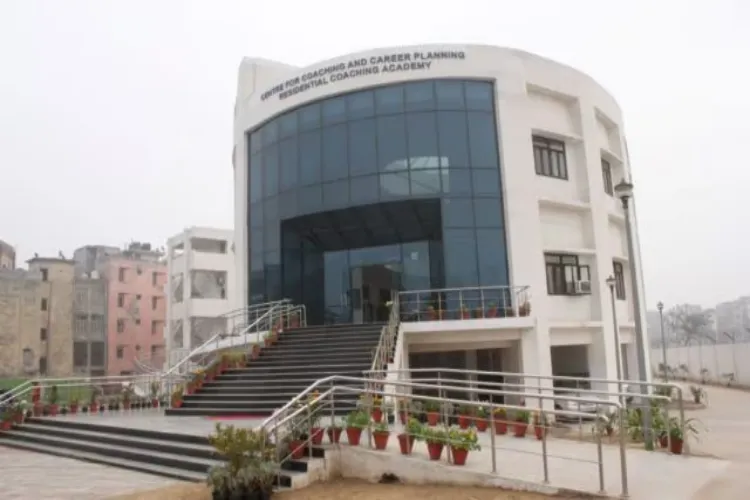
Established in 2010 under the University Grants Commission’s (UGC) initiative, the RCA operates through the university’s Centre for Coaching and Career Planning (CC&CP). It offers free coaching and residential facilities to candidates from Scheduled Castes, Scheduled Tribes, minority communities and women. Admission is based on a national-level written test, followed by interviews.

The academy’s legacy includes Shruti Sharma, the UPSC topper of 2021. Since its inception, the RCA has helped nearly 300 students enter elite services such as the IAS, IPS and Indian Foreign Service (IFS), while more than 300 others have joined services like CAPF, IB, RBI, Bank PO and various state PSCs.

According to the statement, the RCA’s structured programme includes more than 500 hours of classes, mock interviews, special sessions with retired civil servants and experts, and mentorship by successful alumni. It also provides round-the-clock library access, free Wi-Fi and secure residential facilities.

The Civil Services Examination is conducted in three stages — preliminary, mains and interview — to select officers for the IAS, IFS, IPS and other central services.

The preliminary exam was held on June 16, 2024, with 9,92,599 candidates applying and 5,83,213 appearing. A total of 14,627 candidates qualified for the main exam held in September and 2,845 reached the interview stage that was conducted from January 7 to April 17, 2025.

This year, the UPSC has recommended 1,009 candidates — 725 men and 284 women — for appointment to various services.

source: http://www.awazthevoice.in / Awaz, The Voice / Home> Stories / by PTI / Tarique Anwar / April 24th, 2025
Resetting her Compass, Samina Bano got off the Corporate Ladder to Champion RTE in UP

BIHAR / Lucknow, UTTAR PRADESH:

Chance, coincidence and an unflinching belief in the plans of the cosmos propelled Samina Bano to quit the corporate world to champion children’s right to equitable access to education.

Sometime in late 2012, Samina Bano, then a Chicago-based consultant with Deloitte Consulting, started to notice what she believed to be ‘omens’ all around. She loved her corporate life – thrived on its challenges and enjoyed its ceaseless travelling, yet was convinced it was time to move on. “There was this persistent feeling that I was meant for something else,” she says.

A hazy idea of what that ‘something else’ entailed was brought about by a chance reading of How to Change the World by David Bornstein. “Till that point, I did not know how to make the best use of my education and skills. I first read the term ‘social entrepreneur’ in the book and figured out that was the way ahead for me,” she recalls.

It would take a chance reaching out to one such change maker in Bihar for Samina to understand that Uttar Pradesh – a state with some of the poorest development indicators, was where she must use her skills. Another chance conversation on the Right to Education Act (RTE) helped her decide the area she must work on.

Samina’s work channelled initially through the Bharat Abhudaya Foundation and subsequently through the RightWalk Foundation (both of which she founded), has focused on Section 12(1)(C) of the above Act. The Section mandates that all private unaided schools (with the exception of minority-run schools) reserve 25 percent seats in their entry-level class for children from socially and economically disadvantaged groups.

Since 2009, when the Act came into force, that Section had never been implemented in UP- home to the world’s largest child population. In 2012, two years before Samina started working, the State recorded zero admissions under the Section, but in 2017, this number had leaped to 27,726.

This was made possible by the bringing together of various stakeholders, awareness building, handholding of parents, creating interface with the government, activating a helpline for RTE admissions and creating an online digital system to institutionalise the admission process. The most prominent push in this effort came yet again from a chance fight.

“The first parents who approached us for admissions fell within a one-kilometre area of a branch of City Montessori School. Under the State government’s rules, it was the ‘neighbourhood school’ to which the children were entitled to admission. We were turned away 15 times by the school. Finally, when the District Magistrate ordered the school to admit 31 children, it approached the High Court”, Samina recounts. It turned out to be a David versus Goliath fight which the school (recognised in 2013 by the Guinness Book of World Records as the world’s largest school) had every reason to win had it not been for Samina and her team’s persistence.

“We did not leave the court case to the government. We worked with its counsel to provide the right arguments. The school was represented by the likes of Gopal Subramanium and Shanti Bhushan.  At no point in time were we assured of a win. Yet, we were sure we were going to try,” she says.

The High Court’s order in September 2015 against the school (which then went on to appeal against it only to have its plea dismissed by the Supreme Court) was the most strongly worded message of Samina’s persistent belief that inclusive education was the way ahead for a more egalitarian society. She says, “The law is the same for everyone. Injustice is not acceptable. If you take an initiative with the right conviction, dedication, faith, belief, integrity and truthfulness, God will help you to find the right path”.

This was a lesson Samina had first learned as a child of eight at one of the air force stations her airman father was posted. “I did not understand why there must be a playground reserved only for the children of officials,” she says. Then when she learned in civics class one day that a playground was public property, she rallied classmates and marched up to the station commander demanding that the playground either be opened to all children or their lessons be modified to reflect the inequality.  “My victory gave me the hope that anything wrong happening with the world need not stay that way. If we try, even an eight-year-old can make a difference,” she says of that learning.

The transition to working with the government and bureaucrats has been tough admits Samina, While the communication, problem-solving, team and interpersonal skills she learned in her corporate stint helped her, she was hamstrung by women’s inherent inability to network after work hours. Her background in high-end technology did little to convince men of her abilities. “My disability made them think that I must have gotten into engineering through a quota,” she says referring to an accident that left her with more than 50 percent paralysis in one leg.

She has been challenged by vicious rumours of her being related to a prominent politician, accused of having a communal agenda in her dogged pursuance of the RTE and even faced physical threats. “I have had to work almost thrice as hard for recognition of my abilities,” she says. She has also had to bear criticism of her supposed aggressiveness which in men would have been lauded as leadership ability.

Yet never one to shy away from challenges, Samina believes she has been guided by instinct in her work life. This was first manifested when she gave up her MBBS course for a change to engineering, driven by her love for Physics and Mathematics, and refusing to bow to the stereotype that the medical professional was the safest bet for women who studied science.

Her dogged fight against being typecast has yielded rich honours for Samina. She is the recipient of the International Ashoka Fellowship, and the Acumen Fellowship, and counts the APJ Abdul Kalam Award for Innovation in Governance and Women Super Achiever Award from the World Women Leadership Congress, among her many recognitions. Yet it’s in the heartfelt gratitude of parents and children that she finds her greatest reward.

Having created an enabling environment for the implementation of the RTE – not just through admissions but by training government officials at every level, bringing private school managements up to speed on how to provide inclusive education and effecting policy changes, Samina is ready to move on to her next challenge. “Our philosophy is to strengthen government systems for effective and efficient delivery of services, such that they can function independently of us”, she explains. Thus, after 2018, she sees RightWalk as addressing new challenges in education and in other sectors.

And through it, all as Samina, 31, says, “I shall continue to listen to my heart and heed the omens.

source: http://www.yourstory.com / Your Story / Home> Stores / by Puja Awasthi / February 20th, 2018