Tag Archives: Sania Mirza-Indian Tennis Player

10 Muslim Faces in Indian Sports after Independence

INDIA :

Indian Muslim sportspersons

New Delhi :

After the partition and independence of India, the contribution of Muslim faces in Indian sports is a fascinating story. It also sends a clear message that, despite the communal division of the country, all avenues remained open for Muslims in India. The nation saluted talent, not religion. The contribution of Muslims in the field of sports should be the subject of a dedicated book.

However, in this article, we present the 10 most successful Muslim sportspersons of India.

Nawab Mansoor Ali Khan
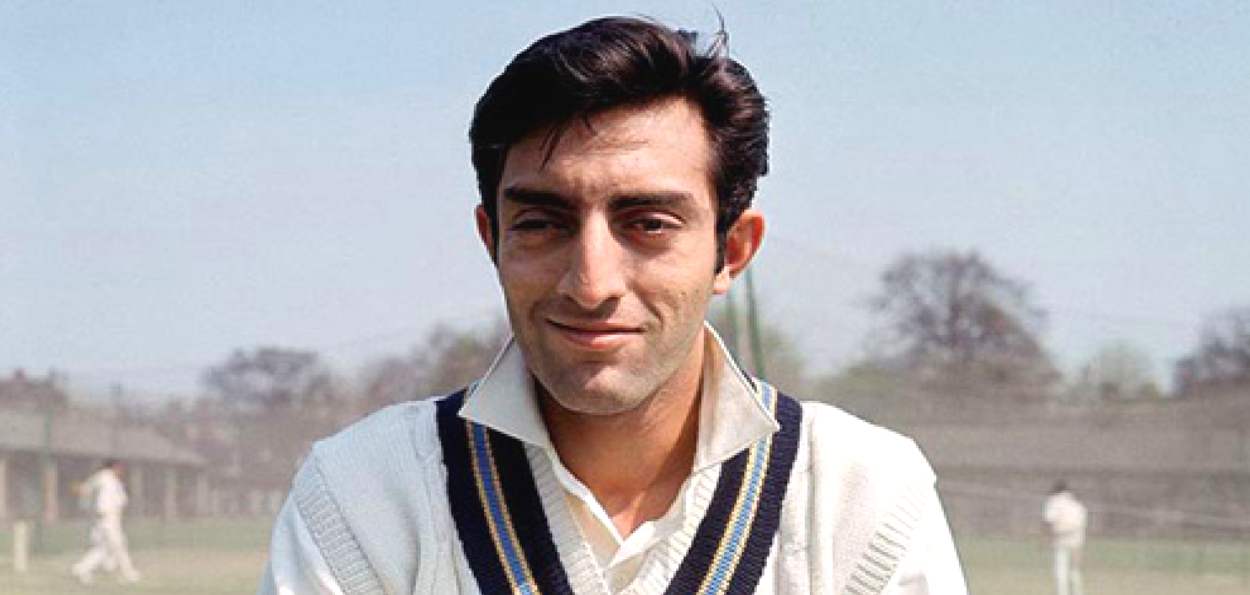
Nawab Mansoor Ali Khan

Cricket, the most popular sport in the country, has a long list of Muslim players like Ghulam Ahmed, Salim Durani, Abbas Ali Baig, Mansoor Ali Khan Pataudi, Farooq Engineer, Syed Abid Ali, Syed Mustafa Hussain, Syed Kirmani, Ghulam Ahmed Hassan, Mohammad Azharuddin, Arshad Ayub, Zaheer Khan, Syed Saba Karim, Mohammad Kaif, Irfan Pathan, Munaf Patel, Wasim Jaffer, Yusuf Pathan, Mohammad Shami, Mohammad Siraj, and Sarfaraz Khan.

However, one of the initial cricketers, who happened to be a Muslim and shone like a star, was Nawab Mansoor Ali Khan, known as “Tiger Pataudi”. He became the youngest Test captain in the history of the game. He represented India in 46 Tests and scored 2793 runs.

In March 1962, he became the youngest Test captain at the age of 21 years and 77 days against the West Indies. His notable achievements include leading India to their first overseas Test match victory in New Zealand in 1968, which was also their first overseas Test series win.

Despite losing vision in his right eye in a car accident in England in 1961, Pataudi proved his mettle on the cricket field. Even today, Tiger Pataudi commands the same respect and popularity in Indian cricket as he did in the past.

Mohammad Azharuddin
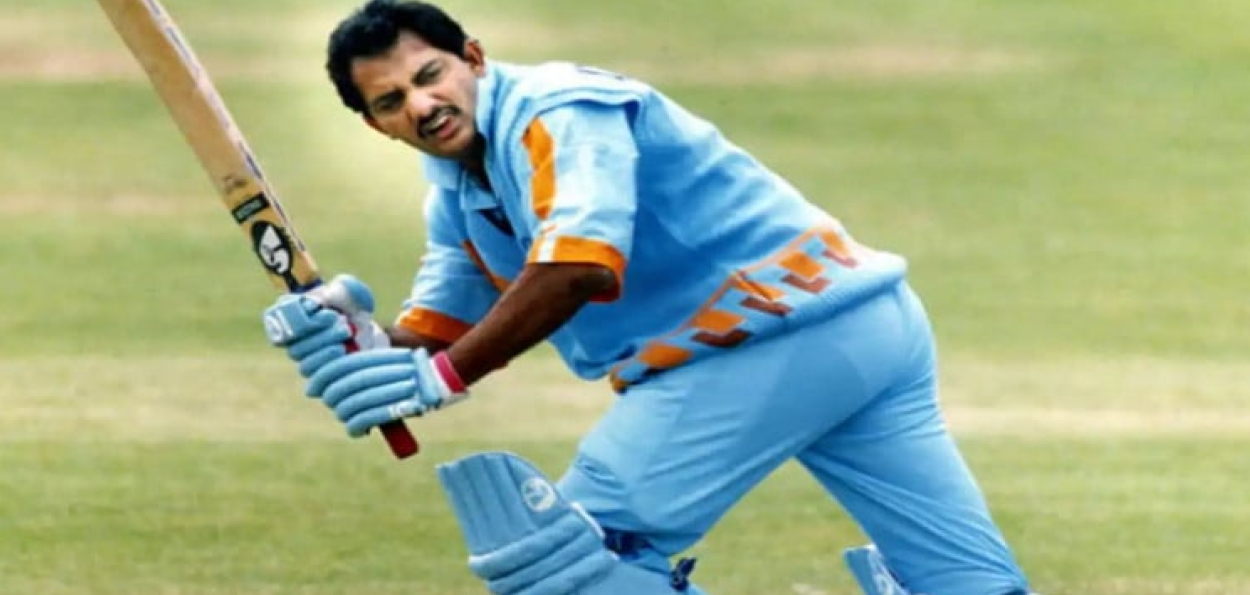
Mohammad Azharuddin

Another Muslim cricketer, Mohammad Azharuddin, nicknamed “Indian cricket’s wonder boy,” earned this title right at the beginning of his Test career. In his debut series against England in 1984, he scored three consecutive centuries — a feat yet to be repeated.

Azharuddin played 99 Tests and 334 One Day Internationals for India. As captain, he led the team to victory in the 1990-91 and 1995 Asia Cups and reached the semi-finals of the 1996 Cricket World Cup. He captained India in three Cricket World Cups during the 1990s, which remains a record.

Syed Shahid Hakim
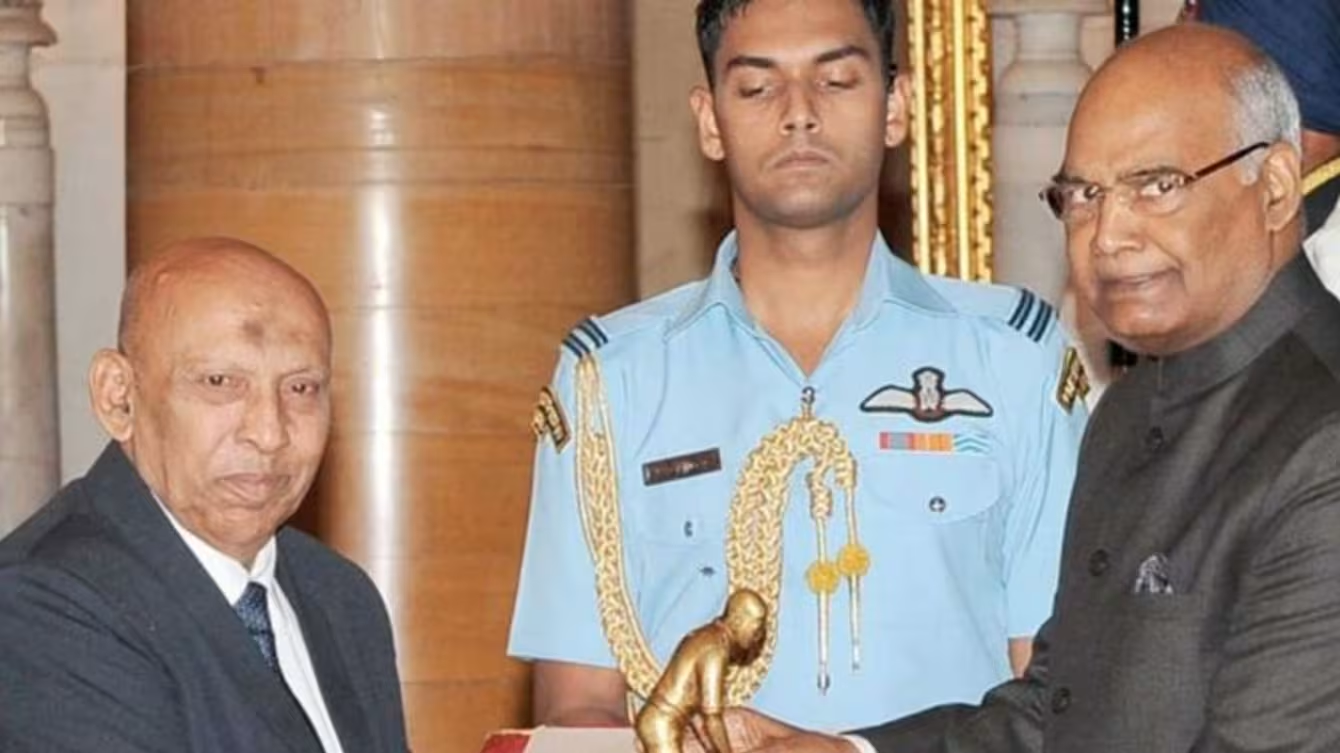
Syed Shahid Hakim receiving award from President Ram Nath Kovind

Once, India was a contender for the top slot in the World Cup Football and the Olympics. Though the situation has deteriorated, the list of Muslim footballers Taj Mohammad, Ahmed Khan, Yusuf Khan, B.P. Saleh, Syed Naeemuddin, Noor Mohammad, Rahmat, T. Abdur Rahman, Mohammad Habib, Mohammad Akbar, and Latifuddin come to the fore.

However, Syed Shahid Hakim comes across as one of the brightest and enduring football player of the post-independent India. He is son of Syed Abdul Rahim, who was once the coach of Indian Football team. A former Squadron Leader in the Indian Air Force, S.S. Hakim’s international career highlight was the 1960 Rome Olympics. Although India didn’t progress beyond the group stage, a 1-1 draw against France was nothing short of a feat.

Following in his father’s footsteps, Hakim turned to coaching and later served as an assistant coach of the Indian national team. He was also a FIFA referee and officiated in the 1988 AFC Asian Cup held in Qatar.

Mohammad Shahid
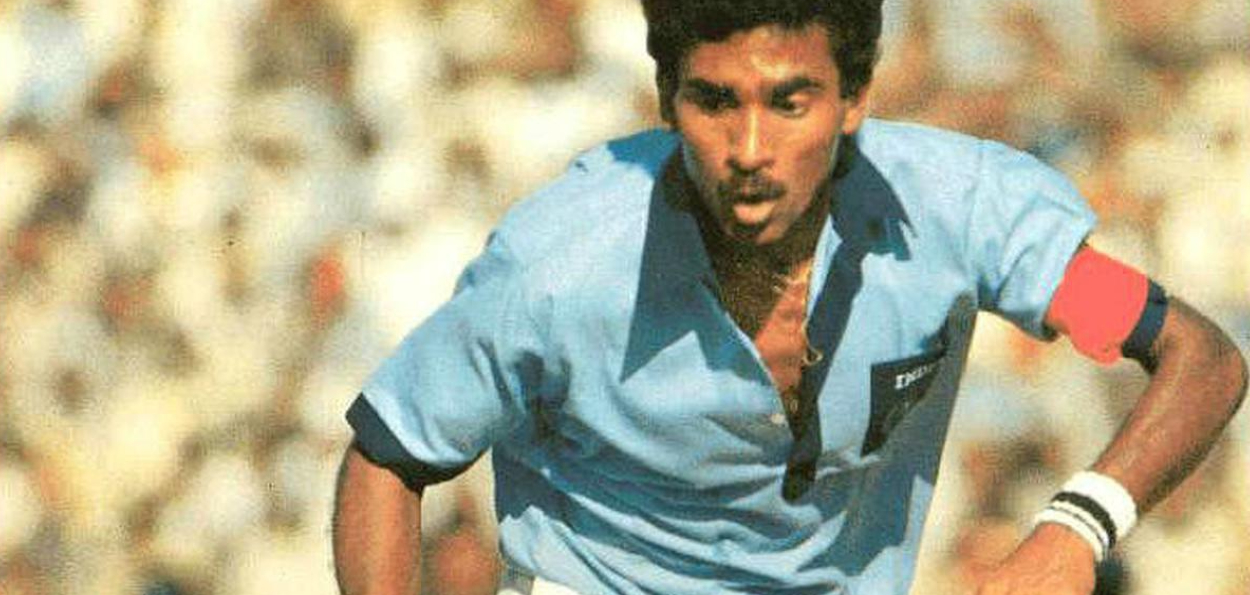
Mohammad Shahid

In Hockey, a sport once dominated by India, several Muslim players made a mark on the game, including Akhtar Hussain, Aslam Sher Khan, Mohammad Shahid, and Zafar Iqbal.

Among them, Mohammad Shahid from Banaras earned the most fame. His wizardry in the 1970s and 80s — marked by agility and magical dribbling — turned him into a star at a very young age.

He was part of the team that won gold at the 1980 Moscow Olympics, silver in the 1982 Asian Games, and bronze in the 1986 Asian Games. He also played in the 1981-82 World Cup, the 1984 Los Angeles Olympics, and the 1988 Seoul Games. He captained the Indian team during 1985-86 and announced his retirement from international hockey in January 1989.

Sania Mirza
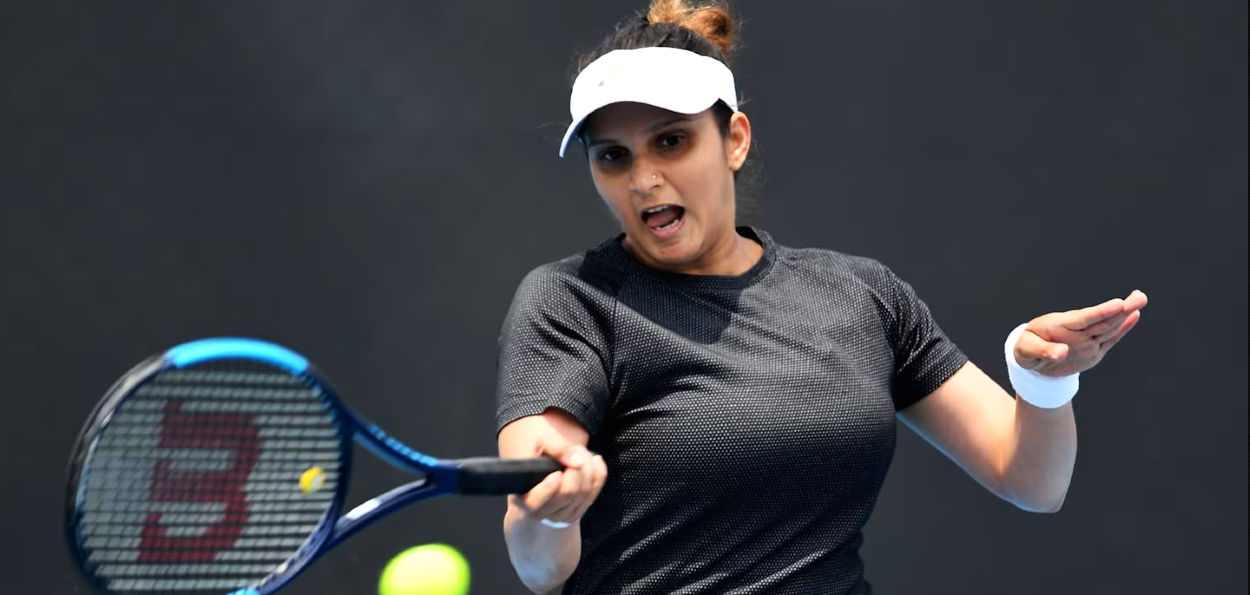
Sania Mirza

Sania Mirza is the only Indian woman to break into the top 100 in singles and later became World No. 1 in doubles in Tennis. She won six Grand Slam titles — three in women’s doubles and three in mixed doubles.

Between 2003 and her singles retirement in 2013, she won 43 titles and spent 91 weeks as World No. 1 in doubles. Sania also won 14 medals (including six golds) in the Asian Games, Commonwealth Games, and Afro-Asian Games. In 2007, she achieved her career-high singles ranking of 27, the highest ever for an Indian woman. In April 2015, she became the World No. 1 in WTA doubles rankings — the first Indian to reach the top.

Syed Modi
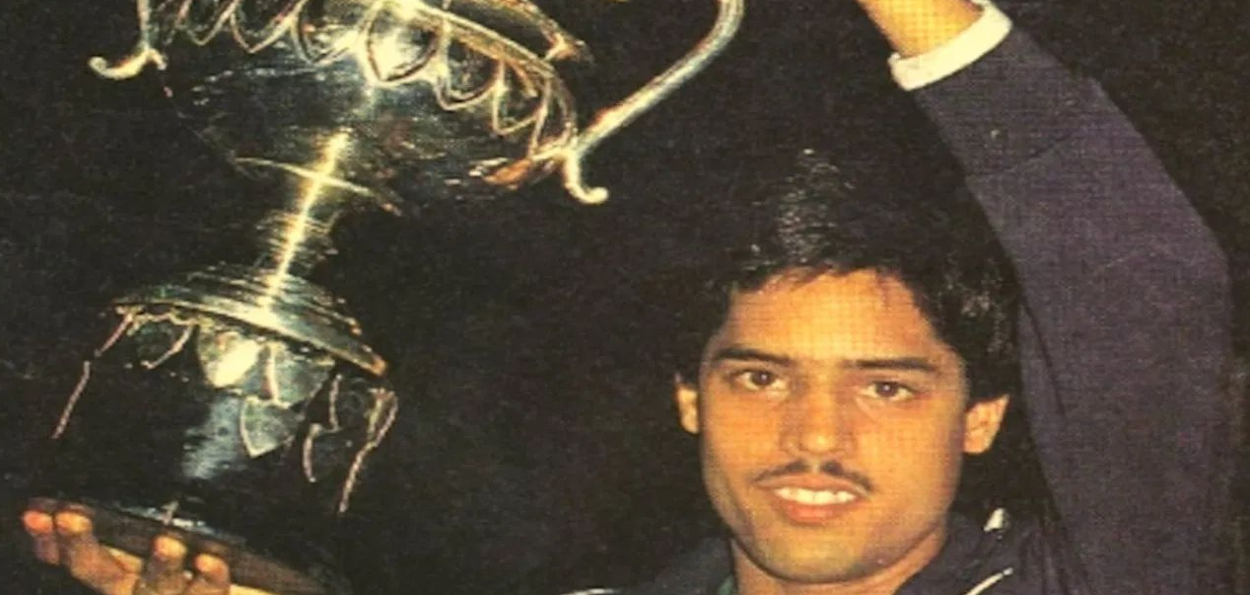
Syed Modi

In Badminton, Syed Modi has been the most successful and popular Muslim player. He is regarded as one of the most successful Indian badminton players, winning the National Championship eight consecutive times from 1980 to 1987 — a historic feat.

He also won a gold medal in men’s singles at the 1982 Brisbane Commonwealth Games and international titles such as the Austria International (1983 & 1984) and the USSR International (1985). In 1988, Syed Modi was tragically shot dead in Lucknow.

Nikhat Zareen
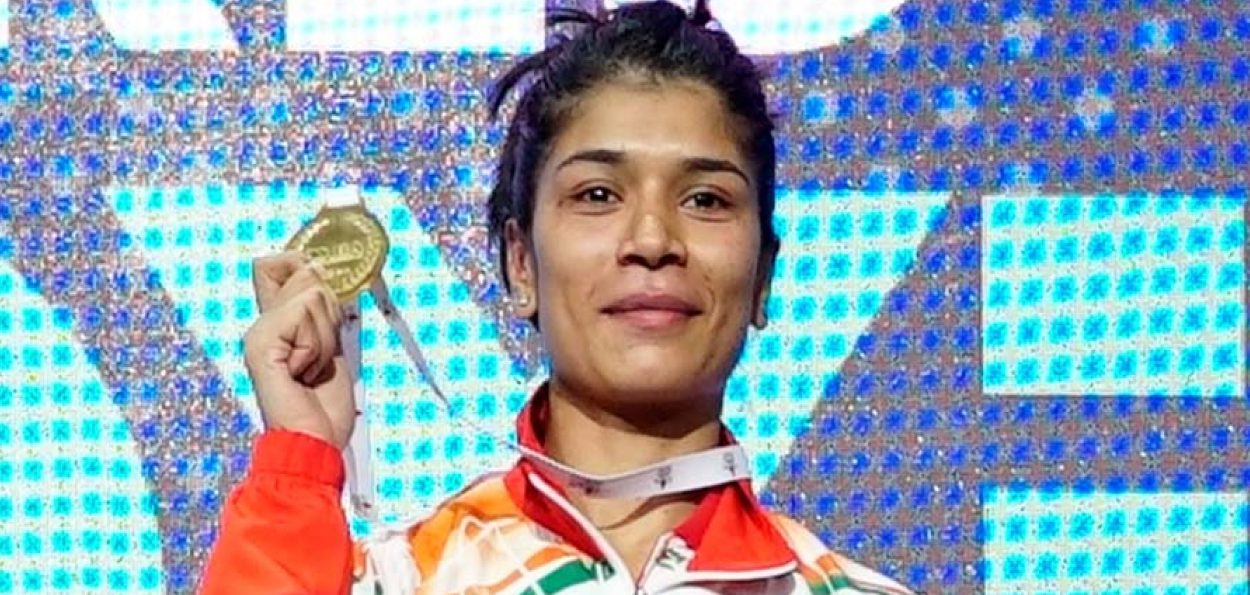
Nikhat Zareen

Nikhat Zareen is the shining star of Indian women’s Boxing. Nikhat became a boxing sensation after winning gold at the 2011 Women’s Junior and Youth World Boxing Championships. She won silver at the 2019 Asian Championships in Bangkok, gold at the 2022 World Championships in Istanbul, and gold at the Birmingham Commonwealth Games.

In 2023, she won another gold at the IBA Women’s World Boxing Championship in New Delhi, becoming only the second Indian woman to achieve the feat twice. She also won bronze at the 2023 Asian Games in Hangzhou and secured a quota for India at the Paris Olympics, where she reached the Round of 16 in 2024.

Shama Parveen
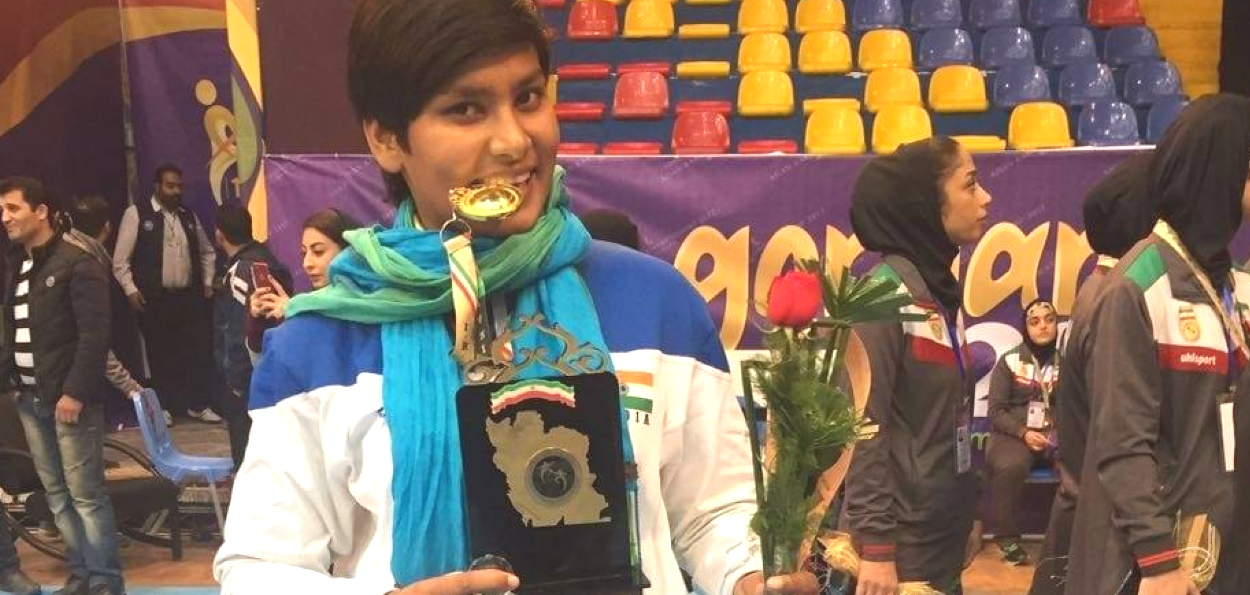
Shama Parveen

Indian men and women have dominated Kabaddi in the world. Among Muslim women, the most prominent name Kabaddi layer is Shama Parveen from Bihar, who began her career in 2008.

She has won several honors at different levels. She was part of the Indian team that won gold at the 2017 Asian Kabaddi Championship.

Nasreen Sheikh
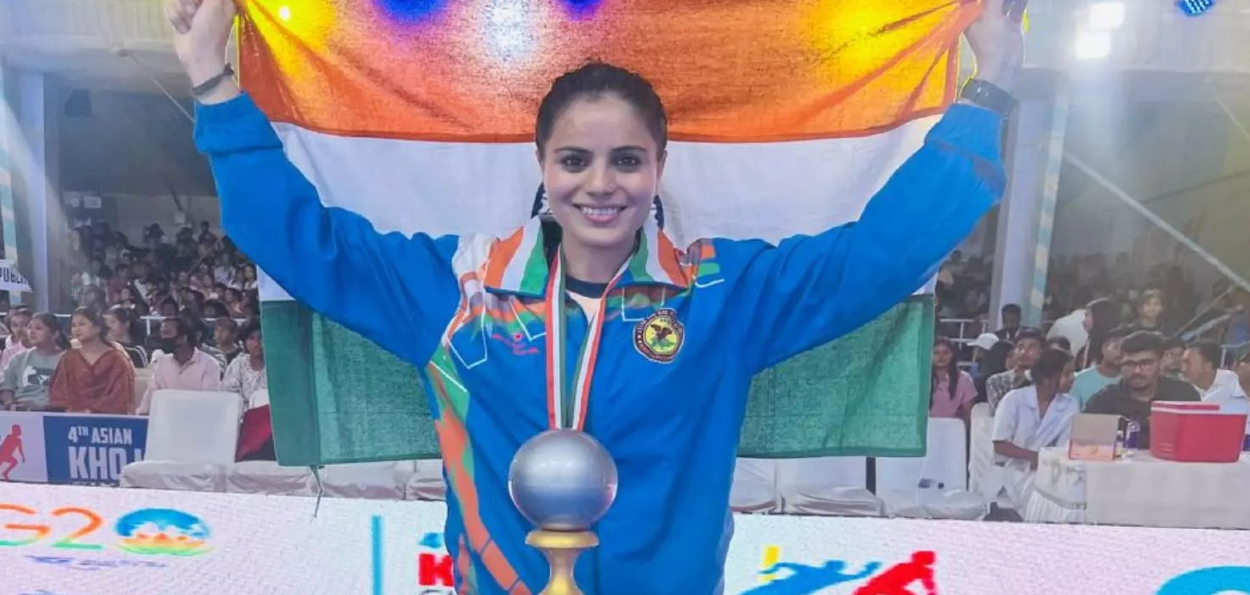
Nasreen Sheikh

Nasreen Sheikh of Delhi captained the Indian women’s kho-kho team and became the second player in this sport to receive the Arjuna Award. She led the Indian women’s team in the South Asian Games, where India won gold. She was also part of the Indian team that won the inaugural Kho-Kho World Cup held in January 2025 in New Delhi.

India defeated South Korea, Iran, and Malaysia in the group stage, beat Bangladesh in the quarterfinals, South Africa in the semifinals, and thrashed Nepal 78-40 in the final. For her performance, she was awarded the

Alisha Abdullah
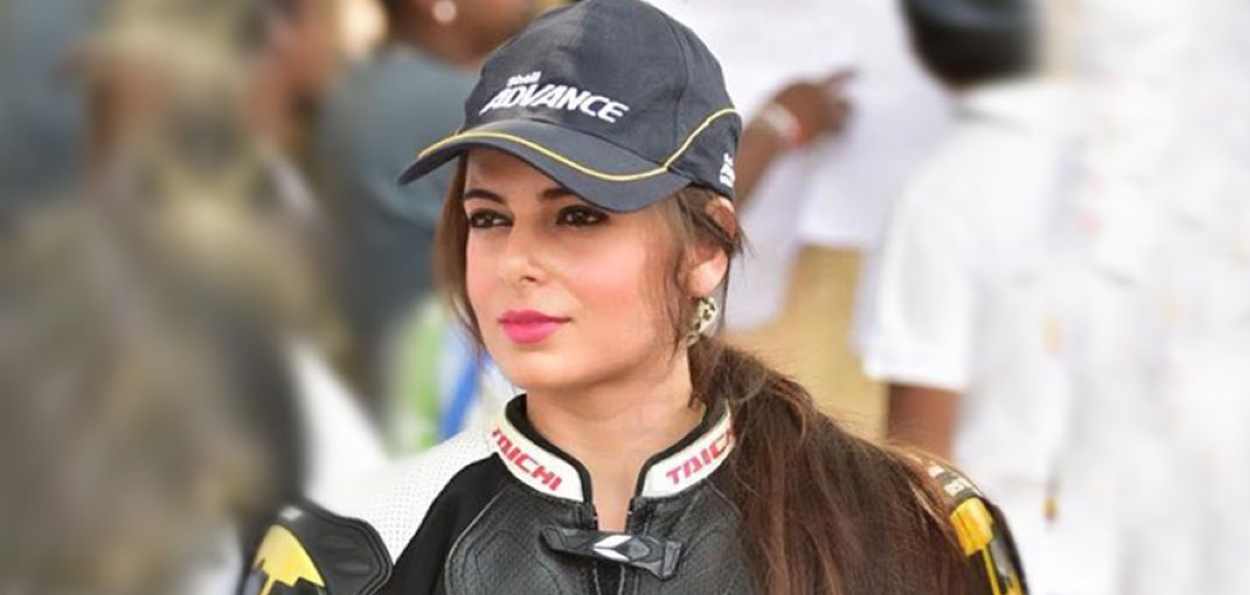
Alisha Abdullah

In Motorsports, Alisha Abdullah stands out among women. Alisha, known as India’s fastest car racer and the country’s first female bike racing champion, was born in Chennai in 1989. She was passionate about racing from a young age. In 2004, she ranked among the top five in the JK Tyre National Racing Championship. With her father’s support, she transitioned from car to bike racing.

However, after a serious accident in 2010 while riding a bike, she returned to car racing. She is the first female motorsports star in the country to receive a Presidential Award.

In Motorsports, Alisha Abdullah stands out among women. Alisha, known as India’s fastest car racer and the country’s first female bike racing champion, was born in Chennai in 1989. She was passionate about racing from a young age. In 2004, she ranked among the top five in the JK Tyre National Racing Championship. With her father’s support, she transitioned from car to bike racing.

However, after a serious accident in 2010 while riding a bike, she returned to car racing. She is the first female motorsports star in the country to receive a Presidential Award.

source: http://www.awazthevoice.in / Awaz, The Voice / Home> The Changemakers / by Aasha Khosa, ATV / August 06th, 2025
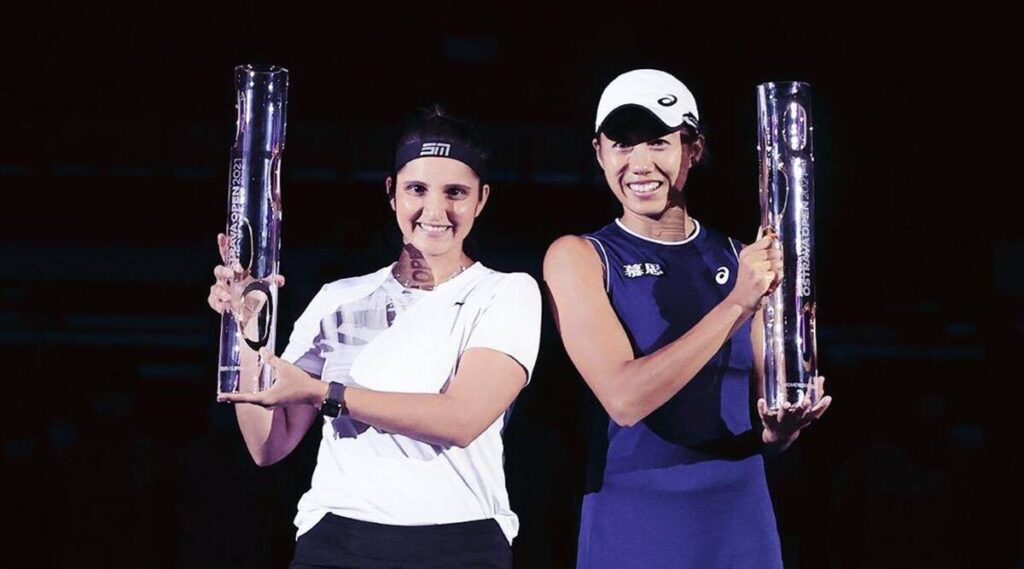
Sania Mirza-Shuai Zhang win Ostrava Open women’s doubles title

Hyderabad, TELANGANA :

Sania Mirza won her first title of the season as she and her Chinese partner Shuai Zhang (Source: Sania Mirza / Twitter)

Sania Mirza won her first title of the season as she and her Chinese partner Shuai Zhang beat the pair of Kaitlyn Christian and Erin Routliffe in the women’s doubles final of the Ostrava Open on Sunday.

The second seeded Indo-Chinese duo defeated the third seeded pair of American Christian and New Zealander Routliffe 6-3 6-2 in the summit clash in one hour and four minutes.

The 34-year-old Sania and Zhang had defeated the Japanese pair 6-2 7-5 in the semifinals of the WTA 500 event.

It was Sania’s second final of the season, following a runner-up finish at the WTA 250 Cleveland event in the USA last month with Chirstina Mchale.

source: http://www.indianexpress.com / The Indian Express / Home> Sports> Tennis / by PTI / September 27th, 2021

Rohan Bopanna-Sania Mirza pair wins historic all-Indian Wimbledon match

Hyderabad, TELANGANA :

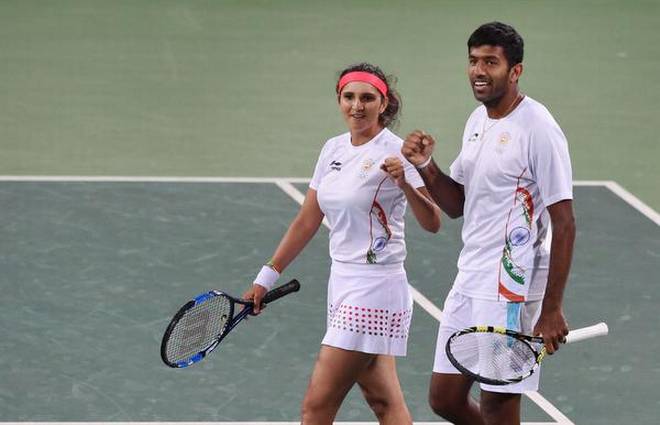
File photo of Sania Mirza and Rohan Bopanna.   | Photo Credit: PTI

It was the first time in open era that two Indian teams competed against each other at a Grand Slam tournament.

The experienced pair of Rohan Bopanna and Sania Mirza defeated the brand new combination of Ramkaumar Ramanathan and Ankita Raina 6-2 7-6 (5) in the historic all-Indian mixed doubles first round match at the Wimbledon here on Friday.

It was the first time in open era that two Indian teams competed against each other at a Grand Slam tournament.

The contest finally brought a Grand Slam debut for Ramkumar, who has made 21 attempts to qualify for the singles main draw of a tennis major.

While the first set ended quickly in favour of the veterans, Ramkumar and Raina presented a good fight in the second set, which even they led for a brief period with a break of serve.

Bopanna was clearly the best player on the court with his powerful serve and solid ground strokes from the baseline as well as the ability to execute a superior net game.

On expected lines, Ramkumar served big while Raina gave her all after growing in confidence.

Mirza’s serve is still not at its best and would improve as she plays more matches.

Mirza has moved has also moved to women’s doubles second round with Bethanie Mattek-Sands while Raina and her American partner Lauren Davis lost in straight sets to the US pair of Asia Muhammad and Jessica Pegula on Thursday night.

The 14th seeds disposed off the challenge from the Raina-Davis pair 6-3 6-2 in 70 minutes.

Bopanna and Divij Sharan are already out, having lost their men’s doubles opening round match.

source: http://www.thehindu.com / The Hindu / Home> Sport> Tennis / by PTI / London, July 02nd, 2021

Sania Mirza becomes first Indian to win Fed Cup Heart Award, donates prize money to Covid-19 fight

Hyderabad, TELANGANA :

The 33-year-old made a comeback to Fed Cup after four year and helped India qualify for the Play-offs for the first time in history.

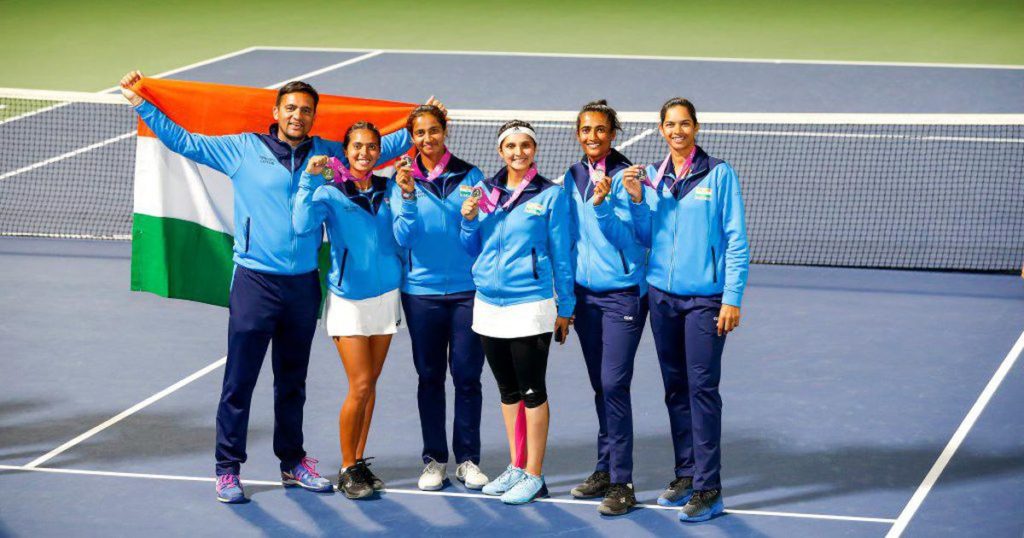
File image of Sania Mirza (third from R) and Indian team at Fed Cup from earlier in 2020 | Via Indian Tennis Daily

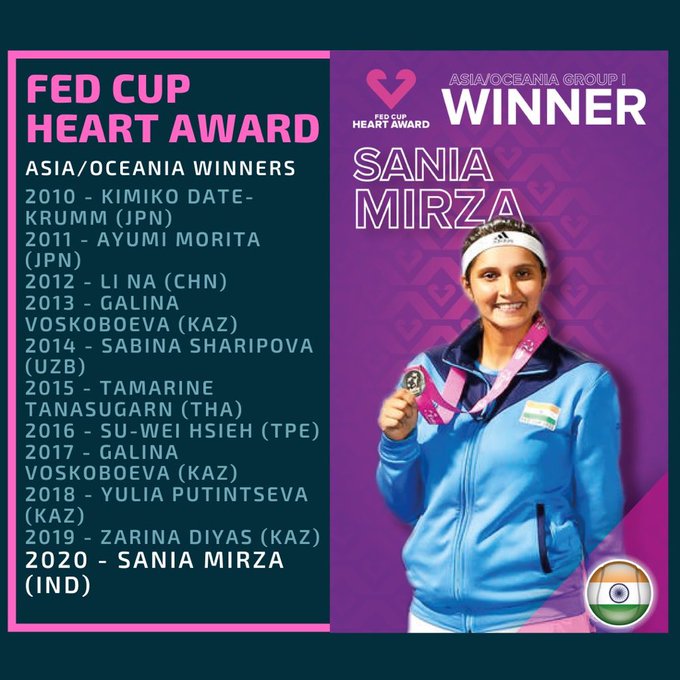
Indian tennis star on Monday won the Fed Cup Heart Award from the Asia/Oceania zone for her performance on return from maternity break earlier this year.

The 33-year-old made a comeback to Fed Cup after four years and helped India qualify  for the Play-offs for the first time in history, with 18-month old son Izhaan present in the stands. Mirza helped India remain unbeaten in doubles with a decisive win over Indonesia that secured second place in the group.

She is also the first Indian to win the award.

“It’s an honour to win the Fed Cup Heart Award as the first Indian,” Mirza, who was also India’s first Heart Award nominee, was quoted as saying on Fed Cup’s official website.

“I dedicate this award to the entire country and to all my fans and thank everyone for voting for me. I hope to bring more laurels to the country in the future.”

Along with the award, she also received a cheque for $2,000 to be donated to a charity and she opted to help with relief during the coronavirus crisis.

“I want to donate the money that I get from this award to the Telangana Chief Minister’s Relief Fund as the world is going through very difficult times with the virus,” she added.

Latvia’s Anastasija Sevastova won the Qualifiers award for her win against USA’s Serena Williams with Mexico’s Fernanda Contreras Gomez and Estonian Anett Kontaveit being the other zone winners.

@MirzaSania

I want to donate the funds that I get from this award to the Telangana CM relief Fund as the world is going through very difficult times with the virus .. thank you all

🙏🏽

View image on Twitter

Mirza won the award for Asia/Oceania zone after securing 10,000 plus votes out of the total 16,985 cast for this year’s three regional Group I nominees, reported PTI.

The Fed Cup Heart Award winners were determined via online voting by fans which went on for a week starting from May 1.

Mirza’s vote share of over 60 per cent of the total votes is a testimony to the global popularity of the Indian star at the Fed Cup competition. She made a comeback to Fed Cup earlier in 2020 after four years. After giving birth to her son in October 2018, Mirza returned to the court in January this year and instantly achieved success by clinching the women’s doubles title at Hobart International alongside Nadiia Kichenok.

Former world No 1 in doubles and six-time Grand Slam champion, Mirza beat Indonesia’s 16-year-old Priska Madelyn Nugroho for the award in Asia/Oceania regional category.

(With PTI inputs)

source: http://www.scroll.in / Scroll.in / Home> Indian Tennis / by Scroll Staff / May 11th, 2020

Athiya Shetty and Sania Mirza come together for a special initiative for Save The Children

Hyderabad, TELANGANA :

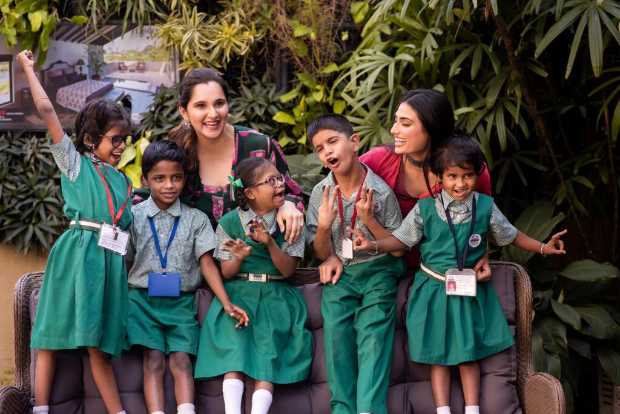
Actress Athiya Shetty and Tennis star Sania Mirza are coming together for a special initiative. When two forces join hands, this initiative of Araaish X The Label Bazaar will be able to curate fashion for a greater purpose. Araaish has been the fundraising arm of Save The Children India and by collaborating with The Label Bazaar we will find solid support & reach out to a diverse audience, whereby creating a greater awareness for Save The Children India.

SaniaAthiyaMPOs11feb2019

Speaking about the cause and spreading awareness, Athiya Shetty says, “The proceeds are used to support the vocational training of adolescent girls and young women from the slum communities and education of special children coming from impoverished families have no access to education. We use the platform of Araaish X The Label Bazaar to speak about our cause through our creative’s, social media campaigns and also on-day show collaterals to let all our supporters know that they are the real change-makers.”

Athiya Shetty shot for a campaign with Sania Mirza. The actress revealed how forthcoming Sania was towards this cause. “Sania was extremely forthcoming. She’s not only a fantastic sportsperson but a fantastic human being as well! Not only was she was very excited to be a part of this initiative, but she was also hands-on while shooting with the special children of Save The Children India. Sania is very committed to the cause of education and through this collaboration, she will walk the talk to make this show a significant fund-raiser,” she adds.

Athiya Shetty further adds, “Save the Children India is very close to my heart and was founded by my Nani 30 years ago. This is my way of Contributing and keeping her passion alive through this Collaboration, we aim to be India’s Finest luxury lifestyle exhibition with nearly 11 years of experience, over 2,50,000 shoppers, associating with over 500 brands. This collaboration will cherry-pick designers from the fashion world. Given the fact that it will be attended by a larger audience, we will be able to make a difference for the beneficiaries of Save The Children India.”

On the work front, Athiya Shetty will be next seen in Nawazuddin Siddiqui starrer Motichoor Chaknachoor.

source: http://www.bollywoodhungama.com / Bollywood Hungama / Home / by The Bollywood Hungama News Network / February 09th, 2019

Sania Mirza to shape up tennis kids

Hyderabad, TELANGANA :

Starts academy for players between ages three and eight.

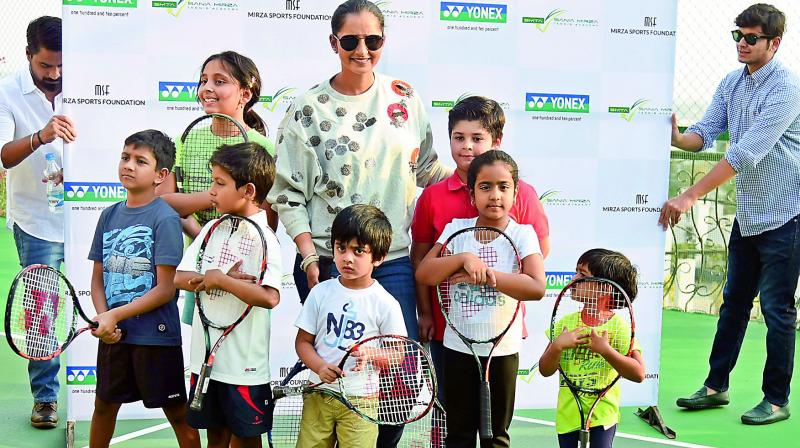
Sania Mirza poses with kids at the newly-opened Grassroot Level wing of the Sania Mirza Tennis Academy next to her house in Jubilee Hills on Monday (Photo: R. Pavan)

Hyderabad:

Tennis ace Sania Mirza on Monday launched the Sania Mirza Tennis Academy’s Grassroot Level wing for players between the ages of three and eight, next to her home in Jubilee Hills here.

The idea was to introduce budding players to tennis, she said. “As a tennis player I’ve had lot of difficulties coming to know what to do and where to go as a child and knowing how much to practise,” Sania said.

“It is actually my mother and her friend’s idea and obviously the Mirza family supports it. Tennis today is too competitive and you have to start when you are three or four years old,” Sania explained. “The professionals, the biggest of champions, have always started at the ages of 4, 5 and 6,” she added.

“We are still waiting for the next Sania, the next Mahesh (Bhupathi) and Leanders (Paes) to come and this is just a small way of contributing to it,” she said adding “It is right next to my house and I will obviously give some time as well.

“The concept is to get as many kids as possible to the academy where we are going to play with soft, colourful balls to make it attractive and easier for them,” Sania said, adding, “At that age, I don’t think they’d understand the concept of forehand or backhand. It is more about fun, enjoyment. You have to get them to try and love the game first before they want to actually make it their profession.”

source: http://www.deccanchronicle.com / Deccan Chronicle / Home> Sports> Tennis / February 07th, 2017

Sania Mirza wins Brisbane doubles title but loses No.1 rank

Hyderabad, TELANGANA :

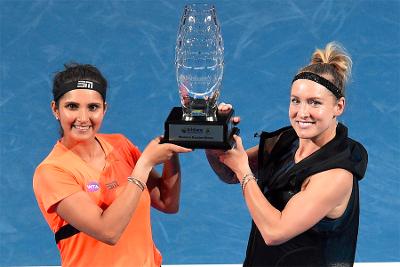
Sania Mirza and Bethanie Mattek-Sands pose with their trophy. (AFP Photo)

__________________________________________________

Highlights :

  • Sania Mirza picked up her first title of the season
  • The top-seeded Indo-American duo triumphed 6-2, 6-3 against the second-seeded Russian team
  • The Indian had come into the tournament as a defending champion


__________________________________________________

Brisbane :

Indian tennis ace Sania Mirza picked up her first title of the season, combining with American Bethanie Mattek-Sands to lift the Brisbane International women’s doubles title, but ended up losing the World No.1 crown to her partner.

The top-seeded Indo-American duo triumphed 6-2, 6-3 against the second-seeded Russian team of Ekaterina Makarova and Elena Vesnina in the final here.

The trophy, however, ended Sania’s 91-week reign as the world No.1 doubles player in the WTA rankings. That position was taken over by Bethanie.

“I feel like I’m handing over Miss World No.1 crown,” Sania said in her post-match speech.

The Indian had come into the tournament as a defending champion, having won it with Swiss ace martina Hingis last year.

“We always have good matches (against Vesnina/Makarova). It’s great to come back as defending champion. Thank you to my partner and best friend. We go a long way, we play once a year, the last time we played, we won in Sydney,” Sania said.

“I think we should play a lot more. Thanks for playing with me. I was No.1 in the world but congratulations to her for becoming No.1 now. If not me, than her, she has had an amazing year,” she added.

Sania will go back to pairing with Czech Republic’s Barbora Strycova in Sydney next week and the Australian Open, which starts on January 16.

source: http://www.timesofindia.indiatimes.com / The Times of India / News> Sports> Tennis > Top Stories / PTI / January 07th, 2017

Sania Mirza’s Unlikely Stardom

Hyderabad, TELANGANA :

A tennis player blazes a trail for Indian women.

“For a girl to pick up a tennis racquet and to want to be a professional—it was unheard of,” Sania Mirza says. “People thought it was a joke.” PHOTOGRAPH BY GREG WOOD / AFP / Getty
“For a girl to pick up a tennis racquet and to want to be a professional—it was unheard of,” Sania Mirza says. “People thought it was a joke.”
PHOTOGRAPH BY GREG WOOD / AFP / Getty

On the last day of August, Sania Mirza, currently the No. 1 women’s doubles player in the world, was on one of the smaller side courts at the U.S. Open grounds, in Flushing Meadows, about to play her first match in this year’s tournament. She and her partner, Barbora Strýcová, of the Czech Republic, were squaring off against the Americans Jada Myii Hart and Ena Shibahara. The sun had begun to sneak behind the bleachers, where a few dozen fans had settled in. Occasionally, a roar from Arthur Ashe Stadium or the grandstands could be heard over their polite clapping. Mirza’s black hair was tied back in its usual businesslike bun, her dark eyes focussed beneath a neon-pink headband. Mirza’s gruelling summer had included her third Olympics, which had ended just a couple of weeks before, with a fourth-place finish in mixed doubles. Her longtime partnership with the tennis icon Martina Hingis was also coming to an end. Now she was gearing up again, knowing that millions were paying attention in her native India, even if only a handful were watching in New York.

Mirza, who will be thirty in November, is wildly famous in one hemisphere and virtually unknown in the other. She has nearly twelve million Facebook fans – more than double the number that Serena Williams has—plus four million followers on Twitter, and two million more on Instagram.  She is, without hyperbole, one of the most popular athletes on Earth. She has, to date, earned $ 6.3 million in career prize money, a fraction of what Williams has made, but more than a thousand times the annual per-capita income in her home country.

She is also Muslim, and has sparked the ire of clerics for competing in tennis clothes that leave her arms and legs exposed. Though roughly one in twelve people on the planet is a woman from India, few Indian women have succeeded in professional sports, for reasons that are not hard to pinpoint. Last year, in the World Economic Forum’s Global Gender Gap Report, India ranked No.108, out of a hundred and forty-five countries listed. For years, women in India were largely discouraged from participating in high-level sports—and, unless the women were wealthy, good facilities were hard to come by, anyway.

Mirza is helping to change this. She’s an advocate for women’s rights, and has spoken up about ending the practice of female feticide in India. She has criticized government policies on domestic violence and sexual assault, as well as lopsided pay schemes, including in sports. She was the first South Asian woman to be appointed as a Goodwill Ambassador for the United Nations, and she often calls out reporters for asking her, and not her male counterparts, about her “family plans.” She told me that, after she and Hingis won Wimbledon last year, she was asked by a reporter when she’d be having a child. “I was, like, ‘I won Wimbledon two days ago!’ ”

Though Mirza makes light of her reputation, in India, for what some there see as arrogance, the truth is that her outspokenness has only made her more popular back home. Her stardom is an unlikely outcome, considering where she started. “For a girl to pick up a tennis racquet and to want to be a professional—it was unheard of,” she told me. “People thought it was a joke.”

Mirza grew up in Hyderabad, a city of nearly seven million. It was only half that size when she was a child, and, back then, sanitation, let alone access to a tennis court, was not a given—only a handful of courts existed, and many that did were riddled with potholes or made with cow dung (a surface that was thought to offer a middle ground between clay and hard courts). Today, as Mirza is well aware, the city center of Old Hyderabad is a hub for human trafficking, and domestic violence is an urgent problem. Though technically illegal, child marriage persists. Local police blotters in and around Hyderabad regularly carry gruesome stories: a woman who hanged herself by her sari when a dowry went sour, a husband setting his wife on fire. Just a few weeks after last year’s U.S. Open came news, from south of Hyderabad, in Bengaluru, that a woman had been raped by two security guards outside of tennis courts in Cubbon Parks. It was the third such attack in the city in a month. According to local reports, the victim later told police, “I want to be like Sania Mirza.”

The Mirzas moved to Hyderabad, from Mumbai, when Sania was an infant, one of many families drawn to the burgeoning technology mecca. Mirza’s father, Imran, held a number of jobs, working mostly as a printer and, later, in construction. Mirza’s mother, Naseema, also had a mind for business, and she and her husband often worked together. They were ambitious, and forward-thinking in their attitude toward girls; still, they tried to avoid placing too much stress on their daughters. (Sania’s sister Anam is seven years younger.) It was on a whim that Imran signed up Sania, then six years old, for tennis lessons, at Hyderabad’s Nizam Club. There were cricketers in the Mirza family, but women’s cricket had not yet taken off in India. Tennis seemed like something she might enjoy.

A couple of months later, Sania’s coach suggested that Imran come to watch his daughter play. He put it off. When he finally saw her on the court, he immediately realized that she was a standout talent. Soon, the sport became as much a part of her childhood routine as brushing her teeth or doing her homework. Sania attended the Nasr School, a progressive all-girls private school, which adapted her academic schedule to accommodate her tennis travels. “Always in tracksuits, coming directly from practice straight to school!” Nirmal Gandhi, a teacher at Nasr who had Mirza as a student, said. “I don’t think I ever saw her serious. She was always laughing with her friends.” At the time, the Indian system for youth tennis was, Imran said, “nonexistent.” It’s not unheard of for the parents of tennis players to spend fifty thousand to a hundred thousand dollars, or more, annually on coaching, travel, and equipment, an expense that was far beyond the Mirza household budget at the time. So Imran began to coach his daughter, and set about researching local tournaments, learning what he could through word of mouth and follow-up phone calls. Sania’s mother stayed at home “to hold down the ranch,” tending to Mirza’s little sister and various pieces of family business, a pattern that would continue for twenty years—Sania’s tennis career becoming another joint family venture.

Mirza eventually won a berth in the 2003 Wimbledon junior girls’ competition, as a doubles player with Russia’s Alisa Kleybanova. They won the tournament. When Mirza stepped off the plane back in India, a mob of people greeted her and her family at the airport, fanfare that surprised them. Government dignitaries took photos with her and bestowed her with awards. The Indian press began to cover her every move, and it hasn’t stopped since. “At fifteen or sixteen, you’re still trying to get in touch with yourself as a person, as a teenager,” Sania Mirza said. “You have pimples. You have baby fat, in front of millions of people. You have to kind of grow up in front of the media, and you’re growing older and the following is getting larger and larger. You’re still getting in touch with who you are.”

“The Indian media, too, was just growing up,” Imran said. “They grew up along with Sania. They were really not geared or didn’t know how to handle a female sporting icon. They might have handled a film star, but here was the first sporting woman from India. It wasn’t easy for her, but it probably wasn’t easy for the media to deal with, either.” In 2005, as she was competing on the international circuit, a group of clerics issued a fatwa against Mirza, calling her skirts and T-shirts “un-Islamic” and “corrupting.” The cleric Haseeb-ul-hasan Siddiqui told the Guardian that the clothing she wore on court “ leaves nothing to the imagination .”

“You get hate mail,” Mirza told me. “You get love mail, but hate is a lot harder to digest than love. That’s the way it is.” She continued to wear Western-style pants and heels, and slogan-bearing T-shirts, including a popular one that declared, “Well-behaved women rarely make history.” The increased attention, and Mirza’s handling of it, gained her even more Muslim fans, a broad demographic that had largely been overlooked by the tennis-marketing establishment. And she excelled on the court. As a professional singles player, she reached a ranking of twenty-seven, the highest spot achieved by an Indian woman.

Privately, though, Mirza was battling a series of injuries. The hypermobile joints that helped give her flexibility on the court also led to extreme pain, which she often hid. She underwent operations on both knees and a wrist. Upon examining her body and her demanding competition schedule in 2010, doctors gave her the devastating news: she was done playing singles.

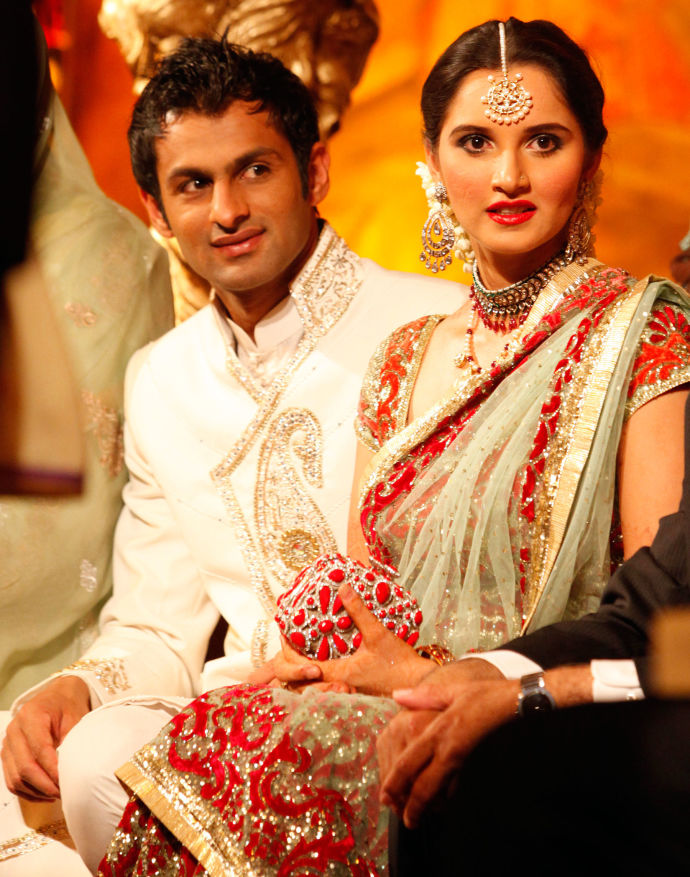
Mirza had been engaged to a longtime family friend, but in January of that year it was reported that she had called off the engagement. Then, in April, she became engaged to the Pakistani cricketer Shoaib Malik, whom she had met through mutual friends and had seen occasionally thereafter on various sports-related travels. The new wedding plans were a major story in India: Malik had served for two years as a captain of the Pakistani national cricket team, and cricket is something of a religion in that part of the world. Ordinarily, this would have made Mirza and Malik the Beyoncé and Jay Z of South Asian sports—but marriage to a Pakistani, even one who is an élite athlete in a treasured national pastime, is still “a huge taboo” in India, according to Bappa Majumdar, the Hyderabad bureau chief for the Times of India, who has covered Mirza. “It showed huge guts on her part,” Majumdar said.

The couple had planned an Islamic wedding ceremony in Hyderabad, with another ceremony to follow in Pakistan, adhering to that country’s customs. Within hours of the announcement, dozens of journalists had camped out in front of the Mirza home, to cover the tale of the star-crossed lover-athletes. The story then took an additional soap-opera turn: a woman from Mirza’s home town went to the press, saying that she was already married to Malik, and had been since 2002. He initially disputed this; they had merely met online and exchanged photographs—though, he said, the pictures she sent him were of someone else. But he ultimately admitted to the marriage and got a quick divorce, according to local news reports, days before his wedding to Mirza.

Mirza at her second wedding to the Pakistani cricket star Shoaib Malik, in his home country. His nationality drew criticisim of Mirza in India./ PHOTOGRAPH BY FAISAL MAHMOOD / REUTERS
Mirza at her second wedding to the Pakistani cricket star Shoaib Malik, in his home country. His nationality drew criticisim of Mirza in India./
PHOTOGRAPH BY FAISAL MAHMOOD / REUTERS

On account of her marriage, some of Mirza’s critics in India have called her the “daughter-in-law of Pakistan.” In an interview with a New Delhi television station, in 2014, she burst into tears, saying she was exhausted by the need to “keep asserting my Indianness.” “I have no problem if they attack me about my tennis or they attack me about what I’m doing,” Mirza told me, adding, “I come from a country of 1.2 billion people, and I’ve accepted the fact that I’m not going to be liked by all of them.” Her family, in any case, approved of the union, Imran said. “She wasn’t getting married to a country but a person.”

Mirza and her father spend much of the year on the road, but when they’re not travelling they can often be found at the Sania Mirza Tennis Academy, a set of nine hard courts nestled among farmland and jungle, with a sweeping view of Hyderabad. The family bought the plot of land four years ago, with the goal of making it a hub for tennis in India. Some hundred children are now enrolled in the academy, almost all of them having heard about it by word of mouth. Some are the children of Hyderabad’s rising middle and upper-middle classes, but others have never seen a tennis court prior to joining, and rely on scholarships, which are offered according to financial need. Backing from sponsors was not forthcoming when the academy opened, in March of 2013, so the program was jump-started with funding from the Mirza Family Trust.

Here Mirza can practice in relative seclusion. She and her father also talk to parents about the nuances of a good backhand, what competition is like internationally, and the grit required to make it as a professional. Some aspiring players have shown up at the academy’s gates on rickshaw, their parents willing to relocate some or all of the family to Hyderabad or nearby villages solely in pursuit of tennis. “They thought Sania was an overnight success, and they want results in six months,” Imran told me when I visited the academy last year. “And I keep telling them it takes ten years to find out whether they even have a chance. It cannot be done for the money or the fame. It has to be done for the passion.”

When I spoke with Mirza in Flushing, a year later, she said it had been two months since she’d been home to India. She and Strýcová won their first match at the U.S. Open, convincingly, 6–3, 6–2, and she noted afterward that the dynamic she shares with Strýcová on the court is not dissimilar from her partnership with Hingis: Mirza is strong and powerful, sweeping the back of the court, while Strýcová is nimble and poppy at the net. The two have known each other since they were teen-agers on the junior circuit, which has helped with the transition. But earlier this week they were knocked out of the Open by Caroline Garcia and Kristina Mladenovic, the tournament’s top seeds. (Garcia is ranked No. 3 in the world in women’s doubles, and Mladenovic is No. 4. Hingis is No. 2.)

Mirza published an autobiography in India this summer. She said she doesn’t know how long she’ll play, or what the future holds for Indian women, but she pointed to India’s victories at the Rio Games as a sign of progress. The Indian Olympic Committee, which had been banned, was reinstated in 2014, and the country sent its largest-ever delegation, a hundred and seventeen athletes. They won two medals: a silver in badminton, for Pusarla Venkata Sindhu, and a bronze in wrestling, for Sakshi Malik. “It was amazing,” Mirza said. “And it was the women who won!”

Mary Pilon is the author of “ The Monopolists,” a book about the board game Monopoly. She previously worked as a staff reporter at the Times and the Wall Street Journal, where she wrote about sports and business.

source:  http://www.newyorker.com / The New Yorker / Home> Sections> The Sporting Scene / by Mary Pilon / September 10th, 2016