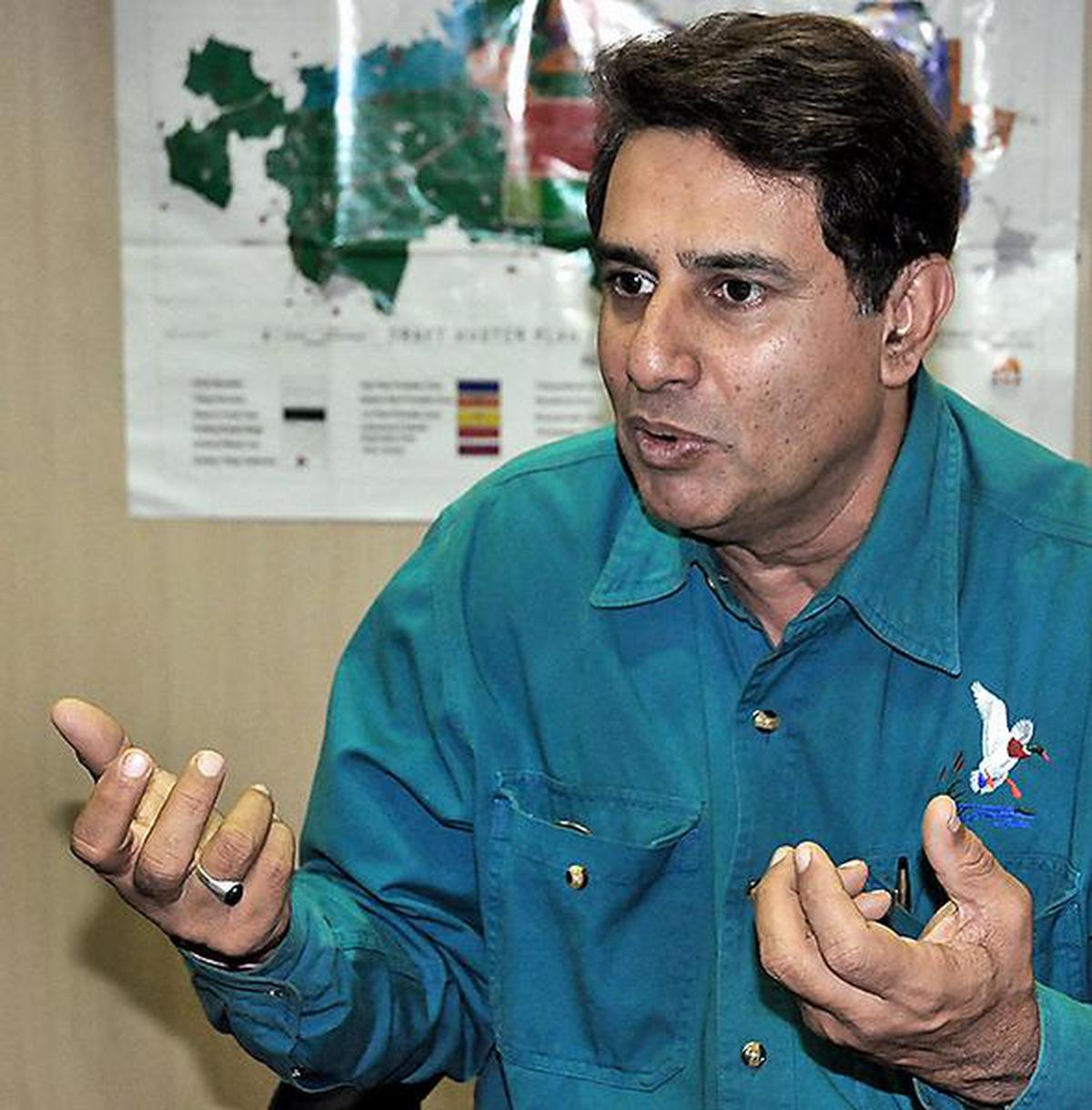
Hyderabad, TELANGANA / KARNATAKA :

Lover of wildlife, celebrated hunter, sharp-shooter, tranquillising expert and more…
Dwindling forest covers, rampaging rogue elephants, man-eating tigers and man-animal conflict are all very frightening realities in today’s world, especially in our country. The Forest Departments across the country are faced with these huge challenges. In spite of their best efforts, the problems persist.
However, the solutions by a few who have grown up understanding wildlife like the back of their hand are hardly taken.
One such Wildlife Conservationist is Nawab Shafath Ali Khan from Hyderabad, who had been invited by the Jharkhand government last month to put down a rogue elephant that had killed 15 people. He is the most celebrated hunter and the only tranquillising and culling expert in the country.
He also runs a chain of resorts in Masinagudi, Tamil Nadu.
Star of Mysore Features Editor N. Niranjan Nikam travelled all the way to meet the Sharp-Shooter at his den in the midst of the jungle at the Safari Land Resorts in Masinagudi.
The Nawab opened his heart out for nearly two hours in this exclusive interview and spoke about royalty, how to manage forests, man-animal conflict, radio-collaring, culling, animal right activists and his anguish about the villagers and forest-dwellers. Excerpts…
Star of Mysore (SOM): You are not only a Nawab at heart but also a real Nawab from Hyderabad. How much of ‘Nawabipan’ is still there in you?
Nawab Shafath Ali Khan: Well, in well-bred horses the genes carry on in the blood. So I am a Nawab. But I devoted my life to the cause of poor Indians who suffer silently, like forest-dwellers, tribals, aborigines, having lost their lives and property to wild animals.
SOM: You are the most celebrated hunter in the country. Where did it all begin?
Shafath Ali Khan: Hunting was a family ritual. And my grandfather Nawab Sultan Ali Khan Bahadur was Advisor to the British Government on man-animal conflict. I grew up at a time when the Wildlife Protection Act came into being and from controlled hunting the transition to a total ban on hunting was introduced in the country. With the royalty and nobility hanging up their hunting rifles there was a vacuum of traditional knowledge of tracking animals that had generated over generations. I tried to fill this vacuum and worked for saving India’s wildlife as a Conservationist. Hunting is a tool of conservation and all advanced countries across the world are practicing and encouraging controlled hunting and their wildlife is growing.
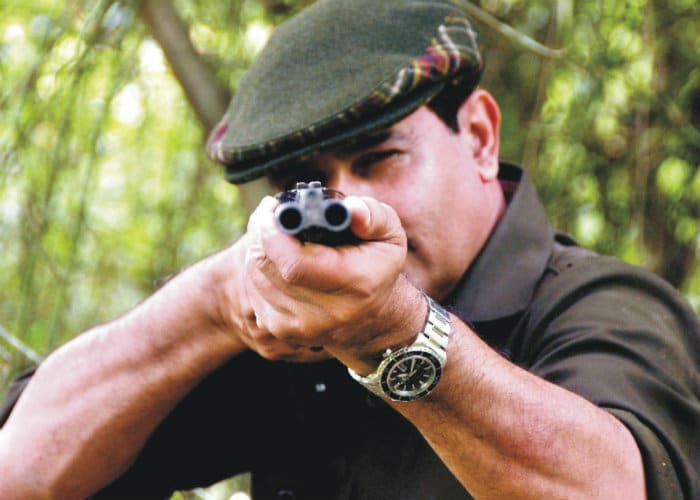
SOM: You are the only authorised tranquillising expert and culling officer in the country. When there is a Forest Department, which has a rich history, what are the Officers doing?
Shafath Ali Khan: As I said, traditional knowledge acquired over generations cannot be found in textbooks. The art of reading pug marks, identifying it as a tiger or tigress just by seeing it or coming to conclusions about the height of an elephant by measuring the circumference of pad mark of the forefoot is traditional knowledge. Rulers had Shikaris who managed their forests with a vested interest of hunting. The rulers’ passion for hunting not only saved trees and grasslands but also kept a check on excess animal population. Unfortunately, after Independence forest management came into the hands of Officers who were bereft of ground realities. Large scale deforestation started and wildlife mismanagement reached its apex. Certain species grew in numbers beyond controllable figures like wild boar and blue bull. Across the country, tiger population reduced due to habitat destruction and revenge killings.
Large scale destruction is caused by elephant herds that have strayed considerable distances away from protected areas into agriculture fields. Neglected National Parks are overridden with noxious weeds like lantana and parthenium forcing our precious wildlife outside protected areas.
This is the crux of man-animal conflict that has frustrated farmers and forest-dwellers; giving them no option but to poison or electrocute elephants. According to project elephant figures, there were 15,700 elephants in the country in 1980 and today we have over 32,000. The forest cover on the other hand has reduced. The think-tanks who manage wildlife in the country did not plan this explosion in elephant population resulting in excessive man-animal conflict that we face today.
SOM: As a boy of 19 years you were in Mysore Race Club (MRC) as Assistant Secretary. How did this happen?
Shafath Ali Khan: My grandfather was India’s senior-most Handicapper (a person appointed to fix or assess a competitor’s handicap, especially in golf or horse-racing) and my father was Senior Stipendiary Steward and Secretary of Bangalore Turf Club (BTC).
High taxation on horse-racing was killing the industry and both BTC and MRC were finding it difficult to even pay salaries to their staff. My father Nawab Arshad Ali Khan started off-course betting between BTC and RWITC (Royal Western India Turf Club) in 1977 and this gave a new lease of life to the racing industry across the country.
Jawa motorcycle factory Founder Farookh Irani whom I always called Uncle Irani, Chairman of MRC, in consultation with my dad, started off-course betting between BTC and MRC and soon the fortunes of MRC blossomed. MRC was setting up photo-petrol cameras to record the races and I was sent, raw out of school, to Mysore to identify where the twin towers of the cameras had to be installed. I was already a National Champion in Equestrian sports and a top rider in the country. When I finished identifying the setting up of photo-petrol camera towers, having worked under Uncle Irani for a week, he decided to absorb me under MRC and I had the good fortune of learning from him. I was there for three years.
Meet Nawab Shafath Ali Khan- 2
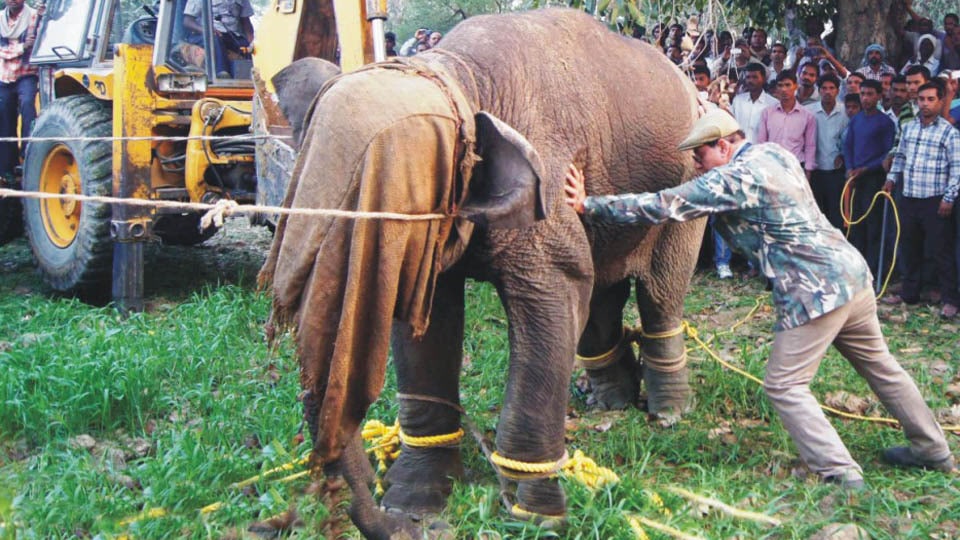
The crux of the man-animal conflict today is that old, weak and handicapped species are pushed out of the forest by the younger and stronger animals. These animals before they could create havoc were eliminated. The village folks were happy, revenge killing was never heard of and we didn’t have elephants straying into private lands like Hassan and Coorg like we are facing today.
Star of Mysore (SOM): The fight between humans and elephants, in other words man-animal conflict is resulting in shocking number of deaths. Planters in Kodagu are facing the heat with their crops being destroyed because of huge elephant menace there. What do you think can be done about this?
Nawab Shafath Ali Khan: The problem is not only in pockets of Karnataka but across the country. Any wild animal requires space. We cannot comprehend compressing them into smaller forest areas. With the number of elephants increasing in the country, the land to animal ratio has gone haywire. National Parks are not being de-weeded and cleared of noxious weeds; to provide enough fodder to the elephants and to restrain them within the parks. Hungry elephants are forced to stray out into agricultural lands for their survival.
Elephant is wise to the fact that nutritional value is found more in sugarcane, bananas, paddy and jackfruit compared to what it gets in barren government-controlled forests. So the Department is putting animals under tremendous pressure. This pressure is changing the metabolism of elephants making them aggressive, attacking people and raiding crops with impunity.
This man-made pressure on elephants and tigers have changed their psychological persona and they are also attacking humans. We have left the problems drift so much that it’s hard to find a win-win situation at this point of time. Anyway my thinking after spending 40 years in the field is that 70 per cent of our wild elephants are outside the forests. This is a very alarming figure. There is no shortage of fund as far as Forest Department is concerned. We are sitting on Rs. 35,000 crore of CAMPA (Compensation Afforestation Fund Management and Planning Authority) Funds. The States can utilise this money and have an elephant-proof trench all around government protected forests. All stray elephants outside this trench will be herded in or translocated.
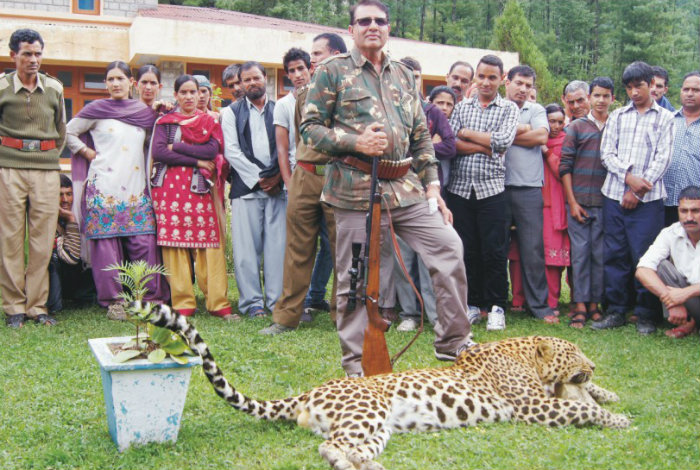
The carcass of the man-eating leopard stretched out on the lawns of Thunag Rest House in Himachal Pradesh.
Wildlife management and human habitations have to be compartmentalised. Solar powered borewells have to be erected every 5-km radius within the National Parks. Clean and sufficient drinking water should be provided to the animals. However, the hard decision that we need to take but from which we have drifted for decades is, how many animals can survive in the relatively small National Parks and buffer areas.
Excess animals sadly will have to be culled not only for their own survival but also to maintain a healthy forest. Overgrazing and over-browsing is casting tremendous pressure on our precious forests.
SOM: There is a story that late Srikantadatta Narasimharaja Wadiyar fell in love with the Land Rover you were driving and bought it. Is this true?
Shafath Ali Khan: Yes, it is true. We were all fond of cars and I had a Land Rover that I had maintained in immaculate condition. The Prince (as Srikantadatta Narasimharaja Wadiyar was called by many who were close to him) fell in love with it and wanted to buy it. But, I was reluctant to sell it. Soon, the Prince and the Princess (Pramoda Devi Wadiyar) came to attend my wedding and the Prince brought a Convertible Red Triumph Sports Car which he gifted to me at the wedding. Now, I had no option but give my Land Rover to him. He enjoyed the Land Rover and I and my wife, newly-married, thoroughly enjoyed the Convertible Sports Car. Prince was very close to me and I was one of the few who had access to the gun rack that was just beside his bedroom. I had the pleasure and honour of cleaning and repairing those beautiful rifles which belonged to the late Highness Jayachamaraja Wadiyar.
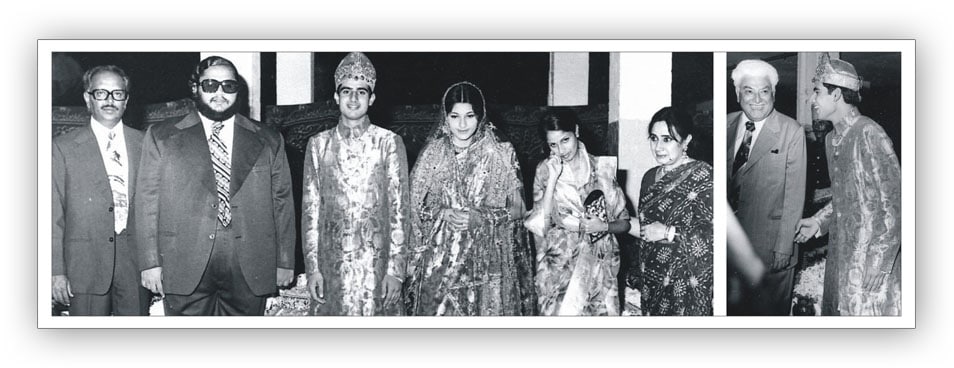
The young bridegroom Nawab Shafath Ali Khan (third from left) seen with (from left) late Sirdar K.B. Ramachandra Raj Urs, late Srikantadatta Narasimharaja Wadiyar, bride Begum Shaheen Khan, Pramoda Devi Wadiyar and the Nawab’s mother Begum Arshad Ali Khan at his wedding reception in Bangalore Turf Club (BTC) in 1976. Picture right shows Jawa Factory Founder F.K. Irani greeting Nawab Shafath Ali Khan at the wedding.
SOM: Isn’t there a contradiction when you say nobility indulged in hunting but they also protected forests?
Shafath Ali Khan: It was a paradox that controlled hunting that had a code and a strict set of rules where only males of deer were shot subsequent to the breeding season. Old rogue elephants and dying tigers beyond breeding age were painlessly shot using high-powered rifles in the hands of our expert shooters. Survival of the fittest is the law in the jungle.
The crux of the man-animal conflict today is that old, weak and handicapped species are pushed out of the forest by the younger and stronger animals. These animals before they could create havoc were eliminated. The village folks were happy, revenge killing was never heard of and we didn’t have elephants straying into private lands like Hassan and Coorg like we are facing today.
Wildlife management was much better balanced compared to what it is today. Across the world animal population have reduced or gone haywire wherever government imposed total ban on hunting.
Meet Nawab Shafath Ali Khan- 3 (September 08th, 2017)
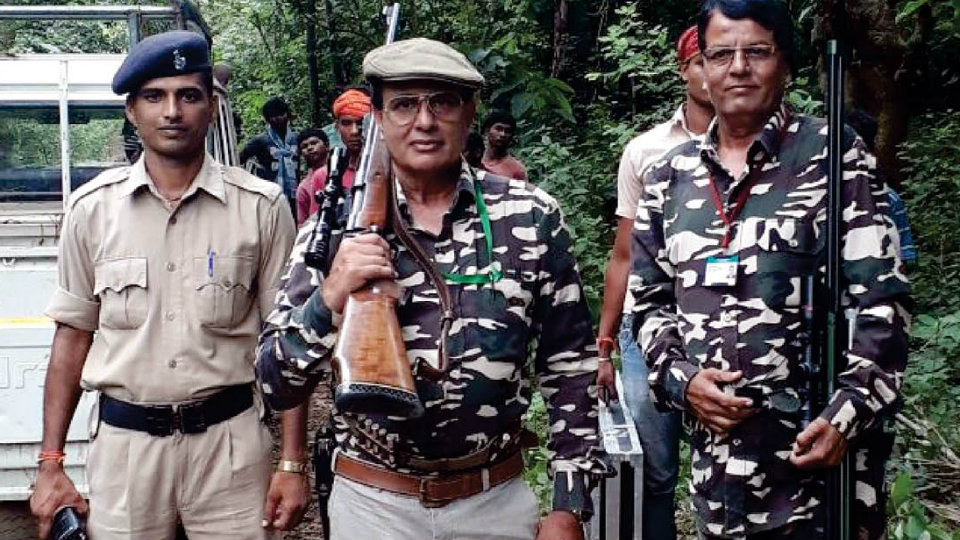
When Star of Mysore Features Editor N. Niranjan Nikam travelled all the way to meet the Sharp-Shooter at his den in the midst of the jungle at the Safari Land Resorts in Masinagudi, Tamil Nadu, Nawab Shafath Ali Khan and his son Asghar Ali Khan, drove this writer in the jungle in their American Jeep M-38 A1, a 1952 model four-wheeler late in the evening and it was a hair-raising experience as the young driver at the wheel negotiated the tough, lovely, Blue Nilgiri Hills range.
Both of them are attuned to every sight and sound in the forest even as the Nawab spotted two elephants and a calf at quite a distance instinctively. Later, the Nawab sat in his unique restaurant and for nearly two hours spoke freely in this exclusive interview about royalty, how to manage forests, the officials in the department, man-animal conflict, his views on radio collaring, culling, animal right activists and his anguish about the forest-dwellers and the villagers living in the fringes of the forest.
Star of Mysore (SOM): How much of preparation goes when you shoot man-eating tigers and rogue elephants?
Nawab Shafath Ali Khan: Bascially physical fitness and mental alertness are the major factors. A hunter is a complete man. He knows how to repair his vehicle, stitch his shoes in the forest, carry out minor repair to his weapons and who could read the forest, pick up the slightest sound and check the direction of the wind. Patience has to be in abundance. I don’t remember how many nights I have spent on a tiny machan on a tree in freezing cold and rainy night.
Tracking rogue elephants one has to walk 10-20 kms a day and this can be quite taxing. Preparing for these operations has become a way of life for me. I live on the most wildlife rich area of the sub-continent where I see wild elephants, tiger, leopard and sloth bear in my morning and evening walk. This keeps my mind alert and greatly helps in dangerous and close encounters with dangerous beasts that I have to tranquillise or eliminate as per government orders.
When Star of Mysore Features Editor N. Niranjan Nikam travelled all the way to meet the Sharp-Shooter at his den in the midst of the jungle at the Safari Land Resorts in Masinagudi, Tamil Nadu, Nawab Shafath Ali Khan and his son Asghar Ali Khan, drove this writer in the jungle in their American Jeep M-38 A1, a 1952 model four-wheeler late in the evening and it was a hair-raising experience as the young driver at the wheel negotiated the tough, lovely, Blue Nilgiri Hills range. Both of them are attuned to every sight and sound in the forest even as the Nawab spotted two elephants and a calf at quite a distance instinctively. Later, the Nawab sat in his unique restaurant and for nearly two hours spoke freely in this exclusive interview about royalty, how to manage forests, the officials in the department, man-animal conflict, his views on radio collaring, culling, animal right activists and his anguish about the forest-dwellers and the villagers living in the fringes of the forest.
SOM: There is no scientific basis in culling and it is not very successful in Africa as you claim, criticise a few. How do you react to this?
Shafath Ali Khan: There is no place for sentiment and religious connotation in wildlife management. I have been asked this question in several national workshops that I have attended. But when I ask them for an alternate solution no doable common sense approach has come forth.
I basically don’t like culling or shooting. I am now an authorised tranquilliser and resource person for six States and run an NGO ‘Wild Life Tranquil Force.’
SOM: What do you do here in the NGO?
Shafath Ali Khan: We are training front-line forest staff and veterinarians of six States in the country. I don’t see any alternative to scientific culling as far as our country is concerned. As an advisor and culling officer to Forest Department of Bihar, I have conducted several experiments to arrest the exploding population of blue bulls. Bihar is a fertile State with Ganges and several rivers flowing. The Gangetic plains are rich in crops. Overpopulation of the blue bulls from the forest, which consist of only 5 percent has found its way into agricultural fields causing as much as 35 percent damage to the farmers.
If at all there is a substitute to culling, it would have been adopted long ago and population controlled. Today UP, Jharkhand, Haryana, Rajasthan, Gujarat, Maharashtra, and Uttarakhand are reeling under the problem of overpopulation of wild boar and blue bulls and no solution is in sight.
Animal right activists might have a vested interest. These organisations get funds from abroad and with politicians and muscle power they arm-twist the senior forest officers to do what they want them to do rather than what is in the interest of the country. They are often bulldozed to falling in line and let matters drift.
Don’t be surprised if the price of Dal becomes Rs. 600 a kg as blue bulls, antelopes deliver two calves annually and wild boar sow delivers anywhere up to 19 piglets in a span of three months. There are virtually no carnivores to control this population explosion outside the forest. So, what are we heading for is anyone’s guess.
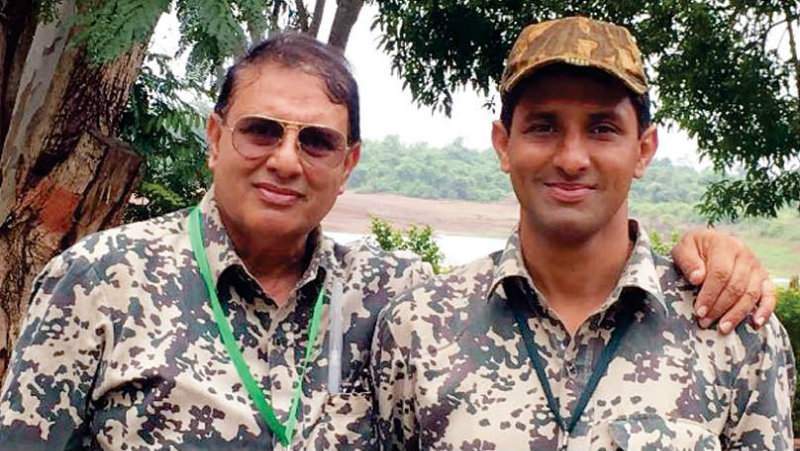
Shafath Ali Khan with his son Asghar Ali Khan.
SOM: As a wildlife conservationist, what is your view on radio collaring of tigers and other animals?
Shafath Ali Khan: In my opinion it is an utter failure. The reason why I say this is, it affects the breeding of tigers. Because when the tiger mounts a tigress, he starts biting on the top of her neck and it is a natural instinct. When the radio collar is there, the tiger bites into the radio collar and finds something hard and abnormal and it withdraws. I have seen this phenomenon physically.
In Siriska Tiger Reserve, when they introduced tigers with radio collar there was no breeding at all and I had predicted this 30 years ago.
Each radio collar weighs almost 1.5 Kgs and when a wild tiger is all of a sudden burdened with it then his entire movement and body language changes. This famous tiger Jay, which was tranquillised and radio collared, his home range, which was 38 sq. metres before the radio collaring, increased to 58 sq.mtrs.
SOM: Why is that?
Shafath Ali Khan: When you have something implanted in an animal, then its entire movement changes and it may come closer to human habitation also.
Also, the battery life which is supposed to last one year, never lasts that long. For instance, in this tiger Jay in Umed Sanctuary in Maharashtra, the battery ran out in two months and it disappeared. It was a pretty tiger and later it even died.
Then each radio collar costs about Rs. 3.5 lakh to Rs. 5 lakh and the cost involved in catching a wild tiger is another Rs. 5 lakh. With all this operation, it does not come cheap.
There is my own experience of a leopard that I tranquillised in Gundlupet in Muntipara village. This leopard had a radio collar, which had gone dead long time back. This animal entered a house and but for my early intervention, the girl living in that house would have been dead. It was a problematic leopard which was caught, radio collared and released and it again entered human habitation. The biggest problem of radio collaring is it gives the Forest Department a false sense of temerity to release the animal that should not be released. As a result the lives of villagers and poor forest dwellers are shackled.
SOM: Have you had any near-death-like experiences as a sharp-shooter in all these years?
Shafath Ali Khan: The most memorable day in my life was on Dec.17, 1976, when I was called by Van Ingen and Van Ingen (the famous taxidermists in the country) to shoot a rogue elephant that had killed 12 people. Since, late Uncle Joubert Van Ingen (who, at the age of 100, had written a foreword to the book ‘Man-Eaters And Wildlife Challenges’ by the Nawab. He dictated the foreword at one breath without a single mistake!) thought he was too old to trace the rogue elephant, he requested the Forest Department to invite me to shoot it at H.D. Kote. I traced the elephant and shot it and this incidence is rich in my memory.

The other near-death-like experience I can recall was just last month, on Aug. 11, 2017, when I was invited by the Jharkand Government to put down a rogue elephant that had killed 15 people and we tracked it for three days in most difficult terrain and thick impenetrable jungle, the rogue tusker turned around and came for us.
My two trackers fled leaving the Veterinarian Dr. Ajay Kumar and me. I saw the 10-foot tall tusker from hardly 10 metres coming for us like a railway engine with a loud trumpet. He raised his head to grab me with his trunk covering the forehead which is the only vital spot to shoot at that close range. A wrongly placed shot would have ended me in a fraction of a second. I took him at 9 metres and shot him in the mouth. The heavy bullet from .458 Magnum brought him to his knees. But he tried to get up in a fraction of a second. Working the bolt fast I fired the second shot in between the eyes and brought him down painlessly and death was instantaneous.
I often strive hard to see that the animal is put out with least pain and agony. Shooting, for me is the last option, when all other remedies have exhausted.
SOM: What about the experience of shooting a man-eating tiger?
Shafath Ali Khan: In July 2017, I was invited by the Maharashtra Government to tranquillise a man-eating tigress that had claimed four human lives. I darted from a distance of 15 metres when she was galloping away. But the most hair-raising incidence was shooting a man-eating tigress in 2009 in UP, where I tracked her for 35 days and nights and shot her when she charged from a distance of six metres.
SOM: Asghar Ali Khan, your son is also an authorised shooter. So, the family tradition continues?
Shafath Ali Khan: Asghar, is an authorised shooter and a crack shot. He has a .470 double rifle on his licence and helps me in dangerous tranquillising operation. But he along with my wife Shaheen keep the fire burning and looks after our chain of resorts in the Nilgiris. Often when a long drawn operation is coming to a conclusion, I summon him to join me as a backup.
SOM: Running Safari Land Resort must be a great experience for you and your family?
Shafath Ali Khan: Definitely yes. The very thought of living in a deep jungle arouses a sense of bliss within me. Forests and wildlife are very close to my heart. Riding in the jungle every morning is a thrill that I have no words to explain. Safari Land has given what no other luxurious Palace in the world can give us.
SOM: But are you related to the Nizam family of Hyderabad?
Shafath Ali Khan: Yes, yes. We are from the royal family of Hyderabad. We were equal to the Nizams, like you had the Maharajas and Ursus in Mysuru. The Nizam married into our family, our daughters were given in the Nizams family. So we were equals.
SOM: How long do you think you can carry this crusade of yours as a hunter and sharp- shooter?
Shafath Ali Khan: My priorities are no longer shooting. Having worked for several assignments for the past four decades, I have been involved in 24 dangerous operations and have culled thousands of animals. No one in the country has shot as many animals as I have done. My priority is not shooting or culling any more. My focus is to help those five crore people who are living in 1,87,000 villages and the forests across the country in most adverse conditions. Since I have worked, stayed and eaten with them, I know what it means by hunger.
Several interior villagers are living in a state of anarchy, in constant fear of wild elephants that raid the villages, break their huts, and eat away their rations. Women with infants in their arms run in the middle of the night to the next village 3 kms away. There is no one to wipe their tears. This is fresh in my mind from Jharkhand. I sometimes wonder whether the Constitutional rights, the right to life and liberty is guaranteed only for the elite and not my brothers and sisters who suffer in silence.
My passion now is to work for them, get them the due compensation, get the government to erect solar fencing to protect them. I don’t charge the government for service and time that I give. Tears of gratitude from underprivileged forest-dwellers when I shoot down a rogue elephant or a man-eating tiger, give me energy to work for them for another 100 years.
[Concluded]
source: http://www.starofmysore.com / Star of Mysore / Home> Feature Articles / by N Niranjan Nikam (3 part feature articles) / September 18th, 2017