Tag Archives: Sir Syed Ahmed Khan

Paying tribute to a legend

NEW DELHI :

SirSyedMPOs16oct2017


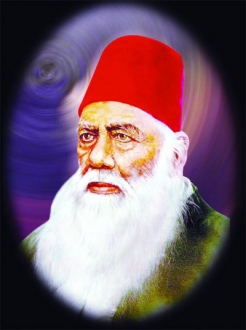
As we celebrate the 200th birth anniversary of Sir Syed Ahmad Khan, it’s a good time to remember his contributions to society as a social reformer, educationist, and philosopher

Sir Syed Ahmad Khan was born into a noble Syed family in Delhi, which was then the capital of the Mughal empire. His family was well connected and both his maternal and paternal side of the family had connections with the Mughal court. Sir Syed was raised by his mother, Azis-un-Nisa, with a disciplined upbringing. His mother laid  strong emphasis on modern education. He was well versed with Persian, Arabic and Urdu and his education consisted of orthodox religious subjects as well as modern subjects like mathematics and astronomy.

Sir Syed was also well-known for his physical strength. He enjoyed swimming and archery and was particularly good at both. He was born at a time when there were a lot of rebellious Governors and religious insurrections aided and led by the East India Company. Together, these factors were diminishing the power of the Mughal empire. He saw this as an opportunity and used his education prowess to stand up and make an impact in such dire circumstances.

Social reform: Sir Syed is referred by many as the “man who knew tomorrow”. He played a very influential role in bridging the gap between the Oriental and the Western world. He knew what changes were required in the society in order to move forward and keep up with the rest of the world. He dedicated his life to strike a balance between tradition and modernity and strived for traditional Oriental and Western scholarship.

Emphasis on English: Sir Syed encouraged the society to keep up with the rest of the world by stressing on the importance of English language. Many of his contemporaries were against his ideology and felt that this was a disservice to their own culture. However, Sir Syed saw the importance of English as a step through which the society could make major advancements.

At that time, most knowledge about modern arts and sciences were available only in English. Previously, Muslim scholars had adopted the use of Persian and Greek language to study science and art. Sir Syed argued that people shouldn’t disregard a whole treasure of knowledge in English just because English was the language adopted by the Westerners. He rightly believed that there is a lot of benefit that can be gained from learning the language. His advocacy of English didn’t mean he wanted to move people away from the Arabic language.

Sir Syed was, in fact, a strong supporter of Arab culture and Arabic language. He stressed on the importance of another language, English, because of the plethora of knowledge bases it opens up.

Sir Syed was also very practical with his school of thought. After the revolt in 1857, he saw how the British empire was taking shape and that English education style was taking charge. He realised that learning English was absolutely necessary in order to keep up in those days and that was a school of thought that was very different than other scholars of his era. This was one of Sir Syed’s biggest social policies.

Modern, pragmatic views: Another important factor that differentiates Sir Syed’s social policy is that he always stood by his principles and defended what he thought was right. He did not succumb to pressure from the people around him. His advocacy of English was, of course, one example of that. Sir Syed also proposed a modern take on Islamic education, which included present-day science. This was not the norm at that time. He also had forward-looking views on women and their rights. He was a strong voice, defending women’s rights and recognised their potential to contribute to the society, which again never used to be the case. Sir Syed was termed as a “collective individual” by French sociologist  Pierre Bourdieu. He successfully managed to take up roles of a free-thinker, an administrator, reformer, educationalist, religious scholar and a devout family man.

Educational reform:  As mentioned earlier, Sir Syed was a major proponent of Western style education and gaining a modern outlook of the world. He believed that this was the fundamental driving force the Muslim community needed in order to match the rest of the world. He displayed his devotion to education by founding various educational institutions in India and also contributing to the community by writing his own journal and writings on different topics.

Dedication to scholarly work: Sir Syed was himself one of the most respected scholars of his time. Despite heavily being involved in the political scene and being an active social reformist, Sir Syed always found time for his academic pursuits. His topics of interest included history, politics, archaeology, journalism, literature, religion and science. Sir Syed felt like the future of Muslims would be in jeopardy if they continue to avoid modern science and technology. That is why he published many writings that promoted a liberal, rational and pragmatic train of thought. Most Muslim scholars disagreed with his views on issues such as jihad, polygamy and animal slaughtering but Sir Syed stood his ground and stuck by his belief. He started facing increasing pressure from orthodox Muslims about his views and, hence, he eventually stopped discussing religious subjects and instead focused on improving the education system.

Sir Syed was then posted in Aligarh in 1864 and that is where he founded the first scientific association in India called the Scientific Society of Aligarh. Sir Syed gathered Muslim scholars from different parts of the country and modeled it after the Royal Asiatic Society. The society held several conferences and even collected and spent money for different educational causes. The purpose of this society was to translate Western works into Indian languages so that Indian scholars can learn from the Western world. Sir Syed was appointed as the fellow of Calcutta University in 1876 and fellow of Allahabad University by the Viceroy in 1887.

Bridging education and politics: Sir Syed was the leader of the Aligarh movement. He founded the Mohammadan Anglo Oriential College in 1875 and this came to be known as the Aligarh movement. This move marked the birth of the first Muslim university in South Asia and drove modern Muslim education to make a large political impact on Indian Muslims in all parts of India. Sir Syed modeled this college after Oxford and Cambridge after he took a trip to England. He wanted to build a college that aligned with the British education system without compromising on any Islamic values. This movement encouraged poets and writers to switch from a romantic style of prose and poetry to a more cultural and political mindset which influenced the common life of Indian Muslims. Aligarh Muslim University is a creation of this movement.

In 1878, Sir Syed was nominated to the Viceroy’s Legislative Council. He later asked the education commission to establish more colleges and schools across the country. He also organised the All India Mohammadan Educational Conference in Aligarh where he encouraged people to give more importance to modern education and Muslim unity. Sir Syed’s valiant efforts never went unnoticed.

(This is the first article in a two-part series on Sir Syed Ahmed Khan. The second part will appear in these columns on Tuesday, October 17. The writer is a well-known linguist, author and columnist)

source: http://www.dailypioneer.com / The Pioneer / Home> Columnists> OpEd / by M J Warsi / Monday – October 16th, 2017
Aligarh Muslim University: a great seat of learning

Aligarh, UTTAR PRADESH :

Sir Syed Ahmad Khan dedicated his life for the Hindu-Muslim unity in the country and worked all his life for the educational upliftment of the community and for the strengthening of a pluralistic society of a modern India. He stressed on making education a medium to transform people into good human beings.

The Aligarh Muslim University (AMU) represents the secular Ganga-Jamuna culture and the AMU community is committed to preserve this identity of this great seat of learning. Sir Syed avoided too much emphasis on religious subjects in his writings, focusing instead on promoting modern education.

As we know, the AMU is an academic institution of international importance offering more than 300 courses in both traditional and modern branches of education. Academic excellence and cultural ethos of AMU needs to be projected and propagated worldwide more effectively in a positive way. In the fast changing technological world, the role of media has become very important in disseminating the information to have a maximum reach.The supreme interest of Sir Syed’s life was education in its widest sense. He wanted to create a scientific temperament among the Muslims and to make the modern knowledge of science available to them. He championed the cause of modern education at a time when all the Indians in general and Indian Muslims in particular considered it a sin to get modern education and that too through English language. He began establishing schools, at Muradabad in 1858 and Ghazipur in 1863.

A more ambitious undertaking was the foundation of the Scientific Society, which published translations of many educational texts and issued a bilingual journal in Urdu and English. It was for the use of all citizens; they were jointly operated by the Hindus and Muslims. In the late 1860s, there occurred some developments that were challenges to his activities.

In 1867, he was transferred to Varanasi, a city on the Ganga with great religious significance for Hindus. At about the same time, a movement started in the city to replace Urdu, the language spoken by the Muslims, with Hindi. This movement and the attempts to substitute Hindi for Urdu publications of the Scientific Society convinced Syed that he should do something.

Thus during a visit to England (1869-70), he prepared plans for a great educational institution — a “Muslim Cambridge.” On his return, he set up a committee for the purpose and also started an influential journal, Tahzib al-Akhlaq (Social Reform), for the uplift and reforms of the Muslims. A Muslim school was established at Aligarh in May 1875, and after his retirement in 1876, Sir Syed dedicated himself to make it a college.

To carry the legacy of the great reformer, the AMU has got a dynamic and intellectual person as vice chancellor in the form of Prof Tariq Mansoor, who had been associated with the university for more than three decades. Mansoor has been the principal of the J N Medical College since 2013. He had been the secretary of the University Games Committee for about seven years.

Besides being the president of the Association of Surgeons, he has been a member of the Medical Council of India (MCI) since 2015 and that of the AMU Executive Council for 12 years. Mansoor is a recipient of the senior surgical award from the Association of Surgeons of India. He is also given credit for the overall development of Jawaharlal Nehru Medical College. He served as an advisor in the Union Public Service Commission and as an assessor for the MCI.

Mansoor, in his vision, posted on the University’s website clearly stated that he will implement “Sir Syed’s vision of imparting modern education and will be focusing on “preparing students to qualify in competitive exams for central services, armed forces, IITs, IIMs and leading industries. We will also aim to produce top professionals in medicine, engineering, law, management, sciences and humanities”.

Appeal to alumniIt is unique and very positive to have a team of highly intellectual and academicians of repute to run the University. It is important for the progress of an academic institution that it should run by the academicians of high repute.

In an open letter to the AMU alumni who are holding important positions in different organisations worldwide, the vice chancellor has made an appeal to them to contribute both academically and financially.

To me, this is a very good move and initiative that will certainly help the students in getting employment in national and international market. Alumni support will also help in developing the infrastructural facilities of high standard as we have seen the contribution by Frank Islam, an AMU alumnus based in the US.The way newly appointed vice chancellor has taken the initiatives so far clearly shows his vision and plan for the betterment of the university. However, it would be more interesting to see his efforts in days to come. His biggest challenge would be maintaining the law and order situation in the campus. His long association with AMU would certainly be helpful in understanding the dynamics of the campus and in maintaining the law and order situation.

However, I would suggest that the VC should have an IPS officer on deputation basis as proctor of the University with power to handle the law and order situation independently. Another issue he may face would be regionalism and groupism in the campus but I am happy to mention that he already stated clearly in his vision that he will eliminate factionalism and groupism from the campus. It is high time for the AMU community to support the vice chancellor in making the University as one of the best in the country.

(The writer, a linguist, teaches at Washington University in St Louis, USA)

source: http://www.deccanherald.com / Deccan Herald / Home> Panorama / by M.J. Warsi / July 03rd, 2017

The generous Sultan

NEW DELHI :

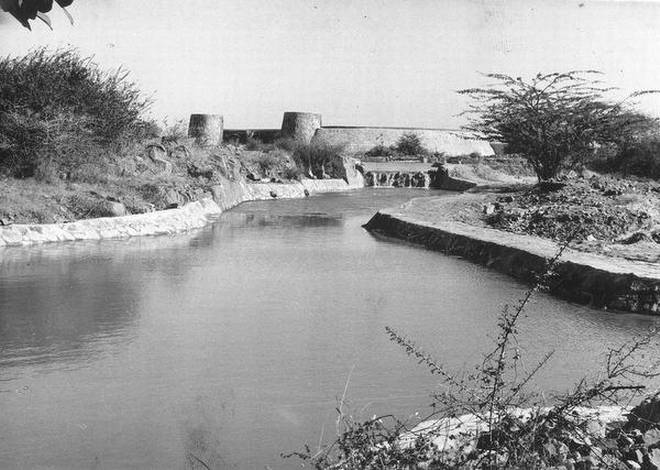
A GEOGRAPHICAL LANDMARK - A part of Delhi ridge along which Buddha Jayanti Park has come up | / Photo Credit: HINDU PHOTO ARCHIVES
A GEOGRAPHICAL LANDMARK – A part of Delhi ridge along which Buddha Jayanti Park has come up | / Photo Credit: HINDU PHOTO ARCHIVES

The news of a maulvi living in an alcove of the Ridge area makes one reflect on the legacy of Feroz Shah Tughlaq who respected men of divinity

Police accosting a maulvi in a forest bordering the Bodyguard Lines of the President’s Estate recently should cause little wonder. Ghazi Norool Hassan, say reports, was found living in an alcove of the Ridge area along with his son, claiming to be the caretaker of a mazar. This shrine is supposed to be very old and in keeping with the legacy of the reign of Feroz Shah Tughlaq. A large part of Delhi was forest area in the 14th Century and this helped the Emperor to indulge in his favourite past-time of hunting. Right from Mehrauli to North Delhi there is evidence of the Sultan’s hunting lodges where he sometimes rested at night too.

While in North Delhi he built an observatory, besides a hunting lodge, a Pir of his time also set up abode in the area and, after drawing a lot of devotees, disappeared one fine day, leaving his admirers shocked. The place has come to be known as Pir Ghaib. On the Ridge near Karol Bagh is the ruined gate of Bhuli Bhatiyari-ka-Mahal. Though Sir Syed Ahmad Khan thought it was a distortion of the name of a nobleman, Bhu Ali Bhatti, there are not many takers for this assertion.

If oral history is to be believed, Bhuli Bhatiyari was the comely daughter of a dhaba owner (Bhaitiyara) with whom the Sultan fell in love while passing that way. There is incidentally a Bhuri Bhatiyari-ki-Masjid (dedicated to a fair innkeeper) opposite the Khooni Darwaza. Another story says Feroz Shah actually fell in love with a gypsy girl for whom he built a palace as she had stolen his heart after offering him a drink of water on a hot summer day while the Sultan was out hunting.

Historian Ishwari Prasad says that Feroz Shah was a pious man, despite being an orthodox Sunni who ill-treated the Shias and non-Muslims. But at the same time he was generous and not fond of shedding blood, like his cousin and mentor Mohammed Bin Tughlaq, whom he had succeeded. Feroz was a great devotee of dervishes, many of whom flourished in his empire. One of them probably was the Pir Sahib of the place where the maulvi was found living secretly for 40 years. The forest area of which the shrine is a part, had many other dargahs which were demolished when New Delhi was built. Raisina Hill was also covered with a forest where wolves, leopards and hyenas were found. So a Forest Ranger’s bungalow was set up there. In later times, this bungalow became part of the Sacred Heart Cathedral and now after renovation, is known as Maria Bhawan.

Some old mosques still exist in nearby areas which may be dating back to Tughlaq times, for that matter the place where now stands Gurdwara Rakabganj was also a jungle once in which during Aurangzeb’s time lived a contractor, Lakhi Singh of the Mughal court. When Guru Tegh Bahadur was beheaded on the orders of Aurangzeb, there was a violent storm, taking advantage of which Lakhi Singh and his eight sons (who had come on horses and bullocks) took the body away, while the Guru’s head was taken away by a man named Jatha. Lakhi Singh drove all the way from Chandni Chowk to the forest where he lived and putting the body in his house set it on fire to avoid suspicion. Later Gurdwara Rakabganj came up there.

But to come back to Feroz Shah, the number of mosques and dargahs that were set up in his reign rivalled the inns, gardens and hospitals. He is said to have laid 1,200 gardens around Delhi and nearby areas in each of which a Sufi found refuge. The Sultan lived up to the age of 90, the longest living ruler of Delhi after Aurangzeb. He was so generous at heart that even while laying siege to a city he would often turn back on hearing the cries of women in distress and suffering from the pangs of hunger, along with their children. Even while on shikar, Feroz Shah would pay obeisance to saints who had set up abode in his empire. Many of them were helped by him to set up khankahs or hospices, and when they died the Sultan was always ready to build a mazar for them.

Once while visiting a dervish he was puzzled on seeing a goat and a tendua (panther) lying in the courtyard of the jungle abode. Seeing his amazement at the sight the dervish told him that in the royal darbar this may not be possible but in his khankah the goat and the panther could lie side by side, forgetting their enmity. When the British built what is now President’s Estate, they reclaimed a lot of forest land in which wild animals roamed. But still a lot of the area acquired by Lutyens and Baker was left as forest land. The mazar of which Noorol Hassan claims to be caretaker is only one among many hidden away from the public eye. Don’t be surprised if in course of time the mazar becomes a regular shrine with an annual Urs. But for this the history of the mazar and of the saint buried there would first have to be determined. Until then Ghazi Noorol Hassan can continue to be caretaker of the legacy bequeathed to him by Fakhruddin Ali Ahmed. The late President himself preferred to be buried outside the New Delhi Jama Masjid, opposite Parliament House, where once the heart-broken poet Hasrat Mohani of “Chupke, chupke aansoon bahana” fame had made his bachelor’s quarters.

source: http://www.thehindu.com / The Hindu / Home> Society> History & Culture / December 25th, 2016