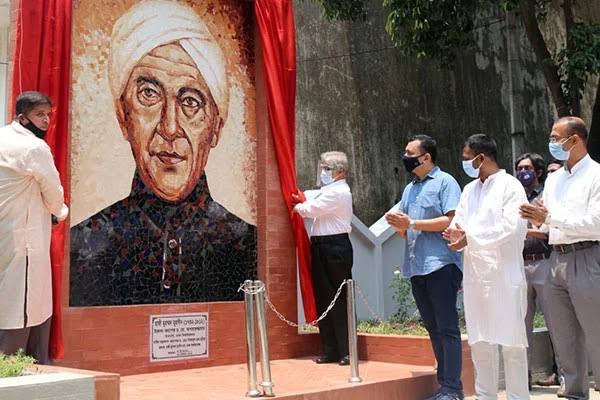
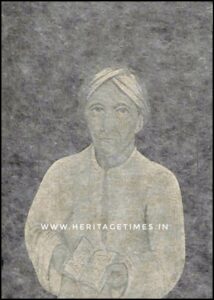
Haji Mahommed Mohsin, a philanthropist, with scholarly zeal and a heart so big it could feed the entire town’s impoverished, has been a name that got lost in the celebration of the great men of India. Born into the family of Agha Fazlullah, one of the wealthiest Persian merchants settled in Hooghly with his son Haji Fazlullah, Mahommed Mohsin had been the fortunate recipient of generational wealth and fortune.
His elder half-sister, daughter of Agha Motaher, Manu Jan Khanum was his closest companion and with her help, he maintained the Imambara built by their forefathers. He received his early education while being home-tutored in Arabic and Persian studies.
His tutor Agha Shirazi, a Persian himself, would narrate stories of his travels and adventures to them, which ignited an interest in travel in Mohsin as well. At the age of thirty-two, he departed Hooghly to travel and see what the world had to offer.
The unsung Philanthropist of India , Haji Mahommed Mohsin
His penmanship was highly revered and he also copied the Koran in his time of leisure. It is said that some of these copies were sold for a thousand rupees back then because of how ornately he had produced them. And he produced a total of 72 copies which were given to the poor. He was also a prominent figure during the Great Bengal famine of 1770 for helping the poor and suffering, significantly.
His travels took him to Arabia from where he went on a pilgrimage to Mecca and Madina, thereby conferring himself the title of ‘Haji’. He traveled through Arabia, Persia, Hindustan, and, Central Asia over the span of 27 years before finally coming back to Murshidabad (while briefly stopping in Lucknow) at the age of 60. However, he had to return to Hooghly eventually took care of his sister’s business and estates after Manu Jan Khanum’s beloved husband’s demise, the management of these estates had become cumbersome for her. Moreover, she relied only on Mohsin to take care of them respectfully.
After her death, she bequeathed her entire estate to Mohsin making him lavishly affluent at the age of 73. Mahommed Mohsin, however, led a simple life and only approved of his wealth in so far as he could help the poverty-stricken in as many ways as possible. In 1806, he signed a Deed of Trust conceding to use his entire income for charitable purposes. The Imambara in Hooghly still has a copy of this deed inscribed on one of its walls. He passed away at the age of eighty-two in 1812 buried close to his sister, Manu Jan Khanum.
However, it was because of Rajib Ali Khan and Shakir Ali Khan (two of Mohsin’s trusted) and later on their sons’ treachery that the trust fund put in place by Mohsin had been misused for personal purposes. Greed got the best of them and the nine shares, among which 7 shares were dedicated to religious and non-religious charities were also abused by these people. Eventually, the Government took this under its control and freed them from this mishandled management.
In 1836, the Hooghly College, now known as the Hooghly Mohsin College (changed in its centenary year) was inaugurated with the surplus funds in the hands of the government. The college was affiliated with the University of Calcutta and was built originally by General Perron on the banks of Hooghly. It still stands as an underappreciated yet beautiful and pristine college dedicated to an under-acknowledged man of iron.
source: http://www.heritagetimes.in / Heritage Times / Home> Education / by Kasturi Ghosh / November 17th, 2022
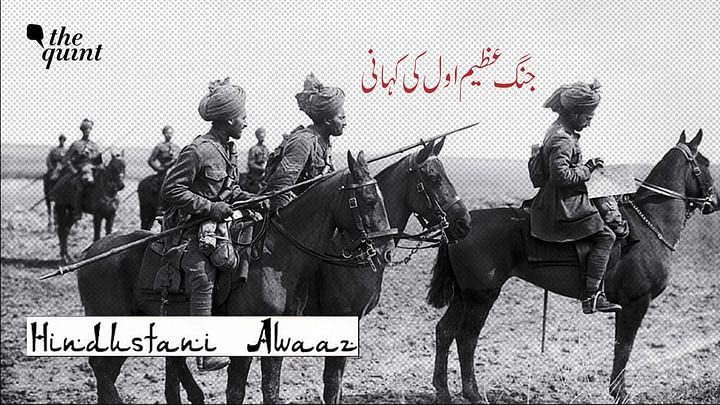
The four years of the World War 1 saw the service of 1.3 million Indians, of whom 74,000 never made it back home.
The First World War , or the Great War as it is also called, raged across Europe and several war arenas scattered across the world from 28 July 1914 to 11 November 1918. These four years saw the service of 1.3 million Indians, of whom 74,000 never made it back home. For their families, the war was something they couldn’t quite understand.
Given the large-scale Indian involvement in a war that the majority of Indians could not fully comprehend, we shall once again look into the mirror of Urud to see how the poet viewed the momentous years of the Jang-e Azeem as the Great War came to be called in Urdu.
Several poets, lost in the veils of time and virtually unknown today, made interventions as did the more famous ones who continue to be well known though possibly not in the context of what they had to say about World War I.
Urdu’s Rendition of the Greatest Human Tragedy
Presented below is a sampling of the socially-conscious, politically-aware message of the poets of the times. Not all of these poets are well-known today nor is their poetry of a high caliber yet fragments of their work have been included here simply to illustrate how the poet had his finger to the pulse of his age and circumstance.
Let us begin with Sibli Nomani and his wryly mocking Jang-e Europeaur Hindustani that deserves to be quoted in full:
Ek German ne mujh se kaha az rah-e ghuroor
‘Asaan nahi hai fatah to dushwar bhi nahin
Bartania ki fauj hai dus lakh se bhi kum
Aur iss pe lutf yeh hai ke tayyar bhi nahin
Baquii raha France to woh rind-e lam yazal
Aain shanaas-e shewa-e paikaar bhi nahin’
Maine kaha ghalat hai tera dawa-e ghuroor
Diwana to nahi hai tu hoshiyar bhi nahin
Hum log ahl-e Hind hain German se dus guneh
Tujhko tameez-e andak-o bisiar bhi nahin
Sunta raha woh ghaur se mera kalaam aur
Phir woh kaha jo laiq-e izhaar bhi nahin
‘Iss saadgi pe kaun na mar jaaye ai Khuda
Larhte hain aur haath mein talwar bhi nahin!’
(Consumed with pride, a German said to me:
‘Victory is not easy but it isn’t impossible either
The army of Britannia is less than ten lakh
And not even prepared on top of that
As for France, they are a bunch of drunks
And not even familiar with the art of warfare’
I said your arrogant claim is all wrong
If not mad you are certainly not wise
We the people of Hind are ten times the Germans
Cleary you cannot tell big from small
He listened carefully to what I had to say
Then he said something that can’t can’t be described
‘By God, anyone will lay down their life for such simplicity
You are willing to fight but without even a sword in your hand!’)
That the Urdu poet was not content with mere high-flying rhetoric and was rooted in and aware of immediate contemporary realities, becomes evident when Brij Narain Chakbast declares in his Watan ka Raag (‘The Song of the Homeland’):
Zamin Hind ki rutba mein arsh-e-aala hai
Yeh Home Rule ki ummid ka ujala hai
Mrs Besant ne is aarzu ko paala hai
Faqir qaum ke hain aur ye raag maala hai
Talab fuzool hai kante ki phool ke badle
Na lein bahisht bhi hum Home Rule ke badle
(The land of Hind is higher in rank than the highest skies
All because of the light of hope brought forth by Home Rule
This hope has been nurtured by Mrs Besant
I am a mendicant of this land and this is my song
It’s futile to wish for the thorn instead of the flower
We shall not accept even paradise instead of Home Rule)
Poems Charged With the Spirit of Revolution
Similarly, Hasrat Mohani, in a poem called Montagu Reforms, is scathing about the so-called reforms that were given as SOPs to gullible Indians during the war years, which were mere kaagaz ke phool (paper flowers) with no khushboo (fragrance) even for namesake. The poem ends with a fervent plea that the people of Hind should not be taken in by the sorcery of the reforms.
Ai Hindi saada dil khabardar
Hargiz na chale tujh pe jadu
ya paayega khaak phir jab inse
Iss waqt bhi kuchh na le saka tu
(O simple people of Hind beware
Don’t let this spell work on you
If you couldn’t couldn’t take anything from them now
You’re not likely to get anything at all)
Josh Malihabadi who acquired his moniker of the shair-e- inquilab or the ‘revolutionary poet’ during the war period, talks with vim and vigour of the revolution that is nigh, a revolution that will shake the foundations of the British empire in his Shikast-e Zindaan ka Khwaab (‘The Dream of a Defeated Prison’:
Kya Hind ka zindaan kaanp raha hai guunj rahi hain takbiren
Uktae hain shayad kuchh qaidi aur torh rahe hain zanjiren
Divaron ke niche aa aa kar yuun jama hue hain zindani
(How the prison of Hind is trembling and the cries of God’s greatness are echoing
Perhaps some prisoners have got fed up and are breaking their chains
The prisoners have gathered beneath the walls of the prisons)
Satire, Pain and Passion Punctuate These Poems
The ever-doubting, satirical voice of Akbar Allahabadi— a long- time critic of colonial rule and a newfound admirer of Gandhi, shows us the great inescapable link between commerce and empire that Tagore too had alluded to:
Cheezein woh hain jo banein Europe mein
Baat woh hai jo Pioneer mein chhapey…
Europe mein hai jo jung ki quwwat barhi huwi
Lekin fuzoon hai uss se tijarat barhi huwi
Mumkin nahin laga sakein woh tope har jagah
Dekho magar Pears ka hai soap har jagah
(Real goods are those that are made in Europe
Real matter is that which is printed in the Pioneer…
Though Europe has great capability to do war
Greater still is her power to do business
They cannot install a canon everywhere
But the soap made by Pears is everywhere)
The great visionary poet Iqbal, who is at his most active, most powerful during these years, does not make direct references to actual events in the war arena;
nevertheless, he is asking Indians to be careful, to heed the signs in Tasveer-e Dard (‘A Picture of Pain’):
Watan ki fikr kar nadan musibat aane waali hai
Tiri barbadiyon ke mashvare hain asmanon mein
(Worry for your homeland, O innocents, trouble is brewing
The portents of disaster awaiting you are written in the skies.)
Adopting a fake admiring tone, Ahmaq Phaphoondvi seems to be praising the sharpness of the British brain in Angrezi Zehn ki ki Tezi (‘The Cleverness of the English Mind’) when he’s actually warning his readers of the perils of being divided while the British lord over them.
Kis tarah bapa hoon hangama aapas mein ho kyun kar khunaraizi
Hai khatam unhein schemon main angrezi zehn ki sab tezi
Ye qatl-o khoon ye jung-o jadal, ye zor-o sitam ye bajuz-o hasad
Baquii hii raheinge mulk mein sab, baqui hai agar raj angrezi
(Look at the turmoil and the bloodshed among our people
The cleverness of the English mind is used up in all such schemes
This murder ’n mayhem, wars ’n battles, cruelties ’n malice
The country’s garden is barren, with nothing but dust and desolation)
Towards Freedom and Fervour..
Zafar Ali Khan sounds an early, and as it turns out in the face of the British going back on their promise of self-governance, entirely premature bugle of freedom. While warning his fellow Indians to change with the changing winds that are blowing across the country as the war drags to an end, he’s also pointing our attention to the ‘Toadies’, a dreaded word for the subservient Indians who will gladly accept any crumbs by way of reforms in his poem Azaadi ka Bigul (‘The Bugle of Freedom’):
Bartania ki meiz se kuchh reze gire hain
Ai toadiyon chunne tum innhe peet ke bal jao
(Some crumbs have fallen from the table of Britannia
O Toadies, go crawling on your bellies to pick them)
In the end, there’s Agha Hashar Kashmiri who, in a sarcastic ode to Europe called Shukriya Europe, thanks it for turning the world into a matamkhana (mourning chamber), and for having successfully transformed the east into an example of hell.
Utth raha hai shor gham khakistar paamaal se
Keh raha hai Asia ro kar zaban-e haal se
Bar mazar-e ma ghariban ne chiraghe ne gule
Ne pare parwane sozo ne sada-e bulbule
(A shout is rising from the dust of the downtrodden
Asia is crying out and telling the world at large
On my poor grave there are neither lamps nor flowers
And not the wing of the moth or the sad song of the nightingale.)
(Rakhshanda Jalil is a writer, translator and literary historian. She writes on literature, culture and society. She runs Hindustani Awaaz, an organisation devoted to the popularisation of Urdu literature. She tweets at @RakshandaJalil
This is an opinion piece and the views expressed above are the author’s own. The Quint neither endorses nor is responsible for the same.)
source: http://www.thequint.com / The Quint / Home> Voices> Opinion / by Rakshanda Jalil / November 11th, 2022
‘People feel it is lucky to have tea here. There is something charming, something random about this place which makes it cool,’ said Ritu, a student.
People eat at a vegetarian restaurant ‘Lucky Tea Stall’ built on a graveyard, in Ahmedabad. (Photo | PTI)
Ahmedabad:
To the outsider, the idea of an eatery built on a Muslim graveyard, run by a Muslim, serving pure vegetarian food and frequented by all communities seems an anomaly.
Not so for its customers though, many who believe that Lucky is actually lucky for them.
Like Sagar Bhatt, a devout Hindu and a resident of Dariapur, who makes it a point to stop by for a cuppa every morning after visiting the temple.
“It feels auspicious to have tea at this place. There is something special about this place,” Bhatt, sporting a red ’tilak’ on his forehead, told PTI while pointing to a grave.
On one wall is a painting by M F Husain, showing an oasis, camels and a ‘kalma’ – ‘La Ilaha Illallah Muhammadur Rasul Allah’ (There is only one God and he is Allah, and Muhammad is his prophet).
“It is the only tea shop boasting a Husain painting,” said a proud Abdul Rajak Mansury, who operates the tea stall.
Every night, the painting by one of India’s most valued artists is taken off the wall and kept away safely.
The six-decade shop in what is essentially a Muslim-dominated area is a common person’s eating joint, he said.
As the campaign hots up, the tea stall in Old Ahmedabad’s Jamalpur-Khadia is also an oasis of calm, far removed from the din and aggression of the Gujarat assembly election being held in two phases on December 1 and 5.
While the Congress has fielded Imran Khedawala, its sitting MLA, the Aam Aadmi Party has given a ticket to Haroon Bhai Nagori and the BJP is fielding a Hindu candidate, Bhushan Bhatt.
The AIMIM is also contesting the seat with Sabir Kabliwala in the fray.
Talk of ‘dhandha’ (business) supersedes ‘dharam’ (religion) at Lucky – so popular that the traffic light point is also called Lucky Chowk.
It is at the centre of several colleges and offices, and a big hit with students and office-goers.
According to Bhatt, a small-time construction contractor, economic issues and issues impacting his business matter more than religious sentiments.
“Sir, I am following my religion but from the government, I expect to further improve the economy so that my business flourishes. For us Gujaratis Dhandha sab se pehle (business comes first),” he said.
On the menu is the perennial favourite ‘bun maska’ and a range of Chinese and Indian dishes. No eggs are used.
College students Ritu and Tanya said the place is cool. “People feel it is lucky to have tea here. There is something charming, something random about this place which makes it cool,” said Ritu, a third year commerce student.
The first-time voter said better jobs and better business environment are bigger issues for her as a student and daughter of a businessman.
Tanya, studying chartered accountancy, agreed. “The business environment in maru Gujarat (my Gujarat) is its USP, it should not be get disturbed at any cost.”
Lucky started on a handcart under a neem tree, and expanded and developed around the graveyard as business grew, said Mansury.
The 26 graves have grills around them.
The staff clean them everyday and place fresh flowers on them.
Some people put ‘chadars’ on the graves seeking fulfilment of their wishes.
Representing the best of a syncretic India, may many more Luckys flourish and thrive, hope its customers.
source: http://www.newindianexpress.com / The New Indian Express / Home> Nation / by PTI / November 23rd, 2022
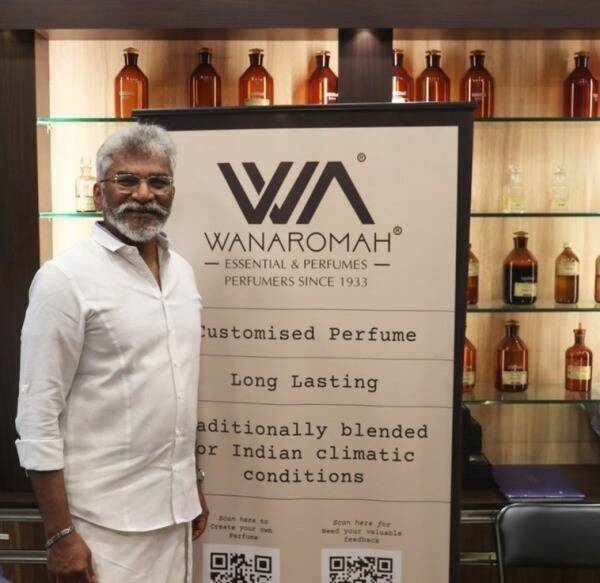
Wanaromah Essential and Perfumes at RK Salai in Chennai has been producing customised perfumes since 1933.
Mohamed Sadik, 56, the proprietor of Wanaromah Essential and Perfumes (Express)
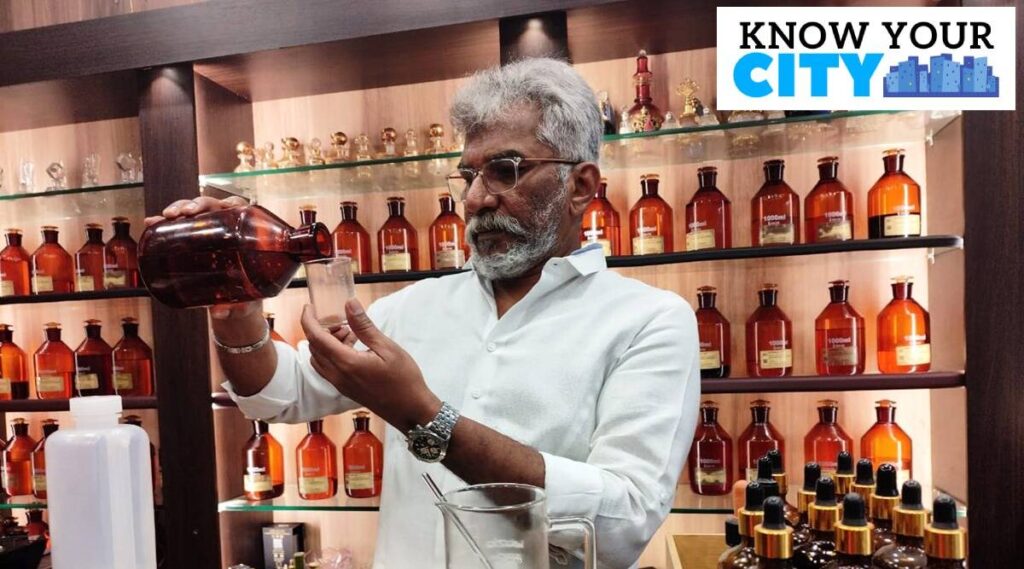
“You can figure out people with the kind of perfume they use,” says Mohamed Sadik, 56, the proprietor of Wanaromah Essential and Perfumes at RK Salai in Chennai, which has been producing customised perfumes since 1933.
“My father Mohamed Hanifa started Wanaromah when he was 18. He was a widely-travelled man interested in aromatic perfumes and so he started this brand. He aimed to make a product here and sell them overseas. He made his first product in his village at Vadakarai, in Thanjavur district. We are a family of five, I am the youngest of five brothers. After completing my graduation, I took over the business here. My brothers are taking care of it overseas. I am the second generation in my family to take care of the business and now my son is also involved and I am helping him in every possible way,” Mohamed says.
Just like there is a difference between wearing a readymade shirt and wearing one stitched by a tailor as per your desire, there is a difference between standard and customised perfumes, according to him. (Express)
Mohamed says people usually associate perfumes with foreign brands and even in the local market, they try to buy those. He terms it as an “infatuation” towards foreign products.
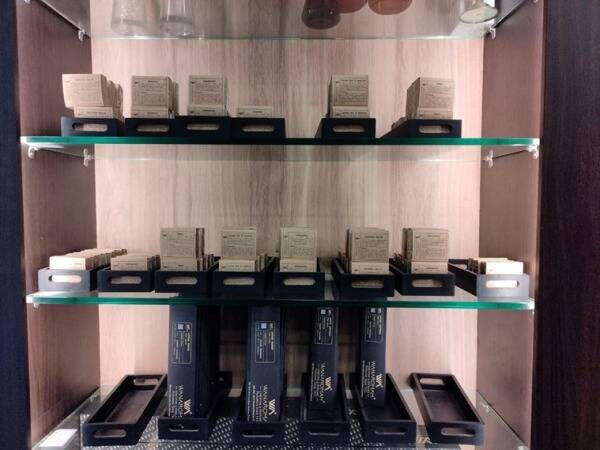
Apart from perfumes, Wanaromah also sells incense sticks and handmade body bars. (Express)
“We can make a better product than any foreign brand. In perfumes, there are two types, one is natural and the other is synthetic. The former has got its natural odour, we cannot bring a fancy fragrance on that. Earlier, when we started here, we were making perfumes for other industries and later we set up our shop here. We started creating fragrances and we work for other companies as well.
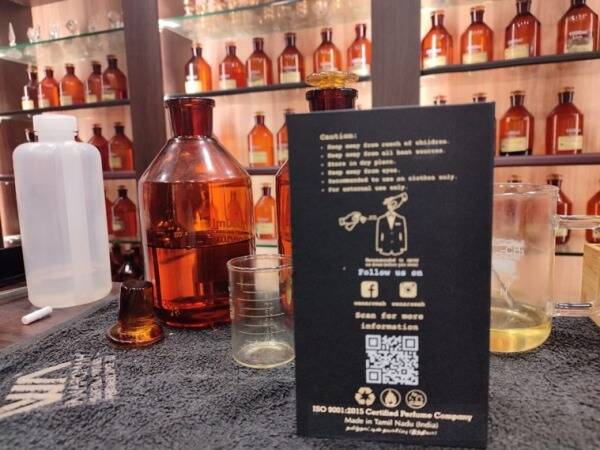
Wanaromah’s speciality is that it is tailor-made for each individual. Perfume plays a major role based on your region, and what kind of work you do among other factors. Whenever customers visit our shop, we ask them a few questions and suggest them a perfume as per their lifestyle,” says Mohamed.
“Whatever you eat, you get that in your body odour. Suppose you work outdoors, naturally, you are going to be in a polluted atmosphere and your body odour would not be pleasant so we blend a perfume that would last longer and provide a sense of calmness amid your hectic schedule,” he says.
Mohamed says all the perfumes they blend are to be used on apparels and not directly on the skin. “If you are in a cold region, the perfume lasts longer and in hot places like Chennai, the perfume has to be a bit stronger. So if someone buys something overseas and uses it here, they are not going to get the proper result because the climatic conditions differ.”
Mohamed says people ask their friends and family abroad to bring two things compulsorily; one is chocolate and the other is perfume. (Express)
The proprietor notes that perfumes are made up of more than 25 fragrance families. After analysing various factors of several regions, they decided to blend their perfumes with five fragrance families.
These are ‘oriental/woody’, which is a blend of wood, amber, tobacco and animalic, and is widely used in India as well as West Asian countries. The ‘fresh/aqua’ fragrance has clean bright scents with citric and aquatic notes while ‘floral’ is for spring and evenings. Then there is ‘sweet/fruit’ which is a blend of wild berries and exotic fruit fragrances. Wanaromah’s ‘spicy’ fragrance is made up of pepper, fresh ginger and cinnamon.
“Each fragrance has got its properties. If you are a sports personality, you can use a citrus note, you can use them when you are on a holiday as well. If you are going for a function, you can use oriental notes. Floral and sweet notes are preferred by women,” he says.
Mohamed adds preferences differ by gender and age. “Teenagers prefer berry notes…. If you are in an office, your perfume should be subtle and nice, so we blend it accordingly… For festivals we should be using a different note,” he says.Don’t miss
Mohamed notes that perfume is not just another ordinary product but it is linked intrinsically to our life. “You can think of your loved ones even in their absence by using a perfume which they had used or a perfume which you used that was liked by them. Perfume plays a major role in our life,” he says.
Mentioning an incident that happened while he was travelling abroad, Mohammad says in an area where a thick labour population was located, he noticed the smell of a jasmine fragrant perfume. While he enquired, the labourers told him that these were perfumes used by their wives and since they would be able to go back to their hometowns only after the end of their contract period and they used that fragrance to remember their wives.
Mohamed, curiosly, mentions that several people approach him to suggest a perfume that would attract the opposite gender.
“Perfume plays a major role in intimacy. It is like a time machine which helps you to remember beautiful moments that happened in your life. I had several requests from customers to blend a perfume similar to the one their father or mother had used so that they can feel them in their home even in their absence,” he adds.
Mohamed says people ask their friends and family abroad to bring two things compulsorily; one is chocolate and the other is perfume. Wanaromah is proud that it is making people take their favourite perfume abroad.
“A product made in India, in Tamil Nadu, is going global and I can’t be more proud than that. ‘Made in Tamil Nadu for the world’ was my father’s motto and we are going to realise it,” he says.
Mohamed also stresses the importance of using more Indian products that will boost the economy. He claims people nowadays are attracted more towards foreign brands without realising that Indians were the pioneers in producing aromatic fragrances. He says their attempt to spread more awareness about local products is an act of reviving history.
At Wanaromah, the price of the perfumes ranges from Rs 2,000 for 130 millilitres up to lakhs of rupees. When asked if they have come across requests to lower their price, Mohamed says there is no space for bargaining in their store as it spoils the time of both parties. Also, he doesn’t believe in franchising his business.
“Quality is everything to me. The business is very personally involved with the family members, and hence even in our stores in Indonesia and Singapore, my cousins are taking care of them. Secondly, we can make a perfume with all these ingredients and sell them at a cheaper price but we know when we make that we are cheating our customers, and I will never do that.
We handpick the best quality raw materials and prepare the pure blend. We don’t degrade our concentration level. When the customers use them and tell us that they have never experienced this kind of a product, it sort of gives us satisfaction which cannot be achieved by anything. So I tell my customers that I offer you the best service and the product price range will be accordingly,” he says.
Apart from perfumes, Wanaromah also sells incense sticks and handmade body bars.
Mohamed says he is thinking about expanding the business further but it would take some time.
source: http://www.indianexpress.com / The Indian Express / Home> Cities> Chennai> Know Your City / by Janardhan Koushik / Chennai – November 19th, 2022
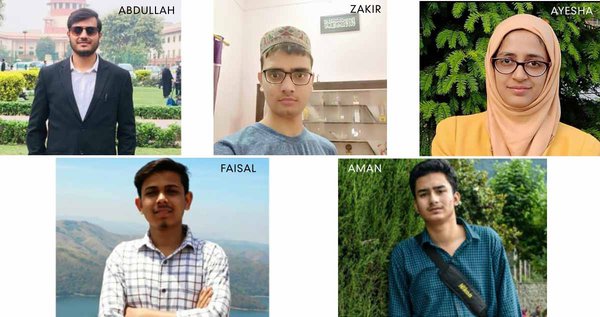
An unintended but welcome consequence of the lockdown to contain the coronavirus has been improved air quality stated the presentation of ALTAIR, a team of Aligarh Muslim University (AMU) students led by MBBS first-year student, Ayesha Samdani, which won the ‘The Judges Choice Award’ in the International NASA Space App Challenge-2020 for presenting a solution in response to the NASA’s Challenge ‘A One Health Approach’.
Ayesha and team members, Mohd Zakir Husain (MBBS), Aman Ahmad Khan (MBBS), Faisal Jamil (B.Tech) and Abdullah Samdani (BA LLB) gave an analysis on air quality of the pre and post lockdown periods in the Indo Gangetic region of Northern India. Their study gave details about how an improvement in the air quality benefited the health of people.
For the presentation, the ALTAIR members also coded an Air Quality Index (AQI) Calculator to measure AQI of a certain region, which is helpful in giving health and cautionary statements and providing guidance to common people on pollution related health issues.
Congratulating the students on the achievement, Prof Shahid Ali Siddiqui, Principal, Jawaharlal Nehru Medical College (JNMC) of the university and Prof Shakeel Samdani, Dean, Faculty of Law said that the work of these AMU students is formative as it provides a clear comparison of average concentration levels during the months before the lockdown and the time period during the lockdown restrictions, showing a reduction in SO2 level.
The event was judged by ISRO and NASA scientists including Tazeen Siddiqui of NASA.
source: http://www.milligazette.com / The Milli Gazette / Home> News> Community News / by The Milli Gazette Online / October 06th, 2020
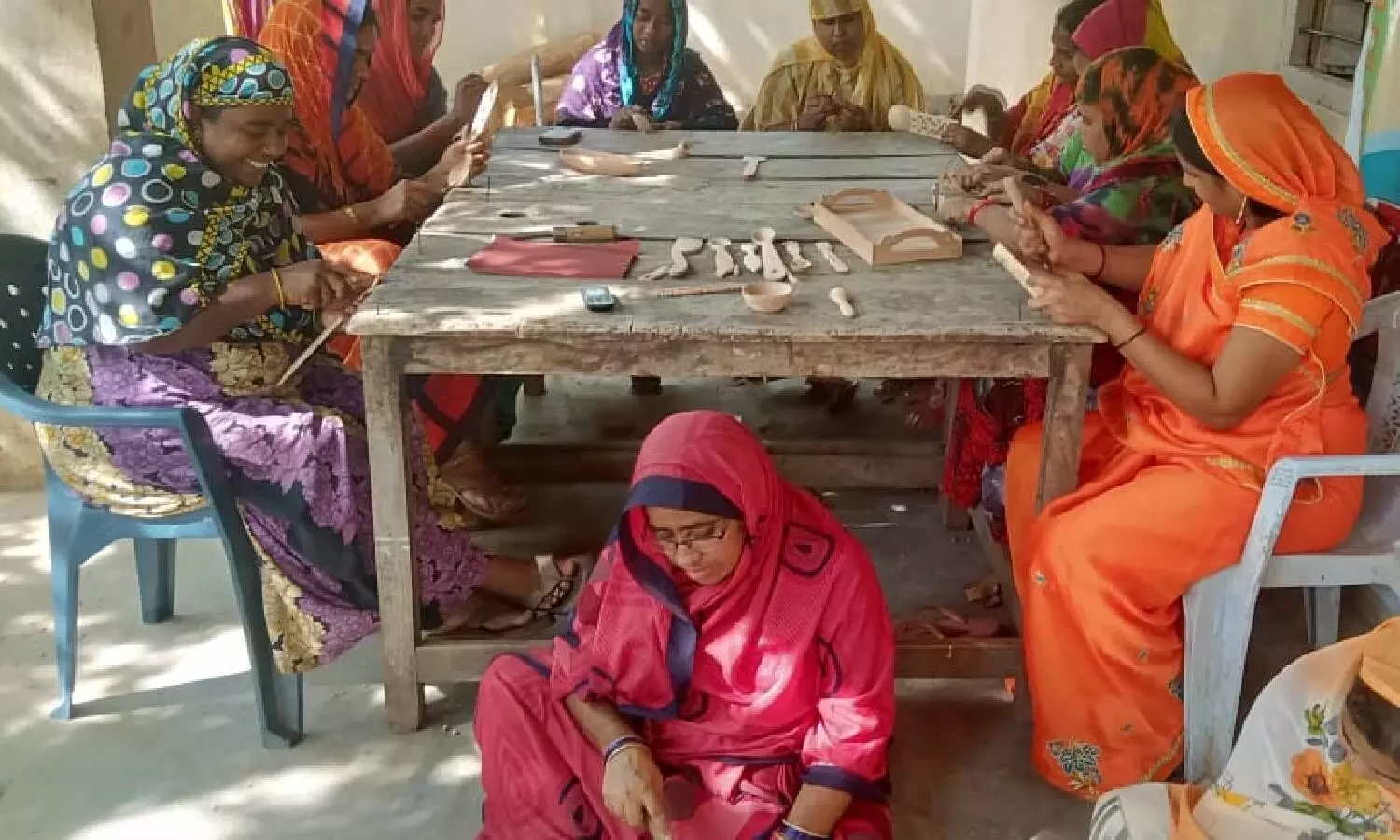
A woman has made her village proud by reviving the dying art of Wooden Cutlery of Udayagiri in Nellore District of Andhra Pradesh.
Inheriting the craft from her father, Shaik Gousia Begum has trained 400 artisans in woodware. She has now been selected for YSR Award 2022.
Why is Udayagiri famous?
Situated 100 km from Nellore district headquarters, Udayagiri is known for its intricate wooden cutlery, soap cases, and bowls. More than a hundred years ago Sheikh Abdul Bashir was impressed by the softwood cutlery art of Dadasahib, a carpenter. Sheikh Abdul learnt the art and sold his products locally. He soon began improvising with intricate designs and carving. His cutlery caught the eye of tourists visiting Udayagiri and the Handicraft Department, which subsequently began training artisans, particularly women in the craft.
Shaik Gousiya Begum who is the third generation artisan, took up this job after her father fell sick. She trained many craftsmen. Later she also trained her son Zakeer Husain who is now a fourth-generation artisan.
“After my father fell sick in 2005, I took up the profession and started teaching people. From a batch of 5-6 members, now we have 400 artisans who work in the cluster at the village. Everyone is from a poor background. We used to make products and sell them in other states,” said Shaik Gousiya Begum.
She also received the State Award in 2005.
Her son takes it to social media
Begum’s son always wanted to become a police constable. But she wanted him to pursue business and keep the tradition alive. Zakeer Husain who learnt the work from his grandfather also trained other women. However, as time passed, Udayagiri Cutlery saw a downfall due to a lack of marketing. It was Hussain who promoted the products on social media platforms. “Now, my son is responsible for sales and promotion. We send our products to Lepakshi stalls in Hyderabad, and Andhra Pradesh. My son also travels to other countries to sell products in exhibitions”, said Begum.
Much Demand
Begam says their wood cutlery has a great demand. People book their products online. They have designed 150 different products. These include wooden spoons. forks, salad bowls, trays, and combs influenced by Persian motifs and patterns, earrings, toys, lamps, and many more.
How do they make it?
Wood cutlery takes a lot of time and patience for perfection. The local wood of Devadari, Nardi, and Khalidi is sourced from Durgampalli hills and dried for ten days. The wood is then soaked in water for 2 days, and then dried again in the shade for 3 days. The process of making cutlery then begins and takes time depending on the design.
Take it around the globe:
“I want to take this art form to other countries and make my grandfather proud. Previously, my grandfather used to make and sell locally. But later, I started to run the business on social media and set up stalls in every exhibition hosted by the government”, said Zakeer Hussain.
GI tag
Wood cutlery of Udayagiri got its significance when the village was granted Geographical Indications (GI) tag for being the only region with such a craft form in 2016. Then they started selling out at famous exhibitions such as Shilpararnam in Hyderabad. The women later set up the Udayagiri Cutlery Mutually-Aided Cooperative Society.
Need for development
Tucked away in a quaint corner of the Nellore district, the artisans said there is a need for the development of their cluster. They have been regularly asking the government for better space that can accommodate 400 workers.
. “Udayagiri has a great future and many prospective buyers. However, we need better manpower and machinery. Currently, 90% of the work has to be done by hand. Schemes and opportunities for training more people on this craft form are what we need” said Hussain.
source: http://www.m.dailyhunt.in / Daily Hunt / Home / NewsMeter / November 2022
Father has won silver and daughter brought home Gold.
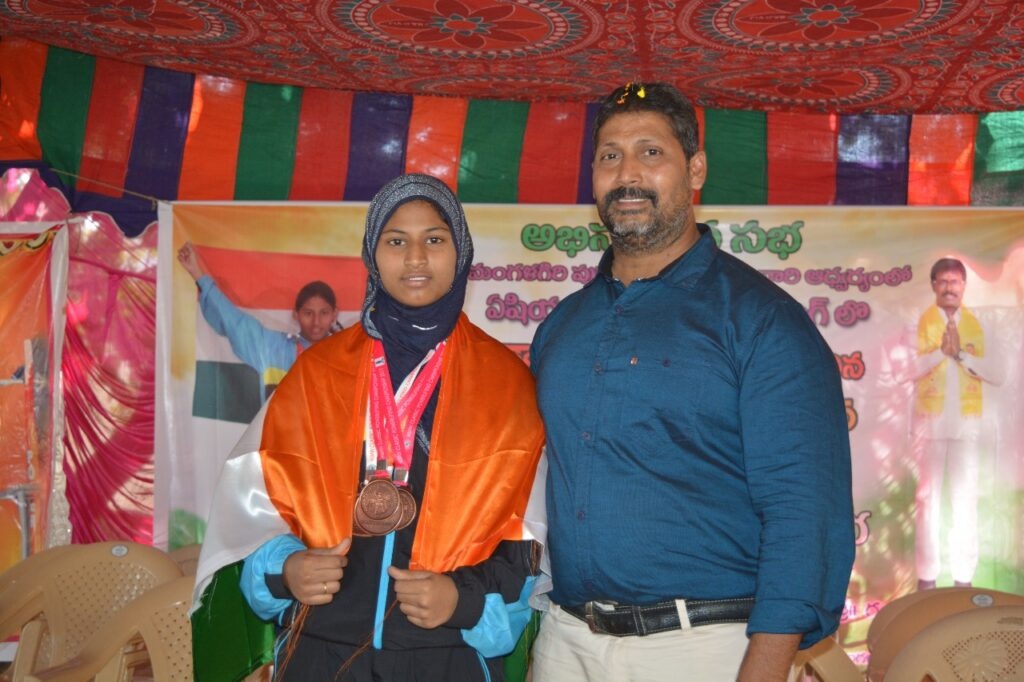
Wondering what I’m talking about? It’s time to take a letter-travel to Mangalagiri in the southern Indian state of Andhra Pradesh to know about an international powerlifting champion, Saadiya Almas, who won gold in the Asian Powerlifting Championship held in Istanbul recently.
Almas has made her father, Sheikh Sandhaani, who won silver in the Asian Benchpress Championship held in Jamshedpur in 2004, extremely proud.
By lifting 167.5kg in the Squad category, 70kg in the Benchpress and 157.5kg in deadlift category which summed up in total to 395kg, Almas bagged an overall Gold.
Almas participated in the championships with the help of Rotary Club of Hyderabad Deccan who offered her a financial help of Rs. 2 lakh to travel to Turkey. This KL University student who is pursuing her degree currently is also hailed as Strong Girl of India.
Earlier, this girl of muscle has won bronze in the Asian Powerlifting Championship in the sub-junior category by lifting an overall weight of 242.5kg.
We wish Saadiya great success in all her future championships and may her growth represent her town and state on the world map.
source: http://www.bookofachievers.com / Book of Achievers / Home> Snippets> Story / by Raghu K (headline edited) / January 26th, 2022
Mohammad Faiz from Jodhpur won the second season of Superstar Singer. He took home Rs 15 lakh.
Mohammad Faiz with captain Arunita Kinjal.
Sony Entertainment Television’s kids singing reality show, Superstar Singer 2 has finally found this season’s winner! With judges Himesh Reshammiya, Alka Yagnik and Javed Ali, the contestants truly came a long way. Making it to the top six were Mohammad Faiz, Mani, Pranjal Biswas, Aryananda R Babu, Rituraj and Sayisha Gupta.
Mohammad Faiz from Jodhpur was declared as the season winner and lifted the coveted Superstar Singer 2 trophy. Along with the trophy, the 14-year-old was also awarded with a cheque of Rs 15 lakh.
Mohammad Faiz Wins SuperStar Singer 2
Aptly titled as the Future Voice of Romance by Akshay Kumar and other B-town celebrities, Mohammad Faiz brought alive his passion for music on stage through his mesmerising performances. With his first performance on the song Khamoshiyan in the audition round, Faiz found a special place in the hearts of the judges and audience alike. From there on, there was no looking back for Faiz as he wowed the judges, audience and all the celebrity guest with his magical voice. He was given the title of India’s young singing sensation by judge Himesh Reshammiya who also gave him an opportunity with his first ever singing break – Merre Liye. Not only this, but memorable moments were when eminent personalities expressed their wish of getting Faiz to sing and work for them one day as a playback singer.
What did Mohammad Faiz Say ?
Mohammad Faiz said, “Being on Superstar Singer 2 is an achievement by itself. When I gave the auditions, never in my wildest dreams did I ever imagine that I will not only be in the TOP 6 but also win the coveted trophy. I am unable to describe this feeling in words, it’s so surreal. It still feels like a dream to me. I would like to thank all the viewers and my fans i.e., Faizians who have showered me with so much of love and votes. I also want to extend my gratitude to everyone who has made my journey on Superstar Singer 2 truly special, especially all the judges and my captain Arunita di, who has been my pillar of strength, believed in me and guided me to make this dream of mine come true. The show has been an enriching experience throughout and has given me friendships that I will treasure forever. I am extremely delighted to have received this opportunity to showcase my talent.”
Arunita Kanjilal, Captain on the Show reacts
Arunita Kanjilal, captain on Superstar Singer 2 said, “Superstar Singer 2 has been the most wonderful experiences of my life that I will cherish forever. Not only did I get to guide some of the most talented young kids as a captain but also got to learn so much from them. I am truly grateful for this journey. Also, I am extremely elated to see our Rockstar Faiz lift the trophy and be crowned as the winner of Superstar Singer 2. This is a huge honour for both of us. I am also very grateful to everyone who has supported and showered their love on Faiz; making him win the coveted title of this season’s ‘Singing Ka Kal.’ I am super proud of Faiz and all the other contestants who have amazed everybody with their melodious voices. I wish all of them lots of love, luck and prosperity for a brighter future.”
What do the Judges say ?
Judge Alka Yagnik said, “Superstar Singer 2 brought forth some of the most bright and young extraordinary singing talent. Seeing them mature, grow and flourish throughout the season has been an experience. Everyone from the top 6 contestants have been outstanding. Faiz is a well-deserved winner, his graph on the show has been so good. He has been one of the best singers the stage has witnessed, and his determination towards music and zeal to win has made him win the coveted title of Superstar Singer. This is just a beautiful beginning of his career and I believe he will go a long way. My wishes and prayers are always with him. May he soar high always in his future endeavors.”
Judge Himesh Reshammiya added, “Extraordinary this is exactly how I would like to describe Superstar Singer 2! All the contestants on the show have marvelled us with such outstanding performances week on week, making it a tough decision for us and the audience to choose the next ‘Singing Ka Kal’. Faiz has been a complete rockstar right from the beginning and has consistently given his best. I am very proud of Faiz, he has always had this spark in him, and his incredible journey on this show speaks for it. My heartiest congratulations to Faiz who has emerged as the winner of Superstar Singer 2. I personally cannot wait to see the success that will follow his way.”
Judge Javed Ali concluded, “Superstar Singer 2 has been a show that has made a special place in the hearts of the audience with the extraordinary singing talent of the ‘Best Bache Ever’. Watching them perform week after week was so heart-warming; Their magical voices deeply touched all of us. And, I am sure all of them will go a long way. I have personally received so many messages and calls praising the kids of the show. The stage of Superstar Singer 2 has given birth to some of the most impeccable talents and has also given some of the most iconic performances that will forever be cherished in the reality show’s hall of fame. I am extremely proud of all the contestants, especially Faiz who is a very well-deserved winner, and I wish him all the luck for a brighter and successful future. Kudos to the whole team of Superstar Singer 2.”
source: http://www.indiatoday.in / India Today / Home> News> Television> Reality TV / by Grace Cyril / Mumbai, September 04th, 2022
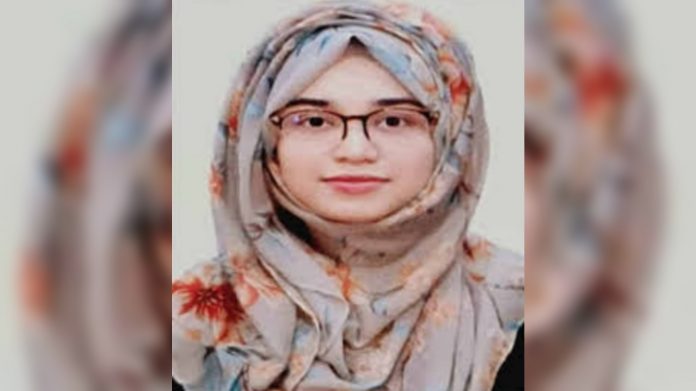
Success comes to those who believe in hard work and dedication and this sentence fits the case of Dr Mariam Afifa Ansari, the youngest female neurosurgeon in the Muslim community in India, as per the state president of MSO Maharashtra.
Mariam Afifa Ansari always dreamed of becoming a doctor, and this dream of hers became a reality when she secured 137th rank in the All India NEET exam in 2020.
Mariam said, “Now I have become Dr Afifa from Miss Afifa and my dream of wearing a white coat and examining patients with a stethoscope has come true”.
Since her school days, she has always been a top performer. Mariam completed her primary education in an Urdu medium school in Malagao.
Having been educated in Urdu medium schools till the 10th class, Mariam has left many amazed with her consistent successes. Mariam took her primary education from an Urdu medium school in Malegaon. After that, she came to Hyderabad.
In Hyderabad, she studied till 10th at Rajkumari Durushevar Girls High School, where she won a gold medal in class 10th. Mariam did MBBS from Osmania Medical College and then obtained a master’s degree in general surgery from the same college, said the state president of MSO Maharashtra.
Mariam five gold medals during his MBBS course. After completing her course in 2017, she managed to get free admission for a master’s course in general surgery at the same college.
In 2019, she completed her postgraduate degree, MRCS from the Royal College of Surgeons, England. In 2020, she did the Diploma of National Board course.
It is a special postgraduate degree awarded to specialist doctors in India. After scoring high in the 2020 NEET SS exam, she was granted free admission to MCh at Osmania Medical College.
Mariam’s continuous hard work has helped her cross every hurdle on the path to success. Dr Mariam Afifa Ansari is an inspiration for the young generation in India.
She added also, “My success is a gift from Allah and now a responsibility,”.
Mariam said that she would try to serve the community through her profession. Giving a message to Muslim girls, she said, “Don’t give up, never let anyone tell you that you can’t do it, prove them wrong, by getting it.”
Mariam’s mother is a single mother and a teacher. She is proud of her daughter. Apart from studies, Mariam also excels in painting, calligraphy and Islamic teaching.
source: http://www.muslimmirror.com / Muslim Mirror / Home> Indian Muslim> Women / by Muslim Mirror Desk / November 21st, 2022
The literary work is the fourth translation and the first Urdu work to win the JCB Prize
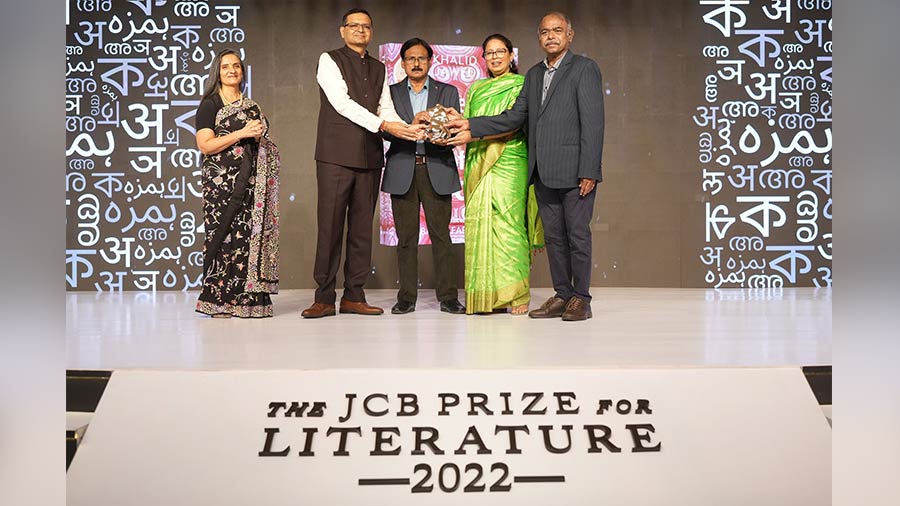
(Left to right) Mita Kapur, literary director, The JCB Prize for Literature; Sunil Khurana, chief operating officer, JCB India; winning author Khalid Jawed; translator of ‘The Paradise of Food’ Baran Farooqi and jury member AS Panneerselvan JCB Prize
Khalid Jawed’s The Paradise of Food has been awarded the JCB Prize for Literature 2022. The book was chosen by a panel of five judges.
The Paradise of Food has been translated into English from Urdu by Baran Farooqi and published by Juggernaut. The Rs 25 lakh prize was awarded to the author virtually by Sunil Khurana, chief operating officer, JCB India, and A.S. Panneerselvan, chair of the jury for 2022, at a hybrid event organised at The Oberoi, New Delhi. Khalid Jawed also received the trophy — a sculpture titled ‘Mirror Melting’ by Delhi artist duo Thukral and Tagra.
The Paradise of Food, which is the fourth translation to win the JCB Prize and the first in Urdu, is a bildungsroman that traces the narrator’s journey through life anchored in a middle-class Muslim joint family.
The jury comprised Panneerselvan, journalist, editor and columnist; author Amitabha Bagchi; J Devika, historian, feminist, social critic and academician; author Janice Pariat and Rakhee Balaram, assistant professor, Global Art and Art History at the University of Albany, State University of New York. The award ceremony began with a welcome note from Mita Kapur, literary director of the JCB Prize, and an address by Deepak Shetty, CEO & managing director, JCB India. Classical dance performances by Shriram Bhartiya Kala Kendra led up to the grand announcement.
Speaking about the merit of The Paradise of Food as a piece of literature, Bagchi commented, “This singular and moving book shines a scintillating light on the violence at the heart of human civilisation. The language contains several beautiful and unusual formulations that are a literary achievement by both the author and the extremely skilled translator. A literary landmark in a less-celebrated genre of Urdu’s grand literary tradition, this work deserves to be widely read in India and beyond.”
Other members of the jury, too, unanimously appreciated Jawed’s book. Rakhee Balaram described the work as a “book of indescribable brilliance” and to J. Devika, it was a “powerful ice-pick in the winter of civilisational crisis that has engulfed the countries of South Asia”.
source: http://www.telegraphindia.com / Telegraph India / Home> My Kolkata> Events> Literary Event / by My Kolkata Web Desk / November 20th, 2022