Three decades of selfless environmental work in the lush hills of the North East have become a beacon of inspiration in the region
New Delhi :
While Manipur continues to recover from the scars of communal violence, a quiet yet powerful story of hope has emerged from the lush hills of the North East. Anees Ahmed, a humble resident of the Bualjang Hills, has become a beacon of inspiration in the region, earning the title of ‘Green Hero’ for planting over one lakh trees in the past three decades.
At a time when the world races towards rapid modernisation and faces the harsh realities of climate change, Anees has chosen a different path, one rooted in soil, seeds, and selflessness.
Born and raised in the Bualjang Hills, often referred to as the jewel of the North East, Anees developed a fascination with nature from a young age. “I was always curious about trees, plants, and the mysteries of the forest,” he said.
Now in his fifties, Anees has dedicated the last 30 years of his life to greening his surroundings — not for fame or money, but for the pure love of nature. With no external support, no government grants, and without access to advanced facilities such as greenhouses or water tanks, he continues to nurture thousands of saplings from his modest home nursery.
Remarkably, Anees funds his entire campaign from his own pocket. He uses traditional, eco-friendly methods to collect seeds and cultivate saplings. “Each seed I plant, I treat it like a child. I make sure it grows strong,” he explained.
His nursery has produced and planted more than one lakh trees, while over 40,000 saplings have been distributed free of cost to individuals, schools, and village groups across the region. “What I do may seem small, but if many of us do it together, it becomes big,” he said with a smile.
From remote hilly terrains to urban public spaces, Anees’s green footprint can be found in every corner of Manipur. His plantations dot school campuses, roadsides, cremation grounds, and local parks. “In the early days, I focused on neglected public spaces like crematoriums and roadside areas,” he shared.
Over the years, he has also organised numerous plantation drives, particularly involving children and villagers. “I believe educating the next generation is the key. Once they start loving trees, they will protect them for life.”
Anees’s methods are as grounded as his values. Instead of relying on expensive tools or technologies, he uses simple techniques like seed balls — a method of enclosing seeds in a mixture of clay and compost, which are then scattered across barren areas to encourage natural growth.
“These methods are cheap, effective, and easy for anyone to follow,” he noted. “You don’t need to be rich or educated to plant a tree. You just need care.”
In a state often marred by ethnic tensions and civil unrest, Anees’s story offers an alternative narrative — one of unity, peace, and environmental stewardship. While violence has driven many to leave or take sides, Anees chose to stay rooted, literally and metaphorically.
“The hills are my home, and I owe something to them,” he said. “No matter how dark things get, nature always offers a path forward.”
Initially a lone effort, Anees’s campaign has gradually evolved into a small but growing movement. Inspired by his unwavering commitment, many locals have joined hands with him in recent years.
“His work gives us pride,” said Lalramsanga, a school teacher in Imphal. “He’s not doing this for publicity. He’s doing it for the earth, for our children.”
Another supporter, college student Anjali Devi, echoed the sentiment. “He made us realise that saving the environment isn’t someone else’s job — it’s ours too.”
Manipur’s ecology is under increasing pressure due to rampant development, illegal logging, and shifting cultivation practices. Environmental experts have long warned of the long-term consequences of deforestation in the region — including loss of biodiversity, increased landslides, and depletion of water sources.
In this context, Anees’s decades-long dedication to reforestation is not just admirable — it’s vital.
“His work shows how grassroots efforts can counterbalance environmental damage,” said Professor T. Indumati, an environmentalist from Manipur University. “We need more people like him.”
Anees’s mission is guided by a simple yet powerful motto: ‘Green Earth for Better Tomorrow.’ It’s a vision that goes beyond trees — it’s about fostering a culture of care, sustainability, and hope in a troubled world.
“The earth gives us everything. Isn’t it our duty to give something back?” Anees asks.
His answer comes not in words but in leaves, roots, and branches — in the quiet forests he has brought back to life with his bare hands.
As Manipur heals and rebuilds, the work of people like Anees serves as a reminder that peace and progress are not always forged in grand gestures or political speeches. Sometimes, they grow silently — in the shade of a sapling, nurtured by one man’s faith in the future.
His story speaks to people far beyond his village, offering a model of sustainable activism that resonates globally. At a time when climate anxiety is on the rise and ecological despair is mounting, Anees Ahmed stands as a symbol of what one determined individual can achieve.
source: http://www.clarionindia.net / Clarion India / Home> Editor’s Pick> Indian Muslims / by Mohammed Bin Ismail / May 28th, 2025
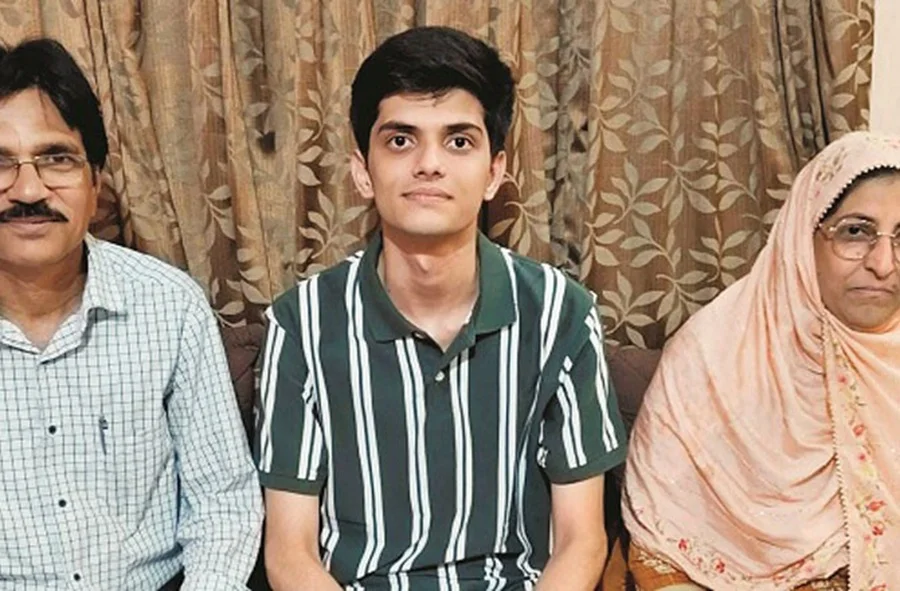
Muhammad Umaid Khan, a young Muslim student from Nagpur in Maharashtra, has made his community proud by securing the 21st rank nationwide in the NEET UG exam, a highly competitive medical entrance test in India. Umaid, whose academic journey has been marked by dedication and strong family support, now aims to pursue MBBS from the prestigious AIIMS in New Delhi with the clear goal of serving people through the medical profession.
Umaid Khan, son of Furqan and Shaheen Khan, studied at the Indian Olympiad School in Nagpur from 8th to 12th grade and achieved exceptional academic results, scoring 95.6% in his 10th standard and maintaining a similar level in the 12th grade science stream. Despite clearing the JEE Mains exam earlier, he chose to follow his passion for medicine, driven by a desire to help others.
Speaking exclusively to Clarion India, Umaid shared his study approach: “I studied with a plan and worked hard to achieve my goal. I prepared for NEET at the Alien Coaching Institute in Nagpur. I used to strictly follow my study schedule, revising daily, clearing doubts, and taking mock exams. This routine helped me stay focused and confident.”
Umaid’s success is also a reflection of his strong family backing. His father, Furqan Khan, is a civil engineer, and his mother, Shaheen Khan, manages the home. He has two brothers—Adeel Khan, an engineer, and Areeb Khan, who recently completed his MBBS and is undergoing an internship. Umaid credits their encouragement for his achievement. “My family’s support kept me motivated throughout,” he said.
Sohail Khan, Director of Indian Olympiad School, praised Umaid’s determination: “This student is an inspiration for all students of our school and college and is proof that determination and discipline are the keys to great success. His accomplishment highlights the potential of the Muslim youth when given the right environment.”
Umaid Khan’s story counters common negative stereotypes and showcases the commitment and talent present within the Muslim community. His decision to choose medicine over engineering despite acing both exams reveals a thoughtful choice prioritising public service over personal convenience.
“NEET is a tough exam, but nothing beats discipline, hard work, and consistency,” Umaid advised other students aiming for success. His words reflect the reality that merit and dedication can overcome barriers faced by minority students in India.
Indian Muslims often face challenges, including social prejudice and limited access to quality resources, yet stories like Umaid’s demonstrate their capability to shine at the national level. His journey from Nagpur to a national rank in one of the toughest medical exams in India is a clear sign that Muslim youth are ready and willing to contribute meaningfully to society.
As Umaid prepares for the next step in his career at AIIMS Delhi, he hopes to serve communities like his own and inspire other young Muslims to aim high and work hard. His achievement sends a strong message that with support and determination, Muslims can achieve excellence in education and professional fields.
source: http://www.clarionindia.net / Clarion India / Home> India> Indian Muslims / by Mohammed Bin Ismail / July 08th, 2025
Born a bird trapper, Ali Hussain from Bihar became a guardian of India’s birds, working alongside top scientists and proving how traditional Muslim knowledge can serve the world’s wildlife
New Delhi / Patna :
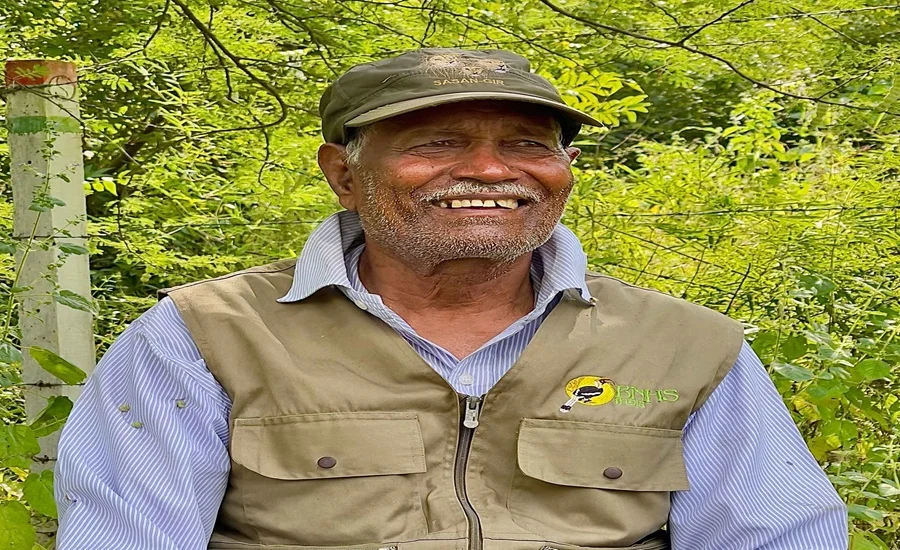
When people first saw Ali Hussain walking through the fields of Bihar with bamboo cages and handmade nets, many thought he was just another bird catcher, and many called him that for years. But few understood what really made him special.
Ali Hussain, a quiet man from a family of traditional bird trappers, was more than what the eye could see. Behind his soft smile and weather-worn hands was a lifetime of wisdom passed down over generations. He had learnt to follow bird calls, understand their movements, and craft traps not to harm them, but to study and help them survive.
In the early 1960s, Hussain’s life changed forever. He met Dr Salim Ali, India’s most famous ornithologist, often called the “Birdman of India.” It was the start of a deep friendship and a shared mission. Instead of catching birds for trade, Hussain began working with scientists to catch birds for research and conservation.
“I had never met anyone like him,” Dr Salim Ali had once told colleagues at the Bombay Natural History Society (BNHS). “He handled birds like a doctor treats a child. Gently, with care. He knew more about them than many of us.”
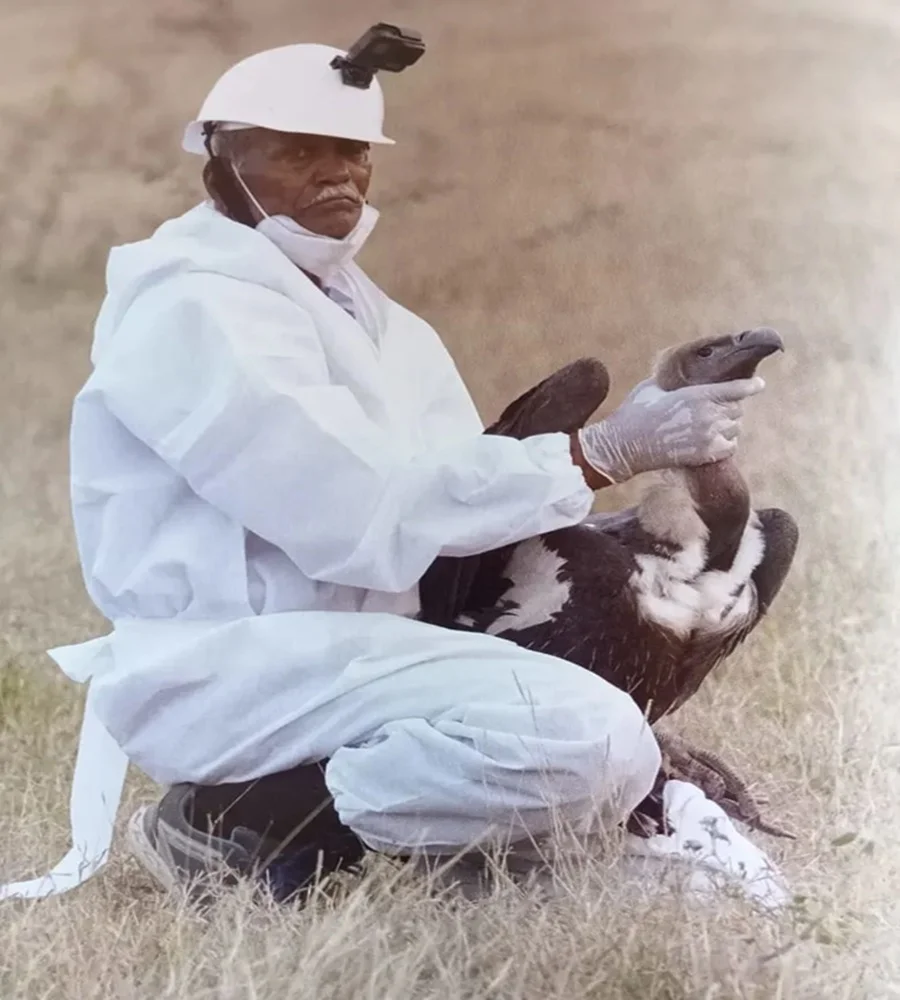
Ali Hussain helps capture and tag a vulture in Gir National Park. – Photo: Wildlife Division, Sasan-Gir, Gujarat
Hussain began travelling with BNHS teams across India, using his age-old skills to help ring thousands of birds. These rings, placed on birds’ legs, allowed scientists to track their migration and breeding patterns. And each bird was returned safely to the sky.
His fame didn’t stop in India. In the 1990s, American scientists from the Whooping Crane Recovery Programme invited him to the US. The whooping crane is one of the rarest birds in the world. Catching them was almost impossible until Hussain arrived there.
In just a few weeks, he safely captured 10% of the entire population without harming a single bird.
One American official said, “We were shocked. He caught birds we couldn’t even get close to. And they were all unharmed. It was a masterclass.”
For years, conservation efforts across the world relied mostly on modern technology — drones, satellites, and lab studies. But Ali Hussain showed that indigenous knowledge also has value.
“He never went to school,” said Mohammed Salim, one of his sons. “But he could read nature like a book. He knew where birds would land just by feeling the wind.”
His Muslim identity and simple lifestyle never stopped him from working with international scientists. In fact, it reminded many that people from rural and minority communities have a lot to offer when they are trusted and respected.
Even in his 80s, Ali Hussain never stopped helping. Young researchers from across India still come to his home in Patna, Bihar, asking him how to catch birds safely. His sons, trained under him, now assist with bird studies and continue the family’s work.
“Abba used to say, ‘Don’t hurt what sings. We’re here to protect, not harm,” recalled his eldest son, Iqbal Hussain.
For them, bird trapping was never about money. It was about respect — for life, for tradition, and for the Creator’s creation.
Despite his international praise, Ali Hussain was rarely honoured by Indian government bodies. No national award. No Padma Shri. No headlines on TV. Many believe this is because he was poor, Muslim, and from Bihar.
“People like him don’t fit the official image of a ‘scientist’,” said Prof Neelima Ghosh, an ornithologist from Delhi University. “But make no mistake, he taught us what our books couldn’t.”
Foreign universities invited him. Wildlife departments in the US and UK mentioned him in reports. Yet in India, he was mostly seen as “just a bird catcher.”
Ali Hussain’s connection with birds wasn’t just scientific — it was spiritual.
In many interviews, he said he felt that protecting birds was part of his faith as a Muslim. Islam teaches kindness to all living creatures, and he took that to heart.
“Birds pray too,” he once told a young researcher. “If we harm them, we stop their prayer.”
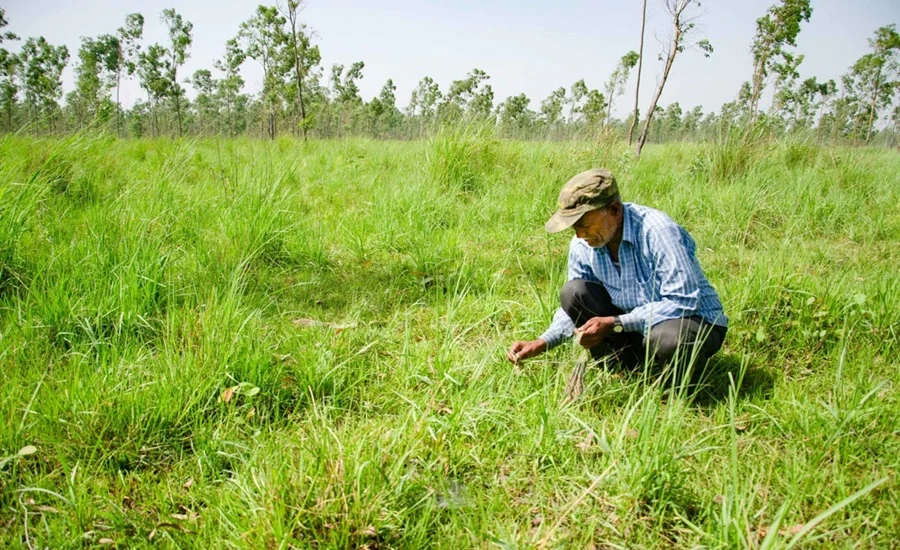
Ali Hussain sets traps to capture the Bengal florican in Pillibhit Tiger Reserve. Photo: Asad Rahmani taken from roundglas sustain
Today, his sons — Iqbal, Rashid, and Shafiq — run workshops on bird ringing and safe trapping. They continue to work with scientists from India and abroad.
“We grew up watching him work,” said Rashid. “He never rushed. He would wait for hours just to catch one bird the right way. Now we are doing the same.”
They are also trying to collect and record his trapping methods, which risk being lost as modern technology takes over. Many young Muslims from Bihar and West Bengal now visit the Hussain family to learn these skills.
In a country where Muslims are often shown in a bad light or made to feel like outsiders, Ali Hussain’s story is a powerful reminder of their quiet contributions. He didn’t protest, shout, or demand attention. He just kept working, helping both birds and humans.
“Ali Hussain should be in our school books,” said Dr Ramesh Gupta, a conservation writer. “Not because he was a Muslim, but because he was a great Indian.”
But maybe he deserves to be remembered because he was a Muslim too — a man who used his traditional knowledge, passed from father to son, to help save the very species others hunted.
He was not a scientist in the traditional sense. He didn’t wear a lab coat or speak English. He didn’t write research papers or held press conferences.
But to every bird that flew free because of him, and every student who learnt the gentle art of trapping from him, he was a scientist of the highest order.
He belonged to a generation of Muslims whose knowledge came from the land, who learnt by watching, listening, and respecting life around them.
India may not have celebrated him fully in his lifetime. But the birds did. And that’s something to think about.
source: http://www.clarionindia.net / Clarion India / Home> Editor’s Pick> Featured> Indian Muslims / by Mohammed Bin Ismail / July 08th, 2025
The MK Stalin-led Tamil Nadu government has honoured Indian Union Muslim League (IUML) national president K.M. Kader Mohideen with this year’s Thagaisal Thamizhar Award (Distinguished Tamilian Award).
Chief Minister M.K. Stalin will present the award to Mohideen during the Independence Day celebrations on August 15.
The award carries a cash prize of ₹10 lakh and a citation.
An official release stated that Mohideen was honoured with the award following a meeting of the selection committee chaired by the Chief Minister at the State Secretariat on Friday.
According to the release, Mohideen has dedicated his entire life to the cause of social harmony and has demonstrated a deep understanding of Indian politics.
Born on January 5, 1940, in Thirunallar, Pudukottai district, to Mohamed Hanif and Kasimibibi, Mohideen served as a Member of Parliament from 2004 to 2009 and has authored numerous books.
During his student days, he was inspired by the late leader Quaid-e-Millath Muhammed Ismail and joined the Indian Union Muslim League in 1956. Since then, he has held various key positions in the party, including student wing organiser, youth wing organiser, secretary for educational and cultural affairs, organisational secretary, general secretary, and is currently the State president of IUML in Tamil Nadu as well as the party’s national president.
“Our #DravidianModel government is proud to announce this year’s #தகைசால்_தமிழர் award to Professor Kader Mohideen, a thinker who has dedicated himself to social harmony since the time of the venerable Quaid-e-Millath – the National President of the Indian Union Muslim League – and who has guided hundreds of students to graduation!” Stalin wrote in Tamil.
Since the institution of this award, previous recipients have included CPM leader R. Sankaraiah (2022), centenarian CPI leader R. Nallakannu (2022), Dravidar Kazhagam president K. Veeramani (2023), and former TNCC president Kumari Ananthan (2024).
source: http://www.maktoobmedia.com / Maktoob Media / Home> India> South India / by Maktoob Staff / July 05th, 2025
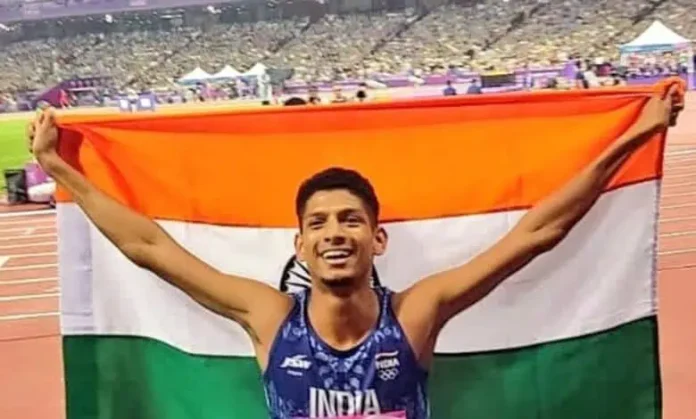
Indian middle-distance runner Mohammed Afsal Pulikkalakath created history by becoming the first Indian athlete to run the men’s 800m in under 1 minute and 45 seconds. Competing at the Memoriał Czesława Cybulskiego athletics meet in Poznań, Poland, Afsal clocked a remarkable 1:44.93, breaking his own national record, reported the Ommcom News.
The 29-year-old athlete, who serves as a Junior Warrant Officer in the Indian Air Force, had previously set the national record at 1:45.61 during the UAE Athletics Grand Prix in Dubai earlier this year. Despite finishing sixth in Heat A/1 in Poznań, Afsal’s performance was a personal best and a significant milestone for Indian athletics.
The top three spots in the heat were claimed by Polish runners, with Maciel Wyderka taking the lead with a meet record and personal best of 1:44.23, followed closely by Filip Ostrowski (1:44.25) and Patryk Sieradzki (1:44.26).
The Czeslaw Cybulski Memorial, part of the World Athletics Continental Tour Silver, is named after the renowned Polish coach Czesław Cybulski, a key figure in Poznań’s sports history.
Hailing from Palappuram in the Palakkad district of Kerala, Afsal trains in Bengaluru under the Reliance Foundation program. He has previously won a silver medal at the 2022 Asian Games in Hangzhou, China, and another at the 2019 South Asian Games in Kathmandu, Nepal. His journey to fame began in 2013 when he clinched gold at the inaugural Asian School Track and Field Championships in Malaysia.
With this record-breaking run, Mohammed Afsal continues to raise the bar for Indian athletics on the global stage.
source: http://www.radiancenews.com / Radiance News / Home> Latest News> Markers of Excellence> Report / by Radiance News Bureau / July 06th, 2025
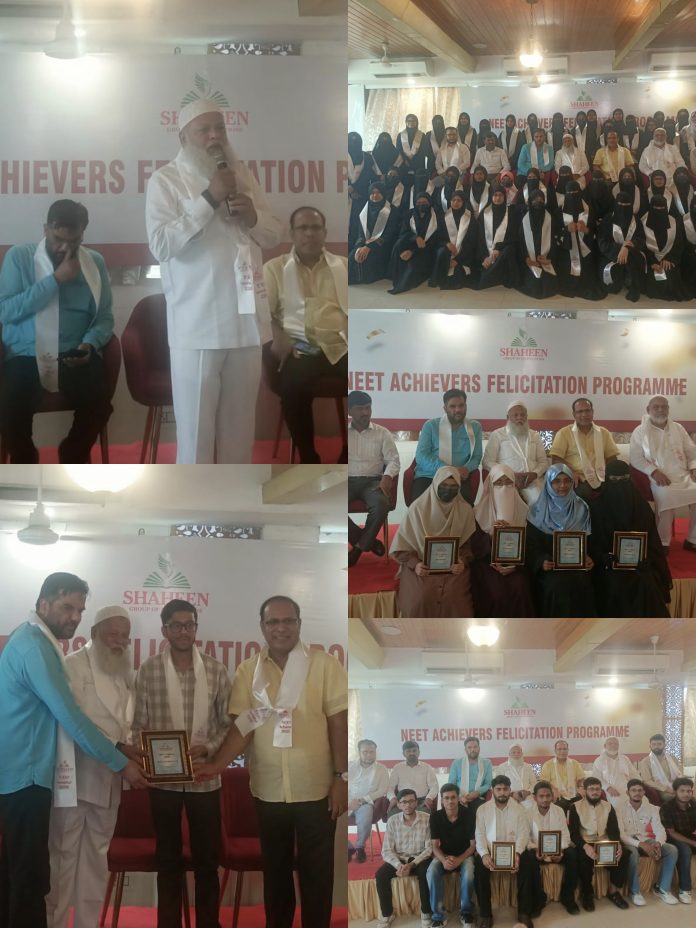
Shaheen Academy organised a grand event to honour its NEET achievers. The ceremony celebrated the students’ success and dedication.
The event was attended by educationists and community leaders. Among them was Abdul Qadeer, founder and chairman of Shaheen Group of Institutions.
In his keynote speech, Abdul Qadeer praised students and faculty. He stressed that education should not just be for earning. “Education can uplift society and spark social change,” he said. “It plays a key role in national growth and development.”
He reaffirmed Shaheen Academy’s mission: to offer value-based, holistic education. He said students must grow into responsible citizens and future leaders.
Abdul Qadeer urged students to look beyond personal success. He asked them to engage in social service and nation-building.
He also made a heartfelt appeal against lavish weddings. “Don’t spend lakhs on grand celebrations,” he said. “Use that money to educate your children, neighbours, and the poor.”
He called education the true celebration. “Transforming lives through education is the real joy,” he added.
He also underlined the need for wider educational outreach. “Five or six institutions are not enough,” he said. “We need 5,000 organisations working for value-based education. Shaheen must have 500 branches to transform society.”
Kaleemul Hafeez, Chairman of Al-Hafeez Educational Academy, also spoke. He compared Abdul Qadeer’s work to that of Sir Syed Ahmad Khan. “Abdul Qadeer Sahib is continuing that legacy to educate a new generation,” he said.
Noor Nawaz, founder of The Hind Guru Academy, echoed the same spirit. He reminded students of the idea of Rabbul Alamin—Lord of all worlds. “Be ambassadors of Prophet Muhammad ﷺ,” he said. “Show compassion, honesty, and service in all you do.”
The event ended with a special honour for teachers and staff of Shaheen Academy. Their hard work was praised as a key part of the students’ success.
The celebration not only recognised academic achievement but also highlighted education’s role in building a better society.
source: http://www.radiancenews.com / Radiance News / Home> Latest News> Report / by Radiance News Bureau / June 28th, 2025
Siblings Nargis Fatima, Saba Fatima and Mohammed Zainulabedein on charting their own path in shooting
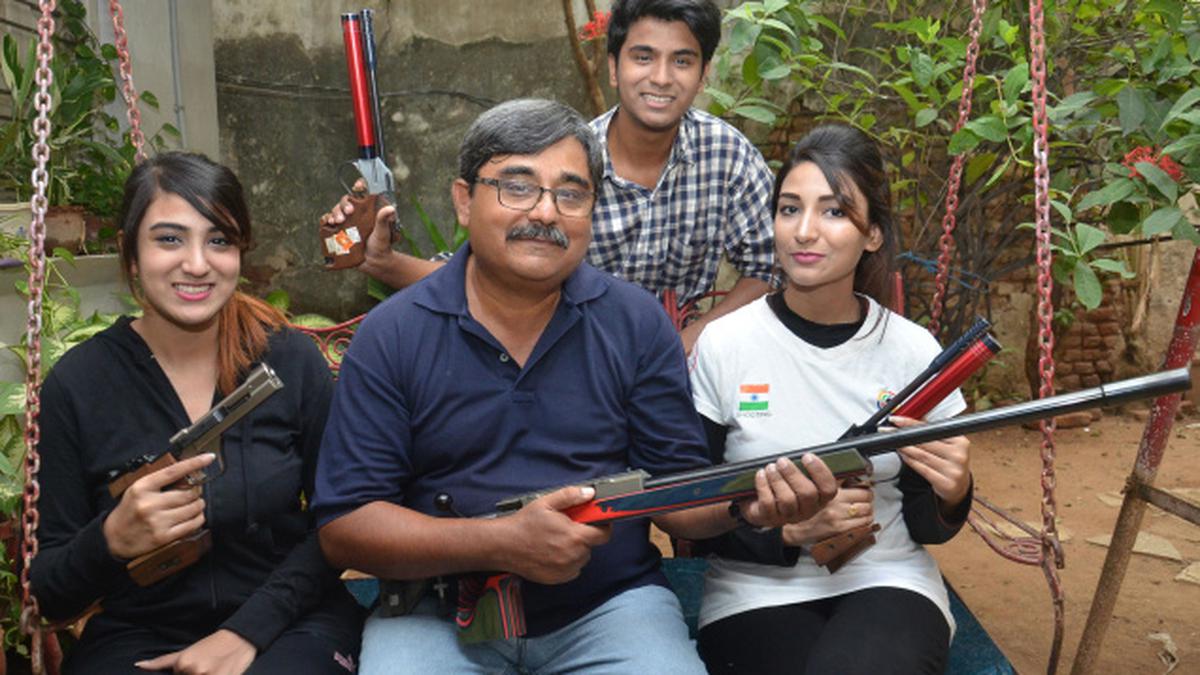
Narjis Fatima, A.M. Zainulabedin, and Saba Fatima with their father and coach Abbas / Photo: Nagara Gopal
On the first floor of Aga Mohammed Hussain’s house, Saba Fatima aims at the target as her sister Nargis Fatima and brother Mohammed Zainulabedein watch on. “I am very strict during practice and keep giving instructions,” laughs Saba. The trio do not indulge in the usual brother-sister spats and instead regularly practice on the home trainer range installed at home. These siblings make Hyderabad proud with their shooting achievements.
Interestingly, they are fulfilling their father Hussain’s dreams. Hussain has been shooting for the past 16 years and is a renowned shot. “Since I was into shooting, the children saw me and got guidance. The biggest advantage was that the weapons were at home,” recalls Hussain on how his children took to shooting. He also adds that his fatherly instincts do not come in the way of coaching. “When I am coaching I tend to forget I am their father. I am disciplined and strict and the results show. The only reason they have come up in the field at such a young age is because of their perseverance, discipline and dedication,” he says.
While Nargis Fatima won her first national medal at the age of 11, her aim is to make it to the Olympics. “By God’s grace both Saba and Zain are in the Indian national squad,” states Hussain. Saba, whose ranking is no. 4 is practicing to take part in shooting championship later this year. “Only the top three are sent by the sports ministry and she will be going at her own cost,” says Hussain.
Recently Saba, a D. Pharm student couldn’t go to Germany because of her final year exams. “D. Pharmacy is worse than medicine; it is a five-year course and I told her not to take it because she has to study a lot,” adds the father. However, he is more than glad with Zain’s performance and feels he will bring in laurels to the country. “Zain, whose ranking is number 5 is going for selection trials; Next year, he will be representing the country but getting into the Indian squad itself is a big achievement,” he points out.
Hussain speaks of his recent visit to Uttar Pradesh. “Youngsters are working very hard and one can see them practicing for even six hours,” he adds.
What do the girls do when not shooting? “I study or attend family parties,” laughs Saba. She feels Indian women shooters are charting their own path. “There is Heena Siddhu, who is making us proud,” she beams.
On the importance of having calm nerves during shooting, Hussain says, “For shooting, one needs a temperament that is extraordinarily soft and a synchronisation of multiple things; about 20 things happen in a fraction of a second and one needs to hone the technique and register it in the sub-conscious mind. Conscious mind is very powerful and the moment you shoot with it, you tend to lose everything. One needs to blindly follow what one has put in the training. Ninety percent shooters fail because they get excited and go in for score and don’t get the technique,” he explains.
source: http://www.thehindu.com / The Hindu / Home> Features> Metroplus / by Neerja Murthy / October 18th, 2016
That women’ s bodies and choice of clothing are ostracized and politicized, is not new discourse. Much discussion on the subject has ensued in recent decades by liberals, feminists, progressives and conservatives alike. Add to that visible religious practices, such as head covers (Hijab) and face veiling (Niqab) among Muslim women, and the scrutiny is further exponentialized. So much so, that it disrupts the principles of liberal and western feminists, and suddenly women’s rights to choose what they want to wear begins to be rephrased, and women’s agency to choose to cover themselves is questioned and looked down upon as ignorance or backwardness. As such, Muslim women who practice various degrees of visible modesty, from Hijab to Niqab navigate feelings of discomfort, unwelcome, as well as (c)overt violence when accessing public spaces, including schools, workplaces, markets, restaurants and more. They are often perceived as beings without agency and intellect, and far removed from the mainstream intellectual public realm. Their choice to dress themselves in accordance with their religious and spiritual goals makes their presence in public unwelcome and politicized.
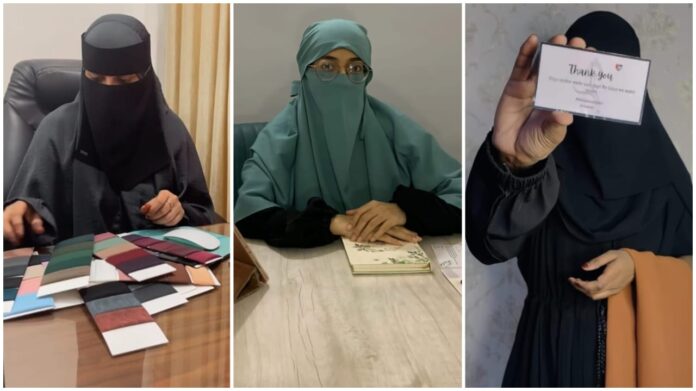
In this article, through interviews with three Niqab-observing Muslim women who have successfully curated , established, and operate their own faith-based businesses primarily selling products through digital means,we draw attention not only on the discomfort and challenges faced by Muslim women in public spaces and traditional office workplaces, but we also highlight the agency embodied by these women to pursue their professional goals in accordance with their personal religious beliefs.
Residing and operating their businesses in India, our interviewees – Kehkashan, Asma Nafis Ansari and Mantasha– have been able to capitalize on the growing adaptation of digital technologies in recent years and produced workspaces for their businesses that offer them the safety and flexibility to pursue their multifaceted aspirations holistically. Rather than waiting for space to be given to them or created for them, they have taken the initiative upon themselves, and are doing so with grit, faith and vision. In doing so, they not only benefit themselves, but also provide employment opportunities, inspiration, and alternative workplace options to others who may find themselves facing similar challenges of discomfort in the public realm.
Faith as an anchor
For these three muslim women, faith is not just a silent actor, but the compass that guides their journeys. Kehkashan, who co-founded ‘Shop Taaseen’ with her business partner Saida Moin, says that they started with a small product, an Umrah dua card in 2024. Today, Shop Taaseen offers a range of faith-based lifestyle products—designed to make Islamic knowledge and reminders part of everyday routines, especially for young Muslims in India. Early on in her academic life, Kehskashan says, she recognized a desire in her to create something of her own but did not know what it would be. She describes herself as someone who has always leaned into creativity with a strong sense of self – “Whatever I do, I want it to be for the sake of Allah.” she shares. That clarity guided her decisions, especially when the spaces around her were not accommodating to her identity. When asked what helped her stay rooted in her vision, Kehkashan said, “the Niqab became my north star. It shaped how I wanted to show up in the world.”
Kehkashan co-founder of Shop Taaseen
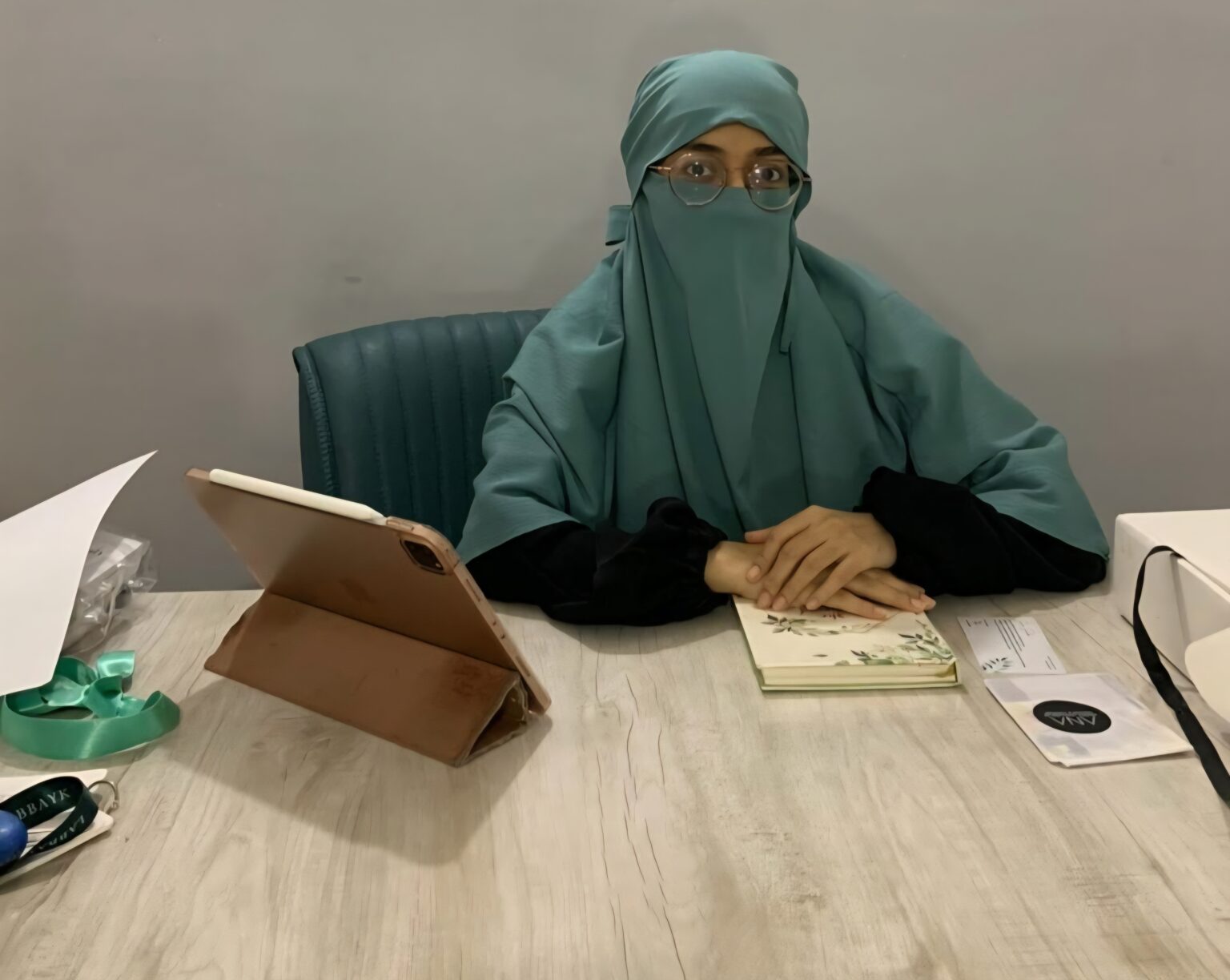
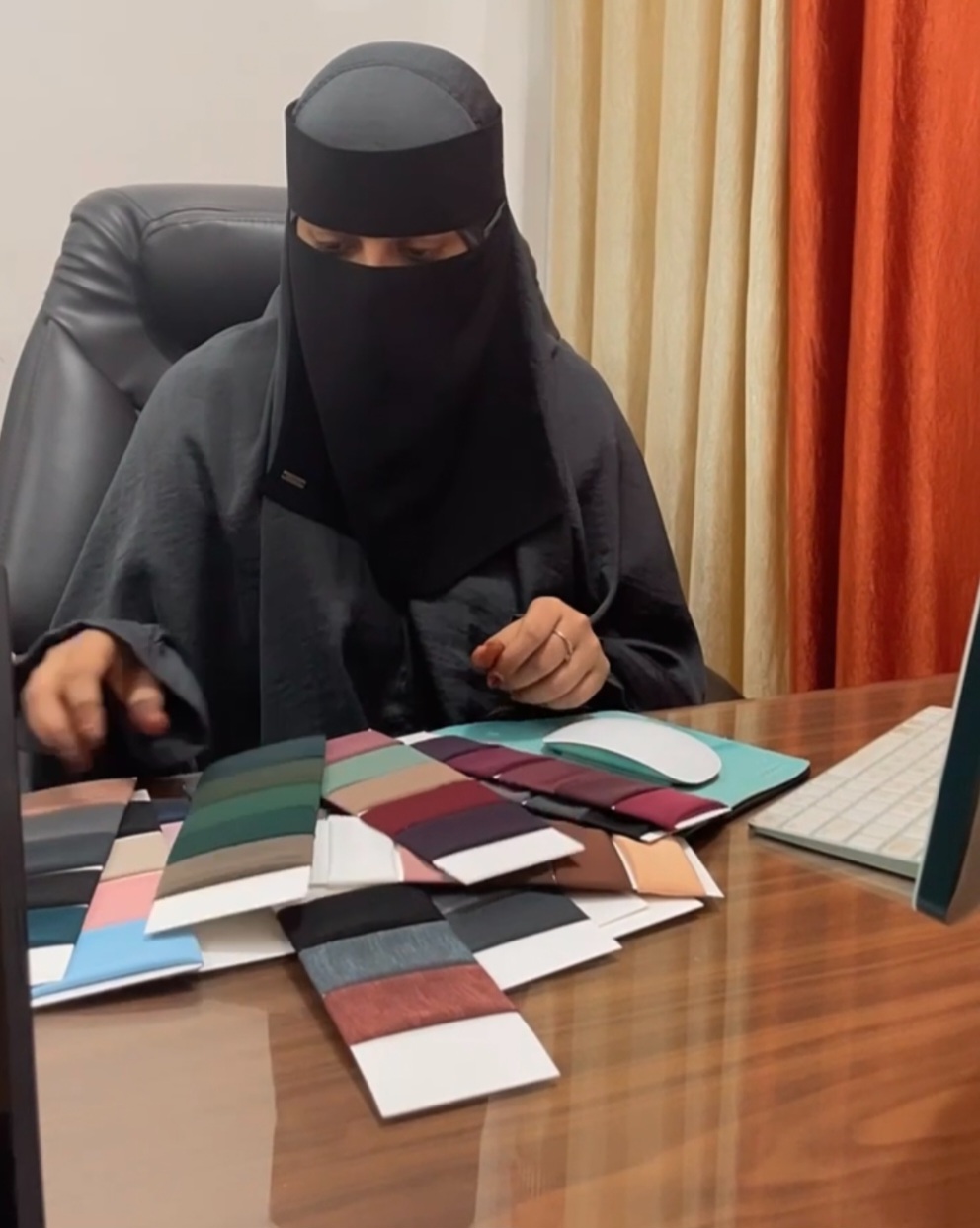
Similar to Kekhashan, our second interviewee, Asma Nafis Ansari, founder of ANA, a modest wear brand, spoke of her strong aesthetic sense, shaped by her training at the National Institute of Fashion Technology (NIFT) Kolkata. As a student at NIFT, Asma developed a signature style for her designs over the years, eventually winning her school’s Graduation Award in her final year, for her knitwear collection inspired by the mid-20th century style, Brutalism. Before launching ANA, Asma began a more intentional journey of reconnecting with the Qur’aan. It was during her study of Surah An-Nur, she says, that her personal understanding of purdah or veiling/modesty deepened. “That connection with the Qur’aan gave me clarity…” she says, “… I didn’t just want to work in fashion —I wanted to create something deeply rooted in modesty and meaning.” Today, ANA is not just a clothing brand, but a value-aligned space for modest fashion.
Asma Nafis Ansari the founder of ANA.
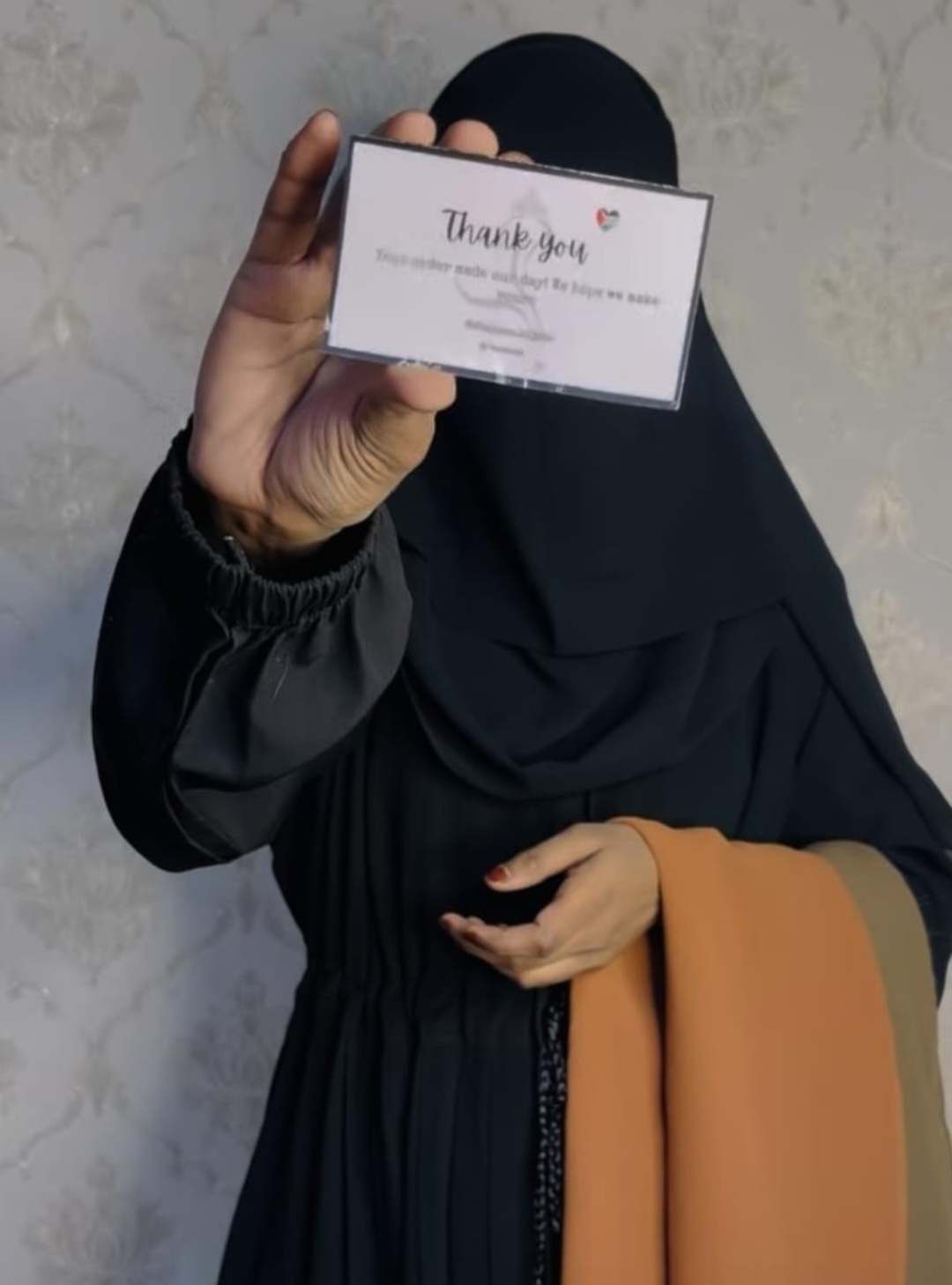
Our third interviewee, Mantasha, who holds a postgraduate degree in development communication from Jamia Millia Islamia, launched Shaheen Hijabs after realizing that mainstream, traditional workspaces would not be welcoming of her niqab. After post-graduation, she accepted a position in the development sector that involved extensive fieldwork. While her supervisor remained supportive, she realized that navigating public-facing roles as a Niqabi came with quiet, persistent tensions. “In that environment, personal identity played a critical role…” she reflects, “… people advised me to remove my niqab temporarily—saying it was not obligatory. But no matter how practical their advice sounded, I could not bring myself to do it.” She underscores that, “My niqab is not just a piece of cloth, it is a reflection of my faith.” What followed was a phase of uncertainty, reflection, and quiet resistance. Eventually, she decided to start something of her own and launched Shaheen Hijabs.
Mantasha, the owner of Shaheen Hijabs
For these women, faith is not just their religious belief. It is the guiding principle in their work. They refused to be reduced to stereotypes or forced into palatable molds, and instead have each chosen to build businesses that reflect their aspiration, purpose, religious, spiritual, and personal values.
(In)visible Practices of Faith
For Muslims, religious faith is embodied and practiced in a myriad of ways. Some aspects remain quietly held within—like Taqwa (consciousness of God) or Tawakkul (trust in divine will) – are inward practices that guide one’s principles.
However, there are other religious practices that present more visibly, like offering Salah or dressing modestly in accordance with religious guidelines. Similarly, for many Muslim women who adorn the hijab or niqab, their choice to do so is rooted in faith, devotion and identity.
For Kehkashan, the tension between her visible and invisible religious practices became apparent during a fellowship she had joined before Shop Taaseen. She recalls, “Her cohort of Fellowes were mostly non-Muslim, but they were respectful and very welcoming towards me. I felt seen.” But that feeling did not last long for her. She goes on to say, “[However,] The founder would question my practices, compare me to other Muslims. Many times I was subjected to tokenism disguised as inclusion.” She says that her choice to wear the niqab was repeatedly framed as a limitation – “I was told that niqab will hinder my growth. That it would isolate me and hold me back professionally.” It was in these moments of subtle exclusion — more than overt rejection —that she became more certain that her faith would not be negotiable.
In such ways, niqab-practicing women face exclusion, rejection, humiliation and suppression in traditional workplaces, particularly from those in higher and more powerful positions. These unwelcoming experiences inevitably discourage women from either practicing their faith wholeheartedly, or pursuing their professional aspirations wholeheartedly, pushing them to pick between one or the other.
In Asma’s story, we see a higher degree of exclusion from the public realm. After her graduation from NIFT, Asma was placed at a company in Gurgaon along with two other peers. The three of them then began to look for housing in the vicinity of their new workplace. Through an online portal, they found a potential apartment, and one of her two peers visited the flat, viewed it, and sent a video of the apartment to Asma. Satisfied with the place, Asma and her peers agreed to put down a deposit on the flat. Asma emphasizes that the management knew that someone named ‘Asma’, a common Muslim name, would be moving in. However, when she arrived with her sister at the apartment on a rainy day, they were stopped at the gate and denied entry because of their appearance as veiled Muslim women. “There are many Muslims here… ” the guard told her, “… but they do not dress like you.” It did not matter that she was a skilled designer or that she was simply looking for a place to live. Her Niqab and possibly her Abaya/Burqa ascribed her a communal and/or political identity, and that identity was decidedly excluded . She recalls being told, “If you want to live here, you can’t wear these things.” In that moment, Asma became a symbol of something “other,” something unwanted. Eventually, Asma had to find other housing accommodations. This is the quiet violence many veiled Muslim women face: being tolerated only if they erase or soften visible parts of their identity. It is an expectation that to belong, one must visibly look less Muslim or act less Muslim, and appear more as everyone else. This kind of politics of visibility relies on the erasure of visible culture and tradition that is not just harmful to Muslims, but all social groups and cultures that present more visibly. These stories give us an insight into the direct co-relations between degrees of unwelcome in public space and degrees of visible practice of religious faith. Therefore, much dialogue is needed on the reception of visible practices of faith in a society that portrays itself as a democratic and egalitarian one.
Agency X (Niqabi) Women
Women’ s struggles for agency are multifold. On the one hand, historically, women have had to fight for the right to vote, to be in the workforce, for banking rights, financial freedom, and more. On the other hand, women who exercise agency over their lives have to deal with persistent undermining of their achievements and independent decision making. This kind of undermining is further exacerbated for Niqabi Muslim women, with the most common assumption made about them that they wear it on orders from a male member of family – like a father, husband, or brother – rather than of their own convictions. They are often presumed to be voiceless, passive, or lacking autonomy. To be visibly Muslim, for veiling women, is to constantly push back against the erasure of one’s intellect and agency.
The veil has widely been painted as a symbol of restriction and oppression. Like the other two interviewees, Asma rejects this thinking and instead describes her choice to veil as an expression of deep personal identity. “People see me with respect,” she says, describing how clients and collaborators from across India engage with her during business travel. Her presence, veiled, carries authority. But that authority is also questioned and undermined by others. For instance, at an award ceremony where she was being honored as women entrepreneur of the year, a senior government official turned to her husband and asked, “She is doing such good work, why have you made her cover her face? “, to which her husband responded, “This is her choice. It wasn’t imposed on her by me.” This attitude is not uncommon, and is reflective of how, even in spaces meant to celebrate her success, the assumption of male control and female subservience still lingers. These narratives uncover deeper problems concerning women’s rights, often held by those with saviour complexes, without a true commitment to the cause. It victimizes the Muslim woman and villainizes the Muslim man, framing the problem as ‘saving muslim women from muslim men’. Not only does it misrepresent social issues, it further exacerbates the actual problems Muslim women face by consciously ignoring them. Furthermore, in denying women their proven potential, it highlights the discomfort society still holds about women who achieve success while staying true to their self and not following orders set by and within patriarchal frameworks – that a woman can be successful and devout, that she can lead and be veiled, that she can dress in faith and still possess sharp, unshakeable agency.
Although this article highlights the stories of three Niqab-wearing Muslim women, similar experiences are faced by the broader veiling, Muslim women community. From unwelcoming experiences to rejections, Niqabi women are forced to navigate a number of identity-based hindrances in their personal, professional, and spiritual journeys.
To compensate for their perceived incompetence, many feel forced to overperform, overachieve in comparison to their peers for the same level of acceptance.
Our three interviewees have shown that they do not seek validation in the language or frameworks of others. Their choices are not compromises—their decisions anchored in faith, and carried out with purpose. Agency, for them, is not about abandoning identity to gain access. It is about bringing their whole selves into every space—and reshaping what power, intellect, and leadership look like. What sets these women apart is not just their ability to navigate exclusionary spaces, but their refusal to be defined by them. In centering their faith, they have not only claimed their agency but have also carved out paths of success that are deeply rooted in service to their communities. Women like Asma, Kehkashan, and Mantasha are writing a different story—one where agency is not hidden beneath their veil, but asserted through it.
Kehkashan, through Shop Taaseen, is cultivating a space of belonging. The Taaseen Tribe, a growing digital initiative, brings together Muslim women from across the walks of life to reflect, learn, and connect.
It is a community that echoes Kehkashan’s own journey—a space for young Muslim women to feel seen, intellectually engaged, and emotionally supported.
Asma, from her small town of Mau in Uttar Pradesh, established ANA, that not only reaches customers across India and abroad but also creates livelihood for a team of about 30, consisting of kaarigars, accountants, managers, and assistants. In a world that often parades notions of diversity and inclusivity, but then almost exclusively produces urban, English-speaking workspaces and equates them with success, Asma’s journey redefines what inclusivity looks like. ANA prides itself in maintaining a balance of 1:1 ratio of men to women across their workforce. She is proof that one can build while holding fast to faith, staying rooted in place, and uplifting others along the way.
Mantasha’s story is one of resilience, where she was willing to risk uncertainty to preserve her identity and stay true to herself, rather than diluting her identity to fit in. With no prior business experience, she started Shaheen Hijabs teaching herself the ropes of the business along the way. “I rushed into it… ” she says. “… there were mistakes. I’m still learning. But I’m doing it in a way that doesn’t require me to compromise on who I am or how I want to live my faith.”
So, what then does it mean, to navigate public spaces where one is made hyper-aware of themselves, simply for living in accordance with their faith, which in a democracy, is apparently their fundamental right? What does it mean to carry the weight of assumptions—about agency and intellect—before one even speaks? What could our society look like if we stopped incessantly asking Muslim women to prove their worth, and instead, started paying attention to how they are already building, leading, and transforming the world around them? And more importantly, what could our society look like if we stopped tokenizing identity in the name of (pseudo) diversity and (pseudo) inclusivity, and started creating truly inclusive and democratic spaces for all?
****
About the Authors
Aazeen Ghaus is a Development Communication practitioner & freelance writer, based in India. Saba Fatima is an architect based in Albuquerque, USA. She is an incoming PhD student (Fall 2025) in the Built Environments program at the University of Washington, Seattle
source: http://www.muslimmirror.com / Muslim Mirror / Home> Exclusive Reports> Positive Story> Women / by Aazeen Ghaus and Saba Fatima / July 03rd, 2025
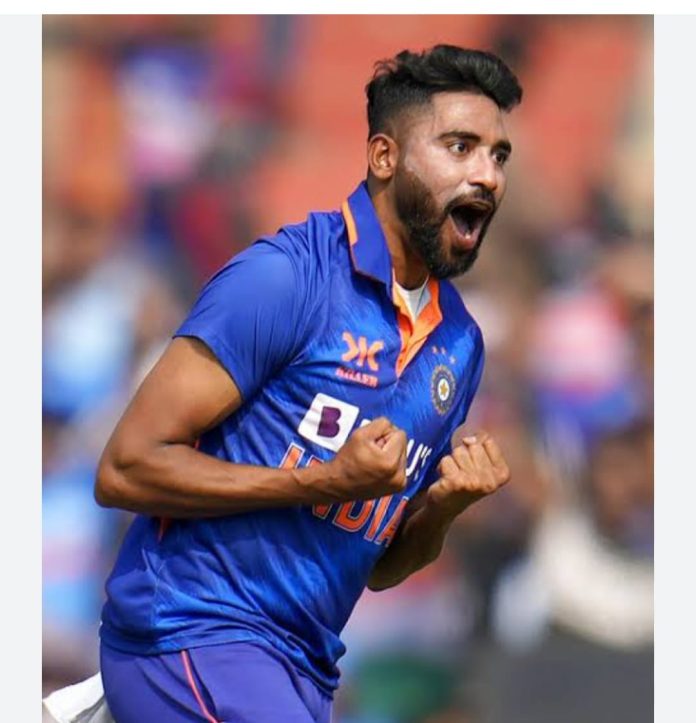
Mohammed Siraj scripted history with a stunning display of fast bowling at Edgbaston, claiming 6/70 to bowl out England for 408 in the second Test of the 2025 Anderson-Tendulkar Trophy. His fiery spell handed India a strong 180-run first-innings lead.
With Jasprit Bumrah absent, doubts hovered over India’s bowling attack. But Siraj, supported by Akash Deep’s four wickets, kept India firmly in control. This came despite a massive 303-run partnership between Harry Brook and Jamie Smith.
Siraj dismissed key English batters, including Zak Crawley, Joe Root, and Ben Stokes. He then ran through the tail, removing Brydon Carse, Josh Tongue, and Shoaib Bashir.
This six-wicket haul is the first by a visiting pacer at Edgbaston since 1993. It is also the third-best performance by an overseas fast bowler at the venue.
At 31, Siraj joins an elite group of Indian pacers with five-wicket hauls in England. The others are Amar Singh, Chetan Sharma, Bhuvneshwar Kumar, and Ishant Sharma. This is his fourth five-for in Tests and his best performance in England.
Despite the long stand from Brook and Smith, India’s pace attack—led by Siraj—remained disciplined and aggressive. They kept the pressure on England and are now in a strong position to level the series.
India will aim to carry this momentum forward as the match enters a crucial phase.
Siraj’s brilliance echoes his historic Asia Cup 2023 performance—where he delivered one of the finest spells in a tournament final. His rise now mirrors the legacy of legends like Chaminda Vaas and Anil Kumble.
Siraj has firmly established himself as India’s new pace spearhead.
source: http://www.radiancenews.com / Radiance News / Home> Latest News> > by Mohd. Naushad Khan / July 05th, 2025
While working on my two books (soon to come: one on Muslim Politics in Bihar and another on Muzaffarpur Muslims, 1857-2011), while looking into primary and secondary sources I came across many personalities and institutions. One such person was Sir Fakhruddin whose contributions towards public life may interest many people. Hence I crave the readers’ indulgence.
[Sir] Syed Mohammad Fakhruddin [Khan Bahadur, 1868-1933] of Patna is credited to have the distinction of being the first Muslim Minister of Bihar and Orissa.
His father Md. Ali of the village Dumri, near Patna, took special care of his quality education. Having imparted elementary education in Arabic, Persian, and Urdu in the village Maktab, Fakhruddin was put under the tutelage of Md. Yahya, advocate, a big rais of Patna, with deep interest in music and literature. Yahya was the husband of Rasheedun Nesa (1855-1926, the author of the Urdu novel, Islahun Nesa, 1881/94, and a pioneer of modern education to women in Patna).
Fakhruddin did his BA from the Patna College in 1891, and B.L. in 1893, and started court practice under the guidance of Yahya in the district court of Patna. He was also associated with the Bihar Provincial Association.
Having earned good reputation as advocate he was elected member Bengal Council in 1910, which Fakhruddin quit after becoming the government pleader (1917-20) in the High Court of Patna, established in 1916-7. In 1921 he was elected member of the Bihar and Orissa Legislative Council, and he kept winning the elections till his death in 1933.
Thus, during 1921-33 he also served as minister of education besides few other significant departments. His contribution as minister in pushing the cause of education is distinctive. His efforts towards promoting primary and secondary education are noteworthy.
The Deputy Directors of Public Instruction were made to undertake tours of Bihar and open schools. Fakhruddin worked hard towards enhancing the budgetary allocation for education. He also made efforts towards charkha operation in the government schools but remained largely unsuccessful in that. He mobilized funds for construction of college buildings and hostels. He was passionate about it.
Reconstruction of Patna’s BN College building and its three storeyed hostel, the imposing building of the Science College (Patna), two storyed hostel for the Science College, the Patna College Hostel (later became famous as Iqbal Hostel), two storeyed PostGraduate Hostel of Ranighat (Patna), Patna Training College are his creations.
Besides, he also allocated fund for the buildings and hostels of the Muzaffarpur’s GBB (LS) College, Cuttack’s Ravenshaw College, Bhagalpur’s TNB Colllege, two big buildings for the Madrasa Shams-ul-Hoda, which was taken over by the government, and eight professors’ quarters in Ranighat (Patna) are also his creations. For the cause of Urdu, he set up a Madrasa Board in 1922.
Madrasa Shams-ul-Hoda
Fakhruddin had also prepared an ambitious plan of converting the Patna University in a big residential university for which he also influenced the Nathan Committee to make favourable recommendations. This was to be established in the Phulwari Sharif. But it did not see the light of the day as a large number of the members of the Bihar and Orissa Legislative Council opposed it on the arguments that the campus will go far beyond the city; a member went on to allege that Fakhruddin was taking the University to the doors of his Pir. The Searchlight is said to have regretted this myopic opposition as the Bihar’s capital city was deprived of quality residential university.
He created and institutionalized Bihar Educational Service Class I, and went on talent hunt to recruit meritorious teachers for the Patna University.
With these efforts he brought in Dr Gyan Chand as professor of Economics, Prof. Taraporewala (History), Prof. Jamuna Prasad (Psychology), Prof. Hill (English), Prof. Shiv Parvati Prasad (Physics). They were posted on handsome salaries.
There used to be an insistence by the colonial regime to recruit only those candidates as Class I teachers who had obtained degrees from Europe.
Prof. Nayyar Laeeq Ahmad (who later became Principal, Andheri College, Bombay), and Prof. Jadunath Sarkar were also recruited. Sir Fakhruddin resisted this racism, without much success at the time, even though it was diluted subsequently in 1940s when Prof. K K Datta (History, 1944) was taken in.
Sir Fakhruddin brought a bright professor of Law from BHU to make him Principal, Law College, and Prof. Boman Sanjana of Bombay was brought in the Civil Engineering.
In order to overcome the dearth of talented teachers he also instituted State Scholarship programme on which promising students of BA and MA were sent oxford and Cambridge for higher degrees and they had to return back to teach in the colleges of Patna University.
Kishori Prasad Sinha, Fazlur Rahman, and Kalimuddin Ahmad for English literature; Ghanshyam Das for History, Balbhadra Prasad and Qamruddoja for Chemistry, Bhairavnath Rohtagi for Economics were few such luminaries. Sadly, with the death of Sir Fakhruddin this bright scheme also died.
The Bihar School of Engineering was upgraded to ‘College’ by him. He also established the Veterinary College of Patna and recruited many teachers from outside.
Besides education, he also held the portfolio of cooperative and he made it a movement of sorts, more particularly in Tirhut. He convened a conference of Cooperatives in Hajipur when Ahmad Husain (1886-1948), an Aligarh graduate of Muzaffarpur, was posted as SDO in Hajipur.
For all these unforgettable contributions, Dr Rajendra Prasad held him in very high esteem.
Sir Fakhruddin, a bearded, fair-skinned fellow was a devout practicing Muslim with punctualities of namaz. Sherwani, pajama, Turkish cap was his preferred dress. The masjid near the Patna Railway Junction was reconstructed by him by investing around Rs. 20-25 thousand, which is now the Jama Masjid of Patna; for long it was called ‘Sir Fakhruddin Masjid’.
As a minister, he never used government quarters; rather he preferred to work from his own house in Patna, nor did he accept police protection. He was a good orator in both English and Urdu.
His sons- Azizul Haq was a renowned advocate of Patna High Court, Anisul Haq was Deputy Collector, Habibul Haq was in judicial services.
(Mohammad Sajjad, Assistant Professor at Centre of Advanced Study in History, AMU, Aligarh)
source: http://www.twocircles.net / TwoCircles.net / Home / by Mohammad Sajjad / October 13th, 2025