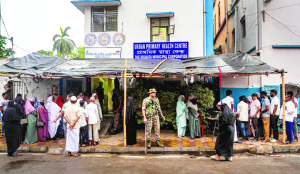
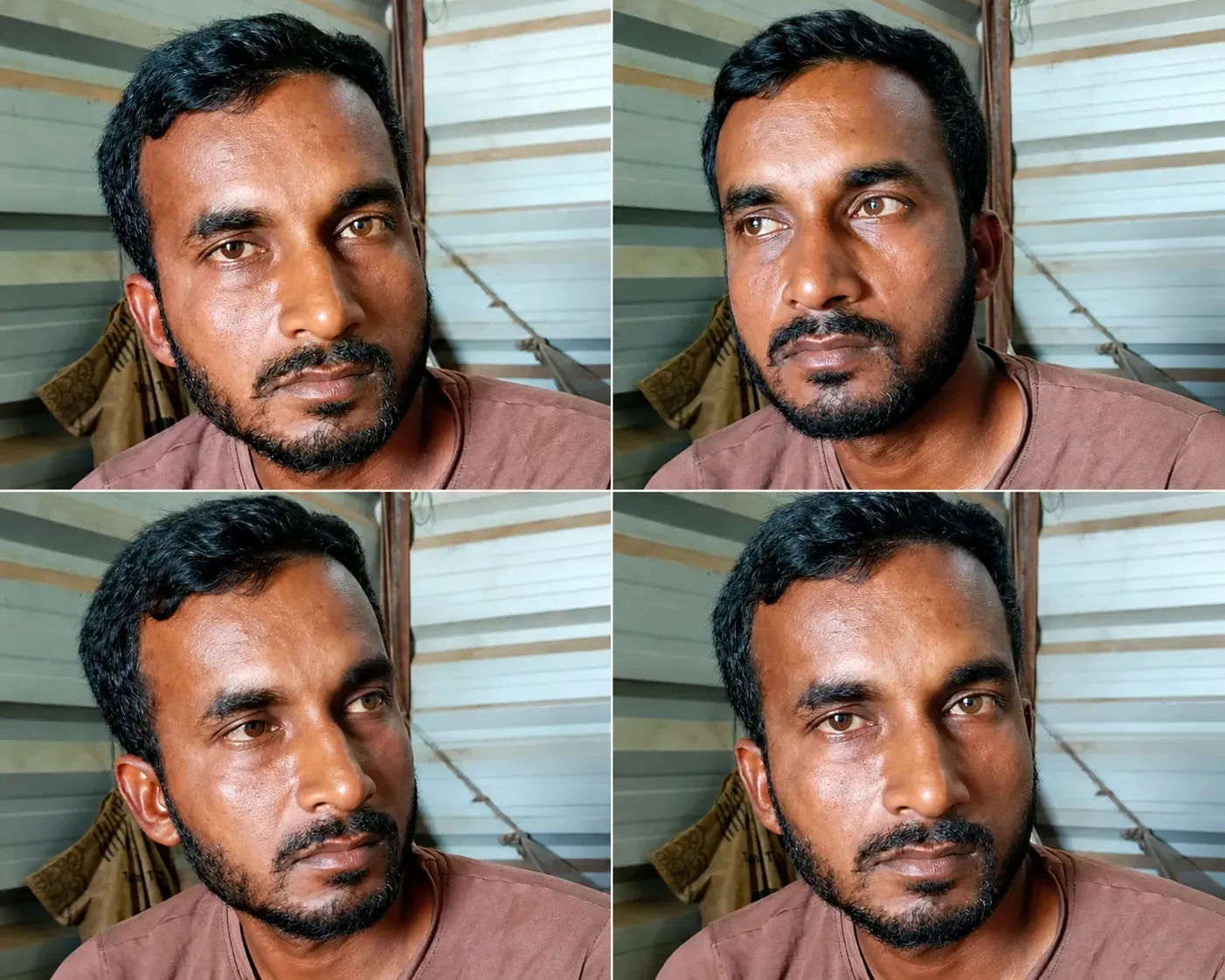
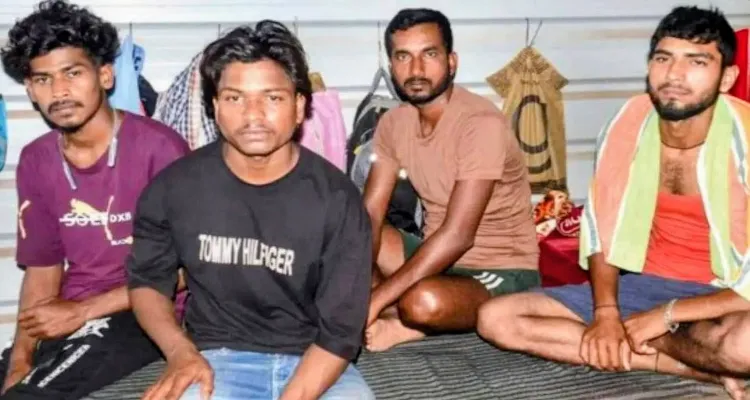
Local residents, traders and labourers rushed into action when a fire engulfed the Flourish Stay Bed and Breakfast on Wednesday, using ropes, mattresses, bricks and bare hands to rescue trapped guests before emergency teams fully gained control of the scene, The Times of India reported.
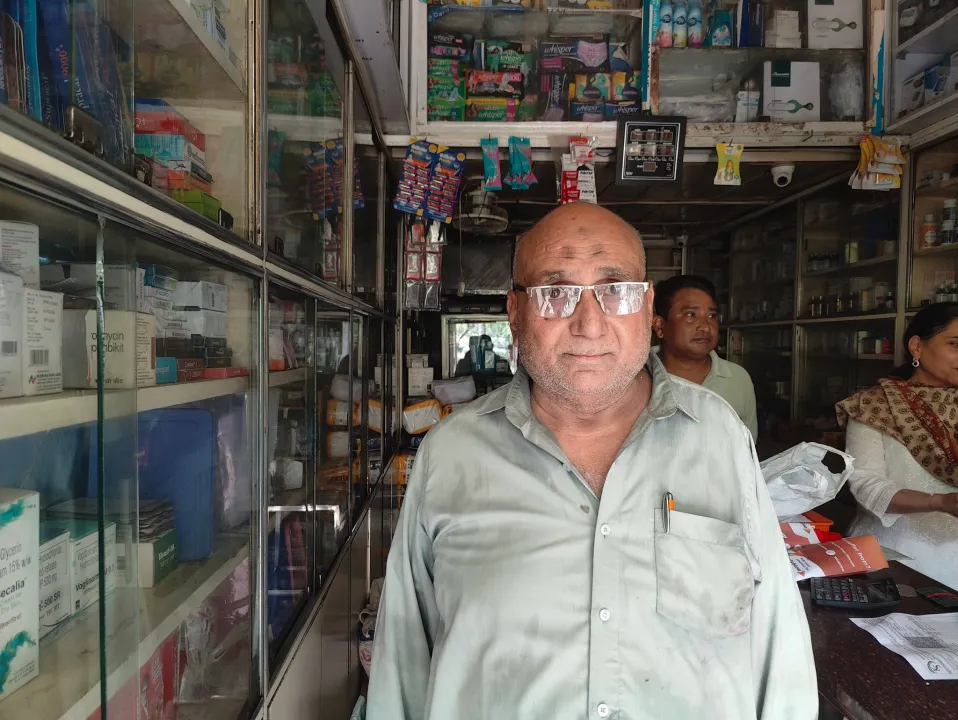
Witnesses said Mansur and Kapil were among the first to break windows with bricks after spotting people trapped behind smoke-filled glass panes, with no balconies for escape. Ropes were then thrown through the shattered windows to help occupants climb down from the burning building. “We could see hands banging against the glass… we realised they were trapped,” Mansur said.
Inside the building, Salauddin and Israr Khan entered after firefighters forced open the main entrance and moved floor to floor to pull out trapped guests. “The heat inside was unbearable. We carried out whoever we found,” Salauddin said, adding that several doors had to be forced open in near-zero visibility.
Outside, Riyazuddin, a mattress shop owner, along with Arman and Mohammad Shahrukh, quickly brought out mattresses and bedsheets, laying them on the road to cushion jumps from upper floors. “We just kept bringing mattresses and helping people jump,” Shahrukh said.
Rakesh Kumar and others climbed nearby rooftops and terraces, throwing ropes toward upper floors to help trapped occupants escape as smoke filled the structure. “We broke windows to release smoke and heat and threw ropes from the terrace,” he said.
At least 10 people, including women and children, were reported to have jumped onto mattresses to escape the blaze. Several rescuers suffered smoke inhalation and minor injuries but continued assisting until firefighters and police brought the fire under control.
source: http://www.millattimes.com / Millat Times / Home / by Millat Times Newsdesk / June 04th, 2026
Can a stable and just democracy flourish on foundations of wilful amnesia and erasure?
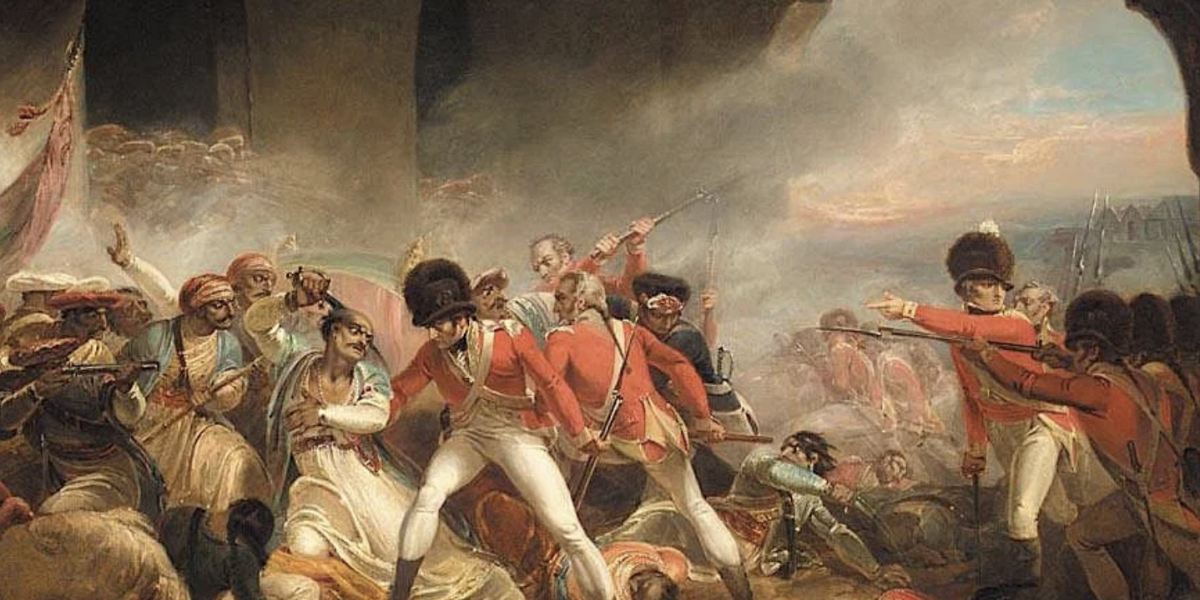
A c. 1800 painting showing the last stand of Tipu Sultan, ruler of Mysore in 1799 at the end of the Anglo-Mysore Wars with the East India Company. Photo: Henry Singleton/Public domain.
Many will ask why a book about Muslims who fought for India’s freedom? There’s no answer to such questions except another question. Had we been better memory keepers as a nation, could we have avoided the peak disinformation and stupidity which normalises reviling ordinary Muslims as outsiders, infiltrator and insurgents?
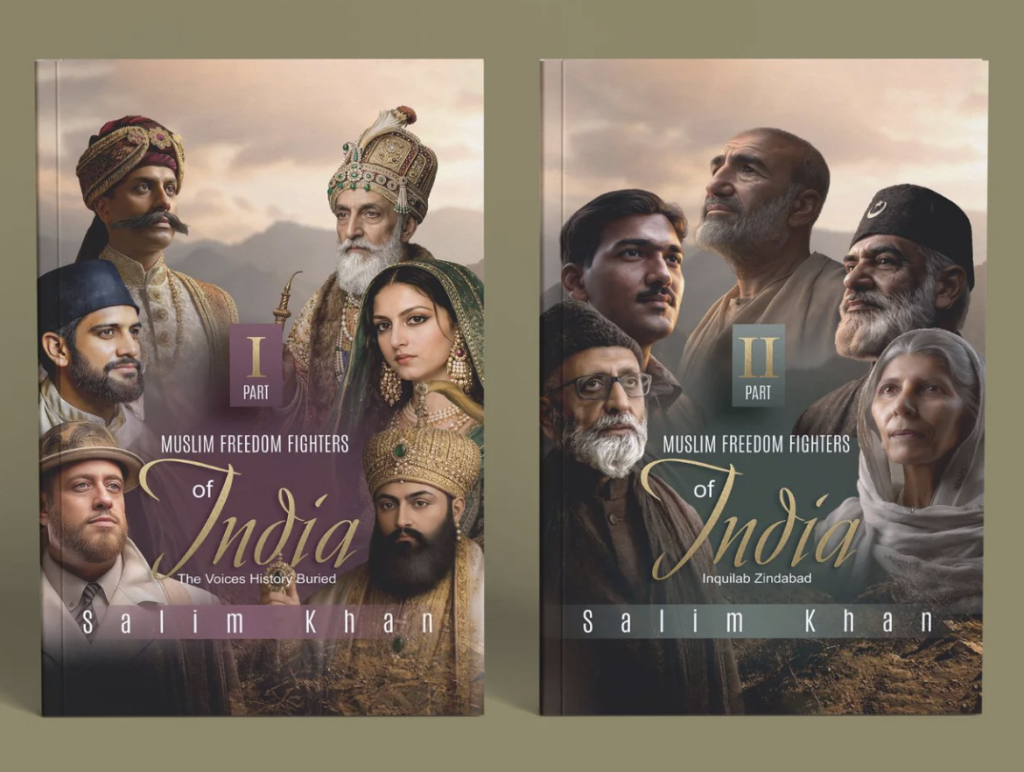
Muslim Freedom Fighters of India is a two-volume biographical compilation by Salim Khan on less-known, mostly forgotten and hardly known Muslim figures. The books aim to clear the fog around Muslim freedom fighters whose names are heard of without them being extensively known and this requires us to understand why this fog exists. Written in an extremely readable and accessible format, these biographical accounts embed the historical figures in the context of their times, responding to unprecedented events with foresight, clarity and conviction that sealed their fate and shaped and the nation’s destiny.
Whether we are reading about Generals of 1857 – Bakht Khan and Khan Bahadur Khan – or the Cambridge-educated Rampur scion Mohammad Ali Juahar of Khilafat moment and his fiery mother Bi Amma, the larger questions seething beneath the stories keep rising to surface. Who does a society and nation choose to remember and celebrate? Whose memories are deemed worthy of preserving? History is always shaped by those who control archives, narratives and memorialisation and hence memory.
Reading about Tipu’s dazzling reign through the three Anglo Mysore wars where he proved superior to British forces, I was reminded of the controversy sparked by the late Girish Karnad’s suggestion of naming the Bengaluru airport after Tipu Sultan. Karnad had said, “It is true that Tipu Sultan was not born in Bengaluru, but he was a son of this soil and a freedom fighter. Had Tipu been a Hindu, he would have achieved the status of Shivaji, and the airport would have been named after him.” I recalled Karnad because his play Dreams of Tipu Sultan echoes the same theme that this two-volume tribute to erased, obscured and deliberately unremembered historical figures echoes: that when politics lays down who should be forgotten, remembering the erased becomes a duty, an affirmation and a political act.
It is important to clarify that this is not a compilation of eulogies but well-researched fact based account of people who had the uncommon clarity to resist colonial domination even before the nationalistic narratives took shape. That they happened to be Muslims is important today because of the distortions that have obscured and erased them. But back then when they fought and resisted, they were simply rallying for the cause of their soil and their watan. From the earliest times they understood that freedom from foreign domination required Hindus and Muslims to put up a united front as in the war of 1857, the Khilafat movement, and the period between 1919 and 1924. Back then too, traitors cut across religious lines – Jagat Seth, Mir Jafar, and Ilahi Baksh.
Muslim Freedom Fighters of India: Part 1 and Part 2’, Salim Khan, Qalam Aur Kaagaz Books.
From Siraj ud Daulah to Tipu to Shahzada Firoz Shah, the book shows how the fog around these personalities is not accidental but meticulously designed – initially by the colonial mind, then picked up by early nationalists and woven into simplistic narratives. The macabre dance of history further stifled Muslim voices. Cataclysmic events like the ‘end’ of the Mughal Dynasty in 1857 and the Partition in 1947 sundered clans, erased family histories, legacies crumbled with no one is around to defend and uphold them. Today, even people who don’t know history have heard of Lakshmi Bai, but many who read history may not have heard about Shahzada Firoz Shah, the Mughal Emperor’s grandson who in August 1857, led a band of armed soldiers to rally the rebels in Rohilkhand and Malwa and who fought alongside Tatia Tope and called for a united Hindu-Muslim front against the Company.
The British understood the dangerous potential of popular memory and subverted any potential for memorialisation of hugely influential figures. No one knows if Shahzada Firoz died in battle or escaped to West Asia. The Maulavi Ahmadulla of Faizabad whose authority and fearlessness scared the British so much that they kept a reward on his head, was likewise interred in an unmarked grave. Knowing that even his memory could become a node to unite the rebels, the British saw to it that no commemoration was permitted or possible. Zafar, the last Mughal was exiled to Rangoon for the same reasons.
In her book, India, 5,000 years of history on the subcontinent, Audrey Truschke, elucidates how Muslim rulers like Nawab Siraj ud Daulah and Tipu Sultan to Zafar felt a responsibility for their subjects no matter what their religion. For example, Siraj ud Daulah actively intervened in times of famines and drought in Bengal. But after the British took over they did nothing to alleviate human suffering, so that 20% of Bengal’s population died in the famine of 1768 and the small-pox epidemic of 1769-70 following it. This had never happened during earlier episodes of failed harvests. Truschke says, British historians initiated the custom of categorising Indian rulers as tyrannical, effete and incompetent, reducing them to their religion and writing in terms of Hindu rulers and Muslim rulers. The British needed to demonise Muslim rulers who were their immediate predecessors in subcontinent so that they might look good by comparison, Truschke notes. It was a part of the colonial propaganda.
Another pattern Salim Khan’s compilation brings out is that from mid-18th century onwards, the first responders and the most committed crusaders resisting colonial domination – the kings, queens, princes, preachers, noblemen – were Muslims. Not only because the British had wrested from them the power they had wielded for centuries (howsoever fragmented or diluted it may have become); but also, because they were looked upon as leaders. In Awadh, for example, the Shia elite took it as their moral-ethical duty (see Chapter 7, volume I: Shia Ullema and Noblemen of Awadh)
Even in the 20th century, Muslim freedom fighters like Hasrat Mohani of the Inquilaab Zindabad fame and Asfaqullah Khan of the Kakori conspiracy who was an icon for Bhagat Singh, remain in the shadows, seen only in a hazy half-light. Were their contributions any less or only less remembered? One of the most important projects post-Independence should have been to restore memory and affirmation to those whom the British put on the wrong side of history, no matter what their religion or caste. But we know this is not what happened.
Since the arrival of the political controversy over Tipu Sultan, we have entered in an era of deliberate distortion of history. The larger question that these accounts refrain from asking but that jumps to any thinking person’s mind is this: can a stable and just democracy flourish on foundations of wilful amnesia and erasure? Should the memory of Muslim freedom fighters be kept only by the Muslims? The heritage and memory of Indian Muslims needs to be reclaimed by them. But equally, these volumes are required reading for the casually miseducated, hopelessly disinformed or simply ignorant Hindus who have been stupefied into denying and distorting their composite history.
Varsha Tiwary is a Delhi-based writer and translator. She has recently published 1990, Aramganj a translation of the best-selling Hindi novel Rambhakt Rangbaz.
A 42-year-old Muslim Ayurvedic doctor from Kerala, Sajna S.A., who had been working in Bhopal for the past six months, passed away after suffering a severe brain haemorrhage (subarachnoid haemorrhage). She was admitted to a private hospital in Bhopal on May 15 after her condition became critical.
Despite intensive medical care, her condition worsened, and doctors later declared her brain-stem dead.
Family Agrees to Organ Donation After Counselling
Following the diagnosis, doctors and transplant coordinators counselled the family about the possibility of organ donation. After careful discussion, her family agreed to donate her organs, turning a moment of personal loss into an act of life-saving generosity.
Hospital authorities said the entire process followed the guidelines of the National Organ and Tissue Transplant Organisation (NOTTO), which regulates organ donation and transplantation procedures in the country.
What is Brain-Stem Death
Doctors explained that brain-stem death is a medically and legally recognised form of death. It refers to the irreversible loss of all brain functions, including those that control breathing and consciousness. Even if a ventilator keeps the heart beating, recovery is not possible.
Medical experts said such cases allow organ donation under strict protocols, as the organs remain viable for transplantation for a limited time.
Organs Transplanted to Save Lives
According to hospital officials, Sajna’s liver and one kidney were transplanted into patients admitted at the same hospital in Bhopal. Her second kidney was sent to another private hospital, where it was used for a patient in urgent need.
Dr S.K. Trivedi, Director of Bansal Hospital, said the family showed remarkable compassion during a difficult time.
“When asked if they had any preference regarding the recipient’s religion or identity, her husband said, ‘Give it to whoever needs it,’” he stated.
Doctors confirmed that all three organs helped save the lives of two patients.
Emotional Farewell With Full Honour
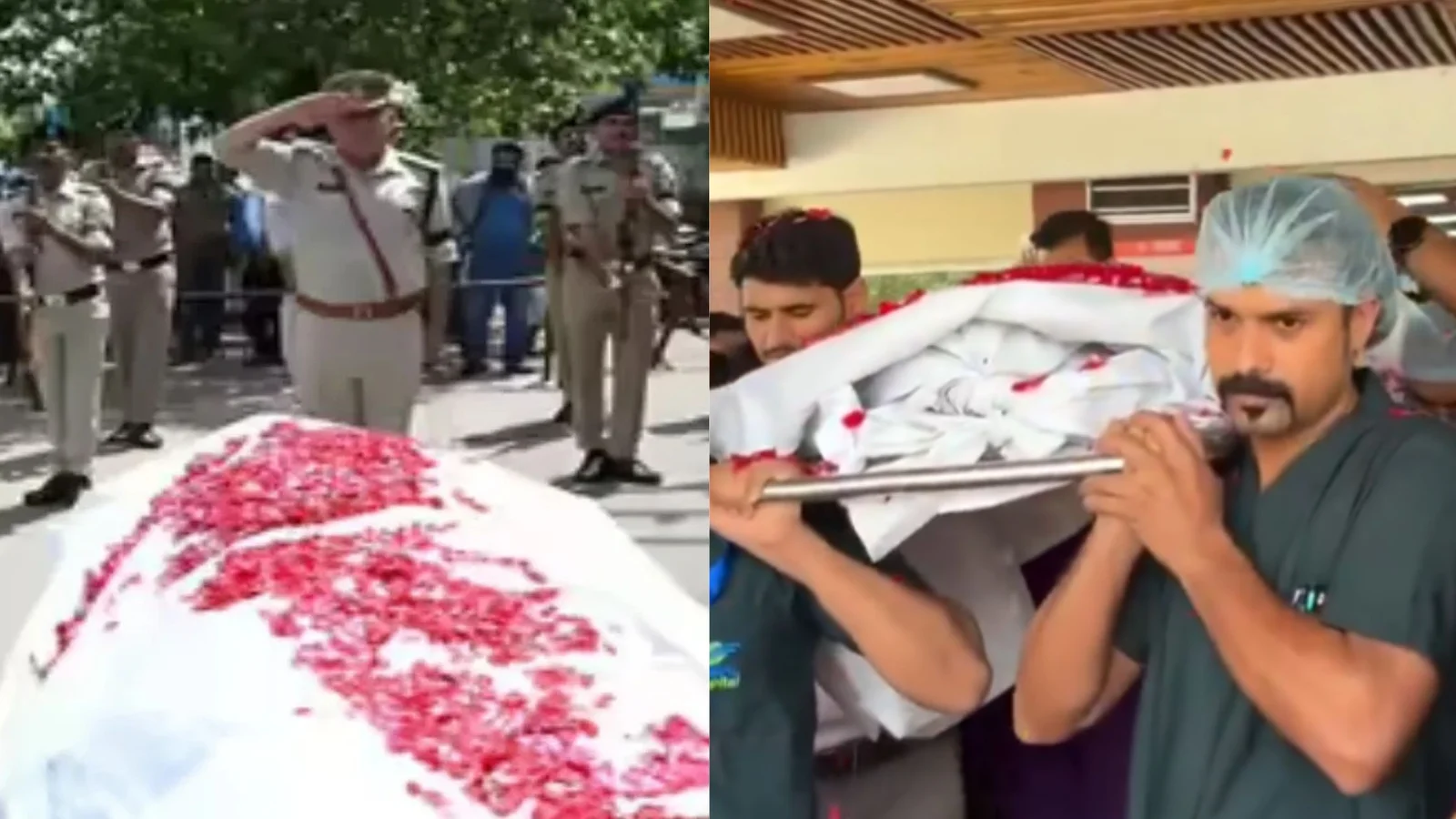
After the organ retrieval procedure, Sajna S.A.’s body was given a respectful farewell. Police personnel and hospital staff paid their tributes as part of the state’s recognition of organ donors.
Her body was later transported to Thiruvananthapuram for final rites in her hometown.
Hospital staff, local administration officials, and representatives from various organisations honoured the family for their decision, describing it as an example of humanity and compassion.
Debate and Public Response
The incident has drawn widespread attention on social media, where many users praised the family’s decision, calling it an example of “humanity beyond religion.”
Some users wrote that “humanity is the greatest religion,” while others highlighted the act as an example of interfaith harmony and selflessness.
Medical experts also said the case highlights the importance of organ donation awareness, especially in brain-stem death cases, where timely decisions can save multiple lives.
source: http://www.theobserverpost.com / The Observer Post / Home> India> Indian Muslims> Positive Story / by The Observer Post / May 29th, 2026
With the exception of Kerala, in the just concluded five Assembly polls, most Congress candidates who won in Assam, West Bengal and Tamil Nadu are Muslims. The party contested over 390 seats in Assam and West Bengal and won 21, of which 20 were Muslim candidates.
In Kerala, where the Congress-led United Democratic Front (UDF) alliance is set to form the Government, the Indian Union Muslim League (IUML) is its key ally. Of the total 35 Muslim MLAs elected to the Kerala Assembly, 30 are from the Congress-led UDF alliance. Eight Congress MLAs are Muslims, while 22 belong to ally IUML.
As per the election commission results, 18 of the 20 Muslims fielded by the Congress have won, while one out of the other 79 non-Muslims fielded by Congress has won. Its ally Raijor Dal has won two seats, out of which one of them is a Muslim, and the other is Akhil Gogoi, who is facing an NIA probe for being the kingpin of Maoist activities in Assam.
Further, Congress won two seats in West Bengal, and both are Muslims from Muslim-dominated seats. In fact, with 63 Muslim candidates, the grand old party outdid TMC in giving party symbols to Muslims in West Bengal, which gave tickets to 47 Muslim candidates.
In the case of Tamil Nadu, Congress nominated two Muslims, of which 1 has won. Muslims fielded by Congress alliances in both Keralam and Assam have an 80 percent+ winning strike rate, making it obvious that the only community which assured victory to Congress are Muslims.
On Monday, BJP made history by winning 206 seats and more than a two-thirds majority in the West Bengal assembly, ending TMC’s 15-year rule. It will also form the Government in Assam for a third consecutive term, with a record 102 seats in the 126-member assembly. Meanwhile, the Congress-led opposition had its worst recent performance.
source: http://www.dailypioneer.com / The Pioneer / Home / by Deepak Kumar Jha / May 06th, 2026
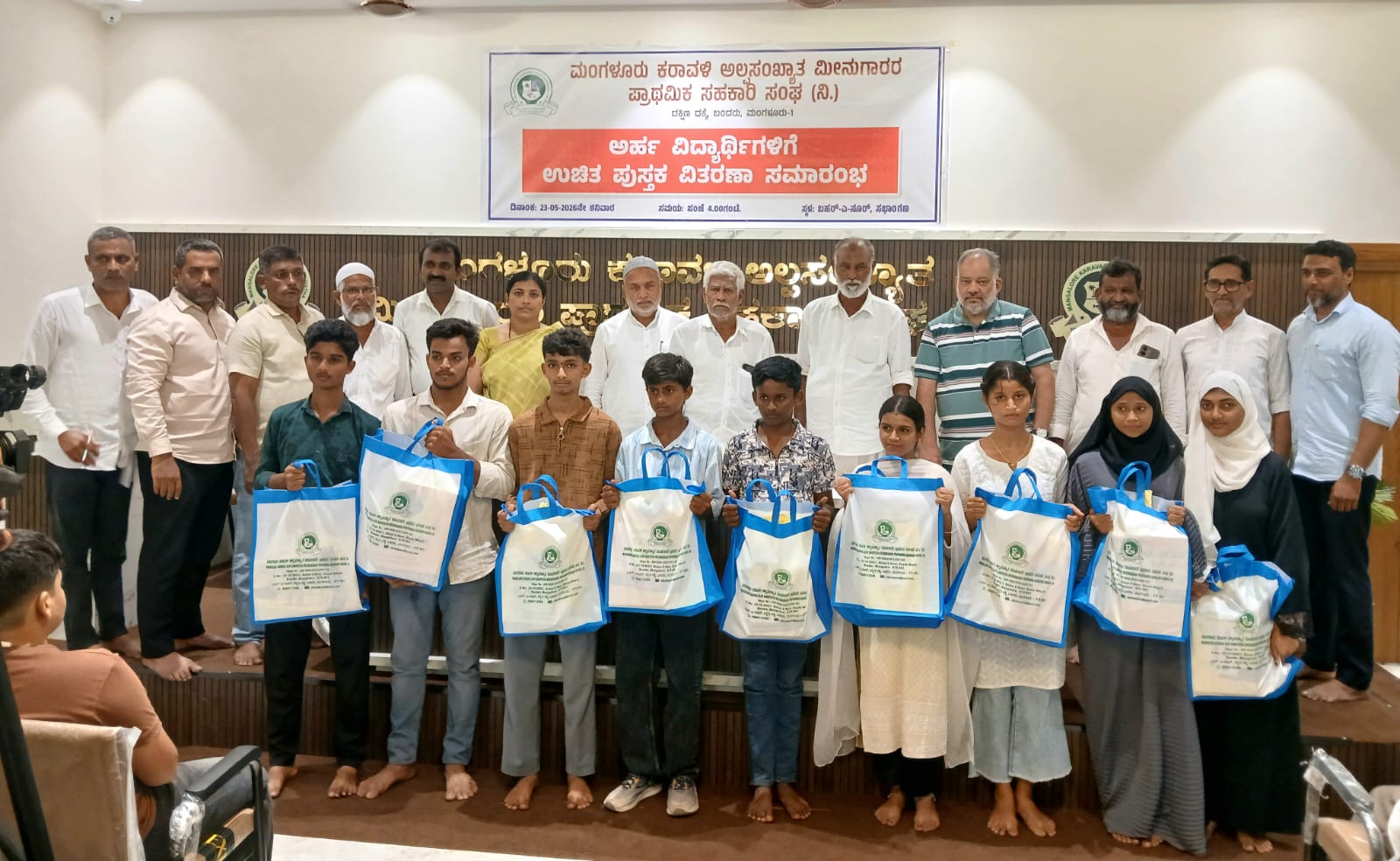
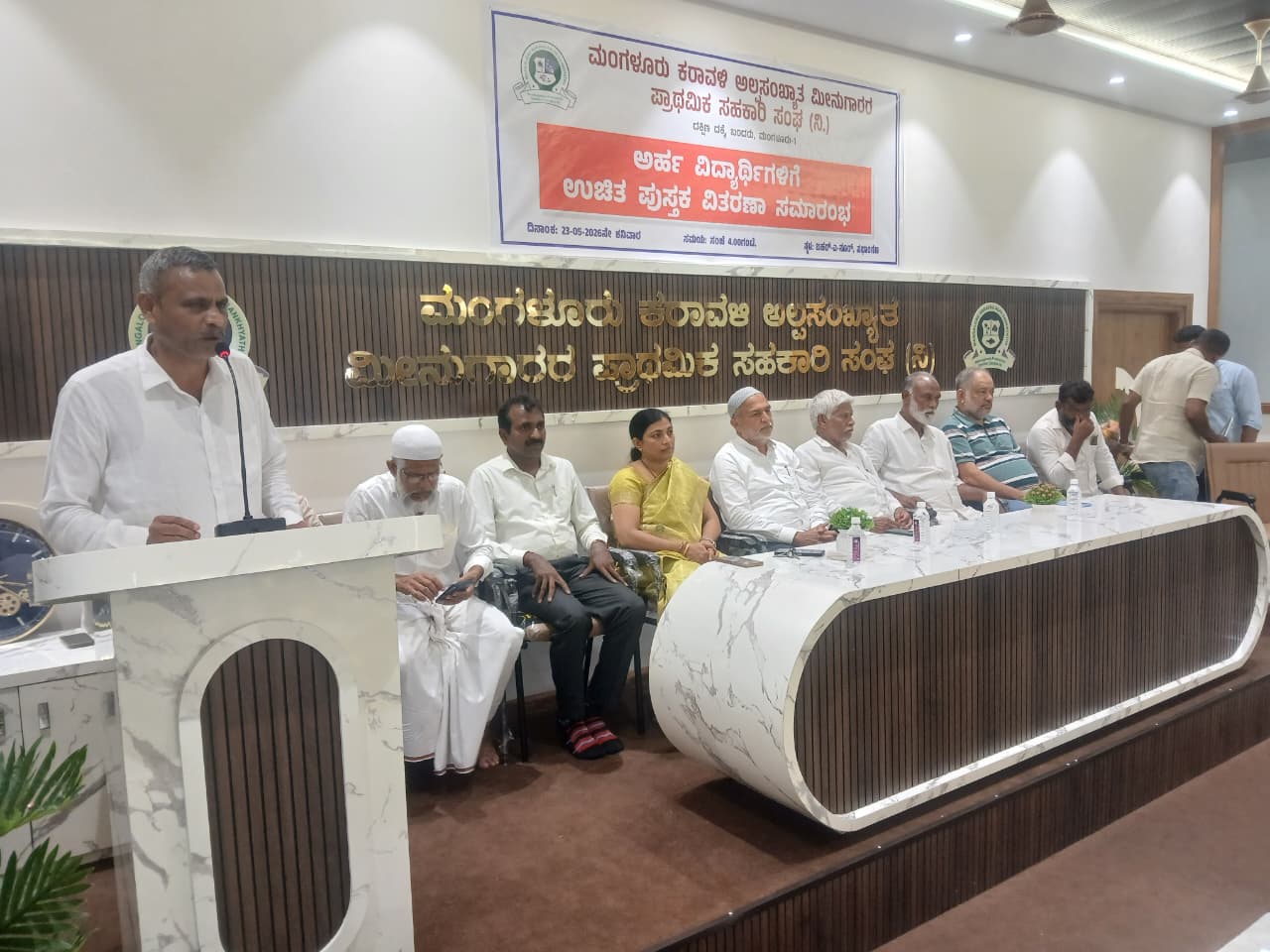
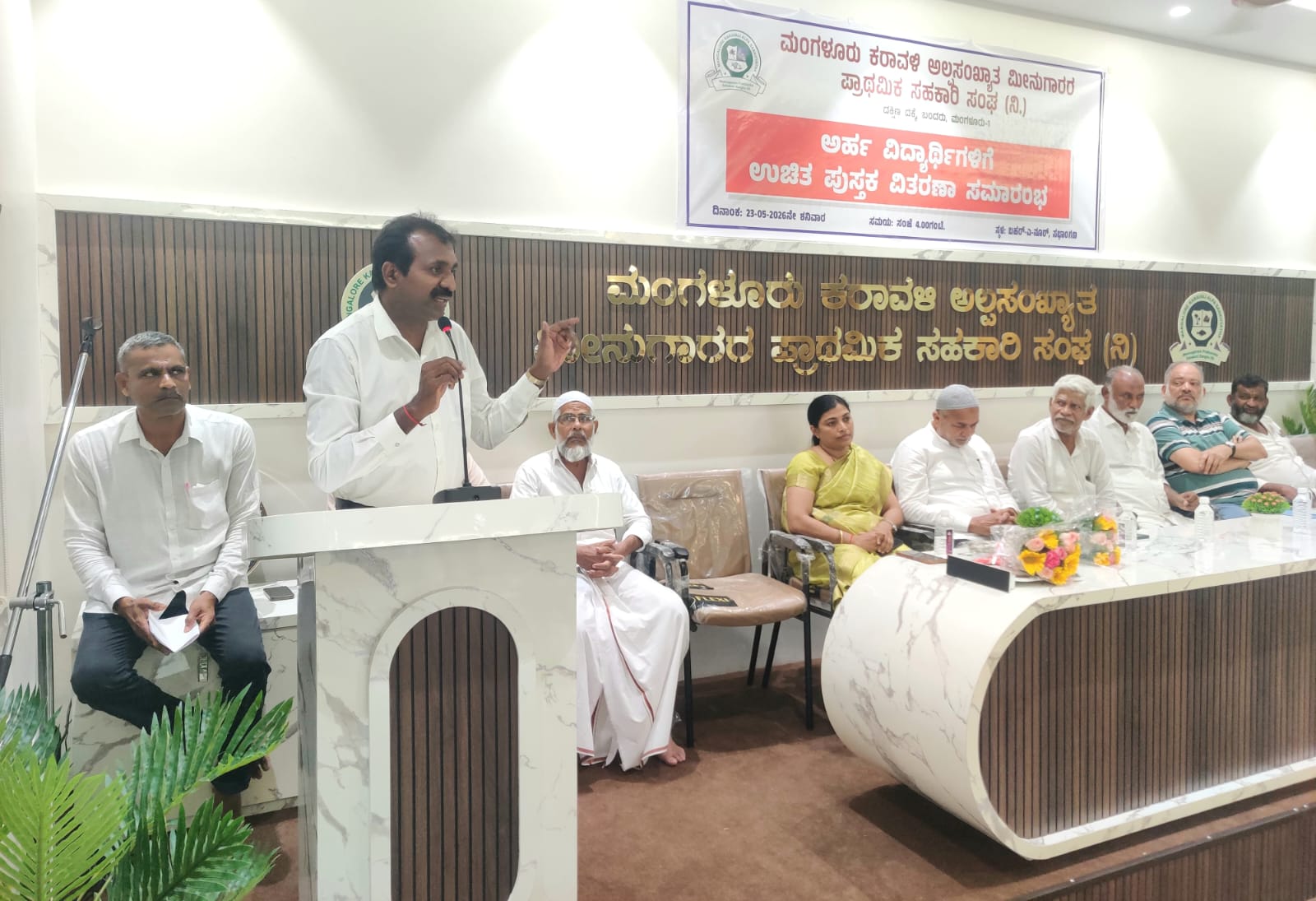
Emphasizing the importance of education as the foundation for a successful future, deputy director of the Fisheries Department Revathi said that many distinguished personalities in society have achieved success through hard work and education, and today’s children can also attain great heights through dedication and perseverance.
She was speaking at a school book distribution programme organized by the Karavali Minority Fishermen’s Primary Cooperative Society at Bahar-e-Noor Hall on Saturday, where school books were distributed to nearly 1,000 students from economically disadvantaged families.
Revathi stated that education is the greatest gift parents can give their children and stressed that no child should be deprived of learning opportunities due to financial difficulties. She praised the cooperative society for its commitment to social service, noting that it has been carrying out community-oriented activities for the past 24 years without focusing on profit or loss.
Addressing the gathering, Tyagam Harekal, state general secretary of the Physical Education Teachers’ Association, said that it is the true responsibility of every institution to contribute to society from its earnings. He lauded the cooperative society for extending support to underprivileged students irrespective of caste or religion and for encouraging education as a means of nurturing responsible citizens.
The programme was presided over by J Mohammed Isaq, president of the Karavali Minority Fishermen’s Primary Cooperative Society. Vice-president Ahmed Bava Bajal, directors B Ibrahim Khalil, S M Ibrahim, Mohammed Ashraf, M A Gafoor, B Mohammed Shali, S K Ismail, and Anwar A N R, along with chief executive officer D Abdul Latheef, were present on the occasion.
The event commenced with a Quran recitation by Ansar, a student of Harekal Twaiba Madrasa. The programme was compered by the Society’s Advisor Mohammed Mustafa Malar Harekal.
The initiative once again highlighted the cooperative society’s continued commitment to supporting education and empowering students from economically weaker sections of society.
source: http://www.daijiworld.com / Daijiworld.com / Daijiworld Media Network – Mangaluru (NJC) / May 23rd, 2026
Infrastructure of Compassion: A Forgotten Chapter of Bombay’s Past A story of faith, service, and a legacy that still lives
Bombay, at the turn of the 20th century, was a city in motion. Ships lined its docks, trains poured into its stations, and its markets drew traders from across the region. But alongside this restless movement of commerce was another, quieter stream of people – men and women who arrived not for trade, but for a journey of faith. They had come for Hajj.
From distant towns and villages across India, pilgrims travelled for days to reach the city. Many had never stepped beyond their regions before. They arrived with hope, with savings gathered over years, and with a deep sense of purpose. Yet, what awaited them in Bombay was not ease, but uncertainty.
By the early 20th century – around 1909, when the Musafirkhana was being conceived – Bombay had already become a major departure point for Indian pilgrims. Steamships operated by the British India Steam Navigation Company regularly carried Haj pilgrims from Bombay to Jeddah. Yet, despite the growing frequency of these voyages, space on ships was limited and uncertain. Pilgrims often had to wait in the city for days or weeks before securing passage, turning Bombay into a place of anxious waiting before a sacred journey.
Unlike today, when a pilgrim can contact an agent, arrange a visa, book accommodation, and board a flight directly to Jeddah or Madinah, the journey in those days began with waiting. There were no confirmed departures, no fixed schedules. Pilgrims first had to reach Bombay and then remain there – sometimes for days, often for weeks – until a ship became available.
In the crowded lanes near the docks, around Crawford Market and the Mandvi belt, they gathered in large numbers. Some found temporary shelter; many didn’t. Pathways became resting places. Open spaces turned into sleeping grounds. The city moved around them, but for them, time seemed to pause.
Contemporary accounts from the period speak of steamers departing from Bombay’s docks, carrying hundreds of pilgrims at a time – ships that symbolised both hope and uncertainty, as not everyone who arrived in the city could board them immediately.
Among them were the well-to-do, but also the poor, the elderly, and the vulnerable. Some had spent years saving for this journey. Others had come with the support of family and community. But once they reached Bombay, their differences faded. All of them shared the same uncertainty as well as hope.
In the language of faith, these pilgrims were known as ضیوف الرحمٰن — the Guests of Allah. Serving them was considered an honour, a noble act that carried both spiritual and social meaning. Yet here they were, waiting in conditions that did not reflect that dignity.
It was in these very streets that a man began to notice them. He was a businessman, part of Bombay’s vibrant trading world. Every day, he passed through these lanes on his way to work. At first, the sight may have seemed like a part of the city’s routine. But over time, it stayed with him – the faces, the waiting, the quiet endurance.
This was Mohammed Haji Saboo Siddique. He belonged to a family originally from Kutch, part of the Gujarati Memon community – widely known for its deep engagement in trade and its long-standing tradition of philanthropy. Like many from this community, his family had migrated to Bombay in search of opportunity, becoming part of the city’s growing commercial life while remaining rooted in a culture of giving. What he saw was not just a crowd. It was a need.
In the ethical framework of Islam, service to people is not seen as an optional virtue, but as a responsibility. The Prophet Muhammad ﷺ is reported to have said, “The best of people are those who are most beneficial to others.” This simple teaching has shaped generations of quiet, often unseen acts of service across communities.
For Saboo Siddique, the condition of these pilgrims was not just a social concern; it was a moral call. These were ضیوف الرحمٰن. To ease their hardship was not merely an act of kindness; it was a duty. And so, he chose to act.
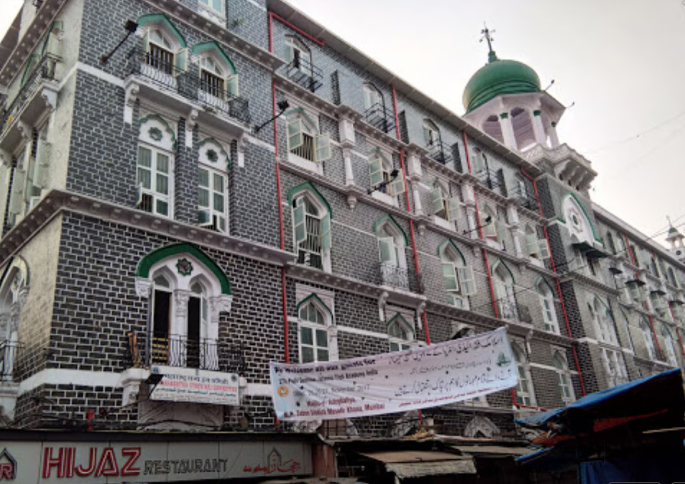
In the early years of the 20th century, he set aside a large sum – five lakh rupees, a remarkable amount for that time – to build a facility that would offer pilgrims what they lacked: dignity. The land he selected was not by chance. Located near Crawford Market, close to railway routes and within reach of Bombay Port, it stood at the very point where the pilgrims’ journey paused.
On that land Saboo Siddique built a four-storey structure – the Haji Mohammed Saboo Siddique Musafirkhana. It was not built for grandeur. It was built for purpose.
The Musafirkhana provided rooms, basic facilities, and a place to pray. For pilgrims who had spent days in uncertainty, it offered relief. It allowed them to rest, gather themselves, and prepare for the journey ahead. Over time, it became known quietly as a gateway – a place from where many took their final step towards Makkah.
But what gave this institution its strength was not only its structure. It was the spirit with which it was built.
Rooted in sincerity – Ikhlas – the Musafirkhana continued to serve pilgrims year after year, decade after decade. Long after its founder had passed, it remained a place of care. It witnessed the journeys of thousands, and over time, countless pilgrims who passed through its doors.
Saboo Siddique’s vision, however, did not end with pilgrims. He understood that service must reach beyond a single moment. It must touch different stages of life. Alongside shelter, he invested in education – establishing what would later become the M.H. Saboo Siddik Technical Institute, where young people could gain skills and build their futures.
He also turned his attention to healthcare. Historical records connected to his legacy note that he built six maternity homes across Bombay to serve poor women who had little access to medical care. At a time when safe childbirth facilities were limited, especially for the poor, this was a deeply significant intervention. It reflected a broader understanding of social responsibility – one that included not only travellers and students, but also mothers, families, and the most vulnerable.
Over time, these maternity homes became part of the city’s public health system. They were taken over and managed by the Bombay Municipal Corporation, and records continue to reflect this legacy. One such institution, the Haji Mohammad Haji Saboo Siddiqui Maternity Home, remains listed in municipal records in Prabhadevi. Another, at Imamwada, later developed into the M.H. Saboo Siddique Maternity & General Hospital, continuing to serve the public.
This continuity gives his work a rare depth. The same man who cared for pilgrims on their way to a sacred journey also cared for mothers bringing new life into the world. The same vision that built a shelter also built pathways for education and health.
As the years passed, the nature of travel changed. Ships gave way to flights. Systems became organised. Pilgrims no longer needed to wait in the same way. The long pauses that once defined the journey disappeared.
The Musafirkhana, in its original role, was no longer essential. But it did not fade away. The sincerity with which it had been built gave it a new life. The same building that once sheltered pilgrims began to host students – young men who had come to the city in search of education. Their journey was different, but their need was just as real.
In this transformation lies the true strength of Saboo Siddique’s legacy. He did not build for a moment. He built with intention.
Very little is known about his personal life. His family, his private world, remain largely absent from public records. But perhaps that absence is itself meaningful. It reflects a time when people were remembered not for what they owned, but for what they gave.
His institutions became his story. In a city where land was valuable and opportunity abundant, he chose to create something that would serve others – quietly, consistently, and without expectation.
The journeys have changed. The waiting has ended. But the intention remains. And it continues to serve.
source: http://www.radiancenews.com / Radiance News / Home> Focus / by Mohammed Talha Siddi Bapa / May 04th, 2026
Seohar Town (Bijnor District), BRITISH INDIA / NEW DELHI :
For too long, a handful of names have dominated the history of the years leading up to 1947 with Gandhi, Nehru, Jinnah, Patel being the most-often cited.
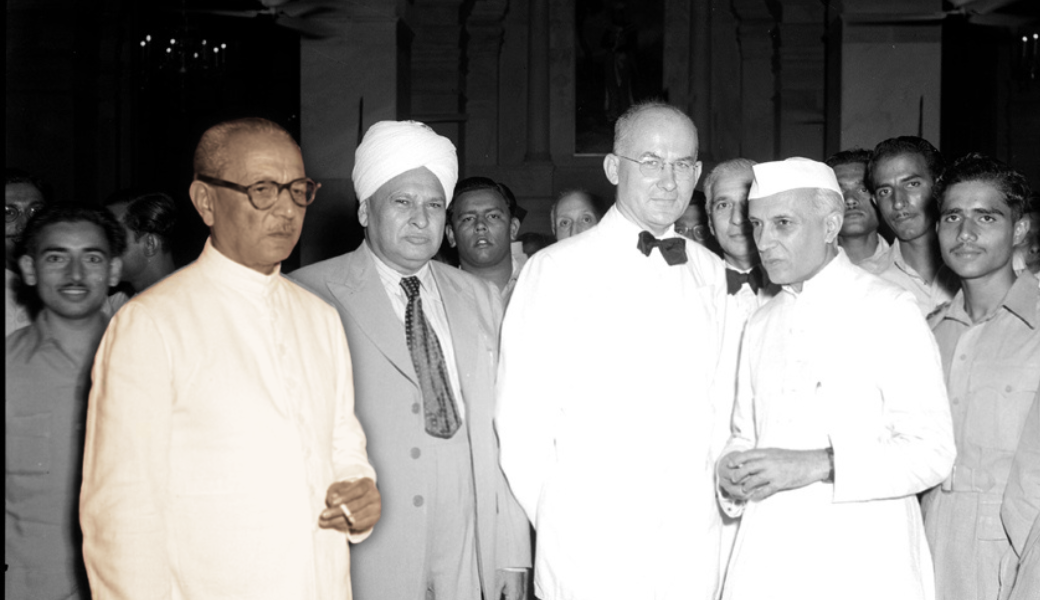
Pandit Jawaharlal Nehru and others at Governor-General‘s Dussehra reception held at Government House, New Delhi on September 29,1949. At extreme left is Asaf Ali, the then Governor of Orrisa. Edited via Canva. Photo: Photo Division, Govt. of India
For several years I worked in a publishing company situated on the bustling Asaf Ali Road, a road that serves as a cordon sanitaire between the squalor of Old Delhi and the (relative) order of New Delhi. Once an important business hub, by the time I went to work there in the late 1980s, this long stretch of colonnaded corridors with a warren of densely-packed offices wore an unmistakably grubby, down-at-heel look. At the head of the road, stood the statue of Asaf Ali in a derelict enclosure near Delhi Gate (or Dilli Gate as the locals pronounced it). The dark statue, generously speckled with startlingly white droppings from the many pigeons that frequent this neighbourhood, looked forlorn, especially so with the shervani-clad, bespectacled figure standing with hands clasped in a peculiarly supplicatory posture.
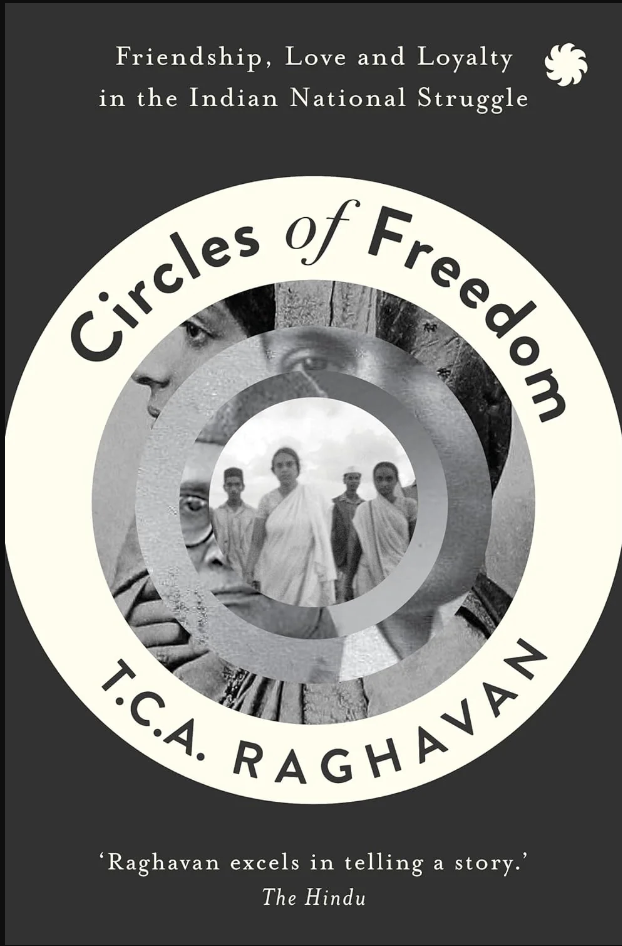
TCA Raghavan, Circles of Freedom: Friendship, Love and Loyalty in the National Freedom Struggle, Juggernaut (2024)
I must confess that in the four years I worked at Asaf Ali Road and passed this statue twice a day, morning and evening, it evoked no curiosity in me and I knew virtually nothing about Asaf Ali. Perhaps, his wife Aruna Asaf Ali’s name seemed more familiar given that she was still alive and active. I suspect I was not alone in this. For most people in Delhi, Asaf Ali is a forgotten footnote from long-ago history lessons, one of the many ‘obscure’ people who were part of the national freedom struggle. If the situation is so dismal in Delhi, where he had lived and worked, a city that had been home to his ancestors, I suspect it can only be worse in the rest of the country.
In writing Circles of Freedom: Friendship, Love and Loyalty in the National Freedom Struggle, TCA Raghavan corrects an old wrong. For far too long the tall poppies of the freedom movement have overshadowed the countless others who devoted their entire lives to the cause of independence and struggle against colonial rule. For too long, a handful of names have dominated the history of the years leading up to 1947 with Gandhi, Nehru, Jinnah, Patel being the most-often cited.
Over the past decade, with history being rewritten by new, dominant players, new names are being invoked and icons fashioned from often slender resources. In this unseemly clamour for space and recognition, some names have almost slipped through the crevices of the popular imagination, neglected and overlooked by the professional historian or, at best, relegated to the lowest rungs in a carefully crafted hierarchy of heroes. A park or a road named after the lesser-known evokes neither curiosity nor interest in their lives and the place they occupied in the shaping of a young nation. Asaf Ali (1888-1953) is one such person.
Raghavan’s book, however, is not a straightforward biography for it is not about Asaf (as the author calls him) alone. Instead, he chooses to tell his story through five protagonists who were inextricably tied by the threads of friendship and solidarity: Asaf Ali, Sarojini Naidu, Syud Hossain, Syed Mahmud and Aruna Asaf Ali. While Aruna enters this narrative quite late when she marries the much older Asaf, the other four meet in England just before the Great War where the three men have gone to study and Naidu, recuperating from an illness, is the erudite diva, eloquent poet, ardent nationalist and a veritable magnet for impressionable young men dreaming impossible dreams.
Over the next four decades, they meet, write long letters to each other, take a lively interest in each others’ lives and careers but ‘what gave meaning to their lives,’ as Raghavan notes in his conclusion, ‘was the great enterprise they chose to become part of’. And so it was the freedom struggle that not just formed the core of their relationship but also, in effect, shaped their lives. Were it not for this one singular, overwhelming zeal to seek freedom for their country, they could very well have lived other lives: Naidu would have remained a dulcet-voiced poet, both Asaf and Mahmud successful and wealthy barristers, Hossain a journalist and Aruna a do-gooder with no special qualifications. But such were the exigencies of the times that all five were caught up in different ways and different degrees with the national freedom struggle and that singular ‘great fight’ defined their lives.
With three extremely well-received books behind him – Attendant Lords: Bairam Khan and Abdur Rahim – Courtiers and Poets in Mughal India, The People Next Door: The Curious History of India’s Relations with Pakistan and History Men: Jadunath Sarkar, G. S. Sardesai, Raghivir Sinh and Their Quest For India’s Past – Raghavan, a former diplomat, can recreate history with the aplomb of a master story-teller and the meticulousness of a professional historian. Here, he weaves the events of the tumultuous years leading up to Independence with the lives of his five principal characters, keeping Asaf at the centre of his concern. Through Asaf, he teases out the nuances and dilemmas of the moderate Muslims in India who refused to be enamoured by the lures and promises of the Muslim League and remained steadfast in their devotion to the Congress and, by extension, Nehru.
The extreme deference that the nationalist Muslim leaders displayed towards Nehru is noted; each time a Muslim leader attempted to bring the ‘communal problem’ to Nehru’s notice, the latter would brush aside these concerns by saying, ‘The real problem is a political problem – the conflict between an advanced organisation like the Congress and a politically reactionary organisation like the League.’ Concerns of leaders such as Asaf who believed ‘self determination was preferable to a union that was forced’ were disregarded. Mindful of the suspicion that Muslim leaders within the Congress evoked amongst their colleagues, Raghavan notes, ‘Because he was a Muslim, the impression among some was that he was a fifth columnist for the League’. The coming of independence didn’t make it any easier for those Muslims who chose to stay on in India. Nationalism increasingly began to mean thinking and living in the Congress way and none other. Those who lived or thought another way came to be regarded as anti-national, a phenomena we see repeated in the New India that is Bharat, except that it is the ruling Bharatiya Janata Party that has replaced the ideological hegemony of the Congress.
Different readers will possibly take different things from this book: the broad brush strokes that delineate milestone moments from modern Indian history, Gandhi’s irresistible call to Quit India, the unfurling of the national flag at Gowalia Tank by a young Aruna that catapults her to national fame, the detailed account of jail-life for a group of high-profile, political prisoners inside the Ahmadnagar fortress, a meticulous dove-tailing of accounts from different sources and disparate perspectives to create a bright, colourful and immensely readable patchwork quilt of modern Indian history, and much else in this engrossing book.
I, however, was left with an ineffable sadness and a sense that the more things change, they remain the same – at least for India’s Muslims. Despite his many sterling qualities of heart and mind, despite a fine legal education, Asaf neither made a mark as a lawyer or a politician. Though seemingly destined for greatness, having aided fate by preparing himself assiduously for a life devoted to the larger good, Asaf never quite scaled the heights he aspired to. The few successes that came his way, such as a seat in the Constituent Assembly (from Delhi) or fighting high-profile cases such as those of Bhagat Singh or Shaikh Abdullah, were marred by controversy or a smaller share in the limelight than he felt he deserved. The mantle of statesmanship that should have fallen on him with the passing of Dr Ansari and Hakim Ajmal Khan, both national leaders from Delhi like him, and a seat at the high table that should have been offered to him as a veteran Muslim leader, did not happen.
Given the price paid by far taller leaders in the Congress – such as C. Rajagopalachari and Bhulabhai Desai – for showing initiative and thus offending the party high command, shows the extent to which the Congress, not unlike the League, was becoming a personality-dominated organisation. Asaf’s case was compounded – to use a modern expression – by the optics; his timorousness, his ‘going to pieces’ fretting with worry over his wife during his long years of incarceration, his marital woes, the shadow of mistrust and suspicion that clung to him all his life combined to create a persona that failed to inspire confidence.
For all his loyalty to Nehru, Asaf was not chosen for any cabinet position or placed on any important committee. Instead, he was sent as Ambassador to Washington, brought back to serve as Governor of Orissa and then sent again as Ambassador to Sweden where he died barely a few months into his tenure.
Just as being a moderate Muslim defined Asaf’s public persona, so did his marriage to Aruna. From a political novice she rapidly transformed into a stormy petrel causing immense anxiety, consternation and eventually a sadness in her husband. Raghavan is to be credited for staying steadfastly away from prurient gossip and portraying the changing contours of the marriage objectively: ‘… in fact the relationship had started changing quite early in the marriage and here Aruna’s own political journey was the driving factor.’ Reading between the lines of Raghavan’s carefully crafted text, one picks up the whiff of misogyny in the higher echelons of our national leadership. While acknowledging Aruna’s bravery and patriotism, Gandhi saw her as a ‘perpetual rebel’ and Nehru went so far as to call her ‘hysterical’ on one occasion – something Aruna never forgot.
Incidentally, Gandhi, who was vehemently opposed to inter-religious marriages and had opposed his son Manilal’s relationship with Fatima (a Gujarati Muslim) and Hossain’s alliance with Nehru’s sister Sarup Rani (later known as Vijay Lakshmi Pandit), endorsed Asaf’s marriage to Aruna. Read Circles of Friendship to find out why.
Rakshanda Jalilis a Delhi-based writer, translator and researcher.
source: http://www.thewire.in / The Wire / Home> Books / by Rakshanda Jalil / August 29th, 2024
The hijab ban in schools and colleges was also on the agenda, but the State government revoked it this week.
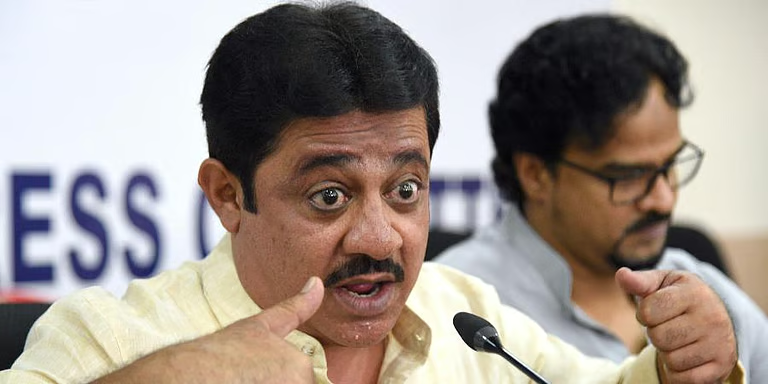
Congress MLA Zameer Ahmed Khan (Photo | EPS
Bengaluru :
With members of the Federation of Karnataka State Muslim Organisations set to release a report on the performance of the Congress-led government under Siddaramaiah in implementing promises made in the party manifesto, there is a growing sentiment among sections of the community that the collective Muslim leadership within the government has failed.
Tanveer Ahmed of the organisation said the Congress has been in power for three years, and had released its manifesto in 2023. “We have done research on whether they have fulfilled their manifesto promises,’’ he said.
The report, to be released on Saturday, will include ten points, including the promise to act against organisations spreading communal hatred, take up the cow slaughter law, 4 per cent Muslim reservation (category B) promise, anti-conversion law, budget for minority educational institutions, and other issues. The hijab ban in schools and colleges was also on the agenda, but the State government revoked it this week.
According to Ahmed, these promises were are not fulfilled. Asked if the convention has been organised due to the brouhaha over denial of the Davanagere South bypoll ticket to a Muslim candidate, and the party’s action against Muslim leaders, he said there is no link.
“We have been preparing this report for the past eight months,’’ he said. However, he said the issue could come up during the convention.
Meanwhile, senior Congress leaders are alleging that this convention is backed by Housing Minister Zameer Ahmed Khan and MLC Naseer Ahmed. Post the Davanagere bypolls, Naseer was removed from the post of CM’s political secretary, and a section of leaders had also criticized Zameer Ahmed for not actively campaigning for the party candidate.
Tanveer Ahmed said their convention is not people centric, but focuses on issues. “The collective Muslim leadership has failed. They were elected by the same Muslim community, but have done nothing in return,” he said.
source: http://www.newindianexpress.com / The New Indian Express / Home> Karnataka / by Express News Service / May 16th, 2026
A group of autorickshaw drivers, vendors and masons under Bijapur Youth Coverage pooled funds and labour to build a house for a destitute widow and her children, supporting families every month through community contributions.
The image on the left shows the old condition of the home , the image on the right is the new house.
Vijayapura :
At a time when many wait for government assistance to change their lives for the better, a group of daily wage workers from Shahapeti in Vijayapura is on a mission — to help the poorest of the poor in society.
Under the banner of Bijapur Youth Coverage, the group, comprising autorickshaw drivers, vegetable vendors, painters, automobile mechanics, carpenters and masons, who struggle to make a modest living themselves, has built a house for a poor Hindu widow, who has been living in a deplorable condition with her three children.
Kasturi Rudagi, a domestic worker from Shahapeti, lost her husband a few years ago. She had been living with her children in a crumbling hut.
“After the death of her husband, Kasturi began working as a domestic help to raise her son and two daughters. Unfortunately, she suffered a stroke that rendered her immobile. This forced her to depend on others for help,” Mehboob Bagwan, a vegetable vendor, said.
Bagwan, who is part of the group, said, “Seeing Kasturi’s plight, we decided to help her. We collected nearly Rs 1.5 lakh, while masons and other construction workers from the group constructed a small house for her. Our efforts have won many hearts.”
Bagwan said Kasturi’s elder son, who is around 14, quit school some time ago and is now working to take care of his mother and sisters, who are studying in a government school.
While masons, centring workers, carpenters and electricians built the house for free, others in the group made donations and raised money for the noble cause, he said.
Members of Bijapur Youth Coverage hand over the house to Kasturi Rudagi
The proposal to build the house was initiated by Fayaz Honnutagi, Babulal Chaudhary, Mateen Meeradhe, Babajan Ukkali, Sadik Chaudhary and Zubair Mogare of the group, Bagwan said. Every month, members contribute Rs 100 each towards a fund set up by the group. It offers financial help to the needy, besides providing groceries to at least five families every month.
“For us, nothing is bigger than humanity. People from all communities are with us. Our members are only rich in heart. We are not doing this for publicity, we only want to do something good for society,” said Fayaz of Bijapur Youth Coverage.
source: http://www.newindianexpress.com / The New Indian Express / Home> Good News / by Firoz Rozindar / May 17th, 2026
Nine people have died so far in the Bargi Dam accident in Jabalpur, Madhya Pradesh, while relief and rescue operations are underway. As soon as the accident was reported, a labourer was the first to start the rescue operation. Before the rescue team arrived, Ramzan, who was busy constructing a bridge, risked his life to save the lives of many people and did this work with great courage.
In fact, a bridge construction work was going on a short distance from where the accident took place near Bargi Dam. When the workers saw the cruise ship sinking, a laborer immediately jumped into the water without any resources to save the people and started the rescue work.
Ramzan, a resident of West Bengal, said that he saw the cruise ship sinking with his own eyes. He immediately took a rope and jumped into the dam from a height of about twenty-five feet. He pulled out six people, four of whom survived while two could not survive.
After visiting the scene, the Chief Minister of Madhya Pradesh announced that those who tried to save the drowning people would be given a reward of Rs 51,000 each.
Bandar Kumar Yadav, who was present at the scene, said that he was a resident of West Champaran and about thirty-five workers were working there. Seeing the cruise ship going out of control, he called out to the pilot to stop and asked his colleagues to bring a rope, but the pilot did not listen and went ahead, after which the cruise ship sank.
After that, several workers and colleagues went into the water to help Rajkumar from Bihar and Shewanath from Gorakhpur said that the cruise had already capsized before they reached it. Some passengers had already fallen into the water and were pulled out by the workers.
Those working on a project under the central government’s Jal Jeevan Mission, were just a short distance from the spot where the cruise ship capsized. They responded within moments and immediately formed a makeshift rescue team.
Armed with only ropes, the workers, displaying extraordinary courage and human spirit, jumped into the raging waves and were able to safely pull out about a dozen passengers in the critical initial moments of the accident, as described by locals.
Among these selfless heroes was 22-year-old Ramzan from West Bengal, whose daring leap was one of the most iconic scenes of the rescue. He tied a rope to his body and jumped from a cliff about 25 feet high, swimming through the stormy waters to reach the stranded passengers.
“I saw the boat sinking and didn’t waste a moment,” Ramadan said, speaking to The Times of India. “I immediately picked up a rope and jumped into the water. He was able to pull out six people, four of whom survived while two could not be saved.”
The accident occurred on Thursday when a cruise ship capsized in a dam due to strong winds and a storm.
Twenty-five people were rescued safely in the incident, while nine bodies have been recovered. Police are investigating the matter.
source: http://www.awazthevoice.in / Awaz, The Voice / Home> Stories / by Aasha Khosa / May 03rd, 2026