Uttar Pradesh’s highest honour Yash Bharti award was given to 46 personalities on Monday. Among them, nine Muslims were conferred the award by Chief Minister Akhilesh Yadav in presence of Mulayam Singh Yadav. The award is given annually by Culture Department of UP government.
Yash Bharti comes with a cash prize of Rs 11 lakh, citation and a shawl. The awardees are also eligible for a monthly pension of Rs 50,000 for their life.
Yash Bharti award were constituted in 1994 by the then CM Mulayam Singh Yadav but were discontinued between 2007 and 2012 by Mayawati. It has since been revived by CM Akhilesh Yadav.
1. Ustad Ghulam Mustafa Khan Classical singing Born- 3 march 1931, Badaun
Belong to Rampur Sahaswa Gharana in classical singing. Conferred honorary citizenship of Baltimore and Maryland in 1986. Padamshri in 1991, Sangeet Natak Academy Award in 2003, Padam Bhushan in 2006 and Rashtriya Tansen Award in 2008.
2. Professor Irfan Habib Historian Born-12, August 1931 in Baroda. D.Phil from Oxford
Chairman, Indian Council of Historical Research 1987-93, 1993-96. Jawaharlal Nehru Fellowship in 1968-70, D.Lit from BHU (2008), Vishwa Bharti (2008), Kalyani Vishwavidyalaya (2009), North Bengal University (1990) and Ravindra Bharti University (1989). Padam Shree in 2005.
3. Dr Nahid Abedi Sanskrit literature and philoshophy Born—12 February 1961, Mirzapur D. Lit from Lucknow University in 2009. Padam Shree awardee. Several books and papers published in Sanskrit.
4. Iqbal Ahmed Siddiqui Ghazal singer Born—November 9, Allahabad
Performed at All India Radio and Doordarshan. Released 17 cassettes. Sang one song in film Rama O Rama.
5. Anwar Jalalpuri Urdu poetry and writing Born—6 July 1947
Several awards on Urdu poetry like UP Gaurav Samman, Mati Ratan Samman, Iftikhar-e-Meer Samman etc.
6. Dr Nawaz Deobandi Poet and educationist Born—16 July 1956, Saharanpur
Chairman, UP State Urdu Academy. Established Rafiqul Mulk Mulayam Singh Yadav Urdu IAS Study Center in Lucknow. Several awards like Kaifi Azmi award, Dushyant award, Rotary award etc.
7. Aleemullah Siddiqui Artist Born—10 June 1953, Lucknow
Artist using stem of wheat plant, painting on cloth etc. Acted in play Dilli Ka Akhirir Mushaira and Main Urdu Hoon.
8. Imran Khan alias Imran Pratapgarhi Literature Born—6 August 1987 Pratapgarh.
Internationally acclaimed poet and attended Mushairas in Oman, Bahrain, Dubai, Sharjah etc. Received Urdu Academy award in Saudi Arab, Red Cross Society Orissa’s Vishist Vidyarthi award and Sadbhavna award by Maharashtra Municipal Corporation.
9. Wazeer Ahmed Khan Chess Born—4 February 1947, Rampur
Participated in Chess National B competition in 1972, 1980, 1995, 1999, 2004 and 2008. UP Champion in 2004-2005. First prize in Asian Senior competition in Iran in 2015.
source: http://www.twocircles.net / TwoCircles.net / Home> Arts-Culture / by TCN Staff Reporter / March 22nd, 2016
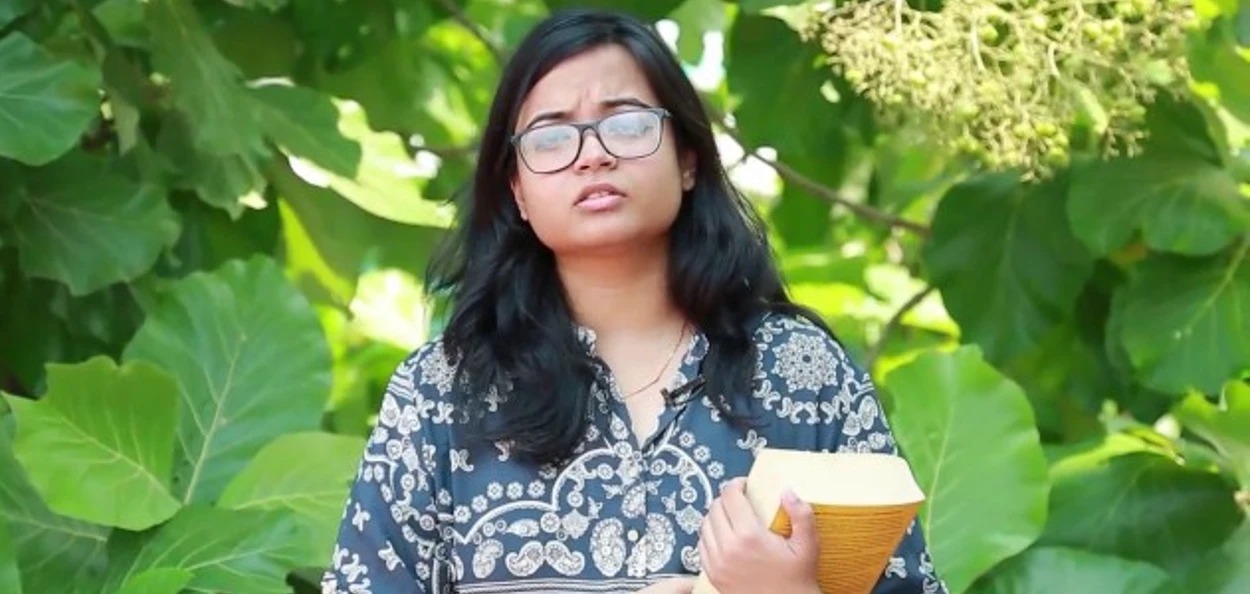
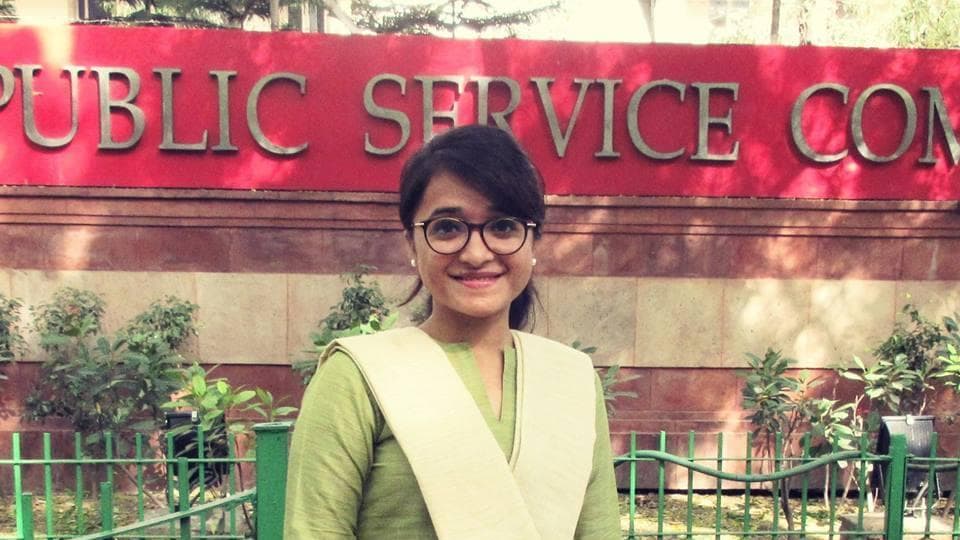
Her hard work paid off and she eventually clinched success on her third attempt. She cleared both her Prelims and Mains and went on to top the interview round as well.
IAS Zainab Sayeed
New Delhi:
Do you happen to know who holds the prestigious title for achieving the highest marks in the interview round of the UPSC exam over the last decade? If you’re guessing it’s Tina Dabi, Srushti Deshmukh, Kanishka Kataria, or Shruti Sharma, you might be surprised.
It’s none other than Zainab Sayeed who stands as the record-holder for securing the highest marks in the UPSC interview round. This remarkable individual from Kolkata attained an outstanding score of 220 out of 275 marks in the interview segment. Her remarkable achievement took place in 2014 when she successfully navigated the UPSC Civil Services Exam, amassing 731 marks in the main examination.
Zainab clinched the All-India Rank (AIR-107) and to this day remains unparalleled in terms of interview performance. However, Zainab’s journey with UPSC wasn’t without its challenges. She encountered setbacks in her initial two attempts, failing to clear even the Prelims in her first endeavours.
Despite these early setbacks, Zainab refused to be deterred and remained steadfast in her belief in herself. Her relentless dedication and perseverance eventually paid dividends, culminating in her triumphant success on her third attempt. She not only cleared both her Prelims and Mains but also emerged as the top performer in the interview round.
According to Zainab’s account, the interview lasted for approximately 25 minutes and revolved around a diverse array of topics, including current affairs, international affairs, foreign direct investments, and discussions on the European Union.
It’s noteworthy that Zainab hails from Kolkata and completed her graduation in English literature from St. Xavier’s College. Subsequently, she pursued her MA in mass communication at Jamia University, Delhi, graduating in 2011.
Following her post-graduate studies, Zainab made the decision to embark on the rigorous journey of UPSC exam preparation. Despite facing disappointments in 2012 and 2013, she persisted and ultimately tasted success in 2014.
source: http://www.zeenews.india.com / Zee News / Home> India> UPSC Success Story / by Zee Media Bureau, edited by Mahi Mishra / February 13th, 2024
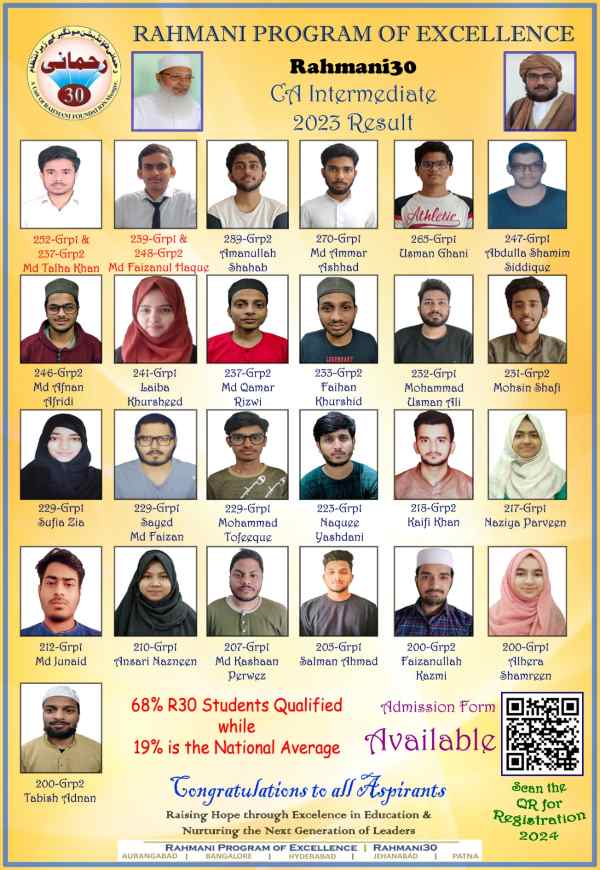
In a remarkable triumph, Rahmani30, a trailblazing educational initiative dedicated to nurturing deserving students, recently attained an extraordinary milestone in the ICAI CA Intermediate exams.
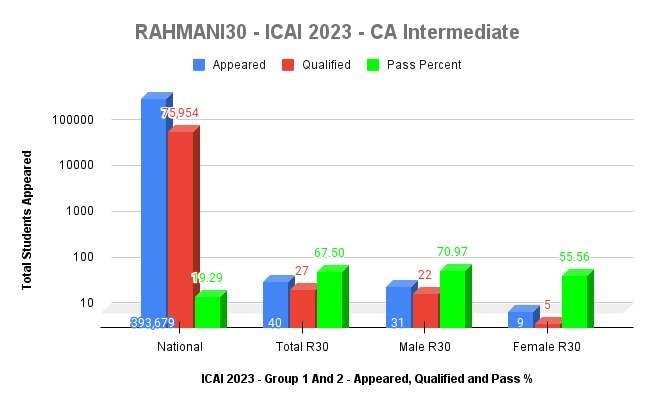
Amidst a national average success rate of around 19%, Rahmani30 soared high with an unparalleled 67.5% achievement, etching an indelible mark in the institution’s history and setting an exceptional benchmark.
The ICAI CA Intermediate examination, a rigorous professional test administered by the Institute of Chartered Accountants of India, represents the pivotal second phase in the Chartered Accountancy course. Comprising two groups with four papers each, it stands distinct from the Senior Secondary School Examination, commonly known as 10 + 2 or Intermediate.
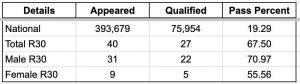
The 2023 ICAI CA Intermediate exam saw an impressive participation of 393,679 students undertaking the Group 1 & Group 2 tests, with 75,954 candidates successfully qualifying—a cumulative pass rate of 19.29%. In striking contrast, Rahmani30’s cohort of 40 students showcased an outstanding 67.5% success rate, underscoring the institution’s commitment to academic excellence. Noteworthy were the November 2023 results, revealing an outstanding 80% success rate among female students in CA Intermediate Group 1, celebrating the remarkable achievements of women in this domain.
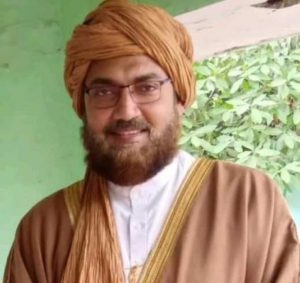
Ameer E Shariat Hazrat Maulana Ahmad Wali Faisal Rahmani sb., the esteemed patron of Rahmani30, extends heartfelt congratulations to the students, faculty, donors, ambassadors, management, and the wider community for this exceptional accomplishment. He lauds the unwavering dedication and diligence exhibited by the students, expressing immense pride in Rahmani30’s ceaseless pursuit of empowering students through educational excellence.
Maulana Ahmad Wali Faisal Rahmani, President Rahmani30
Expanding upon this achievement, one could delve into the individual stories of some standout students, the unique teaching methodologies adopted by Rahmani30, the impact of community support, and the future aspirations of the institution in continuing this trajectory of success and empowerment.
Important Update:•
The application form for the 2024 session is now available online for Rahmani30 entrance examination
• Students currently in *8th, 9th, and 10th* grades are eligible to apply
• A test will be conducted for students in *10th* grade applying for admission to the *11th* preparatory course for Medical, Engineering & Commerce (CA/CS/CLAT).
• Students from *8th, 9th and 10th* grades will be selected for the *Rahmani30 Junior Program*.• Additionally, students from *8th, 9th, and 10th* grades will be chosen for online training this year.
Your participation and prayers are deeply appreciated.
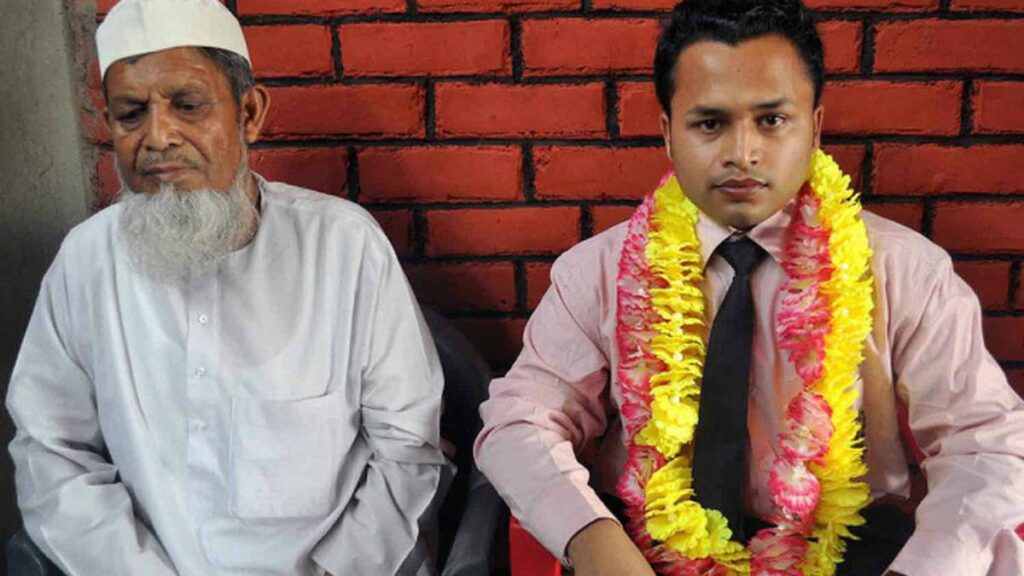
Manipuri boy Mohammad Ismat along with his father who scored the highest mark in the All -India Senior Secondary Certificate Examination.
Mohammad Ismat, the Manipuri boy who has topped the all-India CBSE Class XII Board examinations in the science stream, is nurturing a dream to top the Civil Services Examinations, too.
By way of preparation, he plans to join St. Stephen’s College, Delhi, to do B. Sc. (Honours).
Ismat hails from Lilong Haoreibi in Thoubal district, 15 km from Imphal. The village has very poor electricity supply and no internet connection.
“I also want to become a topper in the Civil Services Examinations conducted by the UPSC. I want to serve my country for peace and communal harmony. For now, I want to take admission to St. Stephen’s College to do B.Sc. (Honours) in Physics,” he told The Hindu .
He brought laurels to his school, Zenith Academy in Imphal, where he joined after completing Class X at Sainik School, also in Imphal. “I studied Class IX and X in Sainik School and passed the Class X board examinations with 92.4 per cent. I left Sainik School because of financial constraints,” he said.
Ismat’s mother died when he was only 18 months. His father, Maulana Bashirur Rahman, is a teacher in a primary school. He is the seventh child and only son of the family; six elder sisters are all graduates.
After school hours, Ismat had to study mostly in candlelight, as electricity is available for hardly three-four hours a day in the village. Ismat scored 495 out of 500 marks, securing centum in mathematics, chemistry, fine arts and home science and 98 in English and 97 in physics.
source: http://www.thehindu.com / The Hindu / Home> News> India> Other States / by Sushanta Talukdar / May 30th, 2012
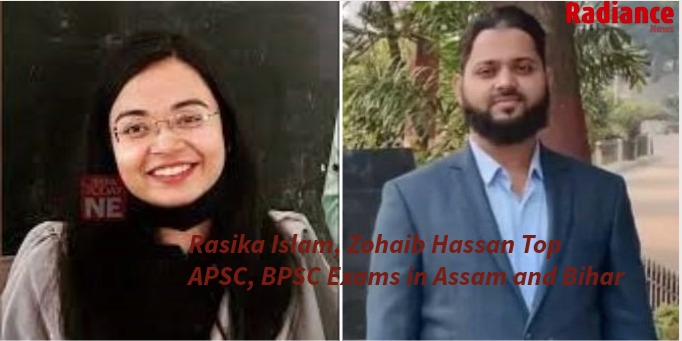
Rasika Islam of Assam’s Dhubri district topped Assam Public Service Commission (APSC) and Zohaib Hassan from Bihar’s Purnia district in Bihar topped BPSC examination for the recruitment of assistant professor in engineering colleges.
Khursheed Khan of Dibrugarh, a Central government employee, who joined as Inspector of Income Tax in 1996 and was promoted to IT Officer in 2005, said, “We are thrilled at the achievement of Rashika Islam. It has been amazing journey from Inspector of Taxes to ACS No.1 within a span of 3 years. A living example of women empowerment, she has brought laurels to her community and entire Dhubri district. Dhubri has the lowest literacy rate in Assam – 60 percent; it is also the district with highest percentage of Muslims – 75 percent. Assam’s literacy rate is around 75% while Muslims’ literacy rate is less than 65 percent.
On the performance of Muslims in APSC, he said, “Overall performance of Muslims in the APSC has been very dismal. In the current list out of 86 candidates selected for ACS cadre, 8 are Muslims, 6 male and 2 female. Out of 65 candidates selected for APS cadre, 4 are Muslims, 3 male and 1 female. Muslims account for more than 1/3 of the state’s population. However, their share in the government job is dismal.”
Hailing from Guaripur of Dhubri district, Rasika is the toper of Assam Civil Services (ACS) 2022, result of which was declared by APSC on April 17. She cleared APSC 2018 exam in her first attempt and was selected as Inspector of Taxes and posted in Dhubri. She has worked for three years as Inspector of Taxes. Her husband Roushin UL Alom is also an ACS and working as election officer in Dhubri district. Her father Shahidul Islam is voluntarily retired colonel of Indian Army.
Rasika scored 89 percent in ICSE-Class X exam, did her XII from Narengi Army School and graduated from Cotton College in 2016.
On the performance of Muslims in BPSC, Dr Maskoor Usmani, former President of AMU-SU, said, “Almost 7 percent of Muslim candidates have qualified for the 67th BPSC examination in 2017. According to reports, among 101 Muslim candidates who have qualified, 50 imparted coaching from Bihar Haj Bhawan, which has set a paradigm for change. I am sure in coming times more Muslims will qualify such examinations and will serve the state and country. Muslims constitute 17% of Bihar’s population and I believe this is a positive step towards achieving affirmative action. More needs to be done to get the results of 20 percent.”
source: http://www.radiancenews.com / Radiance News / Home> Latest News / Radiance News Bureau / January 19th, 2024
Anjuman-I-Islam President Dr. Zahir Kazi, a Padma Shri awardee, is recognized for his 40-year commitment to education, especially among minorities, and his contributions to de-radicalization initiatives. Learn more about his impactful work and achievements.
Dr Zahir Kazi, President of the city-based educational organisation Anjuman-I-Islam, is among the recipients of Padma Shri awards, announced on the eve of the Republic Day.
Kazi is among eleven people who got three Padma awards – Padma Vibhushan, Padma Bhushan and Padma Shri – from Maharashtra. He has been conferred the fourth-highest civilian awards in the Literature and Education category in recognition of his work in promoting education, especially among minorities.
Dr Zahir Kazi And Education Field: A 40 Year-Old Bond
Kazi has been involved in the field of education for the last 40 years, including 13 years as the head of 150-year-old Anjuman-I-Islam, which runs around 97 schools, colleges, hostels, orphanages and other educational organisations across the state, catering to over one lakh students, majority of them Muslims.
He has been credited with setting an Integrated Technical Campus offering diploma, degree and post-graduation programmes in in Engineering, Architecture and Pharmacy and Polytechnic spread across 10.5 acres of land at New Panvel as well as a law college.
Insights Into The Personal Life Of Dr. Zahir Kazi
Born in Ponda, Goa, Kazi is celebrating his 70th birthday on Friday (January 26). He got his MBBS from Goa Medical College and MD (Radiology) from the city’s Nair Hospital. A practising Radiologist, Kazi is the Director of Prime Diagnostic Centre at Nagpada and also provides consultancy at various hospitals.
He has previously served as a member of the University of Mumbai (MU) senate as a management representative. He has also been invited by the Prime Minister Narendra Modi on two occasions to discuss on issues and policies of the union Minority of Education and during the visit of the King of Jordan.
source: http://www.freepressjournal.in / The Free Press Journal / Home> Education / by Musab Qazi (Headline edited) / January 26th, 2024
“The utmost service to the religion during these times is to educate our youth and upcoming generations with contemporary subjects while keeping their faith firmly established and their self-confidence high; so that, they excel in religion, are adorned with education, have appreciation of hard work and therefore are able to navigate and take confident decisions in their life.” ~Hazrat Maulana Mohammad Sayyid Wali Rahmani Sb.
Getting medical education and becoming a doctor to serve humanity is the dream of millions in the country. However every year only a few thousand fortunate students are able to realize their dream. Paying exorbitant fees of private medical colleges is not possible for everyone and seats are limited in government medical colleges. So the majority of students ended up losing hope in the absence of affordable resources and start considering other alternatives.
Admission in any government medical college is becoming tougher with every passing year with an increasing number of aspirants and limited medical seats. Its competitive exam (NEET) is one of the toughest exams in the country. It requires rigorous preparation.
In such a situation, Rahmani30 founder Hazrat Maulana Md Wali Rahmani Sahab started this program for meritorious students with a vision of providing free education for all and even sponsoring other expenses for those who can’t afford. Alhumdulillah, the vision of Hz. Ml. Md. Wali Rahmani sb ra has transformed into an educational movement, instilling hope & motivation in people who have remained deprived of such opportunities.
It is worth noting that 19 students (boys & girls) had participated in NEET-UG 2023 from Manipur state, in which all the students qualified NEET-UG 2023, while 11 students scored 500+ marks and got Government MBBS seats in Manipur viz. RIMS, JNIMS, CMC and SAHS which is a huge success. Also 7 students scored more than 400+ marks and got 2 BDS Government seats. Of course, this achievement is the guarantee of bright academic future of Rahmani30 students.
Parents, guardians and well-wishers of Rahmani30
RAHMANI30 – MERIT LIST OF NEET-UG 2023 OBC MEITEI-PANGAL
Sl. No. / State Rank / Roll Number / Name of candidate /Sex / Category NEET Score MBBS Seat @ NEET / Rank
We Manipur state (NE Region) are really fortunate to be part Rahmani Program of Excellence, RAHMANI30 UNIQUE Educational Movement.
For us, it is our proud moment for whole Ummah RAHMANI30 has done so much for entire community in the field of EDUCATION.
Marhoom Hazrat Maulana Mohammad Sayyid Wali Rahmani Sb left behind some pleasant memories as dedicated his life in the efforts for uplifting the community as a scholar, as an educationalist, and with ‘never say die’ spirit.
So far, RAHMANI30 has produced 10000+ students in Engineering (IIT), Medical (NEET), Commerce (CA/CS), Law (CLAT), Defence (NDA), and Institutes of National Importance (INI) and tremendous noble cause initiatives.
The Rahmani Program of Excellence (Rahmani30), along with its mentor organization, The Rahmani Foundation, is effectively turning the educational desperation of the minority community into hope and confidence, making its learning process more effective with each passing year.
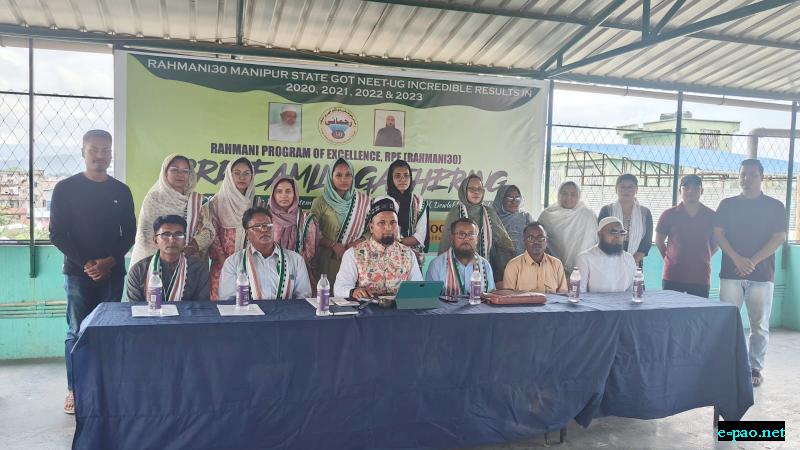
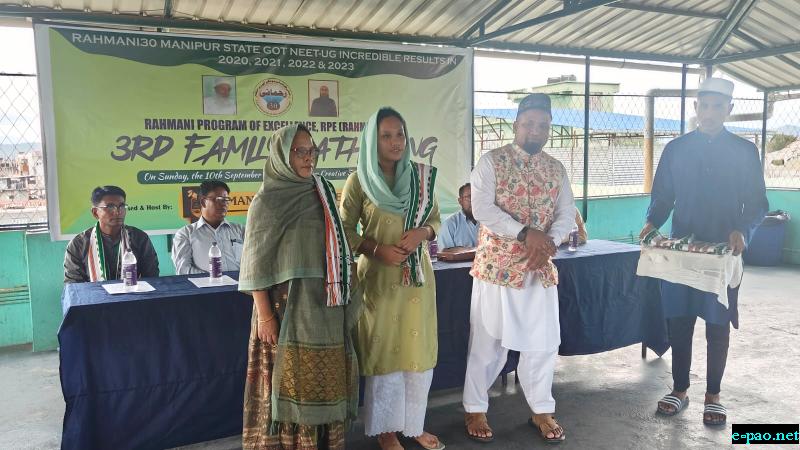
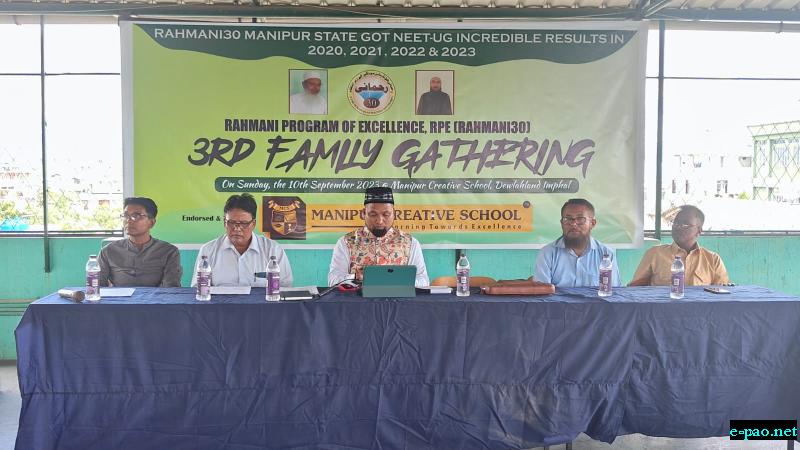
On this Family Gathering Occasion here at Manipur Creative School, Sermon Road, 5th Avenue, Dewlahland, Imphal East, Manipur 795001 on Sunday, the 10th September 2023, the parents, guardians and well-wishers of Rahmani30, congratulating and felicitating the successful students by Manipur State Coordinator Md Raees Ahamed Tampak, said in his speech that surely all the success and achievement are the results of hard work of team, students, and the prayers of all the stakeholders. So far, RAHMANI30 Manipur State produced 23 MBBS and 2 BDS Seats.
Md Raees Ahamed Tampak, Coordinator, Rahmani Program of Excellence, RAHMANI30, Manipur State said that this achievement is definitely achieved due to the tireless efforts of Mr. Fahad Rahmani (CEO Rahmani30), Ma’am Rafatur Rahmani (Team Lead, Maharashtra Girls program) and former DGP of Bihar, Janab. Abhyanand Sahab, by his efficient Academic leadership and guidance as well as the tireless hard work of the faculty, management and other staff. This has been possible only through identification of the target and recognition of the goal and mutual cooperation by the students and their parents.
“The Best way to predict your Future is to create it.” ~Abraham Lincoln
Parents, guardians and well-wishers of Rahmani30
Md Raees Ahamed Tampak / State Coordinator – Manipur State Rahmani Program of Excellence / (RPE – RAHMANI30)
Rashika Islam has topped the Combined Competitive Examination (CCE), 2022 conducted by the Assam Public Service Commission (APSC). The results of the CCE which were declared on Wednesday also saw 54 Muslim candidates crack the tough examination to become civil servants, police officials, and administrators in allied State services. Rashika Islam, daughter of Colonel (Retd) Saidul Islam and Raihana Islam, of Matiabag, Gauripur in Dhubr district, has secured the highest marks in the CCE exam conducted by the APSC. Rashika’s achievement has delighted the residents of Gaurpur and the entire Dhubri district.
“I am elated after seeing my name on the top of the APSC results. In 2020 I had cleared the final of the CCE. But my rank was low and I got the job of a Tax Inspector posted in Dhubri district. However, I was not happy and wanted to improve my rank in the APSC exam. Though it was tough to study for such a tough exam while serving the job of tax inspector, my husband and parents were supportive. I took no coaching in any institute to prepare for the CCE 2022. I prepare a lot for the exam by watching free YouTube channels and websites on success mantra in civil service examination,” Rashika Islam told Awaz-The Voice soon after the results were declared on Wednesday evening.
Rashika Islam has been selected for the Assam Civil Service (ACS) category. When asked about study tips to crack the exam like CCE Rashika said there is no definite answer to such a question.
“There is no shortcut but to study hard for the exam. Despite my hectic schedule as the tax inspector I managed to study four to five hours a day before the CCE-2022,” Rashika said.
Raashika’s husband who is also a bureaucrat with the Assam Government had been very supportive of his wife’s success. Due to her father’s pan-India job, Rashika studied in different army schools in different parts of the country, including the Army Public School, Narengi, Guwahati.
Besides Rashika, 53 other Muslim students cracked the APSC exam and have made it to the civil police and allies services of the government of Assam.
The Muslim candidates selected for the Assam Civil Services are Rashika Islam, Wahiduz Zaman, Zamanur Islam, Asfaq Laskar, Benazir Ilyas, Abu Saeed Mohammad, Golzar Hussain, Affan Khan, and for the Assam Police Service: Fayez Ahmed, Rubina Begum, Arshad Wasim Ahmed and SK Sajidur Islam.
Rashika islam
Shabnu Rahman and Shahjahan Ali have been selected as Superintendent of Taxes while Mohammad Abdul Wakil has been selected for the Assam Finance Services.
Others selected candidates are:
Block Development Officers: Mohsin Siddiqui, Zahid Hussain Hazarika Khorshida Khanam, and Antra Hussain.
Assistant Manager, District Industries Center: Farida Yasmin.
Assistant Registrar of Co-operative Societies: Pinaj Rahman. Tax Inspectors
Pakiza Begum and Javed Akhtar Laskar.
For Inspector of Excise posts Mohammad Tazim Ahmed, Imran Hussain, Sarnaz Mehboob. Sub Register, Mudrika Jhabiullah Hindi. Assistant AuditOfficers Shabiha Shabnam, Tanveer, Parvez, Hamidur Rahman, Salim Majid, Anjum Parbin, and Jahangir Alam Barbhuiya have been selected.
For Assistant Account Officers posts Philorina Begum, Tanveer Amin, Wasim Ahmed, Syeda Tamanna Yasmin, Manin Uddin Ahmed, Nekib Zaman Ahmed, Zaffrin Rahman, Firdaus Rahman, Jackie Ahmed, Rauchna Parbin Akand, Mirza Kausar Ahmed, Shamsur Rahman, Abdul Ullah Ahmed, Khandkar They are Khairul Islam, Shabana Rakia Ahmed, Mohammad Ali and Abu Bakar Siddique have been selected.
Ahmed Faraz will be a Research Assistant in the Transport Service Department. For Assam Urban Administrative Service Azharul Alam, Asif Ali Khan, Baitul Alam Rahman, and Ajmal Hussain have been selected.
So far, 68 Muslim candidates have cracked the CCE conducted by the APSC between 2013-18. This year, 54 Muslim candidates cracking the same exam in a single year is considered a very encouraging and positive development for the minority community in Assam.
The number of Muslim candidates selected for ACS and Allied Services would be more in the future provided quality education spreads among them,” eminent surgeon and Padmashri Dr Illias Ali said.
source: http://www.awazthevoice.in / Awaz, The Voice / Home> Story / by Ariful Islam, Guwahati / January 19th, 2024
MILLIONS of people around the world benefit from interest-free baking. But, not many know that the scholar who made it possible within the context of the modern economic system left for his final abode on November 11 in San Jose, some 8,000 miles away from a small village in Northern India where he was born in Gorakhpur in 1931.
Dr. Muhammad Nejatullah Siddiqi left a legacy that will continue to help countless access interest-free loans to achieve their dreams. Nejat means salvation. Dr. Nejatullah’s work proved salvation to people who could not advance their financial growth in the highly competitive world due to a lack of capital. Who would have thought that growing up in colonial India, Dr. Nejat would surpass the peak of academic excellence and achieve professorship in two of the world’s most prestigious universities, the Muslim University of Aligarh and Kind Abdul Aziz University, Saudi Arabia. Indeed, education in British India was reluctant to open the door for an aspiring Muslim student to help develop the Islamic Development Bank, which has financed thousands of development projects worldwide.
But he did it with dedication, commitment, and desire to translate concepts into concrete programs to benefit people. He labored hard to author 63 significant books, hundreds of articles, and thousands of lectures worldwide while pioneering economics based on divine principles of justice and equity.
His most widely read book is “Banking without interest,” published in more than 30 editions between 1973 and 2022. His other works in English include Recent Theories of Profit: A Critical Examination (1971); Economic Enterprise in Islam (1972); Muslim Economic Thinking (1981); Banking Without Interest (1983); Issues in Islamic banking: selected papers (1983); Partnership and profit-sharing in Islamic law (1985); Insurance in an Islamic Economy (1985); Teaching Economics in Islamic Perspective (1996); Role of State in Islamic Economy (1996); Dialogue in Islamic Economics (2002) and Islam’s View on Property (1969). He received two major awards for his work: King Faisal International Prize for service to Islamic Studies and Shah Waliullah Award for his contribution to Islamic Economics.
Describing the future of Islamic Economics, he wrote in 2013 that the changing world would call for five strategic changes in approach: Family rather than the market as the starting point in economic analysis; Cooperation playing a more significant role in the economy, complementing competition; Debts playing a subsidiary rather than the dominant role in financial markets; Interest and interest-bearing instruments playing no part in money creation and monetary management; and, lastly, Maqasid based thinking supplanting analogical reasoning in Islamic economic jurisprudence. In what follows, I’d like to discuss these points to help you get in touch with these challenging propositions.
He wrote about his involvement in Islamic economics.
“I have been involved in Islamic economics most of my life. At school, however, I studied science subjects but switched to economics, Arabic, and English literature for my BA degree at Aligarh Muslim University (AMU), which I joined in 1949. My reading habit influenced my decision. I was devoted to al-Hilal and al-Balagh magazines, published under Maulana Abul Kalam Azad (1888–1958), poet, critic, thinker, and one of the great leaders of the Independence Movement. I also read al-Tableegh and was influenced by the Deobandi scholar Maulana Ashraf Ali Thanawi (1863–1943), the author of the famous book on belief and correct conduct (for women), Heavenly Ornaments. And as most young people of my age and time, I studied the works of Maulana Abul Ala Maududi (1903–1979). Two of Maududi’s pieces deeply impacted me: lectures at Nadwatul Ulama, Lucknow, and a scheme he proposed to Aligarh Muslim University, both in the mid-1940s, later published in a collection titled Taleemat. Under the influence of these ulama – religious scholars – I abandoned science and the engineering career I had planned. Instead, I wanted to learn Arabic, gain direct access to Islamic sources, and discover how modern life and Islamic teachings interacted. I stuck to this mission, even though I had to take several detours stretching over six years – to Sanwi Darsgah e Jamaat e Islami, Rampur, and Madrasatul Islah in Saraimir before I arrived eventually at Aligarh to earn a Ph.D. in economics.
The years spent in Rampur and Saraimir were full of lively interaction with Ulama. We spent most of our time discussing the Qur’an, the traditions of the Prophet, commentaries on the Qur’an, fiqh (jurisprudence), and usul-e-fiqh, or principles of jurisprudence. That this happened in the company of young men my age, fired by the same zeal, was an added advantage. We had each chosen a subject – political science, philosophy, economics – that we thought would enhance our understanding of modern life. We combined modern secular and old-religious learning to produce something that would right what was wrong with the world. We received a warm welcome from Zakir Hussain (1897–1969), the former President of India, then Vice-Chancellor of Aligarh Muslim University; Mohammad Aaqil Saheb, Professor of Economics at Jamia Milliyah Islamia, Delhi; and by eminent teachers at Osmania University in Hyderabad.
Our mission was to introduce Islamic ideas to economics. These were at three levels:
A background provided by Islam’s worldview places economic matters in a holistic framework.
A set of goals for individual behavior and monetary policy,
Norms and values, resulting in appropriate institutions.
Maududi argued that this exercise performed in critical social sciences would pave the way for progress toward an ‘Islamic society. I was fully sold on the idea. We were also influenced by the extraordinary times through which Islam and Muslims were passing worldwide. Islam was ‘re-emerging’ after three centuries of colonization which was preceded by another three centuries of stagnation and intellectual atrophy. The great depression had just exposed capitalism’s darker side, and Russian-sponsored socialism was enlisting sympathizers. We thought Islam had a chance if only a convincing case could be made.
Dr. Nejatullah Siddiqi devoted an entire book to the Objectives of Shariah (Maqasid Shariah). He did not agree with those writers who insisted on the five categories of objectives mentioned by al-Ghazali, claiming that many other purposes come under them in one way or another. He suggested more goals to be added beside and beyond the five mentioned above, such as honor and dignity of humankind, fundamental freedom, justice and equity, poverty alleviation, sustenance for all, social equality, bridging the gap between the rich and the poor, peace and security, preservation of system, and cooperation at the world level. He supports his stand by various verses of the Qur’an and the sayings of the Prophet, especially in dealing with the non-Muslims.”
Dr. Siddiqi surveyed the history of the idea of Shariah objectives. To him, the concept of Shariah objectives has existed from the very beginning of Islamic history. But it was al-Juwayni (d. 478/1085) who first used the term, from whom his disciple al-Ghazali (d. 505/1111) took it and divided it into five categories: Protection of religion, life, reason, progeny, and property. Ibn Taymiyah (d. 728H/1328) introduced the protection of dignity in place of progeny. He also argued that objectives should not be limited to the protection from haram (forbidden) but should include securing benefits. Thus, the number would be unrestricted to five objectives. Ibn al-Qayyim followed the suit of his teacher, Ibn Taymiyah, and included justice among the objectives. He examined the opinions of al-Shatibi (d. 790/1389), Shah Wali Allah al- Dihlawi (d. 1172/1763), and a quick survey of the contemporary literature.
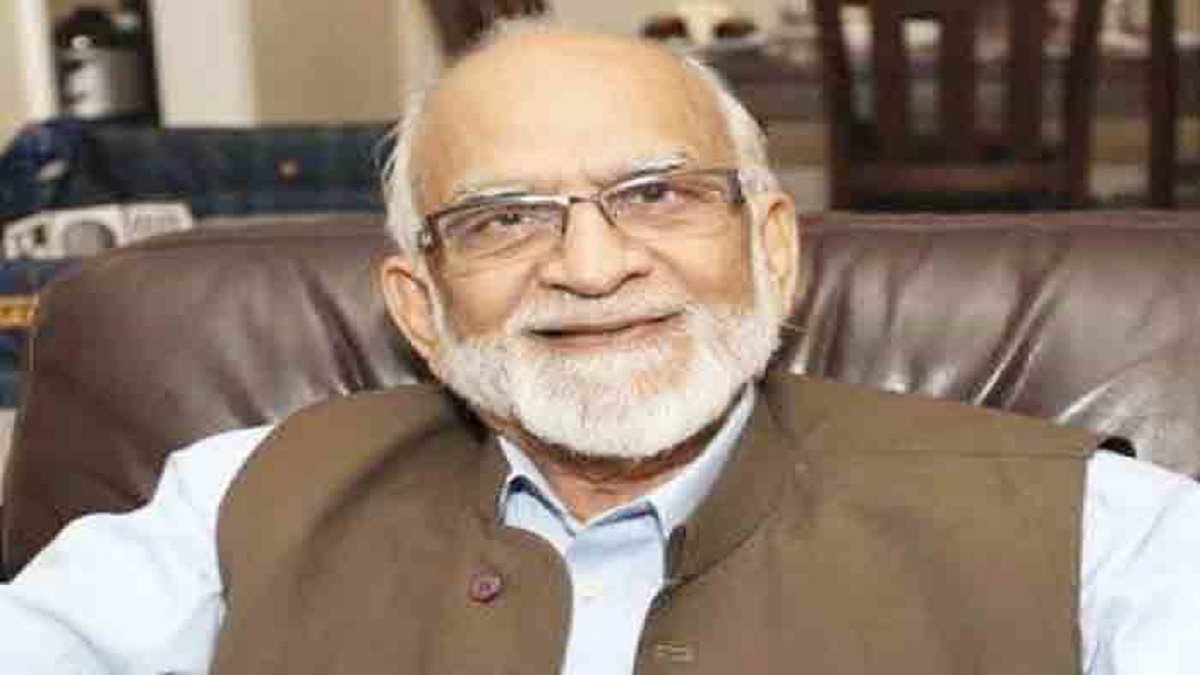
At 91, when he breathed his last in this mortal world surrounded by his life-long partner, three sons, and two daughters, Dr. Nejat had already achieved what only a few chosen ones achieved. He ensured perpetual reward from his creator for his contributions to bringing millions into the fold of economic growth. As a result, marginalized people who lagged because of the lack of capital are in the process of building a stable financial life. Dr. Nejatullah turned concepts of divine justice and equity into practical reality. When he started his work on Islamic banking, there was hardly an institution applying religious principles; now, there are over 500 Islamic banks and thousands of other non-interest-bearing financial institutions. His legacy is there to stay and benefit people worldwide. His work has turned him into a legend, and the future generation would rightly call him the father of modern Islamic banking. His nephew, Dr. Ahmadullah Siddiq, Professor of Media Studies in Illinois, said, “It is not a loss of a family, but a loss of a generation that always looked at uncle Nejatullah as a shining source of inspiration.”
Academic honours
Awarded King Faisal International Prize for Islamic Studies, 1982.
American Finance House Award, 1993
Ph.D. in Economics from Aligarh Muslim University, India, 1966.
Arabic and Islamic learning from Rampur, India, 1954.
Work experience
Professor of Economics, King Abdulaziz University, Jeddah, Saudi Arabia, from October 1978 to the present.
Professor of Islamic Studies, Aligarh Muslim University, India, from 1977 to 1978. (On leave from AMU from 1978 to 1983)
Reader (Associate Professor) in Economics, Aligarh Muslim University, India, from 1975 to 1976.
Lecturer (Assistant Professor) in Economics, Aligarh Muslim University, India, from 1961 to 1974.
Supervised several Ph.D. dissertations at Aligarh University, Ummul Qura University, Makkah, Imam Saud University, Riyadh, and Sokoto University, Nigeria.
Editorial and Advisory positions
Member, Editorial Board, Journal of King Abdulaziz University: Islamic Economics, Jeddah from 1983 to present.
Member International Board, Review of Islamic Economics, International Association of Islamic Economics, Leicester, U.K. from 1991 to present.
Member, Advisory Board, Islamic Economic Studies, Islamic Research, and Training Institute, Islamic Development Bank, Jeddah.
Member, Board of Trustees, AAOIFI (Accounting and Auditing Organization for Islamic Financial Institutions, Bahrain) 1999 –
Member, Editorial Board, IQTISAD Journal of Islamic Economics, Yogyakarta, Indonesia, 1999
Member, Advisory Editorial Board, The American Journal of Islamic Social Sciences, AMSS & IIIT, U.S.A. from 1985 to 1991.
Member, Advisory Board of the Journal, Humonomics, Toronto, Canada from 1985 to Present.
Member, Advisory Board, MASS, Journal of Islamic Sciences, Aligarh, India, from 1985 to 1997.
Editor, Islamic Thought, Aligarh, 1954-1959.
List of published books
English
1. Economics, an Islamic Approach, The Islamic Foundation, Leicester, U.K. 1999
2. Teaching Economics in Islamic Perspective, Centre for Research in Islamic Economics, KAAU, Jeddah, 1996
3. Role of the State in the Economy, The Islamic Foundation, Leicester, U.K, 1996
4. Insurance in an Islamic Economy, The Islamic Foundation, Leicester, U.K. 1985
5. Partnership and Profit-Sharing in Islamic Law. The Islamic Foundation, Leicester, U.K. 1985
6. Banking Without Interest, The Islamic Foundation, Leicester, U.K. 1983
7. Issues in Islamic Banking. The Islamic Foundation, Leicester, U.K. 1983
8. Muslim Economic Thinking. The Islamic Foundation, Leicester, U.K. 1981
9. Contemporary Literature on Islamic Economics, The Islamic Foundation, Leicester, U.K. 1978
10. Economic Enterprise in Islam, Markazi Maktaba Islami, Delhi, India. 1972
11. Some Aspects of the Islamic Economy, Markazi Maktaba Islami, Delhi, India. 1972
12. Muslim Personal Law (Edited), Markazi Maktaba Islami, Delhi, India. 1972
13. Recent Theories of Profit: A Critical Examination. Asia Publishing House, Bombay, India. 1971
N.B: Some of these books have also been published in Arabic, Persian, Turkish, Indonesian, Malay, Hindi, and Bengali languages.
Urdu
1. Tahreek Islami Asr Hazir Men (Contemporary Islamic Movement). 1995 Markazi Maktaba Islami, Delhi, India.
2. Quran awr Science (Excerpts from Syed Qutb’s Tafsir with a detailed Introduction). 1978 Markazi Maktaba Islami, Delhi, India.
3. Nash’at Saniyah Ki Rah (Towards Islamic Renaissance) 1974 Markazi Maktaba Islami, Delhi, India.
4. Insurance Islami Ma’ishat Men (Insurance in Islamic Economy). 1974 Markazi Maktaba Islami, Delhi, India.
5. Ghair Sudi Bank Kari (Interest Free Banking) 1969 Markazi Maktaba Islami, Delhi, India.
6. Shirkat awr Mudarabat Ke Shar’i Usul (Sharia Principles of Partnership and Profit-Sharing). 1969 Markazi Maktaba Islami, Delhi, India.
7. Islam Ka Nazarriyah Milkiyat (2 Vols.) (Islam’s Theory of Property). 1969 Islamic Publications, Lahore, Pakistan.
8. Islam Ka Nizam-e-Mahasil (Translation of Abu Yusuf’s Kitab al Kharaj).1966 Islamic Publications, Lahore, Pakistan.
9. Islam Men `Adl-e-Ijtimat’i (Translation of Syed Qutb’s al `Adalah al Ijtimaiyah fi’l Islam). 1963 Islamic Publications, Lahore, Pakistan.
10. Islami Adab (edited) (Islami Literature) 1960 Markazi Maktaba Islami, Delhi, India.
_______
Dr Aslam Abdullah is an Indian American writer and activist.
source: http://www.clarionindia.net / Clarion India / Home> Features> Indian Muslim / by Dr. Aslam Abdullah / November 14th, 2022
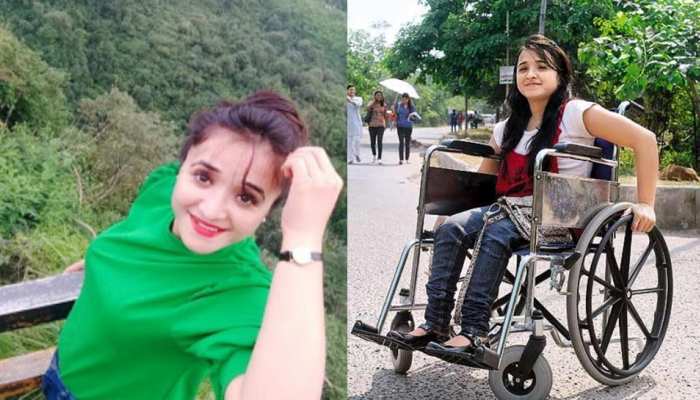
The inspiring story of Ummul Kher, a 28-year-old fragile girl who defeated all odds to achieve her dream. Ummul Kher was born in a Muslim conservative family that belonged to Marwar, Rajasthan. She faced several hardships to reach her goal. She fought a disease called Fragile Bone Disorder from childhood which caused her 16 fractures and underwent 8 surgeries. But that couldn’t break her determination of becoming an IAS officer.
Ummul was five when she migrated to Delhi with her parents and lived in the slums of Nizamuddin, Delhi. Her father was a street vendor. Their family was displaced when the slums of Nizamuddin were demolished and moved to the slums of Trilokpuri.
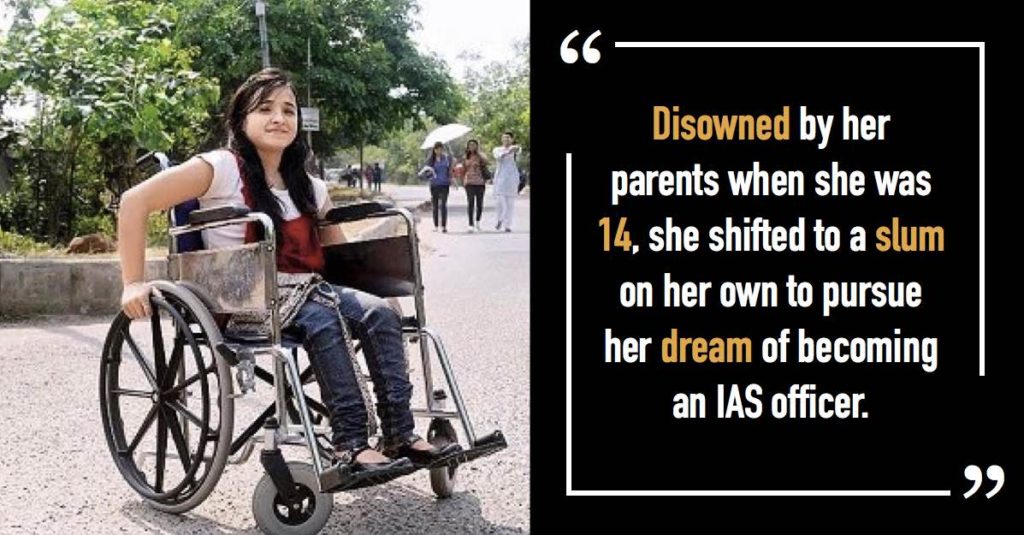
Ummul Kher went to Pt. Deendayal Upadhyay Institute for the Physically Handicapped for schooling till 5th Class and continued her education till 8th in a Government-run Charitable Organisation Trust, Amar Jyoti. Much to her dismay, her family forced her to discontinue her studies after 8th but Ummul decided to move out of her parent’s home and continue her education and started living alone in Jhuggi Jhopri(JJ) cluster, Trilokpuri. She started giving tuitions to slum children to support her living who paid her not much than rs 50-100.
Unfazed, She completed her graduation from Gargi College, Delhi, and got admission to JNU for Masters in International studies. She secured Junior Research Fellowship at JNU which helped her in getting a stipend of Rs 25,000 per month. To serve as an IAS was a dream of Ummul Kher that’s why despite pursuing a Ph.D. she appeared in the UPSC exam and cracked it in her first attempt and bagged All India rank 420.
She Got the posting in IRS Indian Revenue services, where she was posted as the DC, i.e Deputy Commissioner in Indian Revenue Service.
Highlights:
UmmulKher lived alone after 8th std due to her family disowning her for education. During this time, it was Amar Jyoti Charitable Trust that financed her education and also funded her tuition for classes IX and X.
In class XII, Kher achieved 91% and secured admission into a prestigious Delhi University college, Gargi College.
She continued to take tuitions to fund her college education. She also got much-needed money by winning debate competitions in college. She graduated in Psychology (Hons).
Tragedy struck in 2012 when a small accident confined her to a wheelchair for one year.
After completing graduation, Ummul Kher cleared an entrance exam for a master’s in International Studies at JNU. This gave her sufficient money which meant that she no longer had to give tuition.
In 2013, she secured a Junior Research Fellowship at JNU under which she started getting a stipend of Rs.25, 000 per month.
Since September 2014, Ummul was working as a trainee at Duskin Leadership Training in Shunjuku, Japan.
In 2016, She appeared for UPSC exam first time and cracked it with 420 AIR rank.
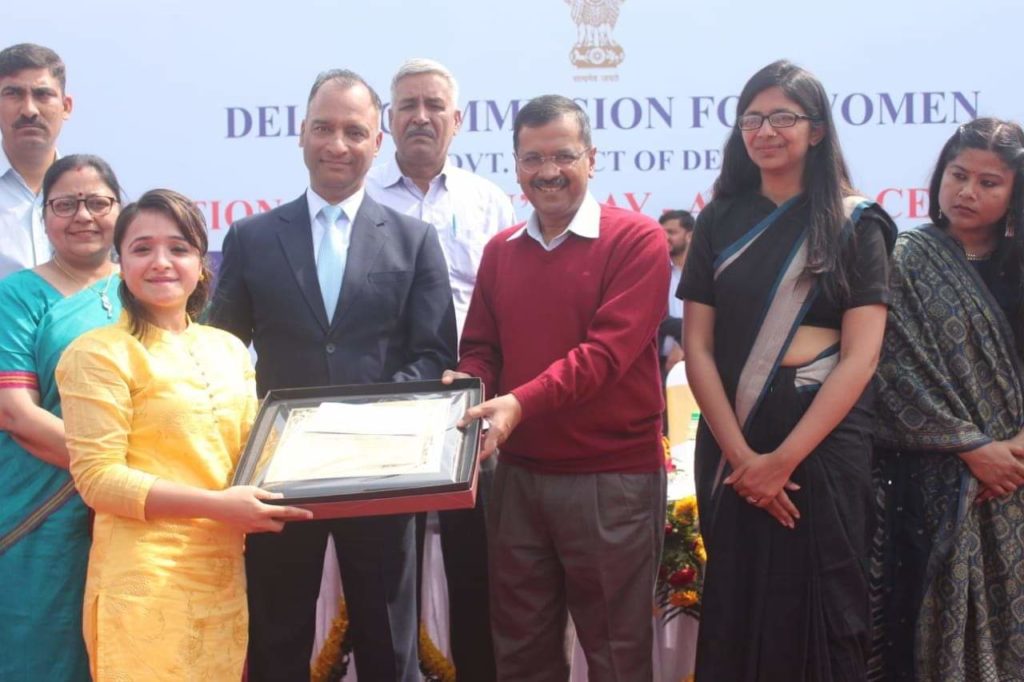
In 2019 She was conferred with Delhi Women Commission’s DCWAward. The Award was handed over by Delhi CM Arvind Kejriwal.
source: http://www.deccandigest.com / Deccan Digest / Home> Featured Sliver, National / by Saba Khan / January 26th, 2022