Category Archives: Education

How the Ajmals turned Assam’s Hojai into the Kota of Eastern India?

Guwahati, ASSAM:

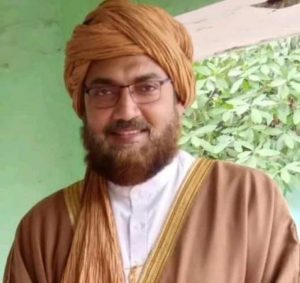
Maulana Badruddin Ajmal

The perfume town of Hojai, nestled in the plains between Nagaon and Dima Hasao in central Assam, was once known as the trading hub of agarwood. On the other hand, Kolkata and Guwahati, the capitals of West Bengal and Assam respectively, were known to be the educational hubs of the entire Northeast India.

The picture is different today. For the aspiring NEET, JEE, CEE, and civil services examination students, Hojai is the Kota of Eastern India. Meritorious students from not only Assam but also from West Bengal, Sikkim, and all the other states of the Northeast flock into Hojai to prepare themselves to crack the competitive examinations like their counterparts from parts of the country do in Kota in Rajasthan. When a team from Awaz – The Voice traveled to Hojai, almost every alternate youngster it came across was from Guwahati or Kolkata with high hopes in their minds.

Thanks to the Ajmal Foundation, a charitable organization run by a perfume baron family of Assam the Ajmals, including Dhubri Lok Sabha MP Maulana Badruddin Ajmal and his brother Sirajuddin Ajmal, who is the MLA from Jamunamukh in Assam Legislative Assembly. The Dimasa rulers named the place Hojai, meaning priest in the Dimasa language, and the Ajmal Foundation is now producing real priests; though not to preach faith but to master science and modern education.

Hostel of Ajmal Super 40

Ajmal Foundation’s education empire in Hojai comprises not only a junior college and coaching institute called Ajmal Super 40, which has been one of the most successful institutions in cracking competitive examinations but also the Ajmal Residential Schools in the entire Hojai district, the Maryam Ajmal Women’s College of Science and Technology, the Najir Ajmal College of Education, Ajmal Law College, Ajmal IAS Academy and others. All the institutions are residential and impart modern education in an atmosphere where students are meant only to study and play sports physically.

It all started in the early 2000s when the Ajmal family started the Markazul Ma’arif School and the Ajmal Hospital in Hojai. After that, the Ajmal Foundation was raised in 2005 to work in the education sector for the underprivileged. The first initiative of the Foundation was to set up a college for underprivileged women.

The under construction building of the Ajmal Residential school

“When I joined the Ajmal Foundation in 2005, Maulana Badruddin Ajmal told us that he wanted to see Hojai as an education hub. With only the Markazul Ma’arif School in place, it was beyond our imagination to fulfill his dream. Our journey began with the setting up of the Maryam Ajmal Women’s College of Science and Technology for those women who could hardly afford higher education … But, one must appreciate the amazing far-sightedness of this person. In hardly a decade, Hojai has become an education hub not only for Assam but also for the students of different states of the country. It gives us great pleasure and motivates us to do more. Our next objective would be to set up a Maryam Ajmal Women’s University and an Ajmal University for the underprivileged students,” said Ajmal Foundation’s director Dr Khasrul Islam.

Opportunities for celebration come to Ajmal Foundation every time the results of a competitive examination are declared. One of the secrets behind the success story is a blanket ban on the use of mobile phones in any of its educational institution campuses. Students are allowed to talk to their families on the phone only twice a week unless there is an emergency. All the campuses wear only academic atmosphere.

Abdul Qadir, head of Ajmal Super 40

“We get results because we have created such an academic atmosphere in our campuses. Students from different parts of eastern India come here to shape their academic careers. Last year we received applications from 21,000 candidates. However, we could accommodate only about 1500 in our limited infrastructure. Ajmal Super 40 structure now has students from Class VIII to XII and about 3000 students are studying.

“One of the major factors that has made our campuses fully academic is that they are all residential and have a completely disturbance/distraction-free atmosphere. We don’t allow any electronic devices such as mobile phones, on our campuses. During the day time, the students attend classes and the self-study time in the evening is constantly monitored by us. Thus everybody is bound to study,” Abdul Qadir, head of Ajmal Super 40 told Awaz – The Voice.

Ajmal Super 40 started as a coaching centre for 40 economically backward meritorious students in 2016 providing Class XI and XII education along with coaching for Medical and Engineering entrance examinations. It tasted success in the very first year when its student Amar Singh Thapa topped the Higher Secondary Science examination in Assam. It made the institute an instant hit in the academic circles of the state as well as the region. Demands for accommodation of more students increased rapidly forcing the Ajmal Foundation to increase it to 40 boys and 40 girls. Thereafter, pressure mounted on the Foundation to accommodate students on a payment basis.

Ajmal Foundation’s director Dr Khasrul Islam

The institute has constantly been producing successful candidates in all competitive examinations ever since.

“I have chosen Ajmal Super 40 over any other college because of its student life discipline which is a key to success. Not only are we taught by very highly qualified and competent teachers, but our self-study is also constantly monitored,” said Vijay Singha of Doboka in Hojai district who aims to be a doctor.

“Ajmal Super 40 is such a place where there is great motivation for study. The study material and the mock tests here are very useful,” David of Bokajan in Karbi Anglong said, adding that his focus is on the 720 marks in NEET like almost all other students of the institute.

“The transition from Class X to XI and XII has a vast gap. But Ajmal Super 40 is a place with highly competent teachers who bridge the gap so smoothly that students don’t lose the first 3-4 months in adapting to the new course,” Rizwan Ahmed of Juria in Nagaon district said.

To prevent untoward incidents like Kota where students come under tremendous pressure to develop the tendency for drastic steps, Ajmal Super 40 has also involved psychological counselors to constantly monitor the student’s progress and keep them stress-free.

source: http://www.awazthevoice.in / Awaz, The Voice / Home> Stories / by Imtiaz Ahmed & Ariful Islam, Hojai / November 27th, 2023

Tasneem Suhrawardy, medieval history academic at St Stephen’s college, passes away

NEW DELHI:

In 2004, she completed her PhD from the Jawaharlal Nehru University (JNU) on “Central Asians in Mughal India: Migration, Settlement and Impact on North Indian Culture”.

Prof Tasneem Suhrawardy
Prof Tasneem Suhrawardy (Photo | Twitter)

New Delhi :

Tasneem Suhrawardy, a well-known Indian medieval history academic who was teaching at the Delhi University’s St Stephen’s college , died at the Fortis hospital in Gurugram on Tuesday. She was 58.

Suhrawardy passed away after suffering a cardiac arrest in the morning. She was ailing for some time and was being treated at the hospital for pneumonia.

Suhrawardy graduated with an Honours in History from the St Stephen’s college in 1986.

In 2004, she completed her PhD from the Jawaharlal Nehru University (JNU) on “Central Asians in Mughal India: Migration, Settlement and Impact on North Indian Culture”.

Besides teaching at the St Stephen’s college, she was also invited as a guest teacher in prestigious American and Indian educational institutions.

Suhrawardy was an associate professor at the St Stephen’s college and was well known academically for her specialisation in Indian medieval history.

She was the daughter of late Syed Saeedul Haq and late Shahida Suhrawardy.

Her brother Anis Suhrawardy was a noted lawyer who died in 2012.

She is survived by her sister Nilofar Suhrawardy, a senior journalist, and other relatives.

Her demise was described as a great loss to the academic world by her students and colleagues.

source: http://www.newindianexpress.com / The New Indian Express / Home> Cities> Delhi / by PTI / December 26th, 2023

In Conversation with Afsar Mohammad

TELANGANA / Pennsylvania, U.S.A:

‘In your final rest
on a rope-cot,

were you still dreaming
of a piece of bread?’

In Conversation with Afsar Mohammad – Borderless
Afsar Mohammad
In your final rest
on a rope-cot,
 
were you still dreaming
of a piece of bread?
 
Beloved one,
we the people
of this country,
 
of that country,
can make anything
 
but a piece of bread
for you. 

--Evening with a Sufi: Selected Poems by Afsar Mohammad, translated from the Telugu by Afsar Mohammad & Shamala Gallagher, Red River Books, 2022.

These lines send shivers down the spine and recreate an empathetic longing for immigrant souls in search of succour. They also swiftly draw an image laced with poignancy — a loss, a regret, the economics that deny innovative young men their keep and force immigration in search of sustenance. Would the poet have been one of them? 

Travelling from a small village in the South Indian state of Telangana, Afsar Mohammad has journeyed across continents and now teaches South Asian Studies at the University of Pennsylvania. Known as a trendsetting poet and literary critic for post-1980s Telugu literature, Afsar has brought out five volumes of poetry, one collection of short stories and two volumes of literary theory essays. He is also a distinguished scholar of Indian studies and has published extensively with various international presses, including Oxford and Cambridge. He is currently working on a translation of Sufi poetry from Telugu to English. In this interview, we trace his growth as a writer and editor of the webzine, Saranga, which now seems to be transcending linguistic barriers to give voice to multiple cultures… 

Tell us about your journey as a writer. When and how did it start?

It’s a long story, but to cut it short — the beginnings were somewhat puzzling… Inspired by Shakespearean sonnets, I first wrote some sonnets in English, and then switched to free verse. Since most of my friends in my high school started pushing me to write something in Telugu, I had to migrate to Telugu. Quite surprisingly, I was first published in English, and then it took me a while to get something published in Telugu. I had hard time getting published in Telugu due to its newness in expressions and most editors felt that there was nothing “Telugu” in that kind of writing. So, my early writings quite naturally found their home in some English journals!

Your poetry rings with the pain of distance, the pain and struggle from others’ suffering transcending your own self. What is the source of your inspiration — is it your past or your present?What affects you more — your being an immigrant or a Sufi?

We’re distanced by many things — not just physically!  We live in many shattered and scattered worlds, and sometimes we fail to reflect on those worlds. I feel like I’m a constant immigrant — despite my formal citizenship and legal boundaries. Sufism is merely a segment of this expansive realm. Both past and present define our destiny, right?! Of course, I try to live in the present rather than in the past, but never deny the baggage of the past.

Why do you subscribe to the Sufi school of poetry? What is Sufism all about? 

I come from an extremely local rural setting where such Sufi mystical practices openly defined my everyday life. It’s not about the technicalities and theories or institutionalised Sufi schools of their philosophies, this is more about what I learned from my childhood, and its physical surroundings dotted by several hybrid shrines. I’ve described this cultural setting in my 2013 Oxford University Press publication, The Festival of Pirs: Popular Islam and Shared Devotion in South India. This version of Sufism has more to do with everyday life rather than a spiritual domain. 

You have lived away from your country for long, and yet the past seems to still haunt you. What is the identity you seek as a poet? Is it necessary to have a unique identity or can one be like a drop that flows and moulds as per the needs of the vessel?  

In a way — physically– I’m away from my birth place, but in many ways, I’m also closer to my homeland than in my past. When I moved away from the actual picture, I see many dimensions from a new lens. Each dimension contributed to my rethinking and reconsidering the idea of India. As I wander around and meet totally different places and people, I learn more about my birthplace and moved a little closer to it. I totally understand this as a process to reconcile with the past and connect it to a new present intensified by many factors, not just personal. We’re living in a virtual world, which also looks like “real” in its sounds, colours and words. Every moment it makes me realise that I’m actually not that far. On the other hand, I also see the people in my homeland who are far more removed by their immediate reality and everyday experiences. We need to read this conditionality more in terms of perspective rather than physical distance. 

You are fluent in Telugu, Urdu and English. You started writing in English and then moved to Telugu. And all your poetry collections have been in Telugu. Why? Would the outreach of English not have been wider? What made you pick Telugu over English? 

Great question! My literary graph is neither linear nor simplistic. When I look back and reflect on it, it’s a quite messy roadmap — actually, there’s nothing like a map to get its contours.  Yes, I started writing in English and then suddenly stopped sending out the poems to magazines. In fact, I write more in my personal journals rather than in print journals. Theoretically, I saw poetry as a personal diary for my experiences for many years. Due to financial concerns within my family, I had to start working very early on and left most of my journals at home. Then, my friends found them by chance and put them together that became my first collection of poems in Telugu. The collection was an instant success for its innovative style and then that opened up my career in Telugu rather than English which was my first language of literary expression. 

You are now bringing out a bi-lingual online magazine, Saranga? What made you think of a magazine in two languages? 

Before entering into teaching career, I worked as an editor of the literary supplement and Sunday magazine for a largest circulated Telugu newspaper. When we moved to the USA, I thought it would be better to have some outlet to engage with my home language and literature. In the early phase, Saranga was primarily a Telugu webmagazine. When I started teaching South Asian literature, then I realised the importance of making Indian literary texts available to contemporary generation in the USA. That was just one reason, but there’re were many factors as our team saw a rise in the Indian diaspora writings in the new millennium. Luckily, we got wonderful support from writers and poets in various Indian languages. The humble beginnings have actually ended up as a rewarding experience. 

What is it you look for in contributors from two languages? Is it the same guidelines or different?

We’re still learning how this works! As it appears now, these two sections require two different approaches and guidelines. Since the English section has been now attracting writers from various languages, it’s moving more towards a multi-lingual base. We’re trying to accommodate more translations into English from different Indian languages. We still need to do lots of work there. 

Is the journal only aimed at South Asian diaspora or would you be extending your services to all cultures and all geographies? 

Saranga, as we see it right now, is more about South Asia and its diaspora. As you know, we need more such spaces for South Asia and its diaspora. Not sure about its future directions at this point, however, if the situation demands, we will extend its services further.

You have number of essays and academic books in English. But all your creative writing is in Telugu. Why? Would you be thinking of writing in English too because proficiency in the language is obviously not an issue?

Most of my academic writing came out of my teaching experience. As I started teaching new courses, I then realised that we need more material from South Asia. I started focusing on producing such materials primarily for my courses and then gradually, they became useful for many academicians elsewhere too. I still believe creating writing as a more personal space — that enables me to articulate more about myself. However, the publication of Evening with a Sufi, brought a new change — as I’ve been getting more requests for more writing in English for the last two years. As you know pretty well, I’m an extremely slow writer. 

How do you perceive language as a tool for a poet? 

I see language working many ways since I dwell in multiple languages. I started my elementary education in Urdu, and my middle school was in Telugu, and the subsequent studies were in English. Through the last day of her life, my mother was extremely particular about me learning Arabic and Farsi. So, I believe that helped me so much to understand how language works in a poem. When I published my first poem in Telugu, the immediate critique was it was a not a “Telugu” poem. Telugu literary critics labelled me as a poet who thinks either in Urdu or English, then writes in Telugu. Of course, most of them were also fascinated by the new syntax of my Telugu poems and the new images and metaphors—that totally deviate from a normative or mainstream Telugu poem of those days. The uses of language in a poem varies for each poet. If you’re reading, writing and thinking in just “one” language, that might be a safe condition. A contemporary or modern poet, however, belongs to many languages and cultures. We also migrate from one language to another in our everyday life. 

Do borders of nationalism, mother tongue and geographies divide or connect in your opinion? Do these impact your writing?

The response to this question might be an extension to the above conditionality of a person. Anyway, I’m not a big fan of those ideas of nationalism, mother tongue and singular geographies. They don’t exist in my world. Most of my writings both creative and academic contest such boundaries and borders. To describe this in a single term- borderless. In fact, I believe we’re all borderless, but unfortunately, many boundaries and borders are now being imposed on our personalities. 

(The online interview has been conducted by emails by Mitali Chakravarty)

Click here to access Afsar Mohammad’s poetry

source: http://www.borderlessjournal.in / Borderless / Home> Interview / by Mitali Chakravarty / July 14th, 2023

Tibb e Nabawi laid the foundation for future research in healthcare: Dr Razi ul Islam

Malegaon (Nashik District), MAHARASHTRA:

Dr Razi was speaking at the two-day International Conference on Scientific Exploration and Understanding of Tibb e Nabvi organised by Mohammadia Tibbia College and Assayer Hospital at Mansoora in Malegaon Monday December 11, 2023.

Mansoora (Malegaon): 

Tibb e Nabawi is not a complete medical system though Prophet Muhammed (Peace be upon him) through his teachings laid the foundation for the later stage research in the healthcare system, experts said while addressing an International Conference titled “Scientific Exploration and Understanding of Tibb e Nabavi” in Malegaon Monday December 11, 2023.

“The notion that Tibb e Nabawi is a complete medical system which is sufficient to cure every disease is wrong. But, it is true that Prophet Muhammad (peace be upon him) through his teachings highlighted the importance of a healthy society that laid the foundation of future research in healthcare”, Dr Razi ul Islam Nadvi said.

“The Philosophy of Tibb e Nabawi”

Dr Mohammad Raziul Islam Nadvi – a postgraduate in Unani Medicines, is Islamic Scholar, Writer, Translator and an active member of Jamat-e-Islami Hind.

“The Prophet’s idea of healthcare and medical practice were akin to the art that require perfectness and mastery. There are umpteen number of examples when the Prophet (pbuh) during his lifetime encouraged his companions to opt for a skilful tabeeb (doctor) and better medical treatment”, he said.

“The famous Hadith of the Prophet which goes “there is cure for every disease” if not taken at its face value but properly understood encourages A’tibba (pleural of tabeeb meaning doctors) and medical practitioners to continue their research till they succeed”, he said.

Dr Razi was speaking at the two-day International Conference on Scientific Exploration and Understanding of Tibb e Nabvi organised by Mohammadia Tibbia College and Assayer Hospital at Mansoora in Malegaon Monday December 11, 2023.

The first of its kind Tibbe Nabawi conference is attended by doctors, health experts and scholars from India and abroad.

“Contribution of Muslim women in healthcare”

Dr Razi said the Prophet’s message was not limited to male companions but also for the females.

“Hadhrat Rufayda al-Aslamia was used to maintain a hospital during the Prophet’s lifetime. She trained a number of female companions in nursing who used to assist those who are sick or injured in the battlefields”, Dr Razi said.

Rufayda Al-Aslamia (also transliterated Rufaida Al-Aslamiya or Rufaydah bint Sa`ad), believed to be the first female surgeon in Islam, was among the first in Madinah al Munawwarah to embrace Islam. With her clinical skills, she trained other women, including the wife of the Prophet (pbuh) Ayesha, to be nurses and to work in the area of health care.

“This also shows the contribution of Muslim women in the field of medicine and healthcare”, he said.

Dr Razi ul Islam said it was because of the teachings of the Prophet (pbuh) that laid the foundation of healthcare research, Muslims translated the ancient Unani or Greek books on medicines.

“Not only did the Muslims translate these books into Arabic but they also compiled them maintaining unbelievable professionalism”, he said.

“Characteristics of Tibbe Nabawi”

The concept of Tahaarat – purity and cleanliness and hygiene, is one of the key characteristics of Tibb e Nabvi, and the Prophet (pbuh) introduced it at a time when people were unaware of such things.

“By highlighting the importance of a hygienic society, the Prophet’s message clearly was ‘prevention is better than cure’”, Dr Razi said.

“Quarantine was the word which recently became famous during the Covid-19 Pandemic. But it was in practice during the lifetime of Prophet Muhammad (pbuh) and afterwards”, he said.

The other characteristic of Tibb e Nabavi is ethics in medical practice and healthcare system that the Prophet (pbuh) asked his companions to strictly follow.

“Various clauses of the Hippocratic Oath – the oath of ethics historically taken by physicians, can easily be found in the teachings of the Prophet (pbuh)”, Dr Razi ul Islam said.

“Need of Research on Tibb e Nabawi Based on Scientific Parameters”

Dr Razi further said there is a need of research on the subject based on scientific parameters to make Tibb e Nabawi beneficial for people across the board.

“A tremendous amount of work on Tibb e Nabwi has been done and is still underway around the world especially in the Arab world. However, the focus of these research works is more on Aqeedat and done out of the love and affection to Prophet Muhammed (PBUH)”, Dr Razi said.

“If we want to make Tibbe Nabavi acceptable for people across the board then we have to scientifically prove and establish its effectiveness”, he said.

“There should be a team of doctors who do research and study on Tibb e Nabawi and come with data based on scientific parameters”, he said.

source: http://www.ummid.com / Ummid.com / Home> Health / by ummid.com news network / December 11th, 2023

Meet Mohammed Lateef Khan, the man behind an educational revolution who produced over 6200 doctors and engineers

Hyderabad, TELANGANA:

Mohammed Abdul Lateef Khan, Founder Trustee and Chairman MS Academy. / Muslim Mirror Photo

“You are not meant for crawling, so don’t. You have wings. Learn to use them and fly,” this inspirational quote of Rumi is best suited for Mohd Abdul Lateef Khan, Chairman and managing director of Hyderabad based MS Education Academy.

His team under his leadership has successfully created a brand name in the field of education and revolutionized the concept of education across the country.

Khan is a man who believes in ‘education as a social service and moral responsibility than a profession to earn money’.

MuslimMirror spoke to Khan, exclusively. In this tete-e-tete, he spoke about his journey.

A young Khan right after finishing his 12th had a strong urge to serve the community.

Recognizing his talent, one of his friends suggested him to enter in the field of education. Hence, to materialize his dream Khan started a coaching institute that was operated from a two-room rented house and with only 15 students. This was in the year 1990.

However in the first year, Khan had to face a loss of Rs 30,000, but he did not lose his heart. He continued his journey with same vigor and subsequently during the initial three years he faced the loss of more than one lakh rupees and still he did not give up.

Khan continued to pursue his engineering course and completed his BE in Electronics and Communication Engineering from Osmania University.

During those years, his institute grasped a respected position in the area and people started trusting his institute. This boosted his morale and gave him confidence.

After completing his engineering degree, Khan thought of pursuing his studies in a foreign country but later changed his mind.

He decided to continue his journey in the field of education.

In 1998, Khan collaborated with renowned Urdu daily, Siasat, which started publishing model SSC exam papers which was widely accepted and became an instant hit. It resulted in popularizing his method of education and unique technique to crack medical and engineering examinations.

(HERE WHAT IS THE POPULAR TECHNIQUE HE USED AND HOW COME HIS TECHNIQUE BECAME A HIT IS MISSING!)

Later with the support of Zaheeruddin Ali Khan, the managing editor of the newspaper he shifted the institute to a bigger space. It was Zaheeruddin Ali Khan who inaugurated the first branch of MS Academy. After that Lateef Khan never looked back and the popularity of his coaching institute continued to soar by each passing day.

Two years later, Khan started to look out for a school for his son but in vain. Unable to find any such, later in the year 2000 he opened his own school and named it MS Academy, with the aim to facilitate thousands of children with education.

Khan introduced the junior school (intermediate) in the year 2002; they successfully produced their first batch in 2004, while their second batch (2005) grabbed the first position in the state of Andhra Pradesh.

Later, the then chief minister of the state visited the school and decided to declare four percent reservation for the Muslim minority.

While interacting with Muslimmirror.com, Khan said, “Since 2005 our academy has continued to remain in the top ten list of the state board. In our academy, we admit a student on the basis of his or her merit performance and not by asking for any donation.”

“Currently, MS academy has 80 branches in 20 cities across eight different states with more than 27000 students enrolled. We have produced over 1200 MBBS doctors , 5000 engineers and shaped the life of 78000 youths who are alumni of our institutes, Only this year 150 students from our institutions cracked NEET ” he added.

Explaining further, he said “We never invested in purchasing of land or any property. We never focused on that, we have continued to run our educational institutes in rented spaces which is our uniqueness.”

Khan’s academy also has focused on modern and Islamic education. On this he said, “We stress on imbibing Islamic moral and values to shape the personalities that can lead tomorrow. Islamic environment facilitates Muslim students to compete and turn them into achievers.”

Khan, is a pioneer in integrating Modern and Islamic Education with academic excellence.

A certified mind map instructor and an international memory trainer, he is a visionary entrepreneur, positive thinker, an able administrator and a good decision maker.

A firm believer in team work Khan has a team of reliable professionals who are committed to achieve the vision Khan shared and inculcate the spirit of generative thinking, creativity, positive approach and mind mapping.

He devised many innovative methods to help students excel in competitive exams and face real life challenges. He also designed and introduced Memory Curriculum in Schooling that helps students learn ‘How to Learn and Remember’.

In Khan, one can definitely see Sir Syed and his thoughts!

source: http://www.muslimmirror.com / Muslim Mirror / Home> Exclusive Reports> Indian Muslim> Positive Story / by Khusboo Khan , Muslim Mirror / July 12th, 2018

37 government school teachers in Yadgir, Kalaburagi district felicitated during Best Teachers Awards

Yadgir, Kalaburagi District, KARNATAKA:

Kalaburagi: 

26 teachers from Government Primary Schools and 11 teachers from Government High Schools from Yadgiri and Kalaburagi districts were felicitated during the Best Teachers Award Ceremony held at Vintage Palace Function Hall, Kalaburagi on November 16.

The awardee teachers were shortlisted after screening under three criteria – Commitment and Dedication to the profession, Should not be recognized elsewhere with awards and preference was given to teachers working in remote rural areas –

“Purpose of this award program to recognize and felicitate teachers who are doing significant work in Government schools which ultimately helps to improve the outcome of Govt. schools and helps inspire other teachers to do still better” an official statement stated.

Best Teacher Awardees felicitated on event day are :

Kalaburagi (North) – Nusrat Parveen, Moinoddin, Raisa Sultana, Ahmadi Begum, Ameena Sultana, Jameel Fatima, Somangouda Vitlapur

Kalaburgi (South) – Fouziya Begum, Saiqua Hassan

Chittapur: Yaqub Ali, Shahana Anjum, Shaikh Saira Banu, Zaibunissa Begum

Sedam: Md Abdul Faheem, Nayeem Sultana, Sujata Hiremat, Asha Taskeen

Chincholi: Umar Huddar, Rizwana Begum, Mubeen Fatima

Jewargi – Md Yousuf, Sarfaraz, Rudrappa Gouda

Afzalpur- Asma Shalam, Shabana Begum, Mohammed Asif Attar

Aland- Seema Rubee, Merajunnisa Begum

YADGIR District: D Subiya, Venkatesh Nayak, Khudeja Begum, Mukhtar Ahmed J Mulla, Zareena, Kasim T

SPIRIT OF EDUCATION AWARD given to three teachers (out of 37 teachers) – Sameena Farzana, Zohra Khanum, Masoom Khan for their outstanding contribution to education beyond schools and school timings.

There were five academic achievers (Dr. Saba Sultana, Zeenat Begum, Nazneen, Md Shujath Hussain, Md Shakir Ahmed) were felicitated and one for Social cause (Jb Jainuddin Shirnifarosh) also felicitated for outstanding social services.

Smt. Surekha Jagannath Dengi, Govt High School Bandarwad, Tq Afzalpur, Dist. Kalaburgi

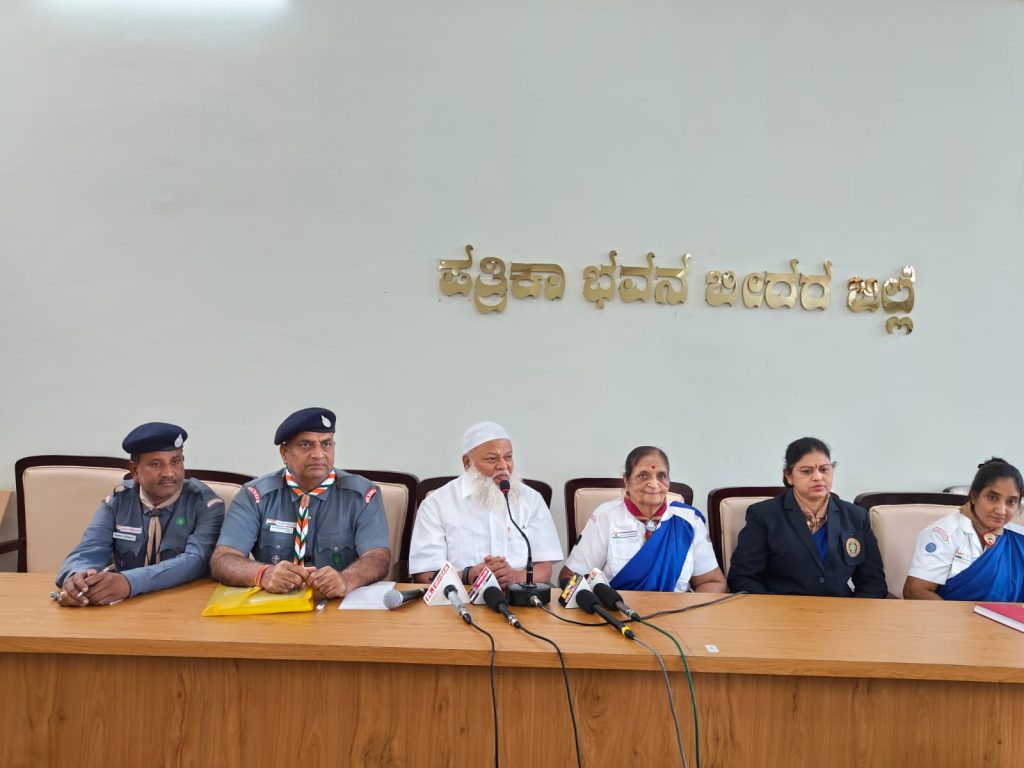
The program presided by PM Qutubuddin, other guests/speakers invited were Kashif Raza, Dr. Abdul Qadeer (Shaheen Bidar), Mazhar Hussain(Sr Lecturer), Surekha Dengi (National Awardee Teacher 2020), and Mohammed Ali  & Mohammed Faiyazuddin (Vintage Palace Function Hall).

The program was a joint initiative of Ummeed Welfare Association, GURMITKAL Yadgir Dist. and Helping Hands Foundation, GURMITKAL Yadgir Dist.

source: http://www.english.varthabharati.in / Vartha Bharati / Home> Karnataka / by Vartha Bharati / December 11th, 2020

Meet Hamid Farooqui, the software engineer who created 3rd largest survey company in the world

Mumbai, MAHARASHTRA / Virginia, U.S.A :

Mumbai based Hamid Farooqui , is a serial entrepreneur who is the CEO of a fast growing SaaS (Software as a Service) company called SoGoSurvey that he co-founded in 2012. SoGoSurvey offers powerful, user-friendly, and affordable online survey software. SoGoSurvey is changing how feedback is collected in a secure, collaborative setting, and moving forward the process of understanding the feedback gathered from customers, employees, and other stakeholders.

Hamid started his tech career as a geeky programmer during the dot com boom and has expertise in all its related technologies, from Software as a Service (SaaS), cloud computing and mobile applications. He was an early member of the technology team that designed, built, and launched Oracle’s e-Travel’s corporate travel tool using C++ and the then brand-new WAP.

In recognition of his strong performance and technology management skills, Hamid rose through successive promotions to serve as the division’s Director of Engineering. After e-Travel was acquired by Amadeus, Hamid led the integration of two complex technology platforms in both the U.S. and Europe.

Hamid is co-founder, CTO of K12Insight, which offers cloud-based solutions to enhance communication between educators and community members. K12Insight’s tools are helping school leaders build stronger relationships among parents, teachers, students, and staff. He also co-founded India’s most successful consumer review site mouthshut.com, considered a pioneer of the Internet revolution in India.

Hamid is a frequent speaker at technology conferences and startup events. Among his favorite topics are the startup scene in emerging markets and the future of autonomous cars.

Besides technology, Hamid is very actively involved in philanthropic work. He and his family runs and funds a school for poor children in a remote part of India, where more than 500 children study for free.

Hamid earned an engineering degree from Bombay University in India and a Master’s degree in Computer Science from State University of New York, Binghamton.  

Mr. Farooqui believes that Indian organizations just like their global counterparts need a strong survey tool in order to understand the pulse of their audience. Companies have to ensure that they know their customers so they can rectify or retain the quality of services or products. Also, for retention of employees, companies must conduct Employee Satisfaction Survey that helps in creating a suitable work environment that meets and exceeds their expectations.

About SogoSurvey:

When it came to online survey software, users have had two difficult options:

  • the affordable, low-end, low-power solution, and
  • the more powerful solution that breaks the bank

This world has just been disrupted: you can now have really powerful, highly user-friendly online survey software at a super-low cost. And it comes with training and support that existing customers are raving about. We’re changing not just how you collect feedback in a secure, collaborative setting, but also how you fundamentally view feedback from customers, employees and other stakeholders. Our solution is easy for the beginner and powerful for the expert.

SoGoSurvey is a software company which provides one of the best enterprise feedback system/ survey tool as SaaS model. SoGoSurvey was founded by Hamid Farooqui and Suhail Farooqui in beta/stealth mode in 2012. The company came out in its full existence in the year 2013. It is a USA based company with the offices in India and UAE.  Target market for SoGoSurvey is all small, medium and large businesses who need to conduct different types of surveys such as Employee satisfaction Survey, Customer Satisfaction Survey, Employee Engagement Survey and others.

Marketing Strategy of SogoSurvey is to have an awesome product and website which is appealing to the user. They also offer a free version of our tool so that users who want to use the tool for basic purpose can also access the same. The freemium model gives the access to a great amount of people who turn into loyal users eventually.

source: http://www.muslimmirror.com / Muslim Mirror / Home> Indian Muslim> Positive Story> Sci-Tech> Youth / by Muslim Mirror Special Correspondent / January 04th, 2019

Mamoon’s English medium, co-ed slum school

Tikiapara, Howrah, WEST BENGAL:

Mamoon Akhtar with students at the Samaritan Mission School in Tikiapara

Innumerable NGOs are helping the needy across the country in different ways. What makes the Samaritan Help Mission in Howrah, which adjoins Kolkata across the Ganga, exceptional is the way in which people of different faiths, nationalities, private initiative, official assistance and corporate help have combined to nurture a vibrant island of hope.

The Samaritan Mission does its work in Tikiapara, a huge slum that runs alongside the railway tracks connecting Howrah Station. It is 80 percent Muslim, poor and intimidated by crime. The mission was founded and is led by Mamoon Akhtar, 46, its secretary, and most of its work is housed on land belonging to the Belilious Trust.

Mamoon’s (everybody calls him so) father was a skilled worker and keen that his son get a good education. So he put Mamoon in one of the area’s leading schools, St Thomas. But he had to leave after reaching Class 7 under humiliating circumstances because his father was out of a job and could not pay the school fees. Mamoon finished high school through open learning and, with his father departed, supported his family by doing odd jobs and offering private tuition. Not being able to complete his formal schooling, enabling others to do so and in the English medium became the driving passion of his life.

Two incidents shaped him. One day, he found a man beating up a woman because she refused to be a drug pusher. Mamoon tried to stop him and got beaten up himself. He was finally rescued by other locals who knew him and called him “Sir” because he taught children. The little boy whose mother Mamoon had tried to save caught up with him and simply said, “I want to study.” He asked the child to come to his house and soon he was running evening classes for 20 children in a spare room. To keep doing so, Mamoon went around the community seeking help and enlisted the services of local girls who had completed school as teachers at `100 per month.

Then, one day, he spotted a newspaper clipping which pictured a lady singing with a group of children. She was Lee Alison Sibley, Jewish wife of someone with the US consulate in Kolkata. Mamoon wrote to her, seeking help; she replied that he should ask the local community. Mamoon wrote again. Eventually, she came, saw what he was delivering from a single windowless room, was overwhelmed, wrote out a cheque for `10,000 and asked a local journalist friend to write about his work. It highlighted the fact that Mamoon taught children from all communities. The article roped in Ramesh Kacholia of Caring Friends Mumbai. Ramesh Uncle thereafter became a permanent mentor.

With what Mrs Sibley gave, Mamoon set up Samaritan Help Mission in 2001, the name inspired by the biblical story he had learnt in school. When Mamoon canvassed for additional help from the community around him he also reaped a bonus — a strong community connect. In 2007 the informal school became the Samaritan Mission School, accredited and recognised by the West Bengal government. Today it is a co-educational English-medium school, affiliated to the state board for secondary education, with an enrolment of 1,300. The big thing is ‘English medium’; Mamoon knows the difference that makes.

Now switch to I.R. Belilious Institution on Belilious Road, covering two acres of land bequeathed by a Jewish couple, Rebecca and Isaac Raphael Belilious (they both departed by 1910, childless), with a football field, basketball court, a water body, a two-storied school building and a bigger one coming up which will take classes up to Class 8. The whole complex comes under the Belilious Trust Estate. As a child Mamoon swam there, to later see the water body turned into a municipal garbage dump, the government school virtually defunct, the whole space gone derelict and a den of drug pushers.     

In 2014 Mamoon and a small group of friends started canvassing the residents of Tikiapara and eventually, on 14 November, Children’s Day, a meeting of a thousand people was held at I.R. Belilious Institution. Also present were the trustees of the institution, the local MLA and the Howrah police commissioner, Ajay Mukund Ranade. The meeting decided to revive the institution, after some debate of course as to why a madrassa should not be started instead of an English-medium school. But Mamoon prevailed and from the next day began the physical clean-up job by the locals through shramdaan with help from the municipality. The police did their own kind of clean-up. In December the trustees and the police commissioner decided to start an English-medium school, also open an evening school, name the effort the Rebecca Belilious English Institution, and hand over its management to the Samaritan Mission.  

As you enter, to the left is a prominent sign indicating it is a banking kiosk of the State Bank of India. The place is filled with women, 7,500 of whom from the adjoining slum have accounts there. A biometric point of sale device enables cash dispensation for those who have Aadhaar registration. Along with education, financial inclusion is also taking place right there. The Samaritan Mission also works as a banking correspondent of Indian Overseas Bank.

Right after the bank outreach is the Rebecca Belilious Charitable Dispensary which treats over 200,000 outpatients a year with help from Howrah government hospital doctors. In it there are well-equipped rooms for ophthalmology, dentistry, cardiac care, gynaecology and general medicine. Why is the place not teeming with people and why is it a bit dark? The reality of non-metropolitan India catches up. There is a power cut on.

All the facilities and construction are fairly new and don’t seem heavily used. The grants are coming but how accessible is the entire facility? The question is answered when I spot in another corner a door marked Jan Aushadhi, an initiative by the Indian government to make available cheap essential generic drugs to all. Inside, the shelves are stacked with medicines and two staffers busily fill prescriptions. All the elements that make up a complete out patient facility are present. Too few people overall? It is a hot midday during Ramzan fasting.

In another corner of the complex is a narrow hall with two rows of sewing and embroidery machines with girls working on them. An instructor is explaining to one of the girls how to work on what looks like a pocket which has to be fixed onto the garment. This is the vocational training centre.

Another doorway bears a key message, a skill development centre facilitated by two police commissioners, Ranade and D.P. Singh. It captures the active and supportive role that the local police played in the work of the Mission.

Next to it is being built a drinking water plant which will use the reverse osmosis process and ration daily entitlements through smart cards. No service is rendered free, explains Mamoon. A token fee is levied to make people realise the value of what they are getting.

After these facilities there is a clean water body (it has been snatched back from extinction) and beyond it is an astro turf football pitch, enabled by the CSR programme of Chevrolet GM. At a second campus 10 km away in Bankra, Ambuja Cement helps run a vocational training centre and the Tata Trust a centre to facilitate the integrated use of technology in education to revive government schools. 

You realise CSR funding helps but it is an additionality. The Mission’s lifeblood comes from its community ownership, aided by faceless philanthropy, all explained to you by a balding, energetic Mamoon, despite undergoing Ramzan fasting, who is fluent in English and Bengali but prefers Hindi if you have it too.

As my tour ends Mamoon makes a critical point. At one stage an Islamic organisation was ready to help but wanted the project to have an Islamic character. Mamoon declined. He says his Mission knows no creed and he is trying to bring about active give-and-take between the two main communities in Tikiapara which live peacefully but separately, a bit aloof from each other. Twenty percent of the slum-dwellers are Hindus but they make up 30 percent of the students of the Mission. That additional 10 percent is a badge that Mamoon can wear with pride. 

source: http://www.civilsocietyonline.com / Civil Society / Home> Spotlight / by Subir Roy, Kolkata / July 03rd, 2017

Twin daughters of Imam from Kashmir village qualify NEET 2023

Damhal Hanjipora (Watto Kulgam District), JAMMU & KASHMIR:

Syed Bismah and Syed Sabiya, twin daughters of an Imam from Damhal Hanjipora in Kulgam district, south Kashmir, have achieved success by qualifying the Undergraduate National Eligibility Cum Entrance Test (NEET) in their first attempt.

The NEET results for 2023 were recently announced, and Bismah and Sabiya secured impressive marks of 625 and 570, respectively.

When asked about their achievement, the siblings expressed their gratitude towards their parents, highlighting their unwavering support throughout their journey to qualify for this prestigious examination. Their parents played a vital role in encouraging and guiding them, making it possible for Bismah and Sabiya to achieve this notable milestone.

“They provided us with whatever we needed to study from childhood. They made a big sacrifice for our future”, Sabiya told local media.

She emphasized the importance of focus in order to qualify for the NEET examination.

“If you want to appear in NEET, you should first check your level and identify your weaknesses. You should discuss your weaknesses with your teachers and also take help from internet to overcome them,” she said.

The father of Bismah and Sabiya, an Imam from Damhal Hanjipora, expressed his immense pride in his daughters’ accomplishment. He acknowledged that he had faced struggles and worked tirelessly to provide support to his daughters throughout their journey. His dedication and hard work were aimed at ensuring that his daughters had the necessary resources, guidance, and encouragement to pursue their dreams of qualifying for the NEET examination. The father’s commitment and efforts played a significant role in enabling Bismah and Sabiya to achieve their goals, and he takes great pride in their success.

“My advice to every parent is that you should provide the best opportunities to your wards for their better future,” he said.

source: http://www.muslimmirror.com / Muslim Mirror / Home> Education> Indian Muslim> Positive Story / by Muslim Mirror Staff / June 14th, 2023

Lucknow topper Alisha Ansari scores 94% in UP Board Class 10 exams, shares secret

Lucknow, UTTAR PRADESH:

Uttar Pradesh Class 10 Result 2020:

Lucknow topper Alisha Ansari has remained distant from social media sites to score 94% in board exams.

Lucknow topper Alisha Ansari scores 94% in UP Board Class 10 exams, shares secret

Class 10 student Alisha Ansari has secured the first rank in Lucknow and ninth in Uttar Pradesh with a score of 94 per cent. Apart from sheer hard work and support from parents, Alisha has had remained distant from social media websites, including Facebook, Twitter, and Instagram to attain this position.

Alisha, who comes from a middle-class family, has a younger brother and an elder sister. Her father, Mohammad Rizwan Fazli, is a teacher in a private engineering college and her mother, Shabana Ansari, is a housewife.

Kanti Mishra, Principal, Bal Nikunj Inter College, said, “Alisha has been a hardworking student. Also whenever she had a doubt in the subject, she would immediately ask school teachers.”

Appreciating her hard work and talent, her mother, Shabana Ansair, told, “We have always given our daughters equal opportunities to study.”

Moreover, she shared that she would want her daughter to become a doctor and it is just the beginning of her journey of success.

Also, her father, Mohd. Rizwan Fazli, expressed his happiness, saying that he is extremely proud of her daughter.

source: http://www.indiatoday.in / India Today / Home> News> Education Today> News / by Ashish Srivastava, Lucknow (UP) / June 27th, 2020