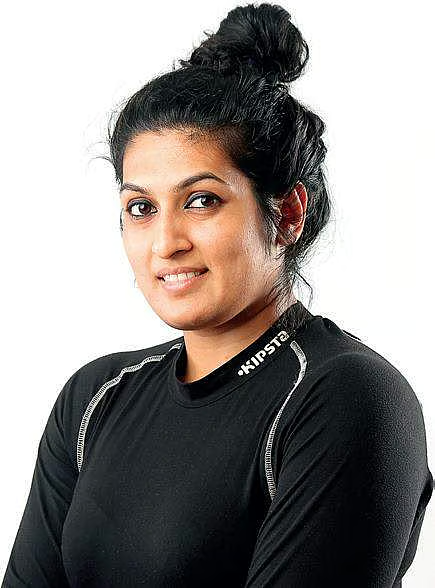
When she joined the Indian Combat Academy (ICSA) on Bannerghatta Road to learn Jujitsu and self-defence, little did Nabila Birjis (29), know that this would be a turning point in her life.
Bengaluru :
When she joined the Indian Combat Academy (ICSA) on Bannerghatta Road to learn Jujitsu and self-defence, little did Nabila Birjis (29), know that this would be a turning point in her life. On April 2, she turned out to be the only girl selected from Karnataka to compete in the South Asia Open Jujitsu Championship 2019, in Chennai.
Born and brought up in Mysuru, she moved to Bengaluru seven years ago to work for an architecture firm. At the age of 25, after undergoing rigorous training under coach Jitesh Banjan, she started competing seriously. So far, she has won six golds at the national-level JAI Jiu Jitsu events under 68kg and 70 kg categories; two silver medals at South Asian Championships; and gold at Body power Expo Open Weight.
She is also the only Indian woman to have secured two silver medals at South Asia Open Jujitsu Championship 2019. “I always wanted to achieve something in sports. My mother Noor Fathima Khan, HOD and professor at Maharanis Science College, Mysuru wanted me to complete my graduation before pursuing sports. I started my sporting career only at 25.”
It was not easy for Birjis in the field. She has quit her job, moved cities, so she could be able to devote more time for training. “I remember when I travelled for three hours just to be able to train for an hour. After struggling for years, I now seem to have struck some sort of balance between being an architect and an athlete,” she added.
Jujitsu is a team sport, and the biggest challenge she finds is to keep up with the energy levels of younger athletes. To stay fighting fit, she follows a strict sports diet. For Birjis, losing teaches more than winning. “My loss at the South Asia Championship has taught me how to move forward. My teammates have always encouraged me to do better. I will learn from my previous experiences,” she added.
source: http://www.newindianexpress.com / The New Indian Express / Home> Bengaluru / by K Rathna / August 20th, 2019
Overcoming a childhood marked by hardship and societal rejection, 20-year-old Bibi Fatima has emerged as a formidable kickboxer, winning multiple accolades at the national and international levels.
Mysuru:
Overcoming a childhood marked by hardship and societal rejection, 20-year-old Bibi Fatima has emerged as a formidable kickboxer, winning multiple accolades at the national and international levels.
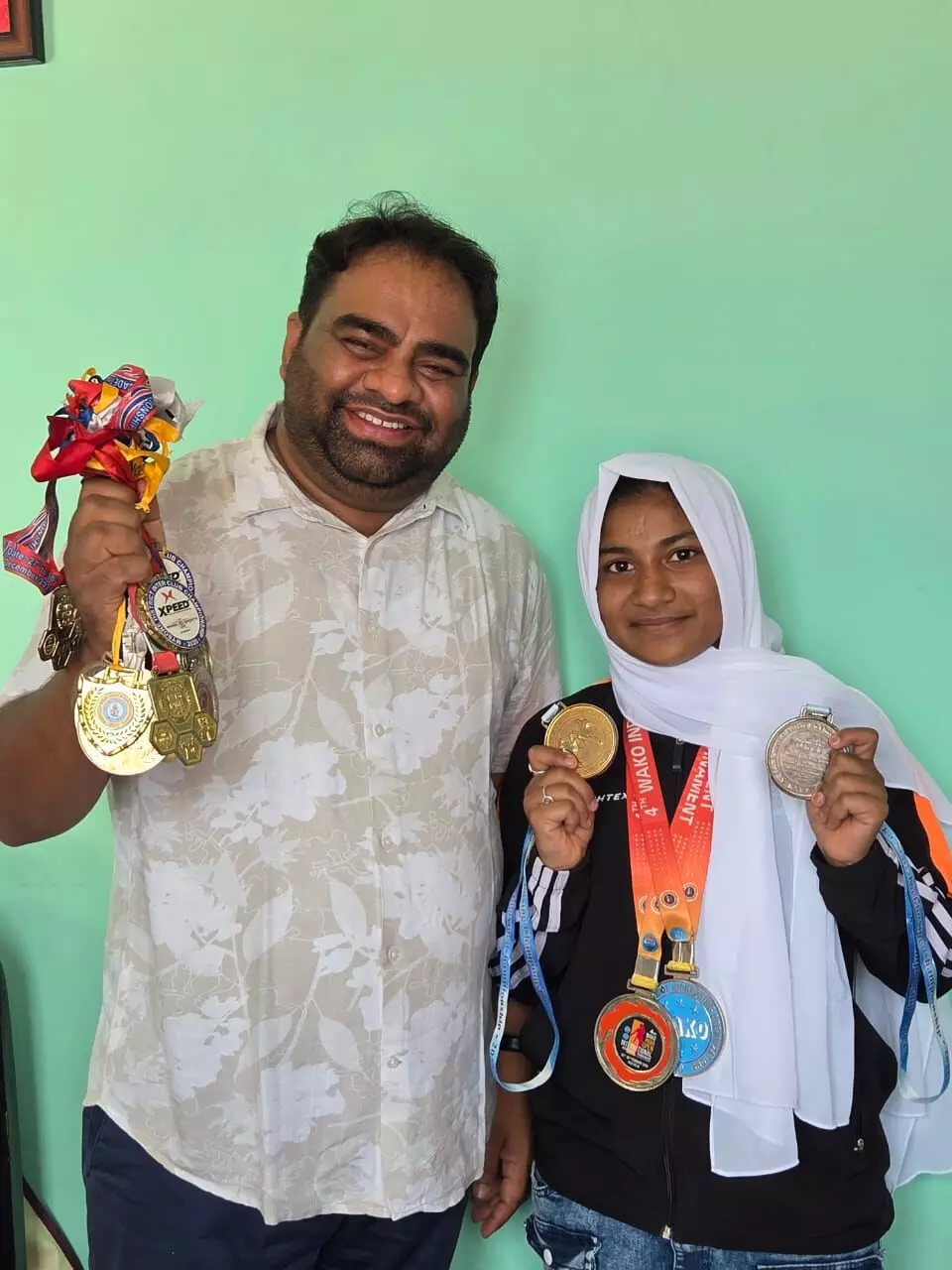
Fatima, who has been training in kickboxing for 12 years, has secured 29 gold medals in district, state, and national championships. Despite a hand injury, she recently won two silver medals in an international tournament held in New Delhi.
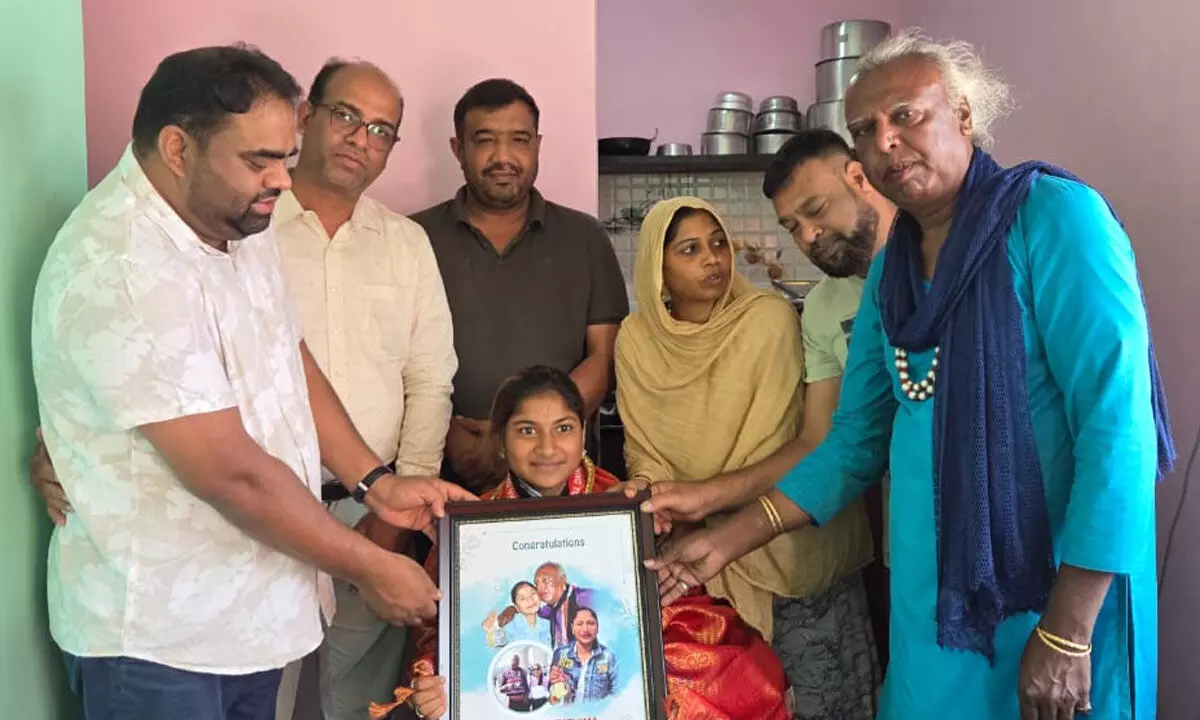
Fatima’s journey is a testament to perseverance. Her father abandoned the family two decades ago due to the absence of a male heir. Left destitute, Fatima’s mother attempted to end her life, but the family was taken in by Akram Pasha, a transgender beggar in Mysuru. Pasha adopted Fatima and supported her education and training, earning a living through alms to sustain the family.
Currently pursuing her secondary education, Fatima dreams of representing India in the Olympics. However, financial constraints hinder her aspirations. She hopes to open a kickboxing training centre to support herself and provide for Pasha, who continues to pay rent for both their accommodations.
Recognising her achievements, members of the M. Friends Charitable Trust from Mangaluru, led by Rashid Vitla, visited her home to extend financial assistance and encouragement. Social organisations and sports enthusiasts have been urged to come forward and support Fatima in achieving her dreams.
source: http://www.thehansindia.com / Hans India / Home> News> State> Karnataka> Bengaluru / by Rasheed Vitla / Hans News Service / March 12th, 2025
Bhoothpur Town (Mahbubnagar District), TELANGANA :
Anwar, a native of Bhoothpur town in the Mahbubnagar district, opened a private goat breeding farm in his native town in 2018, with the intention to rear goats of different breeds.
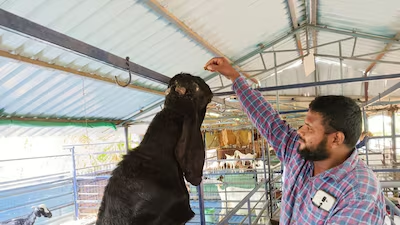
A private goat breeding farm in Telangana has been rearing goats of different breeds with utmost care. Anwar, a native of Bhoothpur in the Mahbubnagar district, opened a private goat breeding farm in his native town in 2018, with the intention to rear goats of different breeds.
They include African Boer, a breed developed in India after being imported from South Africa, Mewati of Haryana, Hyderabadi and other domestic and foreign breeds of goats.
The farm has been developing new breeds by mating a male goat of one breed with a female goat of another breed.
In a first of its kind in the state, the farm has implemented a cage system, where the goats are kept in cages according to their breed. The cage system is built on a plastic floor with holes three to four feet height from the ground for the disposal of waste from the goats. The cage system is built in a way that helps keep the cages clean and the goats safe from diseases, Bhoothpur animal husbandry development officer Madhusudan said.
In order to develop a new breed, one male goat has to mate with female goats of three generations. The process takes almost two-and-a-half years depending upon the preparedness of the female goat to mate with the male.
“We bought goats and sheep from different places and performed some experiments in which we succeeded. We are not selling them as we aim to supply the best breeds to the farmers. It is a costly procedure but we are doing it for the farmers,” Anwar told News18.
The farm has been mating breed couples such as Mewati – Sojat, Mewati – Hyderabadi, Domestic breed – African Boer and so on.
Anwar told News18 that he has spent Rs 25 lakh on the farm so far. Currently, the farm has 160 goats, but Anwar aims to rear as many as 10,000 goats on his farm.
source: http://www.news18.com / News18.com / Home> English edition / by Mohd Rafi Ahmed Ahmed / April 01st, 2024
Among the change makers from Kerala are pioneers and achievers in various fields of life. They have either been trying to bring about changes in society or the fields of business. They have used music, literature, and sometimes love to bring humanity closer, to spread joy and peace.
The list includes social activists, singers, spiritual mentors, lawyers, teachers, and even IAS officers.
Ayisha Abdul Basith
Ayisha sings Naat or Islamic devotional songs, and at the age of 20, she has enthralled listeners in over 80 countries. Born in Kerala, Ayisha has migrated to Abu Dhabi, where she is pursuing spiritual music as a way to universal peace and joy, as she puts it.
Safna Nazruddin
She dreamt of becoming someone who could help the disadvantaged sections of society. Safna Nazruddin thought being an IAS officer would help her achieve that goal.
And she took her dream so seriously that at the age of 23, she became Kerala’s youngest Muslim IAS officer.
PC Musthafa
He wanted to pull his family out of their poverty. Growing up in rural Wayanad, watching his father toil in the fields as a farm labourer, he wanted to change his parents’ lives for the better.
When he completed his studies at IIM, he started small with his cousins in a 500 square feet room, selling 100 packets of idli batter to 30 shops in Bangalore.
Today, he is the king of idli batter supplying in more than 10 countries outside India and reigning over a 4000 crore business.
VP Suhara
VP Suhara has been fighting for changes in the Muslim personal law and is one of the petitioners appealing for equality of gender in the matter of succession rights.
She says she is not very optimistic, but she is not ready to give up her fight.
Kadeeja Mumtaz
Kadeeja is a novelist who won the Sahitya Academy award for her novel. But today she has taken to activism on a full-time basis, and her main preoccupation is with bringing different religious communities together to improve mutual understanding and communication.
Advocate Sukkur
Advocate Sukkur did the unthinkable when he remarried his legally wedded wife just to make a point to all his fellow Muslims.
He wanted to tell them that they can overcome the barriers to succession rights of their daughters by remarrying their spouses under the Special Marriages Act.
Noor Jaleela
Noor means light, and the luminous smile on Noor Jaleela’s face echoes her name. She was born without her four limbs. But her smile does not betray any such disability. She has been a model for courage and creativity in the worst circumstances.
She has been an influencer and also an artist, and a singer.
Padma Shri Mumtaz Ali
Mystic and spiritual mentor Padmashri Mumtaz Ali, or Sri M as his followers call him, hails from Thiruvananthapuram and heads a spiritual group called Satsang Foundation. His spiritual pursuits and his work among the people as a symbol of the oneness of humanity and the divine have made him transcend all man-made boundaries and divisions.
He has become an example of universal oneness and love as his life’s work and teachings appeal to people of different nationalities and religions. He asks them to continue following their religion while practising meditation and other spiritual pursuits to realise themselves.
Hadiya Hakeem
Can a football mean anything other than a game? Well, Hadiya Hakeem has turned a football into a statement for the empowerment of women.
She is a freestyle football performer born in Kozhikode who has overcome all possible barriers of gender, nationality, and religion through her talents and her hard work in excelling in a unique kind of performance.
Onampally Faisy
Progressive scholar and Sanskrit enthusiast Onampally Faisy has tried to transcend boundaries by promoting interfaith education in his madrassa. A well-known scholar from Thrissur in Kerala, he has been working towards building bridges of understanding and communication between Muslims and other communities in Kerala.
Since he believes in becoming the change he wants, he started teaching holy texts of other religions in his madrassas in order to remove the veil of ignorance and bring communities closer.
source: http://www.awazthevoice.in / Awaz, The Voice / Home> The Changemakers / by Sreelatha Manon / August 17th, 2025
Abdul Jabbar Siddiqi, a key leader of Karunya Society, addressing the event titled Community Connect Mission & Vision in Bidar
Bidar:
In a remarkable example of ethical finance and grassroots development, small and medium traders in Bidar have demonstrated exemplary financial discipline by repaying their loans promptly and in full. This achievement, driven by the Karunya Society’s interest-free microfinance programme, was celebrated at a recent city event titled Community Connect Mission & Vision.
Abdul Jabbar Siddiqi, a key leader of Karunya Society, revealed a striking figure – 98% of loans issued to small traders have been repaid on time. To him, the statistic is more than a financial milestone; it reflects the honesty, sincerity, and perseverance of the beneficiaries.
“These traders were once trapped in debt cycles with exploitative moneylenders,” Siddiqi said. “Today, they are finally enjoying the full rewards of their hard work.”
Karunya Society operates 47 branches nationwide, disbursing nearly ₹1.25 crore in loans each day and supporting around 1.25 lakh families.
Branch head Mujtaba Khan detailed the local outcomes: over the past seven years, around 3,500 families in the district have benefitted from ₹60 crore in business loans and ₹2.4 crore in emergency hand loans. Beneficiaries – such as Panchsheela Garments, Pramila Tailor, Ravi Kani Footwear, Shiv Kumar Udaygir, and Faheem Qureshi – shared heartfelt testimonies of how the programme transformed their livelihoods.
Karnataka Minister for Municipal Administration and Hajj, Rahim Khan, praised the effort, admitting he had doubts when the society launched seven years ago.
“Many banks were struggling back then, and I wondered whether this interest-free model could survive,” he said. “But its growth and impact are nothing short of a miracle.” He commended the society’s volunteers for their selfless service, noting none take personal profit.
Former Managing Director of Bidar District Credit and Cooperative Bank, S. Kudre, underlined the programme’s significance, pointing out that many interest-based microfinance institutions are now in crisis. “An interest-free society with 3,500 active members thriving like this shows the model works – and India needs it now more than ever,” he said.
Dr. Abdul Qadeer, Chairman of Shaheen Group of Institutions, urged affluent community members to deposit surplus funds into Karunya Society to enable more interest-free lending. Similarly, Jamaat-e-Islami Hind’s city president, Mohammed Muazzam, proposed opening of a new branch in Bidar’s New Town to widen the reach.
Karunya Society’s model is proving to be more than a financial service – it is a movement built on trust, compassion, and shared prosperity. By empowering small traders to escape debt traps and build sustainable businesses, it offers a credible, humane alternative to conventional interest-based finance.
source: http://www.radiancenews.com / Radiance News / Home> Latest News / by Mohamed Atherulla Shariff / August 13th, 2025
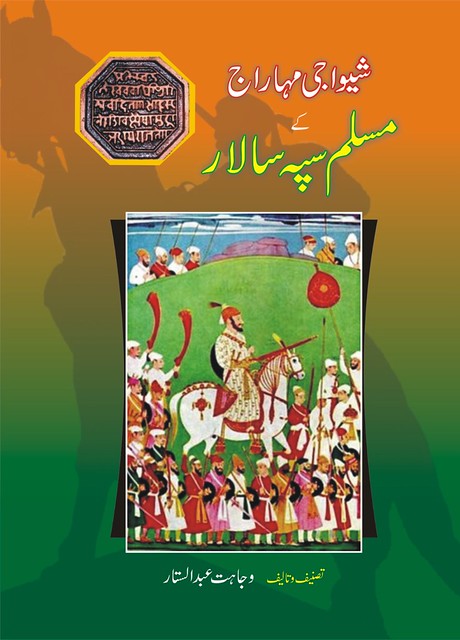
In an effort to portray Maratha warrior Shivaji as a secular king, a forty-page book has been released under the name “Shivaji’s Muslim Generals” by a school teacher here implying all communities to again unite under the syncretic traditions known as Ganga-Jamuni tehzeeb.
Wajahat Abdul Sattar, 42, Social Association Urdu High School teacher from Solapur authored the book on Muslim commanders in the army of Maratha warrior Shivaji and attempted to bring his secular mindset known.
The book focusing mainly on the contribution of Muslims in the army of Shivaji and his trust on Muslims to appoint them on the highest posts may act as a hindrance for such communal organization if the book attracts large number of readers.
Talking with TwoCircles.net Abdul Sattar told, “There were many Muslim generals who were trusted soldiers but I have tried to briefly profile lives of 13 Muslim warriors who were serving in Shivaji Maharaj’s army.”
He took one year in compiling the book and referred many other books on Shivaji written by various authors – Advocate Syed Gaziuddin, Suresh Patil, Purindare and Pansare.
Explaining the main motive behind writing of such a book, he told,” There is a dire need to make public secular life of Shivaji as communal forces and political parties are using religious emotions of Hindus to disturb social harmony in India especially in Maharashtra state. Through this book people will not fall prey to such instigation by anti-social elements.”
“Right wing people prompt Hindus by telling them that Shivaji was anti-Muslim and that he fought many battles against Mughals especially Adil Shah and Aurangzeb. This book tries to clear this misconception by explaining that the motive behind such battles was always ‘political’ and never ‘religious’”, he added.
The book is released in Urdu language but Maratha organization has expressed full resolve in translating the book in other languages.
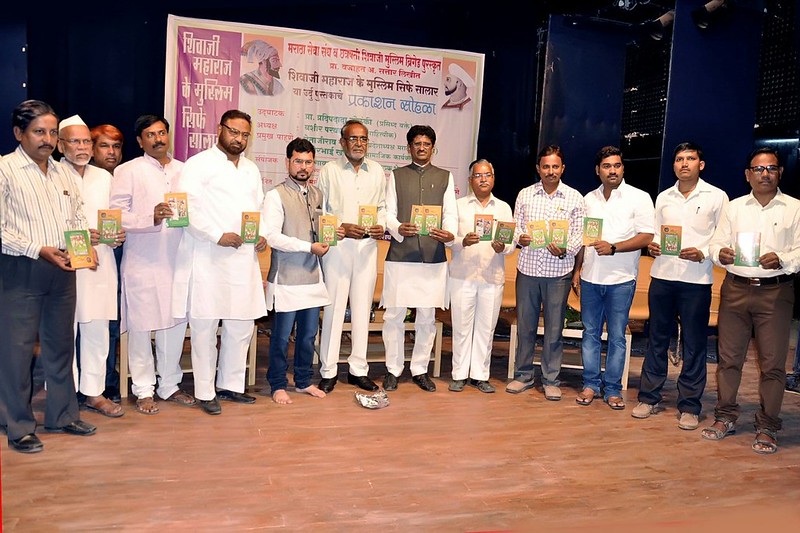
It was released on Tuesday evening in a program organized here at Chatrapati Bhavan that was presided over by Pradeep Solanki, President Maharashtra Unit of Sambhaji Brigade.
The program was also attended by Ram Gaekwad, President Maratha Seva Sangh and Farooq Shaikh, Chatrapati Shivaji Muslim Brigade of Solapur chapter.
Over the past few decades, RSS, Shivsena, VHP, Bajarang Dal and other right wing organizations are consistently using Shivaji’s popular name to attract the Hindu people towards them. They try to portray him as a strong Hindu King who was opposed to Islam and thereby try to Saffronize his image to polarize them against the Muslims.
Initial 10,000 copies of the book are published in Urdu language and Maratha Seva Sangh has announced it will publish book in many other languages so as to propagate the secular aspect of Shivaji.
The book claims that Shivaji and his fore fathers respected Muslim saint. Shivaji always respected Muslim saints Yakut Baba, a Sufi Muslim saint was one of the king’s spiritual guides whereas his grandfather used to regularly visit Saint Shah Shareef in Ahmednagar.
The role of some of the Muslim generals – Siddhi Hilal, Darya Sarang, Daulat Khan, Ibrahim Khan, Kazi Hyder, Siddi Ibrahim, Siddi Wahwah, Noorkhan Baig, Shyama Khan, Hussankhan Miyani, Siddi Mistri, Sultan Khan, Dawood Khan and Madari Mehetar is narrated in the book.
source: http://www.twocircles.net / TwoCircles.net / Home> India News> Indian Muslim> Literature> Top Stories / by A Mirsab, TwoCircles.net / August 21st, 2015
It was a moment of joy and ecstasy for 18 years old Arshiya Choudhari of Solapur when she was announced second topper in Maharashtra state conducted Common Entrance Test MHT-CET 2016 for admissions to Medical courses and can now choose college of her choice for MBBS admission.
The Maharashtra Common Entrance Test (MH CET) exam was held on May 5, 2016 for which results were declared on Wednesday.
A student of A D Joshi College, Arshiya scored 199 marks out of 200 and declared second topper. She has also topped HSC exams in the state this year by scoring 97.85% (636 out of 650 marks).
The feat is very special for Arshiya because she herself prepared for the exam by dedicating 6-7 hours daily for study at home after HSC exams. “I did not join any private classes but relied upon self study at home. I am happy that I could score this much and prove people that private coaching is not always required if you have dedication”, Arshiya told TwoCircles.net.
She is now aiming to complete MBBS course and then she will decide about specialization or masters.
“I want to pursue MBBS from KEM College in Mumbai. After completing degree I will decide whether to go for administrative services or masters”, She added.
However, in any case she wants to connect with the people and serve them. “I am very eager to serve people. I see there are very few Muslim woman doctors and therefore I decided to become a doctor”, she told when asked why she chose to become a doctor.
Speaking with TwoCircles.net Yunus Choudhary, father of Arshiya expressed delight and said she is free to take admission into the college of her choice.
Yunus, who is a Jr. Engineer in water supply department in Solapur told, “I was confident that she will clear CET with excellent marks as she is a hard working girl. I will not restrict her from joining any college for MBBS”.
Nusrat, mother of Arshiya is a practicing doctor and wish to see her daughter serving the community by becoming a doctor. “I want Arshiya to become a successful doctor”, she told.
The Maharashtra Common Entrance Test (MH CET) is an entrance examination conducted by the Directorate of Medical Education and Research with an intention to provide admissions into various graduation courses for Engineering and Medicine streams.
The medical entrance examination has been in news since May 4 when a Supreme Court order made it mandatory for medical aspirants to take the National Eligibility-cum-Entrance Test (NEET). However, following several protests from parents and state education ministers, the President passed an ordinance that reversed the Supreme Court verdict partially.
Therefore for Maharashtra, admissions to medical and dental colleges will be done through the MHT-CET scores for this year.
source: http://www.twocircles.net / TwoCircles.net / Home> India News> Indian Muslim> Women> Youth / by A Mirsab, TwoCircles.net / June 04th, 2016
For most people, social activities is defined as work carried out by people with the aim of alleviating the living conditions of those people in a community suffering from social deprivation. They strive for helping the poor and deprived people to live a better life. By this definition, it also implies that social work is for the living.
But what about people who are dead?
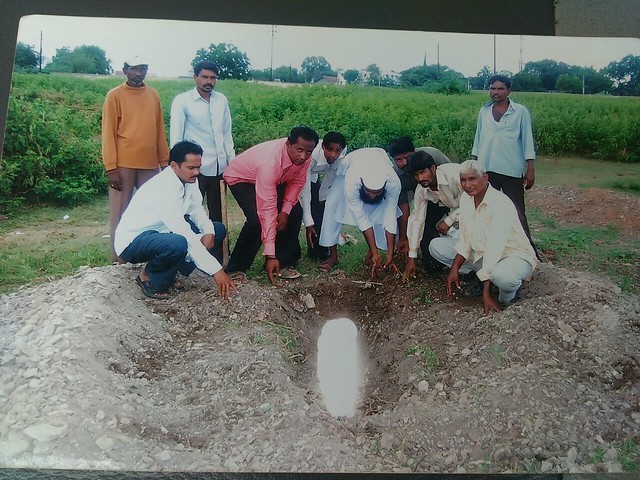
This question, and the answer to it, is what makes Jahangir Shaikh, a 47-year-old resident of Solapur, an exception. His social activity starts after he finds an unclaimed dead body. Once he discovers an unclaimed body, he assumes its guardianship and lays the body to its final abode.
“Initially I started to give gusl (bath) to unclaimed Muslim bodies on the request of Police. Later, I started doing it for people of other religions too”, Jahangir shares his journey of the past ten years; about a cause rarely undertaken by people.
Jahangir, a devout Muslim, first received a phone call in 2007 from a Muslim policeman who knew he can give gusl to unclaimed dead body. Jahangir had rushed to the spot and completed funeral right of a fellow Muslim.
“That was the first instance after which devotion for performing last right of unclaimed body arose inside me and thereafter I made it a duty to attend such bodies”, he recalls.
Jahangir’s strange choice of social work iniitally caught people by surprise, but he never doubted his commitment. “People disliked my work and they would treat me as an inferior individual but that did not stop me from carrying out the work that I supposed as my duty. I would pray to the almighty to strengthen me so that people’s objections do not hold me back,” Jahangir says, when talking about the initial days.
His family also strongly objected to this kind of work but he managed to convince them to allow him to continue doing it.
“I told them that I don’t do it for earning money; burying these bodies gives me pleasure as I became a guardian for them. They felt awkward initially, but gradually they got accustomed “, Jahangir explains how he convinced his family.
Till today Jahangir has performed last rites of as many as 1,600 people, out of which 1,400 were non Muslims. As he is used to of giving gusl, he is also called by people for giving gusl to their relatives. In return, they give him hadiya (gift).
But one might wonder; what is his main profession and source of living? For that, he cooks food in social functions. However, he is always on his toes when he gets to know about any unclaimed dead body either at a hospital or the police station.
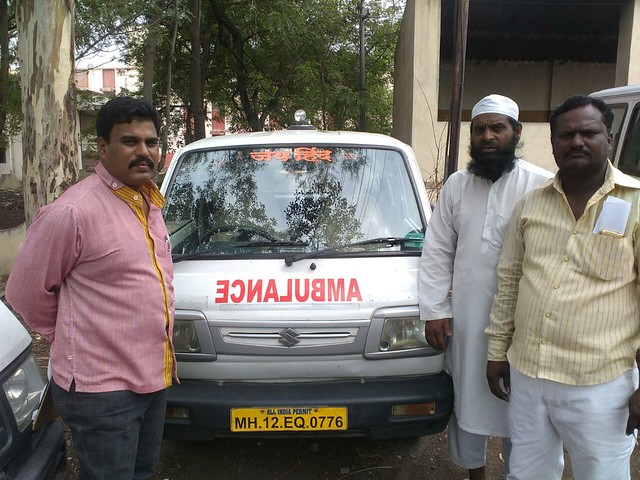
Jahangir’s dedication to what he called his ‘duty’, and his sincerity towards this soon made him famous in Solapur. He started receiving phone calls from police stations and hospitals for burying unclaimed bodies. His amazing sense of kindness towards the unattended also moved many people; a few years ago, a young Muslim businessman Salman Shaikh took notice of his noble service and donated a second-hand Ambulance to help him carry out the work more efficiently.
“I was impressed with his dedication towards the work. The charred and blood-soaked bodies that a normal man don’t even look at, he would offer them a bath and bury them”, a bewildered Salman explains why he donated ambulance to him.
However, a couple of years after he got the ambulance, it met with an accident while carrying a body of little girl. This damaged the vehicle substantially and Jahangir too was injured in the accident. However, this did not break his determination and he bought two ambulances on loan and again started his service to the community. He got support from his son, who took a loan to buy an ambulance for Jahangir.
With some likeminded friends, he also formed the Baitul maal Shifa Committee through which he raises fund by collecting zakat (compulsory charity) or sadqa (voluntary charity) from people. However, he does not use this fund for performing last rites. Instead, he and friends pay money from their pockets for funerals and use the fund raised for poor patients admitted in hospitals.
“We use collected fund to help patients in buying medicines and other medical expenses”, Jahangir says with cheerful face.
When asked if police or hospitals pay him for carrying and burying bodies, he says, “They give Rs 300 but we give this money to the boys who help in carrying bodies to ambulance and dig holes for burial.”
For other expenses related to performing last rites: kafan (white cloths) and attar (perfume), Jahangir and his friends spend money from their own pocket.
His dedication has led to many people offering him voluntary service whenever needed. Currently, his Shifa committee has some active members: Gulam Shaikh, Zainuddin Nadaf, Sameer Shaikh, Daula Kumthe, Babulal Phaniband, Rashid Chaudhari and Shakila Shaikh are always ready to join hands with Jahangir.
Irfan S.M, a social activist and an educational personality from Solapur has nothing more than praises for Jahangir for his distinguished work.
“He is into this task of voluntary work and selfless service to humanity, it is really remarkable. Thousands of people are engaged in different social and religious activities but this is unique. There should be one Jahangir in every city”, Irfan says.
Imran Inamdar contributed to this story
source: http://www.twocircles.net / TwoCircles.net / Home> Indian Muslim> Youth / by A Mirsab, TwoCircles.net / October 07th, 2016
Bakhtiyar Ibrahim Tangsal, a senior English journalist, social worker and an Urdu poet from Solapur district passed away on Tuesday at the age of 54. Tangsal was suffering from a kidney disease for the last four years.
Tangsal forayed into the field of Journalism in late 90s, when the number of Muslims in the field of journalism, especially the ones educated in Urdu-medium schools, was extremely low.
Tangsal broke many barriers by joining Indian Express and proved himself in a very short time and started emerging as an outstanding journalist of the district. He also worked with Navbharat Times and Financial Express.
Tangsal was also a well-known Urdu poet and in 2013, when he was suffering extensively, he started publishing Urdu Daily ‘ Solapur Milaap’. Although he was running it successfully, his health and dialysis process couldn’t allow him to run it further. He always wanted muslims youth to choose journalism as a career or at least do it as part time job or hobby. In 1996 he started free journalism classes to train 20 youths to become journalists. Unfortunately, only two students: Ziyauddin Momin and Imran Inamdar remained in touch with him till his last breath.
He was equally popular in other community people and journalist community too.Today’s strong NGO of reporters ,Solapur dist shramik Patrakar Sangh.(Working journalist association) is the result of his efforts . He was the founder president of the same.
Mahmud Nawaz, a young teacher and a social worker, said it was a huge loss for the community. “He was not only a good journalist, but a great social worker too. He promoted young talents, providing them with all kinds of assistance. His role during 2002 riots and establishing relief committee was really remarkable,” said Nawaz.
source: http://www.twocircles.net / TwoCircles.net / Home> Indian Muslim> Youth / by Imran Inamdar, TwoCircles.net / October 07th, 2016
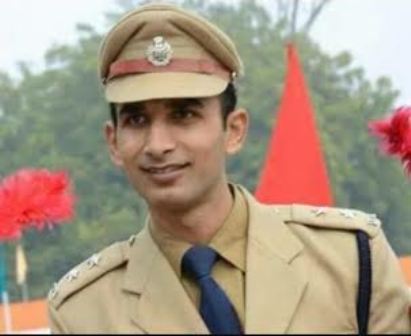
In 2012 Salman Taj Patil cracked the UPSC exam in first attempt and became the first Muslim IPS officer from Solapur. In this candid conversation with Imran Inamdar the 31 year old talks of issues concerning the Muslim community, of the state of education among Muslims and of his own preparation for UPSC a few years ago.
How did you manage to achieve this feat?
I immersed myself into the preparation completely. There was only one aim in my mind and that was to crack UPSC. My parents provided very good emotional support and my father Mr. Jafar Taj always encouraged me saying that ‘you are too energetic and brilliant, you can easily crack UPSC, just focus on your studies and be consistent.’
Who is your role model and Why?
Being a Muslim obviously Prophet Mohammed (PBUH) is my role model. He has showed us the complete way of life. My parents are also firm pillars of support for me. They are always there to guide me.
How to study to appear for UPSC exam?
The preparation starts at school level. Reading news papers, taking part in extracurricular activities, essay writing, debate competition play a key role. One needs to be updated about all current events. Critical analysis is also very important and it improves and polishes writing skill. Practice makes a man perfect. Nobody comes to the world with all the knowledge and skills. Effort, positive atmosphere, focus and support of near and dear ones matters most.
Why are Muslim youths far behind in cracking UPSC exam?
This is very important question. In my opinion our educational infrastructure and negative mentality are fully responsible for this. It has been hammered that qualifying this exam is very difficult or nearly impossible for minority community youth. This type of thinking is damaging and we should come out from this depressing thinking. It is a very fair competition. Achievement is a result of hard work only. It’s time to change our direction of thinking. When we focus and work hard Allah also helps us.
How do you feel serving as an IPS officer?
It’s a wonderful experience. In fact working as a police officer is a great social work itself where one gets an opportunity to help the oppressed, put criminal behind bars and provide safety and security to women and children. For this service we are getting salary from the government and will surely get Ajar (reward) from Allah too.
Sachar committee reports reveal tremendous decline of Muslims in India inallwalks of life. What are the reasons behind it?
We are ourselves responsible for this backwardness. We don’t follow the path of Prophet Mohammed (PBUH) and teachings of Quran which shows the complete way of life. We don’t read, and think over it. ‘Iqra’ which means read was the very first Quranic word to be revealed. How many of us follow the same? Education should be on our top priority specially girls’ education.
During studies what did you do to relieve stress?
I used to study for about 10 to 12 hours a day. That was hectic so I played cricket with friends and took a walk in the park to get myself mentally fresh again. And horse riding is also my hobby.
source: http://www.muslimmirror.com / Muslim Mirror / Home> Exclusive Reports> Indian Muslim> Interviews / by admin / June 26th, 2016