She calls upon council and the people for concerted efforts to take district forward
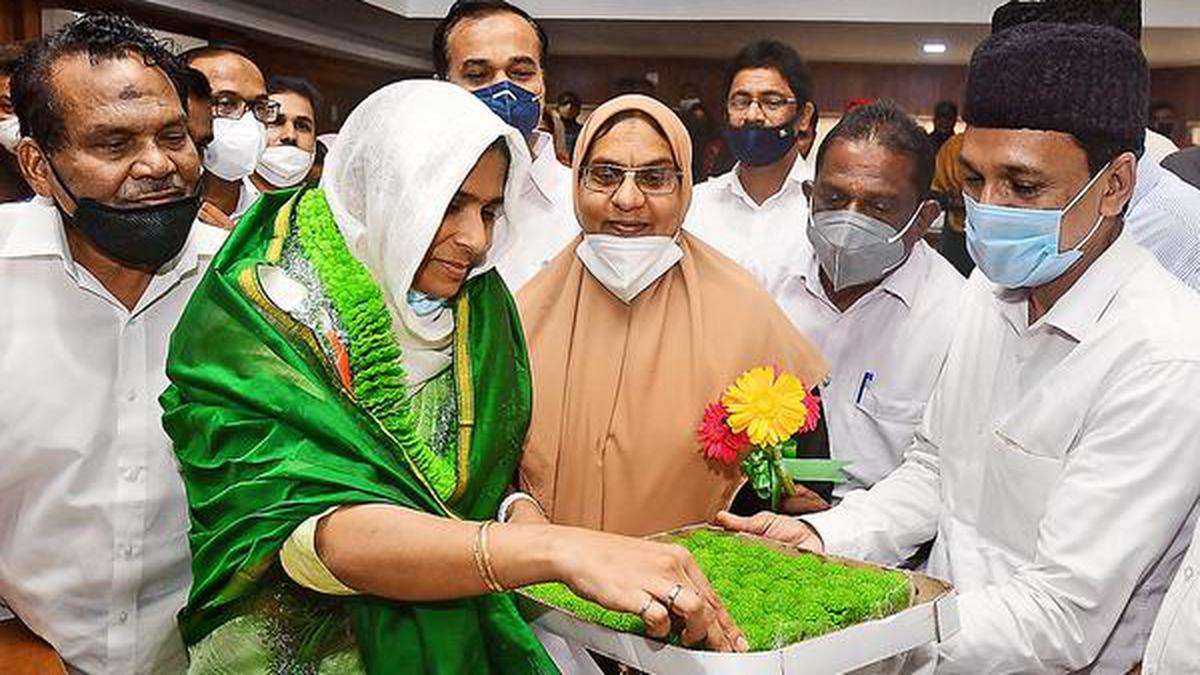
IUML Malappuram district president Sayed Sadikali Shihab Thangal offering sweets to newly elected District Panchayat President M.K. Rafeeka in Malappuram on Wednesday.
Indian Union Muslim League (IUML)’s M.K. Rafeeka was elected president of the Malappuram District Panchayat here on Wednesday. IUML’s Ismail Moothedam was elected vice president.
Ms. Rafeeka became President by winning 26 of the 32 votes. She defeated Left Democratic Front (LDF)’s Arifa Nasar, who got five votes. One vote was declared invalid.
Congress’s N.A. Kareem proposed Ms. Rafeeka for the president’s post, and P. Manaf backed her. Ms. Rafeeka represents Anakkayam division of the District Panchayat.
Ismail Moothedam was elected Vice President by winning 27 votes against LDF’s A.K. Subair. K.T. Ajmal proposed Mr. Moothedam’s name and P.K.C. Abdurahman seconded it. Mr. Moothedam represents Chokad division of the District Panchayat.
District Collector K. Gopalakrishnan administered the oath of office to Ms. Rafeeka.
IUML district president Sayed Sadikali Shihab Thangal; Sayed Basheerali Shihab Thangal; IUML district general secretary U.A. Latheef; P. Ubaidullah, MLA; former District Panchayat presidents K.P. Mariyumma, Arimbra Mohammed, Suhara Mampad and A.P. Unnikrishnan; senior IUML leaders Umer Arakkal, Salim Kuruvambalam, Kurukkoli Moideen, Noushad Mannisseri, and Congress leaders V.A. Kareem and K. Mohandas addressed a meeting that followed the oath taking ceremony. A commerce postgraduate, Ms. Rafeeka said that she would look upon the responsible position with due respect.
She called upon the entire council and the people for concerted efforts to take the district forward in comprehensive development.
Former president of Pulamanthol grama panchayat, Ms. Rafeeka was elected from Anakkayam division with 11,449 votes majority. She was instrumental in winning many accolades for Pulamanthol grama panchayat between 2010 and 2015. In 2011, the panchayat won the State Swaraj Trophy, the Central Vayo Sreshta Samman, and Gaurav Grama Sabha award. In 2013, she won a Central award for panchayat empowerment. In 2014, Pulamanthol won Rajiv Gandhi Best Grama Panchayat award.
source: http://www.thehindu.com / The Hindu / Home> News> India> Kerala / by Staff Reporter / December 30th, 2020
In Marapala, under the Thitimathi Gram Panchayat of Kodagu district, a dilapidated house belonging to a poor family—damaged over the years due to heavy rains—has been rebuilt into a beautiful new home. The initiative was undertaken by Jamaat-e-Islami Hind, Kodagu District’s Baitu Zakat unit, with generous support from donors and the Sadrimane team.
In a simple ceremony held on the evening of Wednesday, July 23, the newly built house was inaugurated, and the keys were handed over by JI Abdussalam, Convenor of the Mysore Zone.
The event was graced by Gram Panchayat President Mrs. Ponnu, Vice President Mrs. Shyamala, members JI Afroz, local cleric Maulana Kamaruddin Ahsani, Baitu Zakat supervisor, and businessman JI Ahmed Balele, JIH Kodagu District Convenor JI C.H. Afsar Madikeri, District Secretary P.K. Abdurrahman Virajpet, Gonikoppa Circle Convenor JI Tanvir Ahmed, and JIH Siddapur Local President JI M.K. Ashraf, who played a key role in overseeing the construction.
source: http://www.thehindustangazette.com / The Hindustan Gazette / Home> News> Latest News / by The Hindustan Gazette / July 24th, 2025
Among them are women who, through their work, have not only guided society but also become role models themselves. With courage, dedication, hard work, and limited resources, they are bringing about changes.
The list includes teachers, entrepreneurs, social workers, and heralds of change. Their stories fill us with pride and remind us that you can realise your objectives of serving society.
Khursheed Ahmad
Khursheed Ahmad has played a pivotal role in reviving Bihar’s cultural soul and turning Patna into a vibrant center of literature and arts. He has brought traditional forms like qawwali, poetry, literature, and Sufi music back into public life, infusing them with fresh energy and contemporary relevance.
Jabir Ansari
The right guidance at the right time can profoundly shape a life. Jabir Ansari, who hails from a humble background, reached the international martial arts arena thanks to his unwavering dedication. Hailing from Tumba Pahaad village in the Naxal-affected Jhajha block of Jamui district, he has won many gold medals and made his mark in martial arts.
Shams Alam
When doctors diagnosed a tumor in Shams Alam’s spine, they reassured him he would be running again in weeks. That day never came. Paralysis left his body’s lower half numb—a life-changing moment. Instead of despairing, Shams chose determination. Through grit and love for swimming, he emerged as a para‑swimmer who has made an indelible mark in Bihar, across India, and on international stages—breaking records and breaking barriers.
Tayyaba Afroz
She’s a pilot, and her social media bio proudly features phrases like “Born To Fly,” and “Dream, Achieve, Fly.” But behind these inspiring words lies a powerful story—selling ancestral land, withstanding social criticism, and overcoming physical and emotional barriers. Tayyaba Afroz from Jalalpur village in Saran district is not just the state’s first Muslim woman commercial pilot—she is a vibrant symbol of struggle, perseverance, and lofty dreams.
Dr. M. Aijaz Ali
Former Rajya Sabha MP Dr. M. Aijaz Ali has been an advocate for the marginalized for nearly 30 years. His guiding belief is that true development is incomplete without social equality and protecting the rights of the poor. Born in 1958 and raised in an orphanage, he overcame poverty through his academic passion to gain admission to the prestigious Patna Medical College.
Jameel Akhtar
As Deputy General Manager at NTPC, Jameel Akhtar has dedicated his life to educating underprivileged children in Bihar. His commitment is so intense that he has chosen to remain unmarried, believing marriage might hinder his mission. “If I marry, managing the education and care of 550 children will become difficult,” he told Awaz –The Voice. In a senior role at NTPC, his heart beats for the children who have no means to attend school.
Mohammad Ibrahim
A resident of Ramna in Motihari, Mohammad Ibrahim’s extraordinary journey inspires not just the youth of Bihar but all of India. His path from Motihari to Dubai is a powerful testament to determination and purpose. Recently honoured with Oxford University’s Best Travel & Immigration Services Award, his story marks a significant milestone in his professional journey.
Dr. Mumtaz Nair
Dr. Mumtaz Nair hails from a small village in the Kishanganj district of Bihar. In her early years, her family struggled even to meet basic needs. Despite hardships, her family chose to invest in her education—a decision that one day contributed significantly to the global fight against some of the world’s deadliest viruses.
Faizan Ali
At just 18 years, Faizan Ali was earning a degree in business studies when life called him to a deeper purpose. More than studies or ambition, he realised his true calling was serving humanity. “If you truly want to share someone’s pain, age and education don’t matter—passion does,” Faizan told Awaz – The Voice. Now 23, Faizan from Gaya is a shining example of selfless service. Raised in a modest family, he never imagined his life would pivot from a corporate future to community work.
Rani Khanam
Rani Khanam is the first Muslim Kathak dancer in Independent India to turn her love for classical dance into a profession. Originally from Gopalganj, Bihar, she practiced Kathak clandestinely, in a family that did not allow music or dance. Through her art, she has empowered women and highlighted key social issues.
source: http://www.awazthevoice.in / Awaz, The Voice / Home>The Changemakers / July 20th, 2025
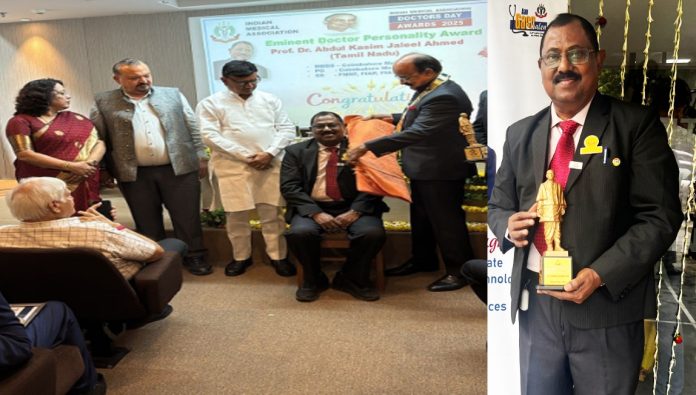
Yet another feather in the cap of paediatrician Dr Abdul Kasim Jaleel Ahamed as he was honoured with ‘Eminent Doctor Personality Award’ for the year 2025 at an event held at Indian Medical Association (IMA) headquartered in New Delhi. The occasion was during National Doctors Day
“Medicine cures diseases but only doctors can cure patients.” This thought-provoking quote of Swiss psychiatrist, psychotherapist, and psychologist Carl Gustav Jung is relevant in the context of noted paediatrician from Coimbatore Dr Abdul Kasim Jaleel Ahamed as he was honoured with ‘Eminent Doctor Personality Award’ for the year 2025 at an event held at Indian Medical Association (IMA) headquartered in New Delhi on the National Doctors Day event.
Indian Medical Association (IMA), the world’s largest association of doctors with over 4 lakh members and 1,800 branches across the country, held its prestigious national award ceremony in the nation’s capital on July 14, wherein scores of medical professionals in different categories were recognised with the honour by Chief Guest Dr Jitendra Goyal, Union Minister of Science and Technology besides the Guest of Honour Dr Anil Goyal, MLA from Delhi.
With over four decades of dedicated service, Dr Jaleel Ahamed carved a niche for himself in treating children at his Cloud One Smart Clinic at West Ponnurangam Road in RS Puram neighbourhood in Coimbatore city. No gainsaying the fact that the child specialist earned name and fame among the residents within and off the city. Noteworthy to mention, he earlier served as Chief Paediatrician and Neonatologist at Sri Ramakrishna Hospital for 34 years.
It is pertinent to point out that Holy Quran researcher, noted speaker, author and publisher Dr Ameer Althaf, in his book ‘Pettagam’ released in 2013 which is a compilation of 300 years history of Coimbatore Muslims, has a separate chapter on Dr A K Jaleel Ahamed.
He married the daughter of Sakkarai Mohamed Rowther, a philanthropist, who spared a considerable amount for charity even while running his transport company in the 1970s. Those were the days when the less privileged and poor waited in front of Jungle Beer Dargah, Jamesha Dargah and Five Corner mosque during Jumma Ki Raat and on Jumma day.
Dr Jaleel Ahamed taking a cue from his father-in-law is doing his mite continuing his tradition in reaching out to the poor and the needy. Not to be left behind, Dr Jaleel’s service to mankind fetched him accolades from several quarters from far and near while not to speak of the recent IMA Delhi’s ‘Eminent Doctor Personality Award’ at a function organised in connection with ‘National Doctors Day’.
Making heads turn, Dr Jaleel treated an 800-gram test-tube baby claimed to be the country’s first while serving at Sri Ramakrishna Hospital as Chief Paediatrician & Neonatologist, which was the talk of the town then. Interestingly, the baby whom he had treated grew to become a graduate bringing pride to the paediatrician for his noble gesture. This particular incident finds a place in the Pettagam book.
Significantly, he was instrumental in donning the role of Organising ChairPerson – State Neocon 2007 and 2014, Organising Committee Ooty Pedicon (State IAP Conference 2005), Organising Committee , Kongu Pedicon (State IAP Conference 2017 Coimbatore, Organising ChairPerson – South Neocon 2018 in Chennai besides Organising Chairperson – State Neocon 2019 in Madurai, Organised Various CME and Neonatal and Paediatric Workshops in Coimbatore and was State & South Zone Coordinator for IAP Presidential Action Plans.
To his credit, he has numerous awards, including Sr Paediatrician Award, IAPTNSC Senior Neonatologist Award, NNFTN Academic Excellence Award, IMA Community Service Award UG, PG at Coimbatore Medical College during 1976 to 1981,1983-1985 besides Fellowship in Neonatology & Paediatric medicine.
Moreover, he had attended various International, National and State level conferences, workshops, CME programmes in Neonatology at Germany, Norway, Singapore, Italy, UK, South Africa, Dubai, Malaysia, Netherland, Athens, and Alexandria.
Adding more to this, Dr Jaleel said that he was part of the International vaccine summit during 2004 at Thailand and submitted various papers, presentations in paediatrics and neonatology and was selected as a special invitee to attend surfactant replacement therapy during 2006, 2007 in Norway (Oslo), and Italy (Ancona) while not speak of his participation at ESPGHAN summit held in UK, Czech Republic., Geneva, Scotland Visited Marburg, Germany as an observer in neonatology and paediatric nephrology during 2005.
He obtained observer fellowship in neonatology during 2012 at Texas Children’s Hospital USA. The list is endless as he is armed with many recognitions across the globe.
Radiance takes pride in felicitating Dr Jaleel Ahamed for the IMA honour for his dedicated service to the needy.
[The author is former Indian Express and Deccan Chronicle chief]
source: http://www.radiancenews.com / Radiance News / Home> Focus> Pride of the Nation> Awards / by M Rafi Ahmed / July 22nd, 2025
The bond between Assamese Hindus and Assamese Muslims is very strong and no one can easily break the traditional friendship between the two communities, Wasbir Hussain, author and executive director of Centre for Development and Peace Studies, has said.
Addressing the fourth anniversary celebrations of the Assamese Syed Welfare Trust, an organisation representing the Assamese Syeds, Hussain on Sunday urged Gauhati University to start a chair in the name of Azan Pir, a 17th-century Muslim reformer and Sufi saint, on the subject of ‘inter-faith harmony or harmony of communities’.
Assamese Syeds are one of the five Muslim groups officially recognised by the Assam government as indigenous communities of the state.
Hussain said except religion, there is no difference between Assamese Hindus and Assamese Muslims. Their language is the same, culture is the same, food habits are the same and they dress the same way, he said.
“I strongly believe that no one can easily break the traditional bond of friendship between Assamese Hindus and Assamese Muslims,” he said.
Hussain, who is also the editor-in-chief of Guwahati-based Northeast Live, spoke about how the indigenous Muslims of Assam follow cultural Islam compared to religious Islam and live peacefully with the larger Hindu population of the state.
He complimented Assam Chief Minister Himanta Biswa Sarma for taking initiatives for the protection of the heritage of the Assamese Muslim community and its overall growth.
Gauhati University Vice Chancellor Nani Gopal Mahanta, the chief guest of the event, said people or communities can have multiple identities that transcend religion.
He cited the example of Assamese Muslims and Syeds who are descendants of Sufi saint Azan Pir, saying they are part of the greater Assamese society.
Mahanta assured that he will push for the Assamese Syed Welfare Trust’s proposal to introduce the Azan Pir chair in Gauhati University and that he will work towards republishing the works of renowned Assamese writer Syed Abdul Malik’s ‘Jikirs Aru Jari’.
Assamese Syed Welfare Trust president Syed Abdul Rashid Ahmed also spoke on the occasion.
source: http://www.english.varthabharati.in / Vartha Bharati / Home> India / by Vartha Bharati / January 20th, 2025
ACP Rehana Sheikh, who received nearly 150 awards and served across Maharashtra, says she will continue to serve the nation even after retirement
Mumbai/Sangli , MAHARASHTRA :
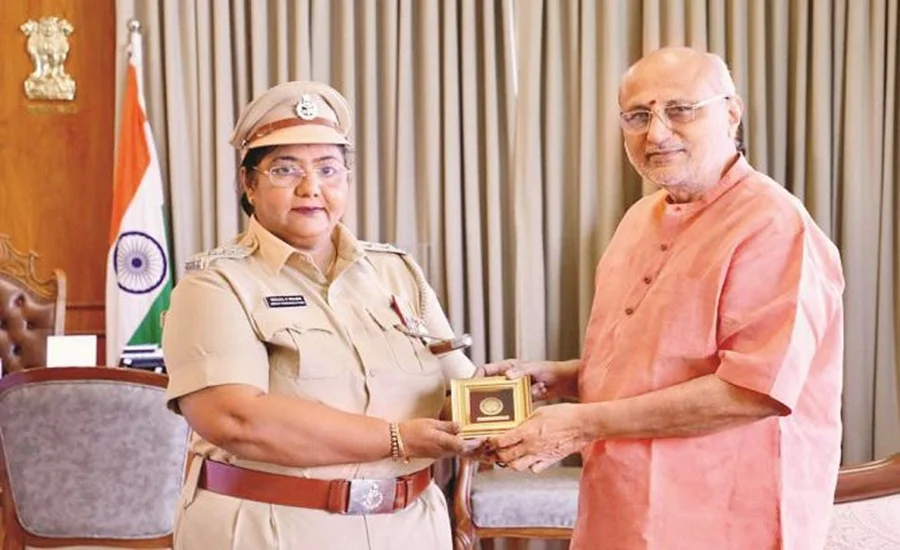
Rehana Sheikh, Maharashtra’s first Muslim woman police officer, has retired after nearly 36 years of dedicated service. She started her journey as a sub-inspector and retired on 31 May from the post of Assistant Commissioner of Police (ACP). At the time of retirement, she was working in the VIP security at Raj Bhavan in South Mumbai.
Governor of Maharashtra CP Radhakrishnan honoured ACP Rehana Sheikh on her retirement. She was recognised not just for her long career but also for her contribution to law enforcement and her trailblazing role as the first Muslim woman in the Maharashtra police force.
Speaking to Clarion India, Rehana Sheikh said, “I was the first Muslim woman to become a police officer in Sangli and Maharashtra. When I applied, 25,000 women took the police recruitment exam. Only 25 were selected and I was the only Muslim woman among them.”
Sheikh, who hails from Sangli, said her father served in the military, but no one in her family had worked in the police before. Her dream began when she was a national-level volleyball player. Watching the TV serial Udhan, which showed a woman police officer, inspired her to serve the country.
“A kabaddi player from our neighbourhood had become a sub-inspector. I had job offers from banks, but my volleyball coach asked me, ‘Do you want to be a clerk or an officer?’ That question changed my life,” she recalled.
Despite social challenges and the fact that a police job was not seen favourably at the time, her family stood by her. Rehana’s journey in the force was marked by both professional achievements and personal hardships.
“Shortly after I joined the force, my father passed away. I had to take care of my mother, younger sister and brothers. Then I got married in 1991, but my husband died in an accident in 1993. My son was very young at that time,” she said.
After her husband’s death, she was transferred to Solapur and later promoted and posted in Kolhapur. She remarried in 2004 and continued her service with dedication in various cities and districts of Maharashtra.
Rehana Sheikh worked during some of the most dangerous times in Mumbai’s history. “When I began my career, the underworld was very strong. Crimes were violent — beatings, murders. Now, the nature of crime has changed. We see more cybercrime and online fraud,” she explained.
She played an active role in many high-profile operations. “I was part of the police team during the Lokhandwala shootout. I was also involved in the search at Arun Gawli’s Dagdi Chawl, where we seized weapons. Those were difficult times, and I believe the new generation will find such work challenging.”
She also spoke about being among the first batch of women allowed to work at police stations. “Earlier, women officers were only posted at airports or less active places. We were the first to be allowed to work in police stations.”
Balancing home and duty has never been easy. “My husband and my colleagues supported me. I had the responsibility of my family and later my in-laws, too. But I managed both because of their support and Allah’s grace,” she said.
During her long career, Rehana Sheikh was honoured with nearly 150 awards. But for her, the real success lies in the lives she touched and the message she now wants to spread.
“My message to women is: be educated and join the police force. Serve the society, the nation and the country. Even after retirement, I want to continue working for the betterment of people,” she said with pride.
ACP Rehana Sheikh’s journey from Sangli to the top ranks of Mumbai’s police force is not only inspiring but also a symbol of determination, courage, and service.
source: http://www.clarionindia.net / Clarion India / Home> India> Indian Muslim / by Team Clarion / June 03rd, 2025
The Assamese version of Maulana Abul Kalam Azad’s Tarjuman Al Quran, Volume-I Al Fatiha, translated by Komoruzzaman Ahmed, was released here yesterday by educationist and former vice chancellor of Rajib Gandhi University, Arunachal Pradesh, Dr A C Bhagabati.
Maulana Azad, besides being a well-known political figure, is a scholar of Islamic learning and Quran. He had translated the Quran into Urdu with commentary as Tarjuman Al Quran to help the common people understand the holy book, as it was understood by the people during Prophet Mohammad’s lifetime.
The book had originally been translated to English by Dr. Syed Abdul Latif during the life time of Maulana Azad. The book, released on June 2, is an Assamese translation of the main Volume-I, Al Fatiha of the Tarjuman Al Quran, where Maulana Azad presented the main principles of the Quran by analyzing each of the Seven Sentences of Sura Al Fatiha in detail.
The meeting was presided over by film-maker Abdul Majid.
The welcome address was made by Wasbir Hussain, author and journalist.
Addressing the meeting, Dr Ayesha Ashraf Ahmed, author and former professor of Shillong College talked about the core philosophy of the Quran. Author Ahmed also addressed the gathering.
source: http://www.assamtribune.com / The Assam Tribune / Home> Archives / by Staff Reporter / September 15th, 2010
Let us not forget him in a hurry. Let us not reduce him to a paragraph in history books. Instead, let us pass on his memory like a worn volume of Pavangal, read and reread, loved and lived, whispered from one generation to the next.
Vakkom Majeed (1909-2000). Photo: From KM Seethi’s archive.
Vakkom Majeed passed away on July 10, 2000.
“He never went out without a book under his arm, and he often came back with two.”
— Victor Hugo, Les Misérables
In the long and rolling corridors of memory, some lives stay like verses, opening out slowly, sentence by sentence, chapter by chapter, never quite closing. Vakkom Majeed’s was one such life. A life commemorated not only by its fearless engagement with history, but by its quiet, intense companionship with books. On the 25th anniversary of his passing, as we also mark the 100th year of Pavangal, the Malayalam translation of Victor Hugo’s Les Miserables , it feels almost providential to recall him through the pages he so often inhabited.
Majeed Sahib, as many called him with reverence, moved with a book always kept under his arm, a bulwark against ignorance, a lamp in times of doubt. And among the many volumes he read and reread, Pavangal held a sacred space. Nalapat Narayana Menon’s 1925 translation of Hugo’s masterpiece was more than literature to him. It was revelation. He had devoured the original edition in his youth, and its characters never left him – Valjean’s anguish, Javert’s moral rigidity, the revolt in the streets of Paris, the quiet dignity of suffering souls. When he spoke of Pavangal, it was with a fervour one reserves for scripture. He did not read the novel, rather he lived it.
A.P. Udayabhanu, a veteran freedom fighter of Kerala, once described Majeed as a “moving encyclopaedia with at least one book in his hands.” But Majeed Sahib was more than a repository of knowledge. He was a seeker, a provocateur of conscience, a gentle fire that never flickered out. I have the sweetest of memories of my time spent with him, from childhood itself, I remember the rhythm of his voice as he discussed Bertrand Russell’s three-volume autobiography, Churchill’s sprawling accounts of World War II, or the 10-volume correspondence of Sardar Patel. There was never a trace of vanity in his learning. He read not to impress but to illuminate. And when he shared his readings – Azad’s Tarjuman al-Qur’an, Muhammad Asad’s Road to Mecca, M. N. Roy’s The Historical Role of Islam, Arthur Koestler’s The Yogi and the Commissar, or Hugo’s Pavangal, like many – he spoke with the urgency of a man who felt truth must never be hoarded.
Born on December 20, 1909, in the storied Poonthran Vilakom family of Vakkom near Chirayinkil (Travancore), S. Abdul Majeed inherited a legacy of reform and resistance. His uncle, Vakkom Abdul Khader Moulavi, had already lit the flame of renaissance among Kerala Muslims. From his schooldays at St. Joseph’s High School, Anjengo, young Majeed was pulled into the vortex of reform movements and the call of the Indian freedom struggle. By the time the Quit India movement broke out, he was already a marked figure in Travancore, arrested, jailed, and later jailed again for resisting the plan of “Independent Travancore.”
But what set him apart – what made him more than just another freedom fighter – was the deep moral imagination that animated his politics. His understanding of rebellion was not ideological. It was profoundly ethical. Like Victor Hugo, he believed that human dignity must stand unshackled before the majesty of any state or creed. He condemned the ‘two-nation theory’ not because it was politically inconvenient but because it was morally vacuous. To him, the soul of India was plural, secular, and indivisible.
In 1948, he was elected unopposed to the Travancore-Cochin State Assembly from Attingal. But when his term ended in 1952, he walked away from practical politics, choosing instead the solitary path of reading, reflection, and moral clarity. While others sought power, Majeed Sahib sought wisdom. And in doing so, he became more relevant with age. Over the next decades, he would immerse himself in the philosophical and historical writings of Bertrand Russell, the radical humanism of M. N. Roy, and the emancipatory visions of Narayana Guru. He called for a “return of Ijtihad”, a freedom of thought within Islamic traditions, and dreamed of a society beyond caste and creed.
He never became rigid in doctrine. His politics was never a fixed ideology, but a conversation between ideas and reality. In our many conversations, I recall his thoughtful analysis of the Malabar Rebellion. He agreed with the thesis that it was fundamentally a revolt born of agrarian injustice but he was deeply saddened by its later communal turn. For him, the tragedy of history was when righteous anger was manipulated into sectarian hatred.
And always, there was a book in his hand. Always, a passage to quote. Always, a memory to share.
The last three decades of his life were his most contemplative. He reread the classics, interrogated nationalist histories, and engaged with young minds who came to him for guidance. To them, he gave not slogans but questions. When he spoke of Jean Valjean’s redemption, it was a commentary on our prison system. When he discussed Javert’s suicide, it became a parable about the dangers of legalism without compassion. When he recalled Fantine’s fall, it was a scathing critique of social hypocrisy.
He never forgot the moment when he visited the Indian National Army hero Vakkom Khader in the Madras Central Jail. It was Majeed Sahib who brought back Khader’s last letter to his father before his hanging, a task that broke his heart and steeled his resolve.
In 1972, when the nation celebrated the silver jubilee of independence, Majeed was awarded the Tamrapatra by Prime Minister Indira Gandhi. Later he was deeply perturbed by the excesses of Emergency.
There was no trace of ceremony in his life. No pursuit of fame or favours. He lived in quiet dignity, read in solitude, and died in obscurity, on July 10, 2000. He left behind not an estate, not a political dynasty, but an idea of what it means to live ethically, read deeply, and act justly.
Today, as we remember him, the centenary of Pavangal seems to carry the tenor of prophecy. One hundred years since Jean Valjean entered Malayalam letters, and twenty-five since Vakkom Majeed left this world, the two seem braided, one fictional, one real, both intensely human. Majeed Sahib was Kerala’s own Valjean: hunted by regimes, misunderstood by many, but ultimately redeemed by the fire of truth and the grace of humility.
Let us not forget him in a hurry. Let us not reduce him to a paragraph in history books. Instead, let us pass on his memory like a worn volume of Pavangal, read and reread, loved and lived, whispered from one generation to the next.
For in remembering Vakkom Majeed, we remember the best of what we once hoped to be.
K.M. Seethi is director, Inter University Centre for Social Science Research and Extension (IUCSSRE), Mahatma Gandhi University (MGU), Kerala, India. Seethi also served as Senior Professor of International Relations, Dean of Social Sciences at MGU and ICSSR Senior Fellow.
source: http://www.thewire.in / The Wire / Home> History / by K.M. Seethi / July 11th, 2025
“This Too Shall Pass,” a debut poetry collection by Muskan Sufi, a young Kodagu student studying in Mysuru, has earned international recognition after being nominated for the prestigious Indie Authors Award 2025, held in memory of American poet Emily Dickinson. The book is now available for purchase online on Amazon.
Muskan Sufi, a student of English Literature and Psychology at St. Philomena’s College, Mysuru, hails from Virajpet in Kodagu and belongs to the Kodava Muslim community. Her literary achievement has drawn attention not only for its quality but also for the quiet determination that brought her recognition at a young age.
Published by the internationally acclaimed Bookleaf Publication, This Too Shall Pass was born out of Muskan’s participation in the publisher’s “21 Poems in 21 Days” challenge. She surpassed expectations by writing more than 28 poems, which resulted in a 50-page collection of emotionally rich, thought-provoking verse.
Her poems explore themes of pain, healing, nature, death, and the complexities of human emotion. With modern and socially conscious subjects, Muskan’s writing brings to life the inner turbulence of individuals and the beauty of life’s fleeting moments. She uses simple yet powerful language, aiming to connect souls and provide hope to those facing life’s darkest times.
Thousands of poets participate in Bookleaf’s global poetry initiatives, and the top entries are selected for book publication and nomination to the Indie Authors Award. Muskan’s nomination has created a ripple in the English literary community, marking a proud moment for the Kodava Muslim community.
Expressing her joy, Muskan said, “I joined the challenge after coming across the campaign on social media. I’ve always loved writing English poetry, but I never imagined my poems would be published or nominated for such a prestigious award. It’s given me great motivation to pursue more literary work.”
Muskan is the daughter of Duddiyanda H. Sufi and Masuda Sufi, who head the DHS Group of Companies in Virajpet. Her father also serves as the president of the Kodava Muslim Association (KMA).
Muskan’s poetry book, This Too Shall Pass, is now available for purchase on Amazon.
source: http://www.hindustangazette.com / The Hindustan Gazette / Home> News> Latest News / by The Hindustan Gazette / pix:kannada.hindustangazette.com / July 21st, 2025
18 Muslim Women Made It To Lok Sabha Since Independence; 13 Of Them Dynasts: Book
New Delhi :
That women were always under-represented in the Lok Sabha is a known fact, but Muslim women members have been a greater rarity with only 18 making it to the Lower House since independence, according to a new book.
And while dynastic politics may not be conducive for democracy to deepen its roots, it has played a positive part in giving chances to Muslim women, with 13 out of the 18 being from political families.
pix: sapnaonline.com
From royalty to a tea vendor-turned-politician’s wife and from a first lady to a Bengali actress, the 18 Muslim women who treaded the hallowed corridors of power in the Lok Sabha are an eclectic mix, with each of them having an interesting backstory, but one common thread — their path to power was always strewn with struggle and hurdles.
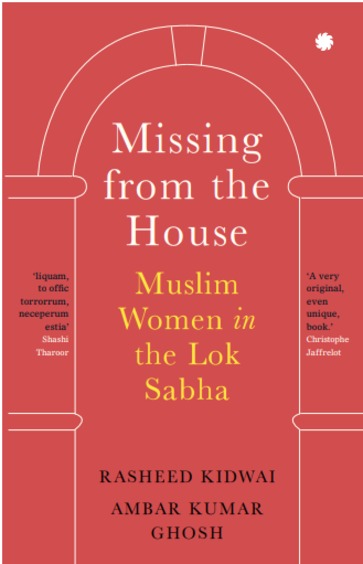
The story of these 18 Muslim women has been chronicled in an upcoming book– ‘Missing from the House — Muslim women in the Lok Sabha’ by Rasheed Kidwai and Ambar Kumar Ghosh. Kidwai says he wanted to document the profile of 20 Muslim women who made it to the Lower House, but two of them — Subhasini Ali and Afrin Ali — had openly proclaimed that they did not follow Islam.
“Only eighteen Muslim women have made it to the Lok Sabha since the first parliamentary polls in 1951-52. It is a shockingly abysmal figure, considering Muslim women are about 7.1 per cent of India’s 146 crore population. Out of the 18 Lok Sabhas constituted till 2025, five times the Lok Sabha did not have a single Muslim woman member,” Kidwai and Ghosh write in their book, published by Juggernaut and will be released next month.
Equally shocking is the fact that the number of Muslim women elected to Parliament in one tenure never crossed the mark of four in the 543-seat lower house of Parliament, the book points out. The book also notes that none of the five southern states — Kerala, Tamil Nadu, Karnataka, Andhra Pradesh and Telangana — otherwise known for better political representation than the North and with better literary levels and other socio-economic indicators, have not yet sent a single Muslim woman MP to the Lok Sabha.
The 18 Muslim women who made it to the Lok Sabha include Mofida Ahmed (1957, Congress); Zohraben Akbarbhai Chavda (Congress, 1962-67); Maimoona Sultan (Congress, 1957-67); Begum Akbar Jehan Abdullah (National Conference, 1977-79, 1984-89); Rashida Haque (Congress 1977-79); Mohsina Kidwai (Congress, 1977-89); Abida Ahmed (Congress, 1981-89); Noor Bano (Congress, 1996, 1999-2004); Rubab Sayda (Samajwadi Party, 2004-09); and Mehbooba Mufti (People’s Democratic Party, 2004-09, 2014-19).
The other Muslim women who entered the Lower House are Tabassum Hasan (Samajwadi Party, Lok Dal, Bahujan Samaj Party 2009-14); Mausam Noor (Trinamool Congress 2009-19); Kaisar Jahan (Bahujan Samaj Party, 2009-14); Mamtaz Sanghamita (Trinamool Congress 2014-19); Sajda Ahmed (Trinamool Congress 2014-24); Ranee Narah (Congress, 1998-2004, 2009-14); Nusrat Jahan Ruhi (Trinamool Congress, 2019-24); and Iqra Hasan (Samajwadi Party, 2024-present).
A dominant political figure who made an indelible mark on Indian politics was Mohsina Kidwai. She not only entered the Lok Sabha but also went on to join the council of ministers and hold several portfolios, including labour, health and family welfare, rural development, transport and urban development.
Another fascinating personality that the book talks about is the wife of Mohammad Jasmir Ansari, a tea vendor-turned-politician. In 2009, Kaisar Jahan, wife of Ansari, won a fiercely fought four-corner contest even though she had barely thirty-five days to prepare and campaign. As 2009 Lok Sabha polls neared, Mayawati summoned MLA Jasmir and Kaisar Jahan to Lucknow. “Jasmir and Kaisar stopped at ‘Sharmaji ki Chai’ in Hazratganj before heading to the chief minister’s residence. Jasmir was anticipating a ministerial position, but instead, Mayawati came straight to the point by asking him to contest the polls. The lingering taste of chai vanished quickly as Jasmir struggled, looking tentatively at his wife for an answer. Mayawati, a politician among politicians, sensed his unease. She directly asked Kaisar: ‘Tu ladegi? The answer came immediately and spontaneously from both Jasmir and Kaisar-yes,” the book narrates.
There is also a first lady among the 18 Muslim women – Begum Abida Ahmed, wife of the country’s fifth president, Fakhruddin Ali Ahmed.
Over four years after Ahmed passed away in 1977, Abida Ahmed agreed to fight a Lok Sabha by-election from Bareilly, Uttar Pradesh, in 1981 and won, becoming the first and only First Lady of India to have entered the competitive arena of politics. She won again in 1984, making it two in a row from Bareilly.
Begum Noor Bano, originally Mahatab Zamani and the widow of the former ruler of Rampur, was royalty who was a key figure in the political landscape of that area and fought many battles with Azam Khan of the Samajwadi Party and Jaya Prada, who also contested on an SP ticket. Her husband, Nawab Syed Zulfikar Ali Khan Bahadur, belonged to the Rohilla dynasty and was popularly addressed as ‘Mickey Mian’. He was killed in a freak road accident in 1992 while returning from New Delhi to Rampur.
Noor Bano won the 1996 and 1999 Lok Sabha polls, but her electoral battles with Jaya Prada in 2004 and 2009 ended in defeats.
Among the 18 Muslim women, Bengali actress Nusrat Jahan Ruhi also broke a number of glass ceilings as she went on to win the Lok Sabha polls on a TMC ticket in 2019.
In the current Lok Sabha, there is just one Muslim woman MP, and that is SP’s Iqra Hasan Choudhury. From earning the distinction of being one of the youngest MPs after defeating a veteran leader from the BJP to becoming the centre of social media discussion as a young, London-educated Muslim woman leader, Iqra Hasan has appeared to have carved out a space for herself in the public imagination.
In his foreword to the book, Congress MP Shashi Tharoor writes, “Nearly seventy-eight years have passed since that portentous stroke of midnight on 15 August 1947, when Pandit Jawaharlal Nehru proclaimed a ‘tryst with destiny’ and India awakened to ‘life and freedom.’ …Yet even after almost eight decades, a shameful reality, which should deflate our self-congratulatory fervour over our democratic track record, still haunts us.”
“Not everyone has found ‘utterance’ in the world’s largest democracy, many of whose towering leaders eulogize it as the ‘Mother of Democracy.’ This self-serving description is enabled, in part, by a too-pliant news media, an ineffectual civil society and a menaced academic class, so that no one dares point out the irony inherent in the claim,” Tharoor says.
“Although we depict India as a doting mother nurturing and nourishing a clamorous, combative and chaotic republic, corrupt and inefficient, perhaps, but nonetheless flourishing, the truth is that throughout our democratic history, we have consistently failed our women citizens: failed to afford them, in the thoroughfares of our country, a life of dignity and decency,” he says. (Agencies)
source: http://www.dailyexcelsior.com / Daily Excelsior.com / Home> Latest News / by DailyExcelsior.com / book pix edited: sapnaonline.com / July 20th, 2025