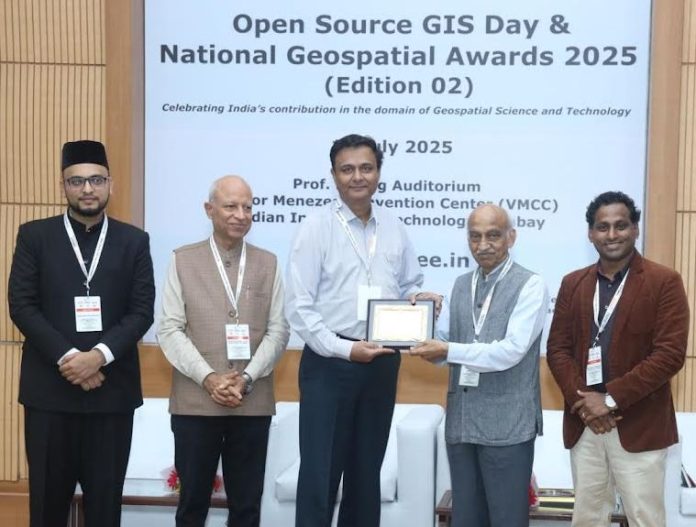
Prof Shahab Fazal of the Department of Geography, Aligarh Muslim University (AMU), has been conferred the prestigious National Geospatial Faculty Fellow Award at the Indian Institute of Technology (IIT) Bombay.
The award was presented in recognition of Prof Fazal’s significant contribution to advancing geospatial education through his textbooks and Massive Open Online Courses (MOOCs) on remote sensing and Geographic Information Systems (GIS). His work has played a vital role in popularising geospatial technologies and making them accessible to students across the country.
Padma Shri Prof Kiran Kumar, Former Chairman of the Indian Space Research Organisation (ISRO), presented the award during a special ceremony held at the Prof B. Nag Main Auditorium of IIT Bombay.
The award ceremony was a key highlight of the Open Source GIS Day Celebrations, organised by the FOSSEE GIS project of IIT Bombay. This initiative falls under the National Mission on Education through ICT (NMEICT), Ministry of Education, Government of India.
source: http://www.radiancenews.com / Radiance News / Home> Pride of the Nation> Awards> Latest News / by Radiance News Bureau / July 18th, 2025
At 59, a motor mechanic in Rajasthan dedicates his life to helping 19,000 poor families, distributing free ration kits and gifts to Hindus and Muslims alike, proving that service knows no religion.
New Delhi / Dungarpur :
In the heart of Dungarpur city in Rajasthan, a remarkable story of selfless service and unity is quietly unfolding. Haji Noor Mohammad Makrani, a car mechanic by trade, has become an inspiring figure of humanity and brotherhood, breaking barriers of religion and caste with his unwavering dedication to the poor and needy.
For many years, Noor Mohammad has devoted himself to social service through the public welfare group “MMB Group,” inspired by the spirit of the Mastan Shah Baba Dargah, where he is actively involved. His mission has touched the lives of over 19,000 families, distributing free ration kits and providing essential support during every festival, including Holi, Diwali, Eid, Bakrid, and Ramadan.
“Service is the biggest religion,” says Noor Mohammad, whose commitment has not waned even at the age of 59. His efforts go beyond just ration distribution; he has donated blood 40 times and regularly distributes clothes, food, and daily necessities to the destitute across Dungarpur. He also cares for animals and birds, ensuring they have food and water.
“Noor Mohammad does not see anyone’s caste or religion. His heart is open to all,” shares Asrar Ahmed, former minister of state, praising the man whose actions unite communities. Non-Muslim residents of Dungarpur also express deep respect and support for him, showing that goodwill crosses all divides.
“As long as I live, I will continue this service,” Noor Mohammad states firmly, embodying the true spirit of brotherhood in a time when such examples are rare.
At the Mastan Shah Baba Dargah, Noor Mohammad regularly collaborates with government officials, social workers, and local leaders to organise public welfare programmes. His work stands as a shining example in an age where division often dominates headlines.
This story of Noor Mohammad Makrani is a reminder that humanity and kindness can prevail over differences. His life’s work inspires many to see beyond religion and caste and to embrace the shared responsibility to care for the less fortunate.
“Noor Mohammad’s service has helped our family during hard times. His help is given without any conditions,” says Rahim Khan, a beneficiary.
“In these times, it’s rare to find someone who works for all communities alike. He truly represents brotherhood,” remarks Suman Patel, a local Hindu resident.
Noor Mohammad’s journey shows that compassion and dedication can build bridges where others see only walls.
source: http://www.clarionindia.net / Clarion India / Home> India> Indian Muslims / by Mohammad Bin Ismail / July 15th, 2025
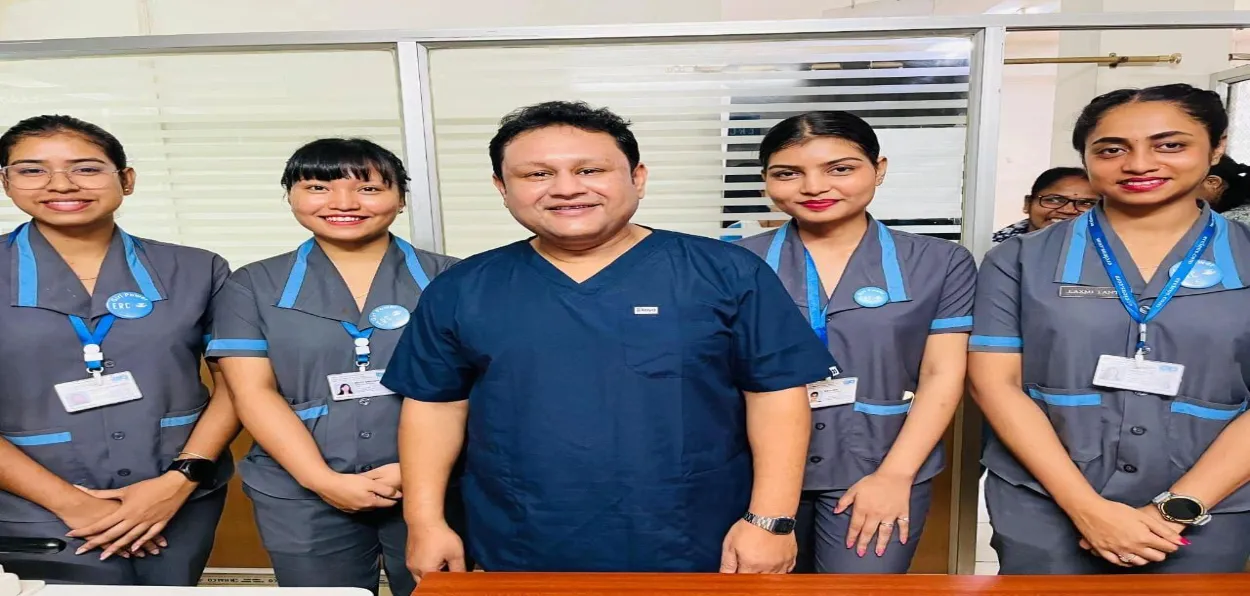
On July 10, a significant milestone in Northeast India’s healthcare landscape unfolded as Dr. Parveez Ubed inaugurated the 7th Hub Hospital of ERC Eye Care in Abhayapuri, Bongaigaon district, Assam.
The ceremony represents more than just another hospital opening—it symbolizes the transformative vision of a social entrepreneur who chose to stay in his homeland over greener pastures in metropolitan cities.
Dr. Parveez Ubed’s story begins in Jorhat, Assam, where, after completing his ophthalmology specialization from the Gauhati Medical College in 2007, he decided to change lives.
His classmates left for bigger cities for attractive offers, but Dr. Ubed chose to stay put in Assam to serve his people. His decision was driven by his understanding of the region’s healthcare challenges.
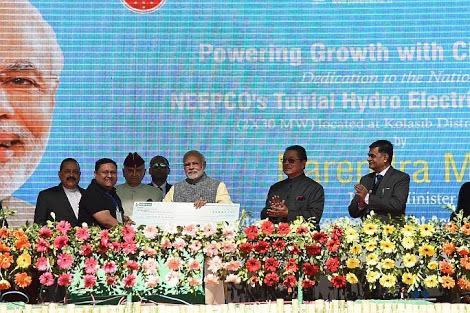
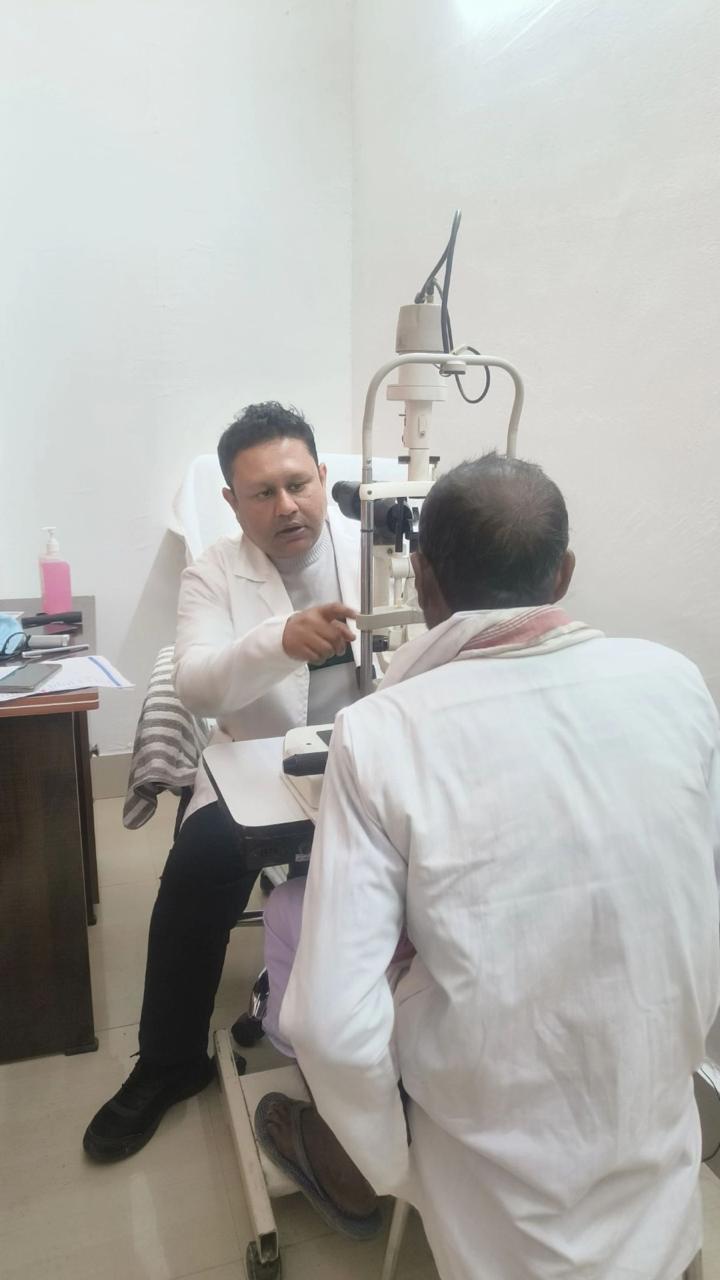
Prime Minister Narendra Modi Presenting an award to Dr Perveez Ubed
His entrepreneurial journey started in June 2011, when he founded ERC Eye Care in a converted kitchen space with just Rs 4 lakhs borrowed from his mother.
What began as a single-man mission has now evolved into a phygital (physical + digital) eye care network spanning across Northeast India with 267 full-time employees and 190 part-time staff.
Dr. Ubed’s venture addresses a critical healthcare gap in Northeast India, where the statistics paint a sobering picture.
Assam has a blindness prevalence of 3.03% against the national average of 1.99%, with an estimated 92% preventable blindness. The World Health Organization reported that 18.8% of Indians suffer from vision impairment due to cataract in Assam alone, making it one of the most affected regions in the country.
Bad roads and difficult terrain, lack of information, poor overall health status, and absence of escorts are barriers that limit access to eye care services in the region.
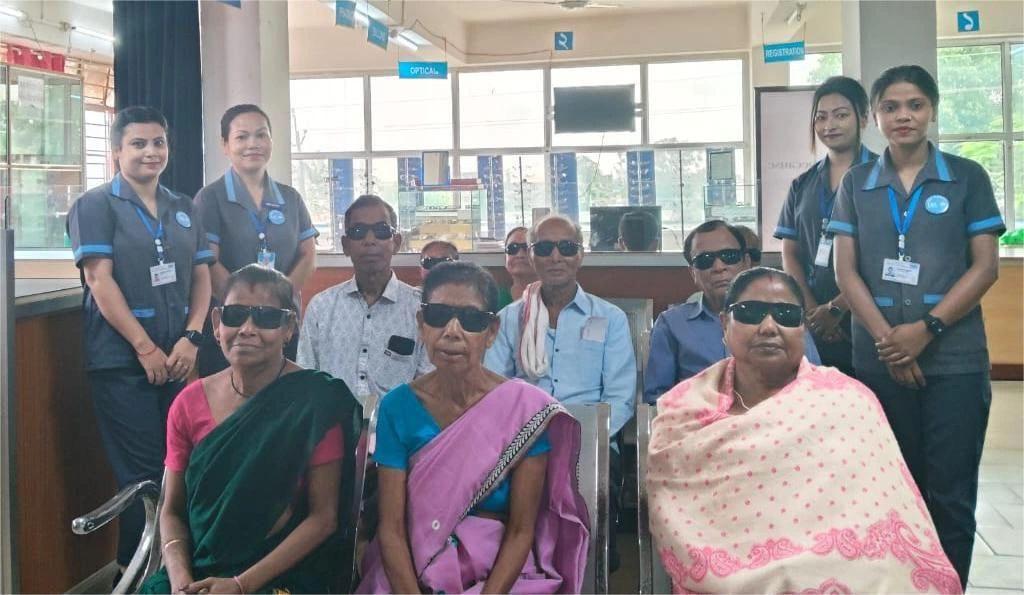
The beneficiers of Dr Perveez Ubed’s eyecare facilities
With only 0.6 ophthalmologists per 100,000 population in Assam, the doctor-patient ratio represents a massive healthcare infrastructure deficit.
Dr. Ubed’s entrepreneurial genius lies in his innovative hub-and-spoke business model that tackles the three critical healthcare challenges: affordability, accessibility, and availability. The model operates through: Hub Hospitals: (i) Equipped with surgical and diagnostic facilities serving as main centres in Sivasagar (2015), Nagaon, Silchar, Guwahati, Tezpur, Boko (6th hospital, January 2025), and now Abhayapuri (7th hospital, July 2025).
(ii) Spoke Centres: Satellite vision centres and mobile units extending basic eye care to remote areas, bringing services directly to patients’ doorsteps. (iii) Digital Integration: The organization leverages AI and IoT technology through their digital platform erclens.com, making them the world’s first phygital eye care company.
Dr. Perveez Ubed with a patient
Dr. Ubed’s transformation from a medical professional to a successful social entrepreneur showcases remarkable business acumen. “All my nights were spent reading MBA books to find a business plan,” he recalls with characteristic humility.
This self-directed learning was later complemented by formal business education at Stanford University Graduate School of Business (2019-2021), where he completed the Stanford Seed Transformation Programme Certificate.
Dr. Ubed’s work has garnered prestigious recognition, underscoring his impact as a changemaker. He received several awards and recognition in India and abroad.
Dr. Ubed’s vision extends far beyond numbers, though the statistics are impressive: over 1.1 million patients served, 500,000 eyeglasses distributed, and 43,000 cataract surgeries performed. Each figure represents a life transformed, a livelihood restored, and hope renewed.
The organization’s pricing model reflects its social mission: eye consultations for Rs 50, optical retail starting at Rs 99, and cataract surgeries from Rs 3,500. Studies referenced by ERC indicate that good vision can increase incomes by 30% and productivity by 25%, making eye care not just a medical intervention but an economic empowerment tool.
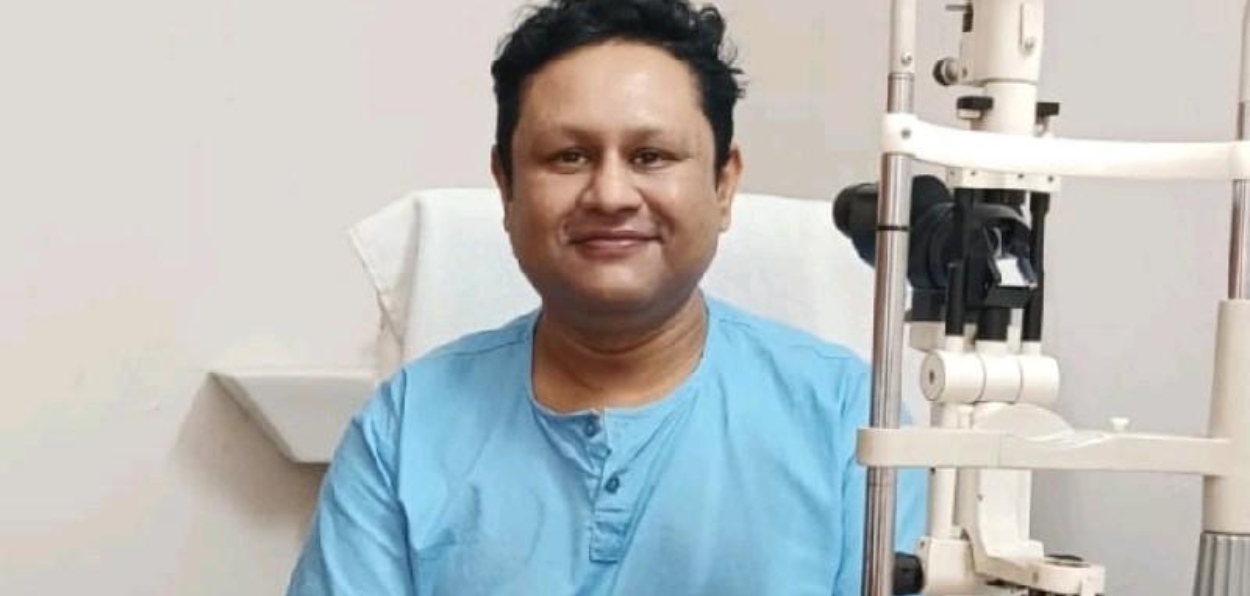
Dr. Parveez Ubed
Dr. Ubed’s forward-thinking approach incorporates artificial intelligence, machine learning, and IoT technologies to create scalable healthcare solutions. The digital platform erclens.com offers teleconsultation services, online appointments, and home eye testing, making ERC a pioneer in tech-enabled healthcare delivery for underserved markets. The organization’s expansion plans extend beyond India to Southeast Asia and Africa, positioning ERC as a global model for affordable healthcare delivery.
Dr. Parveez Ubed stands as living proof that one person’s commitment to serve can illuminate the path for millions. In a world where success is often measured by personal wealth, Dr. Ubed has chosen a different metric—the number of people who can see clearly enough to dream again, work productively, and live with dignity.
His story reminds us that true entrepreneurship lies not in creating unicorns, but in nurturing phoenixes—taking communities from the ashes of neglect and helping them rise to their full potential.
As thousands more patients walk through the doors of this new hospital in Abhayapuri, they will not just be receiving medical treatment; they will be touching the legacy of a man who saw beyond the obvious, dreamed beyond the conventional, and dared to stay when leaving would have been easier.
In the annals of social entrepreneurship, Dr. Parveez Ubed’s name will be etched not just as a successful businessman but as a visionary who gave vision to the visually impaired and hope to the hopeless, proving that sometimes, the greatest journey is not about going far but about going deep into the heart of what truly matters.
The author is the former DGP of the Assam Police
source: http://www.awazthevoice.in / Awaz, The Voice / Home> Stories / by Pallab Bhattacharyya / July 17th, 2025
Prof. Bilqis Bano to receive Lifetime Achievement Award, Dr. Raouf Khair to be honoured with Allama Iqbal Award.
New Delhi:
An important meeting of the Global Urdu Day Awards Committee (organised by the Global Urdu Day Organising Committee) was held under the chairmanship of senior journalist Jalaluddin at Daryaganj here.
The awards jury included Dr. Syed Ahmed Khan, Ashraf Ali Bastavi (Chief Editor, Asia Times, New Delhi), Suhail Anjum (former correspondent, Voice of America), and Javed Akhtar (Editor, D.W. Urdu, Germany, Delhi Bureau).
As per tradition, the awardees for the upcoming Global Urdu Day on 9 November 2025 have been selected.
The recipients are Prof. Bilqis Bano (Department of Biochemistry, Faculty of Life Sciences, Aligarh Muslim University) – Lifetime Achievement Award; Dr. Raouf Khair (Hyderabad) – Allama Muhammad Iqbal Award for Literature; Prof. Kauser Mazhari (Jamia Millia Islamia, New Delhi) – Mirza Ghalib Award for Poetry; Prof. Zehra Khatoon (Jamia Millia Islamia, New Delhi) – Maulana Ali Mian Award for Urdu-Persian Language; Dr. Aqeel Ahmad (Secretary, Ghalib Academy, New Delhi) – Maulana Abdul Majid Daryabadi Award for Language and Literature; K.L. Narang Saqi (New Delhi) – Kunwar Mahendra Singh Bedi Award for Literature; Yaseen Momin (Mumbai) – Qazi Mohammad Adeel Abbasi Award for Promotion of Urdu Language; Syeda Talat Nasreen (TN Bharti, New Delhi) – Noor Jahan Sarwat Award for Journalism; Syed Zubair (Muslim Mirror, New Delhi) – Maulana Usman Farqaleet Award for Journalism; Maulana Abdul Hameed Numani (New Delhi) – Maulana Sanaullah Amritsari Award for Column Writing; Abdul Mannan (Editor, Yojana Urdu, New Delhi) – Maulana Mohammad Muslim Award for Journalism; Jamshed Khan (Aaj Tak, New Delhi) – Ameen Sayani Award for Electronic Media; Saurabh Shukla (Red Manak, New Delhi) – Pandit Devnarayan Pandey Award for Journalism; Abid Anwar (UNI Urdu, New Delhi) – Mahfuzur Rahman Award for Journalism; Shohrat Ansari (Khalilabad, U.P.) – Imdad Sabri Award for Journalism; Hafeezur Rahman (Sharq Adeel, Marahra, Etah District, U.P.) – Ismail Merathi Award for Poetry; Mohammad Yamin Zaki (Editor, Hilal, Rampur) – Dr. Zakir Hussain Award for Children’s Literature; Farooq Ahmad (Doordarshan, Delhi) – Ilmat Yasin Award for Promotion of Urdu; Prof. Dr. Ziaur Rahman Siddiqui (Aligarh) – Mazharuddin Khan Award for Teaching; Master Iqbal Ahmad (Former Headmaster, Jamia Middle School, New Delhi) – Maqbool Ahmad Siddiqui Award for Best Teacher; Prof. Abdul Majid Mohammad Siddiq Siddiqui (Malegaon) – Maulana Azad Award for National Integration; Prof. Khalid Mubashshir (Jamia Millia Islamia, New Delhi) – Hafeez Merathi Award for Naat Poetry; Dr. Ibrahim Afsar (Meerut) – Naseeruddin Hashmi Award for Urdu Research; Dr. Azeer Ahmad (Islampur, West Bengal) – Maulvi Abdul Haq Award for Literature; Dr. Nihal Nazim (Moradabad) – Dr. Abul Faiz Usmani Award for Promotion of Literature; Dr. Abu Saad Asari (Jhanda Nagar, Nepal) – Indo-Nepal Friendship Award; and Hidayat Publications, New Delhi (Syed Abul A’la Subhani) – Munshi Naval Kishore Award for Publishing.
Dr. Syed Ahmed Khan, the convener of the Global Urdu Day Organising Committee, expressed hope that the selected awardees will continue to play a significant role in the promotion of the Urdu language.
source: http://www.radiancenews.com / Radiance News / Home> Pride of the Nation> Awards> Latest News / by Radiance News Bureau / July 15th, 2025
Inquilab and Mid-Day founder Abdul Hamid Ansari is an inspiration not just for journalists but millions of youngsters … A special report by Siraj Ali Quadri.
Indian journalist and Muslim nationalist Abdul Hamid Ansari founded Inquilab, an Urdu daily in Mumbai in l937. The newspaper soon became a landmark in Urdu journalism which caught the attention of Muhammad Ali Jinnah, the founder of Pakistan. But when Jinnah asked Ansari to come to Karachi to publish the newspaper in the new country, Ansari said that he would prefer to live in India like the many million Muslims who would rather stay in the country than join Jinnah. Those who joined Jinnah undoubtedly left everything behind. Some flourished while others got established. But that’s another story, which has never ended since l947.
Today’s story is about the veteran journalist, publisher and businessman Khalid A.H. Ansari, son of Abdul Hameed. After passing out from St. Xavier’s in Mumbai, Khalid did his master’s at Stanford University in the US.
Khalid returned to Mumbai to establish Sportsweek, a weekly sports magazine, which became a huge success soon after its launch. The magazine’s immediate success can be attributed to the fact that its founder was himself an excellent sportsman and did a great job with the magazine, in addition to his father’s paper Inquilab.
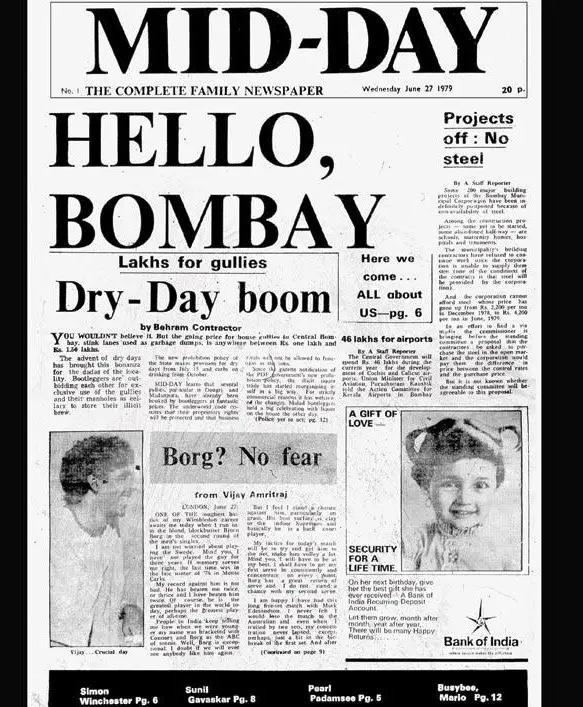
Meanwhile, the idea came to launch India’s first daily tabloid, Mid-Day, which he modelled in many ways after the English tabloids from Fleet Street. During the planning phase of their new venture, he spent hours discussing it with staff and mulled over its format to ensure success, especially since there were already two eveningers in Mumbai, one by The Times of India and the other by the Indian Express. Both suffered from a lack of innovation to attract large numbers of readers. So when Mid-Day appeared with a new face and content, the two old ones just collapsed. Although the ToI eveninger protested the pace of time for a while, it eventually perished as it had already become obsolete.
Mid-Day became a resounding success, with many comparing it to the British Daily Mirror and Daily Mail. However, being an Indian tabloid, it was much quieter and a whole lot more civilized, without the British fondness for nudity and sex, and nonsensical stories of stupidity.
Khalid was helped by his wife, Rukaya. She was very active on the administrative side and contributed to the editorial content and layout, which helped the paper sustain itself in the demanding market of Mumbai. She knew what was going on in the office and in the newspaper that was fast becoming India’s flagship eveninger.
Meanwhile, Khalid accepted an offer to become editor-in-chief of the Dubai-based Khaleej Times, and handed over the paper to his son, Tariq. After a few years in Dubai, Khalid returned to Mumbai and launched Mid-Day in Bangalore and Delhi and a regional Gujarati version for millions of Gujaratis in the country.
He has been involved in various programmes with the Indian government during conferences in Delhi and New York, launching and editing newspapers, and was awarded the Padma Shri in 2001 while continuing to play and write about his old passion, cricket.
Writing about his eveninger, Khalid says, “Mid-Day is a light-hearted, easy-to-read, entertaining, and ‘naughty’ paper that now has a new purpose which is to make work fun. Gives young professionals an entertaining newsbreak. The focus is on young, urban, mobile professionals across India and the company is leaving no stone unturned to engage with them. Today’s workplace’s fast-paced work style and crazy deadlines are full of stress and pressure. Mid-Day as a brand believes in spreading the message of reducing stress and making work fun.”
“What’s on, a host of addictive, fun sections like Hit List Crosswords, Horoscopes, and Fun at Work ensure that the newspaper remains a welcome diversion for young professionals,” he adds.
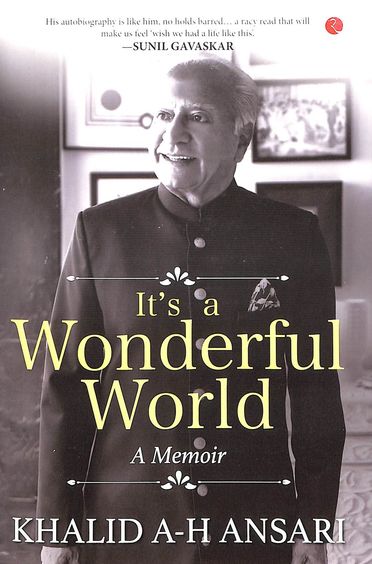
Khalid’s Sportsweek later was shut down with the television boom making it hard to garner advertisements and interest. Khalid has also published his memoir (It’s A Wonderful World) and continues to inspire a stream of journalists apart from various generations to keep the boat afloat and touch new heights.
(The Author is Journalist & associated with Dainik Bhaskar)
source: http://www.asianlite.com / Asian Lite / Home / by Siraj Ali Quadri / October 10th, 2022
Kilakarai (Ramanathapuram District) / Chennai, TAMIL NADU :
Death of Dr. B.S. Abdur Rahman has not only shocked who knew his mission and lifelong works but also those who have benefited by his devotion and those who took inspirations from him. His untimely death has brought a vacuam in Indian educational scenario and it is almost impossible to be filled up in near future.
Indian Muslim Community has legacy of Sir Syed Ahmad Khan, the founder of the Aligarh Muslim University before it, Dr. B.S. Abdur Rahman has achieved almost that place and has become another inspirational figure.
Dr. B.S. Abdur Rahman was born in kilakarai falling under Ramanathapuram district of Tamilnadu state in 1927. Due to his works and philanthropist bent of mind, Dr. Rahman became a well known personality who devoted himself for the upliftment of the economically weaker sections and minorities through their educational empowerment. He did not lagged behind in providing good facilities of health care to the deprived sections of society.
B.S. Abdur Rahman, Vice Chairman of Emirates Trading Agency LLC and Associated Construction and Investments Co. LLC (ETA-ASCON), the Dubai-based $2 billion industrial behemoth, was a multi-faceted personality, much like the diamonds he dealt with when he began in humble business in Sri Lanka, over half a century ago.
Diamond merchant, industrialist, educationist, philanthropist, shipping magnate, generous contributor and enthusiastic participant in many other business and social activities he is a renaissance man whose outlook was Millennial. Meaning, while his values were classical, his thinking was forward looking.
Kilakarai, on the coast of Ramanathapuram district in Tamil Nadu, where Abdur Rahman (fondly known as Sena Aana) was born, is a town made famous in the region by his illustrious ancestor, Vallal Seethakathi.
The forbears of Abdur Rahman migrated to Kilakarai from Arabia in the 12th century. Kilakarai, which means East Coast in Tamil, was a flourishing port to which mearchants from the east and west came. A densely populated area, predominantly by Muslims, it owned its prosperity to them.
From centuries they traded with Sri Lanka (then known as Ceylon), dealing in pealing in pearls, gemstones and conches. Even today, many of them live in Sri Lanka or do business with the island. Abdur Rahman too began his career in Ceylon. Among the pearl traders of Kilakarai was Buhari Aalim. Abdur Rahman was his son.
Aalim was an expert in valuing precious stones and pearls. He would hold a gem between his right thumb and index finger and, looking at it against the sun, study the quality of the watermark within to judge the worth of the precious stone. He would be unfailingly correct.
Watching his father at work, the young Abdur Rahman was soon able to understand the nuances of the trade. This training and experience helped him to become one of the most successful merchants in the diamond trade in due course. When Abdur Rahman first went to Colombo, he was fifteen years old. He had with him just Indian Rupees 149. He worked as an errand boy for diamond merchants, carrying their diamonds and other gems from sellers to buyers and back. He was at the time staying with some traders from Kilakarai and neighbouring villages. They allowed him to stay with them without any payment, but he had, instead, to fetch tea them from a nearby hotel, clean the rooms and perform other menial tasks.
A lesser person perhaps would have thrown in the towel. But Abdur Rahman was made of sterner stuff. Before long, he used his persuasive skills to obtain gemstones from another merchant and began trading in them. In time he became a successful gem trader. The base that Abdur Rahman built in Ceylon was to help him in all his future activities.
He began visiting Belgium, then as now, a centre of the gem trade, the USA, South America and set up business in Penang, Malaysia, Chennai, Kolkata (then Calcutta), and then in Hong Kong. It was in Hong Kong that his business flourished. Incidentally, Abdur Rahman was the first person from Kilakarai to go to Hong Kong.
In Hong Kong he launched the Precious Trading Company in 1954. Later, his very special brainchild, the Amana Group of Hong Kong, was established. It was under its banner that the multinational company ETA-ASCON came into existence.
He was a firm believer in education and took upon himself the task of educationally empower the poor and the deprived. He established a wide network of educational institutions. In 1967, he founded Seethakathi Trust and in 1979, All India Islamic Foundation to achieve his target of serving the community and nation. He founded twelve educational institutions including an Engineering University, a woman’s college, an Arabic College two boys schools, 3 girls schools, a woman Nursing college, a Teacher Training College, B.Ed College for woman and 2 hospitals beside orphanages in rural and urban areas. His biggest achievement was founding a 60 bed Yousuf Zulaikha hospital at Kilakrai and a 150 bed Crescent hospital at Madurai. He did not lagged behind in providing comfort of life to most deprived orphanages and founded Al Momin orphanages for boys and girls at Ottapidram, Tanjore, Kilakarai and Thiruvithancode of Tamilnadu.
Dr. B.S. Abdur Rahman was farsighted man and knew the importance of administration. He was well aware that to uplift community, it is very necessary that Muslim youths join Indian Administrative Services and so he established Crescent IAS and Carriers Guidance Academy in 1994 beside an Islamic Studies & Cultural Centre at Chennai.
His social works span to wide area. Dr. B.S. Abdur Rahman founded B.S. Abdur Rahman Zakat Fund Foundation in 2007 which provides educational grants for students. Through this foundation, B.S. Abdur Rahmand has maintained magniticence of Zakat which may be called a pillar of Islam and which is an instrument for survival of poor Muslims. He 1017 Self Help Group (SHG) which became beneficial to 17093 deprived and helpless women. He also founded and managed various other trusts like Yousuf Zulaikha (1993) Chennai for education, health care and women empowerment. United Economic Forum in 1994 and Seethakathi NGO in 2002.
He also establish new milestones in business field.
He was founder Chairman of Dubai based ETA – Ascon – Star Group and was treated a renowned Indian entrepreneur in UAE. It may be known that the group has a turn over US$ 5.5 billion and employs 50,000 people. With his visionary zeal and entrepreneurial spirit.
B.S. Abdur Rahman has been the guiding force behind many companies in India, among which the most important is the Buhari Group the Indian Multinational. The prominent companies and establishments under Buhari Group include East Coast Construction Ltd. (ECCI) 50 years in the field of construction, Coal & Oil and many other automobile dealership companies.
In recognition of his services he received many awards also.
The Aligarh Muslim University Students Union conferred him life membership while Sathyabama University awarded Honorary Doctorate in recognition of his contribution to Women Education.
In fact Dr. B.S. Abdur Rahman had became an inspirational force to young generation during his own life time. There are very few people who climb the ladder of success and remember the down trodden sections of the society or do anything meaningful for them.
Whatever Dr. B.S. Abdur Rahman has done for the manginalised and deprived sections of society will be always not only remembered but will also be documented in social and educational history of India. The best tribute to Dr. B.S. Abdur Rahman will be to follow the path shown by him not only in business but other fields also.
-Dr. Jasim Mohammad / Author is Editor of The Aligarh Movement monthly
source: http://www.hastakshep.com / Hastakshep.com / Home> Uncategorized / by Dr Jasim Mohammad / March 29th, 2019
Another area where his enthusiasm manifested itself was in exploring the religious history of meteors.
Mohammad Abdur Rahman Khan
The night sky has been one of the oldest sources of wonder. Through the ages men and women have looked up to the stars and been filled with curiosity and awe. This peculiar awe inspired by the diamond-studded vault has also inspired a number of distinct disciplines and practices. From hobbies like stargazing to highly systematised knowledges like astronomy and astrology and several cosmological myths in every major world religion have all been inspired by the awe one feels for the “heavens”. When we write the history of our all-too-human interest in the night skies, however, we usually parse these various practices and knowledges into neat silos.
Stargazing is seen to be an activity proper to children and hobbyists. Religious cosmologies are mostly left to theologians or historians of religion. Astronomy becomes the province of the savant. Even if some traffic between these distinct groups and their practices may be allowed in earlier eras, the distinctions seem to have become watertight by the 20th century. And that might be why no one today remembers Mohammad Abdur Rahman Khan.
A passion for meteors
In the last decade of British rule in India, Khan published a whopping ten papers and reports in Nature, the preeminent scientific journal of the time. Khan only had a bachelor’s degree to his name and had taught all his life at the Osmania College, away both from the then-new research institutions like the IISc and the old universities like those at Calcutta, Bombay, or Madras.
By the end of the 1940s, however, Khan had become well-known to the international scientific community. Besides his regular contributions to Nature and other scientific publications, he had also been elected a Fellow of the Royal Astronomical Society and appointed a Research Associate at the Institute of Meteoritics at the University of New Mexico. In 1936 and again in 1948 Khan was invited to present papers at the annual meetings of the Society for Research on Meteorites in the United States.
Khan’s passion was meteors. He had first become interested in them as a schoolboy at the Madrasa-i-aliya in Hyderabad in the late 1880s.
Later, the arrival of Halley’s Comet in 1910 reinvigorated his interest in astral phenomena and he set about translating Sir John Herschel’s Outlines of Astronomy into Urdu. It was also the time when he began to systematically observe the night skies. In 1940, by then nearly 60 years old, he reported to Nature that he had spent a total of 103.25 hours over 152 nights observing the skies that year. As a result, in just that single year, he had observed and mapped the paths of 1390 meteors!
Apart from personal observations, Khan managed to put together a network of other amateur observers who regularly sent him their observances as well. One 1945 publication, for example, contained observations from MM Ali Beg, a school headmaster, MA Latif Khan, a lawyer, and MT Ali, an official in the Finance Department of Hyderabad. What Khan had thus managed to do was link up a number of hobbyists and turn them into data collectors. Here was an early example of what would later sometimes be called “citizen science”, i.e., incorporating lay citizens into the task of scientific knowledge production.
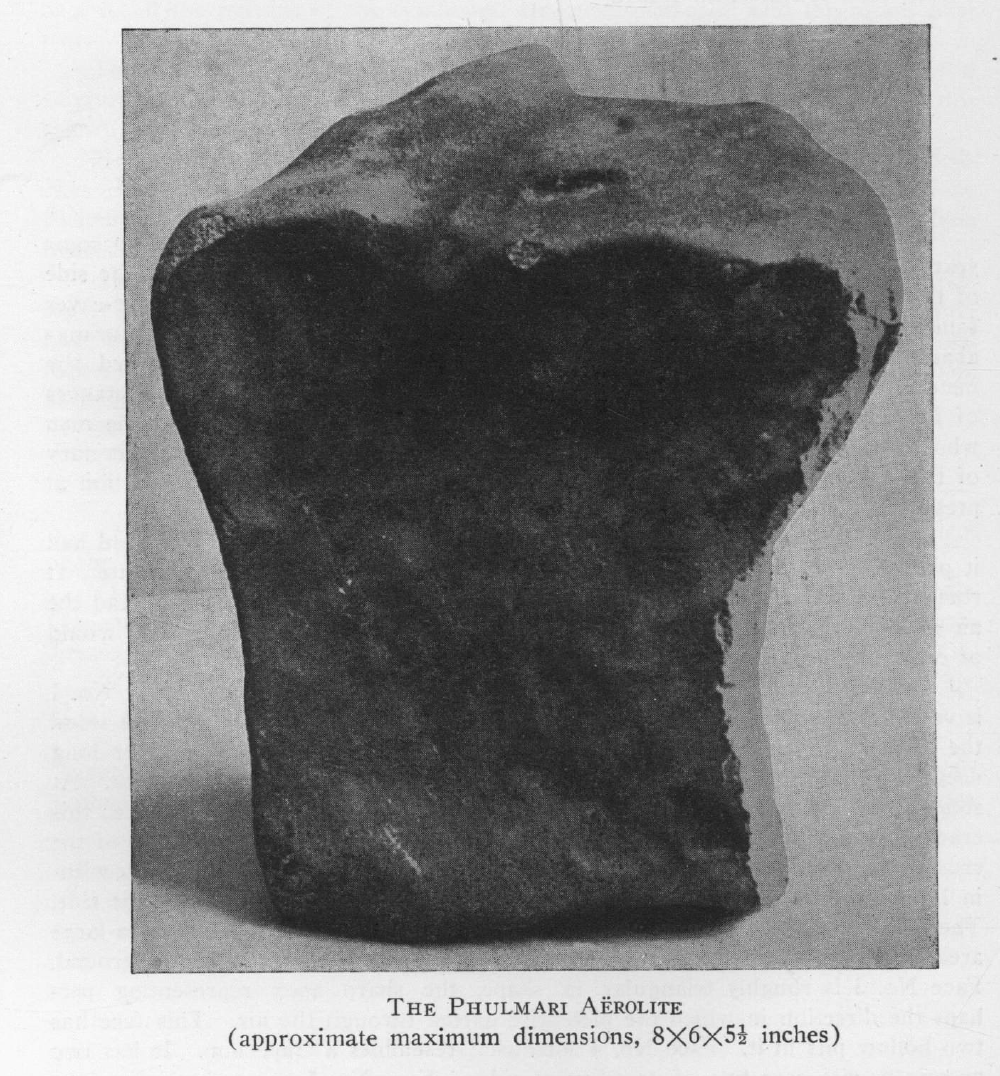
The study of meteors at the time depended not only upon the mapping of aerial pathways and frequencies but also on the study of the actual meteorites. Here again, Khan utilised his social networks to great advantage. In August 1936, for instance, he received from Maulvi Abdul Hag Saheb an aerolite that had fallen a couple of years ago onto a farm near the village of Phulmari in Aurangabad district. At other times, he heard of an old meteor shower in an area and personally went to search for meteorites. Since, unfortunately for Khan, the ground had been flattened in the intervening years, he offered a financial reward to the local villagers to induce them to part with any pieces of the old “shooting star” that anyone might have kept back.
The Phulmari aërolite.
Not satisfied with simply collecting local meteorites, Khan also started buying rarer meteorites from international dealers. He bought several pieces, for instance, from Wards’ Natural Science Establishment – a dealership trading in rare scientific specimens based at Rochester. On another occasion, possibly in the 1920s, he paid the then-princely sum of $24 to a dealer in Denver for some rare meteorites. His collection, in time, became a significant scientific resource. The eminent physicist Satyendra Nath Bose, remembered today as the discovery of the “boson”, once borrowed some meteorites from Khan’s personal collection for x-ray analysis at Bose’s laboratory at Dhaka University. What is also noteworthy is that Khan financed his collection entirely out of his salary as a college teacher. The prices charged by foreign dealers, the financial rewards given to locals etc. all came out of his personal finances.
Yet, Khan had not been a rich man. He came from a scholarly family with roots originally in Ghazni. His ancestors had then served the Nawabs of Arcot before switching to British employment upon the fall of Arcot. The family had been comfortably off as a result of employment in the British military and civil establishments. But Khan’s father had died suddenly when he was still in college, putting the entire family in straightened circumstances. A small scholarship given to him by the government allowed him to tide over the lean period. Always a very good student, he was able to find employment soon after graduation and thus eventually mend his financial circumstances. That neither this experience of precarity nor the relatively modest salary of a college teacher discouraged him from spending lavishly on the collection of meteorites is a testament to the depth of his passion.
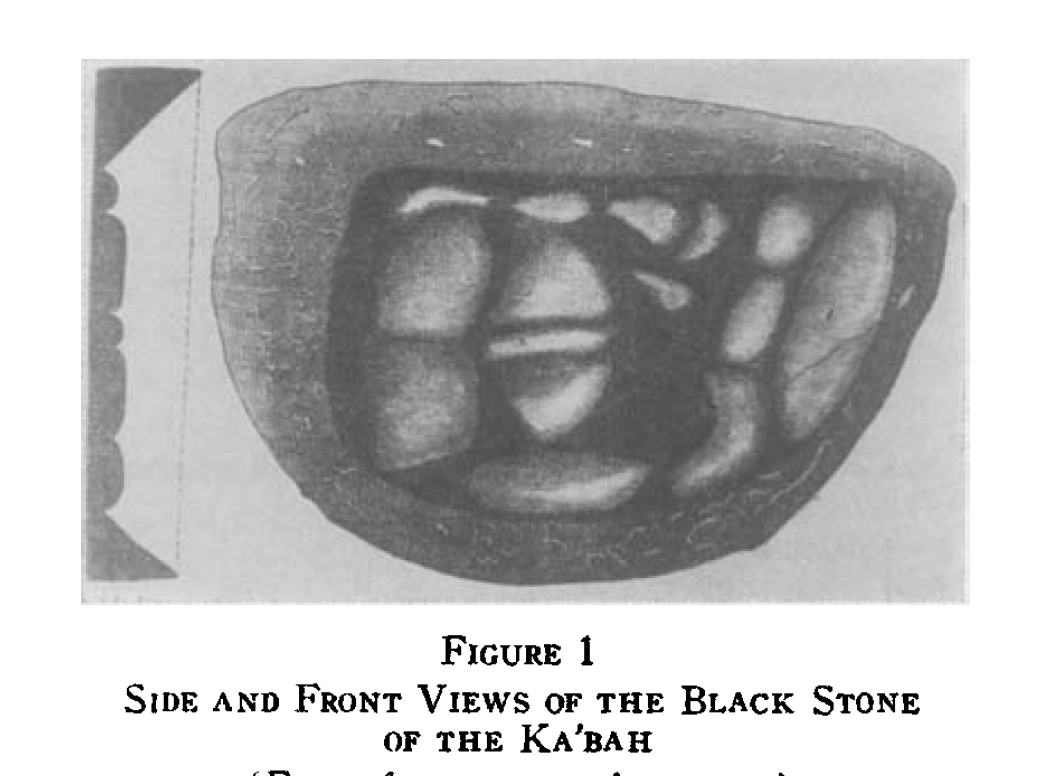
Spending hours staring at the night sky or shelling out generous sums for buying meteorites did not exhaust Khan’s passion for the topic. A third area where his enthusiasm manifested itself was in exploring the religious history of meteors. Hailing from a scholarly family and being educated in classical Persian and Arabic, Khan sought to document and analyze the reports of meteorites in religious texts. One of his most interesting studies in this regard comprised attempts to establish the meteoric origins of the holy black stone of Ka’aba in Mecca. Though he was far from being the first one to propose the theory, it was to his credit to bring both scientific knowledge about meteors and classical textual references together to try to establish the case.
Side and front view of the black stone of the Ka’bah.
A node at which several disparate worlds came together
Khan’s career as a man of mid-20th-century science is a curious blend. At one level he is a hobbyist who managed to keep alive an interest in stargazing that arose as a child. On another level, he is a man brought up in an old Islamic scholarly culture with an abiding antiquarian interest in classical works in Arabic and Persian. At a third level, he is a figure in a global scientific network organised in the form of scientific societies, research institutes, and scholarly journals. Above all, however, he was a node. A node at which several disparate worlds came together. The worlds of hobbyists and scientists, the worlds of antiquarians and astronomers, the worlds of old Hyderabad and modern America, to name only a few.
As a node connecting these heterogeneous worlds, he is reminiscent of an early modern practitioner of natural history. A kind of meta-discipline that predated the birth of modern science, natural history combined the collection of specimens, particularly of exotic and rare objects, with textual studies of classical texts. It was largely displaced by the middle of the 19th century when modern, organised, and increasingly professionalised science took its place. Disciplines gradually became more specialised, collections became institutionalised, and scholarly enquiry became less interested in classical precedents to their topics. The relish with which Khan is said to have displayed his personal collections of meteors to visitors, like SN Bose, after lavish Hyderabadi dinners, or the way he would recite both Sa’adi’s poetry and talk about meteorites at the same event, clearly recalls a world of early modern natural history than modern, scientific astral sciences.
The success of Khan’s career demonstrates the incompleteness of the transitions from natural history to modern science. The former, it would seem, could continue to coexist with modern scientific practices. Moreover, it could even inspire new modes of participatory citizen science, thereby turning dilettantism into a valuable resource for cutting-edge scientific work.
Astronomy was once called the Queen of the Sciences. But the Queen always had more lowly siblings, like stargazing, that remained outside the hallowed halls of science. Remembering Khan and his likes reminds us that on occasion the Queen did in fact meet and learn from her humbler siblings.
Projit Bihari Mukharji is the Head of the Department and a Professor of History at Ashoka University.
source: http://www.scroll.in / Scroll.in / Home> Reading Science / by Projit Bihari Mukherji / August 05th, 2025
Panniyur (Ramanathapuram District) / Madurai, TAMIL NADU :
He was a servant of the British East India Company and the Nawab of the Arcot before turning against them.
He started his military career as Yusuf Khan, a Muslim convert, and fought in the early wars between the English and the French for the possession of southern India. It was through a conspiracy that the British captured him.
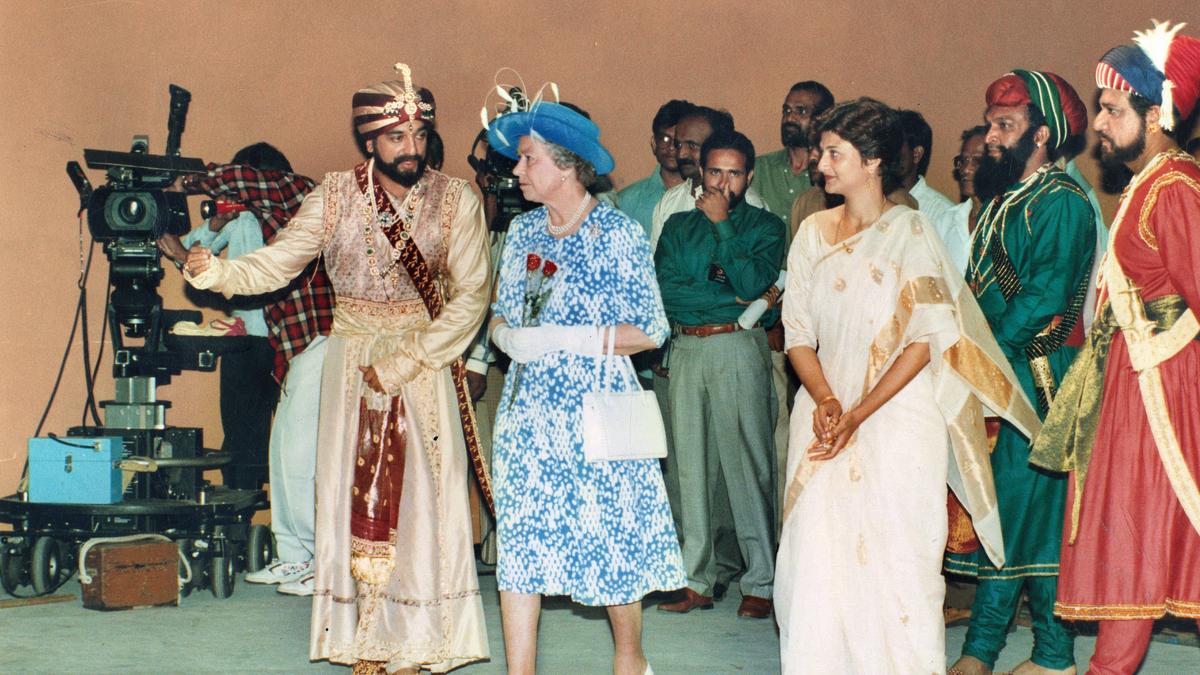
A surprise engagement: Kamal Haasan, director and actor of the film Marudhanayagam, explains a point to Queen Elizabeth on the sets on October 16, 1997. The Queen launched the shooting. | Photo Credit: THE HINDU ARCHIVES
Many were surprised when the visiting Queen Elizabeth launched actor Kamal Haasan’s dream film, Marudhanayagam, in 1997. It was a time when there was a demand for an apology for the Jallianwala Bagh massacre. But Maruthanayagam was a servant of the British East India Company and the Nawab of the Arcot before turning against them. It is a misnomer to call him Maruthanayagam as he built his military career as Yusuf Khan, a Muslim convert.
“Muhamed Yusuf — better known in his time as Yusuf Khan — was by far the ablest of the Indian soldiers who fought in the early wars between the English and the French for the possession of Southern India,” writes S.C. Hill, author of Yusuf Khan: The Rebel Commandant. Hill, an Indian Educational Service officer, was in charge of the records of the Government of India. Published in 1914, the book draws heavily on the Madras Records, the Orme Collection of Manuscripts in the India Office, The French and Dutch Archives, the Tamil poem, The War of the Khan Sahib, and documents at the British Museum.
A man of genius
“Yusuf Khan was, in fact, of the same type as Haidar Ali [Hyder Ali] — one of those men of genius who naturally comes to the front in times of great social and political unrest. Had he been left without outside interference to settle scores with his quarrel with his native suzerain, like Haidar Ali with the Raja of Mysore, there is absolutely no doubt that he would have succeeded in establishing his independence,” writes Hill. Historians depended on the memoirs of Ponnusami Tevan, manager of the Ramnad Zamindari, to trace the background of Maruthanayagam Pillai. The title, Pillai, became part of his name as he was born in the Vellala caste at Paniyur in Ramanathapuram district.
In his youth, he was wild and disobedient to his parents, and ran away to Pondicherry and served under a European for three years and a half. Then, he was dismissed for theft. According to the French account, his ears were cut off as a punishment. Hill, however, dismissed the accusation as groundless, saying it was never mentioned until after the death of Yusuf Khan and then only by those who, if not actually hostile, were certainly biased against him.
After leaving Pondicherry, he joined the army of the King of Thanjavur and subsequently Nawab Muhammed Ali of Arcot. According to another account, he joined another European, Brunton, after his dismissal. Brunton had him instructed in several languages. He entered the services of the British by joining a company of sepoys which he had raised himself in Nellore, under Robert Clive, shortly before the Battle of Kaveripakkam.
According to British officer Major-General Stringer Lawrence, Yusuf Khan was “brave and resolute but cool and sensible in action — in short, he is a born soldier and better of his colour I never saw in the country.”
Freed from trammels
It is not clear why he chose to become a Muslim, and Hill has a theory. Maruthanayagam Pillai wanted to avoid what befell Aryanatha Mudali, the great general of the 16th Century and founder of the Poligar (Palayakar) system in Madurai. J.H. Nelson, the author of The Madura Country Manual, says Aryanatha Mudali, despite being a great warrior and administrator, was dissuaded by his family from becoming the king because he was a Vellala. “For Yusuf Khan then to rise to the position to which he attained, it was necessary for him to be freed from whatever trammels might be imposed upon him by his religion. This was effected by conversion — voluntarily or by force is unknown — to Muhammadanism,” writes Hill. But the Nawab objected to the elevation of Yusuf Khan, though to a Muhammadan, the “lowly birth” was “no hindrance to his success”.
Appointed Governor
Yusuf Khan, however, was appointed a Governor by the British. He ensured peace in the provinces of Madurai and Tirunelveli, which belonged to the Nawab, but had been placed by him under the control of the Madras Council.
“The name of this hero, for such he was, occurs almost as often in the pages of the English historian (Robert Orme) as that of Lawrence of Clive,” Sir John Malcolm writes about Yusuf Khan, who later rebelled against the Nawab and declared his alliance to the French. This led to a war between Yusuf Khan and an alliance of the British and the Nawab, and the seizure of Madurai. The British captured Yusuf Khan through a conspiracy and one of the participants in the conspiracy was Srinivasa Rao, his diwan and chief adviser.
The British officer Marchand, who went with the conspirators, says he was seized in his darbar. But the Dutch account says the capture occurred in a private room. Bishop Caldwell, quoting a native account, says he was arrested at his prayers by Moossoo Marsan and his Hindu diwan Srinivasa Rao “He begged them to kill him there and then rather than deliver him to the Nawab. He was carried under guard to Marchand’s quarters,” says Hill.
On October 15, 1764, the Nawab wrote to Madras that the “Rebel was hung at five o’clock in the evening, which struck terror into the hearts of our enemies”. His body was dismembered. The head was sent to Tiruchi, the limbs were sent to Thanjavur, Palayamkottai, and Travancore. The trunk was buried at Sammatipuram, where the Khan Sahib’s ‘pallivasal’ still stands.
source: http://www.thehindu.com / The Hindu / Home> News> India> Tamil Nadu> In Focus / by B. Kolappan / August 09th, 2024
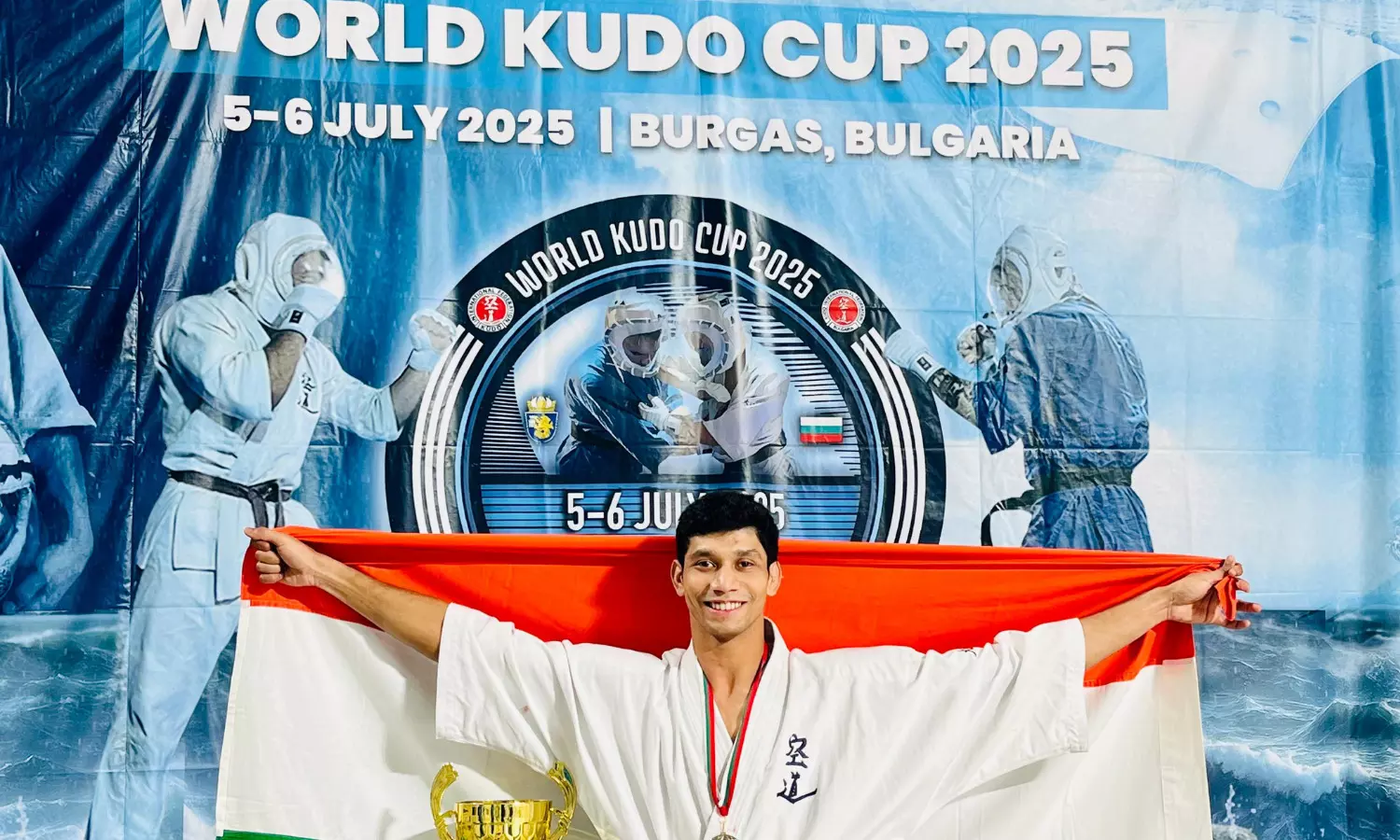
India’s Sohail Khan scripted history at the Kudo World Cup 2025 by securing a silver medal in the Men’s -250 P category, registering the nation’s best-ever finish in the senior men’s division at the global event. The prestigious tournament was held in Burgas, Bulgaria and featured participation from top Kudo athletes from around the world.
Hailing from Sagar, Madhya Pradesh, Sohail, also known as the “Golden Boy of MP,” performed exceptionally well to earn his place on the podium.
Sohail began his campaign in the Round of 16 against Pakistan’s Abdulla, but advanced via walkover after the opponent failed to meet the weight requirement. In the quarterfinal, Sohail battled hard to secure a narrow 1-0 win over Bulgaria’s Rusev Radoslav.
In the semifinal, Sohail delivered one of his most dominant performances of the tournament, defeating Andzej Voinius of Lithuania by a commanding 4-0 margin. With this win, he secured his spot in the final and guaranteed India at least a silver medal, a first for the country in this category.
In the gold medal bout, Sohail faced a tough challenge against France’s Quentin Miramont. The contest was intense and evenly matched, with neither fighter managing to score a definitive point in the standard two rounds.
As a result, the referee decided to extend the bout to a rare third round, the first time in the entire World Cup that any fight had gone that far. Despite Sohail’s spirited and resilient performance, he eventually fell short by just two points, settling for silver in a historic finale.
Sohail’s success is also a reflection of the strong support system behind him. He is coached by Mohammad Aijaz Khan, with Harikant Tiwari serving as his conditioning coach, Deepak Tiwari as his strength and nutrition coach, and Bhabajeet Choudhary as his striking coach.
This silver medal is the latest addition to Sohail’s decorated career. A former Junior World Cup gold medallist (2017) and a four-time gold medallist in the Akshay Kumar International Kudo Tournament, Sohail had finished as a quarterfinalist at the 2023 Senior World Championship.
He entered the 2025 World Cup as the 12th seed following his bronze at the Eurasian Cup earlier this year, and has now exceeded expectations by becoming India’s top senior performer at the global level. — IANS
source: http://www.clarionindia.net / Clarion India / Home> Indian Muslims> Sports / by Clarion India / July 08th, 2025
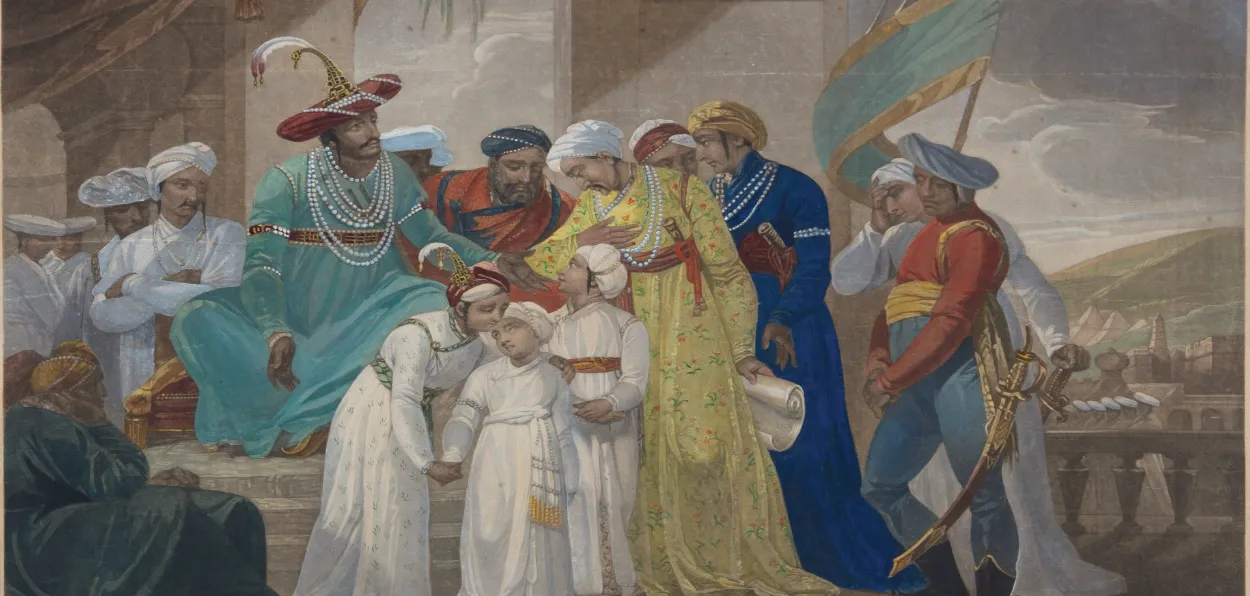
Tippoo Sultaun delivering to Gullum Alli Beg the Vakeel his sons who are taking leave of their brother previous to their departure from Seringapatam (1793) Painting by Henry Singleton
“The Christian drummers were seized, taken to the palace where Tippu’s sons were confined, and made to beat the “general” ; lights flashed in the palace, refreshments were brought out; a mob of sepoys called on the princes to place themselves at their head; Tippu’s own flag, green stripes on a red field, was nailed to the flagstaff. Prince Muizuddin (son of Tipu Sultan) ordered his horse to be saddled, and told off a party of sepoys to go and seize the principal hill fort; when that was captured and the dead body of Colonel Marriott, paymaster of stipends, brought before him, he promised he would mount his horse and ride through the native town proclaiming the restoration of the Mahommedan power.”
A Slice of History
This is the account by Colonel Alfred Keene of the night of 10 July 1806 at Vellore. The rising, popularly known as the Vellore mutiny, was a dress rehearsal of a sort of what would happen in May 1857 at Meerut.
Keene pointed out, “In the mutinies of Vellore and the greater one of 1857, two points of similarity stand out prominently. In each is the unreasoning fear of an attack on the institutions of religion and of caste; for the greased cartridges in the latter mutiny had as much to do with the outbreak as had the new head-dress in 1806, and the presence of the remnants of the Moghul Dynasty at Delhi acted in 1857 precisely as had the presence of Tippu’s family at Vellore in 1806.”
After the fall of Tipu Sultan in 1799, the English East India Company shifted his children to Vellore. In early 1806, the Commander-in-Chief ordered a new headgear and, the removal of beards, tilaks, earrings, or any mark of caste identity.
The Indian sepoys of the 2nd Battalion 4th regiment showed dissatisfaction in May 1806 and disobeyed the orders. These sepoys were tried in army court and 21 of them were found ‘guilty’. Of them, one Hindu leader and other Muslims were discharged from the duty and sentenced to receive 900 lashes each. The other 19 were not discharged but ordered 500 lashes each. The order was passed on 29 June and published to the army on 2 July 1806.
The wife of a serving English officer at Vellore, F. W. Blunt, wrote in a letter to her family in England, “Nine of the ringleaders, as they were called, were brought down to Madras and here passed publicly through the streets in irons, destined to receive the most dreadful military punishment…… The nine men in irons awaiting a most severe punishment was made use of by the sons of Tippoo, who have been kept prisoners in the Palace at Vellore since the taking of Seringapatam and served to ripen a design that had been long formed. A conspiracy was formed by the Sepoys to murder all the Europeans and take possession of that Fort.”
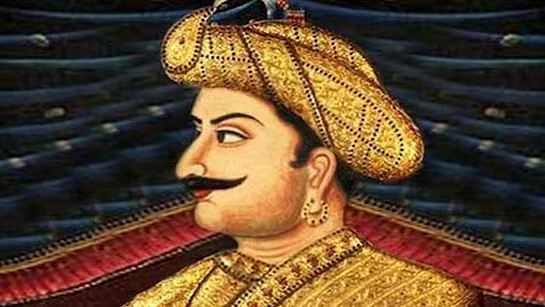
Tipu Sultan
On the night of 10 July 1806, Shaikh Kasim, a sepoy, led the English East India Company sepoys in starting a general massacre of the English troops.
Lt. Col. W. J. Wilson in ‘History of the Madras Army’ wrote, “The sepoys went away shortly afterward, and were heard to call out “Come out, Nawab, come out, Nawab, there is no fear.” This was supposed to be addressed to Futteh Hyder, the eldest of the four Mysore Princes.”
Of the 372 Englishmen present at Vellore, 128 were killed that night by the Indian sepoys. The English flag was replaced with the flag of Tipu Sultan, which was handed over by Moizuddin, the eldest son of Tipu. He was proclaimed the leader of the revolutionaries.
Though the immediate cause was the headgear and other orders, the revolt had been planned for a long time. Charles Macfarlane wrote, “The splendour which the sons of Tippoo were enabled, by the liberality of the Company, to keep up, attracted a continual influx of visitors, including all that came to Vellore from the countries which had once belonged to their father. Among these men were very many who had lost by the change which had taken place in Mysore, who hated the tranquillity which we had introduced into their country, and who longed for the old days of rapine and violence. It is believed that these desperadoes contributed to a regular conspiracy and facilitated the execution of the daring design.
It is said that the confederates intended that all who were brought to join in the insurrection should act upon a preconcerted plan, which had been digested and privately circulated by some of the turbulent Marawa chiefs; and that in connection with these desperadoes were some few Frenchmen, disguised as fakeers or dervishes, who went about the country inveighing everywhere against the English as robbers and tyrants. It is also stated that placards were fixed up within the mosques and Hindu temples, where Europeans never entered, to excite a general spirit of revolt among the whole native population of Madras.”
The English Government set up an enquiry commission headed by Major General Pater which submitted its report on 9 August 1806. The report said, “There are two principal causes which appear to us to have led to the mutiny. The late innovations in the dress and appearance of the sepoys, and the residence of the family of the late Tippoo Sultan at Vellore.”
Sir J. F. Cradock, the Commander-in-Chief, disagreed with these findings and argued in his submission that change in dress was a pretext and the real objective was to restore the rule of Tipu Sultan’s family.
The Court of Directors after the investigation declared that the “immediate cause of the discontent among the sepoys was the introduction of certain innovations in their dress, which were offensive, and, as they held, degrading to them; and that the captive sons of the late Tippoo Sultan, with their adherents and abettors, took occasion, from the dissatisfaction of the sepoys, to instigate them to insurrection and revolt, with the view of effecting their liberation, and the restoration of the Mahomedan power.”
The mutiny was suppressed by noon on 10 July. Colonel Gillispie stationed at Arcot came to rescue the Englishmen at Vellore before 7 am. His forces, which also included Indian sepoys, killed more than 500 Indians in the fort within a few hours.
At least 15 English officers including, Colonel Fancourt, H.M.’s 34th regiment, commanding the garrison, Lieutenant-Colonel McKerras, Captain Willison and Lieutenants Winchip and Jolly of the 23rd, Captain Miller, Lieutenants O’Reilly, Smart, and Tichbourne of the 1st, and Lieutenants Eley and Popham of the 69th, Mr. Mann Deputy Commissary of Stores, Mr. Gill Conductor of Ordnance, Mr. Smith the Military Paymaster and Major Armstrong of the 16th N.I. were killed.
Among the captured sepoys, six were blown away with cannon guns, five were shot by firing squads, eight were hanged, and several others were transported for life. Out of the retainers of Mysore Princes, one was sentenced to death, two to transportation for life, one to imprisonment for life, and one to imprisonment for ten years. The sons of Tipu Sultan were sent to Kolkata with stricter vigilance.
Lord William Bentinck, Governor, and Sir J. F. Cradock, C-in-C, were removed from their respective offices by the Court of Directors.
source: http://www.awazthevoice.in / Awaz, The Voice / Home> Stories / by Saquib Salim / July 10th, 2025