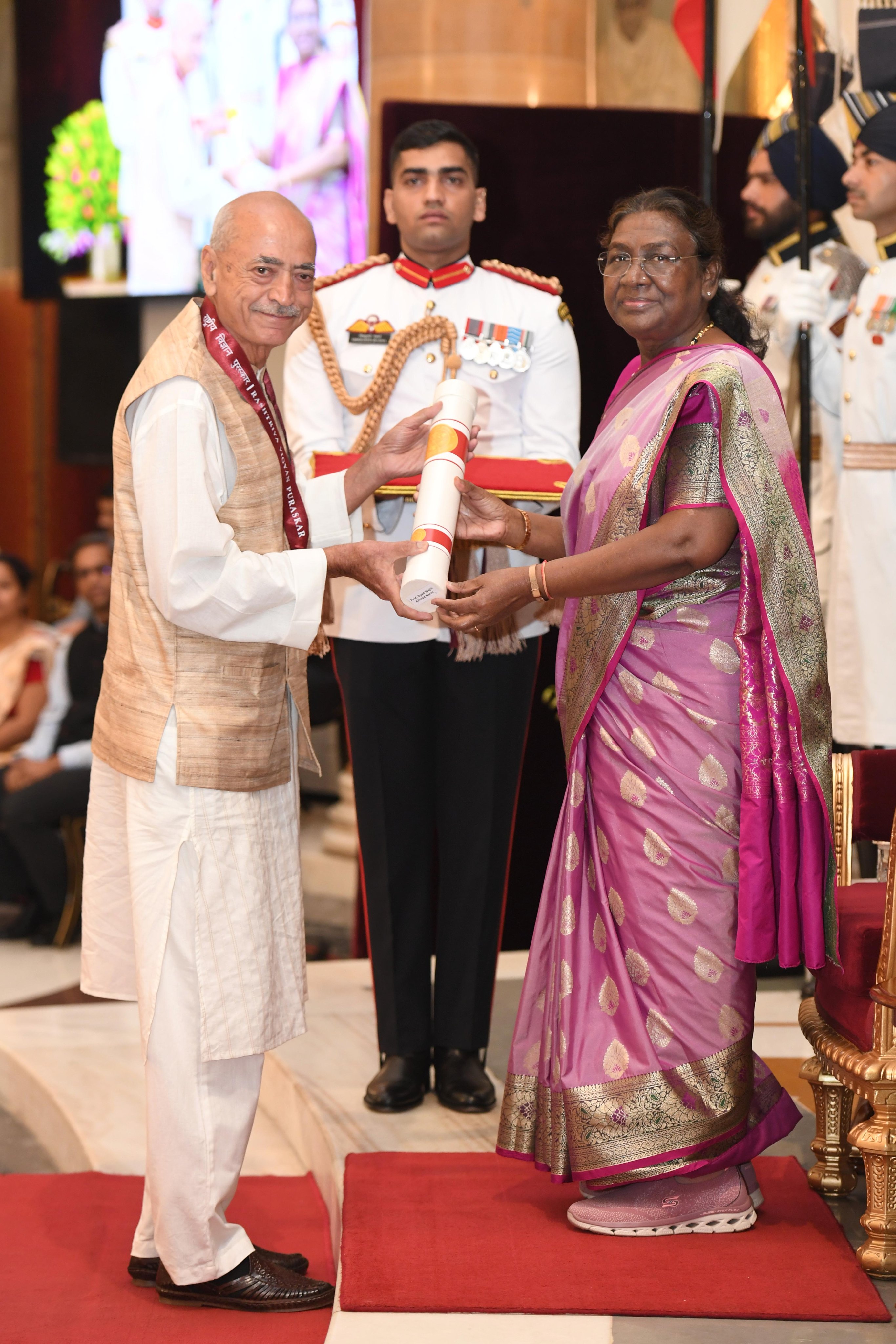
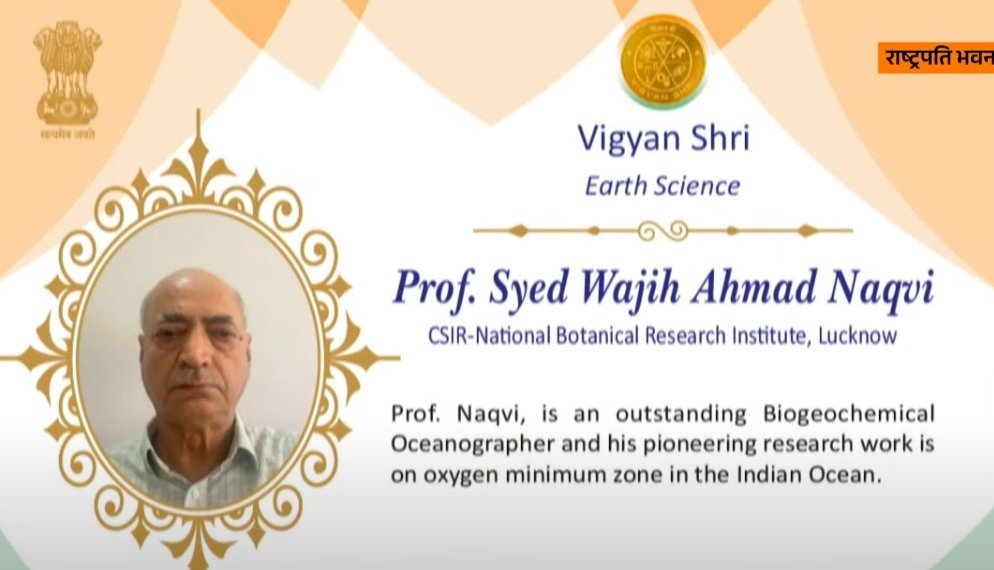
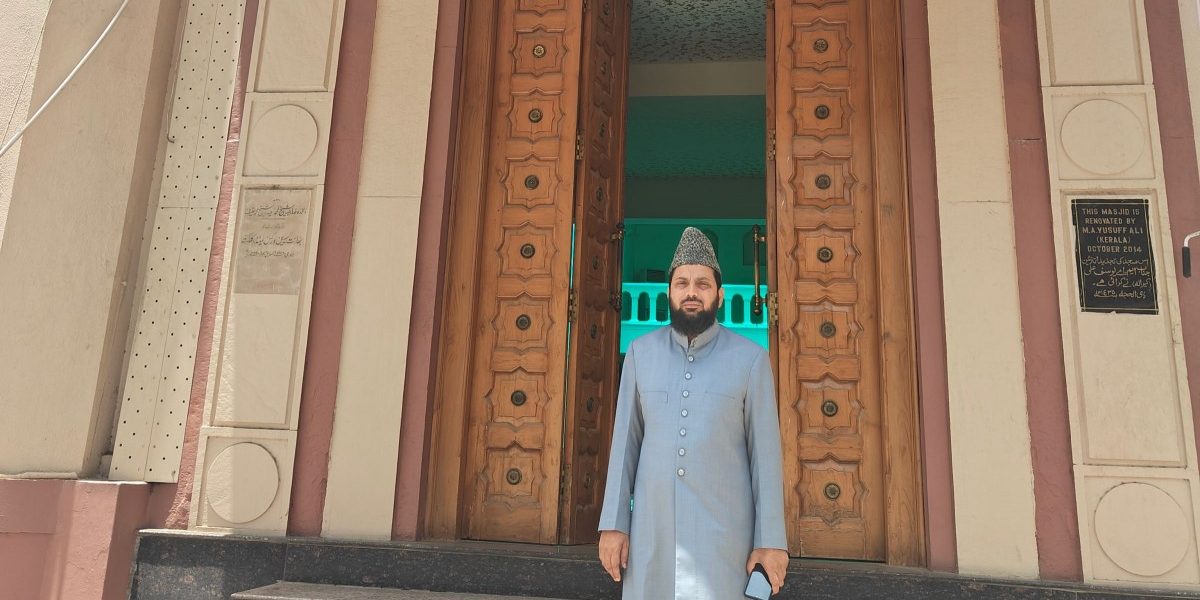
President Droupadi Murmu confers the Vigyan Shri Award on Professor Syed Wajih Ahmad Naqvi in Earth Sciences during the Rashtriya Vigyan Puraskar-2024, at Rashtrapati Bhavan, in New Delhi on Thursday August 22nd, 2024 .
Prof. Syed Wajih Ahmad Naqv from CSIR-National Botanical Research Institute (NBRI), Lucknow receives Vigyan Shri award in Earth Science from President Droupadi Murmu / pix: x.com/DDNewslive
New Delhi :
President Droupadi Murmu confers the Vigyan Shri Award on Professor Syed Wajih Ahmad Naqvi in Earth Sciences during the Rashtriya Vigyan Puraskar-2024, at Rashtrapati Bhavan, in New Delhi on Thursday August 22nd, 2024 .
In a prestigious appointment, Dr Nasr Ahmad Khan has been named the National Vice President of the Technical Wing of All India Unani Tibbi Congress (AIUTC). This decision was announced by Professor Mushtaq Ahmad, National President of the Congress, who recognised Dr Khan’s extensive contributions to the field of Unani medicine and his deep-rooted association with one of the most respected families in the Unani tradition, Hakim Raees Ahmad family.
Dr Nasr Ahmad Khan, who hails from Sambhal, Uttar Pradesh, has long been an advocate of Unani medicine, managing his family’s established clinic and contributing to the pharmaceutical industry through his venture ‘Advia.’ His work in the field has been marked by a commitment to preserving and advancing the traditional practices of Unani medicine while ensuring that they meet modern healthcare standards.
Dr Khan’s journey in Unani medicine began with his education at Rajasthan Unani Medical College, Jaipur, where he completed his Bachelor of Unani Medicine and Surgery (BUMS) in 1991. Since then, he has not only upheld his family’s legacy but also expanded its reach by integrating modern pharmaceutical practices with age-old Unani wisdom. His leadership in the family business has seen the ‘Advia’ brand grow into a trusted name in Unani pharmaceuticals.
The appointment of Dr Khan to such a significant national role is seen as a testament to his skills, knowledge, and dedication to the field. Professor Mushtaq Ahmad, while announcing the appointment, expressed his confidence that Dr Khan’s expertise would bring substantial benefits not only to the Unani Tibbi Congress but also to the broader public, particularly in promoting the use of Unani medicine as a viable and effective healthcare alternative.
The announcement has been met with widespread acclaim within the Unani community. Dr Sabahatullah, the National Secretary of the All India Unani Tibbi Congress, also shared his delight at Dr Khan’s appointment. He emphasised that Dr Khan’s leadership and vision would play a crucial role in furthering the objectives of the Technical Wing and enhancing the role of Unani medicine in the national healthcare landscape.
Dr Nasr Ahmad Khan’s elevation to this esteemed position is expected to invigorate efforts to integrate Unani medicine more deeply into the mainstream healthcare system, ensuring that it continues to provide holistic and natural treatment options for people across the country. His appointment is not just a personal achievement but a recognition of the enduring value of Unani medicine in India.
source: http://www.radiancenews.com / Radiance News / Home> Latest News> Report / by Radiance News Bureau / August 22nd, 2024
The students and teachers of the German Section, Department of Foreign Languages, Aligarh Muslim University (AMU) contributed significantly to the Translation Project conducted by Goethe-Institut, Max Mueller Bhavan, Mumbai.
The South Asian regional translation project, “Diamantenschliff: The Digital Translation Academy” focused on the translations of German literary works into the South Asian languages with special emphasis on the translation of selected works of Franz Kafka from German into various South Asian languages, including Bangla, Hindi, Kannada, Malayalam, Marathi, Sinhala, Tamil and Urdu.
Syed Salman Abbas, Assistant Professor, German Language and Literature, Department of Foreign Languages, who was the mentor for Urdu translations, moderated a lecture session on translation delivered by Dr Almuth Degener, a retired professor from the Indology Department, University of Mainz, Germany.
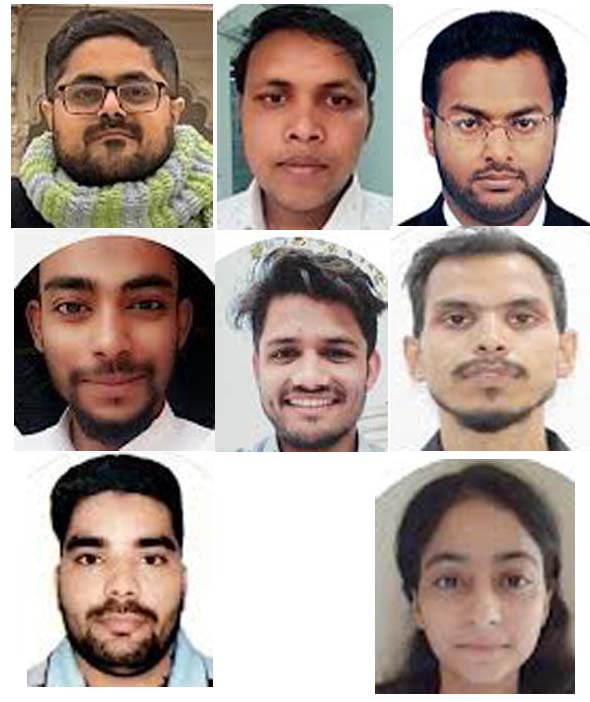
The current and former students of the German Section, including Mohammad Uzair, Mohammad Khalid, Sadique Khan, Mohammad Intizar, Muhammad Fahad and Syeda Alina Ali translated different works of Kafka from German into Urdu, while Mr Syed Salman Abbas contributed to and edited the Urdu translations for the website.
Dr Subair PM, Assistant Professor, made contributions as one of the translators of German texts into Malayalam.
The one-year-long project concluded with the launch of the translations on the official website of Goethe-Institut, on July 3, marking Franz Kafka’s birthday. The voice recordings of the Urdu translations are also available on the website.
Prof Muhammad Azhar, Dean of the Faculty of International Studies and Chairman of the concerned department appreciated the unique achievement of the students and faculty members of the department and congratulated them for their outreach.
source: http://www.radiancenews.com / Radiance News / Home> Education> Latest News / by Radiance News Bureau / July 31st, 2024
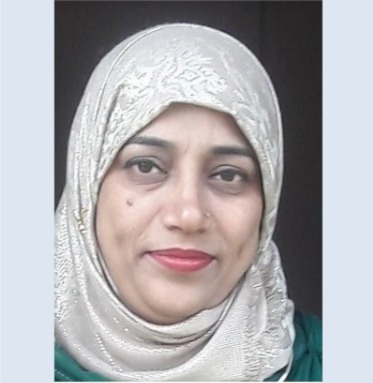
Prof. Rubi Anjum, Department of Tahaffuzi Wa Samaji Tib, Faculty of Unani Medicine, Aligarh Muslim University has been appointed as the Chairperson of the concerned department, for a period of three years, with effect from July 1, 2024.
Prof Anjum, engaged in teaching and research for over the last 16 years, has authored two books and published more than 70 research papers in journals of national and international repute. Besides this, she has attended more than 70 national and international conferences and seminars and presented papers on myriad topics.
She received an Award of Appreciation at a World Health Day event held at Jawahar Lal Nehru Stadium, New Delhi on April 3, 2016, for her role in creating awareness about diabetes.
source: http://www.radiancenews.com / Radiance News / Home> Latest News> Report / by Radiance News Bureau / June 30th, 2024
Mohibbullah Nadvi’s nomination by the SP and his road to victory in the general elections were peppered with confusion and drama. He was not the party’s first choice candidate and filed his papers at the last hour on the final day of nomination on March 27.
Mohibbullah ‘Nadvi’. Photo: Omar Rashid
New Delhi:
Mohibbullah ‘Nadvi’ took 19 years – and a detour through his home town, Rampur in Uttar Pradesh – to traverse the roughly 25-30-metre-wide tarmac separating Indian parliament from the mosque where he leads prayers as an imam. Surprising everyone, the Samajwadi Party nominated the 48 year old as its Lok Sabha candidate in Rampur; and, battling several odds, Nadvi came through, defeating the Bharatiya Janata Party by over 87,000 votes.
It is a little past noon and the sun is blazing down on Parliament Street, where the Jama Masjid is located in the capital. Nadvi has been its imam since 2005. With a small group of associates, he is seated in his office, still receiving congratulatory phone calls.
Nadvi was one of the five Muslims who were elected as MPs from UP this time. Six had contested. Nadvi hoped that now that the Opposition had performed better, taking the BJP head-on on issues of livelihood, the question of the worryingly low Muslim representation may be addressed better. But it should not be seen solely through the lens of numbers, he said.
“Our political representation should not be seen in terms of quantity but quality…even if there is one person, who is good, 100% faithful to the community, understands Islamic things and sentiments of Muslims, and raises their questions correctly,” Nadvi told The Wire. Muslims in India were not asking the government for anything beyond the rights the Constitution promises all citizens, he added.
Nadvi’s nomination by the SP and his road to victory in the general elections were peppered with confusion and drama. He was not the party’s first choice candidate and filed his papers at the last hour on the final day of nomination on March 27. Nadvi’s nomination also caught several party leaders by surprise as he did not have a political background. Fielding a Delhi-based maulana from a communally-sensitive constituency marred by internal divisions in the SP did not seem like a clever decision to many.
Though he had met SP president Akhilesh Yadav once when the latter was chief minister in 2012, the breakthrough came when they spoke in Lucknow in January this year. According to a source, Nadvi, who harboured electoral ambitions, had gone to Lucknow to invite Yadav to an event of Muslim leaders in Delhi. In Lucknow, Nadvi came in touch with Uday Pratap Singh, former MP and a close associate of Akhilesh’s and his late father Mulayam Singh Yadav’s, and also met Shafiqur Rehman Barq, former MP, with whom he already shared a good connection. Barq, a Turki Muslim like Nadvi, pitched for the maulana. That would be Barq’s last visit to the SP office as he died a month later, aged 93.
Mohibbullah ‘Nadvi’. Photo: Omar Rashid
Akhilesh did not promise Nadvi the ticket right away, but kept him on stand-by as an alternative, if needed. As nomination day approached, the SP was caught in a mini-crisis as it failed to zero down on candidates in two important and winnable seats, Rampur and Moradabad, both with a record of electing Muslims. Much of this had to do with the stubbornness of senior leader Azam Khan in having his say in candidate selection in his bastion.
On March 22, Akhilesh visited the Sitapur jail to meet Khan, who is incarcerated there, to discuss the candidates in Rampur and adjoining seats. Khan, who has faced the endless wrath of the Yogi Adityanath government, apparently proposed that either Akhilesh contest himself from Rampur or nominate one of his family members. This did not sound feasible to the party.
According to sources, the party asked several leaders to contest from Rampur but Saleem Shervani (ex-MP from Budaun), Kamal Akhtar (former minister) and S.T. Hasan (elected Moradabad MP in 2019) all rejected the proposal. Nobody wanted to encroach on Khan’s territory.
The SP’s top leadership wondered if it would be feasible to field Tez Pratap Singh Yadav, Akhilesh’s nephew and former MP, from Rampur but apparently the idea was turned down by Akhilesh’s uncle Ramgopal Yadav, the party’s national general secretary.
Only a day was left for the nomination and the SP was without an official candidate. A disaster was on the cards.
A similar situation prevailed in neighbouring Moradabad, where two candidates of the SP, sitting MP Hasan and former MLA Ruchi Veera, a close associate of Khan’s, both filed nominations, confusing the rank and file of the party. To Hasan’s dismay, Veera even received the party’s authorisation letter as its official candidate. He was obviously not happy.
In Rampur, too, the matter got out of hand after Asim Raja, an aide of Khan’s, filed his nomination while claiming to be the SP’s candidate. Raja, who had lost the Rampur seat in a by-poll in 2022, even led the Khan camp to declare a boycott of the 2024 election as Akhilesh had not paid heed to their request of contesting himself.
It was around 5 pm on March 26 that Nadvi received a call from the SP informing him that he would be the official candidate in Rampur. Along with his aides, he left for Rampur overnight. With the clock ticking, SP state president (and now MP) Naresh Uttam Patel along with a trusted lawyer boarded a chartered flight to deliver the Form AB to Nadvi, and in a change of tack, nominate the disgruntled Hasan as the official candidate in Moradabad by handing him the party’s authorisation letter. The flight landed on an airstrip in Mundha Pande, midway between Rampur and Moradabad, at around 11 am, sources said. Nadvi managed to file his nomination on time but Hasan could not receive the authorisation letter within the stipulated period. Their first priority was Rampur.
“It was a difficult time. We didn’t even have a back-up candidate. Time was running out,” Nadvi told The Wire, recalling the tense moments before his first-ever nomination. Later, Hasan in an interview to PTI alleged that some leaders had “conspired” to ensure that the party’s authorisation letter did not reach him on time.
After his nomination, Nadvi battled the ‘outsider’ tag, the internal opposition of the Khan camp, BJP’s communally-driven campaign and hostility from the administration. He brushed aside the outsider tag, underlining that he was born in a village, Razanagar, in Suar tehsil of Rampur. His uncle was a former pradhan. Nadvi, who owns 7.44 acres of inherited land in his village, completed his Quranic education or Hifz from Rampur city before spending time in a madrasa in Sambhal.
Following that, he went to Lucknow to pursue his higher education in Islamic studies from the renowned seminary Darul Uloom Nadwatul Ulama, from where he got his title. Nadvi then went to Aligarh for further education but as he did not appreciate the heated political climate on campus, he instead enrolled in Jamia Millia Islamia University in Delhi and graduated from there in Arabic Honours. He went on to complete his MA in Islamic Studies and got a BEd from Al-Falah University. In 2005, he was appointed as an imam at the Parliament Street Mosque after clearing an interview. “I didn’t have much inclination towards politics earlier. But I did develop some interest as the people who offered namaz behind me included some very important political people,” said Nadvi, on being asked why he suddenly jumped from the pulpit to politics.
Given the mosque’s location, top Muslim politicians and officials come there to pray. Even the likes of Liaquat Ali Khan, Maulana Azad and Zakir Hussain, former president of India, prayed at the mosque or used to visit it, said Nadvi. Jawaharlal Nehru and Indira Gandhi too have visited the mosque, whose compound houses an elegant white tomb of former president Fakhruddin Ali Ahmed. Nadvi, who took over prayers at the mosque at 29 years of age, was delighted to share that even former President A.P.J. Abdul Kalam had prayed behind him.
The maulana feels that Akhilesh took a “strong decision” by nominating him in Rampur, where he initially faced opposition from a section of party workers loyal to Khan.
“I faced some problems from our party friends who were unhappy. But I managed to tackle them beautifully. Credit to them, they also did not hype it so much, maybe due to public pressure or my acceptance in public,” said Nadvi. He feels his identity as an Islamic scholar and imam may have helped him win acceptance in his native land. “I have roots in Rampur. I want to take everyone forward and work on education and health,” he said.
While his nomination process was controversial, following his victory, too, Nadvi has garnered the headlines. He was trolled by supporters of Khan after he met the divisional commissioner of Moradabad, Aunjaneya Kumar Singh, who while serving as the district magistrate of Rampur had initiated a wave of action against Khan and his family members. Nadvi downplays the meeting. “I am a mazhabi alim. I don’t have negativity towards anyone,” he said, adding that he had met the official to discuss plans for the betterment of his constituency.
He also landed in a soup for his comments on the jailed Khan. When asked by reporters if he would visit the leader in jail, Nadvi said, “People are sent to jail for correction. Jail is a correctional facility and I can only pray for Azam Khan.”
Azam’s wife and former MP Tazeen Fatima lashed out at Nadvi for the comments. “He said that jail is a correction home. It seems like he had a deep experience of going to jail and he has been to jail,” she said.
Nadvi said his comments were misrepresented and exaggerated by the media. “I said that the jail is not heaven, that we would like to go there. We have our empathy for Azam sahab. What else can we do for him? The media gave it unnecessary hype,” said Nadvi. When I asked him if his relationship with Khan was fine, he took a long pause and before he could answer, an aide of his cried from the other end of the small room, “Abhi tak toh theek hai (So far, it’s fine)!”
Ruchi Veera, the newly elected Moradabad MP, visited Khan’s family following her win. She criticised Nadvi for his comments on Khan. “He should not forget that he won because of the party and Azam Khan sahab has made a lot of sacrifices for the party,” Veera said. She called him out for his “political immaturity”. “He’s not a political person. I don’t know how he got the ticket for the election and won.”
In Rampur, Nadvi not only saw off the challenge from the BJP but also ensured that the Muslim candidate of the Bahujan Samaj Party did not spoil his chances. The BSP candidate received 79,000-odd votes while he beat the BJP by over 87,000 votes. Had the election been conducted in a “fairer” manner, the margin would have been over one lakh to 1.5 lakh, said Nadvi, alleging that voting had been disturbed on 12 to 15 booths where the SP had a strong voter base.
Despite the BJP’s shrill anti-Muslim campaign, Nadvi says even Hindus voted for him, as he went to people with a “positive message”. “I spoke about education, health and employment. Who would the people choose? Someone who is abusing others or one who is asking them about their needs?” he asked. In an election where the BJP lost the election in the land of the Ram Mandir, a maulana scripted a successful political debut in a district bearing the name of the Hindu deity.
source: http://www.thewire.in / The Wire / Home> Reportage> Politics / by Omar Rashid / June 15th, 2024
A quick glance at Roshni Misbah’s Instagram account and she seems like every other young woman today, posing in the occasional high-heeled boots, with her own unique style and a definite flair for fashion, and a loyal following of over 130,000 people. Okay, maybe that last one isn’t all that typical and once you scroll through her profile, you quickly see that Misbah isn’t very ordinary at all!
Misbah’s love for motorbikes is more than evident on her page and most of her posts will attest to that. Dubbed the Hijabi Biker of Delhi, the 23-year-old rider from India has been spotted around her city riding her Honda CBR 250 cc, to the surprise of many in Delhi and quickly becoming an inspiration to young hijabis across the world.
Her IG profile describes her as Punjabi-Muslim, an Arab and Islamic Studies scholar (at Jamia Millia Islamia in New Delhi), a businesswoman, and the only “girl in Indian to own the fastest bike.” According to Hindustan Times, Misbah started riding bikes in her school years, in the ninth standard. After practicing on her friend’s and her father’s motorcycle for years, she got her very first bike, a Bajaj Avenger Cruiser 220, which she paid half for and her father the rest.
Speaking to the news site, Misbah said, “Unlike many girls, I wanted to ride a bike rather than a scooty (gearless). I always had a passion for bikes and I am fulfilling it.” The young rider is today part of several biking groups in her city, including Bikerni, which is an all-female bikers’ group based in Delhi. Her celebrity status is not restricted to social media as the young rider often has fans around the city who recognize her and wave at her. In university, she also receives praise from other female students, who often ask if she could teach them to ride a motorbike.
To date, Misbah has driven over 24,000 kilometers across India and more than 60 bikes, according to SportsWallah.com. When she’s not riding the streets of Delhi and beyond, Misbah is working on plans to continue a PhD in Arab culture, helping her father in the family business, and planning her next motorbike purchase, her sights set on a Triumph Rocket 2300 cc.
source: http://www.abouther.com / About Her / Home> Lifestyle> Influencers
Dr Anis Ahemad Ansari, Mechanical Engineering Section, Aligarh Muslim University Polytechnic has been granted a patent by the Patent Office, Government of India on his novel work, entitled, “A system for water and energy conservation in a Reverse Osmosis based water purifier”.
Dr Ansari said that a reverse osmosis (RO) based water purifier used in houses and offices generates a heavy amount of non-potable water which is continuously drained unutilized, although this water is clean and free from suspended matter. He said that the wastage of clean water on such a large scale increases the crisis of water manifold.
He stated that his invention provides a system for water and energy conservation in a reverse osmosis-based water purifier by making a provision for the collection of clean non-potable water generated from the reverse osmosis process. The hydraulic pressure is utilized in transferring this water into a tank and a flow control valve controls the discharge of accumulated clean water from the said tank, as and when required.
“Thus, the clean non-potable water generated from the RO process can be utilized for several purposes such as hand washing, utensil washing, floor washing, plantation, room cooler, toilet flushing, construction, vehicle washing, firefighting, etc. Moreover, it would save the electrical energy which is required otherwise to pump additional groundwater for these purposes,” he added.
source: http://www.amu.ac.in / Aligarh Muslim University / by Public Relations Office / June 04th, 2024
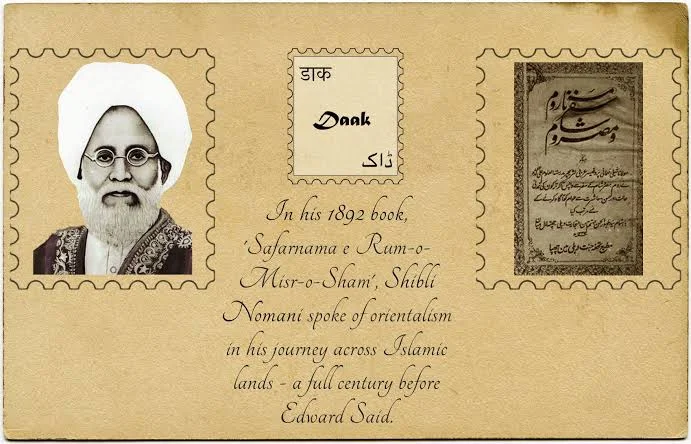
Allama Shibli Nomani was born in Bindol Azamgarh village on June 4, 1857, and passed away on November 18, 1914. He possessed a multifaceted personality and held an esteemed position in various fields. Considering his contributions to knowledge and literature from different perspectives, it is hard to believe that it was the work of a single individual. Besides his contributions to poetry and literature, Allama Shibli Nomani put his indelible mark on history and biography, research and criticism, and education and preaching.
The main focus of Shibli’s academic endeavours was education and religion showing a deep interest in education and educational philosophies. His life was dedicated to the educational activities of his time. From Aligarh Muslim University to Nadwatul Ulama, his sacrifices in the field of education were immense. His vision extended beyond India, encompassing the educational activities and needs of the Islamic world as well.
While he valued traditional education, he was also a proponent of modern sciences. At Nadwatul Ulama, when he was entrusted with educational responsibilities, he included “Al-Durus al-Awliyyah fi al-Falsafah al-Tabi’ah” in the curriculum. This book, written by Christian scholar Allen Jackson and published in Beirut in 1882, was an illustrated text on the basic sciences of its time, covering practical topics such as matter, motion, gravity, liquids, optics, heat, and electricity. Shibli appointed Allama Muhammad Hameed-ud-Deen Farahi and Mirza Muhammad Hadi Ruswa to teach it. This information is derived from Shibli’s letters.
Additionally, in 1901, Shibli hired an English teacher at Nadwatul Ulama with a monthly salary of 15 rupees. This decision led Maulana Abdul Bari Nadvi to translate several modern books on philosophy. The inclusion of English and modern philosophy in the curriculum was a revolutionary step by Shibli. However, after Shibli stepped down in 1913, these subjects were dropped from the curriculum.
Shibli spent his entire life cultivating knowledge and literature. He wrote books, encouraged others to study, and was devoted to the national spirit. Not only did he inspire the youth of the nation towards education, but also guided them in their educational pursuits. The openness of Shibli’s educational ideas is evident from his belief in higher education for women and his support for a curriculum that was equal for both boys and girls. In a letter to Atiya Faizi, he expressed his wish for her to become a speaker and lecturer like other famous women.
In a letter to Maulana Habib-ur-Rehman Khan Sharvani, he wrote about the impressive patterns of women’s education he observed in Bombay. Similarly, during his visits to Italy, Egypt, and Syria, he admired the women’s education and training system in Turkey, spontaneously writing words of praise for the Turks. Shibli tirelessly worked for the education and social awareness of Muslim women.
In 1908, when Nawab Bahawalpur’s grandmother donated 50,000 rupees for the construction of Nadwa, Allama Shibli wrote an enthusiastic article in Al-Nadwa. He referred to her as a “Living Zubaida Khatun,” comparing her generosity to that of Zubaida Khatun, Baramakka, and Taimoor. He wrote:
“The generosity of this lady has not only strengthened the foundation of Darul Uloom Nadwatul Ulama but has also paved the way for its future advancements.”
Extraordinary Passion
“O Subah Allahabad, O Oudh, you are a vast and distinguished region, but the truth is that now you must admit that it is not Punjab, but a part of it, that has earned your enduring respect through one of its revered women. You may have produced Burhan-ul-Mulk and Asif-ud-Daulah, but you cannot claim a Zubeda among your ranks.” (Maqalate Shibli, Vol. 8, p. 80)
Shibli’s travelogue “Safarnama-e-Room-o-Misr-o-Sham [Travelogue of Rome and Egypt, Syria] is essentially an educational report. Shibli’s writings reflect the deep passion he had for education and the kind of education he envisioned. His interest was not confined to India; he also kept a keen eye on the educational landscape of the Islamic world. The core of Shibli’s educational mission was the openness and spread of thought. While he respected ancient academic traditions, he was not averse to embracing new knowledge and wisdom. This excerpt from his travelogue is a significant reflection on the integration of modern and ancient educational ideas:
“Education among the Turks began with the Empire, which is what we now remember as ancient education… But the current state of education has declined so much that, in comparison, our education in India seems deteriorated. The realisation of this in the travelogue shattered all my joy and satisfaction — the fallacy of this ancient teaching… The grief and sorrow expressed by the newly educated in our country over the old education is not genuine sorrow, but rather arrogance and disdain. Although I appreciate new education, I am a strong advocate of old education. I believe that old education is necessary and very important for the survival of Muslim nationality.” (Safarnama-e-Room-o-Misr-o-Sham p. 56)
Due to his constant stress on education, Shibli concluded that it would be beneficial to reduce the gap between ancient and modern education and educational institutions, fostering a mutual exchange of benefits. Shibli believed that English education alone cannot address our current challenges, nor can the old style of education fully support us in the present era. In his opinion:
“We have said this again and again, and now we say it once more: it is not enough for us Muslims to only have English madrasas or ancient Arabic madrasas. The remedy for our pain is a combination of Eastern and Western education.” (Maqalate Shibli, Vol. III, P 57)
In his reference to Constantinople, Shibli emphasises that freedom of thought cannot thrive under government control. He also mentions educational institutes in Europe, where the people, rather than the government, play a significant role. He writes:
“What’s even more regrettable is that all the colleges and darul ulooms in Constantinople that I have mentioned are run by the government. The nation has not paid any attention to this yet. That is, there is not a single national college in such a big capital. No government, no matter how powerful and wealthy, can support the educational needs of the entire country. Even if it could, it wouldn’t be useful. The mental and spiritual powers of a nation whose needs are fulfilled by the government become dead and useless.” (P 40)
Shibli writes in his report on the School of Harbiya in Constantinople, after mentioning the happiness of the students, the ethics of the teachers, and the many branches of education:
“In fact, there is no better college in all of Constantinople in terms of building, supply of equipment, knowledge, education, and good management. However, it is regrettable that most of the people studying in its classes are Christians and the number of Muslims is very small.” (P 59)
Shibli’s analysis needs no further comment after mentioning the academic condition of Turkey, its authors, libraries, newspapers, magazines, and the writings of the masters of various arts:
“The fact is that the method of education in the Islamic world has become so degraded that people are not interested in any kind of modern information except for a few textbooks. As a result, the spirit of innovation and invention is lost to the nation, and there is no hope for it as long as this situation remains.” (P 69)
Shibli writes about the ethics of the students of Al-Azhar University:
“Throughout my journey, I was not as disheartened by the plight of Muslims as I was by the conditions at Al-Azhar University… But sadly, it has destroyed millions of Muslims instead of benefiting them… The condition of the students is such that when they buy goods in the market, they swear by ‘Bras Sayyidina al-Husayn,’ meaning they swear by the price of Imam Hussain’s head. Can such trained people be expected to enhance the glory of Islam?” (P 70)
Regarding the curriculum, Shibli writes:
“There is a continuous and basic teaching of fiqh and syntax, each for eight years. Logic, philosophy, mathematics, astronomy, and other sciences are not included in the teachings. The principles of fiqh, tafsir, hadith, literature, semantics, and narration are taught, but it is done at such a low level that such a large Darul Uloom does not hold any honour in any way.” (P 85)
About the teachers, he writes:
“Sheikh Taban has recently passed away. One of his works has been considered so significant that its annotations and commentaries are included in the curriculum. It is considered a great achievement to understand and memorize this entire series. I asked the students if Sheikh Azhar, who is regarded as a teacher, had done any original work. They proudly said yes, the annotations on Saban’s work are written by him.” (90)
Shibli was constantly active in the educational development of Muslims and did whatever was necessary to achieve this goal. The year 1913 was particularly challenging for him. After Aligarh, Nadwatul Ulama was the only centre of his aspirations, but he had to resign from there. He then dedicated himself to writing biographies. Meanwhile, in the April 15, 1913 issue of the Daily Zamindar Lahore, a proposal by Allama Shibli Nomani regarding the establishment of an Islamic university in Makkah was published. This proposal received many reactions, but Maulana Abul Kalam Azad and some other scholars supported it. Allama Shibli wrote:
“For me, the most important proposal is to establish a university of Islam in Makkah with a high level of education in all religious and worldly sciences (including modern sciences). It is obvious that today all kinds of power are based on knowledge, and in fact, knowledge is the real power. Therefore, nowadays the survival of every nation depends on being proficient in the sciences and arts.” (Ma’arif: November 2013, P 384)
Shibli provided several reasons for the establishment of a university in Makkah. The holy city is a centre of Muslims worldwide, and every Muslim could study there with enthusiasm. He also argued that no other place has as much financial resources as Makkah. If the pilgrims who visit every year were to contribute ten rupees individually to this university, the total amount could reach millions. Shibli also mentioned the presence of a very good library in Makkah. Additionally, he highlighted its pleasant weather conditions; favorable for both teachers and students. Moreover, he pointed out that all the tribes of Arabia, who have been “ignorant for thousands of years,” would benefit from education, with branches of the university being established in their major regions. They would be drawn to knowledge through consistent effort. Shibli concluded by expressing his conviction:
“All I can do is travel all over India for this and then migrate to Makkah and serve this blessed university.” (Zamindar/ April 15, 1913)
Allama Shibli holds a prominent position as a great writer and scholar, with a well-established reputation in this regard. However, less attention has been given to his educational efforts. The reality is that Shibli led a highly active life dedicated to education and educational activities. From his journey from Aligarh to Nadwa, he endured numerous challenges solely for the cause of education. He also faced adverse life circumstances in pursuit of education. If his curriculum reforms had been accepted at that time, the educational landscape today would be completely different. If Nadwatul Ulama had embraced his curriculum a hundred years ago, the madrasas in India today would have a distinct history and glory.
— Dr. Omair Manzar is an Assistant Professor in the Department of Urdu at Maulana Azad National Urdu University.
This article has been translated from Urdu to English by Mohammad Alamullah with the author’s permission.
source: http://www.clarionindia.net / Clarion India / Home> Clarion Special / by Dr Omair Manzar / translated by Mohammad Alamullah / June 05th, 2024
The INDIA bloc’s Muslim candidates had a victory rate of 83 per cent in the Lok Sabha polls.
Afzal Ansari of the SP who won from Ghazipur (File photo| PTI)
Lucknow :
Muslim voters, who make up a considerable 19 per cent of the population in Uttar Pradesh and are a deciding factor in around a dozen Lok Sabha seats in the state, emerged as a homogenous entity consolidating in favour of the INDIA bloc in the 2024 polls.
The community stood so solidly behind the SP-Congress candidates that all the 20 Muslim candidates fielded by the Mayawati-led Bahujan Samaj Party (BSP) lost, getting only a miniscule fraction of their votes.
The INDIA bloc’s Muslim candidates had a victory rate of 83 per cent in the Lok Sabha polls. All the four Muslim candidates fielded by the Samajwadi Party won, while one of the two Congress candidates emerged victorious.
Although the BJP leadership including PM Modi exhorted the Muslim community in the recently concluded election to vote keeping in mind the future of their generations, yet the community backed the Congress and SP combo.
In the 2019 Lok Sabha polls, three of the six Muslims MPs who made it to Lok Sabha from UP — Danish Ali (Amroha), Afzal Ansari (Ghazipur) and Fazlur Rehman (Saharanpur) — were from the BSP.
Moreover, the INDIA bloc had fielded Muslim candidate strategically in constituencies with over 40 per cent Muslim electoral population except Ghazipur which has 27 per cent Muslim voters but with an added edge of being the bastion of gangster-turned-politician Mukhtar Ansari. Afzal Ansari sailed through from the constituency as SP candidate this time.
The other Muslim candidates who won in the state are Imran Masood of the Congress from Saharanpur which has approximately 42 per cent Muslim voters, Mohibullah Nadvi of the SP from Rampur which has around 51 per cent Muslim voters (the highest in UP), Iqra Hasan of the SP from Kairana, her family bastion, with 40 per cent Muslim voters and Zia-ur-Rehman of the SP from Sambhal which has around 45 per cent Muslim voters.
source: http://www.newindianexpress.com / The New Indian Express / Home> Nation / by Namita Bajpai / June 12th, 2024
All six Muslim Lok Sabha candidates fielded by mainstream parties in Uttar Pradesh have emerged victorious.
Among the winners is Imran Masood, who contested from Saharanpur on a Congress ticket. “This victory is not just mine, but of every individual who believes in secularism and democracy,” Masood stated emphatically after his win.
Similarly, Maulana Muhibullah Nadvi, representing the Samajwadi Party, also secured a win in Rampur. “The people’s faith in us has been reaffirmed, and we will work tirelessly to honour their trust,” Nadvi said after trouncing Ghanshyam Singh Lodhi of the BJP with a total of 4.81 lakh votes, a margin of 89,370 votes.
Ziaur Rehman Barq, who contested from the Sambhal Lok Sabha seat, is on the path to victory as well. The Congress party’s candidate from Amroha, Kanwar Danish Ali, also achieved victory.
Reflecting on his triumphant journey, Ali said his suspension from the Bahujan Samaj Party was a turning point. “The support from the Congress party and the voters of Amroha has been overwhelming,” he said.
Afzal Ansari, a Samajwadi Party candidate, is leading in Ghazipur. Iqra Hasan, another Samajwadi Party candidate from the Kairana parliamentary seat, has also registered victory.
Before the elections, Imran Masood was affiliated with the Samajwadi Party, and Afzal Ansari was a Bahujan Samaj Party Member of Parliament. Danish Ali, formerly with the Bahujan Samaj Party, was suspended and later nominated by the Congress party, which led to his victory in Amroha.
Despite this success, the Bahujan Samaj Party, which fielded around 22 Muslim candidates, did not secure any seat. This outcome highlights a broader issue of representation, as only 78 Muslim candidates contested across the country under the Congress and other parties’ tickets. The Congress party itself offered tickets to just 19 Muslim candidates nationwide in this election.
With vote counting continuing, early trends indicate that the ruling NDA would form the next government. Nonetheless, the victory of these six candidates marks a noteworthy moment in this Lok Sabha election.
source: http://www.clarionindia.net / Clarion India / Home> India Votes> Indian Muslims> Politics / by Mohammad Alamullah, Clarion India / June 04th, 2024