Monthly Archives: November 2025

How the Bohra, Khoja, and Memon communities of Gujarati Muslims became formidable at business

GUJARAT :

An excerpt from ‘No Birds of Passage: A History of Gujarati Muslim Business Communities, 1800-1975,’ by Michael O’Sullivan.
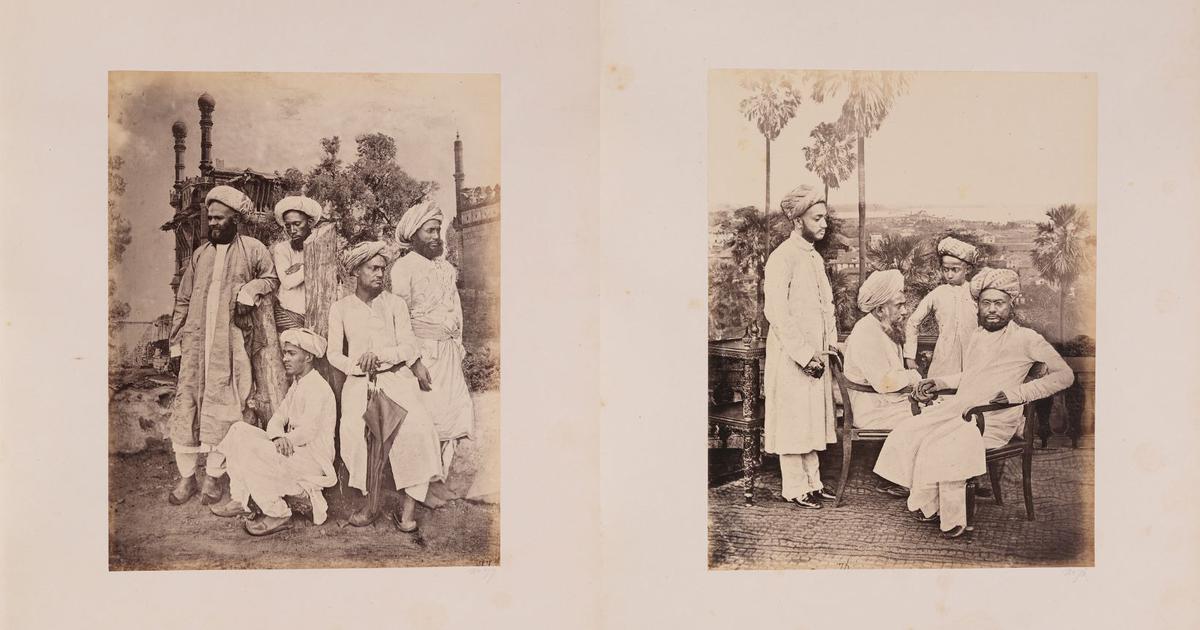
The Memons (left) and the Khojas of Gujarati Muslim community in the 1800s. | Southern Methodist University / Wikimedia Commons.

The fracturing of Mughal power over the course of the 18th century had assorted regional effects throughout the subcontinent, ushering in a volatile mixture of market expansion and rapid political turnover. As historians writing on late Mughal North India have shown, the weakening of central Mughal power fostered the conditions for an assortment of parvenu entrepreneurs and social groups to vie for abundant, albeit hotly contested, political and mercantile resources.6 Although conforming to patterns seen elsewhere on the subcontinent, Western India was arguably an exceptional case, for there a matrix of corporate merchant power, state fiscalism, and political polycentrism coalesced (and persisted, albeit to a lesser degree, after the colonial conquest), with few parallels in other parts of South Asia.

At the risk of oversimplification, while in the second half of the 18th century, the Mughal successor states in the north, south, and east of the subcontinent tended to be expansive entities covering large tracts of territory, in Western India the political map was far more disjointed. Alongside the heavies like the Afghans, the Marathas, the Sikhs, and the British East India Company stood innumerable smaller potentates of Rajput origin whose dynasties survived until the end of colonial rule as princes under British suzerainty. Beneath these potentates were the smaller caste combines, able to flex their corporate muscles in the face of grasping state power.

To be sure, such groups were scattered across India – for example, in the Gangetic Plain, where Hindu and Muslim corporate groups arose throughout the “rurban” landscape, which was segmented by a hierarchy of markets and occupational structures. These groups were of a piece with the Bohras, Khojas, and Memons in that they never acquired the capacity to seize political power outright but nonetheless were highly active players in the theatre of politics. What these Hindu and Muslim corporate combine in interior North India lacked was not only access to transregional export markets via a presence in overseas shipping. They also lacked the middle power eventually afforded to the Gujarati Muslim commercial castes by way of Western India’s idiosyncratic incorporation into frameworks of company rule.

Even before the cementing of company hegemony, the corporate power that Indian merchant communities acquired in eighteenth-century Western India was conspicuous but disconnected. In Surat the preeminent trading entrepôt of the region before Bombay’s rise in the early 19th century, corporate merchant bodies were pivotal to the functioning of the state taxation system from the late seventeenth century onward. But even in Surat corporate power did not mutate into a single merchant assembly arrayed against state authority, and merchants showed no willingness to emancipate themselves entirely from the boundaries of community. Yet the divide between merchant and state power remained porous into the 1830s. This porousness stemmed from a phenomenon that historians have identified as portfolio capitalism, whereby entrepreneurs blended interests in trade, revenue collection, and kingmaking. The conditions of portfolio capitalism permitted individual entrepreneurs and the corporate bodies to which they belonged by dint of caste origin to shape the flight path of political fortunes. The permeable political/mercantile divide intrinsic to portfolio capitalism persisted throughout the first half of the 19th century, until formal colonialism eventually drew a definitive wedge between the political and mercantile spheres. Gujarati Muslim middle power emerged within the interstices of that wedge.

In spite, or perhaps because of, its political fragmentation and volatility, eighteenth-century Greater Gujarat has often been framed as one of the select regions of India that possessed the “sprouts” of a dynamic mercantile capitalism in the precolonial period. Some historians assert that its pre-1800 economic indicators may have even rivalled southern England and southern China in the period before the so-called Great Divergence gathered pace.

None of that preempted Surat, from enduring considerable commercial setbacks in the early decades of the eighteenth century. Muslim-owned shipping is said to have especially suffered, but with the demise of late Mughal-era merchant dynasties, new Indian corporate groups came to the fore, among them the Bohras, Khojas, and Memons. While the latter two groups were still outside circuits of British East India Company rule, the Bohras relied heavily on British ships for freighting to ports in Western Asia, a partnership that foreshadowed a deeper relationship to come. Moreover, regional textile networks – and the broader global “cotton sphere” – continued to serve as a link between Greater Gujarat and various parts of Afro-Eurasia into the 20th century, even in the face of de-industrializing trends in the first half of the nineteenth century. Surviving examples of these textiles, such as a late 19th-century silk garment produced by Memon women, reveal a level of artisanal sophistication which surely contributed to the perpetuation of Gujarati Muslim economic prowess.

Just like the textiles they trafficked, the Bohras, Khojas, and Memons were in no sense secluded to Greater Gujarat in the late eighteenth century. Over centuries of sultanate and Mughal rule they had extended their footprint throughout considerable portions of Central and Western India. By the late eighteenth century, traces of these three groups can be found as far east as Ujjain, as far west as Karachi, as far south as Poona, and as far north as Udaipur. In other words, even within the subcontinent they were scattered throughout Baluchistan, Greater Gujarat, Rajasthan, and Sindh. They thus inhabited a territory that was, by the reckoning of an Indian lexicographer in the 1840s, larger than Great Britain and Ireland, with their shared mother tongues serving as the principal language of business in Central and Western India.

Even if these groups operated across a swath of territories, the problem is locating them in this medley of dissonant sovereignties and attending to their specific trajectories. Unfortunately, so far as is known, source material for these centuries has not survived. Still, one can safely surmise that these groups became part of the increasingly differentiated fabric of Muslim life in Gujarat, which revolved around the twin poles of Sufi orders and sultanic authority.

The Bohra, Khoja, and Memon commercial profile was not exclusively maritime in its contours but operated along the dividing line between agriculture and trade. In a telling case, a Kachchhi Memon jamaat was founded in Bhuj in 1799. Bhuj is thirty-odd miles inland from the port of Mandvi, and the decision of the Memons to settle there is a reminder that they did not merely hug the coasts of Western India but also operated in the hinterland. Nonetheless, the ability of Bohra, Khoja, and Memon ship captains to maintain their overseas presence – even amid the partial decline of Indian shipping from the mid-eighteenth century onward – was fundamental to the preservation of their precarious economic position in the transition to colonial rule. It meant that the Gujarati Muslim commercial castes were present, albeit in small numbers, in Jeddah, Madagascar, Mocha, Mozambique, Muscat, and Zanzibar by 1800.

A Gujarati pilot’s map from around 1750 betrays familiarity with the leading commercial entrepôts of the western Indian Ocean, well before formal colonial conquest.21 British East India Company and Dutch East India Company sources from the eighteenth century reveal passing interactions with Bohras and Khojas. This intimacy with overseas trade was consequential in facilitating Gujarati-Muslim interactions with the bricolage of political authorities jostling for supremacy in Western India. But it also partially insulated these groups from the recurring cycles of economic depression that beset agricultural production in colonial India throughout the 19th and early 20th centuries.

For all their commonalities, it is best to attend to the finer points of each community. The Memons materialise on only rare occasions. Community traditions of later centuries state that the Memons moved out of Sindh to the Kathiawar Peninsula in the early 15th century. From a supposedly once unified community of Lohana Hindus four umbrella Memon communities emerged in the wake of their conversion to Islam in this period: the Kachchhi (Cutchi), the Halai, the Surti (Surati), and the Sindhi. As they migrated, each developed its own incipient corporate identity based on geographic origin.

In the late 18th century, Memons began to attain influence over upstart political authorities. An illuminating and representative example comes from the early history of the Dhoraji Memon jamaat. According to community traditions, in the early 18th century, a Memon merchant named Abd al-Rahman settled in Dhoraji. There he was granted worship and trading rights by the Darbar Haloji of Gondal. Some of Abd al-Rahman’s descendants stayed in Dhoraji, while others migrated to Bantva, about thirty-two miles away, which became another haven for Memons. By 1780 the population of Memons in Dhoraji had reached critical mass, compelling one Adamji, a grandson of Abd al-Rahman, to establish a Dhoraji Memon jamaat. Eventually, the Dhoraji Memon jamaat became a vehicle for local Memons to voice their grievances with the local darbar (royal court) and to combat what they regarded as the arbitrary power of the mahajans, essentially a guild of Hindu moneylenders.

Perturbed both by the taxation policies of the darbar and the influence of the mahajans, the leaders of the Dhoraji Memon jamaat decided to migrate as a group in response to these taxation measures. They ended up travelling to Junagadh, which was only some seventeen miles away but was governed by another ruler. In time, however, the Dhoraji Memon jamaat was attracted back to Dhoraji by the local ruler, whose revenue had been hard hit by the Memon exodus, and he had decided to reextend privileges. Dhoraji, though witness to occasional scenes of tension between the Memons and local authorities, would be a center of Halai Memon corporate power in Greater Gujarat until 1947. The example of the Dhoraji Memon jamaat was repeated among Memons across Western India in the transition from Mughal to colonial rule.
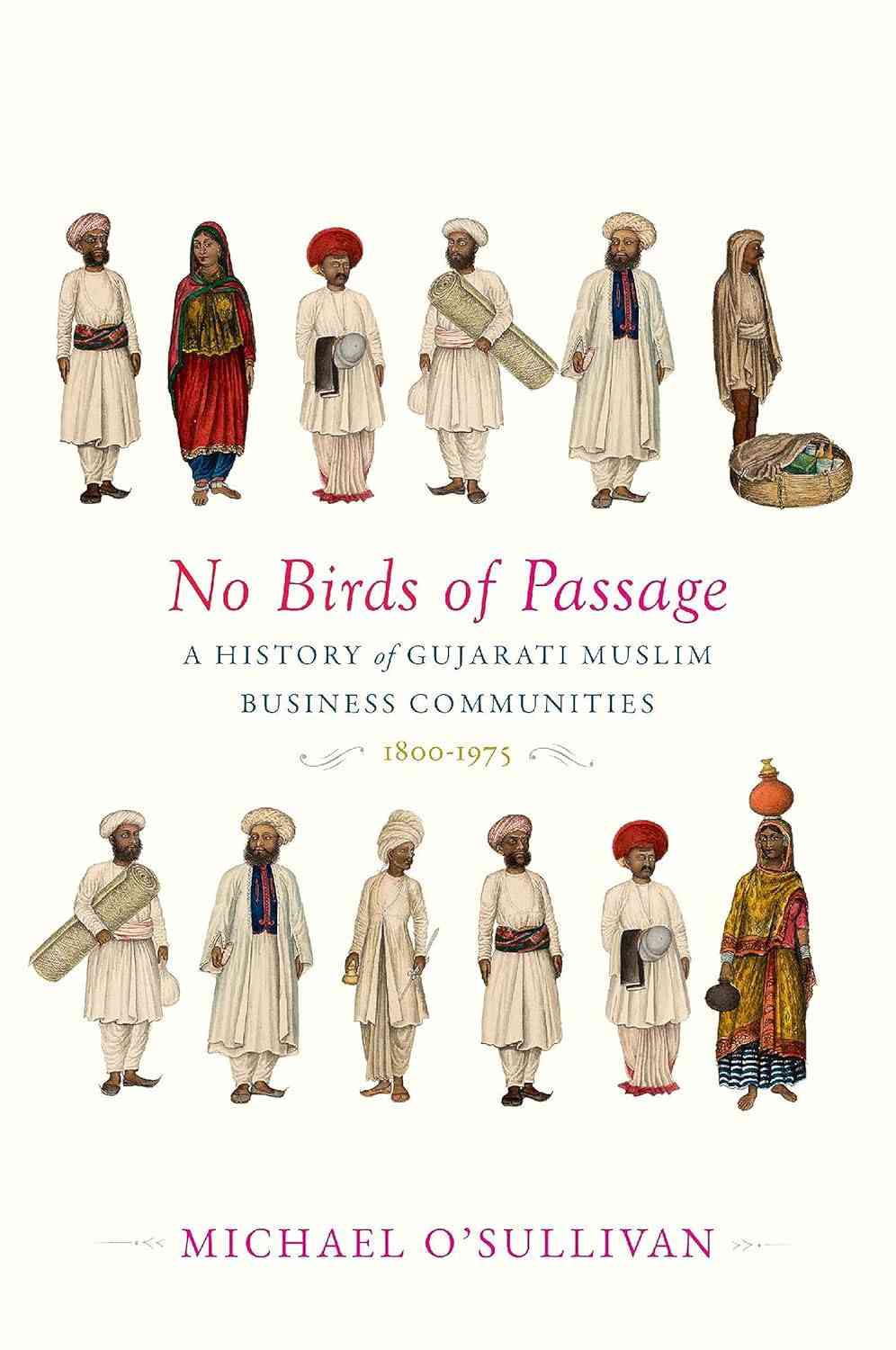
Excerpted with permission from No Birds of Passage: A History of Gujarati Muslim Business Communities, 1800-1975, Michael O’Sullivan, Harvard University Press.

source: http://www.scroll.in / Scroll.in / Home> Book Excerpt / by Michael O’Sullivan / September 02nd, 2024

A scholarly perspective

GUJARAT :

Michael O’Sullivan’s groundbreaking intervention in what is a much longer debate on Islam’s tryst with Western capitalism is his study of the ‘jamaat’ through the analytical category of the ‘corporation’

Bohri havelis in Sidhpur, Gujarat / Stock Photographer

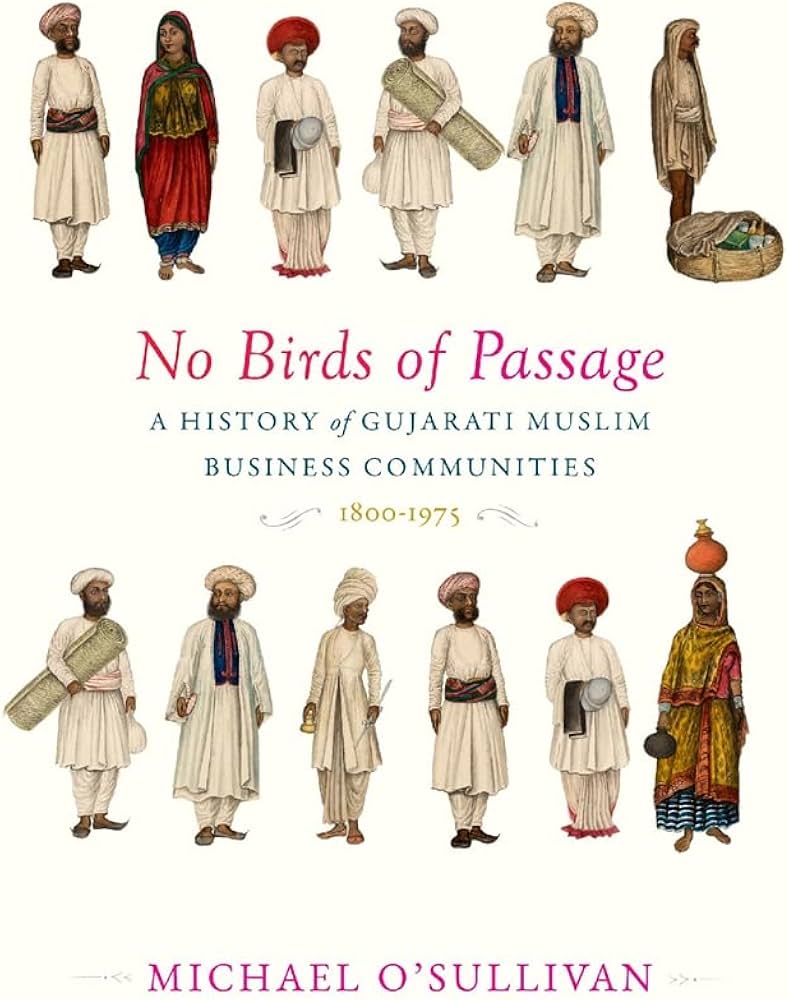
Book: No Birds of Passage : A History of Gujarati Muslim Business Communities, 1800-1975

Author: Michael O’Sullivan / Published by: Harvard / Price: Rs 799

pix: amazon.in

A sleepy pilgrim town called Sidhpur in the Patan district of Gujarat has now become a major site of global tourist attraction. Tucked away in a corner of the old precincts of the town is a spectacular residential enclave of the Dawoodi Bohras, a trading community that flourished in the region from the 1890s to the 1930s. The Bohras built elegant mansions made of wood and stone with stuccoed facades, ornate pilasters, trellised balconies and gabled roofs. These Victorian-style row houses are now completely empty. Apart from being a rare visual treat in an otherwise crumbling town, these empty mansions bear witness to a remarkably rich history of the community recorded in this book that studies the Dawoodi Bohras, along with Khojas and Memons, as a distinctive group of closely-knit endogamous mercantile castes that enjoyed a spectacular record of success in both regional and maritime trade from the early 18th century onwards.

The Khojas, Memons and Bohras lived in the region identified by Michael O’Sullivan as “Greater Gujarat” that included Kutch, Kathiawar, Rajasthan and Lower Sind. Their community narratives described them as descendants of formerly Hindu trading castes who were converted to Islam by Shia missionaries in the 13th century. Their names were derived on conversion, with Bohra derived from ‘vohra’ or trader, Khoja from ‘khwaja’, and Memon from ‘mumin’. It must be noted here that the Memons were the only Sunni group among the three.

The three collectively constitute 1% of the Muslim population of South Asia today. But since the third decade of the 19th century, they acquired an economic prominence vastly disproportionate to their numbers. This was largely because their trading activities, first, in the regional and global cotton textile circuits and, later, in the opium networks, made them active participants in the complex circuits of trade and finance that birthed 18th-century capitalism and a new Indian Ocean economy. They occupied what were deemed to be the interstitial spaces or the ‘middle-power’ among the Dutch, the French and the British mercantile companies. They used their political clout to extend their trading activities with proselytising initiatives in the port cities of Southeast Asia and East Africa.

The largest groups among them lived and operated from Surat but many migrated to Aden, Yemen, China, Malaya, Singapore, Japan and Zanzibar. They spoke Urdu and Gujarati with equal ease. Their fortunes grew steadily from about the 1830s up to the Great War, but the Depression that followed broke their businesses and eroded the wealth they had accrued over decades. They were unable to cope with endemic market shocks, litigations, and the complex web of obligations that sustained their trans-imperial businesses in Asia and Africa. This was also a time when the rising tide of anti-colonial nationalism and swadeshi on the one hand and the emergence of a distinctive Muslim politics on the other challenged these groups to recalibrate their relationships with the colonial State, mainstream Islam and non-Muslim communities at large. O’Sullivan charts the ebbs and the flows of the economic fortunes of these groups by focusing on the complex social, economic and religious bonds that held them together through their jamaats, or a kinship of believers. The jamaats came to define the ‘life-worlds’ of these communities in three distinctive ways: as economic entities that acted as depositories of individual capital and collective assets, as legal entities that acted as arbiters in conflicts among colonial law, customary practice and Islamic jurisprudence and, finally, as social entities that regulated the personal lives of members through decisions on marriage, inheritance and succession as wells as on the terms of participation in anti-colonial and pan-Islamic politics.

The author’s groundbreaking intervention in what is a much longer debate on Islam’s tryst with Western capitalism is his study of the jamaat through the analytical category of the ‘corporation’. He concedes this is contentious terrain, but argues compellingly that the legal, social and economic character of the jamaat in all these communities has a story to tell not only about the entanglements of caste, community and capital in non-Western contexts but also about the plural, heterogenous lives of South Asian Islam and its volatile relations with colonial and post-colonial States as both beneficiary and victim.

This is an audacious scholarly conversation between received categories of classical political economy and South Asian Islam that is likely to provoke debate among specialists in the field. For the general student of history however, it is a book that demands close attention for its outstanding contributions to the craft, both in its expansive approach toward the archive as in its deft interweaving of religion, culture and politics within the complex terrain of capitalist enterprise and law. The structure, prose and narrative richness of the book are likely to ensure a life for it outside the scholarly niche of economic history.

source: http://www.telegraphindia.com / The Telegraph Online / Home> Culture> Books / by Madhumita Mazumdar / book pix edited, source: amazon.in / December 08th, 2022

Dr. U.T. Iftikhar honoured as ‘Star of the Year’ in Rehabilitation at Thumbay Hospital Conference

KARNATAKA / Ajman, U.A.E :

Ajman, UAE:

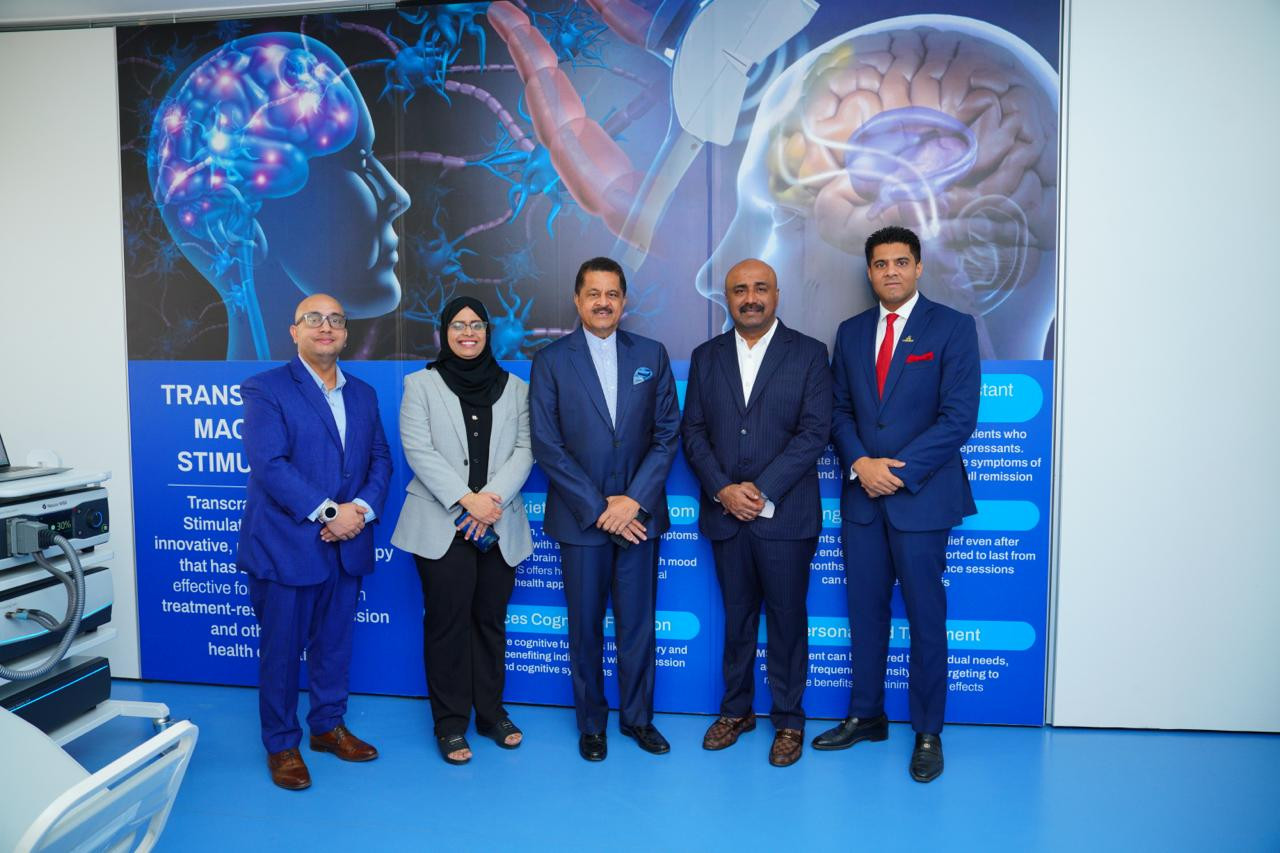
Dr. U.T. Iftikhar, Chairman of the State Allied and Health Care Council, has been conferred the prestigious ‘Star of the Year Award in Rehabilitation’ at the 5th International Annual Awards and Conference on Innovation in Rehabilitation Practice and Medicine, hosted by Thumbay Physical Therapy and Rehabilitation Hospital at Thumbay Medicity in Ajman.

The award recognises Dr. Iftikhar’s remarkable contributions to advancing rehabilitation care and promoting evidence-based medical practices in the UAE. Widely respected in the healthcare community, Dr. Iftikhar has played a key role in improving patient recovery outcomes and setting high standards in the field of rehabilitation.

The event was organised by Thumbay Physical Therapy and Rehabilitation Hospital, a part of the College of Health Sciences at Gulf Medical University (GMU) and the Thumbay Healthcare Division.

The ceremony was held in the presence of H.E. Sheikh Dr. Majid Bin Saeed Al Nuaimi, Chairman of the Ruler’s Court, Ajman, and Dr. Thumbay Moideen, Founder President of Thumbay Group. During the occasion, His Excellency Sheikh Dr. Majid praised Thumbay Rehabilitation Hospital as the best rehabilitation hospital in the UAE, acknowledging its innovative medical practices, advanced infrastructure, and patient-focused services.

The conference also marked the launch of the UAE’s most advanced Hyperbaric Oxygen Therapy and Transcranial Magnetic Stimulation (TMS) therapies, setting a new benchmark in rehabilitation care across the country.

source: http://www.english.varthabharati.in / Vartha Bharati / Home> Gulf / October 25th, 2025

Mangaluru’s Essam Mansoor becomes first Beary boy selected for Qatar U-19 National Cricket Team

Mangaluru, KARNATAKA / Doha, QATAR :

Young cricketer Essam Mansoor

Doha: 

In a proud moment for the Beary community, young cricketer Essam Mansoor, who hails from Mangaluru, has been selected to represent Qatar in the Under-19 National Cricket Squad. Essam is the elder son of Mansoor Hasanabba Hentar and Razia Sulaiman Salmar, residents of Doha, Qatar.

Essam, who is currently in his first year of graduation at the University of Doha for Science and Technology (UDST), has earned the spot after years of consistent performance and dedication to the sport. His selection marks a notable milestone, as he becomes the first boy from the Beary community to secure a place in Qatar’s national cricket team.

Officials confirmed that Essam will leave for the United Arab Emirates on November 17 to participate in the Under-19 ACC Premier Cup. The tournament will offer him the opportunity to compete at an international level and showcase his skills before a wider cricketing audience.

Community members, friends and well-wishers in Qatar and back home in coastal Karnataka have expressed pride and appreciation for Essam’s achievement. His accomplishment is being seen as an inspiration for several young Beary athletes who aspire to pursue sports professionally.

Family members said that Essam’s commitment, discipline and passion for cricket have played a key role in his rise through Qatar’s junior cricket framework. They added that the selection is both a matter of personal joy and a moment of collective pride for the Beary community.

Essam’s parents, engineer Mansoor Hasanabba Hentar and Razia Sulaiman Salmar, said they are hopeful that he will continue to excel and make the country proud at the ACC Premier Cup and in future cricketing opportunities.

Essam Mansoor’s selection has been widely celebrated as a landmark achievement for a community that has been increasingly encouraging its youth to explore opportunities in sports, academics and professional fields.

source: http://www.english.varthabharati.in / Vartha Bharati / Home> Gulf / November 19th, 2025

BCCI Qatar Chapter inaugurated; U.T. Khader attends as chief guest

KARNATAKA / Doha, QATAR :

Qatar:

The BCCI Qatar Chapter was formally inaugurated on the 8th, with U.T. Khader, Speaker of the Karnataka Legislative Assembly, attending the event as the chief guest.

Speaking on the occasion, BCCI President Dr S.M. Rasheed said the organisation was founded to promote collective business support and to encourage start-ups within the Beary community. He noted that BCCI had already launched its first collective business venture, Bearys Associates LLP, and has expanded its presence by opening chapters in Dubai, Jubail, Hassan and Chikkamagaluru.

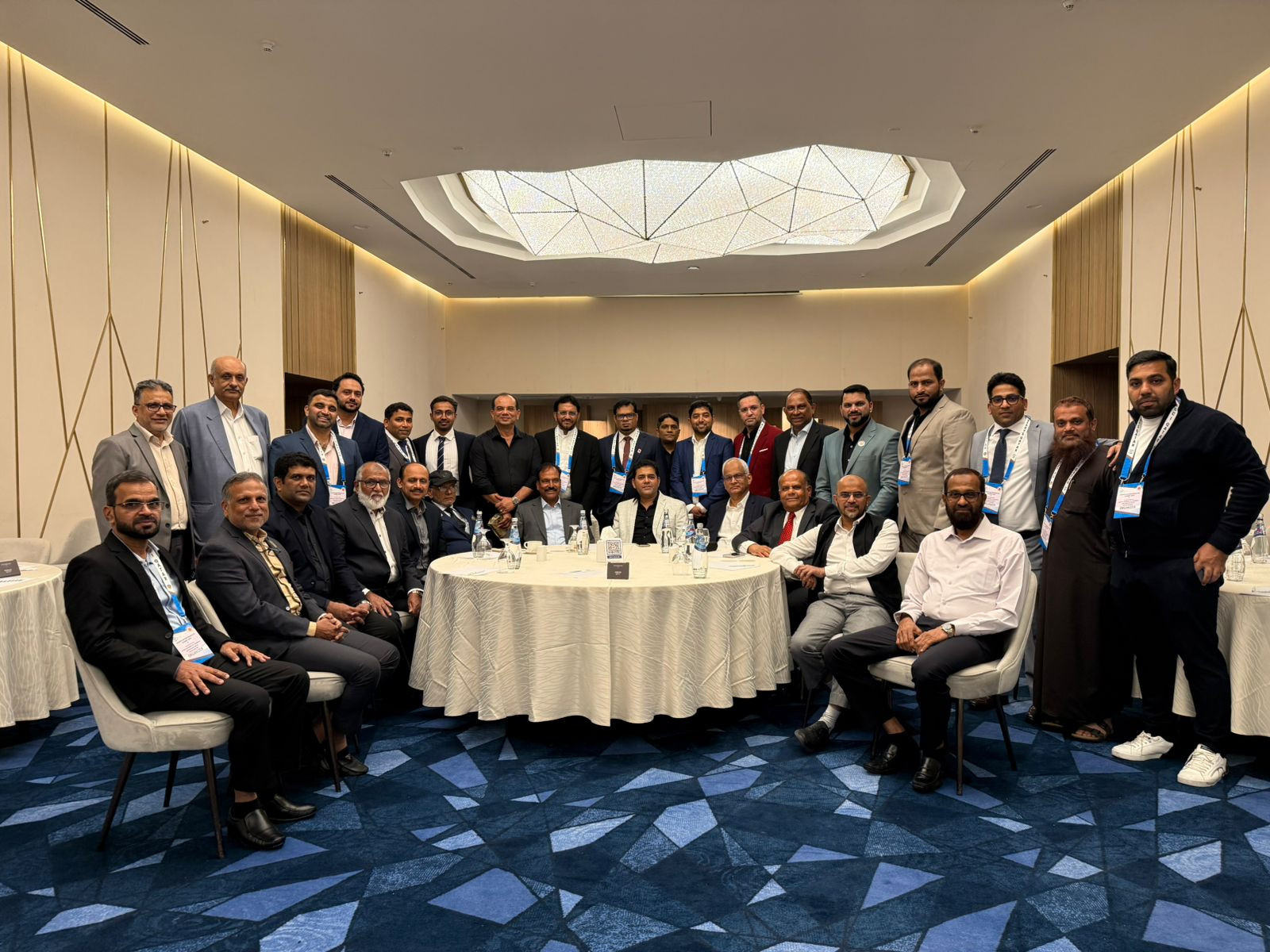
The programme was attended by BCCI Vice Presidents Zakariya Jokatte, Imtiaz Mansoor, Dr Ifthikar U.T., Saukath Suri, Mohammed Haris, Nasir Lucky Star, Asif Home Plus, Razak Goltamajal and Badruddeen Dalta Rauf Sulthan.

During the ceremony, Abdul Monu was announced as the President of the newly formed Qatar Chapter.

Leaders from other regions including Mohammed Ali Uchil, Asraf Karnire, Abdul Basher (NCMS), Hidaya (UAE), K.C. Hameed (Qatar), Azeez Akara (Qatar), Jafar, and Ibrahim Gadiyar (UAE) — were also present and extended their support.

source: http://www.english.varthabharati.in / Vartha Bharati / Home> Gulf / November 15th, 2025

Bhatkal Science Fair Brings Together 52 Student Research Teams

Bhatkal, KARNATAKA :

Bhatkal:

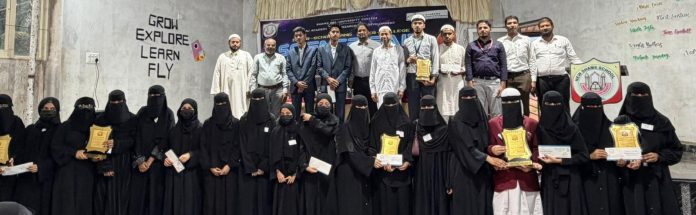
The second Bhatkal inter school and inter college science fair brought together 52 student teams from 10 institutions to present research based projects and scientific demonstrations. The event took place at the Dr M. T. Hassan Bappa Auditorium and was organised by Shams PU College and the AJ Academy of Research and Development. The organisers said the aim was to build scientific temperament among students and encourage analytical thinking.

Chief guest Dr Mohammed Zubair Kola, vice president of Anjuman Hami e Muslimeen, spoke about the need for quality education that encourages inquiry. Guest of honour Dr Virendra V. Shanbhag, principal of The New English PU College, spoke about skill based learning and pointed to real world examples of innovation. Abdullah Javed, director of the AJ Academy of Research and Development, highlighted the importance of originality and clear methodology in student research. The programme was presided over by Nazir Ahmed Qazi, chairman of Tarbiat Education Society.

The event opened with a recitation of the Quran by Ahmed Zain. Mohammed Azaan presented the translation. New Shams School principal Liyakat Ali welcomed the gathering. Shams PU College principal Mohammed Raza Manwi introduced the judges. Science fair convener Dr Mamatha Naik closed the programme with a vote of thanks.

A panel of experts evaluated the projects. The judges included Prof Quratulain Waseem H., Dr Chetan Pai, Prof Al Shifa, Dr Vinayak Anand Kamat, Dr Rupa D. Shanbhag and Prof Shaheeda Ikkeri. Organisers noted that the fair focused on research work supported by data, models and practical demonstrations.

As reported in sahilonline.org

source: http://www.radiancenews.com / Radiance News / Home> Latest News> Report / by Radiance News Bureau / November 25th, 2025

Kerala Engineer Ershad Kunnakkadan Becomes CEO of Gumroad

KERALA :

Kochi:

Ershad Kunnakkadan, a 33-year-old engineer rooted in Kerala’s free-software community, has taken charge as the new CEO of Gumroad. His appointment marks a striking rise from local open-source groups to the leadership of a global e-commerce platform that records over 100 million dollars in Gross Merchandise Value.

Gumroad founder Sahil Lavingia announced the transition and described Ershad as the perfect leader to guide the platform after fourteen years of his own stewardship. Ershad, who shifted to New York only in May as a staff software engineer after working remotely with the company since 2020, said he felt honoured and ready to serve creators with greater commitment.

His journey has drawn wide attention in Kerala. His interest in computers grew in a government school classroom, through a gifted Ubuntu 8.04 CD, and through active involvement in Swathanthra Malayalam Computing. The collective helped shape his early work in open-source development and localisation.

A detailed post by Menlo Ventures partner Deedy Das has been widely circulated. It traces Ershad’s teenage immersion in terminals, scripting contests, Linux administration, security work, and blogging. College studies lost priority as he explored the free-software world. He left a private engineering college in Kerala after his second year, promising his family he would complete his education. He later earned a degree through a distance programme while gaining industry experience through internships and workshops. He also identified security bugs in Github and Prezi and secured a Google Summer of Code selection.

His appointment has sparked pride across Kerala’s tech community.

source: http://www.radiancenews.com / Radiance News / Home> Entrepreneurship> Latest News> Report / by Radiance News Bureau / November 24th, 2025

Jamaluddin Abdullah, My Teacher and Mentor, Passes Away

Malegaon, MAHARASHTRA :

Jamaluddin Abdullah, my teacher and mentor who was revered by his students as Jamaluddin Sir, passed away in Malegaon Tuesday November 18, 2025

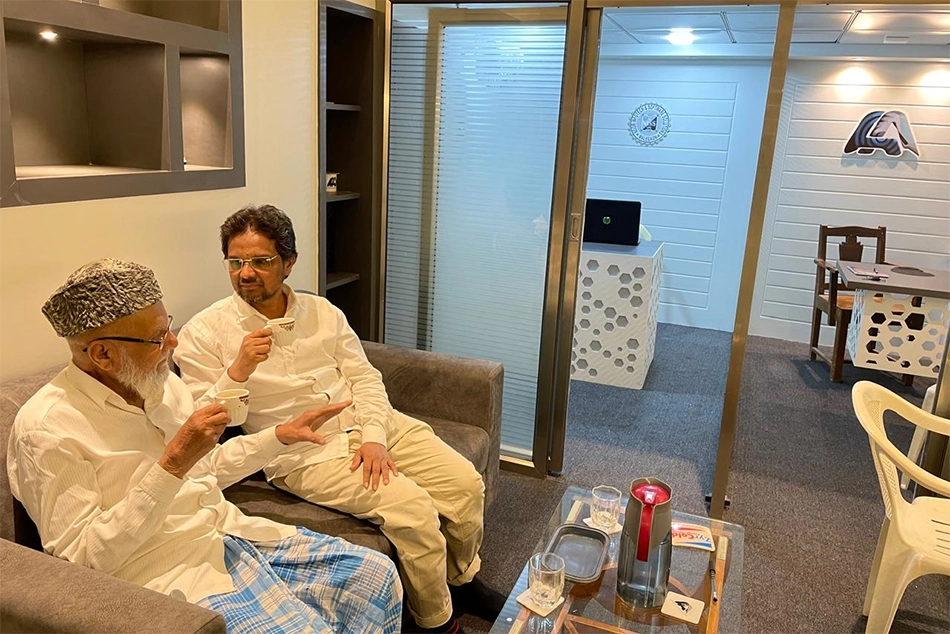
[Jamaluddin Sir with the writer at ummid.com office (Photo: ummid.com)]

Malegaon: 

Jamaluddin Abdullah, my teacher and mentor who was revered by his students as Jamaluddin Sir, passed away in Malegaon Tuesday November 18, 2025.

He was 82, and is survived by three sons and four daughters.

Jamaluddin Sir was ailing since last few years and passed away around 10:00 AM Tuesday. He was buried in the afternoon at the Bada Qabristan in Malegaon in the presence of hundreds of his students, former colleagues, friends and family members.

“One of the Best Teachers”

Jamaluddin Sir was one of the finest teachers of Social Science. Geography is considered as a boring subject for a good majority. However, Jamaluddin Sir had a special skill and unique style of making the subject fascinating.

He retired from A.T.T. High School, the oldest school of Malegaon, in 2002-03 as Assistant Head Master.

“Oh! Jamaluddin Sir? He was a teacher of class!” This was Ayaz Gulshan’s immediate response about Jamaluddin Sir when he was told he is no more.

Sajid Nadir and other students agreed.

“He was one of the best teachers we had”, Sajid Nadir told ummid.com after hearing the sad demise of Jamaluddin Sir.

“He had a good memory even while he was ailing and suffering from various health issues”, Sajid said.

Sajid said he had visited him six months ago with some other students to invite him for a felicitation event organized.

“He asked us to invite this and that teacher, surprisingly listing them all name by name”, he said.

“Jamaluddin Sir also taught English language in lower classes where too he left ever lasting mark on his students because of his unique style of teaching”, Shahid Faizee, my younger broher and one of his students, remembered.

Paying tribute to Jamaluddin Sir, his retired colleague, Mohd Ismail Sir, praised his devotion and dedication to the teaching profession.

“He was one of those teachers who were devoted and enormously dedicated to the teaching profession”, he said.

Maulana Naeemuz Zafar Milli, who was appointed as Arabic Teacher at A.T.T. High School, said since he came from a Madrasa background, the daily school routine work was a tedious job for him.

“But, Jamaluddin Sir was always there to help me out”, he said.

Jamaluddin Sir and Me

I began my education at a Municipal Primary School and was doing remarkably well. I was in the 4th standard when – along with my elder brother, cousin and uncle, I was shifted to Jamia Muhammadia Mansoora. But, we had to discontinue – suddenly and in the middle of the academic year, our education at Jamia Muhammadia Mansoora after three years. Our academic activities were totally disturbed because of the sudden change. We were in dark and unsure how to deal with the situation.

It was then that Jamaluddin Sir came as a savior.

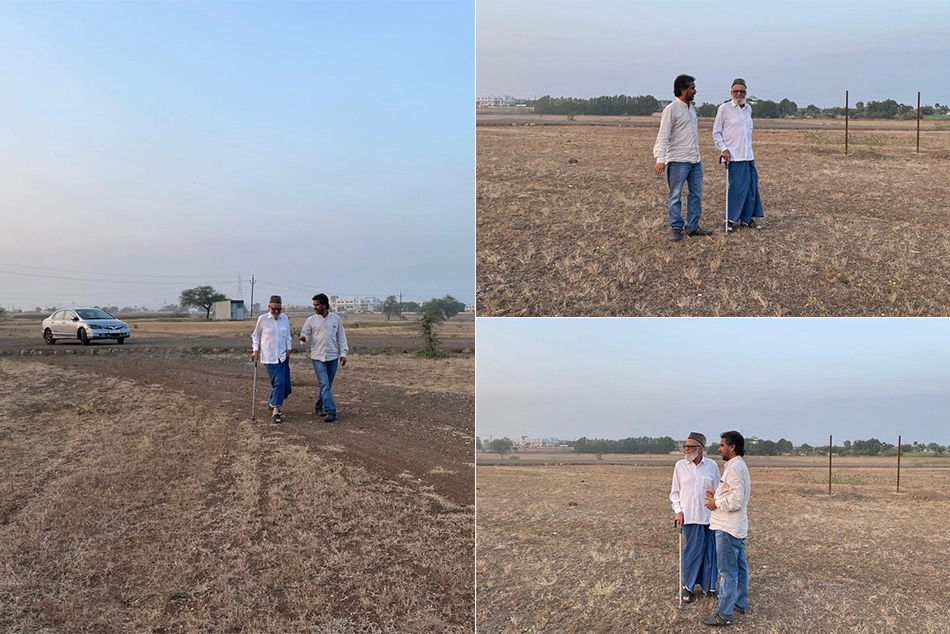
[Jamaluddin Sir inspecting the land where SEWA Educational Campus is coming soon. (Photo: ummid.com)]

Jamaluddin Sir was my father’s closest friend. They were actually three – Jamaluddin Sir, Dr Haroon Firdausi and my father Mohd Anwer Faizee. Their friendship is cited as an example in Malegaon even today.

Because of the strong bond between the trio, they had a special affinity for me also. Dr Haroon Firdausi lived in Kuwait for more than 20 years. He used to regularly write letters for my father and Jamaluddin Sir. Interestingly, he would write common letters for Jamaluddin Sir and my father. But, in the envelope, a small piece written for me was part and partial, even if it was a few lines.

Sensing my father’s worries about our academic uncertainties, Jamaluddin Sir took it upon himself to find a solution and did everything needed to get ourselves admitted at A.T.T. High School and bring our academic activities back to the right track. And, he did this so successfully that we all Madrasa dropouts – my elder brother Dr Abdul Awwal Faizee and cousin Dr Pervez Faizee finally became doctors, and my uncle Abdullah Faizee is regarded as one of the best Electrical Engineers in Malegaon.

And me?

The Special Grace of Allah, The Almighty, has been foremost, but behind whatever little I am able to do today is the mentorship of Jamaluddin Sir.

Jamaluddin Sir’s efforts paved the way for dozens other who dropped out from Madrasa to rejoin schools and continue their education. They are working today as doctors, engineers and teachers in various places.

After the demise of – first Dr Haroon Firdausi and later my father Mohd Anwer Faizee, Jamaluddin Sir’s care for we siblings became manifold.

Whenever we were in any problem the one person to always stand with us would be Jamaluddin Sir, our Jamal Baba.

Our every problem would make him restless, and our every small or big achievement was a cause of big celebration for him.

A Community Leader, A Man of Principles

Besides rendering his duty as a teacher at A.T.T. High School, Jamaluddin Sir was also a community leader. For every small or big problem in his Mohallah Rasoolpura he was there with a helping hand.

Jamaluddin Sir was also a very religious person. He used to offer prayers at Hayat Masjid and Rasoolpura Masjid where he would reach before the call to prayers. The same remained his practice when he became old, and suffered from various age related illnesses and started walking with the help of a stick.

He was also administering the affairs of Rasoolpura Masjid, and would also lead the Panchayat held to resolve family disputes where his decisions were respected and honored.

He used to lead from the front in marriages and other functions. In case of any death in the area, he was the one to perform funeral rites that also included giving bath to the deceased’s body.

As if a teacher in him never died even after retirement, Jamaluddin Sir taught and trained a number of people about funeral rites.

“He called me once when a person died in our locality, and trained me about how to give bath to the deceased’s body”, Raees Ahmed Manzoor Ahmed, a Social Volunteer, said.

He was also a man of principles. Compromising with the management so as to “adjust and get sons and daughters recruited” after retirement has been a norm. There are hundreds of examples in Malegaon when sons and daughters got jobs in the same institute where their father or mother worked. But, Jamaluddin Sir did not “choose this option” for his son.

An Example During Illness

Jamaluddin Sir was very jolly by nature, and would always be found cheering and in happy mood. He, however, lost his charm after the death of his wife in 2020. In later years, he suffered from various age related health issues, but was able to hold his composure.

He had a huge following, and visitors used to frequent his residence to meet him and enquire about his wellness. But, it was he who would initiate the conversation.

Kya haal hai beta? (How are you my son?)”, used to be his question whenever I visited him.

His three sons set an example about how to take care of an ailing father. But, it was Jamaluddin Sir himself who will advise them to do this and that for his good health.

In about five years when he was on and off on the bed, Jamaluddin Sir never gave up and was always ready to do something. Few months ago, I requested him to visit the land I have bought to establish an educational institution. He agreed despite his poor health and came along. But, three weeks before his death when I visited him, it appeared to me, he had realized that the time has come to pack up.

[The writer, Aleem Faizee, is Founder Editor of ummid.com. Aleem Faizee has also worked as a Researcher at Tata Institute of Social Sciences (TISS) and with Action Aid for its research work published as “BROKEN PROMISES -A study on the socio-economic status of Indian Muslims: Seven years post Sachar”. His research work “Mollywood: The Rise and Fall of a Subaltern Cinema” is part of the book “Creative Industries in India” published by Routledge India of Taylor and Francis Group, London. A prolific writer, Aleem Faizee has also wrote for The Times of India as a Freelance Journalist for over 10 years. Aleem Faizee has also served as Honorary Lecturer at J.A.T. Senior College Malegaon for over twenty years.]

source: http://www.ummid.com / Ummid.com / Home> Obituary / by Aleem Faizee / November 19th, 2025

Zakat Centre India–Patna Disburses ₹8.85 Lakhs to 18 Beneficiaries in Its 13th Phase of Support

Patna, BIHAR :

Total Assistance by ZCI-Patna Reached Rs. 51 Lakhs Since August 2023

Patna:

The Zakat Centre India (ZCI) – Patna Chapter announced the disbursement of ₹8.85 lakhs to 18 deserving beneficiaries during its 13th phase of financial assistance. With this round, the Chapter has extended a total of ₹51 lakhs from August 2023 to November 2025 through multiple phases of outreach.

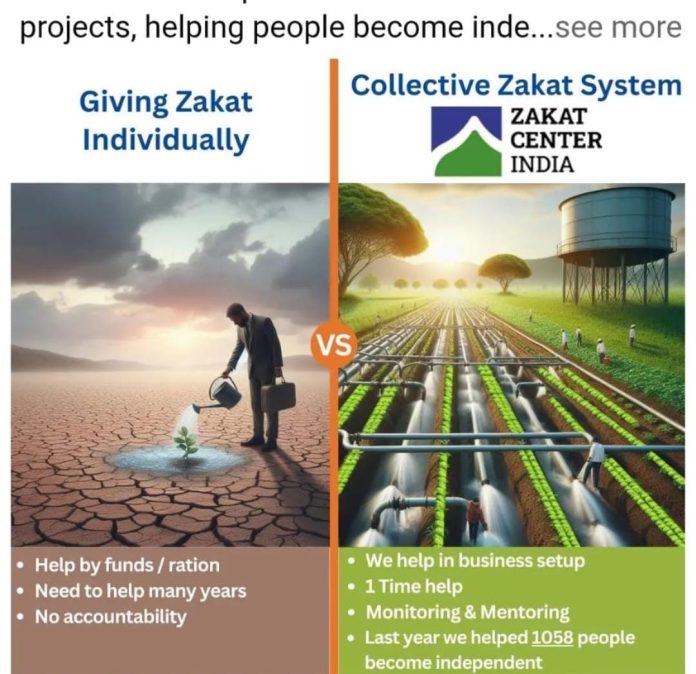
Established in 2023, ZCI–Patna aims to organise zakat collection and ensure transparent and systematic distribution, focusing on sustainable welfare, education, and income generation. Unlike individual zakat practices, ZCI follows a pooled, structured model designed to create long-term social impact.

A review and sanction meeting was convened on 18 November 2025 at Anisabad, Patna, where 25 applications for financial aid were evaluated. Members expressed satisfaction with the Chapter’s progress and resolved to deepen engagement in both zakat collection and beneficiary outreach.

During the meeting, a new Unit Management Committee (UMC) was constituted to strengthen operations. The committee includes Manzoor Ali (IAS Rtd.), Quamruddin Warsi (Chief Manager, SBI, Rtd.), Abdul Wahab Ansari (ADM Rtd.), Mobin Ali Ansari (ADM Rtd.), and Syed Nashoor Ajmal.

Category-wise Disbursement

Income Generating Activities:   Support for 9 individuals to start or expand livelihood ventures – ₹4,55,000

Livelihood Support (Mu’awasat):   Assistance to 3 families with urgent social needs – ₹72,000

Educational Scholarships: Aid for 6 students pursuing higher education – ₹3,58,000

Beneficiaries namely Sonu Aryan (₹90,000), Nadiya Khatoon (₹72,000), Md. Aslam (₹40,000), Nikhat Parween (₹1,00,000), Mozaffar Alam (₹40,000), Saniya Faraz (₹40,000), Faiz Alam (₹50,000), Nuruddin (₹24,000), Lal Babu (₹50,000), Nasima (₹24,000), Shahid (₹50,000), Farzin Khatoon (₹36,000), Sohail (₹45,000), Hena Parween (₹40,000), Mumtaz Alam (₹30,000), Jawaid (₹50,000), Mushtaque (₹50,000), and Riaz Arif (₹40,000) have received the financial aid.

The meeting was attended by key office bearers and senior members, including Syed S. Quadri (President), M. Naushad Ansari (Secretary), Quamruddin Warsi (Treasurer), Manzoor Ali (IAS Rtd.), Abdul Wahab Ansari (ADM Rtd.), Muhammad Anwar (Director, Al-Hira Schools), Ghulam Shahid, Abdul Mubeen Ansari (ADM Rtd.), Shakib ur Rahman, Nashoor Ajmal, Ruby Nishat, and Shahzad Rasheed, among others.

Commitment to Transparent and Sustainable Impact

The ZCI–Patna reaffirmed its dedication to need-based allocation, ethical governance, and supporting individuals in becoming self-reliant. The Chapter emphasised that its long-term vision is to transform beneficiaries into future zakat contributors, thereby strengthening the community through a continuous cycle of support and empowerment.

source: http://www.radiancenews.com / Radiance News / Home> Latest News> Social Service / by M Naushad Ansari / November 20th, 2025

AMU’s Prof. Afzal Anees Receives Eminent Senior Surgical Teacher Award at UP ASICON 2025; Conferred FRCS (Glasgow)

Aligarh, UTTAR PRADESH :

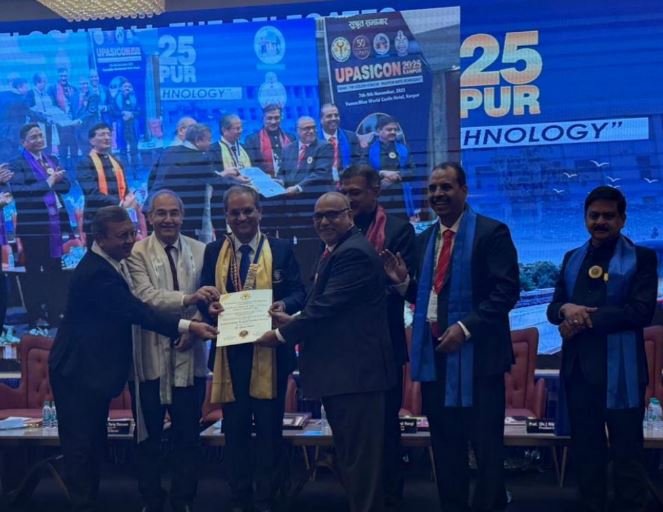
Prof. Afzal Anees being honoured with Eminent Senior Surgical Teacher Award

Aligarh:

Prof. Afzal Anees, Department of Surgery, Jawaharlal Nehru Medical College, Aligarh Muslim University, has been honoured with the “Eminent Senior Surgical Teacher Award” at the Uttar Pradesh Chapter of ASICON, held on November 7. The award recognises his outstanding contribution to surgical education, mentorship and academic excellence.

A distinguished surgeon and respected academician, Prof. Anees has been a guiding force in the Department of Surgery for several decades, shaping the careers of numerous surgical residents and medical students. His leadership, clinical expertise and unwavering commitment to patient care have earned him wide respect across the medical fraternity.

Earlier in May 2025, Prof. Anees was elected as a Fellow of the Royal College of Physicians and Surgeons (FRCS), Glasgow, which is an honour reserved for surgeons who have demonstrated exemplary professional achievement and contributed significantly to the advancement of surgical practice.

source: http://www.radiancenews.com / Radiance News / Home> Pride of the Nation> Awards / by Radiance News Bureau / November 18th, 2025