NEW DELHI :
Data shows West Bengal has the second-highest number of registered properties, while Kerala, Maharashtra, Telangana and Karnataka also recorded large numbers
New Delhi :
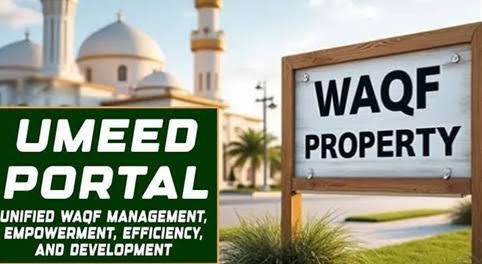
The UMEED portal had recorded details of 7.99 lakh Waqf properties across India by August 7, with Uttar Pradesh accounting for the highest number at 1.52 lakh, according to data from the Ministry of Minority Affairs.
West Bengal ranked second with 1.31 lakh Waqf properties registered on the portal, followed by Kerala with 79,929 properties. Maharashtra had 71,947 properties, Telangana 63,982 and Karnataka 58,846.
The figures are part of the government’s effort to digitise Waqf property records and bring information relating to such properties onto a centralised platform.
According to documents from the Ministry of Minority Affairs, the process of entering details of Waqf properties on the portal began last year. The UMEED portal-2025 is intended to bring information about Waqf properties onto a single platform and improve transparency in their management.
Delhi Waqf Board had completed the entry of details of 3,233 Waqf properties by August 7.
At the other end of the list, the Union Territory of Dadra and Nagar Haveli and Daman and Diu had recorded details of two Waqf properties by the same date.
The state-wise figures show wide differences in the number of Waqf properties recorded on the portal. Uttar Pradesh had the highest number, followed by West Bengal, Kerala, Maharashtra, Telangana and Karnataka.
The government data also contains details of Waqf properties that were returned to the mutawalli or the person who had dedicated the property as Waqf.
Maharashtra recorded the highest number, with 9,292 properties returned to the Waqif, or the person who had dedicated the property as Waqf.
Kerala recorded 4,418 such properties, while 3,198 Waqf properties were returned in Gujarat, according to the ministry’s documents.
The data on returned properties is separate from the total number of properties whose details have been entered on the UMEED portal.
Minority Affairs Minister Kiren Rijiju had earlier explained the purpose of the UMEED portal in a written reply in the Lok Sabha.
According to the information provided by the minister, the Central UMEED Portal-2025 was developed following changes made to the Waqf law and was launched on June 6, 2025.
The portal was designed to record details of Waqf properties, facilitate registration of new Waqfs and improve transparency in the management and monitoring of Waqf properties.
Under the new provisions, details of all existing Waqf properties registered before the provisions came into force are required to be entered on the portal.
The government documents also state that technical problems were found in the portal during the initial phase of registration.
source: http://www.clarionindia.net / Clarion India / Home> Editor’s Pick> India / by Team Clarion / August 16th, 2026