All posts by mpositiveone@gmail.com

JIH Karnataka, Rifah Chamber of Commerce Host Workshop for Female Entrepreneurs and Business Starters

Bengaluru, KARNATAKA :
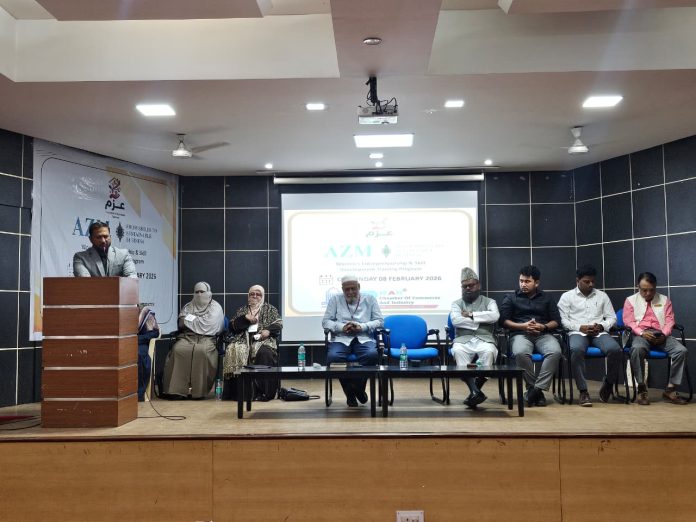
When Haram Appears Dominant, There Is a Need to Establish Halal – Ali Shareef

Bengaluru:

Emphasising the importance of halal and ethical trade for the economic empowerment of the Muslim community, Mr. Ali Shareef, General Secretary of Lifeline Foundation, stated that mosques should be developed as centres for economic guidance. Where this is not feasible, local schools should be utilised to educate people about the principles of economic development. He stressed that businesses can be initiated even with small capital, and institutions like Jamaat-e-Islami Hind, Lifeline Foundation, and others are actively guiding the community in this direction.

Mr. Ali Shareef was addressing a programme organised for Muslim women engaged in small-scale businesses at the Agriculture Institute of Technology, Bengaluru. The programme was jointly organised by Jamaat-e-Islami Hind, Karnataka, and Rifah Chamber of Commerce, Karnataka, under the theme of community economic development.

Speaking on the occasion, Ms. Fakhra Atiq, Assistant Secretary Markaz JIH and MD Saheliyan, highlighted the importance of business planning and sustainability. She emphasised that proper planning is essential for long-term economic growth and stability and encouraged Muslim women to utilise their skills while remaining mindful of ethical and social boundaries.

Mr. Riyaz Ahmed Kopal, Director of MEWA, introduced various central and state government schemes, urging participants to focus particularly on schemes related to medical services, education, MSMEs, and agriculture. He pointed out that many government schemes fail to reach beneficiaries due to lack of awareness and information.

Delivering the keynote address, Er. Syed Mumtaz Mansoori, President of Rifah Chamber of Commerce, Karnataka, reflected on the responsibilities of women in the light of the Qur’an and Hadith. He cited examples of courageous Muslim businesswomen from early Islamic history, including Hazrat Asma bint Makhzuma, who was engaged in the perfume trade, and highlighted the role of Ansari women who worked in agriculture and supervised date palm cultivation. He also elaborated on various dimensions of trade and commerce.

During the programme, Naheeda, Tayyab Nourishers, Madiha Sheerin, Chocko Turf, Pratibha, and Energy Bar shared their entrepreneurial experiences. Mr. Afnan Hasan, CEO of Hamd Foods and Founder of Pizza Valley, spoke on effective marketing strategies for small businesses.

In his concluding address, Mr. Muhammad Yusuf Kanni, Secretary of Jamaat-e-Islami Hind, Karnataka, remarked that the economic condition of Muslims in the country can be gauged from the fact that many Muslim women are compelled to conceal their identity and work in others’ homes. He explained that the title of the programme, “Azm” (Resolve), symbolises firm determination, strong intent, and perseverance. He emphasised that commitment, planning, and consistent effort are essential for economic empowerment.

Highlighting the initiatives of Jamaat-e-Islami Hind, Karnataka, he mentioned the establishment of Rifah Chamber of Commerce, engagement with traders on a large scale, formation of facilitation societies, efforts toward microfinance initiatives, guidance for small businesses, and a focused approach toward agricultural development. He concluded by stating that sustainable progress is possible only through patience, perseverance, piety, and righteousness.

The programme commenced with a motivational address by Mr. Rafiq Ahmed, National Advisory Member of Rifah Chamber of Commerce. Ms. Tasneem Farzana, Assistant Secretary (Halqa), delivered the opening remarks and explained the objective of the programme, stating that it was named “Azm” to reflect the resolve to support families through halal and ethical trade while seeking the pleasure of Allah and success in the Hereafter.

The responsibilities of the convener were carried out by Ms. Arshiya Fatima Tanzil, while the vote of thanks was presented by Ms. Sameena Bano, General Secretary.

source: http://www.radiancenews.com / Radiance News / Home> Entrepreneurship > Latest News / by Radiance News Bureau / February 10th, 2026
On World Unani Medicine Day, AIUTC-Haryana Remembers Haryana Hakims’ Services

HARYANA :

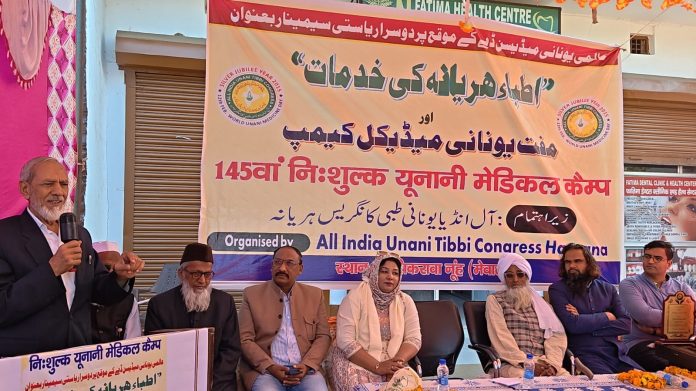
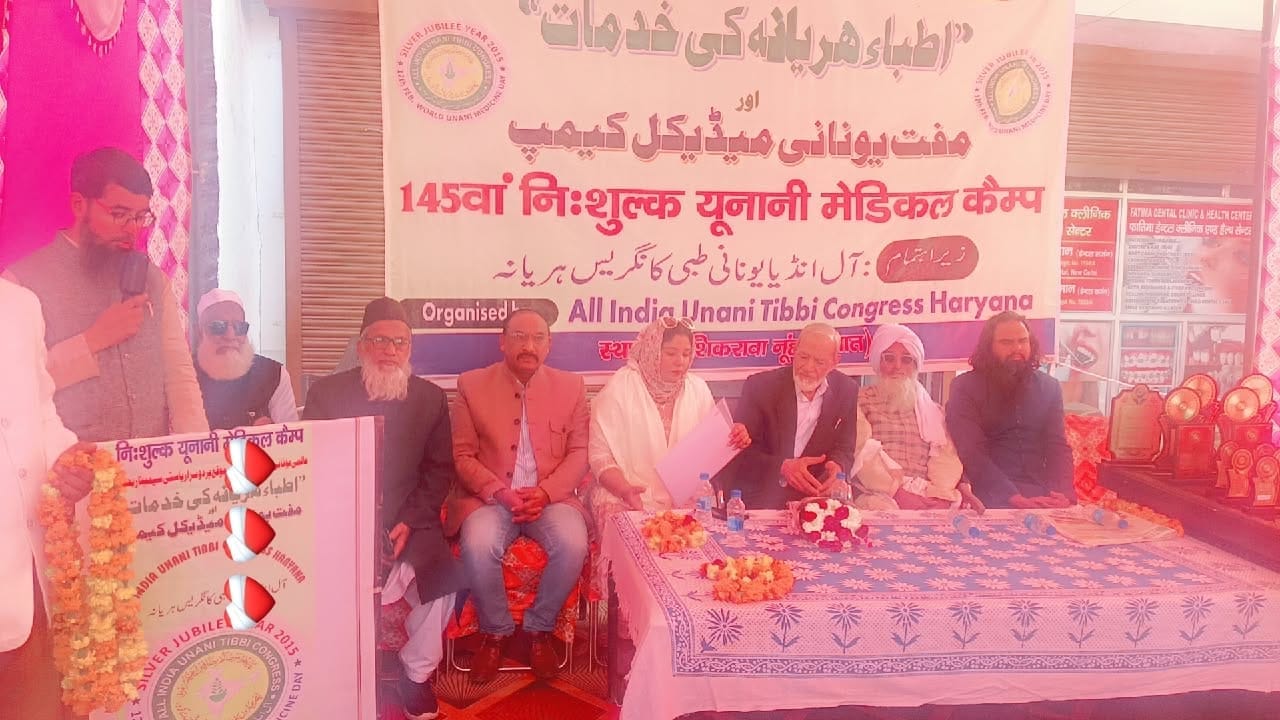
On the occasion of World Unani Medicine Day, the All India Unani Tibbi Congress (Haryana) [AIUTC-Haryana] organised its second state-level seminar along with the 145th free Unani medical camp at Fatima Health Care, village Shikrawa, Nuh. The main theme of the seminar was “Atibba-e-Haryana ki Khidmaat” (The Contributions of Unani Physicians of Haryana).

A total of 252 patients were examined at the free medical camp and provided with free Unani medicines. The chief guest of the programme was Dr. Syed Ahmed Khan, General Secretary of the All India Unani Tibbi Congress. He stated that Unani Medicine Day is observed to mark the birth anniversary of Masih-ul-Mulk Hakim Ajmal Khan. He noted that since 2011 the Tibbi Congress, and since 2016 the Central Government (CCRUM), have been officially observing this day. He credited Hakim Ajmal Khan with organising and institutionalising Unani medicine in India.

Maulana Siddique Sanabli, President of the Urdu Teachers Association; Advocate Shahjabeen Qazi, social worker; and Tehseen Ali Asarvi attended as distinguished guests.

Advocate Shahjabeen Qazi highlighted that a key strength of Unani medicine is its holistic approach, as physicians prescribe treatment according to an individual’s temperament (mizaj). Speakers at the event said that the land of Nuh (Mewat) has long been a living example of Unani healing. Tehseen Ali Asarvi remarked that when expensive treatments were beyond the reach of common people, Unani medicine offered an affordable and effective alternative.

On this occasion, veteran and renowned Hakims of Haryana were honoured for their services. The Lifetime Achievement Award for Unani medical service was presented to Hakim Maulana Mohammad Ilyas. Posthumous tribute awards were conferred upon Hakim Maulana Abdul Shakoor (Shikrawa), Hakim Ajmal Khan (Shikrawa), Hakim Maulana Habibullah (Sakras), and Hakim Maulana Abdul Sattar (Sakras).

Dr. Muhiuddin (former District Ayurvedic Officer, Palwal) and Dr. Qamaruddin Zakir (former District Ayurvedic Officer, Nuh) were honoured with the Khidmat-e-Tibb-e-Unani Management Award. Patron of the organisation Dr. Rafiq Azad, Dr. Abdul Salam Jalalpur, Dr. Abdul Salam Shikrawa, Dr. Mohammad Arshad Ghayas, and Dr. Aslam Ali received the Khidmat-e-Tibb-e-Unani Award. In the pharmacy category, Hakim Mubeen Ahmed, Hakim Zafar Ahmed, Hakim Akram Ali, and Hakim Nadeem Ahmed were presented with the Unani Pharmacy Award.

Dr. Qamaruddin Zakir, President of AIUTC-Haryana, said that the late Hakim Abdul Shakoor had established Mewat’s first Unani institution at Darul Uloom Shikrawa, where nearly 20 students were trained in religious and Unani medical education. Expressing his happiness, he stated that due to the organisation’s efforts, the Haryana government has resumed construction of the Unani Medical College and Hospital in village Akera, which is expected to be completed within a year. He thanked the government for this initiative.

The programme began with the recitation of the Holy Qur’an by Hakim Akram Ali. The event was conducted by Dr. Mohammad Arshad Ghayas (National Secretary). Among those present were Maulana Siddique Sanabli, Advocate Shahjabeen Qazi, Dr. Lokesh, Master Mohammad Saad, Master Sher Mohammad, Dr. Ataurrahman, Dr. Ziaurrahman, Hakim Abid, and several other dignitaries.

source: http://www.radiancenews.com / Radiance News / Home> Healthcare> Latest News / by Radiance News Bureau / February 09th, 2026

A Muslim man saved Mukesh from goons as onlookers looked away

DELHI :

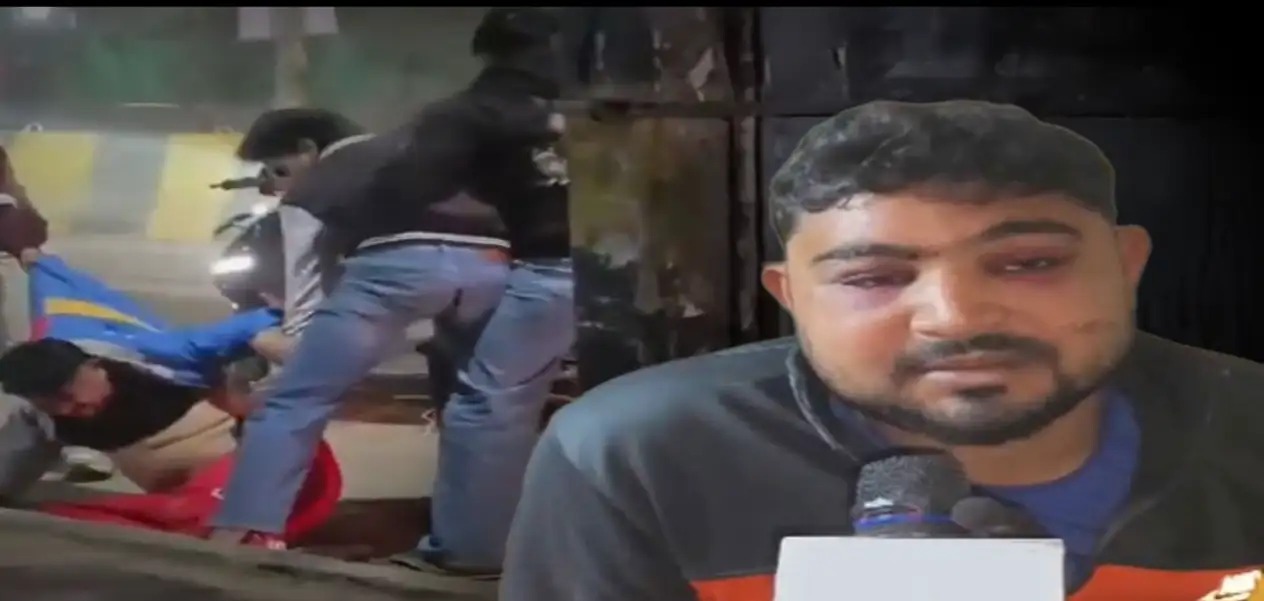
Mukesh Kumar with a black eye

This is the story of 26-year-old transport businessman Mukesh Kumar, who was brutally assaulted for standing upto goons who were harrassing women in a Delhi area and the lone man in a crowd of onlookers – an unidentified Muslim – who saved him from nearly being killed while the people around watched this roadside fight silently.

The incident happened on February 3 at around 5:00 AM. Mukesh Kumar, who was returning from his cousin’s wedding in Sangam Vihar, stopped at a tea stall in the Mehrauli area. In the early hours the streets were relatively quiet, but then he noticed three women standing nearby, being subjected to lewd and offensive remarks and obscene gestures by four young men.

Passersby were around, shops were opening, but most simply watched and did not intervene as per the video of the brawl which has surfaced on social media recently, Mukesh couldn’t bear the scene. He confronted the young men and asked them to stop harassing the women.

The goons resented being challenged. In an instant, all four of them attacked Mukesh. One of them picked up a stone and struck him on the head, while another attacked him with a stick.

Mukesh was knocked to the ground and brutally beaten with kicks and punches. Within moments, Mukesh was seriously injured and lost consciousness.

Many people were present, but most of them held back due to fear, confusion, or maybe even indifference. None came forward. It was at this moment that a man—whom Mukesh still respectfully refers to as “Mulla Ji“—stepped forward from the crowd. From his skull cap and flowing beard it was clear that he was a Muslim

Without regard for his own safety, he stood in front of the attackers and prevented them from further beating Mukesh. He shielded him with his body, stopped the attackers, and somehow managed to help Mukesh to a safe place.

When Mukesh regained consciousness and learned what had happened, he became emotional. He said, “If that man hadn’t helped me at that time, I probably wouldn’t be alive today. He saved my life. Humanity is still alive.”

A video of the entire incident went viral on social media, clearly showing the attack, the crowd’s reaction, and the role of the courageous man who intervened. After the video surfaced, the matter gained widespread attention. The police were informed, and upon arriving at the scene, they took Mukesh to a local hospital and then, due to his serious condition, to the AIIMS Trauma Centre.

After treatment, his condition improved, and he was later discharged from the hospital.

Based on Mukesh’s statement, the complaints of the victimised women, and the evidence collected from the scene, the police registered an FIR. All four accused have been arrested. According to police officials, the case is being investigated with utmost seriousness. It is also noteworthy that the women who were being harassed showed courage by calling the police and summoning help in time, which allowed Mukesh to be taken to the hospital quickly.

Following the incident, a lively discussion began among the people of the area. Residents and shopkeepers wholeheartedly praised the Muslim man who stepped forward and saved a life. One shopkeeper said, “In today’s world, when people are caught up in their own problems and are afraid to help others, this man showed what it truly means to be human”.

source: http://www.awazthevoice.in / Awaz, The Voice / Home> Stories / by Onika Maheshwari, New Delhi / February 09th, 2026

Mystery still shrouds ‘Saath Kabra’

Vijayapura, KARNATAKA :

This haunting historical site in Vijayapura deserves better conservation efforts from Archaeological Survey of India as well as deeper research from historians to understand the legends swirling around the monument.

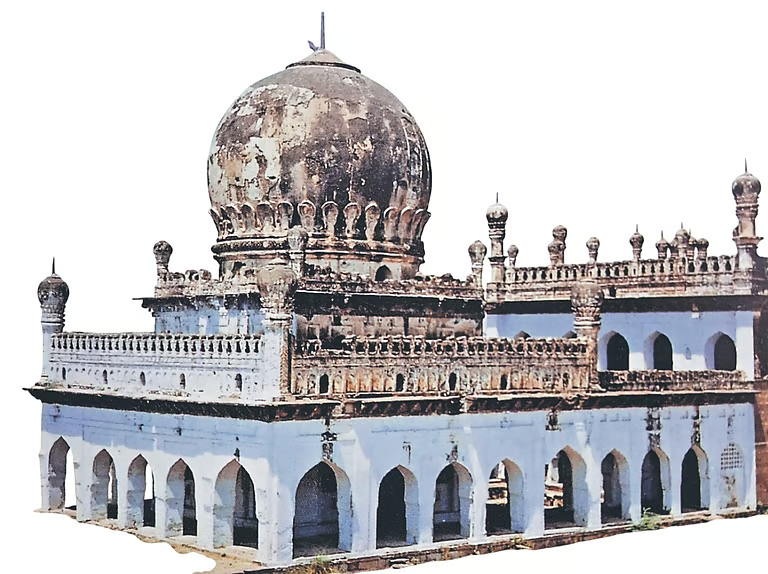
Saath Kabra, the cluster of 63 tombs, in Vijayapura (Photo | Express)

Vijayapura :

Far from being just another tourist destination, ‘Saath Kabra’ in Vijayapura stands out as one of the most haunting historical sites in the region. Often described as a silent witness to a tragic past, ‘Saath Kabra’ is a cluster of 63 tombs arranged on a raised black stone platform, that has generated legends, scholarly debate and enduring curiosity.

The most widespread legend surrounding ‘Saath Kabra’ is linked to the period of Ali Adil Shah II of the Bijapur Sultanate, who is also credited with commissioning the unfinished ‘Bara Kaman’ monument. During his reign, the Bijapur Empire faced a serious challenge from the Maratha leader Chhatrapati Shivaji. To counter this threat, Ali Adil Shah appointed his powerful general Afzal Khan to confront Shivaji.

Afzal Khan, originally from Afghanistan, was known as a formidable warrior. Historical narratives also describe him as deeply superstitious, placing great faith in astrology and spiritual predictions. In 1659, before leaving to face Shivaji, Afzal Khan is believed to have consulted a Sufi Pir, who foretold that he would not return from the campaign. According to local legend, this prophecy deeply disturbed him.

Folklore claims that Afzal Khan, fearing defeat and dishonour, killed more than 60 of his wives by pushing them into a well and later constructed tombs at the site. The alleged motive was to prevent them from remarrying or falling into the hands of enemies and facing humiliation or violence in the event of his death. This story has long been used to explain the existence of the mass graves at ‘Saath Kabra.’

The cenotaph of Afzal Khan

Afzal Khan later travelled to Pratapgarh in the present-day Maharashtra to confront Shivaji. Instead of a direct battlefield encounter, negotiations were arranged. Historical records state that Afzal Khan planned to assassinate Shivaji during a peace meeting. Shivaji, aware of the plot, took defensive measures by wearing armour and concealing iron tiger claws on his fingers. During a traditional embrace, Afzal Khan attempted to overpower Shivaji, but failed. Shivaji retaliated and killed Afzal Khan. Afzal Khan’s body was subsequently buried at the foothills of Pratapgarh Fort.

There is no evidence to support the claim that Afzal Khan murdered his wives or that ‘Saath Kabra’ is their burial site. Vijayapura-based historians Abdul Gani Imaratwale and Krishna Kolhara Kulkarni dismissed the popular narrative as baseless, stating that no credible historical text mentions such an act by Afzal Khan. They emphasised that, in the absence of documentary evidence, the story must be treated as legend rather than history, and that research is required to determine the true origins of the graves.

Dr Imaratwale likes to call the 60 women as ‘half-wives’ as though they were not legally wedded wives, however they enjoyed almost the same privileges that of wives. He said that Khan had four legally wedded wives.

Dr Imaratwale says that such women were accorded considerable respect and were not buried in public graveyards. Separate land was often chosen for their burial, which could explain the clustered graves at ‘Saath Kabra.’

Dr Imaratwale says that it is not credible that a general, who commanded an army of around 40,000 soldiers, would be so fearful of his enemy that he would drown his women one by one in an open well.

Dr Imaratwale suggests alternative possibilities. He said the deaths could have occurred due to mass poisoning or as a result of an accident, such as the collapse of a large structure where the women may have been residing. However, he acknowledged that no information is available to establish the exact cause.

The historians say there is no clear record to confirm whether the women died while Afzal Khan was in Bijapur or during his military campaign. They believe it is more likely that their deaths occurred when Afzal Khan was fighting in Maharashtra. Afzal Khan himself died there, and his body was never brought back to Bijapur. As a result, his cenotaph exists in Vijayapura, built in accordance with his wish to be buried there, a wish that ultimately remained unfulfilled.

Tourists largely confine their visits to prominent landmarks such as the Gol Gumbaz, Bara Kaman and Ibrahim Roza while dozens of other monuments remain overlooked. Located in Navarasapur on the outskirts of the city, ‘Saath Kabra’ is difficult to access. The site includes 63 black stone tombs, an ancient well now filled with silt. Many tombstones are broken or missing, and the entire complex is in a dilapidated state. Poor road connectivity, lack of signboards and absence of maintenance have further contributed to its neglect, with little effort made by the tourism department or the Archaeological Survey of India to promote or preserve the site.

Owing to its eerie atmosphere and disturbing legends, local residents often avoid the monument. Whether it represents a misunderstood burial site, a tragic episode lost to time, or folklore layered over fragments of history, ‘Saath Kabra’remains one of Vijayapura’s most enigmatic monuments, underscoring the urgent need for serious research, preservation and historical clarity.

source: http://www.newindianexpress.com / The New Indian Express / Home> Bengaluru / by Firoz Rozindar / February 08th, 2026


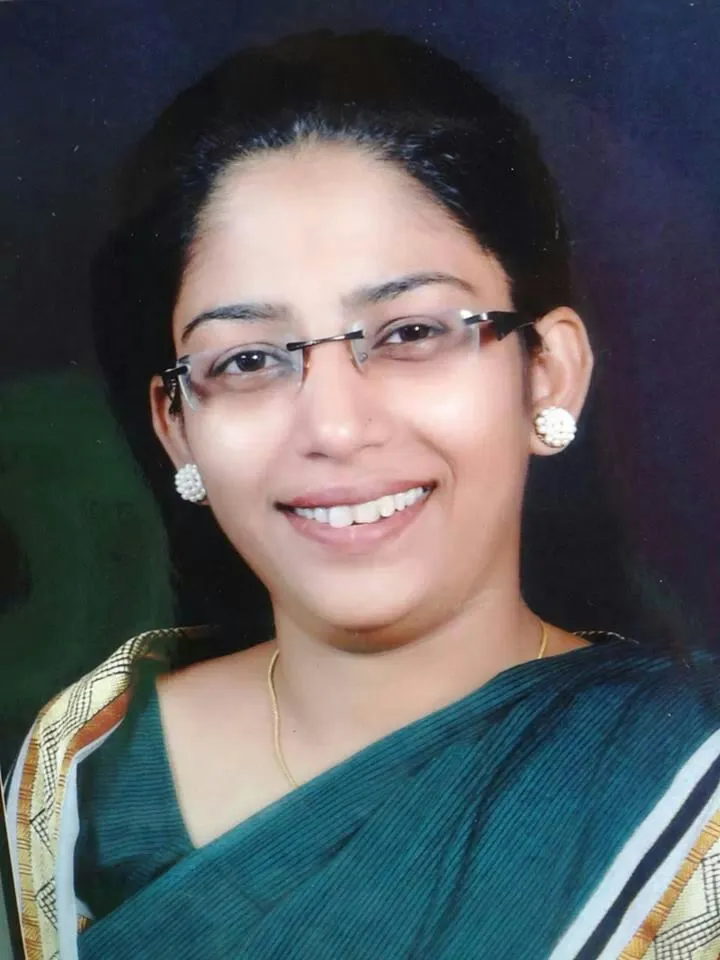
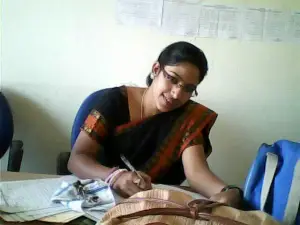
Meet Prof. Asma Shaikh Pune-based Politician, Professor, Women empowerer who shares her success story with Hello Mumbai News.

Pune, MAHARASHTRA :

Female entrepreneurship is vital for our future. Collectively we can make a change by closing the gap between men and women in the workforce.


Entrepreneurs are those adventurous, daredevils who drive deep into the pressing problems of society and try to find solutions to them, not by leaving the responsibilities in the reins of the government or business, but by trying to change systems as a whole and persuading societies to take new initiatives

These bold and fearlessly ambitious entrepreneurs are shaping the future of Maharashtra, serving as mentors to millions of women and youths.

In our Social Entrepreneur series today we are introducing you a very dynamic and popular Entrepreneur of Pune who is known  for her remarkable and outstanding performance in the field of Social, Education and Political circle who always believes in Women Empowerment. Yes we are talking about Pune based Social Entrepreneur Asma Shaikh, she share her Entrepreneurial journey with Hello Mumbainews.com Correspondent Priyanka Yadav 

Name : Asma Shaikh

Famous as : Social Entrepreneur

Area Of Work : Pune

Achievements : Active Leader in B.J.P Ladies Wing

Member of the Maharashtra State Commission for Protection of Child Rights, Ministry of Women and Child Development. Government Of Maharashtra.

Asma Shaikh has completed her studies at S.P. College, Pune University and became a professor in the Psychology department. She is a inspiring and confident lady who has achieved so much in so little time. Today she is a proud politician well respected in her native ward and beyond. She always wanted to implement international procedures of women’s education, for the attainment of equal status of women in all aspects of social political and economic development within the community and the nation at large. To organize and establish women’s groups which individual and organizations committed to feminist goals can share the facilities and information on women issue or matters. To ensure the implementation of regulations geared towards the welfare and enhancement of the status of women. To educate the public on the rights of women and the means of enforcing such rights for the achievement of equality, development and peace. To co-operate with National and International NGO’s and agencies by networking and co-aligning for the achievement of specific goals for the welfare and development of women. She held various post In B.J.P. Some of her work in the field of women empowerment Starting “Mahila Bachat Gat”. Undertook De-addiction program . Conducted free Medical camps.

Held seminars guiding women about careers on cottage industries they can start and run with government help. Also helped women by informing them about various government schemes for women empowerment which would benefit them. Currently she given a free of cost training to girls and women for basic and advance stitching course, Fashion designing, fur toys and soft toys, leather purse and cloth bags and paper bags. Successfully trained more than 3000 women beneficiaries till now through her Ngo Evergreen Education Society .she have a lots of success stories about beneficiary women’s She has established a help center where people can take benefits of various Government schemes and scholarship. She has received various awards. Like GEM OF SOCIETY Award, Vision For Victory award for politics. etc.

As a member of the Maharashtra State Commission for Protection of Child Rights, Ministry of Women and Child Development. Government Of Maharashtra.
She visits many child care organizations, schools, observation cells, Madrasas all over Maharashtra for measuring safety and security under J.J. Act. and guiding them. She arranges national conferences and workshops for the improvement of Minority education, and she also takes workshops with the Maharashtra Police Department spreading awareness about sexual harassment of children teaching the kids about the good touch and bad touch. She has worked with many NGOs in Maharashtra. She is an accurate and powerful woman who we all look up to. Here’s to more empowering women like her.

source: http://www.hellomumbainews.com / Hello Mumbai News / Home> Hello Womeniya / by Aleem Shaikh / January 24th, 2022

“Proud Of Equal Opportunity”: Women Pilots To NDTV On R-Day Parade

INDIA :

The 75th Republic Day Parade in Delhi will witness an all-women Tri-Service contingent from the Army, Navy, and Air Force marching down the Kartavya Path for the first time.

source : youtube.com/ The Republic Day Parade this year will feature fifteen women pilots of the Air Force /

New Delhi:

The 75th Republic Day Parade at the Kartavya Path in Delhi on January 26 is going to be a women-centric event. The parade will witness an all-women Tri-Service contingent from the Indian Army, Indian Navy, and India Air Force (IAF) marching down the Kartavya Path for the first time. 

The parade, which will have French President Emmanuel Macron as the Chief Guest, will also feature fifteen women pilots of the IAF who will operate various platforms during the aerial flypast. 

Flight Lieutenant Ananya Sharma and Flying Officer Asma Sheikh, who would be present on the IAF tableau, said they are “proud” that the women are getting an “equal opportunity”. 

Speaking to NDTV, the two Su-30 pilots said that the theme of the IAF tableau this year would be “Saksham, Sashakt, Atmanirbhar”, which translates to “Capable, Powerful and Self-Reliant”.

“The tableau’s rear portion would depict ‘saksham’ (capable) and feature C-295 transport aircraft, which was part of the Operation Kaveri and was conducted to evacuate Indians from war-torn Sudan in 2023,” Flight Lieutenant Ananya Sharma, whose father was a MiG-21 fighter pilot inthe IAF, told NDTV.

“The middle portion of the tableau would depict ‘sashakt’ (powerful) and show our expanding reach,” she added.

Flying Officer Asma Sheikh said that a total of 55 Agniveer Vayu women would be part of the IAF contingent and that women fighter pilots would also be part of the flypast. 

“We are proud that the women are getting an equal opportunity,” she told NDTV.

Squadron Leader Rashmi Thakur will lead the IAF’s marching contingent at the Republic Day parade. She will be flanked by three women supernumerary officers — Squadron Leader Sumita Yadav, Squadron Leader Pratiti Ahluwalia and Flight Lieutenant Kirti Rohil.

A total of 51 aircraft of the IAF including 29 fighter jets and 13 helicopters are expected to be part of the Republic Day fly-past.

The Republic Day Parade will also witness 100 women artists playing Indian musical instruments for the first time.

source: http://www.ndtv.com / NDTV / Home> News> India News / by Pushkar Tiwari / January 24th, 2024

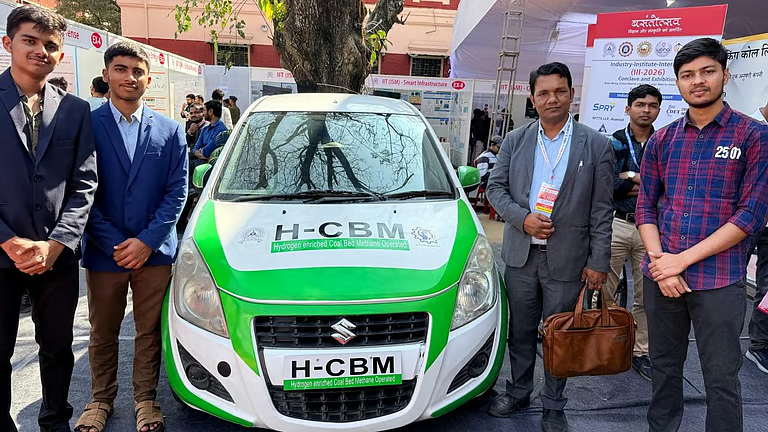
Jharkhand IIT-ISM students develop eco-friendly fuel by enriching coal bed methane with hydrogen

Ranchi, JHARKHAND :

Assistant Professor Ejaz Ahmed further informed that the carbon nanotubes produced during the separation of hydrogen from methane are a high-strength material.

Jharkhand IIT-ISM students develop eco-friendly fuel by enriching coal bed methane with hydrogen.(Photo | Special Arrangement)

Ranchi :

Second-year students of the Chemical Engineering department at IIT-ISM Dhanbad have developed a technology to convert greenhouse gases like coal bed methane into environmentally friendly fuel, which can be used directly in CNG cars.

The eco-friendly fuel has been named as H-CBM (Hydrogen Enriched Coal Bed Methane). Chemical engineering students Kailash Krishna, Nitin Gaur, and Devashish Das, under the guidance of Assistant Professor Ejaz Ahmed, have also developed a hydrogen-enriched coal bed methane-powered car. Professor Alok Das of Mechanical Engineering Department also helped them in research work.

Coal-bed methane gas is released during coal mining. It is a dangerous greenhouse gas, considered to be approximately 25 times more harmful than carbon dioxide.

Ahmed said they are using a waste product that previously polluted the environment and creating an environmentally friendly fuel that can be used in any CNG car without any modifications.

Coal bed methane contains sulphur and methane, he said. “It is purified to produce pure methane. Then, a portion of the methane is cracked, through which hydrogen and carbon nanotubes are obtained. The hydrogen-enriched coal bed methane, produced through this process, can be used directly in cars as a substitute for CNG,” said Ahmed.

He further informed that the carbon nanotubes produced during the separation of hydrogen from methane are a high-strength material. They are used in bulletproof jackets and the steel industry. Its market price is up Rs 500,000 per kilogram, he said. The associate professor said that since carbon nanotubes are produced alongside hydrogen, the cost of the hydrogen becomes virtually zero.

Ahmed informed that the release of coal bed methane significantly increases environmental pollution. However, capturing coalbed methane offers considerable benefits. “Capturing 1 kilogram of coalbed methane is equivalent to reducing pollution by the same amount as 25 kilograms of carbon dioxide, which is crucial for environmental protection,” said the professor. It will prove to be a game-changer in the field of green mining, he added.

Second-year student Devashish Das, who is also a part of the research team, explained that CNG cars emit less carbon dioxide than petrol and diesel vehicles, but the emissions are not completely eliminated.

“Coal bed methane gas, extracted from the coal mines of Dhanbad, is far more dangerous. Considering this, hydrogen fuel has been developed from CBM,” said Das. Because hydrogen has a higher calorific value than CNG, it also provides better fuel efficiency for vehicles, he added.

source: http://www.newindianexpress.com / The New Indian Express / Home> Nation / by Mukesh Ranjan / February 09th, 2026

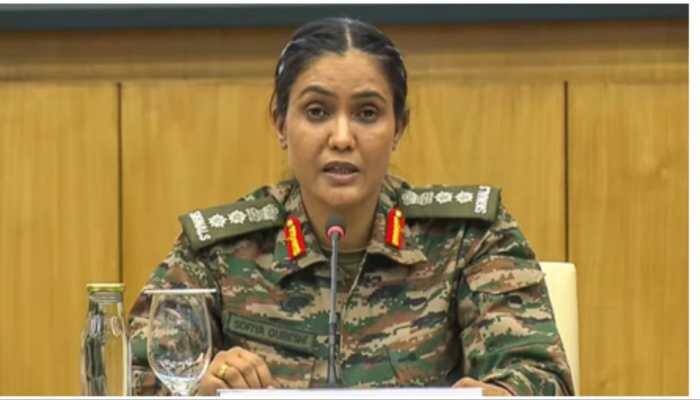
Col Sofiya Qureshi, who led Op Sindoor briefing, conferred with ‘Vishisht Seva Medal’

Vadodara, GUJARAT :

Colonel Sofiya played a key role in press briefing during Operation Sindoor in 2025.

Image Credit: IANS

Colonel Sofiya Qureshi, who emerged as a prominent representative of India on the global stage during Operation Sindoor in 2025 against Pakistan-based terrorists, has been selected for the Vishisht Seva Medal in the 2026 Republic Day honours.

The award, given for “distinguished service of a high order”, which adds one more milestone for her. 

On the eve of the 77th Republic Day, President Droupadi Murmu sanctioned gallantry awards for 70 personnel of the armed forces, including six honours awarded posthumously. In addition, she approved the conferment of 301 military decorations on members of the armed forces and other personnel.

These decorations comprise 30 Param Vishisht Seva Medals, four Uttam Yudh Seva Medals, 56 Ati Vishisht Seva Medals, nine Yudh Seva Medals, two Bars to Sena Medals (Distinguished), 43 Sena Medals (Distinguished), eight Nao Sena Medals (Distinguished), 14 Vayu Sena Medals (Distinguished), and 135 Vishisht Seva Medals.

Colonel Sofiya is recognised for her calm, composed demeanour and clear, measured communication, especially during press briefings where she served alongside Wing Commander Vyomika Singh of the Indian Air Force.

After Operation Sindoor, and following the initial statement by Foreign Secretary Vikram Misri, Colonel Qureshi and Wing Commander Vyomika Singh briefed the media on the manner in which the strikes were conducted. 

Colonel Sophia Qureshi was the first woman officer to lead an Army training contingent in a multinational military exercise. She commanded a 40-member Indian Army contingent at ‘Exercise Force 18’.

source: http://www.zeenews.india.com / Z News / Home> India / by Zee Media Bureau / January 25th, 2026

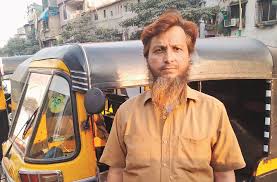
From Terror Suspect to Auto Driver: Faheem Ansari’s Long Fight for Dignity After Acquittal

Mumbai, MAHARASHTRA :

Mumbai :

Eighteen years after the 26/11 Mumbai terror attacks shook the nation, the wounds of that night remain open for many. Families who lost loved ones still carry grief, survivors still live with pain, and for some who were falsely accused, the suffering did not end with acquittal, it followed them home.

Faheem Ansari is one such person.

Once accused of giving a map to the attackers in the Mumbai terror case, Ansari today earns his living by driving an auto in Mumbra. The charges that once painted him as a traitor were later thrown out, yet the damage to his life, family, and reputation remains deep.

“I cannot forget the wounds caused by false accusations and long imprisonment,” Ansari told Clarion India. “The support my family gave me after my release has given me the desire to live again.”

After the arrest of Ajmal Amir Kasab, the lone gunman caught alive in the 26/11 attacks, investigators named two Indian citizens — Faheem Arshad Ansari and Mohammad Yousuf Ansari — alleging they had helped plan the assault. The claims were sweeping and serious, suggesting local support for a Pakistan-based Lashkar-e-Taiba plot.

But facts later told a different story.

Faheem Ansari and another accused, Sabahuddin, had already been jailed in connection with the 2007 CRPF camp attack in Kanpur. They were in custody in Kanpur at the time of the Mumbai attacks, making their alleged role impossible.

Despite this, Ansari spent more than ten years in prison before being cleared of the Mumbai terror charges. By the time of his release, life outside had changed beyond recognition.

Today, Ansari lives quietly with his wife in Mumbra. His daughter is married and settled. There are no grand plans — only the daily need to earn, eat, and survive with dignity. Driving a rickshaw is now his means of lawful livelihood.

“I forget everything when I work,” he said. “I only think about feeding my wife and living with self-respect.”

Even this simple work has challenges. Ansari has petitioned the Bombay High Court for a police clearance certificate, necessary to operate an Auto in areas beyond Mumbra. Without it, he cannot obtain the required permit from the Regional Transport Office, limiting his earnings.

“Until the police give me clearance, I cannot increase my earning,” he said. “I have no other option.” The High Court has concluded hearings and reserved its verdict.

The years behind bars broke more than his body. They shook his spirit and strained his family ties.

“There is no part of prison life that is free of suffering,” he said. “I lost hope. I even told my wife she should move on with her life.”

She refused. “She stood with me at every step,” Ansari said. “She gave me courage to wait until the end.” His parents and siblings were his quiet strength. “They never let me feel alone,” he said.

On November 26, 2008, ten alleged Pakistani terrorists entered Mumbai by sea and carried out coordinated attacks at Chhatrapati Shivaji Maharaj Terminus, the Taj Palace Hotel, Trident Hotel, Leopold Café, Chabad House, and Cama Hospital. The assault left 166 people dead, including foreign nationals, and injured more than 300. Sixteen Mumbai Police officers, including ATS chief Hemant Karkare, Ashok Kamte, and Vijay Salaskar, were killed. Kasab was captured alive by officer Tukaram Omble, who lost his life in the act.

No one disputes the horror of that night. But cases like Ansari’s raise uncomfortable questions about investigations and who bears the cost when the system fails.

Human rights groups note that poor Muslims are often the first to be arrested in terror cases, held for years, and quietly released when evidence fails — without apology, support, or repair for the lives broken by false charges.

Ansari does not speak in anger, only in tired honesty. “If I keep crying about what was done to us, it will hurt me again,” he said. “I just want to live.”

For him, justice now means something simple: the right to work, the right to move freely, and the right to be seen not as a past accusation, but as a man trying to rebuild a life stolen by mistakes he did not commit.

source: http://www.clarionindia.net / Clarion India / Home> Editor’s Pick> India / by Team Clarion / January 23rd, 2026

Proud Moment: Two MA Urdu Muslim Girl Students Clear UGC NET in First Attempt

Mumbai, MAHARASHTRA :

Shagufta Aqida Ahmed and Khan Umeira Irfan from Maharashtra College credit self-study, teachers’ support, mock tests, and steady effort for their success in the national-level examination

Mumbai :

Two Muslim girls from Maharashtra College have achieved a rare academic success by clearing the UGC NET examination in their very first attempt while still pursuing their MA Urdu second year. Their performance has drawn praise from teachers, classmates, and members of the Urdu academic circle.

Shagufta Aqida Ahmed Khan and Khan Umeira Irfan, both MA Urdu students, secured results that place them among the promising young scholars in higher education. Shagufta scored 234 marks out of 300 and qualified for Junior Research Fellowship, along with eligibility for Assistant Professor. Khan Umeira secured 202 marks out of 300 and qualified for Assistant Professor and PhD admission.

The achievement stands out as both students are still completing their postgraduate studies. Many candidates take years after their MA to clear this exam, yet these two students succeeded at an early stage through focused preparation.

Shagufta, a resident of Paydhoni in Mumbai, said her preparation was fully based on self-study. “I cleared this exam through self-study. Repeated reading of previous years’ question papers and regular revision were a key part of my preparation,” she said. She also acknowledged academic support at the college, adding, “Our teacher Dr Mohammad Azfar Khan, took mock tests from time to time, which helped a lot.”

She explained that online learning and books also played a role. “For Paper One and Paper Two, I used YouTube and good-quality books. In such exams, steady effort with full focus is very important. Proper use of time matters a lot. Positive thinking, self-belief, and regular study lead to success,” she said.

Khan Umeira, who lives near Mumbai’s Kurla Hilaal Pul, described her journey as demanding but meaningful. “Preparing for the UGC NET exam was not just an academic step for me. It tested my patience and consistency,” she said. She added that she also relied on self-study throughout the process.

“For Papers One and Two, I selected standard books and studied with a clear goal. I wrote down key points from each topic so that they could guide me when needed,” she explained. She said previous years’ question papers made the syllabus easier to manage, while mock tests helped her improve speed and reduce exam stress.

Speaking about the challenge of managing MA studies alongside NET preparation, she said, “Doing UGC NET preparation along with MA was truly difficult. On one side, there was the MA syllabus, assignments, and exams, and on the other side, the wide NET syllabus. Still, belief and hard work paid off.”

Khan Umeira also shared her plans. “I cleared the UGC NET exam in my first attempt. In the coming years, I want to continue teaching and also complete my PhD,” she said.

Teachers at Maharashtra College described the success as a proud moment for the institution and a sign of the growing academic presence of Muslim girls in higher education. Students from Urdu departments across Mumbai have also shared messages of support, calling the achievement a source of motivation.

At a time when many Muslim students face social and economic barriers, the success of Shagufta Aqida Ahmed and Khan Umeira Irfan shows how focused study, guidance from teachers, and personal effort can lead to strong results in national-level examinations. Their achievement contributes to the long tradition of Urdu scholarship and reflects the growing role of Indian Muslim women in academia.

source: http://www.clarionindia.net / Clarion India / Home> Editor’s Pick> India> Indian Muslim / by Team Clarion / February 08th, 2026