Category Archives: Business & Economy

Indian brothers beat Google to street view

 Bangalore : 

Who needs Google Street View !  Even as the global search major struggles with Indian authorities to get permissions to take images of Indian city streets, a small Mumbai-based mapping company has done all that Google had planned, and perhaps more, for the top 54 Indian cities.

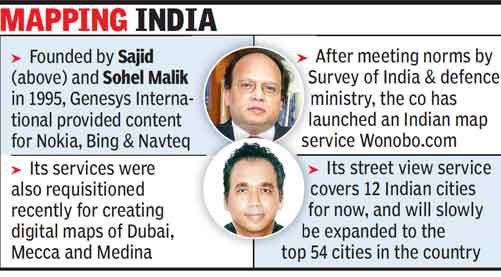
Genesys International , founded in 1995 by brothers Sohel and Sajid Malik, have captured numerous images of almost every street in these cities, and stitched the images together to create 360-degree panoramic views of the streets, almost exactly the way Google has done in many other parts of the world.

On Tuesday, the company launched the service under the brand Wonobo (wonobo.com). The site suffered from latency on Tuesday, and there were many complaints online about the slow download speed. But the company said the speed will improve in a day or so as they get everything in place.

So how come they were able to do something that Google has not been able to yet in India? Sajid Malik told TOI that one advantage Genesys had was in having worked with the government for many years for their mapping services. “For street view, the government, including the defence ministry and the Survey of India, threw a lot of regulations at us. We painstakingly fulfilled their requirements, including not taking pictures in sensitive areas,” he said.

The company has so far been in the services business, creating map content for others such as Navteq (provider of electronic navigable maps), Nokia and Bing, and was involved recently in creating digital maps of Dubai, Mecca and Medina.
MappingMPos22nov2013

Wonobo street view is being launched initially for 12 cities — Mumbai, Delhi, Bangalore, Chennai, Hyderabad, Ahmedabad, Surat, Jaipur, Costal Goa, Kolkata, Agra and Pune. The remaining will be launched over the following weeks.

Wonobo’s main street view service provides a satellite map and the street view on your screen. You can click on any part of the map and get the corresponding street view. You can look all around a point on a street. You can click or drag on the street view to go down a street.

There’s a search box to find locations. With the help of field staff, Wonobo has tagged some 10 million points of interest. That includes 4 million business locations. You can walk into some of these locations — like Novotel hotel in Mumbai — and look all around. Though the company is not charging Novotel now, these are potential revenue sources.

For many of the small businesses tagged, it’s their first web presence. “Any merchant can mention his suite of services, show real-time prices or available inventory, and showcase interiors. One of our revenue sources will be based on such hyper-local engagement,” Sajid said.

Random checks TOI did on Wonobo showed that some of the images are a little dated, some important roads have not been covered yet, some of the tagging could have been better done. The company said their effort is to ensure that images are no more than six months old.

The Wonobo platform also enables anybody to create pictorial storylines and guides. You could create a ‘Sachin Tendulkar guide’ that shows everything from the nursing home he was born in to the house he lives in now.

source: http://www.articles.timesofindia.indiatimes.com / The Times of India / Home> Tech> Internet> Google Street View / by  Sujit John, TNN / October 16th, 2013
Don’t correlate Brazil coffee cultivation to India’s: Jawaid Akhtar

Interview with Chairman, Coffee Board

Jawaid Akhtar
Jawaid Akhtar

After coffee producers in Brazil  and Vietnam used mechanisation and genetically improved plants to increase crop yields, Indian coffee growers are trying to replicate their success. However, many allege the Indian government has not provided adequate incentives to increase crop yields or protect these from diseases such as the white stem borer. On the sidelines of the UPASI-KPA Coffee conference  in Bangalore,  Jawaid Akhtar , chairman of the Coffee Board , spoke to Antonita Madonna on these allegations and on the focus of the commerce ministry. Edited excerpts:

Growers allege, unlike their counterparts in Brazil, they have not been provided adequate incentives. How would the Coffee Board address that?

Brazil and India cannot be compared so easily. The methods used by them cannot be correlated with India’s, as the plantations in the two are very different. In Brazil, the higher crop yield is not as much the result of incentivisation as of the use of new varieties, new agronomical practices, etc. Production in India is increasing, but at a very slow pace due to several constraints. The drastic difference between the progress in India and in Vietnam and Brazil is because the soil is less conducive here. Vietnam and Brazil have volcanic soil. In India, coffee is not grown under direct sun, but under the cover of trees. So, productivity suffers, but quality increases.

Second, coffee growers have to show more dynamism. They have to put in more effort and use better inputs. What it requires is more water, more use of agrochemicals, etc. The Board is regularly working on research. We also disseminate the findings of these studies among growers. It is an ongoing programme.

What research and development is the Board doing?

We are working on finding new varieties that are high-yielding, pest- and drought-resistant.

Some three-four varieties are in the pipeline on the arabica side, as problems, including the white stem borer, are more prevalent in arabica. We had also introduced a variety of arabica coffee four years before. Robusta, on the other hand, is yielding in some places even after 80 years.

To replicate the success in Brazil here, growers have been seeking the Board’s help in research and tools. Is the Board working on that, too?

The mechanisation in Brazil cannot be correlated with that in India because in Brazil, there is no shade. Also, unlike the undulating terrain of the Western Ghats in India, the land in Brazil is plain.

The 20-ft high harvester they use in Brazil cannot be used in India, as coffee does not grow in the open here. Our plantations are different.

How is the Coffee Board encouraging more acreage for coffee?

We have seen production rising in non-traditional areas, but in traditional areas (Kerala, Karnataka and Tamil Nadu), it is not. Now, we have identified more areas where coffee production can be increased and are trying to include that in the 12th Plan.

With a depreciating rupee, is the board planning to increase exports?

There are schemes for exports already. But you can export more only if there is more production. We export 70 per cent of whatever is produced. But we offer incentives for areas to which much coffee doesn’t find its way, despite these being good markets for coffee. For instance, in the 11th Plan, we had five countries—the US, Canada, Australia, New Zealand and Japan. Now, in the next Plan, we will include other markets such as South Korea and two other countries. We are in discussions with other countries as well.

We are also trying to promote brand-building. So, we’ll give incentives to export value-added coffee in retail packs. The value-add maybe anything from roasting green beans or making instant coffee. Our instant coffee market is very robust. Almost all the value-added coffee that goes from India is instant coffee. Now, we’re the second-largest producer of instant coffee, after Brazil.

Any plan to introduce the Coffee Board’s own brands?

No, there is no such plan. All these plans were shelved 20 years ago and there are no plans to revive those. Now, it is a free market and we encourage private businesses. That is why we have introduced so many programmes to train manpower and tasters so that private people can run businesses.

Is the Coffee Board working on increasing awareness or building brand equity for Indian coffee?

We are, of course, working on positioning Indian coffee better in the international market. We participate in international trade fairs, advertise, get media coverage, arrange Indian coffee tasting sessions in international locations, invite roasters, make them taste Indian coffee, etc. All these efforts are already reaping rewards. Our average price of robusta is about 40 per cent higher than the international average. There is a very large international market for this premium Indian coffee.

source: http://www.business-standard.com / Business Standard / Home> Companies> Q & A / by Antonita Madonna / Bangalore – November 14th, 2013

I am… Basheer; Gold, silver polisher

Basheer / The Hindu
Basheer / The Hindu

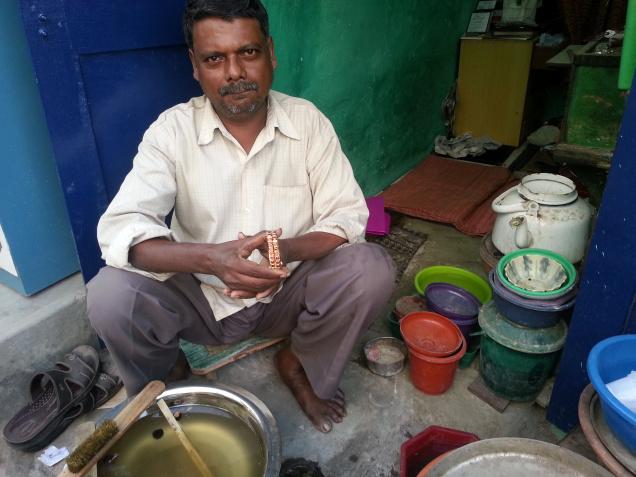
It’s only four in the evening, but Basheer has already decided to go home — he has no work that day. “The festive season just got over, hasn’t it? People will come to polish bangles and chains only after a few days,” he says, softly. Seated in front of a steel basin, with four boondhi kottais (soap berries) and four small brushes floating in the water, Basheer talks of the gold polishing business that he has been a part of for the last 30 years.

A Class 8 dropout, Basheer was initially a two-wheeler mechanic, before he trained for five years and became a skilled silver and gold polisher. After working out of several locations in Mylapore, Basheer now runs the ‘K. Noor Mohamed Gilt Shop’. “Earlier, I had my own shop. This one,” he says, pointing to the small, rectangular shop, with its blue shutters and green walls, “belongs to my cousin. He asked me to run it.” I strain to hear his voice, which gets drowned in the street noises of Mathala Narayanan Street; it’s only an old, narrow thoroughfare, but vehicle sounds and arguing neighbours make us raise our voices.

Our loud voices attract attention. One gentleman enquires why I’m asking Basheer “all these questions”; another offers to answer on his behalf and says, “He lives in Kunrathur.” Basheer explains that he moved to the ECR approximately 30 years ago. “Land was cheaper there, but now, it sells for crores!” Every morning, for the last three decades, Basheer has been taking two buses to reach Mylapore. “It’s faster to get here now, even though there’s heavy traffic after Tiruvanmiyur. In those days, there were hardly any buses, you see!” he smiles. The return journey is equally long, and he typically gets home for a late dinner around 10 p.m.

The day is spent in polishing silver and gold. Job orders range from small items — bangles and chains — to the temple kavacham or crown polishing. “Approximately 15 years ago, I polished silver items for the Kapaleeswara temple. Many of my customers are from Chennai, but some come from faraway places too.” Basheer, very modestly, says he’s an expert at polishing temple (dance) jewellery. “Dance jewellery is made in Nagercoil, and it’s difficult to clean and polish, as it has a lot of stones,” he says, showing me a pair of red-stone bangles that he has freshly gilded for a customer. It’s hard to tell it’s only ‘covering’.

To gold polish jewellery, Basheer first cleans it well. “I use soap berries bought from the naatu marundhu kadai; they foam naturally,” he says, pointing to the soapy water in the basin. Next, Basheer readies the ‘gold bath’, by dissolving a tiny amount of gold in acid, and boiling the resulting fine dust in water. This is then used to coat the article, by electrolysis. “After plating, the chain or bangle is dried on a bed of sawdust. It will then shine like gold.” (Silver plating is somewhat similar, except, it is buffed in the end).

Gold polishing costs around Rs. 250, a price that does not make it really profitable. “Gold prices have increased, but customers are not willing to pay more,” Basheer says. But he also rationalises their reluctance — gilt jewellery itself sometimes only costs Rs. 250, and the gold finish lasts for just a few months. And yet, Basheer seems happy with his lot; he talks of his three children — all graduates — and his visits to Nagore, with his family, once every two years. And when an old woman comes to his shop seeking alms, he springs up from his low stool, and fetches her a few coins…

(A weekly column on men and women who make Chennai what it is)

source: http://www.thehindu.com / The Hindu / Home> Features> MetroPlus> Society / November 11th, 2013

Azim Premji wins Business Leaders Award in UK

London :

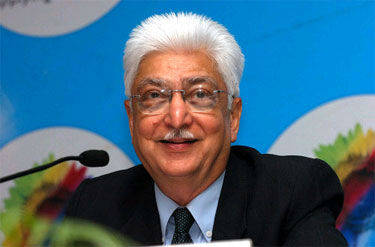
Well-known Indian IT czar and philanthropist Azim Premji  has received the Asian Business Leaders Award in the UK.

“For both his business acumen and his notable contributions to Indian social causes, Mr Premji is a very well-deserved recipient of the Asian Business Leaders Award,” UK business  secretary Vince Cable said in his welcome address at a ceremony yesterday.

(Well-known Indian IT czar…)

“With 40 per cent of the world’s High Growth Markets located in Asia, it is more important than ever to recognise the role of Asian businesspeople in contributing so much to the strength and breadth of the UK economy ,” he added.

The chairman of Wipro Limited  joins the likes of former Tata Group  chairman Ratan Tata  and Lord Green, UK minister of state for trade and investment, as a recipient of the honour presented by Asia House, a non-profit pan-Asian organisation based in the UK.

The annual award recognises individuals who embody the principle of ‘Servant Leader’ – economic success and professional excellence accompanied by moral leadership and service to society.

“We are delighted to honour a business leader admired greatly by the Asia House community. Azim Premji has achieved outstanding success as a global business leader. He has demonstrated a lifetime commitment to social and education issues through both organisations and people making him a most deserving recipient of the Asian Business Leaders Award,” said Sir John Boyd , chairman of Asia House.

The award itself was presented to Premji by Britain’s Foreign Office minister, Hugo Swire.

source: http://www.articles.economictimes.indiatimes.com / The Economic Times / Home> News> News By Company / Corporate Trends / by PTI / October 15th, 2013