Category Archives: Business & Economy

Winners For Association Of Muslim Professionals’ 1st National Awards For Social Excellence 2021 Announced

INDIA :

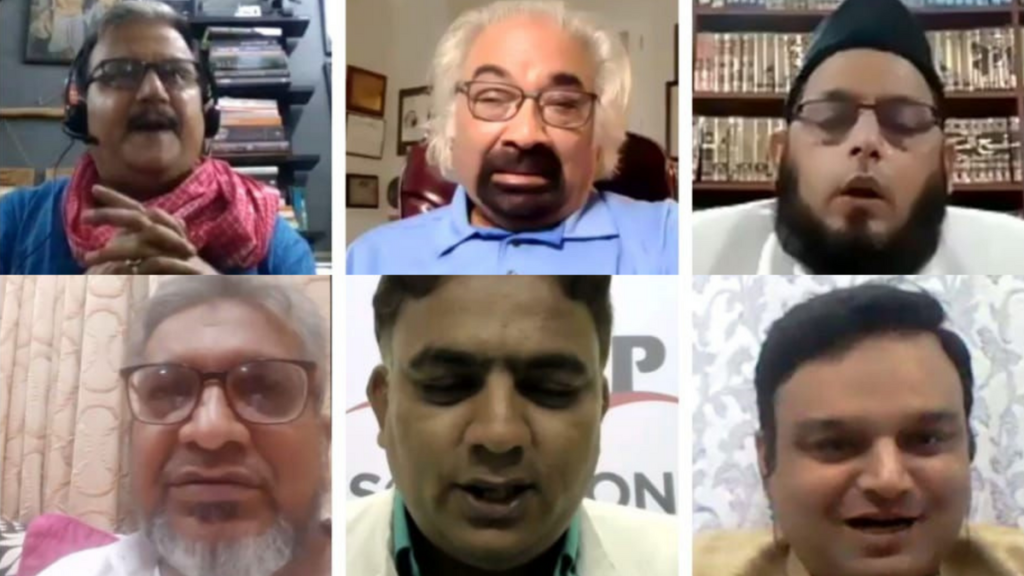
(L-R: Dr Manoj Kumar Jha, Sam Pitroda, Maulana Khalid Rashid Farangi Mahali, Navaid Hamid, Aamir Edresy and Farooque Siddiqui)

inners of 1st AMP National Awards for Social Excellence 2021 was announced on the evening of Independence Day, 15th August in a ceremony attended by guests and a large gathering of participants from across India.

Association of Muslim Professionals (AMP) is an organisation of volunteer Muslim professionals, who are working towards the socio-economic empowerment and development of Muslims in India. Started in 2007 by Aamir Edresy, AMP is present in more than 100 Cities of India and as many as 16 countries globally.

15 Organizations were given the National Award of Excellence 2021 and the Best NGO Award was given to a minimum of 3 Organizations from all the States of India. Also, the Special Jury Award was given to some top performers of every state.

Apart from NGOs, 200 Individual Change Makers were also awarded, including The Cognate‘s Founder, Editor Shaik Zakeer Hussain. These are individuals who worked in the last year for the welfare of the people, especially during the Corona crisis.

While speaking to the audience Former Advisor to Prime Minister Mr Sam Pitroda said that an active civil society is the most important element of any successful democracy. It is the duty of the people who are governing the country to involve civil society in all its decision and policymaking. He congratulated the winners and spoke about the importance of collaboration in today’s world.

Mr Navaid Hamid (President All India Muslim Majlis e Mushwarat) said that it takes courage to appreciate and recognize the efforts of others. He said this spirit is continuously increasing in Muslims and most of the organizations are now open and ready to work with each other. He further said that he hopes AMP will be the torchbearer in this movement of change and will take the community to greater heights.

Rajya Sabha Member Dr Manoj Kumar Jha said that it is very heartening to note that close to 1000+ nomination has come from three States of Bihar, Uttar Pradesh & Jharkhand where we together really need to do a much better job as these three states is at bottom of all index with respect to education, employment and empowerment. 

Renowned Islamic Scholar Maulana Khalid Rashid Farangi Mahali from Lucknow spoke about the importance of social work and helping the needy and poor in the light of Islamic teachings. He appreciated the efforts of all the organizations and specially AMP in establishing this platform to work jointly.

In his inaugural speech, AMP President Mr Aamir Edresy spoke about AMP’s efforts in the last 14 years for the welfare of the Muslim community and nation. He spoke about the importance of partnership and collaboration among Muslim organizations across India for better results and wider reach.

National Award for Social Excellence was awarded to Rahmani 30, All India Ideal Teachers Association, Centre For Information And Guidance India (CIGI), Hamdard National Foundation, Human Welfare Foundation, Indian Civil Liberties Union (ICLU), Jamia Markazu Ssaquafathi Ssunniyya, Mercy Mission, Millat Foundation For Education Research & Development (MFERD), Minhaj Interfaith And Welfare Foundation, Quill Foundation, Rehab India Foundation, Safa Baitul Maal, Taraqqi Foundation and Zakat Foundation Of India.

The Lifetime Achievement award was presented to the President of All India Muslim OBC Organization Mr Shabbir Ahmed Ansari Sahab for his relentless service for the cause of not only Muslims but for all for the last 50 Years.

Mr Farooque Siddiqui (Head of AMP NGO Connect Initiative) hosted the event. While introducing the Awards Mr Farooque Siddiqui said that getting nominations of 2300+ organizations is a stepping stone for a big transformation of the rural part of the nation. He said that this Award function is just the beginning and we will work closely with all NGOs who all have shown their interest in joining hands with us in Community/Nation Building.

Dr Zahida Khan gave the welcome speech and Mr Shoeb Syed (AMP West Zone Head) gave the vote of thanks. The awards were presented by AMP Team including Mr Reyaz Alam (AMP Bihar Head), Mr Qamar Faheem (AMP Jharkhand Secretary), Miss. Shaheen Islam (AMP UP Head), Mr Chand Mohammed Shaikh (AMP Rajasthan Head), Mr Sayeed (AMP Hyderabad Head), Mr Manzar Hussain (AMP East Zone Head) and Mr Saphat Ajmeri (AMP Central Zone Secretary).

The program was concluded with the Dua by AMP North Zone Head Mr Ameen Mohammed.

source: http://www.thecongnate.com / The Cognate / Home> News / by The Cognate News Desk / August 17th, 2021
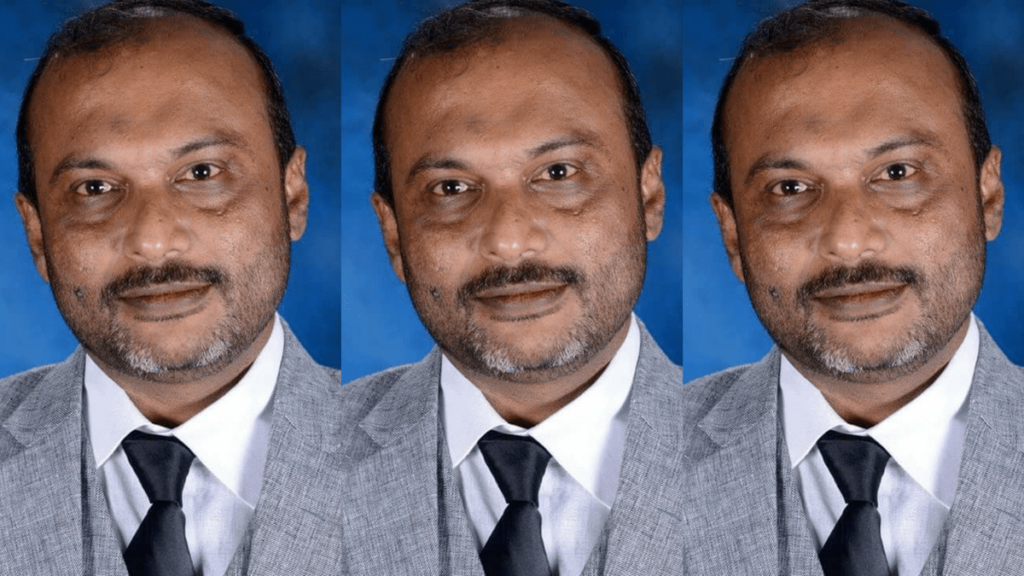
Bengaluru: Advocate Anees Ali Khan No More

Bengaluru, KARNATAKA :

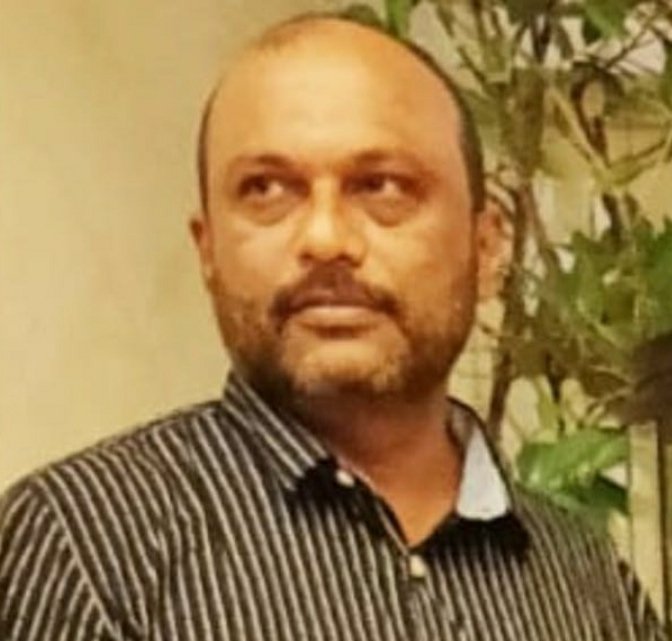
Renowned Bengaluru-based advocate Anees Ali Khan passed away Saturday following a cardiac arrest.

Adv Anees Ali Khan was said to be suffering from kidney ailments for a while. He passed away while he was being taken to a hospital. He is survived by his wife and three children.

Widely regarded as one of the best criminal lawyers in the city, Adv Anees was one of the counsels for the accused in the Bengaluru riots case in which over a dozen people were arrested under UAPA.

He was on the board of many community-based organisations and had recently joined the Aam Aadmi Party (AAP). He was the Organising Secretary of AAP in Bengaluru.

Condoling his passing away, human rights organisation, NCHRO said, “At the time, where Bar Associations influenced by communal elements passed resolution not to represent some of the accused, he dared to represent the innocents, won reversals, or release in fabricated terror cases.”

______
NCHRO@NCHROofficial

Adv. Anees Ali Khan Bengaluru,defender of human rights passes away. At the time, where Bar Associations influenced by communal elements passed resolution not to represent some of the accused,he dared to represent the innocents, won reversals, or release in fabricated terror cases.

0726 AM , Aug 21st, 2021

______

source: http://www.thecongnate.com / The Cognate / Home> News / by Shaik Zakeer Hussain / August 21st, 2021

Udupi: Well-known plywood manufacturers K S Nazeer Ahmed & Co’s Satinply brand bags top awards

Karkala (Udupi District), KARNATAKA :

Udupi : 

One of the very well-known plywood manufacturers K S Nazeer Ahmed & Co’s Satinply brand, has bagged two top awards namely ‘Most Promising & Innovative Plywood Manufacturing Firm of the year 2021’ India award under ‘Ethical Business Approach & Quality Products’ category for the year 2021 (Global Edition) and ‘Outstanding Contribution In Business & Entrepreneurship Domain’ Award.

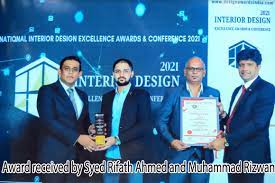
K S Nazeer Ahmed & Co, Satinply brand, was honoured with the two national awards at the National Architecture & Interior Design Excellence Awards 2021 held at Taj West End, Bengaluru on August 18.

While the ‘Most Promising & Innovative Plywood Manufacturing Firm of the year 2021’ award was received by Syed Rifath Ahmed and Muhammad Rizwan Husaini, and other award under the category ‘Outstanding contribution in Business & Entrepreneurship Domain’.

About K S Nazeer Ahmed & Co, Satinply

The company, K S Nazeer Ahmed & Co, is a family-run business that was founded by K S Maqdoom Peeran in 1930 as a timber logs sawing firm in Karkala. Using his strong determination and focus, he established connections with the Indian defence forces, Indian Railways and film industry and laid the foundation for the future success of the company. His son, K S Nazeer Ahmed, when holding the reigns of the family company, took the initiative to adapt to new technologies that allowed the manufacture of a wider range of timber products and cater to a growing number of customers.

Udupi: Well-known plywood manufacturers K S Nazeer Ahmed & Co's Satinply  brand bags top awards - Daijiworld.com

Upon the untimely demise of K S Nazeer Ahmed in 1994, Rehana Nazeer took over the role of managing partner in the family business, overseeing the industrial and agricultural activities.

Under the directive of late K S Nazeer Ahmed and now Rehana Nazeer, their sons Syed Rizwan Ahmed and Syed Rifath Ahmed, the third generation of the family business, identified the change in the consumer demand in India and an opportunity to expand vertically to enter the plywood industry.

The company had to overcome the initial challenge of getting exposure in a competitive industry operating from a relatively remote area. However, due to persistence and hard work, they have grown to reputable plywood manufacturers with sales all over India.

Future plans of K S Nazeer Ahmed & Co, are to delve further into the niche interior design market and launching new brands for upscale furnishings and interiors.

Contact: K S Nazeer Ahmed & Co, Plywood, Blockboard, Timber Merchants & Saw Mill, Salmar Street, Karkala – 574104, Udupi District, Karnataka State, India / Mobile: +91-98457-46620 / Email: ksnazeerahmedco@yahoo.com / Email: info@satinply.com / www.satinply.com

source: http://www.daijiworld.com / DaijiWorld.com / Home> Business / by Media Release / August 20th, 2021

Meet Kaif Ali, who is housing the homeless with his ‘architecture for poor’ idea

NEW DELHI :

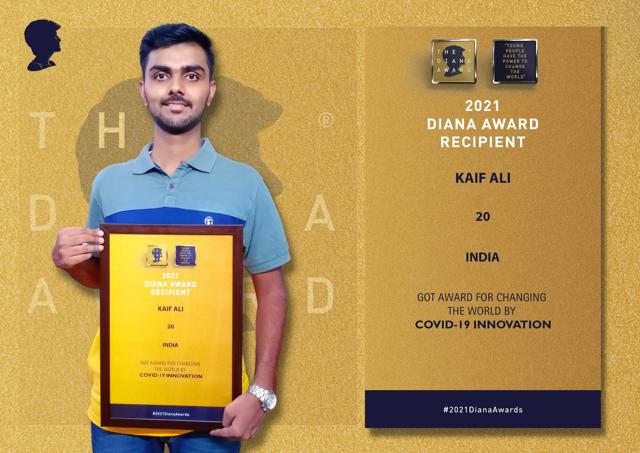
Born and brought up in New Delhi, twenty-year-old Kaif Ali is an architecture student at Faculty of Architecture & Ekistics, Jamia Millia Islamia, New Delhi. Ali was honoured with The Diana Award 2021 for his work on Covid-19 Innovation–Space era recently, which is a module for demountable and portable shelter space for Covid-19 era. This is his story.

New Delhi :

Every child has drawn their family with a house in the background and most probably made sandcastles at beaches too. However, in the grownup’s world, not everyone can have a house built like that. Twenty-year-old Kaif Ali, an undergraduate student of Jamia Millia Islamia, New Delhi after entering the world of architecture found out that homelessness is a major issue in the world and there are many without proper houses.

Born and brought up in New Delhi, twenty-year-old Kaif Ali told TwoCircles.net, “Just 200 meters away from my apartment is a settlement made above the sewage lines. In nights, the people there sleep on footpaths since snakes sneak out of sewage.”

Ali could not help noticing how unjustly the metropolitan city is majorly designed commercially for a few per cent of the population. After witnessing these inequalities, Ali wanted to take up architecture as a profession and develop a sustainable model.

Beyond survival
Homeless people are of many types, which include urban poor, migrant labourers and refugees. However, the government made arrangements for these homeless people can barely be called a home. There is no privacy nor any sense of security as sought by a family since most facilities are gender-separated. Open cooking and sanitation, poor waste management, unavailability of electricity and potable water, the list go on.

Ali recollects that it was a documentary called “Cry for Syria” that sensitized him into the refugee crisis. As an attempt to address the issue, Ali went on to design shelter spaces for Syrian refugees, during his early college days.

When asked whether he is concerned about these temporary shelter spaces becoming the permanent settlement of refugees and others, as is the norm, Ali said that his concept of shelter is a home for living and not for mere survival. Therefore, along with houses, Ali also designs schools, gyms, and other recreational spaces using the same modular technology, which facilitates easy assembling and dismantling.

Quoting a few success stories of refugee assimilation with the host country, Ali believes that if refugees are housed holistically, they will not remain on the fringes. “Shelter is the start of all,” he said.

From housing to quarantining
For the last two years, Ali has invested himself in designing shelter spaces for the homeless. As the Covid-19 pandemic broke out, Ali witnessed the dire demand for quarantining thousands in cramped up cities.

That is how he began working with his project last March and designed a portable intermediary quarantine facility of 2.5m x 6m, using PUF panels or shipping containers, which can be assembled with ease, have massive room for expansion, with natural ventilation and 6 layers of social distancing.

The facility can also be later used as refugee camps or disaster relief camps.

Kaif Ali was awarded the international Diana Award 2021 for the same. His design follows all Covid-19 protocols and is more efficient than home quarantine or mass quarantining facilities.

Ali’s quests stem from his immediate realities. Even his intermediary quarantine shelter came up observing the spread of the virus in enclosed spaces through the air, even before WHO confirmed the spread through the air. “That is the power of observation and study. I apprehended that Covid-19 would spread through the air from my study and by keeping this in mind, I have designed the quarantine facility,” Ali said.

Thinking architecture ‘out of the box’
Having varied interests, Ali is good at juggling different pursuits. The twenty-year-old has taken home several awards in architecture and photography. It is the introduction to various international competitions that expanded Ali’s network.

Upon winning Climate Innovation Lab conducted by Climate Technology Centre and Network, Ali has been receiving mentorship of Biplab Ketan Paul, IIT Kanpur incubation mentor and social entrepreneur.

Referring to Ali’s Covid-19 relief work, Paul said proudly, “Kaif Ali is a good samaritan.”

Soon, Ali’s design would shelter the people of Lagos in Nigeria. His project has received appreciation across the world from architects of Germany, Iran, South Africa, Turkey, the US, & Brazil. Ali has also featured in the United Nations top 11 emerging innovation start-ups solving climate action.

Twenty-year-old Ali has not shied away from approaching several state governments. After the Karnataka government appreciated him, organizations working with the Maharashtra government are willing to implement his project.

To make his designs financially viable, Ali said he uses his father’s counsel, who is in the construction business. “His advice comes in handy, especially when deciding the materials and other factors. It is the context that is my foremost priority,” Ali said, elaborating that climate and clients’ context guides his design.

Moreover, Ali aspires to make the language of architecture accessible to common people. His drawings are easily readable for policymakers and politicians alike. “Future architectures cannot limit themselves to space and cost crises alone. In times of rising refugees of climate, wars and poverty, expanding socially responsible entrepreneurial perspective in architecture is a must,” concludes Ali.

source: http://www.twocircles.net / TwoCircles.net / Home> Lead Story / by Arfa Backer, TwoCircles.net / July 30th, 2021

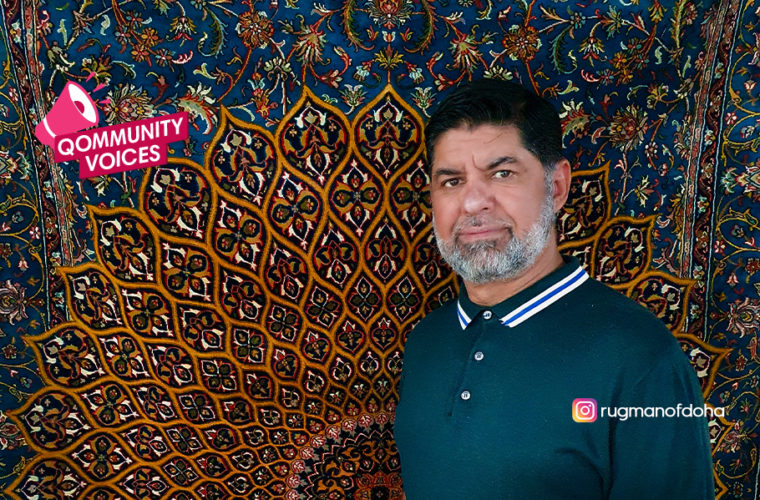
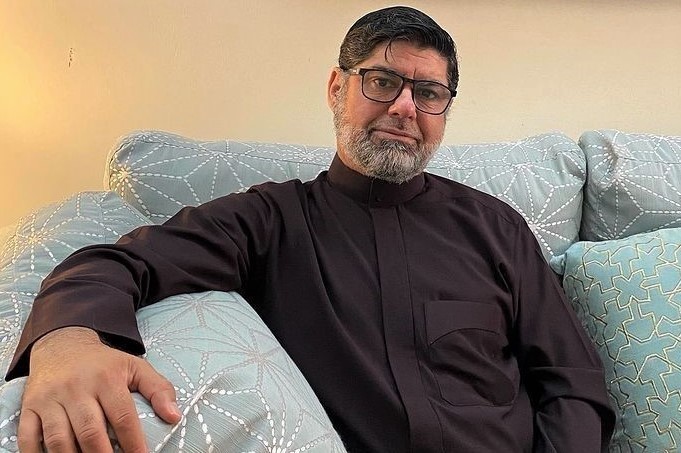
Riyaz Bhat – ‘The Rugman of Doha’ who is weaving rugs & bringing his culture to Qatar

Srinagar, JAMMU & KASHMIR, INDIA / Doha, QATAR :

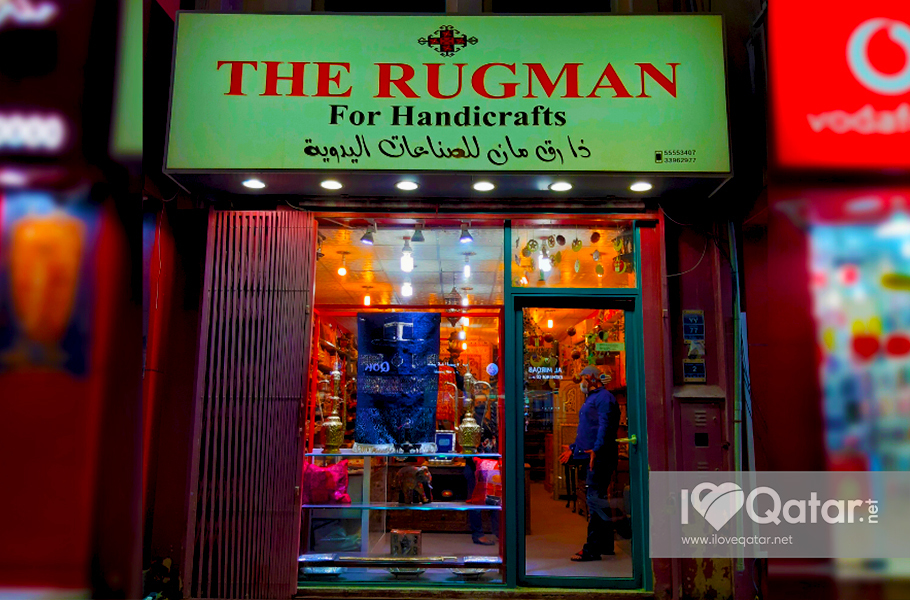
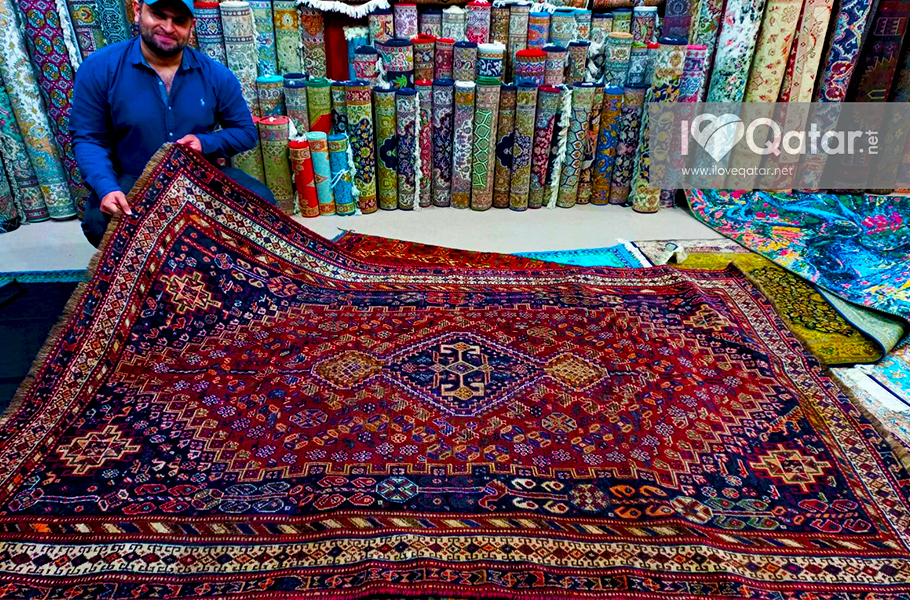
On Al Mirqab Street at Al Nasser is a tiny carpet store that’s been there since 2000. Its neighboring stores come and go but this one hasn’t changed its location for 21 years. Now, sandwiched between a shawarma restaurant and a telecom shop, the store regularly brings handmade rugs and carpets from Kashmir and Afghanistan. The store is owned and managed by a man known as ‘The Rugman of Doha’. Why is he known by this name and what is special about his carpets and rugs?

The Rugman For Handicrafts shop on Al Mirqab Street, Al Nasser.

The ILoveQatar.net (ILQ) team reached out to ‘The Rugman of Doha’, Riyaz Bhat, to learn more about his passion for tribal rugs and how he sees each rug he brings to Qatar as a work of art. Let’s get to know him better!

ILQ: Please tell us something about yourself.

The Rugman of Doha’. / Image credit: Riyaz Bhat

Riyaz: My name is Riyaz Bhat. I was born and raised in Srinagar City in the valley of beautiful Kashmir in India. Since I was a child, I have always been fascinated by rugs handcrafted by my family of weavers — how they would fill tiny knots one by one with natural fibers like silk or wool, and then how those tiny knots on looms would take the shape of a beautiful carpet with amazing patterns. When I was in grade 8, I was given permission to use the loom and eventually learned how to weave rugs.

After I finished college I was planning to go for higher education and take a business course, but my destiny had something else planned for me. When I read the story of the nomad tribes of Central Asia and learned about how they make quality handmade rugs, I decided to travel to Afghanistan to see the process myself. So, in 1987 I started my adventure to war-torn Afghanistan. It really was a difficult journey, but very rewarding. I witnessed how the talented nomad women of the region would weave the most beautiful and fascinating rugs, which they would trade for food and money. I traveled back and forth to Afghanistan for more than 10 years, and as I learned more about designs, patterns, and dyes, my passion for carpets and rugs grew more as well.

ILQ: How long have you been here in Qatar and how has your journey been so far?

Riyaz: In 1999, while I was working with my uncle in Pakistan, a customer visiting from Doha came to our store and bought a few rugs from me. He introduced Qatar to me as a fast-growing and developing country and encouraged me to open up a store here. At first, I hesitated but destiny again planned one more great adventure for me. I landed at the old Doha Airport for the first time in October 1999 with a 14-day business visa, and that visa was extended and extended, and I’m happy to say that it’s my 22nd year now in this wonderful country.

ILQ: How did you get the title ‘The Rugman of Doha’?

Riyaz: After searching for many places here, I finally found a location for my store. On 4 April 2000, I opened my showroom at Al Mirqab Street in Al Nasser and have never changed location since then. During the first few days, customers started coming and my store was introduced to a great group of people from VCUarts Qatar. Among them was Cathleen Ferguson Huntington who upon entering my shop saw me and said, “Are you the Rugman?” And that’s how the ‘The Rugman of Doha’ was born.

ILQ: What do you value most about what you do? Why do you love what you do?

Riyaz Bhat weaving a silk rug on his family loom in Kashmir, India. / Image credit: Riyaz Bhat

Riyaz: Weaving rugs has been my passion since childhood, and I really love and value what I do. I value the times I’m with tribal groups and get to introduce nomad women designers and their amazing artworks to the world. By doing this I feel satisfied with what I have done in my life.

I also welcome students and small groups of people in our store for a free discussion about rug art and history. I enjoy discussing and providing information about the history of rugs and the beautiful story behind each rug that we have. I am thankful that I am gifted with the talent to weave and tell important stories.

ILQ: How will you describe your shop to people who’ve never seen it before?

Waji Khan, cousin of Riyaz Bhat, holds a 150-year-old pure wool handmade Shiraz tribal rug. It’s a wedding sufra (dining) rug, made by the mother of the bride.

Riyaz: My store, The Rugman, is not just a carpet store. It is rather a learning class for art and history and I bet once you listen to our stories and see our collections, you are going to love it for a lifetime. Each carpet has a story. Each rug is an art.

ILQ: What motivated you to bring your carpets to Qatar?

Riyaz: As soon as I arrived in Doha, I went around the city and strolled to see different places. I went to markets and to the lone mall during that time – The Mall at D Ring road. I saw one rug store inside that mall with many customers. I also went to the old downtown where there were more rug stores, and I saw people buying rugs. That’s when I decided to open a store here.

ILQ: Was it easy to set up a carpet store here in Qatar?

Riyaz: Yes, at that time it was very easy to open a store and I was very lucky to find a great sponsor who also became my investment partner. He helped in every way to open my shop. Qatar is one lovely country, and living and working here has been a lot easier compared to other countries and has been very encouraging for my business.

ILQ: What kind of rugs and carpets will people find in your shop?

Riyaz: We have extremely high-quality handmade rugs from my family of weavers. Besides that, we also have genuine handmade rugs made by nomads like Turkmen, Kazak, Balouch, Uzbek, Shirwan, Ghazni, and many other small tribes of the region. Each rug collected from them tells a beautiful story.

ILQ: What is the biggest difficulty you have faced in bringing these carpets and rugs from Afghanistan to Qatar?

Riyaz Bhat (left) in Jalalabad, Afghanistan in 2005. / Image credit: Riyaz Bhat

Riyaz: Going to Afghanistan, collecting these rugs from these nomads one by one in person and getting them shipped to Pakistan first by trucks, and then from Pakistan to Qatar by plane. It really is an extremely tiring process.

ILQ: Have you participated in both local and international exhibitions?

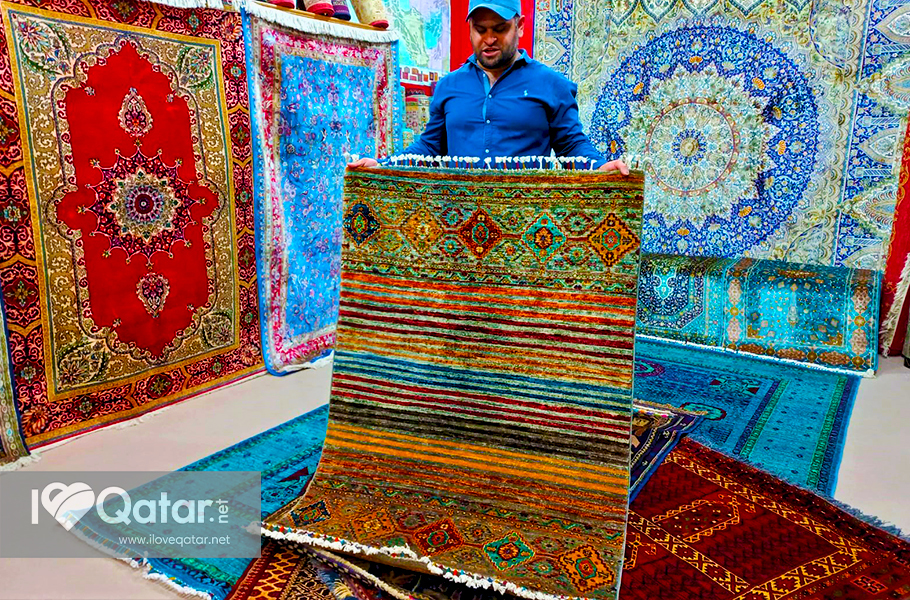
Waji Khan, cousin of Riyaz Bhat, describes one of the rugs available in the shop.

Riyaz: Yes, I have participated in both local and international exhibitions and shows. I recently returned from my shows in Houston, Texas, and Arlington, Virginia. These were my 5th and 6th shows in the USA. I have also done many shows for American Women’s Association Qatar, Tuesdays Ladies Group Qatar, Qatar Expat Women, US Embassy Qatar, Exxon Mobil Oil Qatar, Shell Qatar, and many other private shows.

ILQ: Do you have both local and international customers? How do you ship the rugs/carpets to your customers?

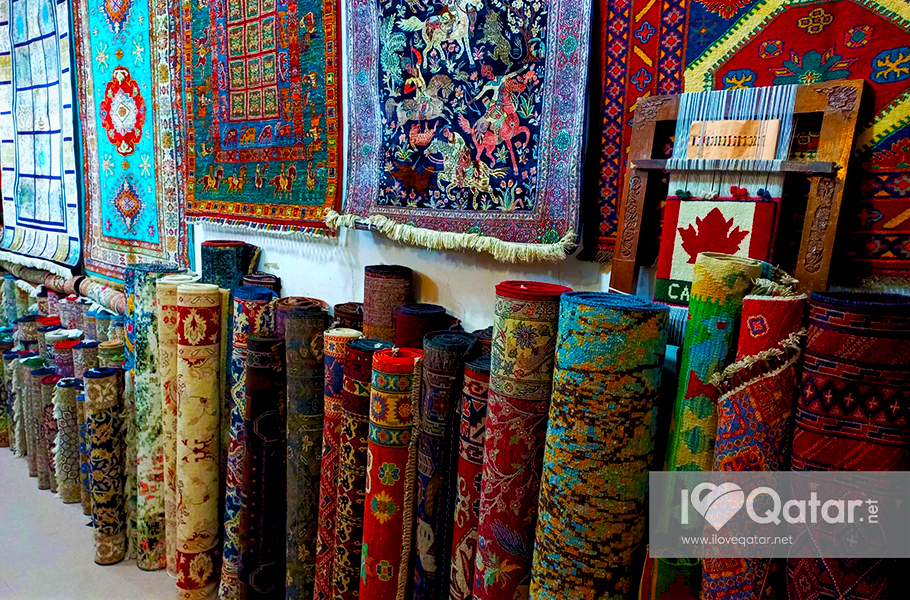
On the second floor of The Rugman store.

Riyaz: Yes, we have local and international customers and we ship our rugs all over the world. Our foreign customers are mostly from the USA, Canada, and Europe. We have a very economical door-to-door shipping facility.

ILQ: Why should people own at least one of the carpets/rugs you offer?

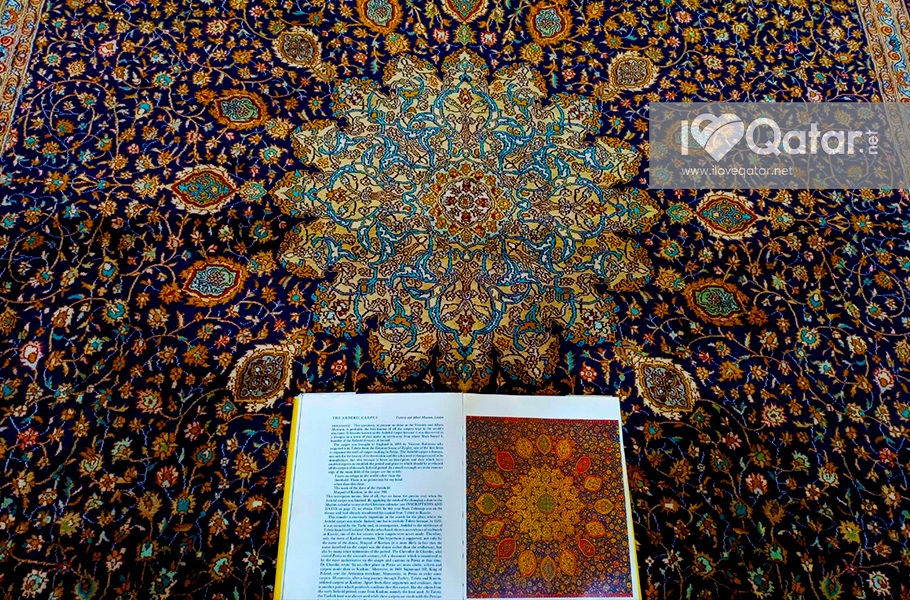
A rug inspired by the famous Ardabil Carpet is available at The Rugman store.

Riyaz: Our rugs are not like those commercial rugs you see in many stores. Our rugs are made by nomads and purely handmade using natural resources. These are the rugs that if taken good care of can end up in museums as they are extremely strong.

ILQ: What is the price range of rugs and carpets in your store?

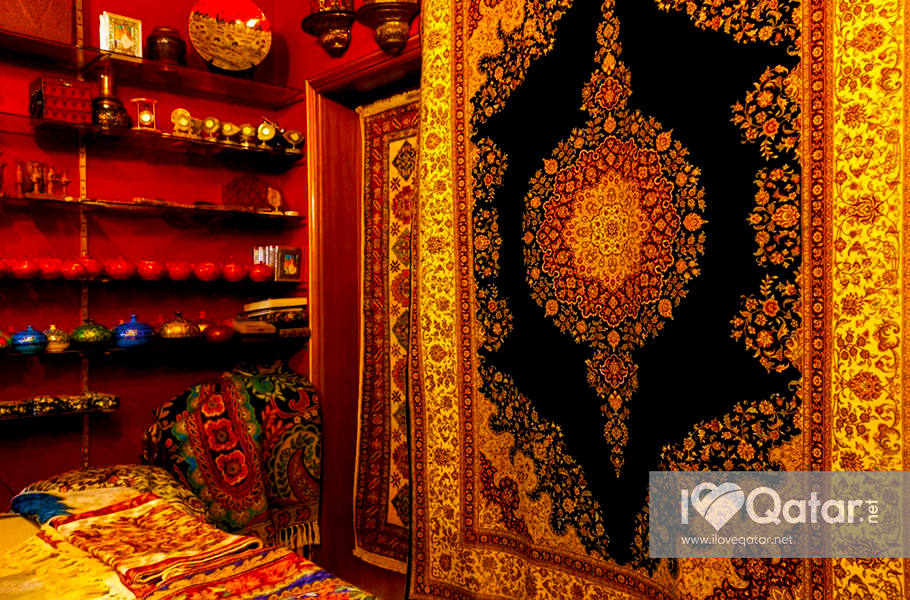
Carpets/rugs and other souvenir items are available at The Rugman store.

Riyaz: It depends on the quality, the material, and the work put into it. Sometimes a very small rug costs much more than a huge rug. But I would say rugs in our collection range from QR 600 up to QR 70,000. It depends on how crazy you are about rugs and how much budget you have.

ILQ: What do you think is the future of handmade tribal rugs and carpets?

Carpets/rugs and other souvenir items are available at The Rugman store.

Riyaz: Carpet weaving is one difficult and time-consuming job. One must be very patient and creative to create rugs. The new generation is not taking it as a vocation, and it’s becoming a dying art. Sad to say, I feel that in the next 30 to 40 years we might not see genuine handmade rugs anymore.

ILQ: What message do you have for the people of Qatar?

Riyaz: Work with all the enthusiasm and confidence in you, and your achievement will just be right there at the corner. Obey and respect the rules and laws of this wonderful country.

Get in touch with Riyaz:

  • Phone: +974 5555 3407, +974 3396 2977
  • Instagram: @rugmanofdoha
  • Facebook: @therugmanofdoha
  • Website: www.the-rugman.com

Cover image credit: Riyaz Bhat

source: http://www.iloveqatar.net / I Love Qatar.net / Home> News / by Marivie / August 03rd, 2021

Man transforms home into bird sanctuary in Raichur

Manvi Town (Raichur District), KARNATAKA :

Raichur :

In the present day world, where the number of birds and animals is dwindling fast due to environmental issues and man-made calamities, a bird lover has made an attempt to provide shelter to sparrows at his home.

Salauddin, class I civil contractor of Manvi town of the district, is the Good Samaritan, who has given shelter to sparrows in his house for the past four and a half years. He has installed bamboo, tires, pots etc and feeds water and food to these birds through these equipment. In addition, he has built a small house for these birds. The birds use water and have food in this house. Salauddin is well known for his love of birds in the district like another bird lover Saleem Ali.

Salauddin’s house has become a tourist spot. Everyday hundreds of school children visit his house during school days.

Salauddin says that protecting the birds is his aim. In addition to sparrows, he also has Myna, Robin and Bulbul birds making nests in his house. His wife and children provide him full support in his noble work.

Salauddin opines that birds and animals have as much right to live on this earth as human beings. He says that everyone has to at least make arrangements to provide water to birds especially during summer.

source: http://www.daijiworld.com / Daijiworld.com / Home> Top Stories / by Daijiworld Media Network – Raichur (MS) / August 14th, 2021

Meet Rubina Nafees Fatima, Empowering Women And Inspiring Social Change In Hyderabad’s Slums

Hyderabad, TELANGANA :

As a child, Ayesha Fatima aspired to become a doctor. But all her dreams were shattered when the most trusted and loving person in her life- her father, abandoned her at a very young age. Survival became a tough battle. The responsibility of feeding the family fell on Ayesha who gave up her studies and started working as a salesgirl for a minimal salary.

Ayesha then turned to Rubina Nafees Fatima and her NGO – SAFA, for help. She joined the ITES course for training and later got placed as a data entry operator at a private company. “The course changed my life,” she says.

Since 2006, Rubina Nafees Fatima’s Hyderabad-based organisation, SAFA, has helped thousands of women and youth from marginalized, socio-economically backward communities by empowering them to earn livelihoods through education and skill training and capacity building.

Rubina is a determined woman and a passionate social worker. She was conferred with the FLO Women Achievers award by the Federation of Indian Chamber of Commerce (FICCI) towards ‘empowering women to bring about a change in society’, the Social Enterprise award for ‘social impact’ by the Deshpande Foundation and the Australia Award by the Export Council, government of Australia.

‘Proud Muslim Woman’

Rubina believes that it is the duty of every Muslim woman to contribute positively to society. 

“Women need to assert themselves- within their families and also in the outside world- they need to be proud of their culture, their heritage and everything about themselves.”

“Be a proud Muslim woman,” she says. 

Rubina grew up with four sisters. “My father encouraged us all to be extremely independent. I believe economic independence is a freedom that every woman should have”, she says, adding that this led her to believe that women need to have a suitable platform to utilize their potential. “To first realise their potential and then use it to the maximum.”

A Leap Of Faith

“I was generally looking around for avenues and how I can contribute my bit, I feel it’s my duty, as an educated Muslim woman,” says Rubina who has been an active volunteer in various development programs since her college days. “I wanted to be working with Muslim women, largely because I feel I know the dynamics of the community. I feel, being a part of the community, I understand the challenges of the community. I know where the roadblocks are,” she says.

Rubina had initially set up a commercial venture for training and placements in Hyderabad. “I had to shut that down because I wanted to get into SAFA full-time. This didn’t make many people happy in my network,” she recounts.

“After the initial three years, I was on the verge of a shutdown. I picked a very difficult slum in Hyderabad. The crime rate was very high over there. No NGO had worked there for decades, as they felt they would not see any results,” Rubina says while narrating how the absence of a team and funding caused her to almost give up.

“But then I took a leap of faith,” she says.

“In each phase, there have been a different set of challenges and we continue to have them. It never stops. But I feel it builds our resilience, to face the many more to come,” Rubina adds.

SAFA has been conferred with the ‘e-NGO Challenge Award’ in the Southeast Asia category by Digital Empowerment Foundation and the Manava Seva Dharma Samvardhani – Fellowship Award. It was titled the ‘Pride Of Telangana’ by Round Table India in the ‘emerging NGO category’ and the ‘Trendsetter Award’ for innovative practices in Urban livelihoods by United Way Hyderabad.

‘Women Were Not Even Allowed To Come To Our Training Centres’

SAFA’s vision is to bring about change whilst retaining the cultural ethos of the community. Women are also given the freedom to work from home after being trained. “Our processes are designed in such a way that if the woman has a machine at home, she can work from home and give us the products,” Rubina says.

“Initially, women were not even allowed to come to our training centres,” she recounts. 

“We were very open in talking to the male members of the family and addressed the concerns they had about letting the woman come in and get trained. Men could have some insecurities that stop them from encouraging women to go to training centres and NGOs, it could also be a concern for the woman’s safety, coupled with the socio-cultural context.”

Rubina stresses the need for Muslims to talk about the issues that exist in the community. “In the urban slums of Hyderabad, every second home has an alcoholic husband. Why aren’t there any detox centres for Muslim men? Why are we still sweeping our issues under the carpet,” she asks, adding that “these issues will only get worse if left unaddressed.”

SAFA’s Empowerment Initiatives

Rubina, along with her team at SAFA are currently working on 14 three-year-long projects.

SAFA sets up skill training centres for women and youth who drop out of college or have discontinued school education. They are later connected to jobs. Currently, SAFA runs seven skills training centres in Hyderabad.

However, for semi-literate and illiterate women, SAFA trains them in culinary skills and tailoring. These women are later employed at Luqma Kitchens, a packaged food and catering service run by SAFA or Artizania – a manufacturing unit for apparel and eco-friendly lifestyle products.

“The end result is that women need to be engaged in some kind of a meaningful income generation in order to make a decent living,” Rubina says.

‘Luqma’ was launched to empower underprivileged women through a commercial community kitchen. It currently functions with two kitchens in the slums of Hyderabad, catering to fresh traditional Hyderabadi food and packaged products.

“Luqma is not just about food, it’s about the empowerment and livelihood of women. Most women working here are victims of domestic violence, deserted or abandoned and from below the poverty line,” she says. These women are trained in basic culinary skills by expert chefs and can cook up to 400 meals at a time.

Right next to the kitchen, is a space that can accommodate about 20-25 people – the Luqma Studio, which Nafis Fatima says is a ‘safe space’ for Muslim women. “Activists have been telling me that Muslim women are still reclusive and it’s challenging to find ways to interact with them. So, I thought why not create an open and safe space for them?”

Women from different communities engage in discussions on social and political issues at Luqma Studio. “Largely I want to bust stereotypes of Muslim women. I feel other communities do not get a chance to know about Muslims, especially Muslim women. The moment they think of Muslim women, they start stereotyping- they are the victims of patriarchy, are an oppressed group and other such notions,” she says.

The studio works as a platform for Muslim women to unwind, engage in dialogue, network, exchange ideas, and find out about other communities.

SAFA also helps in setting up micro-enterprises for women and connects them to banks for larger loans. With capital as little as 10,000 women have started small shops, tailoring shops and grocery stores.

Many Muslim women don’t even have bank accounts, especially those who hail from poor conditions. “All our women have bank accounts, now,” she says.

SAFA also runs self-help groups across Hyderabad, largely for Muslim women. “Despite 45,000 self-help groups existing on city records. Very few of them have Muslim women,” Rubina says.

With many more women approaching SAFA, their network and impact on the social landscape of Hyderabad is increasing by the day.

NOTE: SAFA is looking to expand its social enterprise product sales in India and abroad and looking for partners. You can reach them at rubina@safaindia.org / 9866174665 or visit their website www.safaindia.org

source: http://www.thecognate.com / The Cognate / Home> People / by Rushda Fatima Khan / August 11th, 2021

UAE based NRI entrepreneur announces Rs 1 crore reward for Sreejesh

KERALA, INDIA / UAE :

A non-resident Indian healthcare entrepreneur based in the United Arab Emirates on Monday announced a Rs one crore cash reward for the Indian men’s hockey team goalkeeper P R Sreejesh

P R Sreejesh, Indian men’s hockey goalkeeper

A non-resident Indian healthcare entrepreneur based in the United Arab Emirates on Monday announced a Rs one crore cash reward for the Indian men’s hockey team goalkeeper P R Sreejesh.

The announcement by Dr. Shamsheer Vayalil comes days after the Indian men’s team won the bronze medal at the recently concluded Tokyo Olympics.

Sreejesh, who belongs to Kerala, pulled off a series of stunning saves to help the country win its first Olympic medal in hockey after 41 years.

“Through his outstanding performance at the Olympics, Sreejesh has brought joy to Indians around the world. As a fellow Malayali, I take tremendous pride in his achievement,” Vayalil, Chairman and Managing Director of VPS Healthcare, was quoted as saying in a media release.

Vayalil also called Sreejesh to congratulate him for his exemplary performance.

Dr. Shamsheer has congratulated the entire team for this great achievement and offered his support to us. The announcement of the Rs. 1 crore reward caught me by surprise. A reward for winning a medal in the Olympics is delightful news and I feel very fortunate to be the recipient, said Sreejesh.

Over the last two decades, Sreejesh has carved a niche for himself in the field of hockey. Entering the junior national hockey team in the early 2000s, Sreejesh worked hard to make his way to the national team.

He also served as the captain of the national team in 2016. His quick reflexes and consistent performance have earned him the moniker The Great Wall of India’.

Sreejesh, who returns to India on Monday after the successful Tokyo campaign, will be presented with the cash prize at a special function in Kochi.

(Only the headline and picture of this report may have been reworked by the Business Standard staff; the rest of the content is auto-generated from a syndicated feed.)

source: http://www.business-standard.com / Business Standard / Home> Sports> Tokyo Olympics 2020> News / by Press Trust of India, Dubai / August 09th, 2021

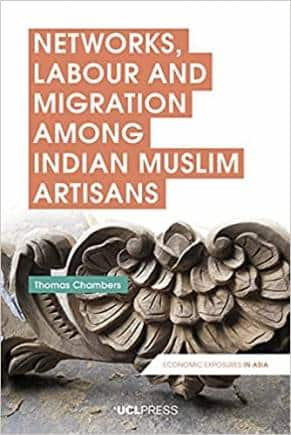
Book review | ‘Labour and Migration among Indian Muslim Artisans’: A limited but sensitive look at work-from-home outside urban, corporate India

Sahranpur, UTTAR PRADESH :

Chambers’ research on how women’s labour is devalued and underpaid lays the ground for future researchers on how women offer care and strength to each other within patriarchal settings.

In Saharanpur, Uttar Pradesh, Chambers' research showed, job opportunities for female wood workers are still curtailed. Most women are restricted to the home, and many of those who work in factories, are concerned about sexual predators.

In Saharanpur, Uttar Pradesh, Chambers’ research showed, job opportunities for female wood workers are still curtailed. Most women are restricted to the home, and many of those who work in factories, are concerned about sexual predators.

Whose stories are centred when ‘working from home’ is seen as ‘the new normal’? How does one account for the labour of women who have always worked from home because of the patriarchal structures in their lives? Thomas Chambers’ book Networks, Labour and Migration among Indian Muslim Artisans (2020) will make you think about these questions.

Book Review | 'Labour And Migration Among Indian Muslim Artisans': A Limited  But Sensitive Look At Work-from-home Outside Urban, Corporate India

The author is a senior lecturer in anthropology at the Oxford Brookes University. His book is based on ethnographic fieldwork with woodworkers in Saharanpur, Uttar Pradesh.

Chambers notes that migration to the Gulf Cooperation Council (GCC) from Uttar Pradesh now exceeds that from Kerala, Andhra Pradesh and Tamil Nadu. He writes, “The state registered 191,341 emigrants to the Gulf in 2012, compared with 27,428 in 2004. Figures for 2013 and 2015 suggest that numbers exceeded 200,000 in these years.”

The book examines how local friendship groups and apprenticeship networks open up opportunities for men to migrate to the GCC whereas women’s engagement with the labour market keeps them mostly confined to the home. The book will help readers appreciate how ‘working from home’ is experienced outside corporate India, and how this experience is shaped by gender. Chambers tries to explain this using the concept of ‘chal-chalan’ in local parlance.

He writes, “The term articulates a complex assemblage of gendered moral and ethical circulations that regulate women’s sexualities, bodies and subjectivities. It was also at the forefront of women’s discourses about participation in paid labour within and beyond the home.” His book will deepen your understanding of workplace sexual harassment, a big reason for women woodworkers to prefer working from home rather than in factories.

Unlike men who are able to withdraw their labour and seek work elsewhere within India or outside, women’s mobility is restricted. They are expected to look after children, and the sick and elderly. Their economic independence is also curtailed by employers who justify low wages by insisting that their labour is unskilled, and that their income is meant to supplement the earnings of the men in the house who are supposed to be the real breadwinners.

The book shows how this reasoning is flawed. Chambers found that women with husbands who were either unemployed or alcoholic had to bear all the responsibility for running their households. Women who were divorced or widowed were also in a precarious situation. Working in factories would pay them a lot better but it would make them more vulnerable to sexual predators who saw them as easy prey as “they lack(ed) the ‘protection’ of a husband.”

Chambers writes, “My involvement with the mohallas has always been mediated in a highly gendered context. Narrating the lives, experiences and subjectivities of women is therefore one of the more challenging aspects of this book.” He adds, “Gradually, curtains fell away, and over the years I have developed many close relationships with women in the mohallas.”

Earning the trust of one’s respondents is key to producing ethical scholarship. Researchers need to care not only about their research questions but also the human beings who help them generate knowledge by sharing their time, lived experiences and personal insights.

Chambers has quoted some of the women he interviewed. One of them, named Sabra, says, “Sometimes in the factories the men are really very rude. Some men address me like a dog…I never talk to men in the factory as I know they are shameless…They say, ‘If you are pak daman, then go to your home. If you belong to a respectable family, you would not come to the factory.’ I have to bear this blame silently. If I did not, my job would be finished.”

Acknowledging the particularities of his social location as a white, non-Muslim man from the UK entering a gender-segregated environment in north India for his research, he attempts to listen and understand with sincerity. This is refreshing because the trope of white men trying to save brown women from brown men is not only patronizing but has also been overdone.

Chambers writes, “My male positionality imposed limitations that did not arise in my relationships with men. The experiences of women who labour in wood production are so distinct from those of their male counterparts that any attempt to interlace the narratives runs the risk of obscuring these distinctions.” To overcome these limitations, he draws on Ayesha Ansari’s work to contextualize Muslim women’s experiences in the Indian workforce.

It can be rewarding to read Chambers’ book alongside Devaki Jain’s recent memoir The Brass Notebook (2020). As a feminist economist, she is deeply invested in pointing out that women in households marked as being below the poverty line are neither sitting idle nor occupied exclusively with household chores and childcare. They roll bidis, sell cow dung cakes, or earn money for their family in other ways. This is economic activity, and it requires skill acquisition.

Though Chambers’ analysis is largely heteronormativehe subtly points out the relationship between homosociality and same-sex desire in Saharanpur’s gullies, expressed through the religious rhetoric of brotherhood. You might find it useful to read Gayatri Gopinath’s book Unruly Visions: The Aesthetic Practices of Queer Diaspora (2018), which suggests that the “Gulf dreams” of migrants may “extend beyond limited heteronormative framings.”

She writes, “If working-class migrants are viewed as heterogeneous, desiring subjects rather than reductively defined simply through their labour, what other longings and forms of relationality come into view in the homosocial, regional and diasporic spaces they inhabit?”

This question could also be posed in relation to the desires and aspirations of women woodworkers in Saharanpur, involved in “polishing, sanding and touching up on defects on items such as boxes, incense holders and rehals (folding stands for holding the Quran).”Are these women’s lives defined only by their income and status as woodworkers? Chambers’ limited access to them keeps him from offering insights into the friendships, solidarities and intimacies that might be forged between them. However, his research on how women’s labour is devalued and underpaid lays the ground for future researchers to explore how women offer care, joy and strength to each other within patriarchal settings.

source: http://www.moneycontrol.com / Money Control / Home> News> Trends> Features / by Chintan Girish Modi / July 24th, 2021

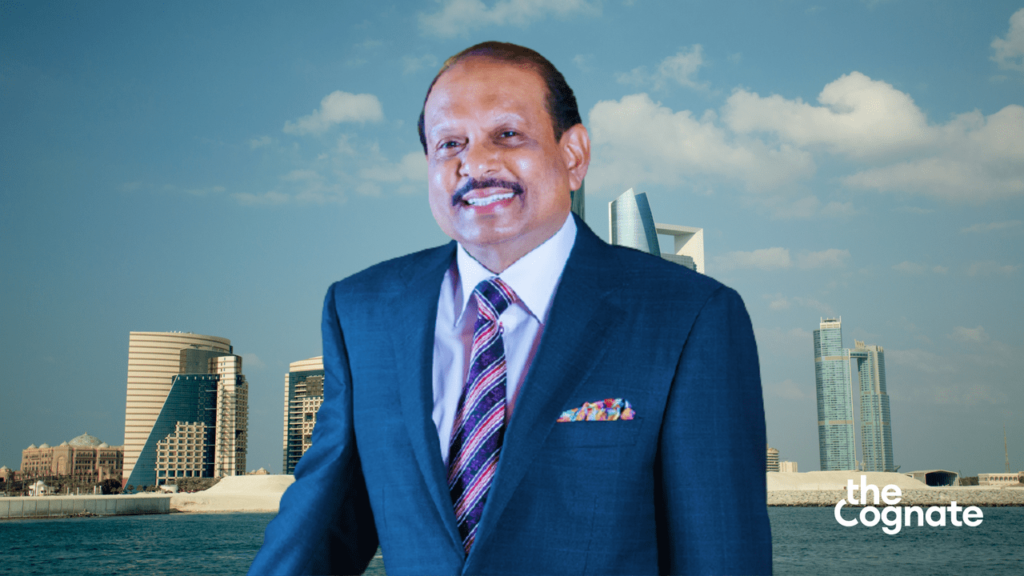
UAE-Based Indian Businessman Yusuff Ali Appointed Vice-Chairman Of Abu Dhabi’s Top Govt Body

KERALA / UAE :

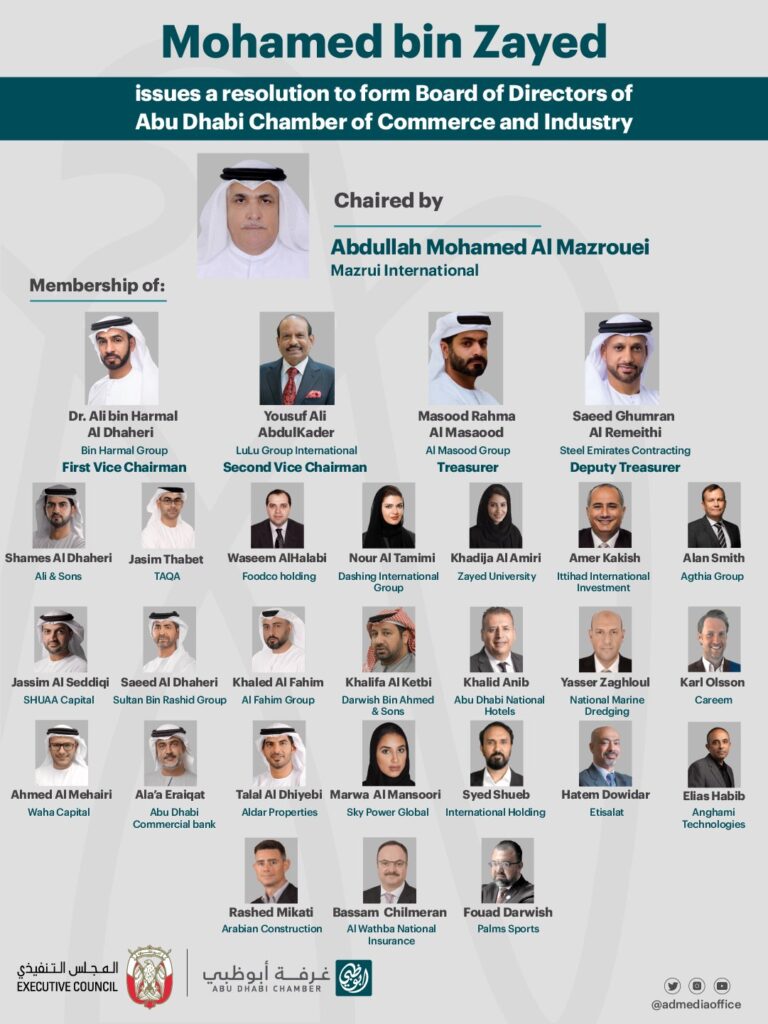
Crown Prince of Abu Dhabi Sheikh Mohamed Bin Zayed Al Nahyan has appointed prominent Indian businessman M.A. Yusuff Ali as the vice-chairman of the apex government body for all businesses operating from the UAE’s capital city, making him the only person from India on the 29-member board.

Yusuff Ali is the chairman and managing director of UAE-based Lulu Group International, which runs a chain of businesses with an annual turnover of over 8.1 billion dollars.

Twitter :

مكتب أبوظبي الإعلامي@admediaoffice

Mohamed bin Zayed has issued a resolution to form a new Board of Directors for Abu Dhabi Chamber of Commerce and Industry, chaired by Abdullah Mohamed Al Mazrouei.

65-year-old Yusuff Ali was ranked the richest expat in the UAE by Forbes magazine 2019 and is the first Indian to receive permanent residency in Saudi Arabia. Ali also has a sizeable stake in Cochin International Airport Ltd. which runs and operates the Kochi airport.

Sheikh Mohammed issued a resolution to form a new Board of Directors for the Abu Dhabi Chamber of Commerce and Industry (ADCCI), chaired by Abdullah Mohamed Al Mazrouei and Yusuff Ali as the Vice-chairman.

The ADCCI is the apex government body of all businesses established in Abu Dhabi. It will function as an effective bridge between the government and the business sector. Accordingly, every business establishment in Abu Dhabi has to be licensed by ADCCI.

Yusuff Ali described his appointment as “a very humbling and proud moment” in his life.

“My sincere gratitude to the visionary leadership of this great country and I will strive to do my best towards justifying the great responsibility entrusted upon me. Apart from working for the growth of Abu Dhabi economy & the larger business community, I will sincerely work towards further boosting the Indo-UAE trade relations,” he said.

Ali was recently honoured with the Abu Dhabi Award 2021, the highest civilian honour for his almost 5-decade long contributions in the fields of economic development and philanthropy.

source: http://www.thecognate.com / The Cognate / Home> News / by The Cognate News Desk / July 26th, 2021