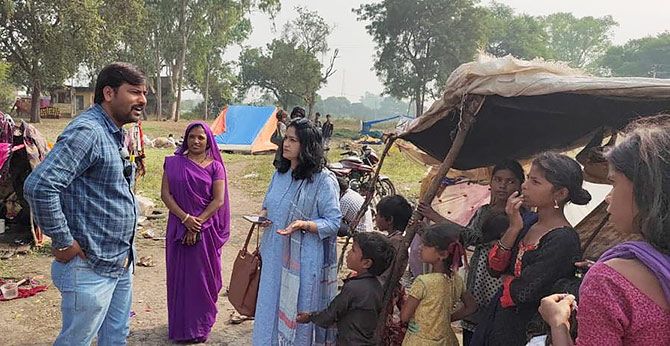
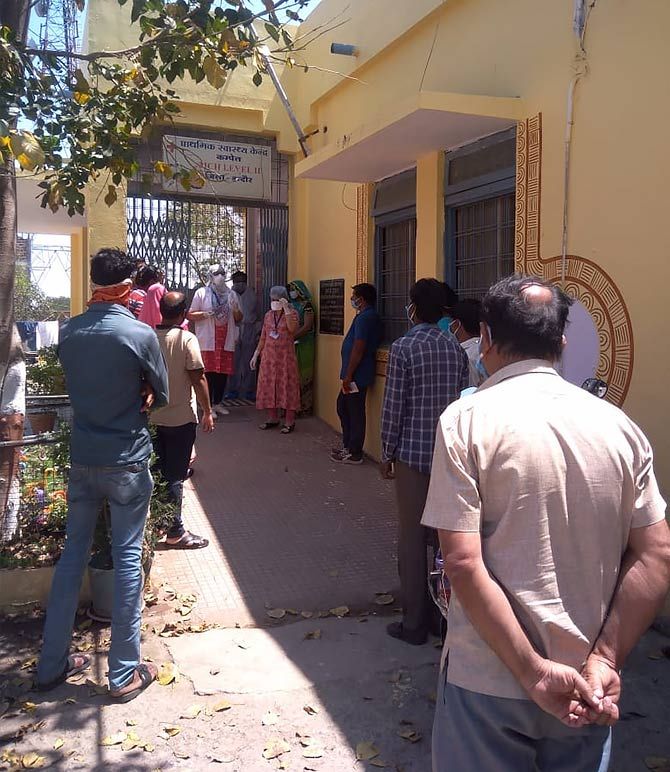
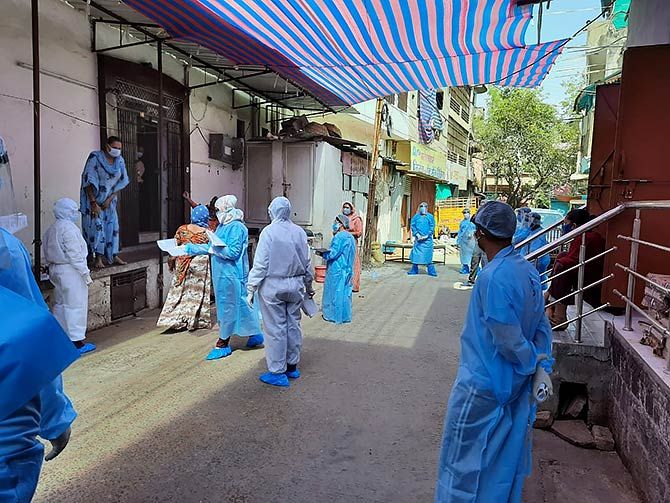
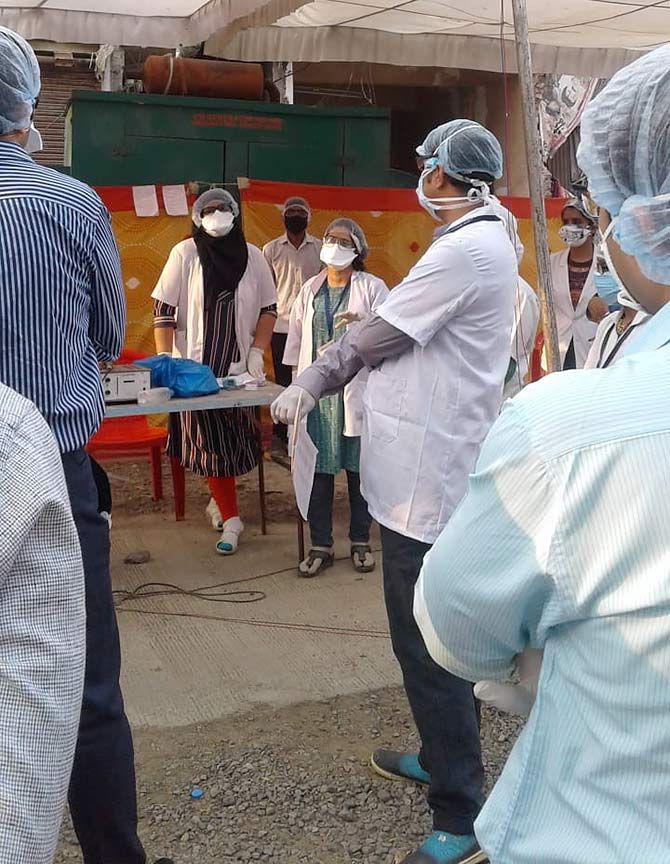
The Aishbagh Eidgah, which is the biggest Eidgah in Lucknow, will now double up as a COVID-19 vaccination centre. This will be the first religious establishment in the state capital which will be providing jabs against COVID-19 to the people. Till now vaccines were being administered only in hospitals in Lucknow. Two inoculation centres — one for ages 18-44 and another for people aged 45 and above — have been set up at the Eidgah.
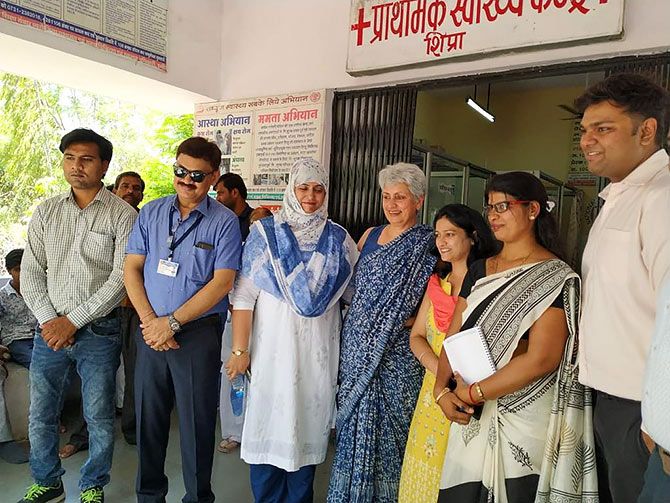
Beneficiaries of all age groups above 18 years, who have registered on the CoWin portal, will be able to get the jab here. The officials of the All India Islamic Centre will also be assisting people with online registration for getting the vaccine shot. The nodal officer for COVID-19 in Lucknow, Roshan Jacob, reached Aishbagh Eidgah on Thursday to take stock of the preparations. “It is a very good initiative that has been taken by the Islamic Center. This will facilitate the people to get vaccinated,” she said.
Meanwhile, Imam Idgah, Lucknow and Chairman of Islamic Center of India, Maulana Khalid Rashid Farangi Mahli said, “People should keep in mind that along with precaution for prevention of epidemics like COVID-19, the best and most effective thing is vaccination. Lucknow has a lot of population, especially old Lucknow. Keeping in mind the population, two centres have been made at the ground of Eidgah. One center is for people between 18 years to 44 years and one center is for people aged 45 years or more.”
“The huge space here helps in maintaining social distancing and also lowers the risk of transmission of infection. There are a lot of people who are unable to register themselves for vaccination, our team at Islamic Centre of India will help such people in getting themselves registered online for the jab,” he added.
Meanwhile, the fresh cases of COVID-19 infection continue a downward trend in Uttar Pradesh as 6,725 new infections were reported in the last 24 hours. Additional Chief Secretary (Health) Amit Mohan Prasad said 13,590 patients were discharged in the last 24 hours, while there were 11,6434 active cases in the state. Of these, 82,801 were in infected home isolation. The recovery rate in the state has risen to 91.8 percent. The positivity rate in the state has come down to 2.4 per cent, while 238 corona-infected people died in the state. In the last 24 hours, 2,91,156 samples were investigated in the state.
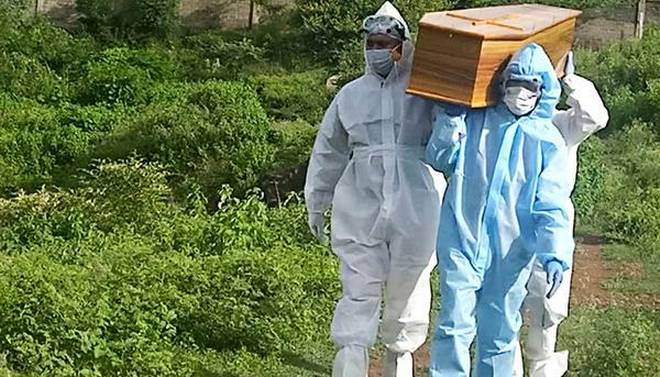
Noble service: Members of the foundation following COVID-19 protocol while performing last rites. GOPICHAND T.
His NGO has performed last rites of over 700 COVID-19 victims
Humanity First foundation, a Bidar-based NGO, has been performing the last rites of COVID-19 patients ever since the epidemic broke out in 2020.
Majeed Bilal, a small business owner who founded the NGO, says members have performed the last rites of over 700 bodies so far, irrespective of faith.
The rituals of different religions are followed during the final rites . The services are free, though the NGO accepts donations.
Mr. Bilal has spent a considerable amount of his own money on this service. “My family had two small plots in Bidar. I have sold them, to set up this NGO and conduct the final rites of COVID-19 victims with honour,” he told The Hindu.
He feels the stigma attached to COVID-19 is discouraging some families from attending the funerals of their loved ones.
“We mostly work around Bidar. But there haven been instances where our hearses have gone to places like Hyderabad, Kalaburagi, Humnabad, Bhalki, and Aurad to fetch the mortal remains,” he said.
At first, he converted a van that he used for his business into an ambulance and hearse. He rushed patients to hospitals and carried bodies from hospitals to the graveyards. Later, some philanthropists donated two hearses to the NGO.
“In some cases, the families pay us ₹1,000-2,000 per cremation. We use it to buy wood and kerosene. In case of burials, the city municipal corporation helps us by digging pits,” he said.
He began the last rites after an incident near his house early in 2020. “An old woman had died and even her children were afraid to go near the body. CMC personnel carried the body in an earthmover and threw it in a pit. I decided to start volunteering at conducting the last rites and some of my friends joined me,” he said.
Mr. Bilal is married with children. But for over a year he has been living in a boarding house, to avoid any chance of infecting his family members. His friends, business associates, and some family members who have been helping him have also been staying in lodges and boarding houses.
Members of the foundation follow COVID-19 protocol while performing the last rites.
“We have been routinely undergoing RT-PCR tests. I have tested myself 28 times and each time the result was negative. I would like to think that is the Almighty’s way of blessing me,” he added.
source: http://www.thehindu.com / The Hindu / Home> News> States / by Rishikesh Bahadur Desai / Belagavi – May 19th, 2021
I have seen visuals where people were running from pillar to post for hospitals.I did not want to sit back and complain, so we started volunteering, one of the biker brothers Muteeb Zoheb said.
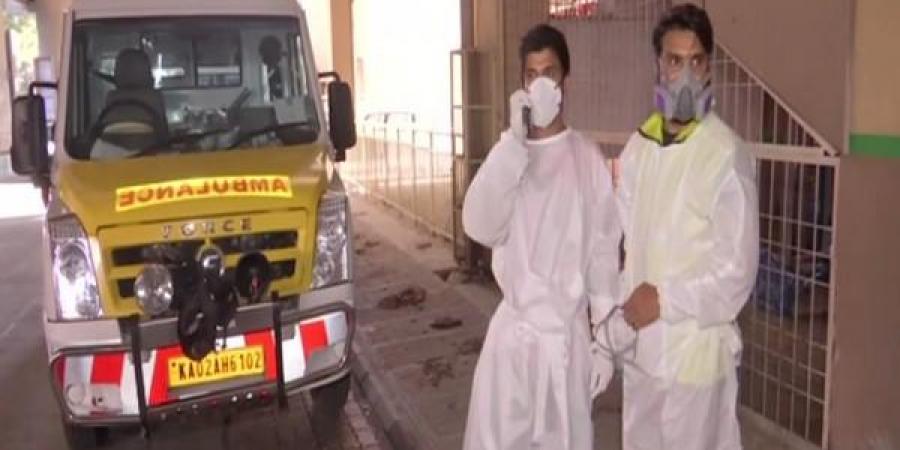
Bike-brothers Muteeb Zoheb and Murthaza Junaid volunteer as ambulance drivers.
Bengaluru :
While India grapples with the second wave of COVID-19, common people across the country are stepping up to help others in distress.
Among these are two biker brothers from Bengaluru, Murthaza Junaid and Muteeb Zoheb, who have been volunteering as ambulance drivers.
“I have seen visuals where people were running from pillar to post for hospitals and there is a scarcity of beds and oxygen. I could see the pain of people. I did not want to sit back and complain, so we started volunteering,” Muteeb Zoheb told ANI.
“As we travel across India and neighbouring countries on our bikes, we have been trained on evacuation. Ladakh is at a high altitude. On the saturation level, we have been using oximeters there also and checking the physical condition of the riders. We are using the same tools and we are getting a similar experience to check patients and give them first aid,” Zoheb said.
He further said that they have been volunteering as ambulance drivers for the last three weeks.
“People used to get the patients in two-wheelers and autos because they could not afford ambulance service,” he added.
Zoheb also urged people to volunteer and help people in distress.
Junaid said, “It is the need of the time. We have taken the opportunity to help people on the ground. The transformation is heartwarming.”
“Either we can watch, or we can do something. We chose to do,” Junaid said.
According to official data issued on Tuesday, India recorded 2,63,533 fresh infections of COVID-19 in the last 24 hours. There are 33,53,765 active cases of COVID across the country.
source: http://www.newindianexpress.com / The New Indian Express / Home> Cities> Bengaluru / by ANI / May 19th, 2021
Seeing the hardships faced by patients, the mosque committee took the decision, said Zunnoon Nomani Nomani, chief of the panel.
Lucknow, UTTAR PRADESH :
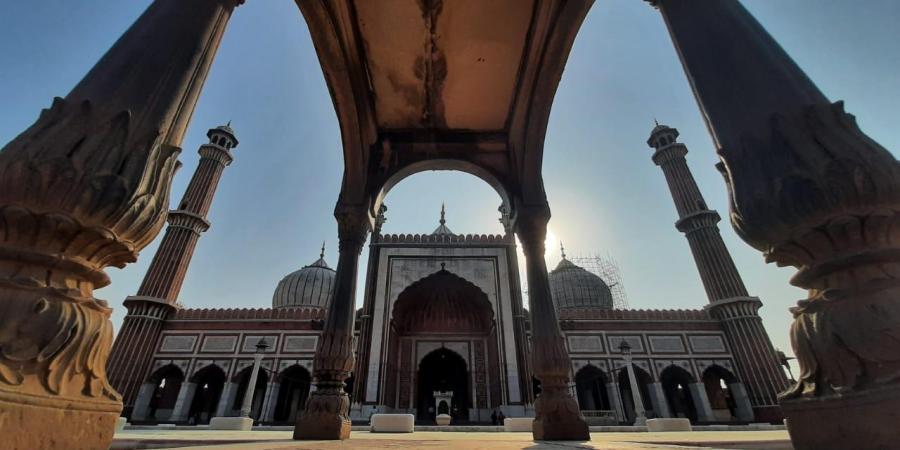
Jama Masjid (Photo| EPS/ Shekhar Yadav)
Lucknow :
The Jama Masjid in the Lalbagh area here has come forward to provide oxygen cylinders and concentrators to COVID-19 patients free of cost.
Half of the equipment have been reserved for non-Muslims.
Seeing the hardships faced by patients, the mosque committee took the decision, said Zunnoon Nomani Nomani, chief of the panel.
Nomani said, “Any needy person can come to the mosque, show his Aadhaar card and some other documents and take an oxygen cylinder or concentrator free of cost.
Fifty per cent of the oxygen cylinders and concentrators have been reserved for non-Muslims.
If needed, more help can be provided.” Nomani said initially they had only three to four oxygen cylinders.
Now, after the contribution of people, they have 50 oxygen cylinders and 25 concentrators, he said.
Nomani said whenever any person comes to donate money, he is requested to pay the amount to the seller of the equipment and send the bill via WhatsApp to the Masjid Committee.
Members of the committee collect the equipment from the seller by showing the bill, he said.
source: http://www.newindianexpress.com / The New Indian Express / Home> Nation / by PTI / May 18th, 2021
She reaches out to people in need with Oxygen cylinders.
Shahjahanpur, UTTAR PRADESH :
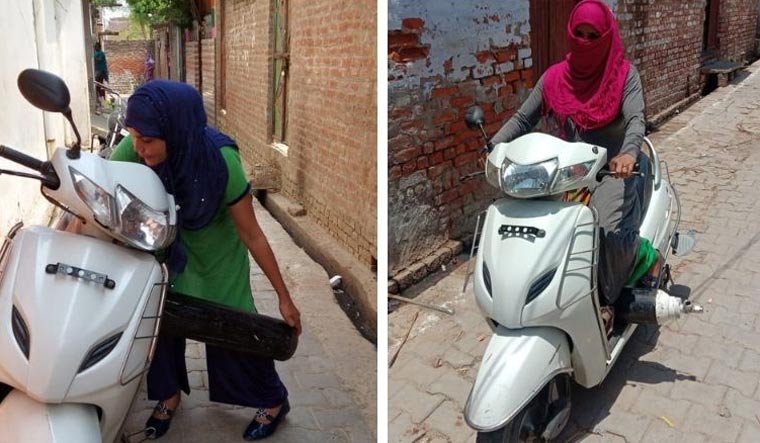
A 26-year-old woman from Uttar Pradesh has earned the moniker Shahjahanpur’s ‘Cylinder Bitiya’ (cylinder daughter), for reaching out to people in need with Oxygen cylinders on her Scooty.
Arshi Ansari’s father, Mashkoor (65), fell ill on April 2, the first day of Ramzan. Tests revealed that he was COVID-19 positive. Arshi went to the city magistrate to ask for an Oxygen cylinder for him but was told that there was no such provision for patients in home isolation. The official suggested that she finds a hospital for her father.
Arshi, a resident of Madar Khel area, went to the district hospital but was appalled by its stench and dirt. She then tried a few private hospitals, but was told that they had no Oxygen and that she would have to make her own arrangements.
“I did not want to leave my father uncared for, in a hospital,” says the woman who has completed her Bachelor of Arts in English and Urdu.
Next morning, she again went to the city magistrate and pleaded for a cylinder. This time she was given one.
Meanwhile, Arshi’s appeal for a cylinder on social media had attracted response from a group of volunteers in Rudraprayag, who sent her 10 cylinders.
Though Arshi’s father took a month to get well, after the first 12 days of illness, he did not need Oxygen cylinders. Arshi then decided that she would distribute these to the needy, who could reach out to her through a WhatsApp group. Around Shahjahanpur and even to Hardoi which is 67 km away, to the neighbouring state of Uttarakhand, Arshi has carried the life-giving gas over long distances without any charge. She also gets empty cylinders filled on request.
“No one hoards a cylinder. After have no use of it, they refill it and pass it on to others in need”, she says.
Arshi started distributing Oxygen cylinders during the month of Ramzan. Yet, she says, she never felt any discomfort or hunger. “It is my belief that I got success in my work because it was Ramzan and I had Allah’s blessings”.
When she started the work, she had to face nasty comments from passers-by and cat calling by boys. “There were even filthy posts and memes made on me”, she said.
However, the woman, who runs a computer coaching institute for underprivileged children, said, “It will be so much better to give up this childish behaviour and get out of your homes to help at least one person in need. This pandemic has taught that all we have are each other”.
source: http://www.theweek.in / The Week / Home> News> India / by Puja Awasthi / May 17th, 2021
Virologist Shahid Jameel. File | Photo Credit: Eswarraj R
The eminent virologist did not give any reasons for his departure
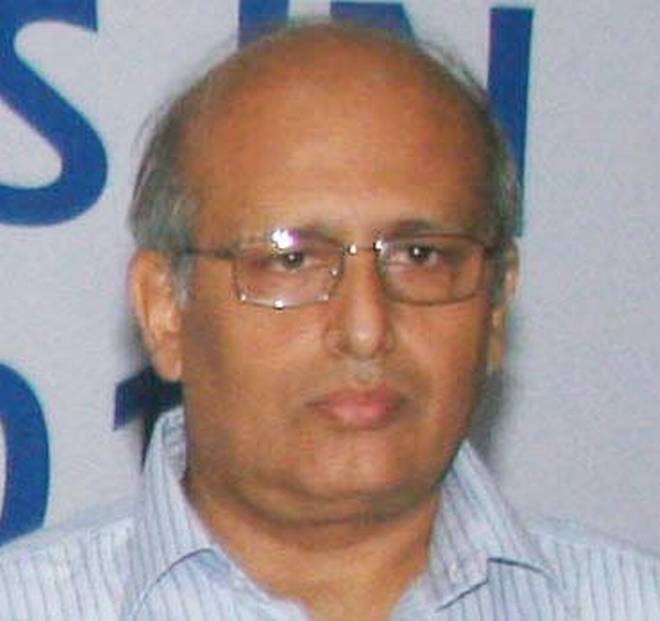
Shahid Jameel, eminent virologist and head of the advisory group to the Indian SARS-COV-2 Genomics Consortia (Insacog), resigned from his post on Friday.
Dr. Jameel confirmed to The Hindu that he’d quit but did not give any reasons for his departure.
Multiple scientists who are part of Insacog — a group of 10 laboratories across the country, tasked with tracking evolving variants of the coronavirus — told The Hindu that Dr. Jameel’s decision appeared to be sudden as he hadn’t communicated reasons for his resignation to consortium members but one of them cited “government pressure” as a potential reason.
Dr. Jameel, who is Director, Trivedi School of Biosciences at Ashoka University has been critical of aspects of the government’s handling of the pandemic.
On May 13, in an invited opinion piece for the New York Times, Dr. Jameel summarised India’s response to the multiple waves and the uneven vaccination rollout and concluded by saying “scientists were facing stubborn resistance to evidence-based policy-making. On April 30, over 800 Indian scientists appealed to the Prime Minister, demanding access to the data that could help them further study, predict and curb this virus. Decision-making based on data is yet another casualty, as the pandemic in India has spun out of control. The human cost we are enduring will leave a permanent scar.”
The Insacog, setup in December, faced initial challenges with funds and equipment but since March has considerably accelerated sequencing samples from all over the country for variants. It has been tracking international variants of concern as well as discovered the so called ‘Indian variant ‘ (B.1.617) that is believed to be instrumental in India’s devastating second wave.
source: http://www.thehindu.com / The Hindu / Home> News> National / by Jacob Kohsy / New Delhi – May 16th, 2021
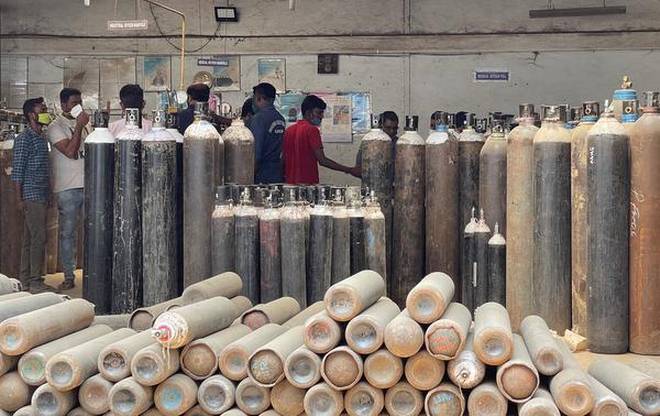
People wait outside an oxygen production unit at Peenya Industrial Area in Bengaluru, after many hospitals ran out of oxygen and beds with ventilators. File photo for representation. | Photo Credit: K. Murali Kumar
Bangalore Medical College and Research Institute 1992 batch doctors liaise with volunteer groups to offer services
Doctors living across the world — all alumni of the Bangalore Medical College and Research Institute (BMCRI) from the 1992 batch — have now banded together with a coalition of volunteer groups to offer end-to-end COVID-19 management for patients in Karnataka, particularly in Bengaluru.
While the Karnataka COVID-19 Volunteers Team (KCVT), with over 500 members, has set up a helpline (080-47166115) which counsels patients, refers them to doctors for tele-consultation, helps in home management and to find hospital beds, Mercy Mission is operating two COVID-19 care centres and has a tie-up with the HBS Hospital in Shivajinagar for critical care. While the helpline and tele-consultation with doctors is available for patients across the State, other on ground facilities are in the city.
“There are over 50 doctors, most of them from BMCRI 1992 batch, and many living in the U.S. and the U.K., who are offering free tele-consultation for COVID-19 patients. I have been doing this for a week now. Most cases are manageable at home. What patients need is guidance and some confidence,” said Umesh Nareppa, a senior cardiac surgeon at Vikram Hospital in the city, and an BMCRI 1992 batch alumnus.
Fund raising
The doctors abroad have also raised funds to the tune of around ₹2 crore and sent 250 oxygen concentrators to the city for patients who need them during home isolation.
Another BMCRI alumnus, H.V. Vasu, who is coordinating the KCVT, said the helpline also has over 100 trained counsellors and will follow patients through the entire course of the infection, advising them with course of treatment, diet, tele-consultation with doctors and try to organise oxygen, hospital beds, if need be. “We have helped book more than 200 beds in the last few days, all through diligent follow-up with the civic body,” he said.
Meanwhile, the KCVT and BMC-92 have partnered with Mercy Mission, another network of NGOs is also running helplines organising oxygen, beds, food and even cremating COVID-19 patients, and for hospital infrastructure. “We have a tie-up with Al Ameen Hospital and HBS Hospital, both in Shivajinagar. While we refer mild to moderate patients to Al Ameen Hospital, we are partnering with HBS for critical care. Mercy Mission is also looking at partnering with CSI hospital, also in the same area, for which talks are in initial stages. Meanwhile, Mercy Mission has partnered with a hospital in Hassan,” said Ali Shariff, who is coordinating these efforts. Patients who need hospital care are being referred to these hospitals.
Mercy Mission is also looking to reactivate the over 40 on ground triaging centres it operated last year in the city’s slums, with focus on vaccination this time. “There is vaccine hesitancy in the slums and we need to send in motivators who have earlier worked in these slums to get people to take the jab. Vaccine coverage is inequitable and low in these pockets. Once we are assured of vaccine supply, we will begin these centres, where we will also take up triaging for COVID-19 cases,” said Mr. Shariff.
source: http://www.thehindu.com / The Hindu / Home> News> States> Karnataka / by K.V. Aditya Bharadwaj / Bengaluru – May 16th, 2021
A 100-oxygenated-bed facility was inaugurated at Haj Bhavan COVID-19 Care Centre in Bengaluru on Saturday. | Photo Credit: Murali Kumar K
8 doctors, 12 nurses, 12 housekeeping staff, data operator posted at the CCC
As many as 100 of the 400 beds at the COVID-19 Care Centre (CCC) in Haj Bhavan in Bengaluru have been converted to oxygenated beds. The facility was inaugurated by Minister for Revenue R. Ashok on Saturday. The Minister told reporters that in the second phase, 50 beds each would be converted to ICU and HDU beds.
According to a press release, 8 doctors, 12 nurses, 12 housekeeping staff and a data operator have been posted at the CCC, which is also a triaging centre. For emergency purposes, 2 ambulances are on standby.
Mr. Ashok said that to mitigate the oxygen shortage supply in the city, all CCCs have been equipped with oxygenated beds. Over 800 oxygen concentrators have been delivered to the CCCs apart from ‘Oxybuses’ to support patients. “Every day, we are striving to increase 100 oxygen beds. This will cut down the oxygen problem in the city,” he said.
CCC with 46 oxygenated beds
A COVID-19 Care Centre with 46 oxygenated beds has been established at the Kempegowda Community Hall, near Nandini Layout, in Mahalakshmi Layout Assembly constituency. The facility, which is also a triage centre, was inaugurated by Union Minister D.V. Sadananda Gowda and Minister for Excise K. Gopalaiah on Saturday.
Mr. Gowda said the CCC will be operational from Sunday. Three oxygen mobile vans have been making the rounds of the constituency to provide oxygen to patients in critical need, he said and added that a systematic plan is in place to contain COVID-19 in the city.
source: http://www.thehindu.com / The Hindu / Home> News> Cities> Bengaluru / by Special Correspondent / May 16th, 2021
A popular ambulance service the group ran during the COVID outbreak last year to cater to its residents, which stopped two months ago owing to a dip in cases, will be revived again in a week’s time.
Changemakers of Kanakapura Road plan to revive its ambulance service for residents which was launched during the first COVID wave and later stopped (Photo | Special arrangement)
Bengaluru :
In light of the hardships experienced by the public to get taxis as well as ambulances during the ongoing pandemic, an umbrella organisation of over 60 resident welfare organisations in Kanakapura Road has decided to come to the rescue of residents. It will offer a car free of cost to help residents reach anywhere for treatment as well as revive the popular ambulance service it ran when the pandemic broke last year.
Speaking to The New Indian Express, Abdul Aleem, president of ‘Changemakers of Kanakapura Road’ said, “With COVID cases rising, we want to help out the nearly 30,000 residents who are our members. We facilitated arrangement of an Innova car through Sathya Sai Tourist service. Our group will bear the diesel and driver charges.”
Explaining the rationale behind it, Aleem said when members of the public use their own car to ferry their family members affected by COVID-19, there is a big risk to others using it. “We want to offer this alternative to them. We will be maintaining the vehicle in a fully sanitised condition so that it is safe for all to travel,” he said.
A popular ambulance service the group ran during the COVID outbreak last year to cater to its residents, which stopped two months ago owing to a dip in cases, will be revived again in a week’s time. “It costs us around Rs 2.4 lakh to maintain the vehicle supplied by J K Ambulance. We had collected Rs 60 per family to sustain the fuel and driver costs last time and plan to repeat it. We have three medical staff available 24×7 and 2 drivers to run the service,” he said.
A ventilator, suction apparatus, cardiac monitor, oxygen cylinder and infusion pumps are among the equipment in the ambulance.
There is a back-up arrangement with the provider so that if there is an emergency and someone has booked this ambulance, another would be supplied, he added.
source: http://www.newindianexpress.com / The New Indian Express / Home> Good News / by S Lalitha , Express News Service / May 13th, 2021
Citizens stand in a queue as they wait to receive a dose of COVID-19 vaccine, at ESIS Hospital in Navi Mumbai, on May 13, 2021. | Photo Credit: PTI
‘We have been providing free services with the aim of keeping humanitarian spirit alive,’ they say
Pune district has been the worst-hit in not only the State but also the country during the first and second waves of COVID-19. The district currently has nearly 95,000 active cases and is reporting nearly 15,000 deaths since March last year.
As the virus continues to wreak havoc and instil fear, there have been several cases in which relatives have refused to perform funerals of their kin or even help take the body to the ambulance.
In such cases, city-based activist Anjum Inamdar and his outfit, Mulnivasi Muslim Manch, have been performing yeoman service to ensure that these ‘orphaned’ bodies receive a proper funeral. Since last year, the Manch has performed the last rites of more than 1,300 COVID-19 victims, cutting across castes and communities.
With material support from the Pune Municipal Corporation (PMC), which has supported the group by supplying Personal Protection Equipment (PPE) kits, Mr. Inamdar and his 18-member team have transcended communal barriers with their exemplary service.
“As the deaths started mounting in Pune in late March-early April, our outfit was one of the first to respond to the then PMC Commissioner Shekhar Gaikwad’s call to NGOs to come forward and aid authorities in relief work… In many cases, funerals could not be performed as entire families had tested positive. It is in such cases that our outfit helped perform the last rites as per the tradition of a particular caste or community…We have even helped in the funeral of non-Covid victims,” Mr. Inamdar said.
Mulnivasi Muslim Manch founder Anjum Inamdar (centre, in PPE kit) helping with last rites of a Christian person in Pune.
Manch acitivists have performed the last rites of Hindus – be they Brahmins, Lingayats, Telugus – as well as Sikhs, Christians and members of other communities as per their respective customs, much to the satisfaction of the relatives of the deceased.
“Our activists have fanned out across the State, working in Lonavla, Shirur, Jejuri, Lonand, as well as Satara, Navi Mumbai, Panvel, Raigad and other districts in the Marathwada region. We have also helped with the final rites of constables, health workers, doctors, journalists and notables like Maharashtra hockey player William D’Souza,” Mr. Inamdar said.
Their volunteers also facilitate online training of workers from different social outfits engaged in relief works across the State.
“We have been providing free services with the aim of keeping the humanitarian spirit alive and ensuring dignity even in death,” says Mr. Inamdar.
Helping hand
The Sikh community has time and again proved itself when it comes to opening up their hearts and purses for relief work. The Supreme Council Navi Mumbai Gurudwaras (SCNMG) is an umbrella organisation governing nine gurdwaras. Many of these gurdwaras are providing free rations and cooking gas to the needy, by collaborating with different trusts as well as using donations from individuals.
“We provide cooking gas and rations for a week or two from our gurdwaras in Panvel, Kharghar, CBD-Belapur, Nerul, and Airoli. Whoever needs rations can go there and they get what they need,” said Mehar Singh Randhawa, general secretary of the SCNMG. Last year too, these gurdwaras had ensured delivery of rations to the needy.
“This is public money and going back to the public. Our job is to deliver to the needy without discrimination,” he said. The SCNMG also provides cooking gas cylinder to the Covid-affected.
“Come with the Covid report and Aadhaar card. While a small cylinder is for free, we take a deposit for a big cylinder. The money is refunded when the cylinder is returned,” he said. When asked how many people have benefited, Mr. Randhawa modestly said the job was not for the purpose of keeping count and no record has been maintained.
Relief in kind
Not all relief work is about offering food, though. Anjumane Shiateali, an organisation that manages matters of the Dawoodi Bohra community in Mumbai, is providing service of a different kind. It has recently set up a Covid war room in Mumbai’s Bhendi Bazar area as part of its Project Rise initiative.
Taizun Bearingwala, a volunteer/coordinator at the war room, said they offer medical counselling, consoling and guide people to appropriate medical service. “We get calls from different parts of the country. We also have over 60 doctors who offer consultations,” he said. The war room has designed a medical form which is filled after talking to the caller.
The Anjumane Shiateali has been serving food to migrants workers and has undertaken other relief efforts under Project Rise initiative since the last 12 months.
Samajwadi Party MLA Rais Sheikh said that the Project Rise work is commendable. “The callers get advise on whether they need oxygen or ICU bed or home quarantine,” he said, adding that earlier the calls were from patients, but now the number of those seeking guidance on vaccination has seen an increase.
Not just in Mumbai, Project Rise has a presence in other cities of Maharashtra and the country.
They have converted a community school in Indore into a Covid care centre providing hospital beds, oxygen cylinders and day care. So far, over 500 patients have received treatment.
With the help of local authorities and agencies, Project Rise volunteers are supplying extra beds, medicine, oxygen supply in all six Primary Healthcare Centers (PHCs) and one Covid care centre in economically backward areas of Karjat. They are also providing protective gear such as masks, gloves, PPE kits and sanitisers for all medical staff and frontline workers. This is for a combined population of over 2.5 lakh people.
Their volunteers in Coimbatore and Chennai have been serving cooked meals to patients’ families, slum dwellers, at orphanage and old age homes since the last 51 weeks.
Financial and medical support is also being provided in Nagpur and Nashik in Maharashtra and small towns like Taloda and Mahuva in Gujarat, and Thandla in Madhya Pradesh. Villages in Mokhada, Maharashtra, are being supplied with daily water tankers, covering a population of over 1,650 people
“As part of the initiative, Project Rise volunteers across different parts of the country are mobilising a range of facilities from healthcare and oxygen cylinders to serving food, water and dry rations to vulnerable sections of society,” said Ammar Tyebkhan, member, Project Rise.
Space for vaccination
St Michael’s Church at Mahim, on the other hand, offered much needed space for vaccination. “There is palpable panic among people since the second wave struck. We can help people, but there is a need to instil confidence. This confidence will come only through vaccination,” said Father Lancy Pinto.
“As we realised the need for vaccination, we offered three options to our ward officer along with the local corporator. We offered the church’s premises till November this year to set up vaccination centre. It has a capacity to vaccinate 1,200 people a day,” he added.
Father Pinto said the church offered space knowing that vaccination would be a long process and would not get over in one or two months. “Therefore, we chose a spot which will not disrupt the activities of the church and the school,” he said.
Mumbai’s Siddhivinayak Trust, on the other hand, extended monetary help to the State government to fight the pandemic and also to provide aid.
“We have donated ₹5 crore to the Chief Minister’s Covid relief fund. In addition, we also donated ₹5 crore towards the Shiv bhojan scheme of the State government where free meals are given to the needy,” said Aadesh Bandekar, president of the trust.
He said further relief measures would be be announced after a meeting of office-bearers of the trust.
Recognising another gap, Lalbaugcha Raja, one of the most popular public Ganesh mandals in Mumbai, has been running its dialysis centre throughout the Covid period.
Balasaheb Kamble, president, Lalbaugcha Raja, said, “We ensured that the centre continues to run throughout the pandemic. While medical services are busy and loaded with work treating COVID patients, those requiring dialysis can come here.”
It has also held blood donation camps where over 15,000 bottles of blood were collected. “We also gave a call for plasma donation, through which we helped around 245 patients,” he said.
(With inputs from Shoumojit Banerjee, Alok Deshpande and Lalatendu Mishra)
source: http://www.thehindu.com / The Hindu / Home> News> States> Other States / by Mumbai Bureau / Mumbai – May 13th, 2021