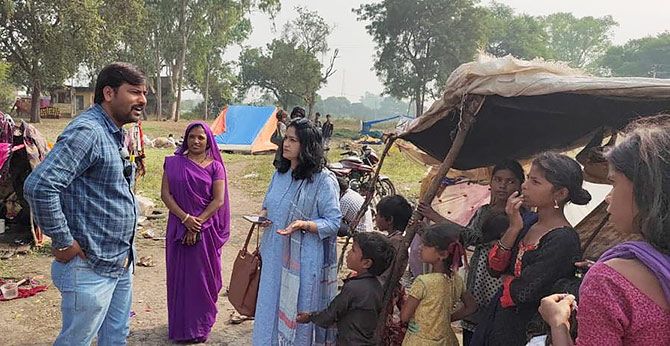
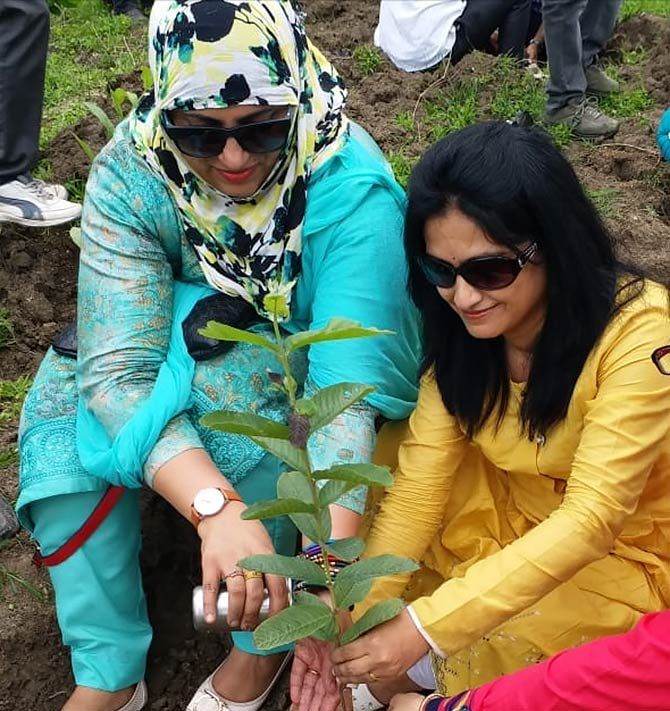
The world is in chaos. The pandemic happened when none of us were expecting it. It has been one of the most disastrous and depressing things throughout history. It wasn’t in our plans, but it happened. People have lost their jobs and their loved ones. Moreover, people are losing their will to live. The lower class of society is struggling. They are even lacking the necessities needed to survive. However, the pandemic has given rise to people who have come forward to help poor, needy, and unarmed people to fight the pandemic. These people are the warriors of the nation and Sofia Khan is one such warrior.
Sofia Khan cleared School Service Commission in 2009 and was the topper of her zone as well. Then, she was appointed as a government school teacher. However, she is also a social activist, chairman, and founder of the ‘Sufi Humanity Foundation,’ a no cash or fund transfer NGO. She is a very active participant in the improvement of our society. She has been given the post of secretary in the NGO named ‘Udaan Empowering Women’ in the year 2016 and then in the Rotary Club of Kolkata in 2018. Her performance was remarkable in the two organisations. She then joined the TMC Minority Cell, West Bengal, as a general secretary.
Sofia Khan has organized various literacy awareness campaigns in different states of the country as she is the president of the Sarparast Literacy Awareness Movement in West Bengal. She has also participated in many debates in national media as a panelist from the TMC. She conducted campaigns and rallies for TMC during the 2021 West Bengal elections. She has continuously been a keen supporter of girls, always ready to support and empower them. She helped the girls of the Milli Al-Ameen College for Girls by joining their protest against injustice to the college students. These girls were not being allowed to sit for their exams due to the college’s internal disputes. Sofia fought for them and got them justice.
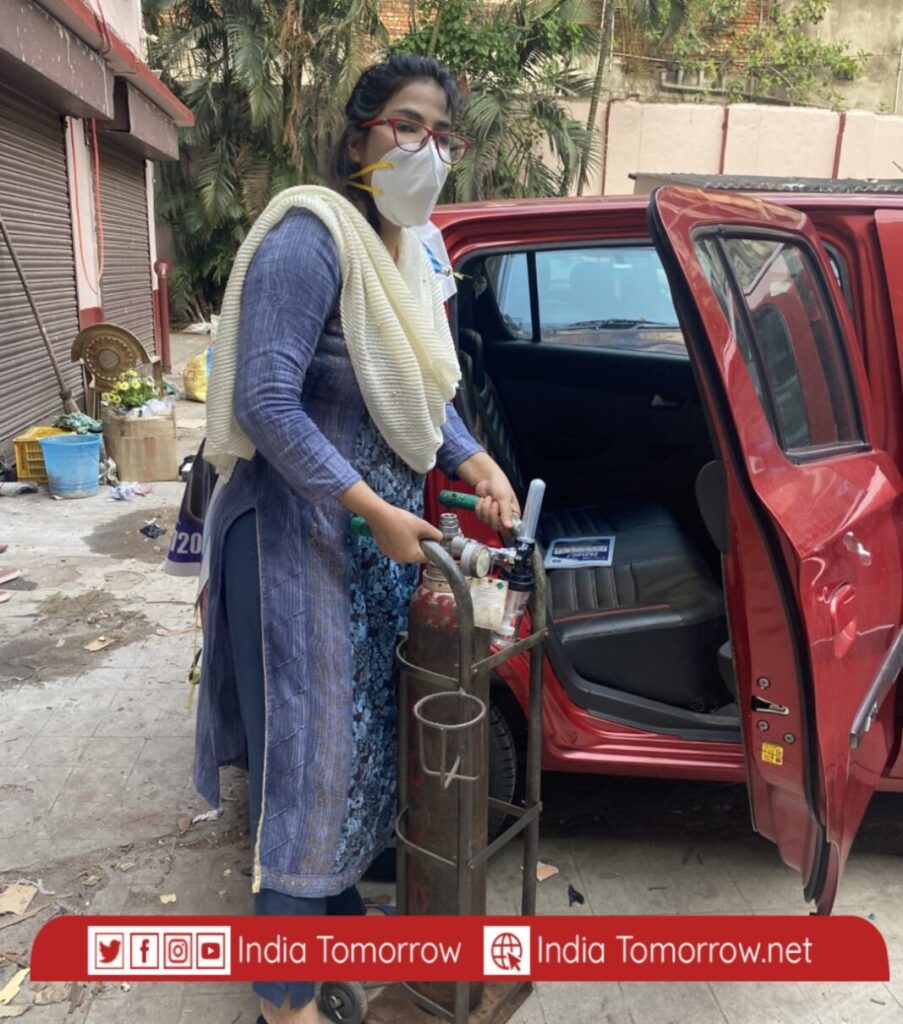
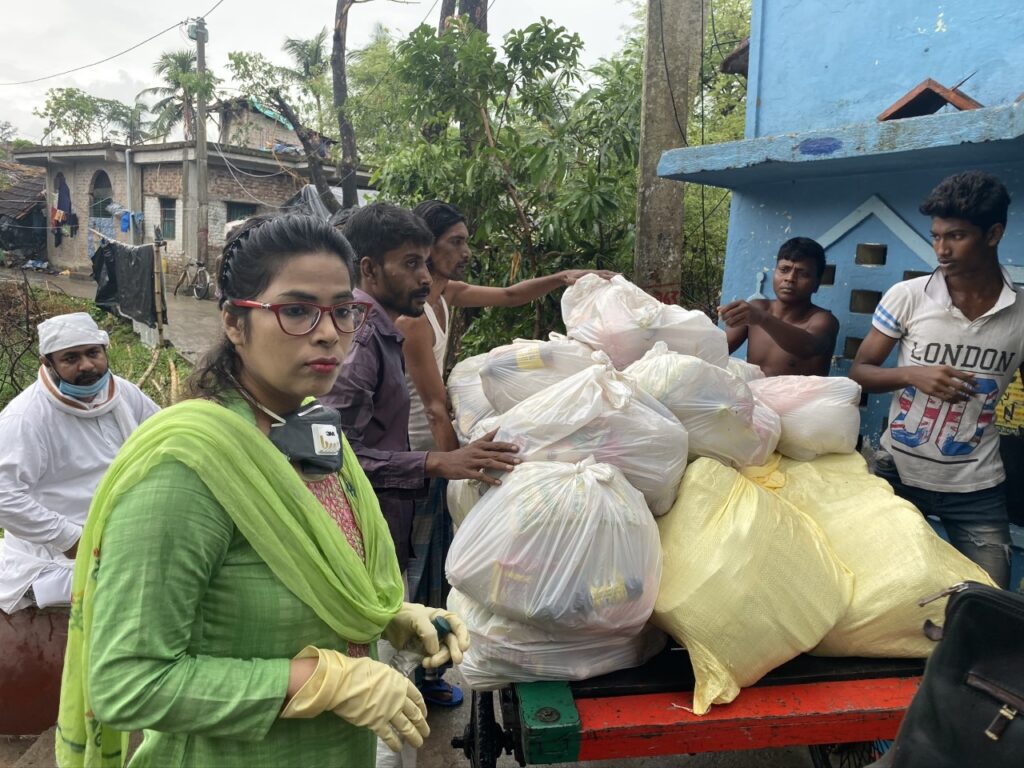
It’s commendable and worth mentioning how she did not waver from her motive of helping the people even in lockdown. Sofia Khan has helped many people by providing them food amidst the lockdown. She sent back numerous migrant labourers to their native places during the first phase of the lockdown in 2020. This year when second wave was on its peak and people were dying without oxygen she was there to help people across West Bengal with free oxygen cylinders. She later extended the help and converted four cars into free ambulance service with oxygen cylinders for Covid patients. When the state was hit by a deadly tropical cyclone called the ‘Amphan’, Sofia Khan, along with her team distributed tarpaulins and ration to almost a thousand families. She also showed her support during the Yaas cyclone. She sent relief materials like biscuits, cakes, drinking water containers each of 20 litres, clothes, etc. to the affected families. Her works and contributions have also been recognized by the Sanmarg Hindi daily, Echo of India, Awami News, etc.
Life has been tougher than usual for all of us but that doesn’t stop some of us from being an inspiration to others. While our nation and the world are fighting against the pandemic, it is important that we stay alert and be responsible for each other. We need to support and help those who are unable to survive on their own. Warriors like Sofia Khan do not wait for a chance rather they create the opportunity to help others because they realize that ‘Warriors are not born, but self-made’.
(The author of the article is a freelance journalist).
source: http://www.indiatomorrow.net / India Tomorrow / Home> Featured> National Interest / by Meer Faisal / June 18th, 2021
Relief organizations of Hyderabad, run by Muslims, have come to the rescue of the state and offered help to fight the shortage of Oxygen.
A TCN Ground Report features some of them.
Amid a surge in Covid-19 cases in Hyderabad in the southern Indian state of Telangana and rise in deaths due to the virus, the severe shortage of oxygen, ventilators and beds in both the government and private-run hospitals exposed the shortfalls of the healthcare system of the state.
Reports said that many patients were turned away from the hospitals due to a shortage of beds and died in their homes. Those admitted to the hospitals died due to lack of oxygen supply and delay in oxygen tankers reaching them. This lead to hundreds of deaths in Hyderabad alone.
Reports also said that hospitals were overcharging Covid-19 patients. These factors contributed to many people choosing to opt for home treatment.
It was then that the relief organizations of the state, run by Muslims, came to the rescue and offered help to fight the shortage of Oxygen.
Talking to TwoCircles.net, Shiba Minai, an activist said, “I make at least 50 to 60 calls to get a bed for a patient”.
Shiba helps people by connecting them with groups, hospitals and organizations that have been helping patients with beds and oxygen facilities.
Shiba has been doing relief work since the first wave of the Covid-19 pandemic by providing food for the homeless, migrants, poor people in the slums. She has also helped with the funeral services of the victims.
She said that a lot of people reach out to her during crisis time. To help these desperate families, she would seek financial help from friends and family members.
“I get calls from people who are unable to find a bed or oxygen if they are already in the hospital or are under home treatment. Then, I call up hospitals and once I get the right hospital, I then connect the patient or the attendant to that hospital,” she said.
Shiba said the work she does is exhausting. “Making several calls to hospitals that want to know how much can the patient be able to pay and meanwhile handling calls from attendants of patients is taxing,”.
Talking about an incident wherein a 45-year-old woman whose saturation levels dipped low and her family could not find a hospital with a bed, Shiba said that she tried her best but “the hospitals refused to admit her after coming to know that her oxygen levels were quite low and she had fewer chances of survival.”
The family of the patient roamed to 6 hospitals, who earlier had assured of the availability of bed refused to admit her once they saw the saturation levels. The woman was taken home where she later succumbed.
“I tried to help this lady from 9 p.m. till the wee hours of the morning when it was time for Suhoor (early morning meal during the Muslim month of Ramadan). Sadly, she could not be saved,” Shiba said in a sad tone.
Although Shiba has helped sixty persons with beds with oxygen facilities, what makes her sad is that the “number of patients who I could not help is higher than the ones I helped.”
Shiba is not alone in doing Covid-19 relief work. Like her, several organizations have helped Hyderabad overcome the Covid-19 crisis from the last year. This year too they have come forward to battle the oxygen shortage in the state.
‘Oxygen on Wheels’
Mohammed Asif Hussain Sohail, the chairperson of Sakina Foundation, who is popularly known as the ‘Hyderabad Hunger Warrior’ for feeding the hungry for more than 10 years, has been receiving close to 200 calls every day from patients who are being treated at home. He also gets calls from hospitals especially Osmania and Gandhi General Hospitals requesting him for oxygen facilities.
“The price of oxygen cylinders is quite high at Rs 30,000 and the cost of refilling has gone up to Rs 2500 which a common man cannot afford,” Sohail said.
Md Asif Hussain Sohail of Sakina Foundation
Sohail said that as hospitals are running out of oxygen and due to black marketing, he has to verify if the patient needs oxygen or not before helping.
“Sometimes, they don’t need oxygen and we have to counsel and advise them not to give in to their fear and explain to them that a needier person requires it more,” he explained.
Sohail claims that he has “spent more than Rs 10 lakhs from his pocket to buy cylinders and send them to the homes of the needy.”
“Every day, in Hyderabad itself, my Foundation has provided more than 200 free cylinders. We have reached out to at least 2000 people so far,” he said.
Oxygen on Wheels is another initiative of the Sakina Foundation. As part of this initiative, oxygen cylinders are provided to patients who are on their way to the city for treatment from their towns and villages.
“Many people were dying on the way to Hyderabad. Not being able to get proper treatment in their villages they would travel to advanced hospitals in the city. The patients would only be saved if they arrived on time and if the hospital had oxygen,” he said.
“I wanted to save lives so I came up with this idea to provide emergency oxygen cylinders on the highway,” Sohail said.
As soon as they receive an SOS call, his volunteers drive to the spot where the patient is and help him/her with the oxygen.
Sohail said that they have driven up to 200 kilometers to provide oxygen to a patient on the highway.
“Patients were coming not just from the districts of Telangana state but also from Bhopal, Maharashtra, Karnataka. We met them all on the highway and immediately helped them with the oxygen if their saturation levels were low,” Sohail said, adding, “Nearly 150 persons were helped on the highway.”
Sohail said that “love and compassion are necessities, not luxuries.” “Without it, humanity cannot survive,” he added.
700 people given oxygen aid by Helping Hand Foundation
With the oxygen crisis in the state, volunteers of the relief organization Helping Hand Foundation (HHF), headed by Mujtaba Aksari, have been at the forefront.
The group distributed a flyer with their contact numbers for people to seek help in cases of Covid-19 emergency. The group also provide help with giving decent funeral services to Covid-19 victims deaths irrespective of religion.
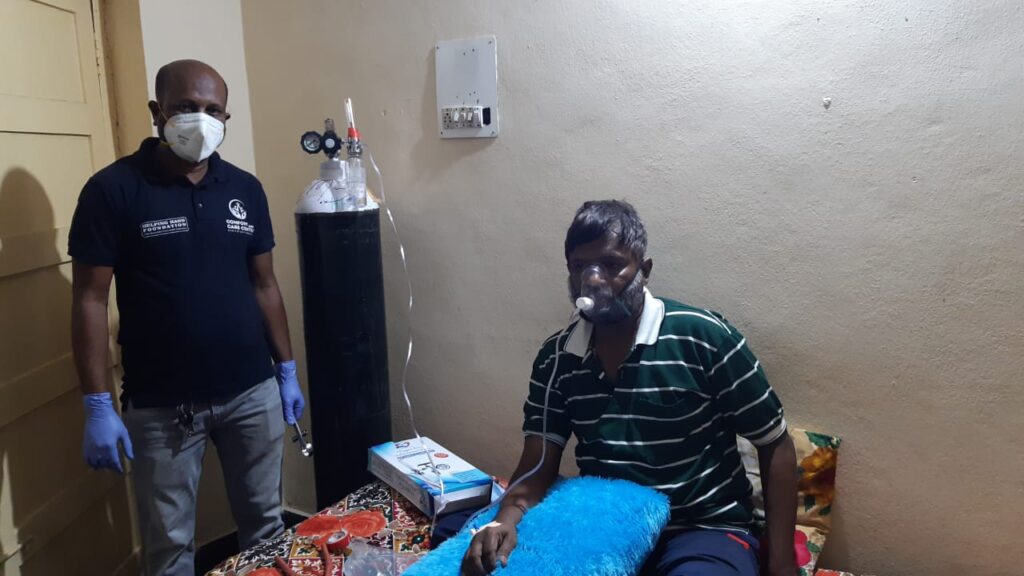
Mohammed Fareedullah, who heads the project told TwoCircles.net, “When we receive a call for help, our doctors consult them online and based on the doctor’s recommendation, if the patient needs oxygen, we advise the attendant to come to our godown and take the oxygen cylinder without paying any advance or rent.
A patient receiving oxygen help from HHF | Photo by HHF
Fareedullah said that the families of the patients just have “to pay the refilling charges.”
“The plant where we get the cylinders refilled have begun to charge double of what they used to charge earlier. But we charge the people a nominal amount,” he said.
“The cylinders provided by HHF are usually for home patients but if the patient develops complications and their saturation level drops despite the oxygen therapy then we help them reach the hospital where again our counsellors in the hospital help them with other needs. When the patient recovers and is discharged we ferry them home in HHF ambulances. If they do not recover the volunteers help the family with the last rites too,” explained Fareedullah.
Helping Hands Foundation owns about 15 ambulances which are free for all patients. The group has 100 cylinders and a luggage trolley to transport the cylinders to the houses of people who cannot come to their go down.
To date, HHF claims to have helped more than 700 people covering the entire old city and many other localities.
Humanity First Foundation: from feeding hungry to procuring Oxygen
Mohammed Shujatullah,founder of relief organization Humanity First Foundation has been feeding patients and their attendants at three government hospitals for the last 5 years.
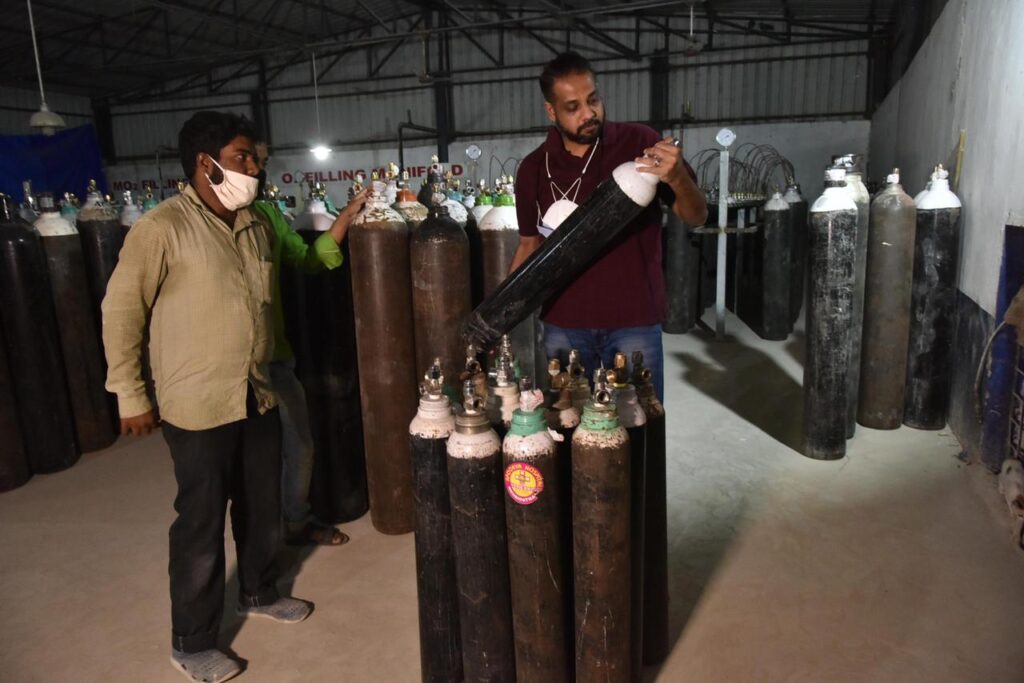
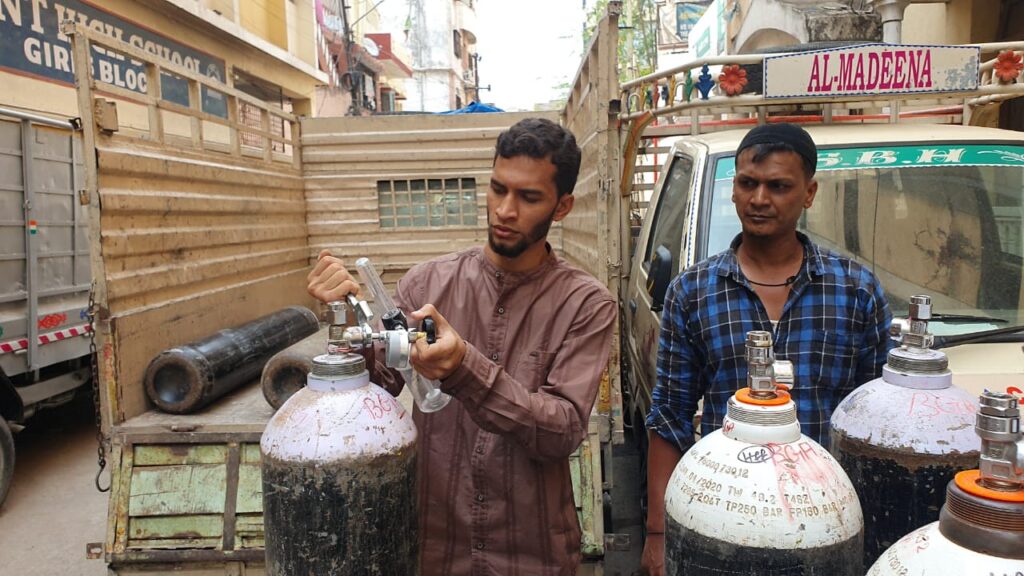
One day when Shujatallah received a call requesting help with oxygen, he decided to buy cylinders and give them for free to patients and then refill the empty ones and help whoever needed them. “Prices had doubled for both the oxygen cylinders and for refilling but through donations to Humanity First, I continued helping people every day with the 110 cylinders we have,” he said.
Md Shujatullah of Humanity First Foundation checking oxygen cylinders | Photo by HFF
His organization has an ambulance, which carries the oxygen cylinders to hospitals and homes of patients.
In the month of Ramadan, Shujatallah said that his foundation received good donations and he managed to help as many people as was possible for him.
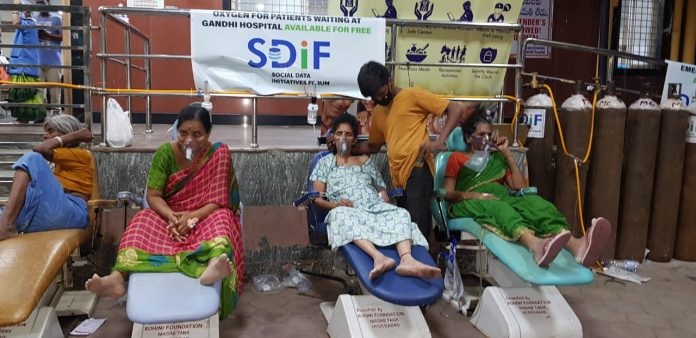
Patients at the gate of a hospital supported by SDIF | Picture: SDIF
‘Our motive to save lives keeps us going’
Another local initiative known as Social Data Initiative Forum (SDIF)founded by Azam Khan and Khalid Saifullah started oxygen services during the first wave of the pandemic with their stock of 15 cylinders.
During the second wave, as the oxygen crisis has only gone worse, the group has been adding to their stockpile of oxygen cylinders.
The founders said that they had to pay more than the normal price for both purchasing and refilling the cylinders.
“Our services are not restricted to just providing oxygen cylinders. We also set up an oxygen bank at Government notified Covid-19 hospitals where usually the poorest of the poor come to access health care. People from the rural parts come to Hyderabad with hopes of quality treatment and they face a lot of hurdles waiting to get admitted after already having travelled a long distance,” Azam Khan said.
“The waiting period at the hospital and the travel time further delays the process of the treatment, which is why we opted to help in the government hospitals,” he clarified.
In Gandhi Hospital alone, which is the largest Covid-19 hospital of Hyderabad, Azam Khan said they have “20 oxygen cylinders in circulation which are serving at least 400 patients per day.”
“This supply of oxygen is crucial to their recovery,” Khalid added.
Apart from the 20 cylinders, they have 100 more cylinders at the other two government-run Covid-19 hospitals of Hyderabad.
They said they have helped more than 100 people so far.
Azam Khan narrated an experience that made them realise the significance of their work.
The King Kothi Government hospital had requested SDIF to set up an oxygen bank.
“I felt we had to start the work immediately and even though it was Sunday, our team went to the hospital. As soon as we reached the hospital, we saw four dead bodies being carried away. We were told the hospital had run out of oxygen causing the death of these four persons. We immediately set up our oxygen cylinders. Later the doctors informed us that our timely help had saved three persons who were critical and would not have survived had we not reached on time. This experience both saddened us and also made us feel happy that we could at least save the lives of other three persons,” he said.
“Our motive to save lives keeps us going,” the duo said.
The SDIF is helped by two other charity organizations from Hyderabad namely Safa Baitul Maal and Access Foundation, who work in close collaboration with them.
Pre and post-Covid care given by Al Hamd Foundation
Al Hamd Foundation, a charitable trust that helps widows, students and the poor, took up Covid-19 relief operations during the last year’s lockdown.
Amid the ongoing second wave, the foundation is continuing with online consultations of patients with doctors.
When patients contact them online, they are connected to doctors who advise home treatment keeping in view the severe crunch in the hospitals and also the fact that many cases can be treated at home with proper medications and care.
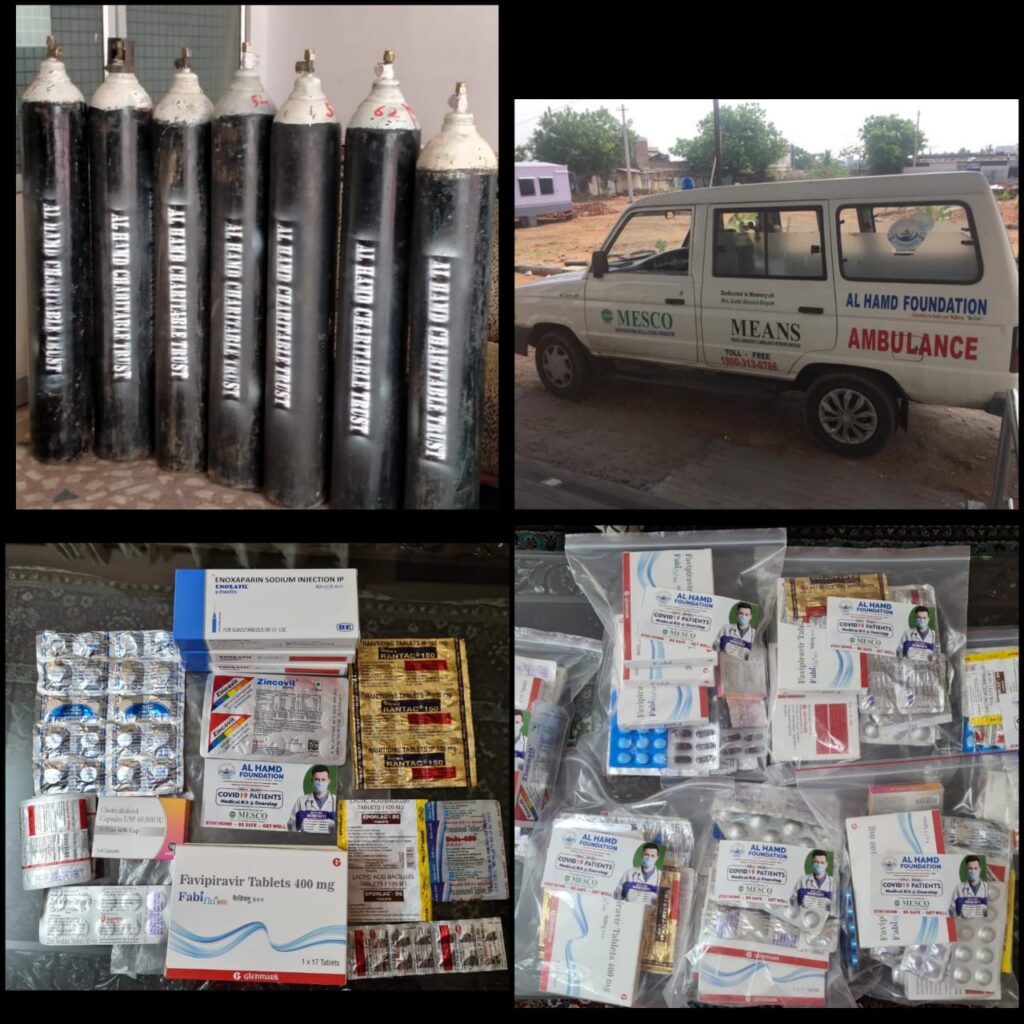
Al Hamd Foundation Covid relief services
The foundation has provided home treatment to fifty-two patients, who had reported low oxygen levels.
The founder of Al Hamd Abdul Azeem Mohammed told TwoCircles.net that the treatment cost they incurred for each patient would have run up to Rs. 7 to 8 lakhs had they been treated in a hospital.
“The team of AL Hamd ensures that the patient does not panic and develops a strong will to fight the disease and survive. The team also helps with the oxygen cylinders, the medicines and regular monitoring by the doctor who visits the patient. At times when the patients are poor and the team notices that they need provisions apart from the medical assistance, Al Hamd provides the family members with rations as well,” Azeem said.
Al Hamd has given 300 oxygen cylinders and 6 oxygen concentrators to other organizations that are helping people affected with Covid-19.
They have four oxygen hubs and seven ambulances in Hyderabad-Secunderabad and a fifth one is coming up soon.
“We have ordered 25 oxygen concentrators from the UK which is likely to arrive by in the last week of May. Each oxygen concentrator of 5-6 litres costs around Rs 46,000. We have also ordered 5 C PAP machines that cure respiratory disorders. And since we are not a hospital, we intend to donate these C PAP machines to the hospitals where there are facilities to treat patient with respiratory disorders that are linked to Covid” explained Azeem.
“We also give post-Covid care by giving immunity-boosting drugs and foodstuff,” he added.
Al Hamd is run with funds from family and close friends.
50-bed oxygen therapy centre set up by Jamaat-e-Islami Hind
Well-known socio-religious organization Jamaat-e-Islami Hind (JIH) Telangana has also set up a 50-bed oxygen therapy centre in Wadi-e-Huda near Shaheen Nagar, Hyderabad. JIH’s sister concern Students Islamic Organisation (SIO) supports recycling the cylinders, rifling them, coordinating with other organisations for availability.
Post Script
To support Helping Hand Foundation, you can make a GooglePay donation here: 8125203286
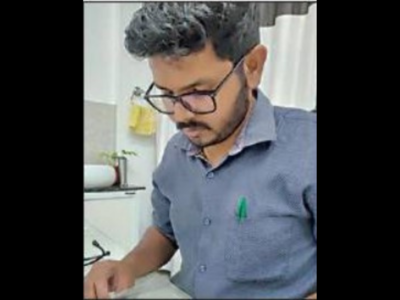
Dr Muhammad Yazin is a member of the Covid control room at Vattiyoorkavu
Thiruvananthapuram :
A few days ago, Dr Muhammad Yazin and his team at the Covid control room run by Vattiyoorkavu MLA V K Prasanth broke into a house. Their intentions, however, were honourable. A call had come from a 55-year-old Covid positive woman and she had fallen so sick that she couldn’t even open the door eventually leaving the medical team with no other option that breaking the door open. “We could save two patients, the woman and her 95-year-old mother. They were shifted to ICU at the medical college hospital, we hope they will recover,” says Yazin who has so many similar experiences to recount, including dealing with a snake in the house of a Covid patient.
The 26-year-old doctor, a former student of the Thiruvananthapuram Medical College, was working at a private hospital in Coorg till recently.
He quit the job to work with the medical team without any remuneration. This is not the first time he is volunteering.
During the 2018 floods, he had joined the same medical team as a student. That was just the beginning.
Later in 2019, when many people were buried alive in a massive landslide at Kavalappara near Nilambur, Dr Yazin was there with the medical team.
Also, he was among the volunteers when Cyclone Ockhi hit the coast in Thiruvananthapuram.
Besides volunteers and nurses, there are four doctors in the medical team of the Covid cell at Vattiyoorkavu. “We provide tele-consultation for the patients. Medicines are sent through the volunteers of the rapid response team. Our team consisting of a doctor, a nurse, and a volunteer also visit patients needing home care. We would shift them to hospitals if required. Our schedule is not at all hectic . We usually work for eight hours,” Dr Yazin adds.
“I had tested Covid positive while working in Coorg. After getting cured, I rejoined duty and resigned two days after knowing about this initiative. After having worked together during the flood and now, the team has become just like a family,” he says.
In the future, Dr Yazin is expecting to be a part of the medical team of Vattiyoorkavu Youth Brigade, an initiative of MLA Prasanth. The plan is to focus on the economically weaker sections. How about earning something to live? “Well , I plan to work in a private clinic and side by side find time for voluntary medical service,” he says.
source: http://www.timesofindia.indiatimes.com / The Times of India / Home> News> City News> Thiruvananthapuram News / by TNN / June 11th, 2021
Thaikkadappuram (Neeleswaram Municipality), KERALA :
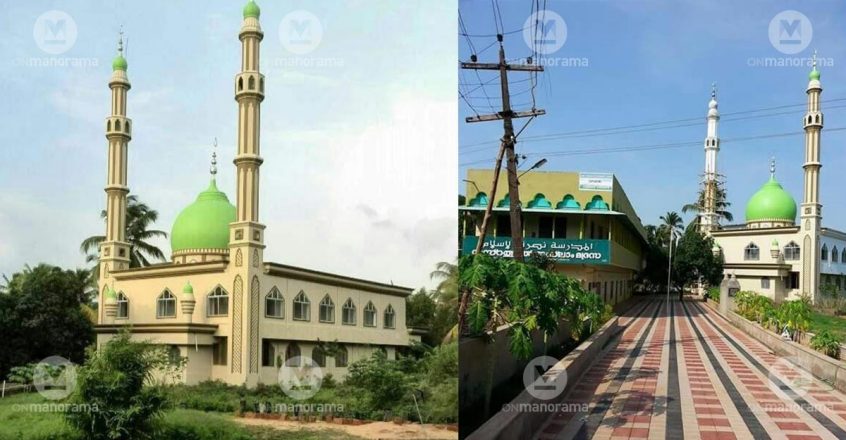
Madrassa and the Thaikadappuram Jama-ath Mosque. Photo by R Ayyappan
Since early March, when the vaccination drive began, municipality and health authorities were worried about the crowd in front of Thaikkadappuram Family Health Centre (FHC) along the coast in Kasaragod’s Neeleswaram Municipality. More than 350 people, most of them over 60 years of age and years of age and with comorbidities, came for vaccination daily to the Centre that was only recently elevated to a FHC.
But at that point, when Kerala was gearing up for an intense election campaign, there was a general impression that COVID-19 was on the wane. It was easy to brush aside worries.
However, when the second surge began in the middle of April, old worries returned. When the rains intensified by the second week of May, more space became a necessity.
“Along with those coming for vaccination, there were the regular patients. When it is windy and raining, which was almost always during the last fortnight, we could not let them stand outside. But it was also not right to let these two groups mingle,” said Dr Sarada, the FHC’s medical officer. Most were poor folk from the fishermen community.
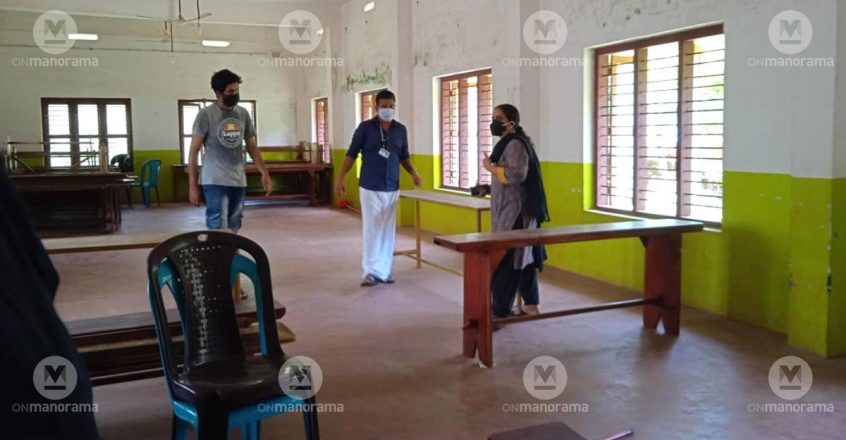
Interiors of the madrassa being rearranged for the vaccination drive. Photo from R Ayyappan
Social distancing paradise
She asked the municipality for a place nearby to carry out the vaccination drive so that social distancing could be adhered to effectively. Many places, including an aided school, were identified. But all were slightly distant. “We wanted a place nearer,” Dr Sarada said.
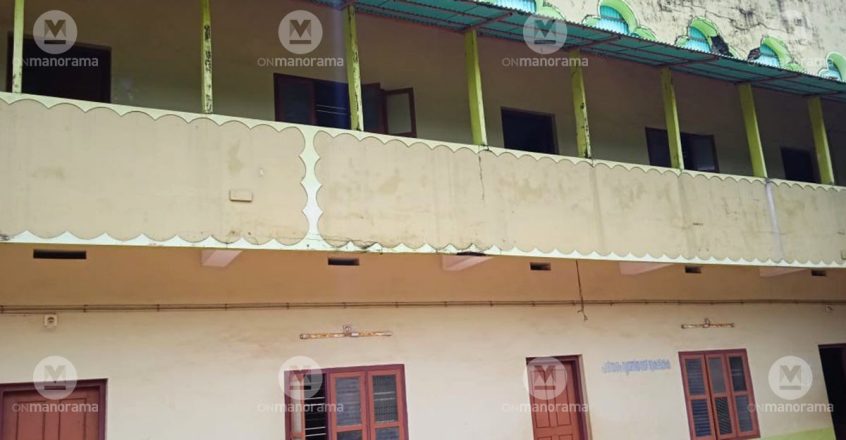
It was then that the Muslim League’s Thaikadappuram Sea Road ward councillor Anwar Sadique suggested a madrassa nearby: Thaikadappuram Jama-ath Nusrath Madrasa of the Thaikkadappuram Jama-Ath Mosque. It is a large two-storeyed structure near a newly constructed beige-coloured mosque with pastel green domes.
Anwar talked to Neeleswaram Municipality chairperson T V Santha and vice-chairman P P Muhammed Rafi, both from the CPM. All three agreed the Nusrath Madrassa, run by the Thaikadappuram Jama-ath Committee, was the right place. It was near and spacious. Importantly, the Jama-ath members were were progressive.
Secular abode
“Last year, they had willingly agreed to convert the ‘madrassa’ into a quarantine centre for migrant labourers and those returning from the Gulf,” Anwar Sadique said. “We did not use it as the need did not arise then,” he said.
This time when they asked, the Jama-ath committee was more than willing. “We did not think twice when the health and municipality officials came to us with the request,” Jama-ath secretary A Mohammed Shafi, a retired postmaster, said. “The children were not coming anyway, of COVID. But even if there were classes, we had more than enough space in the building to accommodate the children,” Shafi said.
The Jama-ath has now left the entire ground floor, over 2000 sq ft, for the vaccination drive. “It is a large space of five classrooms and we have asked them to use all our facilities,” Shafi said. Dr Sarada said that the madrassa had enough room and chairs for people to be seated at a safe distance from each other. “It has a drinking water facility and also parking space,” she said.
The madrassa is also just a five-minute walk from the FHC, diagonally across the road from it. “It is easy to carry supplies from the FHC to the madrassa,” Dr Sarada said.
Thaikadappuram Jama-ath Nusrath Madrassa. Photo from R Ayyappan
Melting pot of faiths
The Jama-ath is particular that its gesture should not be seen as some kind of a favour. “We have told Jama-ath members not to exhibit any behaviour that could even remotely be considered as patronising or dominating. People from all faiths come for vaccination and we want all of them to feel at home here,” secretary Shafi said. “Moreover, there is nothing more holy than this. It is our duty. It does not cost us any money either,” he said.
The Jama-ath members were also not comfortable with a public function to mark the handing over of the ‘madrassa’ for the vaccination drive. “We didn’t want such a function but the municipality authorities lovingly insisted,” Shafi said. A small function, with municipal councillors and health workers in attendance, was held on May 25.
The Nusrath Madrassa will be used for the first time on May 29, when the FHC has scheduled 300 shots. Chief Minister Pinarayi Vijayan, during his customary sunset briefing on May 27, spoke of the Thaikadappuram model as an example of religious generosity.
source: http://www.onmanorama.com / OnManorama / Home> News> Kerala / by Ayyappan R / May 28th, 2021
As many as six graduates have volunteered to work with the MHV, attending calls and assisting the needy.
Vijayapura (Bijapur), KARNATAKA :
For representational purposes
Vijayapura :
A 33-year-old techie from Vijayapura has set up a 24X7 helpline to assist Covid-19 patients in finding beds, oxygen cylinders and medicines. Zahoor Kazi, who works as a software engineer at a private firm in Bengaluru, started ‘Mercy Helpline Vijayapura’ (MHV) on May 14 in collaboration with doctors, activists and other software engineers.
As many as 10 doctors, settled abroad (the USA, the UK and the Middle East) and in the state, have agreed to provide free tele-consultation to the patients, mainly for those in home isolation.As many as six graduates have volunteered to work with the MHV, attending calls and assisting the needy. The team has set up a helpline number — 7848025025.
The MHV works round-the-clock and, on an average, receives 30 calls each day from Vijayapura, Bagalkot and Belagavi. It also collaborates with at least five NGOs that help people by supporting them financially in paying hospital bills, supplying grocery kits, cremating unclaimed bodies of Covid victims and other help related to Covid and black fungus.
Speaking to TNIE, Zahroor Kazi, said, “Our main objective is to help the needy in such tough times. We are working in coordination with district officials. We are also creating awareness on Covid-19.” The MHV has so far helped at least 15 patients in getting oxygen beds and about 10 people in getting ventilators. Also, 10 patients have availed the free tele-consultation services.
“Most people who call us are from urban areas. We want to reach out to those in villages too as they have limited knowledge of the disease. Now, frequency of calls to MHV has reduced owing to a dip in cases,” Kazi added.
source: http://www.newindianexpress.com / The New Indian Express / Home> States> Karnataka / by Mahesh M Goudar / Express News Service / May 29th, 2021
Health Minister Veena George applauded the efforts of Ajeesh and Noufal in the middle of a raging pandemic, terming them a model for the state’s health department.
At 2:15 am, under the duo’s guidance, Kausalya gave birth to a boy inside the car without any major complications. (Photo Credit: Kerala health department)
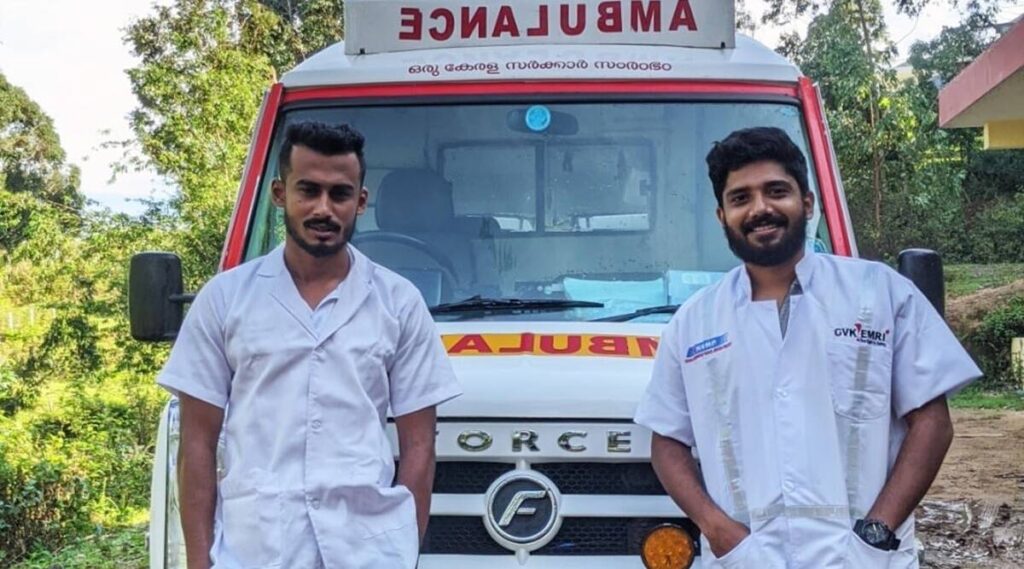
An emergency medical technician (EMT) and an ambulance pilot came in for praise from Kerala Health Minister Veena George for their timely intervention in assisting a pregnant woman deliver her child in a car enroute the hospital.
Around 1:55 am on Tuesday, the family of Kausalya (20), a resident of Koviloor in Idukki district, set out for a hospital in a car after she developed intense labour pain. On the way, they requested for an ambulance of the Kanivu 108 network and a vehicle from the Vattavada Family Health centre with EMT BS Ajeesh and pilot Noufal Khan rushed out.
Somewhere near the Pampadum Shola National Park, the ambulance staff met Kausalya and her family. But by then, her condition had turned critical. When Ajeesh examined her, it became clear to him that she could not be transferred to the ambulance before delivering her child. Ajeesh, with the help of Noufal, then proceeded to make arrangements inside the car for childbirth.
At 2:15 am, under the duo’s guidance, Kausalya gave birth to a boy inside the car without any major complications. The mother and newborn were then transferred to the ambulance and ferried to High Range Hospital in Munnar and subsequently a private hospital in Adimali. Both mother and child are reported to be healthy.
Health Minister Veena George applauded the efforts of Ajeesh and Noufal in the middle of a raging pandemic , terming them a model for the state’s health department.
source: http://www.indianexpress.com / The Indian Express / Home> India>Kerala / by Express Web Desk, Kochi / May 25th, 2021
The first plant is expected to be up and running in Hyderabad next month,” Prof Amirullah Khan, coordinator of Sahayata Trust informed. — IANS
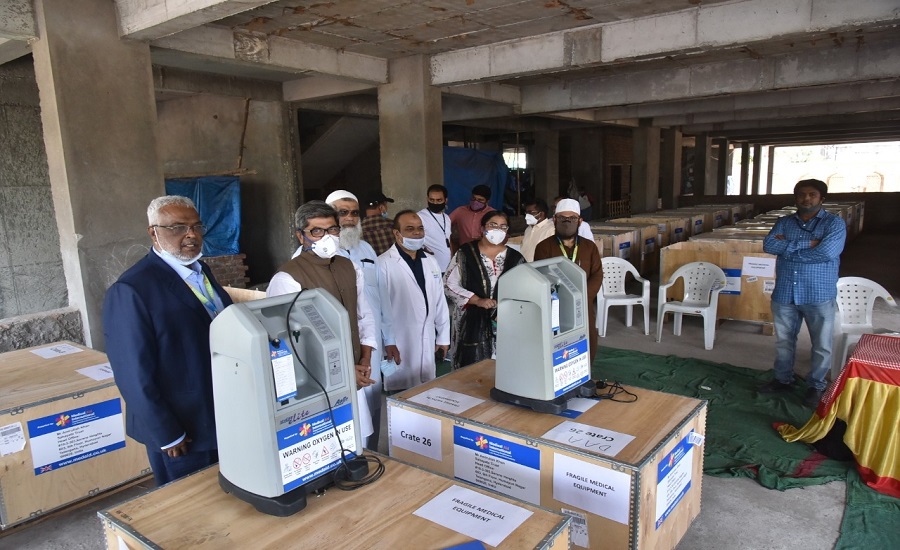
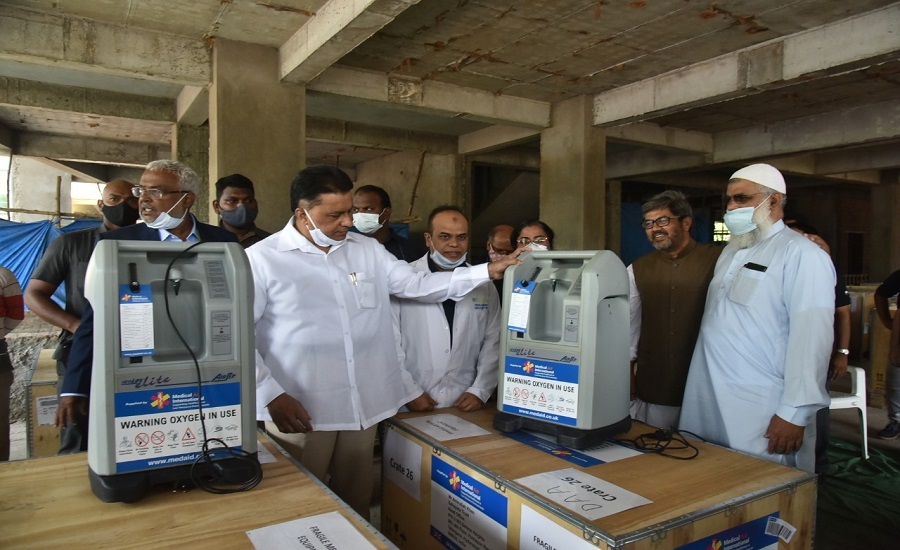
The NGO is also receiving 400 high quality oxygen concentrators from different charities in the United Kingdom and the United States which is described as the world’s largest donation of oxygen concentrators.
Hyderabad :
Sahayata Trust, a Hyderabad-based NGO, plans to set up four medical oxygen generation plants to cater to the requirements of hospitals treating Covid patients.
Each plant will have a capacity of 4,500 litres per day and will come up at a cost of Rs 1 crore each. Two plants will come up in Hyderabad and one in Gujarat. The NGO is yet to decide on the location for the fourth plant.
“The first plant is expected to be up and running in Hyderabad next month,” Prof Amirullah Khan, coordinator of Sahayata Trust, told IANS on Monday.
The development economist said the NGO would be importing the plants. He said these plants would meet the requirements of various hospitals treating Covid or other critically ill patients.
He pointed out that the NGO is also receiving 400 high quality oxygen concentrators from different charities in the United Kingdom and the United States. He described it as the world’s largest donation of oxygen concentrators.
The devices will be allocated on a per-need basis to different NGOs across Hyderabad, Lucknow, Allahabad, Delhi, Ranchi, Bhopal and other cities. — IANS
The first consignment comprising 170 devices arrived in Hyderabad from the UK by a special flight of Qatar Airways on Friday. The second consignment of 270 concentrators is scheduled to arrive next week.
Sahayata Trust has started distributing concentrators to different healthcare organisations in Telangana and other states. “The relief effort will add oxygen to the efforts of NGOs scrambling to procure oxygen to save as many lives as they can,” said Sahayata Trust CEO Syed Aneesuddin.
The devices will be allocated on a per-need basis to different NGOs across Hyderabad, Lucknow, Allahabad, Delhi, Ranchi, Bhopal and other cities. The organisation included Access Foundation, Safa Baitul Maal and SDIF.
Different NGOS across international borders have joined hands for the noble cause at a time when several lives are being lost across India due to shortage of oxygen cylinders and oxygen concentrators during the second wave of Covid-19.
Donation of concentrators is a meticulously coordinated relief effort by UK-based charities managed by the Indian diaspora including Maahir Charity, Deccan Medical College Alumni Association, and Medical Aid in coordination with the US-based Indian Muslim Relief & Charities (IMRC), the parent body of Sahayata Trust.
Syed Aneesuddin thanked Hyderabad Member of Parliament Asaduddin Owaisi who played an important role in helping the consignment reach India within a short span of time.
“These are high quality oxygen concentrators with dual outflow of oxygen enabling two patients to use the same machine at a time. We are training people to use the device using the device manuals received from England. This is a daunting task to coordinate the allocation as well as train and equip the personnel to handle the device in a very short time, especially since every passing minute increases danger of loss of life for people struggling to find oxygen support,” said Amirullah Khan.
India needs about one lakh oxygen concentrators. “The government has been able to import only 1000 from the USA, which means there is a deficit of 99%. In such savaging times, the import of 400 units is a small but significant effort in saving more lives”, said former civil servant Prof Amirullah Khan.
He thanked the state and central governments for waiving the import duty on the equipment. He also thanked Chief Secretary Somesh Kumar for taking up the matter on an urgent basis and Commissioner Commercial Taxes Neetu Prasad who went out of the way working late at night to grant ‘real-time approval’. Due to her personal interest in expediting the process, the consignment was ready for pickup within three hours after arrival. — IANS
source: http://www.clarionindia.net / Clarion India / Home> Editor’s Pick> India / by IANS / May 24th, 2021
The patient in distress had got a bed at CG Hospital, but there was no oxygen, and the family was asked to source a cylinder.
Davengere, KARNATAKA :
Habeebunissa en route to deliver an oxygen cylinder to the needy | Express
Davangere :
Habeebunissa may be just 19, with limited resources, but has displayed grit and initiative.
As Davanagere locked itself in to stave off the Covid second wave, this young woman ventured out to help the needy.
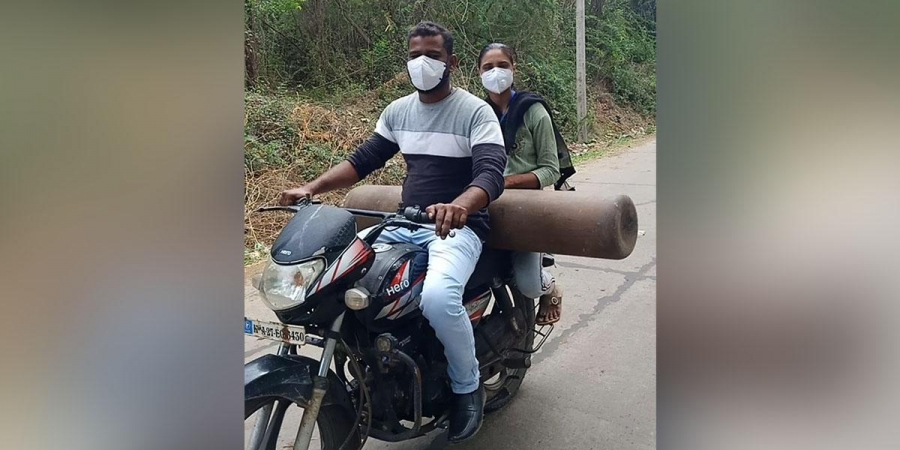
The international volleyball player has been winning hearts, especially after a video of her carrying an oxygen cylinder on her brother’s bike went viral last week.
The patient in distress had got a bed at CG Hospital, but there was no oxygen, and the family was asked to source a cylinder. She swung into action, collected the cylinder and rushed to hospital. She is glad that the patient survived. She went on to arrange four more cylinders.
The daughter of an autorickshaw driver, Mohammed Jabir, Habeebunissa has been active on many fronts — distributing masks, arranging for oxygen and blood, and even cooking food for stranded nomadic families. She and her mother used the PDS grains that her family gets to cook the meals.
“It is our duty to save humanity from the clutches of the Covid-19. The Youth Congress is funding my initiative to provide cylinders and other social work, with some contribution from my father,” she said.
As vice-president of the Youth Congress Davanagere unit, she has also motivated many girls to take up sports and develop leadership skills.
She is doing her final year ITI (electrical) at Millat College in Davanagere and is an ace volleyball player.
Her father Jabir, who earns Rs 800 per day, and almost nothing since the lockdown kicked in, says he is happy that his daughter is using whatever he gives her to help society.
source: http://www.newindianexpress.com / The New Indian Express / Home> Good News / by G Subhash Chandra, Express News Service / May 22nd, 2021
‘We got so many calls after the attack.’ ‘Loved ones told us forget all this, nothing was more valuable than our lives.’ ‘But we said, ‘No, this wasn’t the way forward — the people, society, the country needs us at this time.’ Dr Trupti Katdare and Dr Zakia Syed tell Archana Masih/Rediff.com their inspiring story.
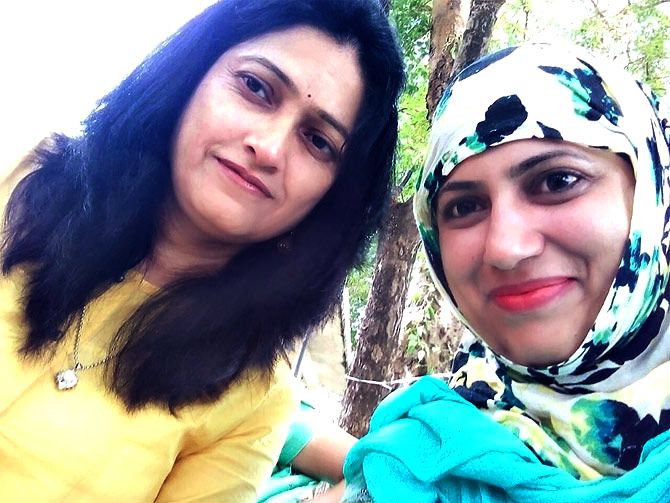
Dr Trupti Katdare, left, with Dr Zakia Syed. All images: Kind courtesy Dr Zakia Syed and Dr Trupti Katdare
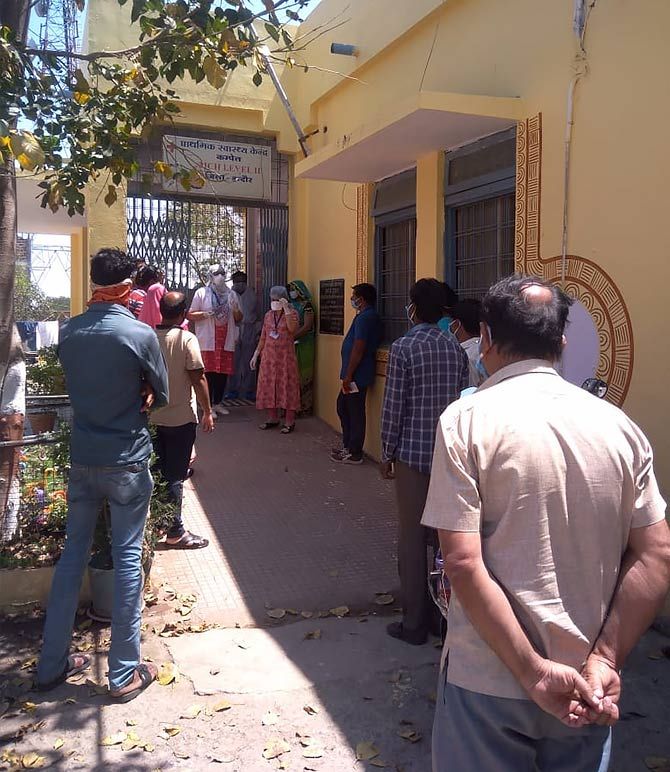
Dr Zakia Syed and Dr Trupti Katdare first met during their induction as young doctors nine years ago. The training for their appointments as doctors in the government-run public health centre in rural Madhya Pradesh lasted for a month, but they ended up with an everlasting friendship.
“We are besties till death,” says Dr Trupti, chief medical officer at the public health centre in Shipra near Indore, as she refers to Dr Zakia, who is in-charge of the primary health centre in Kampel, 40 kms away.
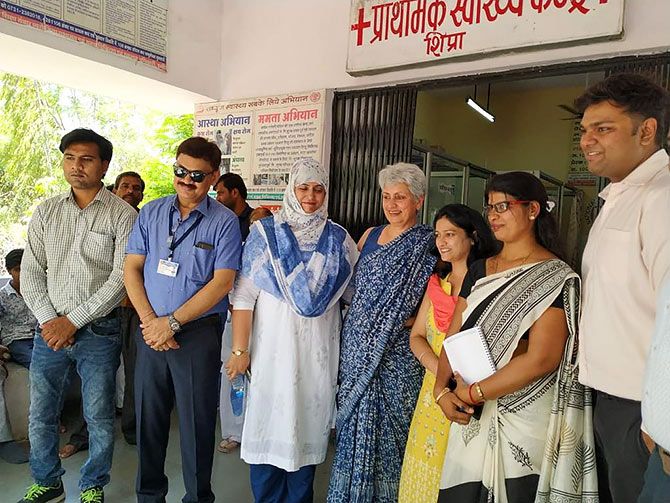
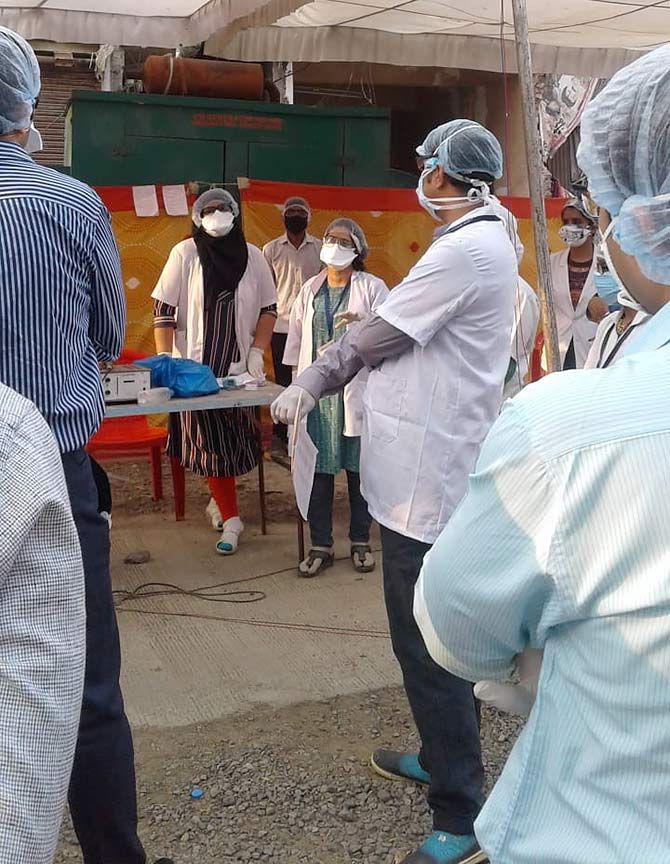
Dr Trupti Katdare and Dr Zakia Syed with other doctors and team members at the Shipra primary health centre.
For the past six weeks, the two doctor friends have been working together at the frontline of the battle against COVID-19 in Indore. They have left their families and moved into a hotel to protect their loved ones from the infection. Dr Trupti is especially concerned about her in-laws who have diabetes and asthma.
When she wanted to wish her husband on his birthday on April 29, they went to her home and wished him from outside.
Dr Zakia last saw her husband and children aged 5 and 9 two weeks ago. She stood outside the gate of her home and had a cup of tea as her son and daughter kept asking her, ‘Mama, when will you come home?’
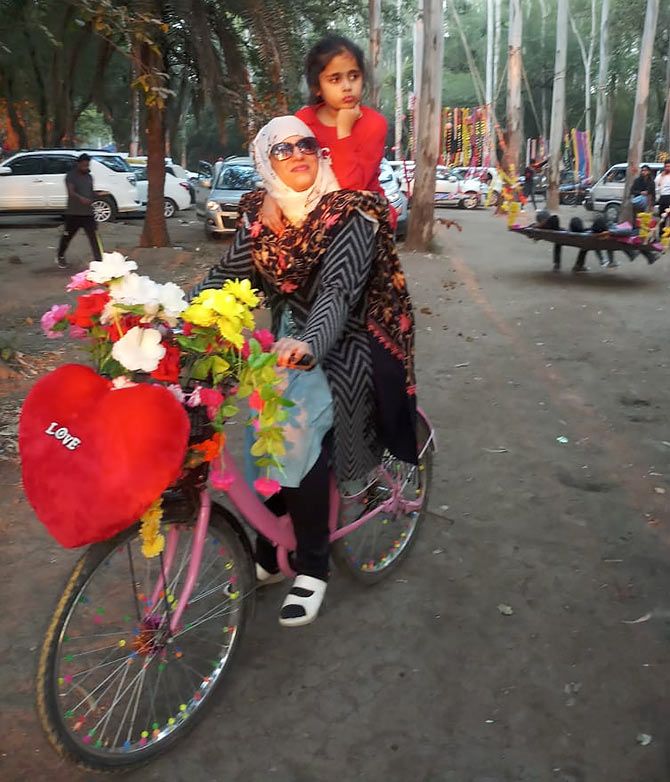
Dr Zakia Syed with her daughter
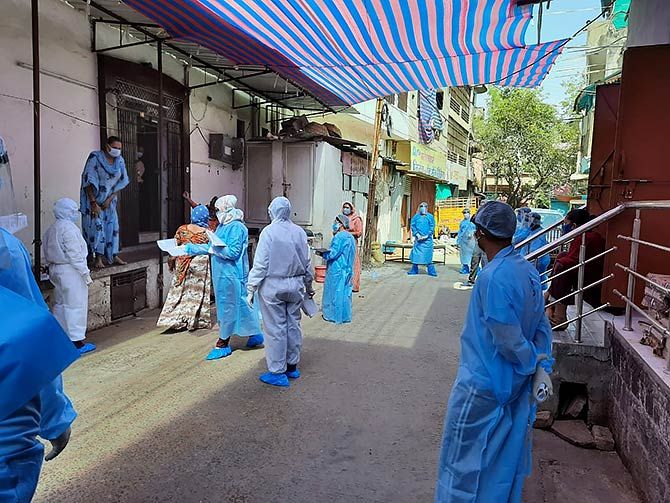
Every morning, the two friends accompanied by paramedics and government staff, set out, criss-crossing the lanes and by-lanes of a large area which falls under three police stations. They deal with positive cases, identify contacts, treat symptomatic cases, get samples collected, send high-risk individuals to quarantine centres and positive patients to a treatment facility.
They have identified 160 positive cases so far and screen around 200 people every day.
Last month, an incident they encountered became one of the triggers for a new law that will protect doctors from acts of violence
Dr Zakia Syed and Dr Trupti Katdare.
Doctors Zakia and Trupti were attacked by a mob while talking to the mother of a man who later tested positive. They were told that the man was not home. He was apprehended by the police two days later.
“We asked for his mobile number and said he should not be moving around in the first place,” remembers Dr Trupti.
This was the third consecutive day in that specific locality and they had never encountered any problem before.
The doctors with their team members.
” Suddenly there was a crowd screaming ‘maro maro‘ running towards us. They started throwing stones. The sub divisional magistrate quickly brought the car in front of us to shield us from the stones. I almost fell. Dr Zakia said she will confront and explain to them. I told her the hostile crowd was in no mood to see reason and pulled her into car. As we drove, the mob was running behind us, hurling stones,” remembers Dr Trupti, over the phone at the end of a 10-hour shift.
“It was very scary.”
“We sustained some blunt injuries where the stones struck us. We were shocked. Shaken,” adds Dr Zakia, the first one in her family to become a doctor, fulfilling the dream of her father who worked in the quality control department at the National Textile Corporation before it shut down. At one time, Indore was known for its three big textile mills.
The doctors filed an FIR. Thirteen people were arrested and the National Security Act was invoked against four. The news of the attack was quickly picked up by the media within hours.
Dr Trupti Katdare out in the field.
” Our worried husbands phoned us, we got so many calls. Loved ones told us forget all this, nothing was more valuable than our lives. But we said, ‘No, this wasn’t the way forward — the people, society, the country needs us at this time,” says Dr Zakia, who wakes up at 4 am and has oats or rusk with a cup of tea as a pre-dawn meal during Ramzan.
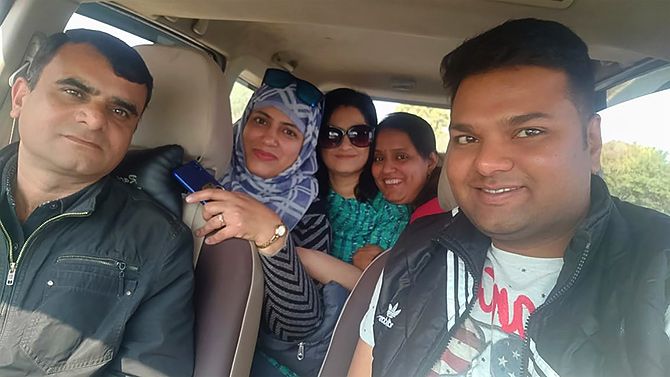
In the evening, she breaks her fast with Dr Trupti and Dr Piyush, the third doctor in their COVID-19 response team.
They make tea in the electric kettle in the room and sit down together over tea and dry snacks.
“We said we will not surrender and went back to the same gali the next day after the attack. It was our duty, we could not leave those people until we had screened them and provided treatment,” says Dr Trupti, who attributes her commitment for public service to her father’s zeal for social work.
“They apologised and told us ‘Do not leave us. It will never happen again.’ Now the scenario has completely changed, they cooperate fully and willingly come to be screened and quarantined.”
“After the incident, if either of us had said we will not return, we may not have gone back. But we drew strength from each other and were both determined to finish what we had started,” says Dr Trupti and credits the health department heads, the district administration, family and friends for boosting their morale.
They later discovered that the attack was instigated by rumours and negative messages on social media.
Dealing with a new virus that spreads fast, the two main challenges have been to convince people that though extremely contagious, the disease is not as serious as perceived.
“80% don’t have any symptoms,” says Dr Zakia. Since they work in an area with low socio-economic indices, the second challenge is making people follow social distancing and hygiene.
“Since many are uneducated, it takes time to convince them. Also, it is not easy to make people leave their home and go to a quarantine centre for 14 days,” she explains.
The medical team conducts a survey for possible COVID-19 cases.
A few days ago, they had to screen a community of transgenders after one person tested positive. When the panic-stricken community refused to allow them entry, the doctors had to persuade them with tact, patience and kindness.
“We were able to convince them with our words and screened 50+. They were so happy with our services that they clapped, distributed sweets and sent us away with their blessings,” says Dr Zakia, giving a glimpse into the phenomenal work public health officials have been doing around the country during this emergency.
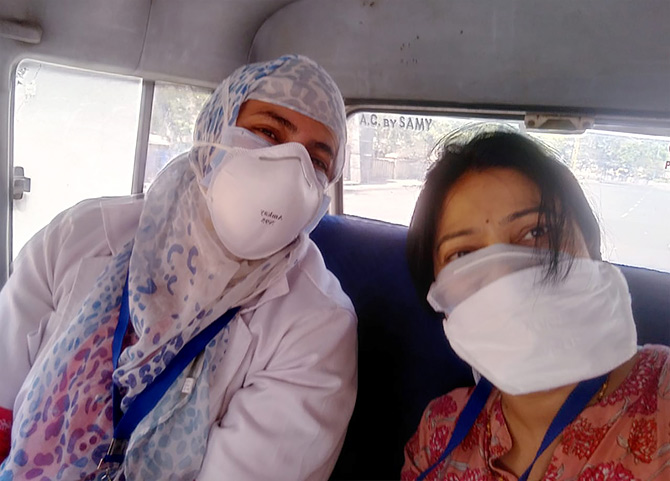
The doctors set out every morning in a car assigned to their team. In the early days, they would go without drinking water for six hours at a stretch because they would be nervous about removing their masks in an area with several positive cases, but not anymore.
“We have been in the field since March 28 and have travelled quite far in this fight against COVID-19. We are deep into it. Now that we have gained some experience, we try to protect ourselves the best we can,” says Dr Trupti.
The team at one of their consulting sessions.
They have established a protocol where they take a water break after four hours which is usually the time it takes to deal with screening, testing, contact tracing and shifting a suspected case to the hospital.
“In the summer, you sweat a lot inside the PPE kit. We try to cover the positive area in one stretch so that we can take the PPE off and eat lunch,” explains Dr Trupti.
“We don’t waste PPE because they are very precious. While screening other contacts, we use double masks, gloves and caps.”
There is no fixed time for lunch which they mostly eat inside the car.
Dr Zakia and Dr Trupti.
Observing roza has caused no problem on the field, says Dr Zakia. Roza strengthens your will power, it detoxifies both your body and soul. I haven’t felt weak and when you have your friend next to you, let me tell you, how can you feel weary?” she says with a ring in her voice that you can almost see her smile across the telephone line.
The doctors have planned a trip to Udaipur once the crisis is behind them.
They will continue their field duties throughout this month and are undaunted by the road ahead.
Dr Trupti in consultation with team members.
“Screening is crucial. It’s good that positive cases are being identified because then you can isolate, treat and prevent it from spreading,” points out Dr Trupti, who misses her primary healh centre and takes great pride that it has a 5-star ranking by UNICEF.
“I hope life returns to normal and I feel it will.”
While they battle on in the trenches, their homes are being held together by their husbands who have learnt how to cook and clean in their absence.
Dr Trupti visits her husband on his birthday on April 29.
“Papa has become both mummy and papa now,” says Dr Zakia.
“My husband keeps encouraging me. With the family by your side you can face any adverse situation,” adds Dr Trupti.
The doctors have 24 quarantine centres in their containment area and have provided their numbers to those under quarantine should they need any assistance.
When a set of people were leaving at the end of 14 days of quarantine, negative reports in hand, their team received a standing ovation.
“It gave us goose-bumps,” says Dr Trupti. “We’ve learnt never to give up. If soldiers can fight for the country, so can we.”
“Some people told us we are soldiers too,” says Dr Zakia, “In white uniforms.”
source: http://www.rediff.com / rediff.com / Home> News / by Archana Masih / May 02nd, 2020
The Aishbagh Eidgah, which is the biggest Eidgah in Lucknow, will now double up as a COVID-19 vaccination centre. This will be the first religious establishment in the state capital which will be providing jabs against COVID-19 to the people. Till now vaccines were being administered only in hospitals in Lucknow. Two inoculation centres — one for ages 18-44 and another for people aged 45 and above — have been set up at the Eidgah.
Beneficiaries of all age groups above 18 years, who have registered on the CoWin portal, will be able to get the jab here. The officials of the All India Islamic Centre will also be assisting people with online registration for getting the vaccine shot. The nodal officer for COVID-19 in Lucknow, Roshan Jacob, reached Aishbagh Eidgah on Thursday to take stock of the preparations. “It is a very good initiative that has been taken by the Islamic Center. This will facilitate the people to get vaccinated,” she said.
Meanwhile, Imam Idgah, Lucknow and Chairman of Islamic Center of India, Maulana Khalid Rashid Farangi Mahli said, “People should keep in mind that along with precaution for prevention of epidemics like COVID-19, the best and most effective thing is vaccination. Lucknow has a lot of population, especially old Lucknow. Keeping in mind the population, two centres have been made at the ground of Eidgah. One center is for people between 18 years to 44 years and one center is for people aged 45 years or more.”
“The huge space here helps in maintaining social distancing and also lowers the risk of transmission of infection. There are a lot of people who are unable to register themselves for vaccination, our team at Islamic Centre of India will help such people in getting themselves registered online for the jab,” he added.
Meanwhile, the fresh cases of COVID-19 infection continue a downward trend in Uttar Pradesh as 6,725 new infections were reported in the last 24 hours. Additional Chief Secretary (Health) Amit Mohan Prasad said 13,590 patients were discharged in the last 24 hours, while there were 11,6434 active cases in the state. Of these, 82,801 were in infected home isolation. The recovery rate in the state has risen to 91.8 percent. The positivity rate in the state has come down to 2.4 per cent, while 238 corona-infected people died in the state. In the last 24 hours, 2,91,156 samples were investigated in the state.