Category Archives: Green Products

Ismail Shariff the ‘Snow Leopard Man of India’ shares his journey

TELANGANA :

What started as documenting his own life in Europe while pursuing his Masters gradually gained direction and came to focus on wildlife photography.

Hyderabad:

 His photographs of a snow leopard from Spiti, Himachal Pradesh broke the internet, literally. Yet the man is still calm, unassuming.

Ismail Shariff, Hyderabad-based nature and wildlife photographer, is known to wildlife and photography enthusiasts as the ‘Snow Leopard Man of India’. His long and passionate association with photography began in his student days. What started as documenting his own life in Europe while pursuing his Masters gradually gained direction and came to focus on wildlife photography.

Picking up his first camera in 2005, Ismail was treated to the magnificent sight of a huge male tiger in 2008 while on a trip to the Kanha National Park in Madhya Pradesh. That was the defining moment of his life. “It became one of the reasons for me to move back to India to pursue of wildlife photography and tourism here,” he said.

Ismail, an alumnus of the Hyderabad Public School, Begumpet, has been part of nine snow leopard expeditions in the last seven years with the recent one being in 2020, apart from several other wildlife expeditions. The first thing that strikes his mind about snow leopards is the long fluffy tail, blue eyes, thick fur and a true-blue cat attitude. Snow leopards are one of the world’s most elusive animals and the most common way to spot one is high up on the mountain ridges. After an hour or more of patient stalking in Spiti in 2017, he finally spotted a snow leopard passing by. The shots he posted on various wildlife photo websites are trending even today.

“I was obsessed with snow leopards ever since a photograph taken in 2012 by Dhritiman Mukherjee, India’s leading wildlife photographer,” said Ismail, adding that seeing the mysterious ghost of the mountains for the first time in Hemis National Park, Ladakh, was an unforgettable experience in itself.

Ismail said the snow leopard is a notoriously elusive creature. It is also listed as “Vulnerable” on the IUCN Red List since the global population is estimated to be between 4,000 to 6,000. India is believed to have less than 1,000. That adds stars to his journey from just another photographer to being called the Snow Leopard Man of India.

“There were struggles. My parents were expecting me to get a corporate job. But I chose photography as my career. It was tough initially, since you’ve to invest a lot of time and money with very uncertain returns to make a name. But at the end of the day, if you want to be successful, you have to be willing to work hard, even if it means making more than a few sacrifices along the way,” said Ismail, a Computer Science engineer from Central European
University, Budapest, Hungary.

He moved to Paris to work there for two and half years before wildlife photography took over him.

Ismail, who has had solo photography exhibitions on Snow Leopards even in Los Angeles and New York, also indulges in fine art printing. He also works with the Snow Leopard Trust in helping raise funds for their conservation efforts.

source: http://www.telanganatoday.com / Telangana Today / Home> Hyderabad / by Sowmya Sangam / May 01st, 2021
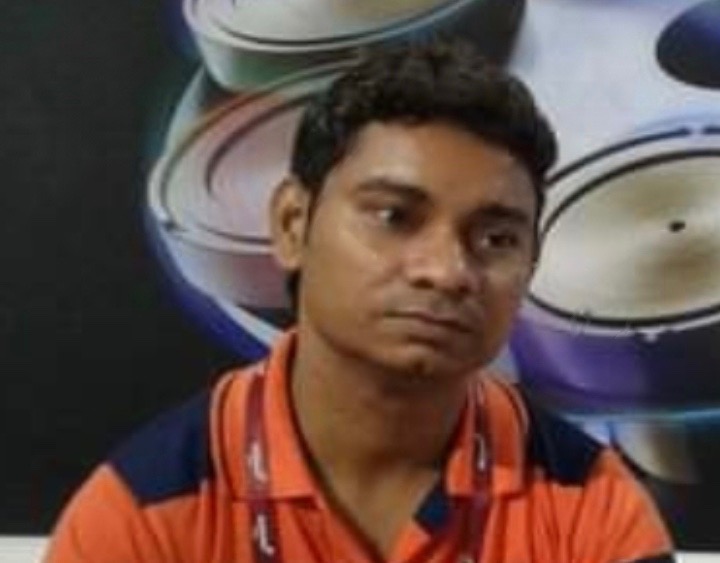
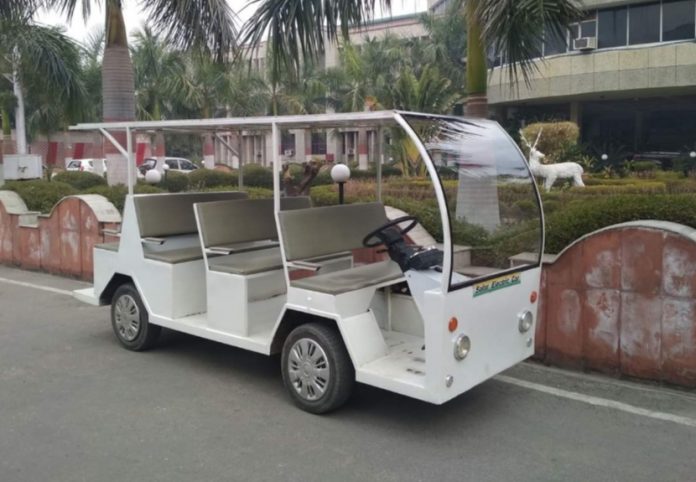
Meet Azharuddin, a mechanical engineer from Meerut who made an electric cart from junk, earning laurels

Muradnagar, (near Meerut), UTTAR PRADESH :

Twenty-year-old Azharuddin from Meerut in the north Indian state of Uttar Pradesh is good with his hands. He created an electric cart from junk and he is now receiving online orders from abroad. Apart from this, the 21-year-old has also made an electric bicycle that can cover a distance of 100 km on a single charge.

Uttar Pradesh:

His father laboured all his life and his mother never went to school, yet the twenty-year-old Azharuddin from Muradnagar near Meerut in the north Indian state of Uttar Pradesh battled all odds and went on to become a mechanical engineer. His is a story of fighting poverty with talent and hard work and emerging victorious.

Azharuddin studied at a government school and today he is a second-year B.Tech. student at Subharti University, Meerut. The university management does not take fees from him. Instead, they provide all the facilities.

Azharuddin is good with his hands. He has created an electric cart from junk and is now receiving online orders from abroad. The twenty-year-old has also made an electric bicycle that can cover a distance of 100 kilometer on a single charge.

In addition to the electric cart, Azharuddin has also made a solar cart, which does not need to be charged. His feat is remarkable as he has accomplished it all by himself.

Presently, the boy from Muradnagar is working to get his e-cart verified by the government.

Electric cart made by Azharuddin

“The e-cart is basically solar powered, but it can also be charged. It will benefit the environment immensely. It is cheaper and more robust. It can be used as an auto. Currently, its demand is coming from societies of large size, where these non-polluting carts are of great importance. Apart from this, they have great importance in places like Zoos, Taj Mahal etc. Till now such carts were running on battery. We have a cheaper alternative to solar and electricity,” Azharuddin told TwoCircles.net.

Azharuddin’s accomplishments have not been in vain. He has received an offer of 6 solar carts from a society in Hyderabad.

For his first electric cart, it cost him INR 1.5 lakh. He has improved its cost of making and his e-cart now has space for more people to sit. An e-cart made by him has been sent to Dubai.

Azhar says that if the government cooperates with him, they can build something that can contribute to pollution reduction in the country and improve the environment.

Azharuddin says that he has made his electric bicycle in the same manner. It can charge up to 100 kilometres at a time, while the company’s cycle runs 30-40 kilometre. It can run-up to the speed of 25-30 kilometre per hour and is pollution-free. He has started getting orders for his e-cycle.

He says his e-cart was used at the Taj Mahal in Agra for six months. “I had built a one-seater helicopter in 11th grade, which was greatly appreciated at the exhibition in Ghaziabad,” he said.

His e-cart is now being used in Haryana’s Hisar Cantt. and Engineering College. His e-carts are also today used at his college Subharti Meerut.

Azharuddin’s father Amirudin Kassar told TwoCircles.net that “Azhar has brought him only joy and pride.”

“People in the village know me because of my son. I respect him more,” he says.

Talking enthusiastically about his e-cart, Azharuddin explains that in the event of solar energy being interrupted, its work will be done by charging and this cart will keep running. “Two batteries of 12 volts and five batteries of 140-ampere lead-acid have been used in the solar panel. This is the biggest feature of this e-cart that it operates from both solar and electricity as well and is cheap,” he says.

At Subharti University, Azharuddin’s work is discussed with excitement.

A staffer at the University Sanjay Kumar points out that Azhar’s talent is natural. “The natural talent inside him is going to take him to places. He has earned a name for himself through his work. His difficult time has passed. We wish him a bright future,” he said.

The story of Azharuddin exemplifies that passion and hard work pays, no matter how humble your beginnings.

source: http://www.twocircles.net / TwoCircles.net / Home> Lead Story> TCN Positive / by Aas Mohammad Kaif, TwoCirlcles.net / March 30th, 2021

Prophetic Medicine Council Launched To Promote The Practice And Organize Its Practitioners

KERALA :

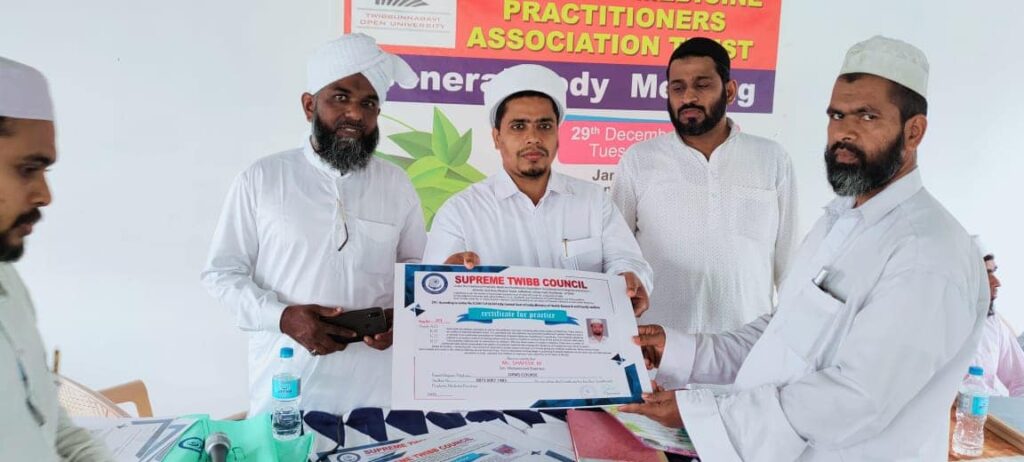
Kerala-based Traditional Prophetic Medicine Association Trust (TPMAT) has launched the Supreme Twibb Council in order to promote Prophetic medicine or Tibb-e-Nabawi.

The initiative aims to provide a platform to doctors and physicians involved in Prophetic medicine and will also give training to those doctors who are interested in practising Tibb-e-Nabawi.

Dr Muhammed Gafoor Saquafi, the council’s president highlighted that the Union Ministry of Health and Family Welfare has recognized Prophetic medicine as one of the alternative medicine as ordered by the ruling of the Supreme Court. TPMAT had filed a petition in the Supreme Court in this regard and after winning the case they decided to initiate Tibb Council.

“Moreover the Prophetic medicines institutes have received various orders from the Central Government in this connection. Based on this and Central Act1882, the TPMAT is registered and Supreme Twibb council is formed under it.

Advice and remedy given by Prophet Muhammad on the matters of health including sickness, hygiene, and treatment are called Prophetic medicine. These remedies are given by the Prophet, which is mentioned in the books of Hadith, and the writings were undertaken by non-physician scholars to collect and explicate these traditions.

In 2014, the Prophetic medicine was recognized as a complementary medicine senate via the Alma Atta Declaration of the World Health Organization. A letter of recognition and appreciation was also provided by the World Health Organization via the Ministry of Ayurveda, Yoga and Naturopathy, Unani, Sidha and Homeopathy (AYUSH).

Prophetic medicine was enlisted as an alternate medicine by Ministry of Health and Family Welfare in 2017 and gains the status of independent practice. This liberty to practice prophetic medicine was given by Supreme Court itself. There are many Prophetic Medicine institutions initiated at various locations of India.

The Court managed to draft bylaws of the Council in contrast with a pending petition given by TPMAT to the Supreme Court earlier, that constitute the legal part of the Prophetic medicine.

The council will also provide memberships to the scientific scholars and traditional scholars in different categories. Moreover national memberships will also be given for the structural expansion of the training institutes in the Country with a head-quarter in the national capital, Delhi.

source: http://www.thecognate.com / The Cognate / Home> News / by Ghazala Ahmad / March 13th, 2021

Green touch

Bengaluru, KARNATAKA :

Bengaluru’s zero-waste advocate Sahar Mansoor has brought out a guide book that provides personal insights and interactive activities to help the reader transition to a more sustainable lifestyle.

Sahar Mansoor

Bengaluru :

Health and environmental issues have come to the fore in the last one year. With increasing number of people becoming conscious about their choices, the recently-released book, Bare Necessities: How to Live a Zero-Waste Life, by Sahar Mansoor and Tim de Ridder aims to provide personal insights, interactive activities and solutions that can help you transition to a more sustainable lifestyle.

”The book has taken a staged approach where the reader journeys through topics that are intimate such as personal care routines and fashion choices, to more communal areas of life such as the kitchen, home care and festival occasions. It also looks at broad aspects of life, including the community and global impacts of waste. One of the fantastic things that we have achieved is to provide a toolkit of zero-waste information and insights throughout, such as my personal stories about how to make zero-waste products such as toothpaste and food such as holige,” says Mansoor.

Published by Penguin, the guide (Rs 299) includes activity sheets to share ideas with friends and families throughout the text. “We have provided recipes, tips and tricks and other ideas to help people learn, and enjoy the zero-waste journey,” says Mansoor, who has been working in the sustainability sector since 2015, participating in areas like waste reduction and climate change.

Ridder and she began putting pen to paper in September 2019. “Unfortunately he had to work abroad from October to January last year. We had to face challenges such as scheduling meetings across time zones.

When the borders were closed in March 2020, he stayed permanently in Australia,” she says. The situation also provided them a new perspective, and prompted them to add valuable sections in the final version. “We would love the book to be used in schools, where kids can learn about the wealth of resources available in India. There are opportunities to learn how to compost, create a community garden and make sustainable gifts,” says Mansoor.

source: http://www.newindianexpress.com / The New Indian Express / Home> Cities> Bengaluru / by Express News Service / March 09th, 2021

Ali Manikfan: The versatile genius without formal education

Minicoy (Lakshwadeep) / Olavanna (Kozhikode), KERALA :

Another major interest of Manikfan is Lunar calendar and he has built one calendar based on the New moon and on astronomical algorithms

Thiruvananthapuram :

The locals of Olavanna in Kozhikode used to see an upright, lean person wearing Arabian clothing walking towards his home. They only knew that he was a retired official from Central Marine Fisheries Research Institute (CMFRI) living here and was from Lakshadweep.

But, when television screens flashed the name of Ali Manikfan among the Padma awardees, the people were lost in words as to who they had ignored albeit unknowingly.

Mohammed Basheer and P.R. Ramachandran, employees of a private firm in Olavanna said, “He is lean and frail but walked straight and with a twinkle in his eyes but we never knew who he was until the news flashed that he was awarded the Padma Shri.”

Manikfan, who is currently living in a rented accommodation along with his wife in Olavanna, was sent to Kannur in Kerala for studies but after fifth standard he did not pursue formal education and returned to Minicoy, his home town in Lakshwadeep Islands.

He was a keen observer, knew almost every fish that inhabited the sea off the Minicoy islands and this observation turned into a passion for fishes. This motivated him to study more about fishes, their origin and everything in and out about them.

The research in fishes got him a job at the CMFRI where he discovered a rare fish which has been named after him – Abudefduf Manikfani.

He can speak, read and write 14 languages including French, German, English, Arabic and other languages and uses seven of them to communicate.

In 1981, he was invited to Oman to make a ship, a replica of the one believed to be used by Sinbad, the Sailor, during his voyages. He was invited by the Irish voyager Tim Sirven who wanted it to be made without metals. Ali and his made a 27-m long ship using timber and coir in an year. Named “Sohar” after the town of Sohar in Oman. Tim and his team travelled 9,000 km from Oman to China on it and it is now kept in a museum in Oman.

Manikfan told IANS, “Those days metal was not used for making ships and hence we had to replicate one using timber. This ship sailed up to China from Oman and is still kept at Oman museum.”

Another major interest of Manikfan is Lunar calendar and he has built one calendar based on the New moon and on astronomical algorithms.

The multifaceted personality had invented a bicycle with roller motor and travelled to New Delhi along with his son Musa.

Another of his interest is agriculture and he has converted a barren 15 acre land at Tirunelveli in Tamil Nadu into a lush green farm land using indigenous methods of cultivation. He also built a residential premises using traditional materials.

He is now basking in the glory of Padma Shri award but local people vouch that there is no difference in his attitude even after this honour.

Ramachandran said, “He is a great personality and down to earth, we never knew who he was until media reported about him. The local people are planning a grand programme to felicitate him.”

–IANS

source: http://www.muslimmirror.com / Muslim Mirror / Home> Featured / by Muslim Mirror / February 07th, 2021

Kashmir’s first-ever igloo restaurant turns selfie spot for tourists

Gulmarg (Baramulla District) , JAMMU & KASHMIR :

It’s well furnished inside and leaves one wondering in awe, says a visitor

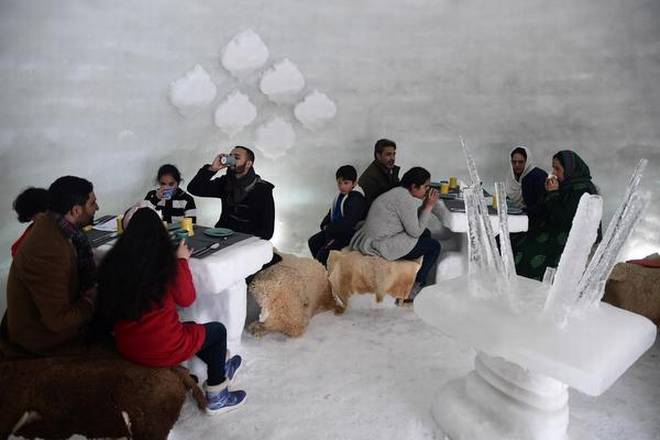
With the minimum temperature plummeting to minus 18 degree Celsius in north Kashmir’s tourist hotspot Gulmarg, a spherical 22-feet-wide and 15-feet-high igloo restaurant has become a major attraction among the tourists, more for selfies than food served inside.

“We threw the igloo restaurant open to the public two days ago. It’s the country’s biggest igloo ever made. It took 15 days to construct it with the help of 20 workers,” Waseem Shah, managing director of the Kolahoi Resorts, told The Hindu.

The all-snow covered restaurant has eight tables, serving lunch and dinner inside it, and can accommodate 18 people simultaneously. The novel idea has been picked from the cold places of Europe.

“I have travelled to Switzerland, Norway and Finland and saw similar snow sculptures. We too have snow in abundance and can experiment on such projects,” Mr. Shah said.

He said the cafe shall make it to the Limca book of records as Asia’s biggest igloo. “So far tourists come more for selfies than food. But I am happy they are leaving with cherishable memories,” he said.

Sonia Kapoor, a tourist from Delhi, said the restaurant is a must for a selfie. “The sight of igloo is amazing. The fact that it’s well furnished inside, leaves one wondering in awe,” Ms. Kapoor said.

The idea has come as a shot in the arm of tourism, which was struggling in Kashmir, first due to the abrogation of special status in 2019 and then by the pandemic.

Director, Tourism, Kashmir, G.N. Itoo said Kashmir is fast emerging as “an all season destination”.

“Kashmir is offering visitors not only mesmerising beauty of its natural landscape, its perennial rivers and lakes, gardens and meadows, mountains and valleys, forests and wildlife but also diversity of tourism products with its adventure potential, cuisine, heritage, pilgrimage circuits and plenty of leisure tourism,” Mr. Itoo said.

source: http://www.thehindu.com / The Hindu / Home> News> States> Other States / by Peerzada Ashiq / Srinagar, January 28th, 2021

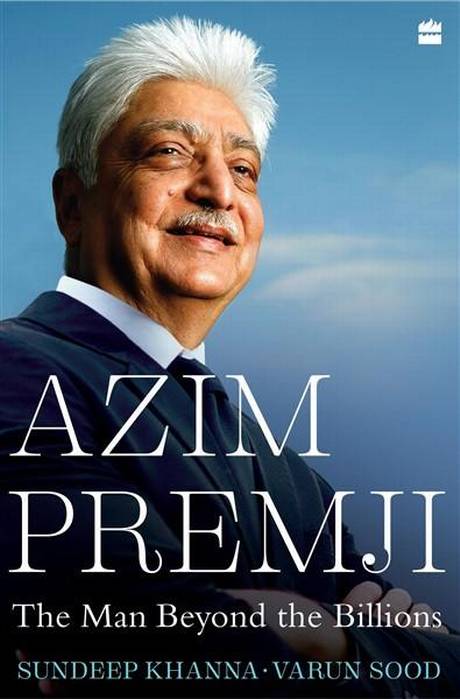
‘Azim Premji: The Man Beyond the Billions’ review: The making of an entrepreneur and a philanthropist

Bengaluru, KARNATAKA / Mumbai, MAHARASHTRA :

How Azim Premji expanded his business from vegetable oils to info-tech and put his money where his heart is

The story of a person can be inspiring. The authors have chosen their subject well, for, everyone knows of Azim Premji, but few truly know what makes the man.

A book about such a person, if well-written, may possibly inspire the reader into action. In this case, soon after you read the book, it’s difficult not to look up the Azim Premji Foundation website, to see if it had any volunteering opportunities, even if you have done nothing like it before!

In chronicling any life, it is easy to get mired down with mind-numbing detail that comes your way if you are sifting through 50-odd years’ worth of the protagonist’s hits and misses. The authors have done well to stick to the most interesting parts of Premji’s life. Two things stand out across events and across time: his integrity and a penchant for frugality.

Zest for austerity

His insistence on paying for personal calls made on his office phone is legendary. His friends know of his love for cars but also about his unwillingness to spend fanciful amounts on one.

He once wanted to buy a Fiat that was registered in Wipro’s name. He got the finance department involved in the discussion as he wanted to play by the rules and pay for the purchase. But with depreciation, the car’s value was zero to the company. The transaction did not go through.

At one point, his friends were agog with excitement at his purchase of a Mercedes, but it was… hold your breath… a second-hand one!

At another time, when his team was preparing to welcome clients on a visit to headquarters, and took Premji over the arrangements that included meals from a five-star hotel, he quipped, “If our cafeteria is good enough for our employees, it should be good enough for clients too!”

It’s probably the same zest for austerity that had him pleased while on a U.S. visit, when two of his senior-most executives bought lunch for the three of them at a Burger King outlet for less than $7.50! And, this was a man who didn’t bat an eyelid when an employee of the vegetable oils business lost ₹25 lakh in a year in a trading position.

A long journey

The book chronicles the journey of Wipro from the time the Premjis put down roots in Mumbai. It throws light on the man’s spirit of entrepreneurship, as the company cautiously experimented with opportunities — expanding from vegetable oils to engineering products, computer hardware, tech services and consumer care and lighting. It also does not shy away from some of Wipro’s missteps such as the investment in financial services, a business which withered away despite the group’s entry into the space after much thought and preparation.

His management style

While doing justice to the man’s talent for perseverance, the authors have touched upon his management style that many say cramped some CEOs under his chairmanship. His taking over as CEO in 2005 after the abrupt exit of Vivek Paul, said to have been primed for the post, or his decision to have a joint CEO structure soon after, at a time when competitors were blazing ahead, had raised eyebrows in the world of IT services at the time.

The reader may get the sense that the authors occasionally sound deferential when talking about the man or his family. But, it’s difficult not to be overawed by someone who has never sold a single share in his company but who chose to give away $21 billion worth of wealth to his foundation, leaving his two sons with shares valued at about ₹65 crore. How can one give away so much wealth and still, on the morning the news about the latest transfer to the foundation breaks, irritably ask an employee — who speaks of congratulatory messages overwhelming social media — “What’s all the fuss about?” ?

This book is a must-read for anyone who can read English.

Azim Premji: The Man Beyond the Billions; Sundeep Khanna, Varun Sood, HarperCollins, ₹699.

bharatkumar.k@thehindu.co.in

source: http://www.thehindu.com / The Hindu / Home> Books> Reviews> Profile / by K Bharat Kumar / January 16th, 2021

500K trout ova dispatched from Kashmir to 3 other states for rearing

Kokernag (KASHMIR), JAMMU & KASHMIR :

From Asia’s largest trout farm in south Kashmir’s Kokernag, 500,000 trout ova were dispatched to Arunachal Pradesh, Nagaland and Uttarakhand for rearing

Representational image. (REUTERS)

Brown and rainbow trouts are cold water fish introduced in Kashmir over 100 years ago.

The chief trout farming project officer at Kokernag, Mohammad Muzaffar Bazaz, said that 500,000 trout ova were dispatched from the farm to Arunachal Pradesh, Nagaland and Bhimtal in Uttarakhand where the directorate of cold water research centre has been established by Indian Council of the Agriculture Research.

Bazaz said that the 500,00 trout ova were airlifted so the progeny reach the respective destinations safe and unharmed.

“Our staff at the farm worked overnight so these trout ova reach the respective destinations undamaged. The facilities were provided by the principal secretary of the animal husbandry department through the PMMSY scheme.”

Spread over 20 hectares, the farm was set up 36 years ago with support from the European Economic Committee. It started with a single hatchery which has now been upgraded to three hatcheries that supply millions of eyed ova and seeds to beneficiaries, including private fish farmers.

Bazaz said that Kashmir has two types of fisheries, warm and cold water. “For trout culture, the temperature shouldn’t exceed 20 degrees Celsius. Brown trouts are in abundance in the upper reaches,” he says.

Kashmir is also known as an anglers’ paradise—tourists, particularly foreigners, head for high-altitude water bodies as brown trout is found in high-altitude lakes and streams.

source: http://www.hindustantimes.com / Hindustan Times / Home> India News / by Mir Ehsan / January 18th, 2021

Kerala man propels ‘rocket’ solution to cooking woes

Putting an end to his expatriate life 27 years ago, Abdul Kareem, a native of Thrikkakara, had only one quest in life — to provide services for a seamless living.

Thrikkakara, (Ernakulam District) KERALA :

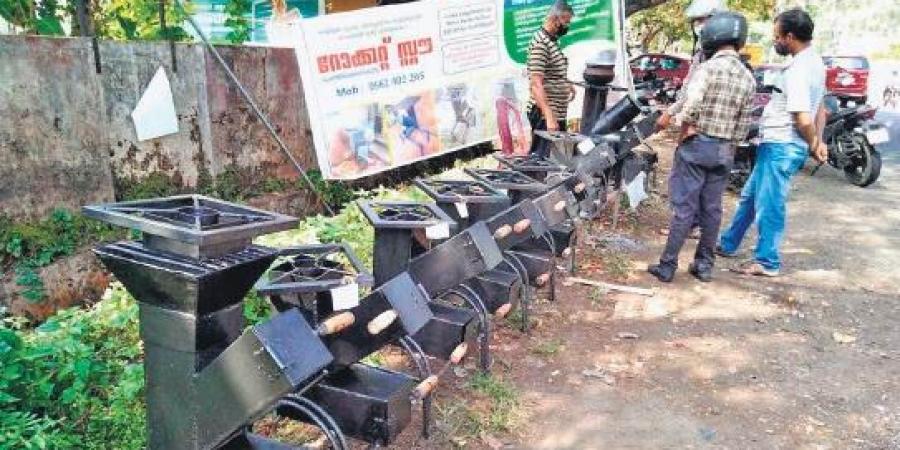
Abdul Kareem’s rocket stove was on sale at many locations in the city | A Sanesh

Kochi :

 ‘Rocket stove,’ a new cooking facility which does not require LPG or electricity, is becoming  the new trend among families in the city. It uses firewood, coconut shells and waste paper as fuel, while reducing the emanation of smoke up to 80 per cent compared to traditional kitchen stoves. The stove provides a water heating facility and doubles up as an oven.

Putting an end to his expatriate life 27 years ago, Abdul Kareem, a native of Thrikkakara, had only one quest in life — to provide services for a seamless living. Using his earlier experience in manufacturing low-cost motor pumps, Kareem came up with ‘rocket stove’, which provides a sustainable twist to traditional cooking methods. 

“With four decades of experience in making furnaces, boilers, kitchens and other industrial materials, Rocket stove was developed out of my curiosity. Thanks to Covid-induced lockdown, I managed to finalise the design around six months ago and started the production,” said Kareem.

Rocket stove is based on the concept developed by the British in the 1850s. “Though it is an old idea, we transformed it to suit the requirements of Keralites,” he said. “Apart from traditional firewood, people can also use waste paper and other combustible dry waste in the stove.

All types of vessels including terracotta pots can be used on it. Compared to traditional units, a rocket stove will release only 10 to 20 per cent of smoke during its operation. It can be easily used in the balconies of flats without creating any disturbances to the neighbours,” he said.

The stove is currently available in five models. “The high-end model costs around Rs 14,000 and has a pipe to expel the smoke outside. This will be ideal for flats and apartments. A normal model with a basic stove will cost Rs 4,500. Remaining two models have options like grilling, oven, water heating etc. The oven model will provide heat up to 280°C,” said the 57-year old.

However, Kareem could not market the product properly due to the pandemic. “We are hoping that word of mouth will give us the much-needed traction. We are currently delivering orders received over the phone. Due to Covid restrictions, we had to stop selling them on the street as well,” he said.

The product was launched after various rounds of testing. “We have run many quality tests to ensure efficiency in the last six months. Besides, we have ensured that the product meets all safety standards. Depending on the demand for the product, we will move to large scale production soon,” he said.“In the case of a natural disaster or calamity and if electricity and LPG supply shuts down, the rocket stove will be a good alternative,” said Kareem.

source: http://www.newindianexpress.com / The New Indian Express / Home> Good News / by Kiran Narayanan / Express News Service / December 29th, 2020

Khudiram Bose & Sheikh Gulab : The Holy Alliance of Freedom Fighters

BIHAR :

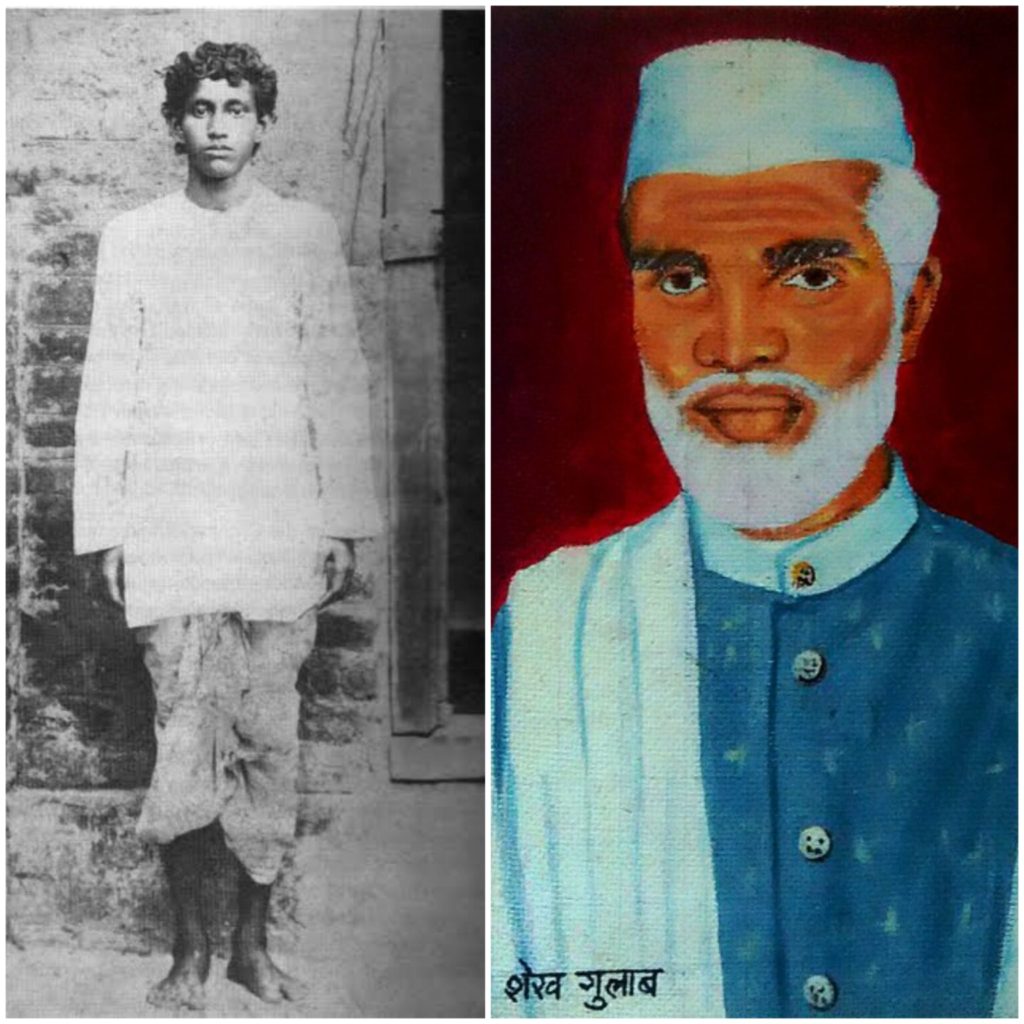
Khudiram Bose & Sheikh Gulab

Colonial historians and scholars often claim that the Indian Freedom Movement was a disjointed movement with no nationalistic feeling among the people participating in it. This belief, that Indians fought against the British for local communal reasons without any coherence, has been further propagated by the Indian historians as well, after the independence. Often, we are made to believe that Muslims fought to secure their religion or Caliphate while Hindus to protect regressive social institutions. Similarly, urban elite, peasantry, tribal, and others have their own narrow interests in fighting against the British.The idea may be true and open to debate, but the fact that there was a coherence among different groups within India while fighting against the British is an undeniable fact.

During the early 19th century, the British decided to partition Bengal. Hindus and Muslims, together, rose up against the decision which based itself upon religious segregation. India in general, and Bengal in particular, adopted the Swadeshi campaign to oppose this decision. In 1905 Bengal got divided, agitating the youth. It must be noted that the present Bihar was part of Bengal at the time. The youth, led by people like Barin Ghosh, started adopting militant methods to oppose the British.

At the same time, in Champaran of Bengal (now, in Bihar) indigo planters led by Sheikh Gulab started a non-cooperation agitation against the British indigo planters. Gulab defied the tinkathia system, where indigo had to be planted on the best portions of land, on his 60 bigha land which was near Sathi factory in Champaran. It was 1907 & Champaran was part of Muzaffarpur commissionerate. 

More and more peasants joined Gulab in his movement and another Sital Ray rose as another prominent leader. Planter’s Association had their own army called Bihar Light Horse, famous for its cruelties over peasants. In 1907, the government passed an order appointing Gulab and his comrades as the special constables in police. Gulab defied this appointment and did not join. Police arrested him under the Special Police Act, 1861. 

Sentence of Gulab was reversed later by Kolkata Court in March, 1908. 

Next month, in Muzaffarpur a judge, Kingsford, was transferred from Kolkata. Champaran lied under his jurisdiction. Indians were already angry with the judge for his anti Indian attitude and there was this apprehension that he had been brought to crush the anti British peasant movement. British reports were already pointing towards a collaboration between Kolkata based Bengali revolutionaries and the peasant movement of Champaran.

The arrest of Sheikh Gulab had stirred the local emotions and this transfer of Kingsford acted as a catalyst. 

Within a few days, Khudiram Bose, a young boy of 17, and Prafulla Chaki, both of them Bengali tried to assassinate Kingsford with a bomb. Accidentally, they killed two English women.

Khudiram Bose was hanged till death in August, 1908. 

Khudiram’s martyrdom instilled a new spirit in Sheikh Gulab. In September, 1908, he organized more peasants at Vijayadashami Mela in Bettiah, Champaran. Now, peasants were openly defying the planters and attacking them. On 16 October, 1908, peasants attacked the Parsa Indigo factory. Government reacted brutally. Sital Ray was arrested along with more than two hundred peasants.

In the Legislative Assembly of Calcutta, it was argued that Bengali and Bihari have worked in unison against the British in Champaran during 1907 – 1908. Further reports that a Burkha clad Muslim woman provided shelter and help to Khudiram Bose during his attempt on Kingsford’s life also point towards an association between Sheikh Gulab’s movement and Bengal revolutionaries.
P.C Roy, implicitly, contends that the arrest and case against Sheikh Gulab may be one of the reasons that Khudiram Bose attacked Kingsford in Muzaffarpur. 

(Writer is a well known historian)      

source: http://www.heritagetimes.in / Heritage Times / Home> Bihar> Freedom Fighters / by Saquib Salim / July 17th, 2020