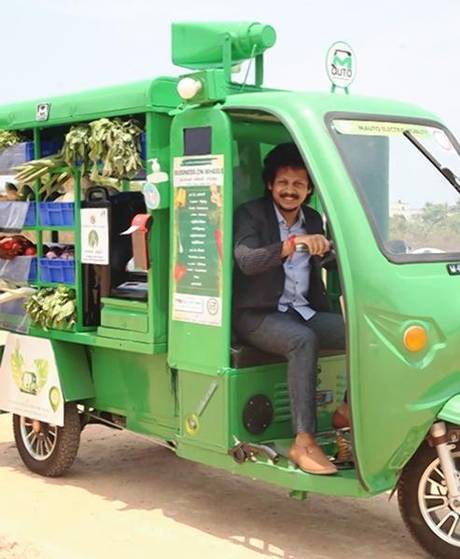
Mansoor Ali Khan with his retro-fitted autorickshaw. Photo: special arrangement.
Entrepreneur Mansoor Ali Khan helps women autorickshaw drivers take up vegetable sales during the lockdown
In the midst of the lockdown, an entrepreneur has come up with an alternative business plan for his associates.
Mansoor Ali Khan, chairman, M Auto Pride Pvt Ltd, who manufactures and rents electric auto-rickshaws, is helping the autorickshaw drivers who hire vehicles from him, turn their hand at vegetable selling.
Mansoor says, “As autorickshaw-drivers’ business has taken a beating due to the lockdown restrictions on movement of people, I suggested that they try working as vegetable vendors as there is a huge demand for home delivery of goods and services now.”
Warming up to this idea, five women auto-rickshaw drivers are selling fruits and vegetables since the first week of April. “Till the lockdown is lifted, I’m not going to charge any rental fee for my auto-rickshaws. We have helped them identify a few apartment complexes where these auto-drivers can sell vegetables and fruits. Now, it is up to them to expand their customer base,” says Mansoor. For this purpose, Mansoor’s company retrofitted auto-rickshaws with provision for racks.
“With the permission of authorities concerned, we got three auto-rickshaws ready in four days, in the last week of March at our plant at Madipakkam. Besides, we are working to roll out another 25 such vehicles in a month, as a few more autorichshaw drivers with us are interested in taking up vegetables and fruits selling,” says Mansoor.
Auto-drivers A. Mohana Sundari and M. Selva Rani, who sell vegetables now, say, “In a day, we need to earn a bare minimum of Rs.1,000 to see a reasonable profit. Earlier, we had to slog up to 8 p.m. to earn that amount. Now, we are able to make it by noon, in fact with better profit,” they say.
Mansoor says he also offers his vehicles for free to voluntary groups and charity organisations that are reaching out to the poor and needy during the COVID-19 lockdown.
“There are many voluntary groups which distribute groceries, food packets and masks to migrant labourers, conservancy workers, differently-abled, senior-citizens and expectant mothers. They approach us as it is difficult to find transportation facility due to the lockdown. So, we provide our vehicles for free and we take care of the payment of the autorickshaw-drivers. As our vehicles run on electric power, they do not entail much fuel cost,” says Mansoor.
Voluntary groups and those who want to place orders for vegetables can call 73058 29811.
source: http://www.thehindu.com / The Hindu / Home> News> Cities> Chennai – Entrepreneurship Chennai / by L Kanthimathi / April 28th, 2020
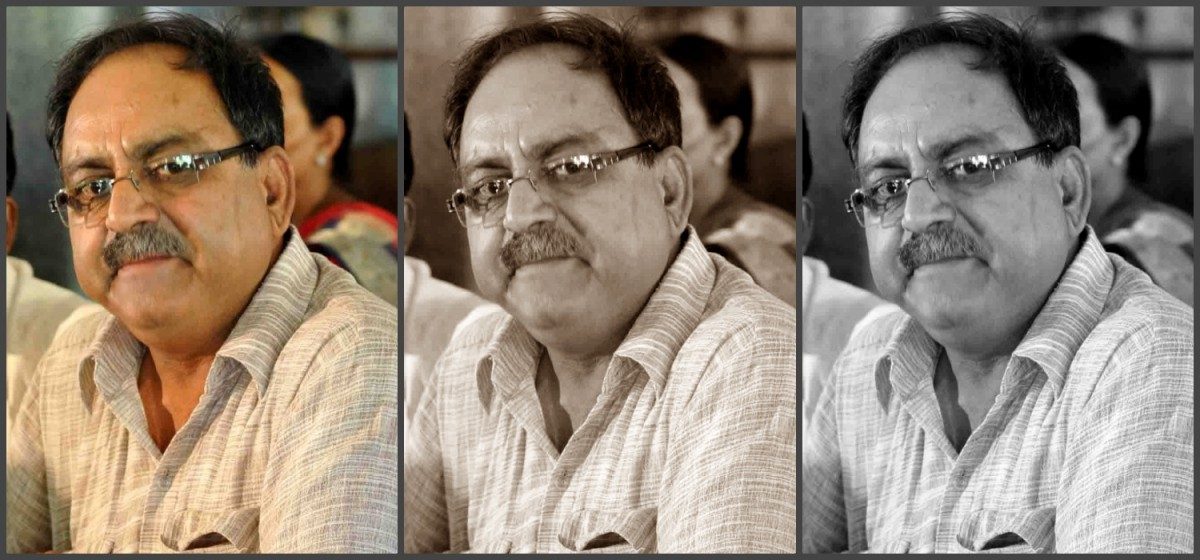
Abdul Jabbar’s family members are very happy about him getting this honour.
Abdul Jabbar, who died on November 14 last year left behind a wife and 3 children
Abdul Jabbar of Bhopal, who fought a long battle for the victims of the Bhopal gas tragedy in 1984, has been awarded the Padma Shri. Abdul Jabbar is receiving this honour posthumously.
Abdul Jabbar’s family members are very happy about him getting this honour.
When India Today reached Abdul Jabbar’s house in the Chandbad area on the outskirts of Bhopal, we found that the condition of his house is very bad.
Abdul Jabbar, who died on November 14 last year left behind a wife and 3 children.
Abdul Jabbar’s wife Saira Banu said, “I am happy that the government is giving this honor to us but I am sad that my husband Abdul Jabbar is not with me in this moment of pride and happiness.”
Wife Saira Banu says that if Abdul Jabbar were alive, the joy of getting Padma Shri would have been doubled.
Jabbar’s wife said, Abdul Jabbar never thought about his own family. He made the gas victims his family. Abdul Jabbar’s wife expressed anguish that when her husband was ill, no one took care of him initially. At the last moment, the government approached the family but it was too late.
“He always kept thinking about the gas victims, and at the last moment he had told me not to let the gas victims fight end here but to take this fight further”, added Jabbar’s wife Saira Banu.
Speaking to India Today, Abdul Shamim, brother of Abdul Jabbar said, “When Abdul Jabbar was ill, no one from the government and gas-affected organisations took care of him. His treatment was also not taken seriously.”
Jabbar’s brother demanded a government job for Jabbar’s wife. ‘Financial condition of Jabbar’s family is very bad and sometimes children eat only once a day’, said Jabbar’s brother Shamim. According to Abdul Shamim, if his sister-in-law gets a job, she will be able to take care of her kids and her children will get a good education too’.
Abdul Jabbar’s eldest son Sahil said that he had learned to serve the poor from his father. Sahil said that ‘his father used to stay at home very rarely, he used to go out in the morning to help the gas victims and sometimes when there was no money in his pocket, he would borrow and help the gas victims. ‘I learned the same from my father’.
source: http://www.indiatoday.in / India Today / Home> News> India / by Ravish Pal Singh, Bhopal / January 26th, 2020
For 35 years, the activist dedicated his life to building a movement for justice. Unfortunately, Bhopal appears set to forget his contributions.
Abdul Jabbar. Photo: Facebook
India can learn a lot from Abdul Jabbar’s glorious struggle for justice for the dead and the survivors of the Bhopal gas tragedy.
At a violent time like this, when governments cannot tolerate even dissent on social media, the most indefatigable fighter for the victims can be a lodestar to all those who wish for an equitable society.
Jabbar Bhai, as he was fondly addressed, died of multiple ailments on November 12 in a Bhopal hospital, but his legacy endures. His evolution, through a 35-year-long struggle from a hand pump fitter to a tenacious strategist, is unparalleled in independent India’s history of people’s movements.
His strategy was essentially premised on eight pillars: secularism, empowerment of women, emphasis on self-employment through skill development, regular interactions with co-fighters, spreading education about mass struggles, frequent judicial recourse through public-spirited lawyers, street agitations, joining similar people’s movements and an uncompromisingly adversarial stance against the government, regardless of ideology. An overboard public relations exercise was anathema to him, though Jabbar would go all out to help journalists who sought his help.
His organisation, the Bhopal Gas Peedit Mahila Udyog Sangthan, metamorphosed from an assorted group of women to a well-organised fighting force. This was an extremely daunting task, which Jabbar Bhai himself was initially clueless about. But his undiminished righteous rage over the killing of innocent people in the world’s worst industrial disaster steeled his will to fight an epic battle through thick and thin.
How this came about is an inspiring story, which began the day the Union Carbide factory spewed 40 tons of poisonous MIC gas. On the night of December 2-3, 1984, Abdul Jabbar was asleep at his home in Rajendra Nagar when the deadly gas leaked.
The poisonous gas from the Union Carbide pesticide factory killed 8,000 people in its immediate aftermath, and nearly 25,000 over the next few decades. It also left over 1,50,000 people suffering with respiratory, hormonal and psychological illnesses.
When the strong smell emanating from the carbide plant made its way into Jabbar’s house, he took his mother, started his scooter and drove for almost 40 km to get her to a safe place. They left Bhopal for Abdullah Ganj. However, his escape proved futile. He soon lost his mother, father and an elder brother to the after-effects of this disaster. His own lungs and eyesight were substantially damaged. When he returned, an apocalypse was awaiting him on streets – dead bodies were strewn everywhere.
Then 28 years old, Jabbar was a changed man when he reached home. Keeping personal losses aside, he started taking the injured to the local government hospital for treatment. He also volunteered to take dead bodies for their post-mortem. The deeper he plunged himself into voluntary service, the more his anger surged.
He would later recall, “I started this campaign from my locality when I witnessed injustice around me. Politicians who were beneficiaries of carbide corruption were not coming forward to help us. So we the victims had to take matters in our own hands.”
Nearly three years later, in 1987, he started the Bhopal Gas Peedit Mahila Udyog Sangathan (Bhopal Gas Female Victims’ Association), an advocacy group for victims, survivors and their families. He led demonstrations seeking not merely allowances and compensation, particularly for widows who lost their husbands in the disaster, but also employment opportunities.
His first campaign slogan was the famous “Khairat nahi, rozgar chahiye (We don’t require charity, we want jobs)”. The slogan turned into a war cry as the organisation swelled.
Jabbar did not wait for the government to provide jobs to the women in his organisation. He succeeded in setting up tailoring centres where about 2,300 women learnt how to make zardozi strips and bags. He helped them fight lawyers, doctors, bureaucrats and the police. Soon enough, Jabbar’s organisation included nearly 30,000 survivors, predominantly women, in Bhopal.
The members began to gather every Tuesday and Saturday at Bhopal’s Yaadgaar-i-Shahjahani Park, a historic site where the battle against British colonial rulers was staged in 1942.
In 1988, Jabbar moved the Supreme Court urging it to order interim relief to the survivors until they get their final compensation. The next year, the Centre settled with the Union Carbide for $470 million or Rs 7,200 crore, and the Supreme Court endorsed the agreement. The gas victims were outraged at the meagre amount. They felt cheated. It took a decade-long legal and street battles by Jabbar’s organisation before the apex court ordered the government of the day to disburse a further Rs 1,503 crore and admitted that there were over 5,70,000 claimants to be compensated. Earlier, only one lakh claimants were recognised.
His relentless fight since his first victory in the Supreme Court is well documented. Nearly all judicial interventions and mass agitations that have resulted in the gas victims getting compensation, houses and hospitals and the perpetrators being prosecuted bear an indelible imprint of Jabbar’s fighting spirit. For more than three decades, he went around conducting protests and filing court petitions, seeking greater medical rehabilitation for victims and the prosecution of local Union Carbide officials.
In the past three months, a severely diabetic Jabbar, suffering multiple heart ailments, moved from one hospital to another.
He circulated a WhatsApp message days before his death, saying a super speciality hospital like the Bhopal Memorial Hospital (BMHRC) had failed to treat him because they did not have the facilities. He called it “shameful”. As his condition worsened, and gangrene set in, the Madhya Pradesh government prepared to airlift him and take him to Mumbai’s Asian Heart Institute for treatment, but he died before that.
He would often stress that the fight for justice was important not just for Bhopal but for all of India.
His noble worldview was reflected in the way he painstakingly educated women in his organisation, on a wide range of topics: conflicts in the Middle East, Adivasi and Dalit rights movements including the Narmada Bachao Andola, and so on.
Jabbar’s ideals, though, were not limited to the organisation.
During the saffron surge in the last several years, our conversations would be more about India’s social fabric being torn apart than the plight of gas victims. He would admit that his struggle had been losing steam, because people in Bhopal have become dangerously polarised along communal lines.
He would lament that even citizens who benefited from his agitations for compensation and hospitals have turned apathetic to the plight of others who are deprived.
“They appear to have convinced themselves that fight for justice is over now that victims have been distributed money. A majority of Bhopal’s Hindus betray an impression that since potential beneficiaries of my fight are largely Muslims, why should they bother too much about it all.” He sounded equally bitter about the Muslim community’s apparent unwillingness to change with the changing times.
Jabbar had complaints about the media too, which he thought shamelessly endorsed the majoritarian view. He would blame the public and media apathy for the system ignoring gas victims, particularly the poor.
His grouse was not without basis. In the 15 years of Bharatiya Janata Party rule in Madhya Pradesh, gas victims got a raw deal. At one time, a move was afoot to wind up the gas relief and rehabilitation department altogether. The hospitals run for gas victims do not have enough staff or equipment.
Ironically, Jabbar Bhai’s cynicism about the media, system and society as a whole was proven right during his illness and eventual death. He was virtually shunted out of the hospital that came up due to his PIL in the Supreme Court. Reduced to penury due to two months of treatment in hospitals, he was forced to do what he had never done all his life: seek government help. The help was promised, but came too late.
For someone who sacrificed his entire life for the dignified rehabilitation of half a million gas victims, Abdul Jabbar’s last journey was a grim reminder of the Bhopal’s ungratefulness to his long struggle.
Barely a few hundred people turned up for his funeral. Barring his journalist and activist friends and some politicians, the graveyard looked like a Muslim gathering. Worse, his woman comrades, who fought with him shoulder to shoulder all these years, were told to stay away from the last rites. The grieving fighters gathered at Abdul Jabbar’s ramshackle two-room house and stayed put.
The departed soul would not have been pleased with what happened at his home on that day.
Undivided Madhya Pradesh saw the birth of three memorable people’s movements – the Chhattisgarh Mukti Morcha of late Shankar Guha Niyogi, Narmada Bachao Andolan of Medha Patkar and the third led by Abdul Jabbar.
Jabbar’s was different in the sense that unlike the other two, the warrior of Bhopal had taken on the might of a giant multinational in an urban milieu.
Jabbar also had to contend with myriad complex socio-economic and political obstacles. Complex relations between Hindus and Muslims in the city was unique to Jabbar’s fight. Plus, his agitation had to deal with a substantial middle class, which had no qualms lapping up the fruits of Jabbar’s labour and then abandoning him when he needed their support for treatment for the poor.
Rakesh Dixit is a Bhopal-based journalist.
source: http://www.thewire.in / The Wire / Home> Rights / by Rakesh Dixit / November 17th, 2019
Rofikul Islam is a professional wildlife guard and much in demand for his amazing knowledge of birds and animals. Delhi’s Deputy Chief Minister Manish Sisodia is among his top clients.
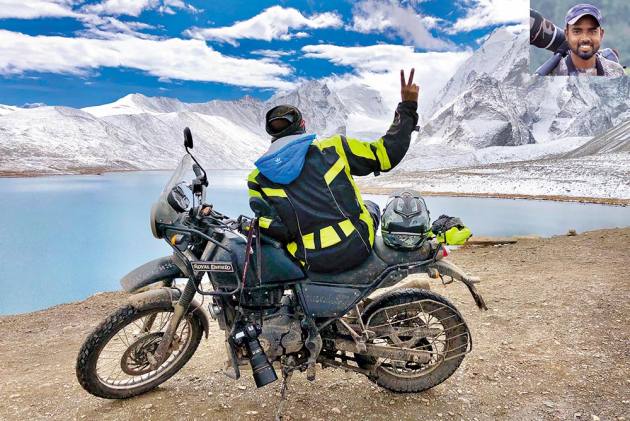
Quack! The gander gives away the nest’s position behind an arbour of foliage. Mrs White-Winged Duck responds with a quick quack-quack. Rofikul Islam raises an arm, winks at his team. And they, finger on trigger, behold Assam’s state bird—so elusive and endangered that perhaps only 200 pairs remain in the wild on this planet—with unabashed sideways glances of looky-loos. They go click, click, click. But the light is low; the sun has just yawned out on this island in the Jia Bhoroli, the livewire of Nameri national park straddling Assam and Arunachal Pradesh.
____________________________________
Will he stop prying into Mr and Mrs DUck’s private moments? He won’t.
____________________________________
Rofikul, a professional wildlife guide with AllIndiaBirdingTours, has prepared well for the sortie. This morning is a long trek—boating, fording, and pushing their trusty legs to their limits. Waking up to a burst of tweets, retweets, pa-chip-chip-pa-tip (sounds like potato chip and dip?), breakfast is hearty in the camp. “By noon, the team logs nearly 80 species of birds,” says Rofikul, a Kaziranga native who turned 30 this November. Growing up near the famous park helped him hone a guide’s primary asset: like telling a Crested Kingfisher from a finch by their calls. Booked through the year, his adventures are on unplumbed land—jungles on the Assam plains, in the Northeast’s hills and snowcapped Sikkimese mountains. His guest list? Long and impressive; includes Delhi deputy CM Manish Sisodia.
Back to camp, lunch, another expedition (short; sundown gathers pace), tea/cookies/Maggi, and it’s almost time for dinner around a bonfire. The thatch-and-bamboo cottages, the snug beds wait invitingly. But the guardian owl is on his nightly run. Hoot hoot! Everything screeeeeee-s to a halt.
source: http://www.outlookindia.com / Outlook / Home> Magazine> National / by Rituparna Kakoty / November 21st, 2019
Two Class-10 students, PV Nayana and Fathimathul Nafra, introduced organic sanitary napkin made from soybean
Personal hygiene concerns are behind the recent bids to promote the production and use of affordable sanitary napkins especially among underprivileged women. A 2018 Hindi film named ‘Pad Man’ is even based on a Tamil social activist who introduced low-cost sanitary pads.
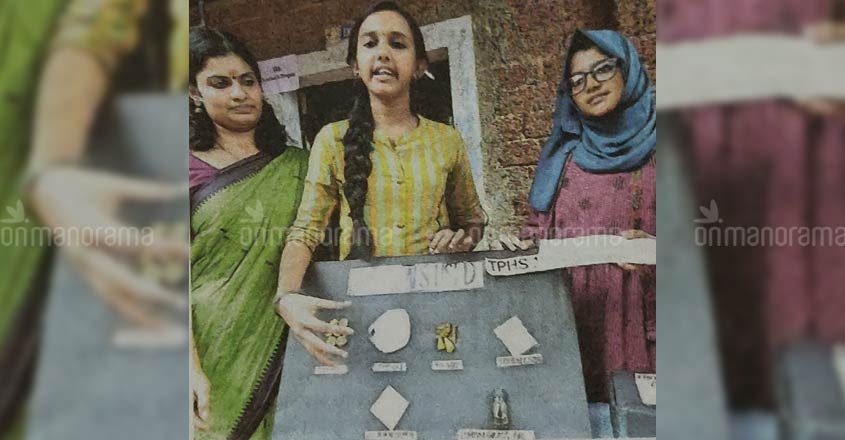
At this year’s Kerala School Science Fest, two Class-10 students — PV Nayana and Fathimathul Nafra — impressed spectators with organic sanitary napkin made from soybean.
With soybean as base for the disposable absorbent pad the duo not only introduced a unique method of making organic sanitary napkins but also pledged their commitment to nature.
Nayana and Nafra are students of the Higher Secondary School at Kadambur in Kerala’s Kannur district.
They claim that the organic napkins are safe for use as chemicals are not used in it. Besides, these biodegradable napkins pose absolutely no harm to the nature.
Napkins made using organic and biodegradable materials like coconut fibre, water hyacinth, banana stem and jute are already in the market.
Nayana and Nafra said extensive research done in this field had inspired them.
Soybean’ incredible ability to absorb water made us try out its possibilities, they added.
After making the napkins, they conducted further experiments and tests at SN College, Kannur, and also at a Bengaluru facility. The experiments there proved successful which further motivated the students to present it at this year’s School Science Fest.
Besides soybean, organic materials like beeswax and cotton too are used in this sanitary napkin. Making a single piece of this organic soybean napkin would cost Rs 3. However, the students say that it would only cost Rs 1.5 per piece if the napkins are industrially produced.
Nayana and Nafra were guided by Roshita who is a teacher at their school.
source: http://www.english.manoramaonline.com / OnManorama / Home> News> Campus Reporter / by OnManorama Staff / November 06th, 2019
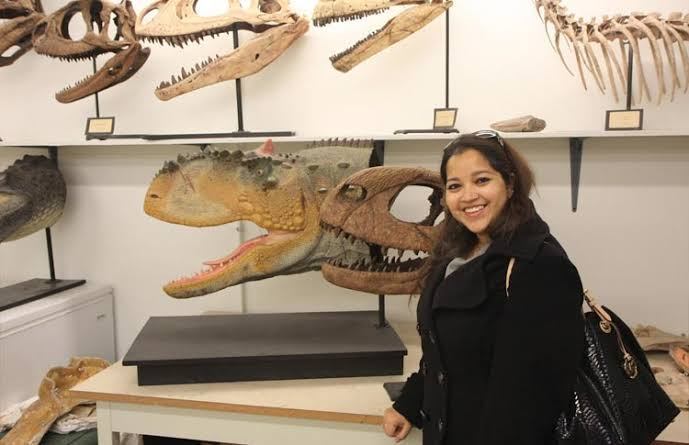
Aaliya Sultana Babi is a princess who, along with her figurative crown, also wears—quite literally—the broad-brimmed hat of a paleontologist! She is the daughter of the Nawab of Balasinor, and traces her ancestry to Sher Khan Babi, the founder of the state of Junagadh, who was bestowed the nawabship by the Mughal emperor Humayun. Tens of millions of years ago, during the Mesozoic era, the lands of Aaliya Babi’s forefathers teemed with ancient reptiles and dinosaurs, and the rocks of Rahioli village (which has earned the moniker of India’s Cretaceous Park) near Balasinor are now etched with the remains of bones, eggs, teeth, and skulls, approximately 67 million years old.
These prehistoric giants include long-necked titanosaurs, an enormous snake, and a crested abelisaur often referred to as “the T-rex of India”—the deadly Rajasaurus narmadensis. Aaliya Babi is an ardent advocate for the protection and preservation of this rare and precious fossil site in Gujarat, which is one of the largest dinosaur fossil sites in the world, and she champions the cause of dinosaur education and conservation in India. As a dinosaur enthusiast who admires and has closely followed her work, including the Dinosaur Fossil Park and Museum that she has set up in partnership with Gujarat Tourism, I am honored to have been able to interview this Dinosaur Princess!
AALIYA BABI IS AN ARDENT ADVOCATE FOR THE PROTECTION AND PRESERVATION OF THIS RARE AND PRECIOUS FOSSIL SITE IN GUJARAT, WHICH IS ONE OF THE LARGEST DINOSAUR FOSSIL SITES IN THE WORLD, AND SHE CHAMPIONS THE CAUSE OF DINOSAUR EDUCATION AND CONSERVATION IN INDIA.
Bhavika: I really admire your contributions to the field of dinosaur conservation. What sparked your interest in dinosaurs?
Aaliya: As a young girl of about four or five, I was fascinated with dinosaurs, despite the lack of exposure to dinosaurs that we grew up amidst. While learning the English alphabet, I would say “A for Apple” and “D for Dinosaur” instead of for “Dog”! I also knew the spellings of “brontosaurus” and “diplodocus,” which were both my favourite dinosaurs! All this was forgotten when I was shipped off to a boarding school, but when I came back after completing my schooling, the interest was rekindled.
Bhavika: I wish more children in India shared your enthusiasm and fondness! Do you believe it’s important for children to be familiar with dinosaurs? What would be your advice to a child who dreams of becoming a paleontologist?
Aaliya: Not just children, but, according to me, everyone should know about our prehistoric earth, and the fascinating creatures that inhabited it. Through our museum and fossil park, we are trying our level best to educate the people. I, in my own way, am trying to create awareness through lectures, presentations, and exhibits held across schools, colleges, universities, and museums, both in Gujarat and abroad, and have received favourable responses. If children want to take up palaeontology as a career, it is unfortunate that in India, we currently don’t have much scope in the discipline, as only limited educational institutes offer subjects related to paleontology. But we need to rectify that. There are some talks going on to include geology into school curricula in the future.
Bhavika: That’s lamentable. India has a wealth of fossils, but these are unexplored and undervalued. Why is this so? What are the current challenges?
Aaliya: There are a lot of challenges which I have faced over the years in trying to get the fossil site protected. First and foremost, we, in India, don’t have any legislations pertaining to fossil protection, and we don’t care for our heritage. It has taken me more than twenty-two years to get the site duly recognized and protected, but still it’s open and vulnerable to vandalism, as we have limited well-trained guards. Secondly, we don’t possess the required funds for excavations and the subsequent studying of fossils, and hardly any good-quality museums exist to exhibit them. We are also lacking in trained professionals.
THERE ARE A LOT OF CHALLENGES WHICH I HAVE FACED OVER THE YEARS IN TRYING TO GET THE FOSSIL SITE PROTECTED. FIRST AND FOREMOST, WE, IN INDIA, DON’T HAVE ANY LEGISLATIONS PERTAINING TO FOSSIL PROTECTION, AND WE DON’T CARE FOR OUR HERITAGE.
Bhavika: Do you believe that there’s potential for dinosaur tourism in India?
Aaliya: There is a huge, huge, HUGE potential for dinosaur tourism in India. You see, in the earlier days, people were not very aware about dinosaurs. The Jurassic Park movie series, based on Michael Crichton’s books, has sparked interest in dinosaurs, and now we also have access to so much information and literature on them. I’ve come across both three-year-olds and eighty-year-olds who want to know about these fascinating creatures that ruled our earth for millions of years! I get children who are so deeply interested in dinosaurs that they want to become paleontologists, and so times are changing!
Bhavika: How does the Garden Palace Heritage Hotel that you run from your royal palace go toward this mission?
Aaliya: The Garden Palace was built in 1883, and we began offering the palace as a homestay around 1997. From having only 1 renovated room, to now 13 rooms, we have come a long way! When we get visitors for the fossil park, we often have them stay at our property or take their meals here, as this is the only place in the area for a comfortable accommodation and a decent meal. We are famous for our cuisine, as my mother, Begum Saheba Farhat Sultana Babi of Balasinor, is a true connoisseur of food, and has carried forward the legacy of the signature Balasinori cuisine.
Bhavika: Can you tell us about the Rajasaurus? Do you believe it should feature in one of the next films from the Jurassic World franchise?
Aaliya: Yes, definitely, the Rajasaurus should feature in the coming Jurassic World movies! The fossilized remains of the Rajasaurus narmadensis were excavated by Dr. Suresh Shrivastav and team in 1983. The dinosaur was approximately 9 meters in length and 2.4 meters in height and weighed approximately 4000 kgs. It is a genus of abelisaurid theropod carnivores from the Late Cretaceous (Maastrichtian) of India, and is represented by one species, Rajasaurus narmadensis. It was formally described in 2003 based on a partial braincase, spine, hip bone, a leg and tail—a first for an Indian theropod dinosaur. The dinosaur had a single horn-like structure on the forehead, which was probably used for display and head-butting. Like other abelisaurids, Rajasaurus was probably an ambush predator and hunted in packs. Numerous theropod eggs and nests have also been found from the Rahioli Balasinor region.
Another similar dinosaur which has been named after the village of Rahioli is the Rahiolisaurus gujaratensis. Rahiolisaurus is another genus of abelisaurid theropod dinosaur from the Late Cretaceous (Maastrichtian) of India. It fossils were excavated by teams from the GSI (Geological Survey of India), Indian Statistical Institute, Kolkata, and Texas Tech University in the USA, between 1995-1997, from the Lameta formation of Rahioli, and it was formally described as Rahiolisaurus gujaratensis in 2010. It can be distinguished from the Rajasaurus by its more slender and gracile build. It is known from a pebbly sandstone containing seven different individuals—from a juvenile to a fully-grown adult. It was 8 meters in length, 3 meters in height, and weighed approximately 2 tons.
Bhavika: Do you believe dinosaurs are linked, in anyway, to the myths and folklore of India?
Aaliya: Yes. We have heard tales of dinosaur eggs being worshipped by villagers, as they resemble shivlings. We hear that ammonite fossils (salagramas) are also worshiped, as they are believed by many to be natural manifestations and divine symbols of Lord Vishnu. The shell’s circular form, with its radial markings, resembles the discus (chakra) of the deity.
Bhavika: Is it especially challenging to be a woman in the field of science and conservation?
Aaliya: I think I am the only woman, as of now, from an aristocratic family in India, who is involved with fossil preservation and conservation. It definitely had its ups and downs, but I think I have used my family name and connection for the protection of the fossils and the betterment of the villagers.
This definitely was a roller coaster ride, but it has been a wonderful ride, nonetheless. Times are changing now, and women, today, are in all fields. I have had the support and blessings of eminent paleontologists like Dr. Ashok Sahni and Dr. Suresh Shrivastava, among others, who have helped and guided me throughout this phase, and have imparted so much of their knowledge to me. And I have a simple motto: that nothing is impossible in life; if we set our hearts and minds to it, we can achieve anything and everything! The word “IMPOSSIBLE” shouldn’t exist in our dictionary!
source: http://www.feminisminindia.com / Feminism In India / Home> Society> Environment / by Guest Writer / posted by Bhavika Sicka / October 28th, 2019
The paintings by Zayn al-Din were commissioned by Mary Impey, an English natural historian and patron of the arts in Bengal
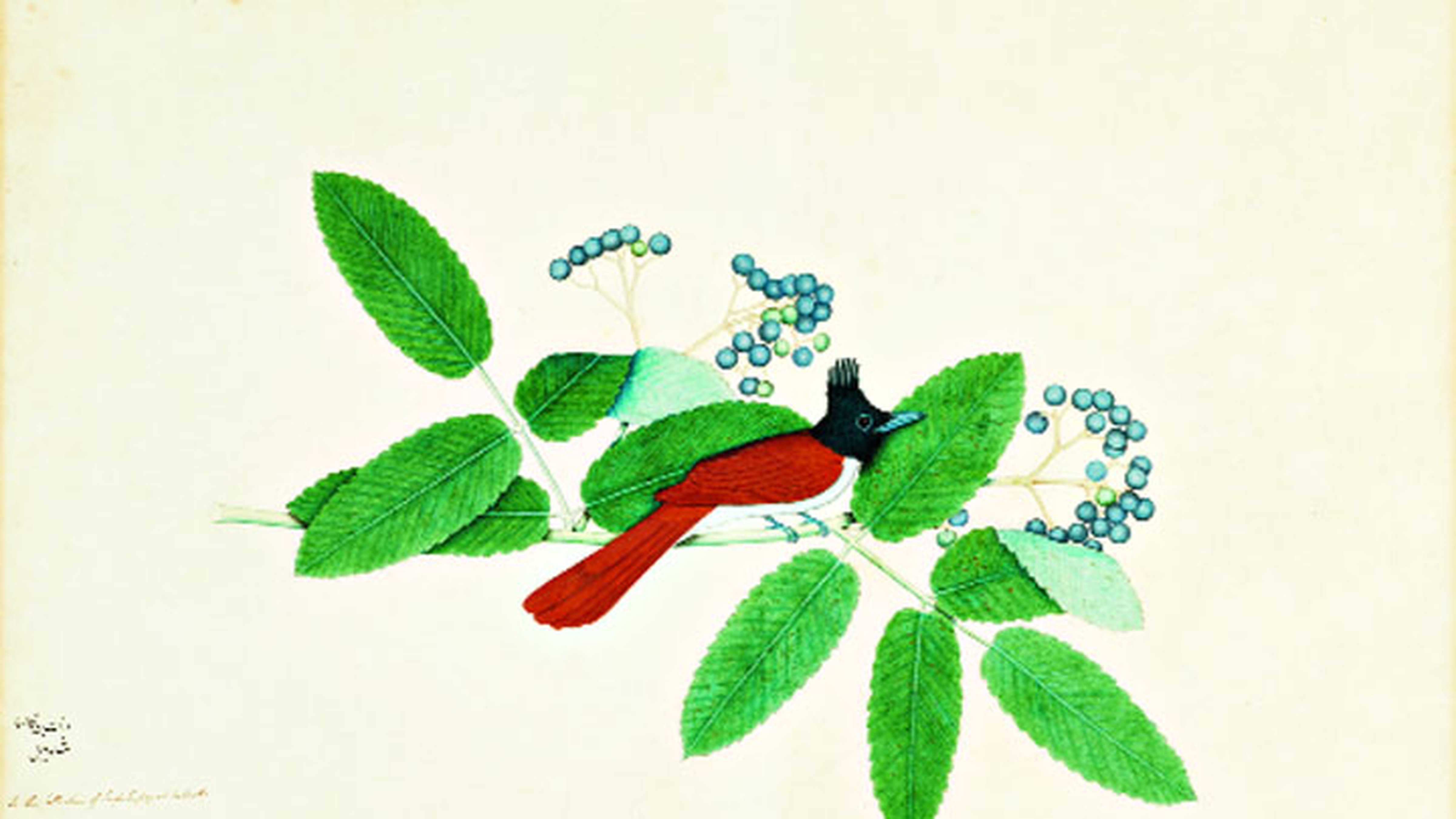
Falsa Tree with King’s Nightingale was painted on a 53.5cm x 75cm canvas by Zayn al-Din in 1782 . / Picture courtesy: Stockholm Auction House
Two watercolour and pencil-on-paper artworks painted in Calcutta in the late 18th century by one of the most famous exponents of the Company School of Art will go under the hammer at the world’s oldest auction house in Sweden on June 12.
The paintings by Zayn al-Din were commissioned by Mary Impey (March 2, 1749 -February 20, 1818), an English natural historian and patron of the arts in Bengal. She was the wife of Elijah Impey, the first chief justice of the Supreme Court at Calcutta (1774-82), who had infamously sent Maharaja Nandakumar — a highly-placed officer in the nawabi administration — to the gallows on charges of perjury.
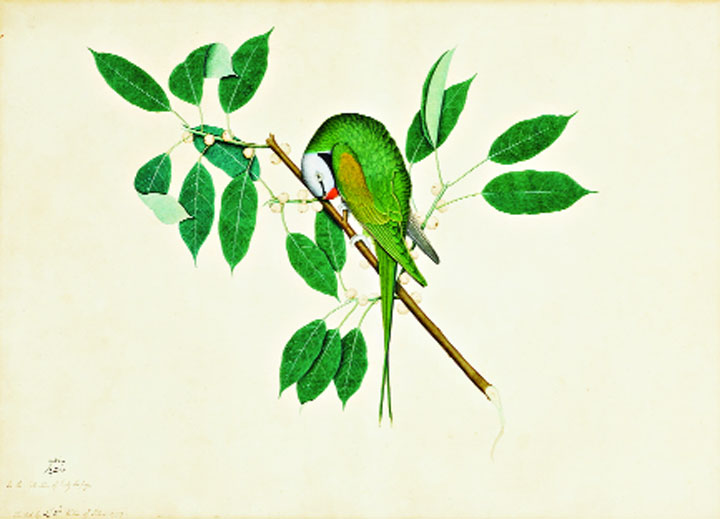
Falsa Tree with King’s Nightingale, dated 1782, and Parrot in a Parkar Tree, dated 1779, have been in the possession of a Swedish family for long.
“We are immensely proud to present these rare artworks. We are not sure how they reached Sweden. They have been in the same Swedish family for a long time and this is the first time that they reach the market,” Victoria Svederberg Bojsen, a specialist in classic and modern art at the Stockholms Auktionsverk (Stockholm Auction House), founded in 1674, told Metro over phone from Stockholm.
“The estimate price is Euro 51,000 (Rs 40 lakh) to 61,500 (Rs 48 lakh). However, we believe they will reach an even higher price. Our hope is naturally that they will now be returned to India where they originated,” she said.
Birds are the subjects of both the paintings. Falsa Tree with King’s Nightingale is a 53.5cm x 75cm canvas.
The inscriptions on both pictures read: In the Collection of Lady Impey of Calcutta. Painted by Zayn al-Din Native of Patna 1782.
“Both paintings include a description of the subject in Persian — Darakht ban falsa, Shah Bulbul in the first and Madna Tota, Darkaht Pakar in the other. The artist’s name is also written in Persian,” said Nandini Chatterjee, associate professor of history at the University of Exeter in the UK.
The painting (right), titled Parrot in a Parkar Tree, is signed and dated 1779. The inscriptions on both artworks read: “In the Collection of Lady Impey of Calcutta. Painted by Zayn al-Din Native of Patna 1782”. / Picture courtesy: Stockholm Auction House
Metro had sent the images to Chatterjee, who is part of a research on two sets of natural history drawings produced between the late 18th and early 19th centuries in Calcutta. The drawings are held at the Victoria Memorial Hall and the Royal Albert Memorial Museum & Art Gallery in Exeter.
The Impeys moved to India in 1773 after Elijah Impey was made the chief justice of Bengal. They set up a menagerie at their house in Calcutta’s Middleton Row. When they shifted to Fort William two years later, they started a collection of native birds and animals on the extensive gardens of the estate.
Mary Impey commissioned several local artists to paint the fauna and flora they had collected. Her three principal artists were Sheikh Zayn al-Din, and brothers Bhawani Das and Ram Das. All three had come from Patna.
Together, Zayn al-Din and the Das brothers painted more than 300 artworks, half of them of birds. The collection, often known as the Impey Album, is an important example of Company style painting.
“With the decline of the Mughal courts, the artists sought the patronage of Europeans. These artists had to change their traditional techniques to suit their new masters. These revisions included a more accurate representation of the subject and a change in perspectives,” said Jayanta Sengupta, the curator of the Victoria Memorial.
Little is known of Zayn al-Din, the artist whose works will be auctioned in Sweden next month. He is known for his extraordinarily detailed paintings for the Impey Album. His drawings of mountain rats, hanging bats, parrots and storks serve as interesting zoological studies and are now preserved at the Ashmolean Museum in Oxford.
“The artworks from the Impey Album rarely reach the international market and the few that have been sold previously at Christies, Sothebys and Bonhams have fetched between $80,000 (Rs 55.5 lakh) and $140 000 (Rs 97.7 lakh),” Bojsen said.
The real study of the Indian subcontinent’s natural history is said to have started with the Mughals. Baburnama — the memoirs of the first Mughal ruler — has beautiful illustrations of birds and animals. Shah Jahan also took a keen interest in the flora and fauna.
With the fall of the Mughals, the artists sought the patronage of Europeans. Calcutta became a thriving centre of the (East India) Company school of painting.
“India was an unknown land for Europeans and along with its indigenous archaeology and history, they also wanted to explore its abundant flora and fauna. Imperial documentation differs from its Mughal predecessor in scale and systematic approach,” Sengupta said.
“Mary Impey was part of a circuit of Europeans who commissioned paintings of Indian natural history. Apart from the pictorial documentation of flora and fauna, the extensive notes kept by her about their habitat and behaviour were of great use to later biologists,” he said.
The collection went to England with the Impeys in 1783 and were sold at a London auction in 1810. Several pieces are in various museums, including the Metropolitan Museum of Art in New York and the Victoria and Albert Museum in London.
“The style of inscription, and the handwriting is identical to other paintings all around the world. I do not believe Zayn al-Din’s name is in his own handwriting. It was probably written by a British collector, maybe Lady Impey herself. Many such British Orientalists (and perhaps some of their spouses) knew Persian,” Chatterjee said.
Some of Zayn al-Din’s works are at the Royal Albert Memorial Museum too. “But those have his name written in English and Bengali, perhaps by a collector who was interested more in the vernacular language, than Persian, which was the Mughal language of administration and courtly culture,” Chatterjee said.
source: http://www.telegraphindia.com / The Telegraph, online edition / Home> West Bengal / by Debraj Mitra in Calcutta / May 28th, 2019
Shaamil Karim, a grade 11 student at the Indian High School Dubai, was selected from thousands of entries.
Karim’s project detects if a car or person is passing by and makes the next street light brighter and the previous light dimmer, saving energy.(Shaamil Karim/ facebook)
A Dubai-based Indian boy has ranked among the top 100 regional finalists for the Google Science Fair global contest for his project to make street lights smarter, the media reported.
Shaamil Karim, a grade 11 student at the Indian High School Dubai, was selected from thousands of entries, Gulf News reported on Saturday.
His project detects if a car or person is passing by and makes the next street light brighter and the previous light dimmer, saving energy.
Karim, a 15-year-old computer whizkid who originally hail from Chennai, said his father was his inspiration to come up with a solution for power wastage.
“We were at a park late at night and all the lights were switched on. My dad said, ‘Can’t we do something about this?’ I decided to do my project to make street lights smart,” he told the Gulf News.
Karim added that his project would be around 63 per cent cheaper than infrared-based sensors.
The global 20 finalists are expected to be announced this month.
source: http://www.hindustantimes.com / Hindustan Times / Home> Education / by Indo-Asian News Service, Dubai / May 26th, 2019
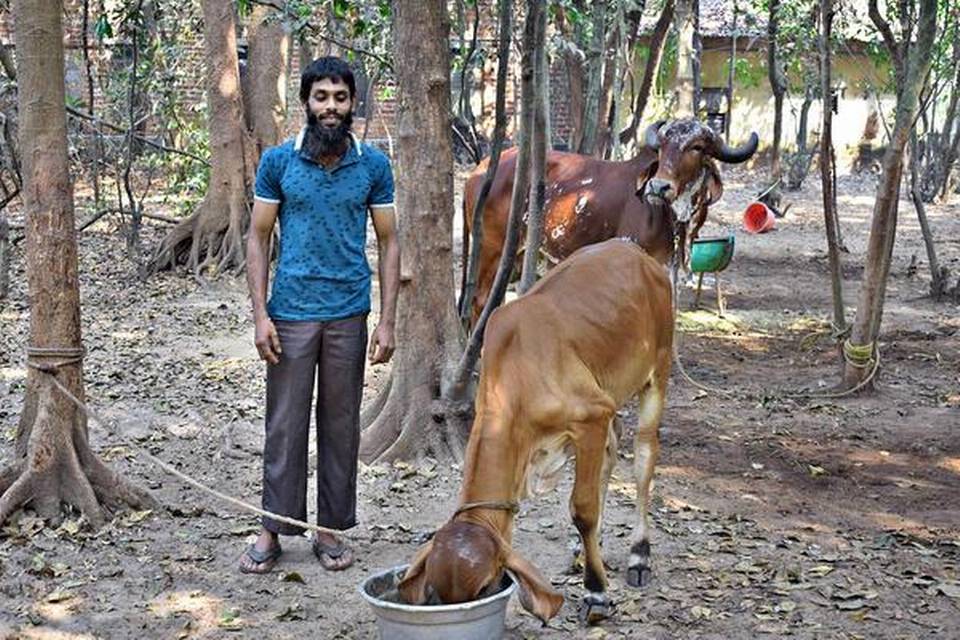
Mohammed Irshad Abideen tending the indigenous breed of cattle in his farm at Uppinakote village in Udupi district.
23 head of cattle are being reared in a farm house near Udupi
Three generations of a family have been conserving and breeding indigenous breeds of cattle here. The family has 23 head of cattle of Gir, Sahiwal, Red Sindhi, and Ongole breeds at Uppinakote village, about 18 km from Udupi. They are being reared in the farm house of 36-year-old Mohammed Irshad Abideen. His younger brothers, Naushad Ahmed, Mumshad Alam, and Sheik Mudassar, are supporting him in running the farm house.
Explaining their love for native breeds of cattle, Mr. Abideen said his grandfather Hanif Shah Saheb used to rear Malnad Gidda. His father, Jainulla Abideen, who used to rear Jersey and HF breeds for some time, later shifted to Malnad Gidda, Punganur, and Sahiwal breeds.
Mr. Abideen was engaged in helping his father ever since he completed his second year pre-university course. However, the family’s interest in indigenous cattle took a leap when Mr. Ahmed, who works as an engineer in Saudi Arabia, had gone to attend a bull show in Brazil about nine years ago.
“Naushad saw that most of the bulls were from India. We then decided to rear and breed only indigenous breeds of cattle,” he said.
More longevity
“The indigenous breeds of cattle are less prone to ailments, have more longevity, and provide better quality of milk,” said Sheik Mudassar.
“A Sahiwal cow gives 16 to 19 litres of milk daily, while a Red Sindhi gives 15 to 16 litres, and a Gir cow 13 to 15 litres of milk. I sell them at ₹70 a litre. Many people come to buy the milk as it is good for health,” said Mr. Abideen.
The breeding of indigenous cattle is lucrative. “We sell a male calf for ₹30,000 and a female for ₹50,000. We make a profit of ₹15 lakh to ₹20 lakh a year,” he said. The family grows corn and grass for their cattle on 2.5 acres of land taken on lease.
Many come to his farm seeking guidance. “We guide them in rearing and breeding of cows. We want our indigenous cattle breeds to thrive,” he said. Sultan, the Ongole bull, reared here, bagged the champion trophy at the Cattle Mela held at Sindhanur in Raichur district in January.
source: http://www.thehindu.com / The Hindu / Home> News> States> Karnataka / by Ganesh Prabhu / Uppinakote (Udupi District) / March 14th, 2019
The National Unani awards were presented on the first day of the two day conference
The National Conference on Unani Medicine kicked off on Monday with much fanfare in the presence of a galaxy of dignitaries.
“Unani Medicine can offer the right solution for many health challenges we are facing due to lack of treatment of many diseases and paucity of resources”, said Dr. Najma Heptulla, Governor of Manipur, inaugurating the two-day conference organized by the Central Council for Research in Unani Medicine (CCRUM). It is a part of the 3rd Unani Day celebrations. Dr. Heptulla urged the Unani fraternity to progress and evolve with the changing times, adapt to new techniques of health research and contribute new approaches to health management. She said that Manipur has the treasure of over 500 medicinal plants and invited scientists to visit the state for research.
Addressing the conference themed on ‘Unani Medicine for Public Health’, Minister of State (IC) for AYUSH, Shripad Yesso Naik enlightened the audience on concrete steps taken by the Ministry of AYUSH to promote Unani Medicine.
The Lifetime Achievement Awards were conferred on Prof. Naeem Ahmad Khan, Aligarh Muslim University, Aligarh and Prof. M A Jafri, Jamia Hamdard, New Delhi for Best Academician and Best Researcher in Unani Medicine respectively
“Our efforts are focused to tap the real potential of AYUSH systems in imparting preventive, promotive and holistic healthcare to the people,” he said. Paying tributes to Hakim Ajmal Khan, whose birth anniversary is celebrated as Unani Day on 11thFebruary every year, he described him as a versatile genius.
Highlighting the strengths of Unani Medicine and other AYUSH systems in his address, Union Minister for Minority Affairs Mukhtar Abbas Naqvi said that the AYUSH systems are golden key to health and wellbeing. India is the strongest hub of Traditional Medicine which is one of the reasons medical tourism is flourishing in the country. He stressed on Integration of Unani Medicine in Mainstream Healthcare in line with the government policies and initiatives for mainstreaming of AYUSH in national healthcare.
On this occasion, AYUSH Awards for Unani Medicine were conferred on various Unani scientists and experts in recognition of their contributions for research, teaching and practice of Unani Medicine.
The Best Research Paper Awards were presented to Dr. Arshiya Sultana, Associate Professor, National Institute of Unani Medicine, Bangalore for Clinical Research and Dr. Noman Anwar, Research Officer (Unani), Regional Research Institute of Unani Medicine, Chennai for Drug Research in Unani Medicine. The Young Scientist Awards were conferred on Dr. Jamal Akhtar, Research Officer (Unani) Scientist – III, CCRUM for Clinical Research and Dr. Nasreen Jahan, Associate Professor, National Institute of Unani Medicine, Bangalore for Drug Research in Unani Medicine.
The Best Teacher Awards were presented to Prof. Tanzeel Ahmad, Aligarh Muslim University, Aligarh for Clinical Research, Prof. Mohd Aslam, Jamia Hamdard, New Delhi for Drug Research and Prof. Khalid Zaman Khan, Aligarh Muslim University, Aligarh for Literary Research in Unani Medicine. The Lifetime Achievement Awards were conferred on Prof. Naeem Ahmad Khan, Aligarh Muslim University, Aligarh and Prof. M A Jafri, Jamia Hamdard, New Delhi for Best Academician and Best Researcher in Unani Medicine respectively.
source: http://www.medibulletin.com / MediBulletin / Home> Alt Medicene / by MediBulletin Bureau / February 11th, 2019