Category Archives: NRI’s / PIO’s

That house up the street

Lucknow, UTTAR PRADESH :

Lucknow :

In the heart of Hazratganj, at the cut which turns into Lalbagh, stands a large bank. The cars and two-wheelers parked there spill onto the road. There are vendors, mechanics, and just people waiting to go back into the bank when the clerk beckons them. The atmosphere looks like any bland public sector office.

However, a few steps into the compound will lead you to a large colonial-era house. The exterior is yellowing, the plaster is coming off but the sheen of its wooden door frames is intact. The windows, too, retain the same glass, broken at several places but reflecting, literally, the charm of what the house must have seen through the years.

Called No. 2 Mall Road by the family that lived there and generations after it, the house did not belong to ordinary people. It was the abode of one of the finest writers Lucknow has produced.

Author Attia Hosain was born in that house in 1913 and lived there for the first 19 years of her life. Traces of the house are found in her only but much acclaimed novel, ‘Sunlight on a Broken Column’. It is also part of the Masters’ in English syllabus at Delhi University.

“The front part was my grandfather’s domain — a big study filled with books. Here he entertained visitors. The rear part of the house was my grandmother’s domain. Behind the house was a garden. There was a second house, called the small house, but in fact two stories high, and each of the children had their own rooms,” says Shama Habibullah, Attia’s daughter, now 75 years old. She is a filmmaker and lives in Mumbai. She spent a large part of her childhood there.

The house was sold to government in 1956. Attia’s older brother sold it because zamindari was abolished and no one had the means to maintain a house of that size. Besides, he was nominated for foreign service and had to leave India. “No matter how much we miss it, at that time, selling the house was the best solution and it was the right thing to do,” says Shama.

Eighty-six year-old Shahid Mushir Kidwai was born in No. 2 Mall Road in 1929. “I lived there for the first 10 years of his life. I used to go to La Martiniere College from there,” says Kidwai, the son of Attia’s eldest sister. Attia khala is special to him. “She loved me dearly. When my mother was carrying me, she felt it would be a daughter but Attia khala said she would have a son. When I was born, Attia khala was delighted.”

Kidwai vividly remembers Attia’s wedding in 1933. “Her husband Ali Bahadur Habibullah’s family lived across the street in Hazratganj. He was my aunt’s son. We used to have lot of fun running across both houses. It was a beautiful wedding.” Many characters in Attia’s stories are people Kidwai saw in his childhood. “From a servant we had to a pet dog, many have figured in her stories on some form or the other,” he says. Not only the family, but several homeless and destitute people lived in that house, that had exquisite Carrara marble floors. “After it was sold, whenever my mother, her siblings or their children passed by that side in Ganj, they never looked at the house. Such was the pain of losing it,” he says. “It is a period piece. It could have been a heritage building. Now, there is a garbage heap in front of it. People spit against the walls. It is sad,” says a family member.

Attia left India in 1947 when her husband was sent on an assignment to England. However, they never knew they wouldn’t come back. “The Partition of India was a major setback to her. She was distraught. She didn’t want to see the pain of partition in India. Hence, she stayed in Britain.

But Lucknow never left her,” says Shama. There is a poem, The City, by CP Cavafy. That best describes her bond with Lucknow, she says. The memories of Lucknow that Attia instilled in Shama are what brought Shama back to India. In the 1990s, when she was not in the best of heath, there were restrictions on her food. However, during a trip to Lucknow, she asked for kebabs and they did her no harm. Instead, she gained healthy weight and felt much better. “It wasn’t disease but the atmosphere that made her unwell. The atmosphere of Lucknow cured her,” says a member of the family.

Attia died in January 1998 in England.

In 2013, Shama and her brother filmmaker Waris Husein organized a small function to mark her centenary year. That was their last visit to Lucknow. There were films, book readings and recordings at the event. About the house, Shama says, “The house is a symbol of a Lucknow kept alive only in writings and memories. Attia took these memories to the world. She made the story of her displacement a story of everyone else.”

Attia’s works Phoenix Fled, 1953 Sunlight on a Broken Column, 1961 Cooking the Indian Way, 1967 Distant Traveller: New and Selected Fiction, 2013 (Chapters from an unfinished novel and unpublished stories)

The last work The last literary piece Attia created was not written but recorded by her. It was for a compilation called “Voices of the Crossing”. It was about the impact of Britain on writers from Asia. Due to ill-heath and failing eyesight, Attia recorded the chapter “Deep Roots” and it was transcribed and printed in big fonts for her to verify. She spoke of Partition in it. “This can be termed her last work,” says Shama

Shakespearean Urdu at BBC Attia was a born actor, Shama says. Working for the Urdu Service of BBC in England, Attia was once playing Lady Macbeth. The iconic dagger scene, Shama says, is one she can never forget. “Khoon, khoon”, she went. This was Shakespearean Urdu I was listening to on BBC.” She adds in the same breath that it was unfortunate that AIR, in 1995, could not record her when she visited Lucknow. “My mother and I went to AIR for a possible recording show but they said their tape recorder wasn’t working!”

source: http://www.timesofindia.indiatimes.com / The Times of India / Home> News> City News> Lucknow News / TNN / January 17th, 2016
Obituary: Attia Hosain

Lucknow, UTTAR PRADESH / London, UNITED KINGDOM :

Attia Hosain, writer: born Lucknow, India 20 October 1913; married Ali Bahadur Habibullah (one son, one daughter); died London 23 January 1998.

The people who came to see Attia Hosain honoured at a book launch a few weeks ago could have been forgiven for expecting a subdued and fragile old lady. After all, Hosain was 84, had had a long and turbulent life and for years had been in poor health. The launch demanded nothing of her but that she sit on stage as a sort of icon and accept the homage of her admirers, while her daughter – the film producer Shama Habibullah – read from one of her mother’s early World Service pieces.

But Hosain was not one to sit back passively letting encomiums wash over her. Despite her physical difficulties, she immediately engaged with her audience, vividly sharing her emotions and memories. Her indomitability and eloquence swept problems aside, with a degree of hauteur and a magnificent sense of style.

Those qualities must have stood her in good stead. She was born in 1913 into an aristocratic family in Lucknow – a city that is a byword for Muslim scholarship and culture. From her father she inherited a keen interest in politics and nationalism. From her mother’s family of poets and scholars she drew a rich knowledge of Urdu, Persian and Arabic. Her knowledge of English came from an English governess, and subsequently as one of the few Indian girls at an English medium school. She was the first woman from her background to take a degree at Lucknow University.

From early on she was a communicator, first through feature articles for Indian papers, the Pioneer and the Statesman, and membership of the radical Progressive Writers’ Movement. The fiction came later, as a result – she recently speculated – of politics and dislocation.

In 1947, when India was partitioned into India and Pakistan, Hosain was in London with her husband, who had been posted the year before to the High Commission. The division of the two countries and the separation of two religious communities caused her great pain. Immensely proud of her heritage as both a Muslim and an Indian, she chose to remain in England and bring up her daughter and son – now the film director Waris Hussein – on her own. The change brought her a career as a regular broadcaster with her own women’s programme on the BBC World Service and a new perspective.

But the sense of damaged cultural roots never fully died away. “Here I am, I have chosen to live in this country which has given me so much; but I cannot get out of my blood the fact that I had the blood of my ancestors for 800 years in another country.” It was that, she said in her last piece – to be published in an anthology later this year – that drove her to write.

In 1953, Chatto and Windus brought out her book of short stories Phoenix Fled. Eight years later came Sunlight on a Broken Column, an evocative and carefully detailed novel which traces, via the story of young Laila, a society in transition. It was over 20 years, however, before the book was widely recognised. Brought out of oblivion by Virago in their splendid Modern Classics in 1988, it re-established Attia Hosain in the public eye and gave her a platform which she embraced with zest.

– Naseem Khan

source: http://www.independent.co.uk / Independent / Home> News> Obituaries / by Naseem Khan / February 05th, 1998

Self-Driving Car Wins Plainfield Teen 2nd Place At Science Event

Bengaluru, KARNATAKA  / Illinois,  U.S.A ;

Amaan Khan placed at the National Junior Sciences and Humanities Symposium in Maryland.

AmaanKhan02MPOs20may2018

PLAINFIELD, IL :

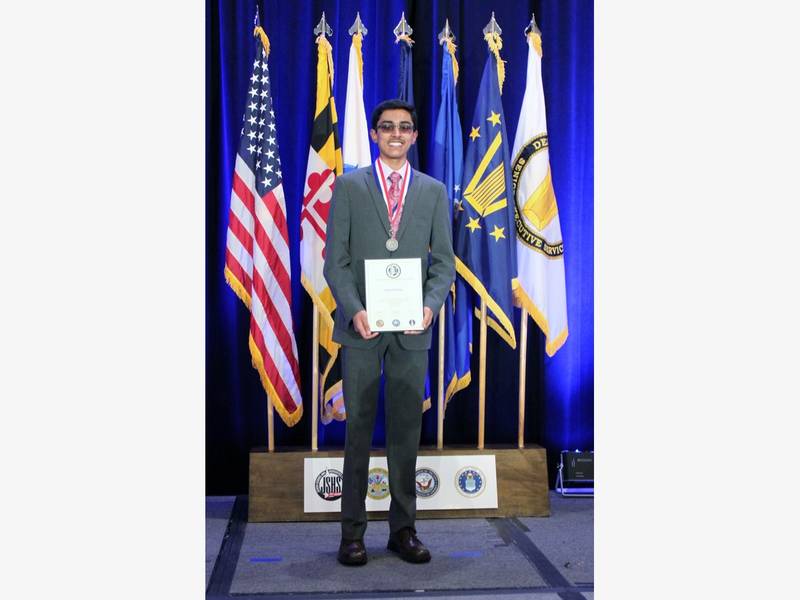
Plainfield South High School sophomore Amaan Khan won second place in the National Junior Sciences and Humanities Symposium (JSHS) held in Maryland May 2 to May 5, 2018, for creating a self-driving model car.

He advanced to the national competition after winning first place at the regional JSHS competition in March.

Khan’s model car can drive within designated lanes, stop and go at traffic lights, and avoid obstacles.

His second-place finish earned him an $8,000 scholarship in addition to the $2,000 scholarship for winning the regional event. The regional competition is open to ninth through twelfth grade students.

Most of the 97 national competitors were high school juniors and seniors. “Second in national is still really great,” Khan said.

Students compete in several categories including computer science and math, bioengineering, behavioral science, medicine, health, physics, engineering and environmental science.

Khan wants to enter the Intel International Science and Engineering Fair next year, he said.

Photo/article via District 202

source: http://www.patch.com / Plainfield Patch / Home> Kids & Family /  by Shannon Antinori , Patch National Staff / May 17th, 2018

Plainfield South High School sophomore creates, programs self-driving car

Bengaluru, KARNATAKA  / Illinois,  U.S.A

Amaan Khan, 15, to travel to national competition

Photo provided
Photo provided

Plainfield :

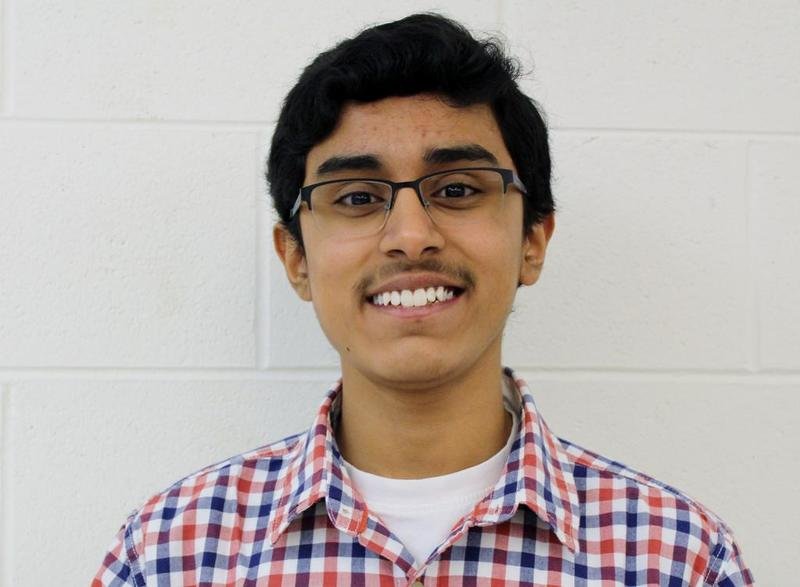
A Plainfield South High School sophomore is traveling to a national science competition, after he created and programmed a self-driving car.

Amaan Khan, 15, will compete this week in the National Junior Science and Humanities Symposium in Maryland, after winning the Illinois Junior Science and Humanities Symposium (JSHS) in March, according to a news release from Plainfield District 202.

Khan created and programmed a self-driving car that can drive within designated lanes, stop and go at lights and avoid obstacles.

He won a $2,000 college scholarship and free trip to the national competition. He is one of two students from Illinois heading to Maryland to compete Tuesday through Saturday with 93 students from across the nation.

Competitors must submit a research paper and present their projects before a panel of judges and an audience of their peers.

Khan became interested in robotics and artificial intelligence last year, after he built a voice-controlled toy car. He took online college courses and watched college lecture courses and YouTube videos to teach himself computer programming.

“As I was learning I kept building the project,” Khan said. “I’d learn one thing, implement it, learn another thing and implement that.”

Patrick and Samantha Scanlan, PSHS science teachers, have supported Khan along the journey.

Samantha Scanlan helped Khan register for the contest. Patrick Scanlan helped Khan polish his oral presentation.

“[Khan] knows what he wants and seeks out the resources to do it,” Patrick Scanlan said. “And if there’s something he needs to learn, he’s able to figure out what he needs to be successful.”

The JSHS is designed to challenge and engage students in science, technology, engineering or math.

To see Khan’s car in action, visit youtube.com/watch?v=3dEgJ7sz6XA.

source: http://www.theherald-news.com / The Herald-News / Home> Local News  / by The Herald-News / April 30th, 2018

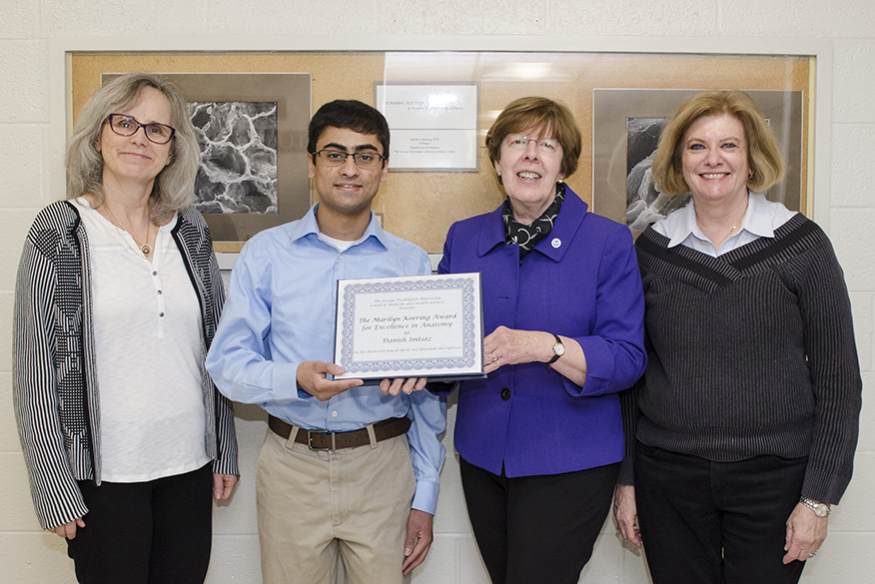
MD Student Danish Imtiaz Receives Marilyn Koering Award

NEW DELHI / TAMIL NADU / TELANGANA  / Minnesota – Washington DC, U.S.A. :

DanishImtiazMPOs20may2018

For many in the lecture hall during the 9th Annual Marilyn Koering Award ceremony, devoted teacher, research scientist, mentor, and patient advocate Marilyn Koering, PhD, Professor Emeritus of Anatomy and Cell Biology at the George Washington University (GW) School of Medicine and Health Sciences (SMHS), was an inspiration.

“She had a tremendous impact on my life,” said Koering’s sister, Susan, who travels from Minneapolis Minnesota each year to present the award. “Going to the same college, going into the medical world … she was an inspiration to me.”

The award is presented each year by Koering’s sister to the first-year medical student with the highest overall grade in the anatomical sciences. This year, Danish Imtiaz earned that distinction.

“I feel extremely honored to receive this award in the name of the esteemed Dr. Koering,” Imtiaz said, adding that her legacy will inspire him to continue exploring the anatomical sciences.

“I would like to thank Dr. Koering’s family for the award,” he said. “And also, I would like to thank the anatomy and histology professors at GW SMHS for their excellent instruction. I hope to continue to work hard and learn more about the anatomical sciences from them.”

Kenna Peusner, PhD, professor of anatomy and regenerative biology at SMHS, organized the award and introduced the speakers at the assembly. Peusner said that Marilyn Koering was dedicated to her students, teaching histology to more than 5,000 GW medical and graduate students. For 34 years, Koering taught in the classroom and labs at the SMHS until her retirement in 2003. She passed away in 2008 after a fierce battle against malignant melanoma.

“After Marilyn was diagnosed with melanoma, she fought the cancer for 21 years through essays, appearances on television, addressing cancer support groups, and writing letters to pharmaceutical companies and the federal government to gain support for patients who volunteered for experimental treatments,” Peusner recalled.

Mary Ann Stepp, PhD, professor of anatomy and regenerative biology at SMHS, who knew Koering both as a member of the faculty and as a student, spoke on her remembrances.

“When I came here and entered the Anatomy Department, the Chairman … saw my weaknesses in the anatomical sciences, so I was assigned to learn histology with the first-year medical students,” Stepp explained. “So I sat in the classroom with the medical students, and got to know Marilyn not only as a faculty member, but as a mentor. She was an excellent teacher; she really cared about making sure that the students understood what they were doing and how to do it well.”

During the ceremony, Susan Koering told a story of her 6-year-old grandniece, whom she said Marilyn would have loved. One day, she asked the young girl what she wants to be when she grows up. Her response: “A mommy.”

“I said, ‘Well, OK, but how about a scientist?’ And then about a month later I asked again ‘What are you going to be when you grow up?’ This time she said ‘a scientist,’” Koering said to laughter.

source: http://www.smhs.gnu.edu / GW, George Washington University, School of Medicine & Health Sciences / Home> News / by Katherine Dvorak / April 23rd, 2018

UAE-based Indian couple risk their lives to save others on highway

KERALA / Abu Dhabi,  U.A.E. :

Abu Dhabi:

The Abu Dhabi Police honoured Sufiyan and Aliya for their actions which prevented further accidents.

The police appreciated the presence of mind shown by the couple in acting swiftly and taking all necessary precautions.

It was supposed to be a happy weekend trip to Al Ain for Abu Dhabi-based expat Sufiyan Shanavas and his wife Aliya. Instead, the couple from the south Indian state of Kerala were involved in a remarkable road incident.

Sufiyan risked his life to rescue an Arab national injured in an accident and then averted a possible pile-up on the Abu Dhabi-Al Ain Road. The Abu Dhabi Police appreciated this humanitarian gesture by honouring the couple.

On May 3, the couple planned a weekend stay in Al Ain and set off, taking the Abu Dhabi-Al Ain Road at 6pm. Sufiyan took the fast lane and just 26km into the journey, he had to apply emergency brakes to prevent an accident

“We were cruising through Al Mafraq area when I suddenly noticed that the pick-up in front of me was not moving. In the nick of time, I applied hand brakes and stopped just metres away from the vehicle. We immediately rushed out and found that it was an accident. I opened the door and found an Arab national bleeding inside the vehicle. He was conscious, but in a state of shock. He wasn’t responding to my queries. I switched on the hazard light and searched for the triangle warning sign but couldn’t find one in the pickup and got it from my car. Meanwhile, Aliya called the Abu Dhabi Police. I moved my car to the hard shoulder, but was unable to move the pickup. We managed to move the person out of his pickup to safety. Despite the hazard light and triangle sign, we had some close calls with approaching vehicles that missed hitting us by a few inches. I knew this could lead to a collision or pile-up crashes, which would mean more casualties,” Sufiyan said.

Then, he did the unthinkable. “I stood on the fast lane and waved frantically so that other cars could notice the danger. Still, there were 2-3 cars that came very close to hitting me. I took the risk, otherwise these cars would have surely crashed into the pickup. When I look back, I don’t know what made me act.”

The Abu Dhabi Police were given the location by Aliyah and assistance was just minutes away. However, a Land Cruiser passing by stopped and the driver stepped out to enquire. It turned out to be a police officer who was passing by.

“He asked about the accident and told me to move to safety as we had taken all necessary precautions of putting on the hazard lights and placing the warning sign. In minutes, the police arrived and took control of the situation.” The police took their contact details and told the couple to continue their trip.

“I thought it was for further investigation. But on Sunday, I got a call saying the police wanted to honour our actions. I was bowled over by the respect with which we were treated. The officer asked me why I risked my life. If I hadn’t done that, there would have been more accidents. I am glad that the person injured in the accident is also doing well. The response from the police at the accident site was praiseworthy,” Sufiyan said. “I speak Arabic as well and it helped in this situation,” he noted.

Sufiyan works as a duty manager with Etisalat in Mushrif Mall and Aliyah is a finance and admin secretary at Marina Mall.

Police honour couple

Brigadier Khalifa Mohammed Al Khaili, director of traffic and patrols directorate, central operations sector at the Abu Dhabi Police, honoured the couple on Wednesday.

The police appreciated the presence of mind shown by the couple in acting swiftly and taking all necessary precautions.

Brig Al Khaili expressed the Abu Dhabi Police’s keenness to spread awareness among all residents, on traffic law and causes of accidents.

“We appreciate all humanitarian works done by citizens and residents to enhance traffic safety,” Al Khaili noted.

ashwani@khaleejtimes.com

source: http://www.khaleejtimes.com / Khaleej Times / Home> Nation> Abu Dhabi / by Ashwani Kumar, Abu Dhabi / May 12th, 2018

Chennai-born Rehana Ameer gets candid about life as a British politician

Chennai, TAMIL NADU / London, UNITED KINGDOM :

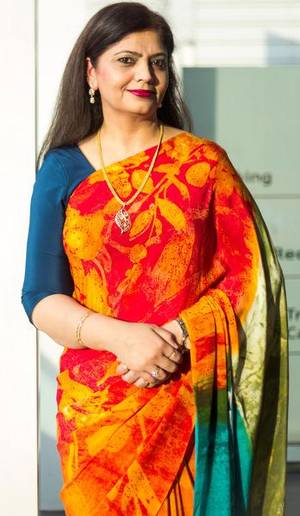
RehannaAmeerMPOs13may2018

Chennai-born Rehana Ameer chats about how she got into British politics, and the need for youth to get into public affairs

Rehana Ameer was your quintessential Triplicane girl. Growing up, she dreamt of becoming a doctor, but life had other plans for her. She got into the IT sector and was sent to the UK, after which she kept shuffling between the two countries. In 2008, she made a decision – to relocate to the UK with her husband and children.

Today, 10 years later, Ameer is creating a name for herself in London. Apart from the business she runs, she’s also popular for being the first Indian-born woman to be elected as a councillor to a ward in the City of London. In the city for The Glassbox’s Meraki speaker series, Ameer opens up on how she got into the political arena and the need for younger people to spark a change in the system. Excerpts:

You’re doing well for yourself in the UK, but you’re no stranger to Chennai, right?

I was born and raised in Triplicane, and got married to another Chennaiite – from Royapettah. We moved to the UK and that’s where my journey began.

You are the first Indian-born woman to be elected to the City of London Corporation. Can you recall that day when you were announced winner?

I didn’t realise that it would become this big. There was a lot of pressure in the run-up to the elections; the campaigning was tough. There was a blast the day before elections. What helped me was my focus and keeping my eye on the prize.

After winning, I didn’t show my happiness. The person I defeated was active in the circuit for more than three decades and I had to show my respect. But within me, I was very happy that my hard work had paid off. Only after my son said, “Mama, you’ve won” three times, did it sink in.

How’s a day in your life looking after the win?

The role I’ve taken in my ward in the City of London is a voluntary civic responsibility role. In some wards, you have 10 councillors but in mine, there’s only me and another person… so the work is shared. I sit on three large committees in which we have regular weekly meetings; three days go into that. One good thing about London is that most things are largely scheduled and planned. I also run a business . Apart from that, I’m a mother and a wife.

What have your chief learnings been after becoming a Councillor?

Earlier, I had theoretical knowledge, but now I know how things work practically. I know the system and can try bringing some kind of a change. I’m also in a position to guide and advise people on how to go about tackling their issues. It’s a four-year term and it’s been just a year now, but I think I’ve been a fast learner.

You’ve grown rapidly in your political career. Did you have a godfather?

I had no political affiliations; it was more of an internal passion. If you have the skills and attitude, you’ll get support, irrespective of who you are. For me, politics is no different from any other profession. That sort of a mindset should come in India. My message has always been this: young people and women should get into politics. I know there are challenges but a start needs to be made somewhere.

But aren’t there a lot of differences between how politics work in India and back in the UK?

Yes, the outlook is different. But you don’t necessarily need to come into the forefront of politics to make some sort of change. There are many roles in the system that people might not be aware of; it can be policy, research or advisory. A new policy is not just the result of what one politician thinks… it is the result of many brains. You could be one of them.

Who’s that one politician that you have admired?

As a woman, I admired Jayalalithaa and her courage. The power she had to bring the masses together was amazing.

Did you dream of becoming someone like that growing up?

My father was the president of the local jewellery association and he was always looked up to as a leader. As a child, I remember wanting to be like that, but I never imagined I’d get into politics someday. A point came in my life when I started thinking what I’ve done for the betterment of my fellow beings. I realised that I had migrated from India to the UK and didn’t want to lead life like any other migrant. I wanted my children to do something for society and for that, I needed to lead by example… and that’s how politics happened.

source: http://www.thehindu.com / The Hindu / Home> Society / by Srinivasa Ramanujam / May 10th, 2018

Businessman from Assam wins ASEAN award

Hojai, ASSAM / LAO PDR  :

Guwahati :

State-based businessman Habib Mohammad Chowdhury has won the ASEAN-India Emerging Entrepreneur award in Malaysia at the ASEAN-India Conference.

To commemorate its 25th anniversary, the ASEAN-India Business Council (AIBC) organized the ASEAN-India BizTech Expo and Conference in collaboration with the Federation of the Indian Chamber of Commerce and Industry (FICCI). The conference was held in Kuala Lumpur in Malaysia with the theme ‘Bridging Borders Through Business’.

“I feel exceptionally blessed. Receiving this award has only made me more determined and motivated to accomplish my set goals,” said Chowdhury, who was born and brought up in Assam’s Hojai.

Chowdhury is now settled in Laos. He is the founder-chairman of the HSMM Group of Companies in Laos, which has emerged as the largest agarwood and agar-based product’s company in southeast Asia.

Over the years, the governments of ASEAN and India have taken concrete measures to strengthen economic relations, especially the establishment of the ASEAN-India Free Trade Area.

source: http://www.timesofindia.indiatimes.com / The Times of India / Home> News> City News> Guwahati News / by Abdul Gani  / TNN / June 20th, 2017

A mosque to elevate the mind

Jamshedpur, JHARKHAND :

Library, career counselling & English-speaking on cards

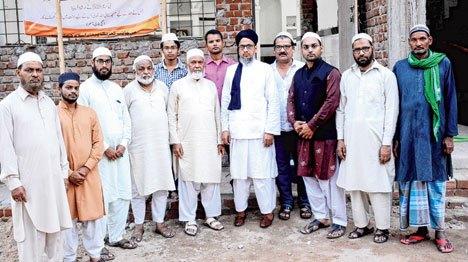
PURE INTENT: Members of Paigham-e-Islam Masjid and Islamic Centre pose for a picture in Mango, Jamshedpur, on Thursday. Picture by Bhola Prasad

Jamshedpur:

At a time of increasing suspicion and intolerance, an upcoming mosque here seeks to build bridges with knowledge and wisdom.

Paigham-e-Islam Masjid and Islamic Centre in Mango will be arguably a first of its kind mosque in Jharkhand with a library offering Islamic books along with those of Hindi, English and Urdu literature and a reading room.

These apart, the learning centre attached to the mosque will offer English-speaking classes to poorer students and youths, tuition for competitive exams, career counselling and inspirational talks by teachers and professionals from various fields. People of other faiths would be welcome to participate in discussions and seminars and use the library and reading room.

The mosque and the learning centre will be run by Paigham-e-Islam Education and Welfare Trust, an outfit formed in 2011 with the cream of Muslim intelligentsia in Jamshedpur and some NRIs, including academics, lawyers, bureaucrats, social workers and professionals, as members.

The Trust members said they were inspired by the holy Al-Masjid an-Nabawi in Medina, a mosque built by the Prophet himself, and his final resting place.

Religious scholar and social worker Syed Saifuddin Asdaque, the director-founder of the Paigham-e-Islam Education and Welfare Trust, said they always wanted to be a part of a mosque that would spread peace, knowledge and wisdom.

“As far as our knowledge goes, a mosque with books on literature and a reading room nowhere exists in India. Though we have less space now (2,400sqft), we plan to expand with more such innovative plans in the future,” he said. “We know this has never happened before here but we are trying to bring something new.”

Intellectuals associated with the Paigham-E-Islam Masjid are optimistic of the venture.

Karim City College English professor Yahiya Ibrahim, who is a member of the advisory board of the Trust, called the proposed activities revolutionary for society as a whole.

“And I am happy to be a small part of this,” Ibrahim said. “This centre will have a library, a reading room, a seminar hall, facility for counselling by experts such as doctors, lawyers and teachers. At present, it is a small beginning but we will move ahead towards fulfilling our dreams on a very large scale.”

source: http://www.telegraphindia.com / The Telegraph,Calcutta,India / Home> Jharkhand / by Antara Bose / May 04th, 2018

Ansari wins

TAMIL NADU / South Carolina,  U.S.A :

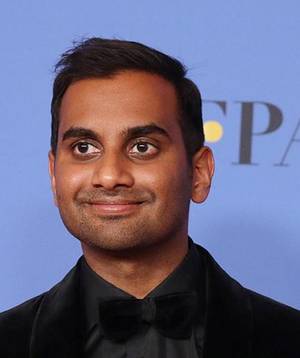
AzizAnsari26apr2018

Indian-origin star Aziz Ansari became the first man of Asian origin to bag the title of best actor in a TV series (musical/comedy) at the Golden Globes.

The 34-year-old won the trophy for his role in Master of None .

“I genuinely didn’t think I would win as all the websites said I was gonna lose,” Ansari said.

He was up against Anthony Anderson of ( Black-ish ), Kevin Bacon ( I Love Dick ), William H. Macy ( Shameless ) and Eric McCormack ( Will and Grace ).

source: http://www.thehindu.com / The Hindu / Home> Life / PTI / January 07th, 2018