Britain’s Royal Mail Monday issued a postage stamp of Noor Inayat Khan, the World War II heroine, who was a descendant of Tipu Sultan, the remarkable 19th century ruler of Mysore kingdom.
The stamp – part of a set of 10 stamps in their ‘Remarkable Lives’ series — honours Noor on her centenary year of birth. Others honoured in the set include actor Sir Alec Guinness and the poet Dylan Thomas.
“I am delighted that Royal Mail has commemorated Noor with a stamp,” said Shrabani Basu, author of “Spy Princess, The Life of Noor Inayat Khan”, and the chair of the Noor Inayat Khan Memorial Trust. “It will ensure that her sacrifice and bravery will not be forgotten. ”
Basu campaigned for a memorial for Noor which was unveiled in November 2012 by Princess Anne.
Noor Inayat Khan was born in Moscow in January 1914 to an Indian father, Hazrat Inayat Khan, and an American mother, Ora Ray Baker. The couple had met in the Ramakrishna Mission ashram in America. Hazrat Inayat Khan was a Sufi preacher and musician and travelled the world taking Sufism to the West.
Noor was brought up in Paris and the family moved to London when the city was occupied by the Germans in 1940 during the Second World War. In London, Noor joined the Women’s Auxiliary Air Force and was later recruited for the Special Operations Executive, a secret organisation started by Prime Minister Winston Churchill.
She was the first woman radio operator to be flown undercover to Paris and worked from there for three months under the code name Madeleine. However she was betrayed, arrested and finally executed in Dachau Concentration Camp in Germany. Though she was tortured and interrogated, she revealed nothing, not even her real name. Her last word as they shot her was “Liberte”! She was only 30.
Noor was posthumously awarded the highest honour, the George Cross, by Britain. France awarded her the Croix de Guerre.
In 2006, President Pranab Mukherjee, then the defence minister of India, paid an official visit to Noor’s family house outside Paris and described her bravery and sacrifice as “inspirational”.
source: http://www.mea.gov.in / Ministry of External Affairs, Government of India / Home> Media Centre> Articles> Articles in Foreign Media / Malaysia Sun / March 25th, 2014
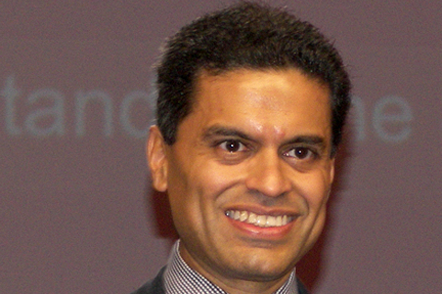
Fareed Zakaria is a prominent Indian-American journalist and author.
Early life Zakaria was born in Mumbai on the 20th of January 1964 to parents Rafiq Zakaria, a politician and Islamic scholar, and Fatima Zakaria, who was the editor of the Sunday Times of India at that time. In his younger days, he was enrolled in Mumbai’s Cathedral and John Connon School.
Zakarai also enrolled into Yale University, where he participated actively in numerous unions and societies. He was the President of the Yale Political Union, the editor-in-chief of the Yale Political Monthly, and a member of the Scroll and Key society and Party of the Right.
Zakarai graduated from Yale University with Bachelor in Arts. In 1993, he also obtained a P.hD from Harvard University in Political Science.
Career At the young age of 28, Zakaria became the managing editor of Foreign Affairs magazine. He held this post for 8 years, before he became the editor of Newsweek International in 2000. During his stint at Newsweek, he wrote his award winning article, Why They Hate Us, which appeared as a headline story on the cover of the October 2001 issue.
Since 2008, Zakaria has also been hosting Fareed Zakaria GPS, which airs worldwide on CNN. He has interviewed numerous high profile leaders and personalities on his show like Barack Obama, King Abdullah II, Dmitry Medvedev, Muammar Gaddafi and the Dalai Lama.
Fareed Zakaria GPS is broadcasted in approximately 200 million homes across the globe and received an Emmy nomination in its first year.
Zakaria has written best-selling books like From Wealth to Power: The Unusual Origins of America’s World Role, The Future of Freedom, and The Post-American World. He was also the co-editor of The American Encounter: The United States and the Making of the Modern World.
Awards The Anti-Defamation League awarded Zakaria with a Hubert H. Humphrey First Amendment Freedoms Prize in 2005. However, he returned the award to the ADL as a sign of protest after the organisation opposed the building of an Islamic centre two blocks away from Ground Zero.
In 2010, Zakaria received the the Padma Bhushan, the third highest civilian award in the Republic of India, by the Government of India. In the same year, he was named as one of the top 100 global thinkers by Foreign Policy. Zakaria also received a National Magazine Award that year.
Personal life Zakaria is married to Paula Throckmorton Zakaria, with whom he has one son, Omar and two daughters, Lila and Sofia. Zakaria, a naturalised American citizen, lives with his family in New York.
An India-born British ‘curry queen’ who made her name supplying ready-made Indian meals to supermarkets and pubs in the UK is looking for new backers for her food empire.
Perween Warsi, who moved to the UK from India in the 1970s, wants to expand her S&A Foods firm with an injection of fresh funds.
Advisers from PriceWaterhouseCoopers firm have been hired to lead the search for the company, she set up nearly 30 years ago, from her kitchen, according to the Sunday Times.
The Derby-based caterer, which has 600 staff, makes Indian curry dishes for UK supermarkets including the chain Asda, its biggest customer.
Sales last year were 51 million pounds with pre-tax profits of almost £700,000.
Warsi was famously inspired to start the company after being appalled by the quality of a samosa she had bought from a supermarket.
She founded S&A Foods in 1986 by supplying her local Indian takeaway and the following year had her big break after persuading several large grocery chains to include her food in a series of taste tests.
Warsi was producing the curries from home but, after beating several established food manufacturers in the tests, was persuaded to open a factory.
She was honoured with a Commander of the Order of the British Empire (CBE) in 2002.
S&A Foods confirmed it was “seeking partners” to fund future expansion and new production facilities.
source: http://www.timesofindia.indiatimes.com / The Times of India / Home> NRI> Other News / by PTI / March 09th, 2014
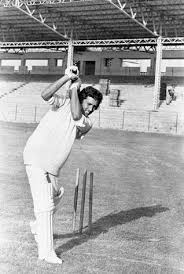
PIONEERING FEAT: Mohammed Abdul Hai entered the record books in 1973-74 as the first century-make in Deodhar Trophy. / The Hindu Photo Archives
Mohammed Abdul Hai became the country’s first century-maker in the earliest avatar of abridged cricket, introduced through the Deodhar Trophy in 1973-74.
“The first doctor to play for India was my dream, but that was not to be,” the general physician settled in Michigan sighed wistfully, when reminiscing with The Hindu.
“There was a fairly large turnout at the M.A. Chidambaram Stadium for the 1974-75 quarterfinal in Chennai,” continued Hai. For taking on North Zone was a star-studded South, led by S. Venkatraghavan.
Legends lined up were M.A.K. Pataudi, G.R. Viswanath, Abid Ali, Jayantilal Kenia and E.A.S. Prasanna, all of them Test players, three of whom were Hai’s Hyderabad Ranji teammates.
A consistent scorer in the event’s opening edition a year before and having played for Brondesbury CC alongside Mike Gatting in the Middlesex league, Hai felt equipped for the 60-overs-a-side challenge. With one opener gone for no score, the stylish southpaw walked in and began scoring at a brisk pace.
“Raj Singh Dungarpur’s eyes widened with amazement at what was then an astonishing rate — four runs an over — as also on South ‘amassing’ 248 for nine,” Hai recalled, his endeavour ending at 101, castled by Madan Lal.
Hai also played in Prof. D.B. Deodhar’s benefit match in Pune, the patriarch’s hometown.
He was offered an opportunity to play in/for Pakistan by Asif Iqbal, a senior at Hyderabad’s Nizam College.
The college’s alumni includes two India captains — Ghulam Ahmed and Mohd. Azharuddin — Test players M.L. Jaisimha, Abbas Ali Baig and Jayantilal Kenia besides Habeeb Ahmed, who led the Indian Starlets to the aforementioned nation.
“A decade after the Deodhar Trophy began, India clinched the Prudential World Cup in 1983, thus making the nation a cricket super power,” noted Prof. A. Prasanna Kumar, a Fulbright Fellow, sports columnist and author.
“If the sport’s reign was divided into eras, the 1970s belonged to Sunil Gavaskar, the ’80s to Kapil Dev, the ’90s to Sachin Tendulkar and thereon to M.S. Dhoni. Much credit is due to the limited-over version named after the Grand Old Man,” added Prasanna Kumar, who was a commentator during Visakhapatnam’s first One-Day International between New Zealand and India in 1988.
source: http://www.thehindu.com / The Hindu / Home> Sports / by A. Joseph / Visakhapatnam – March 22nd, 2014
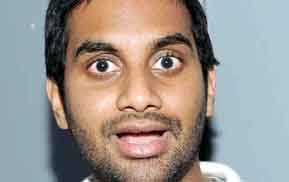
Indo-American comedian Aziz Ansari has turned to his fans online for tips on relationship as a part of research for his new book, ‘Modern Romantics’.
The 31-year-old, best known for his role in hit TV series ‘Parks and Recreation’, created a forum on a social networking site Reddit where he posted questions about love, reported Contactmusic.
“Please do not mistake anything you read here as professional advice. Any and all stories posted here may be used in my book on modern romance,” he said.
The forum includes questions such as “Does social media/online world make it harder to be a faithful person in a relationship?” and “Do you find yourself more susceptible to flirtations than before?”
Ansari made a lucrative deal with publisher Penguin Press to pen a book about the perils of dating in the modern age and is expecting to get good help out of his research from this online forum.
‘Modern Romance’ is due to hit shelves in September 2015.
———PTI
source: http://www.siasat.com / The Siasat Daily / Home> NRIs corner / Friday – March 14th, 2014
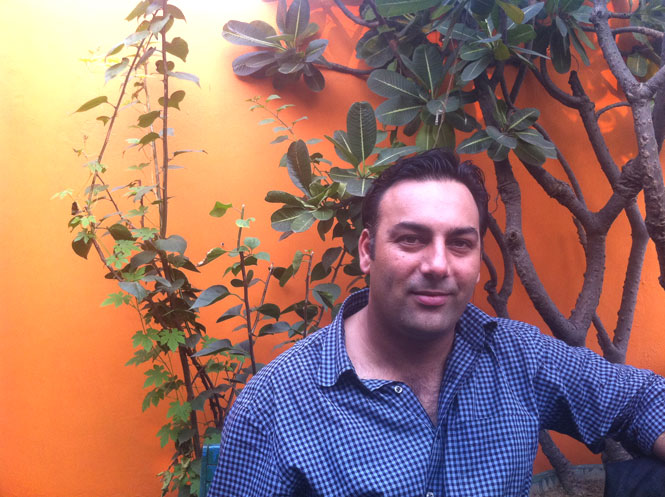
Kashmiri writer and journalist Basharat Peer has, after great struggle, got the smog of his painful past off his mind. Today, he admits, there is a clear sky above his head.
Sitting at a café in Delhi’s Khan Market, the 37-year-old revealed how a slice of his own life story made its way into Vishal Bhardwaj-directed movie, Haider , and his worthwhile journey from New York Times–India Ink to Bollywood.
In the middle of handling the desk at NYT and finishing his second book, Peer didn’t realise what was coming his way. One fine day, when he received an email from filmmaker Vishal Bhardwaj, he started taking films— Bollywood rather—seriously. The way the Indian film industry had traditionally represented Kashmir made him reluctant initially.
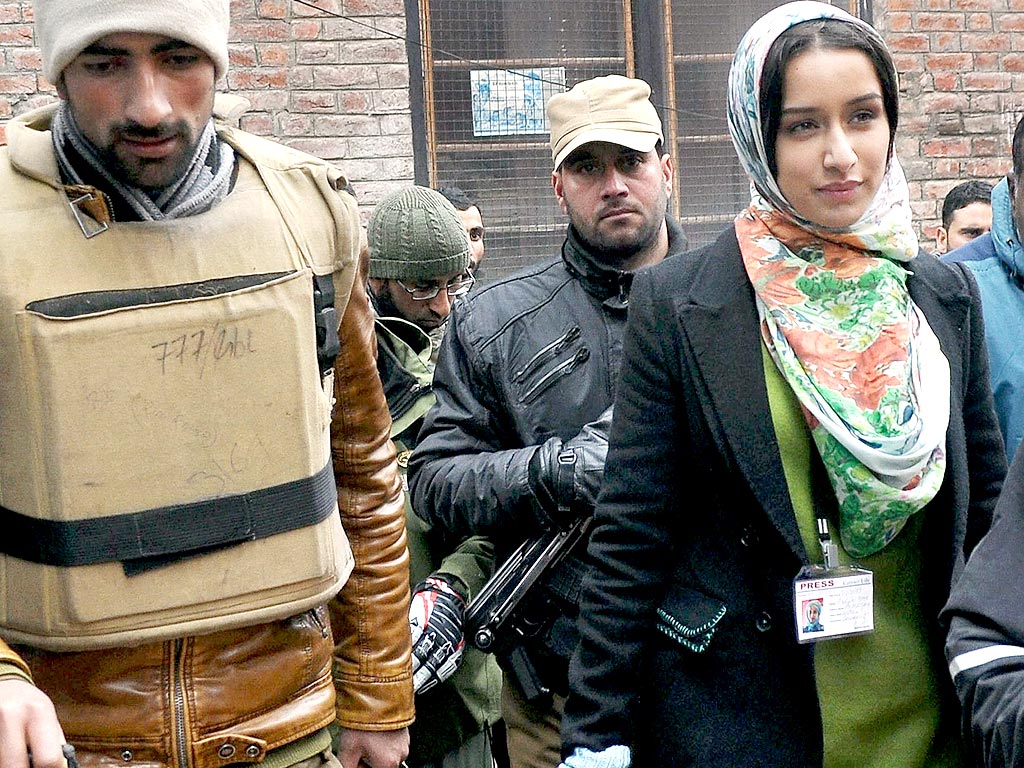
Shahid Kapoor in Kashmir on the sets of Vishal Bhardwaj’s next, Haider. The film is an adaptation of Hamlet.
The director had read Peer’s internationally acclaimed memoir, Curfewed Night, about growing up during the early years of anti-India rebellion in his homeland, Kashmir. After adapting Macbeth (Maqbool) and Othello (Omkara), Bhardwaj saw the Curfewed Night could be the source of the third part of the Shakespeare trilogy, Hamlet (Haider).
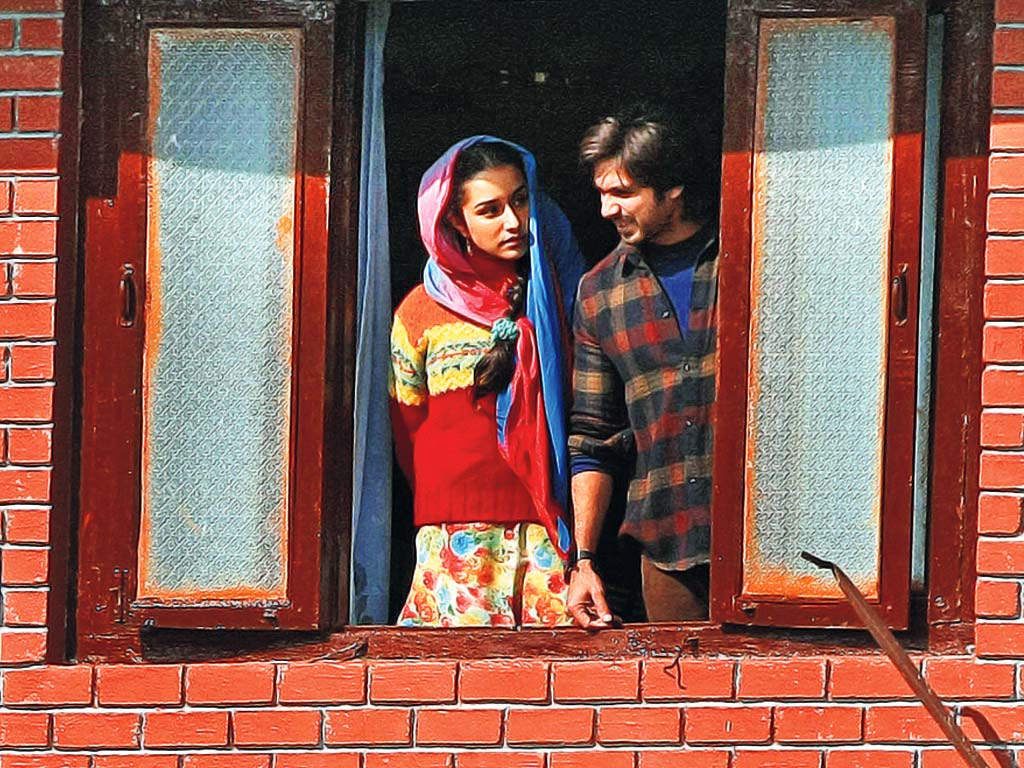
Shraddha Kapoor plays a press reporter in Haider.
After Vishal’s insistence, Peer went back to Hamlet, saying he read and never understood it better than this time.
“The moment Vishal mentioned Hamlet, I thought of one of the iconic lines from the play, which refers to the political and moral corruption and an unjust state of affairs in the setting of the play: Something is rotten in the state of Denmark. And I said, yes, of course you can set it in Kashmir,” said Peer, smiling and fingers fiddling with the tissue on the table.
He still remembers, sitting face to face with the director, his first reaction to the offer, “what?!”
“Vishal, then, gently pushed his case saying tum likh do. I hesitantly said I haven’t done it before,” Peer said. Basharat could relate to the play. He could find similar themes in his life— betrayal, abuse of power, justice, revenge and espionage. He had an image for each character in the play.
“Many political operators in Kashmir who have done terrible things to their own people and to others in pursuit of money and power came to my mind when I was thinking of Claudius, the villain of the play who murders his brother, King Hamlet, for the throne and to marry his wife Gertrude,” he said.
“It was like I understood Hamlet for the first time.” Only by transposing his world to the Shakespeare’s did the Bard’s real message reveal itself to Peer. “I called Vishal and said, listen, I have it. This is the story.”
Basharat always saw Bollywood from a distance. He also joked about how the famous dialogue from Sholay came to his mind every time somebody would talk about filmy lines. “Kitne aadmi thei,” he recalled, adding his wife also teased him about this once in a while.
A majority of Kashmiris believe Bollywood is a huge disappointment. They have a life beyond selling carpets and flowers on houseboats, said Peer.
Being a Kashmiri, and especially after having written a first-hand account of the conflict, Peer knew his approach had to be different so that the people of his troubled state are represented in a more responsible manner.
“This reminds me of the famous Merchant of Venice line: If you prick us, don’t we bleed; if you tickle us, don’t we laugh.”
Kashmiris are real people too, Peer insists. Haider is conscious of this fact.
“The film is an attempt to answer the stereotypical, jingoistic films Bollywood has made about Kashmir. Every character in the film is a Kashmiri—a doctor, a lawyer, teacher, a research scholar, a police officer. These are people who have agency and they’re not just victims.”
“It’s a story of their moral choices, their dilemmas, their courage, and their tragedies. I am hopeful that the film conveys a sense of what Kashmiris lived through, hoping there are images–never before shown in a Bollywood film—that will make the viewers think, ask questions.”
Talking about the controversial flag-hoisting scene in the movie which triggered protests in the valley, the author said, “Students weren’t protesting against Haider in particular. In general, they’re worried about how the state will be projected. Also, anyone who saw it from a distance wouldn’t know the context.”
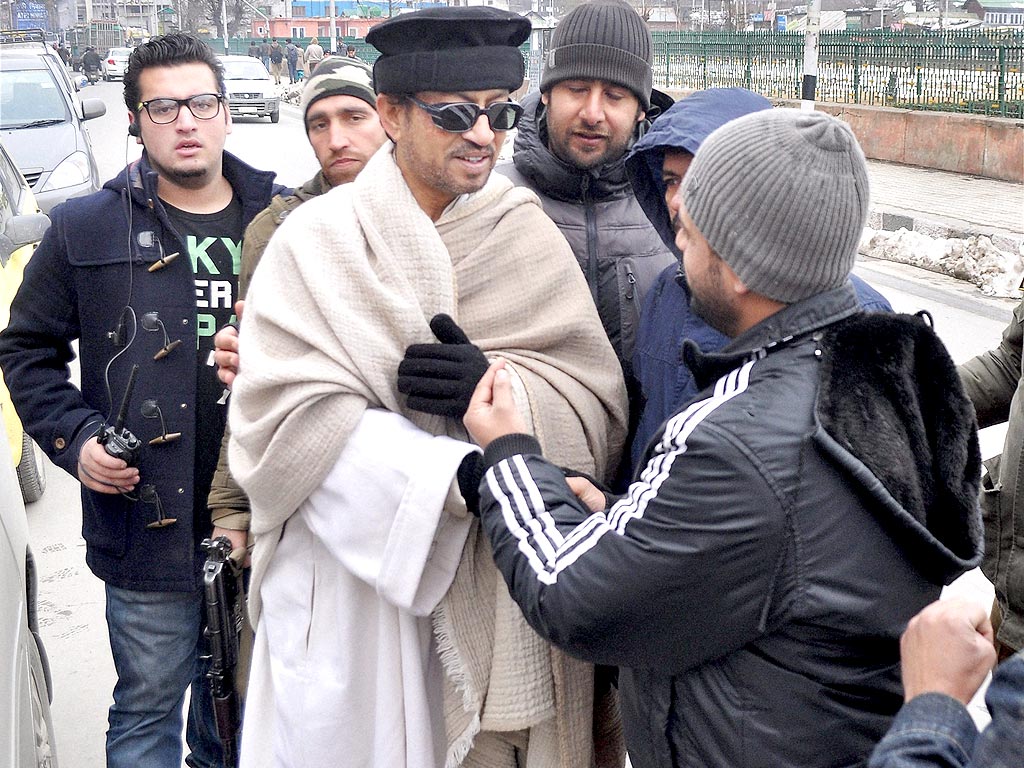
Haider stars Shahid Kapoor in the lead along with Shraddha, Irrfan and Tabu.
“Irrfan Khan had something great to say. He said ‘these incidents are nothing in comparison to what they have suffered in the past 25 years’. I think Kashmiris have been very generous to the film crew,” Peer said.
Peer, along with other Kashmiris, is looking forward to the film. He is over the moon, as ten events from Curfewed Night have been incorporated in the film. “I hope those scenes survive censor board scissors and people get to watch them,” he said.
Another interesting feature about the movie is Peer’s cameo appearance as what he likes to call a “pareshaan (anxious) Kashmiri”.
“Vishal said ‘arey yeh ek aam aadmi, ek pareshaan Kashmiri ka role hai, tum karlo. I said, haan, iski toh bahut practice hai,” he chuckled.
Basharat is playing a regular man who is scared of stepping out of his house, something which was very common in the nineties in Kashmir. People carried their addresses in pockets with little hope of returning home.
“I grew stubble, wore a pheran and I was sorted. It was a proud moment to share 30 seconds of my role with an actor like Irrfan Khan.”
On the writing front, Peer is satisfied with the new crop of Kashmiri writers and their take on the conflict, the most obvious and dominant issue in Kashmir to be written about.
“Be it Waheed Mirza, Siddharth Gigoo or Rahul Pandita—all of us have written just one book on Kashmir. This is just the beginning. We’re dealing with the first rush. There is a novel by Shahnaz Bashir forthcoming. Two brilliant young writers, Feroz Rather and Arif Ayaz Parrey, are working on collections of short stories. Malik Sajad, a very young graphic novelist and cartoonist, is working on a graphic novel.”
Basharat Peer is currently busy working on his second book, Shadow of the Broken Dome: India and Its Muslims.
The book requires him to travel across India to research on the contemporary Muslim life and politics.
“The book has traumatised my mind at the moment,” he joked.
source: http://www.hindustantimes.com / Hindustan Times / Home> Life & Style> Books / by Subuhi Parvez, Hindustan Times, New Delhi / March 08th, 2014
In a unique project in Kerala, a government school becomes a world-class institution
When Oscar laureate A.R. Rahman flew down to Kozhikode recently, it was not for a music programme but to see the amazing transformation brought about in a government school.
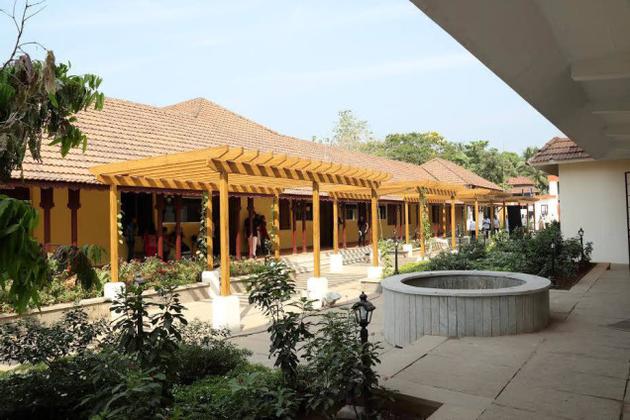
In a programme masterminded by school authorities under the guidance of the local MLA, the 120-year-old Government Vocational Higher Secondary School for Girls in Nadakav, which mostly teaches children from society’s weaker sections, has been upgraded to international standards.
In the spacious new auditorium, Rahman recalled how he met old friends K.E. Faizal and wife Shabana in New York where they told him about how the Faizal-Shabana Foundation had spent Rs. 15 crore on a school project in Kerala. That’s when Rahman decided he wanted to visit the school and see for himself the transformation.
Kerala’s achievements in the education sector, particularly in democratising it, have been remarkable. Its success in bringing education within the reach of the poorest children has made its literacy rate among the highest in the country. And now, this unique collaboration between MLA Pradeep Kumar and a private foundation has emerged as another development model for education in the country.
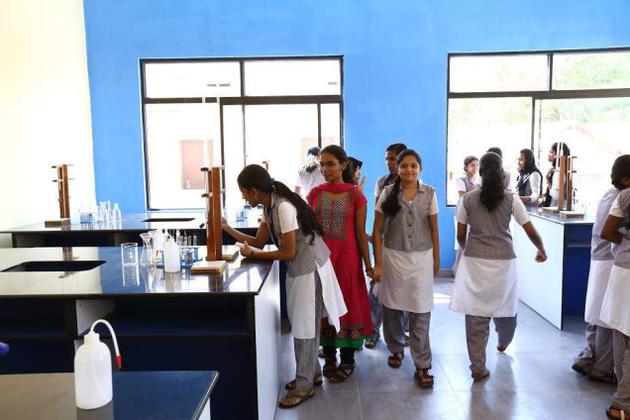
What was once just another government school now boasts of facilities unheard of in similar schools — an astro-turf playground, super-smart classrooms, computers, and a state-of the-art science lab, among other facilities. Pradeep Kumar, the CPI (M) MLA for Kozhikode, says his mission was to have a world-class school that would still be affordable to ordinary people. The state’s Planning Board came up with a project titled Promoting Regional Schools to International Standards through Multiple Interventions or PRISM.
World-class it certainly is. Infosys provided 150 computers, and ISRO gave a high-tech science lab. From the government and the MLA’s local area development fund came Rs. 7 crore. For the rest, NRI tycoon Faizal and Shabana stepped in with Rs.15 crore from the Faizal-Shabana Foundation. The plan was provided by Indian Institute of Management, Kozhikode (IIMK). Rahman, obviously impressed by what he saw, has announced the support of Rahman Foundation in Chennai for a music school that he immediately inaugurated. Interestingly, the school’s facilities are open to the people of the neighbourhood.
The school is a superb example of government-private participation in the education sector, and a rare instance where bitter political foes — the Congress-led United Democratic Front and the CPI(M)-led Left Democratic Front — played equally productive roles. The project was initiated by Pradeep Kumar when the LDF government was in power and it was completed under the UDF government.
The Nadakav school is a promising chapter in the attempt to resist the commercialisation of education that threatens to make high-class education unaffordable to everybody but the very rich. It is also a heartening attempt to lift the sagging image of government schools and make them more attractive to students who are migrating in large numbers to private schools that boast of attractive infrastructure and ambience. It has often been noted that better infrastructure and facilities could improve both morale and quality of education in government schools.
Meanwhile, Pradeep Kumar has turned his attention to two other government schools in his constituency, but finding benevolent sponsors is not easy. Work has begun in the Government Higher Secondary School of Karaparamba with a small allocation from the MLA’s local area development fund, and the search is on for other funds to complete the work.
At a time when education standards are falling appallingly across the country, this unique public-private model might be just the shot in the arm that government schools need.
source: http://www.thehindu.com / The Hindu / Home> Features> Sunday Magazine / by R. Madhavan Nair / February 08th, 2014
While Nelson Mandela was a symbol of the struggle against oppression across the globe, he and his movement always had a very special connection with India.
A Bharat Ratna awardee in 1990, he is the only non-Indian to receive the honour. (He was also given the Nishan e Pakistan in 1992).
Mahatma Gandhi, who evolved and perfected his technique of Satyagraha in South Africa, was a source of great inspiration to Mandela. On his India visit in 1990, Mandela, when informed of a veteran journalist’s 13-year-old daughter, who was his fan, said “Tell her that I was in fact inspired by a man who was born right here in India.”
Mandela used Gandhi’s tactics at several points as he went about evolving his own philosophy. In the early sixties, the ANC had a militant wing called the Umkhonto We Sizwe (Spear of the Nation) which Mandela was part of. In 1962, Mandela spoke of the need for forceful action and quoted Gandhi as saying: “If the choice is between cowardice and violence, I will pick violence.” Later, he once again used Gandhi as a guide in his efforts to build bridges between seemingly irreconciliable forces.
Several of Mandela’s closest comrades and associates were of Indian origin. Two of his closest comrades, Ahmed Kathrada, and Ismail Meer, with whom he spent almost all of his prison years, were Indian.
An Indian, Sonny Venkatrathnam, also jailed at Robben Island in the 1970s for his role in anti-apartheid activities, got his wife to smuggle ‘The Collected Works of Shakespeare’ inside the prison and passed it off as the Robben Island Bible. Nelson Mandela, Ahmed Kathrada, Chris Hani and others read Shakespeare’s plays as a relief from the boredom of having to break stones all day.
Mandela kept a diary while in prison, and hid it in the grass to ensure that the wardens do not destroy it. After twelve years in prison with Mandela, another Indian, Mac (Sathyandranath) Maharaj, who was released after 12 years, as opposed to Mandela’s 27 years, transcribed his notes and smuggled the account out, which was known to the world on its release in 1976 as The Long Walk to Freedom.
source: http://www.indianexpress.com / The Indian Express / Home / by Seema Chisti / New Delhi , Saturday – December 07th, 2013
Ahmed Kathrada, the Indian-origin veteran anti-apartheid activist and aide of Nelson Mandela, moved many mourners to tears when he paid a poignant tribute to the late statesman during the state funeral at Qunu village in South Africa’s Eastern Cape province Sunday.
“When Walter (Sisulu) died, I lost a father, when you died I lost a brother, now I don’t know who to turn to,” Kathrada said.
Ahmed Kathrada, the Indian-origin veteran anti-apartheid activist and aide of Nelson Mandela, moved many mourners to tears when he paid a poignant tribute to the late statesman.
A long-time friend of Mandela, Kathrada said the last time he saw Mandela alive was when he visited him in hospital, South Africa’s government news agency SA News reported.
“He tightly held my hand… and brought all emotions… Farewell my dear brother, my mentor my leader… I have lost a brother.”
Kathrada and Mandela were both imprisoned in Robben Island for their political views.
“I recall the tall, healthy strong man, the boxer, the prisoner who rigorously exercised every morning. Now the inevitable has happened. He left us to join the ‘A team of the ANC’.
“Together, we shared ideas and walked side by side in the shadow of death,” Kathrada said.
“We are deeply grateful to Madiba… We are deeply grateful that dignity has been restored to the people of South Africa, we are deeply grateful to Chapter 9 institutions that zealously guard our Constitution,” he added.
Mandela, South Africa’s first democratically elected black president, died of illness in his Johannesburg home Dec 5 at the age of 95.
source: http://www.economictimes.indiatimes.com / The Economic Times / Home> News> World News – International / by IANS / December 15th, 2013
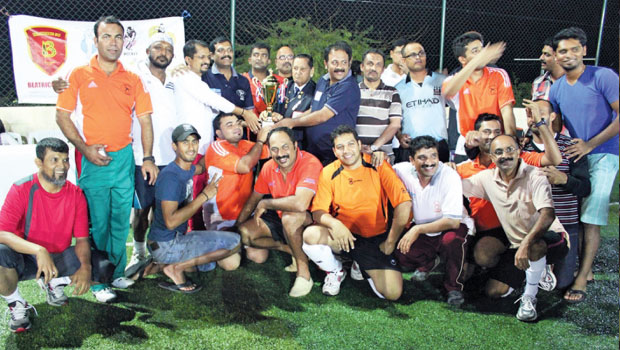
Winners Team Coorg pose for group photo after winning the final against Beatrice Dubai. – Supplied photo
Muscat:
Team Coorg lifted the Balan Master Memorial Trophy beating Beatrice Dubai 4-1 in the final. Organised by Beatrice Sports Club Muscat, the six-a-side hockey tournament was held at The Wave Stadium in the presence of former Indian hockey veteran S.A.S. Naqvi.
In an exciting final, Team Coorg showed their complete supremacy over Beatrice Dubai. Children’s football and family fun games were the sidelights of the final day.
Dr Mujeeb (Amana Polyclinic) delivered the keynote address. The tournament was organised in association with Team Coorg Muscat.
Former Oman national hockey coach K.K. Ponnacha and B. Kuttapa played an instrumental role in helping the Beatrice Sports Club Muscat to host the tournament with much fanfare.
During the concluding ceremony, the organisers of the tournament also honoured S.A.S. Naqvi, Mohammed Osama Rawat, K.K. Ponnacha and B. Kuttapa for their outstanding achievements in the field of sports.
Beatrice executive committee members Shahir, Dr Mujeeb, O.V. Feros, Feros. M, Said, Rasheed, Habib A.P.M and Zaheer thanked the audience for coming in large numbers to support the tournament.
Badr Shipping Company and Sixar Group were the sponsors.
source: http://www.timesofoman.com / Times of Oman / Home / by Times News Service / December 05th, 2013