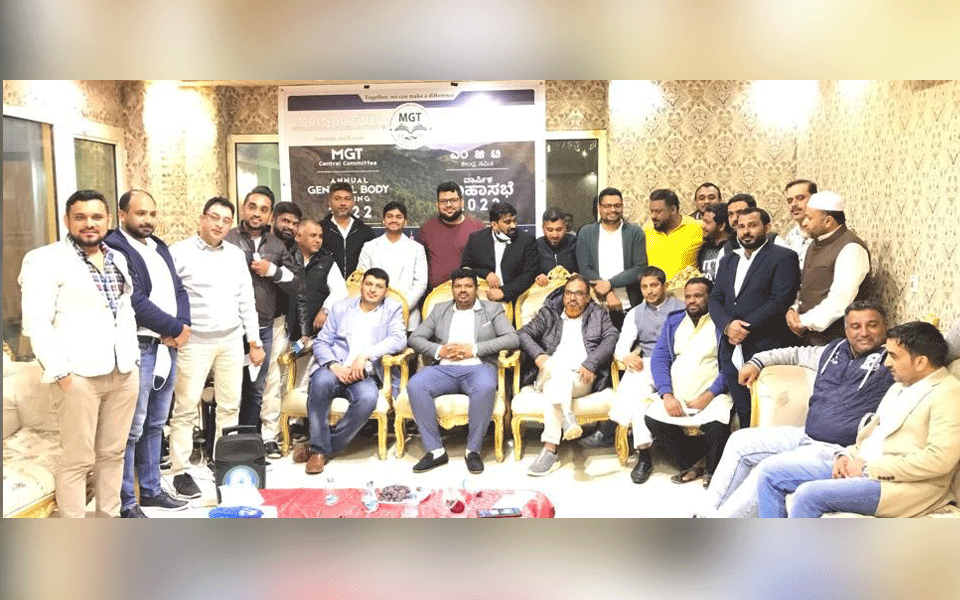
ABDUL SATHAR , Cloud Seven, elected new President.
Riyadh:
In the 4th annual general body meeting of MGT (R), which was conducted on Friday at the Marina Compound in Riyadh, new office bearers were nominated for in presence of all central committee members.
During the meeting which was hosted by MGT Riyadh Zone, Siraj Chakmmakki welcomed the attendees from all over the Kingdom of Saudi Arabia.
Outgoing President of the committee Mr. Sharif Kalasa and Secretary Mr. Mohammed Rafi briefed the committee detailing the achievements of the committee for the years 2020 and 2021.
A new committee was nominated to lead the non-profit trust under the leadership of Basheer Ballupete.
Following unanimous consensus of the committee members, Abdul Sathar Cloud seven – Jayapura was selected as the President of the association and Irshad Abdulrahman Chakkmakki was chosen as General Secretary of the association.
List of new office bearers to serve the committee are as follows:
Honorary President: Shareef Samkon Kalasa
Vice Presidents: Jalal Baig Sakleshpura, Aboobakker Siddiq Kodlipete & Shamim(Jubail).
Shimoga District 1. Muhammed Raafi 2. Nazir Jayapura 3. Noorullah Theerthahalli
The new President addressed the committee and assured that under his leadership, he would strive to take the trust to a new level and work with the team closely for the benefit of the organization.
COVID-19 Warrior Dr. Moideen Beary & poet Assad Baig were honoured for their impeccable service to the community during the event.
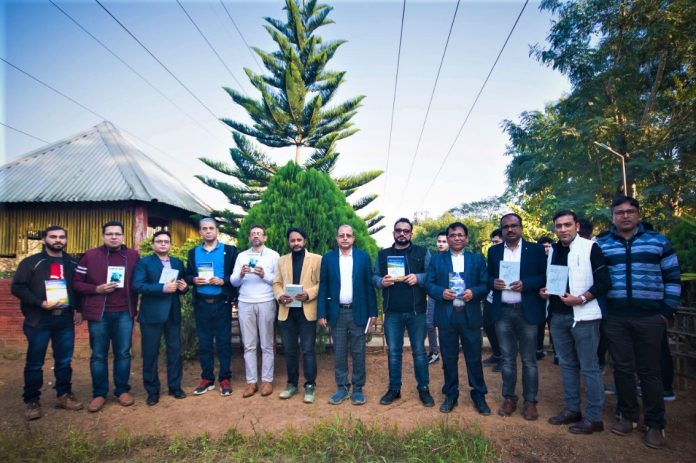
Books authored by three eminent personalities were launched at a conclave organised by HaFSA Foundation & Progressive Peoples Foundation in the outskirts of Guwahati on Sunday.
Guwahati :
A new year conclave of the office bearers and members of two frontline NGOs of Assam viz HaFSA Foundation (HF) and Progressive Peoples Foundation (PPF) was held at Tepesia, on the outskirts of Guwahati, on Sunday.
Families of the office bearers and members also attended the event in large numbers.
HF is an NGO working towards promoting education and social uplift of the people of Barak Valley, with primary focus on Bam region, the southernmost part of Cachar, for creating an enlightened, cohesive and resilient community. Under the umbrella of HF, four organisations viz HaFSA Academy, HaFSA Centre for Social Welfare, HaFSA Institute of Barak Valley Studies, and HaFSA Rural Library & Information Centre function to fulfil the aims and objectives of the Foundation.
Sayeeda Tasnim, Chairperson of HF, welcomed the guests and participants at the outset of the conclave and gave a glimpse of the different activities taken up by the Foundation during the last year.
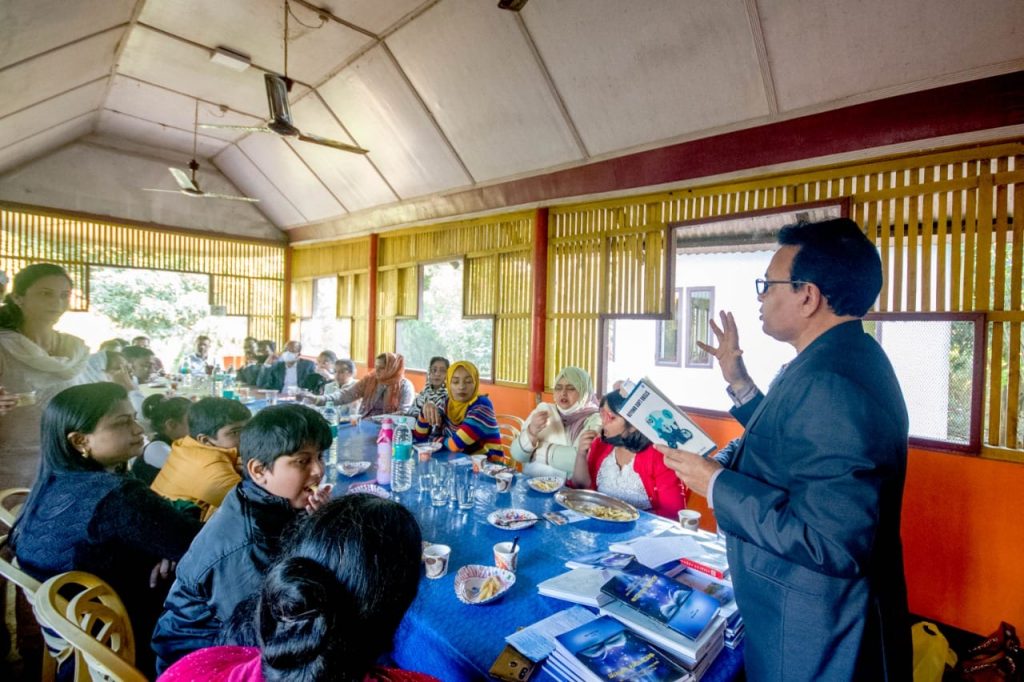
Sultanuddin Ahmed, former executive at The Hindustan Times, reading out from “Beyond Soft Skills” authored by Nurul Islam Laskar, at a conclave held in the outskirts of Guwahati on Sunday.
Rafique Ahmed Laskar, Vice Chairperson, PPF informed the audience that PPF is engaged in developmental and social welfare activities across Assam. Its main thrust is on helping the poor and downtrodden in becoming self-reliant. PPF is also supporting a large number of poor students for pursuing higher and technical studies besides extending support to promising young athletes to achieve their dreams. Recently, they donated 100 blankets for the poor indoor patients at Cachar Caner Hospital, Silchar.
At the Sunday conclave organised at the initiative of HaFSA Foundation, it was resolved that the two NGOs – HF & PPF – will explore areas of collaboration in the sphere of educational development in the rural areas with special focus on Barak Valley. The two NGOs also decided to explore possibilities of working together for imparting coaching for Navodaya Vidyalaya entrance test and other recruitments in State & Central Government jobs.
One unique item of the conclave was the book reading session in which four books were released, one authored by Sabir Ahmed Choudhury and brought out by HF; two books on the history of Lakhipur authored by Abid Raja Majumder; and another book on motivation and personality development authored by Nurul Islam Laskar. Sultanuddin Ahmed, former executive of The Hindustan Times, read out a few chapters from Laskar’s book, “Beyond Soft Skills.”
The conclave recorded its appreciation for Jiauddin Choudhury, Chief Adviser, HF for initiating the process through which the NGOs were brought together to work hand in hand for the development of the society.
source: http://www.muslimmirror.com / Muslim Mirror / Home> Book Review> Indian Muslim> Positive Story / by Special Correspondent / January 03rd, 2022
Computer science engg student Reema Shaji is one of only five from India to be selected for the US Global UGRAD program, reports Vishnuprasad K P
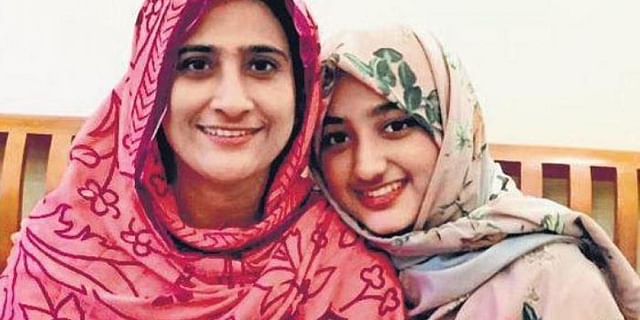
Reema Shaji with her mother Jousiya Shaji
Malappuram :
As a child, Reema Shaji always told her relatives that her dream was to study in the United States. The responses were almost uniform — “get married and go abroad with your husband’s help.” The Tirur native, however, was not one to conform to society’s expectations of her.
“My first goal is to become an independent woman,” says the 20-year-old, who is all set to fly to the US to attend the fifth semester of her computer science engineering course at the McNeese State University in Lake Charles, Louisiana, next January.
A student at the Kuttipuram MES College of Engineering, Reema is one of only five students from India to be selected for the US’ Global Undergraduate (UGRAD) Exchange Program, a substantive exchange programme aimed at providing “a diverse group of emerging student leaders with a scholarship for one semester at a US college or university.”
Under the programme, students will be provided with a free round trip from their home city to the US host college or university.
The costs of tuition, housing and meals will be covered under the scholarship, in addition to which she will receive a small stipend to meet living expenses in the US during the period of the programme. Reema had applied for the scholarship last January and was selected on November 9 after several procedures including the TOEFL exam and an interview.
“When the interviewer asked why they should select me, I told them I will be an inspiration for other girls like me to chase their dreams. When I return from the US, I will also pass on the knowledge I acquired there to the students in my country,” she says.
Her relatives are now proud of her achievement. “They have realised that I don’t have to rely on a husband to go abroad,” she says. “After my father passed away, it was my mother Jousiya Shaji who looked after me and my sister Tasnim Shaji. My mother is my biggest inspiration to acquire education and stay independent. I only seek her advice.”
Reema, who is expected to return home by June next year, stresses that students even from economically backward families should try to earn a suitable foreign scholarship and study abroad.
source: http://www.newindianexpress.com / The New Indian Express / Home> Good News / by Vishnuprasad K P, Express News Service / November 28th, 2021
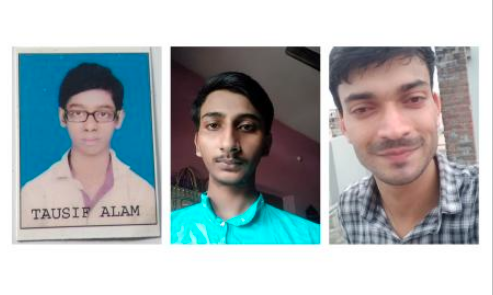
Tausif, Zuarez and Qaif have qualified for admission at India’s prestigious institutes. | Photos by arrangement
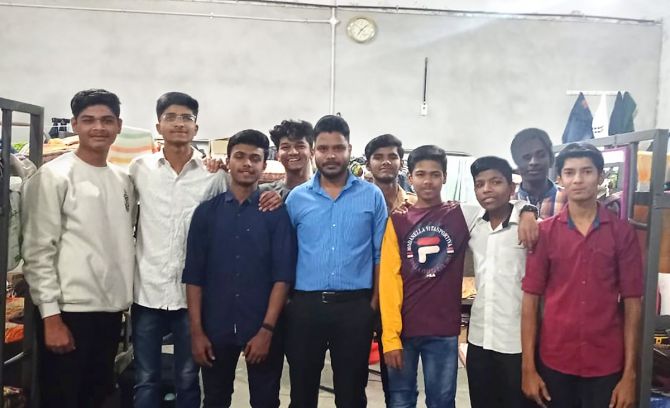
At least 65 students, including one girl, of Rahmani 30 – an educational movement for underprivileged students started in Patna, Bihar by late Wali Rahmani, have qualified for admission in the prestigious Indian Institutes of Techonlogy (IITs) this year. TCN features some of them.
Bihar :
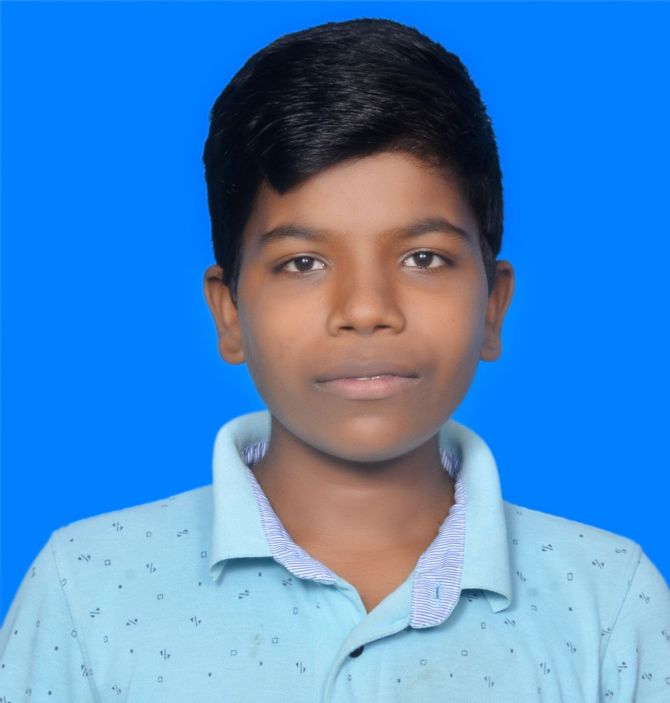
Zaurez Ahmed (17) has secured 393rd rank this year in India’s topmost engineering entrance test known as Joint Entrance Exam (Advanced). His father Shakeel runs a modest general store in Jalwara, Kewti of Darbhanga, one of the most backward areas of Bihar. His family was in no position to afford the expensive private coaching for such exams. It was Rahmani 30 that came to his rescue.
Like Zaurez, there are atleast 65 students, including one girl, of Rahmani 30 who have qualified for admission in the Indian Institutes of Technology (IITs) this year from the main centre at Patna. All 93 aspirants from Rahmani 30 qualified for JEE (Main). Across India, there are 23 IITs having 16000 seats for which more than 1.6 lakh applicants participated in the JEE (Advanced). These are shortlisted from one million aspirants of JEE (Main).
Rahmani 30 is modelled on Super30, the first such centre for coaching students for the IIT entrance test. Rahmani 30 was founded by the renowned Islamic scholar late Hazrat Maulana Wali Rahmani in 2008. Since 2009, Rahmani 30 boasts of more than 400 successful students who have qualified for admission in different IITs. Apart from this, nearly 1000 students have qualified for JEE (Main) and the National Institutes of Technology (NITs), the second most prestigious engineering institute of India.
Rahmani 30 offers the top 30 students free stay, food and education which costs around Rs. 60 lakhs for two years.
What is special about Rahmani 30? “Apart from the low cost or no cost stay at Rahmani 30, the ever availability of teachers and mentors here is immensely helpful,” Zaurez told TwoCircles.net.
He said that teachers at Rahmani 30 are “quite supportive.”
Zaurez cites ‘deeni mahaul (religious atmosphere)’ at the centre as helpful in having a ‘useful break’. His EWS (Economically Weaker Section) category rank is 28 and he is quite hopeful to get Computer Science at IIT, New Delhi.
Rahmani 30 has its branches at Aurangabad (Maharashtra), Bangalore and Hyderabad. Apart from the main centre, there is a girls unit in Patna. The main centre is being run in a rented apartment ‘Anand Palace’ at Anisabad, Patna.
A normal day for studies starts at 7 in the morning and continues till 9 in the evening.
Mantasha Firdous (17), who qualified this year, is the first female student of Rahmani 30 since its establishment to compete successfully for JEE (Advanced). Generally, the girl aspirants join Rahmani 30 for the medical entrance test NEET. However, Mantasha has a knack for mathematics. She has secured an EWS rank of 4074 and hopes to get “a good branch at a good IIT’. She said that the “group of girls” at the centre was quite helpful for her to remain focused on studies.
At Rahmani 30, the aspirants are admitted for a two-year residential course. As Covid-19 hit their preparation, an online mode was learning was started in 2020. Most students attended online classes on mobile phones though there were network issues for those residing in remote areas.
Tausif Alamhas (17) secured CRL (Common Rank List) 7169 and a category rank of 1339. His father Mohammad Rashid works as a tailor and his mother is a homemaker. His family could not send him to study at any coaching centre as they charged a hefty fee. He came to know about Rahmani 30 from one of his senior and passed the test to get admission.
Talking to TwoCircles.net, he said the most helping part of Rahmani 30 is “group study where peers help in doubt clearing.”
“My motivation level only rose with the continuous encouragement from the teachers. It helped increase my willpower too,” Tausif said. His next aim is to crack the country’s top exam for civil services U.P.S.C.
Seventeen-year-old Qais Alam’s success has a twist. His father is a small farmer and suffers from poor eyesight. Qais hails from Marar, a remote village in the Khagaria district of Bihar. He didn’t have much of an idea about IITs. He appeared for Aligarh Muslim University’s entrance test for a three-year Engineering diploma course and qualified. He studied there for two years, and quit before completing his degree. This was during 2016-17. He came to know about Rahmani 30 and was selected for its two-year preparation course. He appeared for JEE (Advanced) in 2020 in his first attempt but was not satisfied with his result. He reappeared for JEE again in 2021. He bettered his All India Ranking to 6025 from his 2020’s performance of 28000th rank. His EWS rank also improved to 639 from above 3000. He is hoping to get admission at IIT Delhi or IIT Madras. He too aims to clear U.P.S.C. after graduation from the IIT.
Twenty-three-year old Atif Hussain is in his 3rd year at IIT Guwahati. He originally hails from Bihar but his family is settled in Kolkata, West Bengal. Atif’s father Phool Mohammad sells Lahti bangles (lac bangles) which and his business has been hit due to Covid-19 lockdown. His mother is a housemaker. Atif studied in Urdu medium Howrah High School and got 84% marks in his 10th Board examination. He came to know about Rahmani 30 from a senior. He said that getting admission in Rahmani 30 was the ‘turning point’ of his life. “Teaching guidance and peer study environment at Rahmani 30 was very useful,” Atif, who is fond of research and coding, said.
Though Rahmani 30 was started for helping underprivileged students crack the IIT entrance test, it has ventured into other top examinations like Medical, Commerce and Law. In its CA/CS program, out of 10 successful candidates this year, five were girls.
Rahmani 30 calls itself “a movement, not an institution” which hankers “to demonstrate that economically, socially and educationally backwards and suppressed students when given the opportunity rise to the occasion.” It is “established to be the catalyst for inspiring the minorities to aim high to seek their rightful places.”
Rahmani 30’s founder late Maulana Rahmani had a clear vision about this centre. He was of the opinion that, “Utmost service to the religion during these times is to educate our youth and upcoming generations with contemporary subjects while keeping their faith firmly established and their self-confidence high; so that, they excel in religion, are adorned with education, have an appreciation of hard work and therefore are able to navigate and make confident decisions in their life.”
Bihar’s former Director General of Police (DGP) Abhayanand has been a great help for Rahmani 30 as a mentor since its beginning. Known for his Physics teaching skills, Abhayanand is credited with starting super 30 along with Anand Kumar, to teach poor students of Bihar to crack IIT JEE.
Talking to TwoCircles.net, Abhayanad was delighted that Rahmani 30 is expanding in size and dimension in the right direction.
Late Maulana Wali Rahmani had approached him to be the mentor of this centre and he readily accepted the proposal. “There didn’t exist a good trend for education in Muslim community, particularly in the weaker sections. I thought it would be in the broader interest of the country to help such students,” Abhayanand said.
His only and interesting condition was, “I will not interfere in the administration of the centre and Maulana will not interfere in teaching at the centre.”
Maulana Fahad Rahmani, the younger son of late Maulana Wali Rahmani is the current CEO of Rahmani 30.
He told TwoCircles.net that Rahmani 30 initially started with 10 students and “in 12 years the number of students has gone up to 900.”
Maulana Fahad aims to increase the number to 15000 across India at the end of this decade. “If we consider the total number of institutions of national importance to be one lakh, its corresponding number for the Muslim community should be 15 % of it, which is roughly the population of the community in India,” he argues, adding, “To achieve this goal the community support needs to be increased. If we can arrange one donor for one student we will need 15000 donors, which is not beyond reach.”
Maulana Fahad insists that he doesn’t believe in the traditional fund collection.
On the success rate of girl students of Rahmani 30, Maulana Fahad said that it was his father and the late chairman Maulana Wali’s wish to see the girl students excel in engineering too. “Alhamdulillah, this year it has started, and it get better in the coming years.”
Sami Ahmad is a freelance journalist based in Patna, Bihar. He tweets at @samipkb
source: http://www.twocircles.net / TwoCircles.net / Home> Lead Story / by Sami Ahmad, TwoCircles.net / October 23rd, 2021
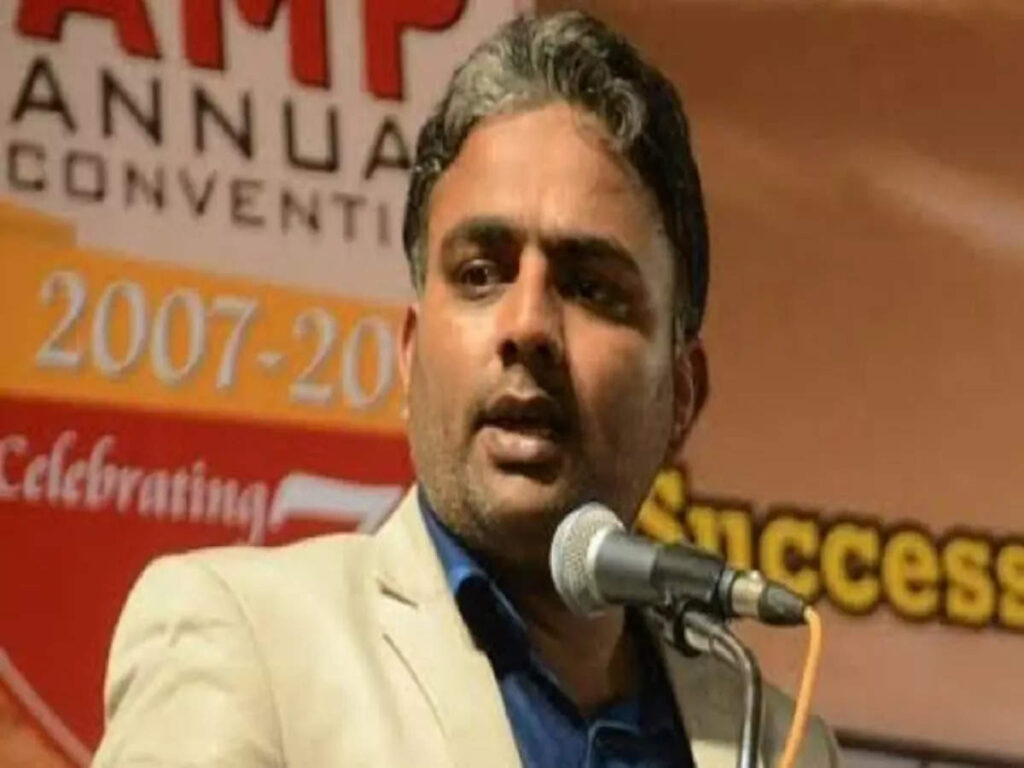
Association of Muslim Professionals President Aamir Edresy.
Mumbai:
City-based NGO Association of Muslim Professionals ( AMP) has announced scholarships of Rs 10,000 to each of the ‘100 Covid-19 orphans’ in the country.
AMP president Aamir Edresy said that the help is part of their “Basic School Education Assistance Programme” launched a couple of months ago.
“The pandemic claimed breadwinners in many families, leaving school-going children anchorless. Some of the families are so desperately poor that, if financial help is not provided to them, their children will drop out from schools. We are stepping in with help initially for 100 children,” said Edresy.
He added that AMP’s wide network across the country would help it verify the applicants and reach out to them with help.
The AMP is also using IndiaZakat.com, India’s first zakat-based crowdfunding platform, to collect funds to support more orphaned children.
“To ensure that more students can be helped, we have started a fundraiser to collect more funds on our Crowd Funding Platform IndiaZakat.com to support many more students,” said Javed Syed who heads AMP’s Zakat Fund section.
Founded in 2008, AMP has its presence now in 150 cities and towns across the country. So far, it has helped 30,000 youths get jobs and provided financial support to over 3000 families.
It has also reached out to many through its mentorship programmes.
Iftekhar Bidkar, the core member of AMP and IndiaZakat.com, appealed to people to make this campaign a success by giving their support. He requested people to come forward and support this cause on the crowdfunding platform Indiazakat.com
AMP is a platform for professionals and volunteers to share their knowledge, intellect, experience, and skills for the overall development of not just the community but also the society at large. It aimed at empowering the underprivileged educationally, socially, politically and financially.
source: http://www.timesofindia.indiatimes.com / The Times of India / Home> News> City News> Mumbai News / by Mohammed Wajihuddin, TNN / September 01st, 2021
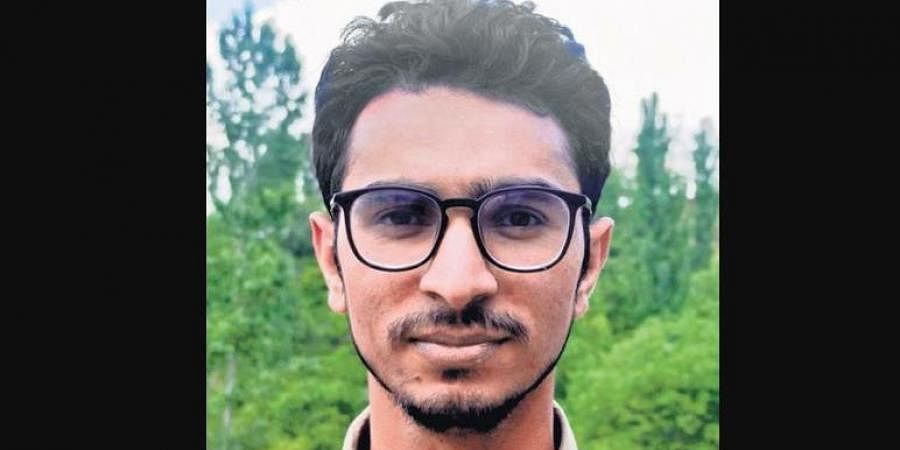
My journey has been very tough. However, every success story has a struggle behind it. I too had to struggle as we were financially weak, says Tanveer.
Srinagar :
Tanveer Ahmed Khan, son of a rickshaw puller and farmer, has secured second rank in the prestigious Indian Economic Services (IES) examination conducted by Union Public Service Commission (UPSC).
“My journey has been very tough,” Tanveer said. “However, every success story has a struggle behind it. I too had to struggle as we were financially weak. It was my positive side that made me want to change our poor condition by studying and making it count.”
Tanveer’s father hails from remote Nageenpora Kund in South Kashmir’s Kulgam’s district. He also works as a seasonal rickshaw puller in Amritsar, Punjab, during the winter months to earn extra money to provide quality education for his son.
He has done his schooling in government schools and got his BA from Government Degree College Anantnag in 2016. He secured third rank in the entrance test for a post-graduate course in economics at University of Kashmir.
“I worked very hard and my family fully supported me. The support from my parents, uncles and teachers has brought me to this point,” said Tanveer. Tanveer secured Junior Research Fellowship (JRF) during his last year of post-graduate programme and says the fellowship helped him a lot. He went to Institute of Development Studies, Kolkatta, for Masters in Philosophy (M.Phil) in Development Studies, which was awarded to him in April. Tanveer is in the Open Category.
Tanveer’s father said he is proud his son did not waste the parental toil and effort. “I am very happy that mine and my son’s hard work has paid off,” he added.
source: http://www.newindianexpress.com / The New Indian Express / Home> Nation / by Fayaz Wani, Express News Service /August 02nd, 2021
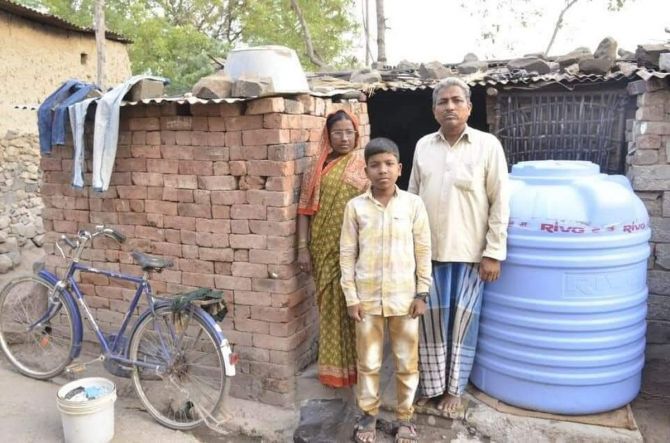
Mateen Jamadar with his parents, mother Razia Begum and father Nabisaab. Photograph: Kind courtesy Mohammad Mohsin
A teenager who doesn’t need to be told to study, who makes no demands on his parents even while preparing for his board exams — and then goes on to score a perfect 100%. Jyoti Punwani salutes Mateen Jamadar’s scholastic achievement against all odds.
He’s 18, but looks 15.
A teenager who doesn’t need to be told to study, who makes no demands on his parents even while preparing for his board exams – and then goes on to score a perfect 100%.
Meet Mateen Jamadar, the pride of Mannur village in Gulbarga district, for having scored 600/600 in Karnataka’s PUC (pre university course) exam, the results of which were announced on Friday, July 23, 2021.
His father Nabisaab works as a mason on construction sites in the village, earning about Rs 500 a day; his mother Razia Begum cleans her neighbour’s field all day to come home with barely Rs 150.
Both parents have studied upto Class 10 and wanted their three sons to study further, but their eldest had to give up after Class 10 thanks to an eye affliction. He is now handicapped and at home, unable to work.
Their second son has done well, he’s a constable in Bengaluru; but it is their youngest who has brought them fame they had never imagined.
Razia Begum says she knew Mateen would do well. “Since he was a child he would come home and sit with his books,” she recalls. “No playing, no roaming around.”
That made Mateen his village school topper; he scored 619 out of 625 in his Class 10 Boards.
Mateen says he expected to do well in the PUC. This year, the evaluation for the final PUC exam had to be done based on previous performance since the exam was not held due to COVID-19 restrictions.
“I had scored 98.7% in my 10th and around the same in my First Year PUC,” he says over the phone. “I thought I would get 99%.”
Always fond of studies, Mateen decided to seek out a good college after completing his 10th from the government school in his village. The PUC college in his village wasn’t up to the mark.
His quest took the village boy more than 600 km away from his home to the MMU PU College in Ramanagara. The magnet that drew him there was the hostel run by the Rahman Education Foundation in Ramanagara city.
The Foundation provides free stay for five years to meritorious boys to prepare them for the UPSC exams. The stay includes not just food, but also access to teachers, computers, sports facilities, and lectures by visiting IAS and Karnataka Administrative Service officers.
It was one such talk by IAS officer Mohammad Mohsin that made Mateen decide his final goal — the IAS. “The IAS gives you respect,” said the youngster.
Mateen, third from right with his hostel mates.
Mohsin, a Karnataka batch IAS officer hailing from Bihar, tells Rediff.com that the Rahman Foundation had invited him to spend half a day to motivate their hostelites. “I told the boys that no one from my family had ever joined the IAS; we are a business family. But I wanted to do something for the country.”
It was Mohsin who brought Mateen Jamadar’s achievement to the world by tweeting (external link) about him. “I wanted to show students that poverty need not mean the end of the road,” said Mohsin.
It may well have become so for Mateen.
Forced by the lockdown last year to return home as his hostel shut down, Mateen had to depend on online teaching. When he left for college, his parents had given him a simple phone, just good enough to stay in touch. Students were anyway not allowed a phone by the hostel authorities. The latter would keep the students’ phones with them, and give them back for just one hour every Sunday to call up home.
That phone was no use for online classes. To buy himself an Android, Mateen had to use his annual scholarship of Rs 6,000 given by the Karnataka government, but even that wouldn’t have been enough had his father not dipped into the funds he had saved slowly over the years.
Of course, that meant working harder to make up, but said Nabisaab, “We have to do that much for our children; and this boy has turned out to be so clever, we have to support him!”
Mateen Jamadar
Nabisaab and Razia Begum used to work in Mumbai and Pune earlier, on construction sites. But it was the desire to educate their children that took them back to their village, said Nabisaab.
His youngest son has made sure that’s a decision he will never regret. As Mateen said, “More than me, my parents are overjoyed at my result.”
The award is given by a US-based non-profit entity Sir Syed Education Society of North America (SSESNA)
Aligarh:
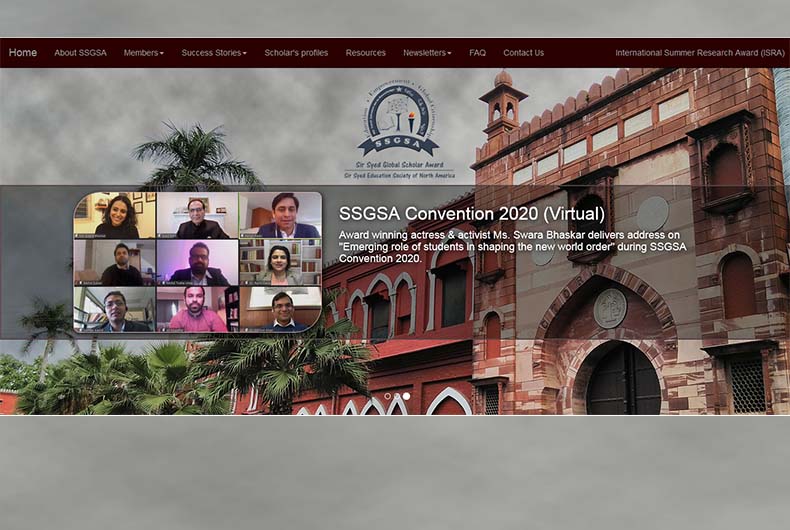
Twenty-eight students from various departments of Aligarh Muslim University students (AMU) have been selected for the prestigious Sir Syed Global Scholar Award (SSGSA) for the academic session 2021-22.
The award is given by a US-based non-profit entity Sir Syed Education Society of North America (SSESNA).
Announcing the award, Salman Bin Kashif, Chair, SSGSA Programme and a past beneficiary of the programme, said:
“The quality of applications continues to improve each year. In the coming years, it will serve the students well if they go the extra mile in building their overall profiles through projects and internships while being diligent in learning the fundamental concepts of their respective subjects. We will continue to strive for expanding our programme”.
He said a record number of applications were received from the faculties of Arts, Commerce, Humanities, Science, Medicine, Life Sciences and Engineering and Technology.
“Experts from each discipline evaluated the applications independently and the shortlisted students were invited for an online interview as a part of a rigorous selection process”, he said.
Kashif said that several faculty members from prestigious universities in the US, who were on the interview panels this year included Dr Farhan Ahmad (Honeywell International Inc), Prof Abrar Alam (Arkansas State University), Prof Nawab Ali (University of Arkansas), Prof Asim Ansari (Columbia University), Dr Ruchi Dana (Dana Corporation), Dr Shabih Hasan (Delos), Prof Syed Hashsham (Michigan State University), Prof Shakir Husain (Youngstown State University), Dr Afzal Hussain (Aligarh Muslim University), Prof Asad Ullah Khan (Aligarh Muslim University), Dr Sayeed Mohammad (Fractionation Research Inc), Dr Ahsan Munir (Vertex Pharmaceuticals, Inc), Prof Sultana Nahar (Ohio State University), Prof Bushra Sabri (Johns Hopkins University), Prof Yasmin Saikia (Arizona State University) and Prof Samina Salim (University of Houston).
“SSGSA Merit List”
Kashif said that the Final Merit List was compiled by taking into account various evaluation criteria like the CGPA, projects, internships and extracurricular activities.
“All the selected SSGSA scholars will be provided personalized mentorship, financial aid for the required standardized tests (GRE/GMAT, TOEFL/IELTS), and university application fees for up to five universities. The applicants who could not make it to the final list will be offered mentorship and guidance by the organization so that they can also continue with their academic goals”, he said.
“List of Past SSGSA Scholars”
Kashif said that the list of more than 120 past SSGSA scholars is also available on the SSGSA website: “www.ssgsa.us“. Many of the SSGSA alumni have successfully graduated with Masters and PhD degrees and are professionally placed across the globe, and some of them are currently volunteering for the SSGSA programme.
The selected SSGSA scholars are Aafiya (Physics), Ayush Agrawal (Mechanical Engineering), Sehrish Akhtar (Physics), Danish Alam (Physics), Ayesha Nasir Alavi (Law), Mohammad Anas (Computer Engineering), Bushra Ansari (Biochemistry), Mohd Mushfique Javed Ansari (Architecture), Samina Irshad Ansari (Psychology), Heena Aslam (Electrical Engineering), Mohd Abdul Baseer (Physics), Mohammad Fahad (Electrical Engineering), Aqib Faraz (Commerce), Ifrah Farid (Biochemistry), Harshul Gupta (Physics), Arsalan Hameed (Computer Engineering), Saman Jafri (Biotechnology), Faisal Jamal (Biochemistry), Faraha Javed (Medicine), Shahrukh Khan (Electrical Engineering), Tayyibah Khanam (Electrical Engineering), Yusra Meraj (Electronics Engineering), Madiha Noman (English), Kunwar Muhammed Saaim (Computer Engineering), Saba Sarwar (Computer Science), Md Showgat Jahan Shourave (Economics), Mohd Talha (Physics) and Amber Tanweer (Law).
The SSGSA core team, consisting of the present Chair Salman Bin Kashif (Clemson, South Carolina, USA), founding members Syed Ali Rizvi (Boston, Massachusetts, USA), Dr Saif Sheikh (Chicago, Illinois, USA), Dr Rehan Baqri (Boston, Massachusetts, USA), Dr Shaida Andrabi (Srinagar, Kashmir, India), and former chairs Dr Mohsin Khan (Providence, Rhode Island, USA), Ali Muzaffar (Atlanta, Georgia, USA), and Dr Wasikul Islam (Geneva, Switzerland), expressed gratitude to Prof Asad U Khan, Prof M M Sufyan Beg and Omar Peerzada for their help to SSGSA activities on campus.
source: http://www.ummid.com / Ummid.com / Home> Education & Career / by Ummid.com News Network / June 11th, 2021
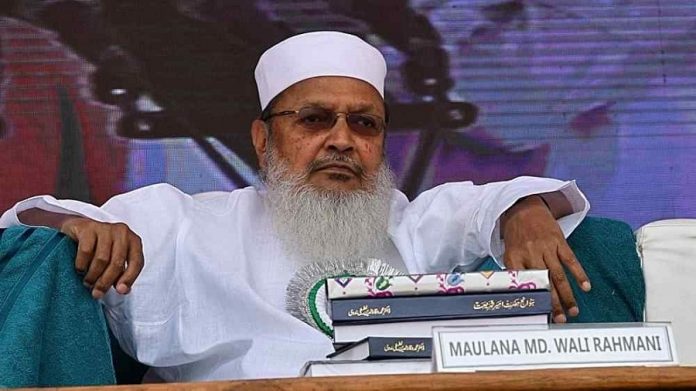
Maulana Wali Rahmani | Photo Courtesy: Clarion India
What set Maulana Wali Rahmani, an Indian Sunni Islamic Scholar, academician and founder of Rahmani30, apart was his efforts towards the promotion of education among Muslim youth. Although Rahmani was a multi-lingual man, he had evident love for the Urdu language. In February this year, he launched a campaign for education among the Muslim community and promotion of the Urdu language.
The well-known torchbearer of India’s Muslim community, who strove to work for the promotion of education, Maulana Mohammad Wali Rahmani would have turned 78-years-old on June 5 this year. On April 3, Maulana Wali Rahmani breathed his last at a Patna hospital after a brief illness and other complications.
Such was his repute and respect among the community that he had 8.5 lakh followers who took the oath of allegiance to him as “Sajjada Nashin” of Khanqah Rahmani in Munger in the Indian state of Bihar. Rahmani became “Sajjada Nashin” of Khanqah Rahmani, Munger in 1991 after the death of his father Sayyid Minatullah Rahmani. At present, Rahmani was the Secretary-General of All India Muslim Personal Law Board (AIMPLB). He was Ameer-e-Shariat, or the head, of the renowned religious organization Imarat-e-Shariah of Bihar, Jharkhand and Odisha. However, what set him apart was his endeavour in the field of education. His organization, Rahmani30, founded in 2008, was his gift to the Muslim community of Bihar, and the country.
Had there been no Rahmani30, hundreds of students might not have heard about him and many poor Muslim students could not have realized the dream of making it to India’s top engineering institutes; the IITs or the Indian Institute of Technology.
The Rahmani30 has since then expanded to NEET or the National Eligibility cum Entrance Test for medical education. Top accountancy and Law entrance tests have also been included now.
Rahmani30 is modelled on Super30 founded by famous mathematics teacher Anand Kumar of Bihar who started selecting 30 poor students and grooms them for IITs. Super30 was a big success. So is Rahmani30. Since its inception, Rahmani30 had the services of Bihar senior police officer Abhayanand, who retired as DGP Bihar. Every year test exams are held for the selection of Rahmani30 and the selected candidates are provided with free residential coaching with food.
Maulana Wali Rahmani was a political personality. His proximity with political leaders got him brickbats too. He was elected to the Bihar Legislative Council on April 7, 1974, and continued till 1996. In 1984 and 1990 he was elected as deputy chairman of Bihar Legislative Council. He was criticized after his (in)famous Deen Bachao Desh Bachao (Save Islam, Save Country) rally at Patna in 2018. Just after the rally, one of its organizers were declared as the candidate from Nitish Kumar’s party for the Bihar Legislative Council. Maulana Rahmani was accused of compromising with Nitish for ‘a seat in Bihar council.’
He, however, was also praised for his bold statements before the top political leaders when the issues related to the Muslim community were discussed.
His birthplace Khanqah Rahmani is a well-known religious place that was founded in 1909 by his grandfather Maulana Mohammad Ali Mungeri, who was a co-founder of Nadwatul Ulema, Lucknow. Maulana Wali Rahmani’s father Maulana Minatullah Rahmani was also a renowned religious scholar who also held the post of General Secretary in All India Muslim Personal Law Board.
Maulana Rahmani got his initial education at Rahmania Urdu School, Jamia Rahmani in Munger, Bihar and then proceeded to Nadwatul Ulema and Darul Uloom Deoband. He also studied at Bhagalpur University which is now known as Tilka Manjhi Bhagalpur University in Bihar.
At the age of 22, Maulana Rahmani joined ‘Naqeeb’, a weekly published by Imarat-e-Shariah. He also served at Jamia Rahmani.
In 1991, following the demise of his father, he was made Sajjada Nashin of Khanqah Rahmani.
He was made Ameer-e-Shariat at Imarat-e-Shariah in November 2015 and held the post till his last breath. Here too, Maulana Rahmani’s focus was on education. He also worked for the better medical facility at Sajjad Memorial Hospital being run by Imarat-e-Shariah.
Although Maulana Rahmani was a multi-lingual man, he had evident love for the Urdu language. In February this year, he launched a campaign for education among the Muslim community and promotion of the Urdu language.
He also campaigned for the upliftment of the Madrasas.
His biography Hayat-e-Wali penned by Shah Imran Hasan states, “Maulana’s untiring efforts and timely steps to save the country’s Madrasas are worth mentioning. He met several dignitaries, including the then Prime Minister Atal Behari Vajpayee and presented before him the case of Madrasas in the context of their roles in the country’s freedom struggle and nation-building.”
Maulana Rahmani was a man who loved to make friends in other Muslim organizations too. He kept Maulana Rizwan Ahmad Islahi, the young Ameer-e-Halqa (Bihar chief) very close to him. Maulana Rizwan recalls that when representatives of Muslim organizations went to meet Bihar Chief Minister Nitish Kumar, everybody wanted Maulana Rahmani to talk to him but he proposed his name (Maulana Rizwan’s). “Such was his generosity,” he said.
Maulana Rahmani will be missed at many places, including at AIMPLB and Imarat-e-Shariah. However, his absence would be felt most at Rahmani30. The passing away of Rahmani poses a challenge for both Imarat-e-Shariah and Rahmani30 to take his dream further.
source: http://www.twocircles.net / TwoCircles.net / Home> Lead Story / by Sami Ahmad, TwoCircles.net / April 05th, 2021
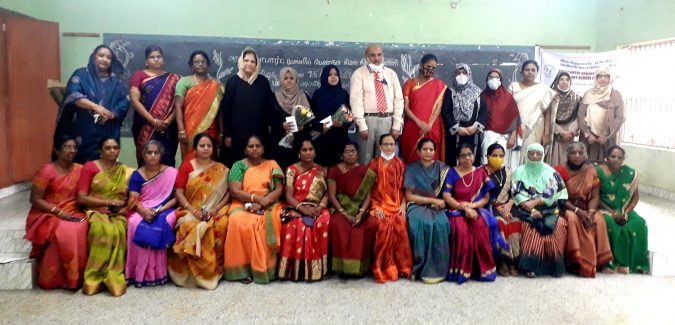
“Dare to Dream!” – Two Girls from a Government School allotted MBBS & BDS seats by the Government of Tamil Nadu.
Ms. Gouhar Parveen aged 18yrs and Ms. Jouhar Parveen aged 17yrs are sisters who stand out for their grit, determination and academic excellence. Their father is an embroidery artisan, currently out of work due to the pandemic and mother is a homemaker.
These girls are the alumni of Government Hobart Higher Secondary School for Muslim Girls, a 147 year old historic minority institution that primarily caters to students from economically disadvantaged backgrounds in Chennai.
Both the girls being first generation learners, have always dreamt of becoming doctors, and have been encouraged and inspired by their father to follow their dreams. With tremendous hard work, dedication and resilience, against all odds, Gouhar has been fortunate enough to obtain a medical seat (MBBS) and Jouhar, a dentistry seat (BDS) under the government issued minority quota.
Both the girls will be contributing assets to their family, society and the greater community. They are an inspiration to all children from underprivileged backgrounds. A resonant – “You can also dare to dream”
அரசு ஹோபார்ட் மேல்நிலைப்பள்ளி சிறுமிகள் எம்.பி.பி.எஸ், பி.டி.எஸ் படிப்புக்கு தேர்வாகியுள்ளனர்
The students have been greatly supported and encouraged by their teachers, their Head Mistress – Mrs. S. Kanmani , a State level Best Teacher – Dr. Radhakrishnan Awardee for 2020-21 and the Parent Teacher Association (PTA).
Since the inception in 1993, the Parent Teacher Association has been working along with the school in providing quality education to the students and helping in creating a positive and healthy environment for the student.
The PTA does not stop with just schooling, they handhold them to build fruitful careers. It has been supplementing the students with additional coaching to improve their calibre.
In fact, the above students were privately coached by the PTA to crack the NEET exam. In the last 3 years alone, they have helped 108 students in pursuing their collegiate education in both Arts and Professional Streams.
source: http://www.chennaiglitz.com / Chennai Glitz / Home> Education / by Adminstrator / December 16th, 2020