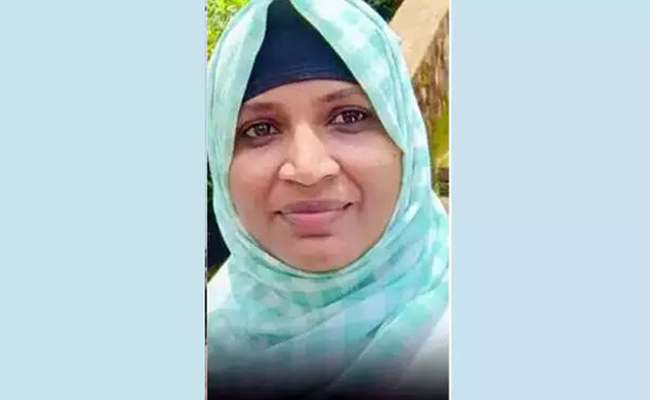
A. Sabina, a nurse from the Nilgiris district of Tamil Nadu, has been awarded this year’s prestigious ‘Kalpana Chawla Award’ in recognition of her outstanding bravery and service during the recent natural disaster in Wayanad, Kerala.
The disaster occurred when a landslide caused the connecting bridge between Mundakai and Suralmalai to collapse, leaving many residents stranded and in urgent need of assistance.
With relief operations facing significant challenges, a zip line was quickly set up to reach the affected area.
Sabina, who has been working with an NGO in the Nilgiris for the past three years, immediately volunteered to participate in the rescue efforts.
“When my boss informed me about the landslide, he suggested we should assist since it happened nearby. Upon arrival, most people were fleeing in fear, but we stayed to provide first aid. Looking back, it’s terrifying to recall the scene, but in the moment, our sole focus was on the patients,” she shared.
source: http://www.english.varthabharati.in / Vartha Bharati / Home> India / by Vartha Bharati / August 16th, 2024
An Indian Muslim was the Anadolu Agency’s first employee in war-torn Anatolia.
Istanbul:
During the turbulent days of Turkey’s Independence War following the Ottoman Empire defeat in World War I, an Indian Muslim who fled his country to lend a hand to the ailing Ottomans became the first journalist for the Anadolu Agency, the nascent Turkey’s first news outlet and their first foreign affairs officer.
Working beside the Anadolu Agency’s two founders, the famous novelist Halide Edip (Adivar) and renowned journalist Yunus Nadi (Abalioglu), Abdurrahman Peshawari wrote his news stories in a small office, typing stories of wartime atrocities, victories and losses and sending them out, with only one finger “flying” over a typewriter, according to Yunus Nadi’s memoirs.
Abdurrahman Peshawari was born in the city of Peshawar in the famed Khyber Valley, and was only 26 when he sold his clothes and books to pay for his sea journey, despite the wishes of his wealthy family, who urged him to continue his studies.
Peshawari sailed with 26 Indian Muslims in an Italian ship from Mumbai to Istanbul, the capital of the Ottoman Empire, and during the long journey volunteer doctors in the group trained him in first aid. Peshawari was motivated by high Islamic ideals, fought with the Ottoman army and was injured three times while fighting at Gallipoli against the British Imperial navy, during which Ottoman troops managed to repel invading forces from the Dardanelles Strait.
He later joined with an Ottoman Red Crescent group, bringing financial aid from Indian Muslims to purchase medical equipment for the Ottoman armies fighting in the Balkans. Indian Muslim communities supported the Ottomans during the empire’s collapse and Peshawari was a notable member of this group, said Mucahit Arslan, a Turkish history researcher who uncovered the story of this “unknown hero” of Turkey’s Independence War.
The Caliphate Movement by Muslim communities in “British Raj” India began as early as 1912, while the Ottomans were fighting in the Balkans, and many Indian Muslims contributed, either financially or in person. Some wealthy Indians studying medicine in Europe established a field hospital during the battle of Gallipoli.
Peshawari joined the Ottoman army and saw active service in Beirut and Gallipoli during World War I.
After the war, despite his family urging him to return home, he chose to stay where the Turkish Republic was being established in Ankara in the midst of shattered and war-torn Anatolia, refusing his mother’s pleas to return by saying, “I cannot come back while the Muslim nation is under invasion.”
Peshawari served the nascent Turkish Republic, appointed by Ataturk as ambassador to Afghanistan until his story ended tragically when he was assassinated in Istanbul in 1925, apparently mistaken for a military commander.
This abrupt end to Peshawari’s career meant that he was denied the international fame which many other 20th century reporters found. Martha Gellhorn, George Orwell, Ernest Hemingway and Walter Cronkite are just some of the names who documented the most terrible conflicts of their time. However, in Turkey, Peshawari can truly be said to have been in a league of his own.
englishnews@aa.com.tr
source: http://www.aa.com.tr / Anadolu Agency / Home> Archive / May 07th, 2014
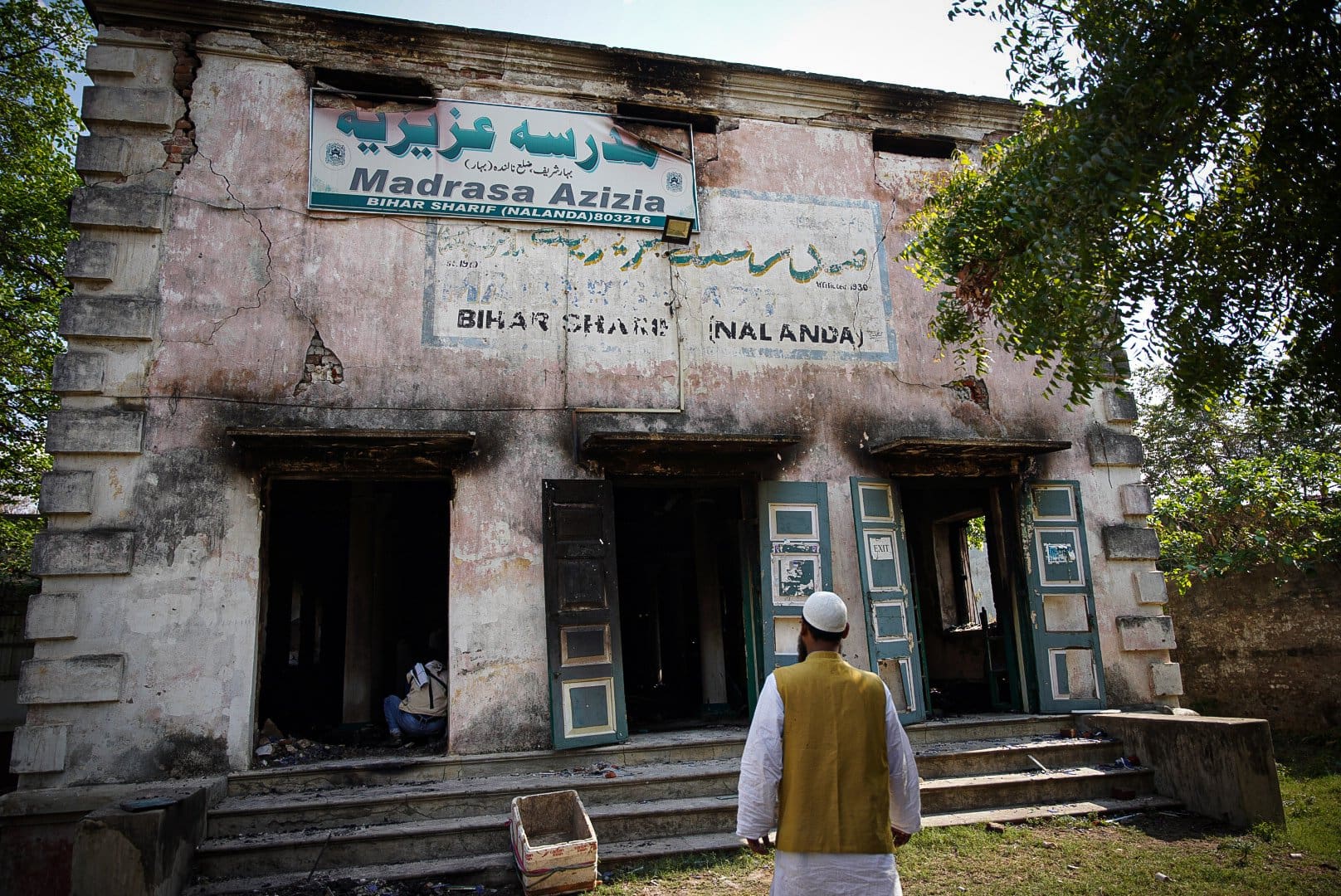
110-year-old madrasa and library set ablaze by Hindutva mob during Ram Navami rally in Bihar. Photo: Meer Faisal/Maktoob
The 46th World Heritage Committee meeting is being held in India from July 21-31, 2024. The event’s webpage proudly displays the iconic Taj Mahal, a grand symbol of India’s resplendent past. However, using this monument to showcase India’s heritage is both ironic and deeply painful. The Taj Mahal, a symbol of India’s architectural grandeur and a testament to the rich cultural contributions of the Mughal era (1526-1857), is being showcased even as the country engages in a systematic erasure of its Muslim heritage. This stark juxtaposition highlights a troubling contradiction: while the Taj Mahal is celebrated globally as a symbol of India’s beauty, the political will of the government and segments of the public are actively undermining and erasing the broader historical and cultural presence of Muslims in India. The assault on the place of Muslims began many decades ago in 1992 with the destruction of the Babri Mosque, built by the first Mughal ruler of India, Zahir-ud-din Babur, in 1527 A.D.
On December 6th, 1992, the Babri Mosque was destroyed by Hindu Kar Sevaks affiliated with the Bharatiya Janata Party (BJP). This mob, led by L.K. Advani, a prominent BJP figure and future Deputy Prime Minister (2002-2004), dismantled the over 400-year-old mosque. The world largely overlooked this deliberate destruction, perhaps viewing it as another in a series of violent riots between Hindus and Muslims in India. However, this was not just another riot. The destruction of the Babri Mosque was a political as well as an ontological act against Muslims, bringing their identity as Indians into question. Muslim history and heritage, and Muslims—collectively and individually—continue to be violated, undoing the secular national body.
I experienced the aftermath of the destruction of the Babri Mosque firsthand. Arriving in New Delhi from the US on the morning of December 8th, I encountered an eerily desolate airport, flights cancelled, and the skeleton staff at work refused to provide any assistance or guidance after checking my passport and recognizing that I am a Muslim. There was nowhere I could go; Delhi, the capital city of India, was under curfew. Sitting in the terminal, enveloped in a deadly silence and feeling a great sense of anxiety for my safety, I realized that the India I knew, my home, had undergone a seismic shift. The demolition signalled a significant turning point: Muslims and their history were now being cast as “outsiders,” foreigners who did not belong, and their legacy of nearly a millennium was under threat of erasure by charged religious-nationalist politics. Religion was no longer a private matter for personal practice and moral guidance; it had become a public discourse and weapon to use. Indian Muslims, the largest religious minority in India and globally, were under serious threat of survival. The Babri Mosque’s demolition was the beginning of erasing Muslims from the landscape of India; the extensive campaign aimed at obliterating the Muslim historical presence is ongoing.
In the years following the demolition, numerous other Muslim heritage sites, including mosques, Sufi shrines, libraries, community spaces, and private homes have faced similar fates. The deliberate and planned destruction of Muslim history has become a matter of celebration to claim Hindu pride. Every act of the physical destruction of a Muslim building is a public community event with men armed with different tools, supported by the tacit backing of the state, breaking and demolishing buildings. At the same time, thousands watch the violent spectacle of nationalism. Buildings are not just made of bricks and mortars, they are the storehouse of precious memories of a previous era and stand as silent reminders of people interconnected over generations—their sacrifices, dreams, everyday lives, emotions, and sentiments. For the destroyers of Muslim heritage, the sentiments of the past etched into the buildings do not matter; rather their concern is to disconnect Indian Muslims from India’s past, denying them a place in India’s future. The message is clear: Muslims are a minority, and as such, their life, death, memory, and future are controlled by the majority. Muslims’ claim of contributing to India’s rich heritage is no longer accepted in some political circles. This ontological destruction is the heart of the attack on Muslims in India—to cripple the community into the unknowability of its identity as Indian Muslims.
Would the 46th World Heritage Committee meeting in Delhi take account of the death of Muslim history in India? As a historian of India, I am deeply aware of the pain I felt when the Babri Mosque was demolished. I ask the leaders of the Heritage Committee: do they feel the pain of Muslims in India who are denied their heritage because some people want to make them “foreign” and irrelevant to India’s history? Can history be obliterated because one ethnic community, although a majority, wants to deny it to another ethnic community, a minority? Can history be made to disappear simply by the will and violence of the majority community? These and many more questions should be discussed and deliberated in the 46th World Heritage Committee meeting.
Mourning the destroyed buildings
The list of destruction of Muslim sites is far too many to do a comprehensive study; it is ongoing. In this frightful and destructive scenario, nothing is spared in the rampant violence – historic as well as newly built and permitted mosques, tombs of Sufis who preached coexistence and pluralism, public libraries, madrasas, cemeteries, public spaces, and so on are merrily destroyed or intentionally neglected. The destruction is justified as pay-back time for Muslims who supposedly destroyed 880 Hindu sites in the past, though historians’ rich empirical studies carefully document the falsity of such populist claims. By reclaiming these sites by force, the BJP leaders and followers advocate they will cleanse India culturally and spatially and make Hindus the rightful owners of India.
The mass carnival of destruction of Muslim sites commenced in 2002 in Gujarat during the Godhra genocide. In Khuldabad, Gujarat, 230 unique buildings were destroyed, including a 400-year-old mosque and the tomb of Sufi Vali Gujarati, and old Qurans were set on fire. The damage was so extensive that experts compare it with the much-publicized destruction of the Bamiyan Buddhas in Afghanistan or the wrecking of Tibet’s monasteries by the Maoist Red Guards.
Since then, religious nationalists have destroyed numerous mosques and tombs in Delhi and across India. In Delhi alone, a millennium-old Sufi shrine of Baba Haji Rozbih was demolished, as well as the 700-year-old Akhondji Mosque, the landmark Jannatul Firdaus Mosque, and the Sarai Kala Khan Mosque and Madrasa were razed to the ground. During the 2020 riots in East Delhi, 16 mosques were destroyed. The Shahi Masjid in Prayagraj city and the 300-year-old historic mosque in Muzaffarnagar were recently demolished under the pretext of road-widening projects. Similar fates befell several mosques in Gujarat, Hyderabad, Maharashtra, Madhya Pradesh, and Karnataka. Meanwhile, the fate of the historic Sunheri Mosque in Delhi, the 800-year-old national heritage Shamsi Jama Masjid in Badaun, the Gyanvapi Mosque Complex in Varanasi, the Shahi Idgah Mosque in Mathura, the Dargah of Mumin Chup in Hyderabad, the Shahi Masjid in Gaya, the Chhoti Sona Masjid in West Bengal, and the mosque in the Qutb Minar Complex in the outskirts of Delhi, to name just a few, hang in the balance.
The government’s newest plan is to rename India to Bharat and connect the modern state to the religious knowledge of the Rigveda and the Mahabharata, where Bharatvarsha was used to describe the Indian subcontinent. Renaming India is the state’s effort to sever the knowledge of Muslims as Indians and their connections to the place, leading to a loss of historical continuity and identity.
“Nobody is crying about the loss of a building structure …It is the loss of our secular ethos,” Anand Patwardhan reminds us about the demolition of the Babri Mosque and the Muslim heritage buildings. The destruction of the Babri Mosque and various other mosques has not only eroded the secular ethos of India but has also diminished our capacity to appreciate the beauty, emotions, sentiments, sacrifices, skills, art, and painstaking work embodied in these structures. These buildings testify to the very project of humanity. Destroying them is tantamount to erasing our human capacity to value the people of the past as if they were less human. This is what we, as a collective of humans, should mourn, and this is what the 46th Heritage Meeting should take a moment to ponder. When the human element is destroyed, there will be no heritage left to preserve.
Why heritage matters
Cultural heritage is not simply a building nor just a resource to be protected: It is a central element in the stories that society tells about itself—its origins, the mixes and syntheses over time, future projects, values, and aspirations. David Lowenthal’s The Past is a Foreign Country (1985) explores the intricate relationships between the past and future by exploring the meaning of objects, calling for navigating the complexities of memory and politics that are imbued in them. The Muslim past of India is not of a foreign people who invaded, looted, and destroyed the country. Nor was India, for Muslims, a place for mere economic or geographic expansion where people came for personal gain, although this is how M.S. Golwalkar, a founding father of the Rashtriya Swayamsevak Sangh (RSS), described the Muslim interest in India in We, or Our Nationhood Defined (1939) and Bunch of Thoughts (1966).
For Muslims, as the renowned historian Barbara Metcalf poignantly discussed in her 1995 Presidential Address to the Association for Asian Studies, India is their motherland and a “resting place of angels.” This deep attachment was evocatively inscribed on the Babri Mosque entrance. The paradisiacal imagery of India was enunciated as early as the thirteenth century by the Muslim poet Hazrat Amir Khusrau and it was repeated in the seventeenth-century Diwan-e Khas (Hall of Private Audiences) in the Red Fort of the Mughal Emperor, Shah Jahan which is also showcased on the webpage of the 46th World Heritage Committee meeting. The couplet reads: “If there is heaven on earth, it is this, it is this, it is this!” Downplaying this deep attachment to India for Muslims and making the history they created into a battleground for strategic manipulation to construct a monolithic national Hindu identity resonates with Lowenthal’s arguments about the political uses of the past in the present.
The destruction of Muslim heritage sites severs the historical knowledge and continuity of Muslims as integral contributors to the nation’s history and India’s cultural and historical fabric. The deliberate destruction dislocates the Muslim community’s sense of place and belonging; a strategic act of ‘culturecide’. The Hague Convention for the Protection of Cultural Property in the Event of Armed Conflict (1954) requires states to ensure heritage is not damaged or misappropriated in war. But what about the destruction of heritage buildings during normal times? The 46th World Heritage Committee meeting should consider this question very seriously in their deliberations in India.
Preserving Muslim heritage in India is ultimately a human rights issue, connected to their freedom of expression, thought, conscience, and religion. Protecting the Muslim heritage of India cannot be overlooked any longer. The international group of leaders meeting in Delhi to discuss and deliberate on the importance of heritage can play an important role in stopping future violence not only to the buildings but to the people whose human security should be paramount. For Indian Muslims, India is their home; Muslims must feel safe and protected in India.
Yasmin Saikia is a professor of South Asian History and Peace Studies at Arizona State University. Her latest books are On Othering: The Processes and Politics of Unpeace (Athabasca University Press: 2024) and Cambridge Companion to Sayyid Ahmad Khan (Cambridge University Press: 2019)
source: http://www.maktoobmedia.com / Maktoob Media / Home> Features / by Yasmin Saikia / July 21st, 2024
The Udupi Premier League Season 1, organized by Udupi Restaurant Qatar in association with Smart Cricketers Qatar, concluded with a grand closing ceremony. The tournament, which featured ten auction-based teams comprising Karnataka players residing in Qatar, culminated in a thrilling finale.
Team Udupi Legends, owned by Faisal G and captained by Imran Shirva, emerged as the champions, while Team Royal Qatar, owned by Sheikh Mainuddin and led by Parvez (Pajju), secured the runner-up position.
The tournament paid homage to notable players Imran Koteshwara, Abdul Rauf, Imran Shirva, Deekshit Alva, Parvez (Pajju), Abdul Sathar, Suhel Billi, Abdul Salam Mohammad Sheikh, and Mirza Khaleel for their dedication and contributions to cricket in Qatar.
Awards to best performing players:
Final Match Man of the Match: Safan Pathan Man of the Series (Most Valuable Player): Nizar Arekkal Best Batsman: Abdul Rauf Best Bowler: Mohammad Rabeez Best Fielder: Farhan Shirva Best Wicket Keeper: Abdul Vaheed
The opening ceremony, held on June 19, 2024, was inaugurated by Deepak Shetty and Abdul Khader.
The closing ceremony saw the presence of distinguished guests including Faisal G, Musthafa G, Mohammed Junaid of Udupi Restaurant Qatar, and Asmath Ali, Abdul Shukur, Mohammad Thoufiq from Smart Cricketers Qatar, along with Akshaya Acharya.
source: http://www.english.varthabharati.in / Vartha Bharati / Home> Gulf / by Vartha Bharati / June 25th, 2024
In a solemn and heartfelt ceremony titled “Shahadat Ko Salaam” (Salute to Martyrdom), the Dr. Salauddin Chopdar Foundation honored 130 bravehearts, including Kargil War heroes, their families, and gallantry award winners from the Shekhawati region. The event, held at Karbala Maidan in Jhunjhunu, was under the patronage of Mahant Oomnath Ji Maharaj and Ajaz Nabi Sahib, highlighting the communal harmony of the region.
The chief guest, Rajya Sabha MP and renowned poet Imran Pratapgarhi, along with other distinguished guests such as Major General A.J.B. Jaini, Lieutenant General S.P.S. Katewa, and Kargil War hero Brigadier Ajit Singh Shekhawat, graced the event. M.D. Chopdar, Chairman of the Rajasthan Madrasa Board, welcomed all the guests with mementos, shawls, and capes.
Chopdar praised the Ganga-Jamuni Tehzeeb of the district, emphasizing that nationalism transcends religion and caste in this region. He lauded the valor displayed in the Kargil War, asserting that the people of Shekhawati are always ready to sacrifice their lives for the country.
Imran Pratapgarhi expressed his admiration for the heroic land of Shekhawati, stating that those who spread hatred should witness the love and unity of its people. He promised to highlight the sacrifices of Shekhawati’s heroes on a larger platform and organize a similar event in Delhi.
Brigadier Ajit Singh recounted inspiring stories from the Kargil War, emphasizing that bravery knows no religious boundaries. He shared how a Muslim company under his command showcased indomitable courage and defeated the enemy. Colonel Shokat Ali echoed these sentiments, highlighting the region’s deep-seated love and loyalty for the country.
A book chronicling the lives of Shekhawati’s martyrs was released during the event. Poet Vivek Parikh and singer Rukhsana Khan contributed to the patriotic fervor with their performances. Thousands of people from Shekhawati attended to honor the war widows and soldiers.
The program, hosted by Dr. Ajhar Hussain and Mulchand Jhajharia, was attended by several other dignitaries, including Captain Tipu Sultan and Captain Sultan Khan. The event underscored the importance of unity and patriotism, celebrating the bravery and sacrifice of Shekhawati’s soldiers and their families.
source: http://www.radiancenews.com / Radiance News / Home> Latest News / by Raheem Khan / Radiance News Bureau / July 27th, 2024
Azeez Belgaumi has been selected for the Bulleh Shah Gold Medal 2025 for his unparalleled Literary Services in Urdu language and will be conferred the title of “Miraj-e-Sukhan” by Tehreek Islah Muashra Pakistan.
Mr. Belgaumi’s poetry has not only enriched the literary landscape of India but also garnered appreciation and accolades worldwide. His contributions to Urdu literature have been recognized by various institutions nationally and globally, highlighting his profound impact on the literary community.
On another occasion, Beacon Light University, Spire College, Fatehpur, Pakistan, honored him with a “Lifetime Achievement Award.” He continues to chair several world-level Urdu literary fest and poets meets. As a member of the World Literary Committee, the Global Writers Association, Universal Urdu Point UAE awarded him a Certificate of Merit for International Literary Service.
His legacy is a testament to the enduring power of poetry and its ability to transcend boundaries, resonating with audiences around the world. His work continues to inspire and influence the literary community, cementing his place as one of India’s most cherished poets.
source: http://www.radiancenews.com / Radiance News / Home> Pride of the Nation> Awards / by Radiance News Bureau / July 09th, 2024
Did you know that a decade ago something bizarre happened? The Central Bureau of Investigation (CBI) ceased to exist for three days! All those accused facing charges in courts filed by the federal agency started seeking stay on the prosecution on the basis of a ‘non-existent’ organisation.
It happened in November 2013, courtesy verdict of the Gauhati High Court that declared the CBI unconstitutional because it had not originated from a constitutional provision nor was it constituted vide any Union Cabinet decision. It also did not have the President’s assent.
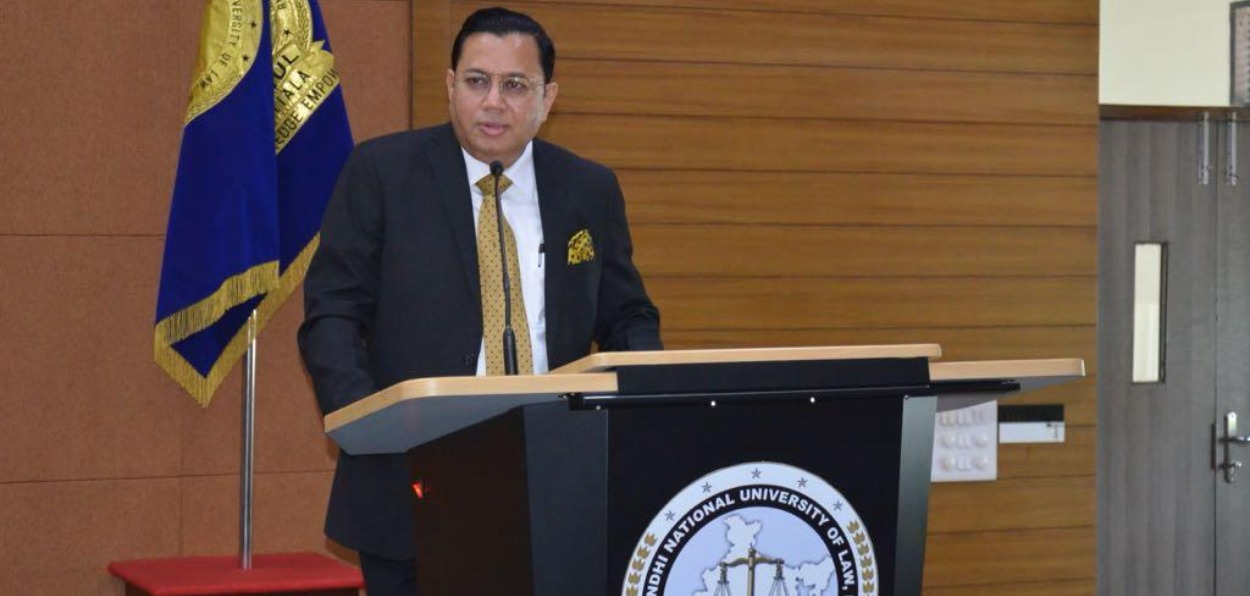
On November 6, a division bench of Gauhati High Court, comprising Justice Iqbal Ahmed Ansari and Justice Indira Shah, quashed the April 1, 1963 Resolution constituting CBI under the Delhi Special Police Establishment Act, 1946, and declared all its actions unconstitutional.
Justice Iqbal Ahmed Ansari
However, a Supreme Court Bench of the then Chief Justice of India P Sathasivam and Justice Ranjana Desai, which held a special sitting at the residence of the CJI on November 9, 2013, stayed the order and the matter remains unsettled by the apex court till date.
According to the Gauhati High Court verdict, the CBI was not formed under any statutory provision, but under an executive order of the Union Home Ministry in the year 1963, and that too, without any backing from the Constitution.
The High Court order had rattled the Indian legal system prompting the Centre to move the Supreme Court immediately.
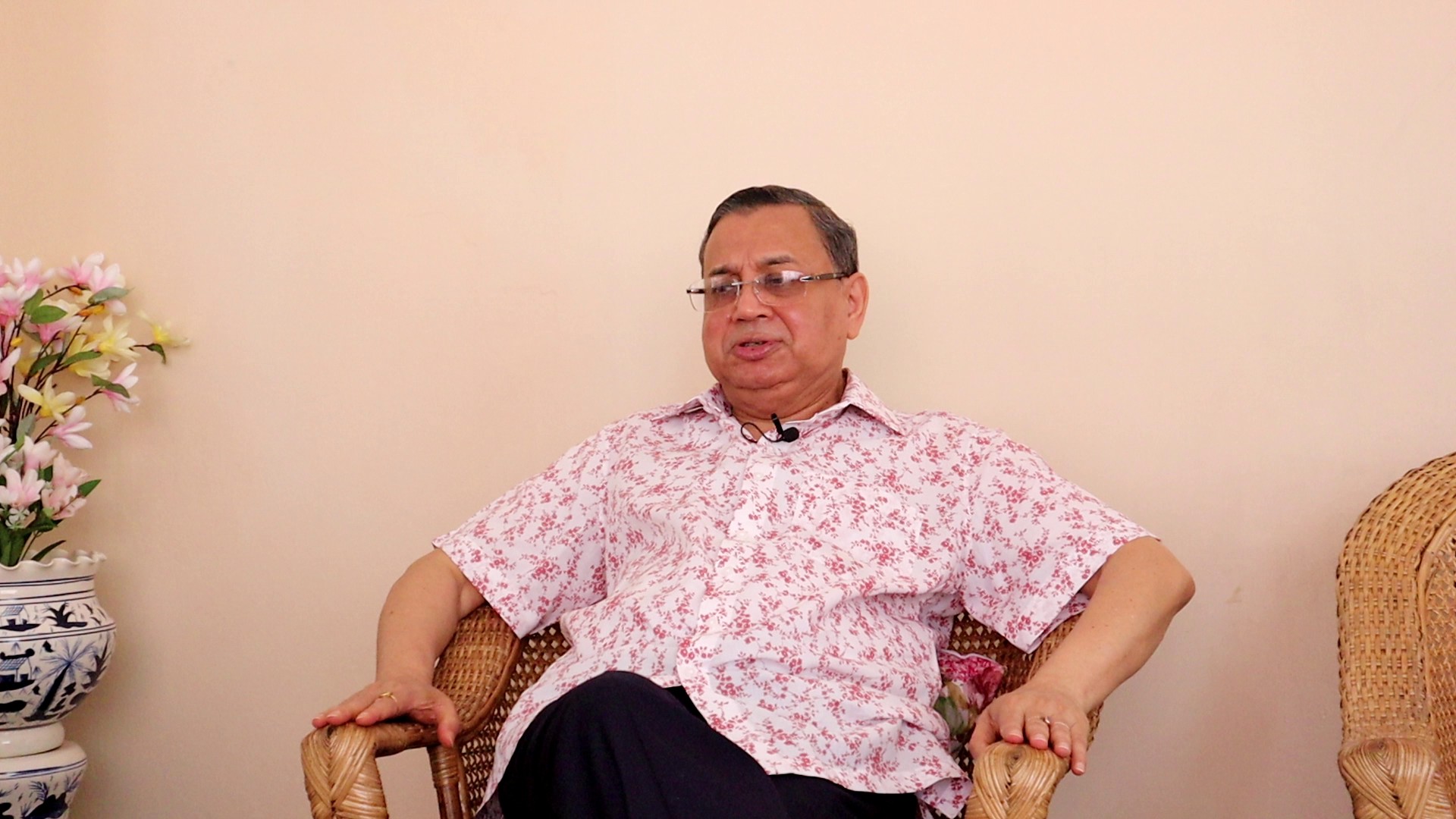
Awaz-The Voice caught up with Justice (retd) Iqbal Ahmed Ansari, who later on became the Chief Justice of Patna High Court and Chairman of Punjab State Human Rights Commission, to know more about the landmark judgment and its bearing on the legal system as well as his career.
Elaborating on the verdict, Justice Ansari said it was still unsettled and felt the executive was against the settlement of the matter because it would put a question mark on thousands of cases probed by the apex federal investigation agency.
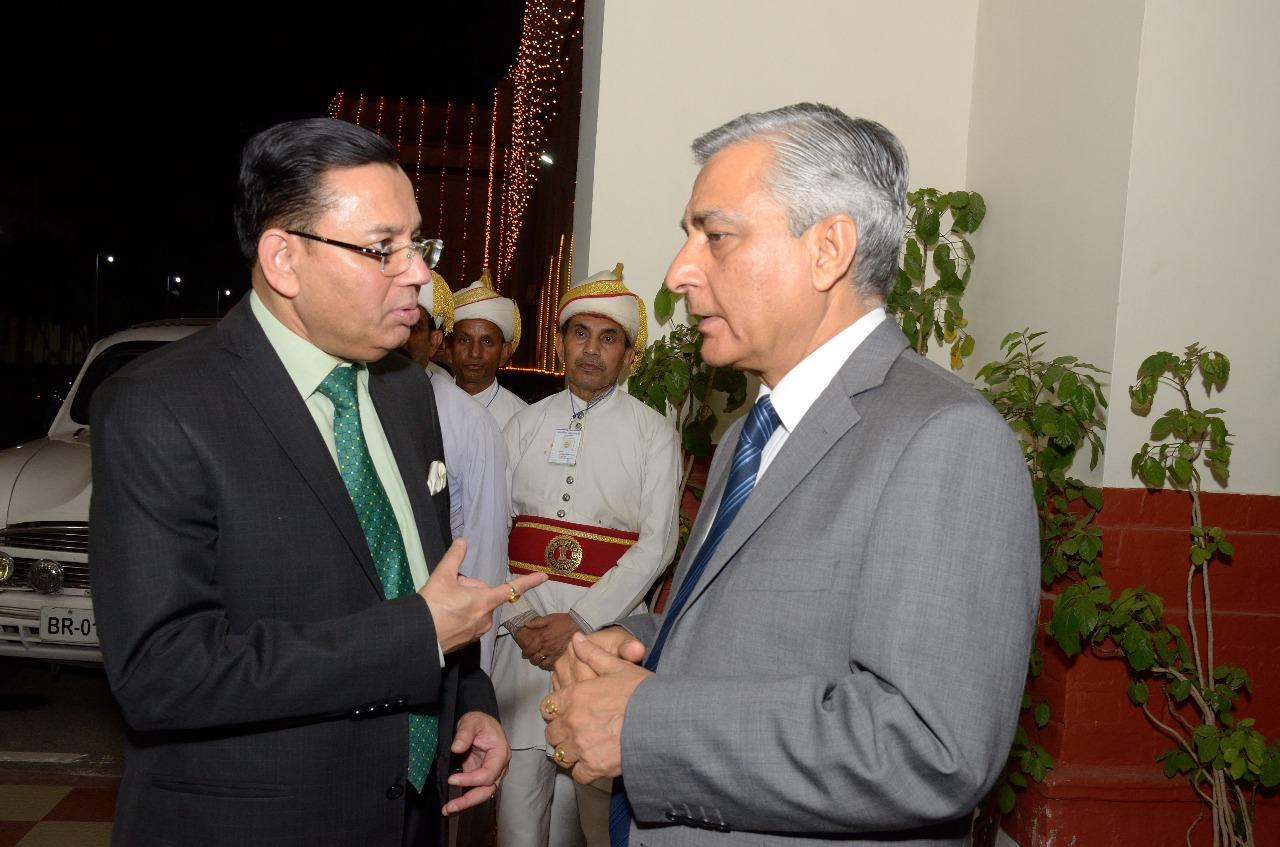
Justice Iqbal Ahmed Ansari (retd) with Chief Justice of India T S Thakur
“A BSNL employee had appealed against a judgment of Justice Ranjan Gogoi (pronounced in 2007), who later on became the Chief Justice of India, challenging the constitutional validity of the CBI. It came for a hearing before me and Justice Dr Indira Shah and we took the view that it did not have any legal foundation. It has been simply brought into effect by a memorandum or resolution of the Home Ministry.
“So, we gave the ruling that the CBI was unconstitutional. The Supreme Court was moved and a vacation bench headed by Chief Justice of India Justice (P) Sathasivam heard it and passed a stay order. Later on, it came up for further hearing (on December 6, 2013) and Justice Ranjan Gogoi was one in the two-judge bench, and since he could not hear it on ethical grounds. So, the hearing could not take place and it is simply written that he has ‘not participated’. A new bench was never constituted and the matter continued to be unsettled by the Supreme Court till now,” Justice Ansari said.
“But in all fairness, this question has been raised, such as by Justice (J) Chelameswar, Justice Madan Lokur, saying the Supreme Court should scrutinise the judgment and decide because, supposing tomorrow, you find that the CBI is not constitutional, what will happen to all the cases over the past?” he added.
The verdict indeed had its bearing on Justice Ansari’s career too. “The collegium takes a call on who can be a Supreme Court judge. But, unfortunately in my case, a person from Assam went against another from Assam. Justice Ranjan Gogoi was even against my elevation as Chief Justice of Patna High Court because he did not want his judgment on the CBI to be disturbed by anyone and I did it.
“I was told by the then Chief Justice of India Justice (TS) Thakur that Justice Gogoi approached him when my name came up as the Chief Justice of Patna High Court and the latter sent the matter to the collegium. When the system was pointed out to him, he tried to coerce the collegium to post me as Chief Justice of Meghalaya High Court. Then Justice Thakur shot off a letter to Justice Gogoi asking him to submit in writing any material that he has against me. And, he gave in writing that he did not have anything.”
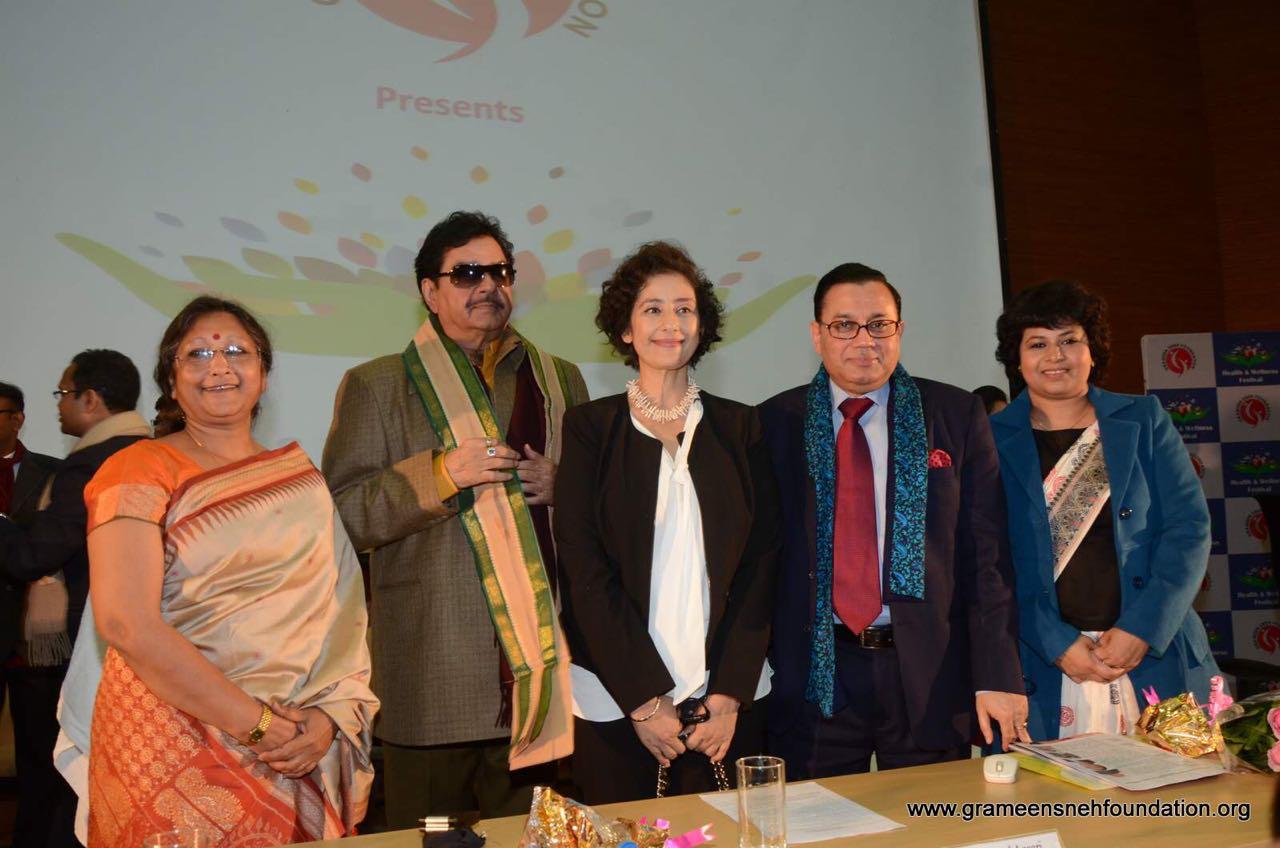
Justice (retd) Iqbal Ahmed Ansari with Shatrughan Sinha, and other Bollywood actors
Apart from the CBI verdict, Justice Ansari also cherishes his other judgments such as the NIA case accused should be produced in a special court or sessions court before appealing to High Court, the scrapping of Coal India Ltd’s introduction of e-auction which was not in favour of the people of Assam, a verdict directing doctors to abort a rape victim’s fetus which she wanted to abort as she did not want to give birth to a child begotten by a rapist, and others.
Justice Ansari, who pursued his academics in his hometown of Tezpur in northern Assam, and wanted to be an engineer or an Army officer, was forced into law by his father who was himself a barrister, and he was perhaps right in guiding his son’s career.
“I was very interested in engineering because there were ample opportunities during our times. However, my father had the impression that engineers earn more than sufficient and they tend to be inclined to gambling and alcoholism. Being a barrister, he wanted me to study law which I did despite my impression that lawyers have to lie a lot which I later on found out to be untrue. A lawyer can practice by not lying if he wants to.
“Thereafter, I was very much inclined towards serving in the Army and I did get selected. My father once again persuaded me back because he feared that I was too headstrong and thus, I might get court-martialled and sacked. Then I became a lawyer. During my legal practice, I was quite impressed by the personality of some of the judges. One such judge was Justice SN Phookan. So, I decided to go for the judicial services and I succeeded in the first attempt itself.”
Asked if he felt that the judiciary at times comes under pressure from the legislature, Justice Ansari categorically stated that during his time there was no pressure from the legislature, but the executive could sometimes do so, and it depends on the judge. “In our times there was no such pressure.
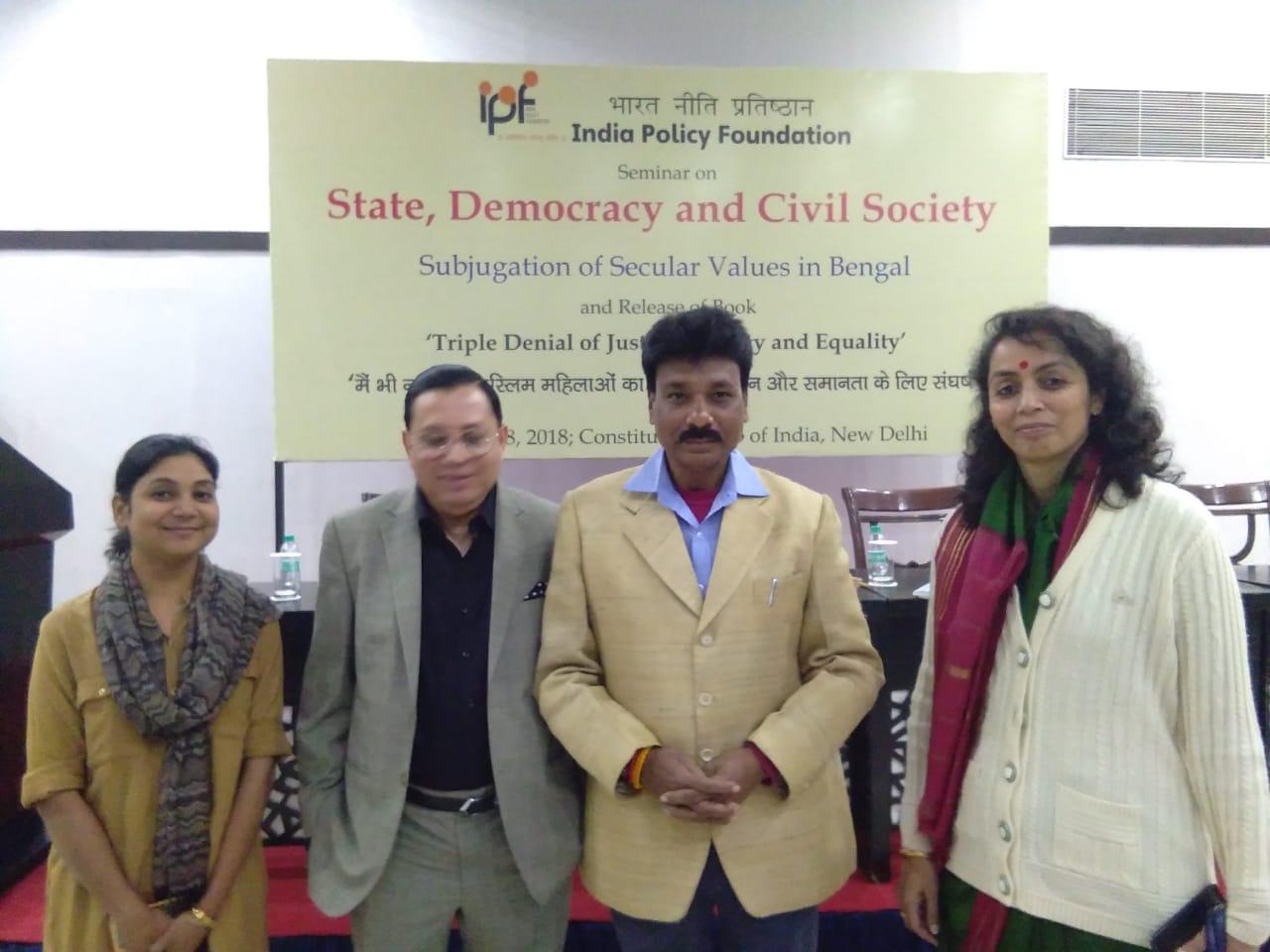
Justice (retd) Iqbal Ahmed Ansari at a seminar in Kolkata
However, as it has been appearing these days from what Justice Ajit (P) Shah, Justice Madan Lokur, and Justice Joseph Kurian have been saying, it appears the judiciary at the level of the Supreme Court is under some kind of pressure. There have been shocking instances of people showing a lack of trust in the judiciary. But by and large, I believe that the judiciary is still independent,” he said.
About the perennial problem of the pendency of cases in Indian courts, Justice Ansari said, “It’s a very difficult question. The judges-litigations ratio in India is so poor that it’s even worse than in Bangladesh. To solve the issue, we need more law colleges. To prevent the brain drain from law to the corporate sector, the Supreme Court has allowed the direct entry of law graduates into judicial officers. However, that is also not helping because the process needs proper training where we are lacking.”
source: http://www.awazthevoice.in / Awaz, The Voice / Home> Story / by Imtaz Ahmed, Tezpur / June 28th, 2024
Justice Ansari had, during his time in Gauhati High Court, even initiated such training programmes and said: “I am happy that a lot of young law professionals benefited. Some of them have become senior lawyers and are doing quite well. It gives me a lot of satisfaction… I do participate in such initiatives even now if I am invited.”
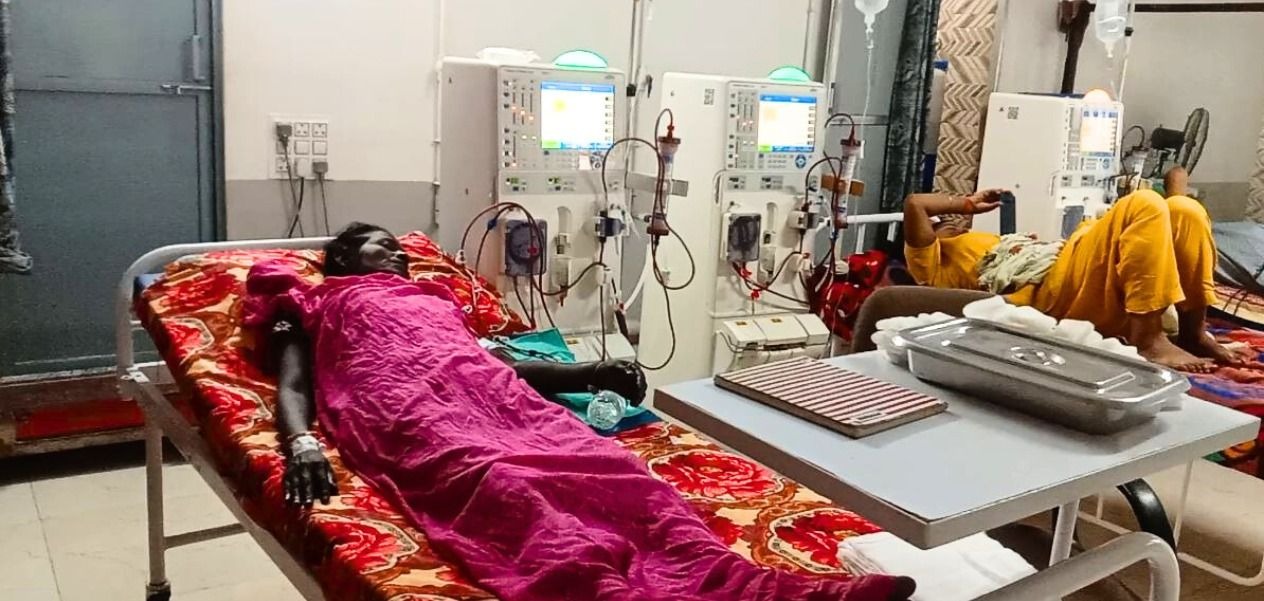
Dialysis for only Rs 100 – Sounds incredible! This service by a doctor in Kolkata has indeed saved hundreds of lives and given hope to those who could not afford the repeated and costly treatment for malfunctioning or failed kidneys. The man behind this mission is Dr. Fuad Halim, a Communist politician who is the embodiment of the selfless service that a medical practitioner is supposed to be.
He started this initiative some 20 years ago in association with some like-minded doctors to support someone’s life and keep a family’s hopes alive. This is a unique initiative in the era of increasing fees for medical services every day. This is probably the only service where the charges have been reduced in response to the growing desperation of poor people to cope with the rising costs of treatment.
The charges for dialysis were initially fixed at Rs.600 and today it is Rs.100.
Dr Fuad Halim donating blood
Speaking with Awaz-The Voice, Dr. Fuad Halim, 54, said that the sole thought behind his mission is to support needy families and his passion to protect patients from facing torture in the name of treatment.
Dr. Fuad Halim is a member of the Communist Party of India (Marxist). His social attitudes and political beliefs are nearly inherited as his father Hashim Abdul Halim was a left leader and former Speaker of the Bengal Legislative Assembly for more than two decades.
Interestingly, his wife Saira Shah Halim, an MLA unsuccessfully contested the 2024 Lok Sabha elections as a CPI(M) candidate.
Dr. Fuad Halim also contested the 2021 Assembly elections and 2019 Lok Sabha elections, but during his campaign, it was never about politics; he kept on addressing the poor and what he had to offer to them.
Fuad Halim was born in Kolkata and he studied at St. Anthony’s School and later St. Joseph’s Collee. He obtained his degree in medicine from the Neil Ratan Sarkar Medical College. He later did a fellowship under the Apollo Group of Royal College, Hyderabad.
Fuad Halim says that he could launch and sustain this initiative only because of his like-minded friends and helpers who, he says are the bedrock of his work for the poor. “Without their help and support this work was not at all possible,” he says.
Dr. Fuad Halim went into mission mode during the COVID pandemic where he performed about 24,000 done dialysis for a token fee of Rs 50! Back then hospitals were closed for regular patients because of the overload of COVID patients and the income of people had fallen drastically.
Dr Fuad Halim campaigning for his election
“At present, our rate is Rs 100 per dialysis. You will be surprised that when we started it was Rs 600 per dialysis. After two years we reduced it to Rs 550. In 2009, it reduced to 500. In the next two years, it became 450. Before COVID we were offering dialysis for Rs 300 and during the pandemic, it was further reduced to 50 rupees.”
Today the fee for one session of the dialysis is Rs 100.
Also during the dialysis, for accessories the charges are nominal. “We have a daycare center for people undergoing dialysis. I have a chamber in the same, I also see my patients and my consultation fee is Rs 50.”
Dr. Fuad Halim started with a mission to help people get their cataracts removed from their eyes at a nominal fee. “In 2004, we conducted 3,000 cataract operations to correct the vision of people. This was followed by a campaign on blood donation.”
The organization Kolkata Swasthya Sankalp with which Dr. Halim was associated was also conferred upon a national award in 2009. “Thereafter we launched our dialysis mission. Today hundreds of patients are getting dialysis done in our facility,” he says.
Dr. Fuad Halim’s dialysis mission is launched in association with the 82-year-old organization – People’s Relief Committee.
“As its president, I oversee all its mission of providing low-cost screening tests, treatment, and nursing homes, where people are provided with low-cost treatment.”
He said there is no mix-up of his role as a doctor and as a politician. Dr. Halim says, “ There are no two sides in my life; I am doing politics with the same thought with which I became a doctor, i.e. under the spirit of service.”
He says that to save the life of a patient who is suffering from a kidney ailment, it’s important to do the right dialysis for the right period. If a person undergoes half dialysis the quality of his life will not be good; his life will not improve.
Patients undergoing dialysis at Dr Fuad Halim’s hospital
“The biggest problem is that people cannot manage their expenses. So our main idea is that we will reduce the cost of dialysis. That is why we used various methods to reduce the cost of dialysis, in which donation also plays a major role.”
Dr Halim’s interest in social service probably comes from his family background where politics is a way of serving the people. His grandfather contested the Kolkata Corporation election in 1925 with Netaji Subhash Chandra Bose.
After that, his father Hashim Abdul Halim joined the Communist Party and continued to work as an activist and worked at the grassroots.
Dr. Fuad Halim says, “My political life is not different from medical practice. I am the same person and my thoughts are also the same. My service and my politics have the same basis. I treat people as the result of a revolutionary thought because our thought is that people should have the right to health. Since people are facing problems, I try to address these as much as possible. I also realize that a single person cannot change the world; so my association with my friends from school. They are my strength and courage. Such efforts cannot be done alone. I have received tremendous support and backing from everyone.”
source: http://www.awazthevoice.in / Awaz, The Voice / Home> Story / by Mansooruddin Faridi and Md Shamim Hossain (Kolkata) / July 03rd, 2024
DSBK, a premier biking platform founded by Kannadiga NRI Nasir Syed, has appointed Fabio Uccelli as its new Race Technical Director. Uccelli, who is also the team principal of Motozoo Me Air Racing in the Supersport World Championship, will bring his extensive expertise to the DSBK Middle east Championship. This strategic move aims to elevate the standards of motorcycle racing in the Middle east.
“The first race in Dubai will be after the last one in the Supersport World Championship,” Uccelli explained to Corsedimoto. “I can manage everything. The commitment with Motozoo will continue for at least another two years, with excellent riders like this season and the aim of always being protagonists. The role in the Middle east championship is a new challenge that gives me great stimuli and fascinates me.”
Journey to Dubai’s Motorcycling Scene
Uccelli’s journey to his new roles began out of sheer curiosity. “I came to Dubai and as a motorbike enthusiast, I went to the circuit. I was curious to know the motorcycling reality of this country and I started to find out,” he recounted. Initially, he was met with some detachment. However, thanks to acquaintances within the Kawasaki branch and some Italians already settled in Dubai, he was able to integrate into the local motorcycling community. “It has enormous potential and plenty of room for growth. I have settled in very well, now I already have many friends. The lifestyle is hectic here too, but less so than in Europe. For the rest, it’s very hot but I don’t suffer from it. Clearly, I divide my time between Dubai and Italy where I continue to follow Motozoo’s activities.”
Promoting Motorcycling in Dubai
Uccelli is keen to develop motorcycling in Dubai. “My goal is precisely to contribute to the growth and development of motorcycling in Dubai by enhancing its potential,” he said. Within the championship, there will be a Kawasaki single-brand series for which Uccelli will create the kits. This initiative could attract international riders, including those from Italy, who wish to experience racing in Dubai. “We want to try to create interest both among locals and internationally, bring drivers and spectators, give new life to the championship. I would like to try to get the population of the United Arab Emirates as passionate about motorcycling as possible.”
DSBK-UAE: A Platform for Superbike Enthusiasts
The DSBK- Middle east Championship was founded by Kannadiga NRI Nasir Syed and has quickly become a notable platform for superbike racers, their fans, and prominent brands. The organization hosted its inaugural racing competition successfully and continues to unite the motorcycling community.
Nasir Syed, who manages several successful ventures in Dubai, including CHS Creative House and VME Valves Factory LLC, also leads DSBK – D Super Bike Racing. Syed’s journey into superbike racing began after he moved to Dubai, finding his passion in the sport despite its dangers and high costs. His dedication paid off, as he became an international champion with 38 professional bike racing victories. Syed has competed in prestigious events such as the UAE National Championship and the Bahrain Superbike Championship, further solidifying his status as a top racer.
source: http://www.english.varthabharati.in / Vartha Bharati / Home> Gulf / by Vartha Bharati / July 05th, 2024
Under the high patronage of H.E. Ahmed Bin Salman Al-Musallam, Speaker of the Council of Representatives, Kingdom of Bahrain, Mr. Mohammad Mansoor, Founder and Chairman of Saara Group, was honored as one of the esteemed winners of The Times of Bahrain TOB Icon Award 2024. This prestigious award recognizes his outstanding contributions to the business world and his relentless pursuit of excellence.
During the award presentation, H.E. Ahmed Bin Salman Al-Musallam congratulated the awardees for their significant contributions to their respective sectors. He aacknowledged their critical role in the growth of Bahrain’s economy and society.
Mohammad Mansoor, a distinguished businessman and sports enthusiast, has elevated Saara Group to new heights with his exceptional business acumen and innovation. In addition to his business achievements, Mohammad Mansoor chairs the Bahrain Cricket Federation and Life N Style Magazine. His leadership extends to international forums as a Director of The Council in the World Youth Group, affiliated with the United Nations.
Mohammad Mansoor has also served as the Vice President of the KHK Heroes Foundation and a Board Member of the Bahrain India Society. His multifaceted work reflects his commitment to growth, development, and intercultural partnerships.
source: http://www.english.varthabharati.in / Vartha Bharati / Home> Gulf / by Vartha Bharati / July 18th, 2024