Category Archives: Uncategorized

From Madrasa to Modern College: The Evolution of Delhi College and Muslim Contributions to Indian Education

INDIA :

Madrasa Ghaziuddin, which was developed into Delhi College

In recent years, renewed public debate over India’s past has led many researchers and writers to revisit historical records with greater care. In the course of examining Muslim contributions to India’s development – across administration, education, and public institutions – numerous well-documented examples have surfaced that rarely appear in mainstream narratives.

One such finding concerns the institutional origin of Delhi College. What is widely remembered as a colonial-era institution turns out, on closer examination, to be rooted in a much older educational ecosystem established during the Mughal period. The story of its evolution offers a concrete, record-based insight into how Muslim-supported institutions contributed to the foundations of modern education in India.1

A Centre of Learning Before the Colonial Era

The story begins in 1696 with the establishment of Madrasa Ghaziuddin near Ajmeri Gate in Delhi. The madrasa was founded by Ghaziuddin Khan Feroze Jung I, a senior Mughal noble. Like many institutions of its time, it was supported through private endowments made by its founder rather than through direct imperial administration.2

This form of elite patronage was common in Mughal India, where members of the ruling class supported centres of learning as a civic responsibility. Education was viewed as essential to governance, legal administration, and social order. Madrasa Ghaziuddin functioned as a centre of higher learning during a period when Delhi served as both an administrative capital and an intellectual hub.3

What Was Actually Taught

Historical records indicate that Madrasa Ghaziuddin followed a structured and multidisciplinary curriculum. Alongside Islamic Studies, students were trained in Persian and Arabic, principal languages of administration and scholarship in Mughal India. Instruction also included logic, philosophy, mathematics, and astronomy, disciplines required for legal reasoning, governance, and intellectual inquiry.4

Islamic Studies at the madrasa did not operate as isolated theology. Ethical principles such as honesty, truthfulness, accountability, and justice formed part of the intellectual framework. These values were not abstract ideals but practical standards expected of scholars, administrators, and judges trained in such institutions. Historians note that this ethical grounding was a defining feature of Islamic education and remains emphasised in madrasa traditions today.5

The curriculum reflected societal needs rather than doctrinal preservation. It prepared individuals to think critically and administer public affairs – an aspect often overlooked in contemporary portrayals of madrasa education.

Political Change Without Intellectual Collapse

The late 18th and early 19th centuries brought major political upheaval to Delhi. With the weakening of Mughal authority and the British takeover of the city in 1803, traditional systems of patronage declined. Many educational institutions suffered from reduced funding and administrative disruption, and Madrasa Ghaziuddin was no exception.6

However, the complex was not dismantled. British authorities recognised both its strategic location near Ajmeri Gate and its educational potential. Instead of being erased, the site was repurposed, challenging the notion that pre-colonial institutions were universally dismissed as obsolete by colonial administrators.7

The Delhi College Phase: Adaptation Over Erasure

In the early decades of the 19th century, the Ajmeri Gate complex began hosting what came to be known as Delhi College. Operating from the same premises, the institution introduced English education and Western scientific disciplines while drawing upon the existing scholarly environment.8

This phase represented adaptation rather than rupture. Delhi College did not emerge from the rejection of indigenous learning systems but from their reorganisation under new political and intellectual conditions. Indian scholars continued to play an active role, and the institution became a site of intellectual exchange rather than simple replacement.

While Delhi College was later relocated to the Kashmiri Gate area, the Ajmeri Gate campus continued as an educational institution and today functions as Zakir Husain Delhi College, preserving the site’s long academic lineage.9

Translation and the Spread of Knowledge

One of the most significant contributions associated with Delhi College was its role in translating scientific and philosophical works into Urdu. At a time when English education was limited to a small elite, translation became a key mechanism for widening access to modern knowledge.10

Through this process, new technical vocabulary was developed, enabling emerging ideas in science, law, and philosophy to be discussed in an Indian language familiar to a broader population. Historians regard this translation movement as central to the dissemination of modern knowledge in 19th-century North India.11

The case of Delhi College demonstrates that modern education in India did not spread solely through English. It also travelled through Indian languages, mediated by scholars who navigated multiple intellectual traditions.

Rethinking the Role of Muslim Institutions

The history of Delhi College complicates the claim that modern education in India began exclusively with colonial intervention. Long before British reforms, Muslim-supported institutions had already established systems of learning that combined ethics, reason, and practical knowledge.12

This does not imply that pre-colonial education was identical to modern systems, nor does it deny the influence of colonial reforms. Rather, it highlights continuity – an often-overlooked dimension of Indian educational history. Muslim rulers and elites invested in institutions that served society at large, extending education beyond religious instruction into administration, law, and science.

Why This History is Often Missing

The marginalisation of such histories reflects narrowing of public discourse rather than a lack of evidence. Over time, complex institutional developments have been reduced to simple binaries: traditional versus modern, religious versus secular, pre-colonial versus progressive.

Historians caution that such simplifications obscure the layered realities of India’s past. When Muslim institutions are discussed only in theological terms, their civic and intellectual roles disappear from view, limiting informed historical understanding.13

History as Record, Not Rhetoric

The evolution of Delhi College from a Mughal-era madrasa demonstrates that Muslim contributions to India’s development were institutional, ethical, and intellectual. Recognising this history does not require ideological alignment or nostalgia. It requires attention to documented records.

As India revisits its past through research, conferences, and public discussion, cases like Delhi College underscore the value of evidence-based history. The record reveals continuity, adaptation, and contribution – elements essential to any honest account of the nation’s development.

Endnotes

  1. Percival Spear, Delhi: Its Monuments and History
  2. Syed Mahmud, History of Muslim Education in India
  3. Muzaffar Alam, The Languages of Political Islam in India
  4. Francis Robinson, The Ulama of Farangi Mahall and Islamic Culture
  5. Barbara Metcalf, Islamic Revival in British India
  6. C.A. Bayly, Indian Society and the Making of the British Empire
  7. William Dalrymple, The Last Mughal
  8. Delhi College archival records (19th century)
  9. Zakir Husain Delhi College, official institutional history
  10. Christopher Bayly, Empire and Information
  11. Oxford University Press studies on Delhi College
  12. Irfan Habib, Medieval India: The Study of a Civilization
  13. Romila Thapar, The Past as Present

source: http://www.radiancenews.com / Radiance News / Home> Features> Focus / by Mohammad Talha Siddi Bapa / March 13th, 2026
Kerala Govt, IUML hand over 229 houses to Wayanad landslide survivors in major rehabilitation push

KERALA :

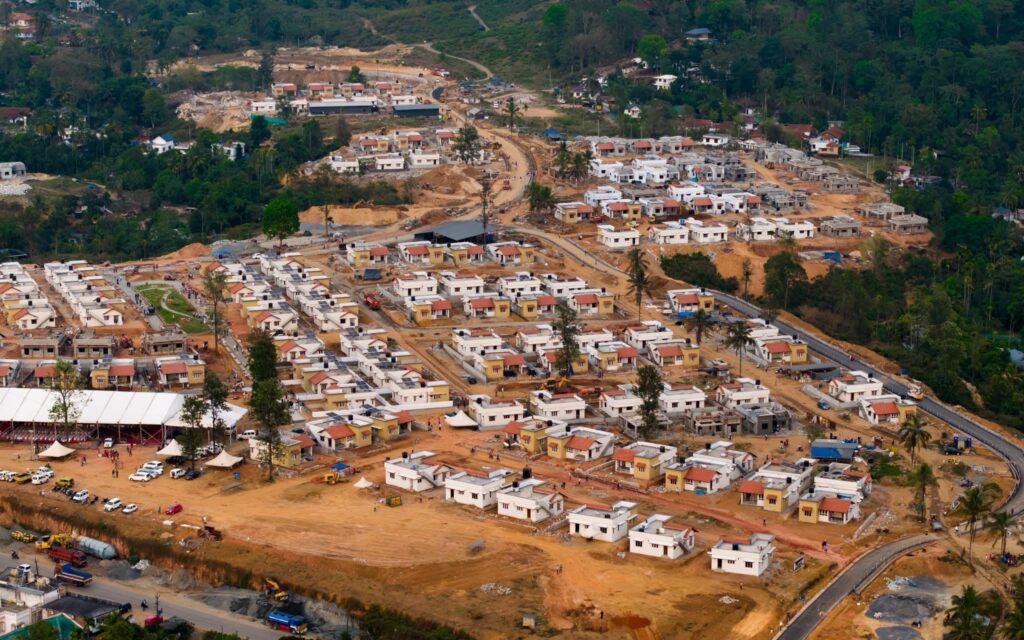
Nearly two years after the massive landslides that struck Kerala’s Wayanad district, the state government on Sunday handed over houses to survivors at a rehabilitation township in Kalpetta, with Chief Minister Pinarayi Vijayan distributing title deeds to 178 families in the first phase of the ₹299-crore project.

The township, located over 20 kilometres from the worst-affected villages of Chooralmala and Mundakkai, has been built on 64 hectares of land acquired from Elston Tea Estate and is expected to accommodate around 1,600 people across 410 houses. The first phase, comprising 178 houses, was inaugurated on Sunday.

Each house is built on seven cents (3,049 sq ft) of land and is a single-storey, 1,000-square-foot unit. The structures are designed keeping Wayanad’s terrain and climate in mind and include provisions for an additional floor if families choose to expand. Every house features a master bedroom, two additional rooms, a living room, a study, a dining area, a kitchen, storage space, and a sit-out.

Beyond housing, the township will include roads, a health centre, an anganwadi, a market, children’s play areas, a sports club, common halls, an open-air theatre, and a memorial to honour those who lost their lives.

Chief Minister Vijayan had laid the foundation stone for the township on March 27 last year. Around 1,500 workers worked round the clock to complete the first phase in less than a year.

On Sunday, beneficiaries received not only title deeds but also ownership certificates and connections for electricity and water. The government has announced that utility bills will be covered until June.

Kerala Chief Minister Pinarayi Vijayan described the handover of houses under the Wayanad rehabilitation project as a symbol of collective resilience and solidarity.

“Words fall short to describe this emotion. Rising above those who ignored and undermined us, an entire state came together to wipe the tears of our brothers and sisters. Today, as we hand over the first phase of the Wayanad Model Township, 178 homes, to the survivors of Mundakkai and Chooralmala, it stands as a powerful testament to Keralam’s resilience,” Vijayan said.

He noted that despite challenges and delays in receiving rightful aid, the state remained united in supporting those affected.

“Even when rightful aid was denied, we did not back down; we held each other closer. This is our Keralam,” he said.

The Indian Union Muslim League also handed over 51 houses constructed under the first phase of its rehabilitation initiative for families affected by the Chooralmala landslide in Wayanad district on Saturday.

IUML State president Panakkad Syed Sadikali Shihab Thangal distributed the keys at a function held at Vellithode near Thrikkaipetta in Wayanad, with Sharada becoming the first beneficiary to receive the key.

Wayanad MP Priyanka Gandhi Vadra said she was proud of the collective efforts across political parties in rehabilitating survivors of the Wayanad landslides.

“The day before yesterday, we laid the foundation stone for the 100 houses we promised. This morning, I visited the houses built by the government, and this evening I am here to acknowledge the IUML’s monumental efforts in providing homes to help survivors rebuild their lives,” she said at the event.

The July 2024 landslides claimed 298 lives, destroyed 59 houses completely, and rendered hundreds more uninhabitable.

In the immediate aftermath, 2,569 people from 728 families were housed in 17 relief camps across Wayanad. The government later facilitated relocation to rented homes, covering rental expenses from the state exchequer.

Livelihood assistance was extended to 752 families at ₹9,000 per month for one earning member and to 507 families at ₹18,000 per month for two members. Twenty-one children who lost both parents received total assistance of ₹2.10 crore. Additionally, 858 families continue to receive monthly food coupons worth ₹1,000.

source: http://www.maktoobmedia.com / MaktoobMedia.com / Home> India / by Maktoob Staff / March 12th, 2026

India’s First Ramadan Book Fair Held in Bengaluru to Promote Reading and Spiritual Preparation

Bengaluru, KARNATAKA :

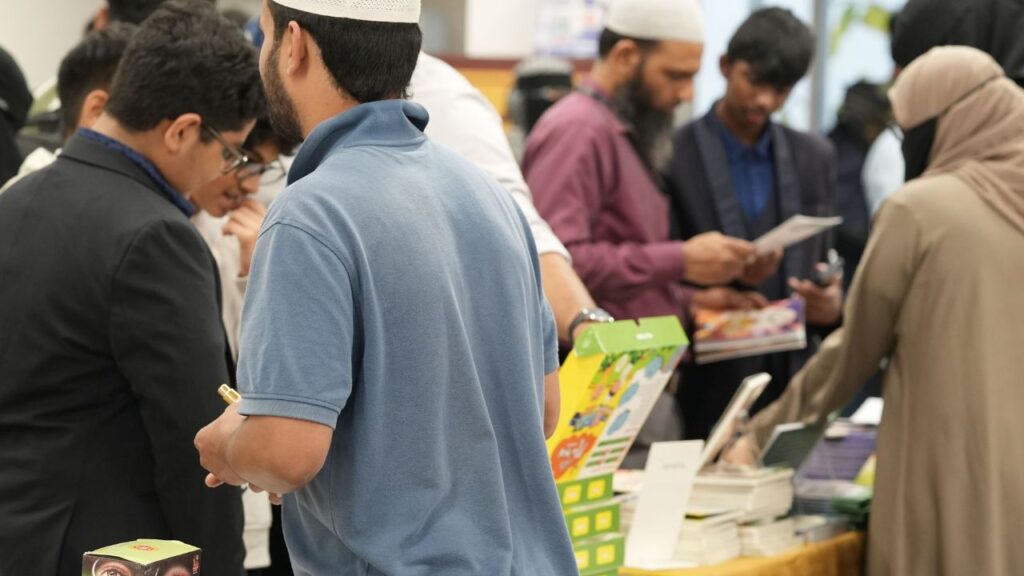
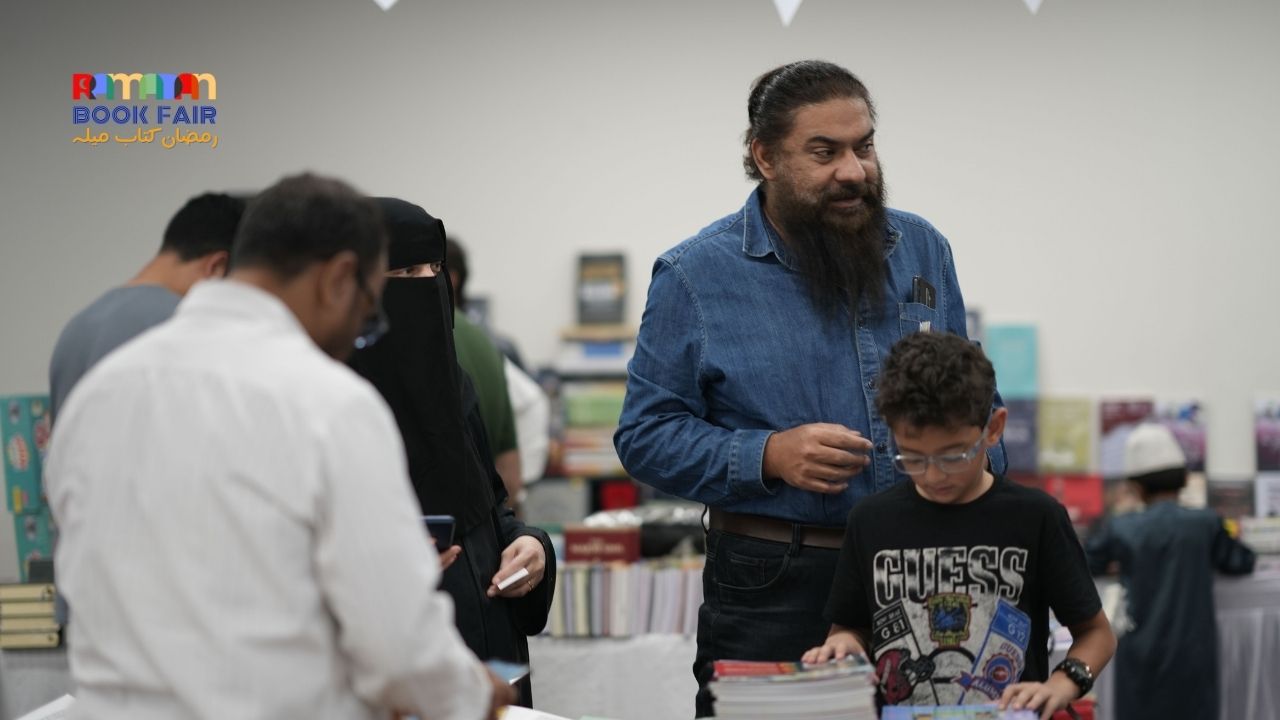
The first edition of the Ramadan Book Fair was held on 7 and 8 February at Beary’s Amity, Bengaluru. Photo: Saad Khan

The first edition of the Ramadan Book Fair was held on 7 and 8 February at Beary’s Amity, Bengaluru. The two-day event was organised by Little Amanah and House of Peace (HOP Club) with the aim of promoting a culture of reading and helping the Muslim community prepare spiritually and intellectually for the holy month of Ramadan.

The Ramadan Book Fair was founded by Shaik Zakeer Hussain and Zulekha Shakoor Rajani of Little Amanah, and Ambreen Vikhar of House of Peace (HOP Club). The fair was organised nearly two weeks before the start of Ramadan to encourage engagement with books, ideas, and discussions relevant to faith, learning, and contemporary life.

Speaking about the vision behind the initiative, Ambreen Vikhar, co-founder of the Ramadan Book Fair and founder of House of Peace (HOP Club), said, “The idea behind the Ramadan Book Fair was to re-centre reading as an act of spiritual preparation, not merely information consumption. The response showed us that people are yearning for spaces that invite depth, reflection, and intentional engagement, especially in the lead-up to Ramadan.”

The event featured a wide range of Islamic books covering the Qur’an, Seerah, spirituality, parenting, youth issues, character development, and contemporary challenges facing the Ummah. The fair aimed to revive reading and reflection by connecting readers with Islamic publishers, scholars, and educators. It also provided a platform for local Muslim NGOs, Islamic schools, and ethical brands to present their initiatives in a family-friendly and value-aligned environment.

In addition to book kiosks, the fair included a display of rare historical books and manuscripts by M.A. Delvi’s Indo-Orient Library. The collection featured rare Urdu books, manuscripts, and works on Sufi traditions, including writings related to Jalaluddin Rumi. The library is recognised as an important resource for researchers and scholars of Indo-Islamic history, spirituality, and literature.

Both days of the book fair began with the recitation of the Holy Qur’an. The inauguration and inaugural address were delivered by Maulana Anees Ahmed Rashadi, Vice Principal of Darul Uloom Sabeel-ur-Rashad, Bengaluru.

The first day included a session conducted by Ambreen Vikhar for members of the House of Peace (HOP Ladies Club). Other sessions on the first day included a workshop on Why Learn the Seerah by Mohammed Yunus, panel discussions titled Breaking the Silence: Understanding Addiction and Mental Health in the Muslim Community and From Vision to Collective Action: Building a Community Around a Cause, and a skit performance by students of Iqra International School. The day also featured the release of The Prakritic Diet by Dr Farah Adam Mukadam, along with a workshop on Exploring Halal & Regulated Wealth Building by Abdul Hadi Shaikh, Founder and CEO of Islamicly.

On the second day, Zaid Hussain delivered a talk titled Joys of Fasting. Panel discussions were held on Taʿleem and Tarbiyah and The Many Voices of Muslim Women Authors, featuring Muslim women writers. Syed Habeeb (Coach Habeeb) spoke on What Legacy Are You Leaving Behind, and Dr Maria Khan delivered a talk titled Raising Readers, Nurturing Believers: From Bedtime Stories to Believing Hearts. The day also included a skit performance by children of House of Peace (HOP Club) and the release of the Faris and Reem children’s book series by Shaik Zakeer Hussain and Zulekha Shakoor Rajani, published by Little Amanah.

A strong focus of the Ramadan Book Fair was on children and youth. Several children’s workshops were conducted, along with story writing and public speaking competitions. A dedicated section titled Kidspreneur allowed children to set up stalls and sell products, introducing them to entrepreneurship at an early age.

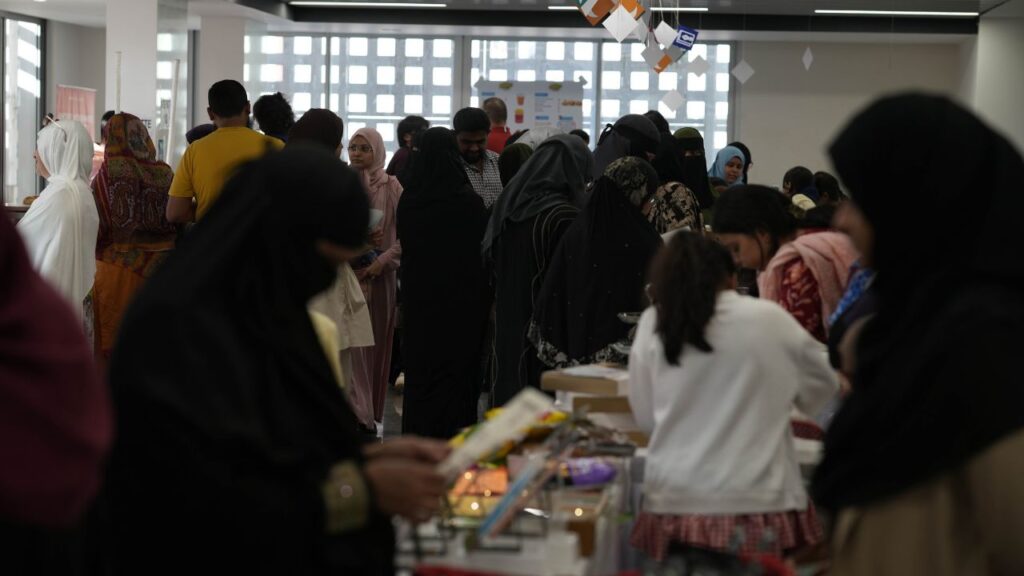
The Ramadan Book Fair received an overwhelming response, with more than 2,000 people attending the two-day event. Reflecting on the response, Zulekha Shakoor Rajani, co-founder of the Ramadan Book Fair, said, “While the footfall of over 2,000 people was encouraging, what truly stayed with us were the quiet, human moments, children asking how to motivate themselves to read and write, families leaving with bags full of books, and people from all backgrounds feeling that this space was meant for them. The fair showed us that when access is kept open and intention is sincere, reading, learning, and community can become deeply inclusive and transformative.”

The organisers stated that the Ramadan Book Fair aims to become a recurring platform to encourage reading, reflection, and community learning, particularly among younger generations, in preparation for the month of Ramadan.

source: http://www.thecognate.com / The Cognate / Home> News / by The Cognate News Desk / February 10th, 2026

Inspirational story of Kolkata’s ‘Hijabi Biker’ Alima Rahman

Kolkata, WEST BENGAL :

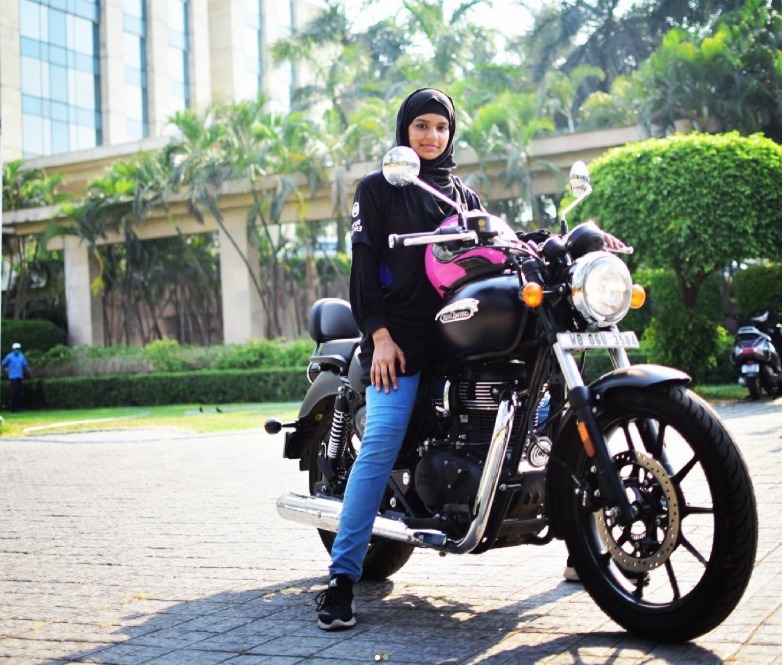
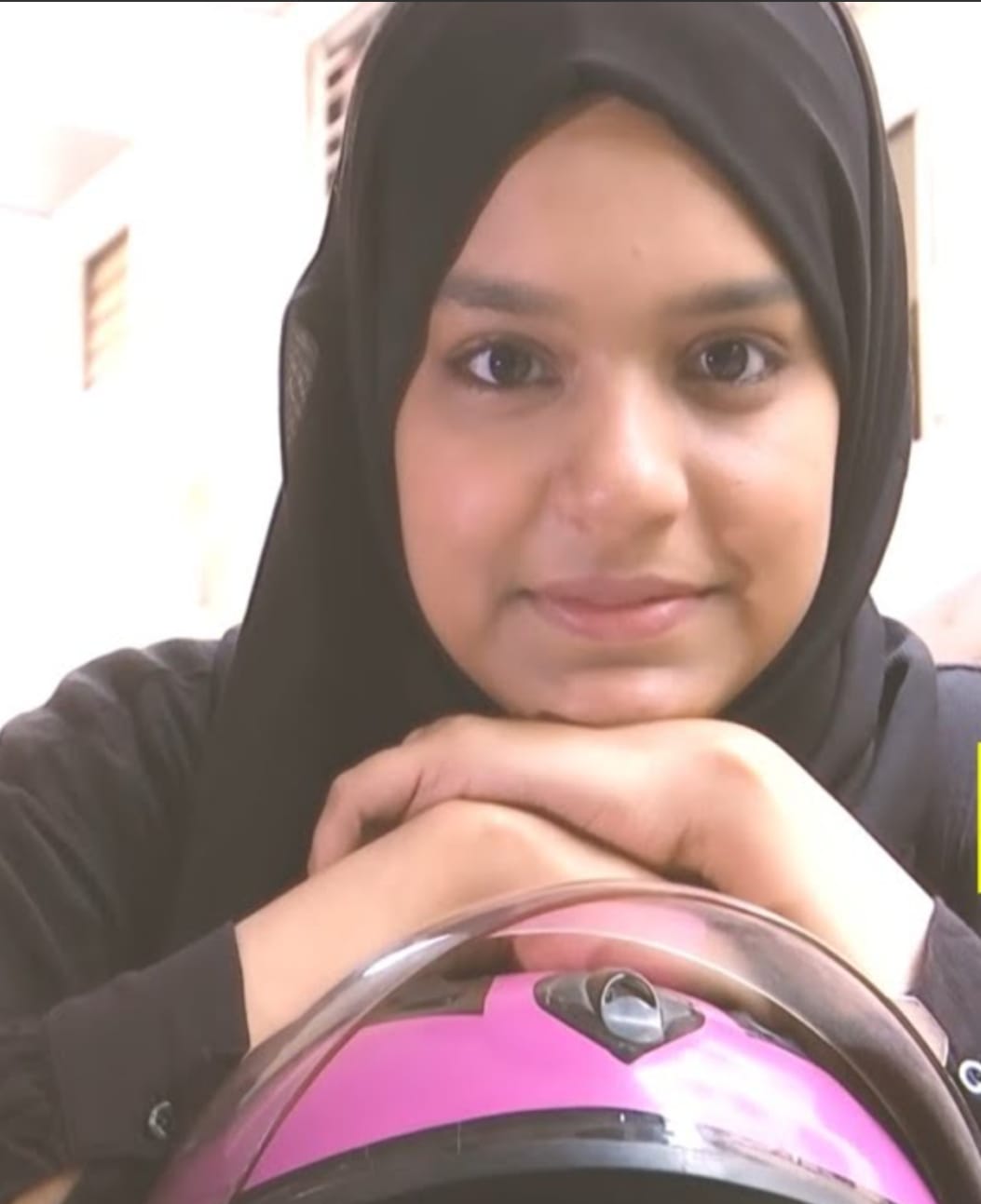
Alima Rahman alias Hijabi Biker of Kolkata

People in Kolkata no longer feel surprised to see a young woman in a hijab riding a motorcycle along the city’s busy streets these days. She is known as Alima Rahman, but more popularly known as ‘Hijabi Biker’.

Alima Rahman comes from a middle-class Muslim family. Her determination, perseverance and family support have earned her the identity of a daredevil woman.

Alima’s love for motorcycles began in childhood. Watching her grandfather ride a motorbike sparked her fascination, and her interest gradually turned into a passion. However, she faced problems. In her conservative Muslim family, the idea of a girl riding a bike met with strong opposition from relatives. The notion that “a girl from a purdah-clad (veiled) family riding a motorcycle on the streets” was difficult for many to accept.

Alima Rahman on her bike

However, Alima’s father, Azizur Rahman, was firmly by her side. Instead of suppressing his daughter’s dreams, he offered to train her. Alima began learning to ride at the age of just 10. Handling gears, practising in open and empty grounds, her confidence grew steadily.

Yet societal disapproval continued to trouble her. She had to face taunts, mockery and, at times, deliberate harassment from local men. Every time she stepped out, strangers would hurt uncharitable comments at her. But Alima did not give up. Quietly and with restraint, she kept moving towards her goal. She had only one aim — to learn to ride a bike and to prove that there is no difference between boys and girls.

Today, Alima, now in her twenties, is a familiar face in Kolkata. Clad in Hijab, her regular bike rides have given her a unique identity. She wears her hijab whenever she steps out, and behind that hijab lies the confidence of a strong-willed biker. Once on the road, her eyes remain focused on her destination — nothing distracts her.

Azizur Rahman said, “Naturally, I worry until my daughter returns home. I can’t sleep; I keep pacing outside. But I never wanted to restrict her freedom. A daughter should not be confined.” He believes that with trust and courage, daughters, too, can carve out their own paths.

Alima Rahman

Alima herself repeatedly acknowledges the role of her parents. According to her, one cannot move forward in life by opposing parents. “You have to explain things to them properly and move ahead with mutual understanding. For progress, parents’ blessings are essential,” she said.

Alima’s message regarding bike riding is clear. She feels that many girls are stepping out today, which is undoubtedly positive. However, being mindful of safety is extremely important. She advises avoiding rash driving and reckless overtaking. Alima believes that not only girls, but everyone — boys and girls alike — should follow traffic rules.

Despite riding a motorcycle for many years, she has never faced an accident. According to her, accidents can be avoided by being cautious and following rules. This is the message she wants to spread — that while being on the road, one must look out not only for one’s own safety, but also for the safety of others.

Today, Hijabi Biker Alima Rahman is not just a motorcyclist; she is a social message. She has proven that faith, culture and dreams can move ahead together.

source: http://www.awazthevoice.in / Awaz, The Voice / Home> Stories / by Sampee Chakraborty Purkayastha / March 30th, 2026

Muslim Founders’ Halwa Start-Up from Kozhikode Secures Investment from Shark Tank India Judge Aman Gupta

Kozhikode, KERALA :

New Delhi:

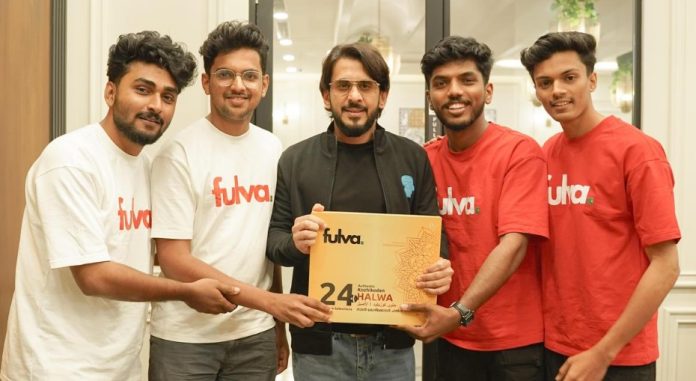
Fulva, a halwa start-up from Kozhikode founded by Muslim entrepreneurs, has secured investment from celebrated Shark Tank India judge Aman Gupta, co-founder of boAt, marking a new phase of growth for the young venture.

Founded in September 2023 by childhood friends Shabas Ahamed NC, Sanu Muhammed C, Irfan Safar S, and Thasreef Ali PK, the venture draws inspiration from Kozhikode’s long tradition of halwa making. The idea emerged during a trip when a request for Kozhikodan halwa highlighted its strong demand beyond Kerala.

The team began with small capital contributions of Rs 30,000 each. They operated from a room above a family restaurant and sold 300 assorted boxes within the first month. Their product line included 24 flavours, ranging from black halwa to options like green chilli and passion fruit.

Early feedback revealed inconsistency in taste. The founders responded by improving ingredient quality and standardising production. They later took over a production unit with an experienced halwa maker. The unit now produces up to 1000 kilograms daily and handles around 200 orders.

The brand gained attention after a customer connected them to boAt’s network. A sample reached Aman Gupta, leading to an investment discussion. Earlier, the start-up had raised Rs 10 lakh from entrepreneur Rahul Abraham Mamman through a Malayalam reality show.

Fulva now offers multiple price points and product formats, including single flavour boxes and combo packs. While most customers remain in Kerala, the company has begun reaching cities like Bengaluru and Chennai.

The founders aim to expand across India and enter international markets. They also plan to introduce other halwa varieties and later diversify into wider sweet segments.

source: http://www.radiancenews.com / Radiance News / Home> Latest News> Markers of Excellence> Report / March 30th, 2026

UPPSC 2024 Final Result Declared, 33 Muslims Among Toppers

UTTAR PRADESH :

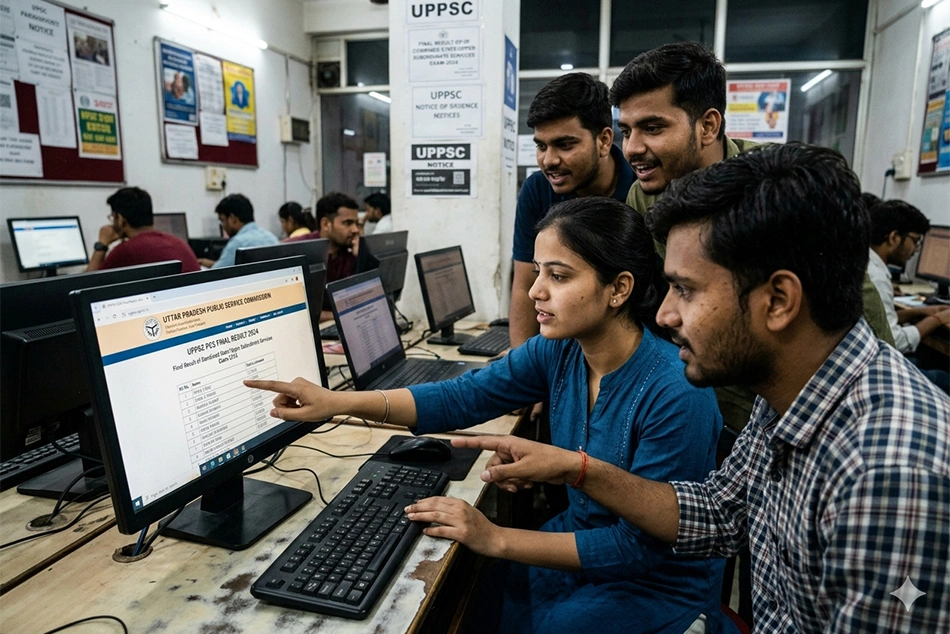
Uttar Pradesh Public Service Commission (UPPSC) Sunday March 29, 2026 declared the final result of Provincial Civil Services (PCS) Examination 2024 on its official website along with the list of toppers recommended for various posts.

Uttar Pradesh PCS 2024 Final Result: 

Uttar Pradesh Public Service Commission (UPPSC) Sunday March 29, 2026 declared the final result of Provincial Civil Services (PCS) Examination 2024 on its official website along with the list of toppers recommended for various posts.

A total of 932 candidates from various districts of Uttar Pradesh have qualified for different state civil services posts that also include the post of Deputy Collector. As many as 33 of the total 932 candidates, who have qualified for these posts, are Muslims.

Among the 33 Muslims, who have qualified the Uttar Pradesh Provincial Civil Services (PCS) 2024 exams, is Md Gulrez Khan. Gulrez Khan is the only Muslim who will be appointed as Deputy Collector. A maxium 10 Muslims have been recommended for the post of Naib Tehsildar.

Full List of UPPSC 2024 Muslim Toppers

DEPUTY COLLECTOR

  1. MD GULREZ KHAN

ASSTT. COMMISSIONER (COMMERCIAL TAX)

  1. GULAM GAUSH RJJA MANSURI
  2. TARIQ SAMAD

ASSTT. REGIONAL TRANSPORT OFFICER

  1. AQUIB KHURSHEED
  2. FARAZ AHMAD SIDDIQUI
  3. HUMA PRAVEEN
  4. YAWAR TAUFIQ
  5. SANYA

ASSTT. COMMISSIONER, INDUSTRIES

  1. MD SARFARAZ ALAM

WORK OFFICER

  1. FARAZ AHMAD
  2. ATHAR JAMAL KHAN

BLOCK DEVELOPMENT OFFICER

  1. FARHANA ZEENAT KHAN
  2. AHSAN
  3. PERVEZ ALAM

COMMERCIAL TAX OFFICER

  1. AZAM FATIMA
  2. FAREEN RANA
  3. ROSHAN PARVEEN
  4. SUZAIN KHAN
  5. MO TAUSEEB

NAIB TEHSILDAR

  1. MD MUKARRAM BADAR KHAN
  2. MOH HASEEN
  3. RIYAZ AHMAD
  4. AZIM AHMED
  5. SAHIBA BANO
  6. FARZAND ALI
  7. MOHAMMAD HARIS
  8. RUBI ANSARI
  9. MD ZAMA SHAIKH
  10. AMJAD ALI KHAN

DEPUTY JAILOR

  1. MD MASHOOQ RAZA
  2. DILSHAD HUSAIN

DISTRICT HANDICAPPED WELFARE OFFICER

  1. BUSHRA REHMAN

SUB REGISTRAR

  1. FIZA GALHOTRA

06 AMU students among UPPSC Toppers

The Residential Coaching Academy (RCA), Aligarh Muslim University (AMU), has achieved a remarkable milestone as 06 of its students have been selected in the Uttar Pradesh Provincial Civil Services (UP PCS) Examination 2024, conducted by the Uttar Pradesh Public Service Commission.

Among the successful candidates, AMU RCA student Kaushiki has been selected as Commercial Tax Officer, Tariq Samad as Assistant Commissioner, Azim Ahmad, Farzand Ali, and Neha Sharma as Naib Tehsildars, and Athar Jamal Khan as Work Officer.

Prof. Naima Khatoon, Vice-Chancellor, AMU, congratulated all the successful candidates for their outstanding achievement and expressed hope that such results will continue to improve in the future.

Prof. M. Mohsin Khan, Pro Vice-Chancellor, AMU, congratulated the selected candidates, lauding their hard work. Registrar Prof. Aasim Zafar and Director of RCA Prof. Mohammad Hasan also conveyed their best wishes to the achievers.

This achievement reflects not only the determination and perseverance of the students but also the sustained efforts of the Residential Coaching Academy in preparing aspirants for competitive examinations.

Steps to Check UPPSC Final Result

  • Step 1: Go to uppsc.up.nic.in.
  • Step 2: Select “What’s New / Latest Updates.”
  • Step 3: Click the “LIST OF SELECTED CANDIDATES IN ADVT. NO. A-1/E-1/2024, COMBINED STATE/UPPER SUBORDINATE SERVICES EXAMINATION, 2024” link.
  • Step 4: Get the PDF here.
  • Step 5: Enter your roll number by pressing Ctrl + F.
  • Step 6: Keep the result for future reference

UPPSC 2024 Improtant Dates

  • PCS Mains results announced – February 4, 2026
  • 2,719 applicants selected for the interview stage – February 4, 2026
  • Interviews conducted – February 26 to March 23, 2026
  • UPPSC Final Result Announced on March 29, 2026

source: http://www.ummid.com / Ummid.com / Home> Education & Career/ by ummid.com news network / March 31st, 2026

Eid Milan Gathering Honours Human Rights Lawyers at Islam Gymkhana

Mumbai, MAHARASHTRA :

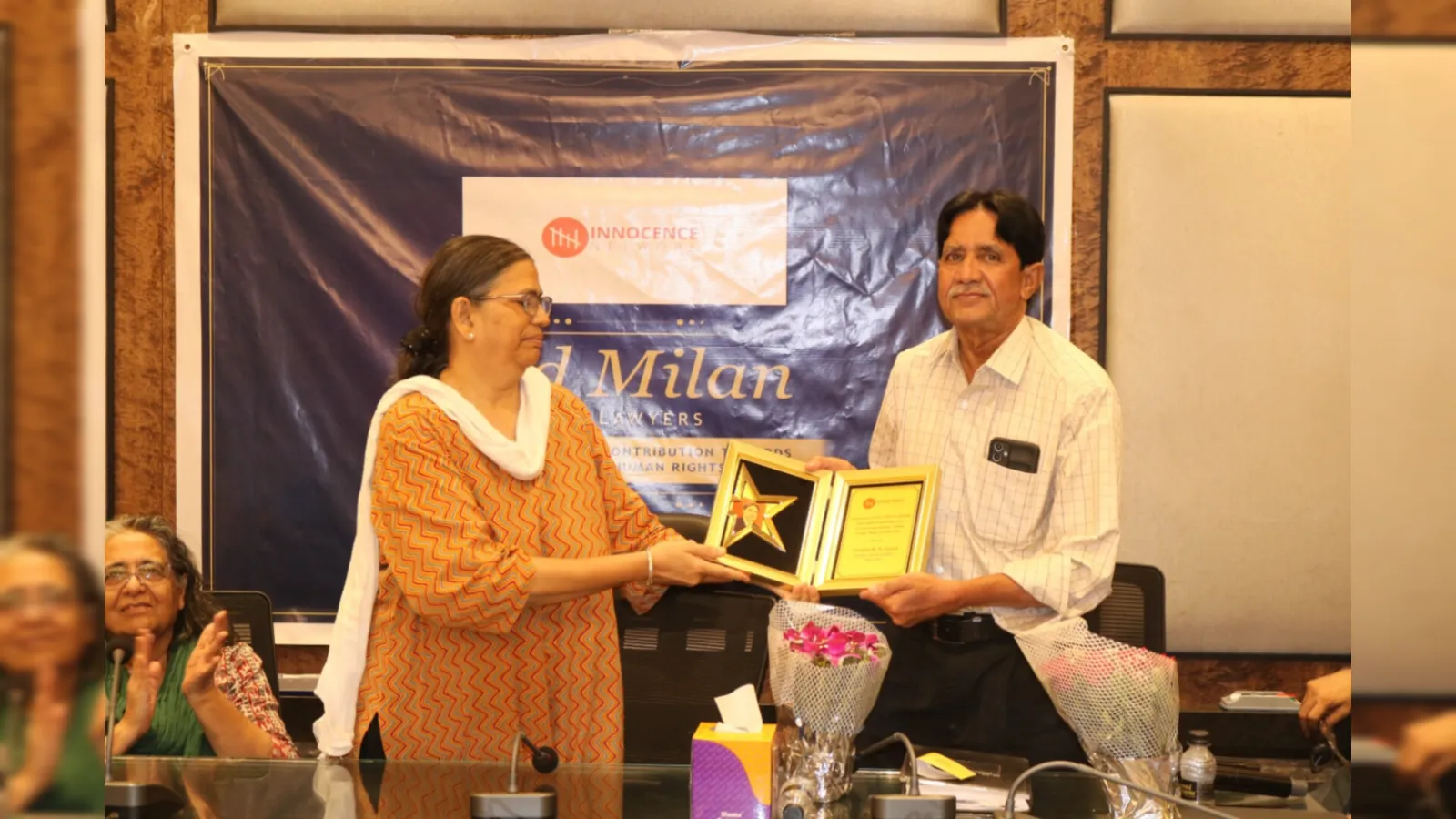
A packed hall at Islam Gymkhana witnessed a festive Eid Milan that brought together over a hundred lawyers, scholars, activists, and students, culminating in the conferment of the Champions of Human Rights Award 2026 on three prominent legal practitioners.

Held on March28, by the innocence network, the event blended celebration with reflection, as attendees marked the festive occasion while foregrounding ongoing struggles within the justice system. The highlight of the programme was the recognition of three advocates for their sustained contributions to civil liberties and defense law.

Among the awardees was Advocate Surendra Gadling, currently incarcerated in connection with the Bhima Koregaon case. In his absence, the award was received by his son, Sumit Gadling.

Also honoured was Advocate Ibrahim Harbat for his legal representation of Ayan Sheikh, a 20-year-old student recently arrested by Mumbai’s ATS, and his work despite threats by the ATS The third awardee, Advocate M M Sayyad, was recognised for his work defending several accused in cases linked to the Students Islamic Movement of India.

The gathering featured addresses by noted speakers, including Trade Unionist an Human Rights Lawyer Sudha Bharadwaj, herself an accused in the Bhima Koregaon case, who underscored the importance of legal aid and the intellectual rigour required in rights-based litigation. She reflected on the continued relevance of collective legal efforts in safeguarding civil liberties.

Senior advocate Gayatri Singh spoke candidly about the layered challenges of navigating the profession as a Muslim and a woman , while emphasising resilience and the need to persist despite systemic barriers.

The evening concluded with the formal presentation of awards and a shared resolve among attendees to continue engaging in human rights work.

The programme closed with a community dinner, marking both solidarity and celebration at the conclusion of the Eid Milan gathering.

source: http://www.muslimmirror.com / Muslim Mirror / Home> Human Rights / March 31st, 2026

Bihar Puncture Repairer Sarfaraz Ansari Builds Bridge in Mother’s Memory, Benefits 40 Villages

Jhajha Block (Jamui District), BIHAR :

Patna / New Delhi :

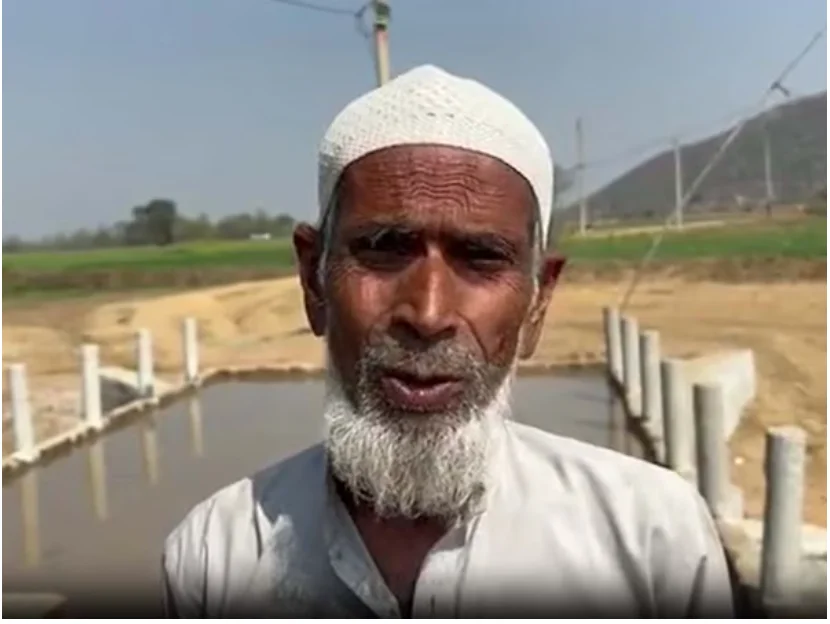
In a small village under Jhajha block of Jamui district in Bihar, a man who earns his livelihood repairing punctured tyres has built a concrete bridge using his own savings and community support — in memory of his late mother.

Sarfaraz Ansari, who runs a modest puncture repair shop and struggles to support his family, constructed the bridge over a river that once claimed his mother’s life. The structure is expected to benefit nearly 40 villages in the surrounding area.

The story dates back to 2019, when Sarfaraz’s mother fell seriously ill during the monsoon. The village had no proper bridge connecting it to the main road and nearby market, and the river was swollen due to heavy rains.

Sarfaraz had to carry his ailing mother across the overflowing river to reach a hospital. The journey was dangerous and exhausting. By the time they managed to access medical care, she had passed away.

He believes that had there been a bridge and quicker access to treatment, her life might have been saved.

“Since that day, I felt that the river took my mother away from me,” Sarfaraz said. “I kept thinking that no other son should suffer like this.”

After her death, he resolved to build a bridge so that no one would have to risk their life crossing the river again, especially in emergencies.

Despite limited financial means, he began setting aside small amounts from his daily earnings at the puncture shop. Over time, his savings grew.

When he shared his plan with villagers, they supported the idea and contributed funds and voluntary labour. The bridge was built entirely without government assistance.

The structure measures approximately 25 feet in length, 13 feet in width and 8 feet in height. According to residents, it will directly benefit people from around 40 villages.

Earlier, during the rainy season, residents had to travel several extra kilometres to reach the town. Many risked their lives attempting to cross the river. Children struggled to attend school, farmers faced difficulty transporting produce to markets, and patients often experienced delays in reaching hospitals.

With the bridge now in place, daily life is expected to improve significantly.

“For years, we demanded a bridge. We never imagined it would be built by one of our own,” a local resident said. “Sarfaraz has done what even the authorities could not.”

Another villager added, “During the monsoon, we feared the river. Now we feel safe.”

Local representatives and officials have also praised the effort. One official described it as “an inspiring example of community initiative and determination.”

Sarfaraz, however, remains humble.

“I am not a big man,” he said. “But a person should have a big heart. I still feel the pain of losing my mother, but I find peace knowing that no other mother or daughter will have to face what mine faced.”

“For the world, this may be just a bridge made of cement and iron rods,” he added. “For me, it is a dream fulfilled. I saved little by little, and with the villagers’ support, we built this bridge. Seeing people benefit from it is my greatest happiness.”

For many in Jamui, the bridge is more than infrastructure. It stands as a symbol of determination, grief transformed into action, and the power of one individual to change the lives of thousands.

source: http://www.clarionindia.net / Clarion India / Home> Editor’s Pick> India> Indian Muslim / by Team Clarion / February 28th, 2026

Dignity in a Box: A 13-Year Legacy of Silent Service in Cumbum

Cumbum (Theni District), TAMIL NADU :

Cumbum:

In an era where charitable acts are often measured by the length of a queue or the flash of a camera, a quiet revolution of compassion has been unfolding in the streets of Cumbum. For over a decade, the local unit of Jamaat-e-Islami Hind (JIH) has chosen a path less travelled: bringing relief not to a distribution centre, but directly to the doorsteps of those in need.

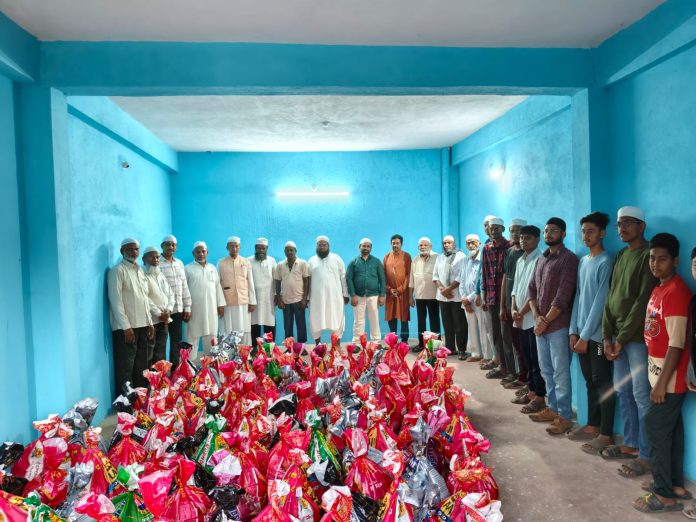
On Tuesday, this mission reached a new milestone as volunteers navigated the town’s lanes to deliver essential ration kits to 120 underprivileged families. The initiative, now in its 13th consecutive year, is built on a foundation of Dignified Giving, ensuring that the recipients never have to experience the vulnerability of standing in a public line for their daily bread.

The intervention is far from symbolic. Each kit is a meticulously curated package of 10 essential commodities, including staples like rice, pulses, cooking oil, sugar, and tamarind. These kits are designed to provide a nutritional safety net for families struggling against the tide of rising costs.

“Our philosophy is simple: no one in our vicinity should go to bed hungry,” says Sheikh Muhammad Rafi, head of the Social Service Wing. “By taking the kits to their homes, we preserve their self-respect. It is not an act of pity; it is an act of brotherhood.”

The initiative draws its strength from the Islamic principle of Zakat. Ghaus Khan, District President of JIH South Markapuram, explains that this is a structured social responsibility rather than a random act of kindness.

“The Qur’anic injunction to ‘establish prayer and give Zakat’ is a call to bridge the gap between the haves and the have-nots,” Mr. Khan notes. “The mandatory 2.5% contribution from one’s annual savings is a powerful tool for social equity. It belongs to the poor by right, not by favour.”

The programme’s longevity is a testament to the seamless collaboration between the local diaspora and residents. This year’s efforts saw participation from diverse quarters, including Zainul Abideen, an NRI from Kenya, and Syed Abdul Jaleel, Secretary of the Mandal Consumers Association.

The youth wing, Students Islamic Organisation (SIO), led by Cumbum President Waseem Akram and Secretary Abu Bakar Siddiq, provided the logistical muscle for the door-to-door distribution. The event concluded with a prayer by Mufti Yasin Saab, who sought continued strength for the community’s philanthropic endeavours.

As the sun set over Cumbum on Tuesday, 120 hearths were lit with a little more ease – not just because of the rations provided, but because of the grace with which they were delivered.

source: http://www.radiancenews.com / Radiance News / Home> Latest News> Report / by Muhammad Gouse Khan / March 05th, 2026

Abrar Aland, son of a fruit-seller, becomes CA at 23

Pune, MAHARASHTRA :

Abrar Aland

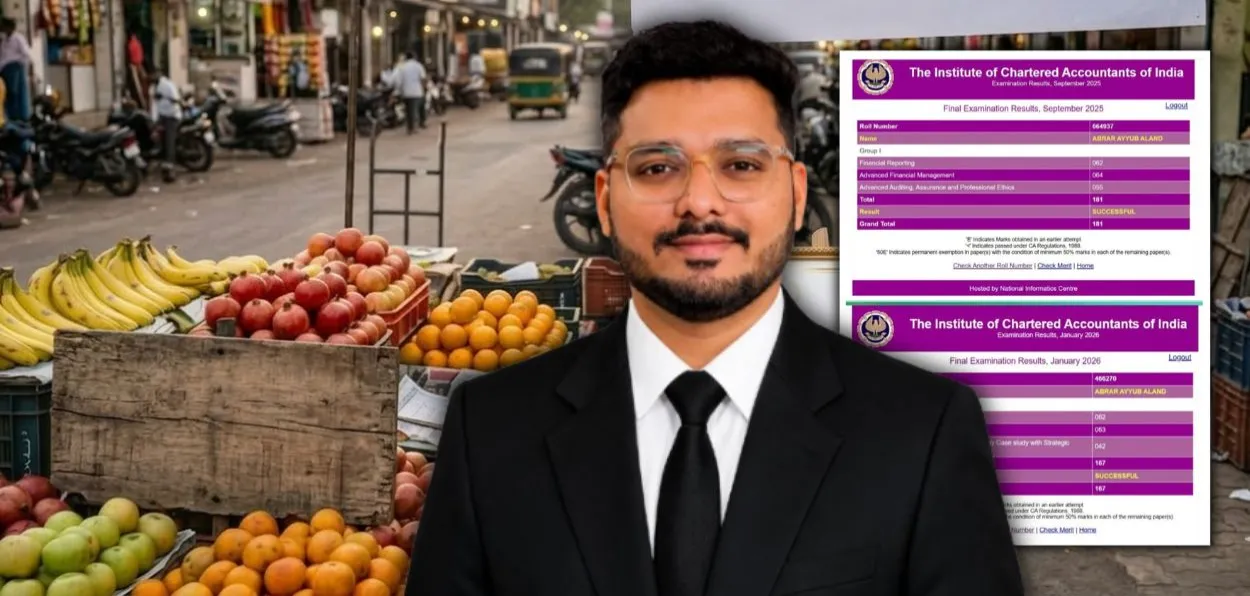
Abrar Aland, a resident of Ramwadi in Kalamb, Pune, Maharashtra, has fulfilled his father’s dreams by clearing the tough exam and becoming a Chartered Accountant at the age of 23.

His father, who sold fruit in the weekly market of the Walchandnagar area in Pune, was keen that his son should hold a good position in society.

Chartered Accountant (CA), awarded by the Institute of Chartered Accountants of India (ICAI) after enrolled candidates clear a three-level examination (Foundation, Intermediate, Final) and complete practical articleship. While not a traditional academic degree, the UGC recognises the CA qualification as equivalent to a postgraduate degree.

Abrar Aland’s father, Ayub Jungbahadur Aland, manages the family with his income from selling fruit in the weekly market.

Growing up in ordinary circumstances, Abrar had harboured the dream of becoming a CA right from the beginning. To fulfil this dream, he worked hard by studying for ten to twelve hours every day.

Abrar told Awaz-The Voice, “Since childhood, I wanted to become a Chartered Accountant. This thought came to my mind when I was in the seventh or eighth grade. At that time, my cousin was pursuing CA, and taking inspiration from him, I also decided to choose this path.

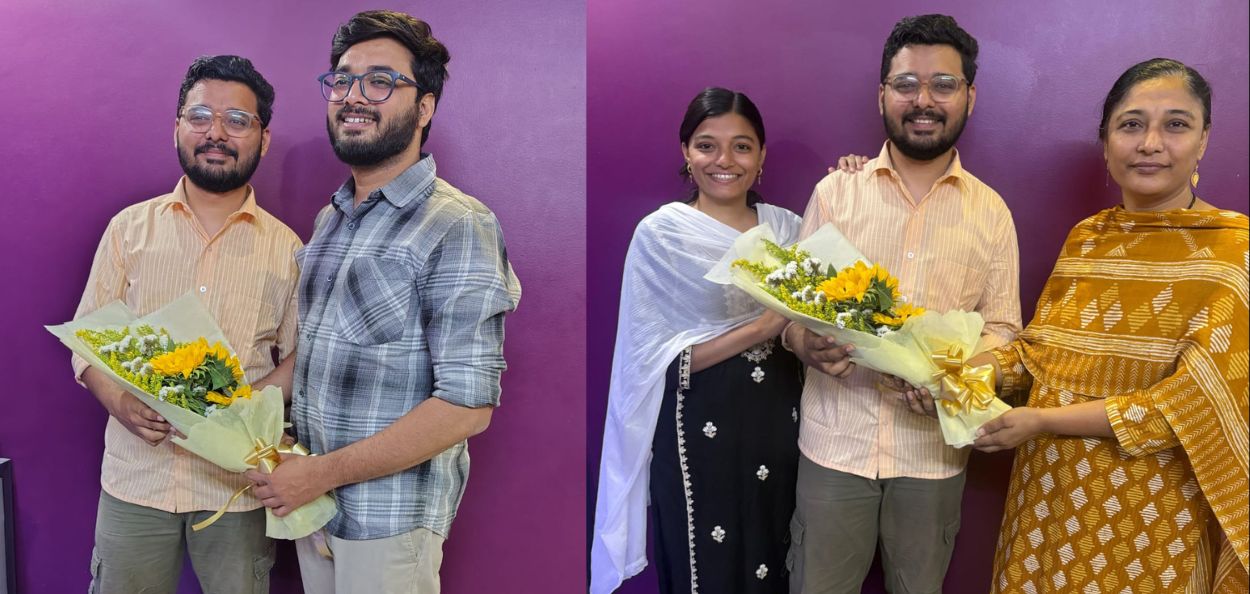
Abrar Aland with his family

Abrar went to school in Walchandnagar. For his eleventh and twelfth-grade education in the commerce stream, he joined the BMCC College in Pune city. He completed his B.Com education at MMCC College in Pune.

 He passed the CA Foundation exam in November 2020. After that, he passed the Intermediate exam in May 2022. Later, he passed the first group of the CA Final in the year 2025 and, by passing the second group in January 2026, he finally realised his dream of becoming a Chartered Accountant.

Speaking about his exam preparation, Abrar said, “Immediately after the HSC exams were over, I joined classes for CA Foundation and began my preparation. Since it was the COVID time, I was studying from home, and my exam was in December 2020. I passed the CA Foundation in my very first attempt with a score of 257/400.”

He further said, “After taking a two-week break, I started classes for CA Intermediate in Pune. But due to the second wave of COVID in 2021, classes went online again, and I returned home to prepare, but I did not achieve success at that time. Then, without waiting for the results, I started studying again. I got the fruits of this hard work in May 2022, when I passed both groups of CA Intermediate with a score of 411/800.”

Abrar shared that he received invaluable guidance from his parents, siblings, teachers, and. He also mentioned that getting various training facilities like computer skills, communication skills, skill development, and expert guidance through the Pune branch of The Institute of Chartered Accountants of India (ICAI) was highly beneficial.

Abrar said, “After passing CA Intermediate, I gained practical work experience in all important areas of the CA field for three years. My final CA attempt was in May 2025. Therefore, I took a study leave from the office in December 2024 and started preparing. At that time, my mother and sister decided to come and live in Pune to help me with my studies, so that I could get home-cooked meals and emotional support. My father could not come to Pune due to his work, but he used to come to visit us occasionally. During that period, he was living alone, and the three of us were living in Pune.”

The result of the Chartered Accountant exam, considered to be extremely tough in the country, was declared on March 1, 2026. Abrar Aland cleared the level.

Abrar says, “When the result was declared, I got a call from my brother Waseem Aland, and he happily said, ‘Hello CA Abrar Ayub Aland, you have passed!’ My joy at that moment could not be put into words.”

Speaking about that special day, Abrar said, “Since Ramadan was going on the day of the result, we were all fasting, and the result came around 6:30 PM, which was close to Iftar time. The joy was so immense that my family and relatives started sharing the news of my success everywhere. In that joy, they even forgot to complete their Iftar properly.”

Abrar Aland’s cousin, Waseem Aland, is also a Chartered Accountant. Meanwhile, his other cousin, Azam Aland, is working as a Police Sub-Inspector (PSI).

source: http://www.awazthevoice.in / Awaz, The Voice / Home> Stories / by Aamin Shaikh, Pune / March 14th, 2026