Category Archives: Uncategorized

FMEI Bengaluru School Leaders Award Conference 2026 Emphasises Collective Strength of Muslim Educational Institutions

Bengaluru, KARNATAKA :
Bengaluru:

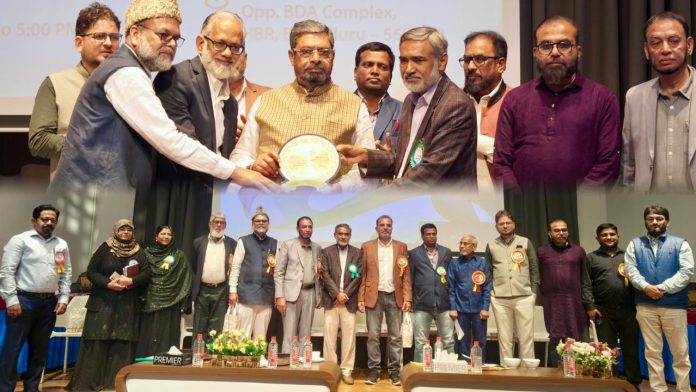
The Federation of Minorities Educational Institutions (FMEI), Bangalore Chapter, successfully organised the School Leaders Award Conference 2026 on January 17 at Bearys Suhardha Bhavan here. The conference witnessed the participation of over 150 management leaders and eminent educationists representing Muslim educational institutions across Bengaluru.

The Chief Guest, Mr. Naseer Ahmed, Member of Legislative Council (MLC) and Political Advisor to the Chief Minister of Karnataka, lauded the role of private unaided schools in delivering quality education despite limited resources. He stated that the consistent performance of these institutions reflects their discipline, dedication, and strong educational commitment. Congratulating FMEI, he observed that collective organisation of Muslim educational institutions enhances their political and social influence.

Presiding over the conference, Mr. Syed Tanveer Ahmed, senior educationist, emphasised that a strong collective platform enables Muslim educational institutions to assert their concerns more effectively at policy and governance levels. He urged institutions to rise above sectarian differences and focus on academic excellence, institutional growth, collective welfare, and social responsibility.

Delivering the keynote address, Mr. Muhammad Asifuddin, General Secretary, FMEI Karnataka Chapter, stated that the primary objective of the conference was to recognise and encourage the valuable services of Muslim educational institutions through awards, motivating them towards further progress. On the occasion, school leaders were felicitated with awards presented by the distinguished guests.

A memorandum highlighting key demands was submitted by FMEI through Mr. Naseer Ahmed to the Departments of Education and Minority Welfare. The memorandum included demands such as relaxation in renewal of school recognition, simplification of Minority Status Certificate issuance, enhancement of the Pre-Matric Scholarship budget to over 1000 crore rupees in the 2026–27 financial year, allocation of government land and infrastructure grants for Muslim schools, doubling of budgets for Post-Matric and Overseas Education schemes, and direct online submission of applications for Madrasa Modernisation without intermediaries. Mr. Naseer Ahmed assured that he would take up these issues with the Chief Minister and concerned ministers. The memorandum was also released to the media.

Addressing the gathering, Maulana Dr. Maqsood Imran Rashadi, Imam and Khateeb of City Jamia Masjid, Bengaluru, stressed that Muslim educational institutions must integrate moral and religious education alongside modern academics. Dr. Belgami Mohammed Saad, President, Mansurah Educational and Welfare Trust, highlighted that a holistic institution is one that nurtures knowledge, Islamic values, and character simultaneously.

Dr. Mohammad Taha Mateen, Trustee, Taqwa Educational Trust, underscored the importance of strong collective platforms, noting that FMEI serves as a credible and effective organisation to address educational, social, and policy-related challenges faced by Muslim institutions.

During the academic session, Dr. Benazir delivered an insightful PowerPoint presentation titled “Connecting Schools with the Community,” underlining the crucial role of schools in holistic community development.

Prominent members of the organising committee present included Mr. Iqbal Ahmed (President, FMEI Bengaluru), Mr. Haroon Basha (Secretary, FMEI), Mr. Riyaz Ahmed Ron, Syed Basharat Ahmed, Mr. Aslam Hekkari (Udupi), Maulana Abdul Ghaffar Hamid Umri, Mr. Atiq Pasha H, Mrs. Reshma Iqbal, Syed Ejaz, Syed Munir, Mr. Zulfiqar Ahmed, Dr. Zohaib Javed Khan, Mohammad Altaf Ahmed, and Mr. Iftikhar Sharif, among others.

The programme concluded with a vote of thanks by Dr. Fareeda Rahmatullah, expressing gratitude to the chief guest, dignitaries, delegates, education leaders, media professionals, and participants. The conference strongly reaffirmed that organised educational leadership is vital for social development and effective policy advocacy.

source: http://www.radiancenews.com / Radiance News / Home> Education> Report / by Radiance News Bureau / January 18th, 2026
AMU Research Scholar Presents Paper at International Conference in Oman

Aligarh, UTTAR PRADESH :

Aligarh:

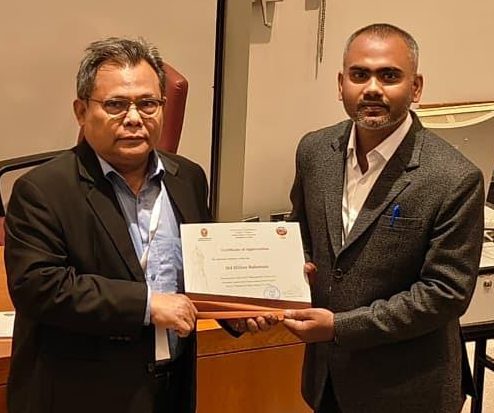
Mr. Md. Hifzur Rahaman, a research scholar in the Department of Mathematics at Aligarh Muslim University (AMU), presented his research work at an international academic conference held in Muscat, Sultanate of Oman.

Mr. Rahaman presented a paper titled “Inertial Splitting Subgradient Method for Solving Equilibrium Problems and Its Application” at the Sixth International Conference on Numerical Analysis and Optimization (NAO-2026). The conference was organised by the Department of Mathematics, Sultan Qaboos University, Muscat, from January 5 to 8, and brought together researchers and academicians from around the world.

The research was conducted under the supervision of Prof. Syed Shakaib Irfan and focuses on equilibrium problems through the development of inertial splitting subgradient methods with applications in optimization theory. As a practical illustration, the study analyses a Nash–Cournot oligopolistic market model with price elasticity, providing valuable insights into strategic decision-making by competing firms under conditions of elastic demand.

Congratulating Mr. Rahaman on his achievement, Prof. Asma Ali, Chairperson of the Department of Mathematics, remarked that participation in such international forums reflects AMU’s robust research environment and its expanding global academic presence.

source: http://www.radiancenews.com / Radiance News / Home> Latest News> Research / by Radiance News Bureau / January 13th, 2026

102-year-old Panther Sloper bike in Kolkata garage? That’s SA Hossain’s ‘first wife’

Kolkata, WEST BENGAL :

Vintage collectors often speak of their machines as children; this automobile engineer by profession and vintage vehicle devotee by inheritance goes a step further.

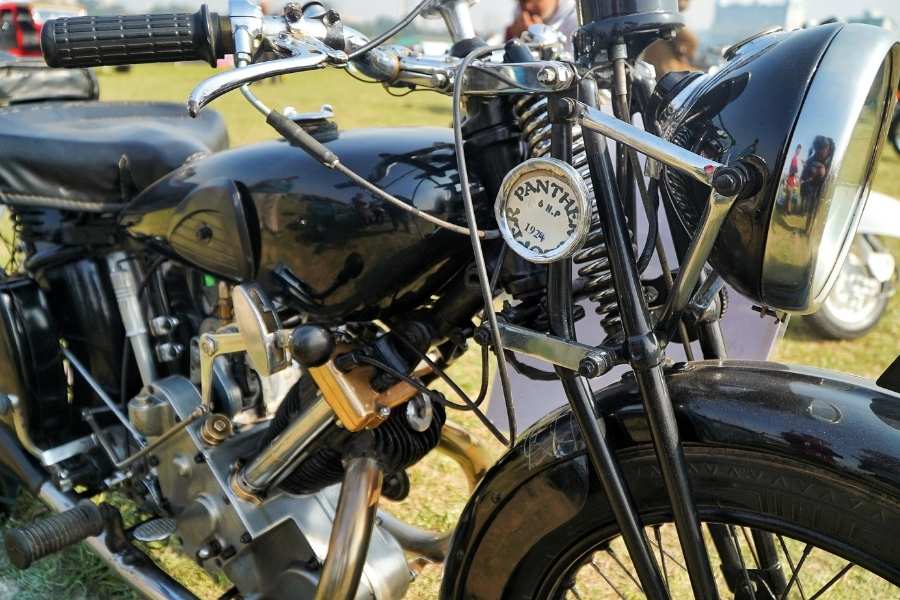
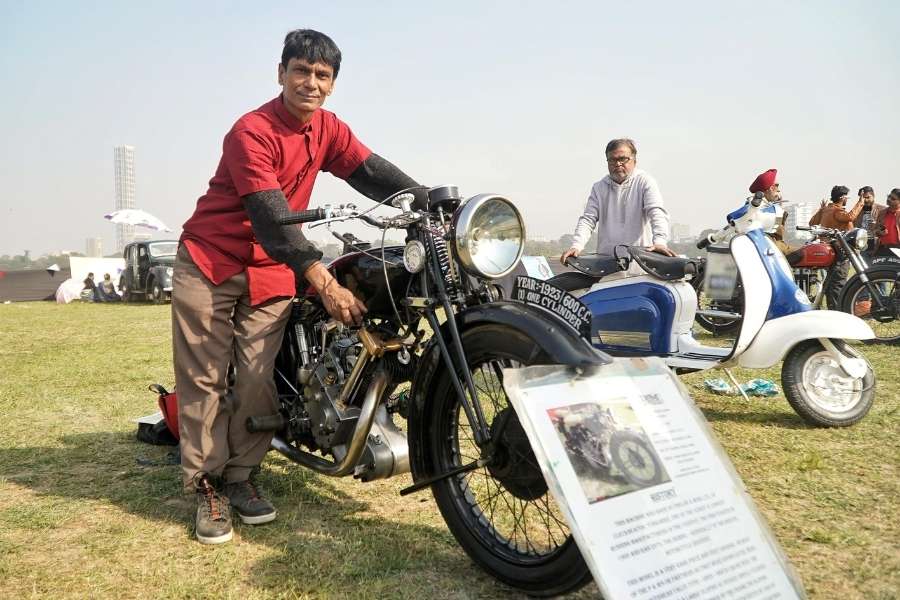
Hossain with the bike he calls his first wife / Pictures by Soumyajit Dey

Syed Afzaluddin Hossain stands beside his 1923 Panther Sloper with a gloved hand resting gently on its handlebar. Not to pose for photographs on a winter morning when the city’s vintage vehicles have come alive, but to guard it.

“People get curious. They want to touch, twist, sit. So I keep the glove there,” he says with a smile. “This bike is not an object. It is family.”

Hossain, 54, is an automobile engineer by profession and a vintage vehicle devotee by inheritance. The Panther Sloper that draws crowds at rallies is not just his prized possession.

“This vehicle is my family bike. From my grandfather’s time. It has become a member of the family,” he says.

Vintage collectors often speak of their machines as children; Hossain goes a step further. “I say this is my first wife,” he laughs. “But I will not tell my real wife that. I will have to go hungry if I do.”

Cars and bikes, he says, run in his blood. His garage also houses an 1927 Austin Chummy car, a 1938 BSA M20 Sidecar with a mechanical fork, and even his son’s 1960 Lambretta. Yet it is the Panther that sits at the centre, the oldest, the most fragile, the most revered.

This bike is probably the only one of its make in running condition in Asia says Hossain

Maintaining a century-old motorcycle is “quite a tough job,” he admits. “But I am into automobiles. So my passion and profession run side by side.”

Every year involves careful servicing, gentle tuning, endless patience, and an instinctive understanding of a machine built long before modern roads or traffic were imagined.

The Panther Sloper, built by Phelon and More Ltd of Cleckheaton, Yorkshire, comes from one of Britain’s oldest motorcycle manufacturers, a firm that began operations in 1900. The company later became known simply as Panther, famous for their large single-cylinder machines with distinctive sloping engines.

This particular model is rare even by vintage standards. The 600cc single-cylinder engine sits at a 40-degree slope and acts as a stressed member of the frame, a concept patented in 1900 by Joah Carver Phelon and his nephew Harry Raymer. It features a mechanical fork, a separate Sturmey Archer gearbox, twin exhausts, and a three-speed hand shift lever placed beside the fuel tank.

One of the unique features of this vintage piece is its twin fish-tail silencers

Open valve rockers reveal the engine’s workings like exposed veins. It is a design both bold and elegant, born in an age when engineering solutions were visible and proud.

“It is a piece to admire,” Hossain says, running his hand along the long sloping silhouette. “Very sleek looking. And it is the only piece in India, perhaps the only one in Asia in running condition.”

The Panther was originally developed for defence use in post-World War I Britain. “And it really goes like a panther. They wanted their reputation. A bike where other companies cannot compete.”

The machine can still comfortably reach 80 kilometres per hour, he says, but he has never tested that. “I do not want to risk it,” he says.

On Kolkata’s uneven streets, the ride is kept gentle, 20 kmph at most. “The road clearance is very low. When you put it down from the stand it becomes overloaded. And when I go into a pothole, you can see my heart is out.

“It is lovely. Riding it is fantastic,” he adds. “You just need the habit. That is all.”

source: http://www.telegraphindia.com / Telegraph India Online / Home> People> My Kolkata / by Debrup Chaudhuri / January 13th, 2026

Library, school keep Khwaja Altaf Hussain Hali’s legacy alive

HARYANA / DELHI :

Born on November 11, 1837, Hali moved to Delhi where he learnt Arabic & Persian & received patronage from Ghalib, Shefta.

The grave of Khwaja Altaf Hussain Hali.

“Mit gaye tere mitane ke nishan bhi ab to, ai falak is se ziyada na mitana hargiz” —these lines of a ghazal written by Panipat’s famous Urdu poet, critic and commentator Khwaja Altaf Hussain Hali exactly fit here as “Hali’s Haveli” (Hali’s house) has now turned into a park where children play. The legacy of Hali is being maintained through a library on the premises of Bu-Ali-Qalandar Shah Dargah here by the Haryana Waqf Board and a school, which is being run by a social organisation.

Altaf Hussain Hali was born on November 11, 1837, in Panipat. He got his primary education here. Hali got married at the age of 17, but he left Panipat and moved to Delhi where he learnt Arabic and Persian and received patronage from two major poets, Ghalib and Shefta. After Shefta’s death he moved to Lahore and joined the Punjab Government Book Depot where he got the opportunity to read Western literature. Hali also visited Aligarh and Hisar. He took last breath on December 31, 1914, at his ancestral house in Panipat.

Advocate Ram Mohan Rai, general secretary, Hali Panipat Trust, told The Tribune that Hali was in Delhi during the first freedom revolt in 1857. The British massacred Indian youths to suppress the revolt. Hali was disheartened and returned to Panipat.

A library in his memory at Bu-Ali-Qalandar Shah Dargah in Panipat. Photos: Sukhjinder Saroha

Hali was not his surname or his name. He opted the title “Hali” as he was used to writing ghazals and nazms on current topics and situations, said Rai.

Patriotism, widows’ pain, condition of women without education, their education and empowerment, national integrity and humanity were the important issues raised in Hali’s heart touching ghazals and nazms, Rai said.

His famous nazm “Hubb-e-Watan” was dedicated to patriotism in which he wrote “Teri ik musht-e-khak ke badle, loon na hargij agar bahisht mile.”

Hali advocated and respected women fraternity and shared a message of their empowerment through his nazm “Ae mao, behno, betiyon duniya ki zeenat tumse hai, mulkon ki basti ho tumhi aur komon ki ijjat tumse hai.”

Hali established a school for girl’s education. It was the first girls’ school in joint Punjab. Unfortunately, no one sent his/her daughters to his school. Later, Hali started teaching his own daughter and daughter-in-law in his school, Rai said.

Disheartened by the Hindu-Muslim division orchestrated by the British, Hali emphasised on national integrity through his nazm “Gar tum chahte of mulk ki khair, na kisi hamwatan ko samjho gair”. Hali also emphasised on humanity by saying, “Farishton se behtar hai insaan banana, magar isme padti hai mehanat ziyada.”

Rai further said to maintain the legacy of Khwaja Altaf Hussain Hali, Hali Panipat Trust was established in 2008. Sayeeda Hamid, great granddaughter of Hali was the chairperson of the trust, while Dr Arun Bhatnagar was its co-chairperson.

To make young generation aware of Hali’s legacy, a Hali Park and lake was constructed in the old industrial area in 1976 in Panipat. A library in the name of Hali is being maintained at Bu-Ali Shah Qalandar Dargah by the Haryana Waqf Board, Rai said.

Apart from it, three international level fairs were organised at Hali Park in which people from Iran, Pakistan and other countries participated. First fair was organised in 2008 in which the then Governor AR Kidwai and Chief Minister Bhupinder Singh Hooda participated. The second fair was organised in 2010 in which Vice President of India Hamid Ansari participated. In 2013 fair, the then President of India Pratibha Patil participated as the chief guest, said Rai.

In the memory of Hali, a school with only eight children of migrant labourers, began in 2008. At present, the school has 350 students on it rolls, Rai said.

Pained at the government’s attitude, Rai said Hali was the legendary poet, critic and commentator of Panipat, but the government didn’t care to protect his ancestral house where he lived and took his last breath. His old haveli was turned into a park for children, Rai said.

source: http://www.tribuneindia.com / The Tribune / Home> Haryana / by Mukesh Tandon / Tribune News Service / July 18th, 2025

Congress Leader Hidayatullah Patel Dies After Stabbing Inside Akola Mosque

Akola District, MAHARASHTRA :

Akola:

Senior Maharashtra Congress leader Hidayatullah Patel died on Wednesday morning after sustaining fatal stab injuries inside a mosque in Akola district. Patel, vice president of the Maharashtra Congress and former Akola District Congress Committee president, was attacked on Tuesday afternoon after offering namaz at Jama Masjid in Mohala village under Akot taluka.

Police said the attack occurred around 1.30 pm as Patel stepped out of the mosque. An assailant used a sharp weapon, inflicting deep injuries to Patel’s neck and chest. Videos circulating on social media showed the 66 year old leader emerging from the mosque with blood soaked clothes. Locals rushed him to a private hospital in Akot, where doctors admitted him to the intensive care unit. He succumbed to injuries during treatment early Wednesday.

Police identified the accused as Ubed Khan Kalu Khan alias Razik Khan Patel, aged 22. Six police teams conducted search operations across the area and arrested the suspect on Tuesday evening from Panaj village. Officials said preliminary findings point to an old enmity behind the attack.

The Maharashtra Congress termed the killing a result of political animosity and described Patel’s death as a grave loss to public life. Party leaders across levels condemned the violence and demanded strict punishment for the accused. Senior Congress figures highlighted concerns over safety, law, and order in the state.

Security arrangements were tightened in Mohala village and Akot city following the incident. Senior police officers reviewed the situation to prevent further unrest.

Hidayatullah Patel held a long association with the Congress organisation. He contested the Akola Lok Sabha seat in 2014 and 2019. His work focused on district level organisation building and local civic issues. Party colleagues described him as accessible, disciplined, and rooted in community service.

source: http://www.radiancenews.com / Radiance News / Home> Report> Latest News / by Radiance News Bureau / January 07th, 2026

JIH chief Syed Sadatullah Husaini Offers Condolences on the Demise of Renowned Journalist Parvez Rahmani

NEW DELHI :

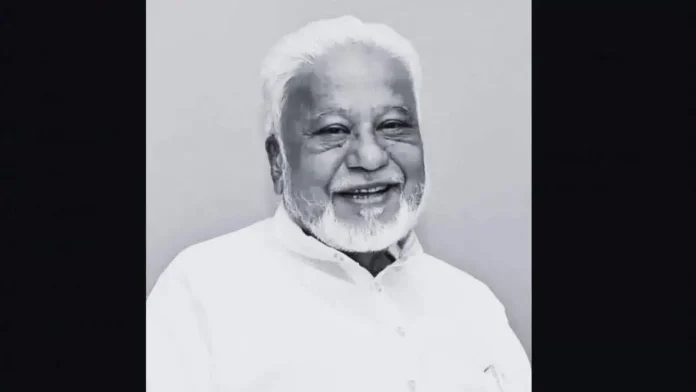
Parwaz Rahmani

New Delhi :

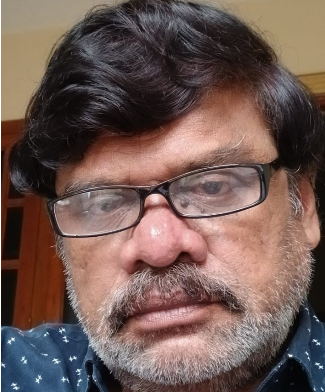
The President of Jamaat-e-Islami Hind, Syed Sadatullah Husaini, has expressed deep sorrow and grief over the passing of the renowned journalist, Mr. Parvaz Rahmani. In his condolence message, he said that the demise of Mr. Parvaz Rahmani is a great loss not only to the field of journalism but also to the country and the community at large.

As the editor of the “Sehroza Dawat”, Parvaz Rahmani’s services stand as a high example of principled journalism. The way he upheld the highest values of journalistic integrity, intellectual depth and balance, courage and fearlessness, sincerity and compassion in his value-driven journalism will always remain a model for journalists. Journalism, for him, was not merely a profession but a powerful means to pursue higher purposes of life and the comprehensive welfare of humanity.

His voice was principled, balanced, and rooted in facts, which earned him equal respect and popularity among readers and members of the journalistic community. In particular, his brief articles published under the “Khabar-o-Nazar” column in Dawat played a key role in enhancing the publication’s reach and impact.

Beyond journalism, Parvaz Rahmani also rendered valuable services to the Islamic Movement in India across various fields. He was a member of Jamaat-e-Islami Hind’s Markazi Majlis e Shura (Central Advisory Council) as well as the Majlis-e-Numaindgaan (Council of Representatives). Calling people towards faith, reform of the community, and efforts to find solutions to national and community issues were among his key areas of engagement within the movement.

His personal qualities were equally worthy of emulation. Despite his scholarly stature, he was extremely humble, sincere, gentle in temperament, and caring towards others. Through these qualities, he helped nurture an entire generation of high-calibre journalists.

Recalling his long-standing personal association with the late journalist, the JIH President said that they worked together for a long time in the Central Advisory Council and the Council of Representatives. “I learned a great deal from him. While working with him repeatedly in the committees responsible for drafting resolutions of the Markazi Shura, I gained valuable insights into journalism and the art of resolution writing,” he said.

The JIH chief extended his heartfelt condolences to the bereaved family members, colleagues, and readers of the late Parvaz Rahmani. His services and legacy will, God willing, continue to serve as a guiding light for future generations. May Allah grant him forgiveness, overlook his shortcomings, and bless his family with patience and fortitude.

source: http://www.indiatomorrow.net / India Tomorrow / Home> Inspiring Personality / by India Tomorrow / January 07th, 2026

10 Muslim Changemakers of Tamil Nadu

TAMIL NADU :

New Delhi :

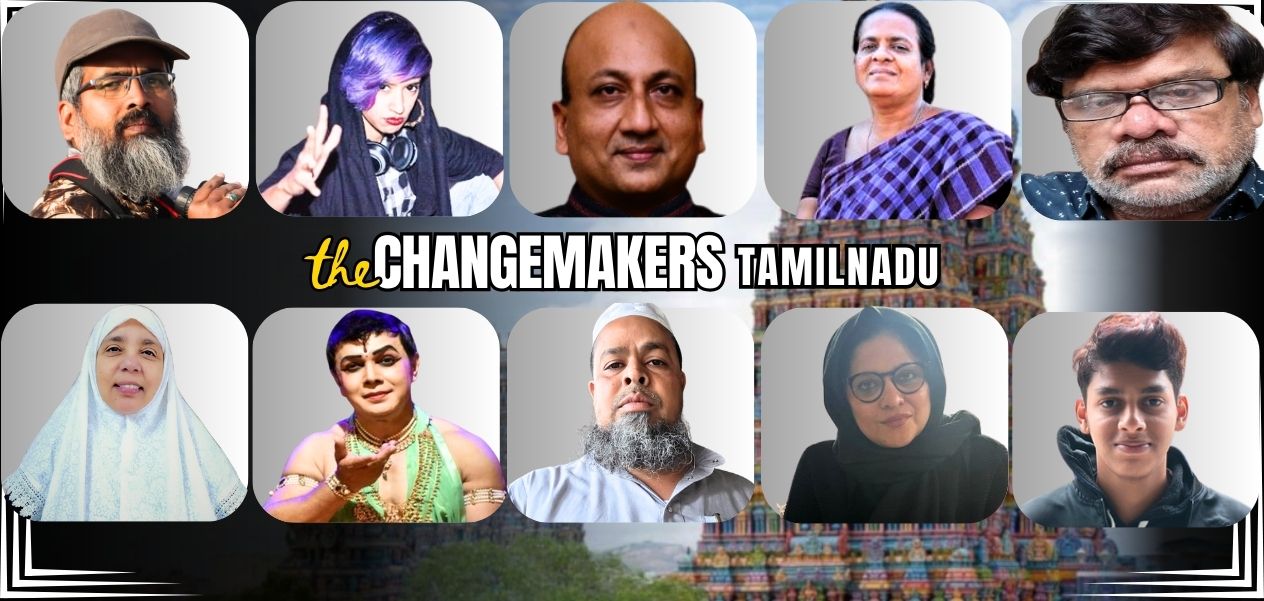
These are ten brilliant men and women from Tamil Nadu, spreading the light of empowerment and joy around them. They are leaving their mark in their chosen fields and influencing others to rise above their circumstances or comfort zones to make an impact:

Mohammad Saleem :

Mohammad Saleem is Tamil Nadu’s own Salim Ali, having spent his life on rescue missions for endangered birds around India. Mohammad Saleem never attended a course in conservation biology or even biology. He completed a degree in computer science.

But his heart was always longing to look out for the well-being of the speechless creatures — birds, snakes, dogs and other beings — around. He started an NGO called the Environment Conservation Group for a sharper focus and action-oriented approach to saving endangered animals.

Sofia Ashraf :

Sofia Ashraf is no ordinary rap artist. She has been using her gifts as an artist and singer for social change and women’s empowerment. Through her rap singing in Chennai’s lanes, Sofia has challenged stereotypes of women, taboos on their bodies and even the workings of Corporates.

Zakir Hussain :

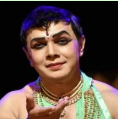
Zakir Hussain is a Bharat Natyam dancer who broke gender and community barriers as a dancer and is today seeking empowerment through DMK as a political worker. Asked about objections from his parents, he says:

I did not bother about my family as I lived alone. I never married either and travelled and lived outside India most of my younger days. For about 14 years, I was abroad, coming home only briefly each year during December when no work was possible abroad. He lived in Canada, Switzerland and Germany, conducting dance classes for Indians there. “I got a name performing abroad.

Fatima Muzaffar Ahmed :

Fatima Muzaffar Ahmed, the sole IUML winner in the Chennai Corporation, is among six Muslim women councillors who won in the entire Tamil Nadu local elections in 2022. Her election was not surprising for most people, as she comes from a political lineage, and fighting elections is something she has grown up watching.

Her father, AK Abdul Samud, former national general secretary of IUML, represented Velur twice in Lok Sabha and twice in Rajya Sabha, his proud daughter recalls. However, choosing to follow the path of public service was her decision, though she could have gone for more comfortable jobs.

Keeranur Jakirraja :

Keeranur Jakirraja is a Tamil writer who likes to go straight into the heart of the life of the common man, especially those who have been marginalised by society.

His writing is bold, honest and provoking criticism from the conservative and orthodox sections of the Muslim community in the state.

Nikath Fathima Sohail:

Nikath Fathima Sohail has been heading the MWA Matriculation School in Chennai and is also co-chair of the Academy for Women, besides being part of several other education-related organisations for Muslim youth and women.She went on to set up five learning centres for children with learning disability, heading a school for matriculation which has today 1500 students. I worked for 30 years for girls and for their social uplift in Tamil Nadu.

Another hat she has worn has been that of co-chair of Academy for women under the umbrella of AIH.

The passion to help children and destitutes that she found in herself as a young school girl has lit the lives of hundreds of youths mostly girls with empowerment and education.

Prince of Arcot Nawab Zade Mohammad Asif Ali :

Prince of Arcot Nawab Zade Mohammad Asif Ali has been the face of communal harmony and philanthropy as the heir of the royal family of Arcot, even as he pursues a parallel life as a gifted musician. The Prince of Arcot family holds a quiet but steady influence in Chennai’s social and cultural life, while their palace is a centre of a lot of humanitarian initiatives led by the Arcot Foundation.

The present Prince, Nawab Mohammed Abdul Ali, is regarded with affection, but much of the visible day-to-day outreach — charity drives, interfaith events and other initiatives — is handled by his son, Nawabzada Mohammed Asif Ali.

Asif Ali’s presence is felt most strongly in the countless small relief efforts that are carried out through the Arcot Foundation for the poor, irrespective of religion.

Mohammad Usman :

Mohammad Usman, Founder of Madrasa Imdadiya: Ashraf Khan teaches Tamil at a private college in Chennai. Blind since childhood, he learnt Braille at a small madrassa for the visually impaired in Melvisharam near Ranipet in Tamil Nadu. Born to poor parents, he once had little hope of formal education. Today, he earns around ₹50,000 a month — a life made possible by access to learning.

Khan attributes his journey to Mohammad Usman, founder of Madrassa Imdadiya, a trust that supports blind and disabled students from some of the most deprived backgrounds. “Education saved my life,” Khan says simply. A Madrassa for the visually impaired in Tamil Nadu teaches students through Braille and publishes books in Braille…all thanks to the enterprise and vision of Mohammad Usman.

Polyglot Mahmud Akram :

Polyglot Mahmud Akram has so far learnt almost 400 languages at the age of 19 and is fluent in nearly 46 of them. At ten, he wrote India’s national anthem in 20 different scripts in under an hour. At twelve, he translated a sentence into more languages within three minutes than any of the other 70 linguists competing with him.

Born to a polyglot father who mastered 16 languages while working outside Tamil Nadu, Akram grew up immersed in sounds, scripts, and phonemes. Yet he is careful to distinguish between literacy and comprehension. “Of the 400 languages I can read and write, I understand only 46,” he tells Awaz-the Voice.

Sharifa Khanam :

Sharifa Khanam, founder of STEPS, a women’s empowerment institution, is now working towards starting a mosque for women.

Khanam believed that Muslim women had nowhere to turn when they faced injustice. Sudden divorces, triple talaq, denial of maintenance, domestic violence, and other forms of abuse were often dismissed by the police as matters falling under Shariat or Muslim personal law. These cases were pushed back into male-dominated jamaats, which Khanam has described as functioning like kangaroo courts.

source: http://www.awazthevoice.in / Awaz, The Voice / Home> The Changemakers / by Aasha Khosa / January 01st, 2026

Recipients of World Unani Medicine Day Awards 2026 Announced

LUCKNOW, UTTAR PRADESH :

Hakim Waseem Ahmad Azmi selected for the Dr. A.U. Azmi Lifetime Achievement Award and Hakim Irfan Aleemi Allahabadi for the Hakim Kausar Chandpuri Award for Medical Journalism

New Delhi:

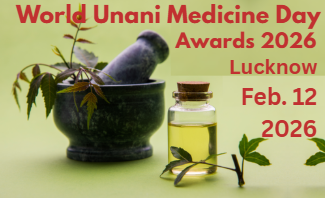
Professor Mushtaq Ahmad, National President of All India Unani Tibbi Congress (AIUTC), has announced the names of Unani physicians selected for the World Unani Medicine Day Awards 2026 and congratulated them accordingly. In a statement issued by the organisation’s Secretary General, Dr. Syed Ahmad Khan, it was stated that the World Unani Medicine Day Awards will be conferred at a ceremony to be held in Lucknow on February 12, 2026.

Among the award recipients, Hakim Waseem Ahmad Azmi has been selected for the Dr. A.U. Azmi Lifetime Achievement Award; Hakim Mohammad Irfan Najaf Aleemi Allahabadi, Editor of Nawa-e-Tibb-o-Sehat, for the Hakim Kausar Chandpuri Award; Dr. Ubaidullah Baig (Chennai) for the Hakim Ibn al-Baitar World Unani Medicine Day Award; Professor Nafasat Ali Ansari (Lucknow) for the Hakim Ibn Sina World Unani Medicine Day Award; Professor Ashhar Qadeer for the Allama Kabiruddin World Unani Medicine Day Award; Professor Salim Akhtar (Indore) for the Hakim Abdul Latif Philosopher World Unani Medicine Day Award; Professor Arshad Ali (Lucknow) for the Hakim Siyanatullah Amrohvi World Unani Medicine Day Award; Dr. Suhail Ahmad (Kolkata) for the Hakim Ilyas Khan Sherwani World Unani Medicine Day Award; Hakim Arshad Kaafi (Allahabad) for the Hakim Ziauddin Zia Allahabadi World Unani Medicine Day Award; Dr. Zaki Ahmad Siddiqui (Delhi) for the Hakim Abdul Razzaq World Unani Medicine Day Award; Dr. Mohammad Khalid Siddiqui (Lucknow) for the Hakim Ram Lubbhaya World Unani Medicine Day Award; Dr. Shaista Urooj (Delhi) for the Dr. Umm al-Fazl World Unani Medicine Day Award; Professor Ataullah Khan (Basti) for the Professor Afzal Ahmad Siddiqui World Unani Medicine Day Award; Professor Mahfoozur Rahman (Bhopal) for the Hakim Abdul Hamid World Unani Medicine Day Award; Dr. Mahmood Alam (Delhi) for the Hakim Ajmal Khan World Unani Medicine Day Award; and Dr. Shehnaz Parveen (Delhi) for the Dr. Aaliya Aman World Unani Medicine Day Award.

In addition, the names of Unani doctors selected for the Hakim Ajmal Khan Superstar National Award were also announced. These include Hakim Rashad-ul-Islam (Allahabad), Dr. Mohammad Azeem Ashraf (Akbarpur), Dr. Abul Bashar (Azamgarh), Dr. Aqeel Ahmad (Azamgarh), Dr. Noman Ahmad (Azamgarh), Professor Mohammad Asadullah (Kolkata), Dr. Mohammad Rashid Ansari (Mau), Dr. Tauheed Ahmad Khan (Sitapur), Dr. Sadaf Firdaus (Lucknow), Israr Ahmad Ujjaini (Jaipur), Advocate Shah Jabeen Qazi (Delhi), Dr. Aamir Abbas (Lucknow), Hakim Mohammad Ashfaq (Lucknow), Dr. Mohammad Saqib (Lucknow), Dr. Albina (Lucknow), Dr. Alina Afzal (Lucknow), Dr. Nazia Anjum (Allahabad), Dr. Safdar Ismail (Kolkata), Dr. Mohammad Anas Abdul Muheet (Dhule), Dr. Abdul Azeem Khan (Bhopal), Dr. Niyaz Ansari (Kanpur), Dr. Ateeq Ahmad (Lucknow), Dr. Islam Mohammad Tabbab (Unnao), Dr. Waheedur Rahman (Unnao), Dr. Hifzur Rahman (Unnao), Hakim Ashraf Lone (Baramulla, Kashmir), Dr. Aneesur Rahman (Ajmer), Dr. Hifzur Rahman (Karauli), Dr. Arifa Khatoon (Lucknow), Dr. Shaukat Hussain (Panipat), and Dr. Danish (Bijnor).

source: http://www.radiancenews.com / Radiance News / Home> Pride of the Nation> Awards> Latest News / by Radiance News Bureau / December 31st, 2025

Hyderabad Man Emerges as Hero after Risking Life to Help Victims in Bondi Beach Shooting

Hyderabad, TELANGANA / Sydney, AUSTRALIA :

Hyderabad/Sydney:

Mohammed Rahmat Pasha, a 37-year-old native of Hyderabad, has been widely praised for his courage and compassion after he helped injured victims during the recent shooting at Bondi Beach in Australia, even as the attacker continued firing.

Pasha, who hails from Vikarabad district in Telangana and earlier lived in Masab Tank, Hyderabad, was walking along the Bondi beachfront shortly after 7 pm when he heard what he initially thought were firecrackers. Moments later, panic erupted as people began screaming and collapsing, and it became clear that a gunman was shooting at civilians.

Speaking to *Vartha Bharati*, Pasha recalled seeing the attacker advancing and firing indiscriminately. Although his instinct was to flee, he chose to stay when he noticed an elderly woman lying injured with gunshot wounds to her legs and crying for help. “The shooter was not very far from me. I was terrified, but I could not abandon someone who was badly injured and pleading for help,” he said.

Pasha sat beside the woman, held her hand, and tried to reassure her until emergency responders arrived. Amid the chaos, he also assisted police and paramedics by helping move other injured victims onto stretchers and into ambulances. He described the scene as harrowing, with people running in all directions, and said he witnessed one victim succumb to injuries while being assisted—an experience that continues to haunt him.

A father of three, Pasha moved to Australia in 2019 to train as a chef and secure a better future for his family. Since the incident, he has not returned to work and has been struggling with sleep due to recurring memories of the attack.

Responding to communal abuse and anti-immigrant rhetoric online, Pasha rejected any attempt to link violence to religion, stating that his faith teaches that saving one innocent life is equivalent to saving all of humanity. His family in Hyderabad remains anxious, but his actions stand as a powerful reminder of humanity in the face of terror.

source: http://www.radiancenews.com / Radiance News / Home> Latest News> Report / by Radiance News Bureau / January 03rd, 2026

Padma Shri Nomination Brings National Focus to Mewat’s Healthcare Outreach

Mewat, RAJASTHAN :

Rajasthan:

The nomination of Dr. Mahboob Sadal Khan for the Padma Shri Award 2026 in Healthcare and Medicine has drawn national attention to the Mewat region of Rajasthan. The development highlights Mewat’s growing role in global healthcare outreach and medical tourism linked to India.

Dr. Khan, a healthcare entrepreneur from Kaman, has worked for years to facilitate quality medical treatment for patients from Africa and the Middle East. His efforts have strengthened India’s position as an international healthcare destination and supported foreign healthcare and education inflows. Observers view this work as contributing to economic engagement and diplomatic links with developing regions.

Members of the medical fraternity and public representatives have welcomed the nomination. Many describe it as recognition of long term humanitarian service, international healthcare collaboration, and community driven medical initiatives emerging from rural Rajasthan.

In 2021, Dr. Khan received the African Icon Award from ICRED Africa for efforts aimed at improving healthcare access across African nations. International governments, healthcare institutions, and diplomatic missions have acknowledged his role in enabling affordable and advanced treatment options.

Dr. Khan began his career in the pharmaceutical sector with Sun Pharmaceuticals and Intas Biopharmaceuticals. His work included cancer product marketing and clinical trials at AIIMS New Delhi. During this phase, he assisted thousands of patients in accessing free tertiary care and supported community healthcare through large ophthalmology camps in Kaman with the Venu Eye Institute.

He later established healthcare and medical supply operations in Africa and founded AL-SADAL Services Pvt. Ltd. The organisation operates in India, Oman, and Nigeria across medical tourism, education services, and healthcare partnerships. It also supports economically weaker international patients through treatment facilitation and humanitarian assistance.

Dr. Khan authored Help and Assistance Guide, endorsed by the Nigerian High Commission. His work spans COVID 19 relief, cancer clinical trials, free medical camps, and India Nigeria healthcare cooperation through the Nigeria India Business Council.

source: http://www.radiancenews.com / Radiance News / Home> Latest News> Report / by Radiance News Bureau / January 03rd, 2026