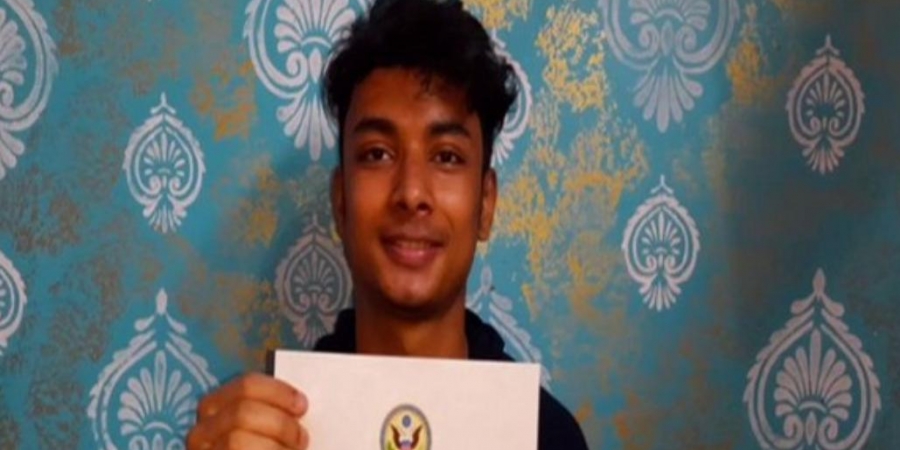
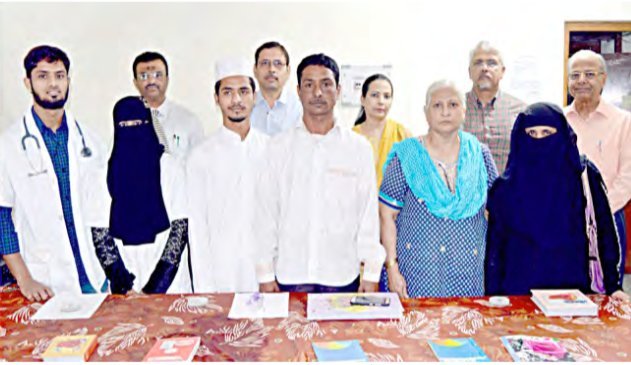
Mohammad Shadab expressed the desire to work at the United Nations as a human rights officer.
Mohammad Shadab, son of the motor mechanic wishes to work at the United Nations. (Photo | ANI)
Aligarh :
The son of a motor mechanic in Aligarh, who had received a scholarship, topped at his high school in the United States.
Mohammad Shadab, son of the motor mechanic, said, “Last year, I received the Kennedy-Lugar youth exchange scholarship worth Rs 20 lakh from the US government. Following this, I went to the States to pursue my high school education.”
Out of 800 students, Shadab was also selected Student of the Month at his school. On his achievement, he said, “It was an achievement for me to be awarded this tag.”
“I have worked really hard to top the high school,” Shabad said.
Shadab said, “The condition at home was not good and it is still not that good. I want to support my parents and make them feel proud.”
He also thanked the Indian government. “I am thankful to the Indian government for making me the flag-bearer in another county and choosing me for this scholarship.”
Shabad’s father, Arshad Noor, who is working as a motor mechanic for the past 25 years, said, “We had sent him to the US for his education and I am happy that he topped at the school.”
On being asked about his son, Arshad said, “I want my son to become an IAS officer and serve the country.”
But Shadab expressed the desire to work at the United Nations as a human rights officer.
source: http://www.newindianexpress.com / The New Indian Express / Home> Good News / by ANI / July 20th, 2020
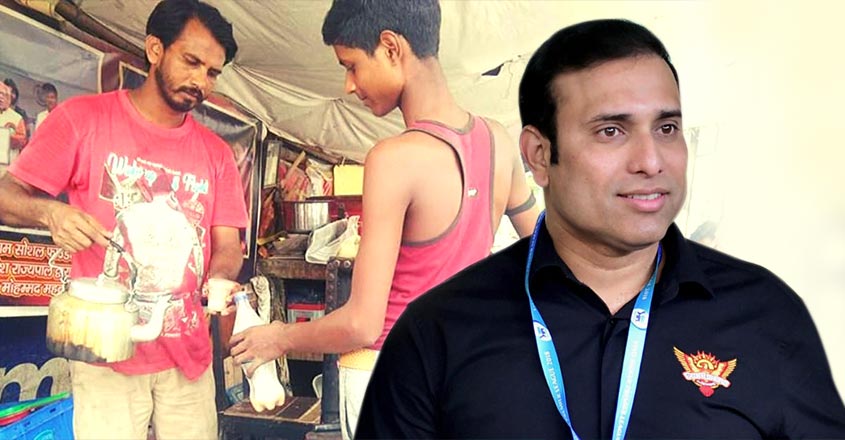
A quaint teashop on one of the dingy lanes in Sharda Nagar in Kanpur has been the talk of the town for the past few weeks. The teashop is often seen crowded. It is not the tea but the owner of the teashop Muhammad Mahboob Malik who draws the crowd now. This 29-year-old commoner had become an overnight celebrity in the locality after he was mentioned by former cricketer VVS Laxman in one of his tweets recently.
Laxman had shared the incredibly inspiring life of Malik who has been sponsoring the education of 40 poor kids, for the last three years, using 80% of his income. Forty students study in various divisions till class 4 in his school.
Malik’s father was the only earning member in his family which had six children. His income alone was not enough to make the two ends meet. So, the kids didn’t have enough opportunities to fare well in their studies. Amidst all these struggles, Malik could only study till class 10.
Soon, Malik too began working at his father’s teashop. It was then that he began noticing how a few kids from the poor families in the locality were roaming around or begging, without attending school. Most of them were the children of single mothers who struggled even to feed their kids at least one meal a day. For them, sending their children to the school was unthinkable.
Malik, who saw himself in those kids, had decided to sponsor their education. He believes that he would not have ended up in the small teashop on the street and could have done more for the development of the nation had he got the opportunity for better education. It was this thought which motivated Malik to take the significant decision to help the poor kids complete their education.
In the beginning, Malik opened coaching centers in the locality and also at Gurudev Talkies and Kanshiram Colony where around 350 children were taught for free. He even appointed teachers for a remuneration of Rs 2,000 per day for training the kids for two hours every day. However, soon he realized that the two-hour classes were not enough to bring significant changes in the attitude or life of those poor kids.
In 2017, as instructed by a friend, Malik began an NGO called the Tujhe Salam Foundation with the sole aim to provide free and quality education for the poor children in the locality. A core team of 5 members and other volunteers are responsible for training the 40 kids. The NGO provides uniform, shoes, socks, bag and other stationery items to these students absolutely free of cost. Malik finds the money to run this school, which functions in a rented building, from his income at the teashop.
Malik, who wakes up at 5 in the morning, works in the teashop from 5.30 am to 7.30 am. After 7.30 am, his father would manage the teashop when Malik goes to the school. He returns in the afternoon and would again work in the shop from 3 pm to 11 in the night. Malik tries to save at least Rs 500 per day to meet the expenses at the school.
In the beginning, a few neighbours had criticised Malik for spending his hard-earned money on this social cause. Some had even called him mad. But the same people began appreciating him when more people came to know about his amazing effort. After Laxman’s tweet became viral, lots of people are coming to meet him at his teashop and school.
Now, Malik is all set to register his NGO and secure 80G certification that will enable tax exemption for donors. Malik wishes to work even harder so that he can extent his school to class 10 where he could give free education to at least 200 poor kids.
source: http://www.english.manoramaonline.com / OnManorama / Home> News> Campus Reporter / by OnManorama / December 15th, 2019
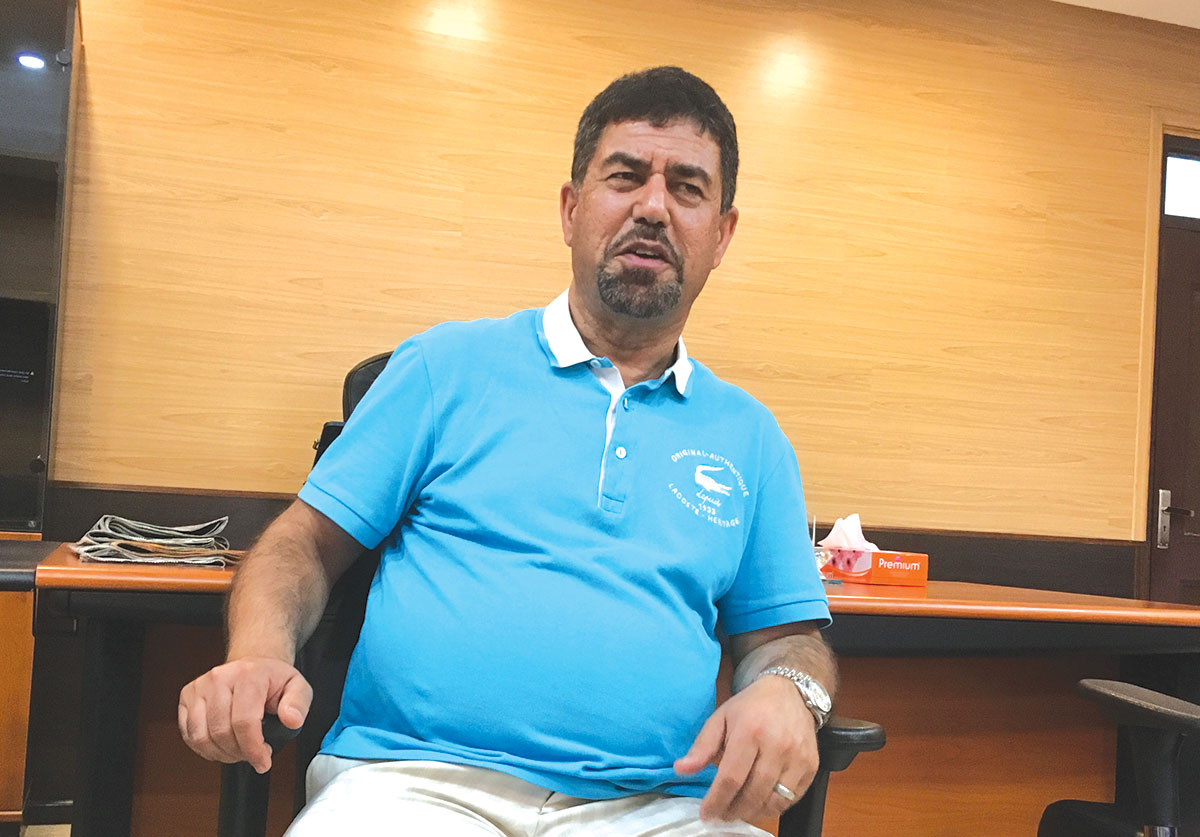
It was a scholarship that helped Feroz A Padder to get the best education and become an interventional cardiologist. Now the proud owner of a hospital in the USA with a yearly turnover of $10 million, he tells Masood Hussain his story and how he has started paying back by creating a world-class school, in the memory of two slain kids, an idea, if successful, he wishes to clone a piece each for every Kashmir district
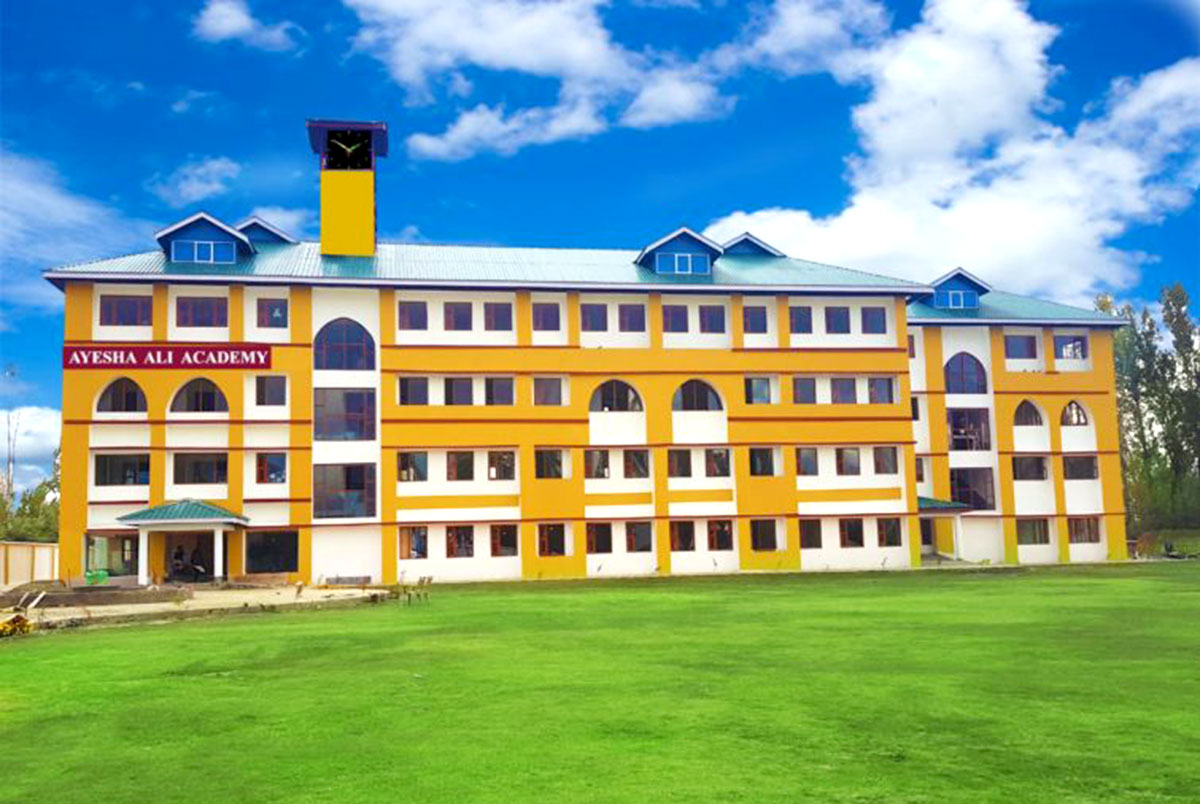
Ayesha Ali Academy
I was born in a Kulgam village called Kanipora. My father had died when I was three years old. I was raised by my mother.
But I stayed in the village until I was in the fifth primary. In sixth grade, I was selected by Jammu and Kashmir government for a scholarship to attend a premier school in India. It was a fully funded scholarship.
My mother didn’t want me to go. She was crying. A Pandit lady was our neighbour whose son was my friend. Probably, she also did not want me to go. She took my mother to a faith healer to stop me from going but the Soun Saeb told my mother that’s she should allow me to go. Later, my brothers convinced her but it was very hard for my mother.
It was a major scheme of Sheikh Mohammad Abdullah and Afzal Beg. In order to give an opportunity for poor students from government schools, they devised the visionary scheme. Almost 1000 students who would pass their fifth primary in the first class would sit in a written examination and those who passed faced an interview by a panel comprising Director School Education and the principals of various colleges. Finally, three students were selected from each district. I was one among them in the very first batch in 1976.
That is how I studied in Punjab Public School and later in DPS, Punjab. It was the destiny that I became a medical doctor.
But I am not the only doctor in the family. The fifth sibling in my family, I have two older brothers, two older sisters and another brother, three years younger to me. Except for my oldest sister, my older brother was in tenth class when our father died. He took a job in the forest department to run the family. During Sheikh Sahab’s time, the medical college started admitting students after matriculation, so one of my older brothers made it to the medical school in 1976.
Feroz A Padder
As my brother came to Srinagar, one of my older sisters also migrated. She was an art student but soon she changed her subjects, studied well and also joined the medical school. Later, my younger brother also took medical. Now we are four doctors in the family of which three pursued their studies from Srinagar. My younger brother studied psychiatry in South America; my older brother is a cardiologist and my sister is a family practitioner. We all work in the US.
After my brother went to London and later to the US, I followed him. Later, my sister and her husband came after me. Four of our families are in the US and our mother was with us all along till she died and we flew her body for burial in our ancestral graveyard.
My migration was dramatic. I finished my medical school in 1989 and was in the six months of house job when the situation deteriorated and my family wanted me to join them in the US. I did not get the US visa, so I went to the UK where I sat in an examination and started working. In 1992, I qualified for the US examination and went straight to America.
I was lucky again. I got jobs in higher level hospitals. I was in Boston where I did my residency. There I got a fellowship from the National Institute of Health, the biggest institute of health in the US. Later, I did my cardiology fellowship and combined with clinical fellowship. Then I went into more interventional cardiology in which I did further specialization from the University of Alabama, Birmingham. Once I came out after seven years of training, it turned out that I was the best fellow trained as a doctor in the whole country. I had almost nine interviews and eight job offers. But I came back to Maryland and took a job with John Hobbes University in 2000.
Soon, I realised that I didn’t want to work for anybody. I put in my papers and started my own practice, right before 9/11. As I grew gradually, I started hiring more people. Now, I have about seven cardiologists in my group and 19 physicians. I run my own group Padder Health Services with around 60 employees.
I have probably done thousands of invasive procedures. In our area, it is more competitive. We cover two to three geographical locations, and on average, I do around 400 interventions a year.
I am good at business ventures. I own a separate company Padder Reality which owns all the real estate that is under use of Padder Health Services. Right now, we have about the US $ 10 million yearly revenue and we are growing by 5-10 per cent every year. We are in talks with some people and if the process succeeds we will be taking over management of a chain of hospitals in the region, in which we already have strong footprints. That will help us reach the next level.
Dr Farooq Padder, my older brother, a cardiologist is an academic and works in New Jersey. Gulshan Nazir, my sister, is with me. A psychiatrist, my younger brother Tanveer does part-time with me. My wife, Edisa Tokovic, is a paediatrician and is originally from Bosnia but was raised in Michigan, US.
I got scholarships right from the start and whatever I am I owe this to Kashmir and its people. I want to produce thousands of myself. We can give education to the poor students the way I got. I want to pay back and contribute in any way. I run a charitable organisation which is basically our family foundation. We give scholarships to students, in memory of my mother. It has a marriage fund for the orphaned girls also.
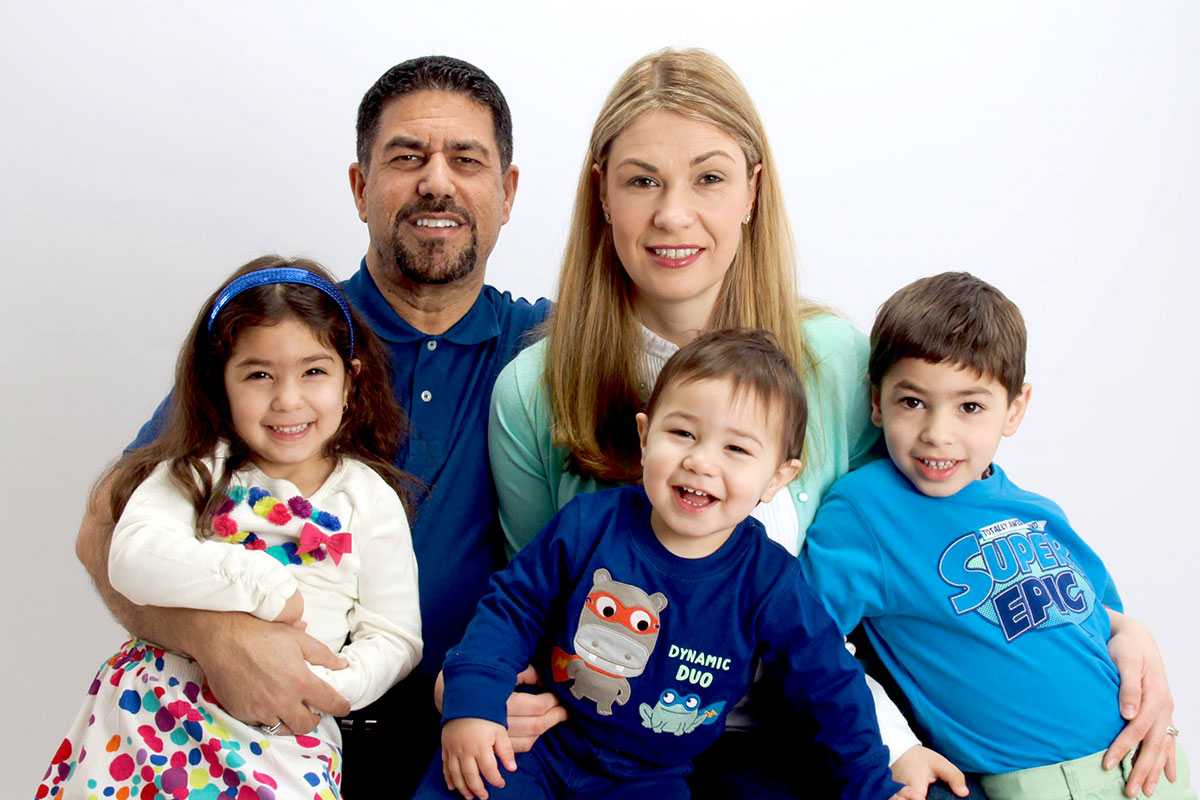
Padder with his second wife and children.
It was a fully funded education that changed me. So I want to use education to replicate the same kind of stories. Finally, I decided to build a school – from nursery to twelfth grade – in Kulgam. It is already into operation.
We will give a scholarship to one-fourth of the enrolled students who are smart but are either orphaned or their parents are less privileged. If this brand and the business model works, I will replicate the same models in the other districts, hopefully in Baramulla and Srinagar, soon after.
The building has around 50,000 sq ft built-up the area and I have probably spent around Rs 8 – 10 crores on it. It’s my personal investment.
Once the school starts, our Foundation will fund it till it becomes self-sufficient. It eventually will be a private entity that will reinvest its excess earnings to fund the education of one-fourth students enrolled in it.
I have tied up with one of America’s oldest school systems to create a curriculum and teaching system which is global and the best. We have people in the USA who are willing to help us in imparting education and training the teachers. I pray the initiative is a success.
Behind the school is a story, a tragedy. It was in 2006 when my (first) wife met a road accident and died along with our two kids. She was from Pakistan; her name was Amira Abbas. She was a cardiologist too. Ayesha, my daughter, was nine years old, and Ali, my son, was five.
Ayesha was born on September 5, 1997, the same time when Lady Diana died. The very next day, Mother Teresa died. I used to tell her that God created you for a reason, not knowing that she would not live long. She was brilliant, religious and a loving daughter. She completed the Quran at age seven and there was a party for her scheduled for November 5. But she died on October 31. She had been selected for a kid leadership three-week course and I got the selection letter a week after her death.
When someone was driving me back from the accident spot, that time, I decided that whatever money I had saved for my children’s future, I will create an institution in their name. So I have named this school Ayesha Ali Academy. That’s why we initially created the Ayesha Ali Foundation.
I met my second wife in Washington DC where she was doing a residency. She is very much younger than me. We married in 2008. We have three kids – two sons and one daughter. Ibrahim, my older son, tells me: “God gave you two children back and one more in bonus.”
I tell my children that the two countries had to go to war for us to get married. It is unfortunate both these conflicts occurred. Had there been no crisis in Kashmir I might not have migrated. Same is true with my wife. She has been to Kashmir a few times. I come here often and I go to Bosnia too. But the only difference is that it is much militarized here unlike Bosnia.
I even thought of constructing a special hospital in Kashmir, but later, I thought I have to be physically here for that because it was such a big project. Since I have little kids, I didn’t want to take that chance. But I still have some ideas and I have been thinking about it. But if the school goes as per the script, we could get into health care too.
Ayesha and Ali, padder’s kids from his first wife had died in an accident.
We don’t even need a hospital to start with. I had a major polyclinic where we have a big infrastructure and where we have different doctors working under the same roof. But rather than being a government institution, it’s a private institute and most of the doctors have some stakes in it. Hopefully, we may try to develop that here in Kashmir.
In Kashmir, hospitals are understaffed and doctors overworked. There is less awareness among people about the preventive medicines. The absence of medical insurance is a crisis that would prevent quality investment in the health sector.
source: http://www.kashmirlife.net / Kashmir Life / Home> Cover Story> Diaspora / by Masood Hussain / March 27th, 2019
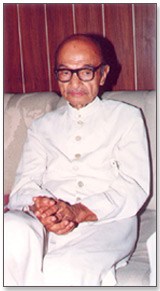
Birth anniversary of noted Hakeem Padma Bhushan Hakeem Abdul Hameed was celebrated on September 14, 2018. Former Rajya Sabha MP and noted journalist Shahid Siddiqui delivered the lecture on ‘Hakeem Abdul Hamed, a great thinker, philosopher and his role in the construction of the nation’ as Chief Guest. The programme was presided over by Prof Syed Ihtesham Hasnain Vice Chancellor Jamia Hamdard. Prof Ihtesham Hasnain said late Hakeem Abdul Hameed was ‘Hamdard’ in the real sense.
Pro Vice-Chancellor Prof Ahmed Kamal, registrar Saud Akhtar, relatives of Hakeem Abdul Hameed from India and Pakistan, a large number of teachers, officers and students were present on the occasion.
Late Hakeem Abdul Hameed, a renowned physician, was the Founder-Chancellor of Jamia Hamdard, which he established with his own resources. A great philanthropist, thinker and visionary, he set up several institutions with the funds of Hamdard Wakf Laboratories. Some of the esteemed institutions established by him include Hamdard National Foundation, Hamdard Education Society, Hamdard Study Circle, Hamdard Public School, Hamdard Institute of Historical Research, Ghalib Academy, Centre for South Asian Studies and Business & Employment Bureau.
Hakeem Abdul Hameed was honoured by several national and international awards including the Avicenna Award presented by the erstwhile USSR in 1983. He was conferred with Padma Shri and Padma Bhushan by the Government of India. He was also an honorary member of the Academy of Medical Science of the Islamic Republic of Iran and Chancellor of Aligarh Muslim University, Aligarh. In October 2000, the Research Centre for Islamic History, Art and Culture (IRCICA) Istanbul, Turkey, presented IRCICA Award for Patronage in Preservation of Cultural Heritage & Promotion of Scholarship to Hakeem Saheb posthumously.
source: http://www.siasat.com / The Siasat Daily / Home> India> News / by Rasia / September 15th, 2018
According to the report furnished by Mr. Iftekhar Husain, Secretary of Faiz-e-Aam Trust, a sum of Rs. 2.99 crore was spent on various schemes of financial assistance to poor students and families.
In 2016-17, the trust spent Rs. 59.81 lakh for primary education, Rs. 21.21 lakh for technical education, Rs. 29.5 lakh for relief and Rs. 7.85 lakh for treatment of patients.
In this manner, from April 2017 to January 2018, Rs. 40.46 lakh, Rs. 21.21 lakh, Rs. 18.68 lakh and Rs. 3.58 lakh were spent on the above mentioned works.
So far, the trust has help 625 students of primary education, 731 of SSC, 1237 of Intermediate, Degree, PG, Engineering, MBA, MBBS and Paramedical Courses.
He further told that the trust was established in 1983 by his brother-in-law, Mr. Zulfekhar Husain. It enjoys full support from Mr. Zahed Ali Khan, Editor of Siasat Urdu Daily. The trust is now helping 1456 students ranging from primary school to Engineering and Medical courses. It is also extending financial help to 1256 patients. It rehabilitated 2280 persons.
Faiz-e-Aam Trust helped Kareemunnisa whose husband, an autodriver had left her helpless. Her sons, Syed Hasan and Syed Yaseen and daughter, Saba Begum were adopted by the Trust for educating them. Syed Hasan completed MBBS whereas Saba Begum is doing the same course. Her eldest son, Syed Yaseen has completed Hifz-e-Quran.
Ms. Farukh Parveen Jamal, Chairperson of Trust, Aurangabad and Mr. Siraj Tahir, Trustee of Faiz-e-Aam Trust attended the meeting and listened to the details of the poor families.
In collaboration with Siasat Millat Fund (Clothes bank) it helped 1552 families. Destitute Muslims of Muzaffar Nagar received help through Siasat Millat Fund. It also helped Salwa Fatima and Sania Siddiqui for their ambitions to become pilots. For Old Age Home of Siasat, the trust gave a donation of Rs. 5 lakh.
The trust also helped Nuzhat Fatima, a student of MBBS, Shaik Nazeer Ahmed and Ayesha, students of MD.
During the past three years, the trust has spent Rs. 1.6 lakh for primary education, Rs. 43.33 lakh for technical education, Rs. 71.15 lakh for rehabilitation, Rs. 23.35 lakh for treatment of patients.
It may be mentioned that Syed Hasan had secured a free seat in MBBS. Mr. Ali Asghar played a key role in getting financial help for this family.
Hajera Begum is a second year MBBS student. Her father is a tailor and her mother manufactures beedis. She has two sisters. The expenses of her MBBS fees were paid by her parents by mortgaging ornaments. Dr. Makhdoom Mohiuddin’s wife, Dr. Shaista Mohammedi Husaini received a message on WhatsApp for helping Sabera Begum which she forwarded to Secretary of Faiz-e-Aam Trust who arranged Rs. 1.27 lakh for getting back the ornaments which were mortgaged.
Mr. Rizwan Haider, Trustee welcomed the guests. Ms. Amena Saher conducted the meeting.
These details were given in a special meeting held at Faiz-e-Aam Trust which was attended by Ms. Farhat Yasmeen and Mr. Siraj Tahir, Trustees.
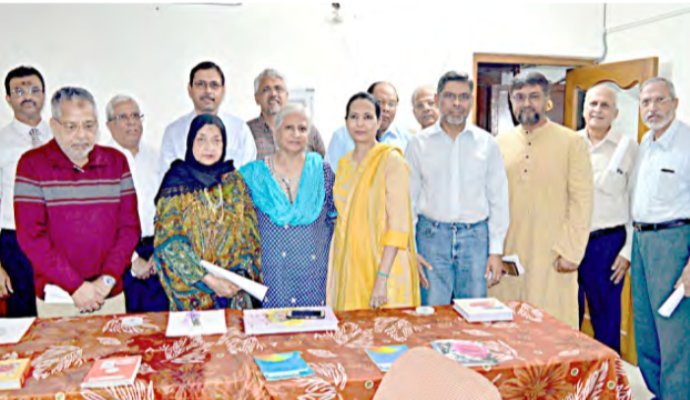
The other persons who attended the meeting were Dr. Samiullah Khan (Director Shadan College and MESCO member), Dr. Saukat Ali Mirza (Chairman Helping Hand), Mr. Ali Abedi (Social worker, London), Mr. Mudasir Alam (US), Mr. Jameel Haider (US), Fakhri Saheb (US), Anees Iftekhar Ali (US), Ruqayya Begum (US), Syed Haider (member, Faiz-e-Aam Trust), Aijaz Husain (US), Jafar Ahmed (US), Syed Jafar Husain (Sada-e-Husaini), Hamid Ali, Prof. Shaukat Hayat and Mr. Ahmed Basheeruddin Farooqui (former Dy.DEO).
source: http://www.siasat.com / The Siasat Daily / Home / by Sameer, The Siasat News / January 18th, 2018
Buoyed by 51 Muslim candidates clearing the civil services examination this year, the Haj Committee of India has decided to provide free coaching across states and union territories from next year.
UPSC civil services aspirants are being provided free coaching at the committee’s Mumbai-based headquarters for the last seven years. Two of the students who studied there were selected for the prestigious service this year.
The Haj Committee of India had recently sent a proposal to the Minority Affairs Ministry about providing coaching for the civil services in Haj Houses in all states and union territories. The ministry has accepted the proposal.
Union Minority Affairs Minister Mukhtar Abbas Naqvi told Bhasha, “Two students who took coaching at the Haj Committee of India-run classes, cracked the UPSC exams. Next year onwards the government will start free coaching in Haj Bhavans in states and union territories.”
“We had requested the ministry (of minority affairs) to start free coaching service in Haj Bhavans in different states. We are happy that the minority affairs minister has approved the proposal. We want to start the (coaching) service from next year. We will implement this with the state Haj boards,” Chief Executive Officer of Haj Committee of India, Maqsood Ahmed Khan, said.
For the last seven years, 40 students are provided free coaching at the Haj Committee of India’s headquarters in Mumbai every year, he said.
Of the 980 candidates selected for civil services this year, 51 are Muslims.
Syed Zafar Mahmood, the chief of Zakat Foundation of India, which helps aspirants from economically weak Muslim families to prepare for the exam, said, “In 2017, around five lakh candidates appeared for the civil services preliminary examination and hardly 2 per cent of them were Muslims.”
“If the participation of Muslim students grows in the civil services examination then the number (of selected candidates) can go up from 51 to 100 as well,” he said.
source: http://www.outlookindia.com / Outlook / Home> Magazine / New Delhi – May 06th, 2018