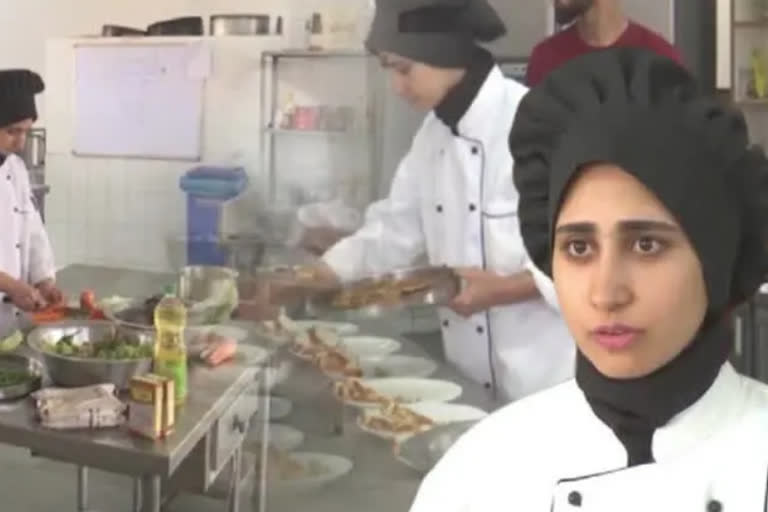
Iram Feroze had a knack for cooking right from her childhood but her parents would dissuade her saying the profession of the chef was “not meant for women from good families”.
Srinagar woman defies all odds to become ‘youngest Kashmir woman chef’
Srinagar (J&K):
Iram Feroze had a knack for cooking right from her childhood but her parents would dissuade her saying the profession of the chef was “not meant for women from good families”. Years down the line, Iram, a young woman from the Natipora area in uptown Srinagar has defied all the odds by emerging as a promising woman chef from Kashmir.
After passing out from the Institute of Hotel Management (IHM), situated in the Rajbagh area of Srinagar on the banks of River Jhelum, Iram has joined a well-known private hotel in the city and has already made a mark for her culinary skills. “Whenever my mood was off at home, I used to cook something which the family members used to appreciate.
But they did not give their consent to me taking it as a professional chef,” Iram recalled. She said that despite resistance from the family, she enrolled herself at the IHM and completed a short-term course in cooking. Iram said the teachers at the IHM saw her aptitude in cooking and recommended her to a one-month cooking course outside the Valley.
However, as always, Iram’s family resisted the move. “But I prevailed upon my parents. My cousins supported me and I pursued the career to become a chef. It is unconventional but I did it,” Iram says proudly. She thanked her teachers at IHM for becoming what she is today. Iram also enrolled in Indira Gandhi National Open University (IGNOU) to pursue Masters in Sociology.
“The parents said that my studies must also continue with cooking,” she said. Iram is grateful to the Institute of Hotel Management, Srinagar, for becoming the “youngest female chef in the Valley”. She said the IHM has played a vital role in making her dream come true. “Guidance is important. If you get a proper guide, you can do wonders in your life,” she said.
source: http://www.etvbharat.com / ETV Bharat / Home> State / by ETV / November 12th, 2022
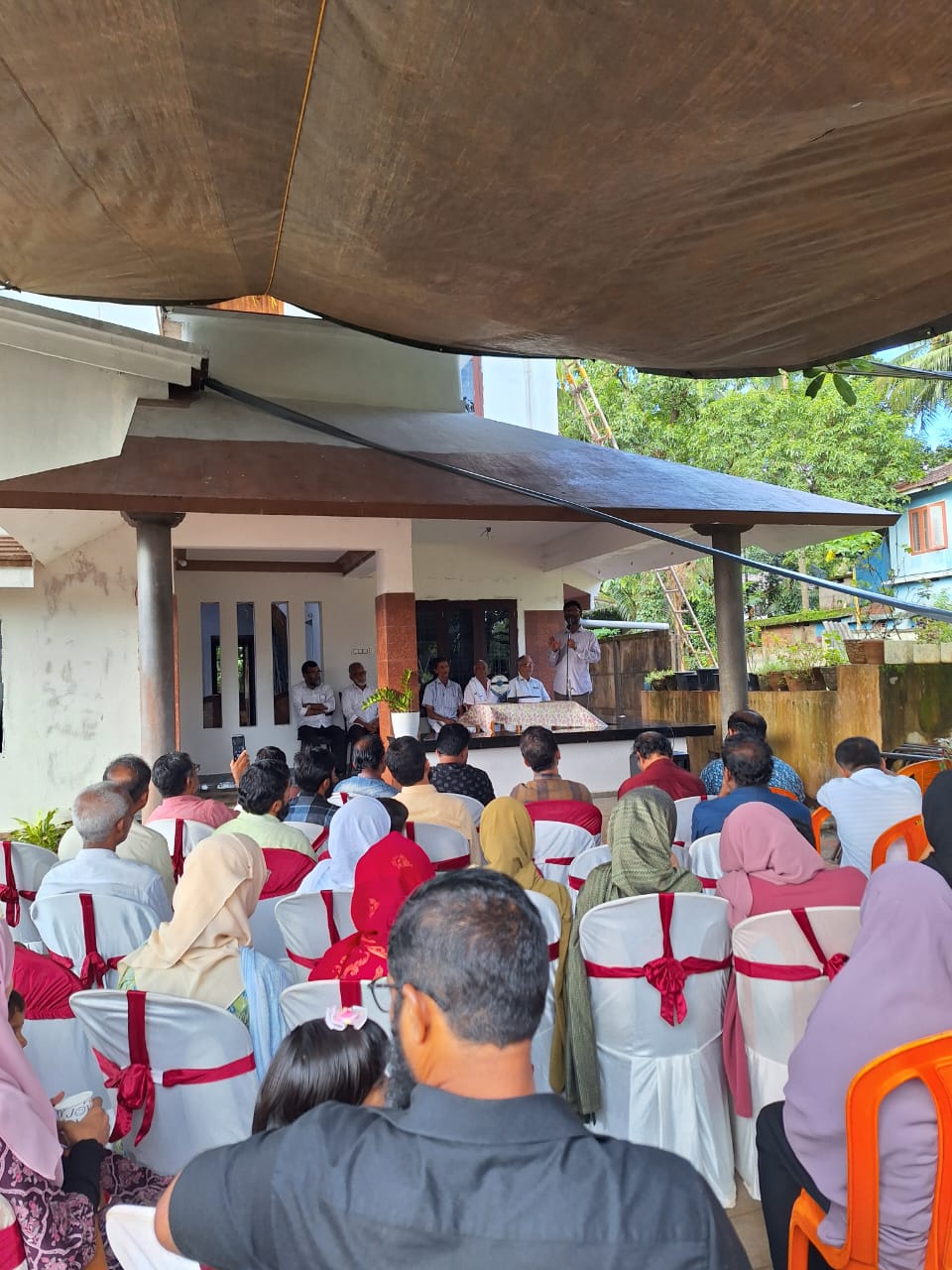
How do we celebrate our achievements, especially when it is an academic milestone? For many, it is posting a proud announcement on social media, celebrating with family and friends and sharing the moments with the world. But for Noorjahan, a 37-year-old woman from Malappuram, the celebration of her doctorate was a unique affair — one that blended tradition, personal triumph and community spirit in a way rarely seen. Instead of a quiet reflection or a typical party, she hosted what she called a ‘Ph.D. wedding’, erecting a grand pandal (a traditional tent used for large gatherings) outside her home and inviting close family, friends and those who had supported her journey.
She wanted to highlight the significance of the occasion in a way that went beyond the usual. “Why not celebrate an academic achievement like we celebrate a wedding, the arrival of a child or a baby’s first haircut?” she asked, reflecting on the importance of her journey.
Noorjahan invited not just her friends, but also those who had been part of her research or who had supported her along the way. “We always focus on the results, but we do not often talk about the process that leads to them,” she told TwoCircles.net. Her aim was to open a conversation about that very process —the often-overlooked work behind the doctorate.
Despite her active presence on social media, she chose not to post about the event herself. Instead, the world learned about her unconventional celebration through the posts of her friends and well-wishers. It was one of these posts that led to the term “Ph.D. wedding”, coined by writer and social critic Emmar Kinalur, who attended the event. In his Facebook post, Kinalur recalled the loud applause that followed when Noorjahan spoke about her journey, particularly from the women and girls in the audience.
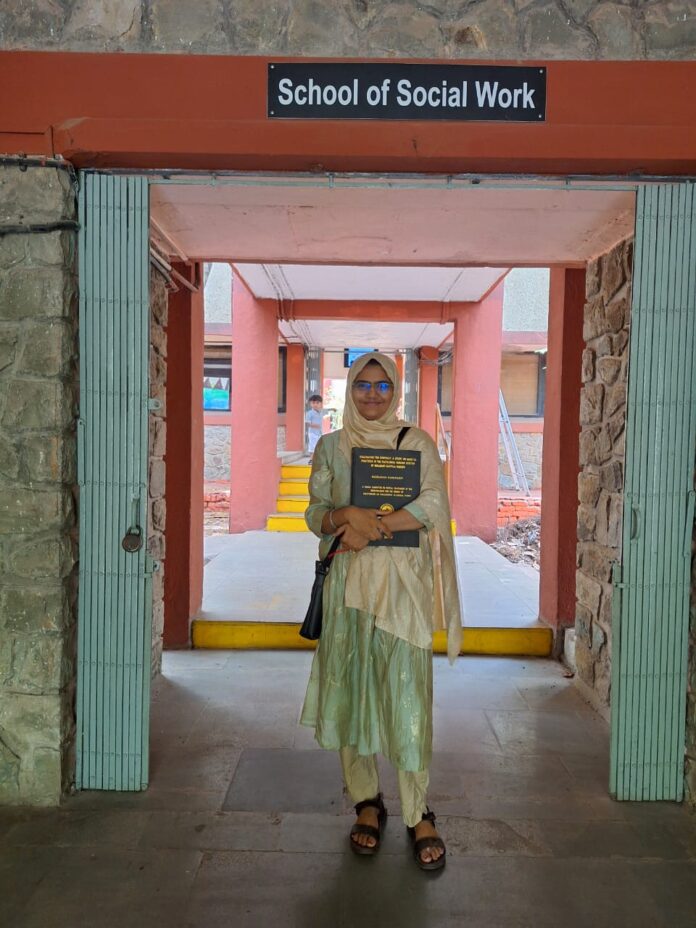
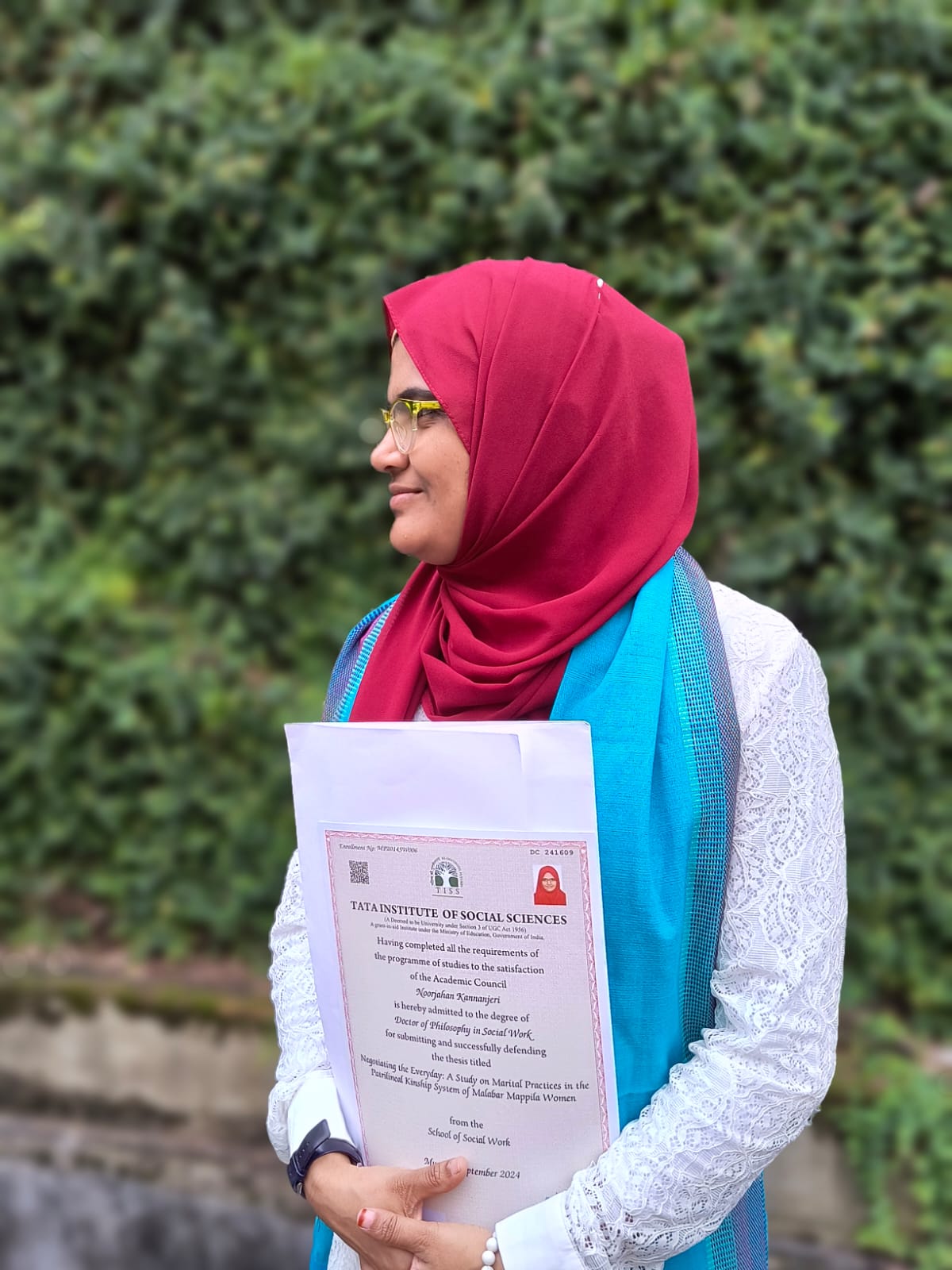
Dr Noorjahan with her PhD thesis
The Everyday Lives of Malabar’s Muslim Women
For Noorjahan, the uniqueness of her celebration mirrored the unconventional nature of her research. Her thesis, titled Negotiating the Everyday: A Study on Marital Practices in the Patrilineal Kinship System of Malabar Mappila Women, delves deep into the lives of Muslim women in the Malabar region of Kerala. What inspired her to choose this topic? For Noorjahan, the subject was deeply personal and autobiographical.
When she began her Ph.D. journey in 2014, the societal discourse was dominated by debates over reducing the marriageable age of Muslim girls to 16. This reminded her of the negotiations she herself had to make to pursue higher education. “I had to convince people at every stage of my life — why I was doing a Ph.D.; why I was going to Mumbai; and whether it would delay having children,” Noorjahan explained.
The decision to pursue her research at the Tata Institute of Social Sciences (TISS) in Mumbai was also a negotiation, as the institution offered an off-campus option for those with an M.Phil. She was one of many women balancing education, work and family, all while negotiating the pressures of everyday life.
Noorjahan’s research journey was not an easy one. It took her a decade to complete, during which she juggled the demands of raising two children, teaching in colleges, working as a psychiatric social worker, co-authoring a book on a prominent Kerala journalist and contributing to social media and magazines. “This process has elevated my perspectives beyond skill development and knowledge growth,” she wrote on her Facebook wall. “Looking through that lens, this was also an evolutionary process; and I am proud of it.”
Guardianship and Widowhood
When asked about the most significant findings from her research, Noorjahan pointed to two key aspects: guardianship and widowhood. These issues, though long present in society, took on new meanings in the context of her work. She explored the concept of wali (guardian) in Islamic law, a role typically filled by a father or brother, but in the absence of a male guardian, a qazi or judge assumes this position during the wedding ceremony. However, Noorjahan highlighted how, in practice, this system often lacks real responsibility, and the role of the guardian is reduced to a ceremonial one.
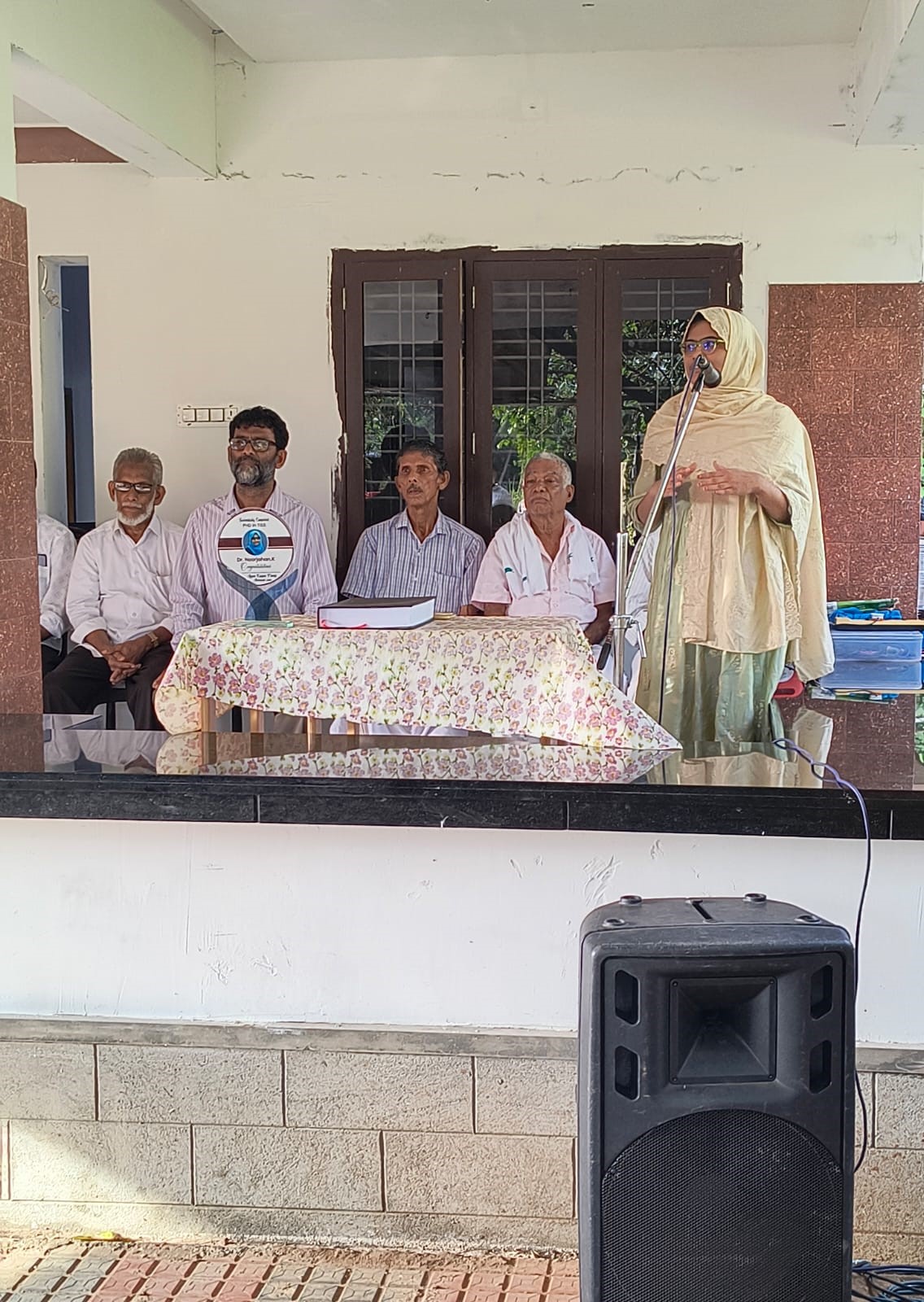
Dr Noorjahan speaking at the ‘PhD wedding’ function held at her home
Equally important in her research was the issue of widowhood. Noorjahan pointed out that the traditional practices surrounding widowhood in the Malabar region have been influenced by Brahminical patriarchal systems, despite Islamic principles that allow widows the freedom to decide their future once the iddah (waiting) period is over. Instead of offering this autonomy, society often seeks to rehabilitate widows within the same patrilineal framework, framing their inclusion as a virtuous act of charity. “While we call it charity or virtuous deeds, it is women who suffer under this framework,” she argued.
The Support of Women in Her Life
Throughout her academic journey, Noorjahan found steadfast support in the women around her, particularly her mother, Saleemath V – a retired teacher from their hometown in Areekode. Saleemath was a constant presence, travelling with her daughter to Mumbai, caring for the children when Noorjahan was busy and offering her moral and emotional support. “My mother was also learning and changing in her own way, just as I was evolving through my education,” Noorjahan said, underscoring the importance of familial support for women pursuing careers or higher education after marriage and children.
Saleemath herself reflected on her daughter’s resilience, saying it was Noorjahan’s determination and steadfastness that had enabled her to complete her Ph.D. despite the many challenges, including the demands of family life. “Many women give up halfway, but Noorjahan did not,” she proudly noted.
The ‘PhD wedding’ function at the home of Dr Noorjahan
Empowering Women
Now, Dr. Noorjahan works as the head of the Department for the Child and Women Resilience Project at Thanal – an NGO in Kozhikode run by the Daya Charitable Trust. The project aims to improve the lives of widowed, deserted, divorced or separated women and their children in the Wayanad and Kannur districts of Kerala.
Noorjahan’s work continues to reflect her dedication to empowering women and advocating for their rights, a theme that runs through both her academic research and her professional life.
Through her unique “Ph.D. wedding” and her groundbreaking research, Dr. Noorjahan has not only celebrated her own academic achievement but also sparked a wider conversation about the roles of women – especially in the context of the Malabar Muslim community. Her work, her resilience and her commitment to her community continue to inspire those around her — especially the women whose lives she seeks to improve.
source: http://www.twocircles.net / TwoCircles.net / Home> India News / by Najiya O, TwoCircles.net / November 17th, 2024
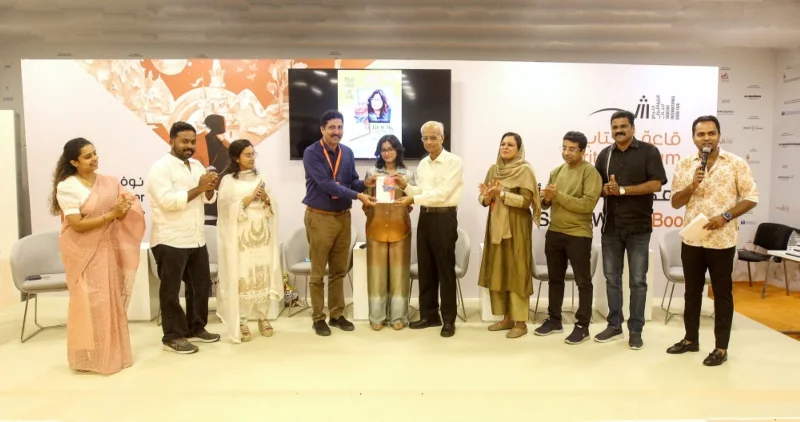
Thahaani Hashir released her 3rd book at the SIBF on Sunday afternoon. Kamal Kassim/Gulf today
Sharjah International Book Fair (SIBF) on Sunday was full of hustle and bustle. Lots of beautiful minds landed in Sharjah to regale audiences in the evening.
Celebrated Indian writer Chetan Bhagat inspired his fans, while Bollywood star Huma Qureshi mesmerised her audience. Malayalm actor, author and presenter Aswathy Sreekanth also arrived at the book fair on Sunday evening to talk about her latest book “Kaali.” She also enchanted her fans with her exciting talk.
On the other side, Writers Forum of the SIBF was swarming with school-going children in the afternoon. They were all chirping and giggling with excitement and joy. They were at the venue to cheer their young friend and classmate Thahaani Hashir. Thahaani’s journey to the world of writing is indeed incredible. Her brush with pen and paper started very early in life.
We expect a 16-year-old student to read books to develop his or her intellect, but Sharjah-based Indian student Thahaani Hashir was gracing the podium of SIBF with her third book of poetry, “Made For Love,” in the presence of a huge gathering, who were constantly clapping for this young girl. It was indeed a moment to behold.
Thahaani is an 11th grade student of Our Own English High School, Sharjah. Born and brought up in the UAE, she hails from Kollam, Kerala, India.
Thahaani made her debut at the age of 10 with her book “Through My Window Panes.” The book was released in 2018 and she became the youngest author at the SIBF. She received lots of praise for her debut book. Her second book of 30 poems “Flames That Never Died” came in 2021, while she was 13.
Talking to Gulf Today before the launch of her book, she said, “I always had the habit of writing. I must have been six years old when my class teacher noticed the talent in me. I would write short stories or something in song format. I did not know then how a poem looks like. But it was my class teacher Madhavi ma’am who saw this talent in me and she encouraged me to carry on and that’s how I got into writing.”
Thahaani’s ability to express her emotion with so much of maturity at this age is what makes her a shining star.
“Made For Love” is a compilation of 60 poems written by Thahaani Hashir and illustrated by Ashar Gandhi. Each of the 60 poems are depicted through one line illustration (entire illustration is drawn with a single continuous line, the pen is only lifted when completed). It is a rare occurrence to see all the poems in a book depicted through one line art.
Talking about her book she said, “Majority of my poetry is about love.” When asked how much time it took for her to complete her third book, she informed, “After my second book, I did not write for a good while for some reason. It could be writer’s block sort of thing. But in the last one year I could find my rhythm back and here I am with my new book.”
When asked to reveal her favourite author, she said, “Palestinian poet and author Mahmoud Darwish is my all-time favourite.”
Daughter of a civil engineer father and journalist mother, Thahaani has received several accolades.
Praising Thahaani, one of her teachers, who was present at the event said, “While she was in Grade 1, she was brilliant in all the subjects. She would always come to meet me with different ideas. Everyday she would write and show to me. I really have no words to express her talent and I am extremely happy to have been her teacher.”
The 12-day cultural extravaganza, organised by the Sharjah Book Authority, is themed “It Starts with a Book,” and has in store 1,357 activities for children and adults alike. It will come to a close on November 17 after playing host to 2,520 publishers from 112 countries.
source: http://www.gulffoday.ae / Gulf Today / Home> Culture / by Raghib Hassan, Staff Reporter / November 14th, 2024
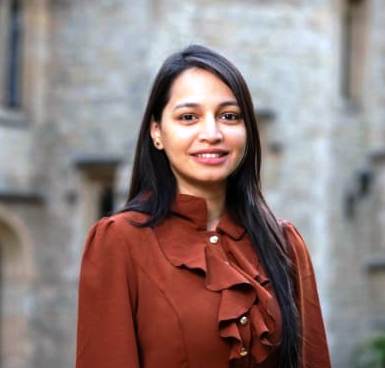
Sania Khan, originally from Shahjahanpur, Meerut, Uttar Pradesh, has been honoured with the prestigious SHE INSPIRES AWARD 2024 in the Rising Star category in the United Kingdom.
Sharing his pride, Sania’s father, Mehr Alam Khan, Editorial Consultant at Cineink, London, said, “This remarkable recognition reflects her inspiring journey marked by resilience, determination, and a commitment to creating meaningful change.”
Sania’s journey began in the small village of Shahjahanpur. Despite facing personal challenges, she founded the Silver Lining Fostering Agency in London, a leading organisation dedicated to transforming the lives of vulnerable children and empowering foster carers.
Under her leadership, Silver Lining Fostering was awarded an “Outstanding” rating by Ofsted in 2024, a testament to its excellence in providing safe, nurturing homes and comprehensive support for foster families. The agency supports over 60 foster families and 70 children across London and the Midlands.
Sania said, “The seeds of my dreams were sown in my village. Despite limited resources, I learned that with determination and vision, the seemingly impossible can be achieved. Those lessons inspire me daily to create opportunities for others, especially vulnerable children.”
Sania completed her early education at Dewan Public School in Meerut and pursued higher studies at Jamia Millia Islamia, New Delhi. In 2018, she founded Silver Lining Fostering, which focuses on tailored support for foster carers and achieving positive outcomes for children, particularly those who have faced immense adversity.
On receiving the award, Sania said, “This recognition isn’t just about me; it’s about the incredible foster carers, staff, and children who inspire me every day. Together, we’ve shown how fostering can change lives. I hope this motivates more families to step forward and provide loving homes for children in need.”
Her agency stands out for its innovative Wrap Around Service and its commitment to recruiting foster carers from diverse and underrepresented communities. Sania’s leadership has not only empowered carers to achieve personal milestones like financial independence and home ownership but has also set new standards in foster care.
source: http://www.radiancenews.com / Radiance News / Home> Pride of Nation>Awards / by Radiance News Bureau / November 23rd, 2024
In the recently concluded assembly elections, only 10 Muslim candidates managed to secure victories in the 288-seat Maharashtra Vidhan Sabha, marking a huge representation gap for the state’s 11.56 % Muslim population. The last assembly too had the same number of Muslim MLAs (around 3.5%). A total of 420 Muslim candidates contested the elections, with 218 running independently and 150 fielded by smaller parties. However, major political outfits largely overlooked Muslim representation, fielding limited candidates.
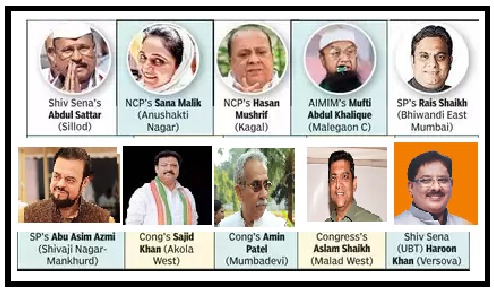
The Mahayuti (BJP+NCP+Shiv Sena) alliance, which swept the elections with a clear majority, included three Muslim winners: Shiv Sena’s Abdul Sattar and NCP (Ajit) candidates Sana Malik and Hasan Mushrif. The Samajwadi Party’s Rais Shaikh secured the largest victory margin, winning the Bhiwandi seat by 52,015 votes, while Congress’s Amin Patel followed with a 34,844-vote margin in Mumbadevi.
AIMIM’s Mufti Abdul Khalique narrowly won the Malegaon Central seat by just 75 votes, highlighting the intense competition in certain constituencies. SP’s Abu Asim Azmi secured the Mankhurd Shivaji Nagar seat with a margin of 12,753 votes, while Congress’s Sajid Khan Pathan won Akola West by a mere 1,283 votes. Shiv Sena (UBT)’s Haroon Khan claimed the Versova seat with a margin of 1,600 votes.
Congress faced criticism for fielding only nine Muslim candidates despite earlier promises of 18, leading to a potential vote split. AIMIM fielded 12 candidates, the highest among all parties. The BJP-led Mahayuti benefited from schemes like the Ladki Bahin Yojana, which reportedly swayed Muslim women voters. Observers also noted Ajit Pawar’s influence in consolidating minority support for the alliance. Results showed slim margins in several constituencies, raising questions about vote division and electoral strategies. The data underscores the challenge of translating numerical presence into political influence for Maharashtra’s Muslim community.
source: http://www.radiancenews.com / Radiance News / Home> Latest News> Report / by Radiance News Bureau / November 24th, 2024
The Aligarh Muslim University alumna Saba Ishrat led a research at the University of Oxford to study the effects of cannabis use on the brain structure and function in older adults. Saba’s ground-breaking research has gained significant attention and has been covered by various media outlets worldwide, including BMJ Mental Health journal, internationally recognising its findings and highlighting the importance of this work for public policy.
Prior to starting her DPhil in Oxford, Saba Ishrat completed a Bachelor’s and a Master’s degree in Psychology at Aligarh Muslim University (India) and a second Master’s degree in Cognitive Neuroscience at the University of Trento (Italy).
Her teacher, Prof Shah Alam, Chairman, Department of Psychology, and Prof Shafey Kidwai, Dean, Faculty of Social Sciences, Aligarh Muslim University congratulated Ms Saba Ishrat for her commendable research that has brought new dimensions to the fore.
It needs to be mentioned that cannabis use has risen globally following its legalisation for medical and recreational purposes, yet its effects on the brain in older adults remain understudied.
The team led by Saba Ishrat, conducted the largest observational analysis to date on the relationship between cannabis use and brain structure and function. This research is also the first to employ genetic data to assess causality in this context.
The study’s findings indicate that lifetime cannabis use is associated with several measures of brain structure and function in later life, including lower white matter integrity and weaker resting-state functional connectivity in specific brain regions. However, the study’s genetic analyses did not support a causal link between these observed associations.
Alongside her DPhil studies, Saba is the Junior Dean at St Cross College, a committee member at St Edmund Hall’s Centre for the Creative Brain, and a student associate of the Society for the Study of Addiction.
source: http://www.radiancenews.com / Radiance News / Home> Science & Technology / by Radiance News Bureau / November 21st, 2024
It is no longer true that women in Kashmir cannot work or run businesses. As circumstances change, people’s mindsets are evolving as well. Nowadays, there is hardly any difference in how entrepreneurship is perceived by both men and women; they are working side by side and competing equally.
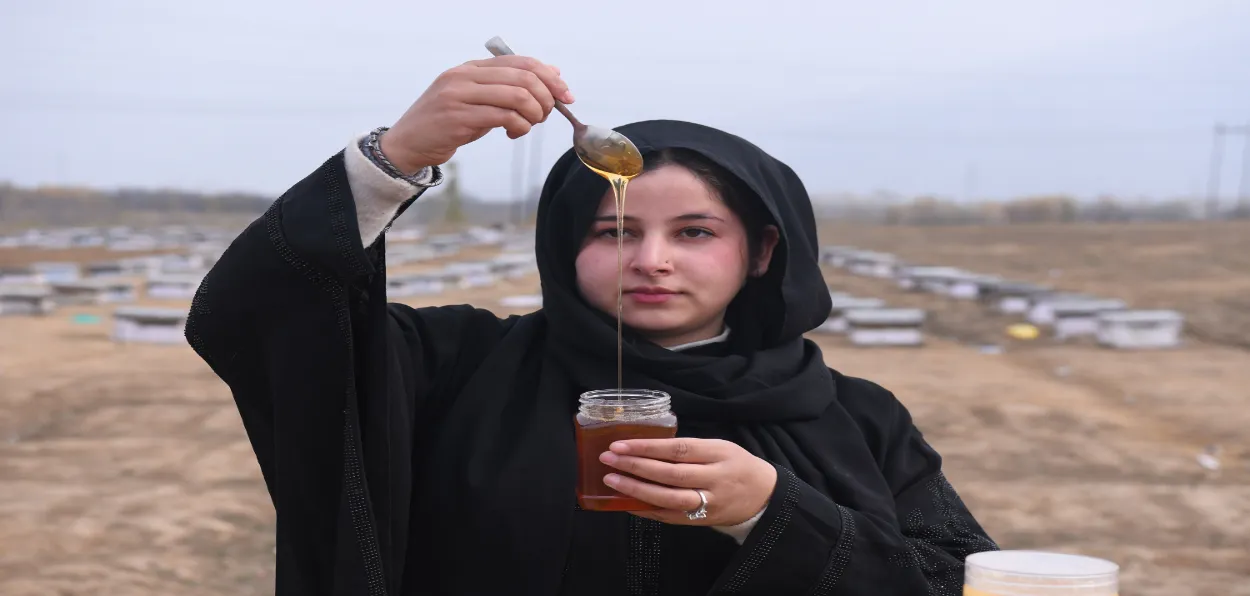
Breaking barriers and forging their paths in business, Kashmiri women are shining in vibrant colors. Another inspiring example is Sania Zehra, a 20-year-old resident of Balhama, who is a champion in beekeeping.
She is not only the backbone of her family’s longstanding business but also a shining example for her entire community. Sania said that beekeeping has been her grandfather’s business, which her father took over, and now she is in this line of work as the third generation.
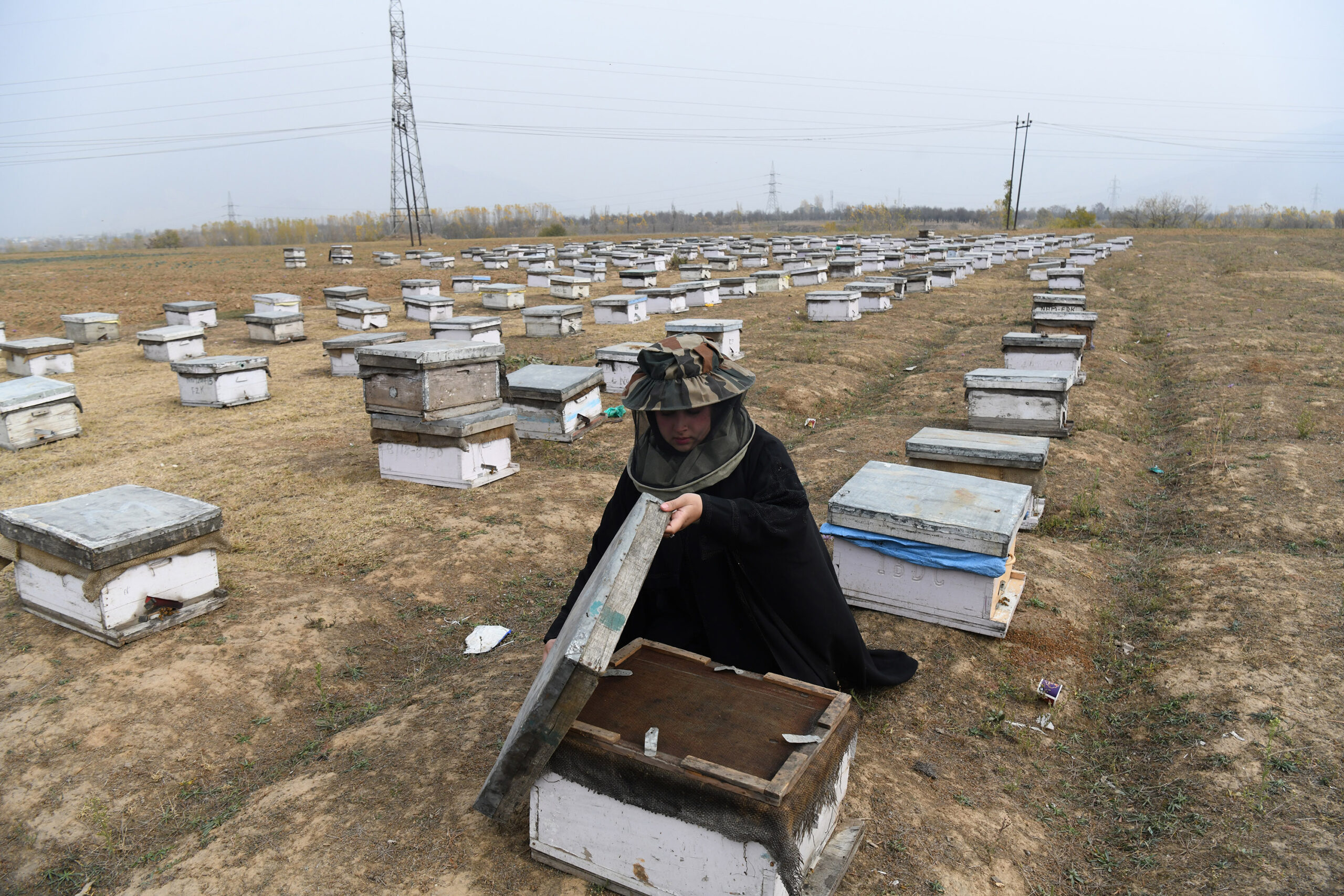
Sania Zehra taking care of the bees
A Kashmiri beekeeper, Sania Zehra, displays a beehive full of honeybees at a farm in Pampore, south of Srinagar. Zehra, a young girl from Balhama on the outskirts of Srinagar, is working to revive her familyÕs beekeeping tradition, along with her father. Beekeeping in Kashmir requires more care during the winter as temperatures drop below zero degrees, making the bee farming a challenge.
“In the beginning, I used to help my father, but I often felt bored and just tried to pass the time. I never thought I would develop an interest in it, but today I am so passionate that I handle everything from beekeeping to its marketing myself.”
She mentioned that the profits from the business have enabled her to grow further, and she is also involved in import-export activities. Sania reflected on why she chose beekeeping when there are many other businesses: “Beekeeping is mentioned in the Quran; it carries great blessings from Allah. It doesn’t matter that I am a girl; what matters is the capability to work. I believe that beekeeping is a respectable profession and also has healing properties.”
She acknowledged that no journey is easy, especially in Kashmir and for women. “I faced a lot of trolling at the start, even from close relatives, but Alhamdulillah, I never lost heart. I always tried my best to focus on my work, and today I am genuinely satisfied.”
Honey bees sit on the hand of a Kashmiri beekeeper at a farm in Pampore, south of Srinagar. Zehra, a young girl from Balhama on the outskirts of Srinagar, is working to revive her familyÕs beekeeping tradition, along with her father. Beekeeping in Kashmir requires more care during the winter as temperatures drop below zero degrees, making the bee farming a challenge.
Sania stated that not only does she earn a decent income, but her beekeeping business has also allowed her to expand into other ventures. “I produce beauty products, wax, and even green pollen from beekeeping.” She emphasized that the government is providing support for this business, and anyone interested can approach the concerned department to gather complete information about these schemes.
In her message, she said, “No job is too small. One should work with dedication and honesty, and Allah will bless even the smallest of efforts.”
The trend of women in business is on the incline in Kashmir. For centuries, women have battled a stereotype that involves staying home to cook, clean, and care for the family. However, a new generation of young female entrepreneurs is overcoming all the challenges. As per the figures, under the Prime Minister’s Employment Guarantee Programme (PMEGP), 14,943 projects have been established by women in the last three years. This initiative has played a vital role in promoting women’s participation in the workforce.
source: http://www.awazthevoice.in / Awaz, The Voice / Home>Story / by Basit Zargar, Srinagar / November 19th, 2024
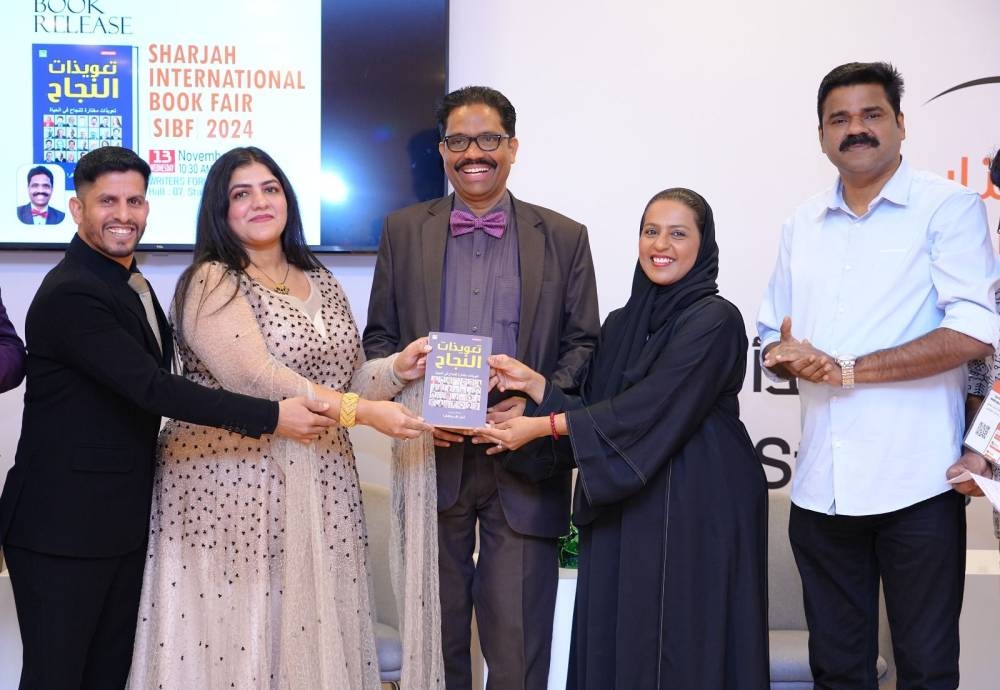
‘Taeweedatu Nnajah’ (Success Mantras), a motivational book in Arabic by Doha-based Indian author Dr Amanulla Vadakkangara, has made debut at the 43rd Sharjah International Book Fair, drawing a diverse audience of multinational readers.
Dr Mariyam Shinasi, a prominent author and cultural figure from the UAE, officially released the book at the Writers Forum on Wednesday.
She praised Dr Amanulla’s efforts in crafting an inspirational work in Arabic, commending the unique accomplishment of a non-Arab author publishing a motivational text in the language and showcasing it at one of the world’s leading book fairs.
“Indians in general, and Keralites in particular, have shown a keen interest in Arabic language and literature. Publishing a motivational book by a non-Arab is indeed commendable,” Dr Shinasi remarked.
At the event, the first copy of the book was received by NVBS CEO Benazir Manoj, and Founder and Chief Coach Manoj Sahib Jan.
Several notable personalities attended the launch, including Saleem Ayyanath, Lipi Akbar, and the author himself.
The book has been published by Lipi Books from Calicut, India.
source: http://www.qatar-tribune.com / Qatar Tribune / Home> Nation / by Tribune News Network / November 17th, 2024
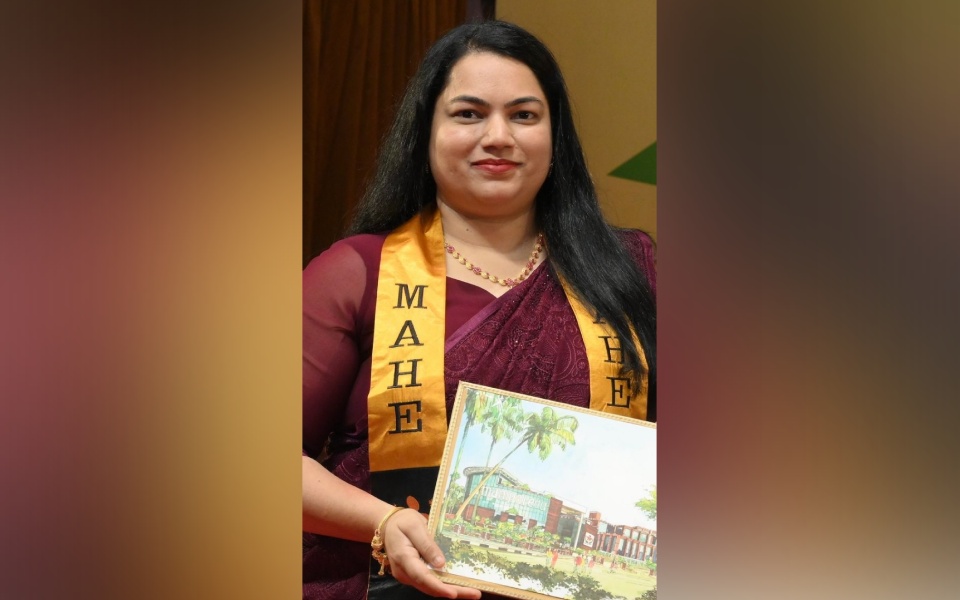
Aiming to contribute a breakthrough in Alzheimer’s disease (AD) treatment, Mangaluru girl Salwa has successfully completed her Ph.D. in a unique area of pharmaceutical research focused on developing lipid nano-carriers for oral delivery of an anti-Alzheimer’s drug. Her research offers promising advancements in the treatment of AD, a condition affecting millions globally and growing in prevalence.
Guided by Dr. Lalit Kumar, former Assistant Professor of Pharmaceutics, and co-guided by Dr. C Mallikarjuna Rao, Professor of Pharmacology, both from the Manipal College of Pharmaceutical Sciences, Manipal Academy of Higher Education, Salwa’s work addresses the urgent need for more effective drug delivery mechanisms to treat Alzheimer’s beyond temporary relief.
Alzheimer’s, a progressive neurodegenerative disease, has been challenging to treat due to limited therapeutic options, especially those capable of effectively reaching the brain. Her research seeks to improve brain-targeted drug delivery using lipid nano-carriers, potentially offering a scalable, industry-ready solution that could change the approach toward treating Alzheimer’s disease and provide real improvements in quality of life for patients.
The young researcher has a strong academic background, having qualified for the Graduate Pharmacy Aptitude Test (GPAT) with an All India Rank (AIR) of 724, which earned her a fellowship for postgraduate studies. She was awarded a prestigious National Doctoral Fellowship (NDF) from the All India Council for Technical Education (AICTE) and received intramural research funding from Manipal Academy of Higher Education (MAHE) for her Ph.D. research.
Alzheimer’s, a progressive neurodegenerative disease, has been challenging to treat due to limited therapeutic options, especially those capable of effectively reaching the brain. Her research seeks to improve brain-targeted drug delivery using lipid nano-carriers, potentially offering a scalable, industry-ready solution that could change the approach toward treating Alzheimer’s disease and provide real improvements in quality of life for patients.
The young researcher has a strong academic background, having qualified for the Graduate Pharmacy Aptitude Test (GPAT) with an All India Rank (AIR) of 724, which earned her a fellowship for postgraduate studies.
She was awarded a prestigious National Doctoral Fellowship (NDF) from the All India Council for Technical Education (AICTE) and received intramural research funding from Manipal Academy of Higher Education (MAHE) for her Ph.D. research.
Throughout her doctoral journey, Salwa received multiple honors, including travel grants from the Indian Council of Medical Research (ICMR), the University of Toronto, and the International Brain Research Organization (IBRO). She was also a recipient of the PRAISE award for two consecutive years (2022 and 2023), alongside numerous research publications and patents.
Her parents, the late Abdul Samad and Sahira Banu, and her siblings have been an enduring inspiration throughout her academic and research journey. The young researcher’s future plans include furthering her work to explore how her developed nano-carrier system could support neuronal regeneration, potentially advancing Alzheimer’s treatment options for millions worldwide.
The measure of a man is worth his memories after his death.
This is towards a particular reference to Mirza Javed Murtuza, who despite having been born in a Lucknow elitist family, with roots from Faizabad, took for him a road less travelled. His contrast was his campaign, which he undertook, with his utmost commitment, to educate masses and classes, to seek from the Almighty God, on their own, and not through any intermediary. This was his avowed stand against the institutional clergy, which ironically, had always been ‘in consonance’ with the ruling dispensation.
Lucknow had been a seat of power, for centuries, a La Feudal state, which continued to flourish, even after Britishers had taken over. Even after the ouster of the last king of Avadh, Wajid Ali Shah ‘Akhter’, and the subsequent ‘silencing’ of the mutiny or the first war for independence of 1857, there was a ‘virtual or a real’ silence in Lucknow, for the next 90 years. Until came the dawn of independence. India, became a throbbing democracy, but the elite of Lucknow fell into a morass of decadence, in terms of social, economic, educational standards etc, and to make it worse, were the ‘debates and discussions’ over religious denomination’s considered ‘superiorities over each other’. Thus, was enamored on Lucknow’s landscape.
Rubina J Murtuza at the release of Hayat-e-Javed (2010) / Photo Courtesy: Twocircles.Net
After the post-1977 Emergency government, Iranian revolution of 1979, Muradabad riots of 1980, Javed Murtuza took to the stage, of Ali Congress as its Patron, as he could see and also foresee that the clergy, their pageboys and footmen, were all too incapable to relate to the arising situations. Babri Masjid locks were also opened in 1986. He was an advocate and started championing the cause of Muslim rights, articulated the ‘reasoning and argumentation’ not only for self emancipation but also for seeking a place in social-hierarchy in terms of getting a place in government jobs, awareness towards reservation enshrined through Constitution etc.
The issues confronting the community were with a crystal ball clarity to him. He was ahead, to clergy by a goodly margin, which was too involved, and wants to remain still, like a caged mouse on a wheel. Unable to augment any forward path! He was never an extremist showboat, but had earned a personal flak , from administration, when he had printed Ram Aur Islam, extracting excerpts from Dr. BR Ambedkar book, Riddles of Hinduism, that small booklet was a rage, in those days, after Babri Masjid had been demolished. There were reportedly raids to confiscate its copies. He even had organized a function, in the memory of martyrs of Babri Masjid, for those who had been killed in the aftermath of the demolition.
He became the proverbial deacon of a church! Without having attended any conventional religious seminary! Out of his sheer grit, as onlookers still remember him, he would drive his scooter, memorizing Quranic verses to verbalize the gospel. He had arrested the attention of the youth. There was an ever growing numbers to his followers. Young boys with their beards primed, thronged the altar of his speeches. He had to incur the wrath, and was therefore, subjected to a murderous assault, during an auspicious Ramzan night, but only the next day, he would sit, his head, hands and face ‘bruised and bandaged’, soliciting his next homily. Yours truly was present when the assault had taken place.
His avowal that community had to search for its lost self-esteem, was perhaps, his only and long standing forte. He would pass on a road with utmost humility. Always so unassuming. A true picture of keeping a low profile yet exuding high intensity. The campaign spearheaded to safeguard the Auqafs, may perhaps, has lost its steam, but he was much farsighted in his approach, as finally, the government today, is contemplating to bring all Auqafs under its thumb. Had an ear was lent to his call then, perhaps, this situation might never have occurred. But, this is how community, can share its long time complacency towards the gems of its yore.
His persona still resonates around those who sought from his brilliance. He was an engineer by profession. Edited and published Payam-e-Nau (The New Message) in both Urdu and Hindi scripts, and editorialized his vision, which was a true reflection of his time and beyond.
His father and younger brother retired as Justice from High Courts.
His daughter wrote Hayat-e-Javed (The immortal Life) in Urdu language as an ode to the long standing memories of her father. His 15th death anniversary fell on November 9.
***
The writer is a former UP State Information Commissioner.
source: http://www.muslimmirror.com / Muslim Mirror / Home> Indian Muslim> Personality / by Haider Abbas / November 15th, 2024