Sayed Nazim, son of Abdul Basheer, resident of Ghousia Nagar in city, has been appointed as President for Narasimharaja Assembly Branch for Human Rights & Corruption Eradication Forum, HQ Delhi.
source: http://www.starofmysore.com / Star of Mysore / Home> In Brief / August 16th, 2014
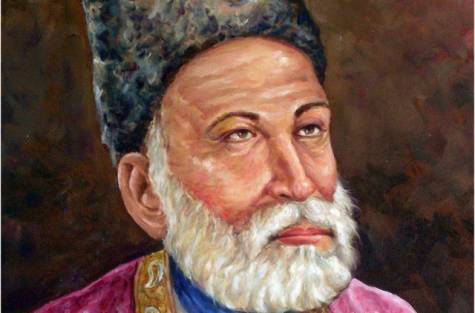
In a thrilling discovery for lovers of Urdu poetry, the original manuscript of famous poet Mirza Ghalib’s verses has miraculously survived after being reported missing and presumed destroyed almost 50 years ago.
Penned in 1821 by Mirza Asadullah Khan Ghalib, the original manuscript — Nuskha-e-Hameediya — survived after being reported missing during the 1940s’ India — Pakistan division.
Commissioned by Nawab Faujdar Mohammad Khan and penned by calligrapher Hafiz Mueenuddin, the manuscript features some of the most authentic and beautiful Urdu poetry ever written.
After years of believing that the manuscript was missing and accepting doctored and amended versions of this work as ‘authentic’, Urdu poetry lovers can finally see the genius of Ghalib as it was originally intended.
The discovery of the original manuscript has sparked celebrations in the creative community, especially the researchers on the works of Mirza Ghailb, many of whom are thrilled that the doctored and amended texts will not go down in history as the definitive poems.
The manuscript was the first of the nine known manuscripts of the ‘Divans of Ghalib’, commissioned when Ghalib was just 24 years of age. Accounts from scholars and publishers say the original manuscript contained almost 1,800 verses, nearly twice the number of verses that were published in the “authorised” version in 1941. While writing, Ghalib did not find the omitted verses fit for publication, but true poetry lovers were ever keen to read the missing text.
In 1969, Professor Hamid Ahmad Khan wrote that he examined the manuscript in 1938, but did not keep extensive notes on his thoughts regarding the omitted piece, later going on to publish a ‘corrected’ version of the poems.
By the time the corrected version of the poems had been released, the actual manuscript had disappeared, presumed missing or possibly destroyed during the India — Pakistan division back in 1947. With no original text as evidence, readers had to accept that Professor Khan’s version as authentic.
Husaini Arts online art gallery and museum takes the credit for the find.
“This is indeed an incredible find and we are extremely thrilled that we now get to read the original manuscript, which is almost 200 years old. Urdu poetry lovers everywhere will be rejoicing at this news that the original text can now be added to the canon of work Mirza Ghalib worked on. The original Nuskha-e-Hameediya is about to be brought to light, and all those who love Urdu poetry are about to see the true, authentic text that Ghalib first intended to be read by the elite in the 19th century,” a Husaini Arts spokesperson told Gulf News.
Ghalib, born Mirza Asadullah Baig Khan on December 27, 1797, was the pre-eminent Indian Urdu and Persian poet during the last years of the Mughal empire. He used pen-names of Ghalib and Asad. During his lifetime, the Mughals were eclipsed and displaced by the British and finally deposed following the defeat of the Indian rebellion of 1857, events that he wrote of.
Most notably, he wrote several ghazals during his lifetime, which have since been interpreted and sung in many different ways by different people. Ghalib, the last great poet of the Mughal era, is considered to be one of the most popular and influential poets of the Urdu language. Today Ghalib remains popular not only in India and Pakistan but also among diaspora communities around the world.
source: http://www.gulfnews.com / Gulf News / Home> News> World> India / by Karuna Madan, Correspondent / August 18th, 2014
Rehan Yar Khan is one of India’s most prolific angel investors . Known as the trend spotter and an entrepreneur himself (founder of Flora2000.com), Rehan Yar Khan started investing back in 2007-08. He was one of the earliest investors in companies like Druva and Ola Cabs that have gone on to raise more than $100 million together. Rehan has more than 20 investments and now, he has raised the first formal fund of INR 300 cores- Orios Venture Partners (read our interview with Rehan back in 2012). Work has been on with respect to the Orios Venture Fund for close to an year now.
While 30% of the fund was raised from institutional investors, majority 70% of the corpus has been raised from ultra high-networth individuals (UHNIs). Reports say that Khan who has personally contributed 5% of the corpus, and the promoters of a Delhi based listed auto manufacturer are said to be one of the anchors in the fund. The fund will be used to invest in Software Product companies. A majority of the total corpus will be set aside for later stage funding (series ‘A’ and ‘B’), while about 10-15 per cent will be reserved towards seed funding. “While we are not restricting to any segment, we see analytics, Big Data, software for mobile phones and new platforms to be promising,” Khan had mentioned in an interview.
Rehan has had many successful investments apart from Druva and Ola Cabs. There are companies like Jigsee (acquired), Sapience, Unbxd, Pretty Secrets, etc. in his portfolio. Khan says that Software products is 1% of our exports while the rest is services, but in the next 10 years products will be 10-20%, which will create some great companies. Orios will be investing INR 1-20 crores in a company and intends to stay invested for seven years or more. In our earlier interview, we asked Rehan about his advice to someone new who’s looking to pitch to him, here’s what he told us,
” It is very important that when you are going to a pitch event or for raising money, you should ideally study, like in college, or when you go for a job you should ideally study the employer you going to join. So when you go for raising funding, you should study the person you are raising funding from. You should study what works while raising funding, speak to a lot to other entrepreneurs, do a lot of research, attend few events and learn and go prepared. “
source: http://www.yourstory.com / Home> Inspire, Innovate, Ignite / by Jubin Mehta / August 19th, 2014
Jubin Mehta
Jubin is an old timer at YourStory. Deeply entrenched in the Indian startup ecosystem, he has written about more than 1000 startups. With an engineering background and a keen interest in data analysis, his passion for writing and entrepreneurship makes him a perfect match for Yourstory. He operates from the mountains in Dharamshala where he also runs a hackbase. He can be reached on Twitter @jub_in and on mail at jubin@yourstory.com
Less than a week ago, gynaecologist Laila Beegum supervised the birthing of a set of identical twins to a couple from Kodinhi village, now known globally for the high number of multiple births. The twin babies born on August 7 this year took the total number of such deliveries witnessed by her to 452.
Though the total number of twins in the village has now crossed 500, the mystery behind the phenomenon is yet to be unravelled.
Located close to Tirurangadi town in Malappuram district, Kodinhi village, with its high twinning rate, garnered global media attention around six years ago. At Kodinhi, twins account for 42 per 1,000 live births while the global average of twinning is reportedly around six per 1,000.
Brazil’s Candido Godoi and Nigeria’s Igbo-Ora have witnessed similar birth phenomenon. Attempts by several scientists and organisations to find the secret behind the high twinning rate have failed to bear fruit.
Recently, Dr N K Sribiju, public health consultant, Taluk Hospital, Tirurangadi, approached the state government seeking permission to conduct a genetic study on the local populace.
“Surely, there would be a scientific reason behind the birth of a huge number of twins in such a small area. But, the secret can be revealed only through a detailed genetic and environment study. We are awaiting permission from the ethical committee of the Rajiv Gandhi Centre for Biotechnology at Thiruvananthapuram for the same,” said Dr Sribiju.
Significantly, more than 90 per cent of the couples from Kodinhi who reported twin births conceived normally. “Hence, IVF treatment cannot be considered as a reason for the high rate of twinning in Kodinhi,” Dr Biju said.
Dr Laila, who runs Laila’s Hospital, Chemmad, said multiple births are not just being reported by persons born and brought up here.
“Many women who came to Kodinhi after marrying someone here have also experienced twin birth. So, it could be due to some mysterious element of nature.
“Earlier, we conducted a water test but the results were not conclusive,” Dr Laila added.
Twins and Kins Association (TAKA) of Kodinhi believes that their village has the most density of twins in the world and is planning to approach officials of the Guinness Book to claim a record.
Get-together
“There are families having three pairs of twins and triplets at home. A 90-year-old man here is the eldest among the twins who are alive,” said Bhaskaran Pullani, president, Twins and Kins Association, which is planning to organise a get-together of all Kodinhi twins.
source: http://www.newindianexpress.com / The New Indian Express / Home> States> Kerala / by Santosh Christy / August 17th, 2014
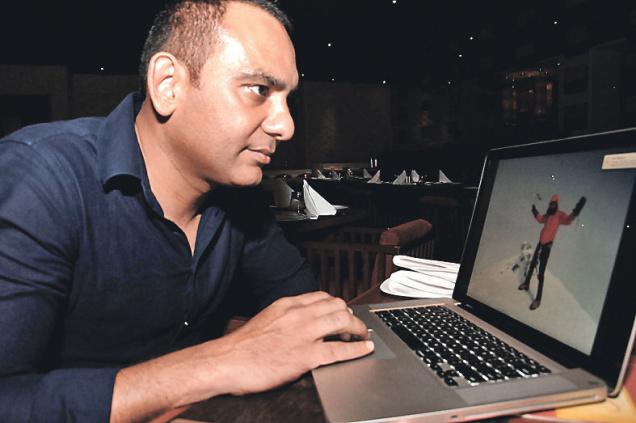
Khasim Raza conquers Mt. Elbrus, wants to climb all ‘Seven Summits’ by 2017. Though the ascent to the base camp which is at an elevation of 10,000 ft by chairlift is easy, it took nine days for his five-member team and guide to scale the mountain.
Vijayawada-born Khasim Raza made big news in the city when he climbed the Khilimanjaro, the highest free-standing mountain in the world. Now he is back in the limelight by conquering Mt. Elbrus the highest mountain in Europe. He plans to climb all ‘Seven Summits’ of the world by 2017.
It is the dream of every mountaineer to climb all seven mountains on the list. Mount Everest is the highest peak with an elevation of 29,020 feet. It is followed by Aconcagua (22,838 ft), McKinley (20,322 ft), Kilimanjaro (19,341 ft), Elbrus (18,510 ft), Vinson (16,050), Puncak Jaya (16,050 ft) and Kosciuszko (7,310). (The names of eight mountains are listed because there are two different lists of the Seven Summits. Mountaineer Bass lists Kosciuszko in his list, but mountaineer Messner lists Puncak Jaya in his list.)
Mr Raza did his schooling in N.S.M. Public School here and went on to become a British citizen.
He now operates with Dubai has his base. His father, owner of Metro Opticals in Gandhi Nagar, is one of the first opticians of the town. Mr Raza’s sights are trained next on Aconcagua, the second highest peak in the list, located in South America.
“Every mountain teaches you something. Kili (the affectionate way he refers to the mountain) taught me how to deal with wind speeds and high altitude, Elbrus taught me about cold. It is all snow and ice there,” he said.
Though the ascent to the base camp which is at an elevation of 10,000 ft by chairlift is easy, it took nine days for his five-member team and guide to scale the mountain. “We lived in accommodation that is similar to a container used for shipping goods. Every alternate day we went out on acclimatisation climbs. Unlike in Kili, the gradients on Elbrus are very steep,” he said. He says the view from the mountain slopes were really breathtaking.
Besides mountaineering, Mr Raza is every inch an adventure junkie. Just a couple of months ago he and some friends went on a cross-country cycling expedition in Cyprus. “I want to share my experiences to inspire youngsters to become more adventures and pursue challenges,” he said.
source: http://www.thehindu.com / The Hindu / Home> News> Cities> Vijayawada / by G. Venkataramana Rao / Vijayawada – August 09th, 2014
This innovator made a kit that frees women in many parts of the world of the threat of infection during childbirth.
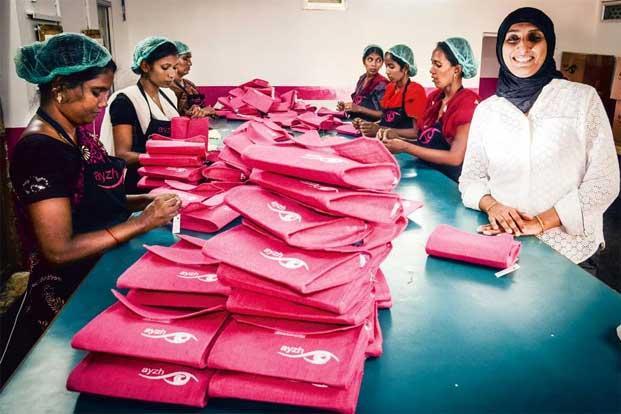
Zubaida Bai at the production facility of ayzh, 30km from Chennai. Photo: Nathan G/Mint
Freedom from risky childbirth | Zubaida Bai
Growing up in Chennai, a young Zubaida Bai wanted to study further after completing class XII. A reasonable request, except that in her family, nobody—male or female—had made it to college. The women in her family were usually married in their teens. Plus, Zubaida’s father did not have the finances to put her through college.
Undeterred, she decided to fight fate.
At 33, Zubaida Bai was the founder-CEO of ayzh (pronounced “eyes”), a low-cost women’s healthcare company based in Chennai and Colorado, US. Her biggest achievement: JANMA, a birthing kit sold and distributed through non-governmental organizations and healthcare companies.
JANMA (birth in Hindi) kits consist of six things: an apron, a sheet, a hand sanitizer, an antiseptic soap, a cord clip and a surgical blade. They meet the World Health Organization (WHO) guidelines of “six cleans” during childbirth—clean hands of the attendant, clean surface, clean blade, clean cord tie, clean towels to dry the baby and wrap it, and clean cloth to wrap the mother. A jute purse in five colours contains the kit and and it can be used as a purse after delivery.
From mundane struggles with a traditional Muslim family to being a successful innovator, Zubaida Bai’s journey has been one about exercising the right to free choice although that involved selling her jewellery to get ayzh off the ground.
Soon after school, Zubaida took a year off, selling retail banking services door-to-door for ABN Amro, cold-calling customers and earning her first pay cheque when she was 17. Soon she was in college, studying mechanical engineering, and went on to become the first graduate in her entire family. After graduation, she dreamt of designing cars, but ended up at auto-parts company Sundram Fasteners. “I was the only girl on the entire floor, all I did every day was change the dimensions on a CAD design or take printouts. I was getting fat from all the thayir saadam (curd rice),” she recalls.
She was soon planning her escape. Scouring the Internet for a master’s degree, she secretly applied to various universities. After an acceptance letter for a fully funded scholarship to an M.Tech programme at Dalarna University, Sweden, arrived, she told her parents. Her father thought this was one of those infamous scams that promised you a job and ended up hiring you as domestic labour. But finally, Zubaida left home.
In the summer of her first semester in college, she took a road trip, was part of a students’ exchange programme, visited Poland and, during a period of self-discovery, she decided to start wearing the hijab, though no one in her family did.
Back in Chennai before her second semester ended and coaxed to meet a potential suitor, Habib Anwar, she feared the worst. “(But) he said that he was looking for an educated girl, who he would like to work rather than sit at home and squabble with his relatives,” says Zubaida.
Anwar supported Zubaida’s plan to study further as well. Soon they were married. Much later, he would be instrumental in providing the necessary support to make ayzh a success.
In 2006, Zubaida gave birth to the first of her three sons, Yasin. It was a painful experience. She needed surgery, was forced to rest for two months and took close to a year to recover fully. In her childhood, she had witnessed the lack of healthcare facilities for her mother, close relatives and community, and the lack of financial resources to pay for these if they did happen to be available.
Sometime in 2009, as part of a master’s in business administration in global social and sustainable enterprises at the University of Colorado, US, Zubaida came to India to research ideas that could be developed into products. She worked with Chennai-based non-profit Rural Innovations Network (RIN), making the JS Milker, a vacuum-driven cow-milking machine, low-cost and commercially viable. In Rajasthan, she met a village dai (midwife) who had just delivered a baby with a grass-cutting sickle.
This was her a-ha moment. She started reading up on institutional childbirth. She stumbled upon a clean birth kit (CBK) while attending a tech event in Denver, US, promoted by the non-profit healthcare organization PATH. The kit had a plastic sheet, a Topaz blade, a piece of thread, a small square of soap, and a plastic coin. All this was wrapped in a box with instructions. She then travelled halfway across the world to Nepal, where a group of women was assembling the kit.
Unimpressed with the quality of the kit, she searched for more samples, but found none that matched her expectations. But she knew she was on to something, and started building her own improved version, using off-the-shelf components and assembling them.
By 2010, she had put together a rudimentary clean birthing kit called JANMA, which she tested in Bangalore, through her gynaecologist. The innovation won the Global Social Venture Competition for business plans at the Indian School of Business, Hyderabad in March 2010, and followed it up by topping the Camino Real Venture Competition at the University of Texas at El Paso, US, later that month.
Zubaida Bai also received a 2010-11 fellowship related to maternal health from Ashoka, an organization which identifies and invests in social entrepreneurs. At one event, she met the who’s who of the world of maternal health. “They were folks who were shaping the future of maternal health. These are people I would have found impossible to meet, especially Wendy Graham, who does research on how clean birth kits prevent infections,” she says. Her interactions confirmed her belief that a product such as JANMA would have a market.
By 2011, they had sold 2,000-3,000 JANMA kits, priced at $2-5 (now around Rs.120-300), in India and had made some inroads into the US.
After the initial success, though, Zubaida Bai hit a wall. Ayzh needed funds for operating costs, scaling up and distribution channels. Forced to return to India after completing her course at the University of Colorado, Zubaida and Anwar had two MBAs and two children between them, and no jobs. Those were trying times.
Even as friends and family advised one of them to get a job, Zubaida and Anwar calculated that they needed $300,000 for one-and-a-half years for ayzh to get off the ground. A social impact firm assured them of $50,000 if they could raise $100,000 and $20,000 if they raised nothing. Everything hung in the balance till the end of 2012, when they were awarded the $80,000 Echoing Green fellowship. They also got a Canadian government grant for another $100,000, while an individual investor put in another $100,000.
This was the turning point. In 2013, they clocked $100,000 in revenue, and sold 50,000 kits in India, Haiti, Laos, Afghanistan and Africa.
The JANMA kit’s relevance is irrefutable. According to the UN, India’s maternal mortality ratio per 100,000 live births reduced by 65%, from 560 in 1990 to 190 in 2013. But that still means 50,000 women die every year in India while giving birth. Seventeen per cent of the women die from preventable infections. More than 300,000 infants in India die the day they are born, according to the report “Ending Newborn Deaths, Ensuring Every Baby Survives”, by the non-profit Save the Children and Joy Lawn, professor at the London School of Hygiene and Tropical Medicine, UK.
Zubaida’s goal for ayzh is three-pronged. She wants women to have power over their health by introducing new products for post-partum haemorrhage, a new-born kit, maternity pad and other innovations in reproductive health and family planning. Instead of creating products from scratch she wants to leverage the ayzh distribution platform to aggregate and sell products already available in the market. And, finally, she wants to launch an innovation lab for low-cost healthcare products, so that an entrepreneur with an idea does not have to go through the same grind that they did.
To realize this ambition they are currently in the process of raising $3 million in funding—a huge sum for a social enterprise selling low-cost products to bottom-of-the-pyramid customers—from social impact investors.
“We want to build a corporate entity, with a group of companies that will focus on women’s health and empowerment. Habib saw his mother struggle doing sewing and embroidery and I saw my mother struggle as well. They always brought in money, but were not appreciated and treated as an asset,” says Zubaida.
Nelson Vinod Moses is a Bangalore-based freelance journalist who writes on social entrepreneurship.
source: http://www.livemint.com / Live Mint & The Wall Street Journal / Home> Lounge> Business of Life> Indulge / Home – Leisure / by Nelson Vinod Moses / Saturday – August 09th, 2014
Actor-filmmaker Farhan Akhtar, who recently received the best actor award from the Dadasaheb Phalke Academy here, has been honoured at the ongoing Indian Film Festival of Melbourne (IFFM).
“Thank you to the jury and Government of Victoria, Australia for honouring me with best actor at the Indian Film Festival of Melbourne,” Farhan tweeted.
The actor bagged the best actor award for his work in “Bhaag Milkha Bhaag”.
Rajkummar Rao, who was honoured with the National Award in New Delhi for his performance in “Shahid”, was also nominated in the category.
Megastar Amitabh Bachchan was honoured with the International Screen Icon award at fest.
IFFM — the annual celebration of Indian cinema in Australia — began May 1 and will conclude May 11. The festival launched the Indian Film Festival of Melbourne Awards this year and announced the winners May 2.
source: http://www.timesofindia.indiatimes.com / The Times of India / Home> Entertainment> Hindi> Bollywood / IANS / May 05th, 2014
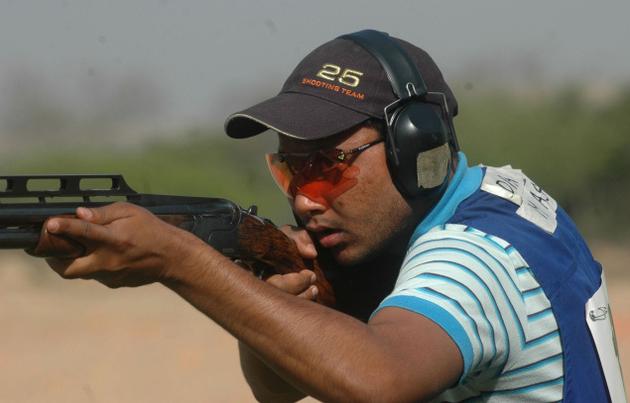
Shooting contibuted yet another medal to India’s medal tally as Asab Mohammed Rizvi grabbed the bronze medal in men’s double trap event. Another Indian shooter Ankur Mittal, who was leading after the qualification round finished in 5th position.
Asab defeated Nathan Xuereb of Malta 26-24 in the bronze medal play-off. Both the Indian shooters started off very well in the qualification round as Ankur and Asab with 135 and 132 points finished on 1st and 2nd respectively in the qualification round to make it to the semifinals.
Asab’s start to the semifinal round was a bit shaky as he missed 3 of the first 10 targets, but after that he didn’t miss a single shot in his next 10 rounds and scored a good 27/30. Along with Asab, two Englishmen Steven Scott and Matthew French finished with the same scoreline as the contest ended in three-way shoot-off.
Asab unfortunately missed one target in the shoot-off as the other two shooters shot a perfect 2/2 to qualify for the gold medal match.
In bronze medal play-off, Asab was leading 8-6 at one stage but then the 17 year old shooter from Malta,Nathan Xuereb made a good comeback to level the scores to 14-14. The inexperience of the Maltian shooter came into play as he missed few shots towards the end of the match.
Steven Scott shot a perfect 30 to clinch the gold medal and his compatriot Matthew French with a score of 29 won the silver medal.
With this medal, India’s medal tally has now gone up to 19 medals which includes 5 golds, 8 silvers and 6 bronze. England, Australia and Scotland hold the top 3 positions respectively.
Final Standings:
Position
Name
Medal
1
Steven Scott (ENG)
GOLD
2
Matthew French (ENG)
SILVER
3
Asab Mohammed (IND)
BRONZE
source: http://www.sportskeeda.com / SportsKeeda / Home> News> Shooting / by Vishal Kungwani / July 27th, 2014
If World War I resonates in such a weak, confused, and even negative way with Europeans, it is little wonder that young Africans or Indians see even smaller stakes in this year’s centenary ceremonies. This is why it is crucial to understand the war’s global scope and the role played by the British Empire and Commonwealth
Did you know that India fought against Britain in the First World War? That, at least, is the belief of over a quarter of Indians, according to a British Council survey earlier this year. It is no consolation that the situation is little better in Europe. Two years ago, another survey showed that over half of Britons didn’t know whether India had contributed over 1,000 troops. This might be a forgivable gap in knowledge, if the real figure were not well over a million.
As Commonwealth heads of state in Glasgow commemorated the First World War centenary on Monday, many in the nations of the Commonwealth — India above all — will therefore wonder why they should care about, much less commemorate, a war fought largely in Europe, led by European politicians, commanded by European officers, and resolved to the benefit of engorged European empires.
War’s legacy
This uninterest is understandable. Even at home, in the war’s European locales, we are separated from its horrors not just by the chasm of multiple generations — the war’s last veteran, Florence Green, died in February 2012 at the age of 110 — but also a growing cultural gap. In a nation of immigrants, increasing numbers of children have grown up without the childhood visits to memorial-strewn French villages or classroom recitation of the war poets that were once ubiquitous. No surprise, then, that a survey in 2012 found that fewer than half of Britons aged 16 to 24 could identify the year that the war broke out.
The war’s legacy has also grown more complicated, as evidenced in the United Kingdom by last year’s political skirmishing among politicians and historians. The (now former) British Education Minister, Michael Gove, attacked the left-wing narrative of a cruel and futile war prosecuted by feckless generals. He argued, instead, “those who fought were not dupes but conscious believers in king and country, committed to defending the western liberal order.” Boris Johnson, the Mayor of London, agreed, insisting, “German militarism was at the root of the First World War.”
In turn, a slew of prominent historians, led by the Regius Professor of History at the University of Cambridge, Richard Evans, retorted that Britain and her allies had fought for dubious aims, against adversaries who were far from evil incarnate. As the writer Kenan Malik put it in a recent essay, “Germany had expansionist aims and a toxically racist culture. Britain, however, was not much different.” Perhaps, these sceptics implied, triumphalism ought to be avoided in the centenary commemorations.
If the war resonates in such a weak, confused, and even negative way with Europeans, it is little wonder that young Africans or Indians see even smaller stakes in this year’s ceremonies. This is why it is crucial to understand the global scope of the war, and the role — often an involuntary one — played by the Empire and Commonwealth. The war’s origins may lie in the Balkans, and it may be the European battlefields that stick in popular memory — the Somme, Ypres, and so on — but the non-European world was profoundly affected, and in turn transformed by the war.
Sourcing manpower
Remember that British forces in the Gold Coast (modern day Ghana) mobilised four days before the British declaration of war, that the first Allied shots were fired in the British and French invasion of German Togoland, and that the first Allied victory came here, not in Europe. Paris and London would later carve up that territory, like so many other spoils of war.
In addition to being a battleground, the British Empire also served as a reservoir of manpower on an astonishing scale; 1,40,000 men served in the Chinese Labour Corps, a force of which most Europeans will never have heard. The West Indies contributed 16,000 men. As John Reader explains in his magisterial history, Africa: A Biography of the Continent, by the war’s end, around two million Africans had participated in the war effort, half of them troops. Around 2,00,000 died. The French colonies alone sent just under half-a-million Africans to fight in Europe, over a tenth of these coming from Algeria. Kenya, Ghana and, above all, Nigeria which provided the lion’s share for Britain.
It is also crucial not to mince words on the nature of this participation. At first, much recruitment was, notionally, voluntary. But, as in India, local political elites were incentivised to supply manpower, and they used all means at their disposal to push villagers into service. As the historian Ranajit Guha explained to journalist Seema Sirohi, “a widespread proxy system developed in the Punjab, whereby a prosperous villager would buy a poor neighbour’s son and donate him to the recruitment centre as his own contribution.” Eventually, the French, the British, the Germans and the Belgians all used the force of law and arms to compel Africans to join their armies.
How were these troops used? Overall, 6,50,000 colonial troops were deployed to Europe. The French, in particular, sent Africans to Europe in large numbers. Senegalese battalions served with distinction at Ypres, for instance, and tens of thousands of African troops even stayed behind for the post-war occupation of the Rhineland (in Mein Kampf, Hitler complained that Jews were responsible for bringing Blacks into the Rhineland). The academic Christian Koller notes that one French general believed West Africans made good soldiers because of their “underdeveloped nervous system and their hereditary fatalism,” permitting them to sleep in trenches if necessary.
London took a different line (despite the urgings of the War Office and others, like Winston Churchill). Much as Britain refused to train African-American soldiers who had entered the war, and rejected Indian participation in the Crimean and Boer Wars, it similarly recoiled from the idea of pitting Africans against white soldiers, and — with the exception of some deployments to the Middle East — preferred to use them mostly within Africa against other Africans.
Indian contribution
The Empire’s biggest contribution was by India. This included 3.7 million tonnes of supplies, over 10,000 nurses, 1,70,000 animals, £146m of Indian revenue, and political support — including that of Gandhi, who helped recruit Indian volunteers in the face of nationalist opposition. But most important of all was the Indian Army, the largest volunteer force in the world, which provided 1.1 million troops to serve overseas, principally in the form of six expeditionary forces labelled ‘A’ to ‘F’. Over 74,000 were killed — five times more than the combined death toll from every war that India has fought since independence — and 80,000 were held prisoner. As the Conservative politician Baroness Sayeeda Warsi put it last year, “our boys weren’t just Tommies — they were Tariqs and Tajinders too.”
It would take volumes to list their achievements in full. These forces not only protected the northwest of India, but also buttressed British garrisons in Egypt, Singapore and China, as well as contributing to seminal battles of the Western Front, such as the Somme and Neuve Chapelle. At Ypres, in particular, Indian casualties were exceptionally high, compounded by the shock of German chlorine gas in April 1915.
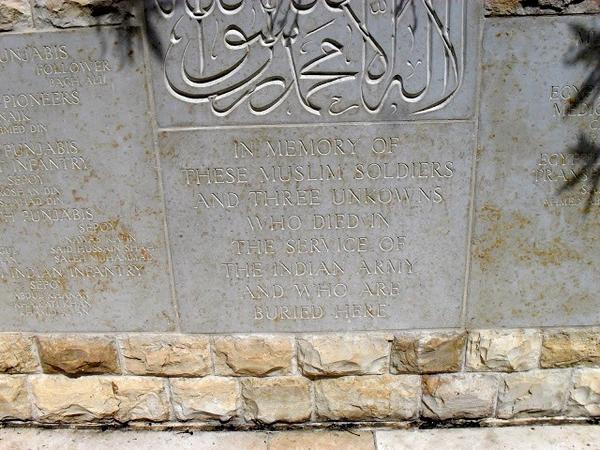
But Indian forces had their greatest impact in West Asia, with 60 per cent of all Indian troops serving in Mesopotamia (modern day Iraq), and another 10 per cent in Egypt and Palestine. As recorded in a new book by Kristian Coates Ulrichsen, The First World War in the Middle East, British and Indian troops in Mesopotamia suffered over 2,00,000 casualties from sickness alone in just one year, 1916. On Jerusalem’s capture the next year, it was Indian Muslim troops who were tasked with protecting the Dome of the Rock.
When the Viceroy laid the foundation stone for India Gate in 1921, he declared, “the stirring tales of individual heroism will live for ever in the annals of this country.” Six years later, French Marshal Ferdinand Foch told Indians gathered at Neuve Chapelle, “proclaim how your countrymen drenched with their blood the cold northern land of France and Flanders.” These words have faded. No surprise, in an age when the newly appointed head of the Indian Council of Historical Research is a man more interested in questions like, “Why are the fish and the pebbles in Ganga not attaining Moksha?” than supporting real history. For the Indians who fought for the Empire, earning a staggering 13,000 gallantry medals in the process, this legacy of ignorance is a scandal.
(Shashank Joshi is a Senior Research Fellow of the Royal United Services Institute in London, and a PhD candidate at Harvard University.)
source: http://www.thehindu.com / The Hindu / Home> Opinion> Lead / by Shashank Joshi / August 05th, 2014