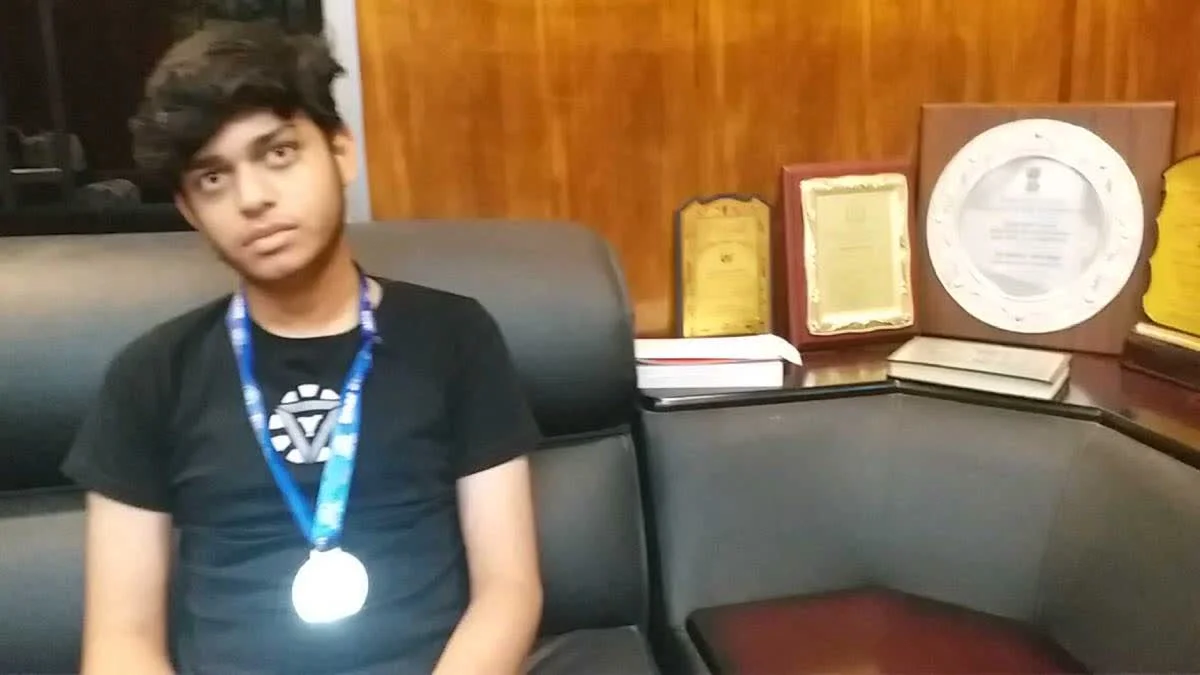
Silver medal for the shooter has brought pride not only to his family but also to his city and the community.
Bhagalpur :
Syed Saad Hussaini, a promising young shooter from Bhagalpur in Bihar, has won the silver medal at the state-level Junior Rifle Shooting Championship. The victory has brought pride not only to his family but also to his city and the community.
Saad Hussaini, son of Syed Shah Fakhre Alam Hasan, a senior official of Pir Dumaria Shah’s monastery, competed against a large pool of state-level shooters at the five-day championship held by the Bihar State Rifle Association in Siwan district.
The recent competition saw participation from numerous shooters across Bihar. Saad’s exceptional performance in the 50m rifle shooting category earned him the silver medal, marking a historic achievement for Bhagalpur. This is the first time a shooter from Bhagalpur has secured such a high rank in a junior shooting event at the state level.
In a ceremony hosted by the Monger Rifle Association Shooting Club, Saad was felicitated by Monger SSP Imran Masood for his outstanding performance. The recognition is a testament to his hard work and dedication to the sport.
Saad Hussaini expressed his gratitude, stating, “I am thrilled to have achieved this milestone. It is the result of relentless effort and dedication. I extend my thanks to everyone who supported me throughout this journey.” He further mentioned his aspirations to compete at the national and international levels, with plans to prepare for the Olympics in the future.
Currently focused on memorisation of the Noble Qur’an, Saad plans to chart his path forward in shooting while continuing his religious studies. His achievement has sparked a sense of pride and inspiration within the community, highlighting the potential and talent emerging from Bhagalpur.
source: http://www.clarionindia.net / Clarion India / Home> Editors’s Pick> Indian Muslim> by Team Clarion / August 07th, 2024
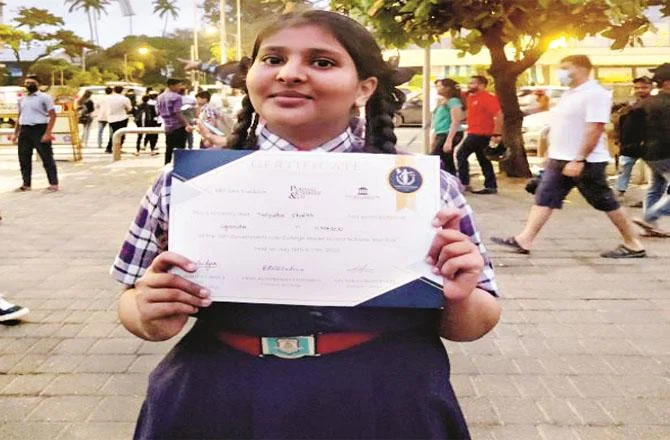
Mumbai’s 16-year-old prodigy fights all odds to study in Singapore
Mumbai :
Sheikh Tayyaba Kausar Muhammad Arif, a 16-year-old student from Holy Mother English High School in Malvani in the northern area of Malad in the country’s financial capital, has secured a ₹2 crore scholarship to study at the United World College (UWC) in Singapore, starting August 10. Her achievement has brought immense pride to her family and community.
Tayyaba scored 93% in her SSC exams despite her modest background. Her father is a tailor, her mother a homemaker, and she has two younger sisters. Her disciplined study routine included early mornings and late nights, demonstrating her dedication.
Her journey began in October 2023 with an essay competition, followed by a rigorous selection process and a challenging interview in Pune on January 20. “Without the support from my school and NGOs, the documentation process would have been daunting,” she said.
Principal Rafiq Siddiqui of the Holy Mother School played a crucial role. He recalled how Tayyaba, who had to leave her previous school due to unpaid fees, joined Holy Mother in the sixth grade. “Moved by her determination, we assured her she’d never have to worry about fees again,” he said. NGOs like Smile Foundation and Teach for India also provided vital support.
In an interview, Tayyaba expressed her gratitude: “I thank Allah, my parents, my sisters, my principal, and the NGOs. I am excited to study in Singapore but aim to return and serve my country.”
Tayyaba’s journey from Mumbai’s Malvani to securing a ₹2 crore UWC scholarship is a testament to perseverance, hard work, and community support. Her success is an inspiration, showing that with determination and the right support, anything can be made possible.
source: http://www.clarionindia.net / Clarion India / Home> Editors’s Pick> Indian Muslim> by Team Clarion / August 07th, 2024
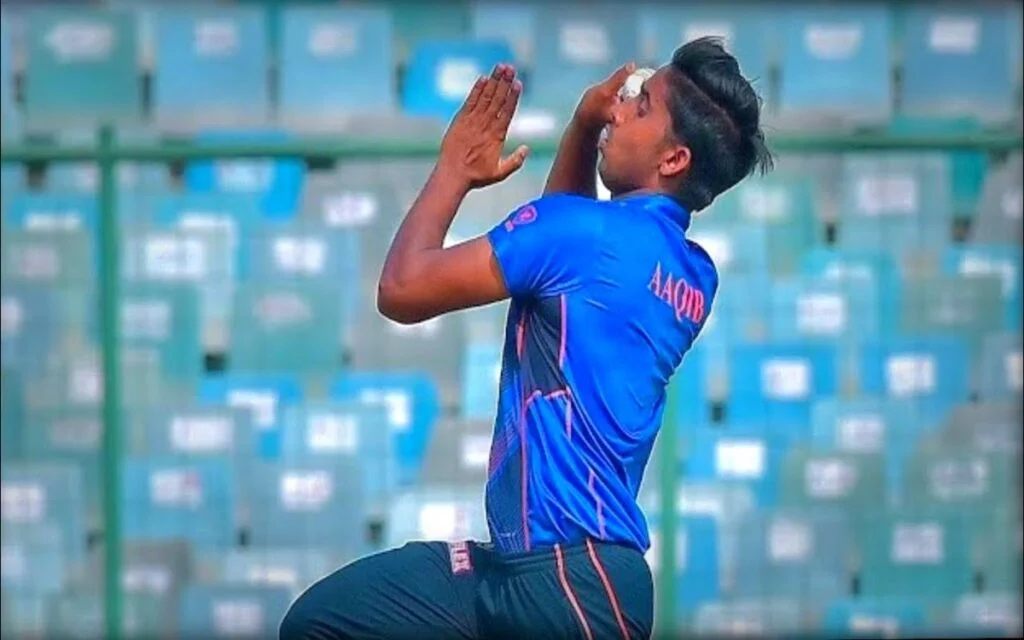
The selection of the young lad from Saharanpur to the national cricket team comes at a time when India is looking to rebuild and experiment with new talent
New Delhi :
Aaqib Khan, a rising cricketer from the domestic circuit, has earned his maiden call-up to the Indian national cricket team. He has been selected for India ‘A’ team for the forthcoming ACC Men’s T20 Emerging Teams Asia Cup, scheduled in Oman from October 18 to 27.
The selection marks a significant moment in Khan’s career, signalling his emergence as one of the most promising cricketers in the country. Hailing from Saharanpur in Uttar Pradesh, he received recognition for his outstanding performance in the recent Duleep Trophy, during which he claimed eight wickets across two matches.
Aaqib Khan has been a consistent performer in domestic cricket, particularly excelling in first-class and T20 formats. His journey began with the domestic leagues, where he showcased exceptional skills as both a bowler and a batsman. Known for his sharp bowling variations, Khan has been particularly effective in the T20 format, with his ability to adapt to different match situations.
His breakthrough came during the Ranji Trophy, where he played a pivotal role for his team by taking key wickets and maintaining a strong economy rate. His performances did not go unnoticed, and soon he became a sought-after player in the domestic T20 leagues, including the Indian Premier League (IPL), where he was picked by a top franchise. His impressive stint in the IPL, where he played alongside international stars, further solidified his reputation as a bright prospect for the national team.
Khan is primarily known for his fast bowling, with the ability to consistently bowl at speeds exceeding 140 km/h. His control and accuracy in delivering yorkers and slower balls make him a lethal bowler in the shorter formats of the game. In addition, he has demonstrated the ability to swing the ball both ways, making him a potent threat in all conditions. His ability to maintain composure under pressure has been a key factor in his rise to prominence.
As a lower-order batsman, Khan has shown resilience and the ability to contribute valuable runs in crunch situations, making him a versatile all-rounder option for the team. His fitness levels and work ethic have also been highly praised by coaches and teammates alike.
On his selection for the India ‘A’ team, Aaqib Khan, while speaking to the Times of India, said, “I learned about my selection through social media when the squad was announced today. I am extremely pleased to see my name included. I extend my gratitude to the BCCI and the Uttar Pradesh Cricket Association for acknowledging my efforts and providing me with this opportunity.”
The selectors see Khan as a potential game-changer, especially in the T20 and One-Day International (ODI) formats. His inclusion is part of India’s strategy to inject fresh talent into the squad and build a strong, competitive unit for upcoming international tournaments.
Aaqib Khan’s selection is a testament to his hard work, talent, and dedication. As he prepares to don the Indian jersey, cricket fans across the country will be eagerly watching his progress, hoping he can contribute to India’s success on the world stage.
source: http://www.clarionindia.net / Clarion India / Home> Editors’s Pick> Indian Muslim> Sports / by Team Clarion / October 16th, 2024
This is the first time in Indian history since the PMO was set up in 1977 when there is no Muslim representation among its officials.
New Delhi:
Muslims in India have the worst representation in almost every socio-economic domain with no Muslims among 52 officials posted at the Prime Minister’s Office and no minister in the current cabinet, records a book that deals with data.
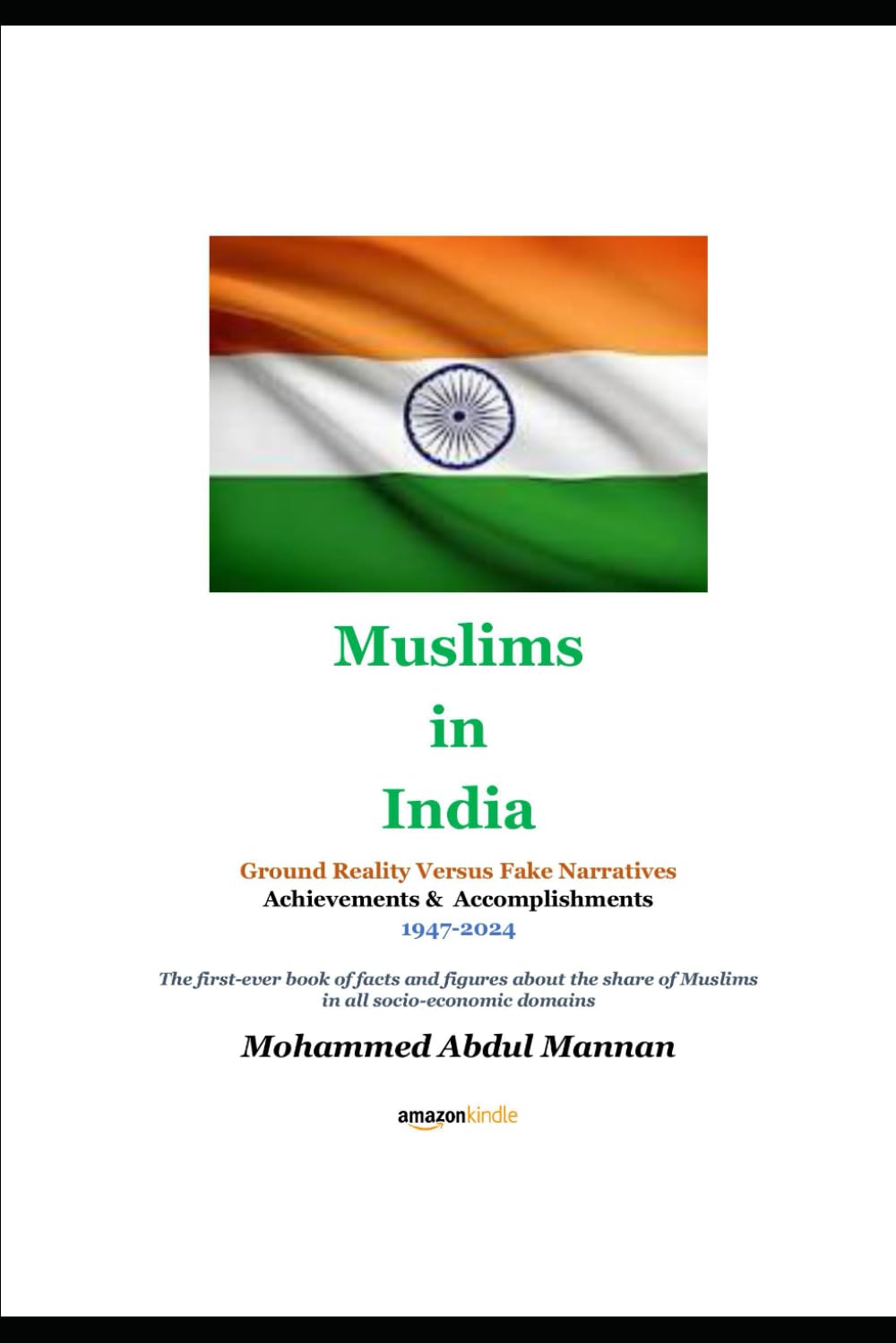
The book titled “Muslims in India – Ground Reality Versus Fake Narratives – Achievements & Accomplishment” written by Mohammed Abdul Mannan gathered the data with regard to the Muslim representation.
“This is history’s lowest-ever representation of Muslims in the Union governance levels,” said the author, who has penned 12 books including the latest “A Nation in Descent – India after the 1990s.”
This is the first time in history since the PMO was set up in 1977 when there is no Muslim representation among its officials. Earlier, the PMO was considered a part of the government in 1961 by the allocation of business rules. PMO was originally set up as the Prime Minister’s Secretariat (PMS) in 1947.
According to the book, there is one Muslim among 115 officials of the Ministry of External Affairs and 49 officials of the Ministry of Cooperation. “The 54 Union Ministries and 93 Departments under their jurisdictions in New Delhi have a total of 11131 officials from the secretary level downwards, of which 178 are Muslims,” noted the book.
Six ministries and 11 departments have no Muslims among the total 506 officials while only two Muslim are higher-ranked secretaries.
When it comes to the political representation, out of 60,693 elected MLAs, 3198 are Muslims, out of 9430 Lok Sabha MPs elected, only 527 were Muslims and of 2176 Rajya Sabha members, 329 were Muslims so far.
The book revealed that only 57 Muslims were appointed governors among 529, out of total 539 chief ministers, only 10 were Muslims and 80 of the total 1919 mayors across the cities were Muslims.
With regard to the Vice Chancellors in the universities, 62 VCs were Muslims among 1017 at the Central Universities while 219 were Muslims among 8633 VCs of the state universities.
721 of the total 13951 District Session Judges were Muslims.
According to the author, life for the 200 million-strong community has remained in a whirlpool of front-paged discrimination in every socio-economic domain since the 1990s. No Muslim representation has existed in the Union government since July 2022, a first in history. Muslims, according to the US-based Council on Foreign Relations (CFR), “face discrimination in employment and education and encounter barriers to achieving wealth and political power”.
According to the book, out of the 4123 Legislative Assembly seats across India, Muslim voters-dominated seats stand at 450. There are 65 seats across 12 states and two Union Territories that have over 25 perc ent Muslim population. As many as 65 seats have over 25 per cent of Muslims voters. Muslim votes decide the outcome in more than 100 assembly constituencies in Telangana and Andhra Pradesh. In Uttar Pradesh, India’s most populous state, 29 districts are Muslim-majority districts with 137 assembly seats. In Madhya Pradesh, the Muslim vote factor is crucial in at least 22 seats. In Gujarat, 17 assembly seats have significant Muslim voters. There are 40 Lok Sabha seats in Bihar out of which on 34 Muslim votes matter.
source: http://www.clarionindia.net / Clarion India / Home> Big Story> India> Politics / by Waquar Hasan, Clarion India / October 18th, 2024
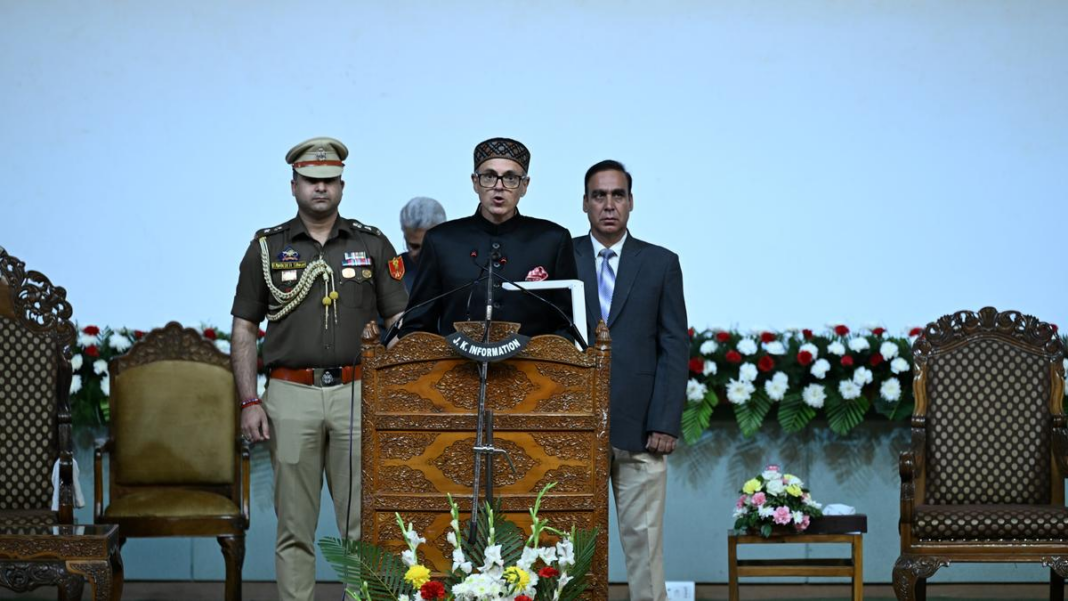
National Conference (NC) leader Omar Abdullah took oath as the first Chief Minister of Jammu and Kashmir since its reorganisation as a Union Territory. The swearing-in ceremony, held at the Sher-i-Kashmir International Convention Centre (SKICC) on the banks of Dal Lake in Srinagar, was administered by Lieutenant Governor Manoj Saxena.
The event marks a significant moment in the political landscape of Jammu and Kashmir, as it comes after a 6.5-year period without a locally elected government. “It is a red-letter day,” said NC spokesperson Imran Nabi Dar, adding, “May God give strength to Omar Abdullah to raise the people’s voice.”
The ceremony saw the presence of several top leaders from the INDIA alliance, including Congress President Mallikarjun Kharge, Rahul Gandhi, Priyanka Gandhi, Samajwadi Party leader Akhilesh Yadav, CPI(M) leader Prakash Karat, CPI leader D. Raja, DMK’s Kanimozhi, and NCP’s Supriya Sule.
Omar Abdullah paid homage to his grandfather, National Conference founder Sheikh Muhammad Abdullah, at his mausoleum before the swearing-in.
Speaking ahead of the ceremony, Abdullah acknowledged the challenges of leading Jammu and Kashmir as a Union Territory: “Being a Chief Minister of a Union Territory is a different matter altogether. It has its own challenges, but I hope this status is temporary.”
Abdullah emphasised that his government’s priority would be to work toward restoring Jammu and Kashmir’s statehood, which was revoked in 2019 following the abrogation of Article 370. He stated, “We look forward to working in cooperation with the government of India to resolve the people’s problems, and the best way to do that is by restoring statehood to J&K.”
The National Conference-Congress alliance secured 48 seats in the 90-member assembly , with NC winning 42 and Congress six. This decisive victory allowed Abdullah to form the government, which comes after Jammu and Kashmir had been under Presidential rule since 2018, following the collapse of the PDP-BJP coalition government led by Mehbooba Mufti.
source: http://www.maktoobmedia.com / MaktoobMedia.com / Home>India / by Maktoob Staff / October 16t, 2024
Maulana Umrain Mahfuz Rahmani laying foundation of the Millat Urdu High School, Malegaon
Malegaon:
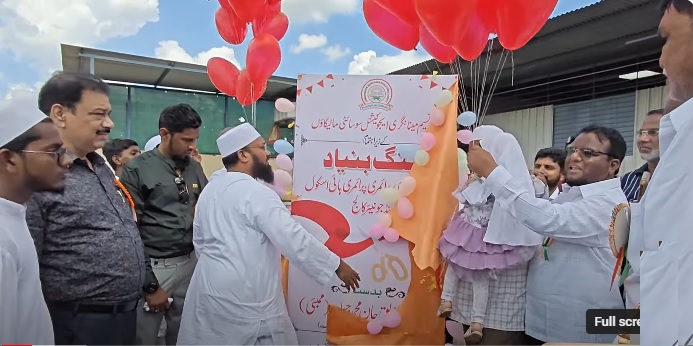
The educational journey of the Ahmed Naseem Meena Nagri Education Society is set to become a defining milestone for New Malegaon, thanks to the remarkable efforts of Shakir Sir. In honour of his legacy, Shakir Sir has been instrumental in establishing new educational institutions including the Abdul Shakur Pre-Primary and Primary School and Junior College, Millat Urdu High School, Insha Paramedical College and Diploma Courses. The inauguration ceremony of these institutions was held near Labbaik Hotel in the Malda area of New Malegaon. The residents of Malegaon are expected to benefit greatly from these new facilities.
The foundation stone ceremony of Millat Urdu High School was conducted by General Secretary of All India Muslim Personal Law Board, Maulana Umrain Mahfuz Rahmani. Maulana Rahmani acknowledged the significant contributions of Shakir Sir, saying, “He has been a dedicated teacher, and with the establishment of this institution, he has gifted the community a place of learning that will endure even after him.”
Maulana Rahmani also highlighted that the late Maulana Syed Wali Muhammad Rahmani had close ties with Shakir Sir.
Inaugurating Insha Paramedical and IT College, Dr. Saeed Farani remarked, “This campus offers education from primary levels to medical training. Paramedical services are now indispensable, serving as the backbone of healthcare without which medical care cannot function.”
Dr. Farani stressed that medicine ensures success in both this world and the hereafter if pursued with sincerity. Highlighting Malegaon’s rise as a medical hub, attracting patients from a 150-200 km radius, he noted the growing presence of hospitals and increasing interest from corporate healthcare. However, these hospitals will need qualified paramedical staff, now mandated by the government. He urged residents to enrol in paramedical courses to boost their employment prospects.
Dr. Ayub Khan Poonawala, speaking on the significance of paramedical education, noted that the era of paramedical and IT training has begun. “This is the sixth paramedical college being established after Mumbai, Pune, and Nashik. Paramedical students have a 100% job placement rate. Malegaon, known as a city of skilled workers, will now benefit from this initiative.”
Headmaster Al-Haj Qureshi Mukhtar also addressed the gathering saying, “In an era where educational institutions are becoming commercial enterprises, establishing such a purposeful campus in the suburbs is truly commendable.”
source: http://www.radiancenews.com / Radiance News / Home> Education / by Radiance News Bureau / October 04th, 2024
Five brave Kashmiri women scholars from Kashmir have come up with a book “Do You Remember Kunan Poshpora“
Essar, Ifrah, Samreena, Munaza, Natasha, five brave Kashmiri women scholars, have come up with a book “Do You Remember Kunan Poshpora.”
This book is about the Kunan-Poshpora mass rape, which took place in 1991 in Kupwara district in Kashmir.
The book is edited by Essar Batool and published by Zubaan Series on Sexual Violence and Impunity in South Asia.
The book published in 2015 for the first time is now running into its paperback edition is about gender violence in conflict zones.
“This book is about one night in two villages in Kashmir. It is about a night that has refused to end for 24 long years, a night that holds stories of violations, injustice, oppression, and falsehood, as well as acts of courage, bravery, and truth. This book is about Kunan Poshpora,” reads the preface of the book.
The five fearless authors began to unearthing documentary evidence of the truth by sitting through a web of lies and botched-up investigations, and by painstakingly building a bridge of trust and hope between the victims/survivors of Kunan and Poshpora villages.
The author’s while narrating the mass rape by the Indian army in two villages Kunan-Poshpora gives a candid account of various courts of law where justice is meant to be dispensed.
The authors have gathered information from the survivors’ local administration and eyewitnesses as to what happened on the night of 23 February 1991, when the Indian soldiers from the 4 Rajputana Rifles regiment gang-raped around 23 women of Kunan and Poshpora villages.
According to Dr. Ghulam Nabi Fai, the Secretary-General, of the World Kashmir Awareness Forum, “The Indian Army has gang-raped over 10,000 women, even brides on the way to their new homes since 1991.”
“The women of Kashmir, especially those who have been violated against their will, only hope that the CEDAW and UN Special Rapporteur will take note of their sufferings.
“The women of Kashmir wonder what action was taken by the UN ‘Special Rapporteur on Violence Against Women,’ whose mandate included action on “state-sponsored violence against women”, he added.
The Indian Army and the Government of India have denied all these allegations.
[The writer, Syed Ali Mujtaba, is a Journalist based in Chennai. He can be reached at syedalimujtaba2007@gmail.com.]
source: http://www.ummid.com / Ummid.com / Home> Book Review / by Syed Ali Mujtaba / October 16th, 2024
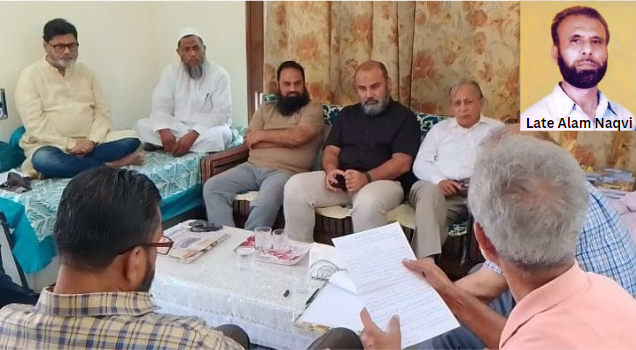
A prayer and condolence meeting in memory of the renowned journalist and intellectual Alam Naqvi was held on Sunday, at the residence of his younger brother, M. Tahir Naqvi.
The meeting was presided over by Professor Moinuddin A. Jinabade, former professor at Jawaharlal Nehru University, New Delhi. Among the attendees were Mansoor Alam Qasmi, Laiq Rizvi, Asif Fahmi (of Deen Duniya magazine), Dr. Mehmood Alam (Professor, Department of Commerce, Zakir Husain College), Naeemuddin, and Muhammad Arif Iqbal, among others.
Muhammad Arif Iqbal, editor of Urdu Book Review, New Delhi, who conducted the proceedings, described Alam Naqvi as a journalist of high calibre, akin to greats like Allama Muhammad Usman Farqaleet (of Al-Jamiat) and Muhammad Muslim (of Dawat). He emphasized that Alam Naqvi transcended sectarian and ideological divides, dedicating his life to the cause of unity within the Muslim community. A staunch advocate of truth, he never indulged in slander or falsehood and was a torchbearer of truthful journalism.
Tahir Naqvi read a brief paper highlighting his brother’s virtues, followed by remarks from Mansoor Alam Qasmi, Asif Fahmi, Dr. Mehmood Alam, and Naeemuddin, each paying tribute to the late journalist.
Before the concluding address, senior electronic media journalist Laiq Rizvi shared a heartfelt tribute, recounting some of Naqvi’s contributions to journalism. He also mentioned the threats Naqvi faced from Shabana Azmi and others over one of his published articles, noting that Naqvi remained calm and undeterred in the face of these challenges.
In his closing remarks, Professor Moinuddin Jinabade reflected on his deep friendship with Alam Naqvi, recalling that Naqvi kept himself far removed from religious and linguistic chauvinism. He possessed all the admirable qualities of Lucknow’s culture but stayed clear of its vices. Naqvi had a remarkable ability to shape constructive thought. Professor Jinabade ended his tribute with poignant words: “In the end, the dusk of life arrived…”
source: http://www.radiancenews.com / Radiance News / Home> Latest News / by Radiance News Bureau / October 17th, 2024
The book Kasb-e-Maash Ka Islami Tasawwur (Islamic Concept of Livelihood) by Maulana Muhammad Anas Falahi Madani was launched at the Indian Center for Islamic Finance (ICIF) on Saturday. This publication was made possible through the collaboration and financial support of ICIF and Rafah Chambers of Commerce, along with the coordination of Tasneefi Academy.
In his introduction, the author discussed two prevalent attitudes towards wealth in Muslim society: one driven by inflation and the other by extravagance. He noted that some individuals disregard ethical boundaries in their pursuit of wealth, often ignoring whether their means are halal or haram, driven solely by the desire to accumulate more.
“Islam recognizes wealth as a vital necessity of life. While individuals are encouraged to earn as much as they wish, it is imperative that they do so through legitimate means and adhere to the limits set by Allah,” he emphasized.
Dr. Razi-ul-Islam Nadvi, National Secretary of Jamaat-e-Islami Hind, expressed his appreciation for the book’s detailed exploration of this balanced perspective of Islam. He outlined the book’s structure, noting that it consists of six chapters: the first examines the nature of worldly life through the lens of the Qur’an and Sunnah; the second highlights motivational aspects of earning a living as described in the Qur’an and Hadith; the third discusses legitimate versus illegitimate sources of income; the fourth reflects on the economic life of the Prophet Muhammad; the fifth covers methods of earning and spending; and the sixth analyzes the consequences of Islamic and non-Islamic approaches to wealth accumulation.
Dr. Nadvi expressed hope that the book would be well received in both academic and religious circles, clearing up many misunderstandings in the process.
Professor Mohsin Usmani Nadvi praised the author for illustrating Islamic principles of earning through various examples from the Qur’an and Hadith.
In his closing remarks, Professor Jawed Ahmad Khan, Chairman of ICIF, pointed out the abundance of literature focused on spending, contrasting it with the scarcity of works aimed at wealth creation. He urged young students and researchers to engage in research that meets the demands of our rapidly evolving economic landscape, where the focus increasingly lies on wealth generation and investment. H. Abdur Raqeeb, General Secretary of ICIF, concluded by emphasizing the importance of financial literacy, particularly for women.
source: http://www.indiatomorrow.net / India Tomorrow / Home> Economy / by admin indiatomorrow / October 07th, 2024
Marsiya Dilli ye marhoom ka ae dost na cher Na sunaa jaaye-gaa hum se yeh fasaanaa hargiz
Do not strike the chords of the story of Delhi My heart won’t bear the woeful tale of its loss
Delhi, the city of lights and poetry, has been destroyed seven times only to rise again each time from the ashes of memory, a memory painted into vivid relics and commemoratives; the memoirs of loss and longing.
The life of the last King of Delhi, the poet Bahadur Shah Zafar, took a drastic turn in 1857 when the British exiled him to Rangoon for his alleged role in the uprising of 1857. His sons were shot, his titles stripped and his poetry confiscated. Denied a pen and paper, the exiled and imprisoned poet-king used a burnt stick to write his epitaph on the walls of the small room, outpouring his desolation and heartache:
The siege of Delhi marked the end of a literary epoch, but the nostalgia inspired numerous fictitious and fanciful accounts of the city, colonial rule playing an ironic impetus in this memorialisation, with its blooming print culture and a fetish for memorabilia. Among those who bled the evocation of the lost city in their accounts were Munshi Faizuddin, Rashid-ul-Khairi, Nasir Nazeer Firaq, Hasan Nizami, Arsh Taimuri and others.
Murraqa literature
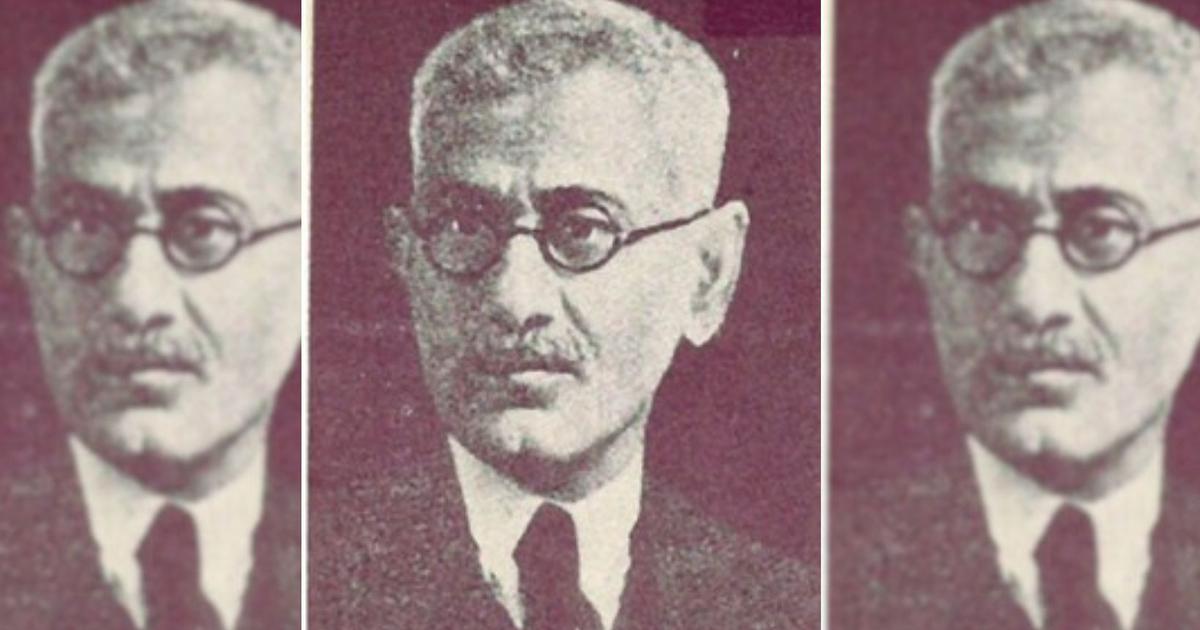
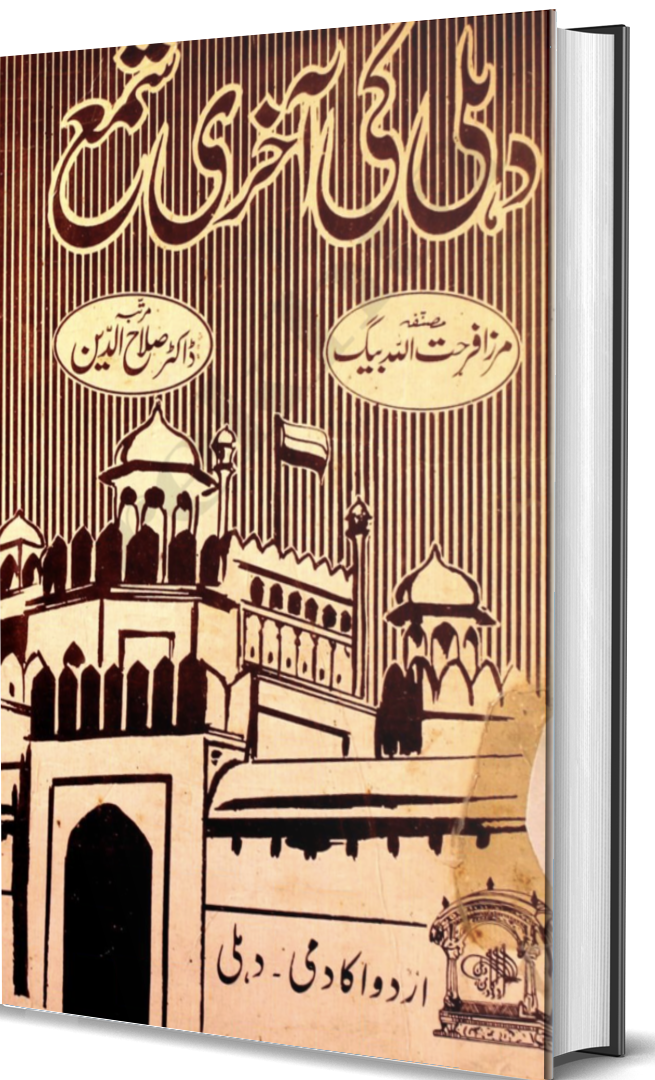
Dehli Ki Aakhri Shama, written by Mirza Farhatullah Baig in the early 1900s, is considered as one of the most splendid pieces of murraqa literature, interlocking overlapping layers of lived experiences with a poetic interlude. The writer of this splendid vignette, Mirza Farhatullah Baig, is considered one of the finest satirical writers of the Urdu language, his sketches rich with colourful characterisation emanating from a sense of deprivation and despondency; a theme that is constant across the writings of the authors mentioned above.
The historical novel is a story of a fictitious mushaira (poetic symposium) held in Delhi in 1845 under the patronage of Bahadur Shah Zafar, with his son Mirza Fakhru (pen name Ramz) as its chief guest. The artistic rendition, even though an imagination, turns out to be much more than that. It draws the sketch of the culture and tradition of pre-1857 Delhi in the most ornate and poignant colours, something well deserved by the ever-persevering city of lights.
Mirza Baig mentions a portrait of the great Urdu poet Momin Khan Momin that inspires him to draw a similar portrait of all the poets in the form of a novel, something that the posterity could dwell upon and find pride in, especially when everything was marred by a sense of impotence during the worst periods of British colonial rule. The second inspiration drawn by Mirza was from the famous narrative of Muhammad Hussain Azad, called Nairang-e-Khayal (An imaginal play) and Maulvi Karimuddin’s Tabqaat-ul-shoora-hind (Biographies of the Poets of Hind).
Interestingly, Maulvi Karimuddin mentions a mushaira that is actually held in 1845 at his home and Mirza Baig redraws the same gathering, albeit at a larger scale as a key literary event in Delhi. In his debt to Maulvi Karimuddin, he makes him the sole narrator of the novel and mirthfully limns him deserving any praise and all the criticism that his account would draw from the audience. The mushaira runs across the poetic eras and exhumes characters, known, unknown and forgotten, from across the length and breadth of Rekhta (the original name for Urdu).
Dehli Ki Aakhri Shama by Mirza Farhatullah Baig.
Delhi, a city in motion
The novel starts with a frazzled air of self-awareness of the city it is penned down in: once a patron city of arts and now a vestige of the East India Company. Molvi Karimuddin, who belongs to an opulent family of Molvis (Muslim preachers) in Panipat, now reduced to pennies, comes to the capital Delhi during the days when Delhi College is newly founded and the city has acquired printing presses for the first time. He enrols himself in the college and in order to earn a living starts publishing translations of well-known Arabic books from a rented building: Mubarak-un-Nissa’s haveli (Mubarak-un-Nisa was a courtesan in Mughal court and built a beautiful red mosque in old Delhi, that is often referred to as Randi ki Masjid) in Qazi Ka Hauz (now Hauz-e-Qazi).
However, his business fails.
Karimuddin, never fond of poetry, is left with no option but to organise a gathering of poets so that he can publish an account of the life and works of great poets based on it to get the press going. He starts his journey by meeting Nawab Zain-ul-Abideen Khan Arif, Ghalib’s nephew and Hakeem Ahsanullah Khan, the Prime Minister of Bahadur Shah Zafar.
The book gives very picturesque details of the lanes, houses and markets of Delhi. The canals in the courtyards, large platforms pillared halls, recliners, fountains, and porches. An especially opulent and splendid silhouette of the old city is drawn for the reader. The two associates of Maulvi arrange his meeting with Emperor Bahadur Shah for official permission for the gathering. The author describes the ease of access a commoner had to the royal court and the mannerisms that were prevalent among the nobility. The acronyms detailed in the book are unheard of in any book of history, with the Emperor being referred to as Jahan Panah, Zil-e-Elahi, Badshah Salamat, Fath-ul-Mulk, Hazrta Peer-o-Murshid, Zilullah, Qibla-e-Alam etc.
These are the times when what was once referred to as Lal Qila (Red Fort) or The Qila Mubarak (The Sacred Fort) is referred to in an ironic diminutive Haveli or Lal Haveli (red mansion), implying a shrinking influence of the Mughal family in the backdrop of growing colonial power. The book mentions the scheme of the fort, its Islamic, Persian, Timurid and Hindi styles, and details the conduct of personal and public life there. The physical sketches of kings, princes, ministers and poets are intricately penned down giving the reader a tactile presence of each of them. Baig writes that it had become customary in the last days of Mughal rule for princes to swear by the throne or the crown, political conditions being so uncertain that every potential heir thought he might be the next king.
A culture of poetry
The author profiles the three great poets Mirza Ghalib, Ibrahim Zouq and Momin Khan Momin with such eloquent artistic ingenuity that the reader is teleported to Ballimaran, Kabuli Gate and Cheelon ki Ghali in the very presence of Ghalib, Zouq and Momin, witnessing their aristocratic styles and patrician demeanour. The lanes leading to their houses, the shops en route, their mansions, their taste in dressing and most of all their behaviour towards the guests and strangers are detailed lucidly with an immaculate imaginative prowess that gives the book an exquisite artistic life of its own.
The Mughal empire was a great admirer of art which is evident in its marble and sandstone. However, it did not only leave stones and sand, its high culture left us a wealth of disquisition: poetry, prose and letter. A simple mushaira would be a central event receiving an inordinate state patronage. The alleys leading to the venue would be strung with coloured glass lamps, the roads would be cleaned and sprinkled with water for the guests and volunteers would offer water to the passersby. The whole city would be abuzz with the news and the lights (described beautifully as qandeel, jhar, fanoos, qumquma, deewar gir, hoondi, shama) would dazzle the eyes.
The poetic symposium, mushaira, was a cultural institution unlike any other with etiquettes of its own. It would also serve as a testing ground for the abilities and talent of the poets. The poets critics attended to evaluate the standard of poetry, rhetoric and prosody. Not only the use of language or the contents of poetry were subject to meeting certain standards, but the mannerism, the delivery and traditions too counted a lot. Even saying “Waah, waah” and “Subanallah” had limits and rules, and the tonality of each would convey a different intent every time. Mirza Baig defines these limits for the reader, “The ghazal that should not be praised is not praised”. The culture of starting the gathering with “Fatiha”, reading the poem of the patron (usually the emperor) by his emissary and then commencing the event by moving a lamp/candlestick/lantern among the poets as described in the book was prevalent until the late 20th century.
The author brings nearly 60 poets, a gamut of eccentric and interesting characters from different eras, on a same dais. The leading names of sukhan(narration) like Ghalib, Dagh, Momin, Bedil, Zauq and Aish are put up against the forgotten masters like Yusuf Tamkeen, Ghulam Ahmad Tawseer, Mohammad Jafar Tabish, Syed Mohammad Tashuq, Haji Beg shohrat, Nawazish Tanweer, Mirza Mahir, Najmuddin Barq, Mirza Pyare Refat and others whom Baig digs out from the antediluvian. Every poet is introduced with a physical sketch and his profession and interests, his expertise in poetry, his teachers and his immediate friends and foes. Then each of them uses the medium of the ghazal in exquisite ways to articulate complex human thoughts, philosophical concepts, revolutionary ideals, and, of course, the universal emotions of humankind. Some of the finest ghazals find their way in the book, becoming the vehicles of rebuttal, reconciliation and revenge between the poets.
The poets chant the withering of the rose of happiness. They echo the transitory nature of life in numerous metaphors and combine it with a desire for immortal beauty, strongly influenced in their world view by the imagery of Muslim mystics. The beloved to whom the poets refer to is always considered cruel whom one only knows by hearsay: a noble virgin living in purdah, a coy courtesan, a despotic ruler whose will is inscrutable and who is beyond the reach of a common man. The “rival and the reproacher”, so closely associated with the love drama, fit as well in the scenery of court intrigue, the ambiguity permitting numerous interpretation of an outwardly simple verse.
This is the time when Persian poetry, which according to Ethe had lived through the Mughal court its “Indian summer”, was burning its last embers. Other than a few masters like Mirza Ghalib hardly anyone would write in Persian. The fact is alluded to when Maulana Sahbai recites a Persian ghazal, and in the words of Karimuddin (Farhatullah Baig), “Persian ghazal is imposed on the Urdu mushaira”; and everyone is left blank faced: unable to appreciate the profundity of the dying language. The mehfiland its labyrinth of poignant inventivenessgo on the whole night in a sublime poetic ecstasy, occasionally marked by twangs of jealousy and rancour that were prevalent among the poets of past and often served as a goad for improvisation.
The mushaira and the novel end with the the word of God just as they had started, remembering the bygone era in all its lost glory. Drawing upon the living memories the book blends fact and fiction seamlessly keeping alive the high culture of old Dilli. Conscious of the decline and defeat of the cultural sophistication, Mirza Baig, like many of his times, seemed to be living somewhere between the struggle of two worlds: A world of poetry and a world of ashes.
Ab kharaba hua Jahanabad Warna Har ek qadam pe yahan ghar tha
Now Jahanabad (Delhi) has become a barren land Otherwise every footstep was a home here.
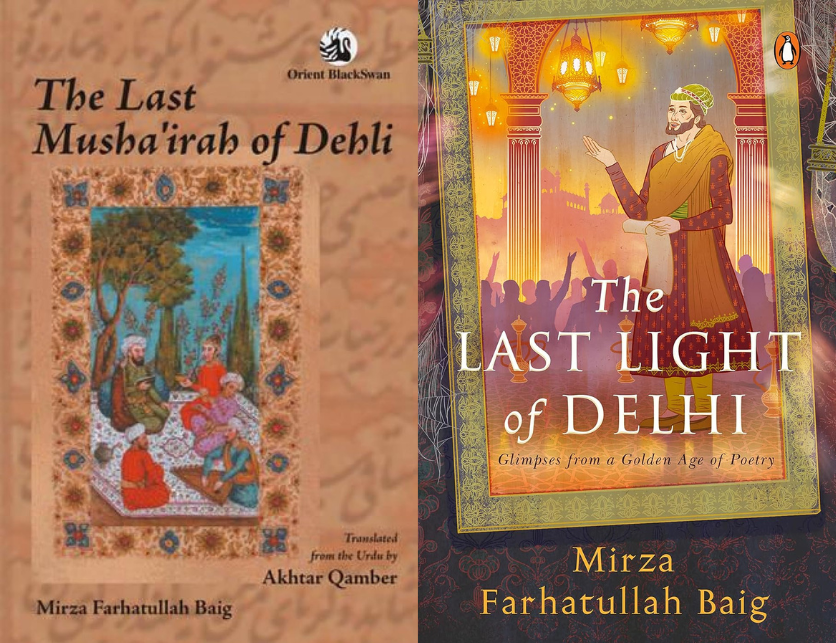
The English translation of Dehli Ki Aakhri Shama is available as The Last Mushaira of Delhi translated by Akhter Qamber (Orient Black Swan) and The Last Light of Delhi translated by Parvati Sharma and Sulaiman Ahmad (Penguin India).
source: http://www.scroll.in / Scroll.in / Home> Talking Books / by Khawar Khan Achkzai / September 29th, 2024