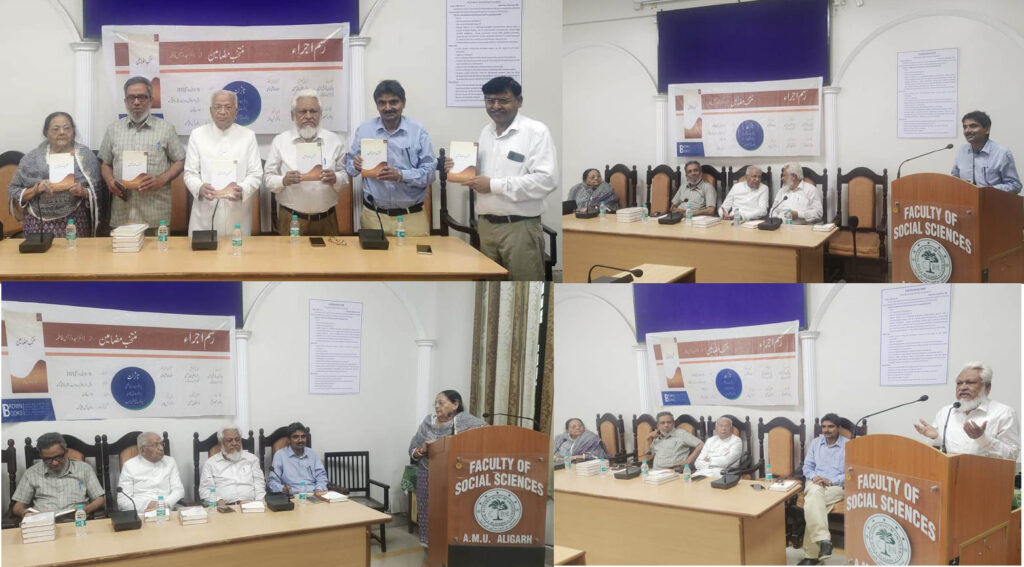
Faculty members and scholars of Aligarh Muslim University underscored the salient features of the writings of Dr Syeda Narjis Fatima, especially stressing the aesthetic and philosophical aspects of her work, during the release ceremony of her book, “Muntakhab Mazameen” (Selected Essays) in the conference hall of the Faculty of Social Science, Aligarh Muslim University.
In his presidential remarks, the founder and director of Ibn Sina Academy, Aligarh, Prof Hakeem Syed Zillur Rehman, congratulated Dr Narjis Fatima on the publication of the book and said that most of the articles included in the book bring forth the aesthetic aspects of Urdu literature, which is an important genre of literary criticism in Urdu. He said that her canvas of writing is vast and her articles introduce the Urdu readers to a new way of thinking.
The chief guest, Prof. Qazi Jamal Hussain, while underscoring the aesthetic aspect of various topics included in the book, said that studying Urdu literature from an aesthetic point of view is a difficult task because people generally do not differentiate between aesthetics and impressionistic criticism, while both are different things. He said that aesthetics covers all the genres of fine arts and Dr. Narjis Fatima has employed the aesthetic elements in her essays with great objectivity and dexterity.
He said that Dr. Fatima’s articles emanate from her philosophical concerns and this is another important quality of her writings.
The Guest of Honour, Prof Syed Siraj Ajmali, Department of Urdu said that the release of a book in an educational institution is an important event as it reflects its academic activities. Dr Narjis Fatima’s book is an embodiment of philosophical and aesthetic ideas with reference to her essays. He said that Dr Fatima belongs to a family of scholars and carries forward the scholarly tradition. She submitted her PhD thesis on Aesthetic Criticism in 2009, which was later published in the form of a book.
Former associate professor of the Department of Philosophy, Dr. Tasadduq Hussain said that although Dr Fatima is a housewife, her academic activities continued over a long span of time as she has a genuine aptitude for reading and writing and pondering over scholarly topics. He added that the book contains enough material for the students of literature and they can benefit from it in many ways.
While conducting the program, Prof Mohammad Asim Siddiqui, Chairman, Department of English, said that Dr Fatima’s book stimulates the thought process as the articles included in this book cover important subjects like the aesthetic dimensions of Iqbal’s and Faiz’s poetry and the aesthetics of progressive writers’ movement.
He said that the book is very helpful for students of English literature, especially comparative literature, as the it includes special studies on “Shakuntala and Shakespearean Heroines”, “Antigone and Greek Drama” and Manto’s “Toba Tek Singh: A Critical Review”.
Prof. Ashiq Ali, Chairman, Department of Hindi extended a vote of thanks.
Prof Mehtab Haider Naqvi, Prof Shahid Rizvi, Prof Madihar Rehman Suhaib, Prof Samina Khan, Prof Prem Kumar, Prof Sami Rafiq, Prof Shambhunath Tiwari, Mr. Ajay Basaria and a large number of teachers and students congratulated Dr Narjis Fatima for the publication of the book.
source: http://www.amu.ac.in / Aligarh Muslim University, AMU / Home> AMU News / by Public Relations Office, Aligarh / July 17th, 2023
Long thought to be simple fare, Kokni Muslim cuisine’s unique flavours and aromas are slowly wafting out of the confines of home kitchens.
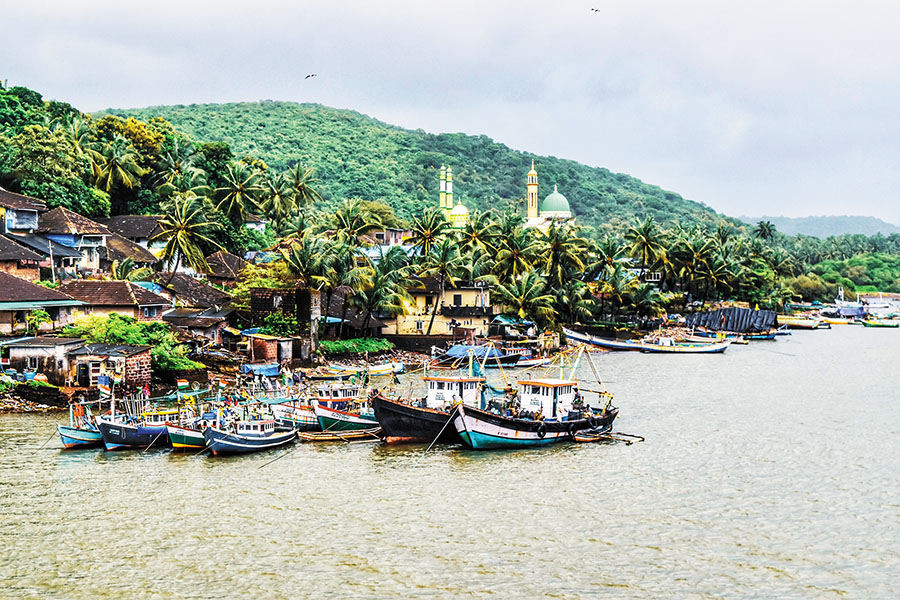
The Konkan coast, which is home to the Kokni Muslim cuisine
When you think of Muslim cuisine, what do you think of? Hyderabadi dum biryani, Lucknowi galouti kebab on a warqi paratha, or the lavish Bohri thaal? Dishes such as yakhni gosht (dry mutton), machli cha halduni (fish gravy), dum che Bombil (Bombay Duck made in the dum technique) are not the ones that readily come to mind as most of us are unfamiliar with the cuisine of the Kokni Muslim community.
What has kept this cuisine away from public knowledge is that it cannot be found at just about any restaurant and can be sampled only at home-dining experiences or pop-ups, that too only over the past couple of years.
One such is Ammeez Kitchen, a home-dining service on weekends at Marol, Mumbai, founded by Shabana Salauddin in 2017. “Ammeez Kitchen happened over a conversation with my mother, Ammee, while having our meal,” she recalls. “The discussion hovered around why Kokni Muslim food, which is so delectable, is unknown compared to other regional cuisines? Ammee dismissed the idea, saying our food is just ‘ghar ka khaana [simple home food]’. This strengthened my resolve, as I felt this was exactly what I wanted to showcase.”
*****
Kokni Muslims are a sub-ethnic group from the Konkan region, including the areas of Thane, Raigad, Ratnagiri and Sindhudurg. About 1,000 years ago, trade between the Indian sub-continent and West Asia saw Arab merchants coming to this region—to ports such as Chaul, near Alibaug—and, over centuries, settling along the coast, marrying into the local communities and giving rise to the Kokni Muslim community of seafarers. The Arabs brought along with them the knowledge of food such as yakhni or mutton dishes, and spices such as fennel. Besides, owing to their location, seafood became an integral part of their cuisine along with local, Maharashtrian influences.
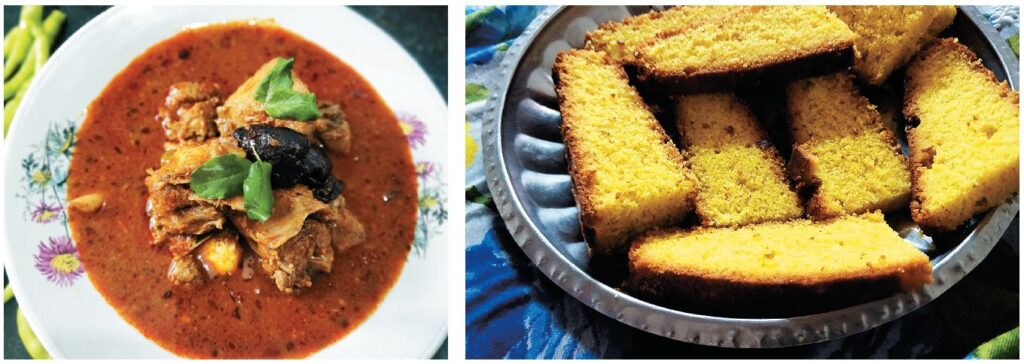
(From top left) Khatte bangde; roath, a semolina-based cake
Nujmoonnisa Parker, author of Kokni Delights (a book of recipes and history of the community) and an exponent of Kokni Muslim cuisine, explains, “The backbone of Kokni Muslim cuisine has always been what is harvested from the ground, i.e. local produce. Like the cuisine of the Goud Saraswats of Konkan and Christians in Goa, Kokni Muslim cuisine is largely dairy-free, and, in this respect, differs from the Mughlai cuisine. There are various permutations of any given recipe, based on the region, availability of ingredients and seasonality. Coconut, rice, lentils, onions, potatoes and red chilies are the main ingredients of this cuisine.”
Although a myriad spices and ingredients go into each dish, according to Shahida Khan, a Kokni Muslim from Navi Mumbai, the food is light on the stomach. “Kokum, dry mango, black sesame seeds, coconut, red chilies, turmeric—all grown in the region—are used in our cuisine. Rice, which is also common, is used in whole or powdered form in almost every dish.”
Elaborate meals are the cornerstone of this cuisine. Popular dishes include machli cha halduni, chavachi chutney (coconut chutney that is eaten as a main dish), chawrachi roti (boiled rice flour chapati), kavtacho bojar (stuffed egg), kolbi chi chutney (dried prawns chutney), alni paalni (chicken soup without salt).
“Kokni Muslim food is always a complete meal. We have roti, chawal (rice), sabzi (vegetables), saalan (gravy), kebab or talela, and tondilavayla (condiments). Many a time, the number of condiments exceeds the number of main courses, and typically include hari chutney (green chutney), sirke ka achaar (onions pickled in vinegar), kalkhand, kuldey (rice papad), thecha (chilli chutney), raita or kachumber,” says Salauddin.
Saravle, a wheat pasta
The cuisine has similarities with other Konkan cuisines and yet remains distinct. Mumbai-based home chef-turned-entrepreneur Mumtaz Kazi Pawaskar, who hails from the fishing village of Harnai in Ratnagiri and runs a catering business along with her cousin Sameera Gawandi, elaborates: “We call ourselves Kokni and not Konkani. The use of coconut milk as in other Konkan cuisines is common. But we use it instead of water to make curries, and this is one such distinction of Kokni food. So much so, that coconut milk is even used to cook rice, which gives it a glaze and extra flavour.”
Pawaskar adds that the cuisine has three broad spice combinations: Fish masala, mutton masala, and haldi (a combination of turmeric and fennel ground together). Fennel, a key ingredient of Kokni cuisine, is an example of the Arab influences. “Isan is the process of adding a few prawns to some vegetable preparations like stuffed brinjals, a yellow curry with drumsticks, and yam in garam masala for extra flavour,” she explains. “In our village, during summer, all household courtyards have whole red chillies drying in the sun, while households make and store spice mixtures for the whole year.”
Each meal has some special dishes. “Ghavne and sandan are breakfast dishes made with rice flour and a bit of jaggery. While ghavne [delicate crepes] is made on a tawa with pure ghee, sandan [similar to the Goan sanna] is steamed and is lighter in texture,” Khan explains. “Ghario, on the other hand, is an evening snack made with shredded cucumber, jaggery and rice flour, deep fried and typically served with Sulaimani chai.”
Cooking methods and ingredients vary from village to village, according to Salauddin. “Every family has their own version of the recipe. Most of the Kokni families have at least one clay pot or degh in which machli ki halduni and kalsani ka saalan (fish gravy) are prepared. The wet spice mixture—coriander, chillies and garlic—is always freshly ground. There are two extremes in our cooking: An entire meal can be fixed in 30 to 45 minutes, while others that include sandan (like idlis, made of coarse rice, coconut, milk, sugar and steamed), roath (semolina-based cake), khichda (slow-cooked meat and lentils), sarole or saravale (wheat pasta), bhakorche (like rotis), and ukdi ke kanole (rice dumplings) are laborious.”
Chonge, or sweet puris
Desserts occupy an important place in this cuisine. Pelve are rice flour crepes stuffed with grated coconut and jaggery and garnished with chironji, a variety of nut. Poppy seeds are used abundantly to garnish sweet dishes like mitli (made of rice flour and coconut), peyushi (coconut milk and cashew pudding), duderi (flour and egg pudding), chonge (sweet puris) and seviya (vermicelli in milk).
Although Kokni Muslims have traditionally cooked and enjoyed their own cuisine at home, Parker feels that in the last few decades the community has learnt to incorporate various styles of cooking into their kitchens.
Saravle, a pasta made from wheat dough moulded into tiny rings, is a favourite in this cuisine. It plays a significant role in weddings as it is part of a bride’s ‘rukhwat’ (gifts) when she leaves her parents’ home. It is cooked as a savoury dish with mutton or chicken, or as a sweet when steamed and topped with eggs.
Salauddin says, “Ukdi ke kanole, small half moon-shaped rice dumplings stuffed with freshly grated coconut, sugar and nuts, are prepared on the wedding day. These piping hot dumplings are bought in a big plate and placed in front of the couple. The groom is expected to pick up the maximum number of dumplings and gift them to the bride. The belief is that the larger the number of dumplings he picks, the more likely he is to take care of his wife.”
Religious occasions, too, call for special dishes being prepared at home. “Women prepare sandan on Ramadan Eid, and roath and malido in the first week of Muharram,” says Parker.
Until recently, Kokni Muslim food had remained restricted to homes and was not considered to be a cuisine that could be popularised beyond the community. However, many women are now making an effort to help more people become aware of their rich culinary heritage through pop-ups and curated home-dining experiences.
Since 2017, Pawaskar and Gawandi have been delivering food from their home under the name of Kokni Dastarkhwan, and have joined hands with Authentic Cook, an organisation that offers unique culinary experiences hosted by home chefs. For instance, in 2019, Neel, a popular Mughlai and North Indian cuisine restaurant with branches in Mumbai’s Mahalaxmi and Powai held a Kokni Muslim cuisine pop-up with Pawaskar and Gawandi.
Salauddin’s Ammeez Kitchen offers home dining experiences on weekends, where customers can reserve their seats in advance, and also delivers Kokni Muslim fare to the homes of customers. “Most Kokni Muslims now live in nuclear families, and with the busy lives we lead we all prefer to have quick-fix meals rather than our own cuisine, which can be quite elaborate. Families have either stopped making these dishes, or are unaware of old recipes made by our grandparents,” laments Salauddin. “This is why the transfer of knowledge from one generation to another is at a standstill. While we Koknis love our food, we have always undervalued it. It is confined within the walls of our kitchens. It is now time to let the world know.”
Check out our Festive offers upto Rs.1000/- off website prices on subscriptions + Gift card worth Rs 500/- from Eatbetterco.com. Click here to know more.
(This story appears in the 14 February, 2020 issue of Forbes India. To visit our Archives, click here.)
source: http://www.forbesindia.com / Forbes India / Home> Life> Forbes Life / by Mini Ribeiro / February 08th, 2020
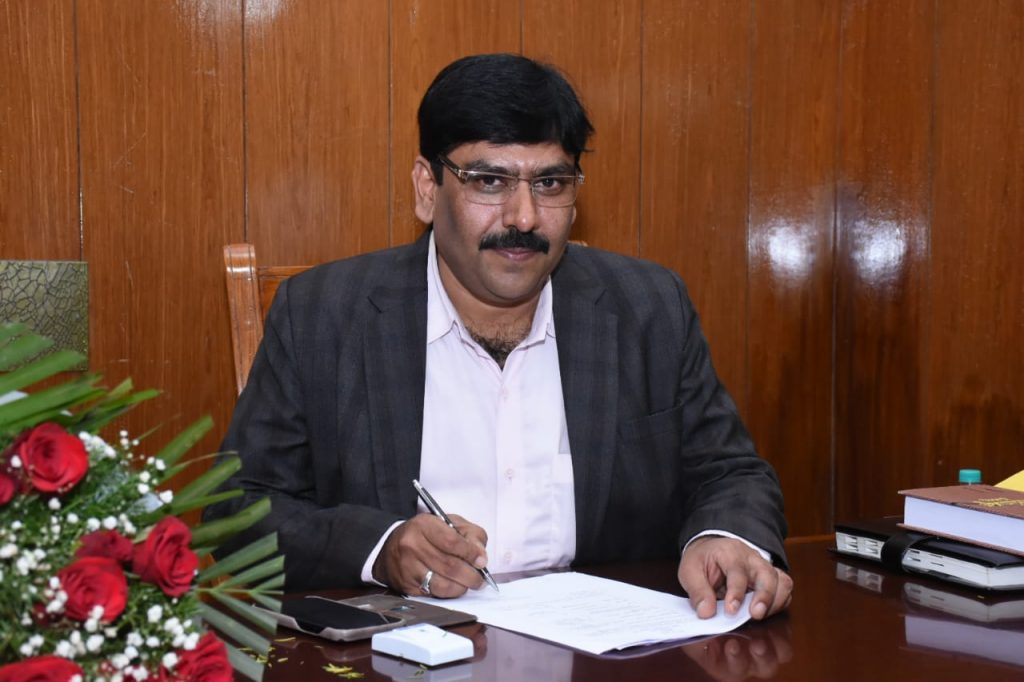
Ashaad-ur-Rahman Shariff the new Commissioner of Mysuru City Corporation (MCC) was a Police officer in his initial days who later cracked civil services- Karnataka Municipal Administrative Service (KMAS) in 2005 KAS batch. He has many feathers to his cap for having several achievements to his credit.
According to the profile of Shariff, who holds a BE in Mechanical Engineering, was a Police Sub-inspector in Gundlupet from 2003 to 2006.
After his selection to KMAS, Shariff began his career in administration as the chief officer of Gundlupet Town Municipal Council from 2007 to 2010, later served as Commissioner of Madikeri Urban Development Authority (MUDA) from 2010 to 2013, Commissioner of Tumakuru City Corporation, from 2013 to 2017, Managing Director and CEO of Davangere Smart City Limited from 2017 to 2019, Project Director of District Urban Development Cell (DUDC), Mysuru from 2020 to 2023 and Joint Director (SBM) at Directorate of Municipal Administration, Bengaluru, from February 2023 till he took charge as MCC Commissioner.
Shariff has been serving the state for over 16 years under five different municipal councils. He has many feathers to his cap like;
As a Manging Director of Smart city Davanagere, Shariff maintained first rank under Smart City in the State of Karnataka and below 10th position all over India (100 cities).
Best initiative award for implementing solid waste management process in Tumakuru.
Best practice award for E-Budget in Tumakuru City Corporation.
Best practice award for Office Automation Solution for Integrated System (OASIS) in Tumakuru City Corporation.
Initiated and implemented CDP (comprehensive development program, draft & final) in Madikeri Urban Development Authority (MUDA).
source: http://www.mysoorunews.com / Mysooru News / Home> Mysooru / by News Desk / July 28th, 2023
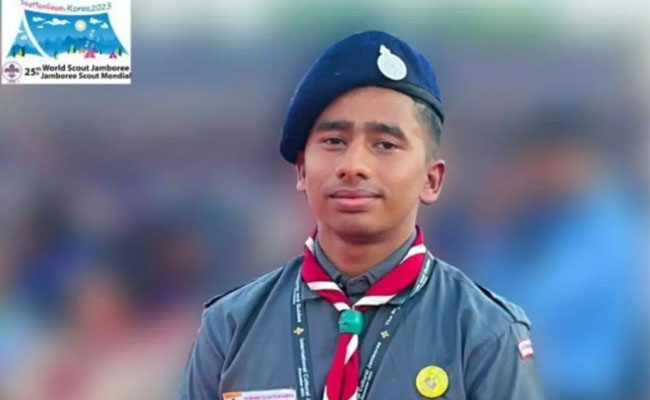
Muhammad Saif, a student of St Aloysius College, has been selected as the International Service Team (IST) representative of India for the upcoming 25th International Scouts and Guides Jamboree, scheduled to be held in Saemangeum, South Korea.
The prestigious event is set to take place from August 1 to August 12.
Hailing from Karuvelu in Bantwal taluk, Saif is the son of Abdul Khader Haji and Sameena. His selection as the IST representative of India is a significant achievement and honor for him and his family.
The International Scouts and Guides Jamboree is a global gathering that brings together scouts and guides from various countries to promote international friendship, cultural exchange, and mutual understanding among young people.
Saif’s participation as the IST representative will not only showcase India’s presence at the Jamboree but also provide him with a unique opportunity to interact with scouts and guides from different parts of the world.
source: http://www.varthabharati.in / Vartha Bharati / Home> Karavali / by Vartha Bharati / July 26th, 2023
CSPS Inaugural Citizens’ Dialogue on “The Idea of Democratic Citizenry”
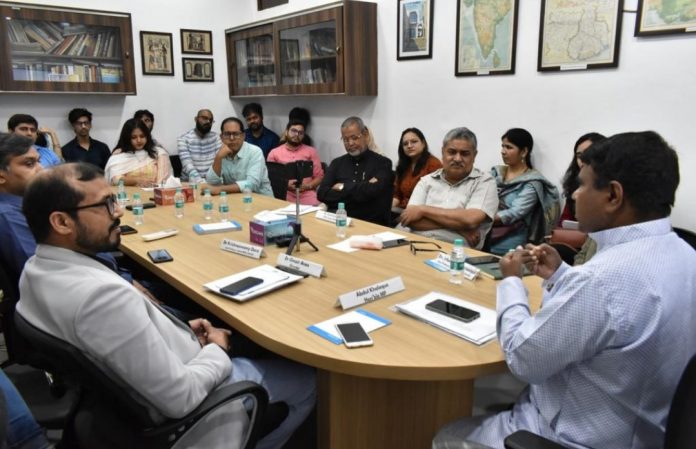
In a bid to foster meaningful discussions on inclusiveness, democratic principles and citizenship, the Centre for Studies of Plural Societies (CSPS) organized its first-ever ‘Citizens’ Dialogue,’ bringing together prominent scholars and experts in the field.
The keynote address was delivered by Mr. Abdul Khaleque, Hon’ble Member of Parliament from Barpeta, Assam. The session delved into the complexities surrounding citizenship, with a particular focus on the context of Assam, shedding light on historical, legislative, and legal events that have shaped the discourse on this critical matter.
The ‘Citizens’ Dialogue’ event, held under the aegis of CSPS, commenced with an introductory session led by Ms. Simmi Bhandari, a research intern at the institute. Dr. Omair Anas, Director of CSPS, emphasized the importance of inclusiveness and dialogue in a democratic society, where multiple stakeholders need to engage to find common ground. He highlighted the significance of plurality, a core value upheld by CSPS, in promoting an open platform for discussions and debates.
Dr. Irfanullah Farooqi, Assistant Professor at South Asian University, moderated the session, emphasizing the need to address pertinent questions concerning democracy and citizenship in contemporary times.
In his insightful address, Mr. Abdul Khaleque tackled the complexities of citizenship in the context of Assam, touching upon historical and political factors that have shaped the discourse in the state. He discussed the National Register of Citizens (NRC) and the Citizenship Amendment Act (CAA), shedding light on their implications and how various groups have reacted to these developments. Mr. Khaleque pointed out the flaws and issues with the NRC process, presenting compelling statistics that illustrated the challenges faced by different demographics following its completion.
Drawing attention to a unique identification system in Assam known as ‘d-voter,’ which marks individuals as suspected illegal foreign migrants, Mr. Khaleque highlighted the difficulties faced by those labeled as such. The burden of proof placed on these individuals has led to a rigorous verification process, often resulting in harassment and exhaustion. He also underscored how ethnic lines, particularly associating the Bengali identity with stigma and contempt, create fault lines around the concept of citizenship in Assam.
Following his talk, the floor was opened for a stimulating question and answer session with the audience. Discussions focused on the precarious experiences of minorities in Assam and the implications of delimitation concerning the electorates in the state. Mr. Khaleque explained how ethnic intolerance against Bengalis contributes to their alienation and lack of trust in the state’s institutions.
Dr. Sheeba Naaz, Research Coordinator at CSPS, expressed her commitment to continue the tradition of ‘Citizens’ Dialogue’ to keep everyone engaged in meaningful discussions. She conveyed her gratitude on behalf of CSPS to Mr. Abdul Khaleque and all participants for contributing to a successful and intellectually stimulating dialogue.
The Centre for Studies of Plural Societies (CSPS) set a precedent for fostering inclusive and informed discussions with its inaugural ‘Citizens’ Dialogue’ on “The Idea of Democratic Citizenry.” Mr. Abdul Khaleque’s keynote address shed light on the complexities surrounding citizenship in Assam, presenting a historical, legislative, and legal perspective on the matter. The event served as a platform for thought-provoking exchanges, emphasizing the importance of plurality and dialogue in a democratic society. As CSPS looks forward to continuing this tradition, the engagement and participation of scholars and experts pave the way for a more informed and progressive understanding of democratic principles and citizenship in the ever-evolving landscape of India.
source: http://www.muslimmirror.com / Muslim Mirror / Home> Positive Story / by Muslim Mirror Network / July 30th, 2023
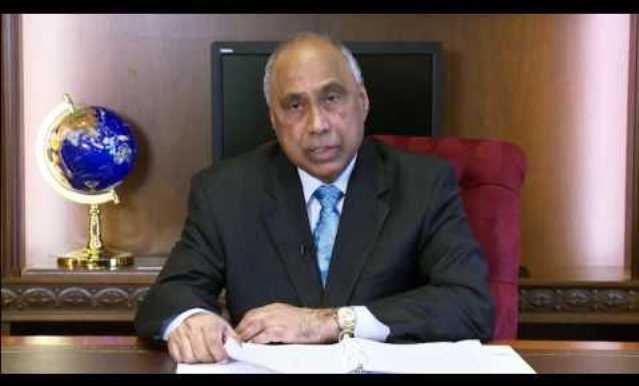
In the realm of Indian Muslims and the Indian Muslim diaspora, the name of Frank F. Islam commands instant recognition and reverence. An illustrious entrepreneur, philanthropist, and a prominent civic and intellectual figure, he has become an indomitable force for the advancement of Indian Muslims through his unwavering commitment to education. His influence extends far and wide, gracing numerous boards and councils at prestigious institutions such as Johns Hopkins University, American University, and George Mason University.
His philanthropic endeavors have left a mark of grandeur on his alma mater, Aligarh Muslim University, where he has erected the splendid Frank and Debbie Islam Management Complex. Not stopping there, his native village, Kaunra Gahni, bears witness to his magnanimity with the establishment of the Frank and Debbie Islam Health Clinic, a project dedicated to the betterment of its people.
As the visionary leader of FI Invest Group, a venture he founded after selling his information technology firm, QSS Group, in 2007, Mr. Frank Islam exudes a profound understanding of global economic affairs. His keen eyes closely monitor the economic activities of two colossal nations, the United States and India, while he remains deeply immersed in the intricacies of American politics and economy. His connections with former President Barack Obama and the current President Joe Biden stand testament to his prominence in political circles. An accomplished writer, he has penned two books, solidifying his intellectual prowess.
Undoubtedly, the economic condition of a country charts its future trajectory, and in this domain, Mr. Frank F. Islam emerges as a seasoned expert. In this exclusive interview with Alize Najaf, he graces us with invaluable insights into the economic dynamics of India and beyond.
AN: Your dedication to uplifting Indian Muslims through education and philanthropy is truly commendable. Could you share with us some of the impactful projects you’ve undertaken in this regard?
Mr. Islam: Certainly. I’ve had the privilege of contributing to the development of my alma mater, Aligarh Muslim University, by constructing the Frank and Debbie Islam Management Complex. Additionally, in my native village Kaunra Gahni, we’ve established the Frank and Debbie Islam Health Clinic, which aims to provide essential healthcare services to the community.
AN: Your journey as an entrepreneur is remarkable. How did you establish the FI Invest Group, and what advice would you give to aspiring young entrepreneurs?
Mr. Islam: Building a strong and talented team has been pivotal to my success in business. Aspiring entrepreneurs should surround themselves with like-minded individuals who share their vision and values. It’s essential to believe in oneself and the team while daring to dream big. Woody Allen once said, “90% of life is just showing up.” I believe in focusing on the remaining 10% and maximizing efforts to achieve one’s goals.
AN: Turning our focus to economics, the relationship between the United States and India is growing stronger. Is the strategy to counterbalance China a driving force behind this development?
Mr. Islam: While China’s influence is a factor in strengthening U.S.-India relations, it’s not the sole driving force. The convergence of India and the United States is based on shared interests and values as the world’s largest democracies. From artificial intelligence to climate change, there are numerous common areas of focus.
AN: Agriculture plays a significant role in the economy of developing countries. How important is agricultural production for a country’s economic development?
Mr. Islam: Agricultural self-sufficiency is vital for any nation to sustain its population without relying heavily on imports. The Covid-19 pandemic taught us the value of self-reliance during supply chain disruptions. While developed economies rely less on agriculture for employment, developing nations often have a larger population dependent on the sector.
AN: The economic reforms introduced by Dr. Manmohan Singh and Prime Minister Narasimha Rao are often credited with changing India’s economic trajectory. What is your view on their impact?
Mr. Islam: The economic reforms of the 1990s were transformative for India. They set the country on a path to becoming the fifth-largest economy and beyond. Prime Minister Rao and Dr. Singh’s vision played a pivotal role in this positive transformation.
AN: What are your predictions for India’s economic growth in the next five years?
Mr. Islam: All indications point to substantial economic growth for India in the coming years. According to the IMF, India is expected to contribute 15% to global growth this year. The organization further estimates a 6% growth rate for India in the current year, setting the stage for further progress.
AN: India’s economic growth still lags behind China’s. What factors do you think are responsible for this difference?
Mr. Islam: China had a head start in initiating economic reforms, while India opened its economy later. China’s unwavering focus on manufacturing and global investments played a significant role in its economic growth. However, India possesses the potential to surpass China with appropriate policies and continued reforms.
AN: It’s evident that your expertise in economics is vast. Do you have any plans to contribute to India’s economic progress?
Mr. Islam: After selling my company, my wife and I founded our family foundation to dedicate ourselves to philanthropy. We believe in giving back to society, primarily focusing on education and healthcare in Uttar Pradesh, my home state. By supporting institutions like Aligarh Muslim University, we aim to contribute to India’s progress from the grassroots level.
AN: Thank you, Mr. Frank F. Islam, for sharing your insights and expertise with us. It has been an enlightening conversation.
Mr. Islam: Thank you for having me, Alize. It was a pleasure discussing these critical economic matters.
source: http://www.muslimmirror.com / Muslim Mirror / Home> Interviews / by Alize Najaf / July 30th, 2023
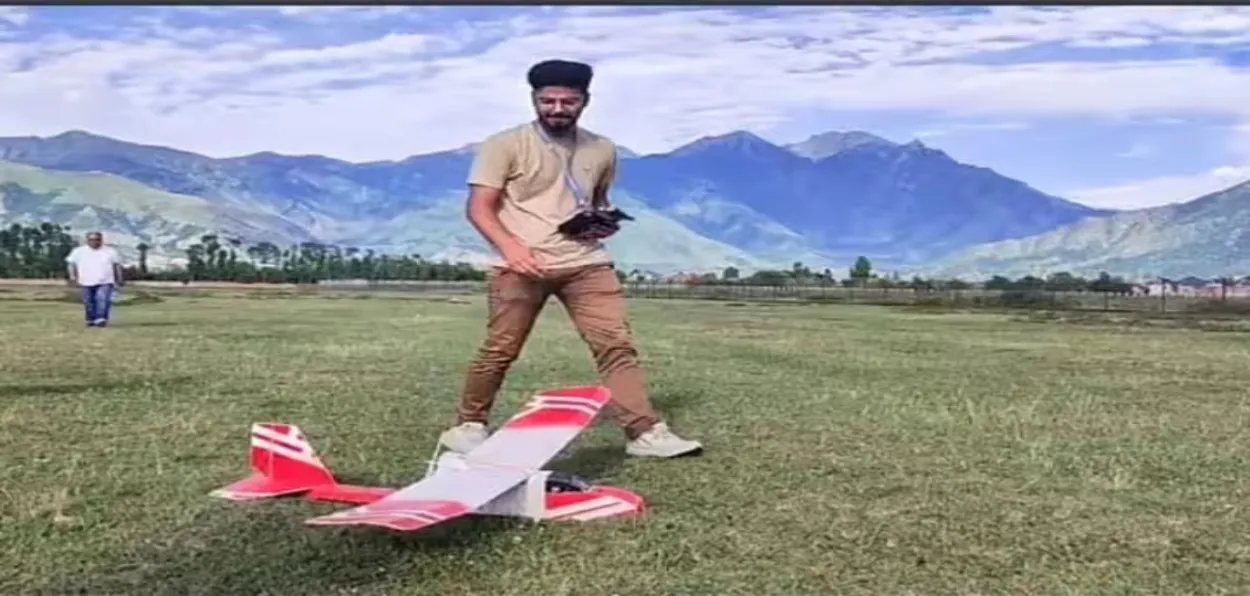
Abaan Habib with his drone in a location in Himachal Pradesh
New Delhi :
Optimism and hope fills the hearts and minds of today’s Kashmiri youth and they are ready to take off on the fight of their dreams. Abaan Habib is one of them; he has developed an extraordinary drone that can transport blood for medical emergencies from one hospital to another.
After years of hard work, Abaan Habib, a resident of Zakura area of Srinagar, created the flying machine that has the potential to save countless lives and improve access to health care in remote areas and during natural calamities.
Abaan said he was inspired to work out his invention after he saw the devastation and human suffering in the 2014 floods that nearly drowned the city of Srinagar.
Abaan says, “After witnessing the devastating floods of 2014, I wanted to find a solution to transferring blood samples and pouches between hospitals.”
He worked hard on his drone technology for five years. Initial tests conducted in Himachal Pradesh were successful as the drone connected 20-25 hospitals to the central hospital, covering a distance of over 70 km.
He says: My message to the youth is to follow your passion. Only through the persistence and dedication of young minds can a society bring about meaningful change in the world.
Abaan’s drone experiment also extended to inter-state connectivity, connecting hospitals in Shimla with Chandigarh. Aban decided to debut the drone in Himachal Pradesh first, collect data and demonstrate its benefits before expanding its use to the Kashmir Valley.
The geographic conditions of both states present unique challenges in providing timely blood transfusions to patients in need. Aban recognized this and took advantage of this void in the atmosphere. We can take advantage of the atmosphere to help the needy.
Abaan not only worked on the project but also collaborated with corporate entities outside Kashmir. These collaborations have provided additional expertise and resources to further develop and implement its drone technology.
However, to run the drone service on a commercial scale, he says, he needs financial support.
Abaan Habib hopes that with his drone, he will not only be able to save lives but also create business and career opportunities for the youth of the valley.
Abaan’s drone invention holds great promise in revolutionizing healthcare access in remote areas. As Abaan tries to secure funding and navigate regulatory challenges, the potential impact of its technology cannot be overstated.
With every step forward, Abaan brings us closer to a future where life-saving medical equipment can reach even the most inaccessible areas, offering hope and a chance for survival to those in dire need.
This project of his was presented by Habib Abaan last year. At that time he was a 12th standard student at Green Valley Educational Institute in Kashmir. He said, “We have a tinkering lab at school, which helped me a lot in understanding the process and learning the art of making drones.”
My parents gave me freedom and therefore my idea of education is quite different from others. Unlike other parents, my family did not force me to choose a career like a doctor or an engineer. They allowed me to go as I pleased. My inclination was towards drone technology.”
He says, “I have seen many natural calamities in Kashmir since my childhood, one such natural calamity was the flood of 2014 when Kashmir was flooded. People required relief supplies and we saw how the government machinery failed miserably due to lack of infrastructure. They were very disturbing scenes, everyone knows that this effort of dropping aid from helicopters is not enough.”
It was then that I thought of drones and how helpful they could be in such situations. If we build small drones that are autonomous and equipped with artificial intelligence to deliver relief supplies to disaster areas, they can deliver aid without much cost.
Abaan Habib said that JKEDI and JKTPO encouraged him but he is yet to receive any financial support from the government.
Abaan Habib also went to Gujarat to attend an event organized by DRDO where we showed off his drone to the then Army Chief General Makund Major Naravane. “He appreciated my efforts,”
He says young entrepreneurs should be prepared to face rejection or failure; spend their money and not fall for loans and subsidies, for he believes “debts are the root of failures.”
Abaan;s father H U Malik told Rising Kashmir that they are operating at 25 locations in Himachal Pradesh and they want to replicate the same model in Kashmir keeping in view its geographical conditions.
“Even Abaan is working to link SKIMS Hospital; SMHS with GMC Baramulla and for that fly van has already been designated for the project,” he said.
Malik says it is his son’s dream to see this project working in Kashmir. “We want to connect SKIMS hospital with other tertiary, district hospitals of the valley. We appeal to concerned authorities to help us and we are ready to follow all SOPs in this regard,” he said.
source: http://www.awazthevoice.in / Awaz, The Voice / Home> Story / by Aasha Khosa / July 20th, 2023
A two-day international seminar was organised by the department of Urdu, Aligarh Muslim University here at AMU on Saturday and Sunday to mark the 300th birth anniversary of renowned Urdu poet, Mir Taqi Mir.
Seminar under way at AMU. (HT Photo)
Presiding over the event, AMU vice chancellor Prof Muhammad Gulrez said that Mir Taqi Mir portrayed in his poetry a wide array of human emotions and feelings and his poetic thoughts are still considered valuable for serious studies in Urdu poetics.
Citing a number of Mir’s popular couplets, he said that the importance of Mir can be gauged from the fact that his poetry is popular even today, after a passage of three hundred years.
“Mir’s poetry helps common people express their feelings effectively and his love imbued Ghazals masterfully reflect the agonies and pleasures of lovers,” said Prof Gulrez, adding that research scholars should work to bring out the deeper nuances of Mir’s poetry.
Delivering the keynote address, Prof Sharif Hussain Qasmi, former chairman, department of Persian, AMU said that Mir’s poetry opens a wide range of possibilities to study the human emotions. He said Mir generously used Persian vocabulary giving currency to many Persian words in Urdu.
Calling Shamsur Rahman Farooqi’s book Sher-e-Shor Angez a milestone in the study of Mir, he discussed Mir’s Persian poetry with wider connotations. He said Mir has a unique position among Urdu poets because of the simplicity of his style and expression.
The chief guest and noted Persian scholar, Prof Azarmi Dukht Safavi said that Mir Taqi Mir’s thoughts and ideas are not limited to his era but are relevant for all times. She pointed out that for deeper understanding of Mir’s poetry, knowledge of Persian is necessary and Urdu scholars need to pay special attention to it to access Mir’s poetics. She further said that Mir’s couplets betray beauty and sadness that are essential attributes of life according to Mir.
Prof. Safavi highlighted the diversity, simplicity and meaningful dimensions of Kalaam-e-Mir and also discussed the salient features of his prose. Citing examples from the books, Zikr-e-Mir, Faiz-e-Mir and Nikat-us-Shora, Prof Safavi said that these books are the best example of his prose writing.
Prof Arif Nazir, dean, faculty of arts said that Mir’s poetry is popular because of its linguistic richness. He cited several couplets of Mir and stressed the need for the translation of Mir’s poetry into Hindi and other languages of India.
Earlier, welcoming the guests, Prof Mohammad Ali Jauhar, chairman, department of Urdu introduced Prof. Sharif Hussain Qasmi and Prof Azarmi Dukht Safavi, and highlighted the objectives of the seminar.
Dr Sarwar Sajid, convener of the seminar, conducted the programme, while Prof Qamrul Huda Faridi proposed vote of thanks.
Jaheedan Khatoon, a MA final year student, presented Mir’s popular Ghazal “Dikhai Diye Yun Ke Bekhud Kiya” in her mesmerizing voice.
source: http://www.hindustantimes.com / Hindustan Times / Home> Cities> Others / by HT Correspondent, Aligarh / July 23rd, 2023
Inshada Bashir Mir, a 29-year-old MBA graduate hailing from Hanjiwera Bala Pattan located close to LOC near Kanehama in Baramulla district of Jammu and Kashmir.
Despite challenging circumstances, Inshada with grit and determination has found a company “Tubruk”, which sells a plethora of hand crafted articles.
She works with 40 artisans and has expanded her business to Mumbai, Bengaluru, Delhi and Jaipur. Inshada’s ambition is to take her brand “Tubruk” to the international level to introduce the handmade crafts of Jammu and Kashmir and give a new lease of life to the art and artisans who are vanishing day-by-day.
Inshada was invited as a panelist to share her success story in the recently held “Kula – 23 Conclave” organised by “200 Million Artisans”, a social enterprise enabling ecosystem for craft led enterprises for the community at the Bangalore International Center in Bengaluru.
Narrating her successful journey to IANS, Inshada explained that “Tubruk” is a Kashmiri word meaning a souvenir and blessing. “When I approached artisans with business proposals, they just saw me as a little child and laughed,” she says.
The young lady had dreamt of establishing a business at her native while she studied crafts management in Srinagar Craft Development Institute. She had learned the basics, value supply chains, but the challenge was to deal with the existing ground realities in Kashmir.
When asked about whether she was allowed to carry out business by the family, Inshada explained that she hailed from a family which was into the business of carpets.
“Outsiders think Muslim women are not allowed to carry out business. Prophet Muhammad’s (PBUH) wife is the first businesswoman of this world. My father’s advice on my adventure was negative. Don’t start a business as it is risky, was his opinion. But, as I was firm with my intention, he did not stop me from pursuing my dream. He is there for me all the time. My mother supported my dream as well.
“I started my business by making advance payments to artisans. I got the new designs of shawls, stoles, jewels, ear rings, laptop covers and other articles with signature modern embroidery works. You have to take that one first step and you will realize there are many to help you. You have to do it with a creative mindset,” Inshada revealed.
She participated in the Bengaluru Exhibition organised by the NGO Commitment to Kashmir in 2018. After that she attended a few more events which helped her to get contacts, networks and market.
“I started with four to five artisans. Now, I feel proud that I am working with 40 to 50 of them. The more joy comes as I am able to make their payments in advance. Now, my aim is to take Tubruk to international level,” she says.
200 million artisans under the leadership of its founder Priya Krishnamoorthy are doing great work to bring together the handicraft artisans and enterprises community and promote this sector.
“I am grateful to them to invite me for this Kula Conclave event in Bangalore and share my thoughts and journey along with other eminent personalities from the handcraft segment and discuss on how we can save this sector,” Inshada says.
Kashmir is marching forward, it is going ahead, Inshada explains with glitter in her eyes.
source: http://www.daijiworld.com / Daijiworld.com / Home> Karnataka / by IANS / July 23rd, 2023
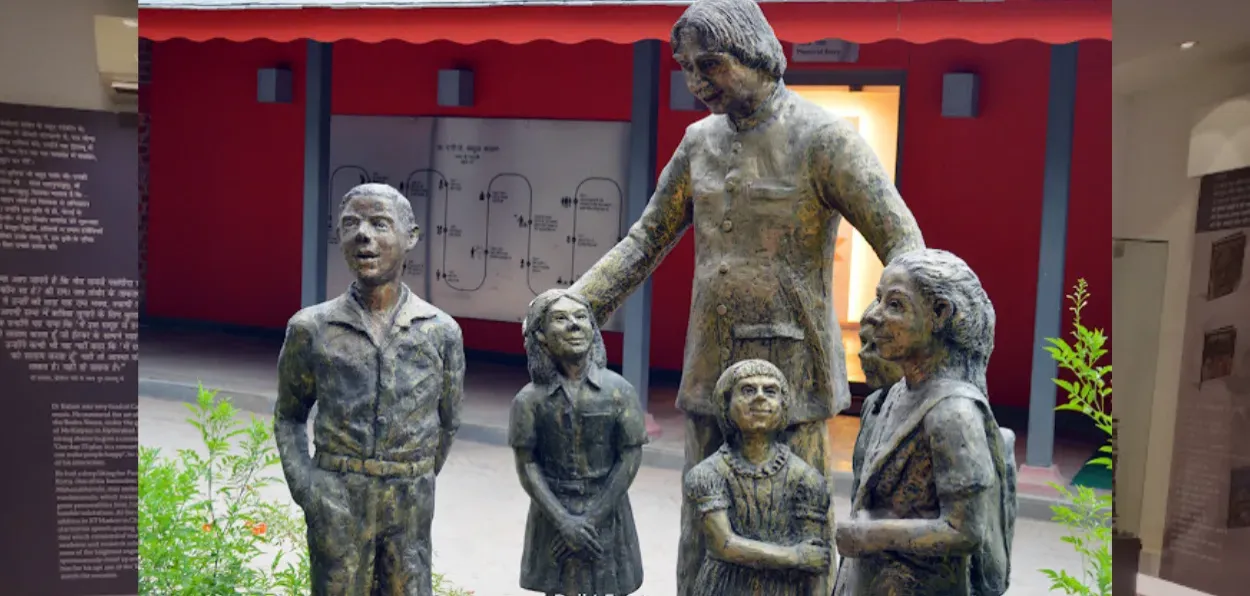
A P J Abdul Kalam with children: an exhibit from the National memorial at Rameshwaram
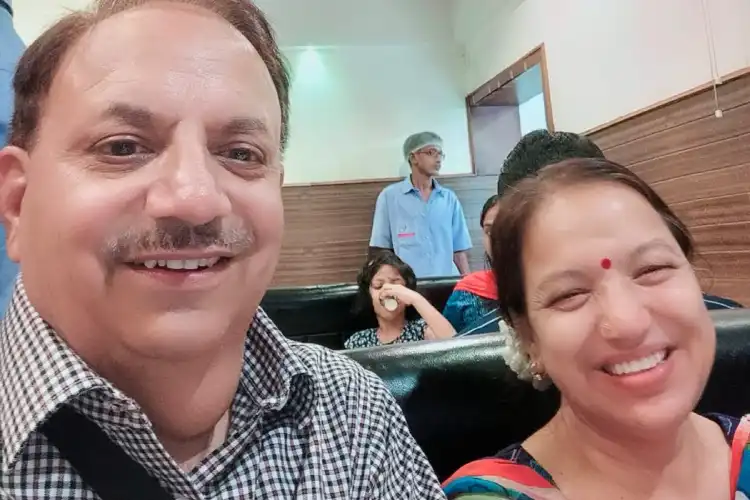
In mid-December, when Suman and her husband Diwan Arora of Sonepat, Haryana, left for Rameswaram in Tamil Nadu, for performing the pilgrimage to one of the holiest sites of Hindus, little did they know that their journey would also take them to another sacred place – a memorial to the son of the soil Avul Pakir Jainulabdeen Abdul Kalam aka Dr. A P J Abdul Kalam.
“I didn’t feel like leaving the place,” said Suman, a retired central government official of her experience of visiting the National Memorial for the 11th President of India A P J Abdul Kalam, located in his native city of Rameshwaram.
Suman said that the moment she removed her shoe to enter the National Memorial she experienced a surge of positive energy inside her. She and other tourists paid obeisance to the People’s President at his resting place inside the memorial.
“I was visiting the place after I visited the temple; there I felt I had entered another sacred place,” she told Awaz-the voice.
Suman and Diwan Arora in Rameshwaram
On her maiden journey to South India, Suman said she was as much awestruck by the grandiosity and architecture of temples – Rameshwaram, and Meenakshi at Madurai as with the simplicity and grandeur of the life of the great Indian – A P J Abdul Kalam.
“Seeing the incredible architecture of the temples was a great experience. Visiting the Museum of President Abdul Kalam was no less. It was also like a pilgrimage.”
Though not hyped as much as many other places, the museum is on the Tourism map of Rameshwaram city. According to Aroras, even the local auto-rickshaw drivers who offer tour packages to visitors, recommend the museum as the first place.
Suman said although their tour was in connection with the seven-day Bhagwad Gita path (Narration of the Bhagwad Gita) and was organized by a religious group, a friend had advised her to visit the museum at any cost. “After visiting the place, I can never thank my South Indian friend enough,” Suman said.
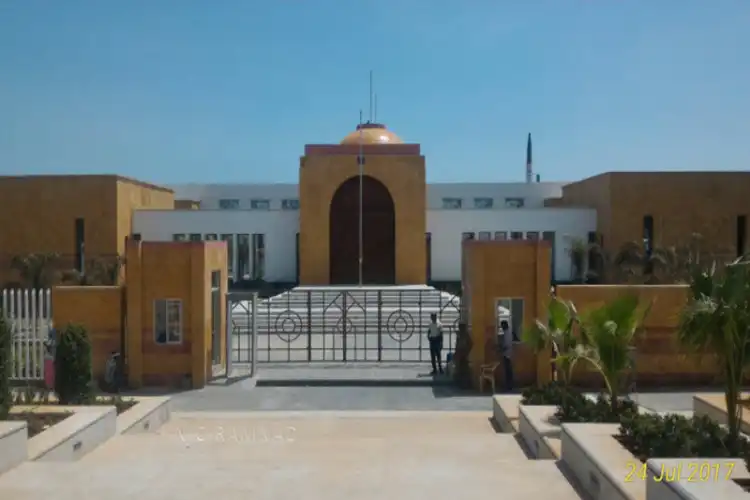
Dr. A P J Abdul Kalam’s memorial, Rameshwaram
Kalam’s grand-nephew APJMJ Sheik Saleem told Awaz-the voice that so far one crore people have visited the museum that was set inaugurated by Prime Minister Narendra Modi on July 27, 2017.
Sheik Saleem who recently joined the BJP runs his business and a Foundation for social work. He says he is privy to people’s devotion and love for his ancestor as they visit his memorial.
“The museum is visited by at least 7,000 visitors per day and so far about one crore have paid their obeisance to the people President,” Saleem told Awaz-the Voice.
“Earlier people came to our city for pilgrimage to the (Rameshwaram) temple but now the pilgrimage is combined with the visit to the national memorial for APJ Abdul Kalam,” he said.
“I have seen people coming to the place and feeling there is something great there. Many visitors do stand silently in front of the memorial, some bow their heads, and others simply go in the prayer mode as if they are seeking His blessings,” the former President’s grand-nephew said.
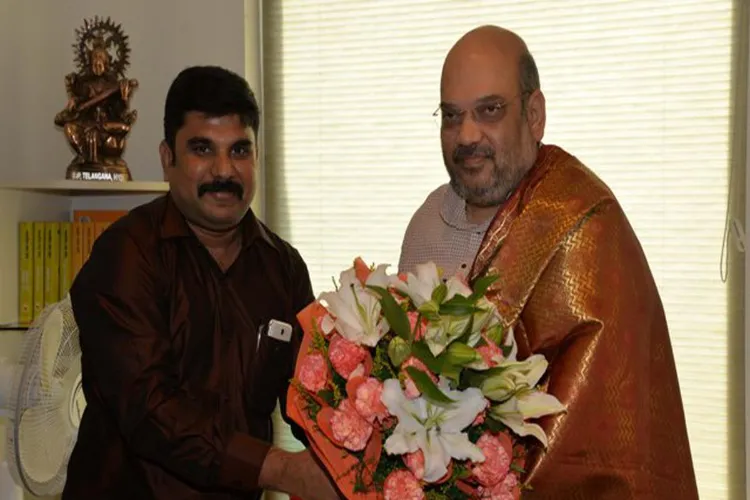
APJMJ Sheik Saleem with Home Minister Amit Shah
He said it’s touching and a humbling experience to see how much Indians cutting across religions or other barriers loved Dr. Kalam.
Suman, her husband, and many in their group spent nearly two hours inside the memorial. Visitors must enter barefoot and not use cameras or mobiles to click the pictures. All this adds to the sacredness of the space.
Saleem said since the place sees a high footfall, the cameras are forbidden simply because if everyone starts clicking there will be chaos.
Diwan Arora said the pilgrimage jatha comprised 300 people from Punjab and Haryana who visited Rameshwaram for “Bhagwat sapthah’ the weeklong narration of the Bhagwat Gita.
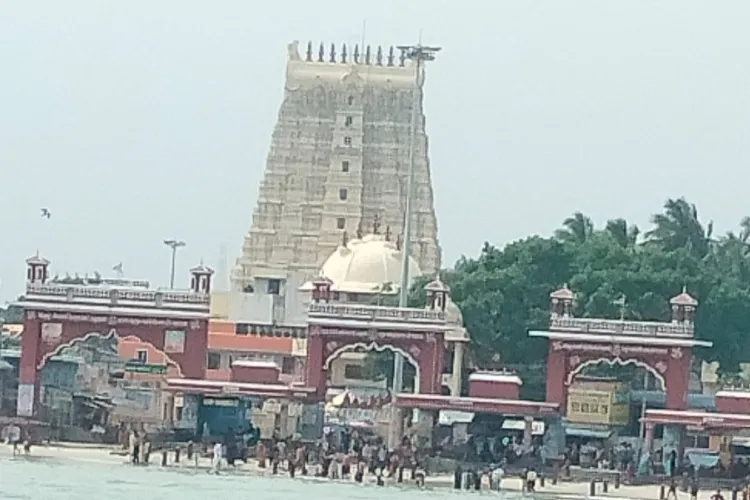
Meenakshi Temple and the Sea at Rameshwaram
Besides the museum, A P J Abdul Kalam’s childhood home has also been converted into a museum that his elder brother maintains. “It’s a smaller collection of photos and family memorabilia. The place is visited by at least 4,000 persons per day,” Sheik Saleem said.
The national museum maintained by the DRDO narrates the story of the life of India’s missile man from a newspaper hawker in the coastal city to India’s missile man and the most popular President. It showcases pictures and models of missiles, rockets, and the Pokhran Nuclear test that Kalam was involved in. His favourite Veena which he played every morning sitting on the bare floor even in Rashtrapati Bhawan is also displayed in the museum.
Dr. A P J Abdul Kalam lived in the Rashtrapati Bhawan from 2002 to 2007. He became the most loved and respected head of the nation to get the sobriquet of People’s President.
Kalam was a respected scientist specializing in aerospace engineering. His simplicity and dedication to serving the country motivated many youths to follow his path and he became an inspirational figure for the youth of India.
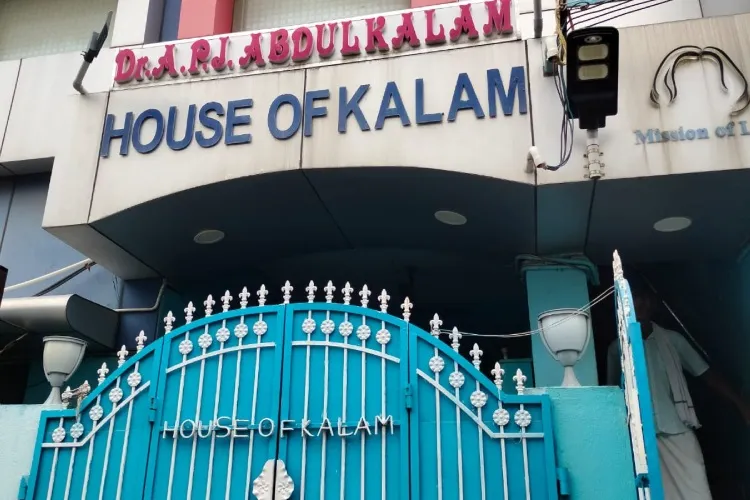
House of Kalam: the private Museum dedicated to the memory of Dr. APJ Kalam inside his ancestral house in Rameshwaram
Inside the memorial, one can see the selected photos, paintings, miniature models of missiles, etc. The memorial is less than 1 km from Rameswaram.
The museum’s exhibits narrate the story of his life and achievements. It’s located on Mosque Street and is open from 8 a.m. to 7 p.m.
A. P J Abdul Kalam was born and brought up in Rameswaram and became a scientist and worked for DRDO and ISRO before being chosen to become India’s 11th President by the then NDA government headed by Atal Bihari Vajpayee.
He passed away suddenly while attending the IIT Shillong convocation on July 27, 2015, and was laid to rest at Pei Karumbu, Rameswaram on 30 July.
According to the statement of the Museum, Dr. Kalam always reflected the simplicity, depth, and calmness of Rameshwaram throughout his life, and it’s showcased in his memorial. Dr. APJ Abdul Kalam National Memorial was inaugurated by Prime Minister of India Narendra Modi on 27th July 2017.
The memorial is spread over 2.11 acres of land, the memorial is constructed on the gravesite of Dr. Kalam, where his mortal remnants were put to rest on July 27, 2015. To pay tribute to India’s missile man, The Defence Research and Development Organisation (DRDO), with which Dr. Kalam had been associated for several years of his life, came up with an initiative to construct his memorial.
pix07
The memorial was constructed in a record time of nine-month at the cost of Rs 120 crore,
The Museum is also included in the recommended place in Rameshwaram by the Trip Advisor company.
On its website, people who visited the place have rated it very highly. Their comments in the review section show that the People’s President continues to be in the heart of Indians even after his passing away. For example, Saurabh from Patna, Bihar, says:
..must visit place for everyone. I’m a huge follower of Bharat Ratna Late APJ Abdul kalam sir. It was inaugurated by Our prime minister in 2017. Here you can learn many things about Bharat Ratna APJ Abdul Kalam sir.
I visited this and will recommend every people to visit this place and should remember the person who shape and sculpt the Indian defense and space research organisation.
A Tourist from Bangladesh wrote in the same section: “A scientist and leader has been honoured in the best way in his birthplace “
Another tourist to the museum from Hyderabad wrote:
.. A fitting tribute to the great son of India. Amazing that a man with such humble origins and from a very small town rose to the highest office in this country. A must-visit for students and youth who can take inspiration from the great man’s life. Plenty of Photographs, a peek into the life of Dr. A.J.P. Abdul Kalam.
A visitor from the NCT of Delhi wrote on Trip Advisor’s website :
Not only a memorial but a temple or place of worship where you can motivate yourself how an innocent boy who was used to distributing newspapers in a nearby area has become India’s first citizen. The place is full of photographs, a replica of missiles, statues, Samadhi, and many more … a calm environment despite of rush of school children.. A must-visit place at Rameshwaram.
source: http://www.awazthevoice.in / Awaz, The Voice / Home> Story / by Aasha Khosa, New Delhi / July 27th, 2023